
Global Port Services Market
Global Port Services Market Size, Share, By Port Service Type (Cargo Handling Services, Ship and Vessel Services, Port Equipment and Machinery Services, Marine and Navigation Services, Warehousing and Storage Services, Supply Chain and Logistics Services, Port Security and Safety Services, Engineering, Maintenance and Repair Services, Port Environmental and Waste Management Services, and Other Port Services), By Port Type (Seaports, Inland Ports, River Ports, Dry Ports, Container Terminals, and Bulk and Multipurpose Ports), By Cargo Type (Containerized Cargo, Dry Bulk Cargo, Liquid Bulk Cargo, Breakbulk and General Cargo, Vehicle Cargo, and Project and Heavy-Lift Cargo), By Ownership and Governance (State-Owned Ports, Private Ports, Public-Private Partnership / Concession Ports, and Port Authority-Operated Ports), Industry Analysis, Growth, Trends, and Forecast, 2026-2033
MSI-5038
August 25, 2026
263 Pages
Historical
Base year
Forecast
Forecast period
Report Details
Comprehensive Market Analysis And Insights
Market Overview
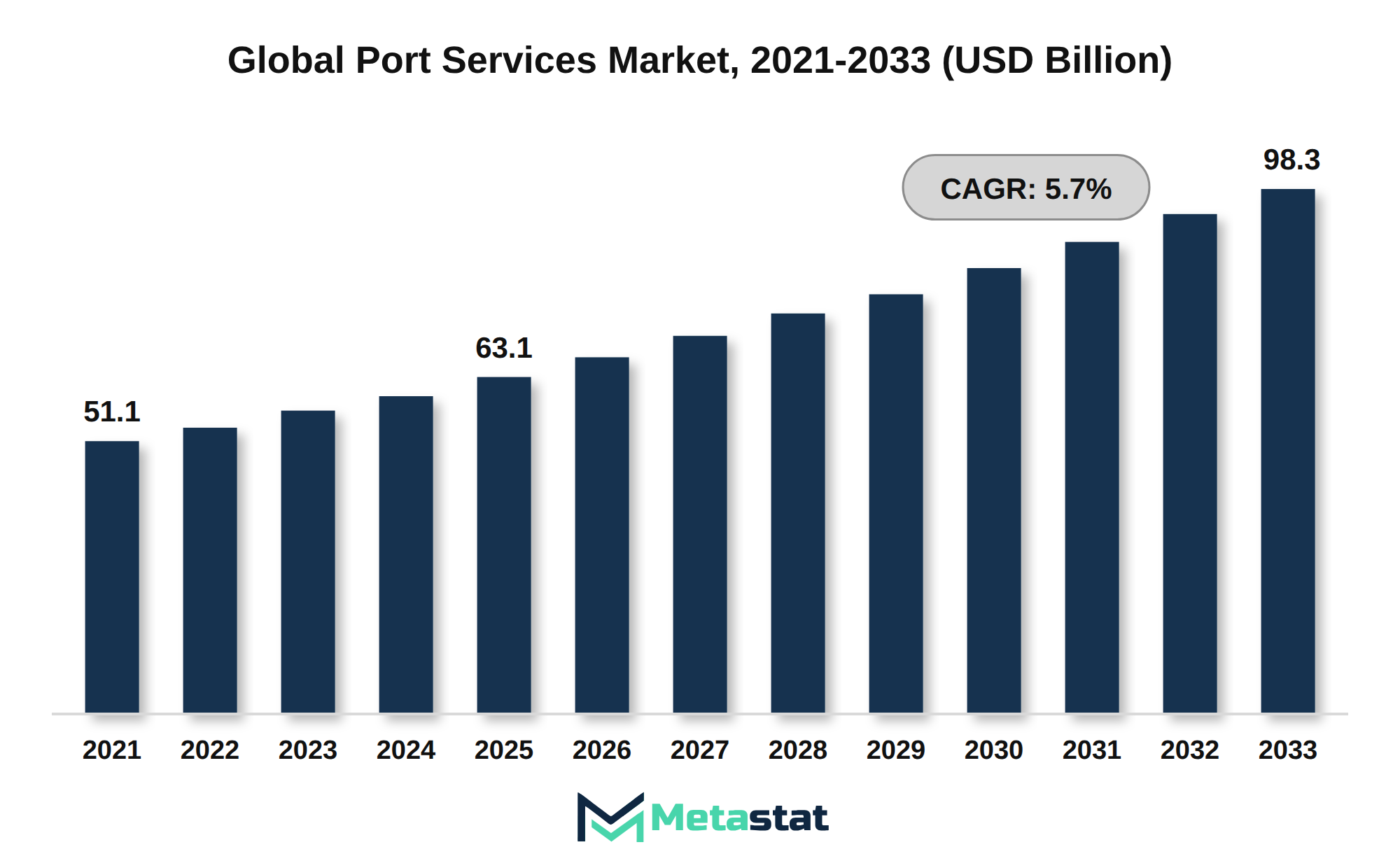
The global Port Services market was valued at USD 63.1 billion in 2025 and is projected to reach USD 98.3 billion by 2033, growing at a CAGR of 5.7% over the forecast period.
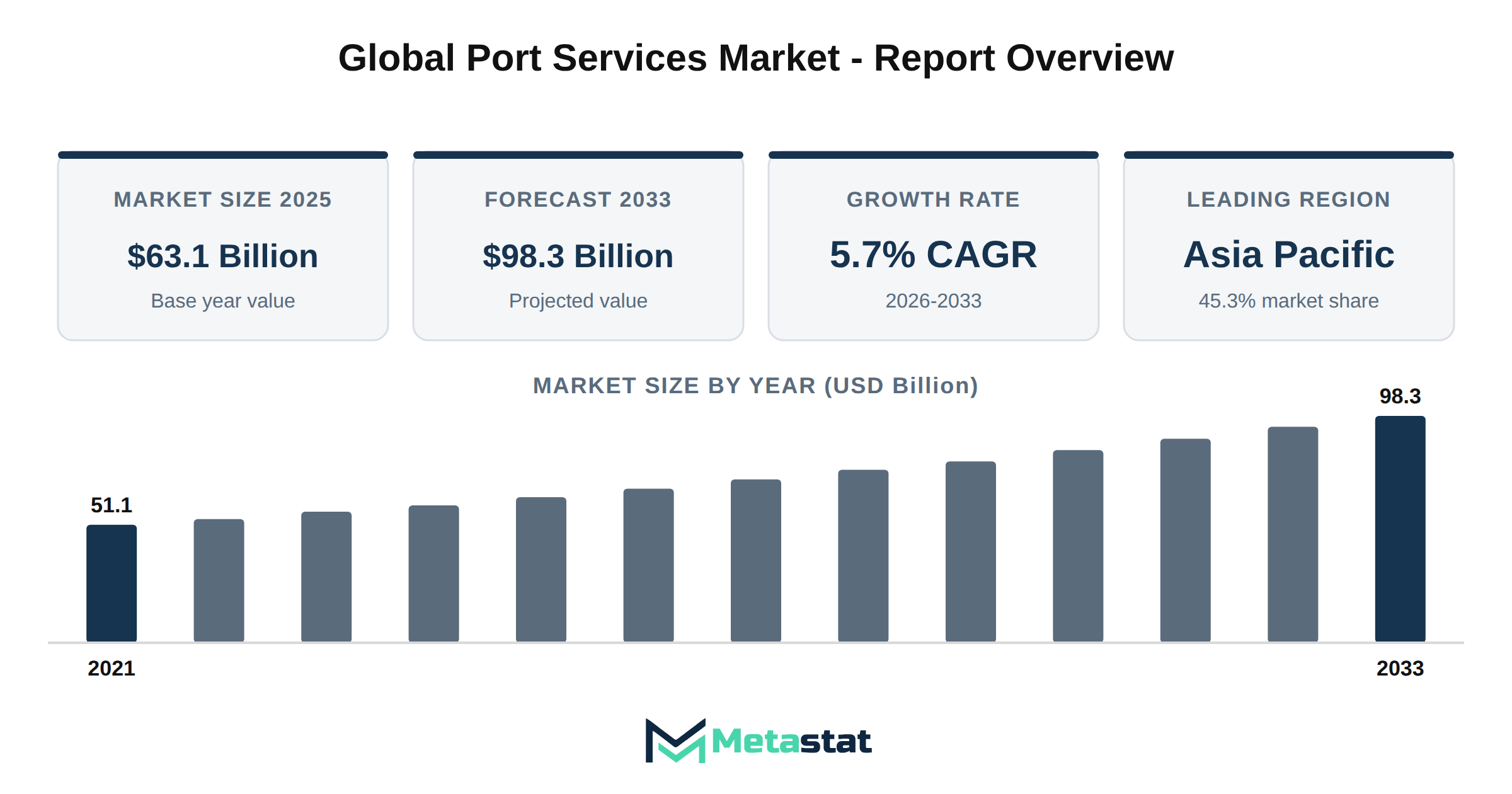
The Port Services market continues to exhibit strong growth, with a base value of USD 63.1 billion in 2025, projected to reach USD 98.3 billion by 2033. This expansion translates to a compound annual growth rate (CAGR) of 5.7% from 2026 to 2033. Historical data indicates steady growth, starting from USD 51.1 billion in 2021 and progressing through USD 59.5 billion in 2024.
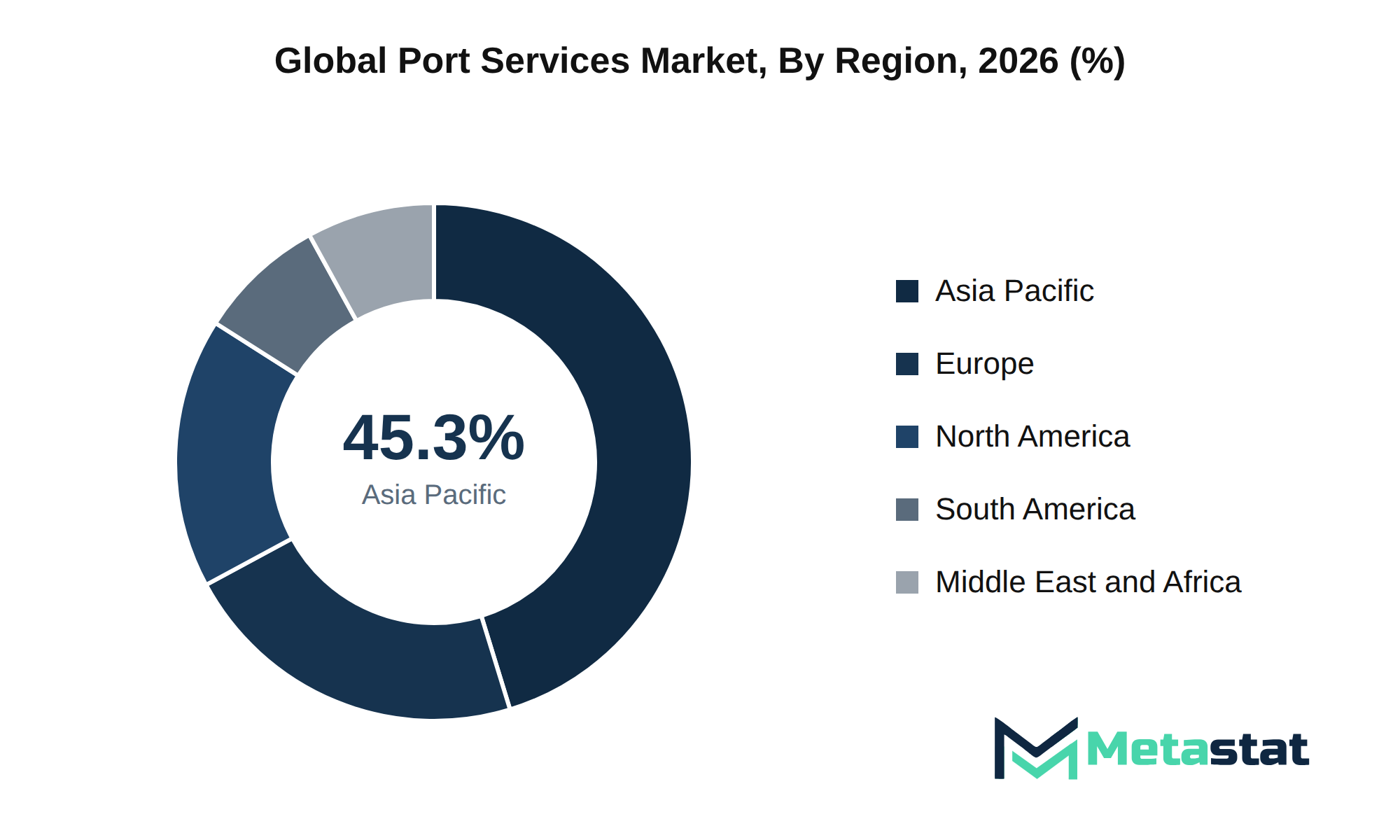
Regional dynamics significantly influence the market, with the Asia Pacific region commanding the largest share at 45.3% in 2025. Europe follows with a share of 21.9%, while North America holds 16.9%. South America and the Middle East and Africa each account for 8%. By 2033, North America is projected to generate USD 15.7 billion, maintaining a CAGR of 5.7% throughout the forecast period.
Market segmentation reveals diverse opportunities across various service types. Cargo Handling Services is expected to grow from USD 20 billion in 2026 to USD 29.2 billion by 2033, reflecting a CAGR of 5.5%. Ship and Vessel Services targets a value of USD 11.4 billion by 2033, supported by a CAGR of 5.3%. Significant growth in Port Equipment and Machinery Services is anticipated, reaching USD 10.1 billion. Marine and Navigation Services contribute to the expanding service offerings, with a projected CAGR of 5.8%, enhancing overall market potential.
Port types play a crucial role in shaping market dynamics. Seaports are expected to increase from USD 31.4 billion in 2026 to USD 45.8 billion by 2033, marking a CAGR of 5.6%. Inland Ports are on track for a value of USD 9.9 billion by 2033, with a CAGR of 5.8%. River Ports and Dry Ports contribute to the diverse offerings, with Dry Ports projected to achieve a CAGR of 6%, reinforcing their significance in the market.
The Port Services market encounters evolving dynamics influenced by various factors, including regulatory compliance, standards, and geopolitical risk frameworks. These elements significantly impact operational strategies and investment decisions across the industry. Companies prioritize adherence to regulations while navigating complex global landscapes, ensuring that service offerings align with national and international standards. The emphasis on compliance drives innovation and shapes the competitive environment, pushing firms to refine their service portfolios.
Ongoing disruptions in supply chains necessitate a re-evaluation of logistics architecture and sourcing strategies. The market increasingly focuses on developing resilient supply chain frameworks capable of adapting to unforeseen challenges. Investment in advanced technologies facilitates improved visibility and efficiency, positioning organizations to respond swiftly to market fluctuations. In this context, the integration of next-generation innovations enhances operational capabilities and supports sustainable transformation initiatives.
Decarbonization efforts and circular economy dynamics further reshape the market. Companies actively pursue strategies to reduce emissions and minimize waste, aligning with broader environmental goals. This transition requires substantial capital allocation for infrastructure investments and the adoption of sustainable practices. The exploration of alternative energy sources and waste management solutions is essential for achieving long-term sustainability objectives.
The market's fragmentation presents both challenges and opportunities. Diverse players contribute to varying service offerings, resulting in a competitive environment that encourages innovation. M&A dynamics remain a focal point for organizations seeking to enhance capabilities and expand market reach. Strategic partnerships and collaborations enable firms to leverage complementary strengths, ultimately driving growth and enhancing customer value.
Macroeconomic headwinds, including inflationary pressures and currency volatility, introduce complexities that influence pricing strategies and operational costs. Organizations remain vigilant in managing these risks while striving for profitability. The strategic outlook for the Port Services market emphasizes the importance of agility and adaptability in navigating a dynamic environment. Corporate imperatives increasingly revolve around leveraging technological advancements to enhance service delivery and meet evolving customer expectations.
High-value recommendations for stakeholders involve prioritizing investments in digital transformation and sustainable initiatives. Embracing innovation and compliance with regulatory standards will position firms for success in a competitive market environment. Strategic foresight and proactive measures will be crucial in capitalizing on emerging opportunities within the Port Services market.
Market Dynamics
Capital investment environments fuel market expansion
Investments in port infrastructure play a critical role in the growth of the Port Services market. Favorable capital investment environments, characterized by increasing GDP growth and venture funding, drive projects that enhance port efficiency and capacity. A surge in public-private spending power further supports this expansion, enabling both state and private entities to pursue large-scale developments and upgrades in port facilities.
Investment in digital transformation initiatives significantly impacts operational productivity. Ports adopting advanced technologies including automation and artificial intelligence streamline processes and reduce overhead costs, enhancing competitiveness. These technological integrations contribute to meeting the rising demand for efficient cargo handling and shipping services.
Infrastructure development, driven by these capital investments, results in improved asset modernization. Enhanced facilities and network capabilities support greater throughput and operational resilience, vital for addressing the increasing complexity of global supply chains. The market benefits from these advancements, which align with the escalating need for rapid and reliable port services across various regions.
The relationship between capital investment environments and technological integration has a profound effect on the Port Services market. This dynamic creates growth opportunities, driving demand for innovative solutions that address evolving consumer behavior and global trade requirements.
Technological integration enhances operational efficiency
Technological integration emerges because a significant growth driver within the Port Services market. Enhanced automation and the adoption of AI technologies streamline operations, reduce labor costs, and improve service delivery across various port functions. Investments in digitizing legacy processes enable ports to operate more efficiently, facilitating real-time data access and analytics for informed decision-making.
Increased operational productivity stems from the ability to optimize cargo handling and logistics through advanced software solutions. This transformation supports shipping companies and logistics providers aiming to enhance their supply chain performance. Consequently, the market experiences heightened demand from stakeholders seeking to improve their operational capabilities while reducing overhead costs. The focus on technological integration aligns with the expectations of modern consumers who prioritize speed and reliability in service delivery.
Technology-driven improvements in port management systems contribute to a more resilient and responsive infrastructure, which is vital in a globally interconnected environment. The Port Services market stands to benefit from continuous innovation, where new technologies and applications enhance service offerings and expand revenue streams. This adaptive approach addresses emerging challenges and accommodates the evolving needs of shippers, thereby driving the market's growth trajectory.
Regulatory compliance increases operational costs
The Port Services market faces significant challenges due to stringent regulatory compliance requirements that increase operational costs across various segments. Regulatory tightening introduces complex legal mandates that demand adherence to environmental and safety standards, increasing the financial burden on service providers. These costs deter investment in infrastructure and innovation, affecting overall market competitiveness.
Macroeconomic headwinds, including inflationary pressures and capital stagnation, further exacerbate this issue. Rising costs of materials and labor impede the ability of companies to maintain margins while complying with regulatory requirements. Such conditions strain financial resources, forcing companies to prioritize compliance over growth initiatives, hindering expansion opportunities within the market.
Supply chain disruptions and geopolitical instability contribute to uncertainties that affect compliance timelines and operational effectiveness. Challenges in sourcing materials resulting from geopolitical tensions lead to delays in meeting regulatory standards, impacting service delivery. The cumulative effect of these restraints limits the market's growth potential, compelling stakeholders to navigate a complex environment of regulatory obligations while managing increased operational costs.
Infrastructure gaps and connectivity deficits impede efficient service delivery and compliance adherence. Many ports operate with outdated facilities that struggle to meet current regulatory standards, resulting in expensive upgrades. This scenario creates a competitive disadvantage, particularly for regions with lagging infrastructure development, affecting overall market viability.
The skill gap in the workforce presents a substantial restraint. The market requires a skilled workforce capable of managing compliance-related tasks effectively. Rising workforce overhead impacts labor costs, complicating operational efficiency and compliance adherence. These factors collectively create a challenging environment for the Port Services market, influencing growth dynamics and competitive strategies.
Geopolitical fragmentation and trade deficits
The Port Services market encounters significant challenges stemming from geopolitical fragmentation and trade deficits. Increasing protectionist policies among nations lead to tariff friction, complicating trade relationships and raising operational costs for port services. Consequently, this environment creates instability in global supply chains, affecting logistics and increasing delivery times.
Technological disruptions further complicate the market. Rapid advancements in automation and digital technologies necessitate complex research and development integrations. These integrations often face interoperability friction, hindering efficiency and increasing the cost of adaptation for existing port services. Logistical disruptions related to supply chain instability increase operational pressures.
Pricing compression emerges from the remain competitive in a saturated market, leading to margin pressures for service providers. Rising input cost structures, driven by material volatility and labor costs, exacerbate financial challenges. The market experiences workforce skill gaps, complicating talent retention efforts and impacting service quality.
Environmental sustainability demands impose further constraints, driven by decarbonization mandates and lifecycle footprints that require port operators to invest in cleaner technologies and practices. These requirements often result in retrofitting barriers and implementation bottlenecks, limiting the market's capacity to evolve swiftly in response to changing downstream demands.
Overall, the Port Services market navigates these intricate challenges while striving to maintain service quality and operational efficiency. Failure to adapt to these pressures risks diminishing competitive advantage and market share in an increasingly complex global environment.
Emerging regional demands drive port services growth
The Port Services market benefits from emerging regional demands driven by rapid industrialization and urbanization in developing countries. This trend leads to increased shipping volumes, necessitating enhanced port capabilities and services. Regions including Asia Pacific, with a projected market share of 45.3%, highlight the significance of local demand in shaping service offerings. Investments in port infrastructure modernization respond to the growing need for efficient cargo handling and logistics support.
Geographical expansion significantly influences market dynamics. Countries within South America and the Middle East and Africa exhibit increasing trade activities, prompting the development of new port facilities and services. This expansion generates new revenue streams for service providers and enhances competition in the market.
Technological disruptions related to automation and digital transformation reshape operational protocols within port services. The ongoing transition towards smart ports incorporates advanced technologies including IoT and AI, promoting process optimization and enhanced service delivery. These innovations align with sustainability imperatives, driving eco-friendly operations and improving overall resource utilization.
Downstream market diversification opens avenues for niche applications within the Port Services market. Companies explore opportunities in specialized cargo handling, including handling liquid bulk or project cargo, enhancing service portfolios. This diversification encourages strategic consolidation among players seeking to strengthen their market position and expand service capabilities.
Evolving buying behaviors influence procurement strategies across the market. A shift towards digital procurement processes enables service providers to streamline operations, reducing lead times and improving customer satisfaction. This transformation aligns with current commercial model transitions, emphasizing efficiency and responsiveness to market demands.
Supply chain localization emerges because a compelling factor within the market. Companies prioritize local sourcing and production to mitigate risks associated with global disruptions. This trend drives investment in regional port services, enhancing resilience and ensuring timely delivery of goods.
Overall, the Port Services market experiences significant opportunities for growth and innovation. The combination of emerging regional demands, technological advancements, and evolving market dynamics positions players to capitalize on new revenue opportunities and strengthen competitive advantages.
Market Segmentation Analysis
The Global Port Services market is segmented based on Port Service Type, Port Type, Cargo Type, and Ownership and Governance.
By Port Service Type, the market is further segmented into:
- Cargo Handling Services
- Ship and Vessel Services
- Port Equipment and Machinery Services
- Marine and Navigation Services
- Warehousing and Storage Services
- Supply Chain and Logistics Services
- Port Security and Safety Services
- Engineering, Maintenance and Repair Services
- Port Environmental and Waste Management Services
- Other Port Services (Pilotage Support, Bunkering Support, Customs and Documentation Services)
Cargo Handling Services
Cargo Handling Services segment is valued at USD 20 billion in 2026 and is projected to reach USD 29.2 billion by 2033, at a CAGR of 5.5% during the forecast period. Demand for cargo handling services experiences growth driven by the increasing volume of international trade and the rise in global shipping activities. The expansion of e-commerce and consumer goods industries supports the need for efficient cargo handling solutions to manage the growing flow of goods through ports. Technological advancements in automation and digitalization enhance the efficiency of cargo handling operations. The adoption of advanced technologies, including robotics and artificial intelligence, increases productivity and reduces operational costs within the cargo handling segment. Investment in next-generation equipment and infrastructure enables the transition toward more integrated and automated systems, which further stimulates market growth. Regulatory compliance regarding safety and environmental standards influences operational practices in cargo handling services. Stricter regulations regarding emissions and waste management compel companies to adopt cleaner technologies and practices, impacting cost structures. However, the transition toward sustainable practices presents opportunities for innovation and differentiation within the market. Increased competition among service providers compels companies to focus on service quality, reliability, and customer satisfaction. This competitive environment encourages investment in training and skill development, ensuring a skilled workforce capable of leveraging new technologies and meeting evolving customer expectations. Overall, the cargo handling services segment demonstrates a positive outlook, driven by ongoing demand, technological advancements, and the need for compliance with regulatory standards within the broader Port Services market.
Ship and Vessel Services
The demand for Ship and Vessel Services within the Port Services market reflects significant growth driven by the increasing complexity of maritime operations. Enhanced safety regulations and environmental compliance standards increase the need for specialized services that ensure vessels operate efficiently and legally. This segment is projected to reach USD 11.4 billion by 2033, at a CAGR of 5.3% during the forecast period. Investment in next-generation upgrades, including digital tracking and automation technologies, facilitates improved operational efficiency and safety in maritime operations. These technological advancements enable service providers to offer more reliable and comprehensive support to vessel operators, enhancing overall service quality. The evolution of services tailored to the unique requirements of various types of vessels, including cargo ships and tankers, further drives segment growth. Competitive pressures in the Port Services market encourage firms to innovate and adapt their offerings. The focus on sustainability and environmental impact management shapes service development, with a growing emphasis on eco-friendly practices. Such developments align with broader industry trends aimed at reducing carbon emissions and promoting efficient resource use. The integration of digital solutions, coupled with a growing emphasis on regulatory compliance, presents strategic opportunity windows for service providers. Adopting advanced technologies improves service delivery and captures new market segments. Consequently, firms with the capability to leverage these trends are well positioned to enhance their market share in the Ship and Vessel Services segment.
Port Equipment and Machinery Services
Growth in the Port Equipment and Machinery Services segment results from increasing demand for efficient and modernized port operations. Ports worldwide focus on upgrading their equipment and machinery to enhance productivity and reduce turnaround times. This trend aligns with the broader Port Services market, which demonstrates a significant shift toward automation and technological advancements. Adoption of next-generation equipment supports operational efficiency and positions ports to handle larger volumes of cargo effectively.
Technological maturation drives the evolution of equipment and machinery, leading to innovative solutions that improve safety and reduce environmental impact. Ports invest in advanced machinery that complies with regulatory standards, ensuring sustainable operations. This investment translates into enhanced service offerings, attracting more clients and increasing revenue potential.
Cost structures in the segment reflect a balance between initial capital investments and long-term operational savings. Ports that adopt state-of-the-art equipment experience reduced maintenance costs and increased reliability. The Port Equipment and Machinery Services segment is projected to reach USD 10.1 billion by 2033, indicating strong growth potential driven by these factors.
End-use dynamics within the segment show a shift toward containerized cargo handling, requiring specialized equipment that enhances efficiency and throughput. This trend aligns with the broader shift in cargo type preferences within the market. Demand for containerized cargo is increasing, prompting ports to invest in the necessary equipment to maintain competitiveness.
Strategic opportunity windows emerge from evolving global trade patterns and increased commodity flows, leading to higher demand for port services. Ports that effectively leverage these opportunities through targeted investments in equipment and infrastructure enhance their market position. Ultimately, the growth of the Port Equipment and Machinery Services segment contributes significantly to the overall growth trajectory of the Port Services market.
Marine and Navigation Services
Growth in the Marine and Navigation Services segment reflects increasing demand for advanced safety and operational efficiency in maritime activities. This demand arises from the need for effective navigation and port operations, driven by rising global shipping activities. Regulatory compliance standards surrounding maritime safety and environmental sustainability influence this segment, pushing operators to adopt innovative navigation solutions. The integration of next-generation technologies, including digital navigation systems and automated vessel tracking, enhances service delivery and operational accuracy, contributing to the segment's expansion.
The Marine and Navigation Services segment is projected to grow at a CAGR of 5.8% during the forecast period. Key participants in the port services market focus on improving service offerings through technological maturation and product evolution. The segment faces pressures from cost structures and pricing volatility, impacting profit margins. Strategic opportunities exist for companies to invest in advanced navigation solutions, enhancing competitive positions while meeting evolving customer demands.
Warehousing and Storage Services
Significant demand for Warehousing and Storage Services arises from the changing logistics landscape, necessitating efficient inventory management and space optimization. Increasing globalization and the expansion of e-commerce drive businesses to enhance their supply chain capabilities. This demand influences the adoption of advanced warehousing solutions that cater to diverse cargo types and streamline operations.
Technological advancements further support segment expansion, with automation and data analytics improving efficiency and accuracy in storage operations. Next-gen upgrades focus on integrating Internet of Things (IoT) applications and artificial intelligence (AI) for inventory tracking and management. These innovations enable real-time data access, facilitating informed decision-making and responsive supply chain management.
Downstream applications across various industries, including retail, manufacturing, and pharmaceuticals, create opportunities for tailored warehousing solutions. Increased consumption shifts, driven by consumer preferences for faster delivery, require facilities capable of adapting to changing market demands. Regulatory compliance standards regarding safety and environmental impact influence service offerings, ensuring that providers maintain high operational standards.
Cost structures in the warehousing segment remain dynamic, with factors including real estate prices and labor costs impacting pricing strategies. Pricing volatility presents challenges, particularly when combined with margin pressures stemming from heightened competition. Strategic opportunity windows emerge for companies that leverage innovative technologies and enhance service differentiation.
Supply chain resilience is increasingly prioritized, with businesses exploring alternative sourcing and storage strategies to mitigate risks. Raw material sourcing issues and logistics vulnerabilities necessitate adaptive approaches to warehousing. This environment creates a competitive landscape where businesses remain agile and responsive to market changes.
Investment in warehousing infrastructure remains critical for sustaining growth within the Port Services market. Firms focus on improving their storage capabilities, integrating advanced technologies, and enhancing overall service offerings. This commitment to innovation and efficiency positions companies for long-term success in a changing market.
Supply Chain and Logistics Services
Growth in Supply Chain and Logistics Services is driven by increasing global trade and heightened demand for efficient transportation solutions. This segment supports industries that rely on timely and cost-effective movement of goods, including retail, manufacturing, and e-commerce. Investments in advanced logistics technology, including real-time tracking and automation, enhance operational efficiency and service reliability, driving market expansion.
Technological advancements enable integration of supply chain services with existing port operations, enhancing overall service offerings. The drive for sustainability influences investments in green logistics initiatives, contributing to regulatory compliance and minimizing environmental impact. Adoption of these initiatives improves corporate responsibility, benefiting companies operating in the port services market.
Supply Chain and Logistics Services face challenges related to fluctuating fuel prices and supply chain vulnerabilities, which impact operational costs. Strategic partnerships and collaborations among key players strengthen resilience against disruptions, promoting stability within the market. The ongoing evolution of consumer preferences, particularly towards faster delivery options, shapes service offerings and influences capacity planning across the segment.
Port Security and Safety Services
Heightened security concerns and regulatory standards drive demand for Port Security and Safety Services. Increasing incidents of maritime crimes, including piracy and smuggling, necessitate robust security measures to safeguard cargo and vessels. Port authorities and operators invest in advanced surveillance technologies, risk assessment protocols, and personnel training to enhance security frameworks. Integrated safety systems improve operational efficiency and ensure compliance with international maritime regulations.
Technological advancements, including biometric systems and automated surveillance, enable real-time monitoring and response capabilities. Adoption of these innovations reflects a shift toward proactive security measures rather than reactive approaches. Growing awareness of liabilities associated with security breaches influences organizations to enhance their safety frameworks, leading to long-term partnerships with security service providers.
The evolving regulatory landscape creates both challenges and opportunities for the market. Compliance with stringent international safety standards requires ports to continuously assess and upgrade their security measures. Investment in training and certification programs for personnel ensures that staff are equipped to manage security risks effectively. This focus on regulatory compliance builds customer trust and enhances the reputation of service providers.
While the Port Services market evolves, investment in security capabilities highlights the importance of resilience in the face of diverse threats. Strategic partnerships between technology providers and port authorities lead to innovative solutions tailored to specific risks. Enhanced security measures protect assets and contribute to operational sustainability and efficiency by minimizing disruptions caused by security incidents.
Engineering, Maintenance and Repair Services
Investment in Engineering, Maintenance and Repair Services ensures the operational efficiency and longevity of port infrastructure. The increasing complexity of port operations necessitates a focus on maintenance strategies that minimize downtime and enhance service reliability. This segment experiences demand driven by the need for regular equipment servicing and the implementation of next-generation upgrades that improve operational resilience.
Technological advancements significantly influence this segment, with innovations in automation and digital monitoring systems enhancing maintenance capabilities. These technologies enable predictive maintenance, reducing unexpected failures and optimizing resource allocation. End-use dynamics reflect heightened scrutiny on regulatory compliance, prompting ports to seek services that ensure adherence to safety and environmental standards.
Port Services market participants recognize the importance of cost structures and pricing volatility in determining service offerings. Economic pressures influence the adoption of advanced maintenance solutions, where efficiency gains translate to improved margins. Strategic opportunity windows arise from trends toward sustainability, with investments directed towards environmentally friendly practices in maintenance and repair operations.
Logistics vulnerabilities related to material sourcing affect the segment, emphasizing the need for robust supply chain resilience. The emergence of disruptive alternatives urges companies to adapt their service portfolios to maintain competitive positioning. A focus on capital investment to modernize maintenance capabilities positions this segment for future growth within the broader market.
Port Environmental and Waste Management Services
Growing environmental concerns and increasing regulatory pressures shape the demand for Port Environmental and Waste Management Services. Industries involved in shipping and logistics prioritize sustainable practices, driving investments into waste management solutions to comply with stricter environmental standards. This shift reflects a trend toward sustainability, influencing operational practices across the market.
Technological maturation advances waste management solutions within ports. Innovations in waste processing technologies enhance efficiency, enabling ports to manage waste more effectively while minimizing environmental impact. Consequently, this technological evolution supports expansion within the segment, aligning with global sustainability goals.
Regulatory compliance serves because a critical factor influencing market dynamics. Countries enforce various regulations and standards governing waste management practices, compelling ports to align operations with these mandates. This alignment not only enhances compliance but positions ports favorably in the eyes of stakeholders and consumers prioritizing eco-friendly practices.
Strategic opportunities arise from investments in next-generation waste management technologies. Advanced systems offer enhanced capabilities in handling, treating, and recycling waste, allowing ports to reduce costs associated with waste disposal. Such innovations present avenues for competitive differentiation within the market.
Ultimately, the focus on environmental sustainability and waste management fuels growth in the Port Services market. Ongoing investments in technology and compliance are expected to drive further demand, promoting healthier operational environments and ensuring ports remain integral players in global supply chains.
Other Port Services (Pilotage Support, Bunkering Support, Customs and Documentation Services)
Demand for Other Port Services, including pilotage support, bunkering support, and customs and documentation services, stems from the essential role they play in facilitating the smooth operation of port activities. Increasing global trade and the movement of goods contribute significantly to this demand, prompting ports to enhance their service offerings to accommodate rising cargo volumes. Regulatory compliance standards create a need for robust customs and documentation services, ensuring that all shipments meet necessary legal requirements. This focus on compliance enhances the overall efficiency of port operations and reduces potential delays in cargo handling.
Investment in technological advancements fuels the evolution of these services, improving service efficiency and accuracy. Modern systems for tracking and managing shipments streamline processes, delivering timely updates to stakeholders and enhancing overall transparency. The need for ports to adapt to evolving trade patterns and logistics demands prompts investment in next-generation upgrades to existing service offerings.
Heightened awareness around environmental sustainability influences the approach to bunkering support services, driving the adoption of greener fuels and practices. Ports prioritize eco-friendly solutions, positioning themselves competitively in a market increasingly concerned with environmental impact. Cost structures associated with these services evolve owing to technological maturation, which leads to improved operational efficiency, enabling ports to maintain competitive pricing while enhancing service quality. The Port Services market continues to adapt, ensuring that all aspects of port operations respond effectively to changing global demands.
By Port Type, the market is further segmented into:
- Seaports
- Inland Ports
- River Ports
- Dry Ports
- Container Terminals
- Bulk and Multipurpose Ports
Seaports
Growth in the seaports segment reflects the increasing global trade and logistics activities, driving demand for efficient cargo handling and vessel services. The segment is valued at USD 31.4 billion in 2026 and is projected to reach USD 45.8 billion by 2033, at a CAGR of 5.6% during the forecast period. Expansion catalysts include advancements in port infrastructure, technological innovation in cargo management systems, and enhancements in operational efficiency. Growing containerization trends further influence the adoption of seaport services, driven by shipping lines shifting towards larger vessels that require sophisticated handling capabilities.
Increased focus on regulatory compliance and environmental sustainability enhances the segment's growth prospects. Investments in green technologies and practices lead to improved efficiency in operations, benefiting not only port authorities but shipping companies and logistics providers. Strategic opportunity windows emerge through partnerships between public and private sectors, optimizing resource allocation and enhancing service delivery. The relationship between global supply chain resilience and local governance shapes the dynamics of the Port Services market, ensuring continued investment in seaport capabilities and infrastructure.
Inland Ports
Inland Ports represent a growing sub-segment within the Port Services market, estimated to reach USD 9.9 billion by 2033, at a CAGR of 5.8% during the forecast period. Increasing urbanization and the need for efficient distribution networks drive demand for these ports, facilitating connectivity between maritime and inland transportation. The expansion of trade agreements and regional economic cooperation encourages investment in infrastructure development, improving the operational capabilities of inland ports.
Technological maturation within logistics and supply chain management significantly influences the evolution of inland ports. Automated systems and advanced tracking technologies streamline operations, improving efficiency and reducing turnaround times. The trend towards sustainability compels stakeholders to adopt environmentally friendly practices, which increases the appeal of inland ports, reflecting their contribution to reduced emissions and optimized land use.
Shifts in consumer behavior, characterized by the rise of e-commerce, drive the demand for inland port services. Retailers require rapid delivery and efficient supply chains, pushing for integrated logistics solutions. Regulatory compliance standards, including environmental policies, influence investment strategies and operational frameworks, necessitating adaptation from port operators. These dynamics create strategic opportunity windows for improving service offerings and expanding market presence.
Supply chain resilience becomes critical amid global disruptions, prompting stakeholders to prioritize diversification and adaptability in sourcing and logistics. The inland ports segment stands to benefit from increased investment aimed at improving infrastructure resilience and capacity. This focus on strategic investments enhances the competitive environment, allowing market players to optimize their service delivery and capture emerging opportunities.
River Ports
Anticipated growth in the River Ports segment stems from increasing investments in infrastructure and the expansion of inland waterways. These strategic developments enhance connectivity between riverine networks and global supply chains, facilitating smoother cargo movement. The demand for River Ports is supported by rising international trade and the need for efficient logistics solutions. The segment is projected to reach USD 7.1 billion by 2033.
Technological advancements play a significant role in improving operational efficiency within the River Ports sector. Automation in cargo handling and real-time tracking systems enhances service delivery and minimizes delays. These innovations drive user satisfaction and strengthen long-term relationships among stakeholders. Environmental regulations influence operational practices, pushing ports to adopt sustainable methods and technologies.
Investment trends indicate a shift toward modernizing port infrastructure and expanding capacity. This trend reflects a response to heightened demand for sustainable shipping solutions and the growing importance of reducing carbon footprints. While the Port Services market navigates these changes, stakeholders enhance their competitive edge through continuous improvement and adaptation to regulatory standards. This ongoing evolution reinforces growth in the sector.
Market players face challenges related to pricing volatility and margin pressures, especially in a landscape marked by fluctuating fuel costs and economic uncertainties. Effective supply chain management allows companies to mitigate these issues while maintaining service quality. Continuous evaluation of market dynamics ensures that stakeholders identify strategic opportunities for growth and development.
Dry Ports
Growth in the Dry Ports segment is projected to grow at a CAGR of 6% during the forecast period. Factors influencing this expansion include increasing urbanization and the demand for efficient logistics solutions. Dry ports serve because key intermodal hubs, facilitating the movement of goods and enhancing supply chain efficiency. Adoption of advanced technologies within these facilities boosts operational effectiveness, contributing to cost reduction and improved service delivery.
Investment in infrastructure development, driven by governmental policies supporting logistics enhancements, drives growth. The emergence of e-commerce significantly impacts demand dynamics, increasing the need for robust logistics solutions to meet consumer expectations. Stakeholders in the Port Services market recognize strategic opportunities to develop dry port facilities, thereby enhancing the overall logistics framework.
Rising global trade volumes drive the demand for dry ports, which serve because essential nodes in the transportation network. The segment's growth is supported by evolving consumption patterns, leading to increased containerized cargo traffic. The need for compliance with environmental standards influences investments in sustainable practices within dry ports, aligning with the broader goals of the Port Services market.
The Dry Ports segment experiences significant growth within the market, buoyed by favorable regulatory frameworks, technological advancements, and changing consumer behaviors. The strategic positioning of dry ports within logistics networks supports resilience, enabling sustained expansion in this segment.
Container Terminals
Container terminals play a critical role in the Port Services market by facilitating the efficient handling and transfer of containerized cargo. Primary demand drivers for this sub-segment include the growing globalization of trade and the increasing volume of containerized shipments. Enhanced adoption of automated systems and digital technologies in container terminals contributes to operational efficiency and reduced turnaround times. Urbanization and rising consumer demand for goods drive the need for more sophisticated container handling capabilities, reshaping the competitive dynamics in the market.
Technological maturation influences container terminals, driven by innovations in container handling equipment and management software that streamline operations. Next-generation upgrades, including the integration of artificial intelligence and Internet of Things technologies, enhance real-time tracking and monitoring of cargo movements. This significantly improves logistical planning. Product evolution focuses on sustainability, with terminals adopting eco-friendly practices and equipment to address environmental concerns and align with regulatory compliance standards.
End-use dynamics reflect a shift towards just-in-time delivery models, prompting terminals to optimize their operations for rapid cargo turnover. Rising consumption shifts towards e-commerce increase the volume of containerized freight, reinforcing the importance of container terminals in supply chains. Investments in advanced technology and infrastructure impact cost structures for these facilities, which are necessary to meet evolving market demands.
Pricing volatility arises from fluctuating global trade dynamics and changing supply chain conditions, influencing profit margins for operators. Strategic opportunity windows appear for operators focusing on enhancing operational resilience against disruptions including trade wars and global pandemics. Container terminals represent a key segment within the Port Services market. Continuous investment and innovation are essential for maintaining competitive advantage and meeting future demands.
Bulk and Multipurpose Ports
Increasing demand for Bulk and Multipurpose Ports derives from the need for flexibility in handling various cargo types, attracting a diverse range of end-users. These ports support the efficient management of both bulk and general cargo, enhancing their appeal among shipping companies. Capital investment in infrastructure, technology, and operations contributes to segment expansion, enabling ports to adapt to changing market dynamics.
Technological advancements in cargo handling and logistics systems enhance operational efficiency within this segment. Adoption of automated systems and data-driven solutions improves operational capabilities, allowing ports to streamline processes and reduce turnaround times. The trend toward digitalization in logistics reflects a broader industry shift, enabling better tracking and management of cargo.
Regulatory compliance standards influence operations within Bulk and Multipurpose Ports. Adherence to environmental regulations and safety protocols shapes operational practices, ensuring that ports remain competitive while minimizing their ecological footprint. Meeting these standards increases operational costs, affecting pricing strategies across the market.
Supply chain resilience plays a critical role in the growth of this segment, addressing vulnerabilities linked to geopolitical factors and global trade fluctuations. Ensuring robust connections between supply chains and port operations enhances reliability and strengthens partnerships with logistics providers. This interconnected approach drives overall demand for port services, reinforcing the significance of Bulk and Multipurpose Ports within the broader Port Services market.
By Cargo Type, the market is further segmented into:
- Containerized Cargo
- Dry Bulk Cargo
- Liquid Bulk Cargo
- Breakbulk and General Cargo
- Vehicle Cargo
- Project and Heavy-Lift Cargo
Containerized Cargo
Valued at USD 30.7 billion in 2026, the Containerized Cargo segment is projected to reach USD 44.9 billion by 2033, at a CAGR of 5.6% during the forecast period. The increasing reliance on containerized shipping reflects ongoing shifts in global trade dynamics, with businesses seeking efficient and reliable transportation solutions. Rising e-commerce activities and the demand for quick delivery of goods contribute significantly to the volume of containerized cargo handled at ports.
Expansion catalysts include advancements in port infrastructure and logistics technologies, which enhance the overall efficiency of cargo handling operations. Adoption of automation and smart technologies in container terminals supports faster turnaround times, improving operational efficiency and customer satisfaction. Environmental sustainability initiatives influence the design and operation of container shipping practices, driving investments in eco-friendly technologies and practices.
Downstream applications of containerized cargo span various industries, including consumer goods, automotive, and electronics. This diversification of cargo types enhances the segment's stability and growth potential. Regulatory compliance standards focused on safety, security, and environmental impacts create a robust framework guiding the operations of the segment, ensuring stakeholders adhere to best practices.
Cost structures within the segment remain influenced by fluctuating freight rates and operational expenses, impacting profit margins. Pricing volatility associated with global economic shifts poses challenges, requiring players in the market to remain agile and strategic in their pricing approaches. Capital investment continues to flow into container handling technologies, reflecting a commitment to maintaining competitive advantages and operational capabilities.
Dry Bulk Cargo
Increasing industrial activities and infrastructure development globally drive demand for the Dry Bulk Cargo sub-segment within the Port Services market. This segment serves multiple industries, including construction, agriculture, and energy, requiring the transportation of raw materials including coal, iron ore, and grains. The anticipated growth in urbanization and industrialization leads to higher consumption of these materials, further driving demand.
Technological advancements contribute to segment expansion, particularly through enhanced cargo handling equipment and automation. Investments in next-generation upgrades streamline operations, improving efficiency and reducing turnaround time at ports. Modernized equipment effectively supports the increased volume of dry bulk cargo, addressing the evolving needs of end users.
Regulatory compliance standards and environmental regulations significantly impact the market. Stricter emissions regulations prompt operators to invest in cleaner technologies, ensuring sustainable practices in dry bulk transport. Compliance provides a competitive advantage for companies that adapt to these requirements, enhancing their market presence.
Cost structures face pressures from fluctuating raw material prices and operational costs. Companies in this segment leverage strategic sourcing and efficient logistics to mitigate these challenges. Market participants focusing on supply chain resilience and risk management strategies maintain profitability amid pricing volatility.
Demand for the Dry Bulk Cargo segment is estimated to reach USD 19.5 billion by 2033, at a CAGR of 5.5% during the forecast period. Strategic opportunity windows arise from emerging markets that boost demand for dry bulk materials, presenting avenues for growth in the Port Services market. Capital investments in infrastructure and logistics capabilities enhance competitive positioning, positioning companies for long-term success.
Liquid Bulk Cargo
Increasing demand for Liquid Bulk Cargo results from growth in sectors including chemicals, pharmaceuticals, and food processing. Companies in these industries require efficient transportation and handling of liquid materials, contributing to the segment's expansion. Anticipated advancements in port infrastructure and handling technologies enhance operational efficiency, facilitating the movement of liquid bulk shipments.
The Liquid Bulk Cargo segment is expected to reach USD 14.4 billion by 2033. Regulatory compliance standards surrounding safety and environmental impacts influence market dynamics, prompting investment in modernized storage facilities and transportation methods. Price volatility in raw materials creates a complex environment, where effective supply chain management is essential for maximizing profitability.
Strategic opportunity windows arise from emerging markets that exhibit strong growth in demand for liquid goods. Market participants focus on establishing partnerships and improving logistics capabilities to counteract potential disruptions. Continued advancements in technology, particularly concerning automation and data analytics, support segment growth by optimizing operations and reducing costs in the Port Services market.
Breakbulk and General Cargo
Growth in the Breakbulk and General Cargo segment reflects increasing demand from various industrial sectors, including construction, automotive, and energy. The segment is projected to grow at a CAGR of 5.9% during the forecast period. Rising global trade and infrastructure projects drive demand, enhancing the need for effective cargo handling solutions. Regulatory compliance standards concerning safety and environmental impact influence operational practices within the market, driving investments in technology and efficiency improvements.
Raw material sourcing remains a critical factor, with fluctuations in pricing impacting operational margins. An increased focus on supply chain resilience has prompted stakeholders to adopt innovative solutions, mitigating logistics vulnerabilities. The emergence of disruptive alternatives, including automated cargo handling systems, shapes future strategies for market participants. The capital investment outlook remains positive, supported by ongoing projects and advancements in technology, promising a more efficient and responsive market environment.
Vehicle Cargo
Automotive industry trends and increased consumer mobility drive demand for Vehicle Cargo within the Port Services market. Rising production levels of vehicles, alongside expanding global trade networks, strengthen the segment. Innovations in vehicle logistics and transportation technologies lead to more efficient handling and movement of vehicles through various ports.
Emerging markets demonstrate a significant appetite for imported vehicles, driving growth in Vehicle Cargo services. The rise of electric and hybrid vehicles introduces new considerations for cargo handling, including specialized equipment for safe transport. Regulatory compliance around emissions and safety standards influences operational practices related to Vehicle Cargo.
Cost structures for Vehicle Cargo face pressures from fluctuating fuel prices and logistical challenges. Investments in advanced tracking systems and automation technologies enhance supply chain resilience, allowing firms to optimize operations and reduce downtime. Competitive dynamics within the Port Services market highlight the strategic importance of efficient Vehicle Cargo handling for maintaining market share.
Substitution risks arise from shifts toward alternative transportation methods, prompting stakeholders to adapt their service offerings. The increasing popularity of ride-sharing platforms transforms consumption patterns for vehicles, impacting traditional cargo flows. Strategic opportunity windows emerge for businesses that innovate and adapt to the evolving nature of Vehicle Cargo services.
Project and Heavy-Lift Cargo
Increasing demand for Project and Heavy-Lift Cargo arises from infrastructure projects and industrial expansions worldwide. Key drivers include the growth in construction activities, the rise of energy projects, and significant investments in renewable energy sectors. These factors contribute to increased transportation of oversized and heavy items, essential for various industries. The complexity involved in handling such cargo necessitates specialized equipment and services, influencing the operational strategies of ports.
Technological maturation enhances capabilities for handling project and heavy-lift cargo. Innovations in lifting equipment and logistics management improve efficiency and safety during transportation, impacting overall operational costs. The adoption of advanced tracking systems ensures transparency and reliability, which is vital for stakeholders involved in the Port Services market.
Regulatory compliance standards significantly influence operations within this sub-segment. Adhering to safety regulations and environmental standards is critical, particularly for heavy-lift projects. This compliance affects the cost structures and pricing strategies of service providers, resulting from investments in sustainable practices and equipment that become imperative.
Strategic opportunity windows appear because global supply chains adapt to changing market dynamics. Investment in port infrastructure to accommodate oversized cargo enhances competitiveness. These developments create potential for future growth, ensuring that service providers align their offerings with the evolving demands of the market.
By Ownership and Governance, the market is further segmented into:
- State-Owned Ports
- Private Ports
- Public-Private Partnership / Concession Ports
- Port Authority-Operated Ports
State-Owned Ports
Investment in State-Owned Ports is set to enhance operational capabilities, reflecting a commitment to upgrading infrastructure and services. The segment is valued at USD 26.6 billion in 2026 and is projected to reach USD 38 billion by 2033, at a CAGR of 5.3% during the forecast period. This growth is driven by increasing government initiatives to improve port facilities and meet the rising demand for efficient cargo movement.
Policy frameworks often favor the development of state-owned entities, leading to enhanced funding and support for technology upgrades. Increased focus on regulatory compliance standards ensures that ports align with international shipping and environmental standards, creating an environment conducive to growth. The segment's expansion results from a strategic push to modernize existing infrastructure while integrating next-gen technologies that streamline operations and enhance service delivery.
End-use dynamics in the Port Services market indicate a growing reliance on state-owned ports for handling critical cargo types, including containerized and liquid bulk cargo. The demand shift towards efficient handling and processing capabilities allows these ports to adapt to market changes swiftly. Ongoing capital investments in state-owned facilities suggest a strong outlook for future growth, positioning these ports because essential players in the evolving global trade.
Private Ports
Increasing interest in Private Ports stems from heightened efficiency and competitive advantages offered by these facilities. Many countries prioritize the development of private ports to attract foreign investment, enhance trade logistics, and improve overall supply chain performance. The flexibility of private ownership allows for tailored operations that meet specific regional demands, which contributes to the attraction of new business. This segment is estimated to reach USD 16 billion by 2033, at a CAGR of 6.6% during the forecast period.
Regulatory compliance influences the landscape for private ports. Stricter environmental regulations and safety standards push operators to invest in advanced technologies and sustainable practices. This commitment to compliance and innovation positions private ports favorably within the Port Services market and allows them to capture a larger share of cargo movements.
Technological advancements further enhance the operational capabilities of private ports. Investments in automation, digitization, and smart logistics systems streamline processes and improve productivity. These improvements result in reduced turnaround times and lower operational costs, creating a more attractive proposition for shipping companies seeking efficient port options.
Growing demand for containerized cargo significantly impacts private ports, driven by the specialized infrastructure these facilities feature to accommodate large container vessels. The anticipated growth of this cargo type is expected to drive substantial investment in private port facilities, ensuring they remain competitive and relevant within the market.
Private ports benefit from strategic partnerships with shipping lines and logistics providers, facilitating smoother operations and enhanced service offerings. This collaboration drives customer loyalty, ultimately contributing to the sustained expansion of the segment and its integral position in the broader Port Services market.
Public-Private Partnership / Concession Ports
Growth in the Public-Private Partnership / Concession Ports segment aligns with increasing infrastructure investments and the need for efficient port operations. Public-private partnerships facilitate access to capital and expertise, enhancing service delivery and operational efficiency. The segment experiences strong demand from governmental bodies and private entities seeking collaborative models to optimize port functionalities. Leveraging shared resources and innovative technology enables these ports to achieve better service levels and operational performance.
Regulatory compliance influences the operational landscape. Enhanced safety and environmental standards drive investments in infrastructure upgrades and next-generation technologies. Compliance with these regulations often results in increased operational costs, impacting overall profitability. However, adherence to standards enhances reputation, attracting more stakeholders to engage with public-private partnerships.
The Public-Private Partnership / Concession Ports segment is expected to reach USD 25.6 billion by 2033. Demand for these ports reflects shifts in consumption patterns and the increasing necessity for integrated logistics solutions. The trend towards privatization and concession agreements establishes the operational framework for ports, ensuring service continuity and efficiency.
Capital investment outlook remains positive, with stakeholders recognizing the strategic importance of these ports within the broader Port Services market. While global trade expands, the focus on enhancing port infrastructure through public-private collaborations becomes increasingly critical. Emphasizing innovation and technological advancements, stakeholders in this segment are well positioned to navigate future challenges and seize emerging opportunities.
Port Authority-Operated Ports
Growth in the Port Authority-Operated Ports segment is projected to grow at a CAGR of 5.1% during the forecast period. This segment benefits from increasing investments in infrastructure and operational efficiency, driven by the need for enhanced port management and regulatory compliance. With rising global trade volumes, the demand for efficient port operations intensifies, leading to higher capacity requirements and technological advancements in port services. The role of Port Authority-Operated Ports extends to ensuring effective logistics and supply chain resilience in the Port Services market, catering to various industries that rely on efficient cargo handling and vessel services.
Future developments in this segment will focus on next-generation upgrades, including automation and digitalization, which improve operational efficiency and reduce turnaround time for vessels. Regulatory compliance standards further push port authorities to adopt innovative technologies, thus enhancing service quality and safety measures. The evolving landscape of global trade and shipping patterns highlights the importance of this segment within the overall Port Services market, reflecting strategies aimed at sustaining competitive advantage through improved service delivery and cost-effectiveness.
By Region
Based on geography, the Global Port Services market is divided into North America, Europe, Asia-Pacific, South America, Middle East, and Africa.
North America
The North America Port Services market demonstrates significant growth potential, projecting an expansion at a CAGR of 5.7% within the forecast period, reaching a market size of USD 15.7 billion by the end of 2033. The region's share of the global market in 2025 highlights its important role in the overall dynamics of the sector.
Primary demand drivers for port services in North America include increasing trade volumes and rising consumer expectations for efficient logistics. The growth of e-commerce and the resurgence of manufacturing in the United States contribute to heightened demand for cargo handling services and efficient supply chain solutions. Infrastructure modernization initiatives across major ports support this growth, enhancing operational efficiency and capacity.
Localized manufacturing densities and nearshoring initiatives play critical roles in the regional market's evolution. Many companies opt for local production to mitigate supply chain risks, resulting in increased demand for services at seaports and inland ports. The strategic positioning of North American ports along key trade corridors further facilitates the movement of goods, supporting the market's growth.
Cross-border trade corridors, particularly between the United States, Canada, and Mexico, significantly influence market dynamics. Enhanced cooperation among these countries promotes trade agreements that simplify logistics, streamline customs processes, and encourage investment in port infrastructure. This collaborative approach positions North America because a vital hub for international trade.
The market features a competitive landscape populated by domestic leaders committed to innovation and efficiency. Companies actively seek opportunities for consolidation to strengthen their market positions and enhance service offerings. The focus on localized procurement dynamics and cultural nuances influences B2B buying behaviors, necessitating tailored strategies to meet regional demands.
Europe
Europe represents a significant portion of the Port Services market, contributing 21.9% to the global share in 2025. Countries including Germany, France, the UK, Italy, Spain, and Russia demonstrate robust demand for various port services driven by strategic geographic locations and established trade corridors. The region exhibits mature market dynamics characterized by a mix of high-value replacement cycles and incremental growth vectors, particularly in cargo handling and vessel services.
Infrastructure modernization remains a key focus, with investments directed towards enhancing operational efficiency at seaports and inland ports. Cross-border trade corridors facilitate increased regional trade, while localized manufacturing densities and nearshoring initiatives contribute to steady demand for port services. The emergence of domestic market participants strengthens the competitive landscape, promoting vendor consolidation trends that support market growth.
Geopolitical fragmentation influences regional trade policies, necessitating compliance with local regulations that shape procurement dynamics. European markets emphasize cultural nuances in B2B buying behaviors, which affect service offerings and customer engagement strategies. The interaction of these factors ensures that the Port Services market in Europe continues to evolve, presenting new opportunities for growth and investment.
Asia-Pacific
The Asia-Pacific region stands out due to a key player in the Port Services market, holding a share of 45.3% in 2025. Rapid industrial growth across countries including China, Japan, India, and South Korea drives the demand for various port services. Infrastructure modernization initiatives focus on enhancing operational efficiency and capacity at seaports, supporting the growth of cargo handling services and marine navigation services. The increased volume of trade within Southeast Asia and between regional neighbors contributes to expanding cross-border trade corridors, creating a collaborative environment for port services.
Emerging market front-runners, particularly in China and India, experience substantial investment in port infrastructure. This investment reflects the escalating demand for efficient logistics and supply chain solutions. The concentration of localized manufacturing densities and nearshoring initiatives within the region further increases the demand for port services. Local compliance mandates and regulatory frameworks play a vital role in shaping the competitive landscape, leading to vendor consolidation trends and strategic entry barriers for new players.
Significant replacement cycles for aging port facilities and equipment enhance growth opportunities in the market. Domestic market participants leverage regional resource availability and energy grid resiliency to maintain a competitive edge. Cultural nuances influencing regional B2B buying behaviors affect procurement dynamics, emphasizing the importance of tailored service offerings. Investment in advanced technologies and sustainable practices emerges because a critical factor in meeting evolving market demands.
South America
Brazil and Argentina represent key players in the South American Port Services market, contributing significantly to regional growth. The increasing emphasis on infrastructure modernization drives demand for efficient port operations, particularly in cargo handling and maritime services. In Brazil, government investments in seaport expansion and modernization efforts align with strategic trade objectives, enhancing the overall operational capacity of the ports. Argentina's growing focus on improving logistics infrastructure supports the rise in both state-owned and private port operations.
The region's market demonstrates potential for growth through an expanding network of cross-border trade corridors. Enhanced regional connectivity encourages trade among South American countries, positioning the market for increased activity in freight and logistics. Localized manufacturing initiatives contribute to heightened demand for port services, reflecting a shift toward regional supply chains that favor domestic production and distribution. Geopolitical considerations and trade policy shifts influence the operational landscape of the market.
In terms of competitive dynamics, several domestic market participants invest in technology and services to enhance operational efficiency and meet evolving customer demands. The influx of foreign direct investment supports the development of advanced port facilities, which positions the market for sustained growth. Cultural nuances and regional B2B buying behaviors further shape procurement strategies among suppliers and buyers within the market, driving tailored service offerings to meet specific needs.
Overall, the South American Port Services market anticipates steady growth, supported by regional demand drivers, infrastructure development, and enhanced trade facilitation measures. This trajectory reflects the market's potential to achieve significant milestones through strategic investments and localized initiatives in the coming years.
Middle East and Africa
The Port Services market in the Middle East and Africa is characterized by a growing focus on infrastructure modernization and investment in capacity expansion. Countries including Saudi Arabia and the UAE emphasize the enhancement of port facilities to support emerging trade routes and regional economic development. South Africa, with its strategic location, attracts investment aimed at improving logistical efficiency and strengthening trade links within the continent.
Emerging market front-runners in the region demonstrate a commitment to advancing their port services capabilities. Ongoing initiatives to enhance supply chain regionalization and nearshoring activities increase local manufacturing densities, generating demand for cargo handling and related services. The market experiences incremental growth driven by high-value replacement cycles, which align with increasing expectations for improved operational efficiency and service quality.
Regional competitive dynamics show a dynamic interaction among local vendors and international players, facilitating a diverse range of service offerings. The competitive environment encourages consolidation trends, allowing domestic market participants to leverage their positions and enhance service delivery. Cultural nuances and regional B2B buying behaviors influence procurement dynamics, leading to tailored solutions that meet specific market needs.
Geographic regulatory frameworks and local compliance mandates play a crucial role in shaping market dynamics. Trade policy shifts impact cross-border trade corridors, driving economic activity and demand for efficient port services. Foreign direct investment flows into the region indicate a favorable environment for stakeholders looking to capitalize on growth opportunities in the Port Services market.
Competitive Landscape and Strategic Insights
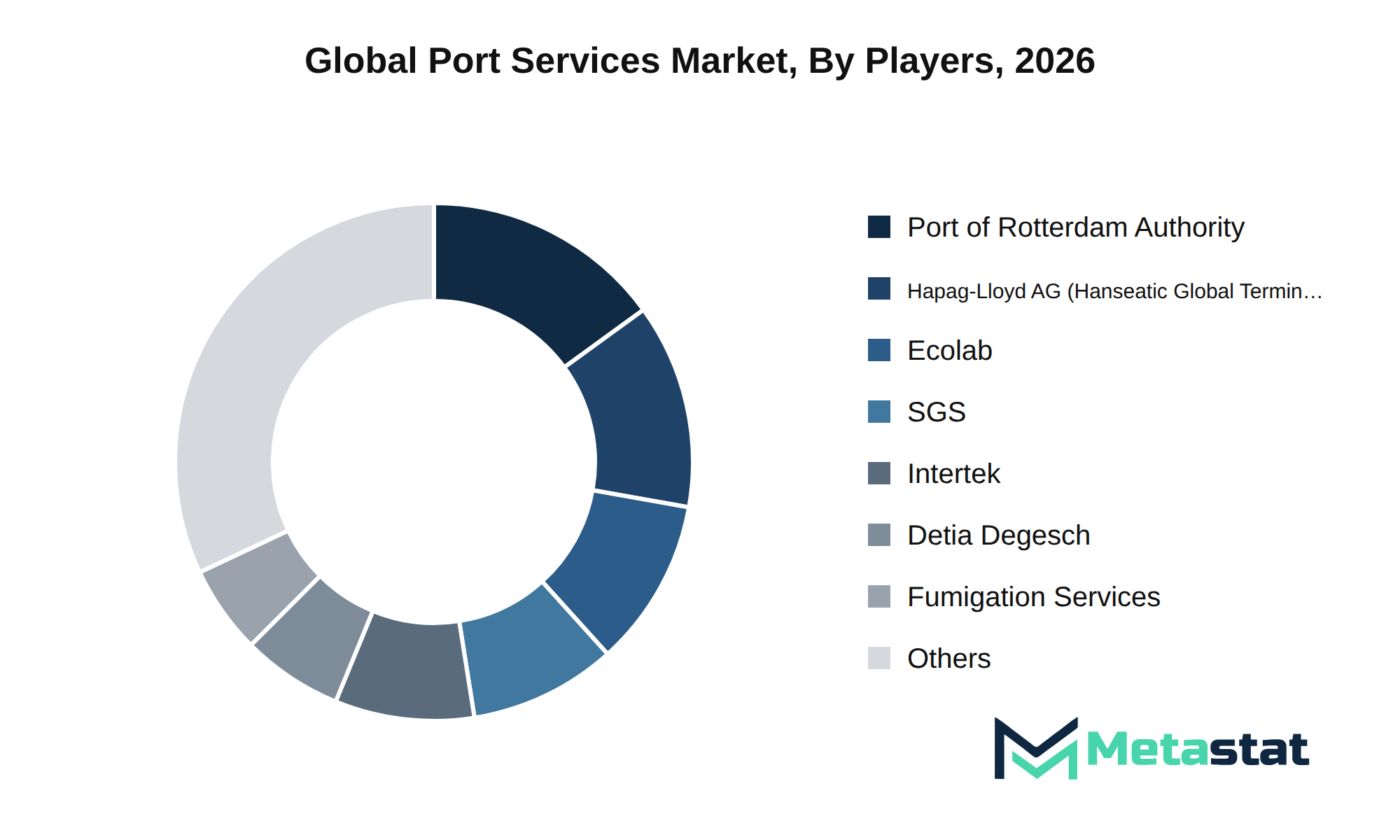
The Port Services market experiences significant competition among various players employing a range of strategies to enhance their positions. Companies engage in strategic consolidation through mergers and acquisitions to strengthen market share and expand service offerings. Major players including Detia Degesch Group and Ecolab Inc. explore partnerships and alliances, facilitating entry into new geographic markets and enhancing product differentiation.
Pricing architectures vary, with several companies focusing on value-based pricing to capture premium segments. This approach aligns with trends in customer retention strategies, where brand equity plays a critical role. Companies like DP World Limited and Hapag-Lloyd AG (Hanseatic Global Terminals) leverage established brands to attract and retain customers while minimizing switching costs associated with changing service providers.
Research and development efforts drive innovation within the market, enabling companies to strengthen proprietary technology moats. For example, SGS SA and Intertek Group plc actively invest in R&D pipelines to introduce advanced solutions in service delivery. Ongoing investment in technology and customer-centric strategies will shape the market's evolution through 2033.
Forecast and Future Outlook
Market size is forecast to rise from USD 63.1 billion in 2025 to over USD 98.3 billion by 2033. This growth reflects a 5.7% compound annual growth rate (CAGR), demonstrating the market's resilience amid evolving economic conditions. Various factors influence this trajectory, including macroeconomic scenarios, changes in downstream demand, and maturation within core industries.
The bull case anticipates accelerated adoption of next-generation technology, enhancing operational efficiencies and driving investment in infrastructure. In contrast, the bear case presents risks arising from geopolitical realignments and potential disruptions in global supply chains, which could hinder growth. Strategic capital allocation directives emphasize the importance of addressing emerging white-space opportunities, focusing on unmet enterprise needs within the market.
Regulatory evolution influences the market, with imminent compliance milestones affecting investment planning. Organizations remain adaptable to regulatory changes while aligning with executive-level strategic imperatives to ensure future growth. This dynamic environment presents both challenges and opportunities, highlighting the need for defensibility roadmaps to navigate market complexities.
Trends including infrastructure commitments and capital expenditure investment vectors signal a positive outlook for the market. The integration of advanced technologies alongside ongoing research and development commercialization timelines supports a positive growth trajectory. Collectively, these factors position the market for continued expansion and resilience in response to changing economic conditions.
Port Services Market Key Segments
By Port Service Type:
- Cargo Handling Services
- Ship and Vessel Services
- Port Equipment and Machinery Services
- Marine and Navigation Services
- Warehousing and Storage Services
- Supply Chain and Logistics Services
- Port Security and Safety Services
- Engineering, Maintenance and Repair Services
- Port Environmental and Waste Management Services
- Other Port Services (Pilotage Support, Bunkering Support, Customs and Documentation Services)
By Port Type:
- Seaports
- Inland Ports
- River Ports
- Dry Ports
- Container Terminals
- Bulk and Multipurpose Ports
By Cargo Type:
- Containerized Cargo
- Dry Bulk Cargo
- Liquid Bulk Cargo
- Breakbulk and General Cargo
- Vehicle Cargo
- Project and Heavy-Lift Cargo
By Ownership and Governance:
- State-Owned Ports
- Private Ports
- Public-Private Partnership / Concession Ports
- Port Authority-Operated Ports
By Region:
- North America
- Europe
- Asia-Pacific
- South America
- Middle East and Africa
Key Global Port Services Industry Players
- Detia Degesch Group
- Hapag-Lloyd AG (Hanseatic Global Terminals)
- Port of Rotterdam Authority
- Ecolab Inc.
- SGS SA
- Intertek Group plc
- Cargo Compliance Services
- Fumigation Services Pvt Ltd.
- DPCS Pest Control (P) Ltd.
- REX Environment Science Pvt. Ltd.
- V. Arjoon Shipping Pvt. Ltd.
- SSA Marine
- Yılport Holding Inc.
- Adani Ports and Special Economic Zone Limited
- EUROGATE GmbH & Co. KGaA KG (Contship Italia Group)
- Gulftainer
- Shanghai International Port (Group) Co., Ltd.
- DP World Limited
- Terminal Investment Limited (TiL)
Report Coverage
The report strategically identifies and profiles the key market players and analyses their core competencies in each sub-segment of the Port Services market.
Report Attributes | Details |
Study Period | 2021-2033 |
Base Year | 2025 |
Estimated Year | 2026 |
Forecast Period | 2026-2033 |
Historical Period | 2021-2025 |
Growth Rate | CAGR 5.7% from 2026 to 2033 |
Revenue Unit | USD billion |
Segmentation | By Port Service Type, Port Type, Cargo Type, Ownership and Governance, and Region |
By Region | North America (By Port Service Type, Port Type, Cargo Type, Ownership and Governance, and Country)
|
Europe (By Port Service Type, Port Type, Cargo Type, Ownership and Governance, and Country)
| |
Asia Pacific (By Port Service Type, Port Type, Cargo Type, Ownership and Governance, and Country)
| |
South America (By Port Service Type, Port Type, Cargo Type, Ownership and Governance, and Country)
| |
Middle East and Africa (By Port Service Type, Port Type, Cargo Type, Ownership and Governance, and Country)
|
What Report Provides
- Key Company Market Share, Revenue and Ranking for the Port Services Market
- Key Market Leaders and Competitive Positioning in the Industry
- Full In-Depth Analysis of the Parent Port Services Industry
- Comprehensive Industry Statistics and Market Dynamics
- Segmentation Details of the Port Services Market
- Historical, Ongoing and Projected Market Analysis
- Assessment of Niche Industry Developments and Trends
- Key Strategic Recommendations for Market Participants
Frequently Asked Questions
Find answers to common questions about this report
The Port Services market size was valued at USD 63.1 billion in 2025.
The Port Services market is projected to grow at a CAGR of 5.7% during the forecast period from 2026 to 2033.
The North America Port Services market size is estimated to reach USD 15.7 billion by 2033.
Cargo Handling Services leads the Port Services market, with a projected value of USD 29.2 billion by 2033. This segment demonstrates significant growth potential, driven by increasing demand for efficient cargo management solutions.
Key drivers for the Port Services market include investments in port infrastructure and technological integration. Favorable capital investment environments enhance port efficiency, while advanced technologies like automation and artificial intelligence improve operational productivity, addressing the rising demand for efficient cargo handling and shipping services. These factors create growth opportunities in the market.
The Port Services market faces challenges from stringent regulatory compliance requirements that increase operational costs and deter investment in infrastructure and innovation. Geopolitical fragmentation and trade deficits create instability in global supply chains, complicating logistics and increasing delivery times. These factors collectively hinder market growth potential.
Investments in port infrastructure and digital transformation initiatives favor product adoption in the Port Services market. Enhanced automation and artificial intelligence streamline operations, reduce costs, and improve service delivery, aligning with the rising demand for efficient cargo handling and shipping services. These advancements support stakeholders seeking to enhance operational capabilities in a competitive environment.
The Port Services market is estimated to reach a valuation of USD 98.3 billion by 2033.
Key players in the Port Services market include Hapag-Lloyd AG (Hanseatic Global Terminals), Port of Rotterdam Authority, Ecolab Inc., SGS SA, Intertek Group plc, and DP World Limited.
Containerized cargo is projected to grow from USD 30.7 billion in 2026 to USD 44.9 billion by 2033, reflecting a compound annual growth rate of 5.6%.
Choose Your License
Global Port Services Market
Related Reports
Explore related market intelligence reports worth reading alongside this one.
Global Brake Pad Wear Sensor Harness Market
Starting from
$2950