
Global Rock Climbing Equipment Market
Global Rock Climbing Equipment Market Size, Share, By Product Type (Climbing Shoes, Climbing Harnesses, Climbing Ropes and Cordage, Carabiners, Quickdraws and Connectors, Belay and Rappel Devices, Protection and Anchoring Hardware, Climbing Helmets, Others), By Material (Nylon, Polyester, Dyneema, Kevlar, Carbon Fiber), By Distribution Channel (Specialty Climbing and Outdoor Retailers, General Sporting-Goods Retailers, Brand-Owned Physical Stores, Brand-Owned E-commerce, Third-Party E-commerce and Marketplaces, Institutional and B2B Direct Sales, Others), By End User (Professional Climbers, Recreational Climbers, Climbing Gyms and Training Facilities, Outdoor Climbing Facilities), Industry Analysis, Growth, Trends, and Forecast, 2026-2033
MSI-5002
August 20, 2026
Updated
292 Pages
Historical
Base year
Forecast
Forecast period
Report Details
Comprehensive Market Analysis And Insights
Market Overview
The global Rock Climbing Equipment market was valued at USD 1,205.1 million in 2025 and is projected to reach USD 2,281.3 million by 2033, growing at a CAGR of 8.3% over the forecast period.
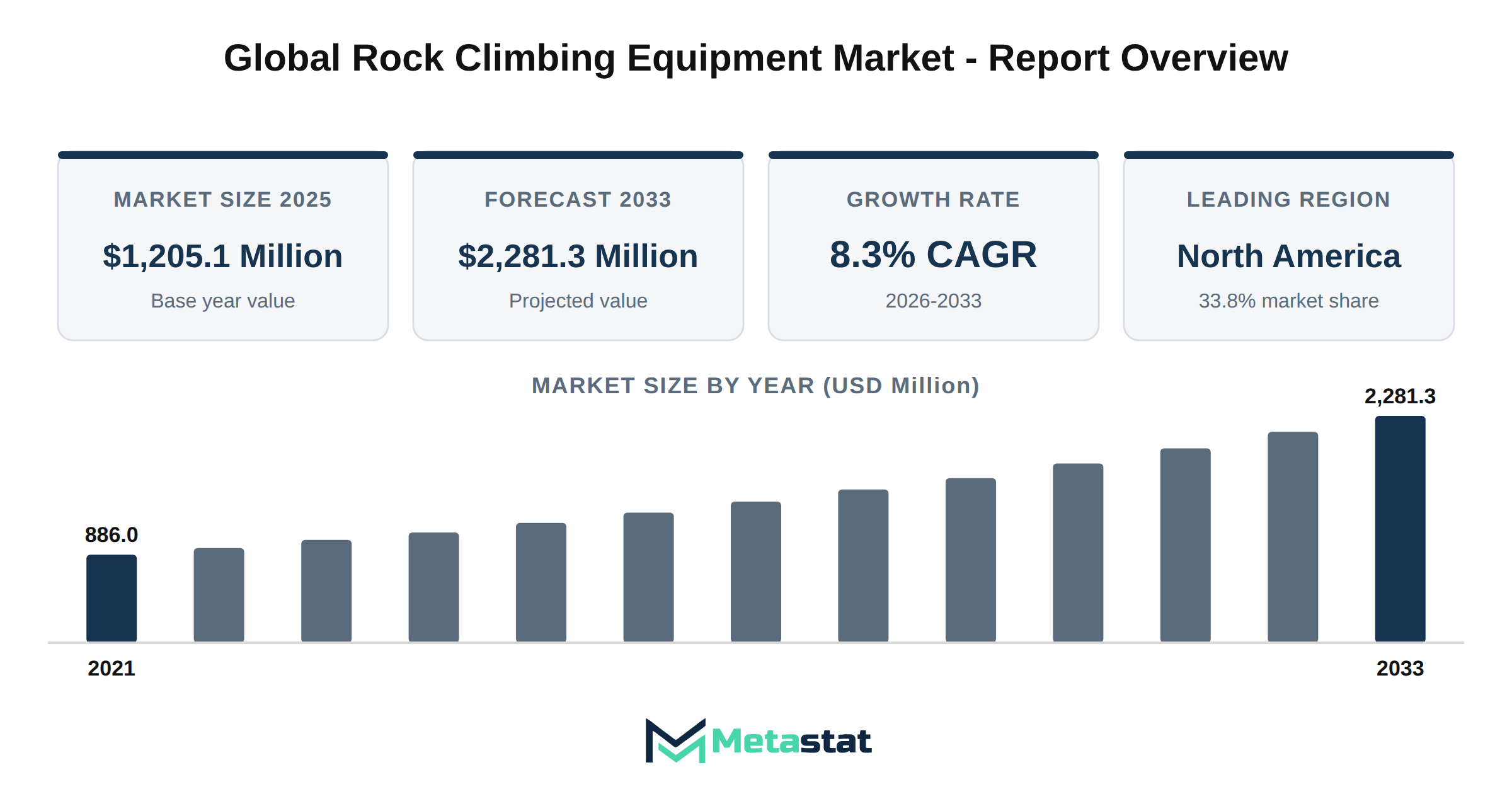
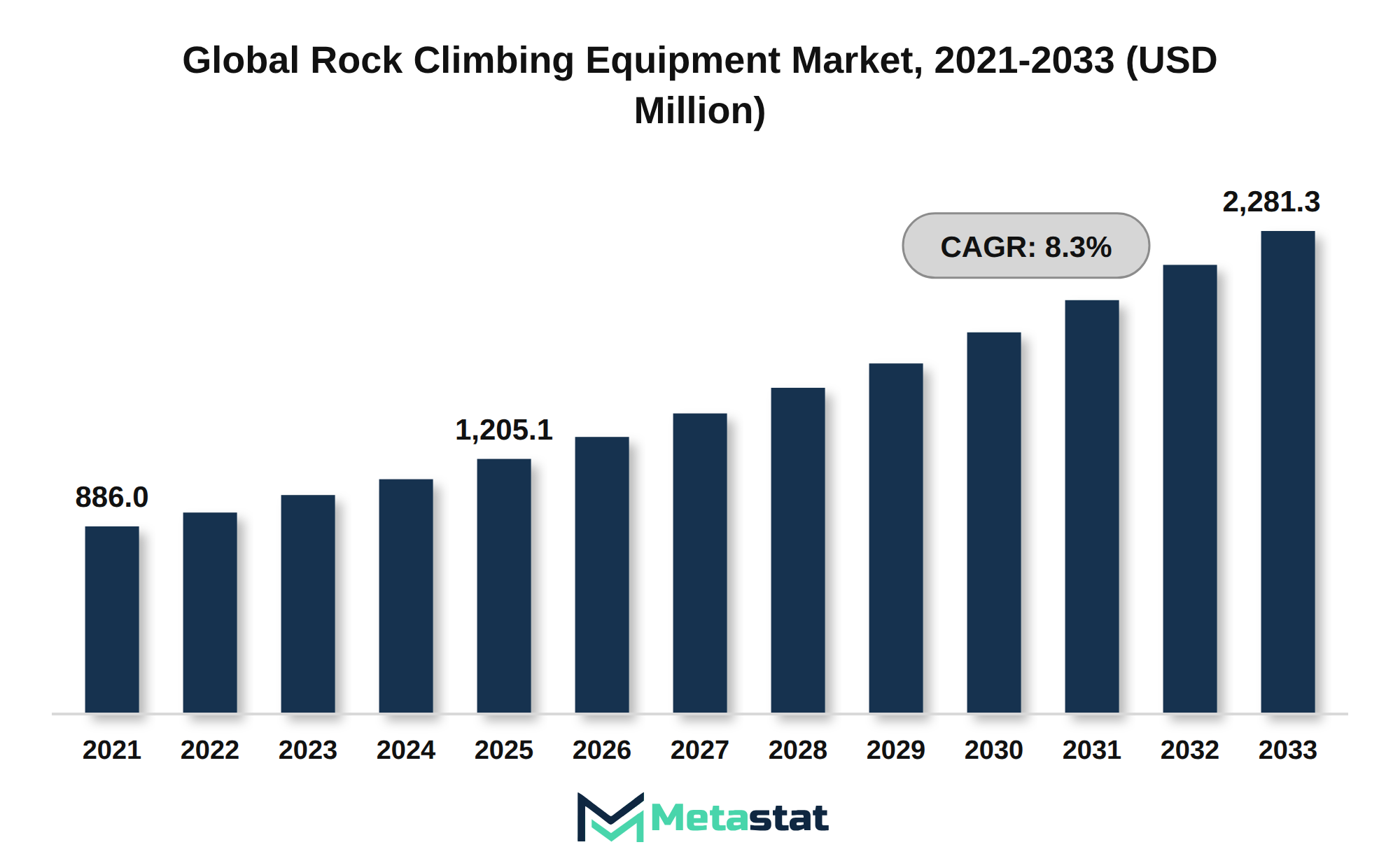
The Rock Climbing Equipment market was valued at USD 1,205.1 million in 2025, reflecting a significant increase from USD 886 million in 2021. The market is projected to grow at a compound annual growth rate (CAGR) of 8.3%, reaching USD 2,281.3 million by 2033. Historical growth trends indicate a steady rise in market value, with figures of USD 951.6 million in 2022, USD 1,034.3 million in 2023, and USD 1,108.9 million in 2024.
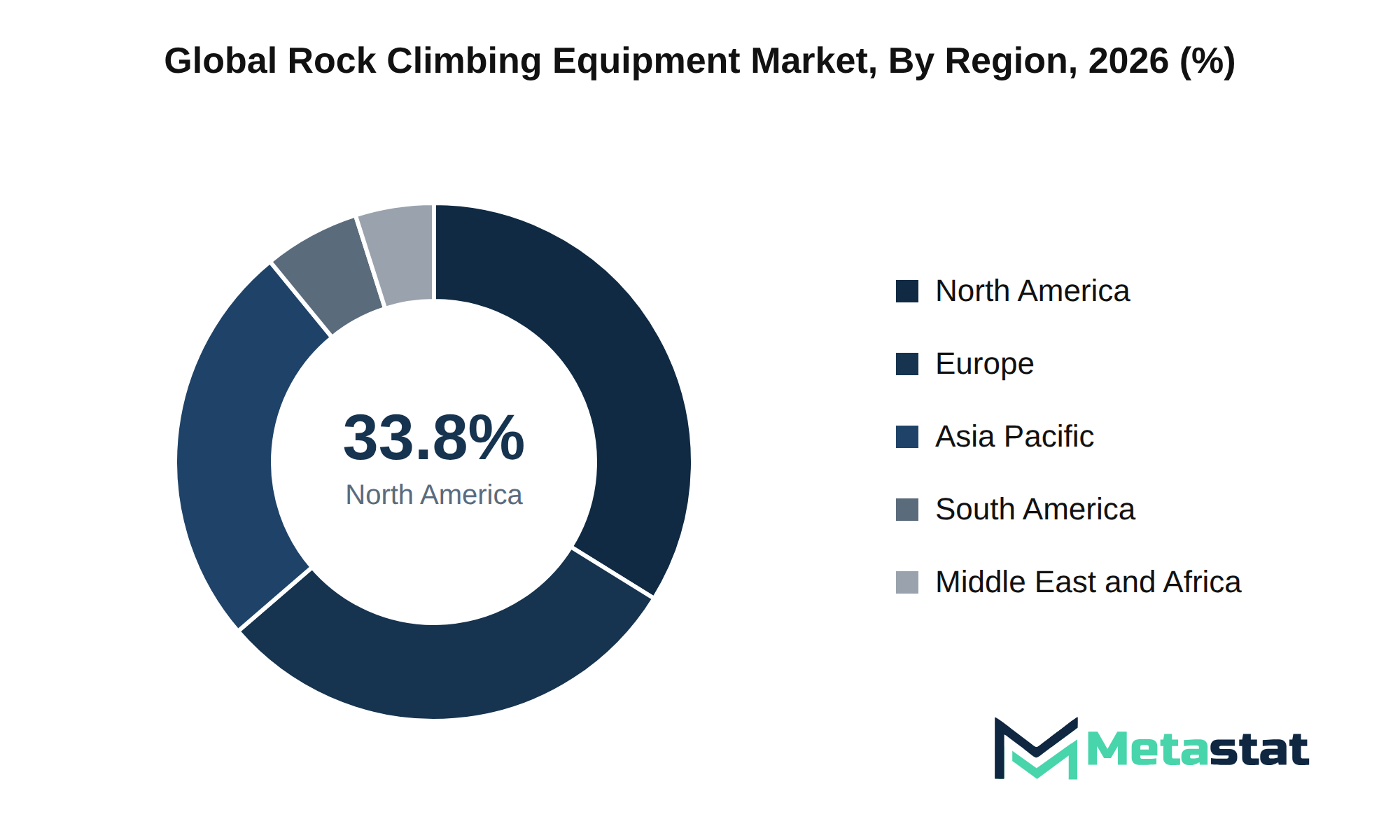
Regional distribution of the market shows North America holds the largest share at 33.8%, followed by Europe at 29.8%, and Asia Pacific at 25.4%. The anticipated market value for North America by 2033 is USD 728.4 million, maintaining a CAGR of 8.3%. Europe and Asia Pacific are expected to follow with substantial contributions to overall growth.
Segment analysis highlights various product types, including climbing shoes, climbing gear, and climbing ropes & cordage. For instance, climbing shoes are projected to grow from USD 312.4 million in 2026 to USD 533.6 million in 2033, reflecting a CAGR of 7.9%. Climbing gear is expected to reach USD 331 million by 2033, while climbing ropes and cordage will contribute significantly to the market dynamics.
The material segmentation identifies nylon because a prominent component, with values increasing from USD 577.7 million in 2026 to USD 927.1 million in 2033. Polyester is anticipated to reach USD 526.7 million by 2033, demonstrating a CAGR of 7.8%. The use of advanced materials like Dyneema and Kevlar enhances the market's product offerings.
The Rock Climbing Equipment market experiences various dynamics that impact its growth trajectory. Regulatory compliance and standards play a significant role, influencing product development and market entry strategies. Manufacturers align with safety regulations while addressing consumer expectations for high-quality equipment. Geopolitical risks, including trade tensions and regulatory changes, introduce uncertainty, affecting supply chains and market stability.
Disruption in the market arises from technological advancements and evolving consumer preferences. Research and development trajectories focus on enhancing product performance and sustainability. Innovations in materials, including eco-friendly options, are gaining traction, aligning with the industry's movement towards sustainable transformation and decarbonization. The circular economy is becoming increasingly relevant, driven by companies seeking to minimize waste and maximize resource efficiency.
The supply chain landscape remains complex, with logistics architecture and sourcing strategies adapting to global challenges. Companies optimize procurement processes to enhance efficiency and reduce costs. Market fragmentation persists, with numerous players contributing to a competitive environment. M&A dynamics shape the landscape, influenced by firms pursuing strategic partnerships to improve capabilities and expand market reach.
Value chain analysis emphasizes the interconnectedness of stakeholders, highlighting collaboration among manufacturers, distributors, and retailers. Capital allocation decisions reflect the need for investment in infrastructure, technology, and product innovation. Macroeconomic headwinds, including inflationary pressures and currency volatility, introduce challenges that impact pricing strategies and profit margins.
The future strategic outlook for the Rock Climbing Equipment market highlights the importance of agility and adaptability. Companies that prioritize innovation and sustainability are likely to capture emerging opportunities. High-value recommendations include investing in R&D, enhancing customer engagement, and optimizing operational efficiencies to navigate the evolving market environment.
Market Dynamics
Investment in outdoor recreational activities boosts demand
The ongoing investment in outdoor recreational activities significantly influences growth within the Rock Climbing Equipment market. Increased disposable income and urbanization contribute to a rising interest in adventure sports, with more individuals seeking outdoor experiences. This trend reflects a broader cultural shift toward health and wellness, prompting consumers to engage in physical activities like rock climbing.
Improvements in infrastructure supporting outdoor activities enhance accessibility to climbing locations, encouraging participation. The growth of climbing gyms and training facilities offers newcomers a safe environment to learn and practice, increasing awareness and interest in rock climbing. This heightened engagement drives demand for climbing equipment, resulting in expanded revenue potential for manufacturers operating in the market.
Consumer preferences evolve, favoring high-quality and innovative gear that enhances safety and performance. The market responds by introducing advanced materials and technologies that cater to the demands of both professional and recreational climbers. This innovation creates a competitive environment, prompting existing players to invest in research and development for new products. These dynamics collectively support growth and investment opportunities within the Rock Climbing Equipment market.
Increased focus on sustainability initiatives
The growing emphasis on sustainability initiatives significantly impacts the Rock Climbing Equipment market. Consumers prioritize environmentally friendly products and sustainable practices, compelling manufacturers to adopt eco-conscious materials and production methods. This shift in consumer behavior drives demand for rock climbing equipment that meets stringent sustainability criteria, including recycled materials and reduced carbon footprints.
Investment in sustainable technologies enables companies to enhance product offerings while aligning with global environmental objectives. The market experiences heightened interest in materials including Dyneema and recycled nylon, which offer durability alongside reduced environmental impact. Companies that effectively integrate sustainable practices into their operations attract environmentally aware consumers and strengthen brand loyalty.
Manufacturers adopting sustainable practices realize cost efficiencies through streamlined processes and reduced waste. The market's growth trajectory reflects a broader trend toward environmental stewardship, aligning with evolving consumer preferences. This commitment to sustainability plays a critical role in shaping the future of the Rock Climbing Equipment market.
Regulatory Compliance and Economic Challenges
The Rock Climbing Equipment market faces several restraints that hinder its expansion. Regulatory compliance requirements increase operational costs for manufacturers, affecting pricing strategies across the industry. Companies involved in this market navigate a complex array of safety standards and environmental regulations, which adds significant overhead and complicates product development timelines. Compliance hurdles result in delayed product launches, restricting market access and limiting growth potential.
Economic challenges including inflationary pressures and macroeconomic headwinds hinder consumer spending on recreational activities, including rock climbing. Rising costs associated with materials and labor contribute to increased retail prices, reducing demand. Geopolitical instability disrupts supply chains, leading to delays in product availability and higher shipping costs, further complicating market dynamics. Resource scarcity affects the availability of essential materials, placing additional strain on manufacturers to maintain production levels.
The market experiences technological obsolescence, where older equipment struggles to compete with newer innovations. Substitution risks arise from consumers exploring alternative offerings, shifting preferences away from traditional rock climbing gear. This situation emphasizes the importance of continuous product development and innovation to retain market share. The Rock Climbing Equipment market encounters these challenges, necessitating strategic adjustments to sustain growth and competitiveness.
Geopolitical tensions affect supply stability
The Rock Climbing Equipment market encounters significant challenges stemming from geopolitical fragmentation and related trade dynamics. Current tensions between major economies result in increased tariffs and trade deficits, which disrupt supply chains and raise costs for manufacturers. These factors create a cascading effect, leading to reduced availability of essential components and materials critical for production.
Supply chain instability arises from international conflicts that complicate logistics, causing delays and inconsistencies in product delivery. Trade barriers create challenges for companies seeking to source materials from specific regions, leading to reliance on alternative suppliers that do not meet the same quality or cost parameters. This situation places additional pressure on profit margins, driven by producers seeking to mitigate rising input costs.
The market faces heightened scrutiny regarding compliance with evolving regulations, which further complicates operational strategies. Organizations navigate a complex environment of legal liabilities and environmental mandates, especially in regions where sustainability standards are increasingly stringent. These compliance requirements divert resources from core business operations, intensifying challenges in talent retention and skill development.
Geopolitical tensions create an environment of uncertainty that affects the Rock Climbing Equipment market. Companies adapt to these conditions by enhancing supply chain resilience and investing in innovative solutions to maintain competitive advantage in a continually evolving environment.
Emerging regional demands drive market growth
The Rock Climbing Equipment market experiences substantial opportunities driven by emerging regional demands and evolving consumer preferences. Regions including North America and Europe experience increasing participation in climbing activities, fueled by improved access to climbing gyms and outdoor facilities. This trend is complemented by infrastructure modernization and the development of climbing-specific venues, which enhance user experiences and attract a broader audience.
Technological disruptions play a critical role in shaping product offerings, with innovations in materials and designs improving performance and safety. Digital transformation facilitates enhanced customer engagement through e-commerce platforms and targeted marketing strategies. These shifts in buying behaviors indicate an alignment with modern consumer expectations, particularly regarding convenience and personalized experiences.
Sustainability imperatives further influence the Rock Climbing Equipment market, with manufacturers focusing on eco-friendly materials and processes to meet consumer demand for environmentally responsible products. The integration of green technologies into product lines aligns with the growing emphasis on corporate social responsibility and environmental governance, enhancing brand loyalty and market positioning.
Strategic consolidation and cross-industry mergers present additional avenues for growth, allowing companies to broaden their product portfolios and enhance distribution capabilities. This dynamic encourages innovation and diversification, enabling players to better meet the demands of various consumer segments, including professional and recreational climbers.
The combination of these factors positions the market for sustained expansion through 2033. By leveraging emerging opportunities and adapting to shifting trends, stakeholders capitalize on significant growth potential within the Rock Climbing Equipment market.
Market Segmentation Analysis
The Global Rock Climbing Equipment market is segmented based on Product Type, Material, Distribution Channel, and End User.
By Product Type, the market is further segmented into:
- Climbing Shoes
- Climbing Harnesses
- Climbing Ropes & Cordage
- Carabiners, Quickdraws & Connectors
- Belay & Rappel Devices
- Protection & Anchoring Hardware
- Climbing Helmets
- Others (Ascenders, Portaledges and Specialized Big-Wall Equipment)
Climbing Shoes
Valued at USD 312.4 million in 2026, the Climbing Shoes segment is projected to reach USD 533.6 million by 2033, exhibiting a CAGR of 7.9% during the forecast period. Increased participation in climbing activities, both recreational and professional, drives demand for high-performance footwear. Performance attributes including grip, comfort, and fit significantly influence consumer choices, pushing manufacturers to innovate continually. Enhanced materials and designs improve durability and functionality, addressing the needs of climbers in diverse environments.
Technological advancements contribute to the evolution of climbing shoes, focusing on features that enhance safety and performance while reducing weight. The increasing popularity of climbing gyms and indoor climbing facilities further boosts consumption patterns, leading to higher demand for specialized climbing footwear. Regulatory compliance and safety certifications serve because essential factors in purchasing decisions, with consumers prioritizing gear that meets recognized industry standards.
Considerable investment in product development creates a competitive atmosphere within the Rock Climbing Equipment market. Players navigate price fluctuations due to material costs, which impact the overall cost structure. Nevertheless, the strategic opportunity lies in enhancing supply chain resilience through sustainable raw material sourcing, potentially mitigating risks associated with supply disruptions. The market's growth trajectory reflects a commitment to innovation and consumer-focused advancements in climbing shoe technology.
Climbing Harnesses
Growth in the Climbing Equipment segment reflects increasing participation in climbing activities, driven by a rise in outdoor recreational pursuits and heightened awareness of safety equipment. Adoption of advanced materials and technologies enhances performance and comfort, appealing to a broad range of users from professional to recreational climbers. This segment is projected to reach USD 331 million by 2033, at a CAGR of 7.9% during the forecast period.
Segment expansion results from the introduction of innovative designs that cater to diverse climbing styles and preferences. Enhanced safety features and ergonomic designs promote consumer confidence, further stimulating demand. Regulatory compliance standards regarding safety and equipment performance encourage manufacturers to invest in research and development, driving technological advancements.
Supply chain resilience and strategic partnerships among key players ensure the availability of high-quality materials, contributing to product evolution. Cost structures are influenced by fluctuations in raw material prices, compelling manufacturers to optimize sourcing strategies. This dynamic environment creates strategic opportunity windows for companies that leverage new technologies and design innovations.
The Rock Climbing Equipment market benefits from a growing emphasis on environmental sustainability. Manufacturers increasingly incorporate eco-friendly materials and production processes, aligning with consumer preferences for responsible choices. This trend toward sustainability enhances brand reputation and opens new avenues for market penetration.
Climbing Ropes & Cordage
Growing focus on safety and performance in climbing activities significantly drives demand for Climbing Ropes & Cordage. Climbers increasingly prioritize high-quality ropes that enhance safety and reliability during ascents, influencing purchasing decisions across various segments. The segment is projected to reach USD 307.5 million by 2033, highlighting strong interest from both professional and recreational climbers.
The rise in outdoor activities and climbing gyms contributes to segment expansion. Increased participation in climbing sports creates a need for specialized equipment, including advanced climbing ropes designed to meet the demands of various climbing styles and conditions. Technological advancements in materials, including lighter and stronger synthetic fibers, enhance product performance, leading to greater consumer appeal. These advancements position the market for sustained growth, driven by continuous product evolution.
Regulatory compliance and safety certifications remain critical in the Climbing Ropes & Cordage segment. Adherence to safety standards builds consumer confidence and influences purchasing behaviors, particularly among professional climbers and training facilities. Fluctuations in raw material prices affect production costs, necessitating strategic pricing strategies by manufacturers to maintain margins in an increasingly competitive market.
Strategic investment in marketing and distribution channels supports the growth of the Rock Climbing Equipment market. Effective engagement with consumers through specialty retailers and e-commerce platforms enhances visibility and accessibility, allowing companies to reach diverse customer bases. Overall, these factors shape a positive outlook for the Climbing Ropes & Cordage segment within the broader context of the market.
Carabiners, Quickdraws & Connectors
Growth in the Carabiners, Quickdraws & Connectors segment reflects heightened interest in safe and efficient climbing practices. Increasing numbers of climbers seek reliable and innovative equipment, driving demand for high-quality connectors that ensure safety during various climbing activities. A projected CAGR of 8.3% during the forecast period highlights the segment's momentum within the Rock Climbing Equipment market.
Technological advancements play a crucial role in the evolution of carabiners and quickdraws. Manufacturers focus on developing lightweight yet durable materials, enhancing functionality while reducing overall weight. Climbers prioritize equipment that maximizes performance and safety, and advancements in design and materials contribute to significant market adoption.
Regulatory compliance standards further influence the segment, with stricter safety regulations promoting the use of certified products. Compliance with these standards increases consumer confidence, supporting market growth driven by climbers prioritizing safety in their gear selection. The push for compliance aligns with the growing trend toward professional climbing, where adherence to safety protocols remains essential.
Cost structures and pricing volatility impact purchasing decisions, particularly among recreational climbers. While premium products command higher prices, the benefits of enhanced safety and performance justify the investment for many consumers. Overall, the Carabiners, Quickdraws & Connectors segment represents a dynamic component of the Rock Climbing Equipment market, poised for growth through innovation and consumer demand.
Belay & Rappel Devices
Innovations in climbing safety equipment drive demand for belay and rappel devices within the Rock Climbing Equipment market. Enhancements in design and materials focus on improving user safety and performance, appealing to both professional and recreational climbers. The increasing number of climbing gyms and outdoor facilities promotes greater interest in these devices, further contributing to market growth. Adoption of advanced materials, including lightweight yet durable composites, aligns with the trend toward efficiency and safety in climbing gear. Regulatory compliance and safety certifications influence the design and manufacturing of these devices, ensuring that they meet the highest standards required by climbers.
Market players prioritize developing versatile equipment that addresses the needs of diverse climbing styles and terrains. The transition to next-generation technologies enhances performance features, including improved braking systems and ergonomic designs, addressing the preferences of climbers. The market benefits from a rising focus on environmental sustainability, encouraging manufacturers to explore eco-friendly materials and production processes. Consumers gravitate toward brands that demonstrate a commitment to sustainability, influencing purchasing decisions. Overall, the growing emphasis on safety, performance, and sustainability shapes the evolution of belay and rappel devices within the Rock Climbing Equipment market.
Protection & Anchoring Hardware
Strong demand for high-quality protection and anchoring hardware significantly shapes the Rock Climbing Equipment market. Increased participation in climbing activities, alongside rising awareness regarding climber safety, drives the necessity for reliable and efficient equipment. This growing interest is driving innovation and product evolution, pushing manufacturers to develop next-generation protection solutions that enhance performance and reliability. Technological advancements contribute to improved designs, materials, and manufacturing processes, enabling products to meet the rigorous standards required by professional and recreational climbers.
End-use dynamics highlight the importance of protection and anchoring hardware in climbing gyms, outdoor facilities, and individual climber applications. The segment attracts investment due to the increasing number of climbing enthusiasts seeking dependable equipment. Regulatory compliance standards and certifications encourage manufacturers to prioritize safety and quality in their offerings, aligning with consumer expectations. Shifts in consumer preferences towards advanced materials and enhanced safety features emphasize the segment's relevance in the evolving market.
Supply chain resilience remains critical for manufacturers navigating raw material sourcing and potential disruptions. Maintaining strong relationships with suppliers ensures access to quality materials necessary for producing superior protection and anchoring hardware. The presence of disruptive alternatives in the market prompts manufacturers to innovate continually, ensuring their products remain competitive. Strategic opportunities arise through investments in research and development, allowing companies to explore new materials and technologies that enhance product performance while addressing cost structures and margin pressures.
Climbing Helmets
Growing demand for safety equipment in climbing activities drives interest in climbing helmets. Increased awareness of head protection, particularly among amateur climbers, boosts adoption rates across various demographics. Outdoor climbing facilities and climbing gyms prioritize helmet usage, aligning with the industry's emphasis on safety standards and regulatory compliance. This shift in end-user dynamics highlights the importance of innovative materials and designs to enhance comfort and usability.
Technological advancements contribute significantly to the development of climbing helmets. Manufacturers focus on integrating lightweight materials while ensuring high-impact resistance, which enhances user experience and safety. Evolving consumer preferences for advanced safety features, including adjustable fittings and ventilation systems, influence product evolution. The market's response to these trends results in a more competitive landscape, with brands introducing next-generation upgrades that appeal to both professional and recreational climbers.
Market participants face challenges related to cost structures and pricing volatility in raw material sourcing. The fluctuation of prices for materials including expanded polystyrene and polycarbonate directly impacts manufacturing expenses, leading to margin pressures for suppliers. Strategic opportunity windows arise from the growing trend of eco-friendly materials, which aligns with consumer preferences for sustainable products. Investments in research and development ensure resilience against disruptive alternatives, positioning climbing helmets because essential components within the broader Rock Climbing Equipment market.
Others (Ascenders, Portaledges and Specialized Big-Wall Equipment)
Demand for equipment categorized under Others (Ascenders, Portaledges and Specialized Big-Wall Equipment) arises from the increasing popularity of advanced climbing techniques and multi-pitch climbing scenarios. Enthusiasts and professional climbers require specialized gear to ensure safety and efficiency during complex ascents. The segment benefits from growing interest in climbing expeditions that involve extended durations and varying terrain, highlighting a shift toward high-performance and durable equipment.
Technological maturation in climbing equipment has driven innovations in design and materials, resulting in lighter and more robust products. Manufacturers focus on enhancing functionality while maintaining performance, contributing to segment expansion. Next-generation upgrades in equipment reflect advancements in safety standards, which are critical for both recreational and professional climbers seeking reliable gear.
Consumption shifts towards specialized climbing gear have increased, with climbers seeking equipment that addresses specific challenges faced during climbs. Regulatory compliance standards and certifications relevant to safety and performance further influence purchasing decisions, emphasizing the importance of quality in the product lifecycle. The market for these specialized items benefits from a heightened awareness of safety protocols, enhancing the demand for reliable and certified equipment.
Strategic opportunity windows present themselves owing to brands exploring innovations that align with current climbing trends. Capital investment in research and development drives new product evolution, ensuring that manufacturers remain competitive in the market. The presence of diverse players in this segment encourages a competitive environment, driving continuous improvement and adaptation to consumer preferences.
By Material, the market is further segmented into:
- Nylon
- Polyester
- Dyneema
- Kevlar
- Carbon Fiber
Nylon
Valued at USD 577.7 million in 2026, the Nylon segment is projected to reach USD 927.1 million by 2033, at a CAGR of 7% during the forecast period. Increased demand for durable and lightweight materials directly influences the adoption of nylon in the Rock Climbing Equipment market. Enhanced performance characteristics, including resistance to abrasion and UV degradation, establish nylon because a preferred choice among climbers. Technological advancements in nylon production methods contribute to higher quality outcomes, supporting segment expansion.
Shifts in consumer preferences towards safety and reliability drive growth in the nylon segment. Professional climbers and recreational users seek equipment that offers optimal performance without compromising safety. The market benefits from ongoing product evolution, with manufacturers focusing on developing next-gen upgrades that incorporate advanced nylon blends, enhancing both functionality and user experience. Regulatory compliance standards surrounding climbing gear safety standards push manufacturers to innovate, ensuring that products meet stringent requirements.
Pricing volatility stemming from raw material sourcing impacts profitability within the nylon segment. Fluctuations in the cost of nylon production affect final product pricing, influencing purchasing decisions among consumers. Strategic opportunity windows exist for manufacturers to invest in sustainable nylon alternatives, aligning with eco-conscious consumer trends. These dynamics position the nylon segment for sustained growth, reinforcing its importance within the larger context of the Rock Climbing Equipment market.
Polyester
Significant growth is anticipated for the Polyester segment within the Rock Climbing Equipment market, driven by lightweight and durable characteristics that appeal to climbers. Increased awareness about eco-friendly materials fuels demand for polyester-based products. Companies continuously upgrade their offerings, integrating advanced manufacturing techniques to enhance performance and longevity of their equipment.
The Polyester segment is projected to reach USD 526.7 million by 2033, at a CAGR of 7.8% during the forecast period. Enhanced performance and safety requirements in climbing activities contribute to this growth trajectory, with climbers prioritizing high-quality materials in gear selection. The shift towards sustainable practices in both production and consumption of climbing equipment influences segment expansion, with manufacturers responding to the competitive landscape.
Technological advancements in material engineering lead to innovative polyester solutions, enhancing product functionality while minimizing environmental impact. The market experiences a steady transition toward polyester alternatives, which provide superior durability compared to traditional materials. This trend reflects a broader consumption shift in the Rock Climbing Equipment market, with end users favoring products that demonstrate both performance and sustainability.
Dyneema
Increasing recognition of the benefits offered by Dyneema in climbing gear contributes significantly to the growth of the Rock Climbing Equipment market. This ultra-high molecular weight polyethylene fiber provides strong strength-to-weight ratios, making it a preferred choice among climbers seeking lightweight yet durable equipment. The segment is projected to reach USD 504.8 million by 2033, reflecting growing adoption across various climbing applications.
Technological advancements in the processing and manufacturing of Dyneema facilitate the development of next-generation climbing products. These innovations enhance performance characteristics, including abrasion resistance and UV stability, which are critical for outdoor environments. The ongoing evolution of climbing gear enhances product offerings, catering to both professional and recreational climbers.
Shifts in consumer preferences toward high-performance materials drive demand for Dyneema-based products. Climbers increasingly prioritize safety and efficiency, and equipment incorporating this material gains traction. Regulatory compliance standards pertaining to safety and material performance promote the adoption of Dyneema in climbing applications.
Cost structures associated with Dyneema remain competitive, ensuring accessibility for a wide range of users. Pricing volatility remains relatively stable due to consistent raw material sourcing, which supports supply chain resilience. Strategic investment opportunities in this segment enable capital investment in the development and marketing of Dyneema-based climbing equipment.
Kevlar
Kevlar, recognized for its high strength-to-weight ratio and durability, plays an important role in the Rock Climbing Equipment market. Applications in climbing gear and ropes underline its significance in ensuring climber safety and performance. The segment is projected to grow at a CAGR of 8.3% during the forecast period. Increased participation in outdoor activities and climbing sports drives demand for lightweight and resilient materials. Technological advancements in the production of Kevlar enhance its properties, leading to wider adoption among professional and recreational climbers. The market's evolution emphasizes sustainability and performance upgrades, influencing the choice of materials, with Kevlar being favored for its reliable characteristics. This shift towards advanced materials aligns with the growing emphasis on safety standards in climbing equipment. Consequently, the segment's expansion reflects broader trends within the industry, contributing to overall market growth.
Carbon Fiber
Advancements in materials technology fuel the adoption of Carbon Fiber in the Rock Climbing Equipment market. This material exhibits strong strength-to-weight ratios, making it an attractive option for climbers seeking both performance and durability. Increased awareness of the benefits of lightweight equipment contributes to a shift in consumer preferences, driving demand for Carbon Fiber products.
Ongoing innovations in Carbon Fiber applications support the evolution of climbing gear, allowing manufacturers to enhance user experience through improved functionality. The segment experiences growth from professional climbers and recreational enthusiasts alike, who prioritize high-performance gear that reduces fatigue during extended climbing sessions.
Regulatory compliance standards prioritize safety and performance in climbing gear, further increasing interest in advanced materials including Carbon Fiber. Manufacturers increasingly focus on obtaining certifications that ensure product quality and safety, influencing purchasing decisions in the market.
Raw material sourcing is crucial in the Carbon Fiber segment, driven by suppliers working to secure high-quality precursors essential for production. This focus on quality impacts the supply chain, with companies investing in sustainable practices to enhance resilience and mitigate risks associated with fluctuating prices.
Strategic opportunities arise from the demand for innovation within the segment, with companies seeking to introduce next-generation products that cater to evolving consumer needs. By emphasizing technological maturation and product evolution, manufacturers position themselves to capture market share and respond effectively to competitive pressures.
By Distribution Channel, the market is further segmented into:
- Specialty Climbing & Outdoor Retailers
- General Sporting-Goods Retailers
- Brand-Owned Physical Stores
- Brand-Owned E-commerce
- Third-Party E-commerce & Marketplaces
- Institutional & B2B Direct Sales
- Others (Club Stores and Event-Based Sales)
Specialty Climbing & Outdoor Retailers
Increasing preference for specialized climbing gear drives demand within the Specialty Climbing & Outdoor Retailers segment. Valued at USD 399.1 million in 2026, this segment is projected to reach USD 643.8 million by 2033, at a CAGR of 7.1% during the forecast period. The growth results from a rising number of outdoor enthusiasts seeking expert advice and high-quality products tailored for their climbing needs. Factors influencing this demand include heightened awareness of safety standards, advancements in product technology, and the growth of climbing because a recreational activity across various demographics.
While consumers show interest in premium gear, Specialty Climbing & Outdoor Retailers gain traction in the market. The emphasis on personalized customer experiences and expert recommendations enhances brand loyalty and drives repeat purchases. Retailers focusing on exclusive product offerings and partnerships with renowned brands contribute to segment expansion. The growing trend of climbing gyms and outdoor climbing events drives an increase in equipment sales, benefiting the overall growth of the Rock Climbing Equipment market.
General Sporting-Goods Retailers
Valued at USD 376.6 million by 2033, the General Sporting-Goods Retailers segment reflects the increasing accessibility of climbing equipment through diverse retail channels. This growth results from a surge in recreational climbing activities, driven by a broader interest in outdoor adventures and fitness. The segment benefits from enhanced marketing strategies employed by retailers, which highlight the performance and safety features of climbing gear, targeting both novice and experienced climbers.
Pricing dynamics within the market continue to evolve, influenced by changing consumer preferences and the introduction of innovative products. Retailers focusing on exclusive brand collaborations and unique product offerings within the Rock Climbing Equipment market enhance their competitive positioning. The emphasis on quality over price encourages consumer investment in premium products, further stimulating demand across the segment.
Strategic partnerships with climbing brands enable General Sporting-Goods Retailers to expand their product ranges, catering to the diverse needs of climbers. This alignment with manufacturers builds trust and reliability among consumers, who increasingly prefer brands that prioritize quality and safety. Overall, the segment is projected to experience sustained growth, supported by the increasing number of climbers and a rising trend towards outdoor recreational activities.
Brand-Owned Physical Stores
Growth in the Brand-Owned Physical Stores segment reflects a shift toward personalized customer experiences and direct engagement with consumers. The ability to display specialized climbing gear in a dedicated retail environment enhances brand visibility and builds customer loyalty. With an expected value of USD 207.1 million by 2033, this segment benefits from strong consumer interest in quality and reliable climbing equipment.
Increased focus on local retail experiences plays a critical role in segment expansion. Brand-owned stores allow brands to maintain control over their product presentation and customer interaction, ensuring that consumers receive expert advice and tailored recommendations. This personalized approach strengthens relationships with both professional and recreational climbers, driving sales growth within the Rock Climbing Equipment market.
The rise of outdoor recreational activities contributes to demand within this segment. Enthusiasts seek out physical stores for hands-on testing of equipment, particularly in categories including climbing shoes and climbing gear. The segment's growth aligns with broader trends in outdoor and adventure sports, emphasizing quality gear and safety.
Through dedicated marketing strategies and targeted promotions, brands effectively capture market share within Brand-Owned Physical Stores. These efforts, combined with the growing popularity of climbing because an outdoor pursuit, enhance the segment's position in the overall market.
Brand-Owned E-commerce
Online shopping for climbing gear gains traction, driven by the convenience and accessibility of Brand-Owned E-commerce platforms. Shoppers increasingly prefer purchasing directly from brands, valuing the assurance of quality and authenticity. Enhanced marketing strategies through digital channels improve customer engagement and stimulate purchasing behaviors, leading to higher sales in the Rock Climbing Equipment market. Brand-Owned E-commerce segment is projected to grow at a CAGR of 11.3% during the forecast period.
Innovative product offerings, including personalized gear recommendations and exclusive online discounts, attract more consumers to these platforms. Shifts in consumer behavior towards digital shopping, accelerated by the pandemic, reinforce the relevance of this distribution channel. While several manufacturers enhance their online presence and optimize user experiences, the segment's revenue is expected to increase significantly, further transforming the market.
Increased investments in technology and infrastructure by brands support efficient online transactions and effective customer service. A focus on improving supply chain efficiencies and logistics capabilities strengthens the position of Brand-Owned E-commerce within the market. The shift towards direct-to-consumer sales models offers brands greater control over pricing strategies and customer data, facilitating targeted marketing efforts and improving profit margins.
The rising trend of outdoor activities and growing participation in climbing sports contribute to the expansion of the Brand-Owned E-commerce segment. More enthusiasts seek high-quality equipment. Brands that leverage their online channels effectively will likely capture an increasing share of the growing demand in the Rock Climbing Equipment market.
Third-Party E-commerce & Marketplaces
Growth in the Third-Party E-commerce & Marketplaces segment stems from increasing consumer preference for online shopping, particularly among younger demographics. The convenience of purchasing climbing gear online aligns with the lifestyle of active consumers seeking efficient access to a wide variety of products without geographical constraints.
Technological advancements in e-commerce platforms enhance user experience, facilitating transactions and product comparisons. These innovations, coupled with targeted marketing strategies, attract both professional and recreational climbers to purchase through these channels, driving segment expansion.
Increased brand presence on third-party platforms promotes product diversity and competitive pricing, benefiting consumers. The Rock Climbing Equipment market experiences shifts in consumer behavior in favor of e-commerce, reflecting broader trends in retail.
Regulatory compliance and quality assurance remain critical factors influencing this segment. Consumers prioritize safety and reliability when selecting climbing equipment, necessitating adherence to industry standards. This focus on compliance strengthens consumer trust and promotes market growth.
Investment in logistics infrastructure enhances the resilience of the supply chain for e-commerce. Companies optimize inventory management and distribution channels to improve delivery speed and efficiency, ensuring customer satisfaction. Ongoing development of strategic partnerships with logistics providers supports the market's expansion and responsiveness to consumer demand.
Institutional & B2B Direct Sales
Demand for climbing gear through Institutional & B2B Direct Sales reflects a shift toward high-performance products tailored for commercial use. This segment benefits from increasing participation in climbing because a sport and recreational activity, driving demand across climbing gyms, outdoor centers, and training facilities. Institutional clients prioritize safety, reliability, and compliance with regulatory standards, influencing purchasing decisions. Such factors drive growth in the Rock Climbing Equipment market, establishing relationships between manufacturers and institutional buyers.
Technological advancements in climbing equipment enhance product offerings, providing opportunities for customization and specialized gear. Innovations in materials and design result in superior durability and performance, appealing to institutional clients who seek to maintain high safety standards. Downstream applications of climbing gear, including training and competition, further strengthen the demand for reliable equipment in this segment. Strategic partnerships with manufacturers enhance product availability and expand reach in the market.
The competitive environment within the Institutional & B2B Direct Sales channel emphasizes the need for suppliers to maintain robust supply chain practices. Sourcing high-quality raw materials ensures product integrity, while addressing potential disruptions enhances resilience. Organizations that navigate these challenges effectively position themselves favorably in the Rock Climbing Equipment market, enabling them to capture emerging opportunities in a changing environment.
Others (Club Stores and Event-Based Sales)
Event-based sales within the rock climbing equipment market capitalize on the growing popularity of climbing competitions and community gatherings. These events encourage engagement among climbers, leading to increased product visibility and direct consumer interaction, which enhances brand loyalty and drives purchases. Club stores contribute by offering specialized gear tailored for local climbing communities, promoting a sense of belonging among enthusiasts.
This segment benefits from evolving consumer preferences toward experiential purchases, where buyers seek not only products but experiences related to their outdoor lifestyle. This shift influences marketing strategies, encouraging brands to participate in events, sponsor competitions, and collaborate with climbing gyms to present their offerings. Consumer education during these interactions provides climbers with knowledge about gear functionality and safety, reinforcing purchasing decisions.
Challenges including pricing volatility and margin pressures arise from competitive pricing strategies employed during events. Promotional activities and brand exposure during climber meet-ups and competitions offset these pressures by expanding market reach and enhancing brand equity. The combination of community engagement and targeted marketing positions this segment for growth within the broader rock climbing equipment market.
By End User, the market is further segmented into:
- Professional Climbers
- Recreational Climbers
- Climbing Gyms & Training Facilities
- Outdoor Climbing Facilities
Professional Climbers
Valued at USD 232.9 million in 2026, the Professional Climbers segment is projected to reach USD 385.3 million by 2033, at a CAGR of 7.5% during the forecast period. This segment experiences growth driven by the increasing number of professional climbers participating in competitions and training, and the rising popularity of climbing because a sport. Professionals prioritize high-performance equipment that enhances safety and efficiency, resulting in a shift towards premium products that meet rigorous standards.
The market benefits from advancements in material technology, which contribute to the development of lighter, stronger, and more durable climbing gear. Innovations in climbing equipment, including improved gear and climbing shoes, attract professionals seeking competitive advantages. Enhanced safety features and functionality in products influence purchase decisions, reinforcing the demand for specialized equipment within the Professional Climbers segment.
The expansion of climbing gyms and training facilities supports the growth of this segment by providing an environment conducive to practicing and enhancing skills. Increased investments in training infrastructure create opportunities for equipment suppliers and boost overall market demand. While the Rock Climbing Equipment market evolves, professionals continue to seek gear that offers the latest technological advancements, driving ongoing growth within this lucrative segment.
Recreational Climbers
Valued at USD 1,188.1 million by 2033, the Recreational Climbers segment experiences robust demand driven by an increase in outdoor activities and an expanding interest in climbing because a recreational sport. Enthusiasts prioritize quality gear, seeking advancements in safety and performance, which stimulates innovation within the sector. The market benefits from rising participation rates in climbing gyms and outdoor facilities, promoting a culture of climbing that encourages investment in equipment.
Growth of this segment reflects greater awareness of health and fitness benefits tied to recreational climbing. Influencers and social media campaigns play an important role in attracting new climbers, thereby expanding the consumer base. The availability of climbing programs and events further enhances the segment's growth potential by improving accessibility for aspiring climbers.
Technological maturation within climbing equipment drives the development of next-gen upgrades and specialized products tailored to recreational users. This evolution not only addresses safety concerns but improves the overall climbing experience. Increased engagement prompts existing climbers to upgrade their gear, driving consumption shifts within the Rock Climbing Equipment market.
Regulatory compliance standards and certifications related to safety requirements have become more stringent, compelling manufacturers to enhance quality assurance processes. This insistence on higher safety standards adds value to the segment, ensuring consumer confidence. However, pricing volatility stemming from raw material costs creates margin pressures for manufacturers, necessitating strategic adjustment in pricing strategies.
Supply chain resilience remains critical, owing to disruptions in material sourcing that impact inventory levels and delivery timelines. Climbing gear companies seek to diversify their supplier base to mitigate these risks, allowing for a more stable production environment. Strategic opportunity windows arise from trends in sustainable materials, prompting investment in eco-friendly alternatives that appeal to environmentally conscious consumers.
Climbing Gyms & Training Facilities
Growing interest in climbing activities among fitness enthusiasts drives demand within the Climbing Gyms & Training Facilities segment. The segment is projected to reach USD 523.3 million by 2033, reflecting a significant contribution to the overall Rock Climbing Equipment market. Increased awareness regarding the health benefits of rock climbing fuels the establishment of more gyms and training facilities, enhancing access to climbing experiences for diverse audiences.
Technological advancements in training equipment and safety gear enhance the overall climbing experience. Innovations in climbing wall design and training apparatus enable facilities to offer varied and engaging environments for climbers of all skill levels. Continuous upgrades in safety gear reinforce the importance of safe climbing practices and attract more participants to these facilities.
Regulatory compliance standards regarding safety and equipment quality influence operational practices within climbing gyms. Certifications for equipment and facilities promote consumer confidence, further driving participation rates. Increased adherence to industry regulations enhances market legitimacy and builds consumer trust.
Strategic opportunities arise from partnerships between equipment manufacturers and climbing gyms. These collaborations enable facilities to offer branded gear and training programs, enhancing the overall experience for climbers. Expanding offerings within facilities is expected to generate increased revenue streams and consumer engagement for the Rock Climbing Equipment market.
Outdoor Climbing Facilities
Growth in Outdoor Climbing Facilities aligns with rising participation in climbing because a recreational activity. This segment is projected to grow at a CAGR of 8.4% during the forecast period. Increased investments in climbing infrastructure enhance the accessibility and appeal of climbing, leading to greater participation rates. Evolution in facility design and technology, including enhanced safety measures and diversified climbing experiences, drives demand for equipment tailored to varying skill levels. The ongoing trends in fitness and wellness, combined with a focus on outdoor activities, contribute to a growth trajectory for this segment within the Rock Climbing Equipment market.
Outdoor climbing facilities increasingly cater to diverse end-users, including professional and recreational climbers. The growing popularity of climbing gyms promotes a consistent demand for climbing gear, boosting market activity. Institutions that establish outdoor climbing facilities recognize the value of offering unique experiences, creating significant opportunities for equipment suppliers. A focus on sustainable and eco-friendly climbing practices emerges because a key consideration, influencing material selection and facility management strategies. Overall, the evolution of outdoor climbing facilities signifies a dynamic phase in the Rock Climbing Equipment market.
By Region
Based on geography, the Global Rock Climbing Equipment market is divided into North America, Europe, Asia-Pacific, South America, Middle East, and Africa.
North America
North America Rock Climbing Equipment market is set to expand at a CAGR of 8.3% within the forecast period, reaching a market size (TAM) of USD 728.4 million by the end of 2033. The region holds a substantial share of the global market, reflecting strong consumer engagement and investment in climbing activities.
Factors driving this growth include increasing participation in climbing because a recreational activity and the rising popularity of climbing gyms. The market benefits from a robust infrastructure supporting both outdoor and indoor climbing environments, particularly in the United States, Canada, and Mexico. Demand for specialized climbing gear remains high due to safety concerns and the desire for performance-enhancing equipment.
Regional supply chains are evolving, with localized manufacturing densities becoming more prominent. This shift reduces dependency on external suppliers, creating a resilient market capable of responding swiftly to regional demand fluctuations. Investments in cross-border trade corridors enhance accessibility for climbing gear, contributing to an organized distribution network.
Competitive dynamics within North America highlight several domestic market participants, driving innovation and capturing consumer interest. Brands are actively consolidating to strengthen their market position and streamline product offerings, ensuring alignment with evolving consumer preferences.
The North America Rock Climbing Equipment market reflects a growing sector characterized by increasing consumer engagement, evolving supply chain strategies, and a competitive landscape focused on innovation and consolidation.
Europe
In 2025, Europe's share of the global Rock Climbing Equipment market reflects a significant portion. The region experiences a rising interest in climbing activities, driven by an increasing emphasis on outdoor recreation and fitness, particularly among younger demographics. European countries including Germany, France, and the UK exhibit a strong culture of climbing, supported by well-established climbing gyms and outdoor facilities, contributing to robust market growth.
Consumer preferences for high-quality and reliable climbing gear fuel demand for products like climbing shoes and climbing equipment. This demand results in significant investments from key players, who focus on innovation and product differentiation to capture market share. European manufacturers leverage local materials and craftsmanship, enhancing appeal to consumers seeking durable and high-performance equipment.
While a mature market, Europe features well-defined competitive dynamics, with numerous domestic brands and international players vying for market presence. The emphasis on sustainability and eco-friendly manufacturing practices aligns with the region's regulatory frameworks, promoting the use of recyclable materials in product development. Supply chain regionalization trends facilitate localized production, allowing manufacturers to respond swiftly to market demands while minimizing logistics costs.
Incremental growth vectors emerge from an expanding recreational climbing community and increasing participation in climbing sports. Investment in infrastructure modernization enhances accessibility to climbing locations, encouraging greater involvement from recreational climbers. Climbing continues to gain popularity, and opportunities for market expansion arise in underpenetrated territories within the region.
Asia-Pacific
The Asia-Pacific region represents a significant share of the global Rock Climbing Equipment market, accounting for 25.4% in 2025. Increased participation in outdoor activities, particularly among younger demographics, drives the demand for climbing gear across countries including China, Japan, India, and Australia. Rapid urbanization in these nations contributes to the establishment of climbing gyms and training facilities, which enhance access to climbing activities and encourage participation.
Investment in infrastructure modernization supports the expansion of climbing facilities, further supporting the market. Countries like South Korea and India are investing in sports development programs that promote climbing because a competitive sport. This initiative, alongside the rise of recreational climbing, establishes a robust customer base for various climbing equipment types.
Regional competitive dynamics highlight several domestic market participants, including local brands that cater to the unique preferences of climbers within Asia-Pacific. These vendors focus on localized procurement strategies and supply chain regionalization to enhance efficiency and meet market demands effectively. Cultural nuances in climbing practices influence consumer buying behaviors and vendor consolidation trends, with brands adapting their offerings to suit local tastes.
Strategic entry barriers for new market entrants exist, primarily due to established relationships between existing players and consumers. Foreign Direct Investment (FDI) flows into the region demonstrate confidence among international players in the potential of the Rock Climbing Equipment market. Overall, the market in Asia-Pacific is projected to experience notable growth driven by these factors and the increasing popularity of climbing because a sport and recreational activity.
South America
The Rock Climbing Equipment market in South America demonstrates potential for expansion, driven by increasing interest in outdoor activities, particularly in Brazil and Argentina. A growing number of climbing enthusiasts supports demand for climbing gear, while the region's relatively underdeveloped climbing infrastructure presents opportunities for enhancement. Investment in climbing facilities and training locations increases participation and drives further market growth.
Brazil leads the regional market, supported by a rising youth population engaging in climbing because a recreational activity. Argentina follows closely, with a strong cultural affinity for adventure sports further promoting the adoption of climbing equipment. The combination of these factors emphasizes the importance of South America within the global market context.
Valued at 6.00% of the global market share in 2025, the South American segment reflects emerging trends in climbing. Cross-border trade initiatives facilitate access to international brands, enhancing local offerings and increasing competitive dynamics. Local suppliers work to establish strong relationships with international players, contributing to market growth through collaboration and distribution agreements.
The Rock Climbing Equipment market in South America reflects an evolving environment, with increasing engagement in climbing activities, investment in infrastructure, and a growing competitive presence of both local and international brands setting the stage for future expansion.
Middle East and Africa
Saudi Arabia, the UAE, and South Africa represent key markets within the Middle East and Africa for the Rock Climbing Equipment market, which holds a 4.9% share of the global market in 2025. Increasing participation in outdoor activities and fitness trends drives demand for climbing gear among recreational and professional climbers alike.
Local infrastructure readiness plays a critical role in market expansion. Emerging modern climbing facilities, supported by improved access to climbing routes and training programs, enhance the climbing community and encourage investment in climbing equipment and related services.
Regional competitive dynamics feature several domestic players alongside international brands, strengthening the supply chain and boosting local manufacturing. Trends in vendor consolidation highlight the importance of strategic alliances for expanding reach and enhancing service capabilities across the region.
Investment flows into the market focus on enhancing the regional procurement landscape. Such investments facilitate localized manufacturing and distribution, supporting growing demand for climbing equipment. Cultural nuances and regional buying behaviors influence purchasing patterns, with a preference for specialized retailers that cater to climbing enthusiasts.
Competitive Landscape and Strategic Insights
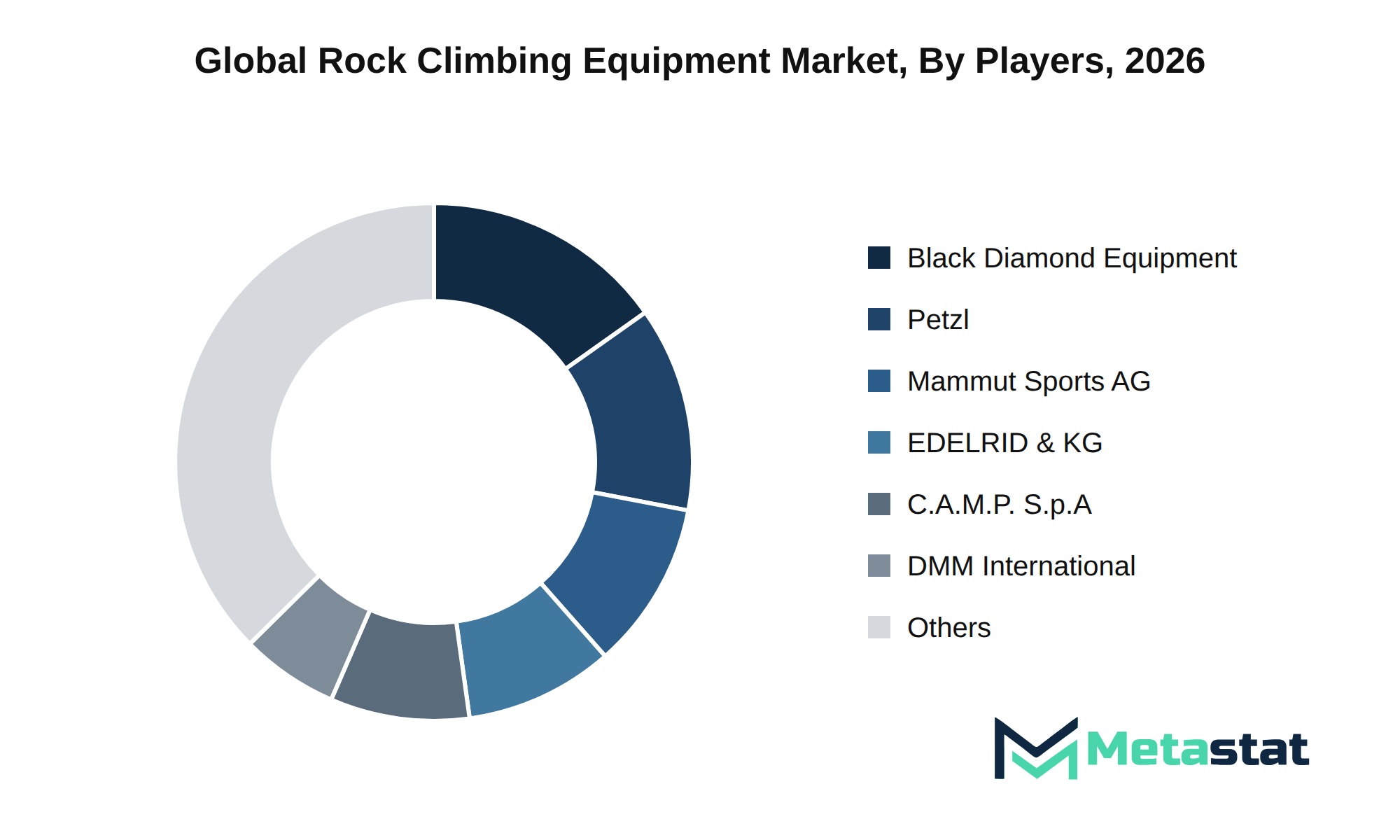
The Rock Climbing Equipment market experiences significant competition driven by various strategic behaviors among key players. Companies including Petzl, Black Diamond Equipment, Ltd, and Mammut Sports Group AG focus on product differentiation, investing in R&D pipelines to enhance performance and safety features across their product lines. This focus on innovation strengthens competitive positioning and enhances brand equity in a market characterized by evolving consumer preferences.
Strategic alliances and partnerships play a crucial role in expanding market reach and leveraging complementary strengths. Companies like EDELRID GmbH & Co. KG and C.A.M.P. S.p.A. actively pursue collaborations that enhance distribution channels and support entry into new geographic regions. This approach creates a more resilient supply chain, allowing for greater procurement leverage and cost efficiencies.
The threat of new entrants remains a concern within the Rock Climbing Equipment market. Established firms maintain competitive edge through robust intellectual property portfolios and technological defensibility, deterring potential disruptors. Customer retention strategies, including loyalty programs and superior after-sales service, contribute to lower switching costs and enhanced brand loyalty among consumers.
Competitive dynamics within the market emphasize the importance of strategic growth vectors, innovation, and value chain integration. With ongoing developments and an expanding market landscape, companies that prioritize these factors are well-positioned for future success.
Market size is forecast to rise from USD 1,205.1 million in 2025 to over USD 2,281.3 million by 2033. This growth reflects a compound annual growth rate (CAGR) of 8.3%. The base case scenario anticipates consistent demand driven by the increasing popularity of rock climbing because a recreational activity and competitive sport. Factors influencing this growth include advancements in climbing technology, enhanced safety features, and the expansion of climbing facilities.
The bull case envisions heightened market growth through accelerated adoption of innovative materials and design technologies, leading to superior product performance and increased consumer interest. A surge in investment from brands in marketing and outreach efforts draws new participants to the sport. In contrast, the bear case considers potential economic downturns or shifts in consumer spending that could dampen growth and affect overall market dynamics.
Ongoing trends in consumer preference towards sustainable and high-quality equipment will significantly shape the market landscape. Advances in research and development will likely drive further innovation, leading to a more competitive environment. Market players stay attuned to regulatory changes and compliance requirements that impact production timelines and costs. Overall, the Rock Climbing Equipment market is poised for growth, with shifting consumer behaviors and technological advancements steering its evolution.
Rock Climbing Equipment Market Key Segments
By Product Type:
- Climbing Shoes
- Climbing Harnesses
- Climbing Ropes & Cordage
- Carabiners, Quickdraws & Connectors
- Belay & Rappel Devices
- Protection & Anchoring Hardware
- Climbing Helmets
- Others (Ascenders, Portaledges and Specialized Big-Wall Equipment)
By Material:
- Nylon
- Polyester
- Dyneema
- Kevlar
- Carbon Fiber
By Distribution Channel:
- Specialty Climbing & Outdoor Retailers
- General Sporting-Goods Retailers
- Brand-Owned Physical Stores
- Brand-Owned E-commerce
- Third-Party E-commerce & Marketplaces
- Institutional & B2B Direct Sales
- Others (Club Stores and Event-Based Sales)
By End User:
- Professional Climbers
- Recreational Climbers
- Climbing Gyms & Training Facilities
- Outdoor Climbing Facilities
By Region:
- North America
- Europe
- Asia-Pacific
- South America
- Middle East and Africa
Key Global Rock Climbing Equipment Industry Players
- Petzl
- Black Diamond Equipment, Ltd
- Mammut Sports Group AG
- EDELRID GmbH & Co. KG
- Oberalp
- C.A.M.P. S.p.A.
- BEAL
- DMM International Limited
- OCÚN
- Aludesign S.p.A. - Climbing Technology
- KONG spa
- Trango
- Mad Rock Climbing
- Metolius Climbing
- BLUE ICE
- SINGING ROCK s.r.o.
- FIXE Hardware
- AUSTRIALPIN
- Rock Empire s.r.o.
- Totem MT
- SIMOND
- KAILAS
- La Sportiva S.p.A.
- SCARPA
- Wild Country
- GrivelSrl
- Arc'teryx
Report Coverage
The report strategically identifies and profiles the key market players and analyses their core competencies in each sub-segment of the Rock Climbing Equipment market.
Report Attributes | Details |
Study Period | 2021-2033 |
Base Year | 2025 |
Estimated Year | 2026 |
Forecast Period | 2026-2033 |
Historical Period | 2021-2025 |
Growth Rate | CAGR 8.3% from 2026 to 2033 |
Revenue Unit | USD million |
Segmentation | By Product Type, Material, Distribution Channel, End User, and Region |
By Region | North America (By Product Type, Material, Distribution Channel, End User, and Country)
|
Europe (By Product Type, Material, Distribution Channel, End User, and Country)
| |
Asia Pacific (By Product Type, Material, Distribution Channel, End User, and Country)
| |
South America (By Product Type, Material, Distribution Channel, End User, and Country)
| |
Middle East and Africa (By Product Type, Material, Distribution Channel, End User, and Country)
|
What Report Provides
- Key Company Market Share, Revenue and Ranking for the Rock Climbing Equipment Market
- Key Market Leaders and Their Strategies in the Rock Climbing Equipment Market
- Full In-Depth Analysis of the Rock Climbing Equipment Industry
- Industry Statistics and Trends Affecting the Rock Climbing Equipment Market
- Important Changes in Rock Climbing Equipment Market Dynamics
- Segmentation Details of the Rock Climbing Equipment Market
- Historical, Ongoing, and Projected Market Analysis for Rock Climbing Equipment
- Emerging Segments and Regional Growth Potential in the Rock Climbing Equipment Market
Frequently Asked Questions
Find answers to common questions about this report
The Rock Climbing Equipment market size was valued at USD 1,205.1 million in 2025, according to the Metastat Insights study.
The Rock Climbing Equipment market is projected to grow at a CAGR of 8.3% during the forecast period from 2026 to 2033.
The North America Rock Climbing Equipment market size is estimated to reach USD 728.4 million by 2033.
The Climbing Shoes segment leads the Rock Climbing Equipment market with a projected value of USD 533.6 million in 2033. This segment's growth reflects a compound annual growth rate of 7.9% from 2026 to 2033.
Ongoing investment in outdoor recreational activities, increased disposable income, and urbanization drive growth in the Rock Climbing Equipment market. Improvements in infrastructure and the rise of climbing gyms enhance accessibility, while consumer preferences for high-quality, innovative gear further stimulate demand. Sustainability initiatives play a crucial role in shaping market dynamics.
North America holds the dominant share of the Rock Climbing Equipment market, with a projected value of USD 728.4 million in 2033, representing 33.8% of the total market.
Regulatory compliance requirements increase operational costs for manufacturers, affecting pricing strategies and complicating product development timelines. Economic challenges, including inflation and geopolitical instability, disrupt supply chains and hinder consumer spending, further limiting market growth. These factors create a challenging environment for the Rock Climbing Equipment market.
Ongoing investment in outdoor recreational activities, increased disposable income, and urbanization significantly influence product adoption in the Rock Climbing Equipment market. The growth of climbing gyms and training facilities enhances accessibility and safety for newcomers, while consumer preferences shift towards high-quality, innovative gear that improves safety and performance.
The Rock Climbing Equipment market is estimated to reach a valuation of USD 2,281.3 million by 2033.
Key players in the Rock Climbing Equipment market include Petzl, Black Diamond Equipment, Ltd, Mammut Sports Group AG, EDELRID GmbH & Co. KG, C.A.M.P. S.p.A., and La Sportiva S.p.A.
Choose Your License
Global Rock Climbing Equipment Market
Related Reports
Explore related market intelligence reports worth reading alongside this one.
Fall Protection and Confined Space Rescue Equipment Market
Starting from
$2950