Global Street Furniture Market Size, Share, By Product (Benches and Seating, Tables and Picnic Furniture, Litter and Recycling Bins, Bollards and Barriers, Bicycle Racks and Parking Furniture, Planters and Tree Protection, Shelters and Shade Structures, and Others (Chairs, Loungers, Drinking Fountains, Signage, Ashtrays)), By Material (Metal, Wood, Concrete, Plastic, Composite Materials, and Others (Stone, Glass, Recycled Materials)), By Application (Parks and Recreational Areas, Streets and Pedestrian Areas, Transportation and Transit Facilities, Commercial and Mixed-Use Developments, Educational and Institutional Campuses, Residential and Community Developments, and Others (Hospitality, Healthcare, Cultural Spaces)), By Distribution Channel (Direct Sales and Public Tenders, Dealers and Distributors, and Online Sales), Industry Analysis, Growth, Trends, and Forecast, 2026-2033
Report ID
MSI-4936
Published
August 14, 2026
Pages
271 Pages
Format
Market Size 2021
$3.1 Billion
Historical
Market Size 2025
$3.8 Billion
Base year
Market Size 2033
$6 Billion
Forecast
CAGR 2025-2033
5.8%
Forecast period
Report Details
Comprehensive Market Analysis And Insights
Market Overview
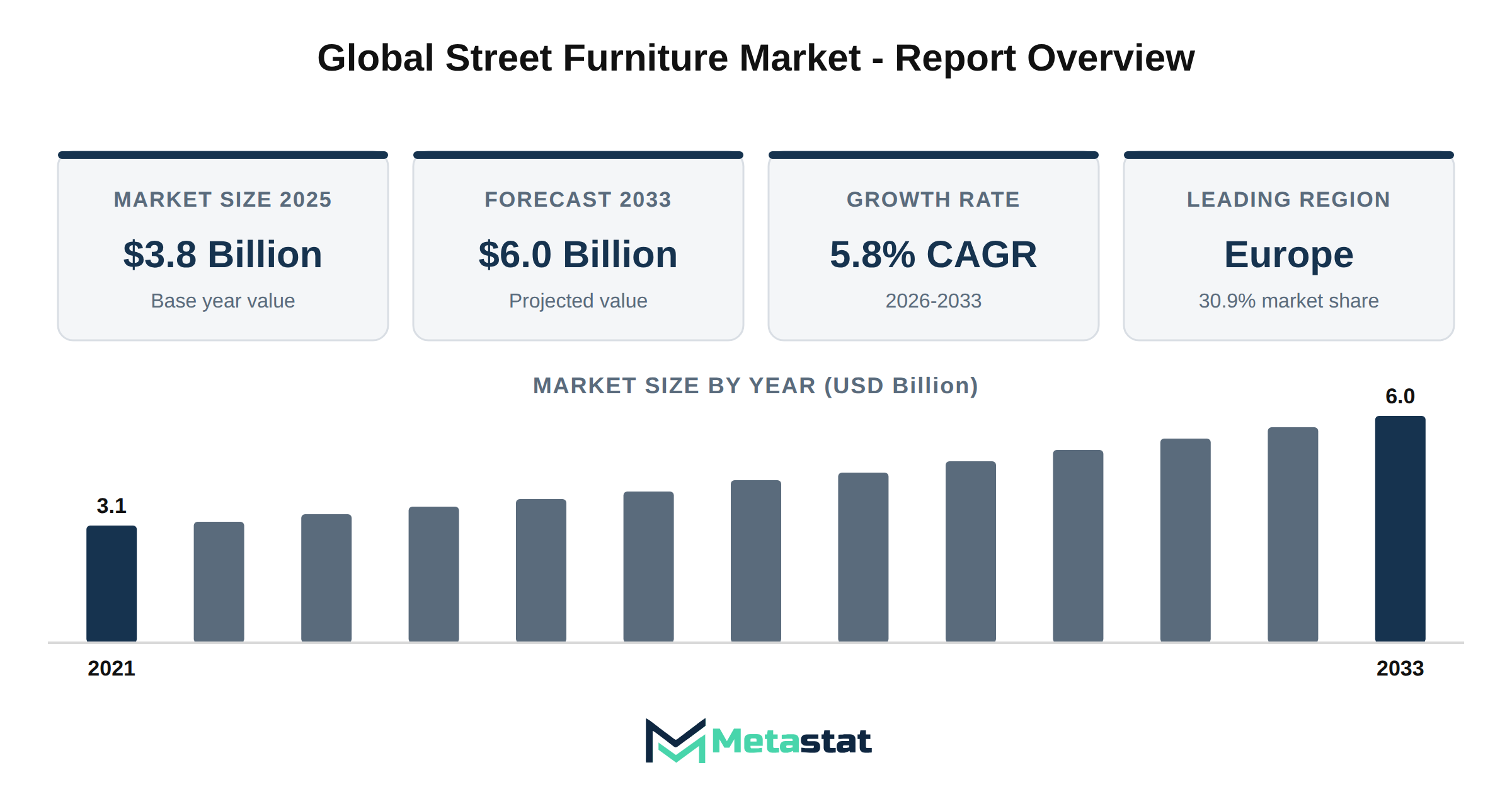
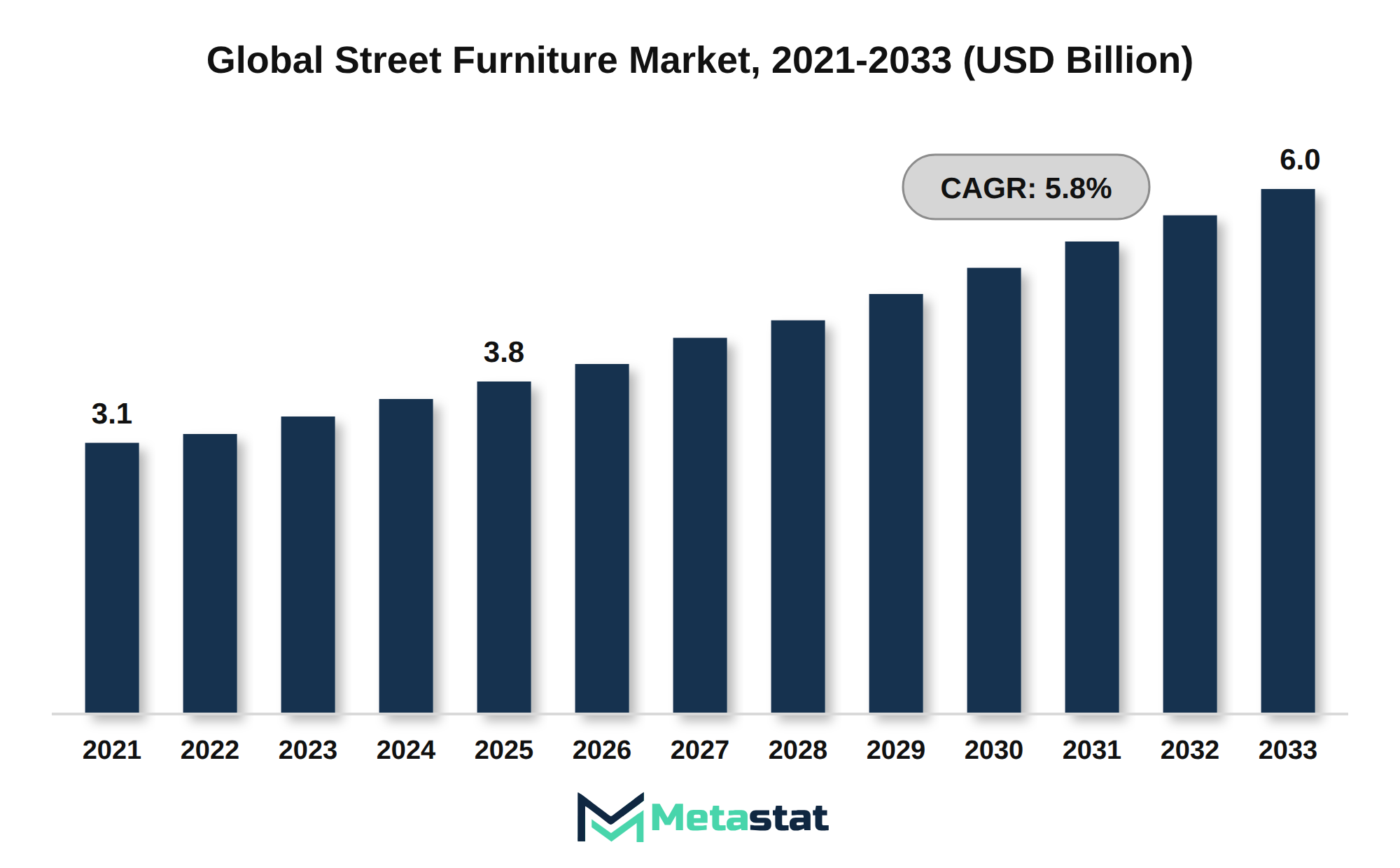
The global Street Furniture market was valued at USD 3.8 billion in 2025 and is projected to reach USD 6 billion by 2033, growing at a CAGR of 5.8% over the forecast period.
The Street Furniture market reached a valuation of USD 3.8 billion in 2025, reflecting a steady growth trajectory since its historical valuation of USD 3.1 billion in 2021. This upward trend highlights a compound annual growth rate (CAGR) of 5.8% projected from 2026 to 2033, with the market anticipated to attain a value of USD 6 billion by the end of the forecast period.
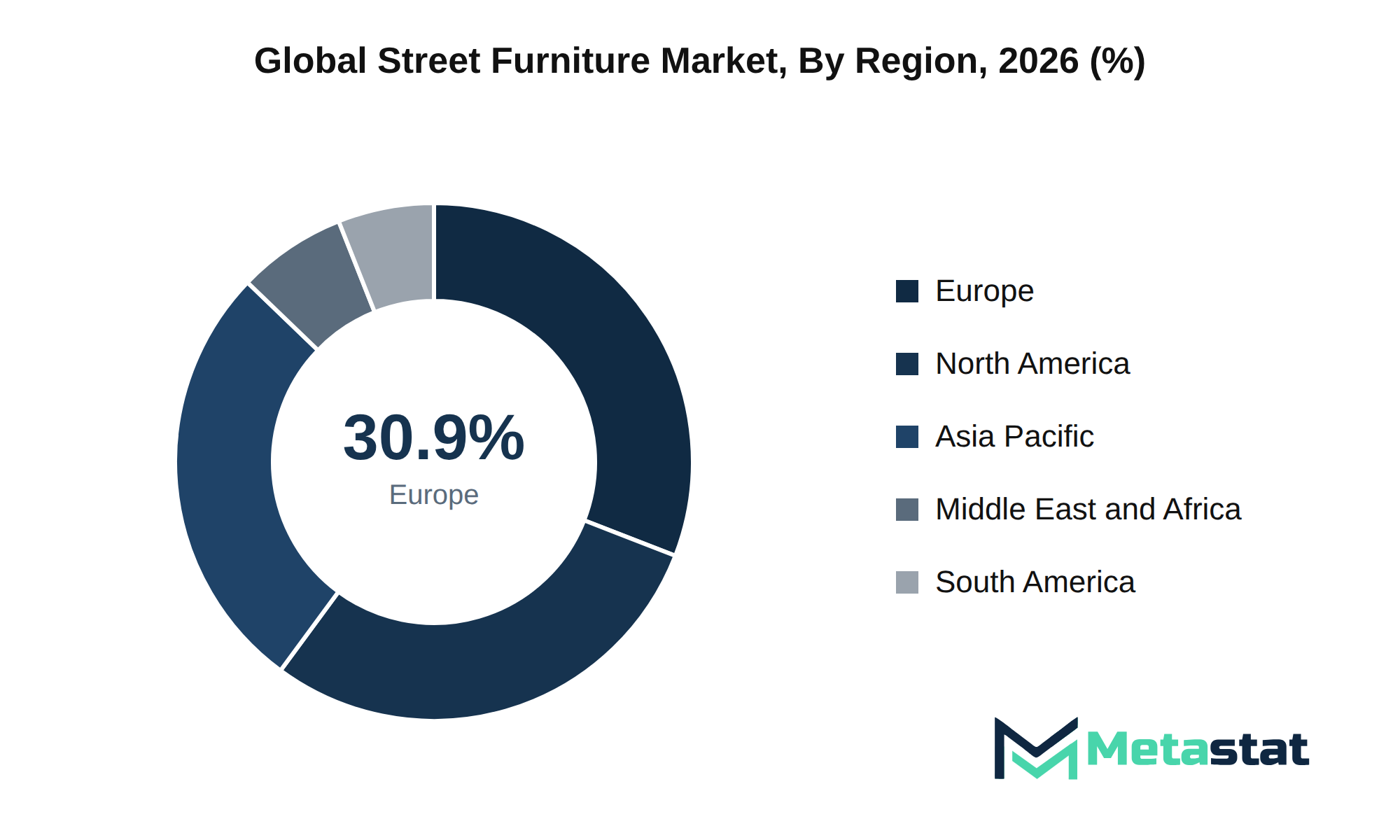
Regional analysis indicates that Europe holds the largest share of the market at 30.9%, closely followed by North America at 29.2% and Asia Pacific at 27.1%. These regions exhibit diverse dynamics influenced by urbanization, infrastructure development, and sustainability initiatives. The increasing demand for street furniture in parks, recreational areas, and urban settings drives significant investments in this sector, enhancing overall market growth.
Product segmentation shows that benches and seating dominate the market, with a forecasted value increase from USD 1.4 billion in 2026 to USD 2.1 billion by 2033, representing a CAGR of 6%. Other notable segments include tables and picnic furniture, projected to reach USD 0.8 billion by 2033, and litter and recycling bins, expected to achieve a value of USD 0.7 billion in the same timeframe, reflecting growing environmental awareness.
In terms of material composition, metal products lead the market with anticipated growth from USD 1.5 billion in 2026 to USD 2.3 billion by 2033, reflecting a CAGR of 6.2%. Wood, while significant, shows a lower growth trajectory with a projected value of USD 1.6 billion by 2033. The evolving preference for sustainable materials influences purchasing decisions across various applications, driving innovation in product offerings.
Application-wise, parks and recreational areas represent a rapidly growing segment, expected to expand from USD 1 billion in 2026 to USD 1.7 billion by 2033, with a CAGR of 7.5%. Streets and pedestrian areas demonstrate substantial growth potential, projected to reach USD 1.8 billion by 2033, driven by urban planning initiatives and community development projects, reinforcing the demand for street furniture in urban environments.
The Street Furniture market experiences significant changes driven by evolving consumer preferences and sustainability initiatives. Increased urbanization and a growing focus on public spaces contribute to the rising demand for functional and aesthetically pleasing street furniture. This shift drives innovation in design and materials, enhancing the overall user experience in urban environments.
Regulatory compliance and standards play an important role in shaping the market. Governments implement guidelines to ensure safety and durability in public installations. This regulatory landscape influences procurement decisions and encourages manufacturers to prioritize quality and sustainability in their product offerings, resulting in improved market competitiveness.
Geopolitical risk frameworks impact the supply chain landscape. Trade policies and international relations affect the availability of materials, leading to fluctuations in production costs. Adapting to these dynamics requires agility and strategic planning from companies operating within the market, influencing their operational efficiency and cost management.
Next-generation innovation drives the development of smart street furniture equipped with technology to enhance urban living. Integration of digital features, including charging stations and interactive displays, appeals to modern consumers seeking convenience and connectivity in public spaces. This technological advancement positions the market for sustained adaptation to future urban needs, expanding its addressable base.
Sustainable transformation remains a critical focus. The circular economy dynamics emphasize the importance of recycling and reusing materials to minimize waste. Companies investing in eco-friendly practices and sustainable materials gain a competitive edge, aligning with consumer demand for responsible products and enhancing their market positioning.
Inflationary pressures and currency volatility introduce challenges for market players. Fluctuations in material costs and foreign exchange rates impact profit margins. Strategic capital allocation and effective pricing strategies become essential for maintaining profitability in a volatile economic environment, influencing overall market stability.
The future strategic outlook for the Street Furniture market indicates strong growth potential. Ongoing infrastructure investments in urban development and public space enhancement create opportunities for suppliers. Companies that leverage innovation and sustainability in their offerings position themselves favorably in an increasingly competitive environment, reinforcing their market presence.
Market Dynamics
Investment in urban infrastructure supports market growth
Growth driver 1
Increased capital investment in urban infrastructure drives expansion in the Street Furniture market. Governments and private sectors recognize the importance of enhancing public spaces, driven by urbanization that continues to rise globally. This investment leads to improved public amenities, attracting more pedestrian traffic and creating engaging community areas.
Enhancements in infrastructure, including parks, pedestrian walkways, and transit facilities, necessitate the integration of functional and aesthetically pleasing street furniture. This demand strengthens sales of benches, tables, and other urban fixtures. The market benefits from a focus on sustainability and eco-friendly materials, aligning with urban planning goals aimed at creating greener cities.
The increasing inclination towards smart city concepts drives technological integration into street furniture. Smart solutions, including solar-powered lighting and interactive information displays, add value to public spaces. This trend enhances user experiences and positions the market for significant growth over the forecast period, with expected growth continuing through 2033.
Digital transformation drives market adaptation
Rapid advancements in digital technology facilitate significant changes within the Street Furniture market. The integration of automation and software solutions optimizes operational efficiency, allowing suppliers to respond more effectively to customer needs. This transition is evident in the adoption of smart street furniture options that enhance user experience while collecting valuable data for urban planning and development.
Investments in digital infrastructure support stakeholders throughout the market, promoting innovative product development and service diversification. Clients benefit from enhanced decision-making processes and improved product offerings, directly contributing to market growth. Municipalities and businesses prioritizing modernization increase the demand for digitally integrated street furniture, aligning with broader urbanization trends.
Technological integration influences consumer behaviors, particularly among urban populations seeking aesthetically pleasing and functional public spaces. The trend toward sustainable practices drives manufacturers to explore eco-friendly materials and energy-efficient designs, further improving market prospects. Consequently, the Street Furniture market positions itself to capitalize on these changes, adapting to evolving consumer preferences and market demands.
Regulatory challenges hinder market expansion
Regulatory challenges significantly impact the Street Furniture market by imposing strict compliance requirements and legal mandates. These regulations often lead to increased operational costs for manufacturers and suppliers, creating hurdles that affect pricing and market entry. Adhering to these standards slows innovation, owing to companies diverting resources to meet compliance rather than focusing on product development.
Capital stagnation presents another restraint, with limited funding opportunities restricting investment in new projects and infrastructure enhancements. This stagnation affects both public and private sector initiatives, delaying the deployment of new street furniture solutions. Inflationary pressures and rising material costs further escalate the financial burden on manufacturers, compelling them to increase prices and potentially reduce consumer demand.
Geopolitical instability and supply chain disruptions contribute additional uncertainty to the market. These factors complicate the procurement of materials and components, causing delays and increasing costs. Reliance on global supply chains exposes companies to risks related to trade policies and international relations, hindering growth prospects.
Technological obsolescence represents a significant concern, with rapid advancements in materials and design rendering existing products outdated quickly. This risk encourages manufacturers to invest in ongoing research and development, placing further strain on financial resources. Market fragmentation complicates competition, with numerous small players vying for market share, leading to challenges in brand recognition and customer loyalty.
Cultural barriers and regional adoption resistors complicate the market landscape, owing to varying preferences and regulatory environments across different regions leading to inconsistent demand. These factors contribute to a slowdown in overall market growth, because stakeholders navigate through diverse expectations and requirements. While the Street Furniture market evolves, addressing these restraints remains crucial for future development and profitability.
Geopolitical Fragmentation and Trade Disruptions
Market challenge
Geopolitical fragmentation significantly impacts the Street Furniture market by creating trade deficits and tariff friction. These factors disrupt supply chains, affecting the timely delivery of materials and components required for manufacturing street furniture. Manufacturers face increased costs due to tariffs on imported goods, influencing pricing strategies and profit margins. Trade tensions among nations lead to uncertainty in sourcing materials, ultimately impacting operational efficiency and market competitiveness.
Technological disruptions pose another challenge within the market. Rapid advancements in technology necessitate complex research and development integrations. Companies face difficulties in adapting to new innovations while managing existing product lines, often resulting in increased operational costs and slowed product development cycles. The need for interoperability among various materials and systems complicates the integration of new technologies, affecting overall market growth.
Supply chain instability exacerbates these challenges, with logistics disruptions creating bottlenecks in the procurement process. Fluctuations in feedstock availability and pricing pressures lead to unpredictable cost structures in manufacturing. Companies operating within the Street Furniture market navigate these issues while striving to maintain competitive pricing, creating a challenging environment for sustained growth.
Workforce skill gaps and talent retention pressures hinder the market's ability to innovate and adapt effectively. The necessity for skilled labor in the production and installation of street furniture heightens competition for qualified workers. Companies that fail to address these workforce challenges face delays in project execution, resulting in lost contracts and reduced market share.
Environmental and sustainability demands present further obstacles. The increasing focus on decarbonization mandates and lifecycle footprints requires manufacturers to adopt more sustainable practices. These requirements lead to higher production costs and necessitate investment in new technologies and processes to meet evolving consumer expectations. Failure to achieve compliance with tightening global standards limits market opportunities and affects long-term viability.
Emerging trends drive market opportunities
The Street Furniture market benefits from increasing demand for modernized urban infrastructure, particularly in regions undergoing significant development. Emerging economies prioritize enhancements in public spaces, which directly influences the demand for innovative street furniture solutions that support community engagement and environmental sustainability. Infrastructure modernization initiatives align with technological advancements, enabling the integration of smart solutions into public amenities.
Geographical expansion creates additional avenues for growth, with urban areas seeking tailored solutions to meet specific local needs. Strategic consolidation among manufacturers and suppliers enhances market agility, enabling quicker responses to evolving buying behaviors and preferences. The influx of digital procurement shifts encourages streamlined purchasing processes, improving efficiency in distribution channels.
Next-generation innovations in materials and designs enhance product offerings in the Street Furniture market. Heightened awareness of sustainability imperatives aligns with consumer preferences, pushing for eco-friendly compliance and green transformation across the sector. Maintenance upgrades and retrofitting dynamics extend asset life cycles, ultimately promoting long-term investment in street infrastructure while addressing environmental concerns.
Value-chain optimization and process automation within production facilities lead to operational yield maximization, reducing costs while meeting growing demand. The focus on niche application growth opens opportunities for specialized products, catering to various sectors including education, healthcare, and recreational spaces. Collectively, these factors establish a framework for sustained growth and innovation in the market.
Market Segmentation Analysis
The Global Street Furniture market is segmented based on Product, Material, Application, and Distribution Channel.
Valued at USD 1.4 billion in 2026, the Benches & Seating segment is projected to reach USD 2.1 billion by 2033, at a CAGR of 6% during the forecast period. Increased urbanization and a focus on public spaces drive demand for benches and seating solutions. Parks, recreational areas, and urban environments emphasize the importance of comfortable seating, enhancing user experience and social interaction. The segment benefits from a growing preference for sustainable materials, with manufacturers innovating to incorporate eco-friendly and durable options.
Technological advancements supporting product evolution include design enhancements, integration of smart features, and improved durability. Customization options enable urban planners and architects to align seating solutions with specific environmental and aesthetic needs, increasing adoption rates. Regulatory compliance regarding safety standards and environmental impact influences market dynamics, prompting manufacturers to innovate continually.
Cost structures and pricing volatility related to raw material sourcing impact operational margins. Fluctuations in metal and wood prices create challenges, necessitating strategic sourcing relationships and effective inventory management. Competitive pressures within the segment drive manufacturers to explore diverse distribution channels, including direct sales and partnerships with dealers.
The overall growth trajectory of the Street Furniture market highlights significant opportunities within the Benches & Seating segment. Ongoing investments in urban infrastructure development, coupled with the increasing emphasis on public space enhancement, create a favorable environment for market expansion. The presence of established players and new entrants intensifies competition, driving innovation and efficiency across the sector.
Tables & Picnic Furniture
Growth in the Tables & Picnic Furniture segment aligns with increasing urbanization and a shift towards outdoor social interactions. Urban planners and municipalities prioritize public spaces, enhancing accessibility and promoting community engagement. Investment in functional and aesthetic outdoor furniture creates robust demand.
Technological advancements in materials and design enhance innovation in this segment. Manufacturers adopt sustainable materials and smart furniture solutions, improving durability and lowering maintenance costs. Enhanced product features attract buyers focused on quality and longevity, supporting segment expansion.
Tables & Picnic Furniture segment is estimated to reach USD 0.8 billion by 2033, at a CAGR of 5.8% during the forecast period. The increased emphasis on sustainability influences purchasing decisions, with many consumers prioritizing eco-friendly options. Regulatory compliance regarding materials and safety further shapes product offerings.
Supply chain resilience remains crucial. Manufacturers navigate raw material sourcing challenges. Fluctuations in material costs impact pricing strategies, compelling suppliers to adopt innovative sourcing solutions. Strategic investments in local production capabilities enhance responsiveness to market demands while mitigating logistics vulnerabilities.
While consumer preferences shift towards multifunctional outdoor spaces, companies strategically position themselves to capitalize on these trends. A proactive approach to product development and marketing strengthens competitive positioning within the Street Furniture market.
Litter & Recycling Bins
Increased emphasis on environmental sustainability drives demand for Litter & Recycling Bins within the Street Furniture market. Municipalities and urban planners prioritize waste management solutions that align with eco-friendly initiatives, leading to higher adoption rates of these products. The growing awareness regarding litter reduction and recycling initiatives stimulates interest in durable and attractive litter and recycling bin designs, enhancing public spaces and minimizing littering behaviors.
Technological advancements contribute to product evolution, with innovations in materials and designs improving functionality and aesthetics. Manufacturers increasingly incorporate durable materials, including recycled plastics and metals, which address both performance and sustainability concerns. This trend supports market expansion, driven by urban areas continuing to develop and modernize their public amenities.
Regulations regarding waste management and recycling significantly influence purchasing decisions. Compliance with local and national policies creates a need for efficient waste disposal solutions, driving municipalities to invest in Litter & Recycling Bins. These regulations push manufacturers to enhance product offerings, ensuring compliance while providing attractive options for various urban environments.
Cost structures within this segment reflect the increasing demand for high-quality materials and innovative designs. While this leads to higher upfront costs, the long-term benefits of durability and reduced maintenance needs enhance overall value. The Litter & Recycling Bins segment is expected to reach USD 0.7 billion by 2033, reflecting a positive growth trajectory in response to market dynamics.
Bollards & Barriers
Increased urbanization and infrastructure development drive growing demand for Bollards & Barriers within the Street Furniture market. Safety concerns regarding pedestrian areas and traffic management significantly influence the need for effective barriers, enhancing public safety and organization in urban environments. The adoption of these products aligns with city planners' objectives to create safe transit spaces and reduce vehicular incidents.
Technological advancements in materials and design contribute to the segment's appeal. Improved durability and aesthetic versatility of bollards and barriers enable integration into various urban landscapes, meeting both functional and visual needs. The segment is projected to grow at a CAGR of 5.5% during the forecast period, reflecting increasing investment in urban infrastructure.
Regulatory compliance regarding public safety standards and urban design guidelines further enhances market penetration. Municipalities increasingly prioritize compliant street furniture solutions, prompting manufacturers to innovate and adapt their offerings. This shift drives competitive differentiation while ensuring alignment with evolving regulations, resulting in a more robust market presence.
Investment in smart city initiatives advances the evolution of Bollards & Barriers, incorporating features including integrated lighting or digital signage. This integration enhances functionality and offers opportunities for future upgrades, catering to the demands of modern urban environments and supporting long-term growth.
Market dynamics indicate an upward trend in public and private sector financing for urban development projects. This financial influx supports the procurement of advanced bollards and barriers, reflecting a commitment to infrastructure improvement. While cities continue to grow, the importance of these products in enhancing public spaces highlights their value in the Street Furniture market.
Bicycle Racks & Parking Furniture
Growing urbanization and increasing cycling infrastructure significantly influence the demand for bicycle racks and parking furniture within the Street Furniture market. Cities worldwide invest in bicycle-friendly initiatives, promoting sustainable transportation options. The push towards eco-friendly mobility enhances the adoption of bicycle racks, enabling municipalities to cater to a growing number of cyclists. Enhanced awareness regarding urban mobility solutions drives demand for bicycle racks and encourages advancements in design and functionality.
Technological maturation plays a significant role in product evolution, with manufacturers developing advanced features including smart bike racks that incorporate digital technology for enhanced user experience and security. The integration of these features attracts municipalities and private developers looking to improve urban environments. Downstream applications in parks, transportation hubs, and commercial areas further support the growth of this segment, aligning with urban development projects focused on sustainability.
Regulatory compliance standards regarding bicycle-friendly infrastructure dictate the design and installation of bicycle racks. These standards promote safety and accessibility, driving municipalities to invest in compliant solutions. The market faces pricing volatility and margin pressures due to fluctuating raw material costs, affecting the overall cost structure. Strategic opportunities arise from increasing investments in cycling infrastructure, presenting avenues for growth and innovation within the segment.
Raw material sourcing challenges, particularly regarding sustainable materials, impact production timelines and costs within the market. Manufacturers identifying alternative sourcing strategies enhance supply chain resilience, mitigating risks related to material availability. The segment positions itself well for growth, driven by shifts in consumer preferences towards sustainable urban mobility, making it a key component of the evolving Street Furniture market.
Planters & Tree Protection
Planters and tree protection products serve essential components in urban landscapes, contributing to both aesthetic appeal and environmental sustainability. Growing awareness of the importance of green spaces in urban settings drives demand for these products, particularly in parks and recreational areas. A focus on enhancing urban aesthetics influences city planners and developers to prioritize the incorporation of greenery in public spaces, strengthening long-term demand for planters and tree protection solutions.
Technological advancements in materials and design enhance the functionality and durability of planters and tree protection solutions. Innovations in composite materials and sustainable sourcing practices support the evolution of these products within the street furniture market. Increased regulations surrounding urban landscaping and tree preservation push adoption among municipalities and private developers, resulting in a more competitive landscape.
Cost structures for planters and tree protection solutions remain competitive, with pricing volatility influenced by raw material availability and market demand. Suppliers face margin pressures due to fluctuating costs of raw materials, particularly for sustainable and eco-friendly options. The growing trend toward urban greening initiatives results in significant investment opportunities, encouraging manufacturers to innovate and expand their offerings in this segment, thereby increasing compliance costs for participants.
Strategic opportunity windows arise from heightened consumer expectations for sustainable and aesthetically pleasing urban environments. Increased collaboration among stakeholders creates a resilient supply chain for planters and tree protection solutions, ensuring availability and responsiveness to market demands. The anticipated growth in urbanization enhances the relevance of this segment within the broader street furniture market, reinforcing the segment's position.
Shelters & Shade Structures
The evolution of Shelters & Shade Structures aligns with the increasing focus on outdoor spaces that provide comfort and protection. Urban planners and municipalities recognize the importance of creating inviting public spaces, which drives investment in these structures. Creative design and functional upgrades support the growing need for versatile outdoor solutions that cater to diverse activities.
Demand for these structures is influenced by fluctuating weather patterns, prompting consumers to seek reliable protection from sun and rain. The growing emphasis on recreational areas and parks leads to a rise in the adoption of Shelters & Shade Structures, reflecting essential components of these spaces. End-users, including municipalities, parks, and commercial developers, seek durable and aesthetically pleasing products that enhance the overall experience.
Technological advancements in materials and construction methods enhance product durability and design flexibility. Innovations including lightweight and weather-resistant materials contribute to the appeal of these structures for various applications. Increased awareness of health and safety standards further shapes the landscape, with regulatory compliance pushing manufacturers to adopt best practices in design and installation.
The presence of established players in the Street Furniture market drives competition, leading to continuous product improvements and expansions in design offerings. These strategic maneuvers create opportunities for market penetration and growth, particularly within urban environments. The focus on aesthetic appeal and functional design remains critical, driven by stakeholders seeking to balance form and utility in public space enhancements.
In the Street Furniture market, products classified under "Others" include chairs, loungers, drinking fountains, signage, and ashtrays. These items contribute to enhancing public spaces by offering comfort and functionality, which attracts various segments, including urban planners and landscape architects. Increased focus on urban aesthetics and functionality drives demand for such products, aligning with trends in public space revitalization.
Adoption of innovative designs and materials supports segment expansion. Consumers increasingly prefer sustainable options, prompting manufacturers to explore eco-friendly materials that align with modern environmental standards. This drives product evolution within the segment, driven by companies prioritizing functionality alongside aesthetic appeal, resulting in a competitive advantage.
Downstream applications for these products span parks, public squares, and commercial developments, creating a diverse range of end-use dynamics. Integrating these items into urban designs enhances user experience and encourages community engagement, leading to higher consumption levels. Regulatory compliance standards regarding public safety and environmental impacts significantly influence product designs, necessitating adherence to evolving guidelines.
Supply chain resilience remains a focus for manufacturers, particularly concerning raw material sourcing and logistics vulnerabilities. Strategic opportunity windows emerge for businesses that effectively navigate these challenges. Awareness of substitution risks and disruptive alternatives influences market strategies, prompting continuous innovation and adaptation in product offerings.
Investment in next-generation upgrades allows companies to enhance user experience and functionality. This trend illustrates the market's potential for growth driven by consumer demand for modern, functional, and visually appealing street furniture solutions. Capital investment outlook remains positive, with opportunities for expansion across various regions and applications within the Street Furniture market.
By Material, the market is further segmented into:
Metal
Wood
Concrete
Plastic
Composite Materials
Others (Stone, Glass, Recycled Materials)
Metal
Valued at USD 1.5 billion in 2026, the Metal segment is projected to reach USD 2.3 billion by 2033, at a CAGR of 6.2% during the forecast period. Demand for metal street furniture stems from durability, aesthetic appeal, and low maintenance requirements. Urban planners and municipalities increasingly opt for metal materials to ensure longevity and support high-traffic areas. The combination of robust construction and adaptability to various designs aligns with evolving consumer preferences for outdoor public spaces.
Investment in public amenities drives adoption of metal products across parks, pedestrian areas, and commercial developments. The shift toward enhancing urban infrastructure reflects a broader trend of integrating functional and visually appealing elements into cityscapes. Regulatory compliance with safety standards influences the sourcing and selection of materials, increasing the need for reliable and durable metal components in the market.
Competitive pressures push manufacturers to innovate, leading to next-generation upgrades in design and materials technology. These advancements facilitate the production of metal furniture that meets modern aesthetic and functional requirements. Demand for environmentally sustainable products rises, prompting manufacturers to explore eco-friendly metal finishes and sourcing practices. Overall, the Metal segment's growth aligns with the broader expansion of the Street Furniture market, driven by urbanization and the ongoing transformation of public spaces.
Wood
Growing interest in sustainable materials contributes to the expansion of the Wood segment within the Street Furniture market. Product evolution emphasizes the use of renewable resources, appealing to environmentally conscious consumers and municipalities. Increasing urbanization and rising demand for aesthetically pleasing outdoor spaces drive the adoption of wooden street furniture. Innovations in wood treatment and preservation technologies enhance the durability and lifespan of these products, making them a viable choice for public infrastructure.
The Wood segment is projected to reach USD 1.6 billion by 2033, at a CAGR of 5.1% during the forecast period. Downstream applications, including parks and recreational areas, benefit from the warm visual appeal of wood, which aligns with contemporary design trends. The market experiences shifts in consumption patterns, with buyers favoring sustainable options over traditional materials. Compliance with environmental regulations enhances the segment's attractiveness, with manufacturers focusing on eco-friendly practices and certifications.
Pricing volatility in raw materials influences cost structures within the Wood segment. Fluctuations in lumber prices require manufacturers to adopt agile pricing strategies to maintain competitiveness. Supply chain resilience becomes essential, particularly in sourcing sustainably harvested wood, ensuring a stable supply of quality materials. Competition with alternative materials like metal and plastic continues, but the unique characteristics of wood, including its aesthetic and tactile qualities, secure its position in the market.
Concrete
Demand for concrete in the Street Furniture market derives from its durability and versatility, making it an ideal choice for outdoor applications. Urban environment expansion and increased public investment in parks, recreational areas, and transit facilities lead to greater adoption of concrete furniture. This growth aligns with the rising emphasis on infrastructural resilience and sustainability in urban planning.
Market expansion factors include technological maturation, enabling manufacturers to innovate and enhance the performance of concrete products. Advances in concrete formulations, including the introduction of lightweight and environmentally friendly materials, improve product performance and drive adoption across various applications. The concrete segment is projected to reach USD 0.7 billion by 2033, reflecting strong demand driven by urbanization and infrastructure investments.
Concrete serves multiple end-use applications, including streets and pedestrian areas, benefiting from low maintenance costs and resistance to weathering. Strategic opportunities arise from the increasing focus on public safety and aesthetics in urban design, prompting municipalities to invest in functional yet visually appealing street furniture solutions. The market for concrete products demonstrates resilience and adaptability, positioning it for sustained growth in the coming years.
Plastic
Increasing focus on lightweight and durable materials enhances the appeal of plastic in the Street Furniture market. Its resistance to weathering and low maintenance requirements serve strong attributes driving adoption across various applications, particularly in parks and recreational areas. The sector experiences a notable shift towards plastic solutions due to their sustainability advantages, appealing to environmentally conscious consumers.
The plastic segment is projected to grow at a CAGR of 6.1% during the forecast period. This growth results from rising urbanization and the need for cost-effective solutions in public spaces. Demand for plastic products aligns with initiatives aimed at improving city aesthetics and functionality, resulting in increased investments in public infrastructure.
Technological advancements in the production of plastic street furniture facilitate the creation of innovative designs, allowing for greater customization and integration with existing urban environments. These enhancements, alongside the growing preference for recyclable materials, position plastic because a viable choice for municipal projects.
Cost structures within the plastic segment benefit from economies of scale, which enhance competitive pricing strategies. This aspect attracts budget-conscious municipalities and organizations looking to optimize expenditure while maintaining quality in the Street Furniture market. The ongoing evolution of materials and designs further strengthens the segment's market position.
The plastic segment within the Street Furniture market exhibits promising growth trajectories, driven by increased urbanization, technological improvements, and evolving consumer preferences. The strategic focus on sustainability and cost-effectiveness positions this segment for long-term success.
Composite Materials
Sub-segment Composite Materials (By Material)
In the Street Furniture market, the integration of composite materials addresses the increasing demand for lightweight yet durable products. These materials combine various elements to produce items suitable for a range of outdoor applications. The environmental benefits associated with composites enhance their attractiveness, particularly in urban areas focusing on sustainability.
Technological advancements in manufacturing processes improve the adoption of composite materials. Enhanced production techniques increase the versatility of products while reducing costs. This shift aligns with municipalities and private developers seeking innovative solutions for public spaces.
End-use dynamics show a growing preference for aesthetically pleasing and functional street furniture. Composite materials offer design flexibility, enabling manufacturers to create unique products that cater to diverse consumer tastes. Increased investment in public infrastructure contributes to heightened competition among suppliers, driving innovation in the composite segment.
Regulatory compliance regarding environmental standards influences product development within the market. Composite materials often fulfill these requirements, offering a viable alternative to traditional options while mitigating ecological impacts. This trend aligns with municipalities prioritizing sustainability in their purchasing decisions.
Overall, the incorporation of composite materials in the Street Furniture market reflects broader trends in environmental responsibility and design innovation. The demand for such products is expected to align with the growing emphasis on sustainability and efficient use of resources.
Others (Stone, Glass, Recycled Materials)
Emerging trends in the Street Furniture market indicate a shift towards varied materials for urban installations. The inclusion of stone, glass, and recycled materials addresses demand for aesthetic appeal and sustainable practices. Adoption of these materials reflects growing environmental awareness among consumers and municipal planners.
Technological maturation in materials science supports the development of innovative products featuring stone, glass, and recycled elements. These technologies enhance durability and design flexibility, allowing for unique installations across urban landscapes. Increased project attractiveness and potential cost savings over time benefit the market through these advancements.
End-use dynamics shape consumption shifts within the market, with parks, recreational areas, and public spaces increasingly favoring sustainable materials. The regulatory landscape encourages the use of recycled materials to meet environmental standards. Compliance with these standards leads to favorable outcomes, including government incentives for green initiatives.
Strategic opportunity windows exist owing to rising urbanization, prompting investments in public infrastructure. Capital investments in innovative street furniture designs that incorporate these alternative materials yield significant returns. Supply chain resilience is critical, with raw material sourcing focusing on sustainable practices to ensure competitiveness within the market.
By Application, the market is further segmented into:
Parks & Recreational Areas
Streets & Pedestrian Areas
Transportation & Transit Facilities
Commercial & Mixed-Use Developments
Educational & Institutional Campuses
Residential & Community Developments
Others (Hospitality, Healthcare, Cultural Spaces)
Parks & Recreational Areas
Valued at USD 1 billion in 2026, the Parks & Recreational Areas segment is projected to reach USD 1.7 billion by 2033, at a CAGR of 7.5% during the forecast period. Increasing public interest in green spaces and outdoor activities significantly drives this demand. Urban planning initiatives prioritize parks and recreational facilities, leading to greater inclusion of street furniture in these areas.
Investment in infrastructure development increases the need for functional and aesthetically pleasing street furniture. Stakeholders recognize the role of parks in community engagement and public health, leading to more strategic allocations of resources. Enhanced awareness of environmental sustainability influences the adoption of eco-friendly materials in street furniture, aligning with community values and expectations.
The market benefits from innovations that integrate technology into outdoor furniture, enhancing user experience through features like smart seating and solar-powered amenities. These advancements attract a demographic emphasizing quality and functionality in public spaces. Such trends contribute to the overall growth of the Street Furniture market by establishing a clear link between urban development and enhancement of recreational spaces.
Streets & Pedestrian Areas
Urban infrastructure development and increased foot traffic in urban areas drive substantial growth in the Streets & Pedestrian Areas segment. Valued at USD 1.8 billion by 2033, this segment shows a CAGR of 5.2% during the forecast period. The demand for street furniture tailored to pedestrian environments reflects a commitment to enhancing urban public spaces for safety and accessibility. Municipalities and urban planners increasingly prioritize aesthetic and functional aspects to create inviting street environments that enhance community engagement.
Technological advancements in materials and design contribute to product evolution within the segment. Innovations in durable, weather-resistant materials drive the adoption of street furniture that meets modern aesthetic standards while ensuring longevity. This evolution aligns with consumer preferences for sustainable and eco-friendly products, which influences purchasing decisions within the market. Growth prospects remain strong owing to cities and municipalities investing in improving public areas, further shaping the demand for adaptable and multifunctional street furniture.
Regulatory compliance and safety standards significantly impact the segment's dynamics. Stringent regulations regarding public safety and accessibility push manufacturers to innovate, ensuring that products not only meet but exceed standards. This focus on compliance directly affects pricing structures and margin pressures, ultimately influencing the competitive landscape within the market. Municipalities, in their quest for safer and more accessible public spaces, actively seek solutions that align with these regulatory mandates, reinforcing the segment's importance in the broader street furniture market.
Transportation & Transit Facilities
Growing urban populations and expansions in public transportation networks significantly influence demand for street furniture in transportation and transit facilities. City planners prioritize accessibility and comfort in these areas, spurring investment in benches, shelters, and bike racks. Regulatory standards promoting the integration of public amenities in transit zones drive this segment's growth. Urban mobility has become a focal point of city development, and improvements in design and functionality of street furniture products enhance user experience and safety.
By 2033, the Transportation & Transit Facilities segment is projected to reach USD 1 billion. This growth reflects ongoing efforts to create more livable urban environments. Manufacturers incorporate innovative materials and designs, ensuring durability and aesthetic appeal. The market's evolution aligns with environmental sustainability objectives, driven by cities seeking to reduce their carbon footprints through eco-friendly materials and designs.
Commercial & Mixed-Use Developments
Increasing investments in urban development and revitalization projects significantly influence the demand for street furniture in Commercial & Mixed-Use Developments. This segment is projected to grow at a CAGR of 5.4% during the forecast period. Enhanced emphasis on creating public spaces integrates commercial activities with recreational areas, promoting pedestrian-friendly environments that attract visitors and residents. Urban center expansion intensifies the demand for quality street furniture that enhances aesthetics and functionality, benefiting property developers and municipal planners.
Technological advancements in materials and design drive innovation in this segment, enabling the introduction of durable and sustainable products. Adoption of eco-friendly materials and smart street furniture solutions, including interactive kiosks and solar-powered lighting, aligns with the growing focus on sustainability and energy efficiency in urban planning. These factors create new opportunities for suppliers in the market, encouraging partnerships and collaborations to meet evolving consumer preferences.
Regulatory compliance standards regarding public space safety and accessibility establish guidelines that street furniture meets. Manufacturers face pressures related to cost structures and pricing volatility arising from fluctuating raw material costs. Strategic investments in supply chain resilience and effective sourcing of raw materials help mitigate these challenges, ensuring consistent product availability and maintaining competitive pricing in the market.
The Commercial & Mixed-Use Developments segment represents a dynamic area within the Street Furniture market, driven by evolving urban landscapes, technological advancements, and regulatory requirements. Continued investment in this sector enhances urban livability and addresses the demands of diverse end-users seeking practical and aesthetically pleasing outdoor spaces.
Educational & Institutional Campuses
Investment in educational and institutional campuses increasingly drives demand for street furniture. The focus on creating functional and aesthetically pleasing environments enhances student engagement and community interaction. Educational institutions prioritize outdoor spaces for learning, recreation, and socialization, requiring diverse furniture options including benches, tables, and bike racks.
Urban planning initiatives emphasize the importance of well-designed educational campuses, making them attractive to prospective students and staff. The integration of sustainable materials and innovative designs aligns with the growing demand for environmentally friendly solutions. Educational institutions seek furniture that enhances their brand identity while maintaining durability and functionality.
Regulatory compliance regarding safety and accessibility standards influences purchasing decisions. Institutions strive to meet these requirements while creating inclusive environments for all users. The focus on outdoor learning environments and recreational areas within campuses continues to evolve, pushing manufacturers to innovate and provide adaptable solutions that cater to changing needs.
Investment in the quality of outdoor spaces leads to increased demand for street furniture, benefiting the market. This segment's growth reflects a broader trend towards improving educational facilities and creating community spaces. Enhanced funding for public education and infrastructure development supports this expansion, signaling a robust future for street furniture in educational and institutional campuses.
Residential & Community Developments
Investment in residential and community developments drives demand for street furniture, highlighting the need for functional and aesthetically pleasing public spaces. Urban planners and developers increasingly prioritize creating inviting environments that encourage social interactions within communities. The desire for enhanced outdoor experiences promotes the integration of various street furniture products, contributing to the overall appeal of residential areas.
Adoption of environmentally sustainable materials significantly shapes the market. Consumers and municipalities emphasize eco-friendly solutions, influencing product offerings in the street furniture market. This shift aligns with broader trends focused on sustainability and responsible urban development, resulting in increased demand for benches, tables, and other furniture made from recycled or sustainable materials.
Technological advancements further enhance product offerings within the residential and community developments segment. Innovations in design and manufacturing processes improve durability and reduce maintenance requirements, increasing the appeal of street furniture. This evolution encourages municipalities to invest in high-quality products that serve the community effectively over time.
Market dynamics, including regulatory compliance and standards, significantly impact the residential and community developments segment. Compliance with safety and accessibility regulations requires manufacturers to deliver products that meet specific criteria, shaping end-use dynamics. This regulatory landscape creates a competitive environment where suppliers strive to exceed these standards while offering cost-effective solutions.
Strategic opportunities arise from the growing trend of mixed-use developments, which combine residential, commercial, and recreational spaces. These integrated designs promote community engagement and necessitate the inclusion of functional street furniture. The market anticipates further growth in this area driven by developers recognizing the value of creating cohesive environments that enhance the quality of life for residents.
Others (Hospitality, Healthcare, Cultural Spaces)
Investment in hospitality, healthcare, and cultural spaces drives demand for street furniture tailored to these environments. Design considerations for this sub-segment emphasize functionality, aesthetics, and the creation of inviting public spaces. Enhanced comfort and usability of furniture products cater to diverse user needs, aligning with trends in urban planning that prioritize accessible, inclusive spaces.
Technological advancements further improve the market, with innovations in materials and smart features increasing appeal. The integration of sustainable materials fulfills the demand for environmentally responsible solutions, reflecting a broader commitment to reducing the ecological footprint. Regulatory compliance and safety standards define product specifications and influence purchasing decisions across the sector.
Shifts in consumption patterns toward multifunctional and adaptable furniture elements impact design strategies. Products that combine aesthetic appeal with practical functionality engage end-users, driving higher engagement and utilization rates in public areas. Strategic opportunities arise from evolving user expectations, encouraging manufacturers to explore new designs and features that enhance the user experience within the street furniture market.
Urban landscapes continue to evolve, and investment in public spaces remains a priority, ensuring sustained demand for products that address the specific needs of hospitality, healthcare, and cultural environments. This commitment enhances overall market growth and drives innovation within the sector.
By Distribution Channel, the market is further segmented into:
Direct Sales & Public Tenders
Dealers & Distributors
Online Sales
Direct Sales & Public Tenders
Direct Sales & Public Tenders segment is valued at USD 2.5 billion in 2026 and is projected to reach USD 3.6 billion by 2033, at a CAGR of 5.5% during the forecast period. This segment experiences strong demand driven by increased government investments in public infrastructure and urban development projects. Municipalities and government agencies prioritize public tenders to enhance urban aesthetics and functionality, creating consistent demand for street furniture products. The expansion of urban areas necessitates the integration of benches, litter bins, and other essential street furniture, fueling growth in this market segment.
Technological advancements in the manufacturing of street furniture contribute to segment evolution, enabling the production of more durable and environmentally friendly products. Innovative materials and designs attract buyers seeking longevity and sustainability in their purchases. Regulatory compliance requirements further shape procurement decisions, prompting public agencies to choose products that meet specific standards and certifications. The resilience of the supply chain remains crucial in this segment, because timely delivery and quality assurance impact project timelines and budgets.
Pricing volatility for raw materials influences procurement strategies, with fluctuations prompting buyers to seek alternative suppliers or materials. Cost structures impact margins for providers, necessitating effective pricing strategies to remain competitive in the market. Strategic opportunity windows arise from increasing urbanization and investment in public spaces, creating favorable conditions for industry players to capture market share. The evolving landscape of public procurement emphasizes the importance of value-driven purchasing decisions, positioning the Direct Sales & Public Tenders segment because a critical component of the overall Street Furniture market.
Dealers & Distributors
Growth in the Dealers & Distributors segment results from increasing urbanization and ongoing infrastructure projects, leading to enhanced demand for Street Furniture. The continuous evolution of public spaces drives further investment in outdoor environments, prompting distributors to offer a diverse range of products tailored to urban needs. Compliance with regulatory standards for public amenities enhances the segment's appeal, encouraging strategic partnerships and collaborations among dealers and manufacturers.
The Dealers & Distributors segment is estimated to reach USD 1.8 billion by 2033, at a CAGR of 6% during the forecast period. This growth reflects ongoing shifts in consumer preferences toward environmentally sustainable products. The push for improved public spaces aligns with a growing emphasis on aesthetics and functionality, compelling distributors to innovate and expand product lines. Such changes strengthen competitive positioning and enhance market dynamics.
Technological advancements in materials and design improve product durability and usability, encouraging adoption among municipal buyers and developers. Demand for energy-efficient and sustainable solutions drives the introduction of next-gen product offerings, allowing distributors to capitalize on emerging trends in the market. The segment's resilience relies on effective supply chain management and strong relationships with manufacturers, ensuring timely delivery and product availability.
Online Sales
Increased online shopping has transformed the distribution landscape for the Street Furniture market. This shift aligns with the growing preference for convenience and accessibility, driving consumers towards online platforms for purchasing street furniture. E-commerce enables buyers to compare products easily, supporting informed purchasing decisions and enhancing market penetration.
Investment in technological advancements strengthens the online sales channel. Enhanced user experiences, including virtual reality applications and augmented reality tools, provide customers with an immersive shopping experience, increasing engagement. This technological maturation enables sellers to present products more effectively, driving sales growth.
Regulatory compliance standards affecting online sales have evolved to ensure consumer protection and product quality. Adherence to these standards builds trust among consumers, further stimulating demand within the online sales segment of the market.
The Online Sales segment is projected to reach USD 0.6 billion by 2033. Increased investments in digital marketing strategies and logistics optimization support this growth trajectory. Retailers embracing robust online strategies are expected to gain a competitive advantage, enhancing their market share.
By Region
Based on geography, the Global Street Furniture market is divided into North America, Europe, Asia-Pacific, South America, Middle East, and Africa.
North America
North America's involvement in the Street Furniture market reflects a robust trajectory, fueled by infrastructure modernization and urban development initiatives. The region's market, valued at USD 1.7 billion by 2033, benefits from significant investments in public spaces, driven by municipalities seeking to enhance community engagement and aesthetic appeal. Market expansion hinges on increasing demands for sustainable and functional designs, particularly in urban parks and pedestrian areas.
Key drivers include a focus on improving public infrastructure and increasing foot traffic in urban centers, which drive the need for upgraded street furniture. The presence of established manufacturers in the United States, Canada, and Mexico positions the region favorably within the global market. Companies innovate to meet evolving consumer preferences, ensuring the market remains competitive and dynamic.
Localized supply chains and nearshoring initiatives enhance operational efficiency, enabling quicker response times to market demands. Regional compliance regulations and local procurement dynamics shape the competitive landscape, ensuring that products meet specific standards set by municipalities. The ongoing trend towards sustainability influences procurement decisions, with an increasing preference for recyclable materials in street furniture.
While urban areas continue to evolve, the Street Furniture market in North America is projected to flourish, driven by continued public investment and a commitment to enhancing the quality of life through improved infrastructure and amenities.
Europe
In the European market, strong growth is projected, fueled by urban modernization and infrastructure upgrades across key countries, including Germany, France, the UK, Italy, Spain, and Russia. The increasing focus on sustainable urban spaces drives demand for eco-friendly street furniture, aligning with regulatory frameworks aimed at enhancing public spaces. Local compliance mandates around safety and design standards shape procurement choices and influence the market landscape.
Regional vendors compete vigorously, with domestic companies focusing on innovative designs and localized manufacturing densities to meet specific consumer preferences. The trend towards regionalization and nearshoring supports shorter supply chains, enhancing responsiveness to market demands. This aspect positions the market for steady growth, with a projected value share of 30.9% of the global market by 2025.
Investment in parks and recreational areas, alongside development in commercial and mixed-use projects, significantly contributes to market expansion. The emphasis on high-value replacement cycles and incremental growth vectors supports ongoing investment in existing infrastructure, ensuring the market remains competitive. Overall, the European Street Furniture market demonstrates strong potential, driven by regional dynamics and evolving consumer expectations.
Asia-Pacific
Asia Pacific accounts for 27.1% of the Street Furniture market in 2025. The region benefits from urbanization trends and growing public space investments, driving demand across various segments. Countries including China, Japan, and India lead this surge, driven by increased focus on enhancing urban amenities and recreational areas.
In China, rapid urban development creates high demand for street furniture, particularly in parks and pedestrian areas, while Japan emphasizes aesthetic and functional design. India's expanding urban population results in increased investments in public infrastructure, contributing to growth in the market. South Korea's advanced urban planning initiatives further boost demand, reflecting a commitment to enhancing quality of life through improved public spaces.
Australia's emphasis on sustainable materials in street furniture aligns with growing environmental concerns, driving innovation and adoption of eco-friendly products. Southeast Asia's emerging markets represent an underpenetrated territory, presenting growth opportunities for suppliers. The region's diverse cultural contexts create unique procurement dynamics, influencing buying behaviors and preferences, which suppliers navigate to succeed.
Local compliance mandates and regulations shape the competitive landscape, encouraging the development of region-specific products. Domestic market participants in Asia Pacific leverage localized manufacturing capabilities to address demand effectively, while foreign direct investment flows into the region support infrastructure modernization efforts. Incremental growth vectors, characterized by high-value replacement cycles, enhance market dynamics in this region.
South America
In South America, the Street Furniture market shows potential for growth, driven by increasing urbanization and infrastructure projects in key countries. Brazil and Argentina lead the regional demand due to significant investments in public spaces and urban renewal initiatives. The emphasis on enhancing public areas encourages the adoption of various street furniture products, reflecting a shift towards improving urban aesthetics and functionality.
Infrastructure modernization remains a crucial factor, with local governments focusing on enhancing parks, recreational areas, and pedestrian facilities. Increased sales of benches and seating, tables and picnic furniture, and litter and recycling bins result from this development. The market in South America benefits from a growing focus on environmental sustainability, prompting cities to invest in high-quality, durable street furniture solutions. Companies respond by expanding their product offerings to include eco-friendly materials.
Localized manufacturing densities improve supply chain efficiencies, with several manufacturers establishing operations in Brazil and Argentina. This shift facilitates faster delivery times and supports the market's adaptability to changing consumer preferences. Regional players prioritize collaboration with local vendors to tailor products to specific market needs and cultural nuances.
The Street Furniture market continues to evolve, and the focus on strategic entry barriers and foreign direct investment (FDI) flows plays a critical role in shaping competitive dynamics. Companies that align their product strategies with regional demands build a stronger presence, capitalizing on growth opportunities in underpenetrated territories. The evolving landscape signals incremental growth vectors for the sector, presenting avenues for investment and product development.
Middle East and Africa
The Street Furniture market in the Middle East and Africa is characterized by a growing demand for public amenities and urban enhancements. Countries including Saudi Arabia and the UAE prioritize infrastructure modernization through significant investments in urban development projects. The demand for outdoor furniture solutions in public spaces, parks, and recreational areas aligns with the regional focus on enhancing quality of life for residents, strengthening long-term demand.
South Africa presents a unique landscape within the market, where transitioning urban areas drive the need for updated street furniture solutions. The region's commitment to sustainable practices creates opportunities for eco-friendly materials and innovative designs, influencing local manufacturers to engage in the market. Regional resource availability and localized production capabilities support this engagement.
Emerging market front-runners in the region benefit from foreign direct investment flows, enabling them to expand their product offerings. The market experiences steady growth, supported by high-value replacement cycles for aging infrastructure. Overall, the Middle East and Africa presents a promising environment for the Street Furniture market, driven by urbanization trends and strategic investment initiatives, reinforcing the segment's position.
Competitive Landscape and Strategic Insights
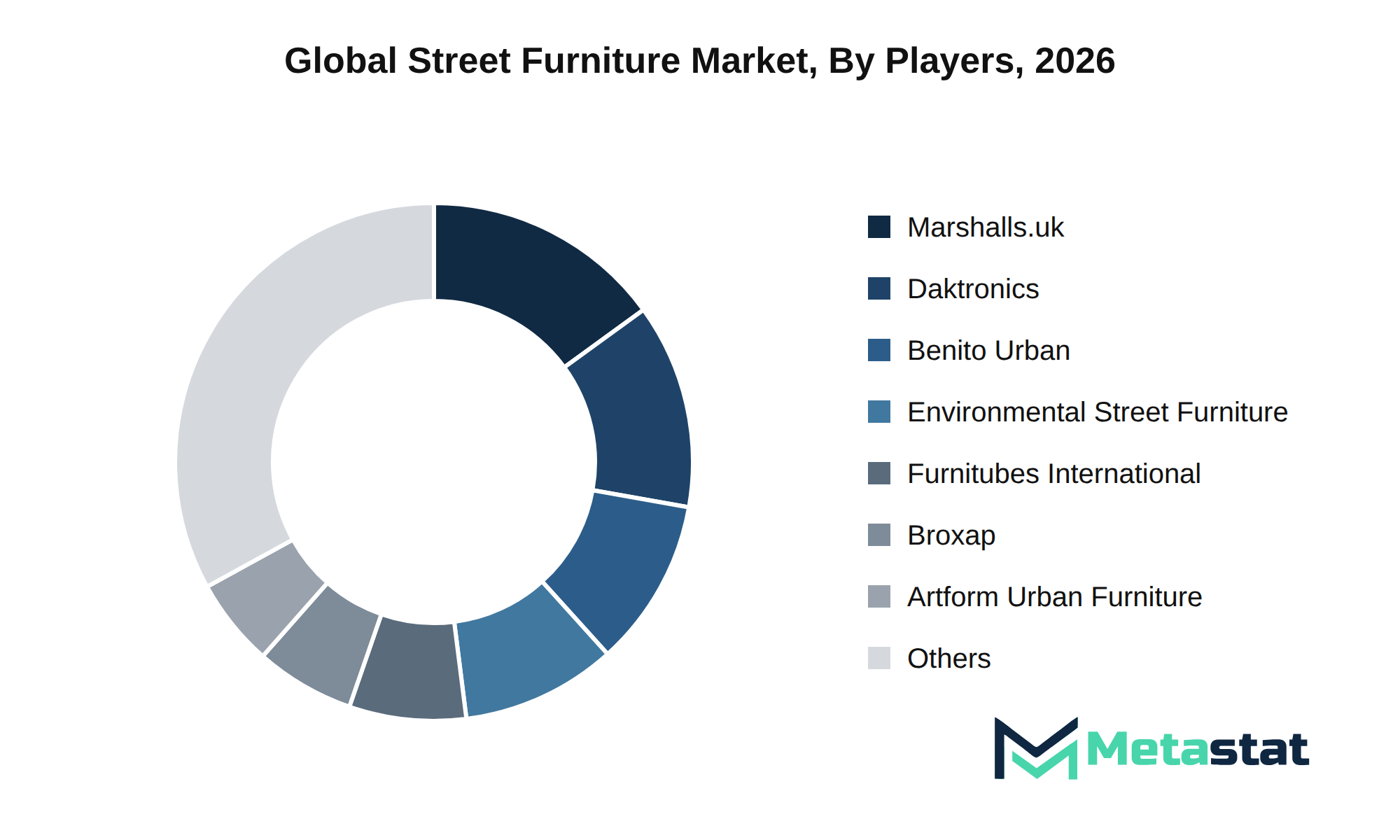
The Street Furniture market exhibits a diverse competitive environment where various players pursue strategic consolidation and differentiation. Companies focus on product innovation, with several investing in research and development to enhance product offerings. Players including AREA and JCDecaux Group prioritize sustainability in their designs, aligning with growing consumer preferences for eco-friendly solutions.
Pricing strategies vary across the market, with several firms adopting competitive pricing models to capture market share. The presence of established companies like Broxap Ltd. and Victor Stanley creates a robust competitive atmosphere, making it crucial for new entrants to navigate barriers effectively. Strategic alliances and partnerships expand market reach, enabling companies like Environmental Street Furniture and Artform Urban Furniture to leverage synergies and enhance brand equity.
Intellectual property portfolios remain significant, attributed to companies protecting their innovations and maintaining technological defensibility. Firms like HAGS and Lappset Group Ltd. emphasize proprietary technology and design patents, contributing to their competitive positioning in the market. The future competitive outlook suggests ongoing collaborations and joint ventures among players, aimed at expanding their market presence and driving growth in emerging applications.
Market dynamics indicate that customer retention strategies and switching costs play critical roles in maintaining market share. Companies invest in enhancing customer experiences to strengthen brand loyalty. The threat of new entrants triggers established players to innovate continuously. Overall, the competitive landscape of the Street Furniture market is shaped by a blend of strategic actions that support sustained growth and adaptability.
Forecast and Future Outlook
Forecast and Future Outlook
Market size is forecast to rise from USD 3.8 billion in 2025 to over USD 6 billion by 2033. The base case indicates a growth trajectory marked by a 5.8% CAGR, reflecting steady demand in the Street Furniture market. Factors influencing this outlook encompass various macroeconomic conditions and evolving market dynamics.
The bull case anticipates accelerated adoption trends driven by next-generation technology integration and increasing infrastructure commitments. Strategic capital allocation directives and infrastructure investments will enhance the market's growth potential, creating emerging white-space opportunities for suppliers and manufacturers. In contrast, the bear case suggests vulnerabilities including geopolitical realignments and supply chain disruptions that challenge growth. Regulatory evolution timelines and compliance milestones will play a critical role in shaping market performance.
Downstream demand changes resulting from urbanization and population growth influence the Street Furniture market. Evolving consumer preferences and environmental consciousness drive demand for innovative, sustainable products. Companies that adapt to these shifts while focusing on R&D commercialization timelines and product life-cycles position themselves favorably in the competitive landscape.
Core industry maturation indicates a need for suppliers to enhance product offerings and service delivery. Strategic imperatives for executives involve navigating the complexities of regulatory frameworks and aligning with evolving trade corridors. By addressing unmet enterprise needs and focusing on high-growth pockets, businesses secure a robust position driven by the market's progression through various economic cycles.
The report strategically identifies and profiles the key market players and analyses their core competencies in each sub-segment of the Street Furniture market.
Report Attributes
Details
Study Period
2021-2033
Base Year
2025
Estimated Year
2026
Forecast Period
2026-2033
Historical Period
2021-2025
Growth Rate
CAGR 5.8% from 2026 to 2033
Revenue Unit
USD billion
Segmentation
By Product, Material, Application, Distribution Channel, and Region
By Region
North America (By Product, Material, Application, Distribution Channel, and Country)
United States
Canada
Mexico
Europe (By Product, Material, Application, Distribution Channel, and Country)
Germany
France
UK
Italy
Spain
Russia
Rest of the Europe
Asia Pacific (By Product, Material, Application, Distribution Channel, and Country)
China
Japan
India
South Korea
Australia
Southeast Asia
Rest of Asia Pacific
South America (By Product, Material, Application, Distribution Channel, and Country)
Brazil
Argentina
Rest of South America
Middle East and Africa (By Product, Material, Application, Distribution Channel, and Country)
Saudi Arabia
UAE
South Africa
Rest of Middle East and Africa
What Report Provides
Key Company Market Share, Revenue and Ranking for the Street Furniture Market
Key Market Leaders and Their Strategies in the Street Furniture Market
Full In-Depth Analysis of the Parent Industry Related to Street Furniture
Industry Statistics and Trends Impacting the Street Furniture Market
Important Changes in Market Dynamics Affecting Street Furniture
Segmentation Details of the Street Furniture Market by Product Type
Historical, Ongoing and Projected Market Analysis for Street Furniture
Emerging Segments and Regional Growth Potential in the Street Furniture Market
End of Report Overview
Frequently Asked Questions
Find answers to common questions about this report
The Street Furniture market size was valued at USD 3.8 billion in 2025, according to the Metastat Insights study.
The Street Furniture market is projected to grow at a CAGR of 5.8% during the forecast period from 2026 to 2033.
The North America Street Furniture market size is estimated to reach USD 1.7 billion by 2033.
The leading segment in the Street Furniture market is Benches & Seating, with a projected value of USD 2.1 billion by 2033. This segment demonstrates the highest growth potential compared to other product categories.
Increased capital investment in urban infrastructure drives expansion in the Street Furniture market. The focus on enhancing public spaces, coupled with rising urbanization, necessitates the integration of functional and aesthetically pleasing street furniture, which strengthens sales and promotes sustainable practices. the shift towards smart city concepts facilitates technological integration, further supporting market growth.
Europe holds the largest share of the Street Furniture market, representing 30.9 percent of the total market. This region's significant presence reflects its strong demand and investment in urban infrastructure.
Increased capital investment in urban infrastructure and a focus on sustainability favor product adoption in the Street Furniture market. The integration of technology, including smart solutions and eco-friendly materials, enhances user experiences and aligns with urban planning goals, driving demand for functional and aesthetically pleasing public spaces.
The Street Furniture market is estimated to reach a valuation of USD 6 billion by 2033.
Top players operating in the Street Furniture market include AREA, Artform Urban Furniture, Benito Urban, Broxap Ltd., Daktronics, Inc., JCDecaux Group, and Vestre.
The Street Furniture market is projected to grow at a compound annual growth rate (CAGR) of 5.8% from 2026 to 2033.
Global Tarot Cards market size was USD 243.1 million in 2025 and is projected to reach USD 320.5 million by 2033, growing at a CAGR of 3.5%. Full analysis.
Football Schools market size is valued at USD 3.2 billion in 2025 and projected to reach USD 4.2 billion by 2033, growing at a CAGR of 3.5%.
Football Schools market, Football Schools Market Size, Football Schools Market Share, Football Schools Market Analysis, Football Schools Market Growth, Football Schools Market Trends, Football Schools Market Research Report, Football Schools Market Forecast, Football Schools, Football Schools Market Research, Football Schools Industry, Football Schools Industry Report, Football Schools Market Data, Football Schools Statistics, Football Schools Market Statistics, Football Schools Industry Trends, Football Schools Market Report, Football Schools Market Trends, Football Schools Market News, Football Schools Forecasts, Football Schools Market Intelligence Report, Football Schools market 2033, Football Schools market outlook, Football Schools market segmentation, Football Schools market drivers, Football Schools market restraints, Football Schools market opportunities, Football Schools market CAGR, Football Schools suppliers, Football Schools manufacturers, Football Schools market by region, North America Football Schools market, Asia Pacific Football Schools market, Europe Football Schools market, Football Schools market competitive landscape, Football Schools market key players, Club-Affiliated Football Schools market, Private Football Academies market, Year-Round Football Schools market, Under-15 Programs market, Residential Football Academies market, Football Camps market, Under-10 Programs market, Community-Based Programs market.
Gift Cards market size is valued at USD 713.3 billion in 2025 and projected to reach USD 2,275.4 billion by 2033, growing at a CAGR of 15.6%.
Gift Cards market, Gift Cards Market Size, Gift Cards Market Share, Gift Cards Market Analysis, Gift Cards Market Growth, Gift Cards Market Trends, Gift Cards Market Research Report, Gift Cards Market Forecast, Gift Cards, Gift Cards Market Research, Gift Cards Industry, Gift Cards Industry Report, Gift Cards Market Data, Gift Cards Statistics, Gift Cards Market Statistics, Gift Cards Industry Trends, Gift Cards Market Report, Gift Cards Market Trends, Gift Cards Market News, Gift Cards Forecasts, Gift Cards Market Intelligence Report, Gift Cards market 2033, Gift Cards market outlook, Gift Cards market segmentation, Gift Cards market drivers, Gift Cards market restraints, Gift Cards market opportunities, Gift Cards market CAGR, Gift Cards suppliers, Gift Cards manufacturers, Gift Cards market by region, North America Gift Cards market, Asia Pacific Gift Cards market, Europe Gift Cards market, Gift Cards market competitive landscape, Gift Cards market key players, Closed-Loop Gift Cards market, Open-Loop Gift Cards market, Digital and eGift Cards market, Personal Gifting Gift Cards market, Employee Rewards Gift Cards market, Customer Loyalty Gift Cards market, Direct-to-Consumer Gift Cards market.