Global Youth Sports Tourism Market Size, Share, By Sport Type (Soccer (Football), Basketball, Baseball & Softball, Volleyball, Tennis, Rugby, Track & Field and Other Sports), By Event Type (Tournaments & Championships, Training Camps & Clinics, International Sports Tours, Showcases & Exhibitions and Other Events), By Team Type (School Teams (K‑12), Club/Travel Teams, College & University Teams and Other Groups (Leagues/Associations)), Industry Analysis, Growth, Trends, and Forecast, 2026-2033
Report ID
MSI-4889
Published
August 10, 2026
Pages
269 Pages
Format
Market Size 2021
USD 119.4 Billion
Historical
Market Size 2025
USD 161.8 Billion
Base year
Market Size 2033
USD 304 Billion
Forecast
CAGR 2025-2033
8.2%
Forecast period
Report Details
Comprehensive Market Analysis And Insights
Market Overview
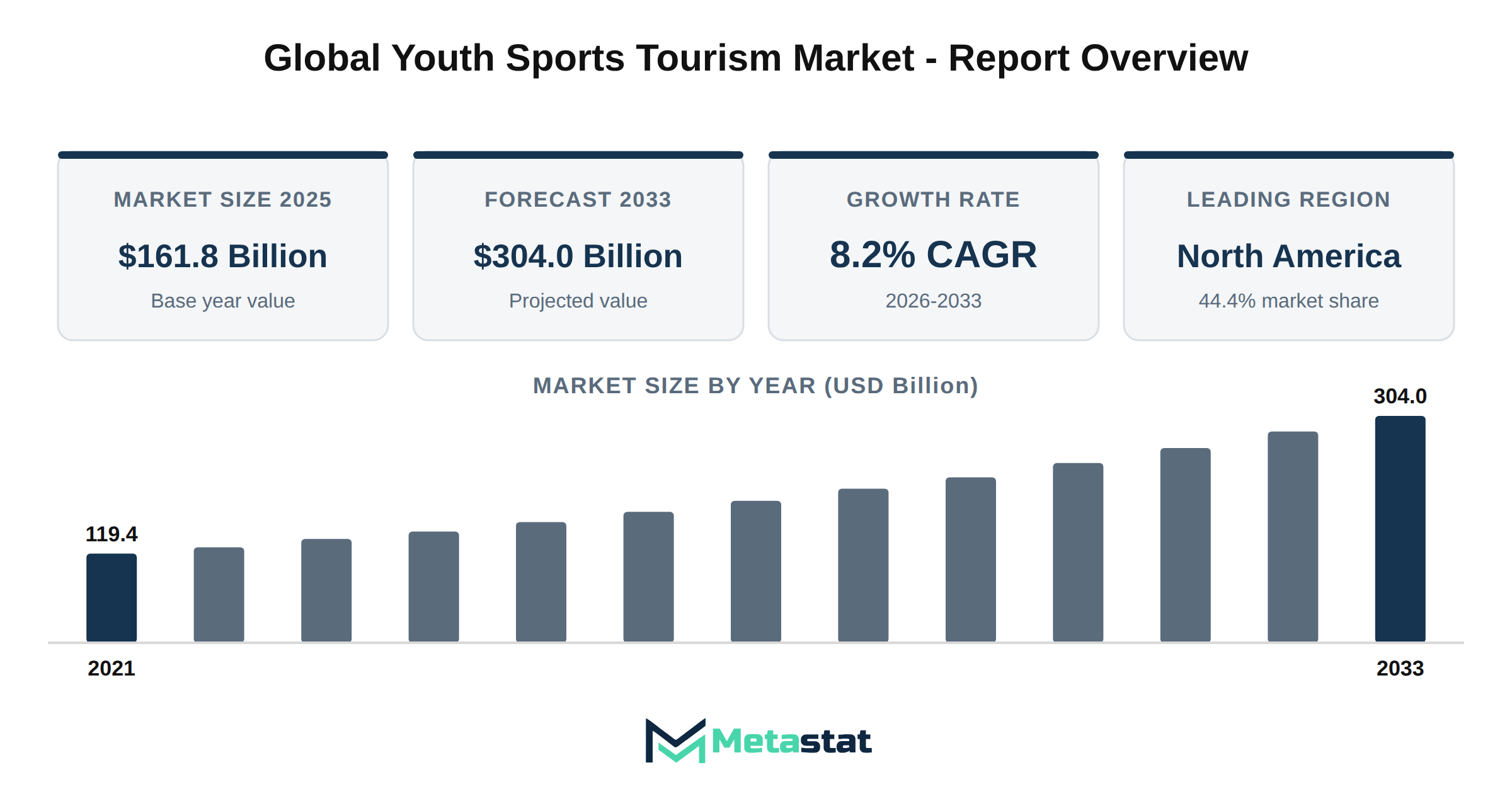
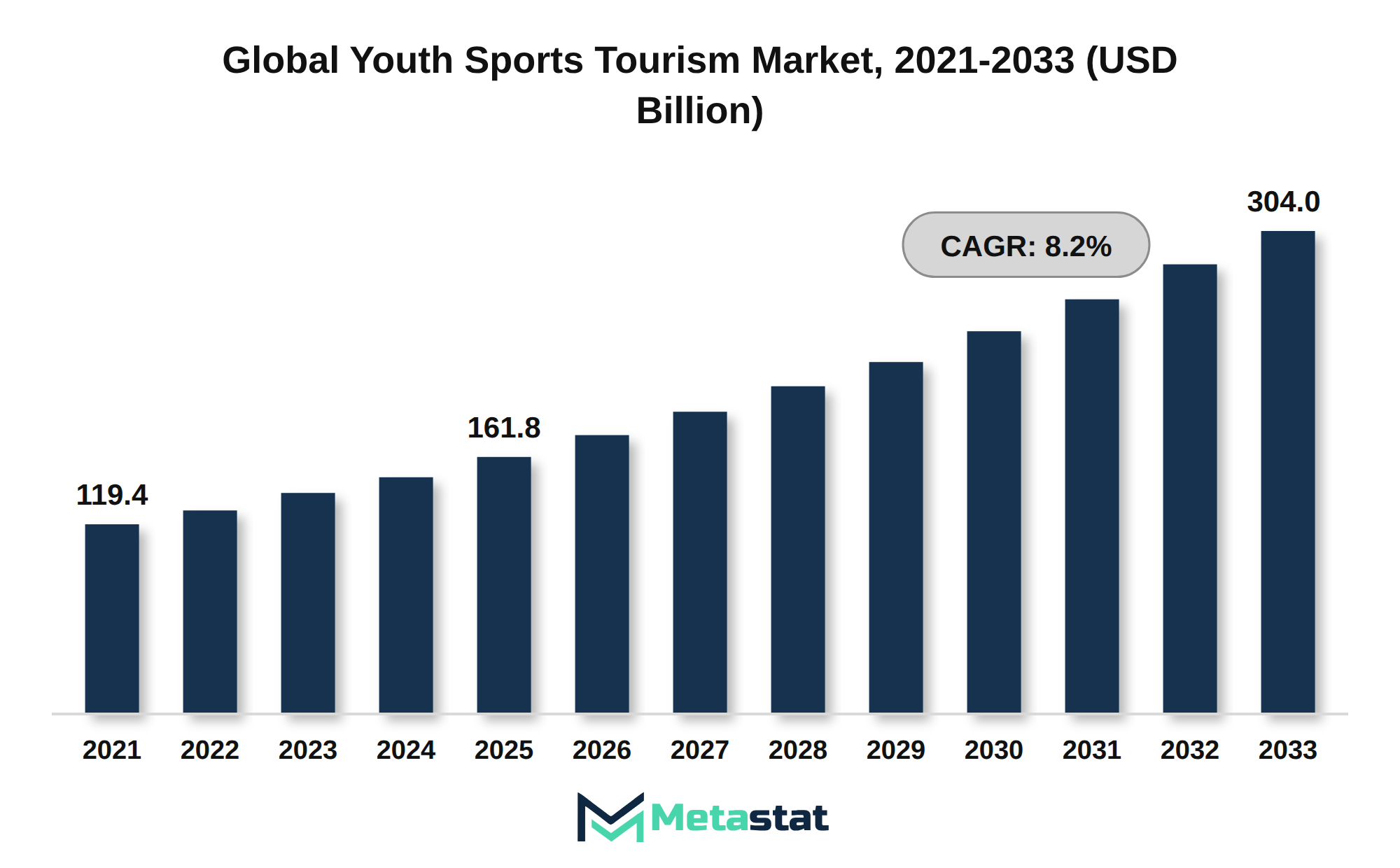
The global Youth Sports Tourism market was valued at USD 161.8 billion in 2025 and is projected to reach USD 304 billion by 2033, growing at a CAGR of 8.2% over the forecast period.
The Youth Sports Tourism market reached a value of USD 161.8 billion in 2025, following a steady growth trajectory from USD 119.4 billion in 2021. This upward trend is driven by increasing participation in youth sports, rising disposable incomes, and a growing interest in multi-generational travel experiences. The market is projected to expand significantly, reaching USD 304 billion by 2033, with a compound annual growth rate (CAGR) of 8.2% during the forecast period from 2026 to 2033.
Digital platform integration plays a critical role in connecting participants with travel services, enhancing the customer journey, and streamlining operations. The adoption of technology allows for personalized experiences tailored to the preferences of families and youth sports teams. Multi-generational tours gain traction, driven by families seeking to bond through shared experiences in sports, further driving demand in the market.
Sustainability initiatives increasingly influence decision-making in travel planning. Participants and organizers prioritize eco-friendly options, which affects the selection of destinations and service providers. Pricing and affordability dynamics continue to shape the market, with varying strategies applied across different regions, catering to diverse economic conditions and consumer expectations.
Regulatory compliance, standards, and geopolitical risk frameworks present ongoing challenges for market participants. Companies operating in the Youth Sports Tourism market navigate these complexities to ensure compliance and mitigate risks associated with international travel. Disruptions caused by geopolitical events impact travel patterns and pricing, highlighting the importance of adaptability in strategy.
Research and development trajectories focus on next-generation innovations that enhance the overall experience for youth sports participants and their families. Sustainable transformation efforts, including decarbonization and the circular economy, reshape operational models within the market, encouraging companies to adopt greener practices that align with environmentally conscious consumers.
Digital platform integration plays a critical role in enhancing the youth sports tourism market. The rise of mobile applications and online booking systems improves access to sports events and travel arrangements, providing families and teams with convenient options. This digital shift attracts tech-savvy demographics, increasing participation and engagement in youth sports activities.
Multi-generational tours are gaining traction, reflecting a growing trend where families participate together in youth sports events. This trend creates bonding experiences and encourages healthy lifestyles among younger members. The market's appeal to families results in increased demand for tailored travel packages that accommodate various age groups.
Sustainability initiatives are becoming integral to the youth sports tourism market. Organizations are adopting eco-friendly practices to minimize their environmental impact, including using sustainable transportation and reducing waste during events. Such efforts connect with environmentally conscious consumers, enhancing brand loyalty and market competitiveness.
Pricing dynamics significantly influence consumer behavior within the market. Competitive pricing strategies, along with value-added services, attract a broader audience. Affordability remains essential, particularly for families looking to participate in youth sports activities without incurring excessive expenses.
Regulatory compliance and geopolitical risks shape the operational landscape. Organizations navigate various regulations governing travel and youth sports events, ensuring adherence to safety and health standards. Such compliance protects participants and enhances the overall reputation of the market.
Disruption in the youth sports tourism market arises from evolving consumer preferences and technological advancements. Companies invest in research and development to innovate their offerings, focusing on next-generation experiences that meet changing demands. This commitment to innovation drives growth and enhances the market's resilience.
Sustainable transformation and decarbonization efforts are reshaping the market's operational frameworks. Companies are exploring circular economy dynamics, implementing strategies that promote resource efficiency and waste reduction. This approach not only meets regulatory demands but appeals to consumers seeking responsible travel options.
The supply chain landscape undergoes changes to accommodate these new market dynamics. Efficient logistics architecture and sourcing strategies are critical for ensuring effective operations while managing costs. Companies strive to optimize their supply chains to respond to market fluctuations effectively.
Market fragmentation presents both challenges and opportunities. Numerous players operate in the youth sports tourism market, leading to intense competition. Companies engage in mergers and acquisitions to enhance their market positions, consolidate resources, and expand their service offerings.
Capital allocation and infrastructure investments are essential for sustaining growth within the market. Organizations are prioritizing investments that enhance their operational capabilities, including the development of training facilities and event venues. Such investments create a competitive edge and support long-term market stability.
Macroeconomic headwinds, including inflationary pressures and currency volatility, impact the youth sports tourism market. These factors influence pricing strategies and consumer spending patterns, necessitating adaptive responses from organizations. Understanding these economic variables becomes crucial for strategic planning and market positioning.
The corporate imperative focuses on delivering high-value recommendations based on market analysis. Companies prioritize strategies that align with consumer expectations and market trends, ensuring they remain competitive. This strategic outlook positions organizations for sustainable growth and success in the evolving landscape of youth sports tourism.
Market Dynamics
Growing consumer interest in health and wellness drives tourism
The increasing consumer focus on health and wellness significantly influences the Youth Sports Tourism market. This trend emerges from growing awareness of the benefits associated with active lifestyles and participation in sports. Families seek opportunities that combine physical activity with travel, leading to higher demand for sports-centric tourism experiences that encourage fitness and well-being.
This shift in consumer behavior stimulates demand for various activities, including sports camps, tournaments, and training sessions. Providers within the market respond by developing tailored packages and experiences that cater to families, schools, and community groups. Offering diverse and engaging options enhances appeal and drives growth in the overall market.
The culmination of health-focused travel and youth sports participation creates a favorable environment for sustained growth. The market is projected to expand from USD 161.8 billion in 2025 to USD 304 billion by 2033, reflecting a compound annual growth rate of 8.2%. This upward trajectory signifies both the economic potential and the increasing significance of health and wellness, driven by key factors in the Youth Sports Tourism market.
Infrastructure development supports market advancement
Investment in infrastructure development improves the Youth Sports Tourism market by enhancing facilities, transportation networks, and accommodation options. Increased public and private sector funding drives these enhancements, leading to better access and experiences for participants and spectators. Upgraded sporting venues and relevant infrastructures, including hotels and transportation systems, create a more inviting environment, attracting more domestic and international tourists. This investment raises the quality of events and encourages higher participation rates in youth sports, directly benefiting local economies.
The modernization of facilities aligns with the evolving expectations of consumers regarding safety, comfort, and accessibility. Enhanced venues, equipped with advanced technologies, contribute to a positive experience for athletes and their families. This trend results in increased attendance at tournaments, camps, and other events, further fueling growth in the market. The anticipated rise in international sports tourism highlights the importance of infrastructure, driven by countries competing to host prestigious events, which stimulates additional capital investment and economic opportunities.
While the demand for youth sports tourism expands, infrastructure development has become a critical factor in determining the success of destinations seeking to attract sporting events. Regions that prioritize their assets will likely see a positive impact on local tourism, enhanced community engagement, and improved long-term sustainability of youth sports initiatives. This comprehensive approach to infrastructure supports current market trends and positions the sector for continued growth through 2033.
Regulatory compliance and economic constraints
The Youth Sports Tourism market faces significant restraints stemming from regulatory compliance and economic conditions. Stringent regulations surrounding safety, health standards, and environmental impact impose additional costs on stakeholders, leading to delayed project implementation and increased operational expenses. Adhering to diverse regulations across regions complicates market entry for new participants, creating barriers that restrict competition.
Macroeconomic headwinds, including inflationary pressures and capital stagnation, challenge the market. Rising costs of resources, labor, and materials contribute to increased pricing for services, deterring participation from youth teams and organizations. In regions experiencing economic downturns or uncertainty, spending on youth sports tourism activities declines, negatively impacting market growth.
Supply chain disruptions and geopolitical instability create challenges for market players. Fluctuations in availability of essential resources and transportation lead to project delays, affecting the overall experience offered to participants. Rising workforce overhead due to labor shortages or regulatory pressures limits the ability of organizations to expand offerings, constraining the market's potential.
Infrastructure gaps and connectivity deficits in certain regions restrict access to venues and activities, influencing the attractiveness of destinations for youth sports tourism. Deployment bottlenecks related to the development of new facilities or sports complexes hinder growth, especially in emerging markets where investment in infrastructure remains limited.
Cultural barriers impact the acceptance of youth sports tourism initiatives in specific regions, complicating market penetration. Regional adoption resistors challenge the establishment of new programs. Without strong community support, initiatives struggle to gain traction. The combination of these factors contributes to market fragmentation, creating an environment where consistent growth across the Youth Sports Tourism market is difficult.
Geopolitical fragmentation poses significant challenges for the Youth Sports Tourism market, creating uncertainty in trade dynamics and inflating operational costs. Political tensions and trade deficits contribute to tariff frictions, affecting pricing structures and complicating relationships with international partners. Stakeholders within the market experience rising costs associated with logistics and compliance, which hinder competitive pricing strategies.
Technological disruptions present additional barriers. Rapid advancements require continuous investments in infrastructure and training. Complex research and development integrations alongside interoperability friction create difficulties for firms aiming to adopt new technologies. The market faces instability in supply chains, driven by external factors including environmental regulations and compliance overhead. This instability complicates procurement processes, leading to delays in service delivery and increased operational risk.
Workforce skill gaps emerge because a pressing issue, with talent retention pressures affecting the ability of firms to meet evolving customer demands. Rising costs associated with attracting and retaining skilled labor impact profitability, while automation displacements challenge traditional operational models. Environmental lifecycle footprints and decarbonization mandates shape an industry increasingly focused on sustainability, pushing organizations to innovate while balancing cost constraints.
Changing downstream demands contribute to market saturation, complicating growth strategies. The Youth Sports Tourism market navigates these challenges while pursuing opportunities to enhance service offerings and expand into new regions. Addressing these multifaceted issues will determine future market dynamics and overall growth potential.
The Youth Sports Tourism market stands to benefit significantly from emerging regional demands coupled with infrastructure modernization. Regions that prioritize sports activities attract a growing number of youth participants, creating opportunities for tourism development. Enhanced infrastructure, including sports facilities and accessible transportation, facilitates smoother travel experiences for teams and families, creating a conducive environment for market growth.
Geographical expansion of sports events increases participation rates among youth, stimulating demand for travel and accommodations. Popular sports including soccer, basketball, and volleyball are experiencing upsurges in youth participation, resulting in heightened interest in travel for tournaments and training camps. This trend aligns with the broader objectives of enhancing youth engagement in sports while promoting local economies through sports tourism.
Technological disruptions and digital transformation shape the youth sports tourism market. Advancements in digital platforms streamline booking processes and improve accessibility for parents and team organizers. Enhanced online services facilitate travel arrangements, resulting in an increase in youth sports tourism activities. Next-generation innovations in event management and marketing strategies further enhance market penetration, enabling stakeholders to connect with potential customers.
Sustainability imperatives drive the market toward eco-friendly practices. Organizations implement green transformations in their operations to align with environmental, social, and governance (ESG) principles. Such alignment not only meets regulatory expectations but enhances brand reputation, attracting environmentally conscious consumers and sponsors.
Downstream market diversification presents additional opportunities. Stakeholders explore niche applications within youth sports tourism, including specialized training programs and unique sporting events designed for specific age groups or skill levels. Strategic consolidation and cross-industry mergers strengthen competitive positioning and expand service offerings, allowing companies to capitalize on evolving buying behaviors among parents and youth.
The Youth Sports Tourism market is on a trajectory of sustained growth, driven by these multifaceted opportunities. The anticipated annual growth rate of 8.2% from 2026 to 2033 reinforces the market's potential, making it a focal point for investors seeking to capitalize on the expanding youth sports tourism sector.
Market Segmentation Analysis
The Global Youth Sports Tourism market is segmented based on Sport Type, Event Type, and Team Type.
By Sport Type, the market is further segmented into:
Soccer (Football)
Basketball
Baseball & Softball
Volleyball
Tennis
Rugby
Track & Field
Other Sports
Soccer (Football)
Valued at USD 47.9 billion in 2026, the Soccer (Football) segment is projected to reach USD 85.1 billion by 2033, with a CAGR of 8.6% during the forecast period. Demand drivers include the growing popularity of soccer globally, driven by increased participation rates among youth. This rising interest leads to greater investment in youth soccer programs, tournaments, and training camps, resulting in enhanced travel for participants and families.
Factors contributing to the expansion of this segment encompass technological maturation and advancements in training methods. Innovative training facilities and use of data analytics in coaching improve player performance, encouraging parents and organizations to invest in travel for better training experiences. Increased participation in international tournaments further supports the travel requirements for youth teams, contributing to market growth.
Regulatory compliance standards surrounding youth sports safety and travel logistics play an important role in shaping the market. Organizations implementing stringent safety protocols enhance trust among parents, promoting participation in travel-related events. The evolving nature of youth soccer tourism highlights the potential for strategic opportunities, particularly for travel agencies specializing in sports tourism.
Cost structures associated with travel and accommodation influence overall market dynamics. Fluctuations in pricing for travel services during peak seasons present margin pressures for operators. However, diversified service offerings and partnerships with local hotels and venues mitigate these impacts, strengthening resilience within the supply chain.
With anticipated growth in the Soccer (Football) segment, stakeholders are encouraged to explore investment opportunities aligned with the rising demand for youth sports tourism. The sector's trajectory indicates promising potential for continued expansion, driven by demographic shifts favoring soccer among youth and increasing family participation in travel for sports activities.
Basketball
Basketball ranks among the prominent segments within the Youth Sports Tourism market, driven by a growing interest in youth engagement in sports. Increased participation rates in organized basketball programs at schools and clubs generate substantial demand for travel related to competitions, tournaments, and training camps. Popularity stems from basketball's global appeal, particularly in regions including North America and Europe, where youth leagues flourish and international events attract participants and spectators alike.
Investment in basketball infrastructure, including the development of state-of-the-art facilities, enhances the segment's attractiveness. Organizations hosting tournaments and training camps often report rising revenues, further spurring market growth. Strategic partnerships with schools and sports academies create pathways for better exposure and experiences, contributing to a robust market for youth basketball tourism.
Market estimates indicate that the basketball segment is projected to reach USD 62.3 billion by 2033, at a CAGR of 8.5% during the forecast period. This growth underlines the potential for increased participation in basketball-focused events and further investment in related tourism activities. The ongoing evolution of basketball training methodologies and increased global competitiveness drive ongoing interest, ensuring sustained engagement and market expansion.
Baseball & Softball
Strong interest in youth participation in baseball and softball drives growth in this segment of the Youth Sports Tourism market. Increased enrollment in youth leagues promotes travel for tournaments, training camps, and events, enhancing market demand. Strategic partnerships between sports organizations and travel agencies facilitate arrangements for young athletes and their families, boosting overall participation rates in these sports.
Investment in local infrastructure, including practice facilities and sports complexes, supports the development of youth baseball and softball programs, contributing to segment expansion. Enhanced facilities attract more events, further encouraging a culture of competitive sports among youth players. The Baseball & Softball segment is expected to reach USD 44.1 billion by 2033. This growth correlates with the rising trend of families prioritizing sports tourism, creating ample opportunities for service providers in this niche market.
Technological advancements in training methods and equipment enhance the experiences for young athletes, resulting in increased participation and engagement. Innovative training camps focusing on skill development along with fun activities attract more participants, expanding market reach. The combination of these factors establishes a sustainable growth trajectory, positioning baseball and softball because key contributors to the overall Youth Sports Tourism market.
Volleyball
Rapid growth characterizes the Volleyball segment within the Youth Sports Tourism market, driven by increasing youth participation in organized sports and rising interest in volleyball competitions. This heightened interest stems from the sport's accessibility and the growing availability of volleyball programs and tournaments across various regions. The segment is projected to grow at a CAGR of 8.8% during the forecast period, reflecting a strong market demand for volleyball-related travel and events.
Technological advancements further enhance the segment, improving training experiences and tournament organization. Innovations in sports analytics and training equipment allow for better skill development and performance assessment, attracting more participants to volleyball. Consequently, this drives demand in the market, owing to families seeking travel opportunities that combine competitive play with recreational experiences.
International competitions and youth leagues play significant roles in expanding the Volleyball segment. Events including tournaments attract teams from around the globe, promoting cultural exchange and competition. Regions known for hosting these events experience increased tourism, owing to families traveling to support young athletes and enjoy local attractions. This trend signifies a solid growth outlook for volleyball within the broader Youth Sports Tourism market.
Tennis
Strong interest in tennis among youth athletes drives significant engagement in the Youth Sports Tourism market. Various factors, including the popularity of professional tournaments and the proliferation of youth leagues, contribute to this rising interest. Participation in tennis activities provides young athletes with opportunities for skill development and competition, fueling demand for travel associated with tournaments and training camps.
The expansion of facilities and training options significantly attracts youth to tennis tourism. Newly built courts and academies create an appealing environment for aspiring players, promoting a culture of participation. Major international events, including junior championships, generate excitement and encourage families to travel to support young athletes. This demand for experiences that combine travel and sports enhances the market's overall growth.
Consumption shifts toward experiential travel among families seeking to combine vacations with sports participation. Parents increasingly prioritize opportunities for their children to engage in sports while traveling, leading to a rise in the popularity of tennis-related events. This trend influences travel planning, with families considering destinations that offer tennis tournaments, coaching clinics, and other related activities.
Regulatory compliance and safety standards in sports tourism for youth athletes impact the sector. Organizations managing youth tennis events adhere to strict guidelines to ensure the safety and well-being of participants. These standards encourage confidence among parents and guardians, promoting higher levels of participation in tennis-related travel.
Investment in marketing and promotional strategies targeting youth tennis events represents a strategic opportunity. Companies and organizations involved in the market focus on collaboration with schools and community programs to increase awareness and participation. By establishing partnerships, stakeholders leverage existing infrastructure to promote tennis tourism effectively.
Technological advancements enhance the experiences of young athletes traveling for tennis. Digital platforms facilitate registration, scheduling, and communication, making it easier for participants and their families to engage with events. This innovation streamlines the overall experience, contributing to increased participation and satisfaction.
The tennis segment within the Youth Sports Tourism market experiences growth due to rising participation among youth, investment in facilities, shifts in consumer behavior, and adherence to regulatory standards. The combination of these factors creates a dynamic environment for tennis tourism, positioning it because an attractive option for families and young athletes alike.
Rugby
Strong interest in rugby among youth participants drives growth within the Youth Sports Tourism market. Factors influencing this interest include the increasing visibility of rugby in international competitions and the support from national governing bodies promoting youth engagement. The expansion of youth rugby programs across various regions encourages participation and contributes to an overall rise in demand for associated travel and tourism services.
Investment in rugby infrastructure, including training facilities and hosting rights for international matches, enhances the growth potential of this sub-segment. Emerging partnerships between local clubs, schools, and travel organizations facilitate opportunities for youth players to attend tournaments and training camps worldwide. These initiatives provide exposure and enhance skills development, further fueling interest in rugby tourism.
Technological advancements, particularly in digital platforms for event management and athlete engagement, support the rugby sub-segment by improving accessibility and promoting events to broader audiences. Enhanced digital marketing strategies allow organizations to effectively target youth players and their families, highlighting the benefits of participation in rugby-focused travel experiences.
Shifts in consumption patterns, driven by heightened awareness of health and wellness, influence the rugby market positively. Parents increasingly seek active and engaging experiences for their children, making rugby an appealing choice. This trend, combined with the social aspects of team participation, enhances the attractiveness of youth rugby tourism.
Regulatory compliance and policy support for youth sports initiatives impact the development of rugby tourism. Safety regulations and standards for youth participation play a crucial role in shaping the offerings within this segment. Ensuring compliance protects young athletes and boosts consumer confidence in rugby-related travel programs.
While the demand for youth sports tourism rises, rugby organizations explore strategic opportunities for collaboration and investment. Stakeholders recognize the potential for rugby because a growth area within the tourism sector, aligning resources to create engaging experiences that cater to both players and their families within the market.
Track & Field
Growing interest in athletic performance among youth drives engagement in the Track & Field segment. Schools, clubs, and travel teams increasingly prioritize participation in events including championships and training camps, contributing to the segment's growth within the Youth Sports Tourism market. Enhanced training facilities and coaching standards play significant roles in attracting young athletes and their families to travel for competitions. This segment experiences rising participation owing to families recognizing the benefits of sports tourism, including skill development and social networking opportunities.
The adoption of technology, including specialized training tools and data analytics, enhances performance tracking and athlete development. These innovations facilitate better training regimens and improve competitive outcomes, leading to higher demand for travel to prestigious meets and competitions. Increased marketing efforts by sports organizations promote events and encourage attendance, further stimulating travel for youth athletes. Overall, the Track & Field segment continues to expand due to these multifaceted demand drivers and technological advancements, reinforcing its position in the broader market.
By Event Type, the market is further segmented into:
Tournaments & Championships
Training Camps & Clinics
International Sports Tours
Showcases & Exhibitions
Other Events
Tournaments & Championships
Valued at USD 93.8 billion in 2026, the Tournaments & Championships segment is projected to reach USD 156 billion by 2033, at a CAGR of 7.5% during the forecast period. The continued rise in youth sports participation drives demand for tournaments and championships, creating opportunities for regional and international competition. Several organizations focus on enhancing youth engagement through structured events, promoting athletic development and teamwork. Increased investment in sports infrastructure and event organization supports this segment's growth, drawing attention from various stakeholders, including educational institutions and local governments.
The growing popularity of competitive sports creates a strong consumer base, leading to increased participation and attendance at tournaments. Enhanced marketing strategies and digital platforms facilitate greater visibility and engagement for events. Technological advancements in event management and broadcasting further attract participants and spectators alike, contributing to a dynamic ecosystem. The segment's expansion aligns with overall trends in the Youth Sports Tourism market, emphasizing the need for innovative and engaging experiences for young athletes and their families.
Training Camps & Clinics
The Training Camps & Clinics segment has strong growth potential within the Youth Sports Tourism market. Factors driving this expansion include an increasing focus on improving athletic performance among young athletes and the rising popularity of structured training programs. Demand for specialized coaching and skill development attracts a diverse range of participants, further stimulating market growth. Training camps offer young athletes the opportunity to refine their skills, learn teamwork, and gain exposure to competitive environments, resulting in a notable increase in participation rates.
Technological advancements in training methodologies enhance the appeal of camps and clinics. Adoption of data analytics and performance tracking tools allows coaches to tailor training programs to individual athlete needs, facilitating improved outcomes. Partnerships with schools and sports organizations promote wider access to training opportunities, driving adoption among youth sports enthusiasts.
Segment growth is supported by the increasing number of organizations offering specialized training camps. This proliferation leads to a more competitive landscape, with various providers striving to differentiate their offerings through unique training experiences. Investment in state-of-the-art facilities and qualified coaching staff enhances the overall value proposition, attracting more participants and increasing market demand.
The Training Camps & Clinics segment is expected to reach USD 51.7 billion by 2033, at a CAGR of 8.9% during the forecast period. This growth reflects the ongoing commitment to youth sports development and the increasing recognition of the importance of early skill development in various sports disciplines.
International Sports Tours
International Sports Tours within the Youth Sports Tourism market is experiencing a notable trajectory, projected to reach USD 42.6 billion by 2033. This segment benefits from rising interest in global travel and the desire for youth engagement in diverse sports activities. Increasing availability of travel packages tailored specifically for young athletes enhances accessibility, driving demand across regions.
Young athletes seek competitive exposure beyond their local environments, leading to a surge in international tours that offer unique experiences. The integration of cultural exchange and skill development during these tours adds significant value, appealing to families and schools. Growing awareness of the importance of sports in youth development drives investment in organized travel for sports events.
Investment in digital platforms that streamline the booking and organization of sports tours improves efficiency, capturing a larger share of the market. Enhanced marketing strategies targeting parents and schools increase interest, resulting in higher participation rates. The competitive nature of youth sports encourages teams to seek advantages through international experiences, contributing to the sustained growth of this segment.
While demand for international sports tours rises, suppliers are adapting by diversifying offerings to include a range of sports and unique travel experiences. This evolution in product offerings aligns with shifts in consumer preferences toward more immersive and educational travel experiences. The potential for revenue growth remains strong, supported by trends in youth sports engagement and international collaboration.
Showcases & Exhibitions
Interest in Exhibitions drives substantial growth within the Youth Sports Tourism market. Factors contributing to this growth include an increasing emphasis on skill development and exposure opportunities for young athletes, along with the rising popularity of competitive events that highlight emerging talent. Notable demand from parents and sports organizations for events that highlight youth potential enhances participation rates and attracts sponsors eager to engage with the youth market.
The segment is projected to grow at a CAGR of 8% during the forecast period. Strategic collaborations among event organizers, sports associations, and educational institutions facilitate the establishment of high-quality exhibitions that appeal to a wider audience. This collaborative approach strengthens market presence while addressing the evolving preferences of young athletes and their families.
Technological advancements in event management and promotion drive efficiency and effectiveness in executing exhibitions. The integration of digital platforms enables broader outreach and enhances engagement with participants, spectators, and sponsors. Consequently, these developments contribute positively to the overall market growth while creating a competitive atmosphere that benefits both participants and event organizers.
By Team Type, the market is further segmented into:
School Teams (K‑12)
Club/Travel Teams
College & University Teams
Other Groups (Leagues/Associations)
School Teams (K‑12)
Valued at USD 51.6 billion in 2026, the School Teams (K‑12) segment is projected to reach USD 82.4 billion by 2033, at a CAGR of 6.9% during the forecast period. Increased participation in structured sports programs at the K‑12 level drives demand within the Youth Sports Tourism market. Educational institutions increasingly recognize the benefits of sports tourism, promoting well-rounded development in students, which fuels further adoption of travel for athletic events and competitions.
Investment in sports infrastructure and programming by schools enhances the appeal of the School Teams (K‑12) segment. Schools seek to provide competitive athletes with opportunities to participate in tournaments and events, encouraging families to travel for competitions. This trend aligns with a growing emphasis on youth fitness and wellness, strengthening the segment's growth trajectory.
Technological advancements in event organization and management streamline logistics for school sports teams. Enhanced communication platforms and digital tools facilitate travel planning, contributing to an improved experience for participants and their families. Such efficiencies increase participation rates in sports tourism, reinforcing the segment's expansion.
Participation in regional and national competitions creates strategic opportunity windows for travel agencies and service providers focused on school teams. These entities leverage partnerships with educational institutions to optimize travel packages and experiences for teams. The resulting collaboration supports revenue growth and enhances the overall value proposition of the market.
Pricing strategies and cost structures specific to the School Teams (K‑12) segment influence overall market dynamics. Competitive pricing coupled with bundled services enhances appeal to schools and families, driving participation rates. The ongoing development of unique travel experiences tailored for young athletes will further stimulate market expansion.
Club/Travel Teams
Growing participation in youth sports fuels demand for travel teams, contributing to segment growth within the Youth Sports Tourism market. Increased focus on competitive play and skill development drives families to invest in travel for tournaments and other sporting events. This heightened interest leads to robust demand for club teams, which offer structured training and competitive opportunities for young athletes. Enhanced marketing efforts from clubs and travel teams to promote their programs and share success stories attract more participants and families.
The Club/Travel Teams segment is estimated to reach USD 158.1 billion by 2033, at a CAGR of 9.1% during the forecast period. This growth reflects the rising number of clubs and travel teams operating at various levels, catering to youth across different sports. The segment benefits from partnerships with schools and local organizations, enhancing its visibility and credibility. Technological advancements in training methodologies and athlete performance monitoring contribute to the appeal of club and travel teams, making them a preferred choice for families committed to youth sports.
Increased investment in facilities and training resources supports the expansion of club and travel teams. Families prioritize these experiences, recognizing the value of skill development and competition exposure. The market is projected to continue growing because more youth engage in sports, prompting further investment in travel teams and shaping the future of the Youth Sports Tourism market.
College & University Teams
Strong participation in college and university athletics drives substantial demand within the Youth Sports Tourism market. Increased investment in sports programs and facilities promotes travel for events, training camps, and competitions, enhancing the appeal of this segment. The desire for youth athletes to demonstrate their skills on larger platforms increases engagement in collegiate sports tourism. Colleges and universities focus on providing high-quality experiences, attracting athletes and their families, which contributes to market growth.
Major events organized by colleges and universities, including championships and tournaments, create opportunities for substantial travel activity. Strong marketing and promotional efforts target prospective student-athletes and their families, inviting them to experience campus life alongside sports events. An anticipated increase in travel budgets for collegiate athletic programs supports this trend. Institutions recognize the value of travel in recruiting talent and enhancing visibility.
Technological advancements in event management and travel logistics encourage efficient planning and execution of college sports events. Innovative platforms for booking travel and accommodations streamline logistics, reducing costs for institutions while enhancing the experience for participants. The segment is projected to reach USD 42.6 billion by 2033, reflecting strong growth prospects driven by these factors.
Regulatory compliance in collegiate athletics influences operational strategies, ensuring that travel initiatives align with established guidelines. Institutions continue to adapt to changing regulations, focusing on providing safe and affordable travel experiences while maximizing recruitment and promotional efforts. This strategic focus enhances the overall attractiveness of college and university teams within the broader context of the Youth Sports Tourism market.
Other Groups (Leagues/Associations)
Growth within the Other Groups (Leagues/Associations) segment reflects increasing involvement and investment from various leagues and associations in youth sports. This trend results from rising interest in competitive youth sports and the benefits associated with travel for tournaments and training. Engagement from families and communities in supporting youth athletes contributes significantly to this growth, creating a supportive environment that encourages participation. Organizations facilitating travel for these groups see opportunities to attract more athletes and families, enhancing their market presence.
The Other Groups (Leagues/Associations) segment is projected to grow at a CAGR of 8% during the forecast period. The focus on developing competitive events, networking, and skill enhancement for young athletes drives demand for associated travel services. While the market evolves, associations leverage partnerships with travel providers to streamline logistics and enhance the overall experience for participants. This segment's expansion aligns with broader trends in the Youth Sports Tourism market, which is expected to reach USD 304 billion by 2033.
By Region
Based on geography, the Global Youth Sports Tourism market is divided into North America, Europe, Asia-Pacific, South America, Middle East, and Africa.
North America
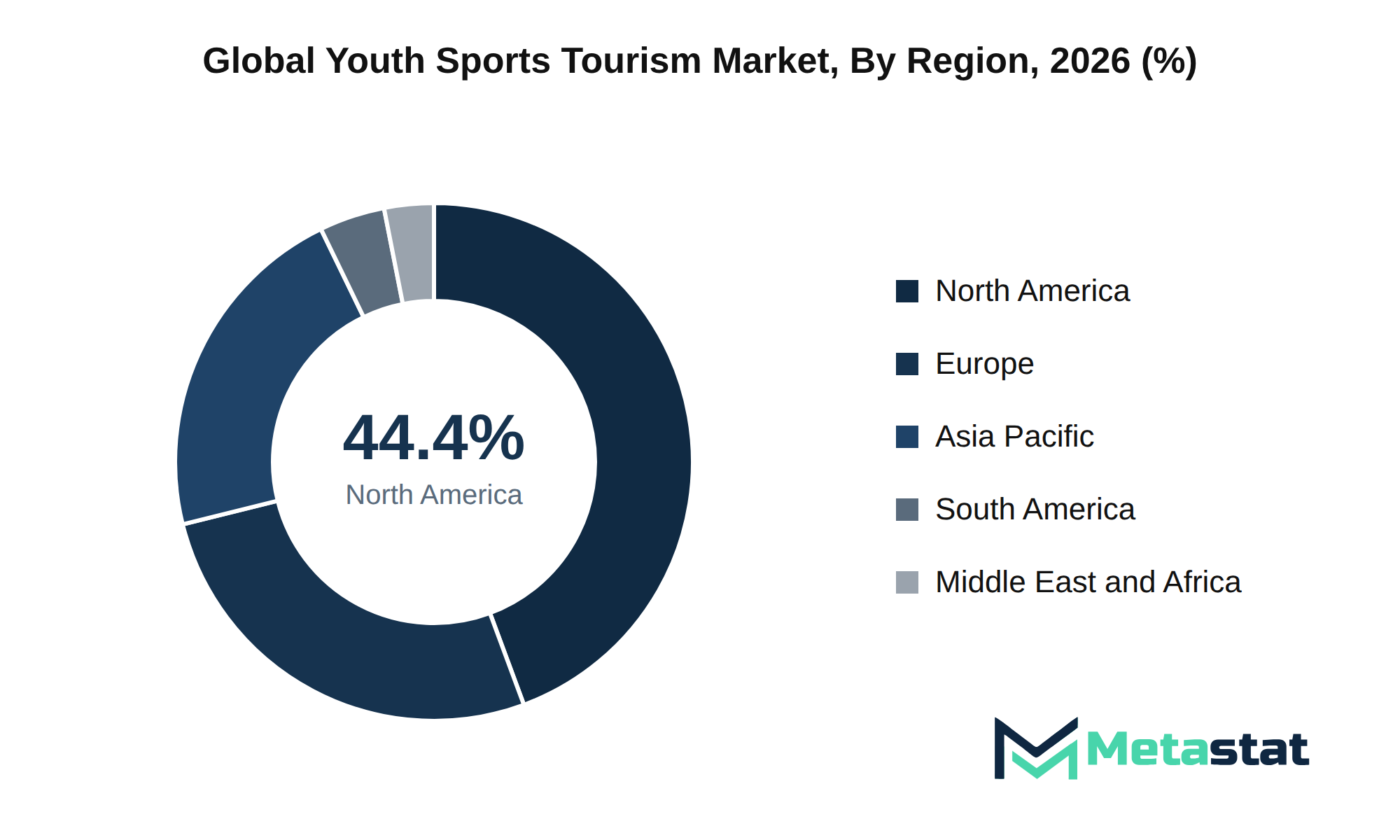
North America stands because a significant contributor to the Youth Sports Tourism market, projected to reach a market size of USD 118.6 billion by the end of 2033, expanding at a CAGR of 8.2% during the forecast period. The region accounts for 44.4% of the global market share, highlighting its importance in the overall market.
The robust interest in youth sports, particularly soccer, basketball, and baseball, drives substantial engagement. Factors including increasing investment in youth athletics and the proliferation of sports facilities enhance participation rates in various sports disciplines. This heightened engagement encourages travel for tournaments, training camps, and other sporting events.
Infrastructure development across the United States, Canada, and Mexico supports accessibility to sporting events and tournaments. Improved local facilities attract national and international competitions, driving growth in local economies. These developments create opportunities for various stakeholders, including travel agencies and event organizers, to capitalize on the increasing demand for youth sports tourism.
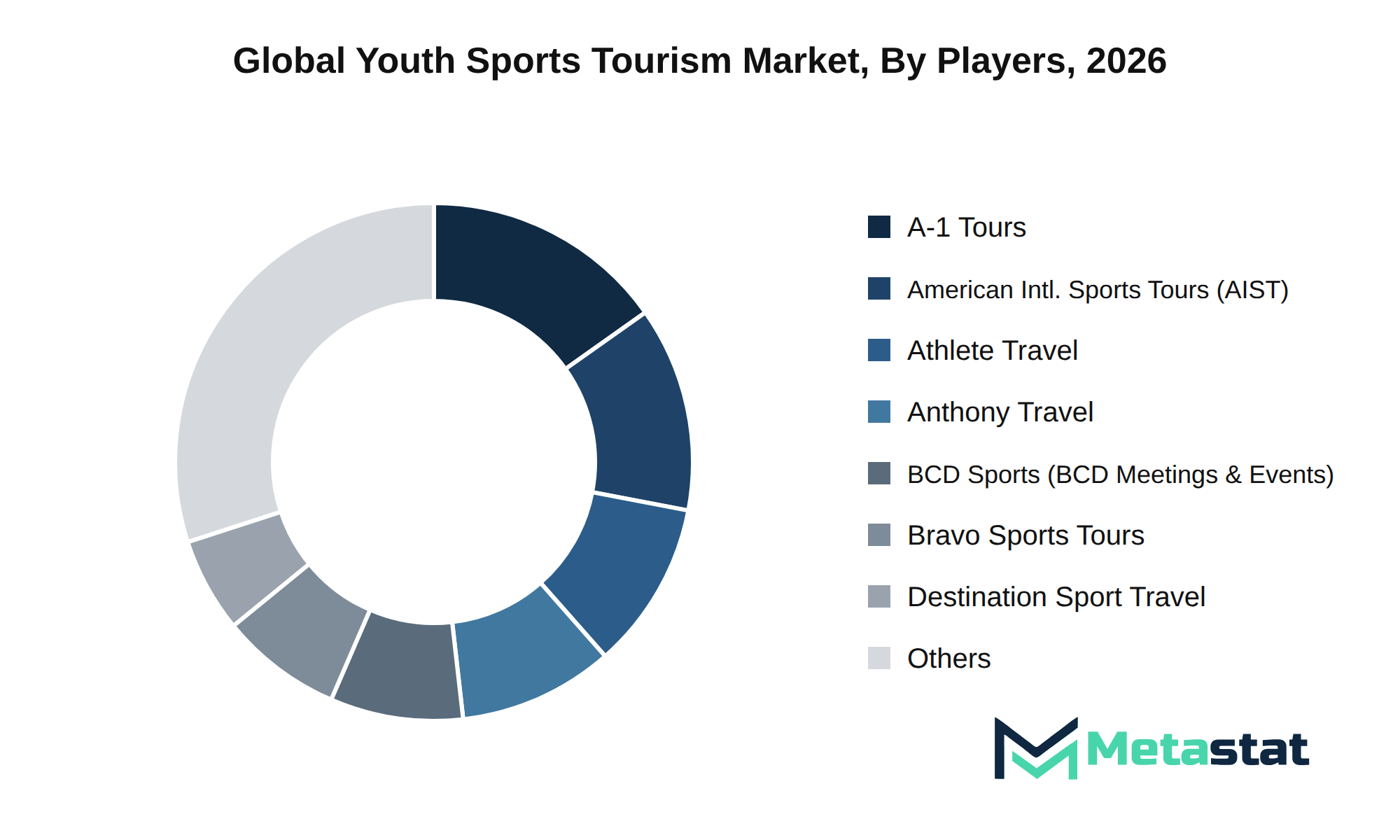
Regional dynamics present a competitive landscape featuring prominent players including A-1 Tours, Alpha International Travel, and American Intl. Sports Tours (AIST). These organizations focus on enhancing travel experiences for youth sports teams, providing specialized services that cater to the unique needs of young athletes. The competitive environment encourages innovation and service diversification, further driving market growth.
Overall, the North American Youth Sports Tourism market experiences significant momentum, fueled by increasing participation, infrastructure improvements, and a competitive landscape that prioritizes customer-focused service delivery. The anticipated market growth signals a strong commitment to nurturing youth athletic talent and enhancing their participation in various sports events.
Europe
The Youth Sports Tourism market in Europe accounts for a significant portion of the global market in 2025. Growth in this region stems from a robust interest in youth sports, supported by strong infrastructure and tourism facilities across several countries, including Germany, France, the UK, Italy, Spain, and Russia. Youth sports events, particularly soccer and basketball tournaments, drive substantial tourism, attracting participants and spectators alike.
Germany and the UK are prominent players within the market, reflecting a historical tradition of sports and international events. Both countries exhibit solid participation rates in various youth sports, enhancing their appeal because destinations for sports tourism. The investment in facilities and event hosting capabilities strengthens their competitive positions.
Emerging trends including sports camps and clinics further contribute to market growth. Countries like Italy and Spain actively promote various international sports events, attracting young athletes and their families to experience competitive environments. This dynamic increases participation and enhances the overall appeal of the region because a prime destination for youth sports tourism.
Infrastructure modernization supports the market. Enhanced transport networks, accommodation options, and event facilities facilitate the travel experience for youth athletes and their supporters. The commitment to improving local infrastructure indicates a positive outlook for future growth within the market.
Cultural nuances and regional buying behaviors significantly influence the market. Countries in Europe emphasize youth development in sports, shaping local procurement dynamics. This focus on developing young talent is expected to drive continued investment in sports events and tourism, contributing positively to the market's overall expansion.
Asia-Pacific
The Youth Sports Tourism market in the Asia-Pacific region represents a significant segment of the global landscape, accounting for 21.7% of the overall market share in 2025. Driving factors in this market include increasing youth participation in sports across countries including China, Japan, India, South Korea, and Australia. Investment in infrastructure modernization enhances access to sports facilities and events, creating a conducive environment for tourism growth. Countries like India and China exhibit strong potential, attributed to their large youth demographics and growing interest in sports.
Regional competitive dynamics reflect a mixture of domestic market participants and international players. The presence of established firms including A-1 Tours, American Intl. Sports Tours (AIST), and Sports Travel Inc. demonstrates the competitive landscape. Localized procurement dynamics and cultural nuances influence B2B buying behaviors, particularly in countries like Japan and South Korea, where tradition and community involvement in sports play a vital role.
Growth opportunities exist in underpenetrated territories within Southeast Asia and the Rest of Asia Pacific, where increasing disposable income contributes to higher spending on youth sports tourism. The development of cross-border trade corridors supports regional connectivity, facilitating travel and participation in sports events. Overall, the Youth Sports Tourism market in Asia-Pacific is poised for substantial growth, driven by demographic trends, infrastructure development, and evolving consumer behaviors.
South America
Brazil and Argentina serve because the primary markets for youth sports tourism in South America, collectively contributing to a market share of 4.1% in 2025. The growing popularity of various sports, particularly soccer (football), influences increased participation rates among youth, driving demand for travel associated with sports events, tournaments, and training camps. Emerging markets in the region benefit from cultural enthusiasm for sports, enhancing the overall appeal of the youth sports tourism market.
Investment in infrastructure modernization supports the growth of sports tourism, with improved facilities and venues facilitating major tournaments and championships. Local compliance mandates and regulatory frameworks shape the operational landscape for market participants, impacting their strategies for market entry and expansion. The complexity of cross-border travel and trade corridors influences tourism flows, with regional dynamics reflecting unique socio-political contexts.
While the youth sports tourism market expands, strategic entry barriers decrease, inviting foreign direct investment flows. Companies within the region increasingly focus on localized procurement dynamics to cater to the specific needs of young athletes and their families. Domestic market participants, including A-1 Tours and Gullivers Sports Travel, play a crucial role in shaping competitive landscapes, adapting offerings to align with the preferences and behaviors of regional consumers.
With an expected compound annual growth rate of 8.2%, the youth sports tourism market in South America is positioned for substantial growth. Continued interest in youth sports and the establishment of robust infrastructure will likely enhance the attractiveness of the region because a destination for sports tourism. The increasing number of events and tournaments contributes to a dynamic market environment, creating investment opportunities and economic development.
Middle East and Africa
The Youth Sports Tourism market in the Middle East and Africa is characterized by a growing interest in various sporting activities, contributing to increased participation among youth. Countries like Saudi Arabia and the UAE have actively invested in infrastructure and event hosting, enhancing the region's appeal to international teams and participants. South Africa exhibits strong growth potential, driven by its well-established sports culture and infrastructure development aimed at hosting global events.
Cultural nuances and regional buying behaviors play a critical role in shaping the market. The region's sporting events, including tournaments and training camps, attract both local and international participants. Emerging market front-runners invest in activities that promote youth engagement, which directly influences the growth trajectory of the market.
Infrastructure modernization, coupled with localized procurement dynamics, significantly impacts the market landscape. Investment in facilities and services tailored to youth sports tourism enhances overall market attractiveness. This focus facilitates expansion opportunities in underpenetrated territories, enabling further growth during the forecast period.
Competitive Landscape and Strategic Insights
The Youth Sports Tourism market features a diverse competitive landscape driven by various strategic behaviors. Companies in this market focus on mergers and acquisitions to consolidate resources and enhance market presence. The presence of established players including A-1 Tours, Alpha International Travel, and American Intl. Sports Tours (AIST) creates a competitive environment, driven by these firms employing aggressive go-to-market strategies and pricing architectures to attract customers. Strategic alliances and joint ventures between companies facilitate cross-industry partnerships, allowing for a broader range of offerings and an expanded customer base.
Barriers to entry in the Youth Sports Tourism market include established brand equity and customer retention strategies employed by key players. Companies invest in intellectual property and proprietary technology to strengthen their market position, ensuring robust competitive advantages. The future outlook for the market shows potential for growth, driven by evolving consumer preferences and increased participation in youth sports. Strategic growth vectors, including enhanced product differentiation and value chain integration, are crucial for companies to navigate market dynamics and respond to emerging trends.
Forecast and Future Outlook
Market size is forecast to rise from USD 161.8 billion in 2025 to over USD 304 billion by 2033, reflecting a compound annual growth rate (CAGR) of 8.2%. This growth trajectory indicates strong demand for youth sports tourism, driven by increased participation in sports among youth and a growing trend towards travel for sports events.
The bull case envisions accelerated growth due to heightened investment in sports infrastructure, strategic partnerships among stakeholders, and innovative marketing strategies. These factors are expected to lead to a significant expansion of the youth sports tourism market, capturing a broader audience and enhancing the attractiveness of various sports events.
Conversely, the bear case highlights potential challenges including economic fluctuations and shifts in consumer spending priorities. These factors are anticipated to hinder market growth, leading to a more cautious approach from investors and stakeholders within the youth sports tourism sector.
Overall, the youth sports tourism market is projected for substantial growth, influenced by macroeconomic trends, evolving consumer preferences, and strategic initiatives aimed at enhancing the overall experience for young athletes and their families.
The report strategically identifies and profiles the key market players and analyses their core competencies in each sub-segment of the Youth Sports Tourism market.
Report Attributes
Details
Study Period
2021-2033
Base Year
2025
Estimated Year
2026
Forecast Period
2026-2033
Historical Period
2021-2025
Growth Rate
CAGR 8.2% from 2026 to 2033
Revenue Unit
USD billion
Segmentation
By Sport Type, Event Type, Team Type, and Region
By Region
North America (By Sport Type, Event Type, Team Type, and Country)
United States
Canada
Mexico
Europe (By Sport Type, Event Type, Team Type, and Country)
Germany
France
UK
Italy
Spain
Russia
Rest of the Europe
Asia Pacific (By Sport Type, Event Type, Team Type, and Country)
China
Japan
India
South Korea
Australia
Southeast Asia
Rest of Asia Pacific
South America (By Sport Type, Event Type, Team Type, and Country)
Brazil
Argentina
Rest of South America
Middle East and Africa (By Sport Type, Event Type, Team Type, and Country)
Saudi Arabia
UAE
South Africa
Rest of Middle East and Africa
WHAT REPORT PROVIDES
Key Company Market Share, Revenue and Ranking for the Youth Sports Tourism Market
Key Market Leaders in the Youth Sports Tourism Sector
Full In-Depth Analysis of the Youth Sports Tourism Industry
Industry Statistics and Trends Impacting Youth Sports Tourism
Important Changes in Youth Sports Tourism Market Dynamics
Segmentation Details of the Youth Sports Tourism Market
Historical, Ongoing, and Projected Market Analysis for Youth Sports Tourism
Key Strategies of Major Players in Youth Sports Tourism
End of Report Overview
Frequently Asked Questions
Find answers to common questions about this report
The Youth Sports Tourism market size was valued at USD 161.8 billion in 2025, according to the Metastat Insights study.
The Youth Sports Tourism market is projected to grow at a CAGR of 8.2% during the forecast period from 2026 to 2033.
The North America Youth Sports Tourism market size is estimated to reach USD 118.6 billion by 2033.
Soccer (Football) leads the Youth Sports Tourism market with a projected value of USD 85.1 billion by 2033, reflecting a compound annual growth rate of 8.6%. This segment outpaces other sports types in terms of revenue generation.
The key drivers for the Youth Sports Tourism market include the increasing consumer focus on health and wellness, which stimulates demand for sports-centric tourism experiences. investment in infrastructure development enhances access and experiences for participants, contributing to market growth. The market is projected to expand from USD 161.8 billion in 2025 to USD 304 billion by 2033.
North America holds the dominant share of the Youth Sports Tourism market, accounting for USD 118.6 billion in 2033, representing 44.4 percent of the total market.
The Youth Sports Tourism market faces restraints from stringent regulatory compliance, economic conditions, and infrastructure challenges. Increased operational costs due to safety regulations and inflationary pressures deter participation, while supply chain disruptions and geopolitical instability create additional barriers to market growth. These factors contribute to market fragmentation and hinder consistent development across the sector.
Increasing consumer focus on health and wellness drives product adoption in the Youth Sports Tourism market. Families seek active travel opportunities that promote fitness, leading to higher demand for sports-centric experiences. Investment in infrastructure enhances access and quality, attracting more participants and fueling market growth.
The Youth Sports Tourism market is estimated to reach a valuation of USD 304 billion by 2033.
Key players operating in the Youth Sports Tourism market include A-1 Tours, Alpha International Travel, American Intl. Sports Tours (AIST), Anthony Travel, Athlete Travel, and Gullivers Sports Travel.
Global Tarot Cards market size was USD 243.1 million in 2025 and is projected to reach USD 320.5 million by 2033, growing at a CAGR of 3.5%. Full analysis.
Gift Cards market size is valued at USD 713.3 billion in 2025 and projected to reach USD 2,275.4 billion by 2033, growing at a CAGR of 15.6%.
Gift Cards market, Gift Cards Market Size, Gift Cards Market Share, Gift Cards Market Analysis, Gift Cards Market Growth, Gift Cards Market Trends, Gift Cards Market Research Report, Gift Cards Market Forecast, Gift Cards, Gift Cards Market Research, Gift Cards Industry, Gift Cards Industry Report, Gift Cards Market Data, Gift Cards Statistics, Gift Cards Market Statistics, Gift Cards Industry Trends, Gift Cards Market Report, Gift Cards Market Trends, Gift Cards Market News, Gift Cards Forecasts, Gift Cards Market Intelligence Report, Gift Cards market 2033, Gift Cards market outlook, Gift Cards market segmentation, Gift Cards market drivers, Gift Cards market restraints, Gift Cards market opportunities, Gift Cards market CAGR, Gift Cards suppliers, Gift Cards manufacturers, Gift Cards market by region, North America Gift Cards market, Asia Pacific Gift Cards market, Europe Gift Cards market, Gift Cards market competitive landscape, Gift Cards market key players, Closed-Loop Gift Cards market, Open-Loop Gift Cards market, Digital and eGift Cards market, Personal Gifting Gift Cards market, Employee Rewards Gift Cards market, Customer Loyalty Gift Cards market, Direct-to-Consumer Gift Cards market.
Luxury Resort Hotel Market Size, Share, Trends, 2033
Luxury Resort Hotel market is valued at USD 42.2 billion in 2025 and projected to reach USD 81.7 billion by 2033, growing at a CAGR of 8.6%.
Luxury Resort Hotel market, Luxury Resort Hotel Market Size, Luxury Resort Hotel Market Share, Luxury Resort Hotel Market Analysis, Luxury Resort Hotel Market Growth, Luxury Resort Hotel Market Trends, Luxury Resort Hotel Market Research Report, Luxury Resort Hotel Market Forecast, Luxury Resort Hotel, Luxury Resort Hotel Market Research, Luxury Resort Hotel Industry, Luxury Resort Hotel Industry Report, Luxury Resort Hotel Market Data, Luxury Resort Hotel Statistics, Luxury Resort Hotel Market Statistics, Luxury Resort Hotel Industry Trends, Luxury Resort Hotel Market Report, Luxury Resort Hotel Market Trends, Luxury Resort Hotel Market News, Luxury Resort Hotel Forecasts, Luxury Resort Hotel Market Intelligence Report, Luxury Resort Hotel Market 2033, Luxury Resort Hotel Market Outlook, Luxury Resort Hotel Market Segmentation, Luxury Resort Hotel Market Drivers, Luxury Resort Hotel Market Restraints, Luxury Resort Hotel Market Opportunities, Luxury Resort Hotel Market CAGR, Luxury Resort Hotel Suppliers, Luxury Resort Hotel Manufacturers, Luxury Resort Hotel Market by Region, North America Luxury Resort Hotel Market, Asia Pacific Luxury Resort Hotel Market, Europe Luxury Resort Hotel Market, Luxury Resort Hotel Market Competitive Landscape, Luxury Resort Hotel Market Key Players, Mainland Beach & Coastal Resorts, Island Resorts, Mountain & Alpine Resorts, Luxury Guest Rooms, Online Travel Agencies, Luxury Tents & Lodges, Tour Operators & Destination Management Companies.
Small Kitchen Appliances Market Size, Share, Trends, 2033
Small Kitchen Appliances market size is valued at USD 37.2 billion in 2025 and projected to reach USD 59.3 billion by 2033, growing at a CAGR of 6.0%.
Small Kitchen Appliances market, Small Kitchen Appliances Market Size, Small Kitchen Appliances Market Share, Small Kitchen Appliances Market Analysis, Small Kitchen Appliances Market Growth, Small Kitchen Appliances Market Trends, Small Kitchen Appliances Market Research Report, Small Kitchen Appliances Market Forecast, Small Kitchen Appliances, Small Kitchen Appliances Market Research, Small Kitchen Appliances Industry, Small Kitchen Appliances Industry Report, Small Kitchen Appliances Market Data, Small Kitchen Appliances Statistics, Small Kitchen Appliances Market Statistics, Small Kitchen Appliances Industry Trends, Small Kitchen Appliances Market Report, Small Kitchen Appliances Market Trends, Small Kitchen Appliances Market News, Small Kitchen Appliances Forecasts, Small Kitchen Appliances Market Intelligence Report, Small Kitchen Appliances Market 2033, Small Kitchen Appliances Market Outlook, Small Kitchen Appliances Market Segmentation, Small Kitchen Appliances Market Drivers, Small Kitchen Appliances Market Restraints, Small Kitchen Appliances Market Opportunities, Small Kitchen Appliances Market CAGR, Small Kitchen Appliances Suppliers, Small Kitchen Appliances Manufacturers, Small Kitchen Appliances Market by Region, North America Small Kitchen Appliances Market, Asia Pacific Small Kitchen Appliances Market, Europe Small Kitchen Appliances Market, Small Kitchen Appliances Market Competitive Landscape, Small Kitchen Appliances Market Key Players, Food Preparation Appliances Market, Coffee Machines Market, Electric Kettles Market, Cooking Appliances Market, Residential Small Kitchen Appliances Market, Foodservice Small Kitchen Appliances Market