
LEAD ANALYST
Utkarsh Khirodkar is a Lead Market Research Analyst at MetaStat Insight, specializing in market intelligence, technology sector assessments, and competitive strategy.

Global Hybrid Quartz Watch Market Size, Share, By Display Configuration (Analog-Digital, Analog with Embedded Digital Display, Analog with Smart Display and Other Hybrid Display Configurations), By Price Range (Entry-Level, Mid-Range, Premium and Luxury), By Functional Capability (Basic Timekeeping and Calendar, Chronograph and Timing Functions, Fitness and Activity Tracking, Health Monitoring and Others), By Distribution Channel (Brand-Owned Online/DTC, Multi-Brand Online Retailers, Specialty Watch & Jewelry Stores and Department & Lifestyle Stores), Industry Analysis, Growth, Trends, and Forecast, 2026-2033
Report ID
MSI-5414
Published
October, 2026
Pages
308 Pages
Format
Historical
Base year
Forecast
Forecast period
Report Details
Market Valuation: Valued at $627.8 Million in 2025, projected to reach $1,008.5 Million by 2033 at a 6.1% CAGR.
Dominant Segment: The analog-digital segment leads the market, driven by consumer demand for multifunctionality and the integration of fitness tracking features, appealing particularly to younger demographics.
Geographic Lead: North America is the leading region, holding a significant market share, with the US expected to maintain its dominance due to a strong consumer base for hybrid quartz watches.
What's Inside: The report provides an in-depth analysis of market dynamics, competitive landscape, and detailed segmentation by display configuration, price range, functional capability, and distribution channels, covering the forecast period from 2026 to 2033.
Health Monitoring Growth: The health monitoring segment is projected to grow at a CAGR of 7.3%, reflecting a rising consumer focus on wellness and fitness tracking functionalities in hybrid quartz watches.
Entry-Level Appeal: The entry-level segment is positioned as an attractive option for budget-conscious consumers, emphasizing affordability while meeting quality standards in hybrid quartz watches.
Choose Your License
Global Hybrid Quartz Watch Market
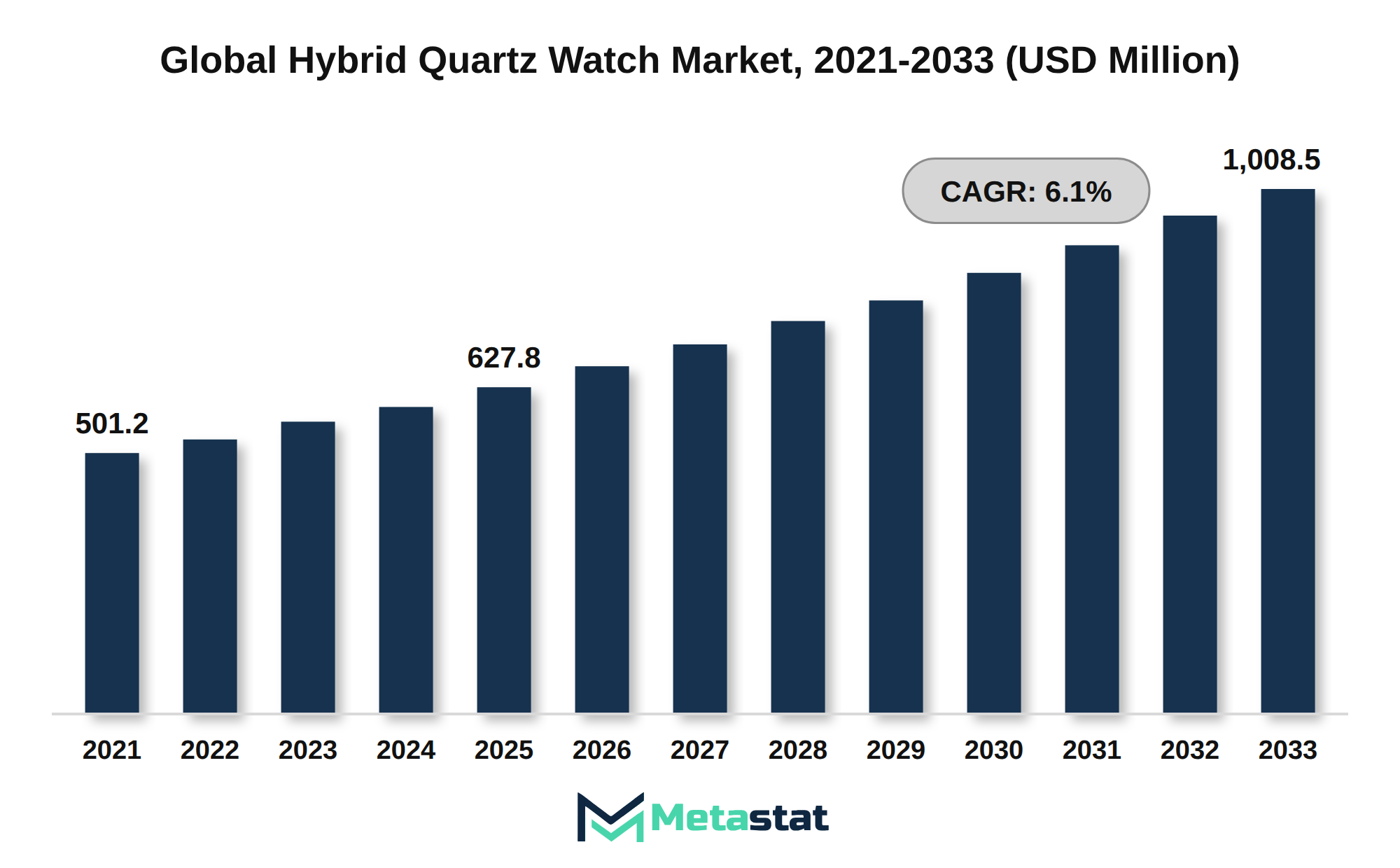
The global Hybrid Quartz Watch market was valued at USD 627.8 million in 2025 and is projected to reach USD 1,008.5 million by 2033, growing at a CAGR of 6.1% over the forecast period.
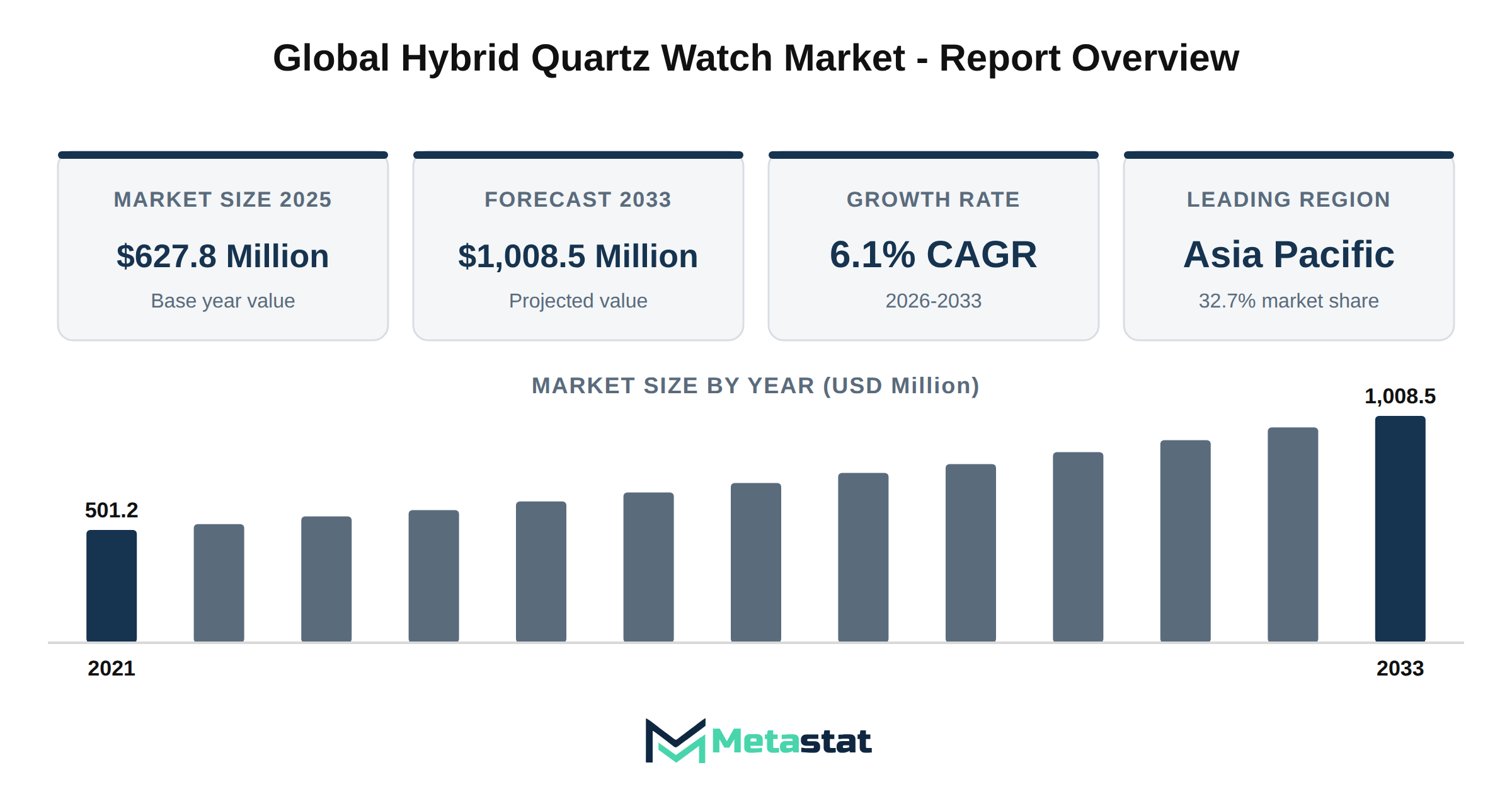
The market encompasses a wide range of hybrid quartz watches, integrating traditional analog features with digital functionality. This combination appeals to consumers seeking both style and modern technology. The projected growth reflects a shift in buyer preferences, with an increase in demand driven by a younger demographic inclined toward smart capabilities. North America holds 30.1% in 2025, with the US leading the market share in 2026. The rise to USD 1,008.5 million by 2033 illustrates strong market acceptance and evolving consumer expectations.
Among the segments, the display configuration category presents significant diversity. The analog-digital segment, valued at USD 279.6 million in 2026, is projected to reach USD 401.6 million by 2033, showing a compound annual growth rate of 5.3%. The price range segment indicates a robust entry-level category, expected to grow from USD 225.4 million in 2026 to USD 321.1 million by 2033. The primary force behind growth lies in the functional capabilities offered, particularly fitness and activity tracking, which align with current consumer health trends.
The growth trajectory from USD 627.8 million to USD 1,008.5 million signifies a robust evolution in consumer preferences for hybrid quartz watches. Key buyer groups include tech-savvy individuals seeking multifunctionality and fashion-conscious consumers drawn to the blend of traditional and modern designs. This shift reflects greater personalization and functionality in timepieces, driving demand for models that integrate advanced features including fitness tracking and smart notifications.
Within the display configuration segment, the Analog-Digital category captures substantial consumer interest due to its dual functionality. The price range segment highlights entry-level offerings, catering to cost-conscious buyers while mid-range products attract those seeking a balance of quality and price. Distribution channels evolve with direct-to-consumer brands rising in popularity, enabling manufacturers to build stronger relationships with their clientele. Such dynamics contribute to a sustained increase in market value, driven by ongoing demand for innovative hybrid quartz watches.
The emergence of mecaquartz calibers represents a significant innovation in the Hybrid Quartz Watch market, combining the tactile experience of mechanical chronographs with the accuracy of battery-powered timepieces. This development appeals to consumers seeking traditional craftsmanship alongside modern functionality. Mecaquartz movements incorporate a mechanical mechanism for the chronograph functions while relying on quartz technology for standard timekeeping. This dual approach enhances user engagement and satisfaction while delivering precision performance.
This innovation caters to a demographic increasingly interested in sophisticated watch features, evidenced by the projected growth of the market from USD 627.8 million in 2025 to USD 1,008.5 million by 2033, reflecting a compound annual growth rate (CAGR) of 6.1%. The versatile nature of mecaquartz calibers allows manufacturers to target both watch enthusiasts and casual consumers, expanding their market reach significantly. Brands integrating this technology will likely strengthen their competitive position by appealing to a broader audience, ultimately driving sales in an evolving marketplace.
Customization options arising from mecaquartz innovations further enrich the consumer experience. Buyers increasingly prefer unique timepieces that reflect personal style, prompting manufacturers to explore diverse designs and functionalities. The Hybrid Quartz Watch market benefits from this shift, driven by brands developing specialized offerings that align with individual preferences. Consequently, mecaquartz technology not only enhances product appeal but builds brand loyalty, contributing to sustained growth and profitability in the long term.
A significant trend in the Hybrid Quartz Watch market involves the growing consumer preference for analog aesthetics integrated with connected biometric tracking features. This shift reflects a desire for timeless design combined with modern technology, appealing to buyers who value both style and functionality. This trend signifies a merging of traditional watchmaking with the capabilities of smart technology.
Consumers prioritize fitness and health monitoring features in wearable technology, leading to an increasing focus on hybrid smartwatches that deliver both classic design and advanced functionalities. Health monitoring features play a crucial role in shaping product offerings in the coming years. The market for health-focused hybrid watches is anticipated to grow, with offerings that provide fitness tracking, health insights, and smart notifications. This dual focus on aesthetics and functionality attracts a diverse range of consumers, including fitness enthusiasts and style-conscious buyers.
The shift toward hybrid watches carries implications for pricing strategies in the market. Entry-level models with analog-digital configurations, priced competitively, will likely capture a larger share of the consumer base, growing from USD 225.4 million in 2026 to USD 321.1 million by 2033, reflecting a CAGR of 5.2%. This competitive pricing, combined with the appeal of analog aesthetics, drives higher sales volumes and enhances brand loyalty among consumers. Brands that effectively communicate this value proposition strengthen their positions in a changing market.
Production costs in the Japanese and Swiss movement sectors significantly influence the Hybrid Quartz Watch market. A strong emphasis on precision engineering and quality materials drives these expenses, with labor and raw materials forming a substantial portion of the overall cost structure. Premium-grade components sourced from specialized suppliers in these regions ensure high durability and functionality, contributing to an increased price point for consumers. Brands positioned in the luxury segment benefit from higher margins while maintaining a competitive advantage through quality assurance.
Supply chain resilience remains critical for manufacturers operating in the market. Disruptions caused by geopolitical tensions, global pandemics, and fluctuating trade policies necessitate robust supply chain strategies. Japanese manufacturers rely on local suppliers for components, reducing lead times and transportation costs while ensuring quality control. In contrast, Swiss manufacturers engage in a broader network of international suppliers, enabling flexibility in sourcing materials and components. This dynamic supports uninterrupted production flows and minimizes the risk of stockouts, directly impacting brand reputation and customer satisfaction.
Technological advancements continue to shape production processes in both regions, facilitating innovations that enhance operational efficiency. Automation and precision machinery streamline the manufacturing of hybrid quartz movements, reducing human error and increasing consistency in output quality. Digital technologies integrate into traditional manufacturing processes, enabling companies to achieve greater scalability and responsiveness to market demands. Consequently, manufacturers that invest in these technologies enhance their competitiveness within the market.
Extended battery life emerges as a significant factor influencing adoption in the Hybrid Quartz Watch market. Consumers increasingly prioritize convenience and longevity in their wearable technology, leading to a shift towards timepieces that require less frequent charging. In 2025, the market reached a value of USD 627.8 million, highlighting substantial demand for efficient and user-friendly products. Enhanced battery technologies allow hybrid quartz watches to operate for extended periods without recharging, catering to lifestyle preferences that favor reliability and low maintenance.
Displayless designs gain traction among buyers seeking minimalism and versatility in their timepieces. These designs often focus on traditional analog aesthetics while integrating digital functionalities discreetly. This shift reflects a broader trend favoring understated elegance in watch design. The market's growth projections, reaching USD 1,008.5 million by 2033, align with increasing consumer interest in products that blend style and functionality. Displayless hybrid quartz watches supply an alternative for consumers desiring modern features without compromising on classic craftsmanship.
Health monitoring capabilities significantly influence buyer decisions in the hybrid quartz watch segment. Timepieces equipped with features including heart rate tracking and activity monitoring align with the growing consumer emphasis on wellness and fitness. The potential for increased adoption results from heightened awareness of health and fitness trends. With a projected compound annual growth rate (CAGR) of 6.1%, the market is set to expand, supported by innovations that cater to health-conscious consumers seeking multifunctional devices.
Growing consumer interest in health and fitness significantly influences the Hybrid Quartz Watch market. Demand for wearables that offer fitness and activity tracking functionalities has expanded due to increased health consciousness among consumers. This change in behavior motivates manufacturers to enhance their product offerings with advanced tracking capabilities, appealing to fitness enthusiasts and everyday users.
The integration of fitness tracking features increases product prices, contributing to overall revenue growth in the market. While consumers seek devices that support their health and fitness goals, the market has seen a shift towards hybrid quartz watches equipped with these functionalities. This trend drives sales volume and encourages competition among suppliers, ultimately leading to innovations in design and technology within the hybrid quartz watch segment.
Rising prices within the premium segment of the Hybrid Quartz Watch market restrict demand, particularly among budget-conscious consumers. Increasing production costs associated with high-quality materials and advanced features lead to higher retail prices for these products, making them less accessible to a larger audience. Consumers weigh the cost against perceived value, resulting in smaller orders and delayed purchasing decisions for premium models. Price sensitivity is pronounced among younger demographics, who prioritize affordability while seeking unique features and styles. This financial constraint hampers overall market growth, especially in regions where disposable income levels are lower. Consequently, brands face challenges in attracting a wider customer base, impacting sales volume and growth potential.
Fluctuations in input costs present a significant challenge for suppliers in the Hybrid Quartz Watch market. Factors contributing to these cost variations include rising prices for raw materials including metals and components essential for watch manufacturing. Suppliers respond to these pressures by optimizing production processes and exploring alternative sourcing strategies to mitigate impacts on their profit margins. Innovations in materials, including lightweight alloys or sustainable materials, emerge as potential solutions to maintain competitive pricing while enhancing product appeal. These measures aim to balance the need for quality and affordability in hybrid quartz watches, particularly within the mid-range and entry-level segments. While suppliers adapt to evolving market dynamics, the focus on cost management influences overall pricing strategies and shapes competitive positioning within this segment.
The ability to navigate input cost challenges is essential for maintaining profitability, particularly during periods of economic fluctuation. The successful implementation of strategic initiatives allows suppliers to preserve operational efficiency and meet consumer expectations for quality and price in the competitive landscape of the hybrid quartz watch market.
This growth results from an increasing preference among consumers for versatile timepieces that combine traditional analog features with modern digital functionalities. The demand for hybrid quartz watches with analog-digital displays is fueled by the rising interest in smart technology and convenience while maintaining classic aesthetics. Buyers in younger demographics show particular enthusiasm for these hybrid models, driving significant volume increases. While manufacturers respond by enhancing their product offerings with innovative designs and functionalities, the overall market sees an expansion in revenue and market penetration. This segment demonstrates potential for further investment and development, positioning it as a key area for growth in the hybrid quartz watch market.
The Global Hybrid Quartz Watch market is segmented based on Display Configuration, Price Range, Functional Capability, and Distribution Channel.
This segment appeals to tech-savvy consumers who appreciate the combination of traditional timekeeping with modern digital features. Increased consumer focus on multifunctionality drives demand, particularly among younger demographics seeking fitness tracking and smart notifications. The growth trajectory distinguishes this segment from others, including Analog with Smart Display, which lacks the same level of integrated functionalities. The Analog-Digital segment benefits from a growing inclination towards hybrid solutions that blend style and technology.
Analog with Embedded Digital Display segment is estimated to reach USD 309.7 million by 2033, at a CAGR of 5.8% during the forecast period. This segment appeals to consumers seeking a blend of traditional watch aesthetics with digital functionalities, serving individuals who value both style and modern technology. Increased consumer awareness of smart features drives demand for watches that offer enhanced usability alongside classic designs. Compared to other segments, this category experiences a stronger growth rate, reflecting a shift in consumer preferences toward more versatile products. The integration of digital displays within analog designs differentiates this segment by offering unique functionalities that connect with tech-savvy buyers. Popular features include notifications, fitness tracking, and customizable watch faces, providing additional value that attracts a diverse range of consumers. The evolution of consumer expectations continues to shape the dynamics of this segment, leading to heightened investments from manufacturers aiming to capitalize on these emerging trends.
The Analog with Smart Display segment is projected to reach USD 243.2 million by 2033. This configuration integrates traditional analog watch aesthetics with digital functionalities, appealing to tech-savvy consumers seeking stylish yet functional timepieces. Growth in this segment is driven by rising consumer demand for smart functionalities, including notifications and fitness tracking, which enhance user engagement. Unlike other display configurations, the Analog with Smart Display segment enjoys a higher price point, catering to consumers willing to invest in advanced features. The appeal of this segment lies in its ability to merge style with technology, positioning it favorably among younger demographics that prioritize both design and functionality. A notable increase in penetration is anticipated, influenced by the ongoing trend of merging traditional craftsmanship with modern innovations.
The Other Hybrid Display Configurations segment is projected to grow at a CAGR of 5% during the forecast period. This segment includes watches with unique display features that blend traditional analog designs with innovative technology. Consumers seeking alternatives to conventional display types gravitate toward these configurations, appreciating the blend of aesthetics and functionality. The segment attracts buyers interested in distinctive styles and customizable features. Demand for creativity in design and personalization fuels growth within this segment. Compared to its counterparts, this segment experiences slower growth due to the niche appeal, attracting a specific demographic rather than the mass market. Diversity in buyer preferences and the desire for unique products continues to shape the dynamics of the Hybrid Quartz Watch market.
This segment appeals to budget-conscious consumers seeking reliable timepieces that combine functionality with affordability. Primary demand drivers include the increasing trend towards stylish yet accessible options for younger demographics that prioritize value without sacrificing quality. Unlike premium or luxury segments, which focus on high-end design and features, the Entry-Level segment emphasizes essential features, thus positioning itself as an attractive entry point for those new to hybrid quartz watches. Price sensitivity remains a significant factor, influencing purchasing decisions and overall demand trends. The market continuously adapts to shifting consumer preferences, ensuring a steady supply of affordable options that meet quality standards while accommodating various lifestyle needs.
Mid-Range segment is estimated to reach USD 398.6 million by 2033, at a CAGR of 6.3% during the forecast period. This segment caters to consumers seeking quality with moderate pricing, typically appealing to mid-level buyers who appreciate a blend of functionality and style. Adoption is driven by increasing demand for hybrid features that balance classic aesthetics and modern technology. The Mid-Range segment benefits from growing interest in versatile timepieces that accommodate both casual and formal settings. Increased competition in pricing among brands fuels innovation and product offerings, enhancing consumer choices. Compared to entry-level and premium segments, this category occupies a unique position, offering more advanced features without the higher costs associated with luxury alternatives. Buyers in this segment appreciate the combination of features and value, leading to steady growth within the market.
The premium segment is expected to reach USD 219.3 million by 2033. This segment attracts consumers seeking high-quality timepieces that blend traditional craftsmanship with advanced technology. An increasing appreciation for luxury accessories and a growing trend toward personalization drive this segment. Unlike entry-level and mid-range segments, the premium category features higher price points and caters to affluent buyers. This segment demonstrates a compound annual growth rate (CAGR) of 6.1% during the forecast period, reflecting robust demand. The focus on quality and unique design elements distinguishes premium watches from other segments, enhancing their appeal among consumers valuing exclusivity. With luxury features becoming more accessible, the market experiences a nuanced shift where buyers prioritize unique craftsmanship over mass-produced alternatives.
Luxury watches within the price range segment hold significant market value, projected to grow at a CAGR of 6.1% during the forecast period. These timepieces attract affluent consumers who seek both functionality and status, often employing premium materials and sophisticated designs. The demand for luxury watches is driven by a growing trend toward personalization and exclusivity, with buyers favoring unique features that enhance their individual style. This segment differs from entry-level and mid-range counterparts, which focus more on affordability and basic functions. In contrast, luxury watches emphasize superior craftsmanship and innovative technology, catering to a wealthier clientele. The luxury segment stands out due to its higher price points, leading to differences in growth trajectories compared to lower-priced segments. Enhanced brand loyalty within this segment often results in consistent revenue streams for manufacturers, reflecting the overall strength of the market.
The Basic Timekeeping and Calendar segment is valued at USD 221.7 million in 2026 and is projected to reach USD 299.5 million by 2033, at a CAGR of 4.4% during the forecast period. This segment caters to consumers seeking reliable timekeeping and date functionality, serving individuals who prioritize traditional watch features. The increasing popularity of fitness and activity tracking functions drives demand, influencing the adoption of watches that incorporate basic timekeeping alongside these features. Compared to other segments, this sub-segment experiences slower growth due to its focus on fundamental functionalities rather than advanced features. In contrast, segments emphasizing health monitoring and smart displays attract more attention, demonstrating faster growth rates and higher market values. The market continues to evolve, with the Basic Timekeeping and Calendar segment maintaining its relevance among consumers who value simplicity and functionality in their timepieces.
The Chronograph and Timing Functions segment is estimated to reach USD 281.4 million by 2033, at a CAGR of 5.8% during the forecast period. This segment caters to consumers seeking precise timekeeping and performance tracking, particularly among athletes and fitness enthusiasts. Increased consumer focus on fitness and activity tracking drives demand for watches that provide chronograph functionalities. Unlike other segments, the Chronograph and Timing Functions segment benefits from higher price points due to the advanced technology and features incorporated into these timepieces. This segment's growth outpaces that of segments focused solely on basic timekeeping features. The demand for innovative functionalities leads to an enhancement in the overall user experience, positioning this segment favorably within the broader Hybrid Quartz Watch market. The integration of smart technologies into chronograph functionalities enhances appeal among tech-savvy consumers who prioritize advanced features in their timepieces.
The Fitness and Activity Tracking segment is expected to reach USD 219.9 million by 2033. This segment focuses on monitoring physical activities and health metrics, appealing to fitness enthusiasts and health-conscious individuals. Increasing awareness regarding fitness and health drives growth, pushing consumers toward devices that assist with tracking exercise and health metrics. In contrast to other segments, this area demonstrates a more accelerated growth trajectory due to the rising popularity of health monitoring features among consumers. The segment captures a significant portion of the market's attention, emphasizing the shift in consumer preferences toward functionality that enhances lifestyle and personal well-being. This segment positions itself strategically to meet the growing demand for devices offering comprehensive fitness tracking capabilities.
The Health Monitoring segment is projected to grow at a CAGR of 7.3% during the forecast period. This segment focuses on tracking vital health metrics, appealing primarily to health-conscious consumers and fitness enthusiasts. The demand for these features has surged due to increasing awareness of health and wellness, prompting consumers to seek devices that provide real-time health data. In contrast to other functional capabilities, including Basic Timekeeping or Chronograph functions, Health Monitoring stands out due to its higher growth rate and a distinct target audience emphasizing fitness tracking and health management. Innovations in sensor technology further enhance product offerings, allowing for more accurate and diverse health metrics. Brand differentiation hinges on advanced functionalities, positioning this segment as a key player within the market.
This sub-segment focuses on functionalities categorized as Smart Notifications and Communication, Navigation and Travel Functions. These functions serve users who seek enhanced connectivity and utility in their timepieces, appealing particularly to technology-savvy consumers and frequent travelers. The increasing integration of smart technology into everyday devices drives demand for watches that include these capabilities, reflecting a growing trend towards multifaceted devices. Compared to other functional capabilities, this segment attracts a distinct customer base, often prioritizing advanced features over traditional timekeeping. The market dynamics favor innovation in technology, emphasizing the continued evolution of hybrid watches with integrated smart functions. This integration not only enhances user experience but positions the products competitively against purely digital offerings, contributing to sustained interest and potential growth in this area.
Brand-Owned Online/DTC segment is valued at USD 200.1 million in 2026 and is projected to reach USD 341.1 million by 2033, at a CAGR of 7.9% during the forecast period. This segment serves as a primary channel for consumers seeking direct access to brands, often prioritizing personalization and immediate purchasing options. The increase in online shopping trends significantly drives growth, particularly among younger buyers who favor convenient purchasing experiences. The rise in brand engagement through digital marketing strategies enhances customer loyalty and repeat purchases. Compared to other distribution channels, this segment experiences faster growth due to the shift towards e-commerce, positioning itself as a highly competitive alternative to traditional retail outlets. The market exhibits strong potential as consumers increasingly value the immediacy and convenience offered through brand-owned platforms.
Multi-Brand Online Retailers segment is estimated to reach USD 326.9 million by 2033, at a CAGR of 6.3% during the forecast period. This segment provides customers with a wide range of hybrid quartz watches from various brands, appealing to tech-savvy consumers who value convenience and variety. Increased online shopping and the proliferation of e-commerce platforms drive growth in this segment. Competitive pricing and promotional offers offered by retailers enhance attractiveness compared to other distribution channels. Compared to specialty watch and jewelry stores, this segment experiences faster growth owing to lower overhead costs and broader market reach, positioning it as a preferred choice for many buyers in the market. Enhanced digital marketing strategies contribute to higher visibility and accessibility, thereby influencing purchasing decisions among consumers seeking both innovation and affordability.
The Specialty Watch & Jewelry Stores segment is expected to reach USD 227.7 million by 2033. This segment caters to consumers seeking unique and high-quality timepieces, emphasizing craftsmanship and brand heritage. Demand for specialty stores is driven by the growing trend toward personalized and luxury items among affluent buyers. A significant distinction lies in the segment's focus on premium pricing and exclusive offerings, which contribute to a slower growth rate compared to more accessible distribution channels. An increasing number of consumers are willing to invest in distinctive timepieces with advanced features, further enhancing the segment's appeal. This segment maintains a competitive edge by offering specialized services and an immersive shopping experience that online channels cannot replicate.
Department & Lifestyle Stores segment is projected to grow at a CAGR of 3.5% during the forecast period. This segment primarily caters to consumers seeking a blend of style and functionality in their watch choices, appealing to a broad demographic. The steady growth of this segment is attributed to increasing consumer interest in fashion-forward timepieces that align with personal style. Unlike other segments, Department & Lifestyle Stores typically offer a diverse range of price points, making watches accessible to various income levels. This affordability acts as a significant lever for growth, allowing higher penetration among cost-conscious buyers. With the market evolving, these retail channels are enhancing their product offerings, which further drives consumer interest in hybrid quartz watches. The emphasis on a curated shopping experience and personalized service distinguishes this segment from its counterparts, aligning it closely with current retail trends.
Based on geography, the Global Hybrid Quartz Watch market is divided into North America, Europe, Asia-Pacific, South America, Middle East, and Africa.
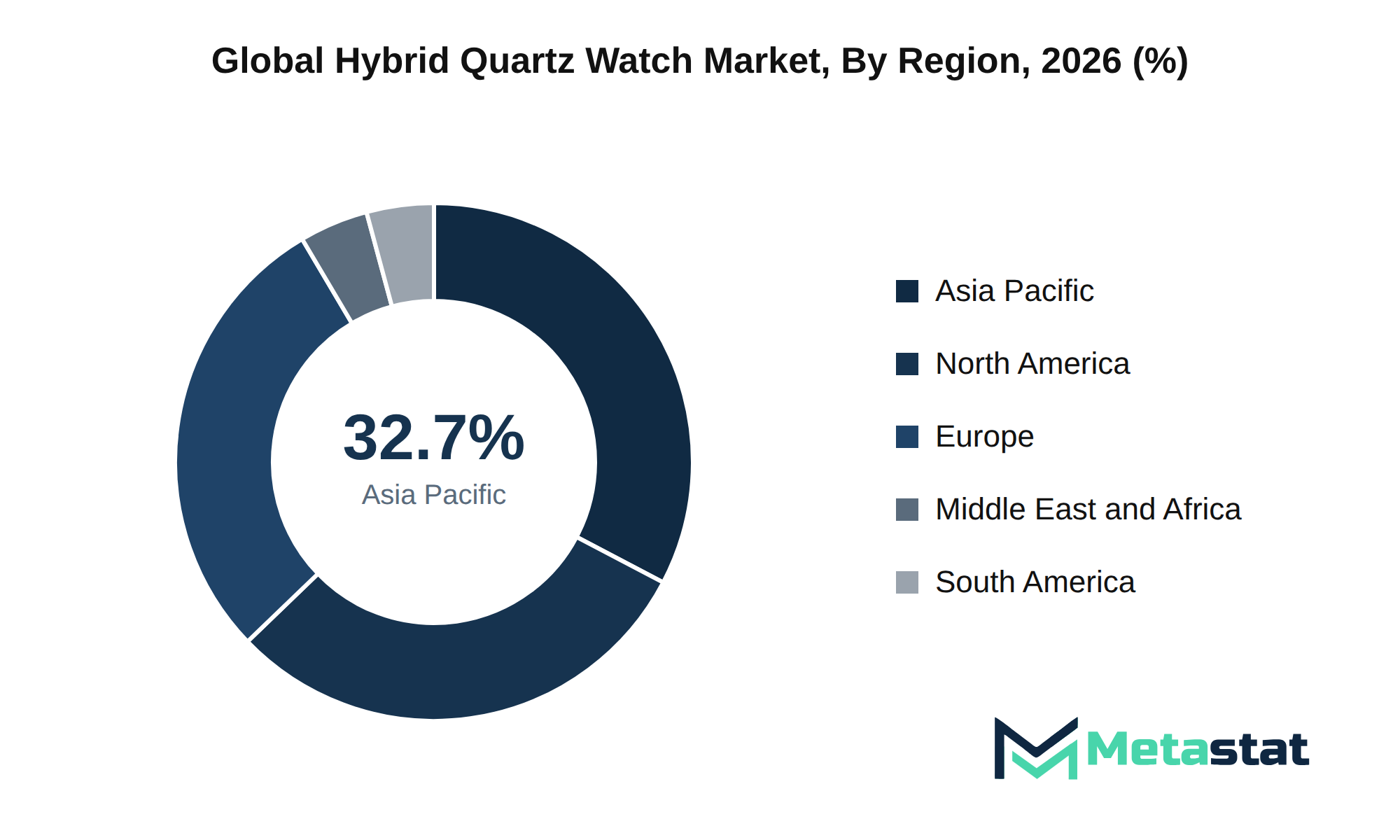
Growth in the North America region is driven by increasing consumer interest in multifunctional timepieces. The United States, Canada, and Mexico are key markets, with the United States representing a substantial portion of total demand. Enhanced focus on health and fitness tracking features, alongside advanced timekeeping functionalities, influences buyers' preferences. The market is projected to reach USD 291.6 million by the end of 2033, highlighting a significant expansion opportunity. This region benefits from a robust retail infrastructure, including brand-owned online platforms and specialty watch stores, which enables direct consumer engagement. This retail dynamic allows for personalized marketing strategies, strengthening brand loyalty and repeat purchases among discerning consumers.
European consumers exhibit strong preferences for innovative designs and advanced features within the Hybrid Quartz Watch market. The growing interest in smart technology integration drives demand, particularly in key markets including Germany, France, and Italy. Increased disposable income in these countries allows consumers to invest in hybrid watches that offer both functionality and style. A robust retail infrastructure enhances accessibility, facilitating growth in the market. The competitive landscape comprises various domestic and international brands striving to capture market share through unique offerings. By 2025, the European market is projected to represent 28.7% of the global share. This dynamic environment encourages brands to adapt rapidly to consumer trends, creating a climate of continuous innovation.
Significant growth opportunities arise within the Asia-Pacific region, driven primarily by increasing consumer interest in hybrid quartz watches. Countries including China, Japan, and India demonstrate a growing demand for innovative timepieces featuring advanced functionalities. Rising purchasing power among consumers, particularly in urban areas, enhances the market's potential. Technological advancements, especially in smart features like fitness tracking and health monitoring, contribute to this trend, attracting a tech-savvy demographic. With the market accounting for 32.7% of the global share in 2025, the region’s landscape supports multiple distribution channels, including brand-owned online retailing. This diversification enables brands to reach a broader audience effectively. The hybrid quartz watch market in Asia-Pacific anticipates significant expansion stemming from evolving consumer preferences and increased engagement in lifestyle-oriented products.
The South American market demonstrates distinct characteristics driven by consumer preferences for stylish and functional timepieces. Brazil and Argentina emerge as key players in this region, reflecting a growing middle class that increasingly values hybrid quartz watches. Economic factors, including rising disposable income, influence purchasing decisions, enhancing demand for versatile products. The market share in South America is projected to reach 4.2% by 2025, highlighting its potential for growth within the broader hybrid quartz watch market. Retail channels, particularly online platforms and specialty stores, play significant roles in accessibility, facilitating consumer engagement. While the market evolves, brands that prioritize innovation and quality will likely experience enhanced market presence in these countries.
The Middle East and Africa region represents a distinct market for hybrid quartz watches, accounting for 4.3% of the global market share in 2025. Key markets include Saudi Arabia, the UAE, and South Africa, where rising disposable incomes and a growing middle class drive demand. Consumer preferences increasingly lean towards stylish and multifunctional timepieces, aligning with regional trends in fashion and technology. Enhanced retail experiences, particularly through online platforms and specialty stores, contribute to market accessibility. The region’s unique blend of cultural influences impacts design choices and branding strategies, making it vital for companies to adapt offerings to local tastes. Investment in marketing campaigns targeting younger consumers further enhances brand visibility within the market, reinforcing competitive positioning in an evolving environment.
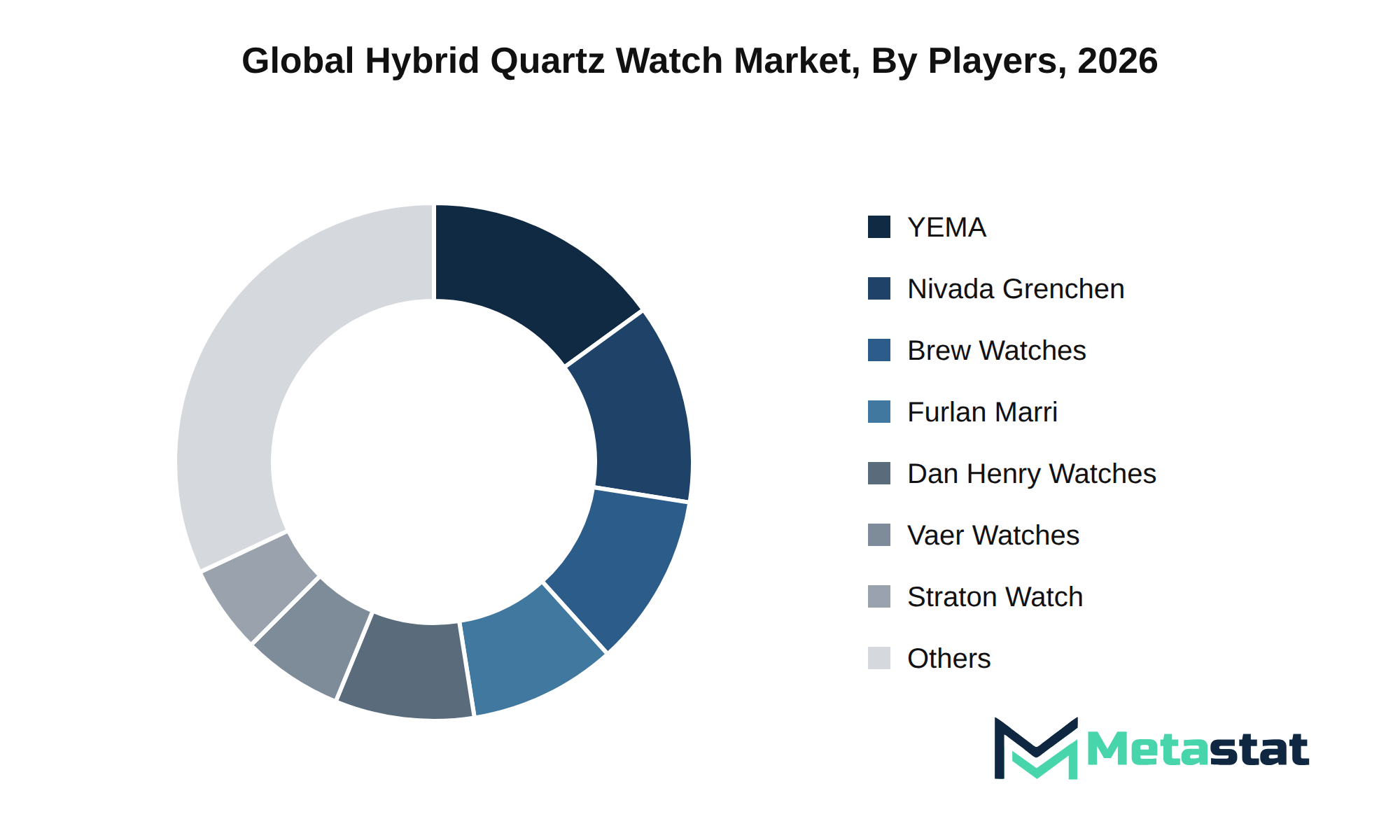
Companies in the Hybrid Quartz Watch market compete based on various factors, including price, functionality, and brand reputation. Buyers prioritize customizable features and distinctive designs when selecting products. For instance, YEMA focuses on unique vintage aesthetics, while Brew Watches emphasizes innovative design and craftsmanship.
Several players have established their presence by offering distinctive value propositions. Nivada Grenchen positions itself through a blend of retro designs and modern technology, attracting consumers who appreciate heritage alongside contemporary functionality. Vaer Watches targets outdoor enthusiasts with durable and functional timepieces, appealing to buyers seeking practicality in their watch choices.
The competitive dynamics illustrate a marketplace with diverse offerings, where companies differentiate themselves through strategic focus areas, catering to the specific preferences of distinct consumer segments.
For the Hybrid Quartz Watch market to reach this projection, several developments are essential. First, an increase in consumer demand for advanced display configurations, including Analog-Digital watches, will support growth. Second, the rise of direct-to-consumer distribution channels will enhance market penetration, particularly through brand-owned online platforms, which are expected to grow from USD 200.1 million to USD 341.1 million in the same timeframe, reflecting a CAGR of 7.9%. However, risks remain that could hinder progress. Economic factors, including inflation and supply chain disruptions, could impact pricing and availability, potentially stalling the growth trajectory of the market. Addressing these challenges will be crucial to achieving the forecasted market size.
By Display Configuration: Analog-Digital, Analog with Embedded Digital Display, Analog with Smart Display, Other Hybrid Display Configurations
By Functional Capability: Basic Timekeeping and Calendar, Chronograph and Timing Functions, Fitness and Activity Tracking, Health Monitoring, Others (Smart Notifications and Communication, Navigation and Travel Functions)
By Distribution Channel: Brand-Owned Online/DTC, Multi-Brand Online Retailers, Specialty Watch & Jewelry Stores, Department & Lifestyle Stores
The report strategically identifies and profiles the key market players and analyses their core competencies in each sub-segment of the Hybrid Quartz Watch market.
|
Report Attributes |
Details |
|
Study Period |
2021-2033 |
|
Base Year |
2025 |
|
Estimated Year |
2026 |
|
Forecast Period |
2026-2033 |
|
Historical Period |
2021-2025 |
|
Growth Rate |
CAGR 6.1% from 2026 to 2033 |
|
Revenue Unit |
USD million |
|
Segmentation |
|
|
By Region |
North America (By Display Configuration, Price Range, Functional Capability, Distribution Channel, and Country)
|
|
|
|
Asia Pacific (By Display Configuration, Price Range, Functional Capability, Distribution Channel, and Country)
|
|
|
|
|
Middle East and Africa (By Display Configuration, Price Range, Functional Capability, Distribution Channel, and Country)
|
Find answers to common questions about this report
The Metastat Insights study reveals that the Hybrid Quartz Watch market size was valued at USD 627.8 million in 2025.
The Hybrid Quartz Watch market is projected to grow at a CAGR of 6.1% during the forecast period from 2026 to 2033.
According to Metastat Insights analysis, the North America Hybrid Quartz Watch market size is estimated to reach USD 291.6 million by 2033.
The leading segment in the Hybrid Quartz Watch market is the Analog-Digital display configuration, projected to reach USD 401.6 million by 2033. This segment's growth reflects a strong consumer preference for hybrid features that combine traditional and digital functionalities.
North America emerges as the dominant region in the Hybrid Quartz Watch market, with a projected value of USD 291.6 million by 2033. The leading segment, Analog-Digital, is expected to reach USD 401.6 million during the same period.
High production costs restrain growth in the Hybrid Quartz Watch market. Limited consumer awareness further restricts adoption. North America leads with a market share of 30.1 percent, while the Analog-Digital segment is projected to reach USD 401.6 million by 2033.
Growing consumer interest in health and fitness significantly influences product adoption in the hybrid quartz watch industry. The demand for wearables with fitness tracking functionalities drives manufacturers to enhance their offerings, appealing particularly to fitness enthusiasts and younger demographics.
The Hybrid Quartz Watch market is estimated to reach a valuation of USD 1,008.5 million by 2033.
Key players in the Hybrid Quartz Watch market include YEMA, Nivada Grenchen, Brew Watches, Furlan Marri SA, Dan Henry Watches, and Vaer Watches.
Asia Pacific leads the Hybrid Quartz Watch market with a share of 32.7 percent.
The analysts below cover Consumer Goods research at Metastat Insights.
LEAD ANALYST
Utkarsh Khirodkar is a Lead Market Research Analyst at MetaStat Insight, specializing in market intelligence, technology sector assessments, and competitive strategy.
Tracking ceramic matrix composite adoption in high-bypass aero engines requires strict attention to material qualification cycles and FAA airworthiness testing milestones. The MetaStat Insight team provided a detailed timeline of silicon carbide fiber manufacturing capacity and commercial foundry lead times. Having clear visibility into upstream thermal barrier coating supply helped us stress-test our long-term component procurement strategy.
Transitioning ultra-class mining haul trucks to alternative power requires concrete data on remote hydrogen refueling infrastructure economics. The report evaluated megawatt-scale electrolyzer installation expenses, onsite storage safety mandates, and heavy-duty fuel cell stack degradation under continuous duty cycles. That technical rigor helped our engineers benchmark realistic total operating cost horizons for off-highway fleet decarbonization.
Enterprise zero-trust network rollouts are often slowed down by multi-cloud transit latency and proprietary hardware retirement schedules. This study provided realistic total cost of ownership models comparing cloud-delivered security edge solutions against traditional hardware refreshes. The analysis of contract renewal lengths and software maintenance fees gave us clear visibility into enterprise replacement cycles over the next three to five years.
Explore related market intelligence reports worth reading alongside this one.