
LEAD ANALYST
Utkarsh Khirodkar is a Lead Market Research Analyst at MetaStat Insight, specializing in market intelligence, technology sector assessments, and competitive strategy.

Indonesia Fintech P2P Lending (LPBBTI) Market Size, Share, By Product Type (Consumer Cash Loans, Working Capital Financing, Invoice Financing, Education Financing and Sharia-compliant Financing), By Customer Segment (Retail / Individual Borrowers, Micro Enterprises, Small Enterprises, Medium Enterprises and Large / Corporate Enterprises), By Distribution Channel (Direct Mobile Applications, Web Platforms, Embedded Merchant Partnerships and Digital Ecosystem Partnerships), By Revenue Model (Borrower Platform Fees, Lender Service Fees, Origination and Administration Fees and Partnership and Embedded Finance Fees), Industry Analysis, Growth, Trends, and Forecast, 2026-2033
Report ID
MSI-5298
Published
September, 2026
Pages
293 Pages
Format
Historical
Base year
Forecast
Forecast period
Report Details
Market Valuation: Valued at $5.8 Billion in 2025, projected to reach $16 Billion by 2033 at a 13.6% CAGR.
Dominant Segment: Consumer Cash Loans lead the Indonesia Fintech P2P Lending market, accounting for 54.7% of total lending. The segment's growth is driven by increasing consumer demand for quick and accessible financing options.
Geographic Lead: The market is primarily driven by Indonesia, where rising digitalization and smartphone penetration enhance access to P2P lending platforms. This trend is expected to continue fueling growth in the region.
What's Inside: The report provides a comprehensive analysis of market dynamics, competitive landscape, and forecasts for the Indonesia Fintech P2P Lending market from 2026 to 2033. It includes detailed segmentation by product type, customer segment, distribution channel, and revenue model.
Emerging Opportunities: The market is poised for growth due to increasing smartphone penetration and urbanization, creating a substantial customer base for digital lending solutions. Innovations in technology and partnerships are enhancing service offerings and customer engagement.
Choose Your License
Indonesia Fintech P2P Lending (LPBBTI) Market
The Indonesia Fintech P2P Lending (LPBBTI) market was valued at USD 5.8 billion in 2025 and is projected to reach USD 16 billion by 2033, growing at a CAGR of 13.6% over the forecast period.
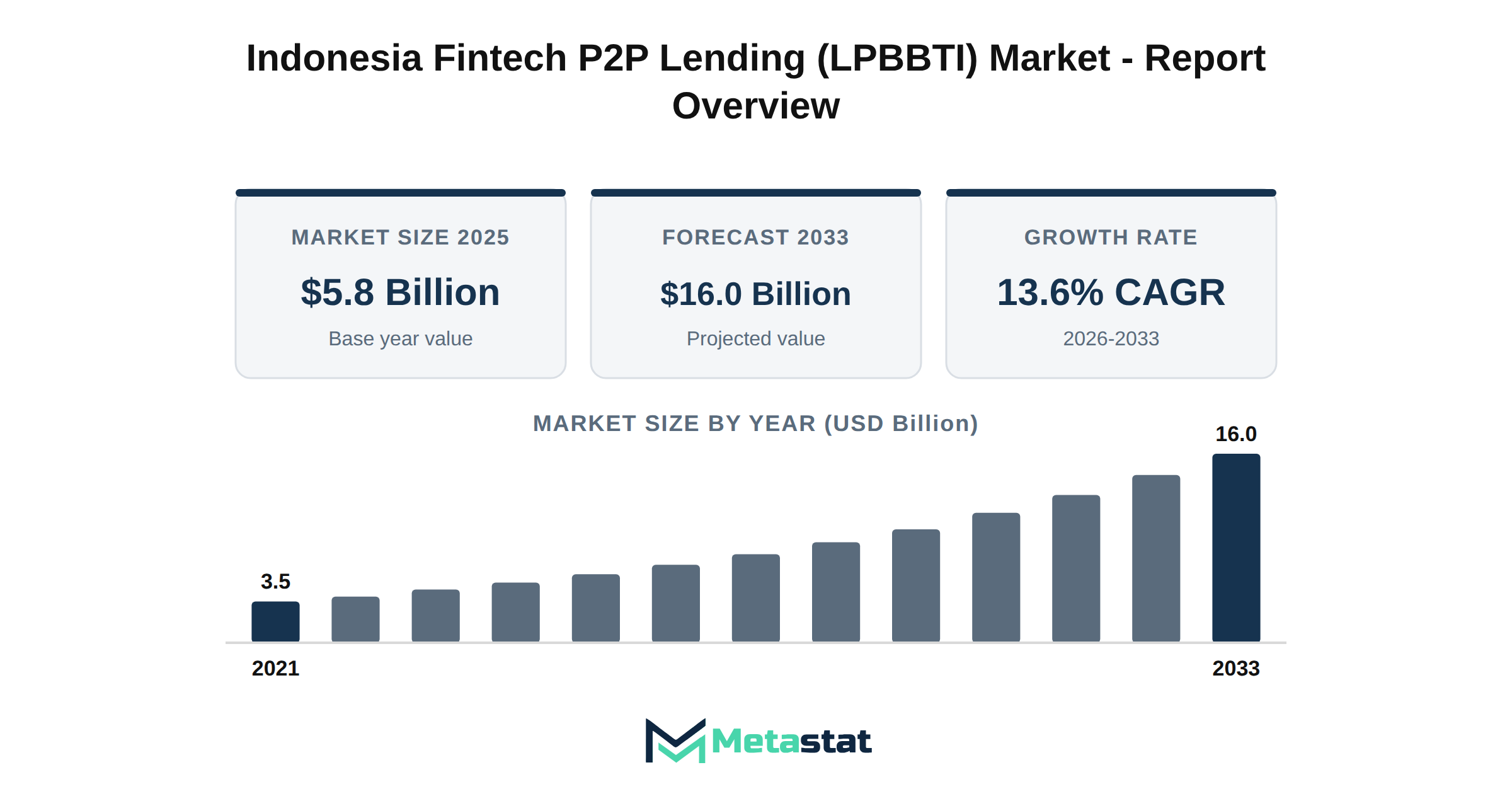
The Indonesia Fintech P2P Lending (LPBBTI) market reached USD 5.8 billion in 2025, reflecting a significant increase from USD 3.5 billion in 2021. This growth represents a compound annual growth rate (CAGR) of 13.6%, with projections indicating the market is anticipated to expand to USD 16 billion by 2033. The increasing digitalization of financial services in Indonesia fuels demand for P2P lending platforms, driving adoption among consumers and businesses alike.
Rising digital loan demand among Indonesian consumers highlights the shift towards online borrowing solutions. The convenience of accessing funds through mobile applications and web platforms attracts a wider audience, particularly among retail and individual borrowers. The market for consumer cash loans constitutes 54.7% of total lending, reflecting the popularity of quick and accessible financing options.
Micro, small, and medium enterprises (MSMEs) represent a vital segment within the Indonesia Fintech P2P Lending market. These businesses increasingly rely on P2P lending platforms for working capital financing, which accounts for 25.8% of the market share. Financing solutions tailored to MSMEs enhance their growth potential and contribute to the overall economic development of Indonesia.
Productive financing growth across the LPBBTI market indicates a trend towards supporting ventures that stimulate economic activity. The demand for invoice financing, which makes up 9.3% of the market, highlights the need for liquidity among businesses awaiting payment from clients. Educational financing, representing 4.8% of the market, plays a role in supporting personal advancement and skill development.
Embedded finance partnerships reshape P2P lending distribution channels, offering integration of lending services into existing platforms. This trend enhances borrower acquisition efforts, allowing lenders to tap into established customer bases and streamline access to financial products. Mobile-first lending platforms specifically drive borrower engagement by facilitating direct interactions with consumers through user-friendly interfaces.
AI-based credit scoring and alternative data underwriting methods are becoming prevalent in the market, enabling more accurate risk assessments. These technologies allow lenders to evaluate borrowers beyond traditional credit scores, broadening access to financing for underserved populations. Digital identity verification and electronic Know Your Customer (e-KYC) measures further enhance security and fraud prevention in fintech lending.
The regulatory landscape, shaped by OJK regulations, transforms the Indonesia Fintech P2P Lending industry. Compliance with these regulations enhances consumer confidence and promotes sustainable growth within the market. Adherence to POJK reporting and data compliance requirements ensures transparency and enhances trust among stakeholders, supporting long-term stability.
The Indonesia Fintech P2P Lending (LPBBTI) market experiences significant growth driven by rising digital loan demand among Indonesian consumers. With increasing smartphone penetration and internet access, consumers seek quick and convenient lending solutions. This trend reflects evolving consumer preferences, where traditional banking methods are supplanted by digital alternatives, enhancing overall market adoption.
Micro, Small, and Medium Enterprises (MSMEs) play a crucial role in this expansion. P2P lending platforms provide essential financing options for these enterprises, which often struggle to access traditional bank loans. By streamlining the lending process, these platforms improve access to funds, supporting the growth of MSMEs and contributing to economic development in Indonesia.
Productive financing within the LPBBTI market emphasizes the significance of consumer cash loans and digital borrowing trends. The share of consumer cash loans stands at 54.7%, indicating a robust demand for flexible financing options. This trend aligns with the increasing preference for digital lending solutions, with borrowers seeking immediate access to funds for various needs.
Embedded finance partnerships reshape the distribution model of P2P lending, allowing platforms to integrate lending services into existing digital ecosystems. These partnerships enhance borrower acquisition efforts and broaden access to financial services, driving market growth. Mobile-first lending platforms further contribute to this trend, appealing to tech-savvy consumers seeking efficient and user-friendly borrowing experiences.
Technological advancements, including AI-based credit scoring and alternative data underwriting, enhance lending efficiency and accuracy. By leveraging diverse data sources, lenders better assess creditworthiness, expanding their customer base while reducing risk. Digital identity verification and electronic Know Your Customer (e-KYC) processes improve fraud prevention measures, increasing consumer confidence in digital lending.
Trends in credit risk management, including the adoption of TWP90 metrics, guide lenders in assessing borrower performance. These metrics enable more informed decision-making, creating a healthier lending environment within the Indonesia Fintech P2P Lending (LPBBTI) market. Regulatory frameworks, including those implemented by OJK, transform the industry landscape, ensuring compliance and enhancing consumer protection.
POJK reporting and data compliance requirements for P2P lenders strengthen transparency and accountability, promoting a trustworthy lending ecosystem. Institutional funding and bank channeling strategies further enhance the market's foundation, allowing platforms to secure necessary capital for continued growth and expansion.
Sharia-compliant P2P financing opportunities attract a diverse borrower base, aligning with Indonesia's unique market needs. This segment caters to consumers seeking ethical financing options, broadening the appeal of P2P lending platforms. Competitive dynamics among licensed LPBBTI platforms encourage innovation and service differentiation, enhancing the overall market landscape.
The evolution of platform fees and revenue models reflects changing market dynamics, because lenders adapt to consumer demands and competitive pressures. Financial inclusion emerges because a key objective, with digital lending solutions addressing the needs of underserved markets. Regional expansion opportunities for P2P lending across Indonesia provide pathways for growth, with fintech lending partnerships with digital ecosystems and merchants further driving market penetration.
Future growth opportunities within the Indonesia Fintech P2P Lending (LPBBTI) market hinge on technological advancements, regulatory support, and evolving consumer preferences. By addressing the diverse needs of borrowers and leveraging innovative solutions, the market positions itself for sustained growth in the coming years.
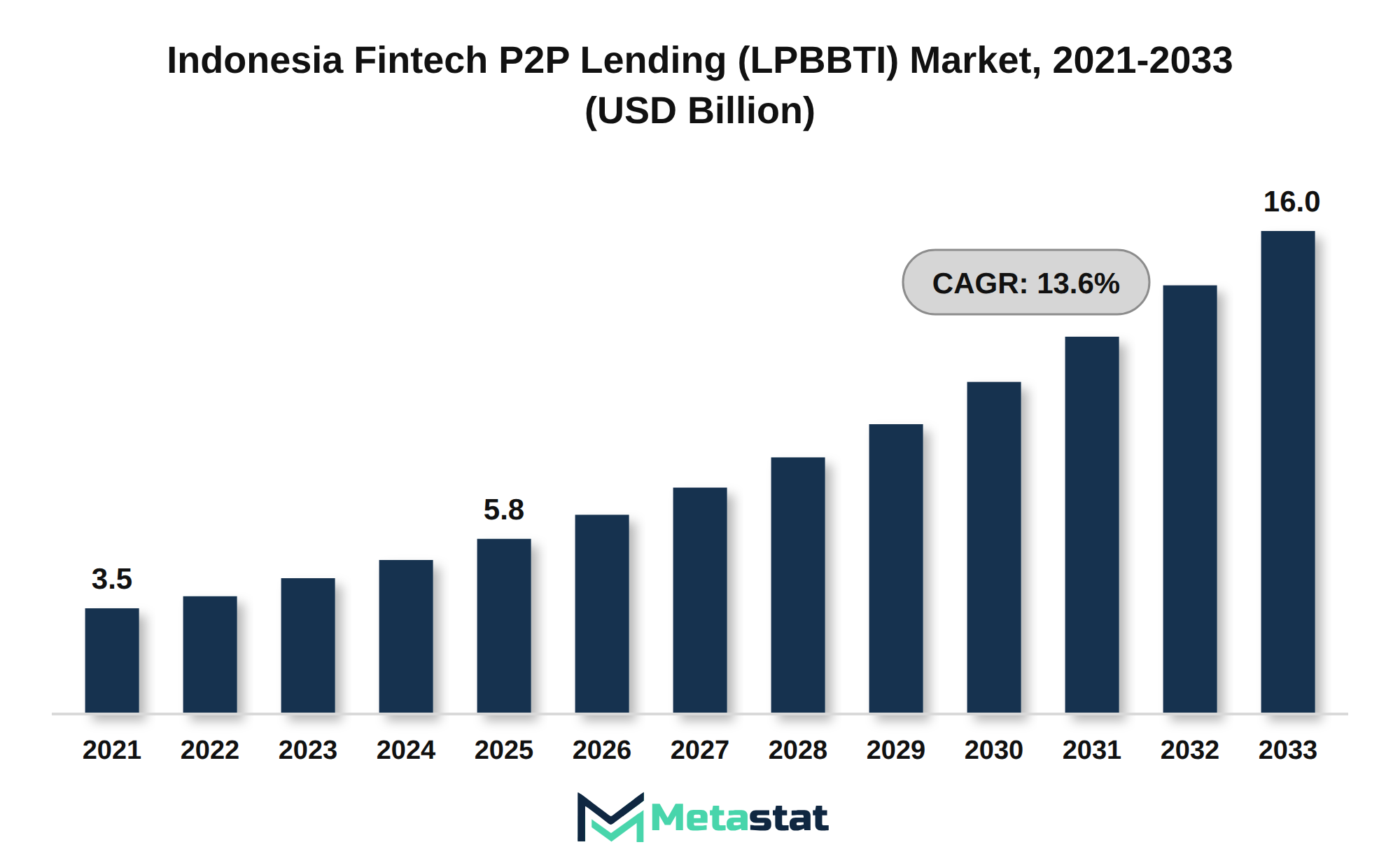
The Indonesia Fintech P2P Lending (LPBBTI) market benefits from robust economic growth, stimulating demand for various financing solutions. Increasing gross domestic product (GDP) boosts consumer spending and investment across multiple sectors. More individuals and businesses seek financing options, leading to market expansion and the introduction of tailored products to meet diverse needs.
Investment in infrastructure development enhances market potential. Upgrading facilities and improving digital capacities support efficient lending processes, attracting more borrowers. This operational productivity contributes to the market's growth trajectory.
Increasing interest from venture capital strengthens the financial ecosystem, enabling fintech companies to innovate and diversify offerings. This influx of capital supports technological integration, allowing firms to adopt automation and improve service delivery. Enhanced efficiency lowers costs and heightens competitiveness within the Indonesia Fintech P2P Lending (LPBBTI) market.
Consumer behaviors reflect a trend toward digital solutions, with individuals seeking convenient, accessible lending options. Urbanization and lifestyle changes drive demand for effective borrowing experiences, leading to the proliferation of mobile applications and online platforms. These shifts create new opportunities for growth, positioning the market to capture an expanding customer base.
The Indonesia Fintech P2P Lending (LPBBTI) market experiences acceleration driven by digital transformation initiatives. Increasing access to mobile devices and internet connectivity has enabled a larger segment of the population to participate in financial services. This transition enhances the convenience and efficiency of lending processes, benefitting both borrowers and lenders. The integration of advanced technologies, including automation and artificial intelligence, streamlines operations and reduces timeframes for loan approval and disbursement, creating a more responsive lending environment.
Investment in digital infrastructure and software adoption creates opportunities for innovative lending solutions that cater to diverse consumer needs, including those of retail and micro enterprises. The shift towards a digital-first approach influences consumer behaviors, driven by borrowers increasingly seeking user-friendly platforms that provide transparent terms and instant access to funds. Consequently, the market attracts more participants, driving overall growth and engagement.
The evolution of borrower preferences corresponds with a wider acceptance of online financial solutions, highlighting the importance of technological integration in the Indonesia Fintech P2P Lending (LPBBTI) market. Providers that leverage advanced technology position themselves favorably in a competitive landscape, enhancing customer retention and expanding their market reach. This trend indicates a promising outlook for sustained market growth through 2033, driven by ongoing advancements in digital transformation.
The Indonesia Fintech P2P Lending (LPBBTI) market experiences significant challenges due to regulatory compliance hurdles. Stricter regulations create complexities for fintech companies, leading to increased operational costs and potential delays in service deployment. These regulations necessitate substantial investments in compliance infrastructure, diverting resources from innovation and customer acquisition.
Macroeconomic headwinds, including inflationary pressures, contribute to the market's constraints. Rising inflation impacts consumer spending power, which affects the demand for lending services. In this environment, borrowers exhibit caution, resulting in a slowdown in loan applications and disbursements.
Technological obsolescence poses another challenge. Companies in the market face pressure to continuously upgrade their platforms to meet evolving consumer expectations and regulatory requirements. Failure to keep pace with technological advancements results in lost market share to more agile competitors.
Infrastructure gaps and connectivity deficits hinder growth opportunities in various regions. Limited access to reliable internet and digital services restricts potential borrowers from fully engaging with fintech platforms, impacting overall market penetration. This lack of infrastructure disproportionately affects rural areas, where the need for financial services remains high.
The Indonesia Fintech P2P Lending (LPBBTI) market encounters fragmentation, complicating customer experience and service delivery. A multitude of players with varying service quality leads to consumer mistrust, further slowing adoption. Addressing these barriers requires a concerted effort among market participants to streamline offerings and enhance consumer confidence.
The Indonesia Fintech P2P Lending (LPBBTI) market faces challenges stemming from geopolitical fragmentation. This condition complicates international collaboration and presents barriers to cross-border financing opportunities. Trade deficits and tariff friction exacerbate these issues, resulting in increased costs for participants within the market.
Technological disruptions pose additional challenges. Rapid advancements in technology, while enabling innovation, create difficulties in keeping pace with integration and interoperability across platforms. This dynamic results in inefficiencies and complexities, particularly for smaller players attempting to scale operations.
Rising input costs contribute to significant margin pressures, impacting profitability for lenders. Increasing operational expenses, driven by fluctuating feedstock prices and logistical disruptions, complicate the financial landscape. The necessity for talent retention in a competitive labor market adds another layer of complexity, increasing workforce skill gaps across the sector.
The Indonesia Fintech P2P Lending (LPBBTI) market navigates tightening regional regulatory standards and compliance overhead. These factors impose financial burdens on market participants, making it increasingly challenging to maintain operational efficiency while adhering to evolving legal liabilities. Consequently, these pressures affect market growth and the ability to attract investment.
Environmental lifecycle footprints impose further constraints. Decarbonization mandates and sustainability demands create operational hurdles, necessitating significant investment in infrastructure improvements and retrofitting. Companies struggle to align with these requirements while ensuring competitive positioning within the market, leading to implementation bottlenecks.
The Indonesia Fintech P2P Lending (LPBBTI) market shows a changing environment characterized by emerging regional demands and infrastructure modernization. Rapid urbanization and increased smartphone penetration create a substantial customer base for digital lending solutions. Consumers seek efficient and accessible financing options, prompting financial technology firms to expand their service offerings. This shift yields significant growth potential for various lending products, particularly in consumer cash loans, which constitute a notable share of the market.
Technological disruptions fuel the proliferation of digital platforms and applications, enabling smooth transactions and enhancing customer experiences. The increasing adoption of direct mobile applications and web platforms supports the growing trend of digital procurement shifts among retail and individual borrowers. This transition highlights the need for innovative solutions tailored to evolving buying behaviors, thereby promoting deeper market penetration.
Strategic consolidation through cross-industry mergers and acquisitions presents further opportunities for participants in the Indonesia Fintech P2P Lending (LPBBTI) market. Integrating diverse services and leveraging synergies enhances competitive positioning and expands market reach. Localized supply chains and asset life-cycle extensions contribute to operational efficiencies and cost reductions, creating a favorable environment for sustained growth.
Value-chain optimization and process automation remain critical components in maximizing operational yield. Focusing on increasing efficiency and reducing overhead supports the acceleration of lending activities, positioning firms to capitalize on rising demand for financing solutions. Overall, the interaction of these factors positions the Indonesia Fintech P2P Lending (LPBBTI) market for significant growth, with substantial opportunities for players willing to innovate and adapt to the changing environment.
The Indonesia Fintech P2P Lending (LPBBTI) market is segmented based on Product Type, Customer Segment, Distribution Channel, and Revenue Model.
Valued at USD 3.6 billion in 2026, the Consumer Cash Loans segment is projected to reach USD 7.8 billion by 2033, at a CAGR of 12% during the forecast period. This segment benefits from increasing consumer demand for accessible financing options, driven by the rising trend of digital lending. Adoption of digital platforms enables streamlined application processes, allowing borrowers to obtain funds quickly and conveniently. The growth of the Indonesia Fintech P2P Lending (LPBBTI) market is influenced by the expansion of smartphone usage and internet connectivity, which enhances access to financial services for a broader audience.
Consumer Cash Loans cater to the needs of retail and individual borrowers seeking urgent financing solutions. The evolving landscape of financial technology leads to the development of innovative loan products tailored to consumer preferences. Increased competition among providers encourages the introduction of attractive terms and conditions, further driving market growth. The regulatory environment surrounding fintech lending impacts operational frameworks, ensuring consumer protection while supporting responsible lending practices.
Technological advancements in underwriting processes enhance risk assessment capabilities, enabling lenders to offer personalized loan products. This evolution promotes financial inclusion, resulting from previously underserved segments receiving better access to credit. The market remains attentive to emerging trends and consumer behavior shifts, creating a dynamic environment for future growth. Strategic investment in technology and partnerships within the digital ecosystem represents a significant opportunity for players within the Indonesia Fintech P2P Lending (LPBBTI) market.
Continued expansion in the Working Capital Financing segment significantly influences the Indonesia Fintech P2P Lending (LPBBTI) market. This segment is projected to reach USD 4.7 billion by 2033, at a CAGR of 15.4% during the forecast period. Strong demand arises from micro and small enterprises seeking quick access to funds for operational needs, driving adoption across various sectors. Increasing awareness of digital lending solutions among borrowers accelerates market penetration, supported by favorable government policies promoting financial inclusion.
Technological advancements, including mobile applications and web platforms, enhance accessibility and convenience for borrowers, driving growth within this segment. With the evolution of digital ecosystems, partnerships between fintech companies and established businesses facilitate efficient financial transactions. These collaborations contribute to expanding the customer base and improving service delivery.
Cost structures remain critical for providers in this segment. Competitive pricing strategies focus on reducing fees while delivering value-added services. Regulatory compliance standards guide operations, with lenders adhering to policies that ensure consumer protection and financial stability. By addressing these factors, stakeholders within the Indonesia Fintech P2P Lending (LPBBTI) market position themselves for sustained growth.
Growth within the Invoice Financing segment aligns with increasing demand for working capital solutions among businesses. Factors driving this demand include the need for improved cash flow management and faster access to funds. Many firms leverage invoice financing to bridge cash flow gaps, supporting operational efficiency and enabling timely payments to suppliers. This trend particularly appeals to small and medium enterprises that require flexible financing options to sustain their activities.
Technological advancements contribute significantly to the segment's expansion. The rise of digital platforms streamlines the invoicing process and enhances accessibility for borrowers. Improved user experiences and online applications simplify the financing process, driving greater adoption among businesses. Firms focusing on technology-driven solutions attract a broader clientele, facilitating market penetration.
Regulatory compliance influences market dynamics. Adherence to financial regulations ensures transparency and builds trust among users. The increasing emphasis on consumer protection standards enhances confidence in invoice financing solutions, encouraging more businesses to adopt these services. This regulatory framework supports market stability and promotes sustainable growth.
The Invoice Financing segment is projected to reach USD 1.7 billion by 2033, reflecting robust interest from various industries. This growth trajectory highlights the potential of the Indonesia Fintech P2P Lending (LPBBTI) market, emphasizing the importance of innovative financing solutions in driving economic activity.
Projected growth for the Education Financing segment in the Indonesia Fintech P2P Lending (LPBBTI) market stands at a CAGR of 14.5% during the forecast period. This expansion results from increasing demand for accessible funding solutions for students and educational institutions. Rising educational costs and a growing emphasis on skill development create a strong need for financial support in this area.
Technological advancements in digital lending platforms enhance the efficiency of loan processing and approval, attracting borrowers seeking quick and reliable access to funds. The adoption of mobile applications and web-based solutions facilitates interactions between borrowers and lenders, driving segment growth.
Collaboration between fintech companies and educational institutions creates innovative financing options tailored to student needs. Such partnerships lead to the development of specialized products, including flexible repayment plans and lower interest rates, broadening the borrower base.
Regulatory compliance shapes the Education Financing segment. Adherence to established standards ensures consumer protection and enhances trust among potential borrowers. The market's transparency and security increase confidence, encouraging more individuals and institutions to seek financing.
While the Education Financing segment continues to evolve, attention to cost structures and pricing strategies remains vital. Competitive interest rates and transparent fee structures attract borrowers prioritizing affordability. This focus on maintaining reasonable costs supports sustained growth and profitability throughout the market.
Significant interest in Sharia-compliant financing reflects the growing demand for financial products aligned with Islamic principles. This segment attracts retail and individual borrowers seeking ethical lending options that avoid interest-based transactions. Cultural and religious adherence to Sharia law encourages more consumers to explore financing solutions that adhere to these guidelines, driving adoption in the Indonesia Fintech P2P Lending (LPBBTI) market.
Expansion catalysts include increased awareness of Sharia-compliant financial products and supportive regulatory frameworks promoting ethical finance. Institutions providing Sharia-compliant financing experience competitive advantages, appealing to a wider demographic that prioritizes ethical investment and borrowing practices. This focus positions these institutions favorably within a market that evolves.
Technological maturation contributes to the efficiency and accessibility of Sharia-compliant financing. Innovations in digital lending platforms enhance user experience and streamline application processes, making services more attractive to potential borrowers. Enhanced product offerings further meet the diverse needs of consumers, ensuring ongoing relevance in a competitive market.
Adoption of Sharia-compliant financing aligns with broader consumption shifts toward ethical and sustainable financial solutions. More consumers prioritize financial products that align with their values, and this segment's appeal continues to grow. Regulatory compliance remains crucial, with institutions adapting to new policies to ensure adherence while promoting Sharia-compliant options.
Through strategic opportunity windows and capital investment, Sharia-compliant financing leverages its unique position within the Indonesia Fintech P2P Lending (LPBBTI) market. The growing demand for ethical financing solutions presents avenues for innovation and expansion, ensuring a robust future for this segment.
Valued at USD 3.7 billion in 2026, the Retail / Individual Borrowers segment is projected to reach USD 8.3 billion by 2033, at a CAGR of 12% during the forecast period. This segment benefits from rising consumer demand for accessible financial solutions, reflecting an increasing preference for digital lending platforms. The convenience of obtaining loans through mobile applications and online platforms attracts retail borrowers seeking quick financial support. A shift in consumer behavior, characterized by a growing reliance on technology for everyday transactions, supports this trend.
Technological advancements play a crucial role in segment expansion. Enhanced user experience through streamlined processes and quick loan approvals attracts a broader customer base. Partnerships with digital service providers and embedded finance solutions facilitate broader access to financing options for individuals. The regulatory environment influences growth; favorable policies promote innovation and competition within the Indonesia Fintech P2P Lending (LPBBTI) market.
Increased adoption of financial technology among retail borrowers is evident, particularly among younger demographics who are more accustomed to digital solutions. This demographic shift encourages fintech companies to develop tailored products that meet the specific needs of individual borrowers, including education financing and personal loans. The focus on personalized offerings contributes to the overall growth of the segment, driving demand for innovative financial products.
The Retail / Individual Borrowers segment represents a significant opportunity within the Indonesia Fintech P2P Lending (LPBBTI) market, driven by evolving consumer preferences, technological advancements, and a supportive regulatory landscape. Anticipated growth reflects robust demand for financial solutions, further reinforcing the segment's importance in the overall market dynamics.
Growth in the Micro Enterprises segment aligns with increasing demand for accessible financing solutions among small business owners. The surge in entrepreneurial activities within Indonesia drives the need for financial resources tailored to the unique challenges faced by micro enterprises. This segment is projected to reach USD 3.3 billion by 2033, at a CAGR of 15.3% during the forecast period. Regulatory support for micro and small enterprises enhances access to financial services, encouraging investment and innovation. Technological advancements in digital lending platforms facilitate streamlined loan applications, attracting a larger customer base and improving operational efficiencies. The Indonesia Fintech P2P Lending (LPBBTI) market benefits from a growing ecosystem of service providers focused on meeting the needs of micro enterprises, enabling them to compete effectively in their respective markets.
Projected growth for the Small Enterprises segment reflects an increasing reliance on accessible financing solutions within the Indonesia Fintech P2P Lending (LPBBTI) market. Small enterprises often face challenges in securing traditional funding, prompting a shift towards alternative financing methods that provide necessary capital. The segment is expected to reach USD 2.4 billion by 2033, driven by rising entrepreneurship and a growing number of micro and small enterprises in Indonesia.
Key demand drivers stem from the urgency for working capital and the need for investment in business expansion. The introduction of user-friendly digital platforms facilitates the loan application process, enhancing accessibility for small enterprises. Regulatory compliance and evolving certifications in the fintech space support the development of tailored financial products, catering specifically to this segment.
Technological maturation influences the adoption of P2P lending, with advancements in data analysis and credit scoring enabling lenders to assess risk more effectively. Emphasis on next-generation upgrades within fintech solutions enhances user experience, contributing to segment growth. Improving digital literacy allows small enterprises to leverage mobile platforms for financing needs, reflecting a broader trend toward digital transformation in finance.
In terms of pricing, competitive pressures in the market lead to more attractive rates for borrowers. Margin pressures arise from the need for fintech companies to balance affordability with profitability, influencing product offerings across the segment. Overall, the Small Enterprises segment within the Indonesia Fintech P2P Lending (LPBBTI) market presents strategic opportunities for players targeting this underserved market.
Growth in the Medium Enterprises segment aligns with evolving business financing needs and the increasing adoption of digital lending solutions. This segment serves microfinance and lending platforms that facilitate access to capital for medium-sized businesses, enhancing operational flexibility and growth potential. Primary demand drivers include rising entrepreneurial activities and the expanding digital economy, which necessitate efficient financing solutions. Financial technology innovations enable effective loan processing and risk assessment, contributing to a favorable environment for medium enterprises to secure funding.
Projected growth for the Medium Enterprises segment stands at a CAGR of 15.5% during the forecast period. Access to flexible financing options allows medium enterprises to invest in technology upgrades and workforce expansion, significantly impacting competitiveness in the market. The Indonesia Fintech P2P Lending (LPBBTI) market continues to evolve, supported by partnerships between fintech platforms and traditional financial institutions, enhancing service delivery and customer outreach.
Increased awareness among medium enterprises regarding alternative financing options drives demand for P2P lending. More businesses recognize the benefits of leveraging technology for financing, leading to a shift in consumption patterns towards digital lending platforms. Regulatory developments facilitating fintech operations in Indonesia contribute to market growth, creating a conducive environment for lending activities. The ongoing evolution of the market positions medium enterprises to capture substantial investment opportunities, reinforcing their role in the broader economic landscape.
In the context of the Indonesia Fintech P2P Lending (LPBBTI) market, the Large / Corporate Enterprises segment reflects an increasing focus on tailored financial solutions. Demand arises from the need for efficient funding mechanisms that support complex operational requirements. Businesses within this segment seek to streamline cash flow and manage financial risks associated with large-scale operations.
Adoption of fintech solutions among large enterprises accelerates owing to the growing emphasis on digital transformation. Companies leverage advanced lending technologies to improve access to capital, thereby enhancing their overall financial agility. This trend significantly influences lending practices, encouraging institutions to develop customized products that cater specifically to the unique needs of corporate clients.
Segment expansion drives innovation in product offerings, with a clear shift towards digital platforms that facilitate faster loan approvals and streamlined application processes. The integration of Artificial Intelligence and data analytics is essential in assessing creditworthiness, thereby reducing traditional barriers to borrowing for larger entities. The evolution of these products aligns with the broader market's technological maturation and reflects a commitment to improving user experience.
Certain regulatory compliance standards impact the dynamics of the segment, because enterprises navigate complex legal landscapes while seeking financing solutions. Adhering to these regulations ensures that firms maintain operational integrity and avoid potential pitfalls associated with non-compliance. This diligence enhances the credibility of the market and attracts more sophisticated corporate borrowers.
Cost structures specific to large enterprises present additional considerations. Companies often face margin pressures due to fluctuating interest rates and the competitive landscape. These factors influence enterprises to seek favorable lending terms, impacting pricing strategies among fintech providers. Competitive pricing, coupled with innovative revenue models, becomes essential for lenders aiming to capture this segment effectively.
Strategic opportunity windows for growth within the Large / Corporate Enterprises segment hinge on the ability to address evolving financial needs. By focusing on providing value-added services, including risk management and cash flow optimization, fintech firms position themselves favorably in the Indonesia Fintech P2P Lending (LPBBTI) market. The potential for sustainable growth remains robust because companies increasingly embrace digital financial solutions to drive operational efficiency.
Valued at USD 3.6 billion in 2026, the Direct Mobile Applications segment is projected to reach USD 7.9 billion by 2033, at a CAGR of 11.8% during the forecast period. The growing adoption of mobile technology drives significant demand for fintech solutions, particularly among individual borrowers seeking accessible lending options. Increased smartphone penetration and the shift toward digital finance enhance user engagement, creating a favorable growth environment within the Indonesia Fintech P2P Lending (LPBBTI) market.
Technological maturation plays an important role in segment expansion. Advancements in mobile application development enable effective user experiences and integrations with financial services, appealing to a wide range of consumers. Regulatory compliance standards facilitate the expansion of lending platforms, ensuring safety and transparency in transactions while attracting investments.
Next-generation upgrades, including AI-driven credit scoring and personalized financial product offerings, enhance the competitive landscape. Consumer preferences shift toward mobile solutions due to their convenience and efficiency, prompting traditional financial institutions to invest in mobile-first strategies. This transformation supports an evolving market where innovation in the Direct Mobile Applications segment leads to substantial revenue growth.
Shifts toward digital interactions drive growth in the Web Platforms segment of the Indonesia Fintech P2P Lending (LPBBTI) market. Increasing smartphone penetration and internet access enable consumers to engage with lending platforms via mobile devices. This segment is projected to reach USD 3.2 billion by 2033, reflecting a CAGR of 14.8% during the forecast period. The online lending ecosystem relies on streamlined user experiences, enhancing borrower accessibility and convenience.
Technological advancements facilitate the evolution of Web Platforms, enabling faster loan processing and improved customer service. Innovative features, including AI-driven credit assessments and personalized loan offers, attract more borrowers. Regulatory compliance plays a critical role, ensuring platforms adhere to financial guidelines while building consumer trust. Enhanced security measures protect user data, contributing to a favorable environment for online lending.
Competition among platforms intensifies, prompting providers to differentiate through unique offerings and value-added services. Strategic partnerships with financial institutions and businesses expand market reach. Continued investment in technology, marketing, and user engagement strategies supports the growth of the Web Platforms segment, highlighting its significance within the larger Indonesia Fintech P2P Lending (LPBBTI) market.
Embedded Merchant Partnerships play a crucial role in the Indonesia Fintech P2P Lending (LPBBTI) market, driven by the rapid adoption of digital payment solutions and the integration of financial services within retail environments. This segment is projected to reach USD 2.4 billion by 2033, highlighting its growing relevance in the overall market landscape. The shift toward integrated consumer experiences fuels demand, driven by businesses increasingly seeking to offer integrated lending solutions to enhance customer engagement and retention.
Technological advancements have facilitated the emergence of innovative financial products, enabling merchants to provide tailored financing options directly at the point of sale. This evolution aligns with consumers' preferences for instant credit solutions, thereby expanding market penetration. The promotion of Embedded Merchant Partnerships significantly impacts the retail sector, reducing barriers to financing for both consumers and merchants while optimizing operational efficiencies.
Regulatory compliance and evolving financial policies contribute to shaping this segment, allowing for increased transparency and trust in embedded lending solutions. The competitive environment encourages partnerships between fintech firms and traditional retailers, creating strategic opportunities for growth and innovation. With a focus on enhancing consumer accessibility to financing, the segment establishes a resilient framework supporting sustained expansion in the Indonesia Fintech P2P Lending (LPBBTI) market.
Investment in Digital Ecosystem Partnerships within the Indonesia Fintech P2P Lending (LPBBTI) market reflects the increasing integration of financial services into various platforms. This trend stems from the growing demand for efficient financial transactions and the need for enhanced customer experiences. Partnerships with digital ecosystems provide access to diverse customer segments, further expanding the reach of lending platforms.
In 2026, this segment is valued at USD 3.6 billion and is expected to experience significant growth, achieving a CAGR of 16.8% during the forecast period. The evolution of technology and the maturation of digital platforms support this expansion, enabling lenders to streamline their services and enhance user engagement. The rise of smart devices coupled with increased internet penetration creates a more accessible lending environment, attracting more borrowers into the ecosystem.
Strategic collaborations with technology providers and other service platforms create opportunities for innovative financial products tailored to specific customer needs. This collaboration encourages greater flexibility in lending processes and strengthens value propositions for both borrowers and lenders. Consequently, the market for Digital Ecosystem Partnerships positions itself because a vital area for growth, driving the overall expansion of the Indonesia Fintech P2P Lending (LPBBTI) market.
Valued at USD 3 billion in 2026, Borrower Platform Fees represent a critical revenue model within the Indonesia Fintech P2P Lending (LPBBTI) market. This segment is projected to reach USD 6.6 billion by 2033, reflecting a compound annual growth rate (CAGR) of 12% during the forecast period. Growth in this segment results from the increasing reliance on digital lending platforms, which facilitate efficient access to financing for borrowers.
Several factors drive demand for Borrower Platform Fees. The rise of digital financial services has led to a shift in consumer behavior, with borrowers increasingly seeking convenient and quick access to funds through mobile applications. This changing consumer preference directly contributes to the expansion of the segment. Improvements in technology enhance user experience and streamline the borrowing process, further encouraging adoption.
Cost structures within this segment emphasize competitive pricing, influencing the overall growth of the market. Borrowers benefit from lower fees due to increased competition among fintech providers, which fuels demand. This competitive environment encourages innovation and the introduction of new features, attracting more users and driving up transaction volumes.
Regulatory compliance standards shape the dynamics of Borrower Platform Fees. Adherence to regulations enhances trust and credibility among borrowers, directly impacting engagement levels. Policymakers refine guidelines that promote transparency and consumer protection, contributing to the segment's stability and growth.
The Borrower Platform Fees segment plays an important role in the Indonesia Fintech P2P Lending (LPBBTI) market. The combination of technological advancements, evolving consumer behavior, and regulatory frameworks creates a robust environment for sustained growth and innovation within this segment.
Projected growth in the Lender Service Fees segment of the Indonesia Fintech P2P Lending (LPBBTI) market reflects increasing reliance on digital lending solutions among consumers and businesses. This segment is estimated to reach USD 3.1 billion by 2033, at a CAGR of 12.2% during the forecast period. Rising adoption of fintech platforms drives demand for effective service models that enhance user experience and streamline transactions. Ongoing advancements in technology, including the integration of artificial intelligence and machine learning, contribute to improved operational efficiency and customer satisfaction.
Intensifying competition among fintech providers pushes businesses to innovate service offerings. The segment's growth aligns with evolving consumer preferences for quick and accessible financial solutions. Enhanced regulatory frameworks support the market by establishing standards that promote transparency and security in lending practices. Financial institutions increasingly invest in the development of comprehensive service fee models that cater to diverse customer segments, thus driving market growth.
Revenue generation through Origination and Administration Fees in the Indonesia Fintech P2P Lending (LPBBTI) market holds substantial potential, projected to reach USD 3.4 billion by 2033. This growth arises from increasing adoption of digital lending platforms, where borrowers seek streamlined processes for loan applications and approvals. Rising demand for efficient, user-friendly lending experiences drives innovation within this segment, compelling service providers to enhance their offerings.
Technological maturation within financial services influences this segment's evolution. Advancements in data analytics enable lenders to assess borrower profiles more effectively, improving risk assessment and loan origination workflows. Consequently, the efficiency of these processes translates into cost savings and higher margins for financial institutions, encouraging further investment in technology. This trend positions stakeholders to capitalize on growing demand for Origination and Administration Fees.
Regulatory compliance standards and policy frameworks play a critical role in shaping market dynamics. Adherence to these standards supports the legitimacy of digital lending platforms, ensuring borrower protection and building trust. Ongoing emphasis on consumer rights enhances market stability, attracting additional capital investment aimed at expanding service capabilities within this segment.
Consumption shifts indicate a preference for digital solutions over traditional lending methods. While consumers increasingly favor mobile and online platforms, demand for Origination and Administration Fees continues to rise. This shift aligns with broader trends in consumer behavior, where convenience and speed become essential in financial services, reinforcing the segment's growth trajectory.
Partnership and Embedded Finance Fees represent a dynamic area within the Indonesia Fintech P2P Lending (LPBBTI) market, projected to grow at a CAGR of 18.8% during the forecast period. This segment attracts attention due to the increasing integration of financial services within various platforms, enhancing accessibility for users and creating effective transaction experiences.
A surge in digital financial solutions drives demand within this segment, driven by businesses seeking to streamline their operations through embedded finance models. Partnerships with technology providers enable advancements in service offerings, allowing financial institutions to tap into new customer bases while maintaining competitive edges.
Regulatory compliance shapes the growth of this segment. Adapting to evolving regulations ensures that services remain viable while building trust among consumers. The result strengthens the overall value proposition of Partnership and Embedded Finance Fees, positioning them because a crucial component of the market's future.
Market dynamics indicate a shift towards innovative pricing structures, which influences revenue generation strategies. Financial institutions are increasingly exploring diversified revenue streams, enhancing margins and sustainability. While these changes unfold, the Indonesia Fintech P2P Lending (LPBBTI) market stands to benefit from the evolving relationship between technology and finance.
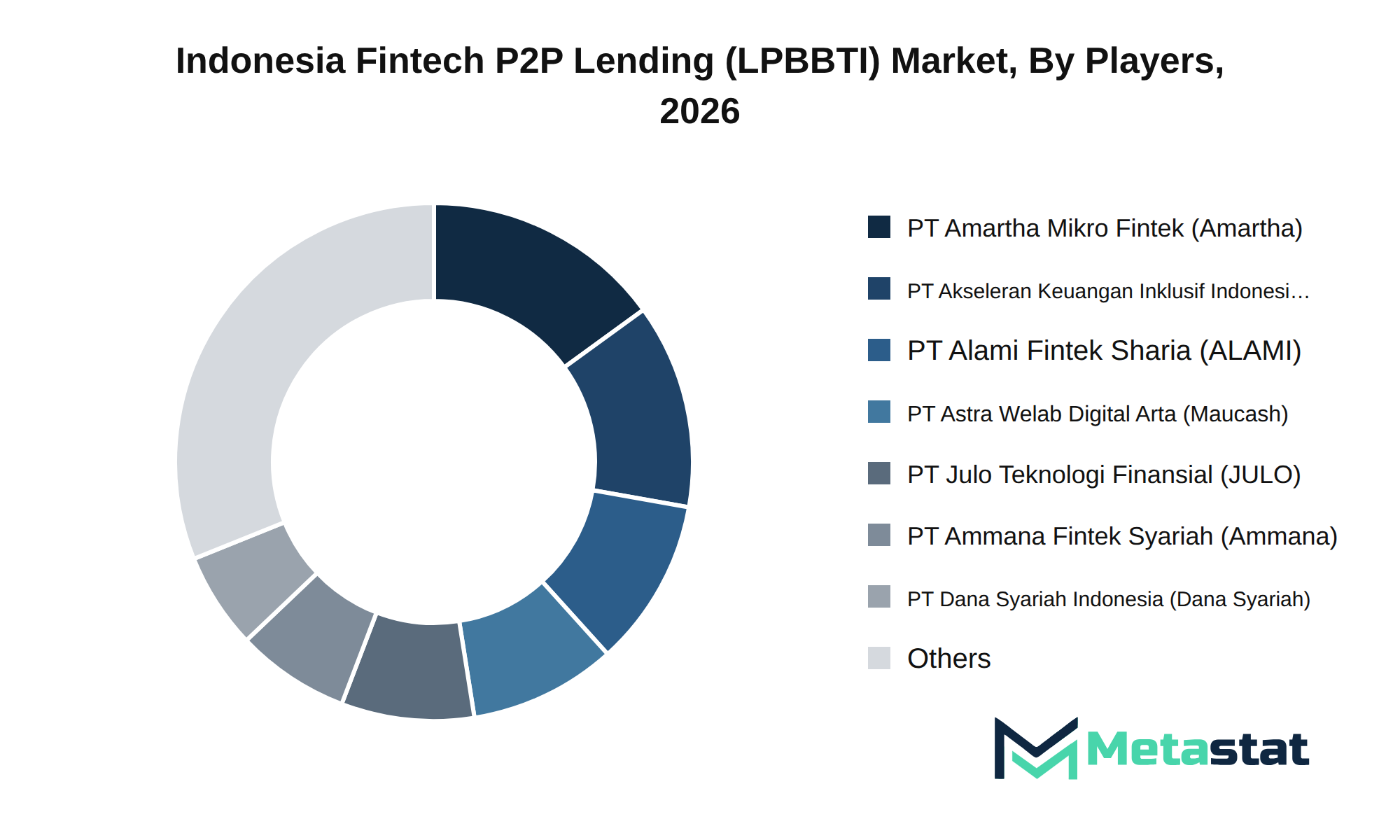
The Indonesia Fintech P2P Lending (LPBBTI) market experiences significant activity among various players focused on strategic consolidation and differentiation. Companies including PT Akseleran Keuangan Inklusif Indonesia (Akseleran) and PT Amartha Mikro Fintek (Amartha) emphasize unique offerings to enhance their market position. This focus results in the development of product differentiation strategies that cater to diverse customer segments, including retail borrowers and micro enterprises. These companies leverage proprietary technologies to establish a competitive edge within the market.
Strategic alliances play a vital role in shaping the competitive dynamics of the Indonesia Fintech P2P Lending (LPBBTI) market. Partnerships between firms including PT Astra Welab Digital Arta (Maucash) and PT Kredit Pintar Indonesia (Kredit Pintar) improve service offerings and broaden customer access. The formation of joint ventures and cross-industry collaborations contributes to enhanced value chain integration, allowing these players to optimize operational efficiencies and expand their reach.
Barriers to entry for new entrants into the Indonesia Fintech P2P Lending (LPBBTI) market remain high due to established brand equity and customer loyalty. Companies like PT Kredit Utama Fintech Indonesia (Rupiah Cepat) and PT Layanan Keuangan Berbagi (DanaRupiah) benefit from significant market presence, complicating entry for startups. Threats posed by new players intensify competitive pressures, compelling established companies to pursue aggressive customer retention strategies and innovative pricing architectures to maintain market share.
Market size is forecast to rise from USD 5.8 billion in 2025 to over USD 16 billion by 2033. This growth, projected at a 13.6% CAGR, reflects a complex relationship of macroeconomic factors, shifting consumer preferences, and evolving technological landscapes.
In the base case, consistent economic growth and increasing digital adoption among consumers drive demand for the Indonesia Fintech P2P Lending (LPBBTI) market. Changes in downstream demand, including the maturation of core industries and structural consumption shifts, significantly influence lending practices. The rising number of retail and individual borrowers, alongside micro and small enterprises seeking funding solutions, enhances market dynamics.
The bull case envisions accelerated growth fueled by next-generation technology integration, which enhances user experiences and improves operational efficiencies. Strategic capital allocation directives, infrastructure commitments, and CapEx investment focus on creating robust digital ecosystems that facilitate lending processes. In the bear case, regulatory challenges and geopolitical realignments pose risks, potentially hindering market expansion.
Regulatory evolution timelines and imminent compliance milestones will shape the competitive landscape. Firms adapt to new policies while navigating evolving trade corridors and regional supply chain shifts. Emphasizing strategic imperatives and defensibility roadmaps remains essential for participants in the Indonesia Fintech P2P Lending (LPBBTI) market.
Emerging white-space opportunities and unmet enterprise needs present high-growth pockets. Companies focusing on R&D commercialization timelines and product life cycles position themselves favorably in this evolving market. A proactive approach to addressing consumer demands and leveraging technological advancements significantly enhances market participation and sustains growth.
The report strategically identifies and profiles the key market players and analyses their core competencies in each sub-segment of the Fintech P2P Lending (LPBBTI) market.
Report Attributes | Details |
Study Period | 2021-2033 |
Base Year | 2025 |
Estimated Year | 2026 |
Forecast Period | 2026-2033 |
Historical Period | 2021-2025 |
Growth Rate | CAGR 13.6% from 2026 to 2033 |
Revenue Unit | USD billion |
Segmentation | By Product Type, Customer Segment, Distribution Channel, Revenue Model, and Region |
Find answers to common questions about this report
The Indonesia Fintech P2P Lending (LPBBTI) market size was valued at USD 5.8 billion in 2025.
The Indonesia Fintech P2P Lending (LPBBTI) market is projected to grow at a CAGR of 13.6% during the forecast period from 2026 to 2033.
Consumer Cash Loans lead the Indonesia Fintech P2P Lending (LPBBTI) market, accounting for USD 3.6 billion in 2026 and projected to reach USD 7.8 billion by 2033. This segment represents 54.7 percent of the market share.
Key drivers for the Indonesia Fintech P2P Lending (LPBBTI) market include robust economic growth, increasing consumer demand for financing solutions, and advancements in digital transformation. The rise in mobile device access and internet connectivity enhances lending convenience, while investment in infrastructure supports market expansion.
Regulatory compliance hurdles create complexities for fintech companies, increasing operational costs and potentially delaying service deployment. Macroeconomic headwinds, including inflationary pressures, impact consumer spending power, leading to a slowdown in loan applications. technological obsolescence and infrastructure gaps hinder market penetration, particularly in rural areas.
Robust economic growth and increasing consumer demand for financing solutions favor product adoption in the Indonesia Fintech P2P Lending (LPBBTI) market. Digital transformation initiatives, including enhanced access to mobile devices and internet connectivity, further support this trend by improving the convenience and efficiency of lending processes.
The Fintech P2P Lending (LPBBTI) market is estimated to reach a valuation of USD 16 billion by 2033.
Key players in the Indonesia Fintech P2P Lending (LPBBTI) market include PT Akseleran Keuangan Inklusif Indonesia (Akseleran), PT Alami Fintek Sharia (ALAMI), PT Amartha Mikro Fintek (Amartha), PT Kredit Pintar Indonesia (Kredit Pintar), PT Modalku, PT Danamas, and PT KoinP2P.
Technology plays a crucial role in the Indonesia Fintech P2P Lending market by streamlining lending processes and enhancing efficiency. The integration of automation and artificial intelligence improves loan approval and disbursement times, benefiting both borrowers and lenders.
The customer segment of micro enterprises experiences the fastest growth in the Indonesia Fintech P2P Lending market, with a projected compound annual growth rate (CAGR) of 15.3% through 2033.
The analysts below cover Banking & Finance research at Metastat Insights.
LEAD ANALYST
Utkarsh Khirodkar is a Lead Market Research Analyst at MetaStat Insight, specializing in market intelligence, technology sector assessments, and competitive strategy.

PRINCIPAL CONSULTANT - ENTERPRISE AI & EMERGING TECHNOLOGIES
Banking & Finance · Electronics and Semiconductor · Energy and Power · Healthcare IT · Information & Technology · Professional Services
Vijay Gunti is a Principal Consultant at MetaStat Insight, bringing over two decades of experience across enterprise digital transformation, technology strategy, and intelligent systems.
Tracking ceramic matrix composite adoption in high-bypass aero engines requires strict attention to material qualification cycles and FAA airworthiness testing milestones. The MetaStat Insight team provided a detailed timeline of silicon carbide fiber manufacturing capacity and commercial foundry lead times. Having clear visibility into upstream thermal barrier coating supply helped us stress-test our long-term component procurement strategy.
Transitioning ultra-class mining haul trucks to alternative power requires concrete data on remote hydrogen refueling infrastructure economics. The report evaluated megawatt-scale electrolyzer installation expenses, onsite storage safety mandates, and heavy-duty fuel cell stack degradation under continuous duty cycles. That technical rigor helped our engineers benchmark realistic total operating cost horizons for off-highway fleet decarbonization.
Enterprise zero-trust network rollouts are often slowed down by multi-cloud transit latency and proprietary hardware retirement schedules. This study provided realistic total cost of ownership models comparing cloud-delivered security edge solutions against traditional hardware refreshes. The analysis of contract renewal lengths and software maintenance fees gave us clear visibility into enterprise replacement cycles over the next three to five years.
Explore related market intelligence reports worth reading alongside this one.