
LEAD ANALYST
Utkarsh Khirodkar is a Lead Market Research Analyst at MetaStat Insight, specializing in market intelligence, technology sector assessments, and competitive strategy.

Global Industrial Drums Market Size, Share, By Product Type (Steel Drum, Plastic Drum and Others), By Product Design (Open Head Drums, Tight Head Drums, L-Ring Drums and Others), By Capacity (Below 50 Liters, 50 - 100 Liters, 101 - 200 Liters, 201 - 250 Liters and Above 250 Liters), By End-Use Industry (Chemicals & Petrochemicals, Pharmaceuticals, Food & Beverages, Paints & Coatings, Lubricants & Oils, Agriculture & Agrochemicals, Flavors & Fragrances), Industry Analysis, Growth, Trends, and Forecast, 2026-2033
Report ID
MSI-5088
Published
August, 2026
Pages
260 Pages
Format
Historical
Base year
Forecast
Forecast period
Report Details
Choose Your License
Global Industrial Drums Market
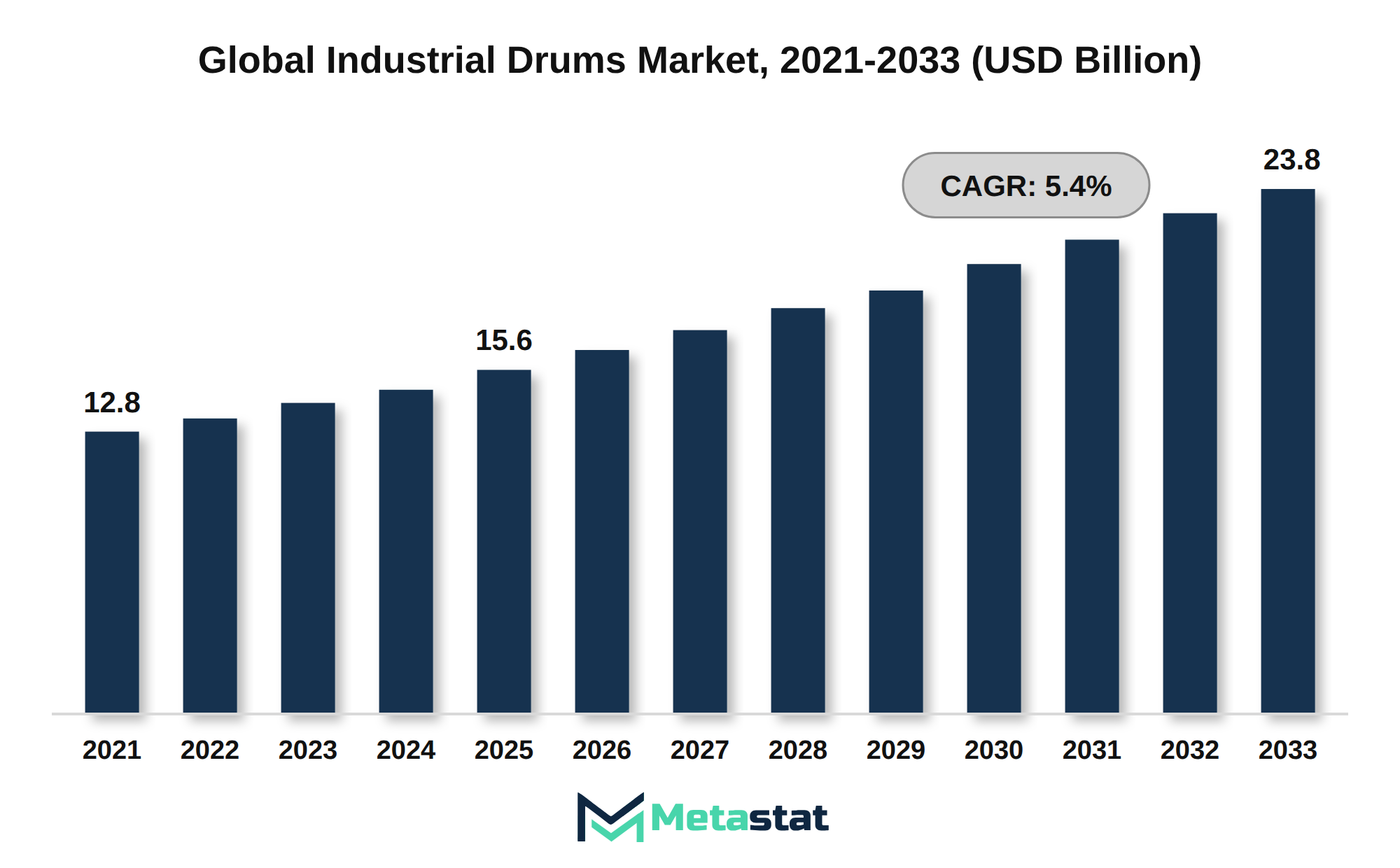
The global Industrial Drums market was valued at USD 15.6 billion in 2025 and is projected to reach USD 23.8 billion by 2033, growing at a CAGR of 5.4% over the forecast period.
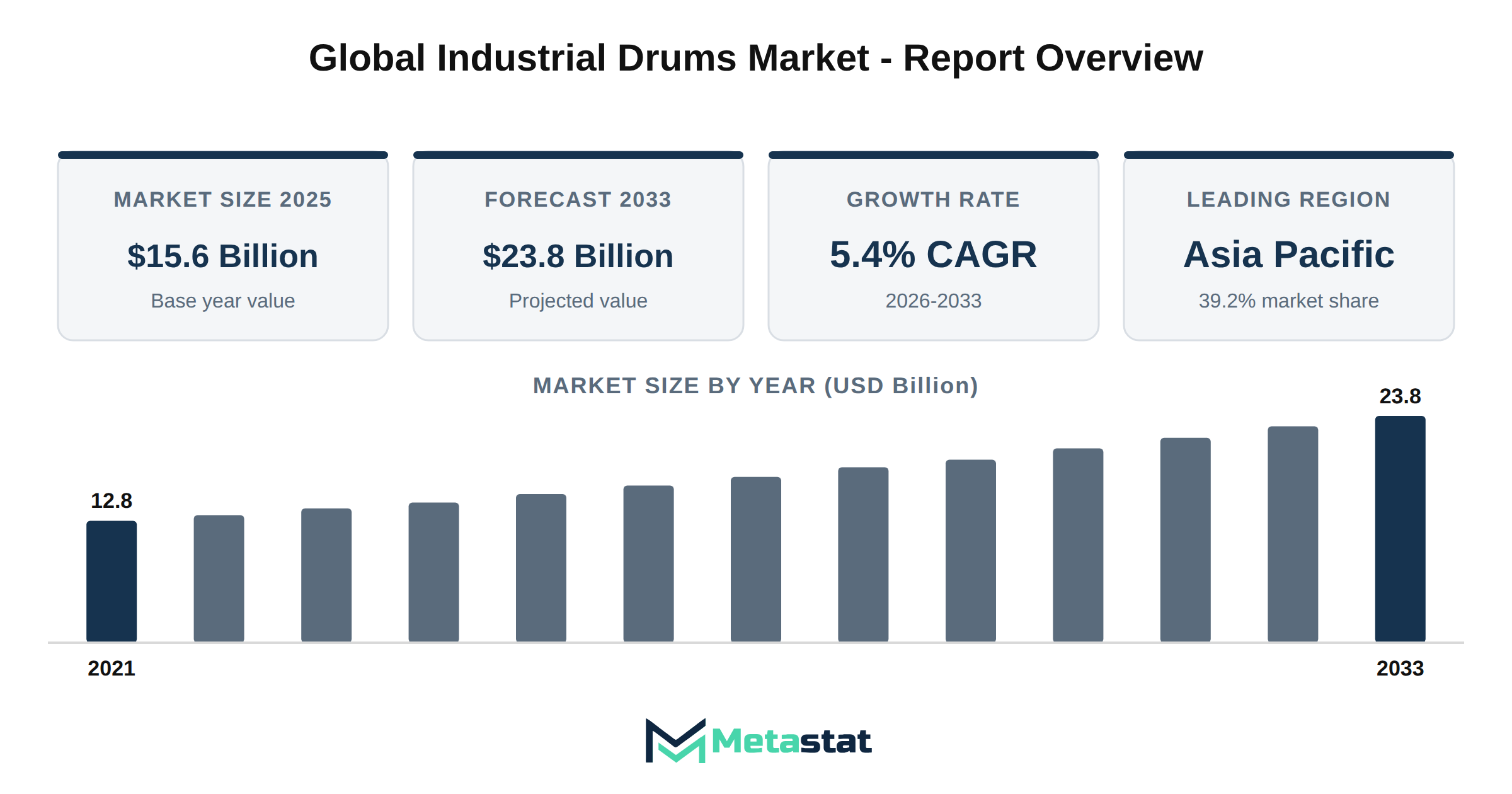
The Industrial Drums market reached a valuation of USD 15.6 billion in 2025, with projections estimating growth to USD 23.8 billion by 2033, reflecting a compound annual growth rate (CAGR) of 5.4%. Historical data shows the market was valued at USD 12.8 billion in 2021, increasing to USD 14.1 billion in 2023. This upward trend continues, with expected values of USD 14.7 billion in 2024 and USD 15.6 billion in 2025.
Key dynamics influencing the market include compliance with UN/SANS dangerous-goods regulations and evolving industrial packaging extended producer responsibility (EPR) mandates. These factors significantly affect the operations of manufacturers and end-users, driving the need for adherence to safety and environmental standards. Increased awareness of sustainability trends reshapes procurement strategies, compelling companies to invest in innovative packaging solutions that align with regulatory requirements.
Steel and high-density polyethylene (HDPE) input-cost dynamics present another critical aspect of the market. Fluctuations in raw material prices directly impact production costs, influencing pricing strategies across the industry. Consequently, manufacturers explore alternative materials and innovative production processes to mitigate these cost pressures, enhancing competitive positioning.
The economics of drum reconditioning and reuse are gaining traction in the market. Companies prioritize cost-effective solutions that extend the lifecycle of packaging products, thereby reducing waste and supporting circular economy initiatives. The adoption of conical and nestable drum designs offers logistical efficiencies, optimizing storage and transportation while addressing regulatory compliance and safety standards.
Future strategic outlook emphasizes the importance of infrastructure investments and capital allocation in enhancing operational capabilities. Companies focus on building resilient supply chains and efficient logistics architectures to navigate market fragmentation and disruptions. These initiatives align with broader trends in decarbonization and sustainable transformation, driving a shift toward environmentally responsible practices in the Industrial Drums market.
Compliance with UN/SANS dangerous-goods regulations significantly influences the industrial drums market. Manufacturers adhere to various safety and handling standards, ensuring products meet stringent requirements. This compliance facilitates smoother global trade, allowing companies to access new markets while minimizing legal risks. Consequently, adherence to these regulations enhances the market's overall credibility and builds trust among consumers and businesses.
Industrial packaging extended producer responsibility (EPR) compliance shapes market dynamics by enforcing recycling and waste management practices. Producers manage product life cycles, which emphasizes the importance of sustainable packaging solutions. This trend leads to increased innovation in materials and designs, driving competitiveness and market growth.
Fluctuations in steel and HDPE input costs affect the pricing strategies within the market. Steel remains a primary choice for drum manufacturing, and rising material costs pressure manufacturers to optimize production processes. Efficient supply chain management becomes essential, enabling firms to maintain profitability while meeting customer demands.
Drum reconditioning and reuse economics present opportunities for cost-saving measures in the industrial drums market. Companies increasingly recognize the value of reconditioned drums, which serve because an environmentally friendly alternative to new products. This trend not only reduces waste but aligns with the growing emphasis on sustainability in supply chain operations.
Conical and nestable drum designs contribute to logistics efficiencies, allowing for optimized storage and transportation solutions. These designs maximize space utilization, reducing overall shipping costs. Regulatory compliance surrounding these designs ensures safety and performance standards are met, further enhancing their appeal to end-users.
Market fragmentation remains a challenge for participants, with numerous players operating across various segments. This fragmentation drives competition, promoting innovation and product differentiation. Mergers and acquisitions within the market lead to consolidation, enabling companies to leverage synergies and enhance their market positions.
Infrastructure investments play a critical role in shaping the future of the industrial drums market. Companies prioritize capital allocation to enhance production capabilities and distribution networks, ensuring they remain competitive. Strategic outlooks focus on aligning investments with emerging trends, including decarbonization and circular economy dynamics, to enhance sustainability efforts.
The supply chain landscape continues to evolve, influenced by changing consumer preferences and regulatory requirements. Companies adapt their sourcing strategies to align with these shifts, focusing on sustainable materials and practices. This transformation reflects a broader commitment to environmental stewardship within the industrial drums market.
Next-generation innovations in materials and production techniques drive growth within the market. Research and development trajectories emphasize creating more sustainable and efficient drum solutions, addressing the increasing demand for environmentally friendly products. These advancements position companies to respond proactively to market changes while ensuring compliance with evolving regulations and standards.
Increasing investment in sustainable technologies significantly influences the Industrial Drums market. Industries focus on reducing their carbon footprint, leading to higher demand for eco-friendly packaging solutions, including industrial drums made from recyclable materials. Adoption of circular economy initiatives enhances operational efficiency, prompting manufacturers to invest in advanced production methods and materials that minimize waste and promote sustainability.
This investment drives innovation and R&D activities, resulting in the development of new products that meet evolving consumer preferences. Increasing regulatory pressure for sustainability and environmental compliance further incentivizes companies to integrate sustainable practices into their operations, enhancing their competitive edge in the market.
Key end-user sectors, including chemicals, pharmaceuticals, and food and beverages, prioritize suppliers that demonstrate a commitment to sustainability. This focus drives manufacturers to innovate, ensuring that the Industrial Drums market aligns with global environmental objectives, ultimately supporting market expansion and resilience.
Investment in infrastructure development significantly influences the Industrial Drums market by enhancing production capabilities and expanding distribution networks. Increased government and private sector spending on infrastructure projects drives demand for industrial drums, particularly in sectors including chemicals, pharmaceuticals, and food and beverages. This focus on upgrading physical and digital capacities results in heightened production requirements, translating into a greater need for robust packaging solutions.
Regional infrastructure projects, particularly in emerging economies, stimulate economic growth and create new market opportunities. The ongoing expansion of transportation networks and logistics hubs facilitates efficient supply chain operations, leading to higher adoption rates of industrial drums. The market benefits from this alignment of infrastructure investments with industrial needs, ensuring that packaging solutions meet the evolving demands of various end-use industries.
Modernization initiatives aimed at improving operational efficiency and productivity significantly affect the market. Companies investing in advanced manufacturing technologies and automated processes require reliable packaging solutions that support their growth objectives. Businesses integrating digital transformation strategies drive demand for innovative industrial drum designs and materials that align with their commitment to achieving greater operational productivity.
The overall impact of infrastructure development and modernization initiatives highlights the importance of strategic investments in driving growth within the Industrial Drums market. These initiatives not only support existing demand but drive long-term market expansion by improving access to various sectors reliant on industrial drum solutions.
Regulatory challenges significantly impact the Industrial Drums market by imposing strict compliance hurdles that manufacturers navigate. Increased scrutiny regarding environmental safety and waste management practices shifts operational focus towards adhering to these regulations, often leading to higher costs for companies. These compliance requirements, while essential for sustainability, create barriers that slow adoption rates for innovative products and technologies.
Macroeconomic headwinds, including inflationary pressures, affect the purchasing power of buyers, resulting in reduced demand for industrial drums. High capital investment requirements discourage new entrants and prevent existing players from expanding their operations. Escalating operating costs, driven by rising raw material prices and labor shortages, contribute to downsizing initiatives across the market.
Supply chain disruptions, exacerbated by geopolitical instability, lead to delays in the procurement of essential materials and components. Such disruptions hinder production timelines, affecting the ability of companies to fulfill contracts efficiently. The impact of these challenges reverberates through the market, creating an environment where customer satisfaction declines due to inconsistent supply.
Technological obsolescence poses risks for manufacturers, driven by the rapid pace of innovation in alternative packaging solutions that offer customers more options. Substitution risks arise from the introduction of new materials and packaging types that potentially outperform traditional drums. Companies face increased competition from substitutes, which pressures pricing strategies and market share.
Fragmentation within the market complicates the competitive environment, where numerous small players struggle to gain substantial market presence. This fragmentation hampers investment in research and development, limiting advancements in product offerings. In addition, cultural barriers in various regions hinder the acceptance of certain drum types, affecting their market penetration.
With the Industrial Drums market experiencing these multifaceted challenges, stakeholders navigate a complex environment characterized by tightening regulations, economic fluctuations, and technological advancements. Addressing these restraints will be crucial for sustaining growth and maintaining competitive positioning in the evolving marketplace.
The Industrial Drums market faces challenges from geopolitical fragmentation, which disrupts trade flows and complicates international supply chains. Political tensions between countries often result in trade deficits and tariff friction, impacting the movement of raw materials and finished products. This fragmentation creates uncertainty for manufacturers, leading to increased costs and delays in sourcing essential components and feedstock.
Trade disruptions and tariffs raise overall pricing pressures within the market, affecting profit margins for producers. The resulting inflation of input costs and logistics challenges necessitate careful management of supply chain operations. Regional conflicts limit access to critical markets, further constraining growth opportunities.
Technological disruptions, including rapid advancements in automation, introduce additional complexities. Manufacturers navigate significant workforce skill gaps while implementing new technologies, which presents both operational challenges and opportunities for competitive differentiation. Companies investing in advanced manufacturing processes address talent retention pressures, ensuring skilled personnel remain engaged due to evolving market demands.
The Industrial Drums market experiences volatility in feedstock prices, which fluctuate due to geopolitical events. Manufacturers face the dual challenge of maintaining stable production costs while responding to changing market conditions. Supply chain instability, driven by these geopolitical factors, necessitates robust risk management strategies to ensure continuity in production and service delivery.
Increasing regional demands for Industrial Drums significantly influence market dynamics. The Asia Pacific region, driven by rapid industrialization, shows the highest growth potential. Expansion of manufacturing sectors in countries like China and India creates strong demand for robust packaging solutions. Growth in the food and beverage, chemicals, and pharmaceuticals industries further enhances the market's outlook.
Infrastructure modernization initiatives across various regions increase the need for efficient logistics and storage solutions. Investments in transportation networks and facility upgrades support the demand for durable and reliable packaging products. Such developments contribute to enhancing operational efficiency and lowering supply chain costs.
Geographical expansion into emerging markets allows suppliers to tap into previously underserved regions. This strategy enables companies to diversify their customer bases and promote their product offerings, leading to increased revenue streams. The Industrial Drums market benefits from this trend, driven by firms exploring new opportunities in South America and Africa.
Technological disruptions, including advancements in manufacturing processes and digital transformation, influence how products are developed and delivered. Automation and process optimization enhance production efficiency, resulting in cost savings for manufacturers. The adoption of digital procurement platforms facilitates streamlined purchasing processes, allowing firms to respond to market changes swiftly.
Growing emphasis on sustainability drives innovation in product design and materials. Eco-friendly packaging solutions align with consumer preferences for environmentally responsible products. Market participants are increasingly integrating sustainable practices into their operations, contributing to the overall resilience and growth of the market.
Strategic consolidation and cross-industry collaborations enable firms to strengthen their market positions. Mergers and acquisitions often lead to enhanced product portfolios and increased geographic reach. Such strategic maneuvers create synergies that improve competitiveness and facilitate entry into new markets.
The combination of emerging regional demands, technological advancements, and sustainability initiatives creates significant opportunities for growth in the Industrial Drums market. Adapting to these shifts will enhance market resilience and drive long-term success.
The Global Industrial Drums market is segmented based on Product Type, Product Design, Capacity, and End-Use Industry.
Valued at USD 8.3 billion in 2026, the Steel Drum segment is projected to reach USD 11.4 billion by 2033, with a CAGR of 4.7% during the forecast period. Demand primarily stems from industries including chemicals and petrochemicals, where the need for durable and reusable packaging drives the adoption of steel drums. The increasing focus on sustainability within production processes stimulates investments in steel drum solutions, reinforcing their relevance across various sectors.
The segment benefits from technological maturation, emphasizing the development of next-generation steel drums that offer enhanced safety features and compliance with environmental regulations. Manufacturers are exploring innovative designs and materials to improve performance, addressing the evolving needs of end users. Consumption trends indicate a shift towards larger capacities and reusable options, influencing product evolution in the market.
Regulatory compliance standards significantly impact the steel drum segment, driven by stringent guidelines regarding the transportation and storage of hazardous materials that require adherence to safety protocols. This compliance heightens the demand for high-quality steel drums that meet certifications, thus creating strategic opportunity windows for manufacturers focused on quality and reliability.
Pricing volatility and margin pressures in raw material sourcing affect the operational dynamics within the segment. Fluctuations in steel prices directly influence production costs, compelling manufacturers to adopt efficient cost structures to maintain profitability. Despite these challenges, the segment's growth outlook highlights the strategic importance of steel drums, particularly in industries where reliability and compliance are critical.
Strong growth in the Plastic Drum segment results from rising demand across various industries, particularly chemicals and food & beverages. These industries increasingly require durable and secure packaging solutions to ensure the safe transportation and storage of goods. Enhanced durability and resistance to corrosion make plastic drums a preferred choice for many manufacturers, positioning this segment favorably within the Industrial Drums market.
The Plastic Drum segment is estimated to reach USD 9.7 billion by 2033, at a CAGR of 6.3% during the forecast period. This growth reflects ongoing investments in innovative production methods and materials, aligning with evolving environmental regulations and sustainability initiatives. Technological advancements contribute to improved design and performance characteristics, further enhancing the segment's market presence.
Shifts in consumer preferences toward eco-friendly packaging solutions drive adoption within the market. The increasing focus on reducing plastic waste prompts manufacturers to explore sustainable alternatives, encouraging innovation in product design and development. The transition toward circular economy principles influences the evolution of plastic drums, enhancing their appeal to environmentally conscious buyers.
In addition, the emergence of stringent regulatory compliance standards necessitates that producers implement advanced safety measures in the production of plastic drums. These regulations protect end-users and enhance the overall market reputation. Businesses prioritizing compliance gain a competitive advantage while addressing changing consumer expectations.
Price volatility in raw materials, including resin and additives, presents challenges that affect profit margins within the segment. Manufacturers actively seek to mitigate these pressures through enhanced supply chain resilience and strategic sourcing practices, ensuring consistent availability of materials. This proactive approach supports stable pricing structures, critical for maintaining market competitiveness.
Demand for the Others (Fiber Drum, Composite Drums) segment reflects the rising need for lightweight, durable packaging solutions in various industries. Growing environmental awareness drives companies to seek sustainable alternatives to traditional materials. Fiber and composite drums, being recyclable and environmentally friendly, attract attention from sectors focused on sustainability, particularly in chemicals, food, and pharmaceuticals.
This segment is expected to reach USD 2.6 billion by 2033. Enhanced performance characteristics, including resistance to corrosion and chemical compatibility, contribute to wider adoption across multiple end-use industries. The push for innovative designs and customization opportunities fuels market expansion, allowing manufacturers to cater to specific customer requirements and applications.
Technological advancements in raw material sourcing and production processes support the evolution of fiber and composite drums. Continuous improvements in design and capacity drive efficiencies, leading to increased production rates and lower costs. Such factors create a favorable environment for investment and growth within the industrial drums market, particularly in the Others segment.
Regulatory compliance standards that favor sustainable practices enhance the attractiveness of fiber and composite drums. Stricter environmental regulations increase the market's appeal owing to industries aiming to minimize their carbon footprint. Overall, this segment positions itself favorably to capitalize on emerging trends and consumer preferences, ultimately impacting growth trajectories in the industrial drums market.
Open Head Drums play a significant role in the Industrial Drums market, primarily due to their versatility in handling various materials. Industries including chemicals, pharmaceuticals, and food & beverages increasingly adopt these drums for their efficient storage capabilities and ease of access. This segment experiences a rise in demand driven by the necessity for safe and compliant transportation of hazardous and non-hazardous materials.
Technological advancements continue to enhance the design and usability of Open Head Drums. Innovations in materials and manufacturing processes lead to products that offer improved durability and security. Such upgrades appeal to businesses looking to optimize their operations while adhering to strict regulatory compliance standards.
End-use dynamics significantly influence the growth of this segment. The increasing focus on sustainable practices and the need for eco-friendly packaging solutions drive consumption shifts toward reusable and recyclable drum options. This trend aligns with evolving consumer preferences that prioritize sustainability in industrial applications.
The Industrial Drums market faces challenges related to pricing volatility and cost structures influenced by raw material sourcing. Fluctuations in the prices of steel and plastics impact overall production costs. Companies strategically navigate these pressures to maintain profit margins while delivering high-quality products.
Strategic opportunity windows emerge owing to industries seeking to enhance supply chain resilience through improved packaging solutions. Investments in advanced production technologies and materials science will likely offer companies competitive advantages in meeting future demands.
Growing demand for Tight Head Drums reflects their suitability for various industrial applications, particularly in sectors requiring secure and leak-proof storage solutions. The focus on safety and efficiency drives adoption among buyers in the chemicals, pharmaceuticals, and food and beverage industries. Regulatory compliance standards necessitate the use of such drums, influencing manufacturers to prioritize this design in their product offerings.
Market expansion finds support in the increasing shift toward environmentally friendly packaging solutions. Tight Head Drums, made from recyclable materials, align with sustainability goals, enhancing their appeal to environmentally conscious consumers and businesses. The evolution of product features, including advanced sealing technologies, improves usability and safety, driving demand.
Investments in technological maturation facilitate the development of next-generation Tight Head Drums, which feature improved durability and lightweight designs. This evolution addresses the changing needs of end-users while enhancing operational efficiency. The growing emphasis on supply chain resilience prompts manufacturers to optimize logistics associated with Tight Head Drums.
Pricing volatility remains a concern for the market, with fluctuations in raw material costs impacting the final pricing of Tight Head Drums. Manufacturers face margin pressures due to this volatility, requiring strategic approaches to maintain competitiveness. Developing alternative materials and production methods creates pathways to mitigate these challenges, presenting strategic opportunity windows for innovation within the market.
In the context of industrial drums, L-Ring Drums serve specialized applications that require effective sealing and ease of handling. These drums feature a unique design that enhances product protection during storage and transportation, addressing concerns for industries including chemicals and pharmaceuticals. The structural integrity and ability to prevent leaks position L-Ring Drums because a preferred option among manufacturers focused on quality and compliance with safety standards.
Growth within the segment aligns with increasing preferences for efficient packaging solutions across various end-use industries. Enhanced regulations regarding hazardous materials further drive adoption, because L-Ring Drums provide reliable containment for volatile substances. This contributes positively to the competitive landscape of the Industrial Drums market, creating strategic opportunities for manufacturers aiming to innovate and expand their product lines.
Technological advancements in materials and design are expected to facilitate the development of next-generation L-Ring Drums, improving durability and reducing weight. Such enhancements align with the broader trend of sustainability, appealing to environmentally conscious consumers and businesses. Consequently, market players invest in research and development initiatives to refine these products, which will likely enhance market positions and profitability in the long term.
Demand for drums designed in conical and gooseneck shapes demonstrates particular relevance in handling specific materials and applications. Industries including chemicals, pharmaceuticals, and food and beverages leverage these designs to ensure efficient storage and transportation of bulk products. The unique geometry of conical and gooseneck drums allows for improved pourability, minimizing waste during dispensing operations and enhancing operational efficiency.
Shifting consumption patterns towards sustainable and resource-efficient practices drive interest in specialized drum designs. Increased awareness of environmental impacts influences industries to opt for versatile storage solutions that accommodate diverse material requirements. Regulatory compliance regarding hazardous materials management further emphasizes the need for robust products that ensure safety and environmental protection.
Competitive dynamics in the market stimulate innovation in product design, leading to advancements in manufacturing techniques. Enhanced materials and production processes contribute to improved durability and performance of drums. Manufacturers meet evolving end-user requirements. This segment's growth hinges on the ability to offer tailored solutions that align with industry-specific needs, reflecting a trend toward customization and specialization.
Investment in research and development drives technological maturation, enabling the introduction of next-generation designs. Manufacturers explore opportunities to integrate adaptive technologies into drum systems, enhancing functionality and user experience. The market's trajectory aligns with broader industry trends focusing on efficiency, safety, and sustainability, positioning conical and gooseneck designs because integral components within the evolving landscape of industrial drums.
Consumer preferences for smaller capacity options drive the demand for industrial drums below 50 liters. Industries including pharmaceuticals and food and beverages specifically require this capacity for efficient storage and transportation of products. Regulatory compliance regarding safety and environmental standards necessitates the adoption of drums that meet specific criteria, ensuring the protection of both users and the environment.
Technological advancements in materials and design significantly influence the evolution of drums in this sub-segment. Innovations enhance durability and functionality, contributing to improved product performance. The market experiences shifting consumption patterns, with an increasing preference for environmentally friendly materials, which affects manufacturing processes and product offerings.
Supply chain resilience supports the effective distribution of below 50 liters drums. Efficient raw material sourcing and logistics practices enable manufacturers to meet fluctuating demand while maintaining competitive pricing. Market participants face challenges from pricing volatility and margin pressures, necessitating strategic adjustments to sustain profitability and market share.
Disruptive alternatives, including innovative packaging solutions, introduce competitive pressures within the market. Companies in this segment continuously adapt to emerging trends, ensuring they remain relevant and competitive while changing consumer preferences. Strategic opportunity windows arise from manufacturers investing in next-generation upgrades that enhance product capabilities and performance.
Growing recognition of the benefits of the 50 - 100 Liters capacity segment influences demand in various industries. This segment supports effective storage and transportation solutions for a wide range of products, including chemicals, food and beverages, and pharmaceuticals. Increasing emphasis on safety and compliance with environmental regulations drives producers to seek containers that meet stringent standards, resulting in a shift toward higher-quality industrial drums. The market benefits from technological advancements that enhance the durability and versatility of these products, allowing for better user experiences and expanding applications across sectors.
Investment in next-generation upgrades continues to spur growth in this capacity range. Producers actively adopt innovative designs and materials that enhance functionality while reducing overall weight, leading to lower transportation costs. End-use dynamics reflect a growing preference for sustainable solutions, pushing manufacturers to explore eco-friendly materials that align with evolving consumer expectations. These trends contribute to the broader growth of the Industrial Drums market, with the 50 - 100 Liters segment playing a crucial role in meeting diverse industry needs.
Demand for 101 - 200 Liters capacity drums intensifies with the expansion of industries including chemicals, pharmaceuticals, and food & beverages. These sectors require robust and compliant packaging solutions for transporting and storing various materials, driving the adoption of drums in this capacity range. Increasing regulatory compliance standards around safety and environmental impact further push manufacturers to seek reliable packaging options, including 101 - 200 Liters drums.
Technological advancements in drum manufacturing lead to enhanced durability and safety features, catering to the precise needs of end-use industries. Innovations including lightweight materials and improved sealing mechanisms align with consumer expectations for efficiency and safety, contributing to market growth. Evolving consumer preferences for sustainable packaging prompt manufacturers to explore eco-friendly materials, resulting in a shift towards drums that support sustainability objectives.
Strategic opportunity windows arise through the integration of next-generation upgrades, driving innovations that enhance the performance of drums in this capacity segment. Increased competition among suppliers drives continuous improvement in product offerings, ensuring that solutions remain aligned with industry demands. Pricing volatility remains a critical factor, affecting purchasing decisions; manufacturers that effectively manage cost structures while delivering quality products gain a competitive edge in the market.
Supply chain resilience becomes essential, particularly in navigating raw material sourcing challenges. Disruptive alternatives pose risks to traditional drum solutions, requiring manufacturers to adapt and innovate in response to market changes. Awareness of substitution risks influences procurement strategies across end-use industries, encouraging a proactive approach to supply chain management. Overall, the dynamics surrounding the 101 - 200 Liters capacity segment contribute significantly to the broader Industrial Drums market.
Capacity options in the 201 - 250 Liters segment attract interest owing to their versatility across various industries. This segment caters to sectors including chemicals and petrochemicals, pharmaceuticals, and food and beverages, where the demand for larger containers enhances operational efficiency and safety during transport and storage. Regulatory compliance regarding material safety and environmental impact drives manufacturers to innovate in this area, leading to advancements in drum design and materials that meet stringent standards.
Consumer preferences for larger capacity drums reflect changing dynamics in supply chain management, where bulk handling becomes essential. Companies within the Industrial Drums market engage in product evolution, enhancing functionality and ease of handling for drums in this capacity range. Innovations including improved sealing technologies and lightweight materials contribute to better usability and compliance with safety regulations.
Strategic opportunity windows emerge for manufacturers focusing on this capacity segment, driven by the increasing need for sustainable packaging solutions. Rising awareness surrounding environmental issues leads companies to explore alternative materials and designs that lessen ecological footprints while maintaining performance standards. The demand for these drums is expected to grow owing to industries seeking reliable solutions that align with their sustainability goals.
Demand for drums with a capacity of above 250 liters arises primarily from industries requiring bulk storage and transportation solutions. Industries including chemicals and petrochemicals, pharmaceuticals, and food and beverages contribute to this demand through their need for efficient and safe handling of large volumes of liquids and solids. The increasing focus on sustainability and environmental compliance further drives the adoption of high-capacity drums, resulting from these products often featuring recyclable materials and designs that minimize waste.
Technological advancements in drum construction have led to enhanced durability and safety features for above 250 liters products, driving growth within the Industrial Drums market. Next-generation upgrades focus on lightweight materials and improved sealing mechanisms, ensuring that these drums withstand rigorous transportation and storage conditions. The evolution of product designs aligns with end-user preferences for reliability and regulatory compliance, particularly in sectors with stringent safety standards.
Consumption shifts towards large-capacity solutions reflect the growing trend of bulk purchasing and centralized logistics management. While companies streamline their supply chains, the efficiency offered by high-capacity drums becomes increasingly appealing. These shifts involve strategic opportunity windows for manufacturers to innovate and capture market share, enhancing their competitive edge. Strategic capital investments in production facilities and R&D initiatives support the ongoing evolution of above 250 liters drums, positioning the market for sustained growth.
Significant demand for industrial drums in the Chemicals & Petrochemicals sector arises from the need for safe and reliable storage of hazardous materials. Regulatory compliance standards focusing on environmental protection and worker safety drive manufacturers to adopt high-quality packaging solutions. Increasing production capacities in the chemicals industry support the requirement for robust transportation systems, which include durable drum solutions that adhere to safety regulations.
Technological maturation within this segment enhances the performance characteristics of industrial drums, leading to product evolution that emphasizes leak-proof and corrosion-resistant designs. Strengthened supply chain resilience emerges due to companies focusing on minimizing vulnerabilities associated with raw material sourcing, logistics, and compliance with stringent health and safety regulations. Downstream applications in the petrochemical industry necessitate packaging that withstands exposure to aggressive chemicals, influencing design and material choices.
Consumption shifts towards eco-friendly practices stimulate the adoption of recyclable and reusable drum options. Industry stakeholders recognize the importance of strategic opportunity windows to capture emerging market trends, including biodegradable drum alternatives, which align with global sustainability efforts. Capital investment in next-generation upgrades and innovations within the industrial drums market is essential to maintain competitive advantage and address evolving consumer preferences.
Pharmaceutical manufacturers prioritize stringent compliance with regulatory standards, influencing demand for industrial drums tailored to their specifications. The need for safety and contamination prevention drives the selection of materials and designs for drums used in pharmaceutical applications. Adoption of advanced technology in the production of industrial drums enhances their safety features, addressing critical requirements for transporting sensitive substances including drugs and vaccines.
Shifts in consumption patterns toward biologics and personalized medicine create opportunities for industrial drums tailored to specific formulations. Regulatory frameworks establish rigorous testing and certification processes for packaging materials, ensuring that drums meet the requisite standards for handling pharmaceutical products. Manufacturers face pressures related to raw material sourcing, pricing volatility, and maintaining compliance with evolving regulations.
Strategic investments in capacity expansion and innovation play an essential role in meeting the growing demand within the market. Technological advancements in drum production, including the use of composite materials and enhanced sealing mechanisms, enable the development of next-generation products. These developments align with the industry's focus on sustainability and waste reduction, further strengthening market dynamics within the pharmaceutical sector.
Consumption dynamics within the Food & Beverages sector significantly influence the Industrial Drums market. Increasing demand for packaged food and beverages drives the need for reliable and safe storage solutions, prompting manufacturers to adopt high-quality drum containers. Regulatory compliance standards, particularly those concerning food safety and hazardous materials, compel producers to choose drums that meet specific certifications, thereby enhancing product integrity and consumer trust.
Technological maturation influences the evolution of drum design and materials, with innovations leading to products that provide better protection against contamination and environmental factors. The shift toward environmentally friendly packaging solutions adds pressure on manufacturers to explore sustainable materials for drum production. This transition aligns with consumer preferences for eco-conscious products and strengthens brand loyalty.
Competition within the Food & Beverages segment necessitates strategic investment in next-gen upgrades and product evolution. While brands prioritize differentiation in their packaging, suppliers adapt to changing demands, focusing on versatile drum designs that accommodate various products. This adaptability positions players favorably within the market and enhances their capacity to respond to diverse customer needs.
Pricing volatility arises from fluctuations in raw material costs, influencing the overall cost structure of drum production. Suppliers face margin pressures resulting from increased operational costs while striving to maintain competitive pricing. Consequently, efficient supply chain management becomes essential for mitigating risks associated with sourcing and logistics vulnerabilities, ensuring a steady flow of materials needed for production.
Strategic opportunity windows arise within the Food & Beverages segment, particularly driven by evolving consumer trends. Brands that prioritize agility in sourcing and logistics demonstrate resilience, positioning themselves to capitalize on emerging market demands. By investing in innovative solutions and establishing partnerships with key players, manufacturers enhance their market share and sustain long-term growth in the Industrial Drums market.
In the context of industrial drums, the Paints & Coatings end-use industry experiences increasing demand driven by the growth of construction and automotive sectors. Expansion in these industries drives the requirement for high-quality paint and coating solutions, necessitating effective storage and transportation methods. Industrial drums, particularly those designed for storage, ensure the safe handling of various liquids, contributing to the reliability of the supply chain.
Technological advancements in paint formulations and application methods further influence the market, supported by producers seeking efficient and sustainable solutions. Water-based and eco-friendly paint options gain traction, impacting raw material sourcing and product design within the industrial drums market. Sustainability considerations prompt buyers to prioritize recyclable materials in drum production, shaping industry dynamics.
Regulatory compliance standards specific to the chemical composition of paints and coatings contribute significantly to operational practices. Adhering to these standards requires manufacturers to invest in appropriate storage solutions, enhancing the demand for specialized industrial drums. Increased scrutiny on environmental impact and safety regulations results in heightened awareness among producers regarding the quality and material safety of their packaging solutions.
Consumption shifts towards environmentally friendly options drive innovation in product design, prompting the development of advanced types of industrial drums that align with these trends. Strategic opportunity windows emerge for manufacturers dedicated to creating efficient and compliant storage solutions. This focus on product evolution creates avenues for growth within the industrial drums market.
Demand for industrial drums in the lubricants and oils sector stems from the continuous growth of automotive and industrial applications. Increasing consumption of lubricants and oils across various industries, including manufacturing and agriculture, drives the need for reliable packaging solutions. The evolution of formulations in lubricants and oils enhances performance requirements, demanding advanced drum designs that ensure safety and efficiency during storage and transport.
Regulatory compliance standards concerning hazardous materials significantly impact the selection of industrial drums for lubricants and oils. Manufacturers prioritize compliance with safety regulations, influencing the design features and materials used in drum production, which helps mitigate environmental risks and ensures user safety. Fluctuating raw material costs impose pressures on pricing strategies, requiring manufacturers to balance cost efficiency with quality and safety standards.
Strategic investments in technology enable the development of next-generation drums tailored for lubricants and oils. Innovations in materials and design continue to enhance product life cycles, addressing challenges including leakage and contamination. The expansion of e-commerce and direct-to-consumer sales channels in the lubricants and oils market encourages flexible packaging solutions, positioning industrial drums because a vital component in supply chain resilience.
Demand within the Agriculture & Agrochemicals sector drives significant growth in the Industrial Drums market. Increasing investments in agricultural productivity and the rising need for efficient storage solutions contribute to this expansion. Enhanced crop protection measures and the growing emphasis on sustainable farming practices increase the demand for robust packaging solutions, including industrial drums. These packaging options play a crucial role in transporting fertilizers, pesticides, and other agrochemicals while ensuring product integrity and safety.
Technological advancements in drum manufacturing promote product evolution, leading to better designs that cater specifically to the requirements of agrochemical applications. These advancements include improved resistance to chemicals and enhanced durability, which align with the industry's push toward higher regulatory compliance standards. The evolving landscape within this segment encourages manufacturers to innovate and invest in next-generation upgrades, ultimately improving product offerings.
End-use dynamics within the agriculture industry highlight a shift toward more sustainable practices, influencing consumption patterns for industrial drums. Increased awareness regarding environmental impact drives demand for recyclable and more eco-friendly packaging solutions. This trend presents strategic opportunity windows for manufacturers focusing on sustainable product development, ensuring alignment with evolving market preferences.
The Agriculture & Agrochemicals segment benefits from a resilient supply chain, enabling efficient raw material sourcing and reducing vulnerabilities. Robust logistics management strengthens the market's capability to meet surging demand, while competitive pricing strategies adopted by suppliers enhance market accessibility. Ongoing capital investments in this segment indicate a positive outlook for sustained growth within the Industrial Drums market.
Growing interest in natural and organic flavors drives demand for industrial drums within the Flavors & Fragrances sector. This trend towards environmentally friendly products influences manufacturers to seek sustainable packaging solutions. The market's dynamics reflect a shift towards higher-quality ingredients, necessitating secure and reliable transportation and storage options. Companies prioritize efficiency and safety in product handling, and drum designs that enhance compatibility with various liquids gain traction.
Regulatory compliance standards within the Flavors & Fragrances sector impose strict guidelines on packaging materials, influencing choices in industrial drum specifications. Suppliers experience pressure to adapt to evolving policies, ensuring materials meet health and safety regulations. This compliance creates opportunities for manufacturers to innovate, offering specialized drums that cater to specific customer requirements.
Technological advancements enhance the performance capabilities of industrial drums used in this segment. Innovations in materials and design improve durability while reducing weight, resulting in cost savings during shipping and handling. Producers in the market focus on refining their offerings to meet the evolving needs of end-users. This positions them to capitalize on emerging opportunities.
The Flavors & Fragrances sector reflects changing consumer preferences, with a noticeable shift towards premium products. Manufacturers respond to this trend by implementing advanced quality control measures, ensuring consistency in flavor profiles. Demand rises for specialty flavors, and the market for industrial drums aligns with these shifts, leading to increased investments in advanced packaging solutions.
Strategic opportunity windows within this segment encourage investment in research and development. Companies explore innovative drum designs that cater to specific applications, enhancing overall product lifecycle management. By focusing on consumer trends and regulatory requirements, players in the industrial drums market strengthen their competitive positions while addressing the unique needs of the Flavors & Fragrances sector.
Interest in unique applications within the Industrial Drums market drives demand for the "Others" sub-segment, which encompasses Fiber Drums and Composite Drums. These drums cater to specialized industries requiring tailored solutions, often serving niche markets that prioritize specific material properties or performance characteristics. Industries engaged in packaging sensitive or hazardous materials benefit from the versatility these drums offer, often opting for alternatives that provide enhanced durability and resistance to environmental factors.
Ongoing shifts in consumer behavior and environmental policies push manufacturers to innovate within this segment. Increased focus on sustainability and eco-friendliness influences the development of composite materials, which combine strength with reduced environmental impact. Regulatory compliance surrounding waste management and safety standards further increases demand, driven by industries striving to meet heightened requirements for packaging solutions.
Strategic investment in R&D facilitates the evolution of product designs, enhancing functionality and performance. This continuous improvement aligns with market trends emphasizing efficiency and user-friendly features, driving adoption across various applications. The introduction of advanced technologies in manufacturing processes contributes to cost reductions, improving the competitive position of players within the market.
Overall, the "Others" sub-segment presents strong potential for growth within the Industrial Drums market. While precise market estimates remain unavailable, the increasing emphasis on product differentiation and regulatory compliance highlights significant opportunities for expansion and innovation.
Based on geography, the Global Industrial Drums market is divided into North America, Europe, Asia-Pacific, South America, Middle East, and Africa.
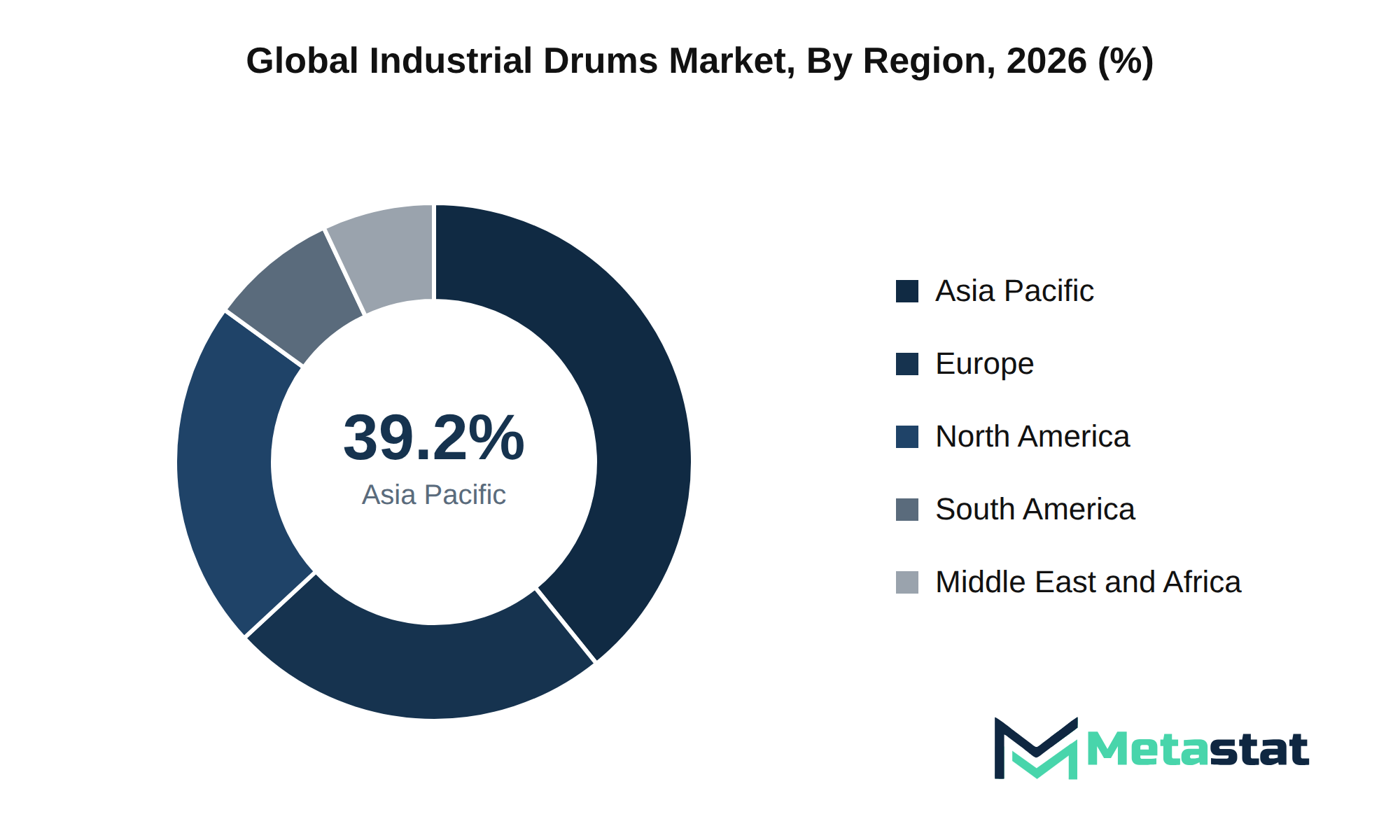
The North America Industrial Drums market anticipates expansion driven by robust demand across various sectors, including chemicals, pharmaceuticals, and food and beverages. With a market share of 21.9% in 2025, the region is positioned strongly in the global landscape. Increasing focus on sustainability and compliance with environmental regulations creates growth opportunities for manufacturers.
Infrastructure modernization in the United States, Canada, and Mexico enhances distribution and production capabilities for industrial drums. Localized manufacturing densities contribute to reduced lead times and increased responsiveness to market needs. Nearshoring initiatives strengthen the supply chain, allowing businesses to reduce costs and ensure timely deliveries.
Strategic entry barriers exist, driven by the need for compliance with local regulations and the presence of established domestic market participants. The competitive landscape reflects vendor consolidation trends, leading to a more streamlined supply chain and improved service offerings. This environment drives incremental growth vectors, particularly in underpenetrated territories, presenting opportunities for expansion.
The expected CAGR of 5.4% highlights the region's potential for sustained growth through 2033, with a projected market size of USD 5 billion. Factors including high-value replacement cycles and evolving customer preferences will continue to influence demand dynamics within the industrial drums market.
The Industrial Drums market within Europe is characterized by a robust presence in key countries including Germany, France, the UK, Italy, Spain, and Russia. This region captures 23.9% of the global market in 2025, highlighting the importance of Europe in overall demand dynamics.
Several factors contribute to market growth, including the strong manufacturing base and the increasing adoption of drums in various industries, particularly chemicals and pharmaceuticals. The demand for sustainable packaging solutions further enhances the market's appeal, driving manufacturers to innovate in materials and design.
Geopolitical factors and varying regulatory frameworks across European nations influence procurement strategies and market operations. Local compliance mandates shape product offerings, necessitating adaptations to meet stringent standards. This environment promotes competition among domestic market participants while attracting foreign investment.
Infrastructure modernization initiatives enhance the operational efficiency of supply chains, supporting local manufacturing densities. Vendors increasingly focus on nearshoring strategies to streamline logistics and mitigate risks associated with cross-border trade corridors. This trend signals a growing emphasis on localized production capabilities, which strengthens market resilience.
The Industrial Drums market in Europe benefits from cultural nuances in B2B buying behaviors, where buyers prioritize quality and compliance over cost. The growing emphasis on environmentally friendly solutions and the adoption of high-value replacement cycles contribute to incremental growth vectors in this sector.
The Asia-Pacific region captures 39.2% of the Industrial Drums market in 2025. Strong demand stems from rapid industrialization, particularly in China and India, where manufacturing activities expand. Growth in these markets is fueled by increasing investment in infrastructure and a rising focus on sustainability. Local manufacturers seek to enhance production capabilities, aligning with the evolving needs of end-use industries including chemicals, pharmaceuticals, and food and beverages.
Emerging market front-runners, particularly in Southeast Asia and Australia, experience significant growth due to their expanding economies and infrastructure modernization efforts. Local compliance mandates and trade policies encourage investments in localized manufacturing, creating opportunities for domestic players. Companies adapt by establishing regional production facilities to meet rising demand and improve supply chain efficiencies.
High-value replacement cycles characterize mature markets within the region, where businesses replace older drum models with new, more efficient designs. The transition reflects a broader trend of technological advancement and heightened environmental awareness. Vendors consolidate to strengthen their position and enhance competitiveness, creating a dynamic and evolving market.
Foreign direct investment flows into the Asia-Pacific region support the development of localized procurement dynamics. Regional resource availability and energy grid resiliency play essential roles in shaping operational strategies for firms involved in the Industrial Drums market. Geographic expansion windows will likely open for companies looking to capitalize on the growing demand and emerging opportunities.
The Industrial Drums market in South America reflects a developing landscape, with Brazil and Argentina representing significant contributors. The region captures an 8.0% share of the global market in 2025, indicating potential growth opportunities driven by local manufacturing capabilities and increasing demand from key industries.
Local production facilities are expanding in response to rising consumption rates. This expansion aligns with regional trends in infrastructure modernization and investments in localized manufacturing, allowing companies to meet demand efficiently while reducing lead times. Increased focus on sustainability and eco-friendly solutions in packaging influences market dynamics.
Emerging market front-runners in South America benefit from a robust supply chain and regional procurement strategies. The competitive landscape features several domestic market leaders, which drive innovation and adaptability in the sector. Collaboration among local firms enhances product offerings and positions the market for incremental growth.
The Industrial Drums market is poised for further development, driven by companies navigating strategic entry barriers and capitalizing on foreign direct investment flows. Local compliance mandates and regulatory frameworks play critical roles in shaping operational strategies, ensuring that market players align with evolving customer expectations and industry standards.
Consumer preferences in South America reflect unique cultural nuances, influencing B2B buying behaviors for industrial drums. Companies that adapt to these preferences strengthen their market positions and enhance customer satisfaction. Overall, the region's industrial drums market is expected to experience steady growth driven by these multifaceted factors.
The Industrial Drums market in the Middle East and Africa is experiencing gradual growth driven by increasing demand across various sectors. In Saudi Arabia and the UAE, rapid industrialization and infrastructure development contribute to heightened consumption of steel and plastic drums. South Africa holds potential for market expansion, especially in the chemicals and petrochemicals industries. Production and procurement strategies focus on localized manufacturing to reduce transportation costs and enhance supply chain efficiency.
Regional players benefit from foreign direct investment flows, which promote competitive dynamics that drive innovation and technological advancements. Compliance with local regulations and standards influences procurement decisions, while cultural nuances dictate buyer behaviors. The market anticipates incremental growth vectors attributed to sector diversification, leading to further opportunities for vendors to expand their presence within this territory.
With a share of 7.00% of the global market in 2025, the Middle East and Africa region demonstrates resilience, despite challenges including geopolitical fragmentation. Strategic entry barriers present opportunities for established players to strengthen their positions while attracting new entrants to the market.
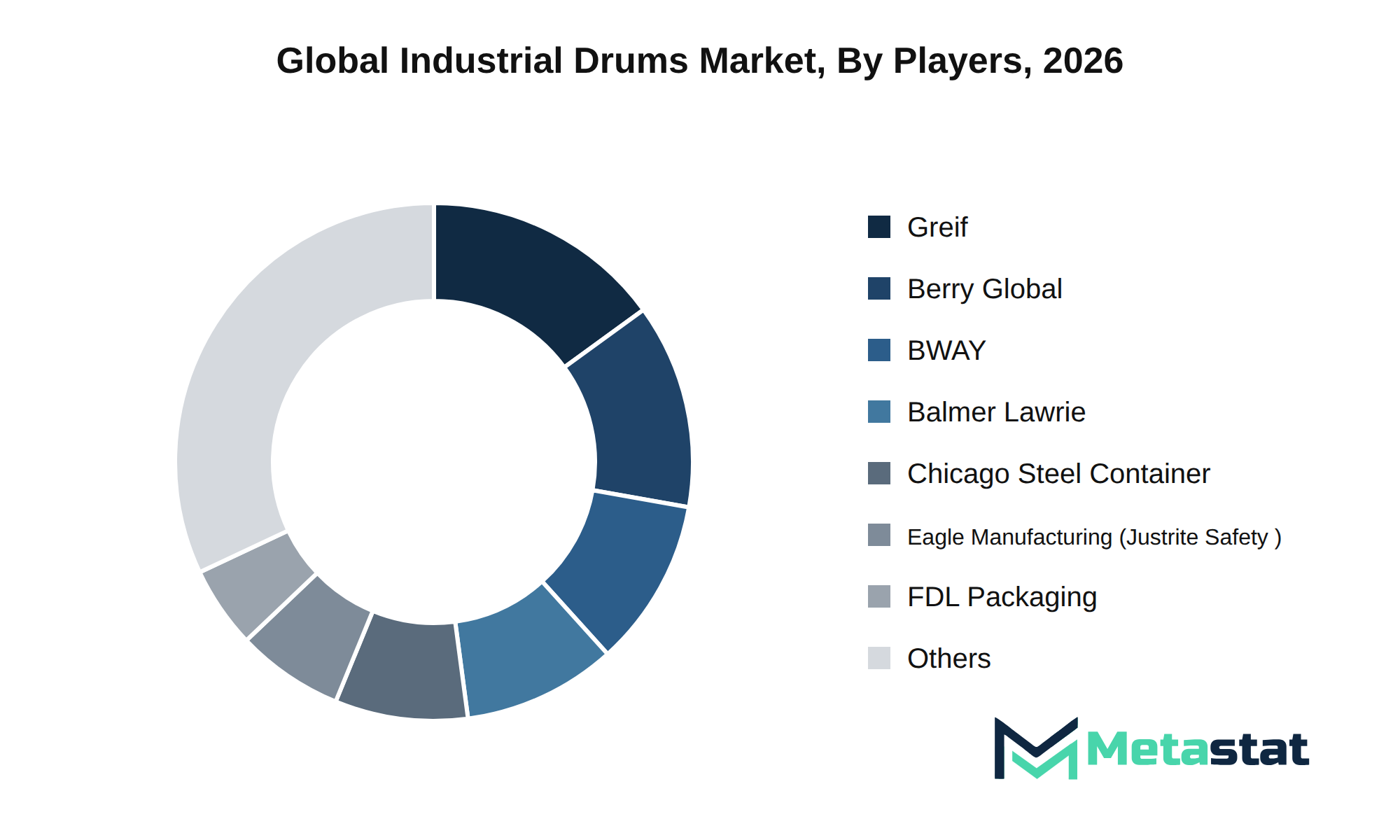
The Industrial Drums market features several prominent players that engage in strategic consolidation and partnerships to enhance their market presence. Companies including Balmer Lawrie & Co. Ltd., Berry Global Group, Inc., and Greif, Inc. pursue mergers and acquisitions to strengthen their product portfolios and market reach. These strategies focus on integrating complementary technologies and expanding geographic footprints, positioning them to capture growing demand in various end-use industries.
Product differentiation holds significance in the market. Firms like BWAY Corporation and Mauser Packaging Solutions Holding Company emphasize innovative designs and materials to meet customer preferences for durability and sustainability. Research and development initiatives support advancements in proprietary technologies, enhancing competitive advantages through improved product performance.
Strategic alliances among companies, including CPMC Holdings Limited and Eagle Manufacturing Company (Justrite Safety Group), enable collaborative efforts that leverage combined expertise and resources. This collaborative approach allows players to address barriers to entry and mitigate competitive threats posed by new entrants and startups in the market.
Customer retention strategies enhance brand equity dynamics, driving loyalty among key buyers in sectors including chemicals, pharmaceuticals, and food and beverages. Companies invest in value chain integration and procurement leverage to optimize operational efficiencies and maintain competitive pricing architectures. Such initiatives position established players favorably amid evolving market conditions, ensuring sustained growth in the Industrial Drums market.
Market size is forecast to rise from USD 15.6 billion in 2025 to over USD 23.8 billion by 2033. The base case projects a growth at a 5.4% CAGR. An analysis of the macroeconomic environment indicates that the Industrial Drums market experiences various cycles influenced by economic trends, technological advancements, and regulatory developments.
Downstream demand for industrial drums stems from several core industries, including chemicals, pharmaceuticals, and food and beverages. These sectors influence the market due to their evolution and maturation, necessitating a shift in consumption patterns. Integration of next-generation technologies into production processes accelerates efficiency and product development timelines, enhancing the market's growth prospects.
Regulatory evolution shapes future market dynamics, with imminent compliance milestones impacting operational practices. Strategic capital allocation and infrastructure investments signify a commitment to growth within the Industrial Drums market, supporting emerging opportunities and addressing unmet enterprise needs. The market's resilience hinges on navigating geopolitical realignments and evolving trade corridors that affect global supply chains.
Executive-level strategic imperatives focus on defensibility roadmaps to ensure sustainable growth. This facilitates the identification of high-growth pockets within the market. Continuous investment in research and development stimulates innovation and drives competitive advantage, shaping the future of the Industrial Drums market.
The report strategically identifies and profiles the key market players and analyses their core competencies in each sub-segment of the Industrial Drums market.
Report Attributes | Details |
Study Period | 2021-2033 |
Base Year | 2025 |
Estimated Year | 2026 |
Forecast Period | 2026-2033 |
Historical Period | 2021-2025 |
Growth Rate | CAGR 5.4% from 2026 to 2033 |
Revenue Unit | USD billion |
Segmentation | By Product Type, Product Design, Capacity, End-Use Industry, and Region |
By Region | North America (By Product Type, Product Design, Capacity, End-Use Industry, and Country)
|
Europe (By Product Type, Product Design, Capacity, End-Use Industry, and Country)
| |
Asia Pacific (By Product Type, Product Design, Capacity, End-Use Industry, and Country)
| |
South America (By Product Type, Product Design, Capacity, End-Use Industry, and Country)
| |
Middle East and Africa (By Product Type, Product Design, Capacity, End-Use Industry, and Country)
|
Find answers to common questions about this report
The Industrial Drums market size was valued at USD 15.6 billion in 2025, according to the Metastat Insights study.
The Industrial Drums market is projected to grow at a CAGR of 5.4% during the forecast period from 2026 to 2033.
The North America Industrial Drums market size is estimated to reach USD 5 billion by 2033.
The Plastic Drum segment leads the Industrial Drums market with a projected value of USD 9.7 billion by 2033, surpassing the Steel Drum segment, which is expected to reach USD 11.4 billion in the same year.
Increasing investment in sustainable technologies significantly drives the Industrial Drums market. Industries prioritize eco-friendly packaging solutions, leading to higher demand for recyclable materials, while infrastructure development enhances production capabilities and distribution networks, further supporting market growth.
Asia Pacific holds the dominant share of the Industrial Drums market, accounting for 39.2 percent in 2025. This region surpasses others in market presence, reflecting its significant industrial activity and demand.
Increasing investment in sustainable technologies and infrastructure development significantly favor product adoption in the Industrial Drums market. Industries prioritize eco-friendly solutions and modernization initiatives, enhancing operational efficiency and driving demand for innovative packaging solutions that align with environmental objectives.
The Industrial Drums market is estimated to reach a valuation of USD 23.8 billion by 2033.
Top players operating in the Industrial Drums market include Balmer Lawrie & Co. Ltd., Berry Global Group, Inc., BWAY Corporation, Chicago Steel Container Corporation, Greif, Inc., Mauser Packaging Solutions Holding Company, and U.S. Coexcell Inc.
The key segments in the Industrial Drums market include Steel Drums, Plastic Drums, and Others, which encompass Fiber and Composite Drums.
The analysts below cover Packaging research at Metastat Insights.
LEAD ANALYST
Utkarsh Khirodkar is a Lead Market Research Analyst at MetaStat Insight, specializing in market intelligence, technology sector assessments, and competitive strategy.

SENIOR RESEARCH ANALYST
Biotechnology · Food and Beverages · Medical Devices · Packaging
Snehal Pasalkar is a Research Analyst at MetaStat Insight, operating at the intersection of life sciences research, competitive strategy, and market intelligence.

INDUSTRY CONSULTANT - CHEMICALS & ADVANCED MATERIALS
Chemicals and Materials · Machinery & Equipment · Packaging
Amit Gadhekar Consultant for Chemicals and Materials at MetaStat Insight, directing sector-specific intelligence, research, and strategic consulting across global chemical and processing markets.
Assessing commercial microgrid software adoption requires looking past top-level installation numbers and examining utility interconnection queues. The research provided verifiable data on average permitting timelines, tariff structures, and battery storage integration costs across regional utility territories. That grounded perspective was valuable for our team when building five-year demand projections for industrial microgrid controllers.
Ambulatory surgical centers have very different purchasing cycles for robotic-assisted surgery platforms than major hospital networks. The MetaStat Insight study focused squarely on capital expenditure depreciation, procedural reimbursement pathways, and surgeon training overhead. That operational clarity made it much simpler to validate multi-year procedure growth forecasts against actual ambulatory center adoption patterns.
When planning edge sensor rollouts across refinery environments, generic IoT reports typically miss the harsh-environment certification bottlenecks. MetaStat Insight gave an objective evaluation of ATEX and Class 1 Division 2 hardware availability, along with realistic five-year maintenance cycle cost projections. The comparison of wireless mesh versus private cellular backhaul helped our team pressure-test network reliability models for remote processing facilities.
Explore related market intelligence reports worth reading alongside this one.