
LEAD ANALYST
Utkarsh Khirodkar is a Lead Market Research Analyst at MetaStat Insight, specializing in market intelligence, technology sector assessments, and competitive strategy.

Global Dry Bulk Shipping Market Size, Share, By Cargo Type (Iron Ore, Coal, Grains, Cement, Fertilizers, Steel Products, and Others), By Vessel Type (Capesize, Panamax, Supramax, and Handysize), By Fleet Operation (Owned-Vessel Operations and Chartered-In Vessel Operations), By Trade Route (Long-Haul Ocean Trade and Short-Sea & Coastal Trade), Industry Analysis, Growth, Trends, and Forecast, 2026-2033
Report ID
MSI-3671
Published
October, 2026
Pages
290 Pages
Format
Historical
Base year
Forecast
Forecast period
Report Details
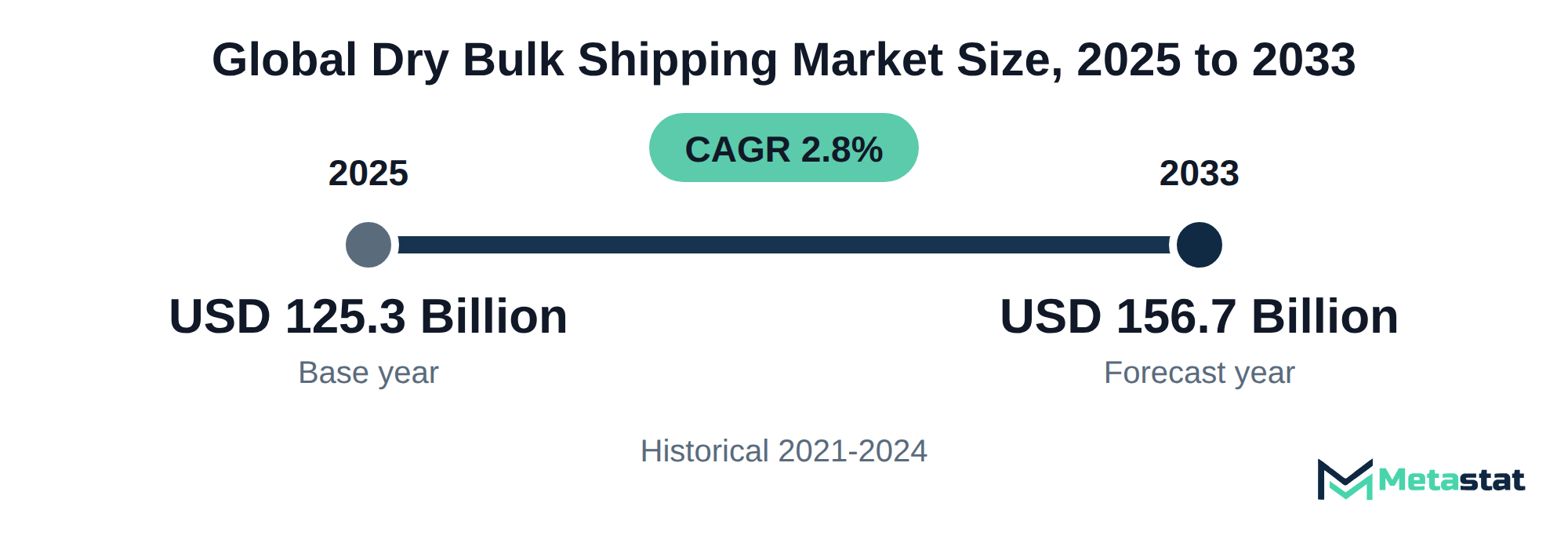
Market Valuation: Valued at $125.3 Billion in 2025, projected to reach $156.7 Billion by 2033 at a 2.8% CAGR.
Dominant Segment: Iron ore leads the market, driven by rising steel production levels, particularly in the Asia Pacific region. This segment's robust demand reflects its critical role in the manufacturing sector.
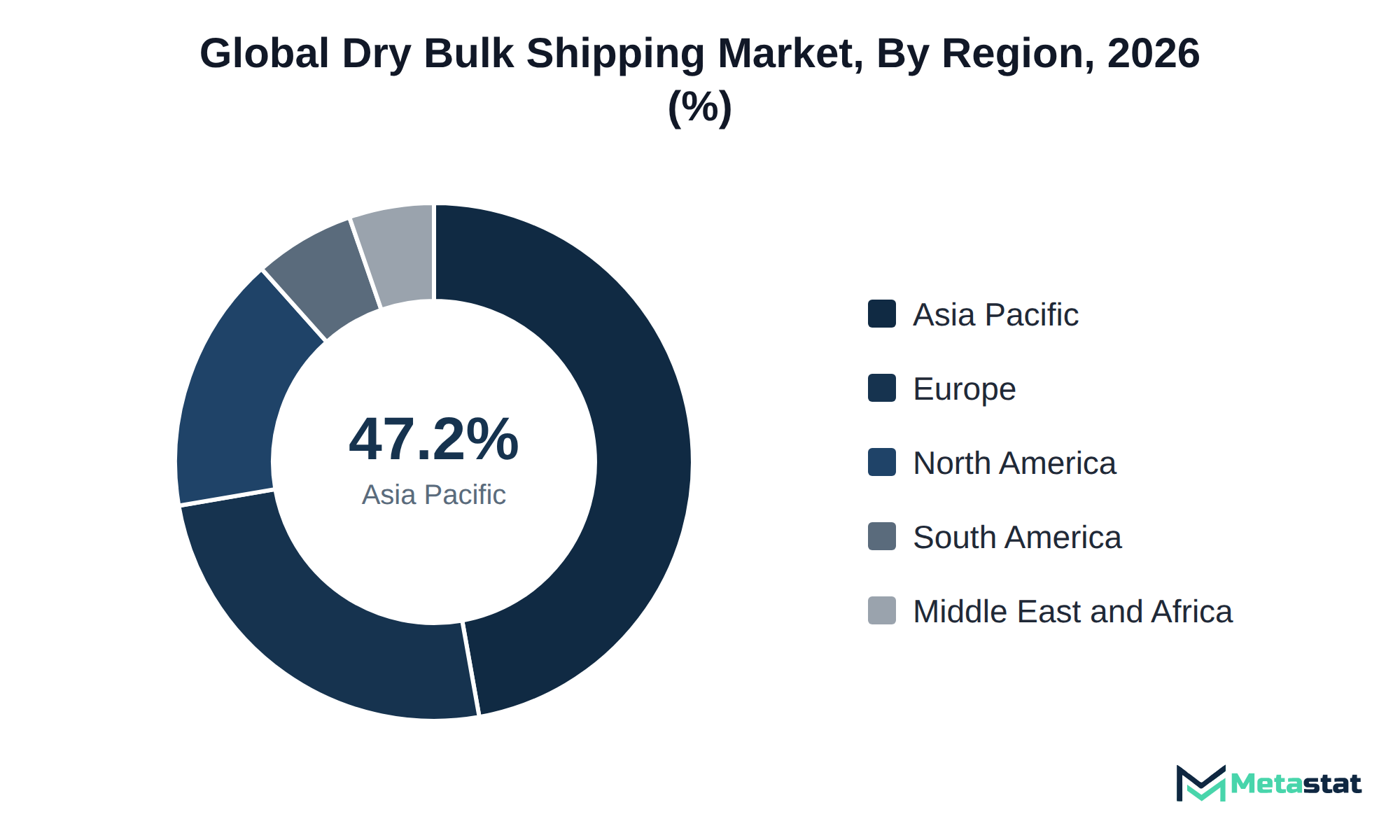
Geographic Lead: The Asia Pacific region dominates the market with a 47.2% share, supported by strong industrial activity and ongoing infrastructure projects that drive demand for bulk shipping services.
What's Inside: The report provides comprehensive coverage of market dynamics, segment analysis by cargo type and vessel type, along with insights into fleet operations and trade routes.
Emerging Opportunities: The grain transportation segment is poised for significant growth, fueled by global population increases and dietary shifts, highlighting the need for enhanced shipping capabilities.
Choose Your License
Global Dry Bulk Shipping Market
The global Dry Bulk Shipping market was valued at USD 125.3 billion in 2025 and is projected to reach USD 156.7 billion by 2033, growing at a CAGR of 2.8% over the forecast period.
The Dry Bulk Shipping market encompasses the transportation of various bulk commodities, including iron ore, coal, grains, and cement. Buyers invest in this market because it underpins global trade by moving essential resources across continents. Factors including economic growth, industrial demand, and infrastructure development drive spending in this sector, with companies looking to secure reliable shipping solutions to meet operational needs.
Growth in the market is underpinned by rising demand for iron ore, which leads in value among cargo types. The Asia Pacific region dominates the market with a share of 47.2%, reflecting strong industrial activity and demand for raw materials. Ongoing urbanization and infrastructure projects support the region's growth trajectory and add significantly to demand for bulk shipping services.
North America holds 16.1% of the market in 2025, with the US leading in 2026. A primary driver of growth in the Dry Bulk Shipping market stems from increasing investments in renewable energy projects, which require substantial quantities of bulk materials, further enhancing shipping demand. This trend shows how closely the market is tied to global economic activity.
The Dry Bulk Shipping market serves essential industries by facilitating the movement of bulk commodities required for various production processes. Buyers invest in this market to secure reliable sources of materials critical for manufacturing, construction, and energy production. The demand for these commodities drives shipping operations, impacting logistics and overall supply chain efficiency, which directly influences operational costs and profitability for buyers across sectors.
Growth in the market is supported by increasing global demand for iron ore, which holds the highest value in the cargo type segment. The Asia Pacific region leads the market, accounting for 47.2% of the total share, driven by strong industrial activities and infrastructure development. This regional dominance reflects significant investment in mining and construction sectors, generating a consistent need for bulk shipping services.
The growth of the Dry Bulk Shipping market is driven by rising demand for raw materials, fueled by expanding economies and urbanization. Efficient transportation solutions are therefore central to ongoing industrial activities and infrastructure projects worldwide.
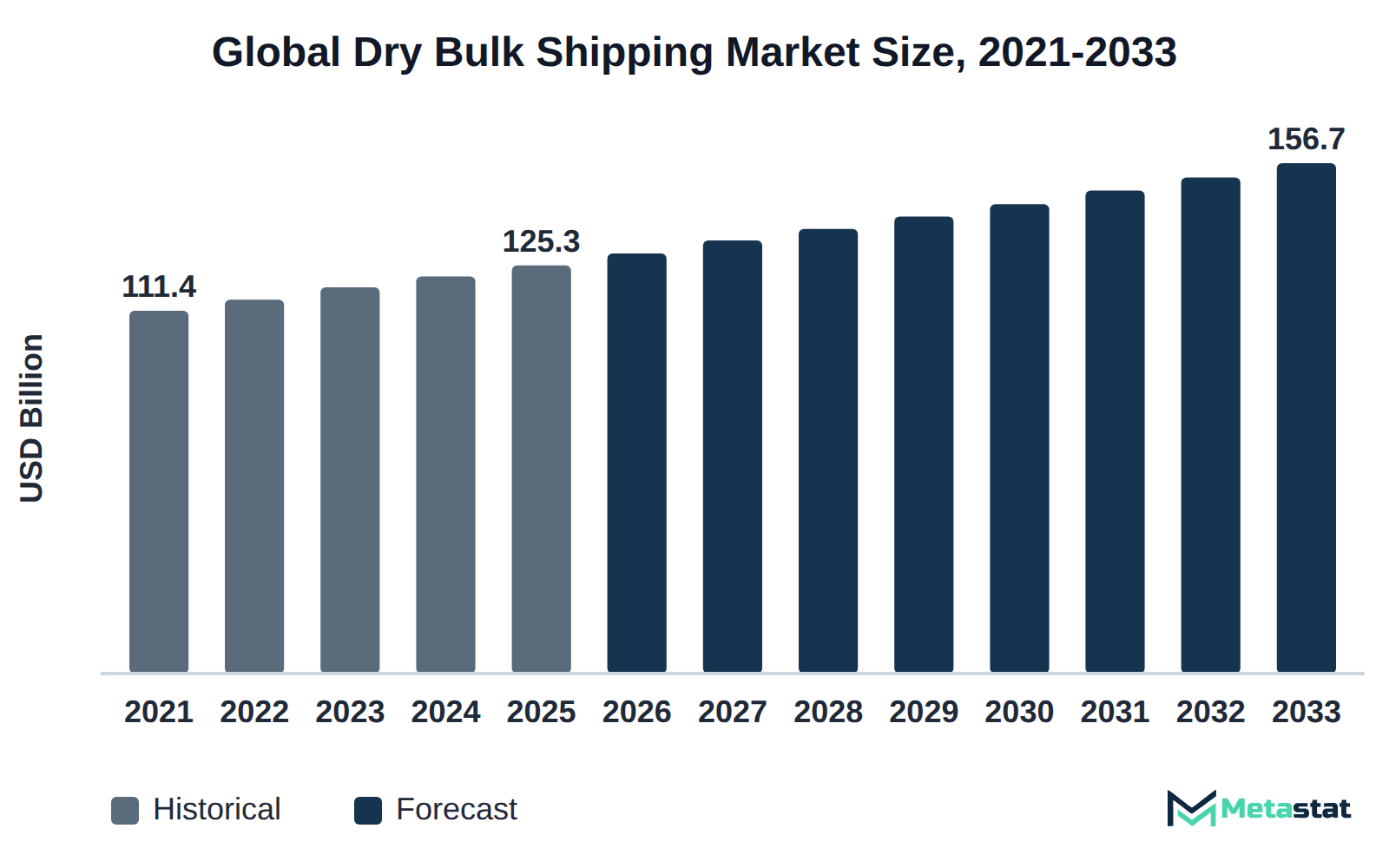
Longer iron ore and bauxite voyages significantly affect bulk carrier capacity requirements. The shift toward longer routes arises from mining operations expanding into remote areas, necessitating more substantial vessels for efficient transport. This transition shows most clearly in the Capesize vessel type, which is projected to grow from USD 41.7 billion in 2026 to USD 50.6 billion by 2033. That reflects a compound annual growth rate of 2.8%.
Long-haul operations present unique challenges, including higher operational costs and the need for advanced navigation and communication technologies. These developments compel shipping companies to optimize their fleet and improve logistical efficiency. A focus on larger vessels allows operators to maintain cost efficiency despite longer transit times, contributing to overall competitiveness in the market.
These changing dynamics require shipping operators to adapt and invest in suitable fleet capacities. By aligning fleet operations with the evolving requirements driven by longer shipping distances, companies enhance profitability while meeting customer demands for timely delivery.
The increasing emphasis on fuel efficiency and carbon costs significantly influences purchasing decisions within the Dry Bulk Shipping market. Operators face rising pressure to comply with stringent environmental regulations, prompting investments in newer, more efficient vessels as part of wider maritime decarbonization efforts. In 2026, the market anticipates a shift towards owned-vessel operations, projected to reach USD 93.8 billion by 2033, reflecting a 3% compound annual growth rate (CAGR). This transition highlights the necessity for operators to adopt innovative financial models that accommodate the higher upfront costs associated with modern vessels.
Financing structures for fleet renewal typically include long-term contracts that ensure predictable cash flow, allowing operators to manage costs effectively. Charter and ship leasing agreements have evolved, offering flexible terms that align with market fluctuations, enabling buyers to optimize operational efficiency. The anticipated growth in owned-vessel operations suggests a strong market preference for asset ownership, which leads to enhanced operational control and reduced long-term expenses. This shift towards ownership aligns with the need for improved fuel-efficient vessels that comply with evolving carbon regulations, ultimately supporting the market's growth trajectory.
Freight-rate exposure significantly impacts the profitability of operators in the Dry Bulk Shipping market. A notable factor is the distinction between spot and contract cargoes, where spot markets often experience higher volatility. For instance, in 2026, the revenue from Long-Haul Ocean Trade, which encompasses several spot cargoes, is projected to reach USD 129.3 billion by 2033, reflecting a compound annual growth rate of 3.0%. This volatility leads to fluctuating earnings for operators who rely primarily on spot cargoes.
In contrast, operators engaged in contract cargoes enjoy more predictable revenue streams, which stabilize earnings. Contractual agreements often provide assurance against the unpredictable nature of spot rates, allowing for better financial planning. For instance, operators focusing on cement and grain cargoes use long-term contracts to limit exposure to sudden rate changes, which improves their operational stability and profitability.
Understanding the intricacies of freight-rate exposure enables stakeholders to tailor their strategies according to market conditions. Operators with a balanced approach towards spot and contract cargoes optimize their earnings potential while minimizing risks associated with market volatility. Such strategies strengthen an operator's position in the market and support growth and resilience.
Dry bulk freight rates are influenced by multiple factors beyond mere cargo volume. One significant determinant is the type of vessel used for transportation. This increase indicates a growing preference for larger vessels in transporting bulk commodities including iron ore and coal, which ultimately affects the overall freight rates in the market.
Fleet operation modes strongly influence freight rates. Operators who own their vessels often experience lower costs compared to those using chartered-in operations, which impacts their pricing strategies. This dynamic highlights the competitive landscape where operators aim to optimize fleet management to enhance profitability.
Understanding these factors helps stakeholders in the market make informed decisions on pricing and fleet investments. Companies that strategically manage vessel types and operational modes will position themselves favorably in this competitive marketplace.
Iron ore buyers are driving demand due to rising steel production levels. Key markets, particularly in Asia Pacific, are experiencing significant growth in steel output, leading to more extensive iron ore shipments. This increase in shipping volume reflects a structural change in the industry, wherein steel manufacturers seek to optimize supply chains and ensure the availability of raw materials. The rise in demand for iron ore is projected to increase volumes from USD 43.6 billion in 2026 to USD 51.9 billion by 2033, representing a compound annual growth rate of 2.5 percent. Buyers in the steel sector are prioritizing timely deliveries and sourcing efficiency, resulting in heightened competition among shipping companies to secure contracts. Heightened competition drives pricing strategies and operational planning within the market, creating opportunities for growth and investment in fleet capabilities.
Technological advancements in vessel design significantly impact the operational efficiency of shipping fleets. Innovations, including hull optimization and more efficient propulsion systems, reduce fuel consumption and increase cargo capacity. These developments appeal to operators focusing on cost management and sustainability within the Dry Bulk Shipping market. Enhanced vessel performance translates to decreased operational costs, allowing companies to allocate resources more effectively. Integrating alternative fuel sources, including LNG and ammonia, aligns with global shifts towards greener technologies, driving operators to upgrade their fleets to remain competitive. The transition towards more efficient vessels supports long-term growth within the market by attracting environmentally conscious clients seeking sustainable shipping solutions. Enhanced efficiency helps operators meet regulatory pressures and offsets the rising costs of traditional fuels. The emphasis on innovative designs is expected to support market expansion, positioning companies to respond adeptly to evolving industry demands.
Price volatility remains a significant constraint in the Dry Bulk Shipping market, affecting operators' confidence in making long-term commitments. Fluctuating freight rates, driven by changing demand and supply dynamics, create uncertainty for buyers, particularly those relying on bulk shipments for production. This uncertainty leads to smaller orders and delayed replacement of vessels, especially among companies in the coal and grains segments. The impact of price volatility becomes evident in operational planning and investment strategies, which often prioritize short-term flexibility over long-term commitments. Consequently, operators adopt a cautious approach, influencing overall market growth and limiting opportunities for new entrants. The reluctance to invest in fleet expansion increases the challenges faced by suppliers and affects service delivery timelines. Continuous price fluctuations hinder the stability required to maintain consistent demand in the market, ultimately shaping the growth trajectory of the industry.
Supply chain disruptions impact profitability within the Dry Bulk Shipping market, with rising operational costs challenging suppliers. Fluctuating fuel prices and shipping rates contribute to this pressure, complicating financial stability for operators. Increased competition among suppliers intensifies the need for effective cost management strategies. Many operators focus on enhancing operational efficiency through technological investments, aiming to reduce reliance on traditional fuel sources. This shift towards energy-efficient vessels and alternative fuels reflects a broader industry trend driven by sustainability and cost-effectiveness. Suppliers explore strategic partnerships to share resources and mitigate risks associated with market volatility. These initiatives are essential for maintaining profitability amid fluctuating costs and competitive pressures.
The grain transportation segment presents significant growth potential within the market. Demand for grains is expected to increase due to global population growth and dietary shifts toward more grain-intensive foods. This trend results in a projected demand growth rate for grains, contributing to an anticipated increase in the market's overall revenue. The segment's dynamics highlight the necessity for shipping companies to enhance their fleets to accommodate the rising volumes of grain. Investments in vessel types optimized for grain transport offer attractive returns due to the segment's growth trajectory. The increasing focus on efficient grain transportation enhances operational capabilities and boosts profitability for shipping operators. Fleet adaptation is therefore strategically important in the Dry Bulk Shipping market.
The Global Dry Bulk Shipping market is segmented based on Cargo Type, Vessel Type, Fleet Operation, and Trade Route.
This segment primarily caters to the steel manufacturing industry, which relies on iron ore for production. Demand for iron ore remains strong due to increasing steel production levels, particularly in developing economies. This segment experiences a more stable growth trajectory compared to others, including coal, which has a lower CAGR of 0.9%. The higher demand for iron ore and its critical role in steelmaking differentiates it from competing dry bulk commodities. Regulatory pressures regarding environmental standards influence mining and shipping operations, impacting overall costs associated with iron ore transportation. The market's focus on securing reliable and efficient shipping routes enhances the competitiveness of iron ore logistics.
Coal is expected to reach USD 32.7 billion by 2033, at a CAGR of 0.9% during the forecast period. This segment primarily serves energy producers and industrial manufacturers who rely on coal for power generation and various applications in steel and cement production. Factors including fluctuating global demand for energy and regulatory pressures regarding emissions significantly influence this segment. Unlike other cargo types, coal experiences slower growth compared to iron ore, which has a CAGR of 2.5%. Industries adopting cleaner energy sources and facing stricter regulations create challenges for demand for coal while other segments show more robust expansion. This dynamic highlights the distinct market trajectory for coal compared to other segments in the Dry Bulk Shipping market.
The grains segment is expected to reach USD 26.4 billion by 2033. This segment primarily includes the transportation of grain commodities, which are crucial for food production and animal feed. Buyers consist of agricultural firms and food manufacturers. Demand within this segment is propelled by increasing global food consumption and population growth. The growth rate for grains, driven by a compound annual growth rate (CAGR) of 2.1%, contrasts with segments including coal, which exhibits a slower growth rate at 0.9%. The grains segment benefits from relatively stable pricing compared to more volatile cargo types, reflecting the essential nature of food security and consistent demand from agribusinesses. Economic factors affecting grain prices play a significant role in determining shipping profitability, influencing decisions within the market.
Cement, integral to construction and infrastructure projects, benefits from sustained demand driven by urbanization and expansion in building activities. Cement producers rely on the shipping sector to transport bulk cement to construction sites and manufacturing facilities. The Cement segment is projected to grow at a CAGR of 5.9% during the forecast period. In comparison to segments like Coal and Grains, Cement experiences relatively faster growth due to increasing investments in infrastructure and housing developments globally. While Coal is anticipated to reach USD 32.7 billion by 2033, Cement's growth reflects a dynamic shift in construction needs, with rising demand from both public and private sectors. This segment's strong performance highlights its critical role in meeting the escalating requirements of construction and related industries, differentiating it from slower-growing segments.
Fertilizers serve essential agricultural inputs, supporting crop production and enhancing soil fertility. This segment primarily caters to farmers, agricultural cooperatives, and distributors who rely on these materials for optimal yield. Demand for fertilizers is driven by increasing global food consumption and the need for sustainable agricultural practices to improve productivity. Regulatory frameworks promoting environmentally friendly fertilizers influence market dynamics, pushing producers towards innovations in fertilizer formulations. Unlike other cargo types, including iron ore and coal, which experience fluctuations based on industrial demand, the fertilizers segment exhibits consistent demand due to its fundamental role in food production. This contrasts with the slower growth observed in the coal segment, where market challenges arise from environmental concerns and a shift towards renewable energy sources. The Dry Bulk Shipping market faces opportunities while adapting to changing agricultural needs and regulatory environments.
Steel products encompass a range of materials essential for construction and manufacturing, heavily relied upon by the automotive, building, and infrastructure sectors. These products include various forms of steel used in construction, machinery, and automotive applications. Demand for steel products experiences fluctuations driven by infrastructure development and the overall health of the global economy. Rising investments in infrastructure, particularly in emerging markets, increase demand for steel due to its critical role in construction. While other cargo types including iron ore and coal show growth rates based on specific market dynamics, steel products remain indispensable for numerous industries, marking their significance in the broader context of the market. The segment is characterized by unique pricing pressures and demand patterns, differentiating it from other cargo types, prompting suppliers to adapt their strategies accordingly.
Others encompass a variety of bulk commodities, including sugar, bauxite, alumina, salt, aggregates, and industrial minerals. Industries involved in the extraction and processing of these materials rely on dry bulk shipping to transport substantial quantities to various markets. The construction and food sectors frequently employ these materials, driving demand within this sub-segment. An increase in infrastructure projects enhances the need for aggregates and industrial minerals, while rising food production requirements stimulate demand for sugar. Compared to other cargo types, this sub-segment experiences varied growth dynamics due to the specific nature of its applications. While the Iron Ore segment and Coal segment exhibit more pronounced growth trajectories, this sub-segment remains essential for numerous industries, highlighting its role within the broader market.
These vessels primarily transport bulk commodities like iron ore and coal, serving key industries that require large quantities of raw materials. The demand for Capesize vessels is driven by the increasing need for iron ore in steel production, particularly in regions with significant industrial activity. Compared to other vessel types, Capesize vessels exhibit slower growth rates, attributed to higher operational costs and the limited number of ports capable of accommodating them. This segment's growth trajectory contrasts with that of Panamax vessels, which experience a higher CAGR of 2.7% during the forecast period, reflecting differing operational dynamics and market demands. The Dry Bulk Shipping market continues to evolve, incorporating various factors affecting vessel procurement and operational strategies.
Panamax segment is estimated to reach USD 43.5 billion by 2033, at a CAGR of 2.7% during the forecast period. This vessel type serves primarily in the transportation of bulk commodities including grains and fertilizers, used by agricultural producers and food manufacturers. Demand for Panamax vessels is influenced by growth in global agricultural production, driven by rising populations and increasing food consumption. Compared to other vessel types, including Capesize, which experiences a higher growth rate at a CAGR of 2.8%, the Panamax segment displays relatively stable growth, appealing to buyers seeking cost-effective shipping solutions. While the market sees fluctuations in freight rates, the Panamax segment maintains a competitive position, offering flexibility across various trade routes.
Supramax segment is expected to reach USD 41.4 billion by 2033. This vessel type primarily transports bulk commodities including grains, coal, and fertilizers, appealing to operators requiring flexibility in cargo delivery. Demand for Supramax vessels increases due to their ability to access a broader range of ports, enabling efficient transportation of goods. The segment's growth rate exhibits a CAGR of 2.4%, slower than Capesize and Panamax segments, which reflect CAGRs of 2.8% and 2.7%, respectively. Cost efficiency in operations is significant in the Supramax segment, allowing operators to optimize shipping expenses while meeting rising global demand. The growth trajectory remains influenced by expanding agricultural markets and infrastructure projects, both crucial for bulk trade. This segment has unique attributes, distinguishing itself from others through its operational versatility and competitive pricing strategy.
Handysize segment is projected to grow at a CAGR of 2.4% during the forecast period. This segment primarily serves regional and short-haul shipping needs, effectively transporting smaller quantities of bulk commodities. Industries including agriculture and construction frequently employ Handysize vessels for their flexibility and ability to access smaller ports. Demand for Handysize vessels grows due to increasing agricultural exports and the need for reliable transportation of construction materials. Compared to larger segments, including Capesize and Panamax, Handysize operates at a slower growth rate due to its niche market focus. Higher operational costs and competition from larger vessels present challenges for Handysize operators. Despite these constraints, the segment's distinct operational advantages enable it to maintain a significant role in the Dry Bulk Shipping market.
This segment serves companies engaged in shipping commodities including iron ore, coal, grains, and other bulk materials, which require reliable transportation solutions. The growth of this segment is driven by increasing demand for raw materials from industries including construction and manufacturing. The segment benefits from the stability provided by long-term contracts that reduce exposure to market fluctuations. Compared to Chartered-In Vessel Operations, Owned-Vessel Operations typically results in lower operational costs and greater control over shipping logistics. The market shows strong performance, fueled by advancements in vessel technology that enhance fuel efficiency and reduce emissions, aligning with global sustainability goals.
Chartered-In Vessel Operations segment is estimated to reach USD 62.9 billion by 2033, at a CAGR of 2.5% during the forecast period. This segment typically involves leasing vessels for transporting bulk commodities, catering to companies seeking flexibility in fleet management without the commitment of ownership. Demand from industries including construction and manufacturing drives this segment, particularly as companies adjust to fluctuating market conditions. Unlike Owned-Vessel Operations, which experiences a higher CAGR of 3%, Chartered-In Vessel Operations presents a more moderate growth trajectory, reflecting a stable but less aggressive market response to increasing trade volumes. The segment's operational flexibility appeals to various buyers, particularly those prioritizing cost management while ensuring timely deliveries.
Long-Haul Ocean Trade segment is valued at USD 105.2 billion in 2026 and is projected to reach USD 129.3 billion by 2033, at a CAGR of 3% during the forecast period. This segment encompasses the transportation of bulk commodities over long distances by sea, primarily serving industries including mining, agriculture, and construction. Demand arises from the need for efficient transport of raw materials, driven by global economic growth and industrial activities. Compared to other segments, Long-Haul Ocean Trade enjoys a higher market value and growth potential, reflecting its critical role in facilitating international trade. The increasing demand for iron ore and coal contributes significantly to this segment, underscoring its importance within the broader context of the Dry Bulk Shipping market.
Short-Sea & Coastal Trade segment is estimated to reach USD 27.5 billion by 2033, at a CAGR of 2.1% during the forecast period. This segment focuses on the transportation of bulk commodities over relatively shorter distances, catering primarily to regional markets. Key players in this segment include local shipping companies and logistics providers serving industries including construction, agriculture, and manufacturing. Demand in this segment is driven by the proximity of suppliers to consumers, reducing transportation costs and time. Compared to other trade routes like Long-Haul Ocean Trade, this segment experiences slower growth, largely due to the limited scale of operations. While Long-Haul Ocean Trade is projected to grow significantly at a CAGR of 3%, Short-Sea & Coastal Trade plays a vital role in supporting regional supply chains.
Based on geography, the Global Dry Bulk Shipping market is divided into North America, Europe, Asia-Pacific, South America, Middle East, and Africa.
Demand within the dry bulk shipping market in North America is driven by significant industrial activities. In the United States, the energy and construction sectors particularly rely on the transportation of coal and cement. The integration of advanced shipping technologies, including digital tracking systems, enhances operational efficiency and reduces costs for operators. Regulatory frameworks in North America prioritize environmental sustainability, influencing the adoption of greener shipping practices. By 2033, North America is projected to reach USD 22.9 billion, reflecting increased investment in infrastructure and a robust supply chain network, positioning the region for sustained growth.
Demand in Europe for the Dry Bulk Shipping market primarily stems from industries including agriculture, construction, and manufacturing. Infrastructure projects drive the need for cement and grains, while iron ore and coal remain crucial for the manufacturing sector. Countries like Germany and France have strong manufacturing bases, leading to significant demand for bulk shipping services. The region's commitment to sustainable practices influences the shipping sector, with increasing regulatory pressures surrounding emissions and fuel efficiency. This environment encourages innovation and investment in greener technologies within the dry bulk shipping domain. By 2025, Europe is expected to hold a 25.1% share of the global market, reflecting its important role in regional and global trade dynamics.
Asia-Pacific represents a significant portion of the Dry Bulk Shipping market, accounting for 47.2% of the global share in 2025. The region's robust demand originates primarily from its industrial sector, particularly in China, Japan, and India, where iron ore and coal imports support steel and energy production, respectively. Infrastructure development in countries including India and Southeast Asia enhances shipping routes, further increasing demand for bulk transportation. The growth of urban populations in these nations leads to increased consumption of construction materials, driving demand for cement and steel products. Trade agreements promoting regional cooperation strengthen maritime operations, enhancing the overall efficiency of the market.
Brazil and Argentina drive demand within the Dry Bulk Shipping market, primarily due to their substantial agricultural and mining sectors. The region's reliance on exports of grains and iron ore necessitates extensive shipping capabilities, contributing to its overall market share of 6.3% in 2025. Infrastructure improvements, particularly in port facilities and port services, enhance operational efficiency for shipping companies. Investments in logistics and transportation networks support market growth. The adoption of sustainable practices within shipping operations aligns with global trends, enhancing competitiveness among regional players. Companies operating in the market focus on increasing capacity to meet rising export demands and respond to evolving buyer expectations.
In the Middle East and Africa, demand for the Dry Bulk Shipping market derives from several key industries, including construction and mining. Saudi Arabia and the UAE exhibit robust infrastructure projects, significantly influencing the demand for bulk materials including cement and iron ore. South Africa, with its established mining sector, contributes to the market through coal exports. The region's share of the global market in 2025 stands at 5.3%. Logistics and transportation costs impact the competitiveness of players operating within this region. Industry participants remain agile in navigating these challenges while seeking opportunities for growth in the market.
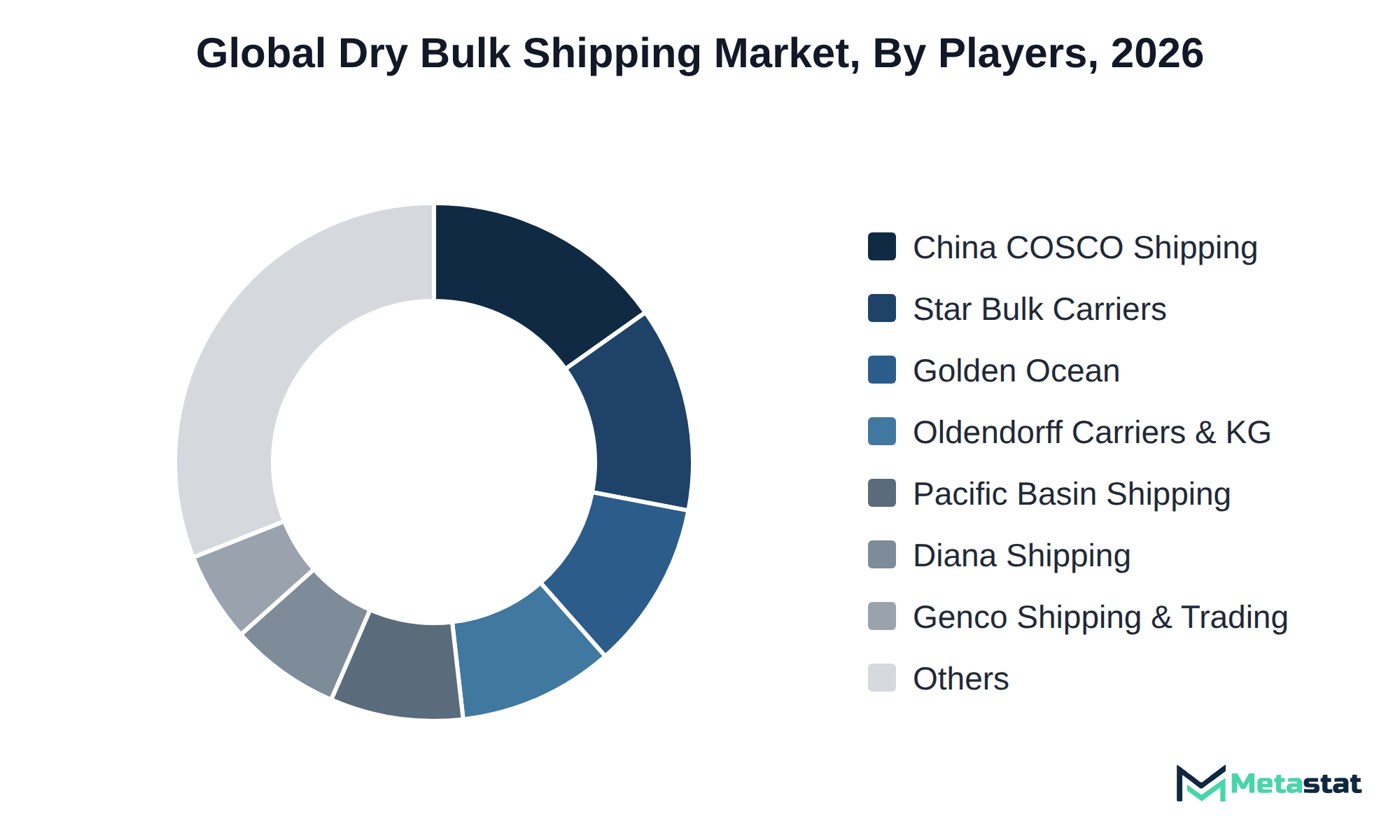
Competition in the Dry Bulk Shipping market involves various companies deploying distinct strategies to serve diverse buyer needs. Price competitiveness influences buyer decision-making, alongside service quality and fleet diversity. Companies focus on optimizing operational efficiency to maintain competitive pricing while ensuring timely and reliable deliveries.
China COSCO Shipping Corporation Limited, a key player, emphasizes expanding its fleet capacity and technological advancements to enhance service offerings. Star Bulk Carriers Corp. prioritizes operational efficiency while maintaining a focus on cost-effective solutions. In contrast, Bahri (National Shipping Company of Saudi Arabia) places strong emphasis on regional logistics, catering specifically to the demands of the Middle East and adjacent markets.
Buyers in the market assess service options based on customization and ecosystem integration, evaluating how well these factors align with their operational requirements. Golden Ocean Group Ltd. excels in leveraging long-haul trade routes to optimize its fleet deployment, responding effectively to buyer demand for reliability. Meanwhile, Genco Shipping & Trading Limited focuses on strategic partnerships within the industry to enhance its service portfolio.
This growth relies on several key developments within the Dry Bulk Shipping market. First, the expansion of owned-vessel operations is projected to drive growth in the market, with a shift from chartered-in vessel operations to owned vessels expected to enhance operational efficiencies and profitability. Second, the demand for iron ore, particularly from Asia Pacific, is expected to increase, supporting growth in market expansion. Lastly, the long-haul ocean trade segment is expected to flourish, with investments in infrastructure and logistics supporting this trend. However, risks remain that could hinder market progress. Economic fluctuations, particularly in emerging markets, impact demand for bulk commodities, leading to volatility in shipping volumes. Changes in regulatory frameworks and environmental constraints affect operational costs and strategic decisions within the Dry Bulk Shipping market. Thus, while positive developments signal growth potential, external factors could influence the market's trajectory through 2033.
By Cargo Type: Iron Ore, Coal, Grains, Cement, Fertilizers, Steel Products, Others (Sugar, Bauxite, Alumina, Salt, Aggregates, Industrial Minerals)
By Vessel Type: Capesize, Panamax, Supramax, Handysize
By Fleet Operation: Owned-Vessel Operations, Chartered-In Vessel Operations
The report strategically identifies and profiles the key market players and analyses their core competencies in each sub-segment of the Dry Bulk Shipping market.
|
Report Attributes |
Details |
|
Study Period |
2021-2033 |
|
Base Year |
2025 |
|
Estimated Year |
2026 |
|
Forecast Period |
2026-2033 |
|
Historical Period |
2021-2025 |
|
Growth Rate |
CAGR 2.8% from 2026 to 2033 |
|
Revenue Unit |
USD billion |
|
Segmentation |
By Cargo Type, Vessel Type, Fleet Operation, Trade Route, and Region |
|
By Region |
North America (By Cargo Type, Vessel Type, Fleet Operation, Trade Route, and Country)
|
|
Europe (By Cargo Type, Vessel Type, Fleet Operation, Trade Route, and Country)
|
|
|
Asia Pacific (By Cargo Type, Vessel Type, Fleet Operation, Trade Route, and Country)
|
|
|
South America (By Cargo Type, Vessel Type, Fleet Operation, Trade Route, and Country)
|
|
|
Middle East and Africa (By Cargo Type, Vessel Type, Fleet Operation, Trade Route, and Country)
|
Find answers to common questions about this report
The Dry Bulk Shipping market size was valued at USD 125.3 billion in 2025.
The market is projected to grow at a CAGR of 2.8% during the forecast period from 2026 to 2033.
The North America Dry Bulk Shipping market size is estimated to reach USD 22.9 billion by 2033.
Iron Ore leads the Dry Bulk Shipping market with a projected value of USD 51.9 billion by 2033, based on its growth trajectory compared to other cargo types.
Rising steel production levels are driving demand for iron ore, leading to increased shipping volumes. The grain transportation segment is experiencing growth due to global population increases and dietary shifts towards more grain-intensive foods.
Price volatility restrains growth in the Dry Bulk Shipping market by affecting operators' confidence in making long-term commitments. Supply chain disruptions and rising operational costs challenge profitability, complicating financial stability for operators.
Rising steel production levels in key markets, particularly in Asia Pacific, drive demand for iron ore, favoring adoption in the Dry Bulk Shipping industry. the grain transportation segment presents growth potential due to global population increases and dietary shifts, prompting shipping companies to enhance fleet efficiency.
The Dry Bulk Shipping market is estimated to reach a valuation of USD 156.7 billion by 2033.
Key players operating in the Dry Bulk Shipping industry include China COSCO Shipping Corporation Limited, Star Bulk Carriers Corp., Golden Ocean Group Ltd., Oldendorff Carriers GmbH & Co. KG, Pacific Basin Shipping Limited, Diana Shipping Inc., and The National Shipping Company of Saudi Arabia.
Rising steel production levels in key markets, particularly in Asia Pacific, drive demand for iron ore. This increase reflects a structural change in the industry, with steel manufacturers seeking to optimize supply chains and ensure raw material availability.
The analysts below cover Automotive and Transportation research at Metastat Insights.
LEAD ANALYST
Utkarsh Khirodkar is a Lead Market Research Analyst at MetaStat Insight, specializing in market intelligence, technology sector assessments, and competitive strategy.

ENERGY & INFRASTRUCTURE INDUSTRY CONSULTANT
Automotive and Transportation · Electronics and Semiconductor · Energy and Power · Machinery & Equipment
Saurabh Vasant Ganvir consults for Energy & Infrastructure Industry at MetaStat Insight, specializing in renewable energy, solar EPC, and electric vehicle (EV) infrastructure markets.
Our group needed clearer visibility into out-of-autoclave processing timelines for high-temperature thermoplastic composites. MetaStat Insight delivered an objective assessment that contrasted automated fiber placement scrap rates with traditional thermoset prepreg layup cycles. The supplier landscape mapped out primary resin suppliers and tape slitting capacity across France, Germany, and Japan with solid technical accuracy. Their analyst handled our questions on precursor supply risks during an unscheduled inquiry call, providing clear, unembellished context.
Evaluating sensor fusion reliability across harsh operating environments can be tricky without field-validated data. The study on agricultural autonomous guidance systems clearly separated stereo vision setups from automotive-grade solid-state LiDAR. We appreciated the regional infrastructure analysis, specifically around RTK network density across North America and South America. During our follow-up consultation, the MetaStat Insight team walked through tier-two perception software partnerships, giving our engineering leads a practical basis for vendor shortlisting.
Analyzing the transition from natural gas to green hydrogen in iron ore reduction requires realistic infrastructure timelines. Meta stat insight supplied a detailed regional assessment of DRI plant conversion costs and scrap metal availability in North America and Western Europe. Their report carefully examined pellet quality specs and electrical grid access constraints without making oversimplified market assumptions. The research material served as a practical reference during internal technology roadmap discussions.
Explore related market intelligence reports worth reading alongside this one.