Banking & Finance
Global Digital Cross-Border Remittance Services Market
Starting from
$2950

Ireland General Insurance Market Size, Share, By Insurance Type (Private Motor Insurance, Home Insurance, Travel Insurance, Pet Insurance, Personal Accident Insurance, Gadget and Personal Possessions Insurance, Others), By Customer Type (Individuals and Households, Small and Medium-Sized Enterprises, Large Corporates, Public Sector and Non-Profit Organizations), By Coverage Type (Full Coverage, Third-Party Liability, Comprehensive Coverage), By Distribution Channel (Direct Digital / Online, Direct Telephone and Contact Centre, Insurance Brokers and Intermediaries, Bancassurance, Aggregators and Comparison Platforms, Affinity and Embedded Insurance), Industry Analysis, Growth, Trends, and Forecast, 2026-2033
MSI-5044
August 25, 2026
277 Pages
Historical
Base year
Forecast
Forecast period
Report Details
Comprehensive Market Analysis And Insights
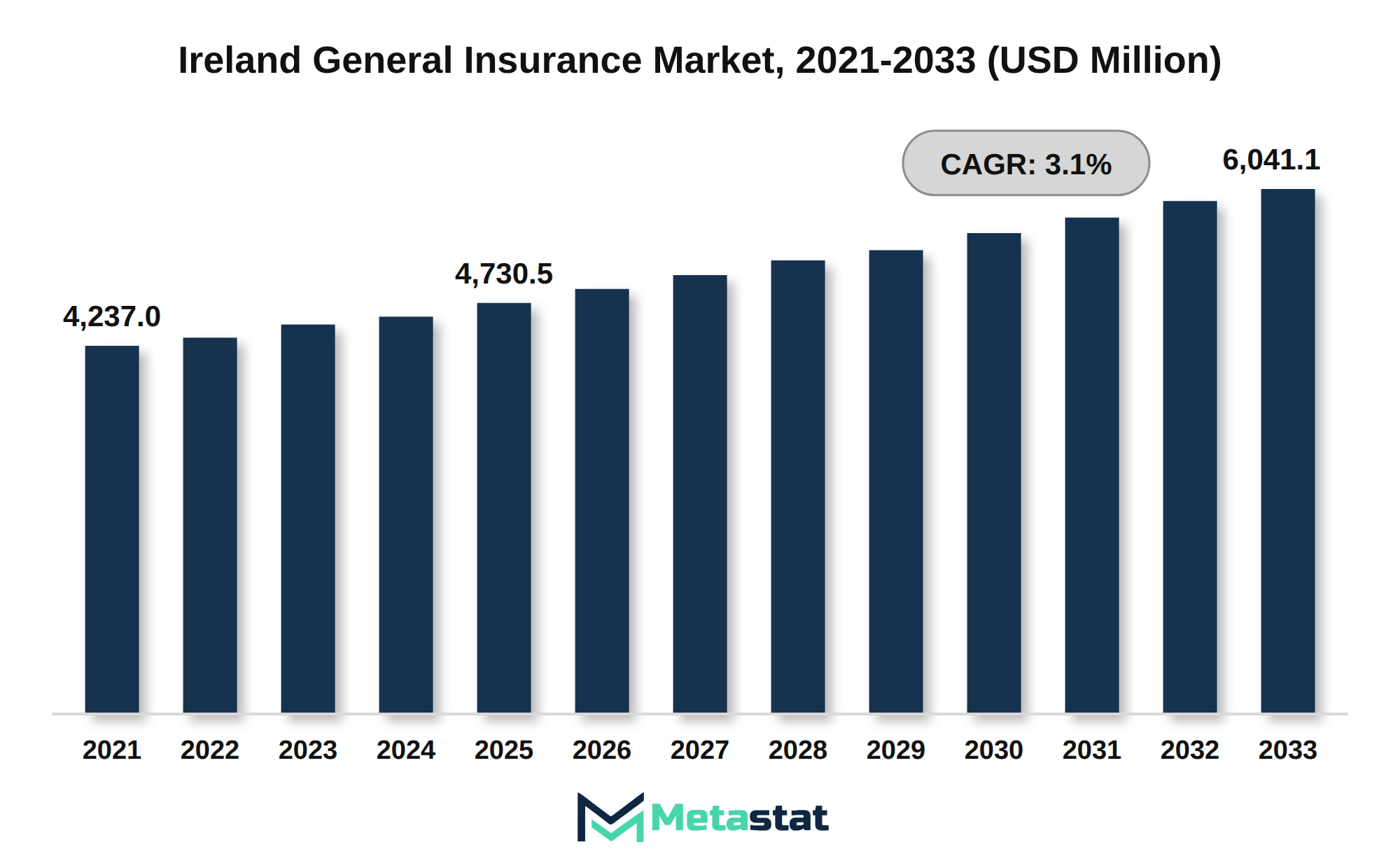
The Ireland General Insurance market was valued at USD 4,730.5 million in 2025 and is projected to reach USD 6,041.1 million by 2033, growing at a CAGR of 3.1% over the forecast period.
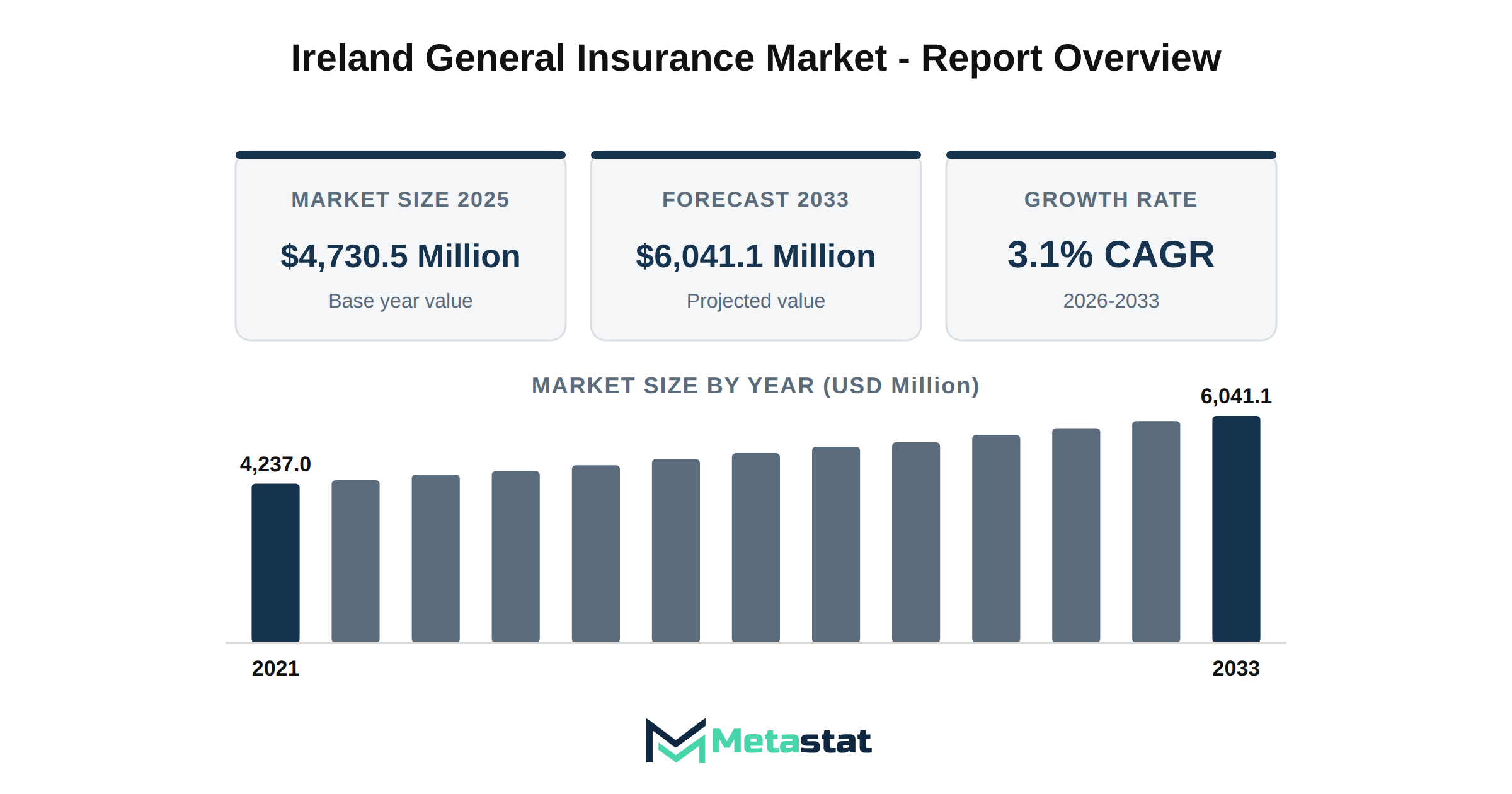
The Ireland General Insurance market is projected to grow from USD 4,730.5 million in 2025 to USD 6,041.1 million by 2033, reflecting a compound annual growth rate (CAGR) of 3.1%. Historical data indicates steady growth, with market values increasing from USD 4,237 million in 2021 to USD 4,571.9 million in 2024.
Shifting consumer preferences significantly impact the market. Individuals increasingly seek tailored insurance solutions, pushing providers to innovate and enhance their offerings. The competitive landscape intensifies due to new entrants and established players striving to capture market share, focusing on digital distribution and improved customer experiences.
Motor and home insurance segments experience changing demand patterns. The private motor insurance segment, valued at USD 2,230.9 million in 2026, is anticipated to reach USD 2,645.4 million by 2033, demonstrating a CAGR of 2.5%. Meanwhile, home insurance is on track to grow to USD 1,655.9 million by 2033, with a CAGR of 2.4%. Travel and pet insurance segments show potential growth, driven by evolving consumer needs.
Regulatory frameworks and compliance standards exert pressure on insurance providers. Companies allocate resources to ensure adherence to regulations while focusing on innovation and customer acquisition strategies. Geopolitical risks influence market dynamics, prompting firms to diversify their offerings and mitigate potential disruptions.
Investment in research and development significantly shapes the market's trajectory. Companies prioritize next-generation innovations and sustainable transformation initiatives, aligning with global trends toward decarbonization and circular economy dynamics. These factors enhance operational efficiency and appeal to environmentally conscious consumers.
The market experiences fragmentation, with numerous players vying for dominance. Mergers and acquisitions reshape the competitive landscape, allowing firms to expand their portfolios and enhance service delivery. Capital allocation and infrastructure investments remain critical, because companies navigate macroeconomic headwinds, inflationary pressures, and currency volatility.
The Ireland General Insurance market experiences evolving consumer preferences that influence product offerings and drive the demand for personalized insurance solutions. The shift towards digital distribution channels enhances customer experience and enables easier access to services, attracting a broader customer base. Competitive dynamics within the market prompt insurers to innovate continuously, focusing on adapting to changing consumer expectations while maintaining regulatory compliance.
Changing demand across motor and home insurance segments results from fluctuations in consumer behavior, economic conditions, and regional trends. Insurers increasingly emphasize the importance of understanding customer journey dynamics to tailor their strategies effectively. This focus on the customer experience aligns with broader market trends shaping growth and acquisition strategies.
Regulatory compliance remains a critical factor, driven by insurers navigating complex frameworks and standards that govern the industry. Adhering to these regulations not only mitigates risk but builds trust with consumers. Geopolitical risks further complicate the landscape, impacting operational strategies and market stability.
Disruption driven by technological advancements influences research and development trajectories, leading to next-generation innovations in insurance products. Companies invest in sustainable transformation initiatives, aligning their operations with decarbonization efforts and circular economy dynamics. These trends are expected to support long-term growth while addressing environmental concerns.
The supply chain landscape and logistics architecture play a significant role in the market. Insurers strategically evaluate their sourcing landscape to enhance efficiency and reduce costs while maintaining service quality. Market fragmentation presents both challenges and opportunities, influencing mergers and acquisitions that reshape the competitive environment.
Capital allocation strategies focus on infrastructure investments, balancing capital expenditures with operational realities. Macroeconomic headwinds, including inflationary pressures and currency volatility, influence financial planning and risk management. These factors shape the strategic outlook for the Ireland General Insurance market, prompting companies to adapt their corporate imperatives to ensure resilience and growth.
The Ireland General Insurance market experiences significant growth driven by evolving consumer behaviors. Changing lifestyles, urbanization, and the aging population influence purchasing decisions, compelling individuals and households to seek comprehensive coverage solutions that protect their assets and well-being. Increased awareness regarding personal and financial security leads to higher demand for insurance products, particularly in segments including private motor insurance and home insurance.
Technological advancements further facilitate this shift in consumer behavior. The widespread adoption of digital platforms enables easier access to insurance information and purchasing options, enhancing customer engagement and streamlining the application process. Customers increasingly prefer online experiences, prompting insurers to invest in innovative technologies that simplify transactions and improve service delivery.
The market responds to these shifts by expanding its product offerings and enhancing customer service strategies. This focus on meeting evolving consumer preferences contributes to the overall growth of the Ireland General Insurance market, with businesses prioritizing customer-centric approaches to retain and attract clients.
The Ireland General Insurance market experiences growth driven by technological integration, which includes the adoption of automation, artificial intelligence, and modern software solutions. These advancements streamline legacy processes, reducing operational costs and enhancing service delivery for insurers. The integration of technology addresses challenges including labor optimization and process inefficiencies, which previously hindered market competitiveness.
Various customer segments benefit from these innovations. For individuals and households, improved claims processing and personalized insurance products enhance customer satisfaction and retention. Small and medium-sized enterprises gain access to tailored coverage options, resulting in increased demand for insurance solutions. The market evolves in response to these technological shifts, promoting investment in digital platforms and enhancing market access for both insurers and consumers.
The impact of technological integration extends to compliance with regulatory requirements, where automated systems ensure adherence to evolving standards. Insurers applying advanced analytics effectively assess risk and streamline underwriting processes. The cumulative effect of these advancements positions the Ireland General Insurance market for sustained growth, driven by increased efficiency and enhanced customer experiences.
The Ireland General Insurance market faces significant constraints due to regulatory challenges that lead to increased costs and complexity in compliance. Insurers encounter stringent requirements that necessitate substantial investment in legal and administrative resources, diverting capital from growth-oriented initiatives. These compliance hurdles affect the ability of firms to innovate and streamline operations, subsequently impacting pricing strategies and competitive positioning.
Macroeconomic headwinds contribute to an uncertain environment for insurance providers. Inflationary pressures on operational costs increase expenses associated with claims handling and customer service. This situation limits resources available for marketing and product development, hindering the ability to address emerging customer needs effectively. Economic fluctuations result in decreased consumer spending, affecting overall demand for insurance products.
The market confronts issues related to talent shortages and skilled labor deficiencies. A lack of qualified professionals hinders the ability of insurers to implement advancements in technology and data analytics, essential for modernizing service offerings. This talent gap creates challenges in meeting customer expectations, diminishing the agility required to adapt to dynamic market conditions.
Geopolitical instability and resource scarcity further complicate the landscape. These factors introduce unpredictability in operational continuity and risk assessments, leading to increased caution in underwriting practices. Consequently, the market experiences a slower pace of growth due to heightened scrutiny in risk management and coverage capabilities.
Overall, these regulatory challenges, economic pressures, and labor market constraints shape the operational landscape for the Ireland General Insurance market, presenting significant hurdles to sustainable growth and innovation.
The Ireland General Insurance market encounters challenges due to geopolitical fragmentation, resulting in increased operational costs and uncertainties. Such fragmentation leads to trade deficits and tariff friction, complicating the distribution of insurance products. Consequently, market participants experience compliance overhead, impacting their ability to maintain competitive pricing.
Technological disruptions further complicate the market, leading to interoperability friction and necessitating complex integration processes. Increased demand for advanced digital solutions intensifies pressure on companies to innovate while managing costs associated with research and development. Firms in the market face rising input costs, creating margin pressures that require strategic adjustments to sustain profitability.
Workforce skill gaps hinder the adoption of new technologies, limiting efficiency improvements. Talent retention pressures compound this issue, making it challenging for companies to build the necessary expertise in-house. The Ireland General Insurance market navigates these workforce-related challenges to remain competitive and meet evolving customer expectations.
Environmental concerns play a significant role in shaping market dynamics. Decarbonization mandates and sustainability demands necessitate investment in environmentally friendly practices, straining resources and impacting profitability. Firms that successfully adapt to these changing demands strengthen their market position, while those that struggle to keep pace risk losing relevance.
Overall, geopolitical fragmentation, technological disruptions, and environmental challenges represent critical hurdles for the Ireland General Insurance market. Addressing these issues requires a multifaceted approach to ensure long-term viability and growth in an increasingly complex operating environment.
The Ireland General Insurance market benefits from multiple emerging opportunities that enhance its growth trajectory. Increasing consumer awareness regarding personal financial security drives demand for comprehensive insurance products, particularly in segments including home and travel insurance. This growing emphasis on risk management influences individuals and households to seek tailored coverage options that address specific needs.
Infrastructure modernization influences the market by creating a favorable environment for innovative insurance solutions. Enhanced digital platforms facilitate efficient transactions, enabling consumers to purchase policies effectively. The adoption of digital procurement strategies exemplifies this trend, aligning with evolving buying behaviors that prioritize convenience and accessibility.
The expansion of geographical markets complements these trends with diversified consumer bases seeking customized insurance offerings. Strategic alliances among insurers and cross-industry collaborations enhance product integration, aligning coverage with evolving consumer expectations. This diversification opens new revenue streams and encourages competition among providers.
Technological disruptions play a significant role in transforming the market landscape. Advancements in data analytics and artificial intelligence enable insurers to develop personalized products, enhancing customer experiences. Next-generation innovations drive operational efficiency, positioning firms to respond effectively to emerging demands.
Increasing emphasis on sustainability aligns with broader societal trends, prompting insurers to adopt eco-friendly practices and align with environmental, social, and governance (ESG) criteria. This shift toward green transformations influences consumers, affecting purchasing decisions and encouraging loyalty toward brands committed to sustainable practices.
Overall, the Ireland General Insurance market stands ready to capitalize on these emerging demands, infrastructural advancements, and technological disruptions, driving sustained growth and encouraging a competitive marketplace. The integration of innovative solutions and a focus on customer-centric approaches will shape the future of the industry.
The Ireland General Insurance market is segmented based on Insurance Type, Customer Type, Coverage Type, and Distribution Channel.
Valued at USD 2,230.9 million in 2026, the Private Motor Insurance segment is projected to reach USD 2,645.4 million by 2033, at a CAGR of 2.5% during the forecast period. The demand for private motor insurance in the Ireland General Insurance market derives from the increasing number of vehicles on the road and the corresponding need for financial protection against accidents, theft, and damages. Enhanced awareness regarding road safety and legal requirements for vehicle insurance further drives the growth of this segment.
Technological advancements have led to the adoption of telematics and usage-based insurance models, which offer personalized premium rates based on driving behavior. This innovation attracts consumers seeking cost-effective solutions and improves the accuracy of risk assessment for insurers. The rise in e-commerce has encouraged direct digital sales, allowing customers to compare policies effectively and select options that best suit their needs.
Competition within the market intensifies due to established players innovating their product offerings, aiming to capture a larger market share. This competition encourages a focus on customer service, claims processing efficiency, and the introduction of value-added services, including roadside assistance and flexible payment plans. The segment's growth benefits from these efforts, ensuring a more robust position within the broader Ireland General Insurance market.
Certain regulatory compliance standards influence the market's operational landscape. Insurers navigate legal requirements that govern coverage levels and consumer rights, ensuring their policies align with national and EU regulations. These factors create both challenges and opportunities for growth, because companies strive to enhance their offerings while maintaining compliance.
In terms of pricing, fluctuations in raw material costs and operational expenses exert pressure on profit margins. Insurers continuously evaluate their pricing strategies to remain competitive while ensuring sustainability. This balance is crucial for maintaining a healthy growth trajectory within the Private Motor Insurance segment.
Growth in the Ireland General Insurance market is propelled by increasing awareness of property protection among homeowners. Rising incidences of natural disasters and theft have heightened the demand for robust home insurance policies. Consumers seek comprehensive coverage to safeguard their homes and possessions, driving the expansion of this segment. The segment is projected to reach USD 1,655.9 million by 2033, at a CAGR of 2.4% during the forecast period.
Technological advancements in underwriting and claims processing enhance operational efficiency for insurers, allowing them to offer competitive pricing and tailored policies. Digital platforms facilitate easier access to policy comparisons and purchases, appealing to tech-savvy consumers. This shift in consumer behavior towards online solutions is supporting the growth of home insurance products.
Regulatory compliance significantly shapes the home insurance landscape. Stricter building codes and safety regulations compel homeowners to ensure adequate protection, thereby boosting demand for insurance. Insurers face challenges in pricing due to fluctuating costs associated with claims, influenced by environmental factors and market dynamics.
Awareness campaigns by insurers and financial institutions promote the importance of home insurance, further expanding the customer base. Individuals and households increasingly recognize the necessity of safeguarding their assets. This recognition contributes to a steady increase in policy uptake. The market remains competitive, prompting insurers to innovate and diversify their offerings to meet evolving consumer needs.
Consumer interest in international travel continues to escalate, prompting growth in the Travel Insurance segment within the Ireland General Insurance market. Increased global mobility, coupled with heightened awareness of potential travel risks, drives demand for comprehensive travel coverage. Tourists and business travelers recognize the financial safeguards provided by travel insurance, especially in the context of health emergencies or trip cancellations.
Technological advancements play a significant role in shaping the offerings within the Travel Insurance segment. Providers leverage digital platforms to enhance customer experience, allowing for streamlined policy purchases and claims processing. The integration of mobile applications facilitates real-time support and information access, catering to the needs of modern travelers. This digital transformation results in improved operational efficiency and heightened customer satisfaction.
Regulatory compliance standards contribute to the evolution of travel insurance products, ensuring that offerings align with consumer protection mandates. Insurers adjust policies to address emerging risks, including pandemics and natural disasters, reflecting the dynamic nature of global travel. Such adaptability not only meets regulatory requirements but reinforces consumer trust in travel insurance solutions.
Investment in marketing efforts increases awareness of travel insurance benefits, promoting a variety of policy options tailored to diverse customer needs. The Travel Insurance segment is projected to reach USD 594.4 million by 2033. Emphasizing the importance of travel insurance in safeguarding financial interests during unexpected events enhances consumer engagement and policy uptake.
Consumer awareness regarding pet health has prompted an increase in the demand for Pet Insurance within the Ireland General Insurance market. Many pet owners prioritize the health and well-being of their animals, leading to greater expenditures on veterinary care and related services. This growing awareness acts because a primary demand driver, contributing to the segment's expected growth at a CAGR of 6.7% during the forecast period.
Technological advancements play a crucial role in the evolution of Pet Insurance products. Innovative solutions including telemedicine for pets and mobile applications for policy management enhance customer experience and streamline claims processing. These technological maturation factors increase adoption rates among pet owners, expanding the market's overall reach.
Product evolution remains significant in this segment, with insurers introducing tailored offerings that meet the unique needs of pet owners. Coverage options expand to include various veterinary services, wellness plans, and preventative care, leading to enhanced customer satisfaction. While the product landscape diversifies, competition intensifies, driving investment and innovation within the market.
Regulatory compliance standards significantly influence the Pet Insurance segment, shaping how policies are structured and marketed. Adherence to these standards ensures that companies maintain credibility and trust with consumers, ultimately supporting market stability. Heightened consumer expectations regarding transparency and value necessitate that insurers provide clear policy details and competitive pricing structures.
While the market progresses, companies in the Pet Insurance segment focus on strategic opportunities to enhance their service offerings. Partnerships with veterinary clinics and pet care providers create growth avenues, enabling insurers to access a broader customer base. This approach not only strengthens market presence but contributes to improved customer loyalty and retention.
Overall, the Pet Insurance segment demonstrates potential for significant growth within the Ireland General Insurance market. The combination of increased consumer awareness, technological innovation, and strategic partnerships creates a supportive environment for sustained expansion and investment in this segment.
Demand for Personal Accident Insurance in the Ireland General Insurance market stems from increasing awareness of the need for financial protection against accidental injuries. This heightened awareness results from changing lifestyles and a growing emphasis on health and safety measures. Individuals and households show a robust interest in safeguarding themselves and their family members, contributing to segment growth.
Technological advancements play a critical role in shaping the Personal Accident Insurance segment. The integration of digital platforms facilitates easier access to insurance products, enhancing customer experience. Insurers leverage technology for streamlined claims processing, improving customer satisfaction and retention.
Segment expansion sees support from evolving consumer behavior, with increased participation in recreational and adventure activities leading to a greater demand for personal accident coverage. The growing trend of remote work presents unique challenges and has broadened the market owing to more individuals seeking comprehensive coverage plans that encompass work-related accidents.
Regulatory compliance standards significantly impact the Personal Accident Insurance segment. Insurers navigate evolving regulations that enhance policyholder protections, which influences product offerings and pricing strategies. Companies that adapt swiftly to these regulatory changes position themselves favorably in the competitive environment.
Cost structures and pricing volatility represent ongoing challenges within the segment. Insurers face pressure from rising claims costs and increased competition, necessitating strategic pricing approaches to maintain profitability. Continuous market analysis and proactive risk management are essential for insurers to adapt to changing conditions.
Strategic opportunity windows exist for insurers that focus on niche markets or innovative product offerings. By tailoring products to meet specific consumer needs, companies differentiate themselves and capture a more significant market share. The ongoing evolution of the Personal Accident Insurance segment reflects a responsive approach to consumer demands in the Ireland General Insurance market.
Growing consumer awareness regarding the value of personal possessions drives demand for Gadget & Personal Possessions Insurance. This segment experiences adoption supported by an increase in smartphone and electronic gadget ownership, prompting individuals to seek protection against loss or damage. The Ireland General Insurance market sees an evolution in product offerings, enabling insurers to cater to the diverse needs of tech-savvy customers.
Segment expansion is influenced by the desire for comprehensive coverage options, which enhances consumer confidence in purchasing insurance policies. Regulatory compliance standards around consumer protection further increase the necessity for insurance, ensuring customers receive adequate coverage for their belongings. Pricing volatility presents a challenge, requiring insurers to adapt their strategies to maintain competitive premiums while providing sufficient coverage levels.
Technological advancements play a crucial role in shaping the segment, facilitating streamlined claims processing and customer engagement through digital platforms. The surge in e-commerce and online shopping results in higher volumes of personal possessions, thereby increasing the potential risk for customers. Insurers are strategically positioned to capitalize on these trends, enhancing their product lines to meet the growing demands of the market. Investment in next-generation upgrades and digital solutions leads to greater customer satisfaction and retention in the Gadget & Personal Possessions Insurance segment.
Consumer interest in specialty coverages including Pleasure Craft, Wedding, and Personal Cover continues to rise, reflecting a shift in lifestyle choices and an increase in disposable income. This trend results from a growing recognition of the value associated with personal celebrations and leisure activities, which drives individuals and households to seek tailored insurance solutions. The Ireland General Insurance market sees this segment expanding, supported by demographic changes that favor experiences over material possessions.
Regulatory compliance standards play a significant role in shaping the offerings within this segment. Insurers adapt their products to meet evolving consumer needs while remaining compliant with industry regulations. This adaptability drives innovation in policy structures and coverage options, enhancing customer satisfaction and retention. Strategic opportunity windows arise from companies developing specialized products aimed at underserved niches, allowing for greater market penetration.
Pricing volatility remains a concern within this segment due to fluctuating consumer demand and external economic factors. Companies face margin pressures owing to the balance competitive pricing with maintaining profitability. Effective management of these dynamics positions insurers to capitalize on opportunities in the Ireland General Insurance market, ensuring sustainable growth in the long term.
Valued at USD 3,011.1 million in 2026, the Individuals and Households segment is projected to reach USD 3,619.8 million by 2033, at a CAGR of 2.7% during the forecast period. Consumer interest drives demand for comprehensive coverage options, reflecting increasing awareness of the potential risks associated with personal property. The shift towards digital platforms facilitates access to insurance products, enhancing convenience and engagement for individual consumers. Evolving regulatory compliance standards impact how providers design and market their products, influencing pricing structures across the market.
Technological advancements contribute to product evolution, with insurers integrating next-gen upgrades like artificial intelligence and data analytics to personalize offerings. This trend leads to improved customer experiences and operational efficiencies. Consumers increasingly seek tailored solutions that address specific needs, including home and pet insurance. Competitive pressures among providers encourage innovation and create strategic opportunities for growth in the market. Investment in marketing and customer acquisition channels further supports segment expansion, focusing on reaching new demographics.
Growth prospects for the Small and Medium-Sized Enterprises segment of the Ireland General Insurance market remain strong, with an estimated value of USD 1,266.2 million by 2033, at a CAGR of 4.2% during the forecast period. Increased focus on risk management and business continuity drives demand among small and medium-sized enterprises, prompting insurance providers to tailor products catering to diverse industry needs.
Technological advancements facilitate the development of next-generation insurance products, enhancing customer experience through streamlined claims processing and service delivery. This technological maturation encourages adoption among businesses seeking efficiency and reliability in their insurance solutions. Regulatory compliance standards play an important role in shaping offerings, ensuring that policies align with industry-specific requirements.
Increased awareness of the importance of comprehensive insurance coverage influences purchasing behaviors. Small and medium-sized enterprises recognize the need for protection against operational disruptions, encouraging investment in policies that offer full coverage and third-party liability options. This shift reflects the growing recognition of insurance because a strategic asset, contributing to an overall increase in market share within the sector.
Cost structures and pricing volatility impact decisions in this segment. Insurers respond to market conditions by adjusting premiums and offerings to remain competitive, while businesses actively seek optimal coverage at sustainable costs. Strategic opportunity windows arise, allowing insurers to innovate and introduce products that address specific risks faced by small and medium-sized enterprises, ultimately enhancing their market position.
Efforts to enhance supply chain resilience further influence the landscape. Businesses increasingly seek insurance solutions that encompass not just standard coverage but specialized options tailored to their operational realities. These dynamics position the Small and Medium-Sized Enterprises segment because a critical driver of growth within the Ireland General Insurance market.
Demand within the Large Corporates segment of the Ireland General Insurance market reflects a robust trajectory, projected to reach USD 886.2 million by 2033. Factors fueling this growth include the increasing complexity of corporate operations and heightened risk awareness among organizations. Companies are investing in insurance coverage to mitigate potential financial losses associated with operational disruptions.
This segment benefits significantly from technological maturation, with advancements enabling insurers to offer tailored products that address the unique needs of large enterprises. Innovations in data analytics and risk assessment tools facilitate the development of bespoke coverage solutions. Corporations continue to digitize their operations, driving demand for insurance products that encompass cyber risk and liability coverage.
Regulatory compliance standards impact purchasing decisions, influencing firms to prioritize insurance products that adhere to evolving legal requirements. Companies focus on risk management strategies, incorporating insurance solutions that align with their operational goals. Such strategic planning enables better allocation of resources and enhances overall corporate resilience in the face of unforeseen challenges.
Pricing volatility and margin pressures remain significant considerations for insurers operating in this segment. Firms are compelled to balance competitive pricing with the necessity of maintaining profitability. In response, the market experiences a shift toward more comprehensive insurance solutions that encompass various risk types, ensuring that corporations receive coverage while managing costs effectively.
Consumer awareness regarding the importance of appropriate insurance coverage drives shifts in purchasing behavior. Large corporates increasingly seek out insurance providers that offer flexibility and adaptability in their offerings. This trend presents strategic opportunity windows for insurers to innovate and develop new products that cater to the specific requirements of large businesses, ultimately supporting sustainable growth in the market.
Growth in the Public Sector and Non-Profit Organizations segment reflects the increasing need for comprehensive insurance solutions catering to the unique risks faced by these entities. This segment is projected to grow at a CAGR of 1.7% during the forecast period. Demand arises from the necessity for financial protection against potential liabilities, which drives insurance purchases among public sector entities and non-profit organizations. The evolving regulatory landscape, which emphasizes compliance and risk management, further stimulates the market. Entities within this segment frequently prioritize securing coverage that meets specific regulatory requirements, thus influencing their purchasing decisions.
Cost structures specific to the Public Sector and Non-Profit Organizations segment highlight the importance of budget management. Organizations operating in this space often face constraints regarding their funding, necessitating careful evaluation of insurance options to ensure value while maintaining adequate coverage. Pricing volatility impacts decision-making processes, leading to a more conservative approach towards policy purchases. Strategic opportunity windows arise from insurers developing tailored products that address the concerns of these organizations, contributing to a more resilient market environment.
Investment in next-gen upgrades and technological maturation continues to shape the offerings within this segment. Insurers are increasingly leveraging digital platforms to enhance customer engagement and streamline claims processing, which aligns with the broader trends seen across the Ireland General Insurance market. This technological evolution supports improved service delivery and client satisfaction, essential for retaining public sector and non-profit clients who often look for reliable and efficient insurance solutions.
Full Coverage segment is valued at USD 2,176.4 million in 2026 and is projected to reach USD 2,786.2 million by 2033, at a CAGR of 3.6% during the forecast period. Increased consumer recognition of the importance of comprehensive protection drives demand for this segment. Economic stability contributes to a greater willingness among individuals and households to invest in higher quality insurance coverage. Regulatory compliance standards shape policy offerings and enhance consumer trust in the market.
Technological advancements influence product evolution, enabling insurers to offer tailored solutions that meet diverse consumer needs. The integration of digital platforms streamlines the purchasing process, enhances user experience, and facilitates greater accessibility for clients. Strategic opportunity windows arise from the growing trend of personalized insurance products, allowing providers to cater to specific customer preferences and requirements.
Ongoing consumption shifts toward enhanced protection options create an environment where Full Coverage offerings expand. Increased competition among providers leads to pricing volatility, necessitating strategic cost management to maintain profitability. Market participants continuously seek innovative solutions to address margin pressures while effectively responding to consumer demands in the Ireland General Insurance market.
Demand for Third-Party Liability Insurance in the Ireland General Insurance market reflects increasing regulatory requirements and broader societal expectations for accountability. Companies recognize the importance of safeguarding against potential legal liabilities arising from third-party claims, directly boosting adoption rates. This trend is prominent among small and medium-sized enterprises, which prioritize risk management because a core aspect of their operational strategy.
Growth within the segment is propelled by the emphasis on compliance with insurance regulations and the evolving landscape of legal frameworks. Enhanced awareness regarding liability risks contributes to a shift in how businesses approach insurance coverage, leading to greater uptake of comprehensive policies. This segment is expected to reach USD 1,120.6 million by 2033, with a CAGR of 1.7% during the forecast period.
Technological advancements streamline the underwriting process, enhancing efficiency and allowing providers to offer more tailored solutions. The introduction of digital platforms in policy distribution enhances accessibility, reaching a wider audience within the market. Organizations navigate increased regulatory pressures, and the demand for Third-Party Liability Insurance remains strong, with significant implications for overall growth in the Ireland General Insurance market.
Growth within the Comprehensive Coverage segment aligns with increasing consumer demand for robust protection of personal assets. Enhanced consumer awareness regarding the benefits of comprehensive policies drives this demand, particularly among individuals and households seeking reassurance against unexpected financial burdens. By 2033, the segment is projected to reach USD 2,134.3 million, reflecting sustained interest in safeguarding valuable possessions.
The evolving structure of the Ireland General Insurance market facilitates product evolution, with insurers developing tailored offerings to meet diverse customer needs. Innovations in policy structures and claims processing enhance customer satisfaction and retention, contributing to market expansion. Continued adaptation to consumer preferences, including the integration of digital platforms, strengthens accessibility and engagement, which drives future growth.
Regulatory compliance standards concerning coverage and consumer protection significantly impact market dynamics. Insurers navigate these regulations to ensure policy offerings align with legal requirements while maintaining competitive pricing. Effective management of cost structures and pricing volatility sustains profitability within the segment, ultimately influencing the competitive environment across the market.
Digital transformation in the insurance sector significantly influences the Ireland General Insurance market. An increasing number of consumers prefer digital channels for purchasing and managing insurance. This shift results from a demand for enhanced convenience, speed, and accessibility in the policy acquisition process. The proliferation of smartphones and widespread internet access facilitate this transition, enabling insurers to reach a broader audience more effectively.
Adoption of advanced technologies including artificial intelligence and machine learning by insurers streamlines customer service processes. Chatbots and automated systems provide instant responses to inquiries, improving customer satisfaction. Insurers leveraging these technologies gain a competitive advantage in the market by enhancing user experience and reducing operational costs.
Online platforms allow for targeted marketing strategies, enabling insurers to tailor products to meet the specific needs of diverse customer segments. This personalization builds deeper customer relationships and enhances loyalty, benefiting both consumers and providers. Continuous innovations in digital service offerings are expected to further stimulate segment growth.
The rise of comparison websites allows consumers to make informed decisions by evaluating various insurance options. This trend encourages competitive pricing among insurers, leading to better value for customers. While more individuals turn to online channels, the market is anticipated to see increased participation of new entrants, intensifying competition.
Regulatory compliance standards continue to evolve, requiring insurers to invest in secure technology solutions. Robust cybersecurity measures become essential to protect sensitive customer data, driving investment in technological upgrades. Adhering to these standards positions insurers favorably within the Ireland General Insurance market, ensuring trust and confidence among consumers.
Strategic developments in customer engagement enhance the appeal of the Direct Telephone & Contact Centre channel within the Ireland General Insurance market. This channel supports personalized interactions, building trust and loyalty among policyholders. The need for immediate assistance drives consumers to seek answers through live conversations, resulting in higher satisfaction rates compared to digital-only interactions.
Technological advancements play a role in refining call handling efficiency, enabling insurance providers to invest in training and software that supports agents in delivering superior customer service. Enhanced data analytics tools allow insurers to better understand customer needs and preferences, directly influencing product offerings and marketing strategies.
Increasingly, regulations impose compliance standards that require transparent communication with customers. Adhering to these standards creates further opportunities for the Direct Telephone & Contact Centre channel, because effective communication helps mitigate risks associated with policy misunderstandings and compliance violations. This proactive approach reduces potential litigation costs while strengthening customer relationships.
Shifts in consumer behavior, driven by a desire for convenience, influence demand for direct communication channels. This trend prompts insurers to allocate resources toward enhancing the Direct Telephone & Contact Centre experiences, aligning with the broader movement toward improving overall service delivery within the market. Insurers recognize the importance of direct communication in meeting customer expectations.
Overall, the Direct Telephone & Contact Centre channel serves because a critical component of the Ireland General Insurance market. The sustained focus on optimizing customer experiences, supported by technological and regulatory advancements, positions this channel for continued relevance and growth.
Growing reliance on intermediaries for insurance solutions reflects shifts in consumer preferences within the Ireland General Insurance market. Insurance brokers offer tailored advice and access to a wide range of products, enhancing customer experience and retention. This reliance stems from the complex nature of insurance products, where expert guidance ensures consumers select the most appropriate coverage for their needs.
Technological advancements play a significant role in shaping the insurance broker and intermediary landscape. Digital tools facilitate efficient communication and streamline the purchasing process, allowing brokers to serve clients more effectively. The integration of technology enables quicker responses to customer inquiries, making brokerage services more appealing to a broad audience.
Competition among brokers intensifies owing to firms seeking to differentiate their service offerings. Innovative marketing strategies and value-added services drive brokers to enhance their competitive positions. This dynamic environment creates an atmosphere for growth, where brokers continually adapt to meet evolving customer demands in the market.
Regulatory compliance remains a critical factor for brokers and intermediaries. Adhering to industry standards ensures trust and credibility in the eyes of consumers. Compliance with regulations not only mitigates risks but enhances the overall stability of the insurance market.
Market dynamics influence insurance brokers' operational strategies. Price competition and margin pressures force brokers to optimize their cost structures while maintaining service quality. Brokers increasingly focus on building long-term relationships with clients and aligning their offerings with market demands.
Investment in technology and training equips brokers to navigate the complexities of the insurance landscape, positioning them because essential partners for consumers. The evolution of the Ireland General Insurance market continues to create opportunities for intermediaries to expand their roles and meet the needs of diverse customer bases.
Strategic partnerships between banks and insurance providers enhance distribution channels, allowing customers to access insurance products through familiar financial institutions. This arrangement simplifies the purchasing process for consumers, utilizing the existing customer base of banks to promote insurance offerings effectively. Accessibility to insurance products through banking services promotes consumer confidence, making it easier for customers to understand policy details, pricing structures, and coverage options. The integration of insurance within banking services encourages customers to bundle their financial products, achieving cost efficiency and convenience.
Technological advancements drive this segment's growth, particularly through digital platforms that provide easy interactions between consumers and insurance providers. Innovations including mobile applications and customer portals facilitate easy policy management and claims processing, attracting a tech-savvy audience. The adoption of data analytics supports tailored offerings, enhancing customer experiences through personalized recommendations. This trend reflects a commitment to improving customer engagement, driving loyalty within the Ireland General Insurance market.
Regulatory compliance influences the bancassurance segment. Financial institutions face stringent regulations that affect the design and distribution of insurance products. Adhering to these regulations ensures consumer protection and builds trust, which ultimately benefits sales and brand reputation. While regulatory frameworks evolve, insurance offerings adapt accordingly to maintain compliance and meet changing consumer needs.
Competitive pressures within the market encourage banks to innovate their service offerings, integrating advanced technologies to enhance customer interactions and streamline processes. Financial institutions increasingly focus on value-added services, which include insurance solutions that cater to specific consumer segments. By enhancing product variety and improving service delivery, banks position themselves advantageously against competitors in the Ireland General Insurance market.
Digital platforms that enable price comparisons for various insurance products have gained traction in the Ireland General Insurance market. Increasing consumer preference for transparency and convenience drives demand for aggregators and comparison platforms. The accessibility of online tools allows individuals and small businesses to make informed decisions, ultimately leading to a more competitive landscape.
Emerging technologies contribute significantly to the evolution of these platforms. Enhanced algorithms and user-friendly interfaces create a smooth experience for users, increasing engagement. Strategic collaborations between technology providers and insurance companies facilitate the integration of comprehensive product offerings, allowing consumers to easily access a range of options.
Regulatory compliance remains a critical factor influencing the operations of comparison platforms. Adherence to national guidelines ensures that these platforms maintain credibility and trust among consumers, which is essential for long-term growth in the market. Challenges relating to data privacy and security necessitate ongoing investments in robust infrastructure to safeguard user information.
Shifts in consumer behavior, particularly the growing trend towards digital transactions, highlight the importance of adapting to evolving market dynamics. Increased smartphone usage and internet penetration enable wider access to these platforms, expanding their reach among different demographics. This trend positions aggregators and comparison platforms because vital components within the broader context of the Ireland General Insurance market.
Consumer preferences for Affinity and Embedded Insurance within the Ireland General Insurance market reflect a trend toward convenience and integrated coverage solutions. Individuals increasingly seek insurance products that align seamlessly with their everyday activities, including purchasing insurance at the point of sale for various goods or services. This trend signifies a shift in consumer behavior, emphasizing the desire for simplicity in managing financial protection.
Technological advancements, particularly in digital platforms, drive the adoption of Affinity and Embedded Insurance. Providers develop user-friendly online interfaces that facilitate easy access to insurance products during transactions. Enhanced data analytics capabilities enable insurers to tailor offerings to specific customer segments, resulting in improved customer satisfaction and retention.
The rise of strategic partnerships between insurers and retailers enhances reach within the market. Collaborations with businesses improve product visibility, making insurance options readily available to consumers. These partnerships facilitate cross-selling opportunities, creating an environment where insurance becomes an integral part of the purchasing experience.
Regulatory considerations shape the landscape for Affinity and Embedded Insurance. Compliance with evolving standards ensures that products meet consumer protection requirements while building trust in insurance solutions. Adherence to regulations provides a competitive advantage, positioning insurers favorably in the market.
Investments in innovative technologies and marketing strategies support the growth trajectory of the Affinity and Embedded Insurance segment. Insurers focus on developing comprehensive educational resources that inform consumers about the benefits of integrated coverage. This emphasis on consumer education contributes to increased awareness and adoption, driving demand within the Ireland General Insurance market.
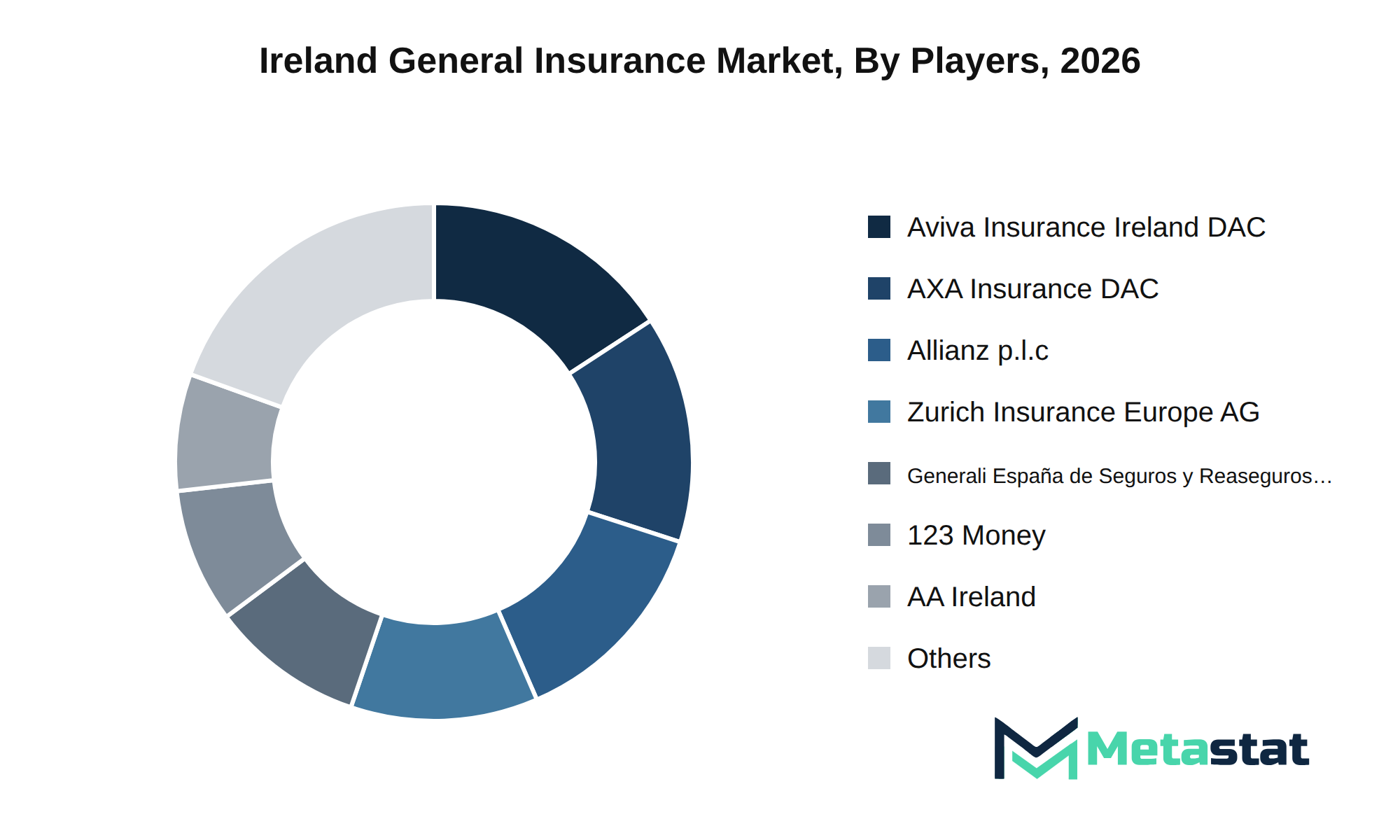
The Ireland General Insurance market features several prominent players competing across various segments and customer types. Strategic consolidation and partnerships enhance the competitive positioning of companies like Aviva Insurance Ireland DAC, AXA Insurance DAC, and Allianz p.l.c. These firms employ diverse go-to-market strategies that focus on customer retention and product differentiation, which are essential for maintaining brand equity in a market characterized by increasing competition.
New entrants pose a threat to established firms, creating challenges regarding barriers to entry and disruption dynamics. Companies including Generali España de Seguros y Reaseguros, S.A. (RedClick) and Zurich Insurance Europe AG adopt innovative models to counteract the influence of startups. The ongoing development of proprietary technology moats and robust R&D pipelines provides a competitive edge to industry participants, facilitating their ability to respond to evolving customer demands.
The future competitive outlook of the Ireland General Insurance market remains focused on strategic growth vectors and defensive imperatives. Players like FBD Insurance Group Ltd. and Chubb Limited leverage supply chain dominance and procurement leverage to optimize efficiency and reduce costs. Collaborative initiatives, including joint ventures and alliances, aim to enhance service offerings and expand market share, ensuring companies remain resilient amid industry challenges.
Market size is forecast to rise from USD 4,730.5 million in 2025 to over USD 6,041.1 million by 2033. The base case reflects a compound annual growth rate (CAGR) of 3.1%. In a bullish scenario, accelerated adoption of next-generation technologies and favorable regulatory changes could enhance overall market performance, leading to increased investment and consumer confidence. Conversely, a bearish outlook influenced by economic downturns or geopolitical tensions hinders growth, causing fluctuations in demand within the Ireland General Insurance market.
Structural shifts in consumption patterns and evolving consumer preferences necessitate adaptation by insurers. Companies focusing on innovation and enhanced customer engagement strategies are likely to position themselves favorably. Regulatory evolution and compliance milestones impact operational frameworks, requiring firms to align their strategies with emerging standards. Continued investment in infrastructure and strategic capital allocation supports the growth trajectory of the market. Overall, a balanced approach addressing both opportunities and challenges drives future growth in the Ireland General Insurance market.
The report strategically identifies and profiles the key market players and analyses their core competencies in each sub-segment of the General Insurance market.
Report Attributes | Details |
Study Period | 2021-2033 |
Base Year | 2025 |
Estimated Year | 2026 |
Forecast Period | 2026-2033 |
Historical Period | 2021-2025 |
Growth Rate | CAGR 3.1% from 2026 to 2033 |
Revenue Unit | USD million |
Segmentation | By Insurance Type, Customer Type, Coverage Type, Distribution Channel, and Region |
Find answers to common questions about this report
The General Insurance market in Ireland was valued at USD 4,730.5 million in 2025.
The General Insurance market is expected to grow at a CAGR of 3.1% during the forecast period from 2026 to 2033.
Private Motor Insurance leads the Ireland General Insurance market with a value of USD 2,230.9 million in 2026. This segment represents the largest share compared to other insurance types.
The key drivers for the Ireland General Insurance market include evolving consumer behaviors influenced by urbanization and an aging population, which increase demand for comprehensive coverage solutions. Technological advancements enhance customer engagement and streamline the application process, prompting insurers to invest in innovative technologies to improve service delivery.
Regulatory challenges increase costs and complexity for insurers, diverting resources from growth-oriented initiatives. Macroeconomic headwinds, including inflationary pressures, limit marketing and product development budgets, affecting overall demand for insurance products. talent shortages hinder the adoption of necessary technological advancements, further restraining market growth.
Evolving consumer behaviors driven by changing lifestyles, urbanization, and an aging population favor product adoption in the Ireland General Insurance market. Increased awareness of personal and financial security, along with the widespread adoption of digital platforms, enhances access to insurance information and purchasing options, facilitating customer engagement and driving demand for comprehensive coverage solutions.
The General Insurance market is estimated to reach a valuation of USD 6,041.1 million by 2033.
Top players operating in the General Insurance industry include Aviva Insurance Ireland DAC, Allianz p.l.c., AXA Insurance DAC, Zurich Insurance Europe AG, FBD Insurance Group Ltd., and Chubb Limited.
The private motor insurance segment is projected to reach USD 2,645.4 million by 2033.
The home insurance segment is expected to grow at a CAGR of 2.4% through 2033.
Choose Your License
Ireland General Insurance Market
Explore related market intelligence reports worth reading alongside this one.
Starting from
$2950
Starting from
$2950