
LEAD ANALYST
Utkarsh Khirodkar is a Lead Market Research Analyst at MetaStat Insight, specializing in market intelligence, technology sector assessments, and competitive strategy.

Global IT Training Market Size, Share, By Training Type (Instructor-Led Training, Virtual Instructor-Led Training, Self-Paced Online Training, Hands-On Lab and Simulation Training, Blended Training, Certification Preparation Training and Corporate/Customized Training), By Training Domain (IT Infrastructure & Networking, Software Development, Database & Big Data, Cloud Computing, Cybersecurity, Data Analytics & AI, Enterprise Applications, DevOps & Automation and Others), By Organization Size (Small and Medium-Sized Enterprises and Large Enterprises), By End User (Corporate, Schools & Colleges, Government & Public Sector, Individual Professionals & Career Learners and Others), Industry Analysis, Growth, Trends, and Forecast, 2026-2033
Report ID
MSI-5183
Published
September, 2026
Pages
298 Pages
Format
Historical
Base year
Forecast
Forecast period
Report Details
Choose Your License
Global IT Training Market
The global IT Training market was valued at USD 83.7 billion in 2025 and is projected to reach USD 157.3 billion by 2033, growing at a CAGR of 8.2% over the forecast period.
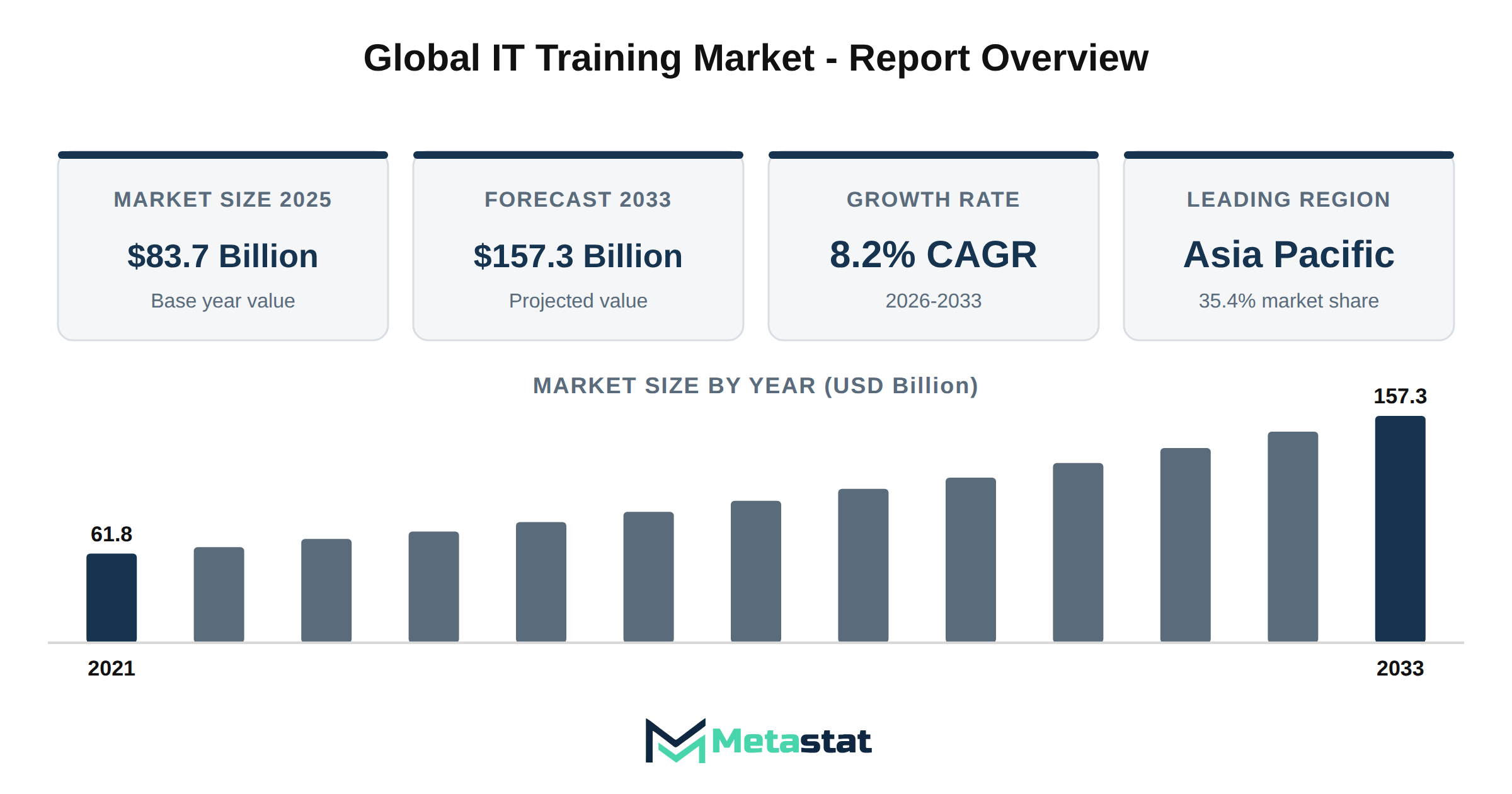
The IT Training market reached a valuation of USD 83.7 billion in 2025, reflecting a growth trend that has emerged since its valuation of USD 61.8 billion in 2021. The market is projected to expand to USD 157.3 billion by 2033, representing a compound annual growth rate (CAGR) of 8.2% during the forecast period from 2026 to 2033. This growth trajectory indicates significant demand for IT training solutions across various industries, driven by rapid technological advancements and the increasing need for skilled professionals in the IT sector.
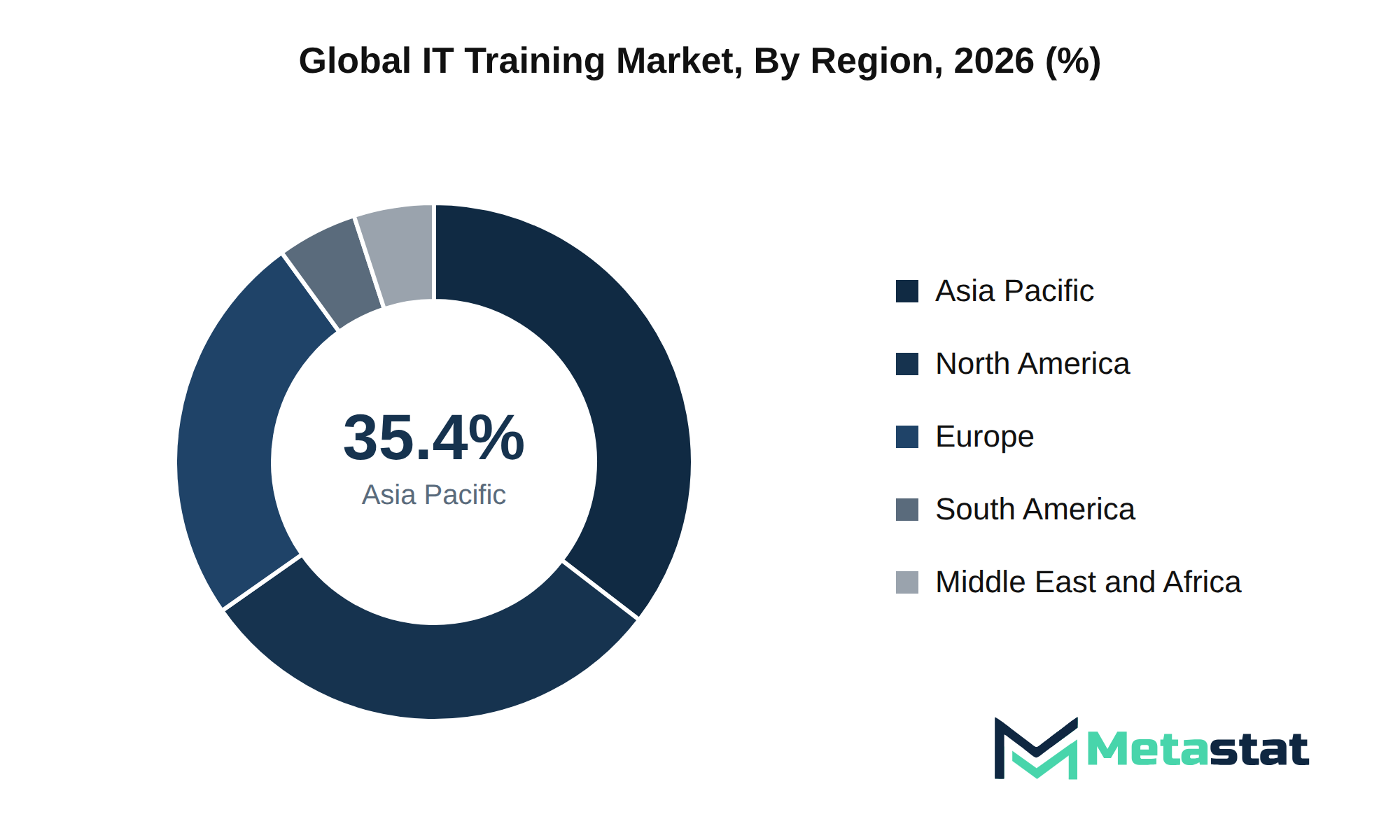
Regional dynamics significantly influence the IT Training market, with Asia Pacific holding the largest share at 35.4% in 2025. North America follows closely with a 29.8% share, while Europe accounts for 24.7%. The diverse regulatory environments and market conditions across these regions create unique opportunities and challenges for training providers. Companies operating in the market address these regional complexities to effectively capture growth opportunities.
The market comprises several segments, including training types, domains, organization sizes, and end users. Among training types, self-paced online training is expected to experience substantial growth, becoming a preferred choice for learners seeking flexibility and convenience. Instructor-led training remains prominent, while virtual instructor-led training is anticipated to gain traction, driven by the shift towards remote learning. In the domain of training, IT infrastructure and networking, along with software development, represent critical areas of focus, given the ongoing digital transformation across industries.
Organizational size significantly impacts training demand, with small and medium-sized enterprises representing a growing segment. These organizations increasingly invest in IT training to enhance employee skills and remain competitive in the evolving digital landscape. End users, including corporate entities and educational institutions, contribute significantly to market growth, with corporate training initiatives expanding to address skills gaps in various sectors.
The landscape of the IT Training market continues to evolve owing to a variety of factors impacting its growth trajectory. Regulatory compliance and adherence to industry standards play critical roles in shaping the training offerings available to organizations. The increasing emphasis on cybersecurity and data protection mandates necessitates robust training programs that align with these regulations, thereby enhancing the overall competency of the workforce.
Disruption across various sectors has prompted organizations to invest significantly in research and development (R&D) to innovate their training methodologies. Next-generation training solutions, including immersive technologies including augmented reality (AR) and virtual reality (VR), are gaining traction, enabling more interactive and effective learning experiences. This shift towards innovative training formats supports the drive for skill enhancement in response to rapidly changing technological landscapes.
Sustainable transformation initiatives reshape organizational priorities, leading to an increased focus on decarbonization and circular economy dynamics. Companies are exploring training programs that emphasize sustainable practices, thereby equipping employees with the knowledge required to implement eco-friendly operational strategies. This alignment with sustainability goals contributes to the market's growth by creating a workforce that supports corporate environmental objectives.
The supply chain landscape for training services is undergoing significant changes, influenced by global sourcing dynamics and evolving logistical architectures. Organizations increasingly explore partnerships with training providers that offer flexible, tailored solutions to meet specific workforce needs. This strategic shift enhances the accessibility and effectiveness of training programs, ultimately driving adoption within various sectors.
Market fragmentation persists, with numerous training providers vying for attention in a competitive environment. Mergers and acquisitions (M&A) activity within the sector indicates a trend towards consolidation, enabling companies to expand their service offerings and enhance their competitive positioning. This dynamic influences the value chain, prompting organizations to reassess their procurement strategies to ensure alignment with training requirements.
The customer journey within the IT Training market evolves, reflecting changing expectations and the demand for personalized learning experiences. Organizations prioritize capital allocation towards training initiatives that align with strategic objectives, ensuring investments yield measurable returns in workforce capability and productivity. Infrastructure investments are critical in supporting the delivery of innovative training formats, enabling businesses to remain competitive in the face of technological advancements.
Looking ahead, the strategic outlook for the IT Training market appears promising, driven by the ongoing evolution of technology and the increasing recognition of workforce development because a crucial component of business success. Corporate imperatives to enhance employee skills and adapt to industry changes will continue to shape the market, presenting high-value recommendations for stakeholders to consider in their investment strategies.
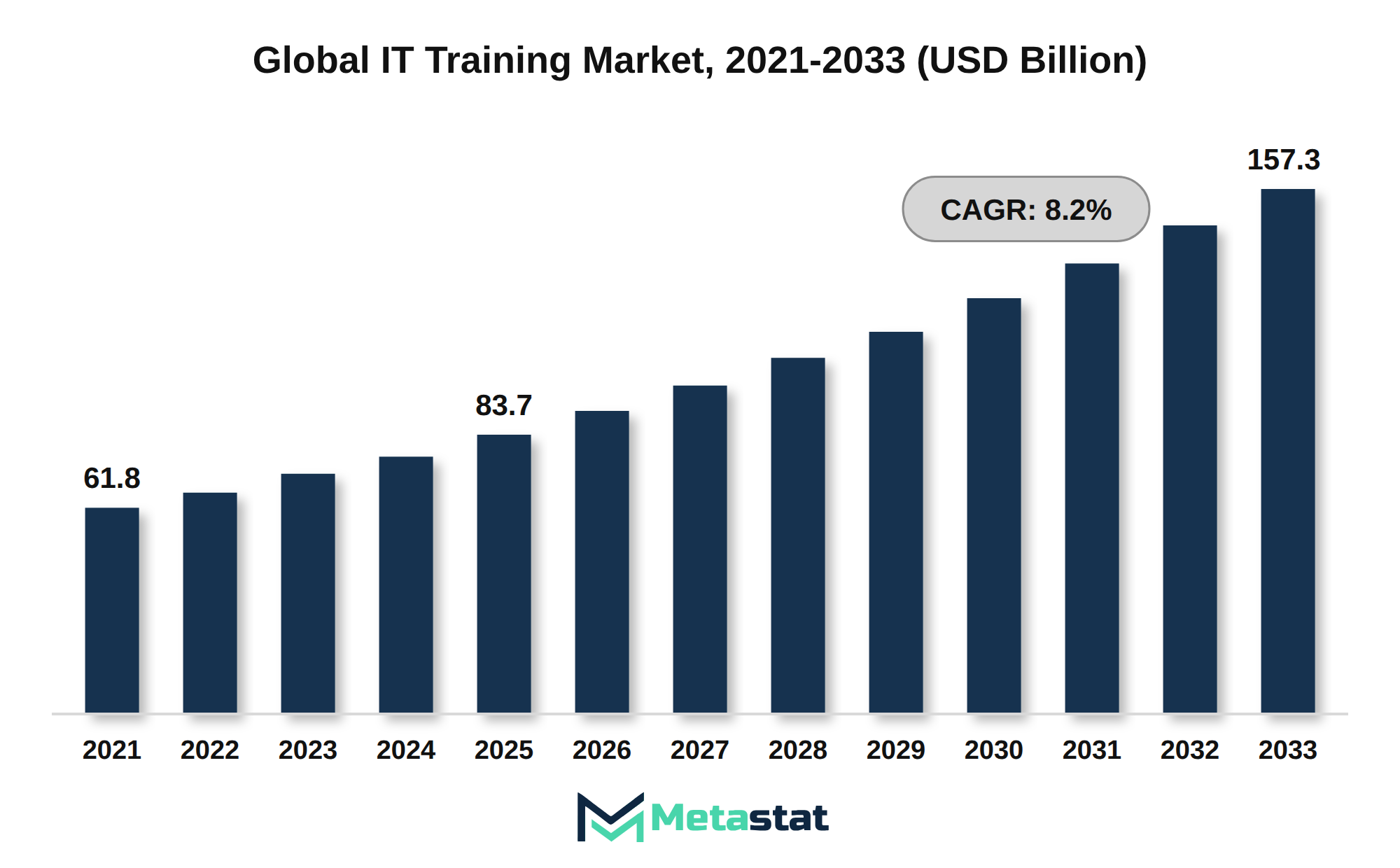
The IT Training market experiences significant growth due to digital transformation initiatives across various industries. Organizations increasingly invest in training programs to enhance their workforce's digital skills, reflecting the shift towards automation and artificial intelligence. This trend stems from the remain competitive in a technological landscape.
Specific industries, including finance, healthcare, and manufacturing, actively pursue digital transformation to improve operational efficiency and customer engagement. By digitizing legacy processes and adopting new software solutions, companies face heightened demand for skilled professionals capable of navigating these changes. Operational productivity gains associated with digital adoption reinforce the need for comprehensive training programs, directly benefiting the market.
The transition to digital platforms influences consumer behaviors, with an emphasis on upskilling and reskilling employees. This shift supports a culture of continuous learning within organizations, stimulating investment in IT training solutions. The market expands, reflecting the strategic importance of equipping workforces with the necessary competencies to thrive in a digital environment.
The IT Training market benefits from an increasing focus on operational productivity across various industries. Companies seek to enhance efficiency and reduce costs, prompting investment in training initiatives that improve employee skills and capabilities. This emphasis on productivity aligns with broader macro-economic factors, including GDP growth and favorable capital investment environments, which drive companies to prioritize workforce development.
Organizations recognize that effective training solutions, including self-paced online training and hands-on lab experiences, enhance competency and streamline operations. The shift in consumer behavior, driven by evolving market demands, necessitates continual skill enhancement. The integration of advanced technologies, including automation and artificial intelligence, further increases the need for comprehensive training programs.
While businesses strive for competitive advantage, investment in the IT Training market strengthens. Initiatives focusing on labor optimization and process streamlining lead to improved operational outcomes. The commitment to resource stewardship and sustainability influences training programs. Organizations aim to develop a workforce equipped with the skills to navigate evolving market challenges.
This dynamic environment reinforces the IT Training market’s role in supporting organizational goals and responding to changing consumer preferences. The future of the market hinges on its ability to adapt to these influences, ensuring that training solutions align with both current and emerging operational needs.
The IT Training market faces hurdles owing to regulatory compliance and macroeconomic challenges that impede growth. Compliance requirements related to data protection and privacy create complexities for training providers, necessitating increased investment in policy adherence. Such compliance hurdles often lead to increased operational costs, impacting suppliers disproportionately, particularly smaller firms that struggle with resource allocation.
Macroeconomic headwinds, including inflationary pressures, contribute to rising costs for training services. Increased expenses for materials, labor, and technology push training providers to adjust their pricing strategies, limiting access for end users including corporate clients and individual professionals. These economic conditions restrict spending on IT training, influencing demand across various segments.
Supply chain disruptions and geopolitical instability further complicate the market dynamics. Training providers rely heavily on technology resources, and delays in procurement hamper the timely delivery of essential training programs. This situation adversely affects customer satisfaction and retention rates, compelling companies to reconsider their training solutions. The market's response to these challenges shapes the competitive landscape, because organizations seek to optimize available resources.
Infrastructure gaps and connectivity deficits inhibit the expansion of IT training access. Many regions lack the necessary technological foundations to support advanced training methodologies, including virtual instructor-led training and hands-on lab simulations. This limitation poses restrictions on potential learners, especially in underdeveloped areas, and contributes to market fragmentation, where access and quality of training vary significantly across different geographic locations.
The IT Training market encounters challenges associated with a shortage of skilled labor. A lack of qualified trainers and professionals capable of delivering high-quality training programs leads to a talent gap that stymies growth. This shortage impacts the ability of organizations to implement effective training solutions, ultimately affecting market penetration.
Geopolitical fragmentation significantly influences the IT Training market, resulting in trade deficits and tariff friction that complicate international collaborations. These tensions create unpredictability in client budgets and training investments, particularly for organizations relying on global talent and resources. The market experiences heightened sensitivity to such disruptions, which impacts growth forecasts and operational strategies.
Technological disruptions and complex research and development integrations present additional challenges. Organizations struggle to align their training programs with rapid technological advancements, complicating their ability to maintain a skilled workforce. This situation leads to talent retention pressures, particularly among small and medium-sized enterprises that cannot match the competitive compensation packages offered by larger firms. Workforce skill gaps widen, hindering the overall effectiveness of training initiatives.
Logistics disruptions and supply chain instability further exacerbate these challenges. The market encounters difficulties sourcing training materials and technologies, contributing to rising input costs. Pricing compression and margin pressures become prevalent, particularly affecting smaller training providers who face difficulties maintaining profitability amid these rising costs.
Environmental lifecycle footprints and sustainability demands require organizations to rethink their training strategies. Companies increasingly prioritize eco-friendly practices, which necessitates investment in innovative training solutions that emphasize sustainability. This shift increases the complexity of program implementation, driven by firms balancing compliance with evolving legal liabilities while addressing market saturation and substitution vector pressures. Such dynamics reshape the competitive landscape, influencing how the IT Training market evolves in response to external pressures.
The IT Training market exhibits substantial opportunities driven by emerging regional demands. Regions including Asia Pacific experience increasing investments in digital infrastructure, which enhances the necessity for skilled IT professionals. Expanding economies in countries like India and China generate a strong demand for IT training services, ensuring a steady influx of learners seeking relevant skills.
Infrastructure modernization across various sectors, particularly in telecommunications and finance, necessitates a skilled workforce proficient in the latest technologies. This trend leads organizations to prioritize training programs that align with technological disruptions, thereby enhancing operational efficiency and competitive advantage. The transition towards cloud computing and cybersecurity emphasizes the need for specialized training in these domains.
Geographical expansion strategies by leading training providers create opportunities for market penetration in underserved regions. Innovative training methods, including virtual instructor-led and self-paced online formats, cater to diverse learning preferences, allowing access to a broader audience. This includes corporate clients, educational institutions, and individual professionals, each seeking tailored training solutions that address specific industry requirements.
The drive for sustainability further influences the market, prompting organizations to align training programs with eco-friendly practices. This shift encourages the integration of green transformations into curricula, enhancing the relevance of training in an environmentally conscious landscape. Strategies focusing on product integration and niche application growth address specific industry challenges, ensuring a comprehensive learning experience for participants.
Asset life-cycle extensions and maintenance upgrades create additional demand for training in emerging technologies. Organizations seek to maximize operational yield through process automation, making training programs focusing on these areas essential. The evolution of buying behaviors, along with digital procurement shifts, signals a transition towards more agile and responsive training solutions in the market.
The Global IT Training market is segmented based on Training Type, Training Domain, Organization Size, and End User.
Valued at USD 21.1 billion in 2026, the Instructor-Led Training segment is projected to reach USD 31.5 billion by 2033, reflecting a CAGR of 5.9% during the forecast period. Factors driving growth in this segment include an increasing emphasis on hands-on learning experiences and the value of personalized instruction in complex IT subjects. Organizations seeking to enhance their workforce's skills prioritize this training method, which enhances engagement and retention of knowledge. Corporate demand for certification programs supports segment expansion, driven by the necessity for professionals to stay abreast of evolving technologies.
Technological maturation plays a critical role in shaping the Instructor-Led Training segment. Advancements in training methodologies and tools enhance the effectiveness of instructional delivery, leading to greater learner satisfaction and improved outcomes. The market benefits from a shift in consumption patterns, where learners prefer interactive and immersive training environments. Regulatory compliance standards within various industries create a sustained need for certified training, ensuring that employees are equipped with the necessary skills and knowledge to meet mandatory requirements.
Organizations exhibit a strategic focus on investing in instructor-led programs, recognizing their value in developing a competent workforce. The balance between costs associated with in-person training and the potential return on investment from enhanced employee performance becomes a crucial consideration. While pricing volatility in the broader market affects operational budgets, the demand for high-quality training persists, driven by continuous advancements in technology and the need for organizational agility. This dynamic highlights the critical importance of the Instructor-Led Training segment within the IT Training market.
Growth in the Virtual Instructor-Led Training segment aligns with the rising demand for flexible and accessible learning solutions. Organizations prioritize knowledge enhancement and technical skills development, driving significant interest in this training format. The expansion of remote work and digital collaboration fuels the adoption of virtual training. Educational institutions and corporate entities recognize the need for effective training solutions that accommodate diverse learning styles and schedules.
Technological advancements contribute to the segment's success by enhancing the quality of virtual training experiences. Tools for interactive simulations and real-time feedback improve engagement and knowledge retention among learners. Organizations focusing on cost-effective training solutions find virtual instructor-led training particularly appealing, reducing travel expenses while providing high-quality educational resources.
The Virtual Instructor-Led Training segment is projected to reach USD 20.4 billion by 2033, with a CAGR of 7.3% during the forecast period. This growth reflects the segment's potential to adapt to evolving market demands and technological innovations. Organizations pursue continuous improvement in skill development and compliance requirements, positioning virtual instructor-led training because a vital component in shaping the future of education in the IT Training market.
Self-Paced Online Training represents a growing segment within the IT Training market, projected to reach USD 50.3 billion by 2033. This trend arises from several primary demand drivers, including an increasing need for flexible learning options among professionals seeking to enhance their skills. Organizations recognize the importance of ongoing education to remain competitive in a changing technological environment.
Technological maturation facilitates the development of high-quality content and learning platforms that cater to varied learning styles. The expansion of internet access and improvements in digital infrastructure support the proliferation of self-paced training programs, making them accessible to wider audiences across different regions. Segments including Corporate, Schools and Colleges, and Individual Professionals drive adoption rates, reflecting the diverse needs of learners.
Pricing volatility in traditional training modalities contributes to the appeal of self-paced options, which generally offer lower costs and scalable solutions for organizations. Regulatory compliance standards further incentivize businesses to invest in training programs that ensure their workforce meets industry requirements. The ongoing evolution of content, including interactive modules and gamification elements, enhances user engagement and retention.
Strategic opportunity windows exist for providers to capture market share by offering tailored courses that address specific industry needs. Demand shifts towards personalized learning experiences, and organizations that invest in innovative self-paced training solutions gain a significant competitive edge. Overall, the increasing emphasis on skill development and adaptability supports the growth of the self-paced online training segment in the IT Training market.
Growth within the Hands-On Lab and Simulation Training segment is projected to occur at a CAGR of 10.9% during the forecast period. This segment's rise stems from a heightened demand for experiential learning methods that enhance practical skills through immersive environments. Educational institutions and corporate training programs increasingly adopt these methods to facilitate effective learning outcomes, driving demand across various industries.
Technological maturation influences the expansion of this segment. Advancements in virtual reality (VR) and augmented reality (AR) technologies enable more engaging training experiences, appealing to a broader audience. Organizations investing in these technologies recognize the potential for improved retention rates and real-world application of skills, prompting a shift toward hands-on training methodologies.
Product evolution within the market continues to adapt to changing user expectations. Increased incorporation of gamification elements and interactive components enhances user engagement, attracting participants seeking dynamic learning experiences. This evolution positions the segment to capture a larger share of the IT Training market, appealing to both novice learners and experienced professionals aiming to upgrade their skill sets.
End-user dynamics indicate that corporate clients heavily invest in hands-on training to improve employee competency in critical IT skills. The growing emphasis on practical knowledge and real-world application influences training budgets, leading to a rise in spending on hands-on training solutions. Industries including technology, healthcare, and finance exhibit substantial demand for this training type, aiming to equip their workforce with the necessary skills to navigate complex challenges.
Regulatory compliance standards increasingly require organizations to ensure their workforce possesses up-to-date skills, further driving demand for hands-on training. Certifications and policy headwinds often necessitate continuous professional development, positioning this segment because a strategic response to evolving market demands. Consequently, investments in hands-on training are anticipated to rise, reinforcing its importance within the IT Training market.
Trends in blended training highlight a shift toward hybrid learning environments, integrating both in-person and digital training methods. This approach responds to the evolving needs of learners and organizations seeking flexibility and accessibility. A surge in demand for flexible training solutions arises from the increasing pace of technological change and the necessity for ongoing skills development. Organizations recognize the equip their workforce with relevant skills promptly, prompting a preference for blended training formats that combine traditional and modern methodologies.
Adoption of blended training enhances personalized learning experiences tailored to individual needs, improving engagement and retention among participants. Technological advancements, including Learning Management Systems (LMS) and virtual collaboration tools, enable integration of various training methods. This integration supports diverse learning styles, resulting in improved outcomes for learners across multiple sectors, including corporate and educational institutions.
Market expansion in blended training aligns with the growth of remote work and online education, leading to a broader audience for training providers. Organizations prioritizing employee development increasingly invest in blended training programs to develop a skilled workforce capable of navigating complex challenges. The emphasis on continuous learning and professional development drives demand for innovative training solutions that blend various instructional approaches.
Regulatory compliance standards and certifications play a significant role in shaping the uptake of blended training. Organizations seeking to meet industry-specific regulations leverage blended training solutions to ensure their staff stays compliant while gaining essential knowledge and skills. This focus on compliance further enhances the value proposition of blended training within the IT Training market, positioning it because a reliable option for organizations aiming to maintain industry standards.
Certification Preparation Training represents a crucial area within the IT Training market, focusing on equipping individuals with the necessary skills to pass certification exams in various IT domains. This segment experiences growth driven by the increasing demand for certified professionals across industries, particularly in technology, finance, and healthcare. Organizations emphasize certifications to ensure that their workforce possesses up-to-date knowledge and skills, enhancing organizational competitiveness.
Adoption of certification training is influenced by the continuous evolution of technology and industry standards, prompting professionals to pursue ongoing education. Technological maturation creates a heightened need for specific certifications that align with emerging technologies, leading to shifts in end-user dynamics. This segment enjoys robust interest from corporate entities, educational institutions, and individual professionals, reflecting an expanding consumer base dedicated to enhancing qualifications and career prospects.
Regulatory compliance standards significantly impact demand for certification training. Sectors including cybersecurity and data protection enforce stringent requirements for certified personnel. The evolving landscape of IT certifications necessitates constant updates in training materials and methodologies, ensuring relevance in a competitive job market. Organizations increasingly prioritize cost structures that support investment in employee certifications, balancing training expenses with long-term benefits.
This segment benefits from strategic opportunity windows, particularly in sectors facing skill shortages and technological advancements. Growing awareness of certification value among professionals drives consumption shifts, with individuals seeking specialized training that complements traditional education. This dynamic creates a favorable environment for certification preparation training, leading to investments in innovative teaching methods and resources that enhance learner engagement and success.
Growing interest in Corporate/Customized Training reflects the increasing demand for tailored educational solutions that align with specific organizational goals. Companies aim to enhance workforce capabilities and ensure employees possess the necessary skills to stay competitive in a rapidly changing technological environment. This training segment facilitates the development of specialized programs that address unique industry challenges.
Factors contributing to the segment's expansion include the heightened emphasis on employee upskilling and reskilling, driven by technological advancements. Organizations recognize the importance of investing in training that aligns with their specific operational needs. This focus leads to a more skilled workforce ready to tackle emerging challenges and encourages partnerships with training providers capable of delivering customized content.
End-user dynamics play a crucial role in shaping demand within the Corporate/Customized Training segment. Corporates increasingly seek training solutions that are flexible and scalable. This flexibility allows them to respond quickly to changing market conditions. The need for workforce agility influences the adoption of tailored training programs that adapt to evolving industry standards and technological developments.
Regulatory compliance standards significantly impact the development and delivery of Corporate/Customized Training. Organizations emphasize adherence to industry regulations and certifications. Maintaining compliance while enhancing employee knowledge remains critical. This need for compliance drives investments in training programs that improve skills and ensure that companies meet legal and operational requirements.
Pricing volatility remains a consideration within the segment, influenced by fluctuations in training material costs and instructor fees. Organizations assess their training budgets against the backdrop of evolving economic conditions. These conditions affect the overall investment in Corporate/Customized Training. Consequently, companies seek cost-effective solutions that deliver high-quality training without compromising on content relevance or delivery effectiveness.
Strategic opportunity windows arise from organizations identifying gaps in their training offerings. Companies increasingly focus on developing partnerships with specialized training providers who offer innovative solutions tailored to their unique requirements. This collaboration enhances the training experience and creates avenues for sustained growth within the IT Training market.
Valued at USD 17.8 billion in 2026, the IT Infrastructure & Networking segment is projected to reach USD 26.7 billion by 2033, at a CAGR of 5.9% during the forecast period. Primary demand drivers in this segment include the increasing reliance on digital infrastructure and the necessity for strong network capabilities to support extensive IT operations. Organizations prioritize training in IT infrastructure and networking to enhance operational efficiency and adapt to evolving technological demands.
Adoption of advanced training methods, including hands-on lab and simulation training, significantly influences segment expansion. These training methodologies provide practical skills and real-world scenarios, enabling professionals to address complex IT challenges effectively. The transition toward next-gen upgrades in network architecture and infrastructure systems drives demand for comprehensive training in this domain.
Technological maturation in IT infrastructure and networking facilitates the evolution of training programs, focusing on emerging technologies including cloud computing and cybersecurity. Enhanced training offerings align with ongoing consumption shifts, where businesses increasingly seek to upskill their workforce to remain competitive. Regulatory compliance standards, particularly in data protection and privacy, further highlight the importance of specialized training in IT infrastructure.
Cost structures within the segment reflect the need for continuous investment in training solutions and certification programs. Pricing volatility arises from fluctuations in technology adoption rates and the availability of skilled trainers in the market. However, strong demand from corporate clients fuels growth potential, pushing organizations to invest in upskilling programs that align with strategic objectives.
Overall, the IT Infrastructure & Networking segment demonstrates solid growth prospects, driven by the imperative for skilled professionals to navigate the complexities of modern IT environments. The evolving landscape of the IT Training market highlights significant investment opportunities for players focusing on tailored training solutions that cater to the specific needs of this domain.
Increasing demand for software development skills drives the growth of the Software Development segment within the IT Training market. Organizations in various industries prioritize software development training to enhance workforce capabilities and keep pace with rapid technological advancements. The surge in remote work necessitates the adoption of digital training solutions, further propelling this segment's expansion. Technological maturation influences training delivery methods, with a significant shift towards virtual and self-paced online training. Companies leverage these formats for flexibility and cost-effectiveness, aligning with the evolving preferences of learners. The segment is projected to reach USD 25.2 billion by 2033, growing at a CAGR of 7.4% during the forecast period. Emerging technologies including artificial intelligence and machine learning challenge educational institutions to adapt their curricula. Institutions offering relevant software development training capture greater market share. Corporate clients increasingly seek customized training solutions tailored to their specific needs, resulting in rising demand for bespoke training programs. Funding for software development education remains robust, with many businesses investing in employee development to maintain competitive advantage. This strategic focus enhances organizational agility and innovation, contributing positively to market dynamics. While the IT Training market evolves, continued emphasis on software development training positions it for sustained growth.
Growing emphasis on data-driven decision-making significantly influences the demand for training in the Database & Big Data segment. Organizations across various industries recognize the importance of data analytics, driving the necessity for skilled professionals in this area. Rapid technological advancements in big data tools and platforms facilitate the evolution of training methodologies, enhancing the learning experience for participants.
The segment is projected to reach USD 14.2 billion by 2033. Continuous developments in cloud computing and data management technologies expand the training landscape, encouraging educational institutions and corporations to invest in specialized programs. Training providers adapt their curricula to incorporate the latest tools and industry best practices, ensuring relevance in a fast-changing environment.
Corporate clients demonstrate heightened interest in customized training solutions that address specific organizational needs, further propelling market growth. Certifications related to data management and analytics establish a benchmark for professionals, enhancing their employability in a competitive job market. The IT Training market experiences transformation driven by industry demand and the evolving landscape of technology.
Significant growth in the cloud computing training segment aligns with the increasing reliance on cloud solutions by organizations across various industries. Organizations recognize the necessity for skilled professionals capable of managing cloud infrastructure and services, creating robust demand for specialized training programs. Cloud Computing segment is projected to grow at a CAGR of 10.2% during the forecast period. This growth is spurred by technological advancements and the ongoing evolution of cloud platforms, which require continuous education and certification for professionals to stay competitive in the market.
Investment in cloud computing training reflects the shift towards digital transformation strategies. Cloud adoption trends highlight a preference for flexible learning models that accommodate diverse learning preferences, with online and virtual instructor-led training gaining prominence. While businesses increasingly integrate cloud solutions, the demand for training in this domain presents opportunities for education providers to expand their offerings and enhance service delivery.
Market dynamics will continue to evolve owing to pressures related to talent shortages in cloud expertise. Investments in cloud computing training will address this challenge, equipping professionals with the necessary skills to drive innovation and operational efficiency. This segment contributes significantly to the overall IT Training market, supporting growth initiatives and enhancing workforce capabilities across different sectors.
Rapid advancements in technology have led to a significant demand for cybersecurity training. Increasing cyber threats and data breaches across industries push organizations to prioritize cybersecurity education for their employees. This heightened focus on securing digital assets drives investment in training programs that equip professionals with the necessary skills to combat evolving security challenges.
Organizations recognize the necessity of creating a culture of security awareness, resulting in increased adoption of cybersecurity training initiatives. Regulatory compliance standards shape training demands, with businesses adhering to frameworks that mandate employee education on security protocols and practices. Certifications in cybersecurity enhance professional credibility and create pathways for career advancement, motivating individuals to pursue these training options.
The ongoing technological maturation in cybersecurity tools and methodologies encourages continuous learning and development within the field. Next-generation upgrades and product evolution in cybersecurity create opportunities for training providers to offer relevant courses that address emerging threats and advancements. This dynamic environment contributes to the growth of the IT Training market by ensuring that training content remains effective and aligned with industry needs.
Investment in cybersecurity training prepares organizations for the complexities of modern threats, enhancing overall resilience. The market for training aligns with a strategic opportunity to build a workforce capable of managing and mitigating risks associated with cyber incidents. While businesses increasingly rely on technology, the demand for skilled cybersecurity professionals continues to surge, reinforcing the importance of comprehensive training solutions.
Growing recognition of data analytics and artificial intelligence (AI) drives the development of targeted training programs within the IT Training market. Organizations increasingly prioritize data-driven decision-making, which drives the demand for skilled professionals capable of analyzing and interpreting complex data sets. This demand influences educational institutions and training providers to enhance their curricula to include relevant data analytics and AI competencies.
Technological maturation acts because a catalyst for segment expansion. Advancements in AI technologies necessitate continuous upgrades to training content, ensuring it aligns with industry standards. While organizations integrate AI into their operations, training programs evolve to cover emerging tools, methodologies, and best practices. This evolution attracts a wider audience, including corporate users, schools, and individual learners seeking to enhance their skills.
End-user dynamics play a significant role in shaping training offerings. Corporations increasingly invest in employee training to remain competitive in a data-driven economy. Educational institutions recognize the importance of including data analytics and AI in their programs, catering to a growing student interest in these fields. This shift creates opportunities for training providers to forge partnerships with businesses and educational entities, expanding their reach and enhancing their market presence.
Consumption shifts towards flexible learning solutions reflect changing consumer preferences. Learners increasingly prefer online and self-paced training options, allowing them to engage with content at their convenience. Training providers have adapted by offering diverse formats, including virtual and hybrid models, which accommodate different learning styles while addressing the evolving needs of the market.
Regulatory compliance standards have begun to influence training requirements, especially in industries including finance and healthcare. Organizations operating in these sectors require employees to have a solid understanding of data governance, compliance frameworks, and ethical considerations surrounding data usage. Consequently, training programs increasingly incorporate these essential topics, ensuring that learners are well-equipped to navigate regulatory landscapes.
Strategic opportunity windows arise from evolving market demands and technological advancements. Training providers that actively monitor industry trends and adapt their offerings accordingly gain a competitive edge. Investment in curriculum development, instructor training, and technological infrastructure enhances the capability to deliver high-quality training solutions tailored to the needs of the IT Training market.
Demand for training in Enterprise Applications reflects the increasing reliance on technology across various industries. Organizations seek to enhance their workforce's skills in using enterprise software solutions, driving the necessity for comprehensive training programs. Adoption of Enterprise Applications training aligns with the rapid integration of digital tools in business processes, enhancing operational efficiency and productivity.
Segment expansion drives a focus on evolving technologies and software solutions, including enterprise resource planning (ERP), customer relationship management (CRM), and other applications that streamline business operations. The need for continual updates and training regarding these applications highlights the critical role of education in maintaining competitive advantage. Cost structures associated with implementing new enterprise solutions heighten the importance of training to maximize return on investment.
End-user dynamics play a significant part in shaping the training landscape for Enterprise Applications. Corporate clients prioritize training programs that align with organizational goals and workforce development strategies. Trends indicate a shift toward certification programs and compliance training to meet regulatory standards, driving demand within the IT Training market.
Technological maturation contributes to the establishment of strategic opportunity windows, presenting avenues for training providers to develop targeted programs that cater to specific industry needs. The demand for skilled professionals proficient in emerging technologies continues to grow, prompting educational institutions and corporate training providers to innovate their offerings. Consequently, investment in Enterprise Applications training positions organizations for success in an increasingly technology-driven environment.
Demand for training in DevOps and automation reflects the increasing complexity of IT environments and the emphasis on agile methodologies in software development. Organizations adopt these practices to improve operational efficiency and deliver software faster, creating a significant need for skilled professionals. Training in this domain offers essential knowledge in automation tools, continuous integration, and deployment techniques, aligning with the broader trends in cloud computing and IT infrastructure.
Technological advancements fuel growth by enhancing tools and platforms used in DevOps, driving organizations to seek education on the latest methodologies. This shift supports the expansion of training offerings tailored to DevOps and automation, promoting the adoption of best practices across industries. Corporate investments in upskilling existing staff ensure resilience against technological obsolescence and align workforce capabilities with evolving industry standards.
Industry-wide transitions toward automation create strategic opportunity windows, allowing training providers to introduce innovative programs that meet the demands of businesses striving for competitive advantages. The rising emphasis on regulatory compliance and certifications in automation influences training dynamics, positioning the IT Training market because a crucial component in workforce development. End-user dynamics show growing interest from corporate entities, schools, and individual learners eager to advance their skills in this critical area.
Emerging technologies and IT governance drive significant interest in training programs focused on IT Service Management (ITSM), cybersecurity, and virtualization. Organizations prioritize these areas to maintain compliance with industry regulations while enhancing operational efficiency. The growing importance of regulatory compliance standards creates continuous demand for tailored training solutions, ensuring that professionals remain well-versed in the latest compliance requirements.
Organizations increasingly recognize the necessity of investing in training related to IT governance and compliance. This demand reflects an ongoing commitment to mitigating risks associated with data protection and regulatory breaches. Adoption of training solutions addressing emerging technologies ensures that employees possess the skills required to navigate a complex digital landscape, thereby enhancing overall productivity and innovation.
Competitive pressures within the IT Training market highlight the need for organizations to create a culture of continuous learning. Investment in training resources facilitates the development of technical expertise across various domains, including virtualization and emerging technologies. This strategic focus on workforce development positions organizations to leverage technological advancements effectively, ultimately driving growth and adaptability in an evolving market.
Valued at USD 31.5 billion in 2026, the Small and Medium-Sized Enterprises segment is projected to reach USD 58.2 billion by 2033, at a CAGR of 9.2% during the forecast period. This segment's growth is significantly influenced by increasing adoption of digital transformation initiatives among small and medium-sized enterprises, which fuels demand for IT training tailored to enhance workforce skills. Budget constraints dictate training choices, prompting these enterprises to favor cost-effective training solutions, including self-paced online training and virtual instructor-led training. Regulatory compliance standards compel organizations to invest in training programs that ensure teams remain updated with evolving industry practices, further driving spending in the market.
Technological maturation within the IT landscape prompts small and medium-sized enterprises to seek ongoing educational opportunities to remain competitive. Innovations in training delivery methods, including hands-on labs and simulation training, enhance engagement and effectiveness, contributing to a shift in learning preferences. These enterprises recognize the need for skill development in critical areas, including cybersecurity and data analytics, aligning with broader trends in workforce development. Corporate training programs tailored for small and medium-sized enterprises support employee retention and enhance long-term operational efficiency.
Large Enterprises segment is estimated to reach USD 99.1 billion by 2033, at a CAGR of 7.6% during the forecast period. A growing focus on digital transformation drives the demand for IT training among large enterprises, driven by businesses seeking to enhance workforce capabilities in line with technological advancements. Increasing reliance on data analytics, cloud computing, and cybersecurity requires comprehensive training solutions to ensure staff remain proficient in relevant skills. Adoption of emerging technologies accelerates the need for targeted training programs that address specific organizational challenges and objectives.
Compliance with regulatory standards necessitates ongoing training to maintain industry certifications and ensure knowledge of best practices. Large enterprises often allocate substantial budgets toward training initiatives, recognizing the strategic value of a skilled workforce in achieving competitive advantages. While market dynamics shift, organizations that invest in employee development gain increased agility in response to changing market conditions. Overall, the IT Training market continues to expand, driven by the commitment of large enterprises to create a culture of continuous learning and innovation.
Valued at USD 52.9 billion in 2026, the Corporate segment is projected to reach USD 88.1 billion by 2033, at a CAGR of 7.5% during the forecast period. This growth aligns with the increasing investment in employee skill development within organizations, driven by the rapid pace of technological advancements and the need for digital transformation. Corporate clients increasingly prioritize training solutions that enhance staff competencies in areas including cloud computing, cybersecurity, and data analytics. The market experiences heightened demand for flexible delivery methods, including virtual instructor-led training and self-paced online options, catering to the diverse learning preferences of employees.
Technological maturation plays a critical role in shaping the Corporate segment, with organizations adopting next-generation training tools and platforms that facilitate more effective learning experiences. The emphasis on regulatory compliance further influences corporate training priorities, prompting organizations to seek IT training programs that ensure adherence to industry standards and best practices. Certifications and recognized credentials drive demand, resulting from companies aiming to improve employee qualifications and maintain competitive advantages in their respective industries.
The ongoing expansion of the IT Training market reflects the strategic opportunity windows created by the increasing reliance on technology in business processes. While organizations navigate the complexities of modern IT environments, investments in training are essential for establishing resilient and skilled workforces. Overall, the Corporate segment continues to evolve, adapting to market demands and technological trends while delivering measurable benefits to organizations investing in employee development.
Growth in the Schools & Colleges segment aligns with the increasing focus on integrating technology into educational curricula. Educational institutions prioritize equipping students with essential IT skills, driving demand for various training programs. With a projected reach of USD 31.5 billion by 2033, the segment exhibits a compound annual growth rate (CAGR) of 7% during the forecast period. This growth results from the continuous evolution of technology and the ongoing necessity for educational institutions to adapt to changing market demands.
Technological maturation influences the adoption of advanced IT training solutions within schools and colleges. Institutions increasingly invest in virtual instructor-led training and self-paced online training formats, enhancing accessibility and flexibility for learners. These formats cater to diverse learning styles, promoting engagement and effective knowledge transfer. While educational institutions strive to remain competitive, incorporating innovative training approaches becomes vital.
Consumption shifts towards online and blended learning models reflect the changing preferences of students and educators. The demand for IT training aligns with the imperative to prepare students for the evolving job market, emphasizing technical skills and digital literacy. Government initiatives and educational policies supporting digital transformation further contribute to this segment's growth, encouraging institutions to invest in comprehensive IT training programs.
Cost structures within educational institutions impact the choices made regarding IT training investments. Budget allocations for technology and training undergo increasing scrutiny, necessitating a clear demonstration of the return on investment. Institutions focusing on effective training strategies experience improved student outcomes, leading to enhanced institutional reputation and competitive advantage.
The Schools & Colleges segment in the IT Training market is positioned for growth driven by technological advancements, evolving educational needs, and strategic investments in training solutions. The forecasted increase to USD 31.5 billion indicates strong demand for tailored educational programs that address the skills gap in the rapidly changing technological landscape.
Valued at USD 20.4 billion by 2033, the Government & Public Sector segment reflects a strategic focus on enhancing workforce capabilities through IT training. The rising emphasis on digital transformation within governmental entities drives the adoption of training programs, aiming to equip employees with skills necessary for modern technology environments. Increasing regulatory compliance standards further heighten the demand for specific training certifications that align with national and international mandates.
Investment in cybersecurity training is particularly significant, given the heightened concerns regarding data breaches and cyber threats within public sector organizations. This investment supports the development of robust cybersecurity measures, creating a culture of security awareness among employees. The market benefits from strategic opportunity windows attributed to government budgets increasingly allocating funds towards technology upgrades and employee education, ensuring that public sector organizations remain competitive and effective.
With the government's acknowledgment of the importance of IT skills in enhancing service delivery, the demand for training aligns with broader goals of efficiency and innovation. This ongoing evolution within the Government & Public Sector serves because a critical driver for the overall IT Training market, positioning it for sustained growth and development in the coming years.
Rapid growth in the Individual Professionals & Career Learners segment reflects the increasing recognition of continuous education and upskilling in the workforce. This segment is projected to grow at a CAGR of 15.1% during the forecast period. The rise in demand stems from individual professionals seeking to enhance their skills to remain competitive in an evolving job market. Increased accessibility of online learning platforms and flexible learning options significantly contribute to segment expansion. Organizations and educational institutions prioritize certifications that validate skills, driving professionals to pursue training that aligns with industry standards.
Technological advancements further fuel the demand for specialized training in areas including data analytics, cybersecurity, and software development. Individuals increasingly seek practical, hands-on experiences, which shape the delivery methods within the IT Training market. The prevalence of self-paced online training options allows learners to personalize their learning journeys. Professionals recognize the value of staying current with emerging technologies, resulting in heightened engagement from this demographic.
Investment in training initiatives by individuals emphasizes the need for professional growth and career advancement. This shift in consumption patterns highlights a broader trend towards lifelong learning, impacting the overall landscape of the IT Training market. The Individual Professionals & Career Learners segment's growth trajectory aligns with the broader demand for effective, relevant training, ultimately enhancing workforce capabilities across various industries.
Nonprofits, professional associations, training institutes, and NGOs play a critical role in the IT Training market, emphasizing the need for skills development and knowledge dissemination in various sectors. These organizations increasingly adopt training programs to enhance workforce capabilities, addressing skill gaps in both emerging and established technologies. The focus on compliance with regulatory standards and industry certifications drives demand for specialized training solutions, enabling career advancement for individuals within these entities.
Technological maturation significantly influences the evolution of training offerings, with organizations integrating next-generation training methodologies, including virtual instructor-led and self-paced online training. This shift accommodates diverse learning preferences and enhances the accessibility of training resources. The evolution of training products aligns with the increasing recognition of the importance of IT skills, particularly in the context of digital transformation across sectors.
End-use dynamics indicate a rising trend towards collaborative partnerships between training providers and these organizations. Such collaborations enhance training relevance, ensuring that the content meets the specific needs of the sector. Investment in training solutions reflects a strategic opportunity to improve operational efficiency and effectiveness, positioning organizations to better adapt to the rapidly changing technological landscape.
This segment is influenced by consumption shifts, where a growing number of individuals seek training to remain competitive in the job market. This shift creates a culture of continuous learning, essential for professionals aiming to keep pace with technological advancements. Organizations increasingly recognize that equipping their workforce with relevant IT skills is vital for organizational growth and sustainability.
Based on geography, the Global IT Training market is divided into North America, Europe, Asia-Pacific, South America, Middle East, and Africa.
North America demonstrates a strong trajectory within the IT Training market, characterized by a projected expansion at a CAGR of 8.2% throughout the forecast period, reaching a market size of USD 44.5 billion by the end of 2033. This growth stems from significant investments in digital transformation and workforce development initiatives by organizations across the United States, Canada, and Mexico. The increasing demand for skilled IT professionals in these countries drives adoption rates, particularly in sectors including cloud computing, cybersecurity, and software development.
The regional market benefits from a mature infrastructure and established training frameworks, enabling effective delivery of various training types, including instructor-led and virtual instructor-led training. Self-paced online training is anticipated to see substantial growth, responding to the evolving preferences of learners seeking flexible and accessible educational options. The corporate segment, valued at USD 52.9 billion in 2026, illustrates the significant investment organizations allocate toward employee training and skills enhancement.
North America holds a share of 29.8% of the global market in 2025, indicating a competitive landscape featuring several domestic market leaders. Companies including Microsoft, IBM, and Cisco Systems lead with diverse offerings and innovative training solutions. Strategic advancements in localized procurement dynamics and cultural nuances further enhance the market's appeal, positioning North America because a key player in the global IT Training market.
Europe's IT Training market, projected to capture 24.7% of the global share in 2025, demonstrates significant growth potential driven by increasing digital transformation efforts across various industries. Countries including Germany, France, the UK, Italy, Spain, and Russia exhibit strong demand for training, particularly in areas including cloud computing and software development. The region benefits from a mature market characterized by well-established vendors and a robust competitive environment.
Infrastructure modernization across Europe plays a critical role in enhancing training accessibility and adoption rates. Local compliance mandates and regulatory frameworks promote the necessity for ongoing employee education, especially in sectors facing rapid technological changes. Demand for instructor-led and virtual instructor-led training formats experiences notable growth driven by organizations seeking effective ways to reskill their workforce.
High-value replacement cycles and the need for continuous professional development fuel market expansion. Corporate entities, especially large enterprises, increasingly invest in tailored training programs to maintain a competitive edge in a fast-evolving environment. The presence of domestic market leaders, including IBM, Microsoft, and Cisco Systems, drives innovation and enhances the delivery of advanced training solutions across the region.
Emerging market front-runners like South East Asia contribute to the competitive dynamics within Europe. Localized procurement dynamics, along with cultural nuances, influence B2B buying behaviors, encouraging companies to adopt more flexible training approaches aligned with regional preferences. The IT Training market in Europe is anticipated to grow steadily, benefiting from strategic foreign direct investment flows and increased demand for localized training solutions.
The Asia-Pacific region accounts for 35.4% of the global IT Training market in 2025. Growing economies in countries including China, India, and Japan significantly drive this demand, alongside the increasing reliance on technology across various sectors.
Infrastructure modernization efforts across the region enhance the adoption of IT training solutions. Many organizations prioritize upskilling their workforce to keep pace with rapid technological advancements, particularly in cloud computing, cybersecurity, and big data analytics. This focus on skill enhancement positions the Asia-Pacific market favorably for continued growth.
Organizations of all sizes contribute to the demand for training, with small and medium-sized enterprises (SMEs) increasingly recognizing the need for skilled employees. These businesses often face challenges in keeping up with technological changes, prompting them to seek effective training solutions that address their specific needs.
Local compliance mandates and regulatory frameworks shape purchasing behaviors in the region. With diverse cultural nuances affecting decision-making processes, vendors adapt their offerings to align with regional preferences and requirements. This approach strengthens relationships between training providers and end-users.
Investments in foreign direct investment (FDI) flows facilitate the establishment of local training centers and partnerships with educational institutions. These collaborations enhance access to training resources, driving market growth.
The competitive landscape in Asia-Pacific includes a mix of established players and emerging companies, each vying for market share. Localized procurement dynamics enable these organizations to tailor their courses to specific industries, contributing to a more targeted training approach.
South America represents a smaller share of the IT Training market, accounting for 5.0% of global revenue in 2025. Brazil and Argentina dominate this region in training adoption, driven by increasing awareness of technology's role in business efficiency and growth. Expanding digital ecosystems influence demand for IT training, emphasizing the importance of skills in emerging fields including cybersecurity and cloud computing.
Investment in infrastructure modernization remains critical for enhancing regional training capabilities. The increasing number of technology startups and small and medium-sized enterprises in Brazil and Argentina further supports the demand for tailored training solutions. These enterprises often seek partnerships with international training providers, enhancing access to quality education and certification opportunities.
Localized procurement dynamics influence purchasing behavior, with organizations preferring training that aligns with local compliance and regulatory frameworks. Cultural nuances affect training preferences; practical and hands-on learning approaches receive preference over traditional classroom settings. This preference drives the growth of self-paced online training and virtual instructor-led training in the region.
Domestic market participants, including regional training providers, focus on customized solutions catering to local industry needs, which strengthens competitive dynamics within the market. Strategic entry barriers remain low, encouraging foreign direct investment and collaboration between international and local training organizations. This collaborative environment enhances the overall IT Training market and supports skill development critical for the region’s technological advancement.
The IT Training market in the Middle East and Africa is on a path of gradual development, accounting for 5.0% of the global market share in 2025. Demand for IT training is driven by increased investments in digital transformation and technological advancements across various sectors. Countries including Saudi Arabia and the UAE are implementing ambitious initiatives to modernize their infrastructure, enhancing the appeal of IT training programs.
Adoption rates in this region reflect a growing recognition of the importance of skilled IT professionals. Organizations across South Africa and the broader Middle East and Africa region prioritize training to enhance their workforce capabilities, leading to substantial growth in segments including Cloud Computing and IT Infrastructure & Networking. The presence of international players alongside local training providers creates a competitive landscape that encourages innovation and diversity in training offerings.
Regional compliance mandates and local market dynamics necessitate tailored training solutions, creating significant opportunities for providers focused on cultural nuances and specific business needs. With foreign direct investment in the technology sector continuing to rise, the market is expected to attract further investment, supporting the development of localized training programs aimed at addressing the skills gap across various industries.
Continuous advancements in technology drive the evolution of the IT Training market, with organizations seeking to adopt new methodologies and training formats. The shift towards self-paced online training and virtual instructor-led training formats aligns with the demand for flexible learning solutions that cater to diverse learning preferences. These trends indicate a positive trajectory, positioning the region because an emerging front-runner in the global IT training market.
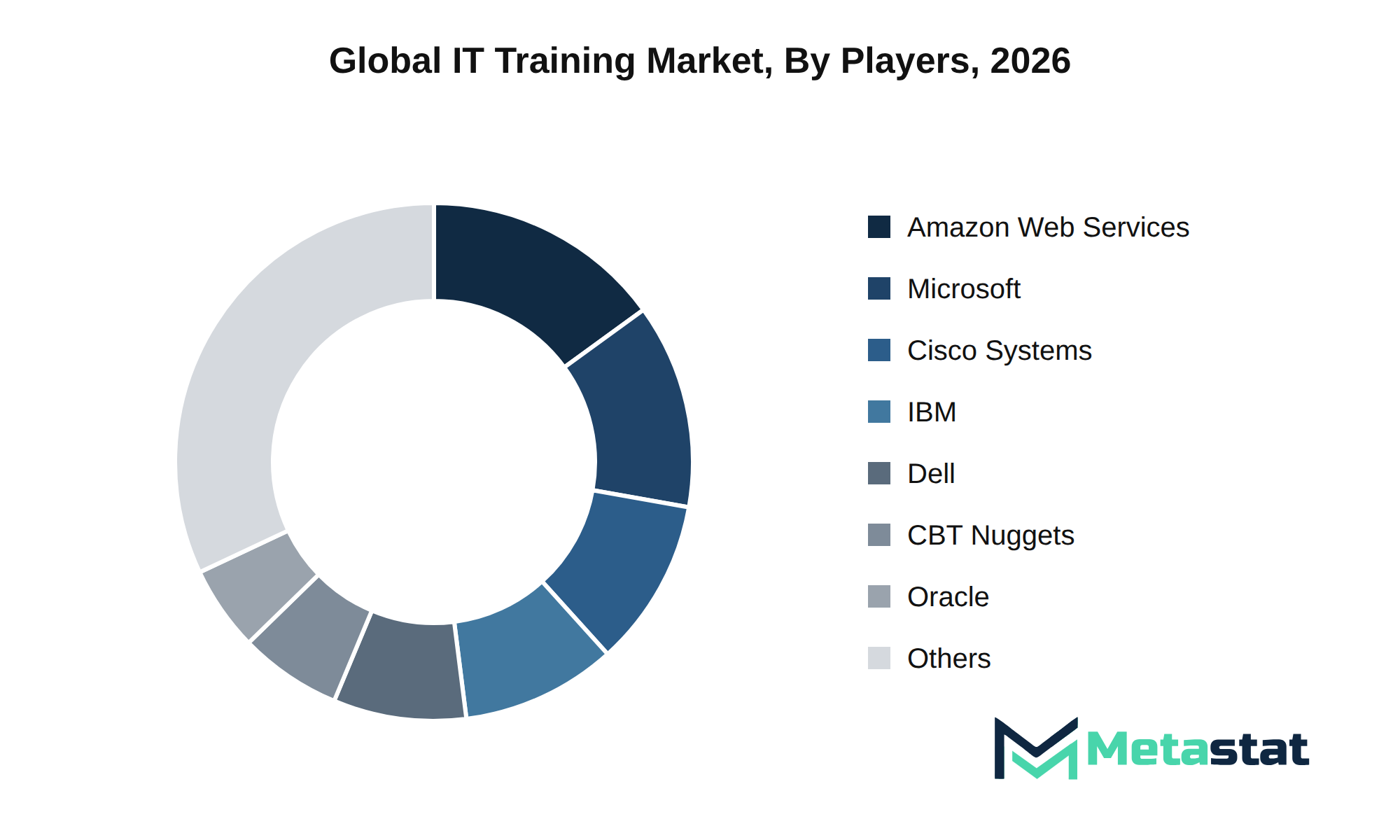
Key players in the IT Training market engage in various strategies to enhance their competitive positioning. Mergers and acquisitions feature prominently, creating significant consolidation within the industry. These strategic moves create robust portfolios and expand market reach, enabling firms to leverage their combined resources and capabilities.
Companies including Amazon Web Services, Inc., Microsoft Corp., and IBM focus on innovation through product differentiation and research and development. These firms aim to create proprietary technology moats that establish competitive advantages. Strategic alliances and joint ventures enhance collaboration, contributing to an ecosystem that enables the development of comprehensive training solutions.
Customer retention strategies play a critical role in shaping market dynamics. Organizations prioritize switching costs and brand equity to maintain a loyal customer base. Effective procurement leverage and supply chain dominance help firms optimize operational efficiencies, reinforcing their competitive standing in the IT Training market.
The future competitive outlook highlights the importance of defensive imperatives and strategic growth vectors. Companies invest in intellectual property portfolios and patent landscapes to safeguard innovations and ensure technological defensibility. This commitment to innovation positions players favorably within the evolving training landscape.
Market size is forecast to rise from USD 83.7 billion in 2025 to over USD 157.3 billion by 2033. The base case estimates a growth rate of 8.2% CAGR, indicating strong demand across various sectors. The bull case suggests accelerated expansion driven by rapid technological advancements, increased corporate training budgets, and heightened demand for skilled professionals. Conversely, the bear case highlights potential economic downturns, regulatory challenges, and geopolitical tensions that could hinder growth in the IT Training market.
Macroeconomic factors will significantly influence the market trajectory. Economic cycles, including shifts in consumer confidence and corporate spending, directly affect training investments. Organizations striving for digital transformation and modernization increase their focus on upskilling and reskilling initiatives. Structural consumption shifts, including the growing preference for self-paced online training, contribute to the evolution of training delivery models.
Next-generation technologies, including artificial intelligence and machine learning, play a critical role in shaping training methodologies. R&D commercialization timelines impact the availability of advanced training solutions, leading to enhanced learning experiences. Regulatory evolution, including compliance with data protection and privacy laws, creates new training requirements, further driving demand in the market.
Strategic capital allocation will focus on infrastructure commitments and CapEx investment vectors to support training initiatives. Emerging white-space opportunities arise from unmet enterprise needs, particularly in sectors like cloud computing and cybersecurity, which experience high growth. Organizations align executive-level strategic imperatives with future growth recommendations, ensuring that training programs address evolving market demands and workforce skill gaps.
The report strategically identifies and profiles the key market players and analyses their core competencies in each sub-segment of the IT Training market.
Report Attributes | Details |
Study Period | 2021-2033 |
Base Year | 2025 |
Estimated Year | 2026 |
Forecast Period | 2026-2033 |
Historical Period | 2021-2025 |
Growth Rate | CAGR 8.2% from 2026 to 2033 |
Revenue Unit | USD billion |
Segmentation | By Training Type, Training Domain, Organization Size, End User, and Region |
By Region | North America (By Training Type, Training Domain, Organization Size, End User, and Country)
|
Europe (By Training Type, Training Domain, Organization Size, End User, and Country)
| |
Asia Pacific (By Training Type, Training Domain, Organization Size, End User, and Country)
| |
South America (By Training Type, Training Domain, Organization Size, End User, and Country)
| |
Middle East and Africa (By Training Type, Training Domain, Organization Size, End User, and Country)
|
Find answers to common questions about this report
The IT Training market size was valued at USD 83.7 billion in 2025.
The IT Training market is projected to grow at a CAGR of 8.2% during the forecast period from 2026 to 2033.
The North America IT Training market size is estimated to reach USD 44.5 billion by 2033.
Self-Paced Online Training leads the IT Training market with a projected value of USD 50.3 billion by 2033. This segment's growth reflects the increasing demand for flexible learning options among various users.
Key drivers for the IT Training market include the acceleration of digital transformation initiatives across industries, which necessitates upskilling and reskilling of employees to enhance operational productivity. Organizations prioritize training programs to equip their workforce with digital skills, supporting the shift towards automation and artificial intelligence.
The IT Training market faces growth restraints due to regulatory compliance challenges and macroeconomic factors. Compliance requirements related to data protection increase operational costs for training providers, particularly smaller firms. inflationary pressures and supply chain disruptions hinder investment and access to training solutions, affecting demand across various segments.
Factors favoring product adoption in the IT Training market include the increasing emphasis on digital transformation initiatives across industries, which drives organizations to invest in training programs to enhance workforce digital skills. the focus on operational productivity and the need for continuous learning stimulate demand for effective training solutions.
The IT Training market is estimated to reach a valuation of USD 157.3 billion by 2033.
Key players operating in the IT Training market include Amazon Web Services, Inc., Cisco Systems, Inc., IBM, Microsoft Corp., Oracle, Pluralsight LLC, Red Hat, and Skillsoft.
Small and medium-sized enterprises are projected to reach a revenue of USD 58.2 billion in the IT Training market by 2033, indicating strong growth potential in this segment.
The analysts below cover Information & Technology research at Metastat Insights.
LEAD ANALYST
Utkarsh Khirodkar is a Lead Market Research Analyst at MetaStat Insight, specializing in market intelligence, technology sector assessments, and competitive strategy.

PRINCIPAL CONSULTANT - ENTERPRISE AI & EMERGING TECHNOLOGIES
Banking & Finance · Electronics and Semiconductor · Energy and Power · Healthcare IT · Information & Technology · Professional Services
Vijay Gunti is a Principal Consultant at MetaStat Insight, bringing over two decades of experience across enterprise digital transformation, technology strategy, and intelligent systems.

LEAD CONSULTANT - COMMUNICATION, TELECOM, AND IT
Electronics and Semiconductor · Information & Technology · Machinery & Equipment · Professional Services
Ravindra Sathe Consultants for Communication, Telecom, and IT at MetaStat Insight. He leads the firm's industry research initiatives across telecommunications infrastructure, digital connectivity, enterprise networking, and emerging information technology domains.
Decarbonizing industrial thermal processes hinges on refrigerant regulations and compressor efficiency limits. Metastat Insights delivered a thorough market analysis that evaluated natural refrigerants like CO2 and hydrocarbons against synthetic low-GWP alternatives. The breakdown of utility incentives and grid capacity constraints across key European manufacturing hubs offered valuable perspective. The follow-up conversation with their sector analysts addressed our specific questions on mechanical vapor recompression systems efficiently.
Assessing 200mm wafer transition schedules and substrate supply bottlenecks requires precise technical intelligence. MetaStat Insight supplied an actionable breakdown comparing planar and trench MOSFET architectures across automotive and industrial drive markets. The regional capacity estimates for Asia-Pacific foundries helped clarify lead-time uncertainties during our strategic planning session. When we needed additional clarification on high-purity raw material sourcing, their analyst team responded with helpful context within twenty-four hours.
Tracking maintenance cycle demand for secondary flight display units and terrain collision avoidance systems across regional jet fleets involves complex aftermarket dynamics. MetaStat Insight provided practical analysis separating airline retrofit programs from OEM forward-fit production schedules in North America and Southeast Asia. The supplier matrix highlighted component obsolescence timelines without resorting to vague generalizations. The dataset served as a dependable reference during our annual program review meetings.
Explore related market intelligence reports worth reading alongside this one.