
LEAD ANALYST
Utkarsh Khirodkar is a Lead Market Research Analyst at MetaStat Insight, specializing in market intelligence, technology sector assessments, and competitive strategy.

Italy Coffee Market Size, Share, By Product Format (Whole Bean Coffee, Ground Coffee, Coffee Capsules, E.S.E. & Other Soft Coffee Pods, Instant/Soluble Coffee and Others (Coffee Bags and Specialty Single-Serve Formats)), By Bean Composition (100% Arabica, Arabica-Robusta Blends and 100% Robusta), By Nature (Conventional and Organic), By Distribution Channel (Supermarkets & Hypermarkets, Discount Stores, Convenience & Traditional Grocery Stores, E-Commerce & Direct-to-Consumer and HoReCa Wholesalers & Foodservice Distributors), Industry Analysis, Growth, Trends, and Forecast, 2026-2033
Report ID
MSI-5000
Published
August, 2026
Updated
Pages
272 Pages
Format
Historical
Base year
Forecast
Forecast period
Report Details
Market Valuation: Valued at $5,362.3 Million in 2025, projected to reach $7,512.1 Million by 2033 at a 4.3% CAGR.
Dominant Segment: Whole Bean Coffee leads the market, driven by increasing consumer preference for high-quality coffee products and a shift towards home brewing practices. This segment is expected to grow significantly, reflecting a robust CAGR of 6.2%.
What's Inside: This report provides a comprehensive analysis of the Italy Coffee market, including competitive coverage, detailed segment insights, and a forecast window from 2026 to 2033.
Growing Consumer Preference for Premium Coffee: There is a significant shift towards premium coffee products as consumers prioritize quality, flavor, and sourcing practices, leading to increased demand for specialty and artisanal offerings.
Increased Focus on Sustainability Initiative: Heightened consumer awareness regarding environmental impact is driving demand for organic and ethically sourced coffee, enhancing market growth prospects.
Choose Your License
Italy Coffee Market
The Italy Coffee market was valued at USD 5,362.3 million in 2025 and is projected to reach USD 7,512.1 million by 2033, growing at a CAGR of 4.3% over the forecast period.
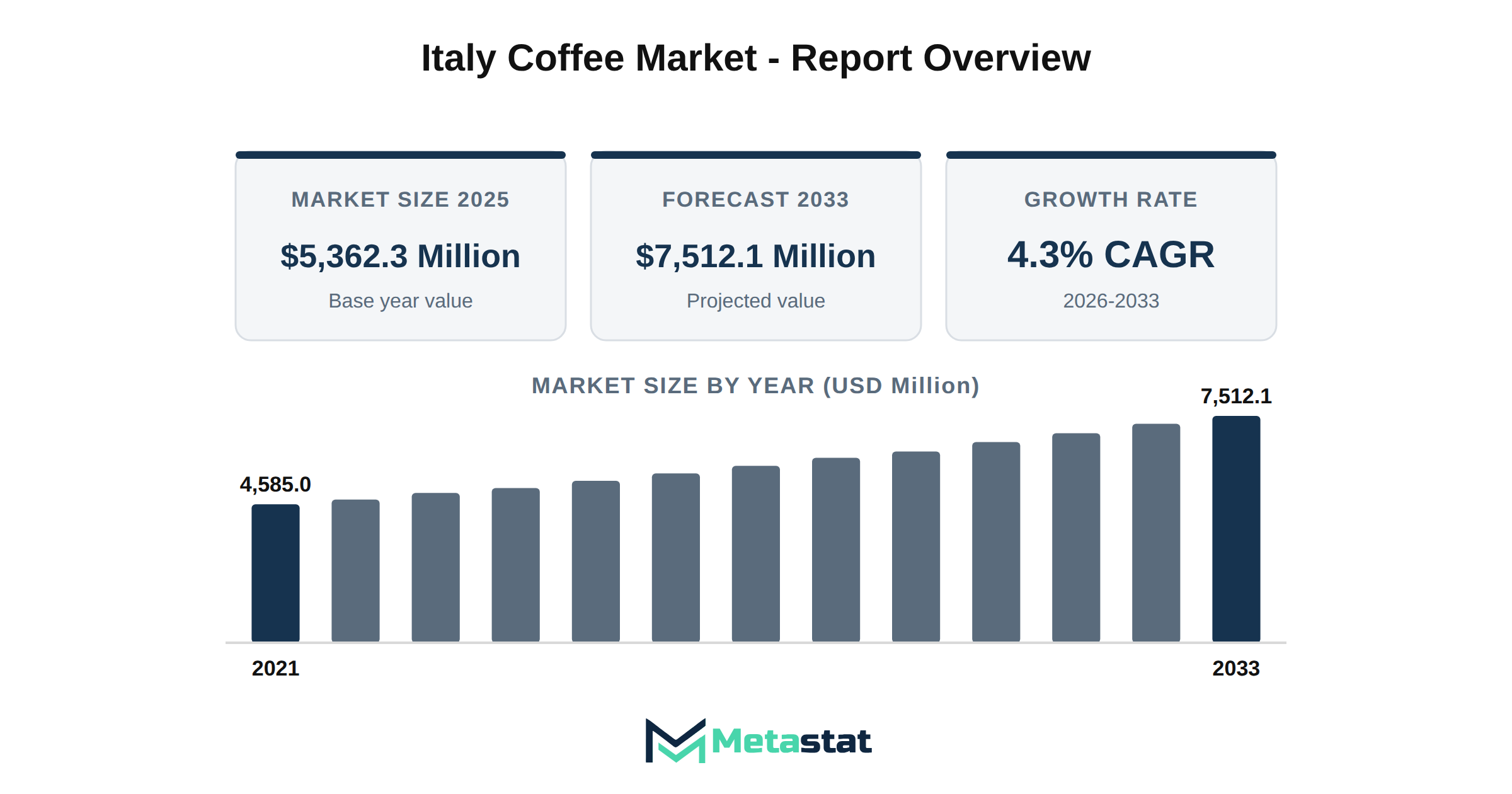
The Italy Coffee market reached a valuation of USD 5,362.3 million in 2025, reflecting a steady growth trajectory since 2021 when it stood at USD 4,585 million. This upward trend reflects increasing consumer preference for coffee, driven by evolving lifestyle choices and a growing café culture. The market is projected to expand to USD 7,512.1 million by 2033, with a compound annual growth rate (CAGR) of 4.3% during the forecast period from 2026 to 2033.
Key product segments within the market include Whole Bean Coffee, Ground Coffee, Coffee Capsules, and Instant/Soluble Coffee. Whole Bean Coffee is anticipated to experience significant growth, rising from USD 1,079.1 million in 2026 to USD 1,642.9 million by 2033, reflecting a robust CAGR of 6.2%. Ground Coffee is expected to reach USD 2,323.5 million by 2033, supported by consumer demand for quality and freshness. Coffee Capsules will contribute significantly with a projected value of USD 2,256.6 million in 2033.
Bean composition trends indicate a growing preference for 100% Arabica coffee, with projections showing an increase from USD 2,628.6 million in 2026 to USD 3,735.8 million by 2033, translating to a CAGR of 5.1%. The market for Organic coffee is expanding rapidly, projected to reach USD 764.7 million by 2033, driven by heightened consumer awareness of sustainability and health benefits.
The market's dynamics reflect a complex set of factors, including consumer preferences, emerging trends towards high-quality coffee experiences, and the influence of sustainability initiatives. Regulatory compliance and evolving standards shape production and sourcing practices, impacting the overall value chain within the Italy Coffee market.
The Italy Coffee market experiences a growing trend towards sustainable transformation and decarbonization, driven by increasing consumer awareness and demand for environmentally friendly products. This shift influences production practices, prompting suppliers to adopt circular economy dynamics that reduce waste and enhance resource efficiency. A focus on sustainability meets consumer expectations and aligns with regulatory compliance and standards that govern the industry.
Market fragmentation characterizes the competitive environment, with numerous players operating across various segments. This fragmentation presents challenges and opportunities for consolidation through M&A dynamics, allowing companies to strengthen their market position and expand their product offerings. Strategic partnerships and collaborations enable innovation, allowing participants to leverage each other's strengths and address evolving consumer preferences.
Logistics architecture and sourcing dynamics play crucial roles in ensuring efficient supply chain management. Fluctuations in procurement costs impact profit margins, necessitating agile strategies to navigate inflationary pressures and currency volatility. Companies that optimize their logistics and sourcing capabilities enhance operational efficiency and maintain competitiveness in the dynamic Italy Coffee market.
Macroeconomic headwinds pose additional challenges, influencing consumer spending and market growth. Economic uncertainties lead to cautious capital allocation and infrastructure investments, impacting long-term growth trajectories. Addressing these challenges requires a proactive approach to risk management and strategic planning, ensuring resilience in the face of fluctuating market conditions.
The future strategic outlook for the Italy Coffee market remains positive, characterized by ongoing innovation and evolving consumer preferences. Investments in R&D will drive next-gen innovation, catering to the diverse needs of consumers. High-value recommendations for market participants include prioritizing sustainable practices, enhancing supply chain resilience, and exploring opportunities for collaboration to support growth and competitiveness in this dynamic market.
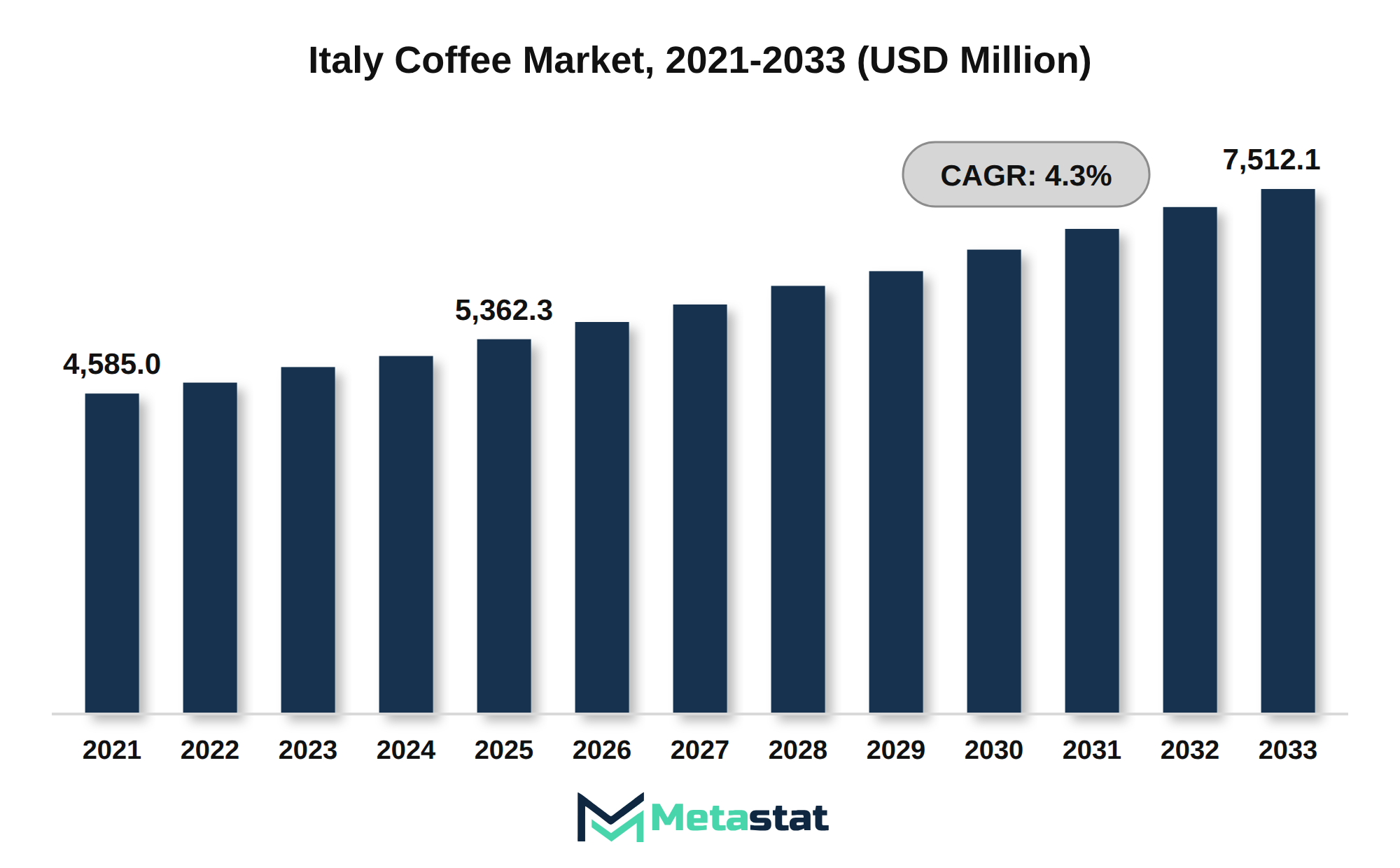
The Italy Coffee market displays a significant shift towards premium coffee products, driven by changing consumer preferences and evolving buying habits. Increasing awareness regarding quality, flavor, and sourcing practices influences consumers to seek out higher-grade coffee options, including specialty and artisanal offerings. This transition stems from a growing appreciation for unique coffee experiences and the desire for authenticity in beverage choices.
Urbanization and the rise of a more affluent consumer base contribute to this trend. Coffee enthusiasts prioritize high-quality beans and innovative brewing methods, leading to an increase in demand for premium products like whole bean coffee and specialty blends. The market for premium coffee expands due to consumers prioritizing quality over quantity, influencing retail strategies.
In response to this growth driver, coffee producers and retailers invest in sourcing and marketing premium coffee products. This investment includes enhancing product offerings and providing consumers with education on the nuances of different coffee types. Ensuring access to premium options enables suppliers to capitalize on this trend, positioning the market for sustained growth in the coming years.
The Italy Coffee market experiences a significant boost from sustainability initiatives driven by heightened consumer awareness regarding environmental impact. This trend aligns with broader macro-economic factors emphasizing corporate responsibility and ethical sourcing practices. Consumers actively seek products that reflect their values, compelling brands to adapt their offerings accordingly. This shift in consumer behavior leads to increased demand for organic and ethically sourced coffee, enhancing market growth prospects.
Investment in sustainable practices influences operational productivity and cost-efficiency initiatives across the market. Companies implementing sustainable practices often experience reductions in overhead costs through optimized resource usage and waste management. This financial benefit promotes further investment in green technologies, ensuring long-term viability while meeting consumer expectations.
The expanding focus on sustainability drives innovation within the Italy Coffee market, leading businesses to explore new product formats and bean compositions that cater to environmentally conscious consumers. Increased research and development efforts support this initiative, resulting in unique offerings that differentiate brands in a competitive landscape. Overall, the commitment to sustainability acts because a catalyst for growth, driving demand and improving market positioning.
The Italy Coffee market faces challenges stemming from regulatory compliance and increasing operational costs. Stringent safety and quality standards necessitate adjustments in production processes, imposing additional financial and logistical burdens on manufacturers. Compliance hurdles delay product launches and hinder market entry for new players, limiting competition and innovation.
Macroeconomic factors including inflationary pressures and rising costs of raw materials further exacerbate the situation. Increased costs lead to higher retail prices, reducing consumer demand and affecting overall market growth. Supply chain disruptions, influenced by geopolitical instability and resource scarcity, create uncertainty in sourcing materials, impacting production timelines and profitability.
Technological obsolescence presents another restraint. Market players invest continuously in new technologies to stay competitive. The necessity for high capital investment restricts entrants with limited financial resources, perpetuating market fragmentation. Consequently, established players dominate, limiting opportunities for new market entrants and reducing overall innovation.
Cultural barriers and regional adoption resistors slow the penetration of new products. Varying consumer preferences across different Italian regions hinder uniform growth, driven by companies grappling with tailoring their offerings. The combination of these restraints shapes the competitive dynamics within the Italy Coffee market, posing challenges for growth and market expansion.
The Italy Coffee market faces challenges attributed to geopolitical fragmentation and trade deficits impacting supply chains. These factors have resulted in increased tariff friction, affecting import costs and product pricing. Such pressures contribute to margin erosion for manufacturers, especially those reliant on foreign feedstock and components. Volatility in sourcing materials disrupts operational stability, creating uncertainty in inventory management and long-term planning.
Technological disruptions further complicate the landscape, driven by companies navigating interoperability frictions that arise from integrating new systems into existing infrastructures. The complexity of research and development integrations presents significant hurdles, limiting innovation potential. This environment leads to heightened costs for compliance and adaptation, which directly influence the market's competitiveness.
Cyclical pressures from rising input costs and workforce skill gaps exacerbate challenges. Talent retention has become increasingly difficult owing to firms facing automation displacements, which affect productivity and operational efficiency. The environmental lifecycle footprints of coffee production face scrutiny, aligning with broader sustainability demands that require investment in retrofitting and implementing new technologies.
Logistics disruptions and supply chain instability further hinder growth, affecting timely delivery and increasing operational costs. These issues create barriers that restrict market expansion and inhibit the ability to meet evolving consumer demands effectively. Ultimately, addressing these multifaceted challenges remains crucial for stakeholders within the Italy Coffee market to sustain growth and profitability.
The Italy Coffee market experiences significant opportunities stemming from the evolving digital procurement landscape. Businesses increasingly adopt online platforms to streamline purchasing processes, enhancing accessibility and efficiency. This transition enables coffee suppliers to reach a broader audience while reducing operational costs associated with traditional sales channels.
Technological disruptions further contribute to market growth by facilitating innovative approaches in product development and customer engagement. Enhanced data analytics, machine learning, and artificial intelligence enable companies to tailor offerings according to consumer preferences, driving demand for niche products within the Italy Coffee market. While the market adapts to these advancements, competition intensifies, prompting stakeholders to invest in comprehensive digital strategies for sustainable growth.
Infrastructure modernization supports this market transformation, allowing suppliers to optimize supply chains and improve distribution networks. Investments in automated processes and smart logistics systems reduce delivery times and enhance product quality. Geographical expansion into underserved regions provides an avenue for revenue growth, catering to the increasing demand for specialty coffee.
Next-generation innovations surrounding sustainability imperatives further shape the market. Eco-friendly packaging solutions and sustainable sourcing practices appeal to environmentally conscious consumers, encouraging brand loyalty. The Italy Coffee market is poised for significant growth driven by businesses aligning their strategies with evolving consumer expectations and sustainability trends.
The Italian coffee market features an established hierarchy dominated by historic domestic roasters, alongside select multinational consumer goods corporations. Brand loyalty remains exceptionally high across all retail formats. Domestic consumers demonstrate deep geographic and sensory ties to specific roasting profiles, shaping overall market shares in grocery retail, specialized retail, and away-from-home channels.
Luigi Lavazza S.p.A. maintains the premier position across the Italian packaged coffee market. The Turin-based company leverages extensive distribution networks, widespread name recognition, and comprehensive portfolio coverage that spans traditional ground coffee, whole bean, and single-serve formats. Its retail dominance is fortified by sustained marketing investment and deep penetration across major supermarket chains.
Gruppo Illy S.p.A. commands a differentiated, premium market position. By focusing primarily on high-grade 100 percent Arabica beans, Illy captures elevated price points in premium retail, specialized gourmet outlets, and upscale hospitality. The brand emphasizes technological innovation through its proprietary Iperespresso system, maintaining consistent brand equity built on consistency and culinary prestige.
Kimbo S.p.A. represents a powerful regional force that has successfully expanded into a national powerhouse. Rooted in the Neapolitan espresso tradition, Kimbo holds substantial market share in Southern Italy and widespread distribution nationwide. The brand competes vigorously in the mainstream ground coffee and compatible capsule categories by offering bold, dark-roast profiles that appeal to traditional taste preferences.
Multinational presence is anchored by Nestlé S.A., which dominates the portioned coffee segment through Nespresso and Dolce Gusto. While domestic roasters lead in traditional roast and ground categories, Nestlé S.A. captures significant value through proprietary systems, dedicated boutique networks, and extensive supermarket distribution of compatible pods.
Mid-tier competitors retain defensible market positions by capitalizing on regional heritage, specialized foodservice relationships, and focused retail strategies.
Segafredo Zanetti, part of the Massimo Zanetti Beverage Group, maintains strong brand equity supported by its historic presence in the hospitality sector. Its vertically integrated business model allows it to offer competitive price-to-quality ratios in retail channels while maintaining visibility in bars across the country.
Caffè Vergnano operates as one of the oldest heritage roasters in Italy. The brand has expanded its domestic footprint through premium packaged blends and contemporary espresso shops. Its strategic partnership with Coca-Cola for international distribution has also reinforced its operational scale and domestic brand prestige.
Pellini Caffè targets the premium and upper-mainstream retail space from its base in Verona. The roaster focuses heavily on refined Arabica blends, positioning products such as Pellini Top as gourmet supermarket alternatives that bridge everyday shopping with specialty coffee attributes.
International coffee chains historically faced intense structural barriers in Italy due to entrenched local coffeehouse customs. Starbucks Corporation entered the Italian market through a calibrated, high-end strategy, beginning with its Milan Roastery. Working with local operating partners, Starbucks Corporation has expanded select urban locations catering to younger demographics, international tourists, and consumers seeking extended seating formats and non-traditional beverage options.
Coffee consumption across Italy is far from uniform. Distinct regional preferences dictate blend formulations, roast depths, purchasing habits, and the balance between bean varieties across retail and foodservice channels.
Northern Italian consumers traditionally favor lighter to medium roast profiles characterized by balanced acidity, delicate aromatics, and lower bitterness. Blends in Lombardy, Piedmont, and Veneto feature higher proportions of Arabica beans, often reaching 100 percent in premium domestic blends. Purchasing behavior in the North reflects higher disposable income, driving faster adoption of single-serve capsules, specialty origin lines, and automated at-home brewing appliances.
Southern Italy, encompassing Campania, Calabria, Puglia, and Sicily, displays a strong cultural preference for intense, full-bodied espresso. Roasters formulate regional blends with significant percentages of Robusta beans to achieve thick crema, heavy body, and low acidity. Dark roasting methods dominate this market corridor. Consumer spending is heavily concentrated in traditional roast and ground formats for Moka preparation, alongside high per capita consumption in local espresso bars.
Central Italy, including Lazio, Tuscany, and Emilia-Romagna, functions as a transitional market bridging northern and southern taste profiles. Retail shelves in this region stock balanced blends that combine the aromatic complexity of Arabica beans with the structural crema provided by Robusta beans. Urban centers like Rome exhibit diverse consumption dynamics, where fast-paced counter service coexists with an expanding retail presence of convenient portioned systems.
The daily espresso ritual forms the operational backbone of the Italian coffee trade, defining price expectations, product development, and consumption speed.
The Italian bar functions as a social utility rather than a luxury destination. Millions of consumers consume espresso standing at the counter in a matter of seconds. Historically anchored near one euro per cup, the price of an espresso at the bar serves as an informal economic indicator.
Recent inflationary pressures on green beans, energy, and commercial rents have challenged this traditional pricing model. Roasters supplying the hospitality sector must navigate tight operator margins while maintaining blend consistency, as consumers react sharply to price increases at the counter.
For decades, the stovetop Moka pot defined domestic coffee preparation in Italy. While the Moka remains culturally iconic, consumer demand for speed and bar-quality crema has accelerated the transition to portioned espresso systems. This shift has enabled roasters to command higher margins per gram of coffee sold, offsetting volume stagnation in bulk ground coffee packs.
Entrenched espresso customs create unique friction for alternative brewing methods and third-wave coffee concepts. Filter coffee, cold brew, and pour-over formats occupy small niche volumes, primarily concentrated among urban professionals and international visitors. The domestic market continues to evaluate coffee quality through the parameters of espresso: extraction speed, crema stability, thermal intensity, and immediate body.
The balance of power between national brands and private label offerings is shifting within the Italian grocery retail sector, driven by modern retail consolidation and cost-of-living adjustments.
Large supermarket chains, including Coop, Conad, and Esselunga, maintain extensive private label coffee portfolios. These products span standard ground vacuum packs, whole beans, and an expanding variety of compatible capsules. Retailers utilize private label lines to build basket loyalty and capture value-conscious shoppers, placing direct margin pressure on tier-two and tier-three commercial roasters.
The ongoing expansion of hard discount banners, such as Eurospin and Lidl, has fundamentally reshaped volume distribution. Discount retailers offer private label coffee at prices substantially below mainstream branded goods. To compete, established roasters frequently produce dedicated secondary brands or act as co-packers for private label contracts, balancing factory capacity utilization against the preservation of their flagship brand equity.
Market leaders defend their retail territory by accelerating product innovation that private labels struggle to replicate quickly. Proprietary capsule designs, single-origin offerings, and sophisticated multi-bean Arabica blends allow roasters to justify premium shelf prices. Nevertheless, the growing quality of private label espresso capsules continues to narrow the perceived performance gap for everyday domestic consumption.
With domestic volume consumption largely mature, export operations represent the primary long-term growth driver for Italian roasting enterprises.
Italian coffee enjoys high brand equity globally, functioning as an international benchmark for authentic espresso. Roasters capitalize on this cultural reputation by positioning their products as luxury or artisanal exports across Europe, North America, and Asia-Pacific markets. The designation of Italian roasting methods carries commercial weight, allowing exporters to secure distribution in upscale retail and international hotel chains.
Expanding global reach requires sophisticated logistics and route-to-market partnerships. Domestic roasters have formed cross-border alliances to overcome foreign distribution hurdles. Caffè Vergnano leveraged its distribution agreement with Coca-Cola HBC to access international hospitality channels across dozens of countries. Similarly, larger players like Luigi Lavazza S.p.A. pursue targeted foreign acquisitions and joint ventures to secure direct control over regional distribution in North America and Western Europe.
While espresso represents the domestic core, export markets often demand different product profiles. Italian exporters increasingly formulate lighter roasts optimized for drip filter machines, French presses, and milk-based cold coffee beverages. By adapting bean selections and grind profiles for foreign extraction preferences, Italian roasters capture market share beyond their traditional Mediterranean customer base.
The structural changes initiated during the pandemic period have permanently altered how, where, and when Italians consume coffee.
The adoption of hybrid work schedules across corporate sectors has relocated millions of daily coffee occasions from commercial business districts to residential households. Consumers who formerly drank two to three coffees daily at office-adjacent bars now prepare coffee in their kitchens. This migration has boosted household expenditure on packaged coffee, driving higher investment in premium single-serve and bean-to-cup machines.
As home consumption increased, consumer interest in extraction quality deepened. Sales of compact domestic espresso machines, whole bean grinders, and specialized accessories grew noticeably. Italian households increasingly purchase whole bean packages to grind fresh coffee on demand, seeking to recreate the sensory bar experience at home while reducing single-use packaging waste.
Urban hospitality venues have experienced permanent shifts in traffic patterns. High-density financial and commercial zones in cities such as Milan, Turin, and Rome face reduced foot traffic on Mondays and Fridays. To protect profitability, metropolitan bar operators have diversified their revenue models, expanding afternoon services, introducing takeaway options, and enhancing their food offerings.
Product pricing reflects a wide spectrum of formats, raw material costs, and processing complexities across the Italian retail coffee ecosystem.
The procurement economics of green coffee beans have experienced substantial market volatility caused by climatic disruptions in primary producing nations like Brazil and Vietnam. Arabica beans command a structural price premium due to specialized cultivation requirements and susceptibility to weather shocks. However, unprecedented price surges in Robusta beans have narrowed the historical cost gap, forcing roasters to recalibrate their input costs and recipe formulations without alienating price-sensitive consumers.
Pricing dynamics vary dramatically when calculated on a per-kilogram basis:
Traditional roast and ground coffee in vacuum packs occupies the base volume tier, providing the lowest price per serving for daily Moka brewing. Whole bean coffee commands a moderate premium, appealing to quality-oriented consumers utilizing domestic automatic grinders. Single-serve capsules represent the highest retail price per kilogram, generating exceptional gross margins for roasters despite higher primary packaging costs.
Italian consumers demonstrate sharp price elasticity regarding baseline coffee products. While premium single-origin items tolerate measured price increases, core retail ground coffee faces immediate volume pushback when prices rise. Supermarket promotions play a major role in driving volume, with a high percentage of mainstream coffee sales occurring under temporary discount mechanisms.
Environmental awareness and ethical governance are gradually influencing procurement strategies and consumer purchasing decisions within the Italian coffee landscape.
International environmental and social frameworks are gaining traction on Italian retail shelves. Certifications from the Rainforest Alliance and Fair Trade certification provide commercial roasters with independent verification of sustainable agricultural practices, forest conservation, and equitable labor conditions. Major brands incorporate these seals on premium product lines to attract younger, socially conscious consumers who view corporate responsibility as an essential purchasing criterion.
The rapid growth of the single-serve capsule segment generated significant municipal solid waste concerns due to traditional multi-layer plastic and aluminum materials. Italian packaging manufacturers and roasters have responded by investing heavily in industrial and home-compostable capsules made from bio-based polymers. These eco-friendly capsules can be discarded directly into organic household waste streams, mitigating consumer guilt regarding packaging waste.
While interest in sustainability is rising, willingness to pay substantial premiums remains bifurcated. Ethical and organic certifications resonate strongly with affluent urban demographics and specialized organic grocery shoppers. In contrast, mainstream mass-market consumers remain primarily guided by price, taste profile, and brand familiarity, requiring roasters to balance certification costs with retail competitiveness.
Digital commerce channels have evolved from an auxiliary sales avenue into a core strategic battleground for customer acquisition, brand loyalty, and recurring revenue.
Leading manufacturers actively invest in direct-to-consumer digital channels to bypass traditional grocery intermediaries. Nestlé S.A. pioneered this strategy with its dedicated Nespresso digital platform, managing customer lifetime value through direct ordering and automated capsule replenishment. Domestic roasters have followed suit: Luigi Lavazza S.p.A. and Gruppo Illy S.p.A. operate advanced digital storefronts offering customizable machine-plus-coffee subscription models that secure predictable cash flows.
Online marketplaces like Amazon Italy, alongside the digital storefronts of major supermarket chains, account for massive volumes of packaged coffee sales. Bulk purchasing of compatible capsules and multi-kilogram whole bean packs thrives online, where consumers capitalize on volume discounts and home delivery convenience. Successful roasters maintain strict omnichannel pricing strategies to avoid destructive price competition between digital marketplaces and physical retail partners.
Direct digital delivery requires specialized fulfillment infrastructure capable of handling small, high-frequency parcels. Preserving roasted coffee freshness during storage and transit remains paramount. Roasters utilize specialized one-way degassing valves, nitrogen-flushed packaging, and optimized local warehousing to ensure that beans and ground coffee reach digital buyers without sensory degradation.
Market intelligence and projective models for the Italian coffee sector rely on rigorous multi-channel data integration to capture both formal retail transactions and fragmented away-from-home consumption.
Macroeconomic baselines incorporate demographic shifts, household expenditure patterns, and consumer price indices tracked by the Italian National Institute of Statistics (ISTAT). These statistical datasets provide essential historical calibration regarding inflationary pressure, disposable income fluctuations, and broad food and beverage expenditure trends across Northern, Central, and Southern macro-regions.
Quantitative retail projections utilize aggregated electronic point-of-sale scanner data collected across hypermarkets, supermarkets, convenience stores, and discount banners nationwide. This data tracks real-time sales velocity, promotional elasticity, format volume shifts, and brand market shares, forming the quantitative backbone for demand forecasting models.
Desk research and retail audits are cross-validated through primary executive interviews across the coffee supply chain. Insights gathered from green bean importers, roaster associations, packaging manufacturers, and hospitality distributors provide necessary qualitative context. This synthesis contextualizes emerging trade barriers, regulatory changes, and capital expenditure trends that pure retail scanner data cannot capture.
The Italy Coffee market is segmented based on Product Format, Bean Composition, Nature, and Distribution Channel.
Whole Bean Coffee segment is valued at USD 1,079.1 million in 2026 and is projected to reach USD 1,642.9 million by 2033, at a CAGR of 6.2% during the forecast period. Increasing consumer preference for high-quality coffee products drives demand for whole bean coffee. This trend reflects a growing appreciation for artisanal and premium coffee experiences, which significantly influences purchasing behaviors in the Italy Coffee market.
The market experiences a shift towards home brewing practices, with consumers seeking fresh and customized coffee solutions. This preference enhances the attractiveness of whole bean coffee, providing an opportunity for brands to innovate with blends and roasting profiles tailored to diverse taste preferences. Retailers and online platforms supporting this trend further strengthen market dynamics by offering convenience and an extensive selection of whole bean products.
Price sensitivity remains a consideration for consumers; however, the willingness to invest in quality coffee supports premium pricing strategies. This trend emphasizes the segment's premium positioning within the broader coffee market, highlighting its potential for profitability and growth opportunities. While the Italy Coffee market evolves, whole bean coffee's role because a vital segment continues to expand, aligning with consumer trends prioritizing quality and experience.
Ground Coffee segment is estimated to reach USD 2,323.5 million by 2033, at a CAGR of 1.6% during the forecast period. Demand for ground coffee arises from consumer preferences for convenience and taste, with many buyers opting for flavorful and aromatic blends. The segment benefits from an expansion in coffee shops and cafes that rely on ground coffee to meet customer expectations for quality beverages. Innovations in packaging and preservation techniques enhance the freshness and shelf life of ground coffee, attracting health-conscious consumers looking for high-quality options.
Shifts in consumption patterns indicate a growing interest in specialty and artisanal ground coffee. This trend drives producers to diversify their offerings, enabling them to capture a broader market share. Price fluctuations in raw materials could impact profit margins for suppliers, prompting them to adopt more efficient sourcing strategies. Regulatory compliance remains essential for maintaining quality standards and addressing consumer demands for organic and sustainably sourced products. The evolving market of the Italy Coffee sector encourages investment in marketing and branding, allowing brands to differentiate themselves in a competitive environment.
In the Italy Coffee market, the Coffee Capsules segment shows significant growth driven by increasing consumer preference for convenience and quality. Demand for single-serve coffee solutions aligns with modern lifestyles, where time-efficient brewing methods take precedence. This trend is propelled by busy consumers seeking quick, high-quality coffee experiences at home or in the workplace.
Over the forecast period, the segment is projected to reach USD 2,256.6 million by 2033. This expansion results from ongoing innovations in capsule technology and the introduction of premium coffee options, enhancing the overall consumer experience. The proliferation of specialized coffee machines compatible with various capsule brands contributes to segment growth and fosters consumer loyalty.
Shifts in consumption patterns reflect a broader interest in specialty coffee varieties, with consumers increasingly drawn to both the convenience and diversity offered by coffee capsules. The segment benefits significantly from marketing strategies that emphasize sustainability, leading to increased interest in eco-friendly capsule options. Regulatory compliance with environmental standards shapes product offerings and influences consumer perceptions.
Cost structures in the segment face pressures from fluctuating raw material prices and competition among established brands and new entrants. Despite these challenges, strategic investments in branding and product innovation enhance market positioning. Aligning product offerings with consumer preferences and sustainability trends positions the segment favorably for continued growth in the evolving Italy Coffee market.
The shift towards convenience continues to drive interest in the E.S.E. & Other Soft Coffee Pods segment within the Italy Coffee market. Consumer preferences indicate a growing demand for single-serve formats that deliver quality coffee quickly and with minimal preparation effort. This segment is projected to grow at a CAGR of 2.7% during the forecast period, reflecting the ongoing trend of busy lifestyles influencing coffee consumption patterns.
Technological advancements in coffee pod design and brewing systems enhance flavor retention and user experience, further stimulating market expansion. Increased focus on product innovation leads companies to integrate sustainable practices into their offerings, responding to consumer demand for environmentally friendly packaging and ethically sourced coffee. This evolution in product development aligns with broader industry trends emphasizing quality and sustainability.
The E.S.E. & Other Soft Coffee Pods segment benefits from the strong presence of established players in the Italy Coffee market, who leverage brand recognition to attract new customers. Strategic partnerships with retailers and distribution channels facilitate market penetration, ensuring that these products remain accessible to consumers. Pricing strategies reflect the competitive dynamics of the market, balancing affordability with perceived value to encourage repeat purchases.
Consumer consumption shifts towards innovative flavors and blends, with brands exploring unique offerings to differentiate themselves. This diversification supports growth while catering to the changing tastes of the coffee-drinking population. Overall, the E.S.E. & Other Soft Coffee Pods segment stands poised for sustained growth within the broader Italy Coffee market.
Instant/Soluble Coffee continues to gain traction within the Italy Coffee market owing to evolving consumer preferences for convenience and quick preparation methods. This segment benefits from a demand shift towards easily accessible coffee options, particularly among busy professionals and younger demographics who prioritize efficiency in their daily routines. Innovations in product formulations and packaging have further enhanced the appeal of instant coffee, driving increased consumption in both households and foodservice outlets.
Technological maturation enhances this segment, with advancements in processing techniques improving the taste and quality of instant coffee products. Companies invest in next-generation upgrades to enhance flavor profiles and provide more diverse options, addressing concerns about the perception of instant coffee because inferior to freshly brewed alternatives. This evolution aligns with changing consumption patterns, where consumers seek quality along with convenience.
Regulatory compliance standards and certifications contribute to the segment’s growth, because manufacturers adapt to stricter health and safety regulations. This compliance not only ensures product safety but enhances brand credibility, attracting health-conscious consumers. The market demonstrates resilience in raw material sourcing, with suppliers focusing on sustainable practices to meet rising consumer expectations for ethically sourced ingredients.
Pricing volatility remains an important factor, influenced by fluctuations in raw material costs and supply chain dynamics. Companies in the segment navigate these challenges by implementing strategic pricing strategies that balance cost pressures while maintaining product accessibility for consumers. Instant/Soluble Coffee represents a dynamic segment within the broader Italy Coffee market, poised for continued growth driven by innovation, consumer trends, and strategic market positioning.
Growing consumer preferences for convenient and single-serving coffee solutions drive demand in the Others (Coffee Bags and Specialty Single-Serve Formats) sub-segment. This shift reflects changing lifestyles where time efficiency and ease of preparation hold significant value for consumers. The popularity of specialty coffee offerings further supports growth, driven by consumers seeking unique flavor profiles and high-quality experiences from their coffee.
Innovative packaging solutions enhance product appeal and accessibility, enabling entry into new markets and consumer segments. With advancements in brewing technology, products within this sub-segment demonstrate improved quality and consistency, catering to a discerning consumer base. The increasing availability of gourmet options provides opportunities for further market penetration, appealing to both everyday consumers and coffee enthusiasts.
Consumer trends indicate a growing willingness to explore diverse coffee options, fueling expansion in the market. Various distribution channels, particularly e-commerce, provide enhanced access to specialty formats, enabling consumers to discover new products easily. While the market evolves, additional investments in branding and marketing strategies enhance visibility and competitive positioning.
Consumer interest in high-quality coffee drives growth within the 100% Arabica segment. This segment is valued at USD 2,628.6 million in 2026 and is projected to reach USD 3,735.8 million by 2033, at a CAGR of 5.1% during the forecast period. The preference for 100% Arabica coffee stems from its well-balanced flavor profile and perceived superiority over blends, attracting discerning consumers who prioritize quality. The growing trend towards organic and sustainably sourced products enhances the appeal of 100% Arabica offerings. Increased distribution through premium coffee shops and e-commerce platforms supports market expansion, allowing consumers greater access to these products. The segment's growth aligns with broader trends in the Italy Coffee market, where quality and sustainability serve because key differentiators in an increasingly competitive environment.
Consumption patterns increasingly reflect a preference for Arabica-Robusta Blends due to their balanced flavor profile and versatility in various brewing methods. This segment benefits from the growing demand for blended coffees that offer a middle ground between the distinct characteristics of Arabica and Robusta beans. The market for Arabica-Robusta Blends is projected to reach USD 3,074 million by 2033, at a CAGR of 3.2% during the forecast period. Consumer interest in diverse coffee experiences drives this trend, with blends appealing to a broad range of taste preferences and occasions.
The integration of innovative processing techniques enhances the appeal of Arabica-Robusta Blends, allowing for more consistent flavor profiles and improved product quality. Continued research into bean cultivation and processing technologies supports this growth, enabling producers to meet evolving consumer expectations. Increased availability of certifications related to quality and sustainability further stimulates interest, driven by consumers seeking products that align with their values. Fluctuations in raw material sourcing and pricing volatility remain critical factors influencing market dynamics, with an emphasis on securing reliable supply chains to mitigate risks associated with production disruptions.
Demand for 100% Robusta coffee reflects a distinct niche within the Italy Coffee market, driven by preferences for stronger flavor profiles and cost-effective options. With a projected market value of USD 610 million by 2033, the segment captures attention due to its appeal among consumers seeking robust taste and affordability.
Market dynamics indicate a steady interest in 100% Robusta offerings, spurred by rising consumption in various coffee applications and the desire for diverse bean compositions. This interest translates into significant growth opportunities, aligning with evolving trends in coffee consumption and preferences.
Retailers increasingly emphasize 100% Robusta coffee to cater to specific consumer segments, including budget-conscious buyers and those favoring intense flavors. This strategy expands the segment's reach and enhances its position within the broader market.
Price sensitivity influences the segment's performance, with consumers gravitating towards more affordable options in response to economic fluctuations. While a result, 100% Robusta's cost-effectiveness strengthens its position in the market, positioning it favorably amid competitive pressures.
Technological advancements in cultivation and processing contribute to the segment's resilience, ensuring a consistent supply of high-quality beans. These improvements enhance market confidence, reinforcing the segment's viability and attractiveness to both producers and consumers.
Growth in the Others (Liberica and Excelsa-Based Blends) segment is projected to reach a CAGR of 6.7% during the forecast period. Increasing consumer awareness regarding unique coffee flavors drives this trend. The segment caters to niche markets seeking diverse taste experiences, creating a significant opportunity for specialty coffee producers. Consumer demand for these blends reflects an evolving palate and interest in exploring non-traditional coffee varieties. Supply chain dynamics related to these rare beans impact sourcing strategies and pricing structures, influencing profitability. Within the Italy Coffee market, this segment attracts interest from companies aiming to differentiate their product offerings in a competitive environment, ultimately contributing to overall market growth.
Valued at USD 5,227.3 million in 2026, the conventional coffee segment is projected to reach USD 6,747.4 million by 2033, representing a CAGR of 3.7% during the forecast period. Rising consumer awareness regarding coffee quality and origin significantly influences demand for conventional coffee. Established consumption patterns favor familiar flavors and traditional brewing methods, leading to strong consumer preference for conventional options. Shifts in consumer behavior towards sustainability and health have gradually increased interest in organic alternatives without undermining the market position of conventional coffee.
The Italy Coffee market experiences steady segment expansion due to consistent demand from both retail and HoReCa channels. Ongoing investments in product development and marketing strategies build brand loyalty within this segment. Regulatory compliance surrounding agricultural practices and food safety shapes sourcing strategies for conventional coffee producers. Despite increasing pressures from fluctuating raw material costs, effective cost management strategies enable companies to maintain competitive pricing structures. The market's resilience to supply chain disruptions enhances the attractiveness of conventional coffee, sustaining its vital role in the overall coffee landscape.
Increasing awareness of health benefits associated with organic products drives demand within the Italy Coffee market. Consumers exhibit heightened preference for organic coffee due to perceptions of superior quality and environmental sustainability. The market's organic segment is projected to reach USD 764.7 million by 2033, at a CAGR of 10.4% during the forecast period. This growth is attributed to rising consumer consciousness regarding food sourcing and production practices.
Regulatory compliance standards and certifications significantly influence the organic market segment. Stricter regulations on pesticide use and organic certification processes enhance the credibility of organic coffee products, thereby attracting consumers who prioritize health and safety in their purchasing decisions. This shift in consumer behavior aligns with global trends favoring organic selections, thus reinforcing growth potential.
Investment in marketing and education around organic products leads to expanded adoption among a diverse consumer base. Retailers and suppliers who emphasize the benefits of organic coffee capitalize on emerging opportunities. Enhanced visibility in supermarkets, e-commerce platforms, and specialty coffee shops promotes consumer engagement with organic offerings, further driving growth within the segment.
Maintaining a resilient supply chain remains crucial for sustaining growth in the organic coffee segment. Sourcing high-quality organic beans involves navigating challenges related to availability and pricing volatility. Producers who establish strong relationships with bean farmers and implement transparent sourcing practices secure a competitive edge, enhancing their market position. The organic segment's growth reflects a strategic alignment with changing consumer preferences and regulatory frameworks in the market.
Consumer habits increasingly favor the Supermarkets & Hypermarkets distribution channel for coffee purchases, reflecting convenience and accessibility. These retail formats provide a diverse range of products, catering to varying consumer preferences from premium to budget-friendly options. The trend towards health-conscious choices supports a growing interest in organic coffee, aligning with broader societal shifts towards wellness. Ongoing promotional activities and strategic partnerships with coffee brands enhance visibility and availability within these retail spaces.
Supermarkets & Hypermarkets serve because vital touchpoints for brand exposure, allowing consumers to engage with numerous coffee formats, including whole bean, ground, and instant options. Competitive pricing strategies within these channels drive pricing volatility and influence margin pressures among suppliers. Retailers actively leverage in-store promotions and seasonal campaigns to stimulate demand, creating a dynamic environment within the market. Strategic opportunity windows arise because retailers adapt to evolving consumer trends, focusing on product innovations and private label offerings.
Supply chain resilience remains crucial in maintaining product availability, particularly in light of fluctuating raw material sourcing challenges. Disruptive alternatives, including emerging coffee substitutes, pose potential competition against traditional coffee segments. Awareness of these dynamics enables brands to navigate market challenges effectively, ensuring sustained growth within the Italy Coffee market.
Discount stores serve vital retail channels within the Italy Coffee market, catering to cost-conscious consumers seeking affordable coffee options. Competitive pricing strategies and promotional offers play significant roles in attracting customers to these stores, influencing overall market dynamics. Shifting consumer behavior towards budget-friendly purchases drives expansion within this segment, highlighting the importance of value-oriented offerings in a competitive landscape.
Enhancements in supply chain management and logistics have strengthened the ability of discount stores to maintain low prices while ensuring product availability. Economic fluctuations further emphasize the need for strategic pricing mechanisms to navigate cost structures and margin pressures effectively. Continuous adaptation to consumer preferences ensures that discount stores remain relevant in the fast-evolving market.
Regulatory compliance and certifications pertaining to food safety and quality standards significantly influence product offerings in discount stores. Adherence to these standards enhances consumer trust and supports the growth of the segment. The Italy Coffee market continues to experience a notable shift towards discount retail formats, driven by evolving consumer demand for accessible and affordable coffee products.
Consumer behavior increasingly shifts toward convenience, positioning Convenience & Traditional Grocery Stores because a significant channel within the Italy Coffee market. The ease of access to coffee products in these stores drives higher purchase frequencies among consumers, who prioritize quick and straightforward shopping experiences. This segment effectively caters to a wide range of customer preferences, accommodating those seeking both premium and everyday coffee options.
Retail strategies focused on enhancing the shopping experience contribute to the appeal of this channel. Promotions, product placement, and in-store tastings encourage exploration of various coffee brands and formats. Collaborations with local roasters or specialty brands enhance the product offering, attracting discerning customers who value quality alongside convenience.
Pricing dynamics play a crucial role in shaping the performance of the segment. Competitive pricing strategies enable Convenience & Traditional Grocery Stores to remain appealing to price-sensitive consumers while maintaining margins. The market faces challenges from online retail, where convenience continues to influence shopping patterns. Strong community ties and personalized service in physical stores provide a competitive edge that online platforms struggle to replicate.
Overall, the segment presents strategic opportunity windows for growth in the Italy Coffee market. Continuous adaptation to consumer demands and market trends will enhance the segment's resilience, ensuring relevance in a changing environment.
Growing reliance on online shopping platforms significantly influences the E-Commerce & Direct-to-Consumer segment in the Italy Coffee market. Digital channels facilitate direct access to a wide variety of coffee products, catering to consumers' desire for convenience and customization. E-commerce allows companies to reach broader audiences while reducing overhead costs associated with traditional retail spaces.
Shifts in consumer behavior reflect a preference for purchasing coffee through digital platforms, driven by the convenience of home delivery and the availability of exclusive online products. This segment attracts tech-savvy consumers who value the ease of ordering coffee with just a few clicks. Enhanced overall customer experience and loyalty result from businesses investing in user-friendly websites and efficient logistics systems.
Technological advancements play a vital role in segment growth, particularly through innovations in ordering systems, payment solutions, and delivery logistics. Next-generation upgrades in website design and user interface enhance customer engagement, leading to higher conversion rates. The continuous evolution of product offerings, including subscriptions and personalized options, strengthens the appeal of this segment.
Market dynamics highlight the importance of adapting to consumption shifts, with consumers increasingly seeking specialty coffees that provide unique flavors and origins. Regulatory compliance and certifications regarding product quality contribute to consumer trust, allowing brands to position themselves effectively within this competitive landscape. The market anticipates sustained investment opportunities attributed to companies seeking to capitalize on the growing trend of online coffee purchases.
Interest in the foodservice sector significantly influences the dynamics of the Italy Coffee market. Growth in cafés, restaurants, and catering services promotes demand for high-quality coffee products, emphasizing premium offerings that enhance customer experiences. Adoption of innovative coffee solutions by foodservice distributors supports this trend, enabling establishments to differentiate themselves and meet evolving consumer expectations.
Technological advancements in coffee brewing and preparation continue to play a crucial role in shaping the segment. Equipment that facilitates superior coffee extraction enhances flavor and aroma, driving interest among foodservice operators. This evolution increases competition within the market, compelling suppliers to innovate and improve product offerings continually.
Consumption patterns within the foodservice industry reflect a shift towards specialty coffee drinks, driven by consumer demand for unique flavor profiles. This trend encourages the introduction of diverse coffee formats and blends, aligning with changing preferences. Cost structures among wholesalers and distributors adapt to fluctuations in sourcing raw materials, influencing pricing strategies and profitability.
Regulatory compliance standards affecting food safety and quality assurance necessitate that foodservice distributors remain vigilant in their sourcing and supply chain practices. Certifications for quality and sustainability become essential for maintaining customer trust and loyalty. Adherence to these standards positions distributors favorably in the market, enhancing reputation and competitive advantage.
Strategic investment in marketing and branding initiatives offers foodservice distributors opportunities to expand reach and attract new clientele. Emphasis on storytelling related to coffee sourcing and production processes connects with consumers seeking ethically produced products. This focus enhances brand loyalty and opens windows for strategic partnerships within the Italy Coffee market.
Interest in the Others (Cash-and-Carry and Travel Retail) distribution channel reflects evolving consumer shopping behaviors. Shifts towards more flexible purchasing options contribute to its expansion, with consumers increasingly seeking convenience and accessibility. This segment benefits from growing travel and tourism activities, enhancing on-the-go coffee consumption. Unique product offerings, including specialty coffee selections, attract a diverse range of buyers, aligning with trends in personalization and premiumization within the Italy Coffee market.
Strategic partnerships with travel retailers and cash-and-carry outlets enhance market penetration and visibility. These collaborations enable suppliers to reach consumers in various settings, including airports and convenience stores. Emphasizing quality and unique blends, brands leverage promotional strategies to drive engagement and loyalty. The evolving focus on this distribution channel presents strategic opportunity windows for coffee suppliers aiming to capture incremental growth.
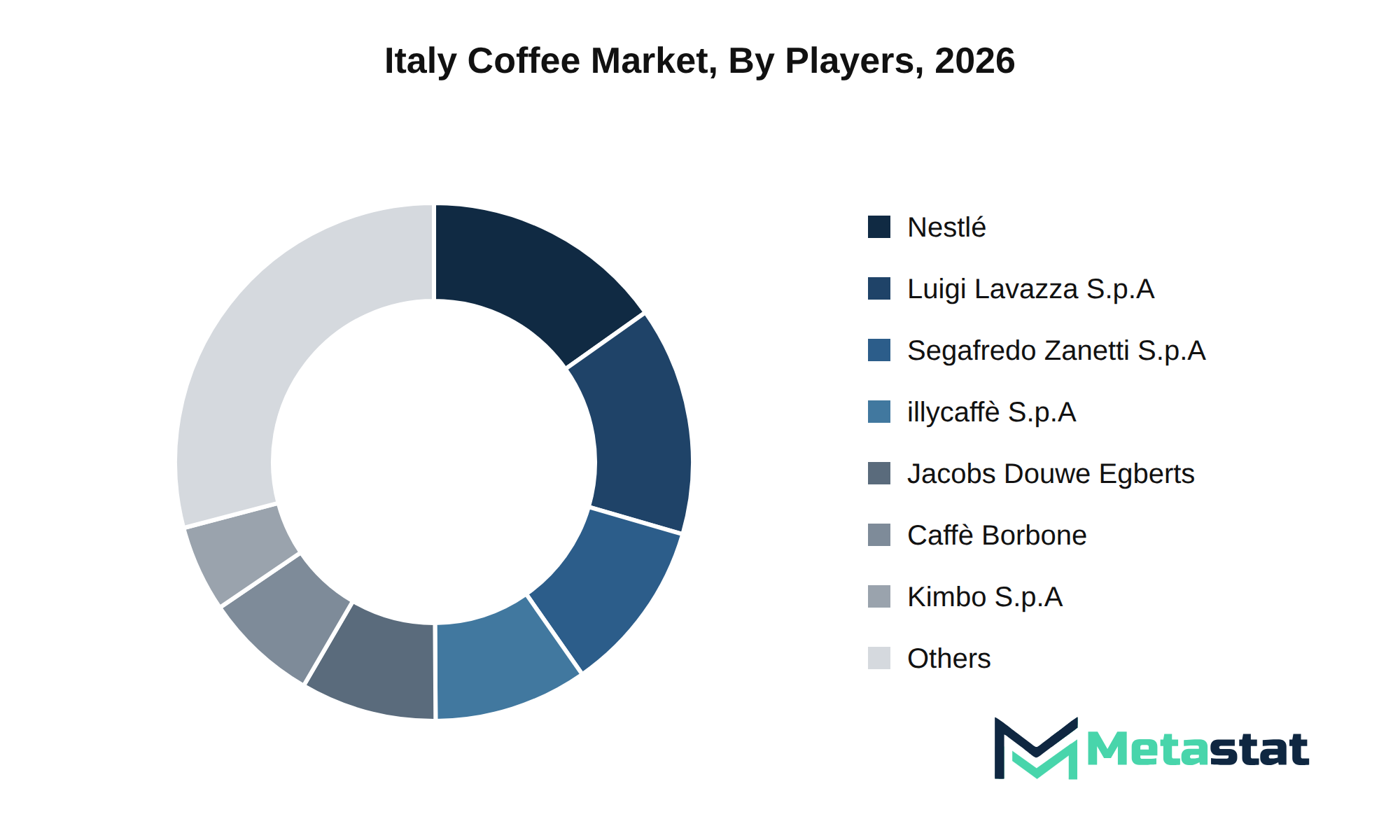
The Italy Coffee market features several prominent players focused on strategic consolidation and product differentiation. Companies including Luigi Lavazza S.p.A. and Nestlé S.A. emphasize innovation and quality to maintain competitive advantages. Product offerings increasingly include specialty formats and blends to cater to evolving consumer preferences.
Strategic alliances and partnerships strengthen market positions. Companies including Jacobs Douwe Egberts and illycaffè S.p.A. explore collaborations that enhance distribution networks and expand customer reach. This approach supports competitive resilience and promotes market expansion.
With a growing emphasis on brand equity and customer retention, firms including Caffè Borbone and Segafredo Zanetti S.p.A. leverage marketing strategies to build consumer loyalty. Switching costs remain a vital consideration, influencing consumer choices and shaping competitive dynamics within this market.
The focus on sustainable practices enhances the market's appeal. Players like Kimbo S.p.A. and Casa del Caffè Vergnano S.p.A. invest in organic product lines, responding to increasing demand for environmentally friendly options. These initiatives align with consumer trends, driving growth across the sector.
Looking ahead, the Italy Coffee market is projected to experience increased competition and innovation. Companies are expected to continue enhancing their value chain integration and procurement strategies, ensuring relevant positioning in the market.
Market size is forecast to rise from USD 5,362.3 million in 2025 to over USD 7,512.1 million by 2033. The growth trajectory reflects a base case of USD 5,362.3 million in 2025 to USD 7,512.1 million by 2033 at a 4.3% CAGR. Bull cases suggest accelerated growth driven by increased consumer demand for premium coffee products and innovations in coffee preparation methods. Bear cases arise from fluctuations in global supply chains, potential regulatory challenges, and shifts in consumer preferences toward alternative beverages.
The macroeconomic scenario planning indicates various factors influencing the Italy Coffee market, including structural consumption shifts and downstream demand changes. Consumer preferences are evolving, with a noticeable increase in demand for organic coffee and specialty blends. Next-generation technology integration in production and distribution processes enhances operational efficiencies and product offerings, catering to a more discerning consumer base.
Investment in R&D commercialization timelines continues to play a crucial role in the market. Companies focus on developing unique blends and sustainable sourcing methods, aligning with consumer trends toward ethical consumption. Regulatory evolution timelines, alongside compliance milestones, shape the competitive landscape, compelling companies to adapt swiftly to changing regulatory environments.
Geopolitical realignments and evolving trade corridors impact supply chain dynamics, creating opportunities for local producers to capitalize on shifts in import dependencies. Strategic capital allocation directives are essential for companies seeking to enhance their market position, with infrastructure commitments and CapEx investments focusing on modernizing facilities and expanding distribution networks.
Emerging white-space opportunities present avenues for growth, targeting unmet enterprise needs within the market. Identifying high-growth pockets, including single-serve formats and premium offerings, enables companies to refine their product strategies. Executive-level strategic imperatives emphasize the importance of agility and innovation in responding to market demands, contributing to a robust outlook for the Italy Coffee market.
The report strategically identifies and profiles the key market players and analyses their core competencies in each sub-segment of the Coffee market.
|
Report Attributes |
Details |
|
Study Period |
2021-2033 |
|
Base Year |
2025 |
|
Estimated Year |
2026 |
|
Forecast Period |
2026-2033 |
|
Historical Period |
2021-2025 |
|
Growth Rate |
CAGR 4.3% from 2026 to 2033 |
|
Revenue Unit |
USD million |
|
Segmentation |
By Product Format, Bean Composition, Nature, Distribution Channel, and Region |
Find answers to common questions about this report
The Coffee market size in Italy was valued at USD 5,362.3 million in 2025.
The Coffee market is projected to grow at a CAGR of 4.3% during the forecast period from 2026 to 2033.
The Coffee Capsules segment leads the Italy Coffee market, with a projected value of USD 2,256.6 million by 2033. This segment surpasses others in terms of revenue generation within the forecast period.
The key drivers for the Italy Coffee market include a significant shift towards premium coffee products, propelled by changing consumer preferences for quality and unique experiences. heightened consumer awareness regarding sustainability influences demand for organic and ethically sourced coffee, prompting brands to adapt their offerings accordingly.
The Italy Coffee market growth faces challenges from regulatory compliance, increasing operational costs, and supply chain disruptions. Stringent safety standards impose financial burdens, while geopolitical factors and rising raw material costs create uncertainty and margin erosion for manufacturers. These constraints limit competition and innovation, impacting overall market expansion.
The Italy Coffee market experiences favorable product adoption due to a significant shift towards premium coffee products driven by changing consumer preferences for quality and authenticity. heightened awareness of sustainability encourages consumers to seek organic and ethically sourced coffee, further enhancing market growth prospects.
The Coffee market is estimated to reach a valuation of USD 7,512.1 million by 2033.
Key players in the Italy Coffee Market include Luigi Lavazza S.p.A., Nestlé S.A., illycaffè S.p.A., Jacobs Douwe Egberts, Kimbo S.p.A., and Caffè Borbone.
The market size of the Italy Coffee market in 2025 is USD 5,362.3 million.
The expected growth rate for organic coffee is 10.4% through 2033.
Sustainability certifications, such as Fair Trade certification and Rainforest Alliance, are expanding across urban retail channels. While traditional Italian consumers historically prioritized roast intensity and price, younger demographics increasingly seek traceable sourcing, verified ethical labour practices, and certified organic production methods when purchasing packaged coffee.
Northern Italian consumers distinctly favor lighter to medium roasts composed primarily of Arabica beans, emphasizing acidity and floral aromas. In contrast, Southern Italy exhibits a strong preference for dark roasts with substantial Robusta beans content, delivering a full-bodied espresso with heavier crema, persistent bitterness, and elevated caffeine concentration.
Rising procurement costs for Arabica beans and Robusta beans squeeze roaster gross margins significantly. Because retail coffee in Italy is highly price-sensitive, producers face severe challenges passing cost increases to end consumers. In response, roasters often adjust blend formulations, increase capsule focus, or optimize operational efficiency.
Luigi Lavazza S.p.A. maintains the leading position in the Italian coffee market, supported by pervasive retail distribution and dominant brand equity across roast, ground, and portioned formats. Its strong domestic manufacturing footprint and diverse portfolio enable it to maintain high volume share across supermarkets and mass retail channels nationwide.
Single-serve pods represent the fastest evolving domestic format in Italy. Systems from Nestlé S.A., including Nespresso and Dolce Gusto, compete directly with compatible aluminium and compostable capsules from domestic roasters. Growth is propelled by consumer desire for bar-quality espresso at home, offset slightly by environmental packaging concerns.
The analysts below cover Food and Beverages research at Metastat Insights.
LEAD ANALYST
Utkarsh Khirodkar is a Lead Market Research Analyst at MetaStat Insight, specializing in market intelligence, technology sector assessments, and competitive strategy.

LEAD PRINCIPAL ANALYST, PHARMA AND HEALTHCARE
Food and Beverages · Healthcare · Healthcare IT · Medical Devices
Ajay Devgire is the Lead Healthcare Analyst at MetaStat Insight, leading strategic research and market intelligence initiatives across the global healthcare domain.

SENIOR RESEARCH ANALYST
Biotechnology · Food and Beverages · Medical Devices · Packaging
Snehal Pasalkar is a Research Analyst at MetaStat Insight, operating at the intersection of life sciences research, competitive strategy, and market intelligence.
Last Updated: September, 2026
Evaluating secondary resin quality across post-consumer packaging streams requires reliable technical segmentation. MetaStat Insight delivered an objective assessment that distinguished between extrusion-grade flake pricing and optical sorting throughput limitations across Western Europe. The competitive positioning breakdown for licensed depolymerization technology providers answered several questions during our feedstock feasibility audit. Their team clarified regional trade restrictions on mixed plastic scrap quickly when our team submitted follow-up requests.
Evaluating sovereign cloud deployments for core banking platforms demands a clear view of data residency regulations and migration exit strategies. MetaStat Insight delivered an exhaustive review of regional latency tolerances, mainframe decommission milestones, and third-party vendor concentration risk. The regulatory compliance mapping across European and Asian financial jurisdictions gave our team a dependable baseline for multi-cloud infrastructure discussions.
Replacing petrochemical surfactants with bio-based alternatives requires realistic timelines on industrial precision fermentation scaling. The market research broke down commercialization timelines, feedstock sugar price sensitivities, and regional cosmetic ingredient regulatory approvals in Europe and East Asia. That supplier readiness mapping gave our formulations team reliable context when comparing renewable chemical sourcing roadmaps.
Explore related market intelligence reports worth reading alongside this one.