
Italy Electrical Distribution Market
Italy Electrical Distribution Market Size, Share, By Product Category (Low-Voltage Switchgear and Circuit Protection, Distribution Boards, Switchboards and Panelboards, Medium-Voltage Switchgear and Distribution Equipment, Busbars and Busbar Trunking Systems, Electrical Enclosures and Cabinets, Power Distribution Monitoring and Metering Equipment, Surge Protection, Fuses and Disconnectors, Transformers and Power Conversion Equipment, Wiring Accessories and Distribution Components), By Voltage Level (Low Voltage, Medium Voltage, High Voltage), By End-Use Sector (Residential Buildings, Commercial and Retail Buildings, Industrial and Manufacturing Facilities, Public and Institutional Buildings, Infrastructure and Transportation, Data Centers and Telecommunications, Utilities and Energy Infrastructure), By Distribution Channel (Electrical Wholesalers and Distributors, Physical Branches and Trade Counters, Direct Sales and Key-Account Distribution, Online and E-Commerce Platforms), Industry Analysis, Growth, Trends, and Forecast, 2026-2033
MSI-5045
August 25, 2026
308 Pages
Historical
Base year
Forecast
Forecast period
Report Details
Comprehensive Market Analysis And Insights
Market Overview
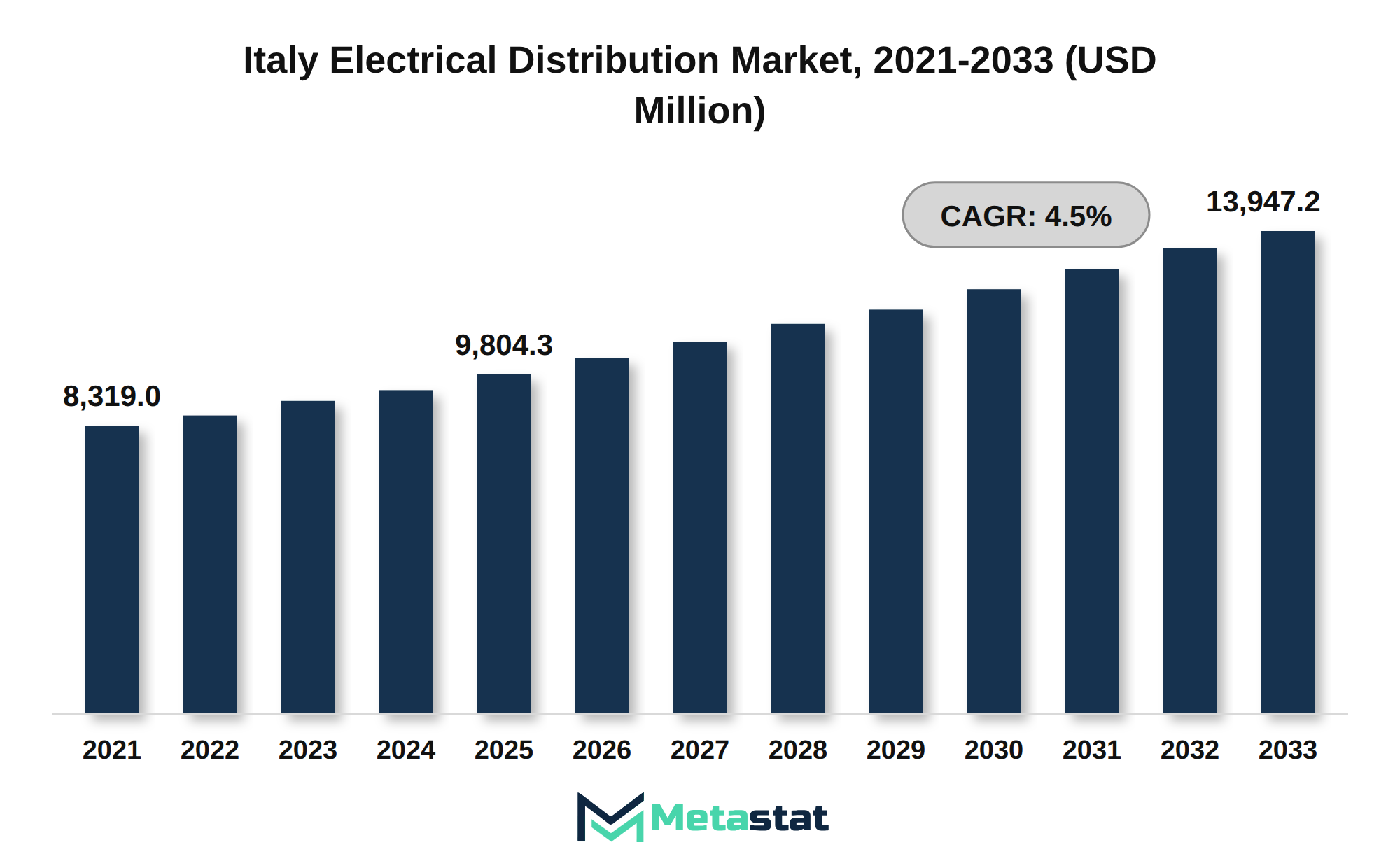
The Italy Electrical Distribution market was valued at USD 9,804.3 million in 2025 and is projected to reach USD 13,947.2 million by 2033, growing at a CAGR of 4.5% over the forecast period.
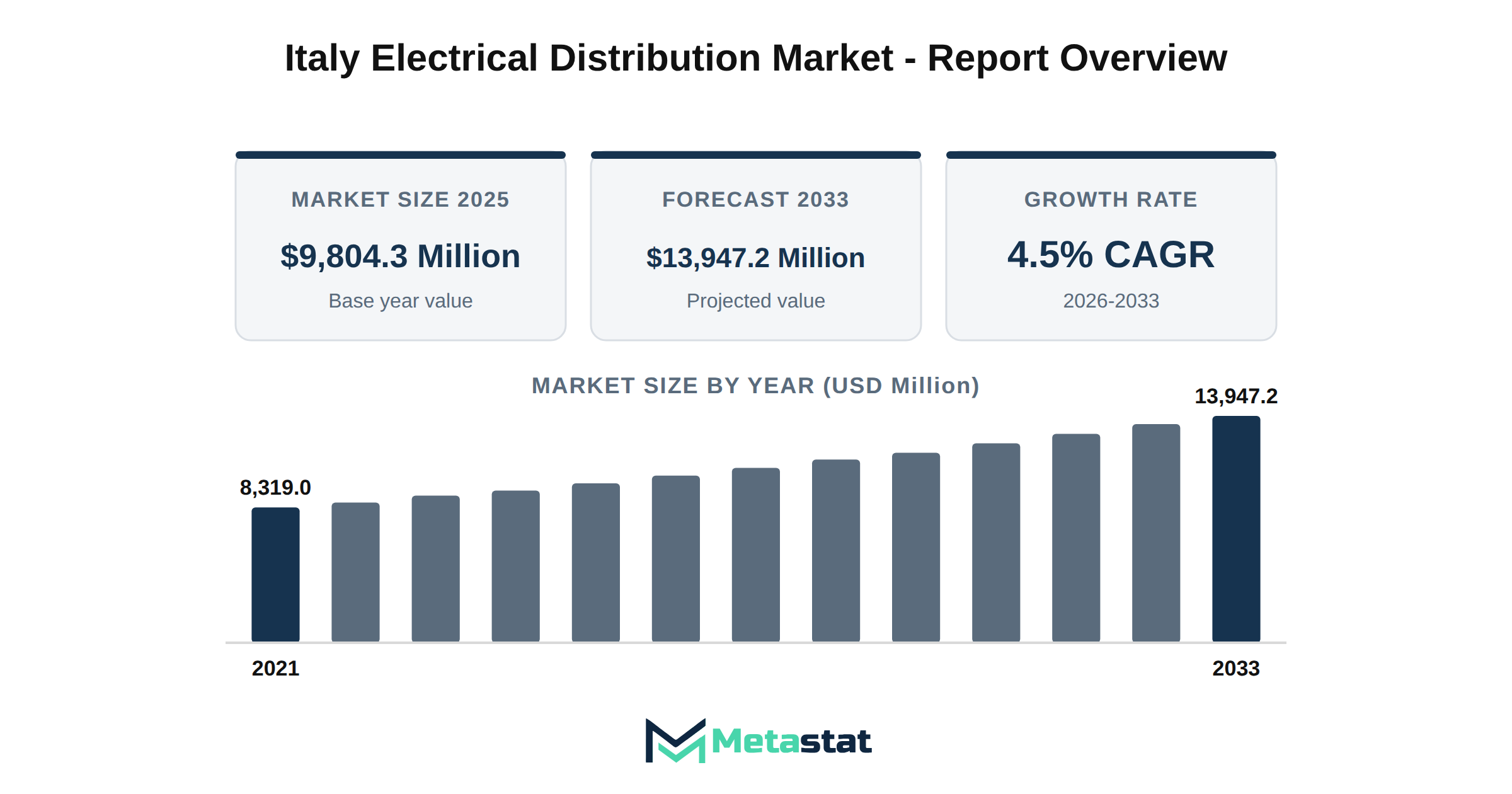
The Italy Electrical Distribution market is positioned for significant growth, with a base value of USD 9,804.3 million in 2025. The market is projected to expand to USD 13,947.2 million by 2033, reflecting a compound annual growth rate (CAGR) of 4.5%. Historical data shows a steady increase in market value, starting from USD 8,319 million in 2021 and reaching USD 9,349.1 million in 2024. This upward trend highlights the growing demand for electrical distribution solutions across various sectors.
Technological advancements drive the evolution of the market, particularly in product categories including low-voltage switchgear and circuit protection, which is expected to grow from USD 2,294 million in 2026 to USD 2,986.1 million by 2033, with a CAGR of 3.8%. The distribution boards, switchboards, and panelboards segment is projected to reach USD 2,023.7 million by 2033, propelled by increasing infrastructure projects and the need for efficient power management systems.
The evolving environment of the Italy Electrical Distribution market reflects an increasing emphasis on regulatory compliance and adherence to evolving standards. Market participants actively engage in frameworks that ensure alignment with safety and efficiency mandates, creating a competitive edge that influences various sectors.
Disruption within the market arises from technological advancements and the push towards next-generation innovation. Companies prioritize research and development trajectories, focusing on enhancing product offerings and integrating smart technologies that meet the demands of modern infrastructure. This focus drives significant investments in sustainable practices, aligning with global decarbonization goals and circular economy dynamics.
The supply chain experiences transformation, characterized by a re-evaluation of logistics architecture and sourcing strategies. Companies undertake strategic assessments to enhance resilience against macroeconomic headwinds, including inflationary pressures and currency volatility. This proactive approach positions firms to navigate fluctuations effectively while securing essential materials for product development.
Fragmentation remains prevalent within the market, influenced by a diverse range of players competing across various segments. Mergers and acquisitions dynamics present opportunities for consolidation, allowing companies to leverage synergies and expand their market presence. The value chain continues to evolve, emphasizing procurement strategies that prioritize efficiency and cost-effectiveness, enhancing the overall customer journey.
Future strategic outlooks indicate a strong focus on capital allocation and infrastructure investments, with firms prioritizing projects that align with long-term growth objectives. Operational realities of capital expenditure and operational expenditure dictate resource allocation, ensuring that investments yield favorable returns while addressing the shifting demands of the market.
While organizations adapt to evolving corporate imperatives, high-value recommendations emerge, guiding firms toward strategic initiatives that enhance competitiveness and sustainability. The integration of innovative solutions within the Italy Electrical Distribution market signifies a commitment to driving progress while addressing the needs of a dynamic economic environment.
Market Dynamics
Rising infrastructure investment boosts demand
The growth of the Italy Electrical Distribution market aligns with an increasing emphasis on infrastructure investment. This trend results from national and regional initiatives aimed at modernizing existing systems and expanding capacity. Enhanced infrastructure directly influences sectors including utilities, transportation, and industrial facilities, where advancements in electrical distribution play a crucial role in efficiency and reliability.
Investment in infrastructure upgrades generates significant opportunities for technology adoption and integration, driving demand for advanced electrical distribution solutions. Industries seek to optimize operations through automation and digital transformation, which require modern electrical distribution systems. The integration of innovative technologies enhances operational productivity, enabling more efficient energy management and distribution processes.
Capital investment environments, characterized by favorable conditions for funding, further support the growth of this market. Increased public and private spending enhances project viability and attracts venture funding, strengthening the overall investment landscape. Consequently, the Italy Electrical Distribution market is projected to grow, driven by these macro-economic factors and strategic investments in infrastructure development.
Increasing focus on sustainability initiatives
The Italy Electrical Distribution market experiences growth driven by heightened focus on sustainability initiatives, including carbon footprint reduction and circular economy practices. Companies integrate eco-friendly technologies, which align with consumer expectations for responsible environmental stewardship. The trend impacts various sectors, including industrial and commercial users, who prioritize energy-efficient solutions and sustainable materials in their operations.
Investment in green technologies influences capital allocation, with businesses seeking innovative products that enhance operational efficiency while reducing environmental impact. Manufacturers and suppliers who adapt to these sustainability demands improve their competitive standing in the market. Compliance with emerging environmental standards increases demand for sustainable electrical distribution solutions, creating a more resilient and environmentally-conscious market.
Government policies encouraging sustainability support market growth. These policies create a favorable environment for companies pursuing investment in green technologies, effectively driving overall market expansion. Continued embrace of sustainable practices positions the Italy Electrical Distribution market for long-term growth fueled by these essential initiatives.
High capital investment requirements challenge growth
The Italy Electrical Distribution market faces significant challenges due to high capital investment requirements. The need for substantial upfront capital to develop and maintain electrical distribution infrastructure creates barriers for new entrants and smaller players, limiting competition. Existing firms experience pressure on cash flow, impacting their ability to invest in innovative technologies and expand operations.
Macroeconomic headwinds, including inflationary pressures and economic instability, further exacerbate the situation. Rising costs of raw materials and labor increase operational expenses, compelling market participants to tighten budgets. This financial strain results in delayed projects and a conservative approach to expansion, restricting overall market growth.
Technological obsolescence presents another critical challenge. Rapid advancements in technology require ongoing investments to remain competitive. Firms that fail to adopt new solutions risk losing market share, intensifying the competitive environment. While the market evolves, pressure to innovate increases, yet financial constraints hinder the capacity to keep pace with technological changes.
High capital investment requirements create a challenging environment in the Italy Electrical Distribution market, impacting growth potential and operational efficiency. The combination of financial pressures and the need for technological adaptation underscores the importance of strategic planning for stakeholders aiming to navigate these obstacles successfully.
Geopolitical tensions raise market volatility
The Italy Electrical Distribution market experiences heightened volatility due to geopolitical tensions impacting trade relations. Fragmented global supply chains contribute to uncertainties in sourcing components and materials, leading to increased costs and inconsistent availability. Companies within the market face challenges in securing stable supply lines, which affects operational efficiency and pricing strategies.
Technological disruptions introduce complexities in research and development integrations. Rapid advancements in electrical distribution technologies require continuous investments in innovation. Firms encounter difficulties in adapting to emerging technologies while managing existing systems, increasing the risk of operational inefficiencies.
Market participants confront rising input costs driven by inflationary pressures and supply chain instabilities. Fluctuations in feedstock prices create challenges for manufacturers, resulting in tighter margins and pricing compression. These economic pressures compel companies to seek cost-effective solutions while maintaining product quality, complicating competitive positioning.
Workforce skill gaps and talent retention pressures present additional hurdles. The industry requires specialized skills to navigate evolving technological landscapes. Difficulty in attracting and retaining skilled personnel impacts companies' ability to innovate, directly influencing competitiveness in the Italy Electrical Distribution market.
These challenges shape a complex environment in which firms operate, necessitating strategic adaptability to maintain market share and profitability. While the market evolves, addressing these issues becomes essential for sustained growth and resilience in the future.
Emerging technological advancements create opportunities
Innovative technological advancements within the Italy Electrical Distribution market create substantial opportunities for growth. The adoption of smart grid technologies and enhanced automation drives demand for advanced distribution solutions. Industries including utilities and renewable energy increasingly require efficient energy management systems that facilitate real-time monitoring and control of electrical distribution. This shift towards digital transformation influences the integration of Internet of Things technologies, enabling predictive maintenance and optimizing asset performance.
Infrastructure modernization plays a significant role in enhancing the operational efficiency of electrical distribution systems. Upgrading aging infrastructure with next-generation equipment results in improved reliability and reduced operational costs for energy providers. Sustainability imperatives compel companies to adopt eco-friendly practices, further stimulating demand for advanced electrical distribution solutions. The ongoing transition towards greener technologies aligns with the objectives of organizations pursuing environmental, social, and governance (ESG) frameworks.
Geographical expansion in underdeveloped regions presents further opportunities for market players. The increasing demand for electricity in rural and suburban areas necessitates investments in distribution networks, enabling companies to reach untapped markets. The incorporation of innovative distribution components enhances supply chain localization, ensuring that products are readily available to meet regional demands.
The Italy Electrical Distribution market stands to benefit from evolving buying behaviors driven by digital procurement shifts and e-commerce platforms. Buyers increasingly prefer direct and online purchasing channels, prompting manufacturers to adapt their sales strategies accordingly. This trend enhances competition and drives innovative product offerings, allowing suppliers to meet the diverse needs of various sectors.
Market Segmentation Analysis
The Italy Electrical Distribution market is segmented based on Product Category, Voltage Level, End-Use Sector, and Distribution Channel.
By Product Category, the market is further segmented into:
- Low-Voltage Switchgear and Circuit Protection
- Distribution Boards, Switchboards and Panelboards
- Medium-Voltage Switchgear and Distribution Equipment
- Busbars and Busbar Trunking Systems
- Electrical Enclosures and Cabinets
- Power Distribution Monitoring and Metering Equipment
- Surge Protection, Fuses and Disconnectors
- Transformers and Power Conversion Equipment
- Wiring Accessories and Distribution Components
- Others (Cable Management, Terminals and Connection Accessories)
Low-Voltage Switchgear and Circuit Protection
Valued at USD 2,294 million in 2026, the Low-Voltage Switchgear and Circuit Protection segment is projected to reach USD 2,986.1 million by 2033, at a CAGR of 3.8% during the forecast period. This segment experiences growth driven by increasing demand for reliable and efficient electrical distribution solutions across various end-use sectors, including residential, commercial, and industrial applications. Enhanced safety standards and regulatory compliance requirements further drive market expansion, prompting users to invest in advanced low-voltage switchgear and circuit protection systems.
The adoption of smart technologies within the market influences product evolution, supporting the integration of automation and IoT capabilities into low-voltage solutions. This trend enhances operational efficiency and energy management, driving demand among utilities and large-scale industrial facilities. The shift towards renewable energy sources necessitates robust low-voltage distribution systems that ensure effective integration and protection of distributed energy resources.
Cost structures in the market are shaped by raw material sourcing and manufacturing efficiency. Pricing volatility of key components, including semiconductor materials, affects profit margins for manufacturers. Strategic investment in supply chain resilience enhances product availability while mitigating risks associated with fluctuating raw material prices. Overall, the segment’s growth hinges on technological maturation, evolving consumer preferences, and regulatory frameworks prioritizing safety and sustainability within the Italy Electrical Distribution market.
Distribution Boards, Switchboards and Panelboards
Demand for Distribution Boards, Switchboards and Panelboards reflects the increasing focus on efficient energy management and distribution within the Italy Electrical Distribution market. The projected growth in this segment arises from heightened construction activities across various sectors, particularly in residential and commercial buildings. This expansion generates a need for reliable and safe electrical distribution systems, directly influencing purchasing decisions.
Technological advancements play a critical role, with innovations enhancing the performance and functionality of distribution boards. Next-generation upgrades, including smart monitoring systems, offer improved efficiency and safety measures, appealing to end-users seeking robust solutions. Regulatory compliance standards and certifications drive adoption, ensuring products meet safety and performance benchmarks that are essential in the market.
The Distribution Boards, Switchboards and Panelboards segment is estimated to reach USD 2,023.7 million by 2033, at a CAGR of 4.1% during the forecast period. This growth trajectory highlights the segment's resilience, positioning it favorably for capital investment opportunities. Increased focus on sustainable energy solutions and the need for modern infrastructure create strategic opportunity windows for stakeholders in this segment.
Cost structures and pricing volatility remain key considerations, with manufacturers striving to balance quality and affordability. Supply chain resilience is crucial, ensuring the availability of raw materials necessary for production while mitigating risks associated with logistics vulnerabilities. Overall, the segment's growth is closely tied to consumption shifts and the increasing demand for advanced electrical distribution solutions within the Italy Electrical Distribution market.
Medium-Voltage Switchgear and Distribution Equipment
Growing demand for reliable and efficient electrical distribution systems fuels the Medium-Voltage Switchgear and Distribution Equipment segment within the Italy Electrical Distribution market. This demand arises from a variety of sectors, including industrial, commercial, and utility applications, which require robust infrastructure to manage increasing power loads and enhance system reliability. Technological advancements in smart grid solutions and automation drive the adoption of medium-voltage technologies, allowing for improved monitoring and control of electrical distribution systems.
Investment in infrastructure and modernization projects supports segment expansion, driven by aging equipment that necessitates replacement with more efficient solutions. Regulatory compliance and safety standards further mandate upgrades to existing systems, ensuring reliability and operational efficiency. Technological maturation within the medium-voltage sector emphasizes the importance of energy efficiency and sustainable practices, directly influencing product evolution and next-gen upgrades.
Market participants face pricing volatility and margin pressures due to fluctuating raw material costs and supply chain vulnerabilities. Strategic opportunity windows arise through innovation and the potential for integration of digital technologies, enhancing operational efficiencies and driving cost reductions. The Medium-Voltage Switchgear and Distribution Equipment segment is expected to reach USD 1,740.6 million by 2033, reflecting its critical role in supporting broader trends within the Italy Electrical Distribution market.
Busbars and Busbar Trunking Systems
Projected growth for the Busbars and Busbar Trunking Systems segment reaches a CAGR of 6% during the forecast period. This segment benefits from the increasing demand for efficient power distribution solutions, particularly within large-scale industrial and commercial applications. Factors driving adoption include the rising need for energy efficiency and reliability in power distribution networks, essential for meeting the requirements of modern infrastructure and industrial operations.
Technological maturation within the segment enhances system capabilities, allowing for better performance and integration with smart grid technologies. Upgrades to next-generation systems deliver improved efficiency and reduced operational costs, appealing to both suppliers and end users. Ongoing product evolution aligns with end-use dynamics, driven by utilities and industries seeking innovative solutions to manage increasing energy demands. The transition towards more sustainable energy practices emphasizes the importance of advanced busbar technologies, impacting consumption shifts in the market.
Regulatory compliance standards further influence the segment, pushing manufacturers to develop solutions that meet stringent safety and efficiency criteria. Margin pressures stemming from raw material sourcing and pricing volatility challenge producers, compelling them to enhance supply chain resilience and optimize production processes. Despite these challenges, strategic opportunity windows emerge for players investing in research and development, focusing on disruptive alternatives that leverage advancements in technology.
Market estimates suggest significant revenue potential, with the segment valued at USD 2,294 million in 2026, anticipating growth to USD 2,986.1 million by 2033. This upward trajectory reflects the vital role of Busbars and Busbar Trunking Systems within the Italy Electrical Distribution market, indicating strong demand across various sectors.
Electrical Enclosures and Cabinets
Demand for electrical enclosures and cabinets arises primarily from the need for safe and efficient housing of electrical components. Industries including construction, manufacturing, and telecommunications drive substantial interest in these products, driven by their critical role in protecting sensitive equipment from environmental factors and ensuring operational safety. Adoption of smart technologies within buildings further enhances the relevance of electrical enclosures, since integrated systems require reliable, durable housing solutions.
Technological maturation facilitates the evolution of electrical enclosures, with advancements in materials and design improving performance and functionality. Enhanced energy efficiency, along with increased focus on regulatory compliance, influences manufacturers to invest in innovative solutions that meet stringent safety standards. This ongoing evolution of product offerings positions the market for steady growth, aligning with the broader trends seen in the Italy Electrical Distribution market.
The shift toward sustainable building practices increases consumption of electrical enclosures that integrate eco-friendly materials and energy-efficient designs. Regulatory compliance standards increasingly demand robust certifications, further driving innovation in this sector. While industries prioritize sustainability, the demand for advanced electrical enclosures and cabinets is expected to rise, reinforcing the market’s trajectory.
Pricing volatility remains a concern, particularly due to fluctuations in raw material costs. Manufacturers face margin pressures that compel them to optimize production processes and explore alternative sourcing strategies. Yet, strategic opportunities arise from the ongoing digital transformation across sectors, where enhanced connectivity and control systems increase the importance of reliable electrical enclosures.
Overall, the electrical enclosures and cabinets segment within the Italy Electrical Distribution market demonstrates strong potential for growth, reflecting its adaptation to changing industry needs and consumer preferences, driven by innovation and regulatory dynamics.
Power Distribution Monitoring and Metering Equipment
Advancements in Power Distribution Monitoring and Metering Equipment directly influence the Italy Electrical Distribution market, driven by the increasing need for precise energy management and optimization. Enhanced demand for these technologies arises from various end-use sectors, including industrial, commercial, and residential applications, where energy efficiency and cost reduction are critical objectives. Regulatory compliance standards push organizations to adopt advanced monitoring solutions, ensuring adherence to energy consumption regulations and sustainability initiatives.
Technological maturation contributes significantly to the adoption of next-generation upgrades, enabling improved data analytics, real-time monitoring, and enhanced visibility into energy usage patterns. This evolution leads to increased operational efficiency and facilitates proactive maintenance strategies, reducing the likelihood of service disruptions. The integration of smart metering technologies supports better demand response strategies and provides consumers with valuable insights into their energy consumption.
Downstream applications benefit from increased awareness of consumption shifts, prompting entities to invest in improved metering infrastructure. Cost structures shift in favor of organizations that embrace innovative metering solutions, presenting strategic opportunity windows for manufacturers and suppliers within the market. Supply chain resilience and raw material sourcing strategies tailored to mitigate pricing volatility enhance the competitive position of industry participants.
Overall, the trajectory of Power Distribution Monitoring and Metering Equipment aligns with broader trends within the Italy Electrical Distribution market, where capital investment outlooks indicate a commitment to advancing infrastructure and technology, ensuring significant growth in the sector.
Surge Protection, Fuses and Disconnectors
Surge protection, fuses, and disconnectors play a critical role in ensuring the reliability and safety of electrical systems within the Italy Electrical Distribution market. Increasing awareness regarding electrical safety and the rising incidence of electrical faults drive demand for these essential components. The transition towards smart grid technologies further influences the adoption of advanced surge protection solutions, which offer enhanced protection against voltage spikes.
Technological maturation of surge protection devices enables manufacturers to introduce next-generation products that provide improved performance and efficiency. This evolution aligns with the broader trends towards energy efficiency and sustainability, prompting end-users across various sectors, including residential, commercial, and industrial segments, to invest in state-of-the-art protective solutions.
Regulatory compliance standards regarding electrical safety continue to impact market dynamics. Stringent regulations necessitate the incorporation of reliable surge protection mechanisms in electrical installations, thereby boosting overall market growth. These compliance measures promote a heightened focus on quality and performance across the supply chain, ensuring that products meet recognized safety certifications.
Fluctuations in raw material costs pose challenges within this segment, impacting pricing strategies for surge protection, fuses, and disconnectors. Manufacturers address these pressures through strategic sourcing and innovation, enhancing product value while maintaining competitive pricing. This environment encourages continual investment in research and development, opening strategic opportunity windows for businesses aiming to capture market share.
End-use dynamics indicate a shift in consumption patterns towards enhanced safety and performance features, influencing purchasing decisions across multiple sectors. The increasing reliance on digital infrastructure, coupled with expanding industrial applications, underscores the importance of surge protection solutions within the market. While organizations prioritize operational resilience, investments in these protective devices are expected to continue rising, supporting overall growth within the Italy Electrical Distribution market.
Transformers and Power Conversion Equipment
Growing emphasis on energy efficiency and sustainability drives demand for transformers and power conversion equipment within the Italy Electrical Distribution market. This segment ensures that electricity is delivered efficiently and reliably across various applications. Transformations in energy generation, particularly with the integration of renewable sources, necessitate advanced equipment capable of handling fluctuating power levels and enhancing grid stability. End-use sectors, including industrial, commercial, and residential, increasingly adopt next-generation transformers to optimize energy consumption and reduce operational costs.
Regulatory compliance standards influence product evolution in this segment, pushing manufacturers to develop equipment that meets the latest efficiency benchmarks and environmental guidelines. Technology maturation supports the introduction of innovative solutions, enhancing performance and reliability. Suppliers focus on strategic investments to expand their product offerings, ensuring compatibility with evolving grid requirements. Supply chain resilience remains critical, driven by manufacturers navigating raw material sourcing challenges and logistics vulnerabilities that impact production timelines.
Pricing volatility associated with raw materials introduces margin pressures, prompting players to explore cost-effective alternatives. The pursuit of energy-efficient technologies drives competition among suppliers, resulting in lower prices while enhancing product capabilities. Strategic opportunity windows arise from the increasing demand for reliable power distribution solutions, presenting avenues for growth and innovation within the market. Overall, the evolving dynamics within the transformers and power conversion equipment segment underline its importance in the broader context of the Italy Electrical Distribution market.
Wiring Accessories and Distribution Components
Market dynamics in the Wiring Accessories and Distribution Components sub-segment reflect a growing emphasis on reliability and efficiency. Demand for high-quality wiring accessories arises from increasing construction activities and the expansion of residential and commercial infrastructure. Key drivers include heightened consumer awareness regarding safety along with regulatory compliance standards that emphasize product quality and reliability. Adoption of advanced technologies facilitates the development of next-generation products, enhancing performance and compliance with modern safety standards.
Segment expansion is influenced by technological maturation, where innovations in materials and manufacturing processes contribute to more durable offerings. Downstream applications, particularly in commercial and industrial sectors, require robust and efficient solutions that improve operational effectiveness. This trend shifts consumption patterns towards more technologically advanced wiring solutions.
Regulatory compliance continues to shape the market landscape, driven by manufacturers navigating increasingly stringent standards governing electrical safety and efficiency. The focus on sustainability influences product development, with manufacturers integrating eco-friendly materials and energy-efficient designs. Cost structures in this sub-segment are impacted by raw material sourcing and supply chain resilience, which directly affects pricing volatility.
Strategic opportunities arise from the need for continuous product evolution, driven by consumer demand for advanced features and functionalities. This ongoing innovation within the Wiring Accessories and Distribution Components segment reflects broader trends in the Italy Electrical Distribution market. Companies investing in research and development enhance their competitive positioning, ensuring they meet the changing needs of end-users while navigating potential substitution risks and disruptive alternatives.
Others (Cable Management, Terminals and Connection Accessories)
Investment in cable management, terminals, and connection accessories continues to rise, propelled by the increasing complexity of electrical systems across various sectors. This segment supports integration within electrical distribution networks, enhancing operational efficiency and reducing vulnerabilities associated with electrical connections. The push for compact design solutions in residential and commercial applications drives demand, driven by businesses and consumers seeking to optimize space and improve system aesthetics.
Technological maturation significantly influences this segment, with advancements enabling innovative materials and designs that improve performance and reliability. The market responds to evolving regulatory compliance standards, which emphasize safety and performance in electrical installations. While end-use sectors expand, including industrial and data centers, the need for robust connection solutions intensifies, stimulating growth within the market.
Consumption shifts towards sustainable and energy-efficient solutions further influence product evolution, with manufacturers focusing on high-performance materials that minimize environmental impact. Strategic opportunity windows arise from increased capital investment in infrastructure projects, leading to greater consumption of connection accessories in the Italy Electrical Distribution market.
By Voltage Level, the market is further segmented into:
- Low Voltage
- Medium Voltage
- High Voltage
Low Voltage
Valued at USD 7636.4 million in 2026, the Low Voltage segment is projected to reach USD 10012.7 million by 2033, at a CAGR of 3.9% during the forecast period. Increased investments in infrastructure and urban development enhance demand for low voltage solutions within the Italy Electrical Distribution market. Adoption of energy-efficient technologies and heightened focus on sustainable practices contribute to this trend, increasing reliance on low voltage systems across residential, commercial, and industrial applications.
Segment expansion is driven by technological maturation, with advancements in smart grid technology and automation enhancing system performance and reliability. Integration of next-generation upgrades, including digital monitoring and automated distribution systems, ensures efficient energy management and reduces operational costs. End-use dynamics reflect a shift towards more efficient energy consumption, prompting industries to seek low voltage solutions for enhanced operational efficiency.
Regulatory compliance and standards play a vital role in shaping the market, driven by stricter energy efficiency regulations that prompt manufacturers to innovate and upgrade their product offerings. Pricing volatility in raw materials impacts cost structures, with manufacturers facing margin pressures while striving to maintain competitive pricing. Overall, the combination of these factors positions the Low Voltage segment for continuous growth within the evolving landscape of the Italy Electrical Distribution market.
Medium Voltage
Growth in the Medium Voltage segment of the Italy Electrical Distribution market reflects the increasing emphasis on advanced electrical systems. This segment is estimated to reach USD 3,080.9 million by 2033, at a CAGR of 5.6% during the forecast period. Adoption of medium voltage solutions arises from the need for enhanced energy efficiency and reliability in power distribution. Key industries including utilities, industrial facilities, and commercial buildings significantly drive demand for medium voltage equipment.
Technological maturation is significant, with innovations in equipment design and functionality leading to improved performance characteristics. The ongoing transition towards smart grid technologies further enhances the segment's appeal, facilitating better monitoring and management of electrical distribution networks. Regulatory compliance standards and energy efficiency initiatives incentivize investments in medium voltage infrastructure, thus supporting market expansion.
Changing consumption patterns, particularly in urban areas, push demand for efficient medium voltage systems. Urbanization increases the need for reliable power supply in residential and commercial sectors, intensifying the drive for further adoption of medium voltage solutions. Strategic opportunities arise from government policies aimed at modernizing electrical infrastructure and improving energy access, contributing positively to the segment's growth trajectory.
High Voltage
Market dynamics in the High Voltage segment reflect a growing need for robust infrastructure to support increasing energy demands. Valued at USD 853.6 million by 2033, this sub-segment contributes significantly to the Italy Electrical Distribution market by facilitating the transmission of electricity across long distances and supporting industrial applications. Technological maturation, driven by advancements in materials and equipment, enhances efficiency and reliability, attracting investment in next-generation upgrades.
Regulatory compliance standards play an important role in shaping the market. Governments enforce stricter regulations on energy efficiency and environmental impact, prompting manufacturers to align their offerings to meet these requirements. This alignment strengthens market competitiveness and drives innovation in product evolution, ensuring that high voltage solutions integrate modern technologies for enhanced performance.
Downstream applications across various end-use sectors, including industrial and commercial facilities, significantly influence demand. These sectors prioritize high voltage solutions to ensure reliability and operational efficiency. Consumption shifts towards eco-friendly and sustainable practices further support the growth of this segment, with businesses seeking solutions that reduce their carbon footprint while maintaining high productivity levels.
Strategic opportunity windows arise from ongoing investments in electrical infrastructure and renewable energy projects. Nations transition towards cleaner energy sources, leading to a rise in demand for high voltage equipment and creating a favorable environment for suppliers. Market players focusing on supply chain resilience and raw material sourcing capitalize on these opportunities, ensuring they remain competitive in the evolving landscape.
By End-Use Sector, the market is further segmented into:
- Residential Buildings
- Commercial & Retail Buildings
- Industrial & Manufacturing Facilities
- Public & Institutional Buildings
- Infrastructure & Transportation
- Data Centers & Telecommunications
- Utilities & Energy Infrastructure
- Others (Agriculture, Marine & Specialized Facilities)
Residential Buildings
Investment in residential buildings in Italy drives demand for efficient electrical distribution systems. Increasing urbanization and the growth of smart home technologies significantly influence this segment. Rising awareness of energy efficiency among homeowners leads to a preference for advanced electrical solutions, enhancing overall energy management in residences.
Technological maturation plays a significant role in shaping product offerings within the residential buildings sub-segment. The introduction of next-generation upgrades, including smart meters and energy management systems, supports enhanced user experience and operational efficiency. Evolving regulatory compliance standards push manufacturers to innovate while adhering to safety and energy efficiency guidelines.
Consumption shifts reflect a growing inclination towards sustainable energy solutions. This trend aligns with government policies promoting renewable energy integration and energy-efficient technologies. Consequently, stakeholders in the Italy Electrical Distribution market benefit from investments in innovative solutions that meet evolving consumer expectations.
Strategic opportunity windows arise for manufacturers focused on enhancing product features and functionalities. Emphasis on user-friendly interfaces and integration with home automation systems provides a competitive edge. Disruptions from alternative energy sources, including solar and wind, necessitate adaptability in electrical distribution offerings.
Supply chain resilience remains vital to ensure timely delivery of components necessary for residential projects. Addressing raw material sourcing challenges enhances competitiveness, while effective logistics strategies mitigate vulnerabilities. Overall, the residential buildings sub-segment reflects strong demand drivers that contribute to the broader dynamics of the market.
Commercial & Retail Buildings
Investment in commercial and retail buildings drives the need for advanced electrical distribution solutions, enhancing operational efficiency and ensuring compliance with safety standards. Reliable power supply in these facilities arises from increasing reliance on technology and automation, leading to higher energy consumption. Regulatory compliance standards, including energy efficiency mandates, influence purchasing decisions, pushing stakeholders to adopt modern electrical distribution systems.
Downstream applications within commercial and retail buildings benefit from technological advancements in electrical distribution. New product developments focus on integrating smart technologies, enabling real-time monitoring and management of energy usage. This evolution aligns with the growing emphasis on sustainability, prompting stakeholders to seek solutions that reduce environmental impact while maintaining performance.
Consumption shifts towards energy-efficient solutions influence purchasing patterns, particularly among environmentally conscious businesses. The market experiences increased demand for products that support renewable energy integration, enhancing the overall sustainability of commercial and retail operations. Strategic opportunity windows arise from the trend of retrofitting existing buildings with modern electrical distribution systems.
Supply chain resilience becomes crucial in the face of potential disruptions in raw material sourcing, emphasizing the importance of local suppliers and efficient logistics. Companies operating in this segment focus on ensuring continuity in production and delivery, mitigating risks associated with global supply chains. Overall, the commercial and retail buildings segment within the Italy Electrical Distribution market presents significant growth potential driven by technological maturation and evolving consumer preferences.
Industrial & Manufacturing Facilities
In the context of the Italy Electrical Distribution market, the Industrial & Manufacturing Facilities segment experiences robust demand driven by the increasing need for advanced electrical infrastructure in production environments. This sector prioritizes reliability and efficiency, leading to heightened interest in low-voltage and medium-voltage switchgear, which ensure uninterrupted operations.
Technological maturation within electrical distribution products contributes significantly to the operational capabilities of industrial facilities. The integration of innovative monitoring systems and smart technologies enhances energy management, facilitating a shift towards more sustainable practices. Upgrading existing electrical systems enables facilities to optimize performance, reduce energy consumption, and align with regulatory compliance standards.
Adoption of next-generation upgrades reflects the growing awareness of energy efficiency and safety among industrial operators. Continuous product evolution in switchgear and distribution equipment addresses these needs, allowing for tailored solutions that enhance operational resilience. Investments in modern distribution boards and panelboards support the transition towards automated and digitally connected manufacturing environments.
Consumer preferences shift towards sustainable and energy-efficient solutions, compelling manufacturers to reevaluate their supply chains and sourcing strategies. Regulatory compliance pressures encourage operators to implement advanced safety measures and adhere to evolving standards, driving market players to innovate in their product offerings. Strategic opportunity windows arise owing to facilities seeking to upgrade aging infrastructure, requiring capital investment and collaboration with suppliers.
Overall, the Industrial & Manufacturing Facilities segment contributes significantly to the broader Italy Electrical Distribution market, characterized by dynamic shifts in technology and consumption patterns. Continuous investment in electrical distribution systems positions the segment for future growth, aligning with Italy's industrial objectives and sustainability goals.
Public & Institutional Buildings
Investment in public and institutional buildings drives demand for advanced electrical distribution solutions. Factors including governmental initiatives focused on infrastructure development enhance the need for robust systems that ensure safety and reliability in electrical distribution. Energy efficiency regulations compel these sectors to adopt innovative technologies that minimize energy consumption while maximizing operational performance.
Technological maturation influences market dynamics. Enhanced capabilities in power distribution monitoring and metering equipment offer opportunities for improved management of energy resources. Buyers in this sector lean towards integrated solutions, enabling real-time monitoring and control over electrical systems, which aligns with sustainability goals.
Consumption shifts towards smart building technologies influence the market, with an increasing emphasis on automation and connectivity. Public and institutional buildings, particularly those engaging in smart city initiatives, demonstrate a growing integration of advanced electrical distribution solutions. This shift presents strategic opportunity windows, leading to increased investment in next-generation upgrades and product evolution.
Regulatory compliance standards shape procurement strategies for electrical distribution products. Adherence to stringent safety and performance certifications ensures that systems meet the operational demands of public infrastructures. This environment creates margin pressures for suppliers, necessitating competitive pricing strategies to capture and maintain market share in the Italy Electrical Distribution market.
Supply chain resilience remains a key consideration, with raw material sourcing impacting product availability and cost structures. Suppliers face challenges in logistics vulnerabilities that disrupt the timely delivery of essential components. Addressing these risks enhances the overall stability of market operations and positions suppliers favorably against disruptive alternatives.
Public and institutional buildings place a premium on products that offer durability and long-term operational efficiency. This demand encourages manufacturers to innovate continuously, focusing on developing solutions that meet the evolving needs of these end-use sectors. Overall, the public and institutional buildings segment reflects a changing environment within the Italy Electrical Distribution market, driven by regulatory, technological, and economic factors.
Infrastructure & Transportation
Infrastructure and transportation demand in the Italy Electrical Distribution market stems from increased investments in public transport systems, road networks, and infrastructure upgrades. Urbanization trends drive the need for reliable electrical distribution solutions to support expanding transportation systems and smart city initiatives. Enhancements in infrastructure require robust electrical distribution systems to ensure efficient energy management and supply continuity.
Technological maturation shapes this segment, driven by next-generation upgrades that introduce innovative solutions for energy efficiency and sustainability. The focus on integrating renewable energy sources into the infrastructure supports a shift towards smart grids and energy management systems. While energy consumption patterns evolve, regulatory compliance standards demand that electrical distribution systems adapt to modern requirements, enhancing overall efficiency.
Investment strategies in infrastructure and transportation emphasize long-term sustainability and resilience, prompting stakeholders to seek advanced electrical distribution technologies. The landscape reflects a growing recognition of the importance of reliable energy infrastructure in supporting economic development and enhancing quality of life. While the market evolves, strategic opportunity windows emerge for players to innovate and expand their offerings.
Data Centers & Telecommunications
Rapid advancements in technology significantly influence the Data Centers & Telecommunications segment of the Italy Electrical Distribution market. Increased demand for high-capacity data storage and processing drives investment in modernized infrastructure. Companies pursue next-generation upgrades to support growing data traffic and enhance operational efficiency. The expansion of cloud computing and the Internet of Things accelerates the need for robust electrical distribution solutions, supporting long-term demand.
Regulatory compliance standards concerning energy efficiency and environmental impact pressure operators to adopt advanced technologies and sustainable practices. Adherence to these standards enhances operational reliability while mitigating regulatory risks. Cost structures in this segment reflect the need for high-quality materials and components that comply with stringent regulations, resulting in increased capital investment in infrastructure. Pricing volatility linked to raw material sourcing challenges profitability while incentivizing companies to explore alternative materials and technologies, limiting adoption among price-sensitive buyers.
Strategic opportunity windows emerge for suppliers who offer innovative solutions tailored to the unique challenges of data centers and telecommunications. The trend towards digitalization creates a competitive environment where companies enhance their product offerings to meet evolving customer demands. Ultimately, these dynamics present significant growth prospects within the market, positioning it for continued expansion through 2033.
Utilities & Energy Infrastructure
Increasing investments in renewable energy sources and modernization of the existing grid infrastructure enhance the demand for electrical distribution solutions within the Utilities and Energy Infrastructure segment. Compliance with stringent regulatory standards surrounding environmental impact and energy efficiency creates significant growth opportunities. Technological advancements in smart grid technologies and energy management systems drive further enhancements in operational efficiency, enabling utility providers to respond effectively to energy consumption shifts and peak demand challenges.
The evolution of product offerings, particularly in power distribution monitoring and metering equipment, enhances the capabilities of utilities. Enhanced data analytics and real-time monitoring facilitate informed decision-making, optimizing energy distribution and usage. In addition, the transition toward decentralized energy generation, including solar and wind power, necessitates robust electrical distribution systems capable of integrating diverse energy sources seamlessly.
Utility companies face challenges related to cost structures, pricing volatility, and margin pressures resulting from fluctuating raw material prices and evolving market demands. Strategic opportunity windows emerge through capital investment in next-generation infrastructure, which supports reliability and sustainability initiatives. Overall, the Utilities and Energy Infrastructure segment remains integral to the growth of the Italy Electrical Distribution market, adapting to dynamic energy landscapes and consumer expectations.
Others (Agriculture, Marine & Specialized Facilities)
Specialized facilities, including those in agriculture and marine sectors, exhibit unique demands for electrical distribution solutions. These facilities often require tailored products that align with specific operational needs and environmental considerations. Increased focus on energy efficiency and enhanced productivity drives investment in advanced electrical distribution technologies. Demand for reliable and precise power distribution solutions reflects the critical nature of operations in these specialized sectors.
Technological maturation in electrical distribution equipment supports adoption across diverse applications within the agriculture and marine segments. Innovations in power management and monitoring systems enhance operational efficiency, while next-generation upgrades facilitate integration with existing infrastructure. Product evolution in this market segment highlights the importance of adaptability to meet changing industry requirements.
Downstream applications increasingly leverage advanced electrical distribution solutions to improve reliability and safety in operations. Consumption shifts toward sustainable and efficient technologies drive investment in this market, with regulatory compliance standards influencing purchasing decisions. Companies operating in these specialized facilities often prioritize certifications that demonstrate adherence to safety and performance benchmarks.
Pricing volatility and margin pressures uniquely impact the market dynamics for agricultural, marine, and other specialized facilities. Cost structures reflect the need for high-quality materials and technologies that meet specific application demands, influencing procurement strategies. Strategic opportunity windows arise owing to industry players seeking to address unmet needs in these niche markets, driving investment and innovation.
The Italy Electrical Distribution market continues to evolve, driven by these dynamics within the specialized facilities segment. Companies focusing on this area position themselves to capture emerging opportunities, ensuring they meet the diverse needs of end-users in agriculture, marine, and other specialized applications.
By Distribution Channel, the market is further segmented into:
- Electrical Wholesalers and Distributors
- Physical Branches and Trade Counters
- Direct Sales and Key-Account Distribution
- Online and E-Commerce Platforms
- Others (Project-Based and Integrated Procurement Channels)
Electrical Wholesalers and Distributors
In the Italy Electrical Distribution market, the Electrical Wholesalers and Distributors channel plays a key role in facilitating the flow of products and solutions to various end-use sectors. This segment experiences growth driven by increasing demand for reliable and efficient electrical distribution solutions across multiple industries, including residential, commercial, and industrial applications. Rising complexity of modern electrical systems necessitates a robust distribution network, which strengthens the position of wholesalers in the supply chain.
Technological advancements significantly influence this segment, with a shift towards smart distribution solutions and energy management systems. These innovations enhance operational efficiency and cater to growing consumer preference for energy-efficient products. Integration of next-generation upgrades supports wholesalers in providing value-added services, thus improving customer retention and satisfaction.
Regulatory compliance standards impact the market, mandating wholesalers to adapt their offerings to meet evolving safety and performance benchmarks. Adherence to these standards ensures that distributors maintain a competitive edge while promoting confidence among their clientele. Fluctuations in raw material pricing and supply chain resilience present challenges that require strategic planning and flexibility within the distribution network.
Overall, the performance of the Electrical Wholesalers and Distributors segment remains critical within the Italy Electrical Distribution market, influenced by technological evolution, regulatory frameworks, and growing demand for efficient energy solutions.
Physical Branches and Trade Counters
Demand for Physical Branches and Trade Counters in the Italy Electrical Distribution market relies on several factors, including the growth of end-use sectors including residential, commercial, and industrial buildings. Increased investments in infrastructure development stimulate this demand, driving the need for reliable electrical distribution solutions available through physical branches.
Technological maturation significantly shapes this segment. Retailers increasingly adopt advanced solutions, enabling them to offer enhanced product selections and improved services. This evolution in product offerings attracts businesses seeking efficient and effective electrical distribution solutions, reinforcing the market's expansion.
Consumption shifts towards sustainable and energy-efficient technologies influence buyers' preferences, pushing retailers to align their inventories with modern demands. Regulatory compliance standards concerning energy efficiency further motivate retailers to stock innovative products that meet or exceed current regulations, ensuring they remain competitive within the market.
Margin pressures challenge retailers in this segment, necessitating effective cost management strategies. Pricing volatility in raw materials affects operational costs, compelling retailers to establish closer relationships with suppliers to mitigate risks associated with fluctuations in raw material prices. This resilience enhances their ability to offer competitive pricing and maintain profitability.
Strategic opportunity windows appear owing to advancements in electrical distribution technologies. Businesses that adapt to changing market conditions and embrace next-generation upgrades position themselves for long-term success. Focusing on customer needs while exploring new product developments allows retailers to strengthen their market presence effectively.
Direct Sales and Key-Account Distribution
Direct sales and key-account distribution in the Italy Electrical Distribution market stands because a vital channel for manufacturers aiming to establish strong relationships with end-users. This segment prioritizes personalized service and solutions tailored to specific customer needs, encouraging loyalty and repeat business. Key demand drivers in this segment include the increasing complexity of electrical distribution systems and the necessity for customized solutions in various industries.
Adoption of direct sales strategies hinges on the growing emphasis on customer engagement and satisfaction. Companies in the market recognize the importance of direct interactions to understand customer challenges and deliver efficient solutions. Segment expansion occurs owing to firms investing in training sales teams to enhance product knowledge and service capabilities, ensuring they meet diverse customer requirements.
Technological maturation plays an essential role in the evolution of product offerings within this distribution channel. Advancements in communication and data analytics facilitate improved interaction between suppliers and customers, allowing for better forecasting and inventory management. This enhanced communication streamlines operations and minimizes delays, positively impacting overall market performance.
Cost structures specific to direct sales and key-account distribution reflect the investment needed for maintaining a skilled workforce and supporting infrastructure. Pricing volatility in the broader market influences strategies within this segment, compelling companies to adopt flexible pricing models to remain competitive. Margin pressures arise from the balance of personalized service with cost efficiency, requiring firms to optimize their distribution processes continually.
Strategic opportunity windows emerge through partnerships with key clients across various sectors, including industrial, commercial, and residential markets. These collaborations enhance market reach and provide valuable insights into evolving customer preferences. By focusing on these partnerships, firms within the market strengthen their competitive positioning while addressing the unique challenges faced by end-users.
Online and E-Commerce Platforms
E-commerce adoption in the Italy Electrical Distribution market experiences significant growth driven by changing consumer preferences and digital transformation. Increased reliance on online platforms aligns with the demand for convenience and accessibility among end-users across various sectors, including commercial and residential markets.
Technological advancements enhance the capabilities of online and e-commerce platforms. Improved website interfaces, mobile applications, and secure payment gateways facilitate transactions, resulting in a more user-friendly experience for customers. This technological maturation supports the segment's expansion, allowing suppliers to reach a broader audience and meet evolving customer expectations.
Strategic opportunity windows emerge because firms leverage digital marketing and supply chain optimization to capture market share. Firms investing in advanced analytics and customer relationship management tools tailor offers and enhance customer engagement. This approach strengthens brand loyalty and drives repeat purchases, contributing to sustained growth within the segment.
Regulatory compliance standards remain a critical aspect affecting online sales channels. Adherence to local and international regulations ensures a trustworthy shopping experience, addressing potential concerns related to data privacy and consumer rights. These compliance measures enhance the credibility of e-commerce platforms, attracting discerning customers in the market.
Cost structures associated with online sales vary due to logistics and fulfillment challenges. Firms navigating pricing volatility face margin pressures stemming from competition and operational costs. Effective inventory management and strategic partnerships with logistics providers mitigate these challenges, ensuring a robust supply chain that enhances profitability.
Consumption shifts towards e-commerce platforms indicate a significant transformation within the Italy Electrical Distribution market. The expanding customer base demands efficient delivery and diverse product offerings, driving firms to innovate their online presence and service capabilities. Capital investment in technology and infrastructure is expected to strengthen the segment's position in the market.
Others (Project-Based and Integrated Procurement Channels)
Expansion in project-based and integrated procurement channels reflects a strategic focus on delivering tailored solutions to specific client needs within the Italy Electrical Distribution market. This segment thrives on the demand for customized electrical distribution solutions that adapt to evolving project specifications and regulatory requirements. The adoption of these channels results from a growing emphasis on efficiency and reliability in energy management across various sectors.
Technological maturation plays a significant role in enhancing the capabilities of project-based and integrated procurement channels. Innovations in smart grid technology and advanced metering systems support the delivery of precise energy distribution solutions, further driving sector expansion. End-use dynamics indicate a shift towards sustainable energy practices, with stakeholders prioritizing environmentally friendly options.
Consumption shifts influenced by regulatory compliance standards heighten the focus on efficient energy use. Businesses and public entities recognize the value of integrating these channels within their supply chains to meet stringent sustainability targets. This alignment with regulations provides a competitive advantage for firms leveraging project-based procurement strategies.
Strategic opportunities arise from ongoing investments in infrastructure development, particularly in urban areas. Capital investment outlooks in the Italy Electrical Distribution market indicate robust funding for energy infrastructure projects, stimulating demand for integrated procurement solutions. Companies pursuing these opportunities position themselves to capture future growth in the market.
Competitive Landscape and Strategic Insights
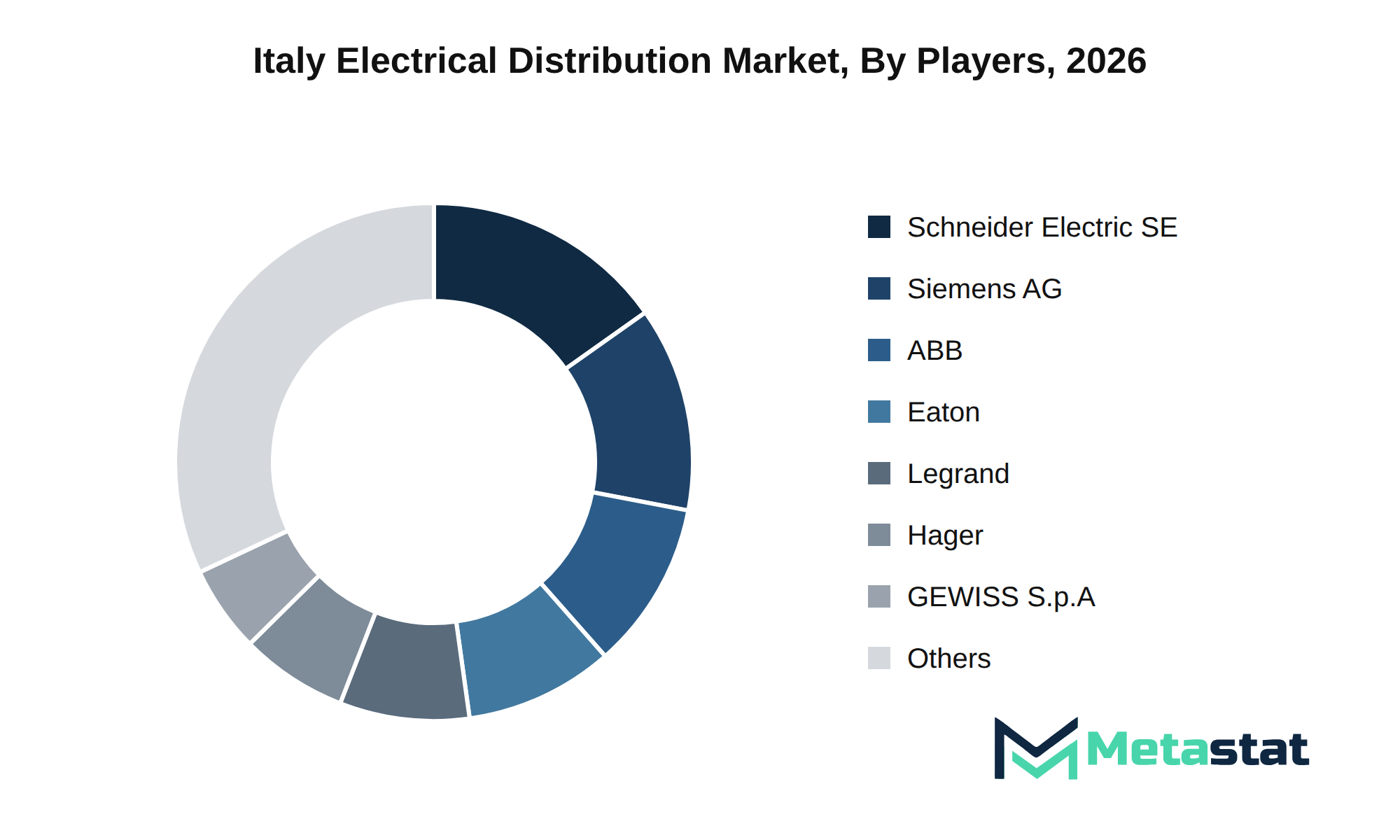
The Italy Electrical Distribution market features a diverse range of players, each employing distinct strategies to enhance their market positions. Companies including ABB Ltd., Schneider Electric SE, and Siemens AG focus on product differentiation and proprietary technology moats. This approach allows them to offer advanced solutions that meet the evolving demands of various sectors, including residential, commercial, and industrial applications.
Strategic alliances and joint ventures play an important role in the market dynamics, enabling companies like Hager Group and Eaton Corporation plc to expand their reach and integrate complementary technologies. These collaborations enhance value chain integration, providing competitive advantages through improved supply chain management and procurement leverage. The emphasis on customer retention strategies strengthens brand equity, ensuring long-term loyalty among clients.
With significant investments in R&D pipelines, firms including Legrand Group and Prysmian S.p.A. cultivate innovative solutions that address emerging market needs. This forward-looking approach strengthens their technological defensibility and positions them favorably against potential new entrants. The competitive outlook for the market remains robust, driven by ongoing industry restructuring and the pursuit of growth vectors that align with market trends.
Forecast and Future Outlook
Market size is forecast to rise from USD 9,804.3 million in 2025 to over USD 13,947.2 million by 2033. The base case outlines a growth trajectory characterized by a 4.5% CAGR, driven by several factors influencing the Italy Electrical Distribution market. Various macroeconomic indicators suggest steady demand for electrical distribution solutions, with industries including residential, commercial, and utilities experiencing increased investments in infrastructure and technology, supporting market expansion.
The bull case anticipates accelerated growth due to rapid technological advancements and increased regulatory support for sustainable practices, resulting in greater capital allocation to electrical distribution innovations. In contrast, the bear case presents challenges including geopolitical tensions and economic fluctuations that hinder investment and limit market potential. Regardless of these scenarios, the market demonstrates resilience and adaptability, positioning itself to meet evolving consumption patterns and technological integration.
Italy Electrical Distribution Market Key Segments
By Product Category:
- Low-Voltage Switchgear and Circuit Protection
- Distribution Boards, Switchboards and Panelboards
- Medium-Voltage Switchgear and Distribution Equipment
- Busbars and Busbar Trunking Systems
- Electrical Enclosures and Cabinets
- Power Distribution Monitoring and Metering Equipment
- Surge Protection, Fuses and Disconnectors
- Transformers and Power Conversion Equipment
- Wiring Accessories and Distribution Components
- Others (Cable Management, Terminals and Connection Accessories)
By Voltage Level:
- Low Voltage
- Medium Voltage
- High Voltage
By End-Use Sector:
- Residential Buildings
- Commercial & Retail Buildings
- Industrial & Manufacturing Facilities
- Public & Institutional Buildings
- Infrastructure & Transportation
- Data Centers & Telecommunications
- Utilities & Energy Infrastructure
- Others (Agriculture, Marine & Specialized Facilities)
By Distribution Channel:
- Electrical Wholesalers and Distributors
- Physical Branches and Trade Counters
- Direct Sales and Key-Account Distribution
- Online and E-Commerce Platforms
- Others (Project-Based and Integrated Procurement Channels)
Key Italy Electrical Distribution Industry Players
- ABB Ltd.
- Schneider Electric SE
- Siemens AG
- Legrand Group
- GEWISS S.p.A.
- Vimar S.p.A.
- Hager Group
- Eaton Corporation plc
- LOVATO Electric S.p.A.
- Finder S.p.A.
- Phoenix Contact GmbH & Co. KG
- WAGO GmbH & Co. KG
- Weidmüller Interface GmbH & Co. KG
- Rittal GmbH & Co. KG
- Socomec Group S.A.
- Prysmian S.p.A.
- Nexans S.A.
- DKC Europe S.r.l.
- SCAME PARRE S.p.A.
- Palazzoli S.p.A.
- AVE S.p.A.
- Mitsubishi Electric Corporation
- Rockwell Automation, Inc.
Report Coverage
The report strategically identifies and profiles the key market players and analyses their core competencies in each sub-segment of the Electrical Distribution market.
Report Attributes | Details |
Study Period | 2021-2033 |
Base Year | 2025 |
Estimated Year | 2026 |
Forecast Period | 2026-2033 |
Historical Period | 2021-2025 |
Growth Rate | CAGR 4.5% from 2026 to 2033 |
Revenue Unit | USD million |
Segmentation | By Product Category, Voltage Level, End-Use Sector, Distribution Channel, and Region |
What Report Provides
- Key Company Market Share, Revenue and Ranking for the Italy Electrical Distribution Market
- Key Market Leaders and Their Strategic Positioning
- Full In-Depth Analysis of the Electrical Distribution Industry
- Industry Statistics and Market Dynamics Overview
- Segmentation Details of the Italy Electrical Distribution Market
- Historical, Ongoing and Projected Market Analysis
- Assessment of Niche Industry Developments and Trends
- Competitive Benchmarking and Key Strategic Recommendations
Frequently Asked Questions
Find answers to common questions about this report
The Electrical Distribution market size in Italy was valued at USD 9,804.3 million in 2025.
The Electrical Distribution market is projected to grow at a CAGR of 4.5% during the forecast period from 2026 to 2033.
The Wiring Accessories and Distribution Components segment leads the Italy Electrical Distribution market, with a projected value of USD 1,004.1 million in 2033. This segment holds the highest share based on the regional distribution of product categories.
The key drivers for the Italy Electrical Distribution market include increased infrastructure investment and a focus on sustainability initiatives. National and regional efforts to modernize systems enhance efficiency in utilities and industrial sectors, while the integration of eco-friendly technologies aligns with consumer expectations for responsible practices, supporting market growth.
High capital investment requirements and macroeconomic headwinds, including inflation and economic instability, significantly restrain growth in the Italy Electrical Distribution market. These factors create barriers for new entrants, limit competition, and pressure existing firms' cash flow, impacting their ability to invest in innovative technologies and expand operations.
Investment in infrastructure upgrades and heightened focus on sustainability initiatives favor product adoption in the Italy Electrical Distribution market. Companies increasingly seek advanced electrical distribution solutions that enhance operational efficiency while aligning with consumer expectations for eco-friendly practices.
The Electrical Distribution market is estimated to reach a valuation of USD 13,947.2 million by 2033.
Key players in the Italy Electrical Distribution market include ABB Ltd., Schneider Electric SE, Siemens AG, Legrand Group, GEWISS S.p.A., Vimar S.p.A., and Eaton Corporation plc.
The low-voltage switchgear and circuit protection segment is projected to reach USD 2,986.1 million by 2033, growing from USD 2,294 million in 2026.
The medium voltage segment is anticipated to experience a growth rate of 5.6 percent, reaching USD 3,080.9 million by 2033.
Choose Your License
Italy Electrical Distribution Market
Related Reports
Explore related market intelligence reports worth reading alongside this one.
Czech Republic Commercial and Industrial Solar PV Market
Starting from
$2950