
LEAD ANALYST
Utkarsh Khirodkar is a Lead Market Research Analyst at MetaStat Insight, specializing in market intelligence, technology sector assessments, and competitive strategy.

Global Metallized Capacitor Film Market Size, Share, By Dielectric Film Material (Polypropylene (PP/BOPP), Polyester (PET/BOPET), Others (PPS, PEN and Specialty High-Temperature Polymer Dielectric Films)), By Application (Automotive & Electric Mobility, Solar Photovoltaic Systems, Wind Power Systems, Grid Transmission & Distribution, Industrial Power Electronics & Drives, Energy Storage Systems, Rail Traction, Consumer Appliances & Electronics, Others (Aerospace, Defense, Medical and Specialty Power Supplies)), By Voltage Range (Low, Medium, High), Industry Analysis, Growth, Trends, and Forecast, 2026-2033
MSI-5075
August, 2026
289 Pages
Historical
Base year
Forecast
Forecast period
Report Details
Comprehensive Market Analysis And Insights
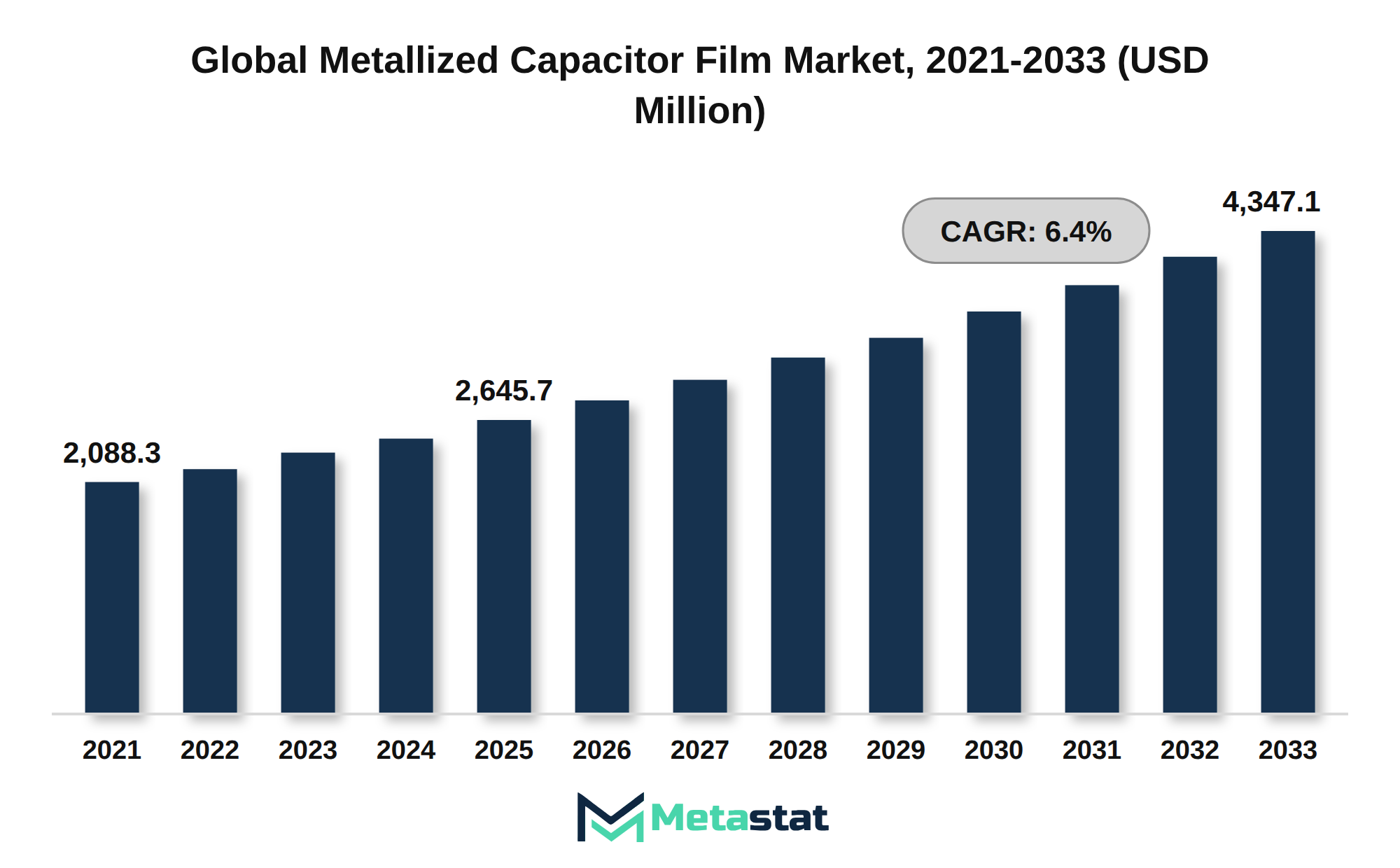
The global Metallized Capacitor Film market was valued at USD 2,645.7 million in 2025 and is projected to reach USD 4,347.1 million by 2033, growing at a CAGR of 6.4% over the forecast period.
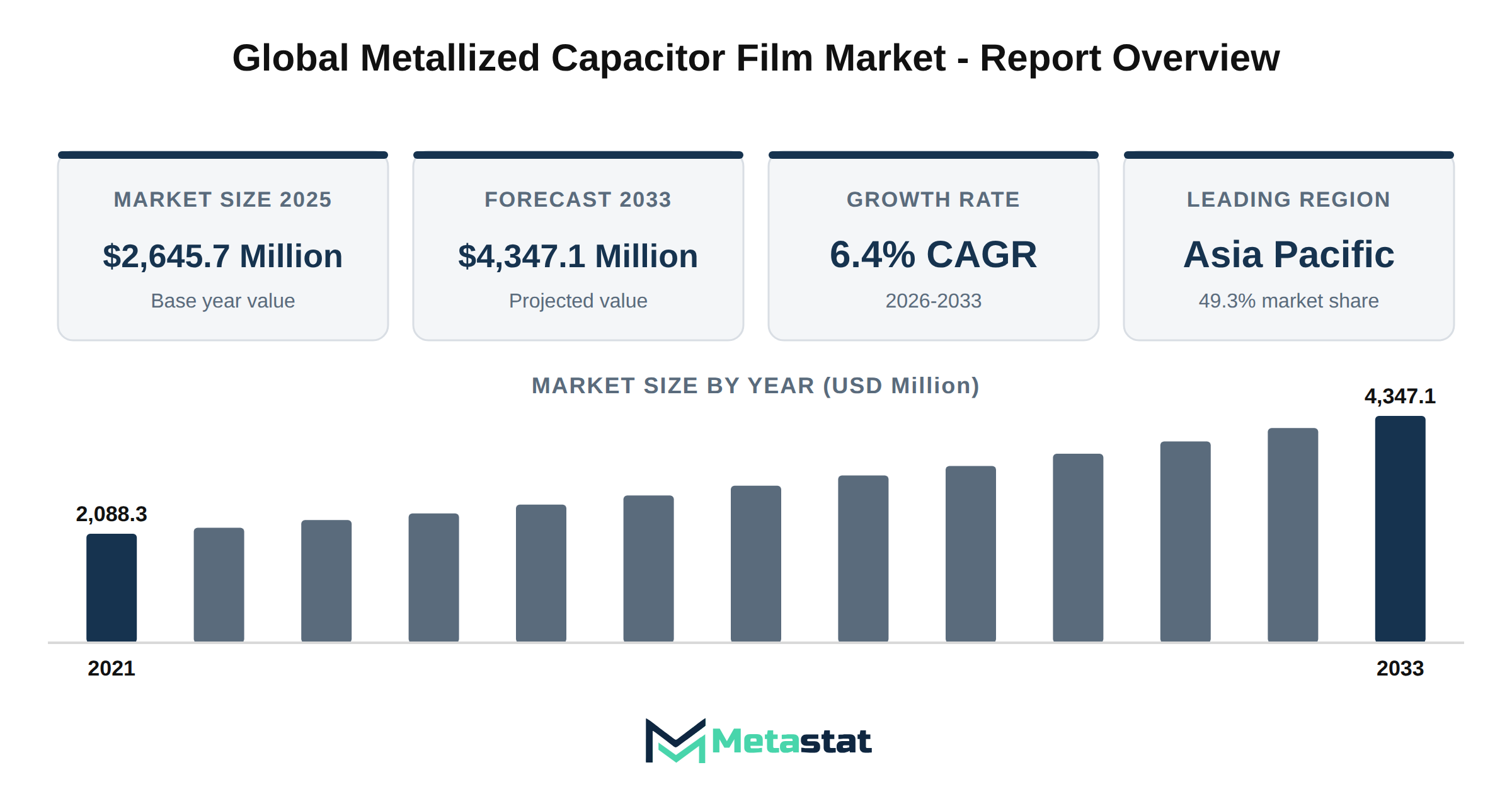
The Metallized Capacitor Film market reached a valuation of USD 2,645.7 million in the base year of 2025, following a steady growth trajectory that began in 2021 with a value of USD 2,088.3 million. This upward trend highlights the increasing demand for advanced electrical components across various industries, particularly in sectors including automotive, renewable energy, and consumer electronics. The market is projected to expand to USD 4,347.1 million by 2033, reflecting a compound annual growth rate (CAGR) of 6.4% during the forecast period from 2026 to 2033.
The dynamics surrounding pricing and cost in the metallized film segment play a crucial role in shaping competitive strategies. Fluctuations in raw material costs, particularly capacitor-grade polypropylene resin, significantly impact profit margins for manufacturers. Innovations in ultra-thin and high-temperature films have emerged because key differentiators in the market, facilitating enhanced performance and applications in demanding environments. This continuous evolution in film technology seeks to address the growing need for efficiency and reliability in high-performance electrical systems.
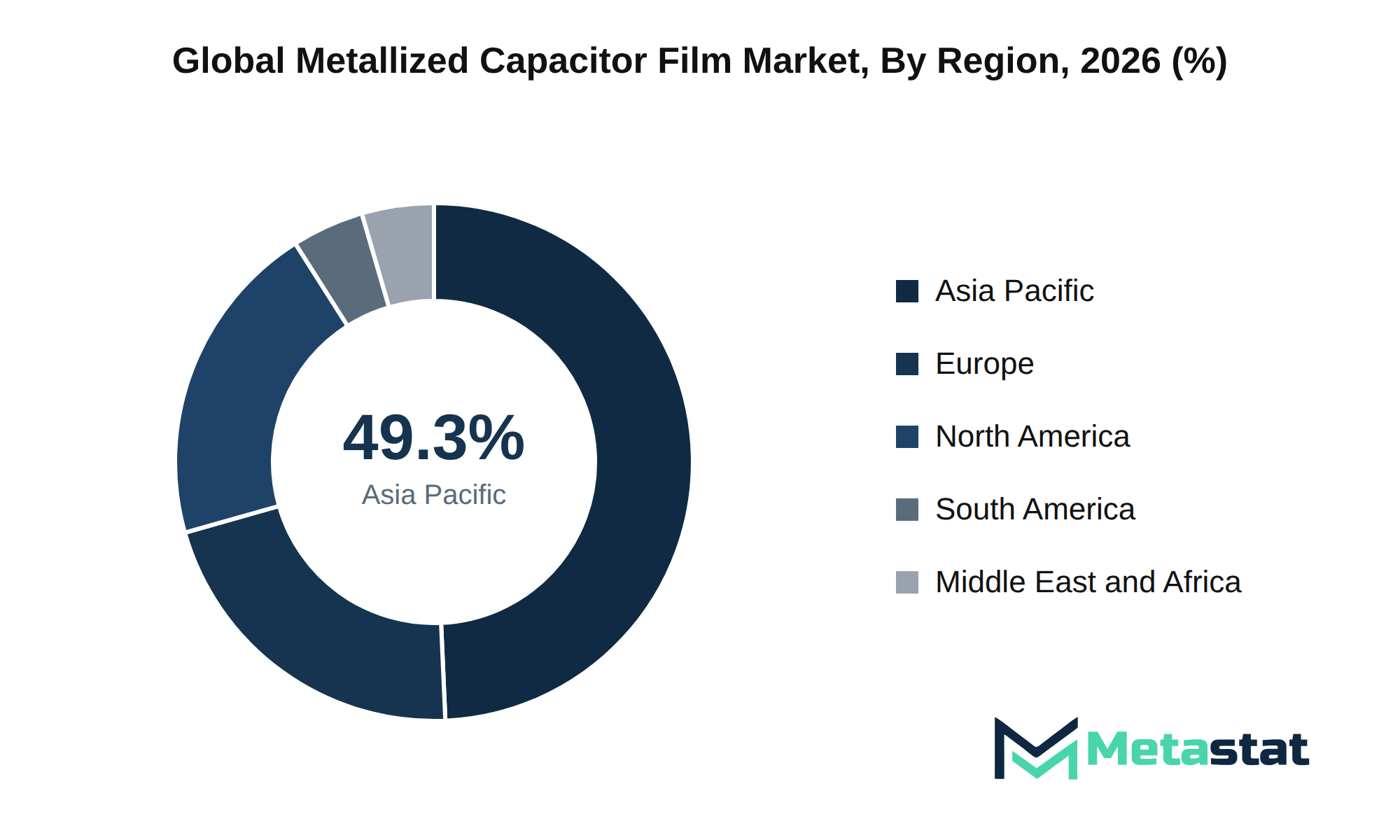
Regional dynamics further influence the market landscape. The Asia Pacific region commands the largest share of 49.3%, driven by robust manufacturing capabilities and increasing investments in renewable energy infrastructure. Key players in countries including China, Japan, and India actively engage in capacity expansion initiatives to meet rising demand. Competitive benchmarking among industry participants highlights the importance of strategic partnerships and technological advancements in maintaining a market edge.
Innovations in pattern metallization and self-healing technology represent significant strides in product development. These advancements align with evolving regulatory compliance and standards, ensuring that products meet stringent performance benchmarks. The market's focus on sustainable transformation and decarbonization initiatives further contributes to its long-term growth potential, positioning it because a vital component of the circular economy.
The Metallized Capacitor Film market experiences significant price fluctuations influenced by various factors, including raw material costs and technological advancements. Polypropylene (PP) and polyester (PET) resins serve because the primary materials, with volatility in oil prices impacting overall production expenses. Manufacturers adapt their pricing strategies to maintain competitiveness while ensuring profit margins in a dynamic market environment.
Competitive dynamics feature several players engaged in capacity expansion to meet rising demand across multiple applications. Companies prioritize investments in advanced manufacturing techniques and expanding production capabilities, enabling them to capture a larger market share. This strategic focus on enhancing capacity drives growth and positions companies favorably against competitors.
Supply dynamics between Japan, China, and India significantly influence the overall market. Each region presents distinct capabilities and advantages in resin production and capacitor manufacturing. Japan's focus on high-quality production contrasts with China's large-scale manufacturing efficiencies, while India's emerging market status offers opportunities for growth and innovation.
Recent developments in capacitor-grade PP resin enhance the performance and reliability of metallized capacitors. Innovations in resin formulations lead to improved thermal stability and dielectric properties, facilitating the production of high-performance capacitors suitable for diverse applications, including automotive and renewable energy systems.
Ultra-thin and high-temperature film innovations drive advancements within the market. Enhanced thin-film capacitors offer improved efficiency and space-saving designs, appealing to industries focused on compact electronic solutions. High-temperature capabilities extend the applicability of these capacitors in demanding environments, creating new opportunities for adoption.
Pattern metallization and self-healing technology represent critical innovations shaping the market's future. These advancements enhance capacitor durability and performance, particularly in high-stress applications. Companies investing in research and development in these areas position themselves for competitive advantage in the evolving landscape.
Regulatory compliance and standards enforcement impact the operational framework of the market. Companies navigate complex regulatory environments that govern manufacturing processes and product safety, ensuring adherence to international standards. This focus on compliance mitigates risks and builds consumer trust in the products offered.
Disruption in supply chains poses challenges and opportunities for market players. Global events affecting logistics and material sourcing require companies to adapt their strategies to maintain continuity in production. Proactive supply chain management enhances resilience and responsiveness to changing market conditions.
Research and development trajectories point towards next-generation innovations in metallized capacitors. Companies invest significantly in exploring new materials and technologies that enhance performance and sustainability. This commitment to innovation supports the market's evolution towards a more sustainable and efficient future.
Decarbonization and circular economy dynamics influence operational strategies within the market. Companies prioritize sustainable practices, including recycling and resource efficiency, to align with global environmental goals. This transformation enhances brand reputation and appeals to environmentally conscious consumers.
The market's fragmentation presents unique challenges and opportunities for players. M&A dynamics evolve because companies seek to consolidate resources and capabilities to enhance competitiveness. Strategic partnerships and collaborations drive innovation and growth, shaping the future landscape of the metallized capacitor film market.
Capital allocation and infrastructure investments remain critical for sustained growth. Companies strategically invest in expanding manufacturing facilities and upgrading technologies to enhance production efficiency. This focus on infrastructure supports the market's ability to meet increasing demand across various sectors.
The future strategic outlook for the metallized capacitor film market remains optimistic. Ongoing advancements in technology, materials, and production processes drive growth opportunities across diverse applications. Companies that prioritize innovation and sustainability are well-positioned to thrive in this evolving environment.
The Metallized Capacitor Film market experiences growth driven by heightened emission regulations that require manufacturers to adopt closed-loop systems. Stricter environmental standards compel industries, including automotive and electronics, to improve energy efficiency and reduce waste. This regulatory environment encourages investment in advanced technologies, including innovative dielectric materials that enhance capacitor performance while minimizing environmental impact.
Growing demand for energy-efficient solutions in sectors including renewable energy and industrial manufacturing encourages companies to invest in metallized capacitors, which offer superior reliability and performance. These capacitors support the transition to sustainable energy systems, aligning with global initiatives for carbon footprint reduction. Prioritizing compliance with stringent emission limits strengthens the market for metallized capacitor film, which is anticipated to expand significantly, driven by the ongoing need for sustainable practices and innovative solutions.
Technological integration and digital transformation significantly influence growth in the Metallized Capacitor Film market. Businesses increasingly focus on automation, artificial intelligence, and software adoption to modernize legacy processes. These advancements streamline operations, enhance productivity, and reduce operational costs, enabling manufacturers to allocate resources more efficiently.
Growing demand for high-performance electrical components drives investment in research and development, ensuring that product offerings align with evolving consumer preferences. Emphasis on innovation leads to the introduction of new product offerings that cater to industries including automotive, renewable energy, and consumer electronics. This trend creates competitive advantages for companies prioritizing technological advancements, ultimately driving market expansion and increasing overall revenue generated within the market.
The shift toward sustainable practices influences investment decisions in the Metallized Capacitor Film market. Companies adopting eco-friendly manufacturing processes and materials position themselves favorably in a market increasingly concerned with environmental impact. This focus on sustainability connects with consumers, enhancing brand loyalty and expanding market access. Consequently, firms embracing digital transformation and sustainability strategies experience stronger growth trajectories in the market.
Challenges in the global economy significantly impact the Metallized Capacitor Film market. Inflationary pressures have raised costs for raw materials, resulting in higher overall production expenses. This situation places financial strain on manufacturers, limiting their ability to invest in new technologies or expand production capacity. Manufacturers face challenges in meeting growing demand while maintaining competitive pricing.
Geopolitical instability introduces uncertainties in supply chains, complicating operations within the market. Disruptions caused by political tensions or trade disputes lead to delays in obtaining critical components, impacting production timelines. Such supply chain disruptions hinder manufacturers’ ability to respond swiftly to market changes, reducing agility in adapting to evolving customer needs.
Resource scarcity presents an additional concern. The limited availability of certain materials necessary for metallized capacitors leads to increased competition among manufacturers. This competition drives up prices, which affects end-user pricing and overall demand for metallized capacitors. Such dynamics create challenges for businesses aiming to penetrate new markets or grow their existing customer base.
Overall, these macroeconomic headwinds, characterized by inflation and resource scarcity, alongside geopolitical uncertainties, pose significant challenges for the Metallized Capacitor Film market. Addressing these issues becomes crucial for stakeholders aiming to sustain growth and maintain competitive advantage in a challenging environment.
Geopolitical fragmentation presents significant challenges for the Metallized Capacitor Film market, creating uncertainty in trade relations and increasing operational risks for manufacturers. Ongoing trade deficits and tariff friction disrupt the supply chain, leading to increased costs for materials and components. This situation affects producers, who face heightened expenses while striving to maintain competitive pricing.
Technological disruptions complicate product development and market entry strategies, driven by the necessity for complex R&D integrations. The market experiences interoperability friction, where differing standards and technological capabilities among regions impede integration of products, resulting in slower adoption rates and reduced market penetration.
Fluctuations in feedstock and component availability pose further challenges, causing volatility in production costs. Logistics disruptions, stemming from geopolitical tensions, impact timely delivery and inventory management, adversely affecting market operations. Tightening global regulatory standards increase compliance overhead, requiring additional resources for manufacturers to meet evolving legal liabilities while maintaining profitability.
Pricing compression and margin pressures emerge amid rising input cost structures. The market confronts workforce skill gaps that hinder innovation and productivity. Automation displacements create a dynamic labor landscape, complicating talent retention strategies in an increasingly competitive environment.
Environmental lifecycle footprints and decarbonization mandates intensify sustainability demands, compelling companies to adapt their operations and product offerings to align with market expectations. Infrastructure gaps introduce retrofitting barriers, further complicating implementation processes and hindering growth.
Intellectual property protection deficits expose firms to cybersecurity risks and data vulnerabilities, placing them at risk of financial losses and reputational damage. Changing downstream demands create pressures for immediate market responses, while market saturation and substitution vectors challenge the profitability of existing products. The Metallized Capacitor Film market navigates these complexities to achieve sustained growth in an evolving landscape.
The Metallized Capacitor Film market experiences opportunities driven by emerging regional demands and infrastructure modernization. Significant growth in Asia Pacific, accounting for 49.3% of the market share, reflects increased adoption in key industries including automotive and renewable energy. This trend aligns with ongoing infrastructure projects aimed at enhancing energy efficiency and sustainability.
Technological disruptions and next-generation innovations present additional opportunities for market participants. Advancements in dielectric film materials, particularly polypropylene, demonstrate potential with a projected growth rate of 6.6% from 2026 to 2033. This growth results from increasing applications in energy storage systems and grid transmission, pushing manufacturers to invest in enhanced product integration.
Sustainability imperatives continue to drive eco-friendly transformations across industries. The demand for environmentally conscious solutions influences buyer preferences, prompting suppliers to innovate and align with ESG-driven initiatives. This alignment expands market access to environmentally aware consumers and businesses, encouraging further adoption of metallized capacitor films.
Strategic consolidation through cross-industry mergers and acquisitions enhances competitive positioning. Companies entering the Metallized Capacitor Film market through partnerships or acquisitions expand their product offerings, allowing them to cater to a broader customer base and explore niche applications.
Shifts in buying behaviors, including digital procurement and commercial model transitions, significantly influence market dynamics. The movement towards online platforms facilitates quicker access to products, improving customer engagement and satisfaction. This transition encourages suppliers to enhance their digital presence and streamline operations to meet evolving consumer expectations.
Supply chain localization and asset life-cycle extensions respond to the increasing need for resilience in operations. By optimizing local supply chains, manufacturers reduce risks associated with global disruptions, ensuring a steady flow of materials and components. The focus on maintenance upgrades and retrofitting supports the longevity of existing systems, thereby enhancing the market's overall appeal.
These factors collectively contribute to an optimistic outlook for the Metallized Capacitor Film market, driving growth and innovation across multiple sectors. The connection of these opportunities positions the market for expansion through 2033.
The Global Metallized Capacitor Film market is segmented based on Dielectric Film Material, Application, and Voltage Range.
Valued at USD 2,100.9 million in 2026, the Polypropylene (PP/BOPP) segment exhibits strong potential, projected to reach USD 3,295.1 million by 2033, at a CAGR of 6.6% during the forecast period. Demand for polypropylene in the Metallized Capacitor Film market arises from its superior properties including high thermal stability, low dissipation factor, and excellent moisture resistance. The automotive and electric mobility sectors drive substantial adoption, where lightweight materials contribute to energy efficiency and improved performance in vehicles. Increasing regulatory emphasis on energy efficiency and sustainability aligns with the adoption of polypropylene-based solutions, supporting segment growth.
Technological advancements enhance the features of polypropylene films, allowing for better performance in high-frequency applications. Innovations in manufacturing processes, including advancements in polymerization techniques, support the evolution of product offerings in this segment. Consequently, manufacturers focus on optimizing production processes to address rising consumer expectations for efficiency and reliability. The growing trend towards renewable energy sources, including solar photovoltaic systems and wind power, increases the need for reliable electrical components, further boosting demand for metallized capacitors made with polypropylene.
Cost structures in the polypropylene segment reflect fluctuations in raw material prices, impacting manufacturers' margins. Strategic sourcing of raw materials and effective supply chain management become crucial to mitigate these challenges. The ongoing expansion of the global polypropylene market highlights significant investment opportunities, attracting capital towards innovative applications and advanced production facilities. This growth trajectory signals a robust outlook for the Polypropylene (PP/BOPP) segment within the broader Metallized Capacitor Film market.
Demand for the Polyester (PET/BOPET) sub-segment reflects the increasing need for lightweight, high-performance materials in various applications. This segment is estimated to reach USD 856.4 million by 2033, at a CAGR of 5.1% during the forecast period. The automotive and electric mobility sectors significantly drive demand for polyester films, driven by manufacturers seeking to enhance the efficiency and sustainability of their products. The rise of renewable energy applications, including solar photovoltaic systems and wind power systems, contributes to the growing adoption of polyester-based capacitors.
Technological maturation significantly shapes the polyester segment, with advancements leading to improved dielectric properties and thermal stability. These enhancements allow polyester films to meet stringent regulatory compliance standards and certifications, positioning them favorably in competitive markets. Evolving end-use dynamics and consumption shifts towards greener technologies increase the relevance of polyester films in applications requiring reduced environmental impact.
Pricing volatility and margin pressures specific to raw material sourcing remain factors to monitor within the segment. The market's resilience relies on effective supply chain management and strategic opportunity windows that arise from ongoing product evolution and next-gen upgrades. The combination of these factors positions the polyester (PET/BOPET) segment for sustained growth within the Metallized Capacitor Film market.
Significant growth in the Others (PPS, PEN and Specialty High-Temperature Polymer Dielectric Films) segment is driven by increasing demand for advanced materials in various applications. Industries including aerospace, defense, and medical equipment prioritize high-temperature performance and reliability, creating substantial opportunities within the Metallized Capacitor Film market. The evolution of technologies enhances the performance characteristics of these films, leading to greater adoption across sectors requiring stringent compliance with regulatory standards.
In this segment, innovation facilitates product evolution, enabling manufacturers to develop specialized films that meet the specific requirements of diverse applications. The strategic focus on next-generation upgrades allows producers to enhance functionalities, further stimulating market growth. By 2033, the Others segment is projected to reach USD 195.6 million, indicating strong interest from end-users seeking reliable dielectric materials.
Margin pressures and cost structures remain critical factors influencing this segment. Volatility in raw material prices requires firms to adopt effective sourcing strategies to maintain competitiveness. Supply chain resilience will likely play a significant role in mitigating risks associated with sourcing specialty materials, helping to ensure steady growth in the market.
Growing emphasis on electric mobility drives demand in the Metallized Capacitor Film market. Increased production of electric vehicles (EVs) and advancements in hybrid technologies push the need for efficient capacitor solutions, which play a crucial role in energy storage and power management. Automotive manufacturers focus on lightweight, high-performance materials, leading to the adoption of metallized capacitors that enhance energy efficiency and reliability.
Regulatory frameworks promoting sustainable energy solutions further support market growth. Governments worldwide implement policies that encourage the transition to electric mobility, driving investments in EV infrastructure and manufacturing capabilities. While these regulations evolve, demand for energy-efficient components, including metallized capacitors, is projected to increase, creating opportunities for manufacturers to innovate and expand their product offerings.
Technological maturation within the automotive sector supports the evolution of next-generation power electronics. Innovations in battery management systems and charging technology necessitate advanced capacitor solutions that deliver higher performance and increased reliability. This technological advancement aligns with the demands of modern electric mobility applications, reinforcing the market's growth trajectory.
Increased consumer awareness regarding environmental sustainability influences consumption patterns. Consumers increasingly prefer vehicles with lower environmental impact, driving automotive manufacturers to prioritize the integration of eco-friendly materials and components, including metallized capacitors. This shift enhances brand reputation and meets growing consumer expectations for sustainable products.
Strategic opportunity windows emerge for manufacturers seeking to capitalize on the expanding electric mobility segment. Investment in research and development enables companies to innovate new capacitor technologies tailored for automotive applications, positioning them favorably within the competitive environment. Continuous advancements and adaptations to meet the specific requirements of electric mobility will be critical for securing market share in the evolving landscape.
Increasing adoption of renewable energy sources drives demand for metallized capacitors in solar photovoltaic systems. This sub-segment benefits from the global push towards sustainable energy solutions and the need for efficient energy storage systems. Innovations in photovoltaic technology lead to enhanced performance and reliability, further increasing reliance on high-quality capacitors. Regulatory compliance with environmental standards influences manufacturers to incorporate advanced materials that improve energy efficiency. The evolution of product designs focuses on maximizing power output and minimizing energy loss, reflecting the growing emphasis on sustainability.
End-use dynamics reflect a broader trend towards decentralization of energy production, with consumers investing in solar installations. This shift in consumption patterns creates opportunities for manufacturers to introduce next-generation products tailored for specific applications within solar systems. While the market expands, companies face pressures related to cost structures and pricing volatility, particularly in raw material sourcing. Strategic investment in research and development is essential for maintaining competitive advantage and addressing technological obsolescence, supporting long-term growth.
Supply chain resilience remains a critical focus for producers navigating global market uncertainties. Manufacturers prioritize partnerships with reliable suppliers to mitigate risks associated with disruptions. The identification of strategic opportunity windows allows companies to capitalize on emerging trends within the solar photovoltaic space. White-space analysis highlights potential areas for growth, enabling firms to refine their product offerings to align with evolving market demands, reinforcing their competitive position.
Investment in renewable energy sources accelerates the demand for metallized capacitor films in wind power systems. Countries committing to reducing carbon emissions drive the expansion of wind energy projects, which require reliable and efficient energy storage solutions. This segment benefits from technological advancements in energy storage, enhancing the performance of wind turbines and their associated systems.
Competitive pricing strategies influence adoption rates across various regions. Manufacturers actively seek cost-effective raw materials while ensuring compliance with evolving regulatory standards. Adoption of these materials aligns with sustainability goals, appealing to environmentally conscious consumers and industries investing in green technologies.
Innovation in product design and engineering supports the development of next-generation wind power systems. Enhanced dielectric properties and reliability of metallized capacitor films play a crucial role in optimizing energy conversion and storage. This technical maturation builds confidence among end-users, driving demand within the market.
Collaboration between energy companies and metallized capacitor film producers strengthens supply chain resilience. Joint ventures and strategic partnerships facilitate access to advanced technological capabilities, ensuring a steady flow of high-quality products. Such collaborations create strategic opportunity windows, allowing for further market penetration and expansion.
The metallized capacitor film market benefits from consistent growth within the wind power systems segment, driven by technological advancements, regulatory compliance, and strategic collaborations. These factors collectively enhance the industry's capacity to meet rising demand while maintaining cost-effectiveness and operational efficiency.
Demand for metallized capacitors in grid transmission and distribution stems from the increasing focus on reliable and efficient energy distribution systems. This segment benefits from rising investments in infrastructure upgrades, particularly driven by countries working to modernize their electrical grids to accommodate renewable energy sources and enhance energy security. Key players in the market recognize the importance of high-performance capacitors that provide stability and efficiency in energy systems.
Technological advancements in capacitor design play a crucial role in addressing the specific requirements of the grid transmission and distribution sector. Enhancements in dielectric materials and manufacturing processes allow for higher voltage ratings and operational reliability. These advancements drive the growing demand for capacitors that withstand environmental stressors while maintaining performance standards.
Regulatory compliance and safety standards significantly influence product specifications in this sector. Adherence to stringent regulations ensures that products deliver optimal performance while minimizing risks associated with energy distribution. Consequently, manufacturers invest in research and development to align their offerings with evolving standards, driving innovation throughout the metallized capacitor film market.
The transition toward smart grid technologies cultivates opportunities for the metallized capacitor film market. Integrating advanced monitoring systems and automation necessitates the use of high-quality capacitors that enhance operational efficiency. While end-use dynamics shift toward smarter energy management solutions, demand for specialized capacitors will continue to grow.
Challenges including supply chain vulnerabilities and raw material sourcing add complexity to market dynamics. Manufacturers face pressure to secure reliable sources of raw materials while managing costs effectively. In this landscape, strategic opportunities arise for companies that innovate in material sourcing and develop resilient supply chains to meet increasing demand.
Overall, the grid transmission and distribution sector represents a critical application within the metallized capacitor film market. While investments in energy infrastructure expand, the need for reliable, high-performance capacitors will drive growth and encourage innovation across the industry.
Demand for Industrial Power Electronics & Drives aligns closely with the rapid advancement of electric vehicles and renewable energy systems. Increased requirements for efficient power management in various applications drive the need for reliable and high-performance components. The market responds to heightened demand for sustainable energy solutions, prompting manufacturers to invest in innovative metallized capacitor film technologies.
Technological maturation in the semiconductor industry influences the adoption of advanced capacitor solutions, enabling superior performance metrics. Enhanced energy density and improved thermal stability position metallized capacitors because essential components in various industrial applications. Regulatory compliance and standards for electronic components compel manufacturers to incorporate reliable and certified products, further expanding market opportunities.
Investment in research and development accelerates product evolution, with a focus on next-generation upgrades that meet increasingly stringent performance standards. This evolution supports the transition toward more efficient and compact energy storage systems, catering to diverse end-use dynamics across industries. Continuous shifts in consumer preferences towards energy-efficient solutions impact consumption patterns, fueling growth in the market.
Strategic opportunities arise from the growing focus on sustainability and energy efficiency, compelling manufacturers to explore white-space analysis for new applications. Supply chain resilience remains a critical factor, because raw material sourcing and logistics vulnerabilities influence operational capabilities. Pricing volatility and margin pressures associated with raw materials necessitate effective cost management strategies. The ongoing development of disruptive alternatives within the market heightens competition, driving innovation and investment in advanced metallized capacitor film solutions.
Increased focus on sustainable energy solutions drives demand across the Energy Storage Systems segment within the Metallized Capacitor Film market. This segment benefits from advancements in battery technologies, which enhance energy efficiency and storage capabilities. Emerging applications in renewable energy sectors, including solar and wind, highlight the growing relevance of metallized capacitors for energy storage systems. Investment in grid modernization and energy management strategies reinforces the role of this segment in facilitating efficient energy distribution and consumption, strengthening long-term demand.
The evolution of energy storage technologies leads to heightened demand for high-performance capacitors. Developments in capacitive energy storage systems align with the growing need for reliable energy solutions across various applications. Regulatory compliance with standards focused on energy efficiency and sustainability enhances the attractiveness of energy storage systems, driving their adoption in the market. Overall, the Energy Storage Systems segment remains an important area contributing to the market's ongoing expansion, reflecting a significant shift towards integrating efficient energy solutions in modern infrastructures.
Advancements in rail infrastructure drive demand for metallized capacitors within the rail traction application. The push for enhanced efficiency and reliability in rail systems necessitates robust components capable of withstanding harsh operating conditions. Increased electrification of rail networks enhances the need for effective energy storage and management solutions, positioning metallized capacitors because critical components in this sector.
Technological maturation within the rail industry facilitates the integration of advanced capacitor technologies. Innovations in dielectric materials improve performance metrics, leading to greater adoption in high-power applications. The continual development of next-generation upgrades enhances operational efficiency and contributes to market expansion.
Regulatory compliance standards further influence the adoption of metallized capacitors in rail traction applications. Stricter safety and performance regulations require manufacturers to implement high-quality components that meet or exceed specified guidelines. Consequently, suppliers in the metallized capacitor film market invest in research and development to ensure compliance, fueling growth.
Cost structures and pricing volatility within the raw materials supply chain affect the overall economics of production. Fluctuations in the prices of critical inputs impose margin pressures on manufacturers, compelling them to optimize sourcing strategies. Strategic opportunity windows arise because companies look to streamline production processes and mitigate risks associated with supply chain vulnerabilities.
Demand dynamics within downstream applications reflect a broader shift towards sustainable and efficient rail solutions. The transition to electrified rail systems aligns with global sustainability goals, promoting the use of energy-efficient technologies. This trend positions metallized capacitors because essential components for energy storage and management, driving their integration into new rail projects.
Shifts in consumer behavior toward energy-efficient and smart appliances fuel demand in the Consumer Appliances & Electronics segment of the Metallized Capacitor Film market. Key drivers include rising interest in sustainable living and increased regulatory focus on energy efficiency standards. Manufacturers invest heavily in product evolution, integrating advanced technologies to enhance performance and reliability. This trend reflects the shift towards next-generation appliances that incorporate metallized capacitors for better energy management and efficiency.
Adoption of smart home technology further increases the need for high-performance capacitors. Consumers seek appliances that offer enhanced functionality and connectivity, contributing to the growth of this segment. Technological maturation in capacitors boosts performance, reliability, and lifespan, which end-users prioritize in their purchasing decisions. While manufacturers continuously innovate and upgrade their product offerings, the market positions itself to meet the changing demands of consumers.
Cost structures within this segment reflect the increasing complexity of production processes and raw material sourcing strategies. Manufacturers face pricing volatility due to fluctuating raw material costs and global supply chain challenges. However, strategic opportunities arise from companies seeking to optimize their operations and enhance supply chain resilience. These dynamics help mitigate margin pressures while allowing for competitive pricing in a changing market.
Investments in aerospace, defense, and medical applications highlight significant demand within the Metallized Capacitor Film market. These sectors require components that meet stringent performance and reliability standards, driving innovation in capacitor technology. The increasing complexity of modern electronic systems necessitates capacitors with enhanced efficiency and durability, which positions metallized capacitors because a preferred choice for high-performance applications.
Technological advancements play a vital role in the evolution of metallized capacitors for specialty power supplies. The integration of next-generation materials and manufacturing processes enables improved thermal and electrical performance, appealing to industries with demanding specifications. This trend contributes to the growing adoption of metallized capacitors across various applications, including critical systems in aerospace and medical devices.
Regulatory compliance standards significantly influence the design and production processes in the market. Manufacturers prioritize certifications that ensure product safety and reliability, especially in industries where failure has severe consequences. Adhering to these standards builds confidence among end-users, ultimately supporting the growth of metallized capacitors in stringent applications.
Consumption shifts toward more sustainable and efficient technologies drive further investment in this segment. The increasing focus on reducing environmental impact aligns with the capabilities of metallized capacitors, which offer lower energy losses and a longer operational lifespan compared to traditional alternatives. This transition presents strategic opportunity windows for companies to expand their market presence.
Supply chain resilience remains crucial, especially in high-tech industries. Manufacturers actively seek to secure raw material sourcing and mitigate risks associated with logistics vulnerabilities. Strategic partnerships and local sourcing initiatives enhance supply chain stability, promoting consistent availability of metallized capacitors for aerospace, defense, and medical applications.
The Others (Aerospace, Defense, Medical and Specialty Power Supplies) segment of the Metallized Capacitor Film market experiences dynamic growth driven by technological maturation, regulatory compliance, and evolving consumption patterns. These factors collectively shape the market for metallized capacitors, creating a favorable environment for continued innovation and expansion.
Low voltage applications in the Metallized Capacitor Film market experience increasing demand driven by the growing sectors of consumer electronics and renewable energy. While devices operate at lower voltage levels, the need for capacitors that maintain efficiency without compromising performance becomes critical. This trend aligns with the broader movement toward energy efficiency and the miniaturization of electronic components.
Technological advancements contribute significantly to the growth of this segment, allowing for the development of capacitors that deliver higher performance in compact sizes. Innovations in materials and manufacturing processes enable enhanced reliability and thermal stability, which are essential for low voltage applications in various end-use industries. Consumer appliances, automotive electronics, and renewable energy systems benefit from these technological enhancements.
Regulatory compliance standards play an influential role, driven by stricter energy efficiency guidelines that increase the demand for low voltage capacitors capable of meeting new benchmarks. The shift towards environmentally friendly solutions encourages investment in products that align with sustainability goals, further propelling the market forward. End-users prioritize capacitors that demonstrate superior energy performance, reinforcing the development focus within this segment.
Strategic opportunities arise from the ongoing evolution of energy storage systems and electric mobility initiatives. Industries transition towards greener alternatives, and the necessity for efficient low voltage solutions in the Metallized Capacitor Film market escalates. Companies that successfully navigate technological advancements and align with regulatory expectations position themselves for growth in this evolving market.
Growing demand for medium voltage applications increases interest in metallized capacitors, particularly in sectors including industrial power electronics and energy storage systems. The specific requirements of medium voltage applications often dictate the need for enhanced performance and reliability, making metallized capacitors an optimal choice. Increased investments in renewable energy infrastructure and electric mobility applications expand the utility of medium voltage capacitors, creating a strategic opportunity window for manufacturers in the Metallized Capacitor Film market.
Technological maturation in capacitor design and production processes contributes to improved product performance and efficiency, stimulating adoption in diverse applications. End-use dynamics reflect a clear trend towards higher efficiency standards and durability, aligning with regulatory compliance standards that demand enhanced performance metrics. Certification processes for capacitor materials ensure product reliability, further encouraging acceptance in critical applications.
Shifts in consumption patterns emphasize the benefits of medium voltage solutions in energy management systems, driving manufacturers to innovate and adapt their offerings. Ongoing product evolution targets performance enhancement and cost reduction, addressing margin pressures that impact suppliers throughout the value chain. The need for supply chain resilience becomes critical, driven by manufacturers leveraging strategic partnerships to ensure a steady supply of raw materials and mitigate risks associated with price volatility and logistic vulnerabilities.
Growing interest in high-voltage applications influences demand for metallized capacitors. Industries including automotive and renewable energy increasingly adopt these components due to their capability to handle higher voltage ranges efficiently. The need for improved energy efficiency and reliability in power transmission systems drives this adoption, particularly because electric mobility expands and energy solutions evolve.
Technological maturation influences the evolution of high-voltage metallized capacitors. Innovations in materials and production techniques enhance performance characteristics, enabling manufacturers to provide products that meet stringent regulatory compliance standards. Enhanced durability and performance under high voltage conditions support applications in sectors like solar photovoltaic systems and industrial power electronics.
The market experiences strategic opportunity windows because companies seek to upgrade existing products to meet rising demands. Investment in next-generation upgrades and product evolution directly correlates with increased performance expectations from end-users. This drives manufacturers to focus on developing solutions that address both technological obsolescence and competitive pressures.
Cost structures and pricing volatility affect market dynamics considerably. Raw material sourcing challenges and supply chain resilience impact production costs, influencing pricing strategies across the market. Manufacturers face margin pressures while striving to deliver high-quality products, which leads to strategic shifts in sourcing and production practices.
Downstream application trends highlight robust demand for high-voltage metallized capacitors in various sectors. Energy storage systems and grid transmission and distribution initiatives prominently use these components, reflecting a shift towards sustainable energy solutions. While industries evolve, the importance of metallized capacitors in the market continues to expand, aligning with broader energy goals and technological advancements.
Based on geography, the Global Metallized Capacitor Film market is divided into North America, Europe, Asia-Pacific, South America, Middle East, and Africa.
North America exhibits significant potential for growth in the Metallized Capacitor Film market, with projected expansion at a CAGR of 6.4% throughout the forecast period. The market is expected to reach a size of USD 848.6 million by the end of 2033. The strong market presence in the region stems from increasing investments in infrastructure modernization and rising demand for advanced energy solutions.
The countries within this region, including the United States, Canada, and Mexico, demonstrate a solid foundation for localized manufacturing densities and procurement dynamics. This local presence supports supply chain regionalization and enhances the overall competitive landscape. The market benefits from a diverse array of applications, including automotive and electric mobility, energy storage systems, and industrial power electronics.
Market players focus on high-value replacement cycles and incremental growth vectors to capture expanding demand. Companies operating in this space position themselves to leverage emerging market front-runners and geographic regulatory frameworks that favor localized production. Regional resource availability and energy grid resiliency contribute to a favorable environment for investment in the Metallized Capacitor Film market.
In Europe, the Metallized Capacitor Film market benefits from robust demand driven by the ongoing energy transition and significant investments in renewable energy infrastructure. Countries including Germany, France, the UK, Italy, and Spain lead in adopting advanced energy solutions, which drives market growth. The region's focus on sustainability and reduction of carbon footprints underpins the expansion of high-value applications including automotive and energy storage systems.
Regulatory frameworks across Europe encourage the adoption of innovative technologies, enhancing the market's competitive landscape. With a share of 21.3% in the global market in 2025, Europe presents substantial opportunities for established players and new entrants. Local compliance mandates and trade policy shifts further influence procurement dynamics, creating a favorable environment for localized manufacturing and procurement.
Investment in infrastructure modernization, including smart grids and energy-efficient systems, reinforces demand for metallized capacitors. The region's cultural nuances and B2B buying behaviors reflect an increasing preference for high-quality, sustainable products. While countries strive for energy grid resiliency, the market anticipates incremental growth vectors that will shape its trajectory through 2033.
In the Asia-Pacific region, the Metallized Capacitor Film market benefits from strong demand driven by substantial investments in infrastructure modernization and technological advancements. Countries including China, Japan, and India exhibit significant growth in industrial power electronics and energy storage systems, influencing market dynamics. The region accounts for 49.3% of the global market share in 2025, reflecting its critical role in the manufacturing and adoption of metallized capacitors.
Emerging economies within Southeast Asia and Australia increasingly contribute to the market through localized manufacturing and strategic foreign direct investment flows. The presence of domestic companies enhances competitive landscapes, promoting vendor consolidation trends that increase efficiency and innovation. This regional focus on localized procurement dynamics aligns with the demand for high-performance dielectric materials, particularly in the automotive and renewable energy sectors.
Energy grid resiliency and the readiness of local infrastructure play important roles in shaping the future of the market. Continued improvements in regulatory frameworks and compliance mandates support the adoption of advanced technologies, further enhancing the region's competitive positioning. Overall, the Asia-Pacific region remains a key player in the Metallized Capacitor Film market, poised for sustained growth through strategic investments and emerging market participants.
The Metallized Capacitor Film market in South America sees distinct characteristics driven by regional economic and technological factors. Brazil and Argentina emerge because primary markets, showing potential for growth attributed to increasing investments in renewable energy sources and infrastructure modernization. Local industries, particularly in automotive and energy sectors, express rising demand for advanced capacitor solutions that support energy efficiency and reliability.
Infrastructure readiness supports market expansion. Recent developments in energy grids and power distribution systems contribute to the adoption of metallized capacitors. The market benefits from localized manufacturing densities, reducing supply chain complexities and enhancing production capabilities within the region. This shift creates a more resilient and adaptable market environment.
Emerging trends in renewable energy, including solar and wind power systems, generate additional demand for metallized capacitors. The need for efficient energy storage solutions aligns with global sustainability goals, positioning the region favorably in the international market. The market is projected to attract foreign direct investment, further enhancing growth prospects.
Competitive dynamics within the region showcase a mix of local and international players striving for market share. Domestic companies leverage their understanding of local procurement dynamics to tailor offerings that align with regional buyers. This competitive landscape encourages innovation and product development, enhancing the overall value proposition for customers in the Metallized Capacitor Film market.
The Metallized Capacitor Film market in the Middle East and Africa faces unique dynamics driven by regional energy demands and infrastructure development. Saudi Arabia and the UAE lead in investments toward energy diversification and modernization, creating a favorable environment for metallized capacitor adoption. In South Africa and the broader region, efforts to enhance energy resilience through improved grid infrastructure and renewable energy projects stimulate demand for advanced capacitor technologies.
Localized manufacturing initiatives gain traction, aligning with geopolitical shifts and regional supply chain adaptations. The market benefits from both nearshoring strategies and a focus on domestic production capabilities, enhancing access to metallized capacitors in growing sectors including renewable energy and consumer electronics. With the market accounting for 4.5% of the global share in 2025, substantial potential for growth exists, driven by emerging market front-runners and a focus on high-value applications.
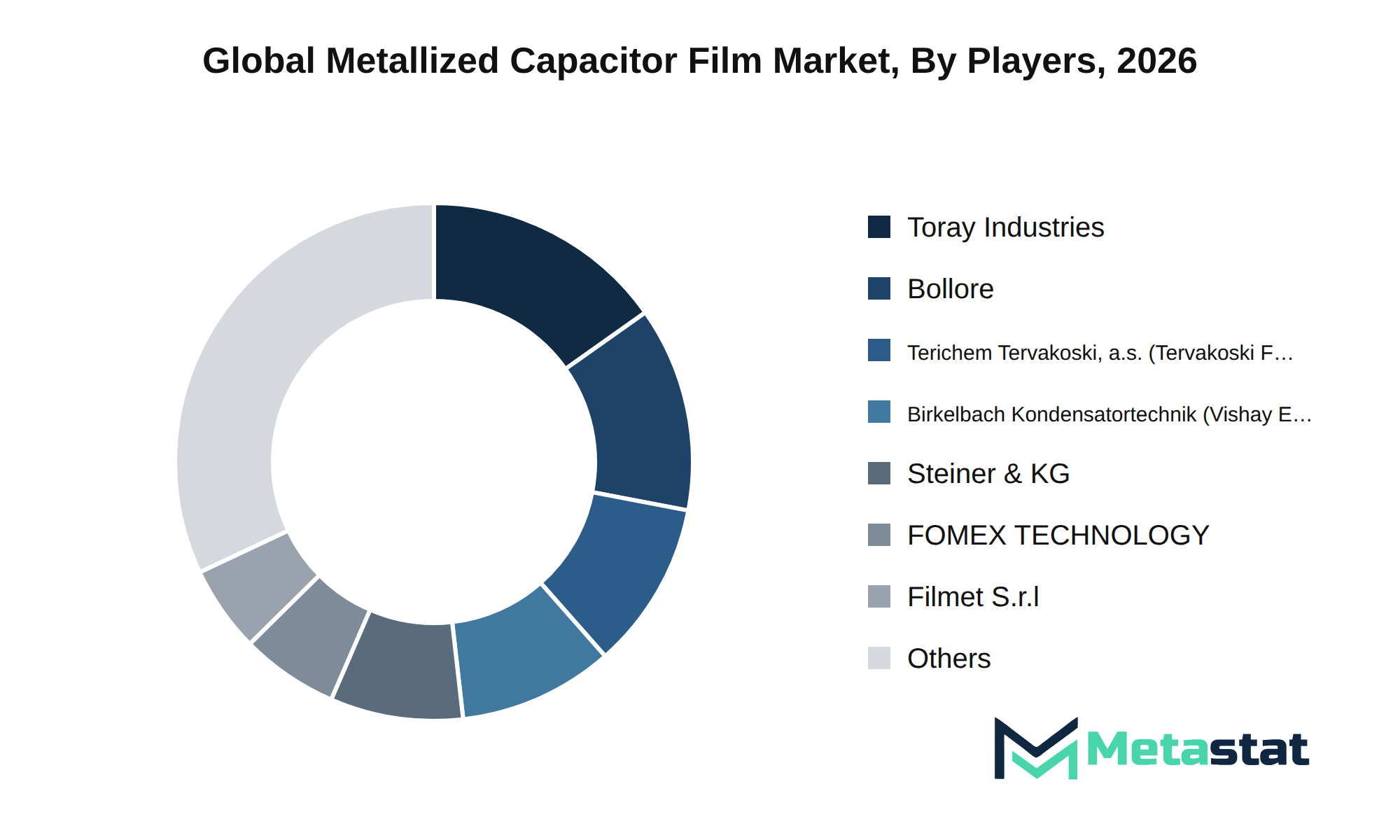
The Metallized Capacitor Film market experiences significant strategic activity among key players, focusing on mergers, acquisitions, and partnerships. Companies including Terichem Tervakoski, a.s. (Tervakoski Films Group) and Toray Industries, Inc. actively pursue consolidation strategies to enhance market presence and leverage technological advantages. This consolidation aligns with the increasing demand for advanced capacitor solutions in various industries.
Innovation remains a primary driver in the market, with players investing in research and development to differentiate their products. For instance, firms like Bollore Inc. and Birkelbach Kondensatortechnik (Vishay Electronic GmbH) emphasize proprietary technology and robust intellectual property portfolios to secure competitive advantages. The focus on product differentiation is essential in addressing the diverse needs of applications including automotive, energy storage, and renewable energy systems.
Strategic alliances and cross-industry partnerships enable companies to enhance their value propositions and expand their reach. Collaboration among players like FOMEX TECHNOLOGY CO., LTD. and Anhui Tongfeng Electronics Company Limited promotes innovation and allows for the sharing of resources and expertise. This collaborative approach is vital in navigating the challenges posed by new entrants and maintaining market dominance.
Cost structures and pricing architecture significantly influence competition within the Metallized Capacitor Film market. Companies reduce procurement leverage and supply chain integration strategies to optimize costs, ensuring competitive pricing while maintaining quality. Enhancing customer retention strategies and ensuring brand equity remains critical, driven by firms aiming to build long-term relationships with clients across various sectors.
The competitive outlook indicates ongoing strategic growth vectors. Players position themselves to capture emerging opportunities. With the market projected to reach USD 4,347.1 million by 2033, firms are expected to explore new market segments and adapt to evolving customer demands, reinforcing their positions within the expanding Metallized Capacitor Film market.
Market size is forecast to rise from USD 2,645.7 million in 2025 to over USD 4,347.1 million by 2033. The base case outlines a growth trajectory from USD 2,645.7 million in 2025 to USD 4,347.1 million by 2033 at a 6.4% CAGR. This growth reflects various macroeconomic factors impacting the Metallized Capacitor Film market.
Downstream demand shifts arise from ongoing technological advancements, attracting investment in next-generation applications including electric mobility and renewable energy systems. R&D timelines for commercialization shape the competitive landscape. Firms prioritizing innovation capture market share. Regulatory evolution and imminent compliance milestones introduce new standards, affecting product life cycles and operational strategies across the industry.
Geopolitical realignments influence trade corridors and global supply chains. These shifts create challenges and opportunities for suppliers. Strategic capital allocation directives emphasize infrastructure commitments that support expanded production capacities and technological integration. Companies focusing on unmet enterprise needs and high-growth pockets secure a competitive advantage in the evolving market.
The maturation of core industries contributes to a stable demand environment for metallized capacitors. Economic cycle fluctuations require agile operational responses. Firms implementing defensibility roadmaps and aligning with executive-level strategic imperatives enhance growth prospects within the Metallized Capacitor Film market.
The report strategically identifies and profiles the key market players and analyses their core competencies in each sub-segment of the Metallized Capacitor Film market.
Report Attributes | Details |
Study Period | 2021-2033 |
Base Year | 2025 |
Estimated Year | 2026 |
Forecast Period | 2026-2033 |
Historical Period | 2021-2025 |
Growth Rate | CAGR 6.4% from 2026 to 2033 |
Revenue Unit | USD million |
Segmentation | By Dielectric Film Material, Application, Voltage Range, and Region |
By Region | North America (By Dielectric Film Material, Application, Voltage Range, and Country)
|
Europe (By Dielectric Film Material, Application, Voltage Range, and Country)
| |
Asia Pacific (By Dielectric Film Material, Application, Voltage Range, and Country)
| |
South America (By Dielectric Film Material, Application, Voltage Range, and Country)
| |
Middle East and Africa (By Dielectric Film Material, Application, Voltage Range, and Country)
|
Find answers to common questions about this report
The Metallized Capacitor Film market size was valued at USD 2,645.7 million in 2025.
The Metallized Capacitor Film market is projected to grow at a CAGR of 6.4% during the forecast period from 2026 to 2033.
The North America Metallized Capacitor Film market size is estimated to reach USD 848.6 million by 2033.
The Polypropylene (PP/BOPP) segment leads the Metallized Capacitor Film market, with a projected value of USD 3,295.1 million by 2033. This segment demonstrates the highest growth potential compared to other dielectric film materials.
Heightened emission regulations drive the Metallized Capacitor Film market by compelling industries to adopt closed-loop systems and improve energy efficiency. Increased demand for sustainable solutions in sectors including automotive and renewable energy enhances investment in advanced technologies, supporting market expansion and innovation.
Challenges in the global economy, including inflationary pressures and resource scarcity, significantly restrain growth in the Metallized Capacitor Film market. Increased production costs and geopolitical instability complicate supply chains, limiting manufacturers' ability to invest in new technologies and expand capacity. These factors hinder responsiveness to growing demand while maintaining competitive pricing.
Heightened emission regulations and the push for energy efficiency drive product adoption in the Metallized Capacitor Film market. Industries including automotive and electronics prioritize compliance with stringent standards, leading to investment in advanced technologies that enhance capacitor performance while minimizing environmental impact.
The Metallized Capacitor Film market is estimated to reach a valuation of USD 4,347.1 million by 2033.
Key players operating in the Metallized Capacitor Film market include Terichem Tervakoski, a.s. (Tervakoski Films Group), Steiner GmbH & Co. KG, Toray Industries, Inc., Bollore Inc., Birkelbach Kondensatortechnik (Vishay Electronic GmbH), Filmet S.r.l., and FSPG HI-TECH CO., LTD.
The expected compound annual growth rate (CAGR) for the Metallized Capacitor Film market is 6.4% from 2026 to 2033.
Choose Your License
Global Metallized Capacitor Film Market
The analysts below cover Chemicals and Materials research at Metastat Insights.
LEAD ANALYST
Utkarsh Khirodkar is a Lead Market Research Analyst at MetaStat Insight, specializing in market intelligence, technology sector assessments, and competitive strategy.

INDUSTRY CONSULTANT - CHEMICALS & ADVANCED MATERIALS
Chemicals and Materials · Machinery & Equipment · Packaging
Amit Gadhekar Consultant for Chemicals and Materials at MetaStat Insight, directing sector-specific intelligence, research, and strategic consulting across global chemical and processing markets.
Integrating zero-trust access controls across legacy electronic health record systems involves complex compliance overhead. Team produced an analysis that clearly separated identity governance and administration tools from privileged access management platforms. Their evaluation of HIPAA and GDPR compliance features across cloud native solutions gave our architecture group clear baseline criteria. The custom data request regarding biometric authentication adoption in hospital networks was returned promptly with clear documentation.
Evaluating calorific value requirements and air permit compliance across municipal waste facilities requires localized data. Metastat Insight structured their analysis around operational throughput capacity and feedstock composition variations in Latin America and Eastern Europe. Their competitive mapping of sorting equipment vendors helped clarify technology differences between optical separators and heavy media systems. The study provided an objective baseline during our capital expenditure reviews.
Decarbonizing industrial thermal processes hinges on refrigerant regulations and compressor efficiency limits. Metastat Insights delivered a thorough market analysis that evaluated natural refrigerants like CO2 and hydrocarbons against synthetic low-GWP alternatives. The breakdown of utility incentives and grid capacity constraints across key European manufacturing hubs offered valuable perspective. The follow-up conversation with their sector analysts addressed our specific questions on mechanical vapor recompression systems efficiently.
Explore related market intelligence reports worth reading alongside this one.
Starting from
$2950