
Middle East and Africa Cannabidiol (CBD) Market
Middle East and Africa Cannabidiol (CBD) Market Size, Share, By Product Type (CBD Oils and Tinctures, CBD Capsules and Tablets, CBD Edibles, CBD Topicals, CBD Beverages, CBD Vapes and Inhalation Products, CBD Pet Products, CBD Teas and Infusions), By CBD Formulation (Full-Spectrum CBD, Broad-Spectrum CBD, CBD Isolate, CBD-Dominant Cannabinoid Blends), By Application (Pharmaceutical and Medical, Nutraceuticals and Dietary Supplements, Personal Care and Cosmetics, Food and Beverages, Pet Care), By Region (South Africa, Zimbabwe, Morocco, United Arab Emirates, Rest of Middle East and Africa), Industry Analysis, Growth, Trends, and Forecast, 2026-2033
MSI-4991
August 20, 2026
Updated
267 Pages
Historical
Base year
Forecast
Forecast period
Report Details
Comprehensive Market Analysis And Insights
Market Overview
The Middle East and Africa Cannabidiol (CBD) market was valued at USD 181.9 million in 2025 and is projected to reach USD 991 million by 2033, growing at a CAGR of 23.6% over the forecast period.
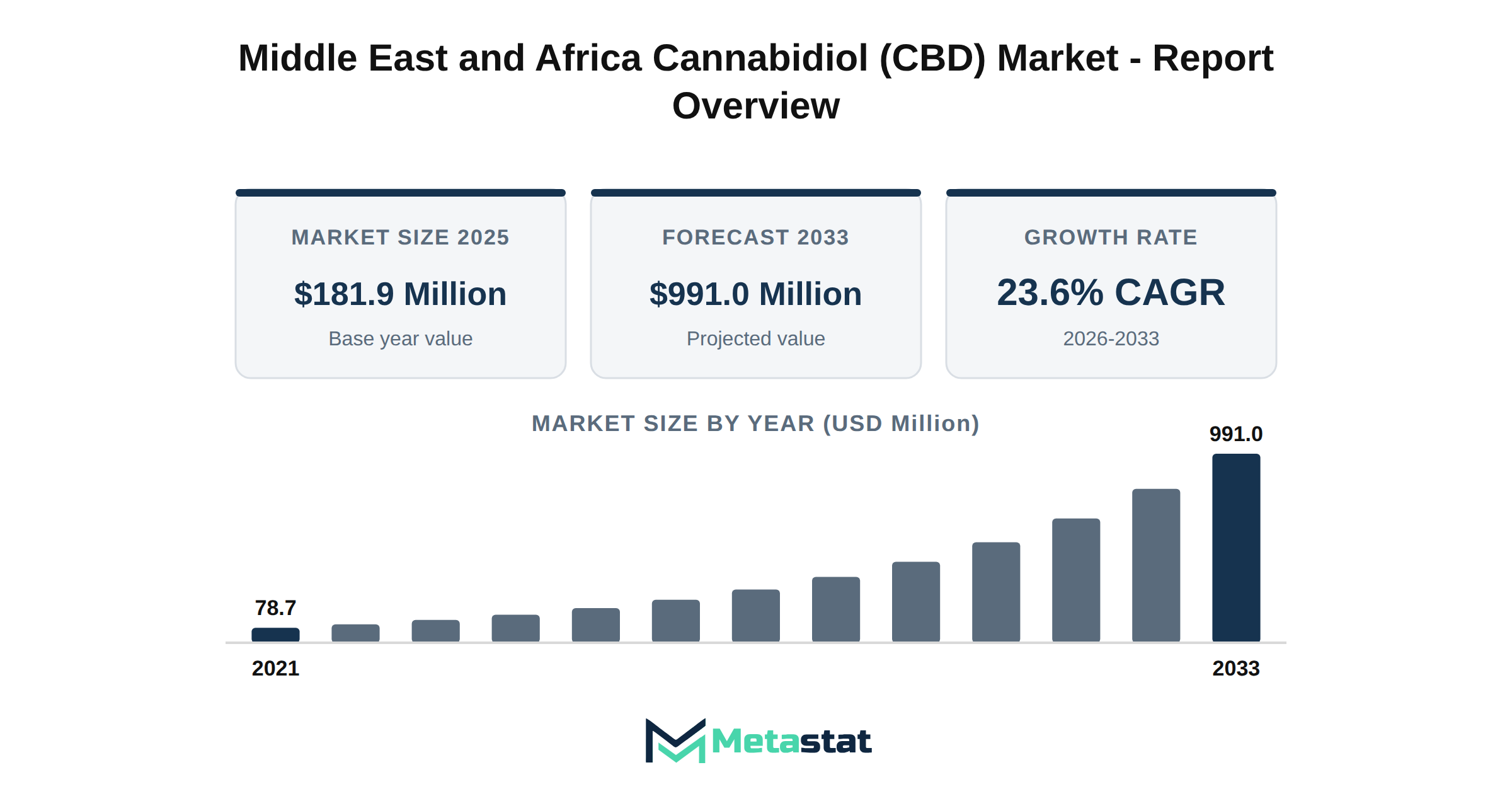
The Middle East and Africa Cannabidiol (CBD) market has experienced significant growth in recent years, with a base value of USD 181.9 million in 2025. Historical figures indicate a steady increase from USD 78.7 million in 2021 to USD 146.7 million in 2024. Projections suggest that the market is projected to reach USD 991 million by 2033, reflecting a compound annual growth rate (CAGR) of 23.6%. This growth trajectory positions the market because an emerging player in the global CBD market.
Product segmentation shows that CBD oils and tinctures account for the largest share at 27.7%, followed by CBD topicals at 15% and CBD capsules and tablets at 14%. The increasing demand for CBD products in various applications, including pharmaceuticals, nutraceuticals, and personal care, drives expansion. The pharmaceutical and medical application segment is poised for growth, with a projected value of USD 261.2 million by 2033, indicating a CAGR of 24.2% from USD 57.2 million in 2026.
The market's rapid development results from several factors, including rising consumer awareness regarding the health benefits of CBD. Growing adoption of CBD products in the food and beverage sector, alongside an expanding range of formulations, contributes to the market's dynamism. Full-spectrum CBD formulations are projected to reach USD 321.5 million by 2033, growing from USD 82.9 million in 2026, with a CAGR of 21.4%.
Regulatory compliance and market fragmentation present challenges within the Middle East and Africa Cannabidiol (CBD) market. Companies navigate diverse regulations across different countries, influencing their market strategies and operational frameworks. Supply chain dynamics play a crucial role, impacting sourcing and logistics architecture. Companies emphasizing sustainable practices and innovation are likely to gain a competitive edge, aligning with evolving consumer preferences and regulatory expectations.
The evolving landscape of the Middle East and Africa Cannabidiol (CBD) market faces significant regulatory compliance challenges. Stakeholders navigate diverse regulations across different countries, influencing product formulations and market entry strategies. This regulatory complexity affects operational costs and market access for companies, shaping the competitive environment.
Geopolitical risk frameworks play a crucial role in market stability. Tensions in the region disrupt supply chains, impacting the availability of raw materials and finished products. Companies operating in the market evaluate these risks and adapt their strategies to ensure resilience against potential disruptions.
Research and development trajectories in the CBD sector are accelerating, driven by consumer demand for innovative products. Companies invest in new formulations and applications, including pharmaceuticals and nutraceuticals, contributing to the market's growth. Next-generation innovations enhance product offerings and establish competitive advantages in an increasingly crowded marketplace.
Sustainable transformation remains a focal point for many companies. The integration of decarbonization efforts and circular economy dynamics supports environmentally friendly practices. Firms adopting sustainable practices meet consumer expectations and position themselves favorably in the eyes of regulators and investors.
The supply chain landscape continues to evolve, emphasizing logistics architecture and sourcing strategies. Efficient logistics and effective sourcing of high-quality ingredients are essential for maintaining product integrity and profitability. Companies that streamline their supply chains reduce costs and improve customer satisfaction through timely deliveries.
Market fragmentation presents both challenges and opportunities for players in the Middle East and Africa Cannabidiol (CBD) market. Numerous small and medium-sized enterprises contribute to a diverse product range. Larger firms seek strategic partnerships and acquisitions to enhance their market positions. This dynamic environment encourages competition and innovation.
Value chain optimization is critical for maximizing profitability. Companies focus on enhancing procurement processes and understanding customer journey dynamics to deliver tailored solutions. An effective approach to capital allocation and infrastructure investments supports growth and competitiveness in the market.
Macroeconomic headwinds, including inflationary pressures and currency volatility, influence market dynamics. Fluctuations in currency exchange rates affect import costs and overall pricing strategies. Companies develop robust financial strategies to mitigate the impact of these economic factors on their operations.
The future strategic outlook for the market highlights the importance of adapting to changing consumer preferences and regulatory landscapes. Corporate imperatives center around innovation, sustainability, and effective risk management. Companies aim to secure their positions in the market. High-value recommendations include prioritizing R&D investments and enhancing supply chain resilience to navigate future challenges successfully.
Market Dynamics
Increasing consumer awareness and acceptance
Growing consumer awareness regarding the benefits of Cannabidiol (CBD) significantly influences the Middle East and Africa Cannabidiol (CBD) market. Health-conscious individuals increasingly seek products that promote wellness, leading to heightened interest in CBD's therapeutic properties. This shift in consumer behavior stems from an upsurge in information accessibility, particularly through digital platforms and social media, resulting in more informed choices about health and wellness products.
While consumers prioritize natural alternatives to traditional pharmaceuticals, demand for CBD products rises. This trend is evident in the increasing adoption of CBD oils, tinctures, and edibles, which cater to a diverse range of consumer preferences. The focus on health and preventive care drives greater acceptance of CBD-infused products across various demographics, from younger populations to aging individuals seeking relief from chronic ailments.
Market stakeholders, including manufacturers and retailers, respond by expanding product offerings and enhancing marketing strategies to educate consumers. This proactive approach supports growth in the market, positioning CBD products because viable alternatives in the health and wellness sector. Overall, the rising consumer awareness and acceptance of CBD products contribute to a robust and expanding market.
Shifting demographic patterns and consumer behaviors
Demographic changes within the Middle East and Africa Cannabidiol (CBD) market increasingly influence product demand and consumption patterns. Urbanization plays a key role, with a growing number of consumers residing in metropolitan areas, leading to heightened accessibility and visibility of CBD products. Aging populations demonstrate a greater interest in health and wellness solutions, propelling demand for CBD formulations, particularly in the pharmaceutical and medical sectors.
Consumer behaviors shift owing to evolving lifestyle choices, with individuals prioritizing wellness approaches that embrace natural remedies. This trend increases acceptance of CBD products across various demographics, enhancing market penetration. The emergence of online purchasing platforms further complements these changes by providing customers with convenient access to a diverse range of CBD offerings, thereby broadening the consumer base within the market.
The relationship between these demographic trends and evolving consumer preferences prompts a significant transformation in purchasing strategies. Businesses focusing on innovative marketing techniques and product diversification are better positioned to capitalize on these shifts. Overall, the demographic evolution and changing consumer behaviors promise to drive sustained growth within the Middle East and Africa Cannabidiol (CBD) market.
Regulatory hurdles limit market expansion
Regulatory challenges in the Middle East and Africa Cannabidiol (CBD) market hinder market growth and adoption. A complex and stringent regulatory environment complicates product approval processes, impacting the ability of new entrants to navigate compliance requirements effectively. This situation places significant financial burdens on companies seeking to introduce CBD products, resulting in increased operational costs that inhibit investment in research and development.
Macroeconomic headwinds including inflationary pressures contribute to rising costs throughout the supply chain. Rising prices for raw materials and production escalate, leading companies to face challenges in maintaining competitive pricing for CBD products. This inflationary environment discourages consumer spending and impacts demand across various application areas including pharmaceuticals and nutraceuticals.
Geopolitical instability in certain regions further compounds risks associated with market entry and expansion. Such instability leads to interruptions in supply chains and creates uncertainty for investors, deterring capital inflow into the market. This lack of investment hampers innovation and the development of new products, which are crucial for sustaining growth.
The combination of regulatory hurdles, inflationary pressures, and geopolitical risks creates an environment that restricts the potential of the Middle East and Africa Cannabidiol (CBD) market. Companies that navigate these challenges successfully require strategic planning and adaptability to thrive in this environment.
Market challenge: Geopolitical fragmentation and tariff friction
Geopolitical fragmentation presents significant challenges for the Middle East and Africa Cannabidiol (CBD) market. Political instability and differing regulatory environments across countries complicate trade relationships, disrupt supply chains, and create uncertainty for businesses. Tariff friction exacerbates these issues by increasing the cost of importing raw materials and finished products, impacting profit margins and overall market competitiveness.
Trade deficits resulting from imbalanced trade relationships limit access to essential inputs and resources, placing additional strain on manufacturers. This situation creates operational complexities, particularly for companies reliant on cross-border supply chains. Rising input costs lead to pricing compression and margin pressures, stifling growth opportunities.
Technological disruptions in manufacturing processes introduce challenges related to interoperability and integration of new systems. Companies within the market face difficulties in upgrading existing technologies to meet evolving demands, hindering production efficiency and increasing operational costs. Volatility in feedstock prices affects profitability and creates uncertainty in long-term planning.
Addressing these challenges requires strategic navigation of the complex geopolitical landscape. Companies operating in the Middle East and Africa Cannabidiol (CBD) market adapt strategies to account for these external pressures while ensuring compliance with tightening regional regulatory standards. This adaptation is essential for maintaining competitiveness and sustaining growth in a rapidly changing environment.
Emerging demands drive market potential
Changing consumer preferences concerning health and wellness contribute significantly to market potential. The growing focus on natural and organic products influences demand for Cannabidiol (CBD) offerings across various sectors, including pharmaceuticals, nutraceuticals, and personal care. This trend reflects a broader shift towards comprehensive approaches to health, prompting businesses to innovate and expand their product lines in response to consumer interests.
Infrastructure modernization enhances market accessibility and efficiency. Investments in processing facilities and distribution networks facilitate the introduction of CBD products to a broader audience. Improved logistics and supply chain efficiencies result in lower operational costs, enabling more competitive pricing in the Middle East and Africa Cannabidiol (CBD) market.
Geographical expansion presents substantial opportunities for market players. Regions with previously limited access to CBD products now experience increased interest from both consumers and distributors. This expansion opens avenues for strategic partnerships and localized production, allowing businesses to cater to regional preferences and regulations more effectively.
Technological disruptions, including advancements in extraction methods and product formulation, enhance product quality and consumer appeal. Innovations including nanoemulsion technology improve bioavailability, making CBD products more attractive to health-conscious consumers. This technological edge increases market penetration and encourages investment in research and development across the industry.
Digital transformation reshapes purchasing behaviors, with e-commerce platforms gaining traction driven by primary channels for CBD product distribution. Enhanced digital marketing strategies enable brands to engage directly with consumers, driving sales and brand loyalty. The shift towards online procurement aligns with the growing demand for convenience and accessibility in the Middle East and Africa Cannabidiol (CBD) market.
Strategic consolidation through mergers and acquisitions enhances competitive positioning among market players. Collaborations allow companies to pool resources, expand their product portfolios, and achieve economies of scale. This trend creates intensified competition, which ultimately benefits consumers through improved product offerings and pricing structures.
Market Segmentation Analysis
The Middle East and Africa Cannabidiol (CBD) market is segmented based on Product Type, CBD Formulation, Application, and Region.
By Product Type, the market is further segmented into:
- CBD Oils & Tinctures
- CBD Capsules & Tablets
- CBD Edibles
- CBD Topicals
- CBD Beverages
- CBD Vapes & Inhalation Products
- CBD Pet Products
- CBD Teas & Infusions
- Others (CBD Sprays, Suppositories, Oral Strips)
CBD Oils & Tinctures
Valued at USD 61.7 million in 2026, the CBD Oils & Tinctures segment is projected to reach USD 247.7 million by 2033, with a CAGR of 22% during the forecast period. Factors driving this growth include escalating consumer demand for natural wellness products and increasing recognition of the therapeutic benefits associated with cannabidiol. The segment experiences notable expansion catalysts from the rising prevalence of chronic diseases, which fuels interest in alternative treatments.
Technological maturation in extraction and formulation techniques enhances product quality and availability, boosting consumer adoption. Enhanced formulations and innovative delivery methods lead to greater product evolution, catering to diverse consumer preferences. Downstream applications across pharmaceuticals, nutraceuticals, and personal care create a multi-faceted growth environment, aligning with consumption shifts towards integrated health solutions.
Regulatory compliance plays a critical role in shaping market dynamics, with evolving frameworks providing clarity and confidence for stakeholders. Cost structures and pricing volatility remain significant considerations, influenced by raw material sourcing fluctuations and market competition. Strategic opportunity windows emerge because manufacturers invest in product development and brand differentiation, reflecting a robust capital investment outlook within the Middle East and Africa Cannabidiol (CBD) market.
CBD Capsules & Tablets
Consumer interest in CBD capsules and tablets continues to grow within the Middle East and Africa Cannabidiol (CBD) market, driven by the increasing preference for convenient and precise dosing options. This segment experiences strong demand attributed to its potential health benefits, particularly in the pharmaceutical and nutraceutical sectors. The rise of wellness trends and the growing focus on health-conscious lifestyles further support this demand, leading to a broader acceptance of CBD products.
Market expansion in the CBD capsules and tablets segment correlates with advancements in extraction and formulation technologies, enhancing product quality and efficacy. The emergence of next-generation upgrades, including enhanced bioavailability and targeted delivery systems, positions these products favorably in consumer preferences. Regulatory compliance standards, alongside evolving certification processes, build trust and transparency, facilitating market access and growth.
Pricing strategies remain a critical factor influencing consumer adoption within this segment. Producers work on optimizing cost structures to maintain competitive pricing while ensuring product quality. Margins fluctuate based on raw material sourcing and supply chain resilience. The CBD capsules and tablets segment is projected to reach USD 142.7 million by 2033, at a CAGR of 24% during the forecast period.
Investment in product evolution and the response to end-use dynamics highlight strategic opportunity windows in the market. Companies prioritizing innovation and consumer engagement have the potential to capture significant market share. With the ongoing transformation of consumer attitudes and preferences, the CBD capsules and tablets segment demonstrates a strong growth trajectory, positioning itself because a key contributor to the overall market expansion.
CBD Edibles
Increased consumer interest in health and wellness drives growth in CBD Edibles within the Middle East and Africa Cannabidiol (CBD) market. This segment attracts buyers seeking convenient and enjoyable methods of incorporating Cannabidiol into their lifestyles. Product evolution, including innovative flavors and formulations, enhances appeal, meeting diverse consumer preferences.
CBD Edibles segment is projected to reach USD 138.4 million by 2033. Regulatory compliance standards impact production and distribution, influencing market dynamics. Stricter regulations around product labeling and safety promote consumer trust and support market expansion.
Shifts in consumption patterns highlight the importance of CBD Edibles, with consumers increasingly favoring consumption methods that align with their lifestyle choices. The sector's growth is supported by evolving perceptions of Cannabidiol's benefits, positioning CBD Edibles because a viable alternative to traditional health products.
Competitive pressures encourage companies to innovate, optimizing product offerings to capture market share. Strategic opportunity windows arise for suppliers focused on unique formulations or targeting specific demographics within the market. Capital investment in product development and marketing initiatives enhances market positioning and drives further adoption.
CBD Topicals
Market dynamics in CBD Topicals reflect a strong response to increasing consumer demand for natural and effective skincare solutions. Influenced by the growing emphasis on wellness, consumers prioritize products that offer therapeutic benefits without harmful additives. This shift in consumer preferences drives market growth, with the CBD Topicals segment projected to grow at a CAGR of 23.4% during the forecast period.
Technological advancements enable the development of innovative formulations, enhancing product efficacy and expanding potential applications. Manufacturers invest in research to refine extraction methods and improve product quality, resulting in a diverse product range that caters to various consumer needs. This innovation establishes a foundation for sustained market expansion within the Middle East and Africa Cannabidiol (CBD) market.
Regulatory compliance shapes market dynamics. While laws and guidelines evolve, companies adapt to meet standards, ensuring product safety and efficacy. This compliance builds consumer trust, encouraging wider adoption of CBD Topicals across various demographics.
The segment's growth aligns with a broader trend towards natural and organic products in personal care and cosmetics. Consumers increasingly seek alternatives to synthetic ingredients, driving demand for products derived from hemp. This ongoing transition enhances market potential, positioning the CBD Topicals segment because a key player in the Middle East and Africa Cannabidiol (CBD) market.
CBD Beverages
Increased health consciousness among consumers in the Middle East and Africa Cannabidiol (CBD) market significantly boosts demand for CBD beverages. Shifts towards natural and functional ingredients drive product innovation, resulting in diverse offerings that appeal to health-focused demographics. Younger consumers, particularly millennials and Generation Z, exhibit a preference for convenient and on-the-go beverage options infused with CBD, further enhancing the segment's appeal.
Market expansion stems from the integration of CBD into mainstream wellness products, including functional drinks that target various health benefits. Collaboration between beverage manufacturers and CBD suppliers creates unique product formulations, increasing market penetration. Regulatory changes allowing for the legal sale of CBD-infused beverages support growth, while stringent quality standards enhance consumer trust in these products.
Consumption patterns reflect an ongoing transition towards healthier lifestyles, with CBD beverages positioned because alternatives to traditional soft drinks and energy drinks. The segment benefits from evolving consumer tastes that prioritize wellness without sacrificing flavor or experience. This trend encourages companies to invest in research and development to create innovative formulations, ensuring a competitive edge in the market.
Pricing strategies play a crucial role in shaping consumer adoption, because brands strive to balance quality with affordability. Market players face pressure to maintain attractive price points while ensuring profitability. Strategic partnerships along the supply chain improve cost efficiency, enabling companies to offer competitive pricing while expanding their product range.
The Middle East and Africa Cannabidiol (CBD) market presents significant opportunities for growth through strategic investments and innovative product development. Companies focusing on consumer preferences, regulatory compliance, and effective branding will likely strengthen their market position and drive sustained demand for CBD beverages.
CBD Vapes & Inhalation Products
Rising popularity of CBD vapes and inhalation products reflects a notable shift in consumer preferences toward alternative consumption methods. Factors including convenience, discreet usage, and rapid onset of effects contribute to the increasing adoption of these products in the Middle East and Africa Cannabidiol (CBD) market. Innovations in formulation and device technology drive product evolution, enhancing user experience and satisfaction.
Downstream applications in lifestyle and wellness segments reinforce the demand for CBD vapes. Consumers increasingly seek health-focused alternatives, prompting brands to diversify their offerings. Regulatory compliance standards related to product safety and quality assurance serve because essential considerations for manufacturers, influencing market dynamics.
Pricing volatility and margin pressures emerge from challenges within the segment, impacting profitability for suppliers. However, strategic opportunity windows exist for companies that invest in technology upgrades and streamline operations to maintain competitive pricing. The market continues to attract attention from both established players and new entrants, creating a dynamic environment for innovation and growth.
CBD Pet Products
Consumer demand for CBD pet products in the Middle East and Africa Cannabidiol (CBD) market reflects growing pet ownership and increasing awareness of pet health and wellness. Many pet owners prioritize the well-being of their animals, leading to heightened interest in natural remedies, including CBD, for managing conditions including anxiety and inflammation.
Product evolution within this segment features a diverse range of offerings, including oils, treats, and capsules specifically formulated for pets. These innovations enhance product appeal, catering to various pet species and sizes, and align with trends of personalization in pet care. Enhanced formulations, including full-spectrum and broad-spectrum options, provide additional therapeutic benefits, attracting consumers.
Adoption is supported by positive anecdotal evidence from pet owners who report benefits from CBD use, creating a community that shares experiences and encourages others to explore these products. This dynamic influences consumer purchasing decisions and reinforces market growth.
Regulatory compliance influences the CBD pet products segment. Clear guidelines and standards establish consumer trust and expand market opportunities. Companies demonstrating adherence to safety and quality protocols position themselves competitively within the market.
Pricing strategies within this segment reflect the premium nature of CBD pet products. High-quality ingredients and innovative formulations contribute to price points appealing to health-conscious consumers willing to invest in their pets' well-being. The market's potential for growth remains robust, driven by evolving consumer preferences and an ongoing commitment to enhancing pet health.
CBD Teas & Infusions
Growing consumer trends in the Middle East and Africa Cannabidiol (CBD) market signal a shift towards health-oriented beverages, with CBD teas and infusions emerging because a prominent segment. Increased interest in natural remedies drives demand for these products, appealing to health-conscious consumers seeking alternatives to traditional beverages. This segment benefits from the rising popularity of wellness-focused lifestyles, which emphasize calming and soothing properties often associated with tea consumption.
Product evolution in the CBD teas and infusions segment reflects a broader trend in the market. Manufacturers innovate by combining CBD with various herbal ingredients, enhancing flavor profiles while providing health benefits. This strategic approach attracts a diverse customer base, including those who prioritize health solutions. The infusion of CBD into tea aligns well with current consumer preferences for organic and plant-based products, further supporting segment expansion.
Regulatory compliance remains a significant factor in shaping the CBD teas and infusions segment. Increasingly stringent standards for manufacturing and labeling enhance consumer confidence and product integrity. Companies operating in this space actively pursue certifications to ensure safety and quality, reinforcing their market position. While the market continues to mature, aligning with regulatory frameworks presents opportunities for producers to differentiate their offerings and address consumer concerns regarding quality and efficacy.
Pricing volatility and margin pressures impact the overall dynamics of the segment. Fluctuating costs of raw materials affect pricing strategies, pushing manufacturers to optimize their supply chains. This optimization involves seeking resilient sourcing strategies and exploring alternative materials to mitigate risks associated with supply chain vulnerabilities. By addressing these challenges, producers enhance their competitiveness within the broader market while ensuring that consumers receive high-quality products at reasonable prices.
Others (CBD Sprays, Suppositories, Oral Strips)
Growing interest in innovative healthcare solutions drives demand for "Others (CBD Sprays, Suppositories, Oral Strips)" within the Middle East and Africa Cannabidiol (CBD) market. This segment appeals to consumers seeking alternative delivery methods for CBD, particularly for localized efficacy or precise dosing. Increasing recognition of the therapeutic potential of these products enhances consumer acceptance and contributes to market growth.
Technological advancements in formulation processes strengthen the efficacy and bioavailability of these products, supporting their adoption. A shift towards personalized health solutions encourages the development of diverse product formats, catering to specific consumer needs. The market captures attention from various sectors, including pharmaceuticals and personal care, reflecting its versatility.
Regulatory landscapes play a crucial role in shaping market dynamics. Compliance with evolving standards and certifications ensures product quality and safety, building consumer trust. Challenges associated with regulatory frameworks necessitate strategic navigation by manufacturers, impacting market entry and expansion strategies.
Consumer preferences increasingly lean towards convenience and innovation in product offerings. The introduction of sprays and oral strips aligns with trends favoring discreet and easy-to-use formats. This shift reflects broader consumption patterns within the market, where demand for unique delivery methods continues to rise.
Investment in research and development for innovative formulations presents strategic opportunities. Companies focusing on next-generation upgrades enhance their competitive positioning, aiming to capture a larger market share. These developments facilitate the emergence of new product lines, reinforcing the market's growth trajectory.
By CBD Formulation, the market is further segmented into:
- Full-Spectrum CBD
- Broad-Spectrum CBD
- CBD Isolate
- CBD-Dominant Cannabinoid Blends
- Others (CBD Blends, Minor-Cannabinoid-Enhanced Formulations)
Full-Spectrum CBD
Valued at USD 82.9 million in 2026, the Full-Spectrum CBD segment is projected to reach USD 321.5 million by 2033, achieving a CAGR of 21.4% during the forecast period. This growth aligns with increasing consumer awareness of the therapeutic benefits associated with full-spectrum formulations, which retain a broader range of cannabinoids compared to isolated products. Enhanced product offerings, particularly in the pharmaceutical and nutraceutical sectors, support this trend, providing a diverse array of applications that appeal to health-conscious consumers in the Middle East and Africa Cannabidiol (CBD) market.
Technological advancements contribute to product evolution in this segment. Innovations in extraction methods and formulation processes enhance the quality and bioavailability of full-spectrum CBD products. Market players actively invest in research and development to create next-generation products that cater to diverse consumer preferences, further driving segment adoption. Regulatory compliance standards surrounding CBD formulations continue to evolve, influencing product development strategies and creating pathways for market entry.
Pricing volatility linked to raw material sourcing presents challenges. The segment's resilience has been evident, driven by suppliers adapting to fluctuations in hemp cultivation and processing costs. Efforts to establish robust supply chains and secure high-quality sourcing contribute to maintaining competitive pricing structures. The emergence of disruptive alternatives, including synthetic cannabinoids, creates both competition and strategic opportunity windows for full-spectrum formulations, compelling market participants to differentiate their offerings.
Investments in marketing and consumer education enhance awareness of the full-spectrum benefits, influencing consumption shifts within the market. Stakeholders navigate the complexities of this evolving landscape while capital investment in full-spectrum CBD products remains a focal point. This positions participants to capitalize on the anticipated growth trajectory. The outlook indicates strong demand across various applications, anchored by the increasing recognition of the health benefits associated with full-spectrum formulations in the Middle East and Africa Cannabidiol (CBD) market.
Broad-Spectrum CBD
Interest in Broad-Spectrum CBD products continues to surge within the Middle East and Africa Cannabidiol (CBD) market, driven primarily by consumer preference for products that offer therapeutic benefits without THC. This segment is estimated to reach USD 281.9 million by 2033, at a CAGR of 24.3% during the forecast period. Growing awareness of the health benefits associated with Broad-Spectrum CBD, including its potential to alleviate anxiety and pain, attracts a diverse consumer base.
Technological advancements in extraction and formulation processes enhance product quality and efficacy, contributing to segment expansion. The rise of e-commerce facilitates better access to these products, enabling consumers to purchase them conveniently. Increased research supporting the health benefits of Broad-Spectrum CBD further fuels adoption across pharmaceutical and nutraceutical applications.
Regulatory compliance and certification standards play critical roles in shaping market dynamics. Companies focusing on quality control and transparency in sourcing are likely to gain a competitive advantage. Pricing strategies remain critical, given the fluctuating costs of raw materials and competition from alternative cannabinoids. The focus on Broad-Spectrum CBD indicates significant strategic opportunity windows for investment and innovation, aligning with the evolving consumer landscape in the Middle East and Africa Cannabidiol (CBD) market.
CBD Isolate
Demand for CBD Isolate is driven by its purity and versatility in various applications. This formulation appeals to consumers seeking products with no traces of THC, aligning with growing health and wellness trends. The pharmaceutical and nutraceutical sectors particularly value CBD Isolate for its potential therapeutic benefits, contributing to its rising adoption across the Middle East and Africa Cannabidiol (CBD) market.
Market expansion for CBD Isolate stems from increasing investments in research and development. Innovations in extraction and purification technologies enhance product quality while reducing production costs. These advancements facilitate a broader range of applications, including dietary supplements and medical formulations. By 2033, the CBD Isolate segment is expected to reach USD 245.7 million.
Changing consumer preferences towards natural and plant-based products underpin consumption shifts in the market. While awareness of the benefits of CBD grows, segments including personal care and cosmetics integrate CBD Isolate into their formulations, thereby broadening its market reach. Compliance with regulatory standards ensures product safety and builds consumer trust, further driving demand.
Strategic investment opportunities arise from companies exploring partnerships and collaborations to enhance distribution networks. These initiatives strengthen supply chain resilience, ensuring consistent availability of CBD Isolate. The market landscape shows promising growth potential, with capital investments directed towards innovative product development and marketing strategies, positioning stakeholders for success in the evolving CBD market.
CBD-Dominant Cannabinoid Blends
Significant growth in the CBD-Dominant Cannabinoid Blends segment reflects increasing consumer preference for products featuring a strong cannabinoid profile. This segment is projected to grow at a CAGR of 25.1% during the forecast period. Factors driving expansion include rising demand for health solutions and a shift toward natural remedies, particularly in the Middle East and Africa Cannabidiol (CBD) market. The integration of CBD into various applications, including pharmaceuticals and dietary supplements, supports the segment's growth trajectory.
Technological advancements in formulation processes enhance product quality and efficacy, attracting health-conscious consumers. Regulatory developments increase confidence in CBD products, encouraging more brands to explore cannabinoid blends. Enhanced marketing strategies highlighting the benefits of CBD-Dominant Cannabinoid Blends improve market visibility, appealing to both retailers and consumers. The increasing availability of these products through online platforms expands reach and accessibility, driving adoption within the market.
Others (CBD Blends, Minor-Cannabinoid-Enhanced Formulations)
Consumer preferences increasingly shift toward formulations that combine multiple cannabinoids, reflecting a growing interest in "Others (CBD Blends, Minor-Cannabinoid-Enhanced Formulations)" within the Middle East and Africa Cannabidiol (CBD) market. This trend aligns with rising awareness of the potential therapeutic benefits found in less prevalent cannabinoids, leading to diverse product offerings that cater to varying consumer needs.
The segment benefits from expanding research into the health impacts of minor cannabinoids, which supports product innovation and enhances consumer education regarding their potential effects. While consumers seek products with enhanced benefits, brands focus on formulation strategies that leverage the synergistic effects of multiple cannabinoids, creating a more robust market presence.
Regulatory frameworks evolve to accommodate new product formulations, encouraging manufacturers to invest in compliance and certification processes. This investment facilitates market entry for innovative products while ensuring safety and efficacy, crucial factors for consumer acceptance and trust in the market.
In response to competitive pressures, brands adapt their strategies by exploring unique blends and formulations, contributing to a dynamic product landscape. This adaptability allows companies to capture consumer attention and drive sales, directly impacting market growth.
By Application, the market is further segmented into:
- Pharmaceutical & Medical
- Nutraceuticals & Dietary Supplements
- Personal Care & Cosmetics
- Food & Beverages
- Pet Care
- Others (Sports Recovery & Specialty Applications)
Pharmaceutical & Medical
Valued at USD 57.2 million in 2026, the Pharmaceutical & Medical segment is projected to reach USD 261.2 million by 2033, at a CAGR of 24.2% during the forecast period. Demand for cannabidiol (CBD) in pharmaceutical and medical applications arises from increasing recognition of its therapeutic properties, particularly in managing conditions including chronic pain, anxiety, and epilepsy. Growing acceptance among healthcare professionals accelerates adoption across various medical sectors, including hospitals and clinics.
Regulatory developments play a significant role in shaping the market landscape. Countries in the Middle East and Africa are gradually establishing frameworks to govern CBD use in medical applications, enhancing consumer confidence and encouraging investment in this segment. The evolving policy environment supports clinical research and product development, propelling growth within the market.
Technological advancements contribute to product evolution and the introduction of next-generation formulations, enhancing efficacy and patient compliance. Innovations in extraction and formulation techniques enable manufacturers to create high-quality CBD products tailored for specific medical uses. This trend presents a strategic opportunity for companies seeking to differentiate their offerings in a competitive environment.
With rising healthcare costs, pricing strategies remain crucial. Companies in the market focus on balancing quality and affordability to capture a wider consumer base. Competitive pricing alongside effective marketing of product benefits ensures sustained demand within the pharmaceutical and medical sector.
While the market for cannabidiol (CBD) expands, challenges including raw material sourcing and regulatory compliance persist. Companies invest in robust supply chain management to mitigate risks associated with sourcing high-quality CBD, particularly given the varying regulations across different regions. Strategic partnerships and collaborations with growers enhance supply chain resilience, ensuring a steady flow of raw materials for production.
Nutraceuticals & Dietary Supplements
Nutraceuticals & Dietary Supplements segment is estimated to reach USD 249.5 million by 2033, at a CAGR of 24.2% during the forecast period. The growing consumer awareness regarding health and wellness products significantly influences demand for CBD within the Middle East and Africa Cannabidiol (CBD) market. Increased interest in preventive healthcare drives consumers toward dietary supplements enriched with CBD, which are perceived to offer various health benefits, including stress relief and improved sleep quality.
Regulatory developments affect the segment. Several countries in the region are adopting more favorable legislation toward CBD products, facilitating the entry of new players into the market. This expansion attracts investments aimed at enhancing product offerings and distribution channels. Stricter quality control measures and certifications promote consumer confidence, leading to increased sales of CBD nutraceuticals.
Technological advancements in extraction and formulation processes contribute to product evolution. Innovations including nanoemulsion technology enhance the bioavailability of CBD, making products more effective. This improvement aligns with growing consumer expectations for higher efficacy, further boosting the segment's appeal. Consumption shifts toward natural and plant-based ingredients, alongside a rising trend of self-medication, further strengthen the demand for CBD nutraceuticals.
Overall, the combination of demand drivers, regulatory support, and technological maturation positions the Nutraceuticals & Dietary Supplements segment because a key growth area within the market. The ongoing developments and consumer trends point toward a robust expansion trajectory for this segment in the coming years.
Personal Care & Cosmetics
Growing consumer awareness regarding the benefits of cannabidiol (CBD) in personal care products drives expansion within the Personal Care & Cosmetics segment of the Middle East and Africa Cannabidiol (CBD) market. Innovations in formulation techniques and a shift toward natural ingredients influence product development, contributing to the segment's attractiveness. Increasing availability of CBD-infused cosmetics and skincare products meets rising consumer interest in wellness approaches, supporting higher adoption rates.
Valued at USD 179 million by 2033, the segment reflects a significant part of the overall market growth trajectory. The impact of regulatory compliance standards enhances market credibility, encouraging consumer trust in CBD-based personal care items. Companies focusing on effective marketing strategies and product education are expected to capture a larger share of this growing segment.
Food & Beverages
Growth in the Food & Beverages segment aligns with evolving consumer preferences for health-oriented products in the Middle East and Africa Cannabidiol (CBD) market. Increasing awareness of the potential health benefits associated with CBD consumption drives a shift toward incorporating CBD into food and beverage offerings. This trend is supported by rising demand for functional foods that provide additional health benefits, including stress relief and improved sleep quality, enhancing overall market growth.
The Food & Beverages segment is projected to grow at a CAGR of 22.5% during the forecast period. This expansion highlights the potential for innovation in product formulations and the introduction of new CBD-infused products in the market. Consumer interest in convenient and enjoyable ways to incorporate CBD into daily routines enhances opportunities for manufacturers to develop diverse food and beverage options, ultimately increasing market penetration.
The regulatory landscape regarding CBD in food and beverage applications significantly influences market dynamics. Evolving regulations and guidelines regarding CBD use in consumables shape product development and market entry strategies. Companies operating in the market focus on compliance with these regulations while exploring ways to enhance product appeal and quality, which is essential for maintaining competitiveness.
Investment in research and development remains vital for driving growth in the Food & Beverages segment. Companies that prioritize innovation in CBD formulations benefit from increased consumer demand and market share within the rapidly expanding landscape of the Middle East and Africa Cannabidiol (CBD) market, reinforcing their positions in this competitive environment.
Pet Care
Consumer preferences for high-quality pet care products significantly influence the growth of the Pet Care segment within the Middle East and Africa Cannabidiol (CBD) market. Increasing recognition of the health benefits of CBD for pets drives demand, particularly among pet owners seeking natural alternatives for wellness and treatment of various conditions. This trend highlights the importance of product quality and efficacy in building consumer trust and loyalty, strengthening long-term demand.
Innovation within pet care formulations fuels segment expansion, with manufacturers developing new options that cater to specific pet needs, including anxiety relief or joint support. The evolution of CBD-infused products, including treats and oils tailored for pets, contributes to enhanced consumer engagement and market reach. A broader range of CBD applications within the pet care sector emerges, enabling companies to capture a wider audience and increasing investment across the value chain.
Regulatory compliance standards surrounding CBD usage in pet products play a crucial role in shaping the market environment. Adhering to these regulations ensures safety and efficacy, reinforcing consumer confidence in CBD pet products. Companies actively pursuing certifications and compliance enhance their market position while navigating potential policy headwinds that arise, limiting adoption among price-sensitive buyers.
The Pet Care segment reflects a changing environment characterized by growing demand driven by evolving consumer preferences and innovative product offerings. The Middle East and Africa Cannabidiol (CBD) market presents a unique opportunity for companies focusing on the pet care industry, aligning with the broader trend towards natural health solutions and expanding the addressable base.
Others (Sports Recovery & Specialty Applications)
Interest in sports recovery and specialty applications fuels the exploration of unique cannabidiol (CBD) formulations. This sub-segment attracts attention due to increasing awareness surrounding the potential benefits of CBD in enhancing athletic performance and recovery. Growing consumer trends towards comprehensive health and wellness practices support the segment's expansion.
Technological maturation in extraction processes and product formulation enhances the efficiency and quality of CBD products aimed at sports recovery. Innovations in product delivery methods and enhanced bioavailability attract active consumers seeking effective recovery solutions. Continuous research into CBD’s effects on inflammation and muscle recovery confirms its role in the wellness routines of athletes.
Regulatory compliance shapes this sub-segment, with manufacturers adapting formulations to meet evolving standards. The establishment of clear certifications enhances consumer trust and the market's legitimacy. This focus on compliance highlights the urgency of navigating policy changes while pursuing strategic opportunities within the market.
While competition intensifies, participants within the Middle East and Africa Cannabidiol (CBD) market explore strategic partnerships and collaborations to leverage innovative approaches. These alliances drive product evolution and the development of new formulations that cater to specific athletic and wellness needs. Investment in marketing strategies tailored to educate consumers on the benefits of CBD in sports recovery remains crucial for capturing market share.
Competitive Landscape and Strategic Insights
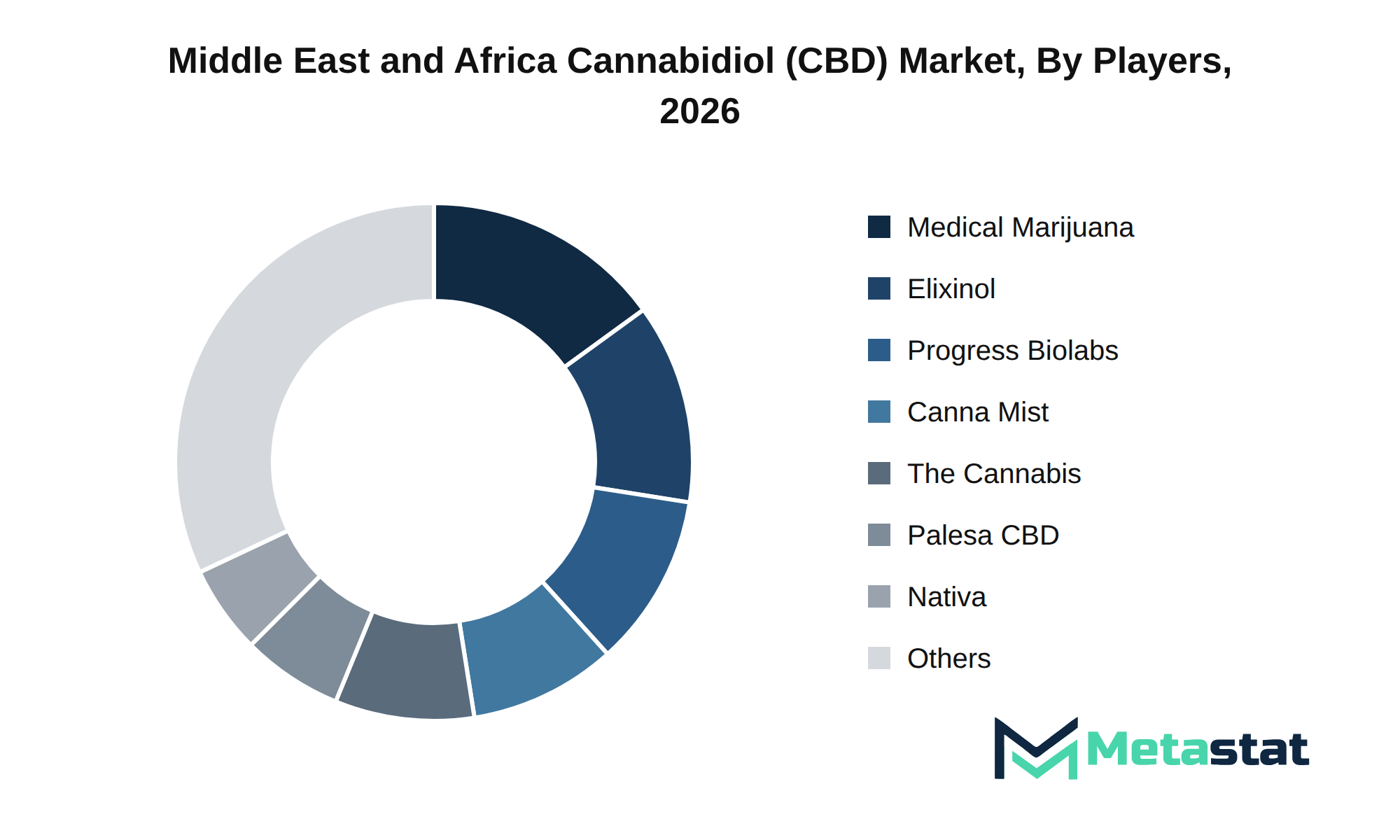
The competitive dynamics within the Middle East and Africa Cannabidiol (CBD) market highlight a variety of strategic behaviors. Companies including Elixinol and Medical Marijuana, Inc. pursue aggressive market entry strategies, often leveraging partnerships and alliances to enhance distribution networks and broaden product offerings. These companies invest in product differentiation through innovative formulations and marketing approaches, contributing to overall brand equity.
Strategic consolidation remains evident through mergers and acquisitions, allowing firms like Progress Biolabs and Canna Mist to expand their market presence and streamline operations. This consolidation enhances procurement leverage and strengthens supply chain dominance. Consequently, the competitive landscape experiences shifts resulting from established players fortifying their portfolios while new entrants face barriers to entry focused on regulatory compliance and capital investment.
R&D pipelines play a crucial role in maintaining technological defensibility, with companies investing in proprietary technologies to secure competitive advantages. The presence of diverse product formulations, including CBD oils, capsules, and edibles, challenges traditional product categories and reflects a growing consumer preference for versatile offerings. The emphasis on customer retention strategies further highlights the need for brands to build loyalty through effective engagement and value propositions.
Ultimately, the Middle East and Africa Cannabidiol (CBD) market exhibits a complex array of strategic maneuvering that shapes its future competitive outlook. Firms are expected to navigate the complexities of market demands while optimizing operational efficiencies to stay ahead in a changing environment.
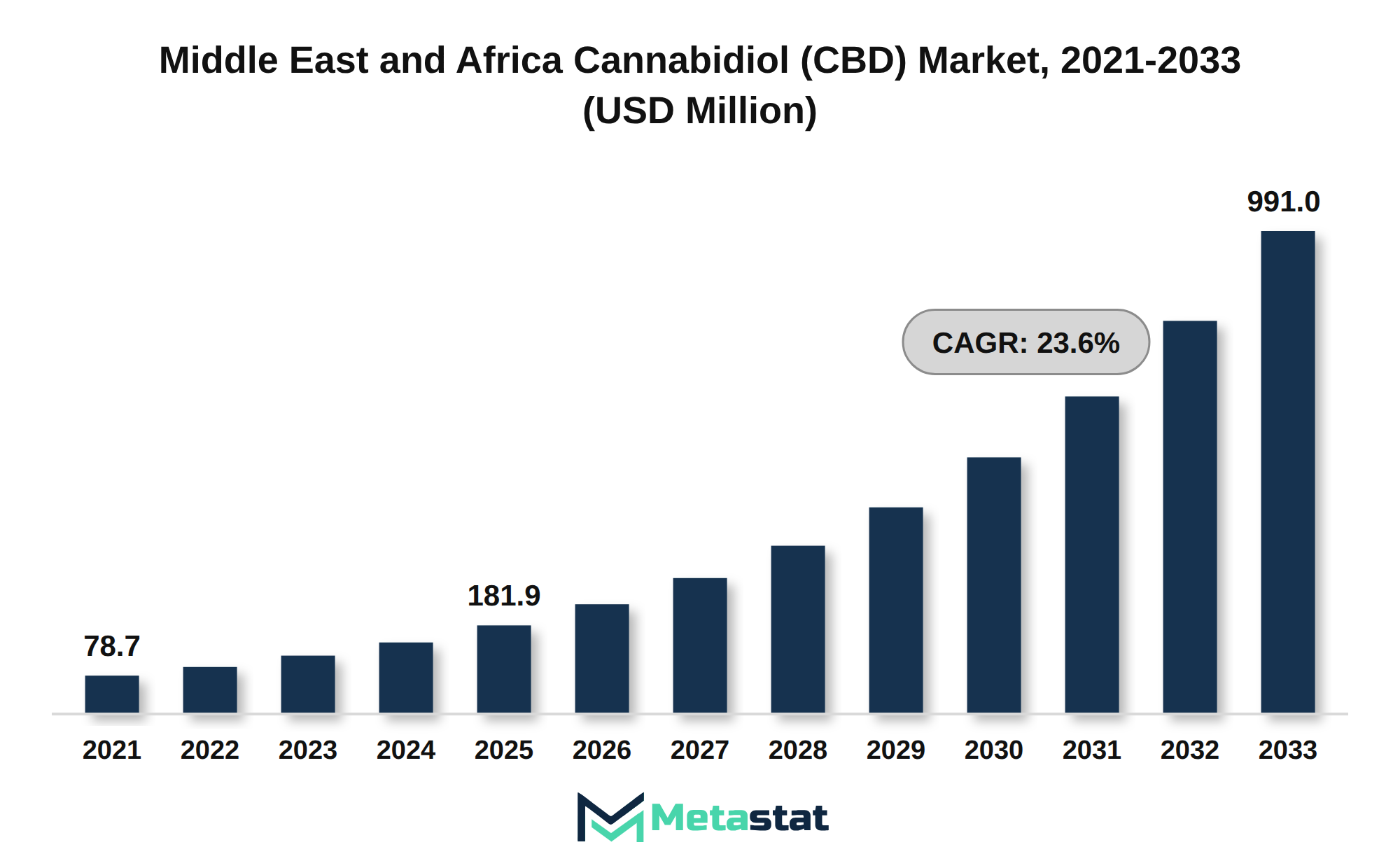
Market size is forecast to rise from USD 181.9 million in 2025 to over USD 991 million by 2033. This growth trajectory reflects a robust compound annual growth rate (CAGR) of 23.6%. The outlook for the Middle East and Africa Cannabidiol (CBD) market indicates multiple factors contributing to expansion, including evolving consumer preferences and increasing acceptance of CBD products across various applications.
In a bullish scenario, heightened demand for CBD in pharmaceutical and medical applications accelerates growth, driven by advancements in product formulations and increased research and development activities. A bearish scenario could arise from regulatory hurdles or geopolitical tensions that disrupt supply chains, impacting market dynamics negatively.
Strategic capital allocation and infrastructure commitments will likely play critical roles in shaping competitive landscapes. Organizations focusing on next-generation technology integration and R&D commercialization timelines position themselves effectively to capture emerging white-space opportunities. The market will experience shifts in downstream demand patterns driven by maturing consumer awareness of CBD benefits.
Executive-level strategic imperatives will increasingly prioritize defensibility roadmaps to navigate evolving compliance landscapes and policy enforcement horizons. Anticipating imminent compliance milestones will allow stakeholders to mitigate risks associated with regulatory changes. The Middle East and Africa Cannabidiol (CBD) market stands at a crucial juncture, with significant potential for growth driven by innovation, strategic investments, and evolving consumer behaviors.
Middle East and Africa Cannabidiol (CBD) Market Key Segments
By Product Type:
- CBD Oils & Tinctures
- CBD Capsules & Tablets
- CBD Edibles
- CBD Topicals
- CBD Beverages
- CBD Vapes & Inhalation Products
- CBD Pet Products
- CBD Teas & Infusions
- Others (CBD Sprays, Suppositories, Oral Strips)
By CBD Formulation:
- Full-Spectrum CBD
- Broad-Spectrum CBD
- CBD Isolate
- CBD-Dominant Cannabinoid Blends
- Others (CBD Blends, Minor-Cannabinoid-Enhanced Formulations)
By Application:
- Pharmaceutical & Medical
- Nutraceuticals & Dietary Supplements
- Personal Care & Cosmetics
- Food & Beverages
- Pet Care
- Others (Sports Recovery & Specialty Applications)
By Region:
- South Africa
- Zimbabwe
- Morocco
- United Arab Emirates
- Rest of Middle East and Africa
Key Middle East and Africa Cannabidiol (CBD) Industry Players
- Elixinol
- Medical Marijuana, Inc.
- Progress Biolabs
- Canna Mist
- The Cannabis Co.
- Palesa CBD
- Nativa
- Annique Rooibos
- Vondi's Holistic Pet Care
- Green Oasis
- Shanti Wellness Store
- Arktis FZE
- BOTANICAN
- BANGI AFRIKA (AFRIKA HERB CULTURE)
- Ervaarblaar
- Ambary Farms
- COR EMPORIUM (PTY) LTD
- Vitozol (Pty) Ltd.
- Peach & Moon Organics
- Sally-Ann Creed
Report Coverage
The report strategically identifies and profiles the key market players and analyses their core competencies in each sub-segment of the Cannabidiol (CBD) market.
Report Attributes | Details |
Study Period | 2021-2033 |
Base Year | 2025 |
Estimated Year | 2026 |
Forecast Period | 2026-2033 |
Historical Period | 2021-2025 |
Growth Rate | CAGR 23.6% from 2026 to 2033 |
Revenue Unit | USD million |
Segmentation | By Product Type, CBD Formulation, Application, and Region |
What Report Provides
- Company Market Share, Revenue and Ranking for the Middle East and Africa Cannabidiol (CBD) Market
- Key Market Leaders in the Middle East and Africa Cannabidiol (CBD) Market
- Full In-Depth Analysis of the Cannabidiol (CBD) Industry
- Industry Statistics for the Middle East and Africa Cannabidiol (CBD) Market
- Important Changes in Cannabidiol (CBD) Market Dynamics
- Segmentation Details of the Cannabidiol (CBD) Market
- Historical, Ongoing, and Projected Market Analysis for Cannabidiol (CBD)
- Key Strategies of Major Players in the Cannabidiol (CBD) Market
Frequently Asked Questions
Find answers to common questions about this report
The Cannabidiol (CBD) market size in the Middle East and Africa was valued at USD 181.9 million in 2025.
The Cannabidiol (CBD) market is projected to grow at a CAGR of 23.6% during the forecast period from 2026 to 2033.
CBD Oils & Tinctures lead the Middle East and Africa Cannabidiol (CBD) market, with a value of USD 61.7 million in 2026. This segment represents the largest share among product types.
Growing consumer awareness regarding the benefits of Cannabidiol (CBD) and the shift towards natural health approaches drive market demand in the Middle East and Africa. Urbanization and an aging population seeking wellness solutions enhance product acceptance, while the rise of online purchasing platforms broadens consumer access to CBD offerings.
Regulatory challenges, inflationary pressures, and geopolitical instability significantly restrain growth in the Middle East and Africa Cannabidiol (CBD) market. A complex regulatory environment complicates product approvals, while rising costs and trade deficits hinder competitive pricing and operational efficiency. These factors create an environment that limits market potential and deters investment.
Growing consumer awareness of Cannabidiol (CBD) benefits and the increasing demand for natural alternatives to traditional pharmaceuticals favor product adoption in the Middle East and Africa. The rise in health-conscious individuals seeking wellness solutions drives interest in CBD's therapeutic properties, leading to greater acceptance across diverse demographics.
The Cannabidiol (CBD) market is estimated to reach a valuation of USD 991 million by 2033.
Key players in the Middle East and Africa Cannabidiol (CBD) market include Elixinol, Medical Marijuana, Inc., Progress Biolabs, Canna Mist, The Cannabis Co., and Palesa CBD.
CBD oils and tinctures are expected to grow at a CAGR of 22% from USD 61.7 million in 2026 to USD 247.7 million by 2033.
The pharmaceutical and medical application segment is projected to increase from USD 57.2 million in 2026 to USD 261.2 million by 2033, with a CAGR of 24.2%.
Choose Your License
Middle East and Africa Cannabidiol (CBD) Market
Related Reports
Explore related market intelligence reports worth reading alongside this one.