
LEAD ANALYST
Utkarsh Khirodkar is a Lead Market Research Analyst at MetaStat Insight, specializing in market intelligence, technology sector assessments, and competitive strategy.

Nordic Non-Food FMCG Distribution Market Size, Share, By Product Category (Household Care, Personal Hygiene and Oral Care, Beauty, Haircare and Cosmetics, Consumer Health and OTC, Baby and Child Care, Paper and Tissue Products, Pet Care, Others), By Service Type (Wholesale Distribution, Import and Market Entry Management, Key Account and Channel Sales Management, Category Management and Market Intelligence, Field Sales and In-Store Execution, Brand Management and Trade Marketing, Warehousing and Order Fulfilment, Co-packing and Value-Added Logistics, E-commerce and Digital Channel Management), By Retail Channel (Grocery Retail, Discount Retail, Drugstores, Pharmacies, Beauty and Personal Care Specialists, DIY and Home Improvement Retail, E-commerce, Department Stores, Others), By Region (Sweden, Denmark, Norway, Finland, Iceland), Industry Analysis, Growth, Trends, and Forecast, 2026-2033
Report ID
MSI-5206
Published
September, 2026
Pages
291 Pages
Format
Historical
Base year
Forecast
Forecast period
Report Details
Choose Your License
Nordic Non-Food FMCG Distribution Market
The Nordic Non-Food FMCG Distribution market was valued at USD 14.8 billion in 2025 and is projected to reach USD 19.3 billion by 2033, growing at a CAGR of 3.4% over the forecast period.
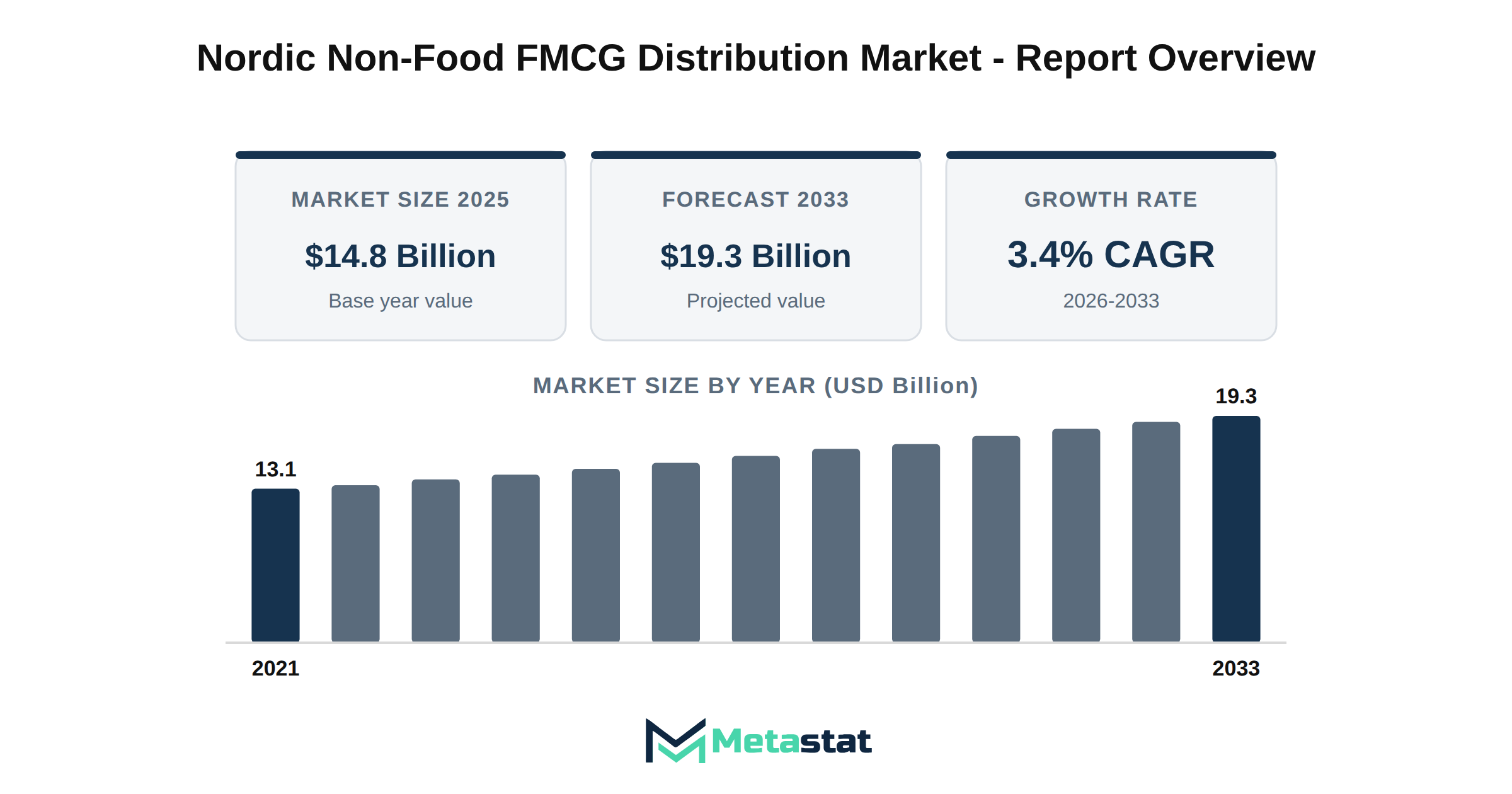
The Nordic Non-Food FMCG Distribution market reached a value of USD 14.8 billion in 2025, reflecting steady growth from USD 13.1 billion in 2021. The market is projected to grow to USD 19.3 billion by 2033, representing a compound annual growth rate (CAGR) of 3.4%. This growth is driven by increasing consumer demand for various non-food products, including household care, personal hygiene, and beauty products.
Key product categories within the market include Household Care, Personal Hygiene & Oral Care, Beauty, Haircare & Cosmetics, Consumer Health & OTC, Baby & Child Care, Paper & Tissue Products, Pet Care, and others. Household Care holds the largest share at 21.7%, followed closely by Beauty, Haircare & Cosmetics at 21.2%. These categories benefit from ongoing trends in health and wellness, which influence consumer purchasing behavior and drive growth across the sector.
Within the service type segment, Wholesale Distribution is expected to expand from USD 4.0 billion in 2026 to USD 4.6 billion by 2033, reflecting a CAGR of 1.8%. Import & Market Entry Management is projected to reach USD 1.9 billion by 2033, growing at a CAGR of 3.4%. These services play a critical role in facilitating market access and operational efficiencies for businesses operating in the Nordic region.
The retail channel segment exhibits a diverse landscape, with Grocery Retail representing a significant portion of the market. It is anticipated to grow from USD 4.4 billion in 2026 to USD 5.0 billion by 2033, supported by consumer preferences for convenience and accessibility in shopping. Discount Retail channels are expected to expand more rapidly, achieving a value of USD 2.2 billion by 2033, with a CAGR of 3.8%.
Regional dynamics further shape the Nordic Non-Food FMCG Distribution market, with Sweden projected to increase its market value from USD 5.2 billion in 2026 to USD 6.8 billion by 2033, achieving a CAGR of 3.7%. Other regions, including Denmark and Norway, experience growth driven by shifts in consumer behavior and economic conditions.
The Nordic Non-Food FMCG Distribution market experiences significant influences from regulatory compliance and standards, which shape operational frameworks and dictate market entry strategies. Companies operating within the market navigate complex geopolitical risks, responding to evolving regulations that impact supply chain dynamics.
Disruption in various sectors fuels innovation, with R&D trajectories focusing on next-generation products and services. Sustainable transformation emerges because a key priority, with firms prioritizing decarbonization efforts and circular economy dynamics to enhance resource efficiency and reduce environmental impact.
The supply chain landscape faces challenges due to inflationary pressures and currency volatility, impacting procurement strategies and customer journey dynamics. Companies within the market focus on capital allocation and infrastructure investments to strengthen resilience against these pressures.
Market fragmentation characterizes the competitive environment, with numerous players vying for market share. M&A dynamics play an important role in shaping the landscape, with strategic acquisitions aimed at enhancing capabilities and expanding reach within the Nordic Non-Food FMCG Distribution market.
Future strategic outlook reflects a commitment to high-value recommendations, emphasizing the necessity for companies to adapt to changing consumer preferences and market conditions. Corporate imperatives drive innovation and efficiency, positioning firms for sustained growth and competitiveness in the evolving market.
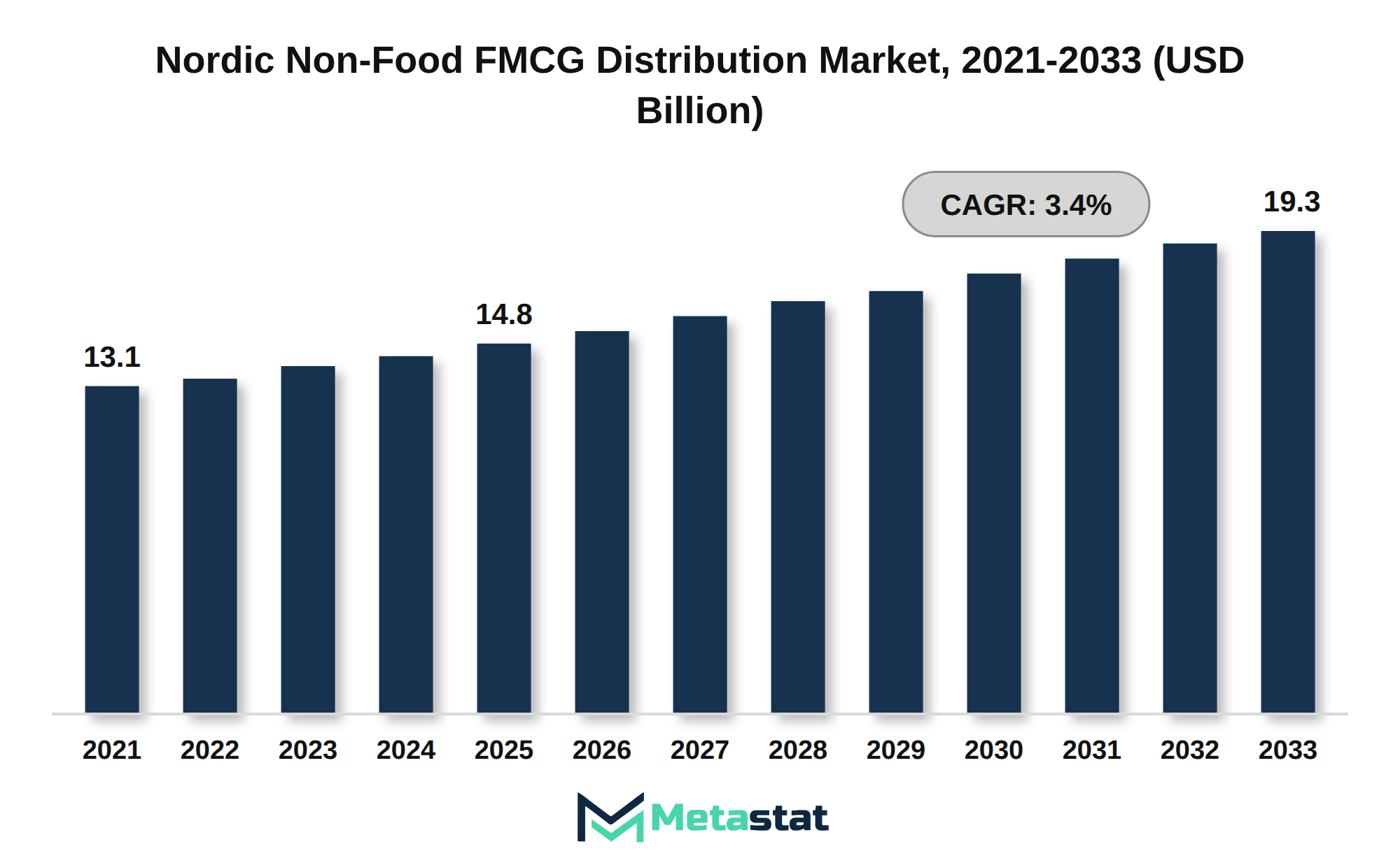
The Nordic Non-Food FMCG Distribution market experiences growth driven by macro-economic factors, particularly GDP growth and capital investment environments. Increased consumer spending occurs alongside rising disposable incomes, which influences purchasing decisions across various product categories. Economic stability encourages investment in technology and infrastructure, improving operational efficiencies across supply chains.
Interest rates significantly impact consumer financing options, affecting spending power. Low rates promote consumer confidence, leading to higher expenditures in non-food FMCG segments. Integration of digital transformation strategies enhances operational productivity while minimizing costs, aligning with evolving consumer behaviors focused on convenience and quality.
Increased emphasis on sustainability and resource stewardship shapes market dynamics. Businesses adopt innovative practices to meet consumer demand for environmentally friendly products, further stimulating growth. Combined, these macro-economic factors create a favorable environment for expansion in the Nordic Non-Food FMCG Distribution market.
Investment in digital transformation significantly contributes to the Nordic Non-Food FMCG Distribution market's growth. Companies increasingly adopt advanced technologies including automation and artificial intelligence to enhance operational efficiency and improve processes. This shift towards digitizing legacy systems offers significant benefits, including improved data analytics capabilities and faster decision-making processes.
The growing emphasis on technological integration supports a competitive edge within the market. Players leverage software solutions that optimize supply chain management and enhance customer engagement. This focus on innovation leads to greater responsiveness to changing consumer demands and preferences, ultimately driving revenue growth.
The Nordic Non-Food FMCG Distribution market benefits from the rising demand for effective e-commerce solutions. With consumers embracing online shopping, companies invest in robust digital platforms to enhance the customer experience. This investment is crucial for expanding market reach and accessibility to a broader audience, thus contributing to the overall growth of the market.
Digital transformation serves because a vital growth driver within the Nordic Non-Food FMCG Distribution market, enabling companies to innovate, adapt, and thrive in a changing retail environment.
The Nordic Non-Food FMCG Distribution market faces constraints linked to regulatory compliance challenges that affect operational efficiency and market access. Stringent regulations surrounding product safety, environmental standards, and consumer protection increase operational costs for businesses within the market. Compliance with these regulations often requires significant investment in quality assurance processes and documentation, which diverts resources away from innovation and market expansion efforts.
Legal mandates create a complex environment for companies, particularly small and medium-sized enterprises, which lack the financial capacity to meet these standards. This situation leads to market fragmentation, where smaller players struggle to compete with larger companies that possess the resources to navigate regulatory hurdles efficiently. This fragmentation limits the overall growth potential of the market, resulting from smaller firms exiting or reducing their operational scale.
Macroeconomic headwinds, including inflationary pressures and rising costs of raw materials, exacerbate the financial strain on businesses within the Nordic Non-Food FMCG Distribution market. These factors influence pricing strategies and profitability, compelling companies to make difficult choices, including reducing investment in marketing or product development. Such decisions hinder long-term growth and innovation within the market.
Regulatory compliance challenges significantly influence the operational landscape of the Nordic Non-Food FMCG Distribution market, creating barriers to entry and limiting competitive dynamics, which ultimately affects growth prospects and market saturation levels.
The Nordic Non-Food FMCG Distribution market faces challenges stemming from geopolitical tensions that result in trade volatility. Fluctuating trade policies affect import-export dynamics, particularly for essential components and raw materials crucial for distribution operations. The disruption in international trade relations contributes to increased tariffs, which raise overall costs for businesses operating within the market.
Supply chain instability emerges due to political uncertainties, impacting logistics and delivery timelines. Companies encounter heightened compliance overhead resulting from evolving regulatory pressures, further straining resources and operational efficiency. This environment presents challenges in maintaining competitive pricing and managing margin pressures, particularly for smaller players who struggle to absorb increased costs.
Rising input cost structures, fueled by supply chain disruptions and inflationary pressures, complicate pricing strategies in the market. The need for effective talent retention strategies intensifies, because skilled workforce gaps hinder growth potential. Companies within the Nordic Non-Food FMCG Distribution market navigate these complexities while ensuring alignment with consumer demands, which shift towards sustainability and ethical sourcing.
The Nordic Non-Food FMCG Distribution market benefits from emerging technological disruptions that reshape operational frameworks and consumer engagement. Innovations in digital procurement and e-commerce continue to transform purchasing behaviors, enhancing accessibility and convenience for consumers. While retailers increasingly adopt advanced technologies, they establish streamlined processes that improve efficiency and reduce costs.
Infrastructure modernization supports growth opportunities by facilitating better supply chain management and localized sourcing. Investments in automation and process optimization allow suppliers to enhance operational yields, addressing evolving consumer demands effectively. Innovations in product integration and cross-industry collaborations contribute to a more diverse product offering within the market, meeting niche applications across various segments.
Strategic consolidations and M&A initiatives among key players further enhance competitive positioning by enabling resource sharing and expertise exchange. These activities broaden market reach, allowing companies to tap into new geographical areas and expand their consumer bases. The focus on sustainability imperatives aligns with changing consumer preferences for eco-friendly products, driving growth in sectors committed to environmental stewardship.
Value-chain optimization influences the market landscape, driven by businesses seeking to improve their service offerings while maintaining cost-effectiveness. The emphasis on asset life-cycle extensions and maintenance upgrades ensures longevity and reliability in product availability, which builds customer trust and loyalty. Overall, the combination of technological disruptions and emerging demands supports a growth trajectory in the Nordic Non-Food FMCG Distribution market.
The Nordic Non-Food FMCG Distribution market is segmented based on Product Category, Service Type, Retail Channel, and Region.
Valued at USD 3.3 billion in 2026, the Household Care segment is projected to reach USD 3.7 billion by 2033, reflecting a CAGR of 1.8% during the forecast period. Demand for household care products stems from heightened consumer awareness regarding hygiene and sanitation. This shift drives manufacturers to develop innovative and eco-friendly products that appeal to environmentally conscious consumers.
Segment expansion is supported by increased investment in marketing strategies and distribution channels. Enhanced visibility through various retail formats strengthens product accessibility, contributing to overall growth in the Nordic Non-Food FMCG Distribution market. Retail channels including grocery and discount retail play a crucial role in making household care products readily available to consumers.
Technological advancements in product formulation and packaging have resulted in improved product efficacy and user experience. Innovations, including biodegradable materials and concentrated formulas, align with sustainability goals and create differentiation in a competitive market. Such product evolution aligns with changing consumer preferences and regulatory compliance standards aimed at reducing environmental impact.
Pricing volatility poses challenges within the segment, influenced by raw material costs and supply chain dynamics. Fluctuating prices of ingredients pressure margins, leading companies to seek cost-effective alternatives without compromising quality. Ongoing market analysis facilitates strategic opportunities for investment in alternative sourcing to mitigate these pressures.
The Household Care segment within the Nordic Non-Food FMCG Distribution market is positioned for steady growth, driven by evolving consumer demands, innovative product offerings, and strategic market positioning. The segment's resilience relies on its ability to adapt to market changes and consumer expectations in the coming years.
Growth in the Personal Hygiene & Oral Care segment reflects increasing consumer awareness regarding health and hygiene practices. This heightened consciousness drives demand for diverse products, including toothpaste, mouthwash, and personal care items. The segment is projected to reach USD 2.7 billion by 2033, at a CAGR of 3.2% during the forecast period.
Investment in product innovation enhances the market environment. Companies focus on developing advanced formulations that cater to specific consumer needs, including natural ingredients and eco-friendly packaging. This trend aligns with broader consumption shifts towards sustainable and ethical options, further fueling market expansion.
Regulatory compliance shapes product offerings within the market. Adherence to stringent health and safety standards ensures consumer trust and brand loyalty. Companies actively engage in obtaining necessary certifications to strengthen their market positions and mitigate risks associated with emerging regulations.
Competitive dynamics in the Nordic Non-Food FMCG Distribution market are influenced by pricing volatility and margin pressures. Increased raw material costs place upward pressure on pricing strategies, prompting companies to streamline operations and enhance supply chain resilience. Strategic decision-making around sourcing raw materials and managing logistics remains critical to maintaining profitability.
Overall, the relationship between consumer demand, regulatory frameworks, and competitive strategies positions the Personal Hygiene & Oral Care segment for sustained growth within the Nordic Non-Food FMCG Distribution market.
Demand for beauty, haircare, and cosmetics products in the Nordic Non-Food FMCG Distribution market shows growth potential, driven by increasing consumer interest in personal grooming and aesthetics. This segment is projected to reach USD 4.4 billion by 2033. Rising disposable incomes and heightened awareness regarding personal care contribute to the expansion of this market. The influence of social media and digital marketing strategies enhances consumer engagement, leading to higher sales and brand loyalty.
Technological advancements in product formulation and packaging drive innovation within the segment. Emerging trends emphasize natural and organic ingredients, aligning with consumer preferences for sustainable and health-conscious products. The growing importance of e-commerce channels facilitates wider distribution and accessibility, enabling customers to explore diverse offerings conveniently. An evolving regulatory landscape requires compliance with safety standards, pushing manufacturers to focus on quality and transparency in their product lines.
Pricing dynamics remain critical, particularly amid fluctuations in raw material costs and competition. Strategic investments in branding and marketing enhance product visibility, while companies adapt their pricing strategies to maintain market share. The increasing prevalence of subscription services diversifies revenue streams, allowing brands to engage customers on a recurring basis. Overall, these factors collectively position the beauty, haircare, and cosmetics segment for sustained growth within the Nordic Non-Food FMCG Distribution market.
Growth in the Consumer Health & OTC segment relies on increasing awareness among consumers regarding health and wellness. This awareness drives demand for products that offer preventive care and enhance well-being. The segment is projected to grow at a CAGR of 4% during the forecast period. Innovations in product formulations and packaging contribute to segment expansion, attracting a broader consumer base. Shifts in consumer preferences toward preventive healthcare solutions increase the adoption of over-the-counter health products.
Regulatory compliance standards and certifications ensure product quality and safety, influencing purchasing decisions. Price volatility and margin pressures affect profitability, compelling firms to optimize their cost structures while delivering value to consumers. Increased competition within the Nordic Non-Food FMCG Distribution market pushes suppliers to enhance their offerings and improve service delivery. Strategic opportunity windows arise from the introduction of next-generation products tailored to meet evolving consumer demands.
Investment in marketing and education initiatives enhances consumer engagement, driving consumption shifts toward health-oriented products. The segment's resilience against supply chain vulnerabilities is critical for maintaining steady growth. Continuous adaptation to disruptive alternatives and technological obsolescence ensures that suppliers remain competitive in a dynamic market environment.
In the Nordic Non-Food FMCG Distribution market, the Baby & Child Care segment experiences distinct dynamics driven by evolving consumer preferences and increasing awareness of product safety. Parents prioritize high-quality, safe products for their children, prompting brands to innovate and enhance product formulations. This focus on safety and quality aligns with broader trends in health-conscious consumption, influencing purchasing decisions across various demographic segments.
Adoption of environmentally friendly and organic products in the Baby & Child Care category continues to gain traction. Parents actively seek sustainable options, further expanding the segment's appeal. Manufacturers focus on incorporating natural ingredients and eco-friendly packaging, responding to the demand for transparency and ethical sourcing practices.
Technological maturation plays a role in the segment's evolution, with innovations in product development and marketing strategies enhancing consumer engagement. Digital platforms and social media campaigns provide targeted outreach, enabling brands to connect with their audiences effectively. This strategic approach builds brand loyalty and encourages repeat purchases, boosting overall market growth.
Regulatory compliance remains essential, with stringent safety standards governing product formulations. Companies invest in quality assurance processes to meet these requirements while navigating the complexities of various markets. Adhering to compliance standards ensures consumer trust and mitigates risks associated with product recalls and potential legal challenges.
Cost structures impact pricing strategies within the segment. Fluctuations in raw material costs and supply chain vulnerabilities challenge manufacturers to maintain competitive pricing without compromising quality. Strategic opportunities arise from efficient sourcing and logistics management, enabling players to optimize profit margins while delivering value to consumers.
The Baby & Child Care segment within the Nordic Non-Food FMCG Distribution market reflects a growing trend toward personalized and specialized products. Customized solutions catering to specific needs allow brands to differentiate themselves in a competitive landscape. Evolving consumer expectations drive continuous investment in product innovation and market expansion, which remains crucial for capturing emerging opportunities.
Demand for paper and tissue products within the Nordic Non-Food FMCG Distribution market benefits from rising consumer awareness regarding hygiene and sustainability. Increased focus on eco-friendly materials drives manufacturers to innovate with recycled paper products, aligning with growing environmental concerns. The segment experiences growth due to the expansion of e-commerce platforms, which facilitate access to various paper and tissue products. Enhanced product offerings, including premium and specialty items, cater to shifting consumer preferences.
Consumption shifts towards convenience and quality influence the end-use dynamics in households and commercial spaces. Regulatory compliance standards promoting sustainable practices in raw material sourcing affect production strategies. Companies within this segment face challenges related to pricing volatility and margin pressures, driven by fluctuations in raw material costs and supply chain disruptions.
Strategic investment in technological advancements enhances production efficiencies and product development. The market presents opportunities for companies to expand portfolios by introducing innovative solutions to meet evolving consumer demands. Overall, the outlook for the paper and tissue products sub-segment is projected to remain positive within the broader context of the Nordic Non-Food FMCG Distribution market.
Consumer preferences for pet care products experience ongoing evolution, driven by heightened awareness of animal welfare and premium product offerings. The rise in pet ownership across the Nordic region increases demand for high-quality pet food, grooming products, and accessories. Growing consumer interest in organic and natural ingredients in pet products aligns with broader health and wellness trends seen across other consumer segments in the Nordic Non-Food FMCG Distribution market.
Technological advancements in pet care significantly enhance product development and marketing strategies. Innovations in product formulations and packaging appeal to environmentally conscious consumers. Digital platforms facilitate new channels for pet care brands to engage with consumers, creating opportunities for targeted marketing and personalized product offerings. Retail strategies that incorporate e-commerce and social media drive market penetration and consumer engagement.
Regulatory compliance remains an essential factor for companies operating within the pet care segment. Standards regarding product safety and labeling influence market dynamics, requiring manufacturers to adapt to changing regulations. Compliance with these standards builds consumer trust and positions brands competitively in the Nordic Non-Food FMCG Distribution market.
Cost structures in the pet care segment face pressures from raw material sourcing and fluctuating ingredient prices. Economic conditions and supply chain vulnerabilities impact manufacturers' ability to maintain competitive pricing while ensuring product quality. Strategic partnerships and resilient supply chains become critical in mitigating these challenges, ensuring continuity in product availability and enhancing market stability.
Opportunities for growth in the pet care segment arise from emerging consumer trends focusing on sustainability and ethical sourcing. Brands that align their offerings with these values attract a loyal customer base willing to invest in premium products. This alignment positions companies favorably within the evolving environment of the Nordic Non-Food FMCG Distribution market.
Growing consumer interest in home fragrance and wellness products influences the Others (Home Fragrance, Fire-lighting Products, Small Household Consumables) segment within the Nordic Non-Food FMCG Distribution market. The rise of e-commerce platforms has expanded consumer access to these products, enhancing market penetration. Innovations in product formulations and packaging attract environmentally conscious consumers, increasing demand for sustainable offerings.
Increased focus on home aesthetics and ambience drives sales in home fragrance products, contributing to segment resilience. The introduction of fire-lighting products with enhanced safety features responds to consumer preferences, leading to broader adoption. This segmentation reflects varying consumer needs, with small household consumables providing convenience and practicality in everyday use.
Regulatory compliance standards significantly shape product formulations, ensuring consumer safety and environmental sustainability. Adherence to these standards enhances brand reputation, influencing purchasing decisions. Market participants actively engage in certifications that emphasize product quality and eco-friendliness, aligning with shifting consumer expectations.
While competition intensifies in the Nordic Non-Food FMCG Distribution market, players continually seek strategic opportunities to differentiate their offerings. Companies invest in marketing initiatives to highlight unique attributes and benefits, enhancing visibility in a crowded marketplace. This focus on product evolution and consumer engagement positions the segment for sustained relevance and growth.
Valued at USD 4 billion in 2026, the Wholesale Distribution segment is projected to reach USD 4.6 billion by 2033, at a CAGR of 1.8% during the forecast period. Factors influencing growth include an increase in e-commerce activities and rising demand for efficient supply chain solutions. Retailers and manufacturers seek streamlined distribution processes to enhance market reach and reduce operational costs. This trend spurs investments in technology, facilitating improved inventory management and order fulfillment.
Adoption of innovative distribution methods positions players in the Nordic Non-Food FMCG Distribution market to leverage emerging consumer preferences. Enhanced focus on customer experience drives changes in service offerings, prompting suppliers to implement advanced data analytics and inventory systems. The shift towards online shopping creates opportunities for wholesalers to strengthen partnerships with retailers, thereby increasing market penetration.
Regulatory compliance standards, including sustainability initiatives, impact operational practices within the Wholesale Distribution segment. Companies actively pursue certifications that align with environmental guidelines, further enhancing market reputation. The potential for price volatility in raw materials presents challenges, necessitating strategic sourcing and flexible pricing models to maintain competitive margins.
Strategic opportunity windows arise from the evolving landscape of consumer behavior and technological advancements. Investment in next-gen upgrades and automation enhances supply chain resilience, addressing vulnerabilities linked to traditional distribution methods. This proactive approach positions companies to adapt efficiently to market dynamics, ultimately contributing to sustained growth within the Wholesale Distribution segment.
Growth in the Import & Market Entry Management segment reflects evolving market dynamics within the Nordic Non-Food FMCG Distribution market. Valued at USD 1.9 billion by 2033, at a CAGR of 3.4% during the forecast period, this segment experiences increasing demand driven by factors including heightened international competition and the necessity for localized strategies. Businesses expanding into Nordic markets prioritize efficient entry management to navigate regulatory landscapes and consumer preferences effectively.
Technological maturation plays a critical role in shaping this segment. Investment in data analytics and digital platforms enhances market intelligence capabilities, enabling firms to identify opportunities and streamline entry strategies. The demand for agile distribution solutions aligns with shifts in consumer behavior, emphasizing the importance of adaptability in product offerings and marketing approaches. Consequently, the market is positioned for sustained growth, supported by companies leveraging these technological advancements to optimize operations.
Regulatory compliance standards increasingly influence market strategies, requiring firms to develop robust frameworks for navigating local laws and industry regulations. Adherence to these standards mitigates risks and enhances brand reputation, building consumer trust and loyalty. Firms that strategically align their operations with compliance requirements enhance their competitive positioning in the market.
Overall, the Import & Market Entry Management segment contributes significantly to the Nordic Non-Food FMCG Distribution market. Continuous investment in technology, adherence to regulatory standards, and responsiveness to consumer trends drive this segment's growth trajectory, positioning it favorably for future opportunities.
Growth in the Key Account & Channel Sales Management segment reflects increasing collaboration between distributors and retailers within the Nordic Non-Food FMCG Distribution market. This collaboration enhances market reach and product visibility, attracting more consumer attention. The segment is expected to reach USD 2.1 billion by 2033, driven by the need for efficient inventory management and tailored marketing strategies aimed at specific customer bases.
Demand drivers include a shift towards personalized shopping experiences, which influences how brands engage with key retailers. Companies invest in advanced data analytics to better understand consumer preferences and demand trends, allowing for more targeted promotions and streamlined inventory control. Adoption rates of innovative sales techniques and digital marketing strategies are surging in the market.
Segment expansion is propelled by a growing focus on e-commerce and digital sales channels, necessitating agile account management practices. The evolving landscape of retail channels creates opportunities for distributors to enhance their service offerings. This trend prompts investment in technology solutions that facilitate data sharing and collaborative planning between channel partners, ultimately driving sales growth.
Price fluctuations and changing consumer behavior exert pressure on margins, prompting firms to refine pricing strategies within the segment. Enhanced regulatory compliance standards around data privacy and product safety shape operational practices, ensuring alignment with market expectations. Distributors prioritize transparent communication and robust consumer protection measures, strengthening brand trust and loyalty.
Strategic investment outlooks indicate significant potential for growth in the Key Account & Channel Sales Management segment, encouraging innovative practices that adapt to shifting market dynamics. Companies seeking competitive advantages explore new technologies and partnerships, contributing to a resilient supply chain capable of responding to evolving consumer demands. This proactive approach cultivates an environment for sustained growth within the Nordic Non-Food FMCG Distribution market.
Growing emphasis on data-driven decision-making drives advancements in the Category Management & Market Intelligence segment within the Nordic Non-Food FMCG Distribution market. Retailers and suppliers prioritize insights derived from market intelligence to refine strategies, optimize product offerings, and enhance customer engagement. Data analytics tools support these efforts by enabling businesses to identify consumer trends and preferences, directly influencing inventory management and promotional campaigns.
Consumer demand for personalized products intensifies, creating a need for sophisticated category management practices. Organizations invest in technologies that facilitate real-time data collection and analysis, ensuring responsiveness to changing market dynamics. Investment in this segment aligns with an anticipated CAGR of 4.1% during the forecast period, reflecting growing recognition of the value of strategic category management.
Regulatory compliance standards further shape the landscape of the category management segment. Adhering to evolving regulations and certifications necessitates robust market intelligence, allowing firms to navigate compliance effectively while minimizing risks. This aspect enhances operational resilience among players in the market, ensuring that businesses remain competitive and agile in a rapidly changing environment.
Pricing volatility and margin pressures challenge segment participants. Firms leverage market intelligence to adjust pricing strategies dynamically, ensuring alignment with consumer expectations and cost fluctuations. Such strategies protect margins and enhance market positioning, vital for sustainable growth in the Nordic Non-Food FMCG Distribution market.
Consumer behavior increasingly favors in-store experiences, driving demand for effective field sales and in-store execution strategies in the Nordic Non-Food FMCG Distribution market. These strategies enhance customer engagement and optimize product placement, leading to improved sales performance across various retail channels.
Technological advancements enable retailers to leverage data analytics and customer insights, creating personalized shopping experiences. This shift supports the adoption of innovative retail technologies, including mobile point-of-sale systems and digital signage, which enhance in-store execution capabilities.
Strategic partnerships with manufacturers and suppliers are crucial for achieving competitive advantages. Collaboration improves inventory management and ensures timely product availability, ultimately leading to increased customer satisfaction and loyalty.
Regulatory compliance standards influence the strategies employed in this sub-segment. Adhering to these standards ensures that products meet safety and quality expectations, enhancing brand reputation in the market.
Margin pressures persist due to rising operational costs, compelling retailers to refine their sales strategies. Effective field sales and in-store execution techniques enable better resource allocation, minimizing wastage and enhancing profitability.
Strategic opportunity windows emerge through shifts in consumer preferences, including increased demand for sustainable and locally sourced products. Focusing on these evolving trends enables businesses to adapt their field sales tactics and capitalize on new market segments.
Strategic emphasis on brand management creates greater visibility and consumer recognition within the Nordic Non-Food FMCG Distribution market. Companies focus on aligning brand messaging with consumer values, enhancing emotional connections that drive loyalty. This segment attracts investments in innovative marketing strategies, utilizing digital platforms to engage consumers effectively and capture market share.
The evolving landscape of consumer preferences necessitates a shift toward personalization in marketing approaches. Brand management incorporates data analytics to understand consumer behavior and preferences, leading to targeted campaigns that connect with diverse demographics. This analytical approach enables brands to optimize their offerings and adapt to changing market conditions.
While competition intensifies, the importance of trade marketing increases to influence buyer behavior at the point of sale. Collaboration between brand managers and retail partners ensures effective promotions and merchandising, enhancing product visibility. This collaboration drives sales and reinforces brand positioning within the market.
In response to regulatory compliance standards, brands prioritize transparency and sustainability in their marketing efforts. Emphasizing ethical practices satisfies consumer demand for responsible products and strengthens brand reputation. Aligning marketing with sustainability initiatives enhances appeal to environmentally conscious consumers.
Looking ahead, ongoing investments in brand management and trade marketing are anticipated to drive growth within the Nordic Non-Food FMCG Distribution market. Companies that effectively utilize insights and adapt to market dynamics will position themselves advantageously for future opportunities. This proactive stance enhances brand equity and ensures resilience amid shifting consumer landscapes.
Growing interest in efficient logistics and inventory management drives demand for Warehousing & Order Fulfilment services within the Nordic Non-Food FMCG Distribution market. Businesses prioritize streamlined operations to enhance speed and reduce costs associated with product delivery.
Technological maturation influences this segment. Advancements in automation and data analytics enhance operational efficiency, enabling companies to optimize warehousing processes and inventory management. These technologies facilitate real-time tracking of inventory levels and order status, encouraging businesses to adopt innovative solutions that improve supply chain resilience.
Continuous investment in next-generation upgrades further influences market dynamics. Companies seek to modernize warehousing facilities, integrating smart technologies that support automation and real-time data utilization. This evolution positions firms to respond swiftly to shifting consumer preferences and demand fluctuations.
Regulatory compliance standards impact the operational landscape for warehousing services. Adhering to safety and environmental regulations influences facility design and operational processes, compelling companies to allocate resources toward compliance measures. These adjustments create cost structures that shape pricing strategies and margin pressures within the segment.
Logistics vulnerabilities, including transportation disruptions and supply chain interruptions, necessitate robust warehousing solutions. Firms recognize the importance of strategic opportunity windows that arise from enhancing warehousing capabilities, allowing adaptability in the face of market uncertainties.
Overall, the Warehousing & Order Fulfilment segment remains essential for the Nordic Non-Food FMCG Distribution market. By leveraging technological advancements and responding adeptly to regulatory requirements, companies better position themselves to capitalize on emerging market opportunities.
Interest in Co-packing & Value-Added Logistics remains strong within the Nordic Non-Food FMCG Distribution market, driven by increasing consumer demands for customization and convenience in product packaging. The segment experiences expansion due to rising competition among brands seeking to enhance their market presence through tailored offerings. Technological advancements in packaging machinery and materials contribute significantly to operational efficiency, enabling firms to provide innovative solutions to clients. While brands prioritize sustainability, adopting environmentally friendly packaging materials becomes vital for compliance with evolving regulations and consumer expectations.
Shifts in consumption dynamics reflect consumers' desires for more sustainable and diverse product options, prompting companies to adapt logistics strategies. E-commerce growth necessitates enhanced logistical capabilities, creating opportunities for firms specializing in Co-packing & Value-Added Logistics to offer integrated solutions. Regulatory compliance continues to shape operational strategies, influencing material selection and production processes, which in turn affects cost structures and pricing strategies in this segment. Focusing on raw material sourcing enhances supply chain resilience, addressing vulnerabilities that could disrupt operations.
Strategic opportunity windows arise from the growing need for brands to differentiate themselves in a competitive landscape. Integrating next-generation technologies, including automation and data analytics, supports improved efficiencies and streamlined processes. Investments in innovation lead to advances in product evolution, ensuring alignment with changing consumer preferences and expectations. This dynamic environment supports the ongoing relevance of Co-packing & Value-Added Logistics within the broader Nordic Non-Food FMCG Distribution market.
Digital channels increasingly shape consumer purchasing behaviors within the Nordic Non-Food FMCG Distribution market. The growing preference for online shopping results in higher demand for effective e-commerce and digital channel management solutions. Retailers focus on optimizing their digital presence to capture market share, driven by the necessity to enhance customer experience and convenience.
Technological maturation facilitates the integration of advanced analytics and customer relationship management systems, enabling retailers to tailor their offerings effectively. Continuous digital upgrades enhance operational efficiency, allowing for faster response times and personalized marketing strategies. These developments strongly influence downstream applications, with brands leveraging data insights to make informed decisions regarding product placements and promotions.
Consumption shifts towards online shopping platforms emphasize the importance of regulatory compliance standards governing data protection and consumer rights. Adherence to these standards strengthens consumer trust, directly impacting brand loyalty and repeat purchases. The ongoing evolution of consumer preferences necessitates investment in next-generation technologies, ensuring that businesses remain competitive in a rapidly changing environment.
Strategic opportunity windows arise from businesses exploring new partnerships and collaborations across digital ecosystems. This approach encourages innovation and expands market reach, particularly among emerging brands seeking to establish a foothold in the competitive environment. Capital investments in digital infrastructure become vital for long-term sustainability and growth, reinforcing the significance of e-commerce and digital channel management within the broader market framework.
Valued at USD 4.4 billion in 2026, the Grocery Retail segment is projected to reach USD 5 billion by 2033, at a CAGR of 1.8% during the forecast period. Increased consumer focus on convenience drives the growing demand for grocery retail options. Shifts in consumption patterns highlight a preference for one-stop shopping experiences, which position grocery retail because a primary channel for non-food FMCG products. The segment benefits from technological advancements in inventory management and e-commerce solutions, enhancing customer engagement and operational efficiency. Retailers in this segment face challenges related to pricing volatility and margin pressures, influenced by fluctuations in raw material sourcing and supply chain dynamics. The Nordic Non-Food FMCG Distribution market will continue to see competitive activity because players adapt to evolving consumer preferences and regulatory compliance standards, ensuring a resilient market structure.
Discount retail experiences strong momentum within the Nordic Non-Food FMCG Distribution market, driven by consumer demand for affordable and convenient shopping options. Price sensitivity among consumers aligns with the increasing presence of discount retailers, prompting shoppers to seek value-driven alternatives. The rising cost of living accelerates this trend, compelling consumers to prioritize budget-friendly choices. Significant market players enhance their product offerings and expand store locations to capture this growing segment.
The Discount Retail segment is projected to reach USD 2.2 billion by 2033, at a CAGR of 3.8% during the forecast period. The focus on developing private-label products enhances competitiveness, allowing retailers to offer lower-priced goods that cater to consumer preferences. Strategic partnerships with suppliers ensure a steady flow of products, enabling retailers to maintain inventory levels while keeping prices attractive.
Technological advancements in retail management systems and inventory optimization enhance operational efficiency within discount retailers. These innovations streamline processes and improve customer experiences, contributing to overall market growth. The Nordic Non-Food FMCG Distribution market anticipates increased competition resulting from more players entering this lucrative segment, further driving innovation and consumer choices.
Valued at USD 1.4 billion by 2033, the Drugstores segment reflects significant growth within the Nordic Non-Food FMCG Distribution market. Increasing consumer awareness regarding health and wellness drives demand for pharmaceutical and personal care products offered by drugstores. The segment benefits from the rising preference for convenient access to health-related products, enhancing market penetration.
Technological advancements in inventory management and point-of-sale systems support the operational efficiency of drugstores. Enhanced inventory tracking and customer engagement strategies improve service levels, proactively meeting consumer expectations. This push towards modernization aligns with the growing trend of healthcare prioritization across the region.
Regulatory compliance standards and certifications influence product offerings within the segment. Adherence to safety and quality regulations ensures that drugstores maintain consumer trust and loyalty, facilitating ongoing sales growth. This dynamic environment results in competitive advantages for businesses that effectively navigate regulatory landscapes.
The Drugstores segment signifies a robust component of the Nordic Non-Food FMCG Distribution market, characterized by evolving consumer demands and operational enhancements that support its growth trajectory.
Growth in the Pharmacies segment reflects increasing consumer reliance on health and wellness products. The aging population and rising health awareness drive demand for over-the-counter medications and health supplements. Pharmacies effectively serve because convenient access points for consumers seeking both pharmaceutical and personal care items, enhancing their role in the Nordic Non-Food FMCG Distribution market.
Valued at USD 1.4 billion in 2033, this segment is projected to grow at a CAGR of 3% during the forecast period. Consumer trust in pharmacies influences recurring purchases, with many customers preferring to buy health-related products from trusted local providers. Technological advancements in e-commerce and telehealth facilitate greater integration of pharmacy services, expanding their market reach.
Regulatory compliance and certification standards are critical factors shaping the Pharmacies segment. Adhering to established regulations ensures product safety and builds consumer confidence, driving demand further. The ongoing evolution of consumer preferences toward health solutions presents strategic opportunities within the market, particularly for pharmacies that adapt their offerings to meet these changing needs.
Adoption of beauty and personal care products is significantly influenced by evolving consumer preferences toward high-quality, effective, and natural ingredients. Consumers increasingly prioritize transparency regarding product formulations, driving brands to innovate continuously to meet these demands. The rise of social media platforms increases engagement with beauty enthusiasts, which shapes purchasing decisions and enhances brand visibility. This engagement leads to a growing reliance on online reviews and influencer endorsements, creating opportunities for brands to expand their reach within the Nordic Non-Food FMCG Distribution market.
Technological advancements in production processes facilitate the introduction of next-generation products, enhancing efficacy and consumer appeal. Brands focusing on research and development invest strategically in innovative formulations, catering to diverse consumer needs and preferences. The shift toward sustainable practices influences product development, leading to eco-friendly alternatives that appeal well to environmentally conscious consumers. Brands that successfully navigate these trends position themselves to capture significant market share.
Increasing regulatory scrutiny surrounding the beauty and personal care sector emphasizes the importance of compliance with safety standards and ethical practices. Companies that align their operations with these regulations mitigate risks and build consumer trust. The market experiences consumption shifts resulting from consumers becoming more educated about product ingredients, leading to a preference for transparency and natural formulations. While awareness of sustainability grows, brands that integrate ethical sourcing and environmentally friendly practices create stronger connections with their customer base.
The Nordic Non-Food FMCG Distribution market presents strategic opportunity windows for brands that leverage current trends and consumer insights effectively. Companies investing in targeted marketing campaigns tailored to specific demographics enhance their chances of capturing market share. The demand for personalized and customized products continues to rise, presenting avenues for growth and differentiation. Companies focusing on these areas are well-positioned to thrive in a competitive landscape.
Interest in DIY & Home Improvement Retail remains significant, driven by evolving consumer preferences for home enhancement and personalized living spaces. Increased social media influence promotes home improvement projects, leading to higher demand for products within this segment. Consumers increasingly seek high-quality and sustainable options, enhancing their purchasing decisions in the Nordic Non-Food FMCG Distribution market.
The push for sustainability shapes product offerings, prompting brands to innovate with eco-friendly materials and practices. This trend encourages collaboration between suppliers and retailers to meet customer expectations for environmental responsibility. Enhanced consumer awareness around these factors leads to greater loyalty and brand differentiation in the market.
Technological advancements influence product evolution, with smart home solutions gaining traction among consumers. These innovations improve functionality and drive sales in the DIY segment. Retailers that adapt their inventory and marketing strategies to include such products enhance their competitive edge, positioning themselves favorably within the Nordic Non-Food FMCG Distribution market.
Regulatory compliance becomes increasingly important, with standards addressing product safety and environmental impact influencing both sourcing and pricing strategies. Manufacturers and retailers that adapt to these regulations find opportunities to enhance their market positioning while minimizing risks associated with compliance failures.
Margin pressures stem from fluctuating raw material costs, requiring companies to implement effective cost management strategies. Efficiency in supply chain operations and logistics allows businesses to mitigate these pressures while ensuring product availability. Strategic investments in technology and partnerships support resilience against market volatility, positioning firms to capitalize on growth opportunities.
Consumer spending patterns shift toward home improvement projects, indicating robust potential for growth within the segment. While economic conditions stabilize, discretionary spending on home-related products is expected to increase, reinforcing the importance of strategic planning for retailers and suppliers targeting this lucrative market.
Rise in e-commerce adoption significantly impacts the Nordic Non-Food FMCG Distribution market. Consumers increasingly prefer online shopping for convenience and access to a wider variety of products. This shift in purchasing behavior drives retailers to enhance their online platforms, ensuring user-friendly experiences and streamlined order fulfillment. Strong investment in digital infrastructure supports growth in the e-commerce segment, allowing businesses to reach broader customer bases across the Nordic region.
Technological advancements facilitate next-gen upgrades in online retail, enhancing product visibility and customer engagement. Retailers leverage data analytics to personalize offers, improving customer satisfaction and retention. Shifts in consumption patterns indicate a growing reliance on e-commerce, prompting businesses to adapt their strategies for online sales. Regulatory compliance standards around data protection and consumer rights further shape the operational landscape for e-commerce in the Nordic market.
Increased competition among e-commerce platforms encourages innovation, prompting businesses to refine their logistics and supply chain strategies. Efficient management of inventory and fulfillment operations becomes crucial due to intensifying demand for rapid delivery. E-commerce participants regularly explore strategic opportunity windows to capitalize on emerging consumer trends, enhancing their market positioning. The ongoing evolution of the Nordic Non-Food FMCG Distribution market reflects these dynamics, reinforcing the importance of e-commerce because a critical sales channel.
Shifts in consumer preferences drive a consistent interest in Department Stores within the Nordic Non-Food FMCG Distribution market. The segment benefits from a growing trend towards convenience and an enhanced shopping experience. Increasingly, consumers seek a diverse selection of products, often favoring one-stop shopping environments that Department Stores provide. This demand results from changing lifestyle patterns, where time efficiency and product variety play crucial roles in purchasing decisions.
Technological advancements influence the operational landscape of Department Stores. Integration of digital tools for inventory management and customer engagement enhances the shopping journey, allowing for personalized experiences. These innovations strengthen the segment's ability to adapt to evolving consumer expectations while maintaining competitive pricing strategies. While a result, Department Stores remain important in the market, effectively capturing consumer interest.
Regulatory compliance standards impact the Department Stores segment, requiring adherence to health and safety protocols. These standards ensure product quality and consumer safety, building trust in the shopping environment. Compliance not only mitigates risks but provides a competitive advantage, enhancing the reputation of stores that prioritize safety and transparency.
Margin pressures continue to challenge the Department Stores segment due to intensified price competition. Retailers focus on strategic pricing models to navigate this landscape, maintaining margins while attracting consumers. This dynamic necessitates ongoing evaluation of cost structures and product offerings to ensure alignment with market demands.
While the Nordic Non-Food FMCG Distribution market evolves, Department Stores will likely capitalize on strategic opportunities that arise from consumption shifts. Their ability to adapt to new consumer trends and regulatory requirements positions them favorably within the market, allowing for continued relevance and growth.
Consumer preferences increasingly favor convenient shopping options, driving interest in the Others (Travel Retail, Convenience Stores, Baby Specialty Retail) segment. This segment thrives on the growing demand for accessible products, particularly among busy families and travelers who seek quick and efficient purchasing experiences. With a strong focus on product variety, convenience stores and travel retail outlets cater to diverse consumer needs, enhancing overall market appeal.
Evolving consumer lifestyles contribute to sustained demand for baby specialty retail, driven by parents actively seeking specialized products for their children. This ongoing trend emphasizes the importance of tailored offerings that align with consumer expectations in the Nordic Non-Food FMCG Distribution market. Brands investing in innovative solutions and effective marketing strategies stand to benefit from increased visibility and consumer engagement.
Regulatory compliance, particularly in health and safety standards, influences product offerings within this segment. Adherence to certifications strengthens brand trust and customer loyalty. This dynamic environment requires continuous adaptation from players, ensuring alignment with both consumer demands and regulatory expectations.
Overall, opportunities for growth within this sub-segment are evident, driven by the convergence of consumer desire for convenience and the necessity for specialized products. Strategic investments in marketing and product development will enhance competitive positioning and support expansion in the Nordic Non-Food FMCG Distribution market.
Valued at USD 5.2 billion in 2026, the Sweden segment is projected to reach USD 6.8 billion by 2033, demonstrating a CAGR of 3.7% during the forecast period. Increasing consumer demand for household products significantly influences growth. The widespread adoption of sustainable and eco-friendly product lines, particularly in personal hygiene and beauty categories, contributes positively to market expansion.
Technological advancements in product development and distribution strategies enhance competitiveness within the Sweden segment. Manufacturers emphasize innovation in formulations, catering to evolving consumer preferences for natural ingredients and health-oriented products. Investment in research and development encourages brands to introduce next-generation products that align with consumer expectations.
Consumption shifts toward convenience and online purchasing continue to reshape the Nordic Non-Food FMCG Distribution market. Retailers adapt by enhancing their e-commerce platforms and offering streamlined delivery options. These adaptations cater to busy lifestyles, promoting higher sales volumes in the region.
Regulatory compliance standards play a critical role in shaping product offerings. Swedish regulations support transparency and sustainability, compelling manufacturers to focus on ethical sourcing and environmentally friendly practices. Meeting these standards enhances brand reputation, increasing consumer trust and loyalty.
Market dynamics reflect an overall shift toward premium products, which command higher price points and margins. In this competitive environment, businesses prioritize strategic marketing initiatives to differentiate their offerings. Suppliers concentrate on enhancing their value propositions through effective branding and targeted promotions.
Awareness of health and wellness continues to drive demand for personal care and consumer health products. Addressing consumer concerns about safety and efficacy in product formulations remains significant. While health-conscious trends gain momentum, businesses that align their offerings accordingly are well-positioned for success.
The Denmark segment is projected to reach USD 3.6 billion by 2033, at a CAGR of 3.2% during the forecast period. Growing consumer awareness around sustainability and health drives demand for non-food FMCG products. This trend encourages manufacturers to innovate and improve product offerings, influencing purchasing decisions across various demographics. Investment in marketing strategies and distribution channels enhances accessibility and visibility for brands in the market. Increasing disposable income among consumers supports a shift towards premium and innovative products, driving market growth.
Regulatory compliance standards concerning product safety and environmental impact shape manufacturing practices, prompting suppliers to adopt responsible sourcing and production methods. This alignment satisfies consumer expectations and strengthens brand loyalty. Pricing volatility in raw materials prompts companies to optimize supply chain strategies, ensuring competitive pricing while maintaining quality. Market players focus on technological advancements to streamline processes and enhance product offerings, further influencing market evolution.
Anticipated to reach USD 3.7 billion by 2033, the Norway segment demonstrates a steady growth trajectory within the Nordic Non-Food FMCG Distribution market. Several factors drive this expansion, including increased consumer awareness regarding personal hygiene and health products, alongside a rising trend toward premium and eco-friendly options. Evolving consumer preferences reflect a shift toward convenience and accessibility, significantly impacting purchasing decisions across various product categories.
The adoption of innovative product lines within the personal hygiene sector influences market dynamics. Enhanced product offerings in beauty, haircare, and cosmetics cater to changing consumer demands for quality and efficacy. Segment expansion catalysts include a robust retail infrastructure and increased penetration of e-commerce channels, allowing consumers greater access to diverse product ranges.
Cost pressure remains a critical factor affecting the Norway segment, driven by fluctuations in raw material prices and supply chain vulnerabilities. Regulatory compliance standards focused on safety and quality assurance are essential, ensuring that products meet consumer expectations while maintaining operational efficiency. Strategic investments in marketing and distribution enhance brand visibility and consumer engagement, supporting market growth.
Investment in next-generation upgrades and technological advancements positions suppliers favorably within the competitive environment. A focus on digital transformation and data analytics facilitates a better understanding of consumer behavior, enabling tailored marketing strategies. Overall, the Norway segment's performance reflects a strategic alignment with consumer trends, regulatory requirements, and technological innovations within the Nordic Non-Food FMCG Distribution market.
Consumer demand for non-food products in Finland reflects a growing trend toward convenience and sustainability, influencing the Nordic Non-Food FMCG Distribution market. Valued at USD 4.4 billion in 2026, the segment is projected to grow at a CAGR of 3.5% during the forecast period. Increased awareness of personal hygiene and wellness drives substantial interest in personal care and household products, resulting in higher consumption rates. The development of innovative product offerings enhances market appeal and attracts consumers looking for effective and environmentally friendly solutions.
Regulatory compliance standards play an important role in shaping product formulations and marketing strategies. Firms actively adapt to these standards to ensure product safety and efficacy, impacting consumer trust and brand loyalty. Pricing volatility and margin pressures persist owing to significant challenges; fluctuations in raw material costs affect overall profitability. Key players within the market focus on strategic opportunity windows to optimize pricing strategies and maintain competitive advantages.
Investment in supply chain resilience enhances operational efficiency, ensuring timely product availability. Raw material sourcing initiatives prioritize sustainability, aligning with changing consumer preferences for eco-friendly products. Ongoing research and development efforts enhance product evolution to meet the evolving needs of Finnish consumers, supporting deeper market penetration and long-term growth in the Nordic Non-Food FMCG Distribution market.
Consumer trends in Iceland reflect a growing interest in sustainable and eco-friendly products, influencing purchasing decisions within the Nordic Non-Food FMCG Distribution market. Awareness of environmental issues drives demand for products with minimal packaging and natural ingredients, appealing to health-conscious consumers. The segment expands due to consumers seeking high-quality, ethically sourced products, creating opportunities for brands focused on sustainability.
Technological advancements play a significant role in product evolution, with innovations in formulations and packaging enhancing consumer experience. Companies investing in next-generation upgrades strengthen their market position by offering enhanced product performance and convenience. The rise of e-commerce and online shopping platforms shapes consumer behavior, providing greater accessibility to a wider range of non-food products.
Regulatory compliance standards, emphasizing health and safety, contribute to shaping the Iceland market. Companies investing in certifications that adhere to these standards enhance consumer trust and brand loyalty, facilitating market penetration. Pricing volatility remains a concern, driven by fluctuations in raw material sourcing and operational costs, impacting margins across various product categories.
Strategic opportunities emerge through targeted marketing and promotional activities, capitalizing on local consumer preferences while addressing broader trends within the Nordic Non-Food FMCG Distribution market. The evolving landscape necessitates a focus on supply chain resilience, ensuring that companies remain agile in response to changing market dynamics. This adaptability enhances the ability to meet consumer demand consistently while navigating potential disruptions in the supply chain.
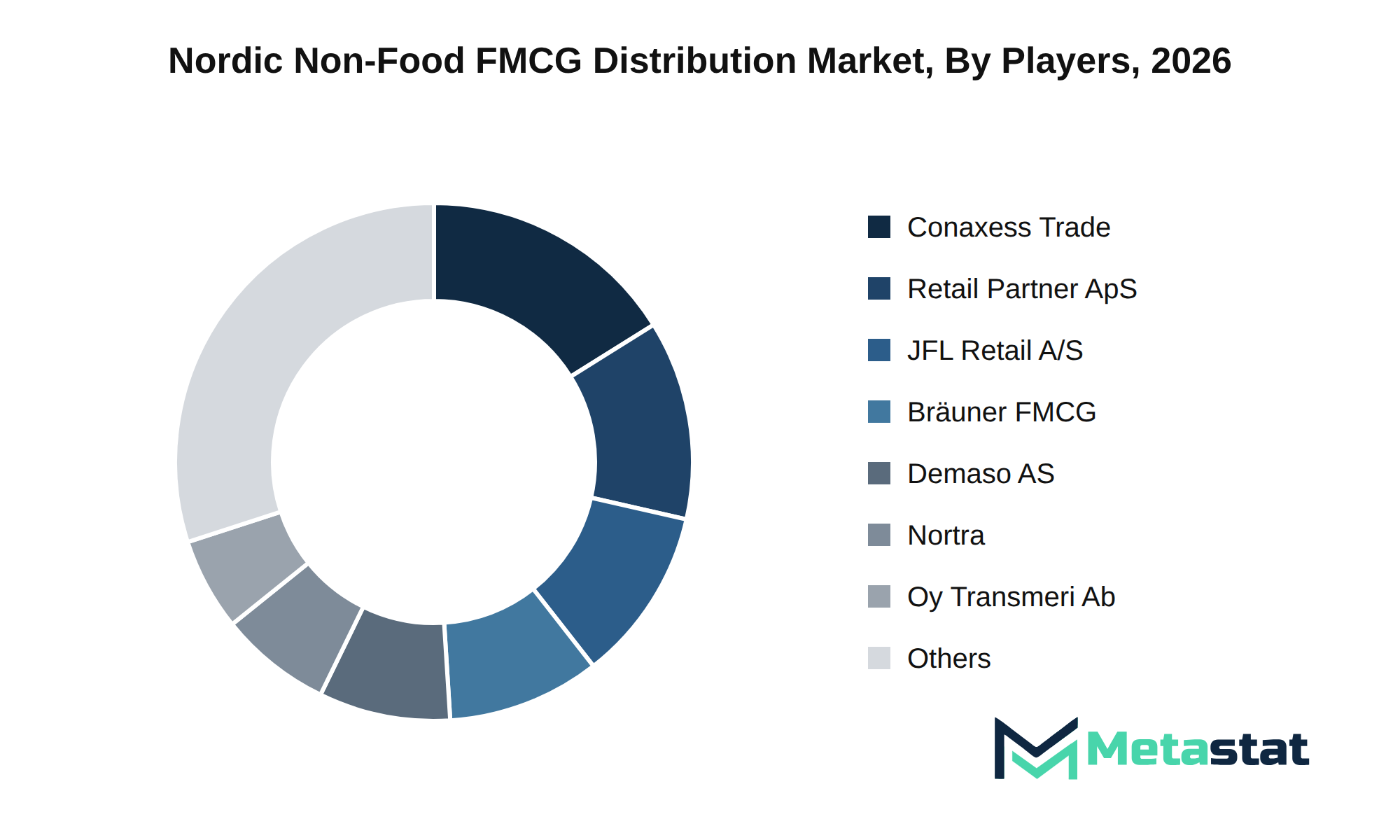
The Nordic Non-Food FMCG Distribution market experiences a diverse range of competitive strategies among key players. Companies engage in strategic alliances and partnerships to enhance market presence and product offerings. Players including Conaxess Trade and JFL Retail A/S pursue collaborative efforts to streamline operations and expand distribution networks.
Investment in research and development represents a vital focus area. Companies like Berner Oy and Oriola Corporation prioritize product differentiation and proprietary technologies to strengthen their positions. These initiatives enhance brand equity and create significant barriers to entry for new entrants.
The competitive landscape remains dynamic, with players focusing on customer retention strategies and value chain integration. Firms including Demaso AS and Nordic Beauty Company leverage procurement to optimize supply chain dominance, ensuring a competitive edge in pricing architectures. The Nordic Non-Food FMCG Distribution market is projected to experience further consolidation because businesses adapt to evolving consumer demands and market dynamics.
With a robust focus on maintaining competitive advantages through intellectual property portfolios and technological defensibility, the future outlook for this market appears promising. Companies continue to explore innovative approaches to sustain growth and navigate the competitive environment effectively.
Market size is forecast to rise from USD 14.8 billion in 2025 to over USD 19.3 billion by 2033. The base case anticipates a growth trajectory reflecting a 3.4% CAGR during this period. The bull case suggests accelerated growth driven by favorable macroeconomic conditions, heightened consumer spending, and the successful integration of next-generation technologies. The bear case warns of slower expansion resulting from economic downturns, regulatory challenges, and shifts in consumer preferences.
The Nordic Non-Food FMCG Distribution market will experience shifts influenced by evolving trade corridors and regional supply chain adjustments. Strategic capital allocation directives and infrastructure commitments will play significant roles in shaping industry dynamics, ultimately impacting growth trajectories. These factors will lead to emerging white-space opportunities and the identification of unmet enterprise needs, creating a competitive environment within the market.
Over the forecast period, ongoing research and development commercialization timelines will influence product life cycles. Evolving regulatory landscapes will require compliance milestones, necessitating companies to adapt swiftly and affecting their operational strategies. Understanding these factors will provide insights into executive-level strategic imperatives, defensibility roadmaps, and future growth recommendations within the Nordic Non-Food FMCG Distribution market.
The report strategically identifies and profiles the key market players and analyses their core competencies in each sub-segment of the Non-Food FMCG Distribution market.
Report Attributes | Details |
Study Period | 2021-2033 |
Base Year | 2025 |
Estimated Year | 2026 |
Forecast Period | 2026-2033 |
Historical Period | 2021-2025 |
Growth Rate | CAGR 3.4% from 2026 to 2033 |
Revenue Unit | USD billion |
Segmentation | By Product Category, Service Type, Retail Channel, Region, and Region |
Find answers to common questions about this report
The Nordic Non-Food FMCG Distribution market size was valued at USD 14.8 billion in 2025.
The Non-Food FMCG Distribution market is projected to grow at a CAGR of 3.4% during the forecast period from 2026 to 2033.
The Household Care segment leads the Nordic Non-Food FMCG Distribution market, with a value of USD 3.3 billion in 2026. This segment represents the largest share compared to other product categories.
Key drivers for the Nordic Non-Food FMCG Distribution market include macro-economic factors including GDP growth and rising disposable incomes, which enhance consumer spending. the integration of digital transformation strategies improves operational efficiencies and responsiveness to consumer demands, while a growing emphasis on sustainability further stimulates market growth.
Regulatory compliance challenges restrain growth in the Nordic Non-Food FMCG Distribution market. Stringent regulations increase operational costs and create barriers to entry, particularly affecting smaller enterprises. Macroeconomic factors including inflation and rising raw material costs complicate pricing strategies and profitability, further limiting market expansion opportunities.
Increased consumer spending, driven by rising disposable incomes, favors product adoption in the Nordic Non-Food FMCG Distribution market. The integration of digital transformation strategies enhances operational productivity, aligning with evolving consumer behaviors focused on convenience and quality, further stimulating demand for various product categories.
The Non-Food FMCG Distribution market is estimated to reach a valuation of USD 19.3 billion by 2033.
Key players in the Nordic Non-Food FMCG Distribution Market include Conaxess Trade, Retail Partner ApS, JFL Retail A/S, Bräuner FMCG, Demaso AS, Nortra Group, and Oriola Corporation.
The Household Care segment is projected to grow from USD 3.3 billion in 2026 to USD 3.7 billion by 2033, reflecting a CAGR of 1.8.
The Discount Retail channel is anticipated to reach USD 2.2 billion by 2033, with a CAGR of 3.8.
The analysts below cover Consumer Goods research at Metastat Insights.
LEAD ANALYST
Utkarsh Khirodkar is a Lead Market Research Analyst at MetaStat Insight, specializing in market intelligence, technology sector assessments, and competitive strategy.
Assessing 200mm wafer transition schedules and substrate supply bottlenecks requires precise technical intelligence. MetaStat Insight supplied an actionable breakdown comparing planar and trench MOSFET architectures across automotive and industrial drive markets. The regional capacity estimates for Asia-Pacific foundries helped clarify lead-time uncertainties during our strategic planning session. When we needed additional clarification on high-purity raw material sourcing, their analyst team responded with helpful context within twenty-four hours.
Tracking maintenance cycle demand for secondary flight display units and terrain collision avoidance systems across regional jet fleets involves complex aftermarket dynamics. MetaStat Insight provided practical analysis separating airline retrofit programs from OEM forward-fit production schedules in North America and Southeast Asia. The supplier matrix highlighted component obsolescence timelines without resorting to vague generalizations. The dataset served as a dependable reference during our annual program review meetings.
Evaluating secondary resin quality across post-consumer packaging streams requires reliable technical segmentation. MetaStat Insight delivered an objective assessment that distinguished between extrusion-grade flake pricing and optical sorting throughput limitations across Western Europe. The competitive positioning breakdown for licensed depolymerization technology providers answered several questions during our feedstock feasibility audit. Their team clarified regional trade restrictions on mixed plastic scrap quickly when our team submitted follow-up requests.
Explore related market intelligence reports worth reading alongside this one.