
LEAD ANALYST
Utkarsh Khirodkar is a Lead Market Research Analyst at MetaStat Insight, specializing in market intelligence, technology sector assessments, and competitive strategy.

North America PVC Electrical Conduit, Utility Duct, Elbows, Fittings and Accessories Market Size, Share, By Product Type (Schedule 40 PVC Conduit, Schedule 80 PVC Conduit, EB Conduit, DB Conduit, Cellular Core Conduit, Schedule 40 PVC Elbows, Schedule 80 PVC Elbows, Couplings, Fittings and Accessories), By Conduit Diameter (½" - 1", 1" - 2", 2" - 4", 6", 8"), By End User (Utility and Power, Commercial Construction, Residential Construction, Industrial Facilities, Data Centers, Transportation Infrastructure), By Region (United States, Canada, Mexico), Industry Analysis, Growth, Trends, and Forecast, 2026-2033
Report ID
MSI-5261
Published
September, 2026
Pages
298 Pages
Format
Historical
Base year
Forecast
Forecast period
Report Details
Market Valuation: Valued at $3,584.5 Million in 2025, projected to reach $6,464.6 Million by 2033 at a 7.4% CAGR.
Dominant Segment: The Schedule 40 PVC Conduit segment leads the market, driven by rising demand for reliable and durable electrical conduits in utility and power applications.
Geographic Lead: The United States is the primary market, benefiting from significant investments in electrical infrastructure and ongoing urbanization trends.
What's Inside: This report provides a comprehensive analysis of the North America PVC Electrical Conduit market, covering product types, conduit diameters, end-user segments, and regional insights, along with competitive landscape evaluations.
Emerging Demands: Growing focus on sustainability and high-performance materials is creating opportunities for innovation and diversification among existing players and new entrants.
Regulatory Compliance Challenges: Stringent regulatory requirements are impacting operational costs and market dynamics, limiting competition and innovation, particularly for smaller firms.
Choose Your License
North America PVC Electrical Conduit, Utility Duct, Elbows, Fittings & Accessories Market
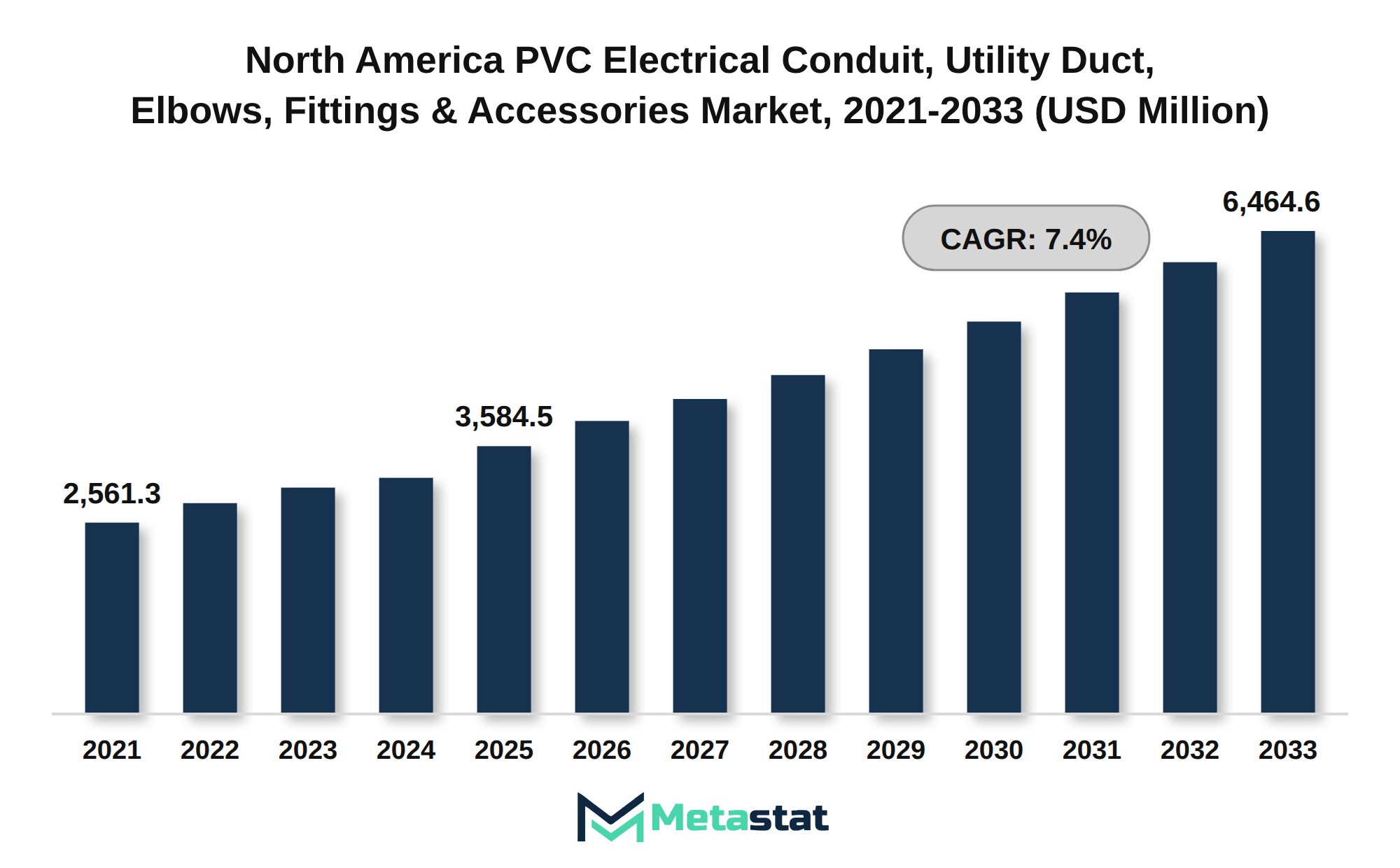
The North America PVC Electrical Conduit, Utility Duct, Elbows, Fittings & Accessories market was valued at USD 3,584.5 million in 2025 and is projected to reach USD 6,464.6 million by 2033, growing at a CAGR of 7.4% over the forecast period.
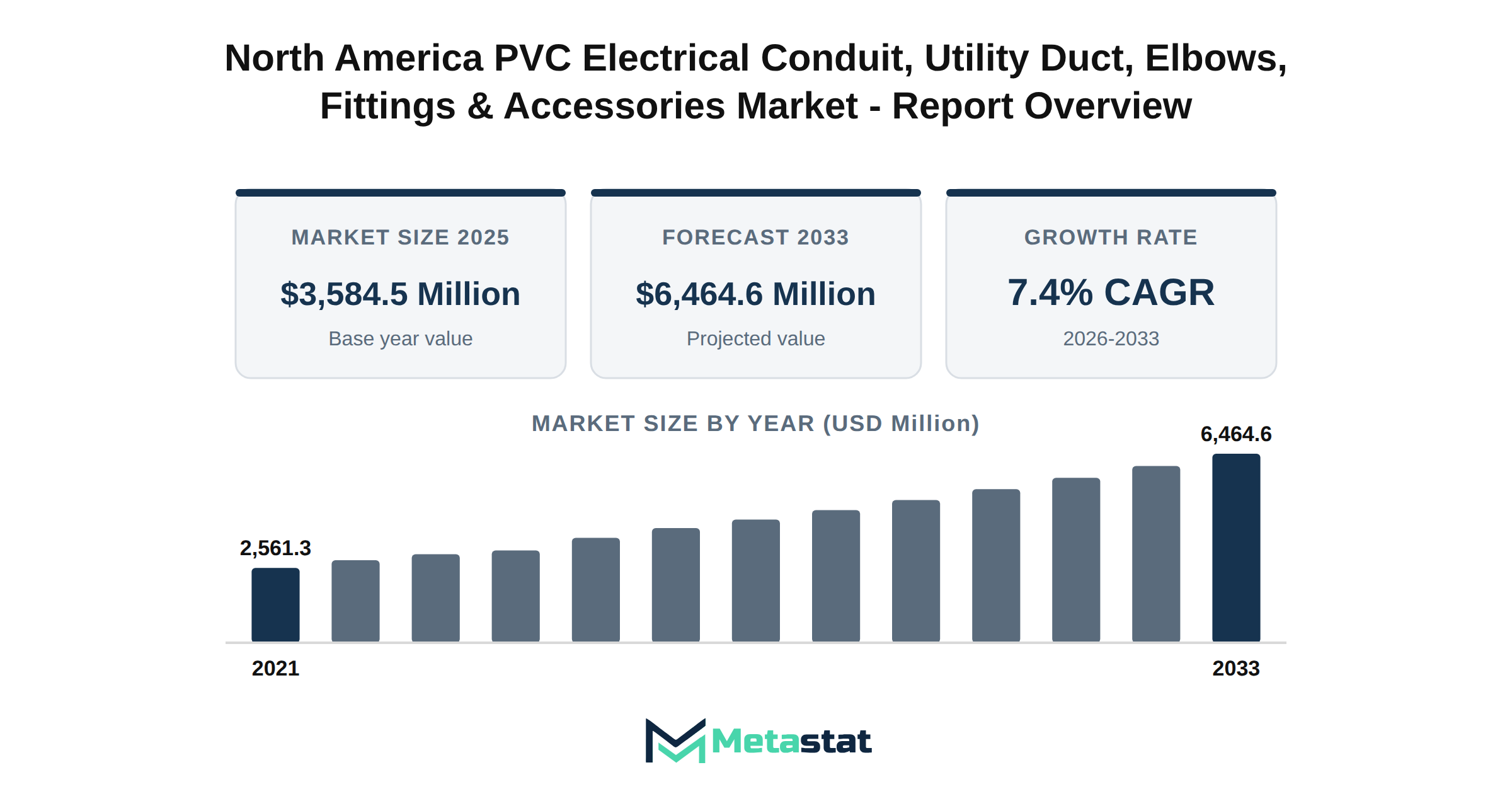
The North America PVC Electrical Conduit, Utility Duct, Elbows, Fittings & Accessories market shows significant growth, driven by the expanding electrical infrastructure across the region. The market's base value reached USD 3,584.5 million in 2025, with projections indicating a rise to USD 6,464.6 million by 2033, reflecting a compound annual growth rate (CAGR) of 7.4%. This growth is primarily fueled by increased demand for reliable electrical installations and the need for robust utility duct systems that ensure safety and efficiency in power distribution.
Utility ducts and underground cable protection trends emphasize securing reliable connections in various applications, including commercial and residential sectors. The growing awareness of the need for durable and efficient solutions leads to heightened demand for PVC conduits that provide protection against environmental factors and mechanical stress. This trend aligns with rising investments in infrastructure development, driving the market forward.
Adoption of rigid and flexible PVC elbows and fittings is influenced by their versatility and ease of installation. These components facilitate connections in electrical systems, enhancing overall efficiency. The trend towards prefabricated and modular systems further accelerates the integration of these fittings, ensuring compliance with building codes and standards. This factor contributes positively to the market's growth trajectory.
Regulatory standards and building codes impacting North American manufacturing play a vital role in shaping product specifications. Compliance with stringent regulations drives innovation in material formulations and production processes, ensuring that products meet safety and performance criteria. This adherence to standards enhances product reliability and boosts consumer confidence in PVC solutions.
Supply chain dynamics and raw material price volatility in polyvinyl chloride production significantly affect market operations. Fluctuations in resin prices lead to varying production costs, impacting profit margins for manufacturers. Companies actively seek efficient sourcing strategies and long-term contracts to stabilize costs and maintain competitive pricing within the market.
Expansion opportunities in the commercial and residential construction sectors create a favorable environment for growth in the market. Increasing investment in residential projects, alongside infrastructure improvements in commercial buildings, drives demand for PVC electrical conduits and utility ducts. This trend highlights the interconnectedness of construction activities and the sustained need for reliable electrical solutions.
Technological advancements in PVC formulations and eco-friendly materials contribute to the evolution of product offerings. Innovations focusing on sustainability and performance enhancements attract environmentally conscious consumers and businesses. These developments align with regulatory expectations and cater to the growing demand for greener alternatives in the North America PVC Electrical Conduit, Utility Duct, Elbows, Fittings & Accessories market.
The competitive landscape features strategic investments across North American distribution networks, with key players focusing on expanding their market presence. Companies including Zekelman Industries, Atkore Inc., and ABB Group actively pursue partnerships and acquisitions to enhance their product portfolios and distribution capabilities. This strategic positioning enables firms to capitalize on market opportunities and meet the diverse needs of customers.
The growth of electrical infrastructure in North America significantly influences the PVC conduit demand dynamics. Increased investment in utility and power infrastructure projects drives the requirement for durable and reliable electrical conduits. This trend enhances market expansion, driven by utilities prioritizing safety and efficiency in their installations. The forecasted compound annual growth rate (CAGR) of 7.4% reflects the strong alignment between infrastructure growth and PVC conduit adoption.
Utility duct and underground cable protection market trends indicate a shift toward advanced solutions that ensure longevity and safety in electrical installations. The growing emphasis on protecting underground cables from environmental hazards increases the demand for high-quality PVC products. Innovations in duct design and materials strengthen market offerings, catering to the changing needs of utility operators.
The adoption of rigid and flexible PVC elbows and fittings is driven by their versatility and performance attributes. Industries increasingly recognize the advantages of these fittings in enhancing system efficiency and reducing installation complexities. The market for these components continues to thrive, supported by manufacturers introducing new designs that meet various application needs.
Regulatory standards and building codes significantly impact the North America PVC Electrical Conduit, Utility Duct, Elbows, Fittings & Accessories market. Compliance with safety and performance standards underpins market growth, compelling manufacturers to innovate and adapt. These regulations establish a baseline for quality, encouraging investment in advanced technologies and materials.
Supply chain dynamics and raw material price volatility in polyvinyl chloride production have profound implications for manufacturers. Fluctuations in raw material costs influence pricing strategies and profit margins, prompting companies to seek more stable sourcing options. Effective management of supply chain challenges remains critical for sustaining market competitiveness.
The expansion of commercial and residential construction sectors presents significant opportunities for the market. Increased housing starts and commercial developments drive demand for PVC electrical conduits and fittings, positioning manufacturers to benefit from this growth. Strategic partnerships with construction firms enhance market penetration and product visibility.
Technological advancements in PVC formulations and eco-friendly materials enhance product offerings in the market. The integration of sustainable practices aligns with growing environmental awareness among consumers and regulatory bodies. Manufacturers that adopt innovative materials and processes secure a competitive edge in a changing marketplace.
The competitive landscape of the North America PVC Electrical Conduit, Utility Duct, Elbows, Fittings & Accessories market is characterized by strategic investments across distribution networks. Companies focus on enhancing their distribution capabilities to meet increasing demand effectively. This emphasis on strengthening logistics and supply lines positions players to capitalize on market growth opportunities.
Investment in infrastructure development acts because a primary growth driver for the North America PVC Electrical Conduit, Utility Duct, Elbows, Fittings & Accessories market. The rising demand for electricity and related services necessitates the upgrade of existing electrical systems, leading to increased capital expenditures in both public and private sectors. Greater public-private spending power influences utilities and construction companies to enhance their capabilities, directly impacting the need for PVC electrical conduit products.
The emphasis on improving utility networks aligns with demographic shifts, particularly urbanization and population growth, which further intensifies the demand for reliable electrical infrastructure. Investments in renewable energy sources and energy efficiency initiatives drive the need for advanced conduit systems that meet evolving standards for safety and efficiency. This market growth contributes to the overall expansion of the North America PVC Electrical Conduit, Utility Duct, Elbows, Fittings & Accessories market, because suppliers adapt their offerings to meet these requirements.
Technological integration, including automation and software adoption, enhances operational productivity within the utilities sector. Companies leverage these advancements to streamline processes, reduce costs, and improve project timelines. This shift towards more efficient practices creates opportunities for suppliers of PVC electrical conduit products, ultimately supporting sustained growth in the market.
Investment in digital technologies significantly enhances operational efficiency within the North America PVC Electrical Conduit, Utility Duct, Elbows, Fittings & Accessories market. Firms increasingly adopt automation and artificial intelligence, streamlining processes and reducing overhead costs. These technological advancements optimize productivity while improving accuracy in manufacturing and supply chain management.
Evolving consumer expectations for faster and more reliable services drive suppliers to focus on digitizing legacy processes. Enhanced software adoption facilitates real-time data analysis, enabling companies to respond swiftly to market fluctuations. This agility is crucial for maintaining competitiveness in a landscape characterized by rapid change.
In addition to operational improvements, digital transformation encourages innovation-led product and service diversification. Companies investing in research and development benefit from proprietary technologies and expanded revenue streams, positioning themselves favorably within the market. The overall growth trajectory of the North America PVC Electrical Conduit, Utility Duct, Elbows, Fittings & Accessories market is projected to strengthen.
Stringent regulatory compliance challenges contribute to constraints within the North America PVC Electrical Conduit, Utility Duct, Elbows, Fittings & Accessories market. Compliance requirements necessitate extensive documentation, testing, and certification, resulting in increased operational costs for manufacturers and suppliers. The demand for adherence to regulations surrounding environmental sustainability and safety increases the complexity of production processes, which delays product availability.
High capital investment requirements further exacerbate market restraints. New technologies and production methods that align with regulatory standards require significant financial commitment, limiting the ability of smaller firms to compete effectively. This situation leads to market fragmentation, where larger players dominate, reducing competition and innovation.
Infrastructure gaps present another significant challenge in the market. Insufficient infrastructure hinders the distribution and installation of PVC products, creating deployment bottlenecks that stall project timelines. The skilled labor shortage impacts the ability to efficiently meet growing demand, driven by the industry's difficulties in recruiting and retaining qualified personnel. This deficiency increases labor costs, further constraining operational budgets.
Geopolitical instability and supply chain disruptions contribute to uncertainty within the market, affecting material availability and pricing stability. Fluctuating costs for raw materials challenge manufacturers to maintain competitive pricing while ensuring compliance with stringent regulations. Such pressures lead to increased prices for end-users, potentially dampening demand in a price-sensitive market.
Overall, these factors collectively limit the North America PVC Electrical Conduit, Utility Duct, Elbows, Fittings & Accessories market's potential for sustained growth, compelling firms to adopt strategies that address compliance hurdles and overcome operational challenges.
Geopolitical fragmentation poses challenges to the North America PVC Electrical Conduit, Utility Duct, Elbows, Fittings & Accessories market. Trade deficits and tariff friction disrupt cross-border supply chains, impacting sourcing strategies for manufacturers. This fragmentation complicates relationships with suppliers and customers, resulting in increased operational costs that directly affect pricing structures.
Technological disruptions contribute to the complexity within the market, particularly in research and development integrations. Companies face challenges in aligning new technologies with existing systems, creating hurdles in product development and innovation. This aspect is critical for maintaining competitiveness amid evolving market demands.
Logistics disruptions and supply chain instability have intensified recently, leading to delays in product availability and increased lead times. These issues challenge manufacturers and suppliers, resulting in constraints on production schedules and affecting overall market performance. Tightening regional regulatory standards complicate compliance, increasing overhead costs for businesses operating in the market.
Rising input cost structures lead to pricing compression and margin pressures, forcing manufacturers to evaluate cost-saving measures without compromising product quality. Workforce skill gaps exacerbate these challenges, hindering companies' abilities to adapt to technological advancements and maintain operational efficiency.
Environmental lifecycle footprints and sustainability demands create additional pressures on companies within the market. The need for sustainable practices drives up costs associated with compliance and product development, complicating the landscape for manufacturers. Addressing these challenges effectively proves crucial for businesses seeking to thrive in the competitive environment of the North America PVC Electrical Conduit, Utility Duct, Elbows, Fittings & Accessories market.
Growing demand for sustainable and high-performance materials presents significant opportunities within the North America PVC Electrical Conduit, Utility Duct, Elbows, Fittings & Accessories market. Factors including infrastructure modernization and regional expansion create a conducive environment for new entrants and existing players to innovate and diversify their product offerings.
Technological disruptions, including advancements in manufacturing processes and materials science, enhance product functionality and sustainability. Innovations including lightweight, high-strength conduits attract attention from various sectors, including utility, commercial construction, and residential markets. Strategic consolidation and cross-industry mergers augment market capabilities, enabling companies to leverage synergies and broaden their portfolios.
Shifting consumer preferences toward eco-friendly solutions drive investments in green transformations and sustainability imperatives. This trend aligns with the increasing focus on ESG-driven initiatives, compelling manufacturers to adapt their business strategies. Investment in digital procurement shifts supports efficiency in the supply chain. Asset life-cycle extensions and maintenance upgrades focus on maximizing operational yields.
The need for localized supply chains and strategic buffering enhances resilience against market fluctuations, particularly amid geopolitical uncertainties. By addressing these emerging opportunities, the North America PVC Electrical Conduit, Utility Duct, Elbows, Fittings & Accessories market is projected to expand consistently over the forecast period, reflecting growth driven by innovation, sustainability, and evolving consumer demands.
The North America PVC Electrical Conduit, Utility Duct, Elbows, Fittings & Accessories market is segmented based on Product Type, Conduit Diameter, End User, and Region.
Valued at USD 1,307.3 million in 2026, the Schedule 40 PVC Conduit segment is projected to reach USD 1,992.4 million by 2033, reflecting a CAGR of 6.2% during the forecast period. This growth stems from rising demand for reliable and durable electrical conduits in various construction and utility applications. Strengthened infrastructure development across North America plays a critical role in driving the adoption of Schedule 40 PVC Conduit, particularly within the utility and power sectors, where safety and performance standards are essential.
Technological advancements enhance product offerings, supporting the segment's evolution. Innovations in manufacturing processes lead to improved quality and performance characteristics, meeting increasingly stringent regulatory compliance standards. These advancements facilitate downstream applications in commercial and residential construction projects, where demand for efficient and cost-effective solutions is evident.
End-user dynamics indicate a shift towards sustainable materials that support environmental goals, influencing consumption patterns within the North America PVC Electrical Conduit, Utility Duct, Elbows, Fittings & Accessories market. The segment stands to benefit from ongoing investment in infrastructure projects, driving growth across various regions, particularly in the United States, Canada, and Mexico. This environment creates strategic opportunities for manufacturers, encouraging them to strengthen supply chains and invest in raw material sourcing to mitigate potential vulnerabilities.
Investments in infrastructure expansion drive demand for Schedule 80 PVC Conduit within the North America PVC Electrical Conduit, Utility Duct, Elbows, Fittings & Accessories market. Increasing construction activities in commercial and industrial sectors support this growth. Schedule 80 PVC Conduit offers enhanced durability and strength, making it suitable for applications requiring higher pressure ratings. This segment is projected to reach USD 744.1 million by 2033, with a CAGR of 6.9% during the forecast period.
Technological advancements in PVC manufacturing processes contribute to product evolution, resulting in improved performance characteristics. Regulatory compliance and safety standards influence material selection, pushing end-users toward reliable and high-performance options. The shift toward sustainable materials aligns with environmental regulations, creating a favorable landscape for Schedule 80 PVC Conduit. Continuous improvements in supply chain resilience enhance the segment's market outlook, mitigating potential disruptions in raw material sourcing and logistics vulnerabilities.
The growth trajectory of Schedule 80 PVC Conduit reflects broader trends within the North America PVC Electrical Conduit, Utility Duct, Elbows, Fittings & Accessories market. Strategic opportunities arise from innovative product developments and evolving end-use applications, which include utility, commercial construction, and residential sectors. Commitment to higher standards of quality and performance ensures robust demand and positions key players favorably within this competitive environment.
Expansion in the EB Conduit segment aligns with the increasing focus on durable and efficient electrical systems across various applications. The rise in utility and power infrastructure investments fuels demand for this product type, which offers advantages in terms of longevity and resistance to environmental factors. Significant enhancements in manufacturing processes and material science have led to improved product quality, stimulating adoption within commercial and residential sectors.
With a projected reach of USD 809.4 million by 2033, the segment demonstrates promising growth potential driven by technological advancements and evolving industry standards. The North America PVC Electrical Conduit, Utility Duct, Elbows, Fittings & Accessories market reflects shifts in consumption patterns, resulting from end-users increasingly prioritizing products that meet stringent regulatory compliance standards. These dynamics contribute to a more competitive landscape, encouraging suppliers to innovate continuously and optimize their offerings.
Market players focusing on strategic opportunity windows, including partnerships or capital investments, enhance supply chain resilience and mitigate risks associated with raw material sourcing and pricing volatility. The EB Conduit segment, positioned within the larger market framework, stands to benefit from ongoing developments in infrastructure, reinforcing its critical role in the advancement of electrical distribution systems.
Demand for DB Conduit in the North America PVC Electrical Conduit, Utility Duct, Elbows, Fittings & Accessories market reflects a significant upward trend, projected to grow at a CAGR of 8.7% during the forecast period. This growth is driven by the increasing focus on enhancing electrical safety standards and the expansion of renewable energy infrastructure. The utility and power sectors require reliable conduit solutions for efficient energy distribution, prompting investments in DB Conduit products.
Technological advancements in DB Conduit manufacturing contribute to improved product performance and lower installation costs. Innovations in PVC material science support the production of conduits with enhanced durability and resistance to environmental factors, catering to end-user demands across various applications. The growing adoption of smart grid technologies further highlights the importance of DB Conduit in modern energy systems.
Regulatory compliance standards in the electrical industry create a favorable environment for DB Conduit products, driven by adherence to safety regulations that remain critical. The segment experiences heightened demand from utility and power companies, commercial construction, and industrial facilities, which increasingly prioritize high-quality electrical infrastructure. Rising electricity consumption and the need for efficient energy management systems support the market for DB Conduit.
By 2033, the DB Conduit segment is expected to play a significant role in the overall performance of the North America PVC Electrical Conduit, Utility Duct, Elbows, Fittings & Accessories market, driven by continuous technological upgrades and strong regulatory support. Capital investment in this segment remains strong, ensuring a steady flow of innovative solutions that meet evolving market requirements.
Demand for Cellular Core Conduit in the North America PVC Electrical Conduit, Utility Duct, Elbows, Fittings & Accessories market arises from the need for lightweight and flexible solutions in various electrical installations. Increasing focus on energy efficiency and sustainability drives the adoption of these conduits, especially in commercial and residential applications. The unique properties of Cellular Core Conduit, including its favorable strength-to-weight ratio, serve because a significant factor in expanding its market presence.
Technological advancements in manufacturing processes enhance the performance of Cellular Core Conduit, improving durability and resistance to environmental factors. Upgrades in production techniques lead to greater consistency in product quality, thus building confidence among users. Downstream applications in sectors including utilities, transportation infrastructure, and data centers drive consumption, aligning with the growing demand for efficient and reliable electrical solutions.
Regulatory compliance shapes the market dynamics for Cellular Core Conduit. Adherence to safety standards and certifications enhances product acceptance among end-users. This sector experiences rising cost structures driven by raw material price volatility and margin pressures, affecting overall pricing strategies. Market players continue to explore strategic opportunities to mitigate these impacts, ensuring competitive positioning in the evolving environment.
Supply chain resilience remains a focal point, with raw material sourcing strategies being refined to address potential vulnerabilities. Substitution risks exist from alternative materials, prompting manufacturers to innovate continually. The market for Cellular Core Conduit is expected to experience ongoing evolution, driven by technological developments and shifts in consumer preferences toward more efficient and sustainable solutions.
Growth in the North America PVC Electrical Conduit, Utility Duct, Elbows, Fittings & Accessories market correlates strongly with the expansion of medium-voltage electrical systems and the demand for efficient utilities. Increased construction activities in both residential and commercial sectors drive the need for accessories like Schedule 40 PVC Elbows, which facilitate directional changes in piping systems. The ongoing shift towards sustainable building practices and materials enhances the attractiveness of PVC products, which offer durability and lower lifecycle costs.
Technological maturation continues to influence the segment, with advancements allowing for improved design and functionality. Innovations in manufacturing processes, including enhanced molding techniques, increase product reliability and performance. Such developments meet evolving customer expectations for high-quality electrical conduit solutions. Regulatory compliance standards focusing on safety and environmental impact further increase demand for Schedule 40 PVC Elbows, ensuring they adhere to stringent guidelines.
Investment in infrastructure and the modernization of existing facilities create strategic opportunities for growth within this sub-segment. Increased capital allocation to electrical system upgrades, particularly in utility and power sectors, supports the adoption of these components. The emphasis on supply chain resilience is significant, because it ensures the steady availability of raw materials needed for production. Price volatility and margin pressures remain factors to monitor, because fluctuations in material costs impact profitability within the market.
Investments in utility infrastructure drive demand for Schedule 80 PVC Elbows within the North America PVC Electrical Conduit, Utility Duct, Elbows, Fittings & Accessories market. The growing emphasis on efficiency and reliability of electrical systems influences the adoption of these fittings in various applications, particularly in commercial and residential construction. Innovations in manufacturing processes enhance the performance characteristics of Schedule 80 PVC Elbows, leading to improved durability and resistance to environmental factors. Regulatory compliance standards increasingly require robust solutions for electrical conduit systems, supporting growth in this segment.
Shifts in consumption patterns towards higher-quality, longer-lasting materials signify a clear evolution in customer preferences. End-user dynamics in sectors including utility and power reflect strong demand for reliable fittings that ensure the integrity of electrical installations. Projects expand in scale and complexity, making the need for versatile solutions like Schedule 80 PVC Elbows increasingly evident. The market environment encourages manufacturers to pursue strategic partnerships aimed at enhancing supply chain resilience, ensuring consistent availability of raw materials.
Cost structures remain critical, driven by fluctuations in raw material pricing that directly impact the overall competitiveness of the segment. Manufacturers focus on optimizing production efficiencies to mitigate these effects while maintaining quality standards. The competitive landscape within the North America PVC Electrical Conduit, Utility Duct, Elbows, Fittings & Accessories market emphasizes the importance of innovation and responsiveness to market demands, presenting opportunities for firms that excel in product evolution and technological advancements.
Growing utility and power sectors in North America drive demand for Couplings, Fittings & Accessories within the North America PVC Electrical Conduit, Utility Duct, Elbows, Fittings & Accessories market. This sub-segment benefits from the increasing need for reliable connections and efficient installations, particularly in industrial facilities and commercial construction projects. Ongoing technological maturation enhances the performance of these components, leading to improved product evolution and adaptability to diverse applications.
Shifts in consumption patterns favor high-quality, durable fittings and accessories capable of withstanding various environmental conditions. Regulatory compliance standards influence design and manufacturing practices, pushing manufacturers to prioritize certifications that ensure safety and efficiency. Cost structures and pricing volatility require firms to optimize production processes, minimizing margin pressures while maintaining quality and performance standards.
Strategic opportunity windows emerge because manufacturers explore innovative materials and designs, addressing the evolving needs of end-users. Supply chain resilience ensures timely availability of critical components, while raw material sourcing remains a key consideration. Substitution risks from alternative materials challenge traditional offerings, urging continuous product development and adaptation.
Valued at USD 879.7 million in 2026, the ½" - 1" segment is projected to reach USD 1,281.3 million by 2033, exhibiting a CAGR of 5.5% during the forecast period. Demand for this conduit diameter primarily stems from its applications in various sectors, including construction and utilities, where reliable electrical installations are critical. The ongoing expansion of infrastructure projects across North America fuels the segment's growth, while increasing focus on energy efficiency and safety regulations enhances market adoption.
Technological advancements contribute to the evolution of the ½" - 1" segment, with innovations in material science leading to stronger and more durable products. These enhancements align with downstream applications, particularly in residential and commercial construction, where reliability and compliance with safety standards become essential. Regulatory compliance standards drive demand, influenced by contractors seeking materials that meet stringent guidelines.
Cost structures influence pricing dynamics within the market, with fluctuations in raw material costs impacting profitability. Suppliers implement strategies to maintain margins, leveraging economies of scale and optimizing supply chains. While competition intensifies, companies focusing on innovative product development and strategic partnerships position themselves to capture increased market share in the North America PVC Electrical Conduit, Utility Duct, Elbows, Fittings & Accessories market.
Awareness of sustainability and environmental impact reshapes consumption patterns, with many end users prioritizing eco-friendly products. This shift presents strategic opportunity windows for manufacturers that invest in developing environmentally friendly solutions. The resilience of supply chains in response to disruptions remains critical, ensuring consistent delivery and availability of products in the face of market volatility.
Valued at USD 1,549.6 million by 2033, the 1" - 2" segment benefits from the increasing adoption of advanced electrical infrastructure and construction standards across North America. This demand stems from the ongoing expansion of utility and power applications, which require reliable conduit solutions. The growth rate for this segment stands at a CAGR of 6.4% during the forecast period, reflecting consistent investment in modernization and safety enhancements. Regulations emphasizing safety and efficiency contribute to this trend by pushing manufacturers and end-users towards higher-quality products. Ongoing evolution in construction practices leads stakeholders to prioritize materials that meet stringent performance requirements.
End-user dynamics significantly influence the trajectory of the 1" - 2" segment. Increased activity within the commercial and residential construction sectors, alongside robust utility investments, creates a conducive environment for growth. The North America PVC Electrical Conduit, Utility Duct, Elbows, Fittings & Accessories market is expected to experience shifts towards larger conduit diameters, driven by the need for improved electrical capacity and efficiency. Environmental considerations prompt a rise in demand for recyclable and sustainable materials, further enhancing product appeal. The strategic relationship between these factors positions the segment favorably within the broader market, enabling sustained investment and consumption patterns.
Valued at USD 2,394.5 million by 2033, the 2" - 4" conduit diameter segment reflects a strong growth trajectory within the North America PVC Electrical Conduit, Utility Duct, Elbows, Fittings & Accessories market. Key demand drivers include substantial investments in infrastructure development and the increasing need for reliable electrical distribution systems. The segment's growth is supported by heightened adoption rates among utility and power sectors, where efficiency and safety standards are critical.
Technological maturation in PVC manufacturing processes enhances product reliability and performance, positively influencing market dynamics. The ongoing evolution of product design and functionality aligns with downstream applications in commercial and industrial construction. Regulatory compliance standards play a critical role in shaping procurement decisions, with manufacturers focusing on certifications that assure quality and safety.
In addition, rising raw material costs impact pricing strategies, compelling suppliers to optimize cost structures while maintaining competitive pricing. The market is expected to benefit from strategic opportunity windows driven by end-users seeking innovative and sustainable solutions. Overall, the 2" - 4" segment exemplifies the resilience and adaptability of the North America PVC Electrical Conduit, Utility Duct, Elbows, Fittings & Accessories market in response to evolving industry demands.
Valued at USD 1,307.3 million in 2026, the 6" conduit diameter segment demonstrates significant growth potential, with a projected CAGR of 9.3% during the forecast period. This growth is driven by increasing investments in utility infrastructure, enhancing the demand for high-capacity conduits. The utility and power sectors contribute significantly to consumption, influenced by the need for reliable and durable materials that support efficient electrical distribution. Regulatory compliance standards focusing on safety and quality further reinforce the adoption of this conduit size, promoting its integration across various applications.
The segment's expansion aligns with a broader trend toward technological maturation, where advancements in manufacturing processes yield improved product performance. Enhanced product evolution has led to the development of conduits that offer greater resistance to environmental factors, appealing to end users across multiple industries. The North America PVC Electrical Conduit, Utility Duct, Elbows, Fittings & Accessories market reflects these dynamics, with companies focusing on innovative solutions to meet rising consumer expectations and regulatory requirements.
Ongoing shifts in consumption patterns, particularly within industrial facilities and commercial construction, strengthen the 6" segment's market position. The increasing emphasis on energy efficiency and sustainable practices drives demand for superior conduit options. Strategic opportunity windows for capital investment emerge in this segment, prompting manufacturers to enhance their production capabilities and expand distribution networks. Overall, the 6" conduit diameter segment significantly influences the future of the North America PVC Electrical Conduit, Utility Duct, Elbows, Fittings & Accessories market.
Segment expansion within the 8-inch conduit diameter reflects the increase anticipated in the North America PVC Electrical Conduit, Utility Duct, Elbows, Fittings & Accessories market. Increased adoption in applications demanding larger diameter conduits, primarily driven by utility and construction projects, advances this segment forward. Enhanced technological capabilities support advancements in conduit durability and efficiency, addressing the needs of industries reliant on reliable electrical infrastructure.
End-use dynamics indicate a shift towards more complex electrical systems, where larger conduits accommodate expanded cabling and wiring requirements. Regulatory compliance standards for safety and accessibility further influence the demand for larger diameter options, ensuring adherence to stringent guidelines in both residential and commercial applications. Pricing volatility in raw materials highlights the necessity for manufacturers to optimize cost structures while maintaining quality, which influences competitive positioning in the market.
Strategic opportunity windows present themselves owing to investments in infrastructure development strengthening. While key players in the North America PVC Electrical Conduit, Utility Duct, Elbows, Fittings & Accessories market continue to innovate, the 8-inch conduit segment stands ready to capture an increasing number of projects and upgrades in electrical systems.
Valued at USD 1,081.3 million in 2026, the Utility & Power segment is projected to reach USD 1,795.9 million by 2033, at a CAGR of 7.5% during the forecast period. Robust demand for electrical infrastructure upgrades in North America drives significant growth within this segment. The shift toward renewable energy and increasing investments in grid modernization intensify the need for efficient conduit solutions.
Technological advancements facilitate the development of next-generation PVC electrical conduit systems, enhancing performance and compliance with evolving regulatory standards. These systems support the integration of smart grid technologies and renewable energy sources, essential for modern utility applications. The focus on sustainability and environmental compliance influences product evolution, leading to innovations that align with industry standards.
End-users prioritize efficiency and safety, while shifts in consumption patterns favor advanced conduit solutions designed for durability and ease of installation. The utility and power sectors increasingly demand reliable materials that withstand various environmental conditions, driving the adoption of high-performance PVC conduits. This evolving environment within the North America PVC Electrical Conduit, Utility Duct, Elbows, Fittings & Accessories market encourages manufacturers to invest strategically in product development and supply chain resilience.
Market participants face pricing volatility and margin pressures due to fluctuations in raw material costs. Strategic sourcing and effective supply chain management are critical in maintaining competitive pricing and ensuring consistent product availability. With growing regulatory pressures and the push for sustainable practices, stakeholders in the Utility & Power segment focus on aligning their operations with compliance requirements, impacting overall market dynamics and growth potential.
Growth in the Commercial Construction segment derives from ongoing investments in infrastructure and the increasing need for efficient electrical management systems. This segment is estimated to reach USD 1,165.6 million by 2033, at a CAGR of 5.6% during the forecast period. Trends in the construction industry emphasize sustainability and energy efficiency, influencing the demand for PVC electrical conduit and accessories. Various commercial projects prioritize durability and cost-effectiveness, leading to increased reliance on PVC products. Regulatory compliance standards enhance the adoption of PVC solutions due to their lightweight and corrosion-resistant properties, making them suitable for diverse environments. The North America PVC Electrical Conduit, Utility Duct, Elbows, Fittings & Accessories market experiences heightened interest from commercial builders seeking reliable and sustainable solutions for electrical installations.
Strong growth in the Residential Construction segment reflects increasing housing demand across North America. Rising population and urbanization trends drive the need for new residential buildings, contributing to market expansion. Adoption of PVC electrical conduit systems benefits from their lightweight, durability, and resistance to corrosion, enhancing their appeal to builders and contractors.
Investment in residential infrastructure integrates advanced electrical systems, increasing demand for accessories and fittings. Regulatory compliance standards regarding electrical safety enhance the necessity for reliable conduit solutions, further boosting the segment. The segment is valued at USD 906.3 million by 2033, positioning it because a significant contributor to the North America PVC Electrical Conduit, Utility Duct, Elbows, Fittings & Accessories market.
Technological advancements in manufacturing processes contribute to product evolution, resulting in more efficient and cost-effective conduit options. The push for energy efficiency and sustainability encourages builders to choose materials that align with environmentally friendly practices, driving consumption shifts in the segment. While construction activities continue to grow, the segment's performance is expected to positively impact the overall market dynamics.
Growth within Industrial Facilities significantly influences the North America PVC Electrical Conduit, Utility Duct, Elbows, Fittings & Accessories market. Increased demand for efficient infrastructure supports projects across various sectors, enhancing the adoption of PVC electrical conduits. Ongoing expansion in manufacturing and industrial operations, particularly in automation and energy sectors, drives consumption of PVC products designed for high-performance applications. The Industrial Facilities segment is projected to grow at a CAGR of 6.6% during the forecast period, reflecting robust investment in infrastructure enhancement and modernization initiatives.
The segment benefits from a rising focus on compliance with safety and environmental regulations, ensuring that products meet stringent industry standards. This pressure leads to a shift towards higher-quality materials, enabling manufacturers to meet evolving market requirements. Advancements in PVC technology provide innovative solutions, enhancing performance characteristics including durability, flexibility, and resistance to corrosion.
Investment in Industrial Facilities improves productivity and operational efficiency, creating further demand for reliable PVC electrical conduits. The market anticipates continued growth driven by more industries recognizing the advantages of using PVC products, including lower installation costs and reduced maintenance requirements. Overall, the combination of demand drivers, technological advancements, and regulatory influences shape the future trajectory of the Industrial Facilities segment within the broader North America PVC Electrical Conduit, Utility Duct, Elbows, Fittings & Accessories market.
Data Centers significantly influence the North America PVC Electrical Conduit, Utility Duct, Elbows, Fittings & Accessories market, driven by the increasing digitization and demand for cloud-based services. The growing need for reliable infrastructure to support data storage, processing, and transmission fuels the adoption of PVC electrical conduits in such facilities.
Adoption of advanced technologies within Data Centers, including virtualization and automation, requires robust and efficient electrical wiring solutions. Investment in next-generation upgrades enhances operational efficiency and aligns with the industry's shift toward energy-efficient systems.
Product evolution responds to the unique requirements of Data Centers, with a focus on durability, safety, and compliance with strict regulatory standards. These facilities demand high-performance conduits that support complex wiring systems while ensuring minimal downtime, which adds substantial value to the market.
End-use dynamics indicate a trend towards sustainable building practices, with Data Centers seeking materials that meet environmental regulations and certifications. This shift influences procurement strategies, encouraging suppliers to offer products that cater to these evolving standards.
Consumption shifts within the segment highlight an increasing preference for integrated solutions that streamline installation and maintenance processes. The emphasis on supply chain resilience highlights the need for reliable raw material sourcing, mitigating risks associated with disruptions in logistics.
Technological obsolescence presents both challenges and opportunities for the market, requiring continuous innovation to meet the evolving needs of Data Centers. Strategic opportunity windows emerge because companies pursue investments in higher-capacity and smarter solutions to satisfy increasing data demands.
The capital investment outlook remains strong, with projected growth in the segment reflecting the broader expansion of the data infrastructure ecosystem. While a result, Data Centers emerge because a critical end user within the North America PVC Electrical Conduit, Utility Duct, Elbows, Fittings & Accessories market, emphasizing the importance of targeted solutions that address specific operational requirements.
Investment in transportation infrastructure has emerged because a critical driver for the North America PVC Electrical Conduit, Utility Duct, Elbows, Fittings & Accessories market. The ongoing expansion of roadways, bridges, and tunnels necessitates durable and reliable conduit solutions, generating significant demand within this segment. Increased urbanization and population growth intensify the need for enhanced transportation networks, further increasing the market.
Regulatory compliance plays an essential role in shaping product specifications and standards in transportation projects. Adherence to safety and environmental regulations mandates the use of high-quality materials, prompting manufacturers to innovate and upgrade product lines. This regulatory landscape encourages continuous improvements in technology and materials used in PVC conduits, ensuring they meet the evolving demands of transportation infrastructure.
Shifts in consumption patterns emphasize the importance of sustainable and efficient solutions in the construction and maintenance of transportation facilities. Increased focus on energy efficiency and longevity influences project specifications, driving the adoption of advanced PVC products. This trend aligns with the goal of enhancing operational efficiency while minimizing maintenance costs in the transportation sector.
Strategic opportunities arise from the growing emphasis on public-private partnerships in transportation projects. These collaborations facilitate funding and resource allocation for critical infrastructure development, improving accessibility and operational effectiveness. While investments in transportation infrastructure continue to rise, the North America PVC Electrical Conduit, Utility Duct, Elbows, Fittings & Accessories market stands to benefit significantly from increased demand across various applications.
Demand dynamics in the "Others" segment of the North America PVC Electrical Conduit, Utility Duct, Elbows, Fittings & Accessories market arise from various niche applications that do not fit into major end-user categories. These applications involve specialized industries, encompassing telecommunications, transportation infrastructures, and various manufacturing sectors. The adaptability of PVC products enhances their appeal for custom solutions in these areas.
Technological maturation contributes significantly to market expansion. Innovations in PVC materials and manufacturing processes enhance product performance, reliability, and compliance with evolving regulatory standards. Such advancements attract new customers seeking durable and cost-effective solutions.
Downstream applications in emerging sectors drive consumption shifts, reflecting a trend toward increased energy efficiency and sustainability. Regulatory compliance standards influence design specifications, pushing manufacturers to develop products that align with current environmental and safety regulations. This compliance builds trust among end-users, enhancing market penetration.
Strategic opportunity windows exist for firms looking to capitalize on underserved markets within the Others segment. Growing awareness of the advantages of PVC solutions, including lightweight properties and resistance to corrosion, presents avenues for product evolution. Increased capital investment toward research and development is likely to yield innovative offerings tailored to specific market needs.
Supply chain resilience remains crucial in navigating potential vulnerabilities related to raw material sourcing. Firms that establish robust supplier relationships and agile logistics frameworks better position themselves to mitigate disruptions and respond swiftly to changes in demand. This resilience supports competitiveness and profitability within the market.
Valued at USD 3,359.8 million in 2026, the United States segment is projected to reach USD 5,458.1 million by 2033, at a CAGR of 7.2% during the forecast period. Growth drivers include heightened investments in energy infrastructure and advancements in construction activities across various sectors. These elements contribute to increased adoption of PVC electrical conduits and accessories, particularly in utility and power applications. This trend reflects a broader focus on efficiency and sustainability within the North America PVC Electrical Conduit, Utility Duct, Elbows, Fittings & Accessories market.
The expanding commercial construction sector enhances demand for PVC products, particularly in urban development projects. This expansion aligns with changing regulatory compliance standards that emphasize safety and durability in electrical applications. The market experiences a shift towards innovative technologies, leading to product evolution and next-generation upgrades in conduit systems. New alternatives emerge alongside traditional PVC products, creating strategic opportunities for manufacturers and suppliers in the market.
Cost structures and pricing volatility pose challenges, impacting profitability for several businesses within the segment. Nonetheless, robust supply chain resilience and effective raw material sourcing strategies play a critical role in mitigating these pressures. Continuous technological maturation aids companies in optimizing their offerings, ensuring alignment with evolving consumer preferences and market demands.
Canada represents a significant portion of the North America PVC Electrical Conduit, Utility Duct, Elbows, Fittings & Accessories market, with an estimated value of USD 614.8 million by 2033, at a CAGR of 8.1% during the forecast period. Growth in this segment results from an increase in infrastructure investments and the expansion of commercial construction projects across the country. Factors including regulatory compliance and the need for efficient electrical installations have accelerated adoption, particularly in urban areas.
Technological maturation is significant, with advancements in manufacturing processes leading to improved product quality and enhanced performance characteristics of PVC conduits and accessories. The demand for sustainable and environmentally friendly solutions drives the evolution of product offerings, catering to the growing preference for green building practices among developers and contractors.
Consumption shifts are evident because end users increasingly opt for PVC over traditional materials, driven by cost-effectiveness and durability. The utility and power sector, because a primary end user, significantly influences demand dynamics, emphasizing the need for reliable electrical conduit solutions that meet safety and performance standards. The market outlook for Canada reflects strong growth potential, supported by ongoing investments in infrastructure and a robust construction pipeline.
Forecasts indicate the Mexico segment is projected to reach USD 391.8 million by 2033. Growth in this segment is driven by expanding infrastructure projects and increased demand for reliable electrical systems. The ongoing urbanization trend fuels the need for enhanced electrical installations, leading to greater adoption of PVC electrical conduits and related products.
Investment in renewable energy and utility infrastructure enhances market dynamics, significantly impacting demand. Regulatory compliance standards surrounding electrical installations promote the use of PVC conduits, aligning with safety and environmental regulations. These factors create an environment conducive to market growth, influencing various end-user sectors.
While the market evolves, technological advancements in manufacturing processes improve product quality and reduce costs, further driving adoption. The North America PVC Electrical Conduit, Utility Duct, Elbows, Fittings & Accessories market benefits from innovations that enhance durability and performance, catering to the specific needs of various applications.
Strategic opportunities arise from a focus on sustainability and energy efficiency, encouraging manufacturers to develop environmentally friendly solutions. This trend aligns with growing consumer awareness and regulatory pressures for sustainable practices, reinforcing the position of PVC products in the market.
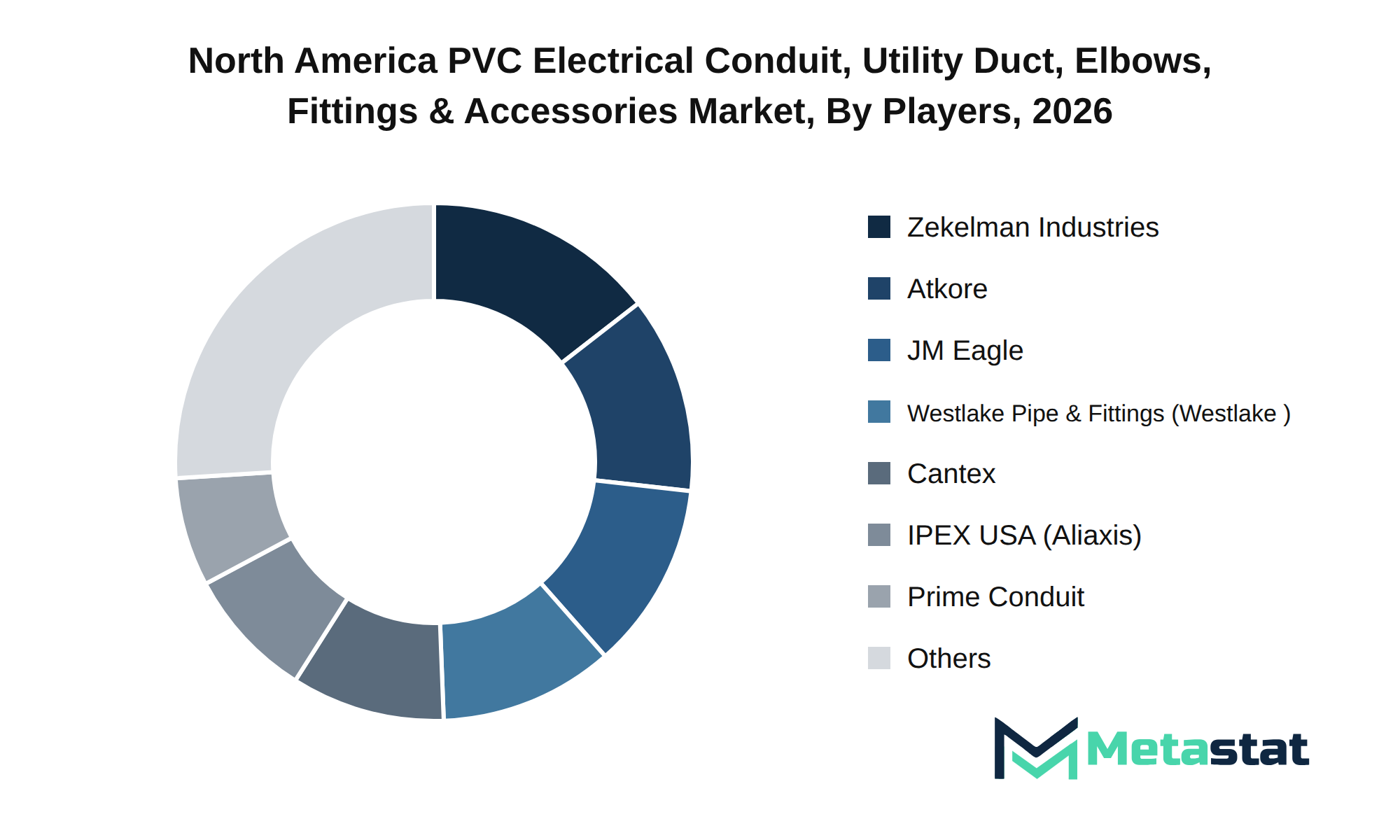
The North America PVC Electrical Conduit, Utility Duct, Elbows, Fittings & Accessories market features diverse strategic behaviors among key players. Companies including Zekelman Industries, Atkore Inc., and ABB Group invest significantly in product differentiation and innovation to maintain competitive advantages. Their emphasis on proprietary technology and R&D pipelines enhances their market positions by improving product performance and expanding applications.
Strategic alliances and joint ventures play critical roles in this market, enabling companies like JM Eagle, Inc. and Cantex Inc. to leverage complementary strengths and improve supply chain dynamics. Partnerships enhance value chain integration and procurement leverage, allowing firms to optimize costs and maximize operational efficiencies.
The competitive environment includes barriers to entry that deter new entrants. Established players, including IPEX USA LLC (Aliaxis) and Prime Conduit, Inc., benefit from strong brand equity and customer retention strategies that create switching costs for end users. The future competitive outlook suggests ongoing consolidation trends, leading to a more concentrated market.
The North America PVC Electrical Conduit, Utility Duct, Elbows, Fittings & Accessories market is expected to experience ongoing innovation driven by the demand for enhanced performance and operational efficiencies. Firms including Maverick Pipe and Westlake Pipe & Fittings (Westlake Corporation) continuously adapt to changing market dynamics, ensuring growth and sustainability in their operations.
Market size is forecast to rise from USD 3,584.5 million in 2025 to over USD 6,464.6 million by 2033. The base case reflects a growth trajectory characterized by a 7.4% CAGR, driven by several macroeconomic factors. Ongoing infrastructure commitments and public policy enforcement enhance the demand for PVC electrical conduits, utility ducts, elbows, fittings and accessories.
In a bullish scenario, heightened investment in renewable energy and technological advancements fuel demand, leading to greater adoption across sectors including utility and power, commercial construction, and industrial facilities. A bearish outlook arises from economic downturns or geopolitical tensions. These factors result in slower growth rates, impacting capital allocation and delaying infrastructure projects while causing fluctuations in consumer spending.
Strategic capital allocation directives from government and private sectors reshape the market landscape. Prioritizing CapEx investment vectors towards next-generation technology integration and R&D commercialization aligns with the industry's maturation. This approach facilitates the development of sustainable solutions and innovative products, addressing unmet enterprise needs and creating high-growth pockets.
Geopolitical realignments and evolving trade corridors influence regional supply chain shifts, impacting the dynamics of the North America PVC Electrical Conduit, Utility Duct, Elbows, Fittings & Accessories market. Companies that adapt to these changes while adhering to regulatory evolution timelines secure defensibility in their growth strategies. The market's trajectory hinges on navigating these complexities effectively, ensuring resilience in the face of economic cycles and structural consumption shifts.
The report strategically identifies and profiles the key market players and analyses their core competencies in each sub-segment of the PVC Electrical Conduit, Utility Duct, Elbows, Fittings & Accessories market.
Report Attributes | Details |
Study Period | 2021-2033 |
Base Year | 2025 |
Estimated Year | 2026 |
Forecast Period | 2026-2033 |
Historical Period | 2021-2025 |
Growth Rate | CAGR 7.4% from 2026 to 2033 |
Revenue Unit | USD million |
Segmentation | By Product Type, Conduit Diameter, End User, Region, and Region |
Find answers to common questions about this report
The PVC Electrical Conduit, Utility Duct, Elbows, Fittings & Accessories market size in North America was valued at USD 3,584.5 million in 2025.
The North America PVC Electrical Conduit, Utility Duct, Elbows, Fittings & Accessories market is projected to grow at a CAGR of 7.4% during the forecast period from 2026 to 2033.
Schedule 40 PVC Conduit leads the North America PVC Electrical Conduit, Utility Duct, Elbows, Fittings & Accessories market with a projected value of USD 1,992.4 million by 2033, representing the largest share among product types.
Investment in infrastructure development and rising demand for electricity are primary drivers for the North America PVC Electrical Conduit, Utility Duct, Elbows, Fittings & Accessories market. Enhanced public-private spending and a focus on improving utility networks due to urbanization and population growth further intensify this demand.
Stringent regulatory compliance challenges increase operational costs for manufacturers and suppliers, complicating production processes. Infrastructure gaps hinder distribution, while a skilled labor shortage raises labor costs. Geopolitical instability and supply chain disruptions further contribute to uncertainty, affecting material availability and pricing stability, which collectively restrain market growth.
Investment in infrastructure development and rising demand for electricity favor product adoption in the North America PVC Electrical Conduit, Utility Duct, Elbows, Fittings & Accessories market. Public and private sector expenditures enhance capabilities, while demographic shifts and renewable energy initiatives drive the need for reliable electrical infrastructure, creating opportunities for suppliers.
The PVC Electrical Conduit, Utility Duct, Elbows, Fittings & Accessories market is estimated to reach a valuation of USD 6,464.6 million by 2033.
Key players in the North America PVC Electrical Conduit, Utility Duct, Elbows, Fittings & Accessories market include Zekelman Industries, Atkore Inc., ABB Group, JM Eagle, Inc., Cantex Inc., IPEX USA LLC (Aliaxis), and Prime Conduit, Inc.
The United States represents the largest market segment for PVC electrical conduit, with a base value of USD 3,359.8 million in 2026, expected to grow to USD 5,458.1 million by 2033.
The Schedule 40 PVC conduit segment is projected to grow at a compound annual growth rate of 6.2%, increasing from USD 1,307.3 million in 2026 to USD 1,992.4 million by 2033.
The analysts below cover Chemicals and Materials research at Metastat Insights.
LEAD ANALYST
Utkarsh Khirodkar is a Lead Market Research Analyst at MetaStat Insight, specializing in market intelligence, technology sector assessments, and competitive strategy.

INDUSTRY CONSULTANT - CHEMICALS & ADVANCED MATERIALS
Chemicals and Materials · Machinery & Equipment · Packaging
Amit Gadhekar Consultant for Chemicals and Materials at MetaStat Insight, directing sector-specific intelligence, research, and strategic consulting across global chemical and processing markets.
Ambulatory surgical centers have very different purchasing cycles for robotic-assisted surgery platforms than major hospital networks. The MetaStat Insight study focused squarely on capital expenditure depreciation, procedural reimbursement pathways, and surgeon training overhead. That operational clarity made it much simpler to validate multi-year procedure growth forecasts against actual ambulatory center adoption patterns.
When planning edge sensor rollouts across refinery environments, generic IoT reports typically miss the harsh-environment certification bottlenecks. MetaStat Insight gave an objective evaluation of ATEX and Class 1 Division 2 hardware availability, along with realistic five-year maintenance cycle cost projections. The comparison of wireless mesh versus private cellular backhaul helped our team pressure-test network reliability models for remote processing facilities.
In the biological seed treatment space, registration timelines vary drastically between the European Union, Brazil, and North America. The MetaStat Insight research handled these cross-border regulatory barriers with genuine nuance, mapping commercialization pathways alongside historical field adoption rates. The segmentation between microbial strains and biochemical active ingredients was particularly well structured.
Explore related market intelligence reports worth reading alongside this one.
Starting from
$2950