
LEAD ANALYST
Utkarsh Khirodkar is a Lead Market Research Analyst at MetaStat Insight, specializing in market intelligence, technology sector assessments, and competitive strategy.

Global Polyglycerol Polyricinoleate Market Size, Share, By Product (Food-Grade PGPR and Industrial-Grade PGPR), By Function (Emulsifier, Viscosity and Rheology Modifier, and Stabilizer), By Application (Chocolate and Compound Chocolate, Confectionery and Chocolate Coatings, Fats, Oils and Spreads, Bakery and Pan-Release Applications, Sauces and Emulsified Dressings, Dairy Products and Edible Ices, Industrial Formulations, Cosmetics and Personal Care), By Distribution Channel (Direct Sales and Distributors), Industry Analysis, Growth, Trends, and Forecast, 2026-2033
Report ID
MSI-4918
Published
August, 2026
Pages
263 Pages
Format
Historical
Base year
Forecast
Forecast period
Report Details
Choose Your License
Global Polyglycerol Polyricinoleate Market
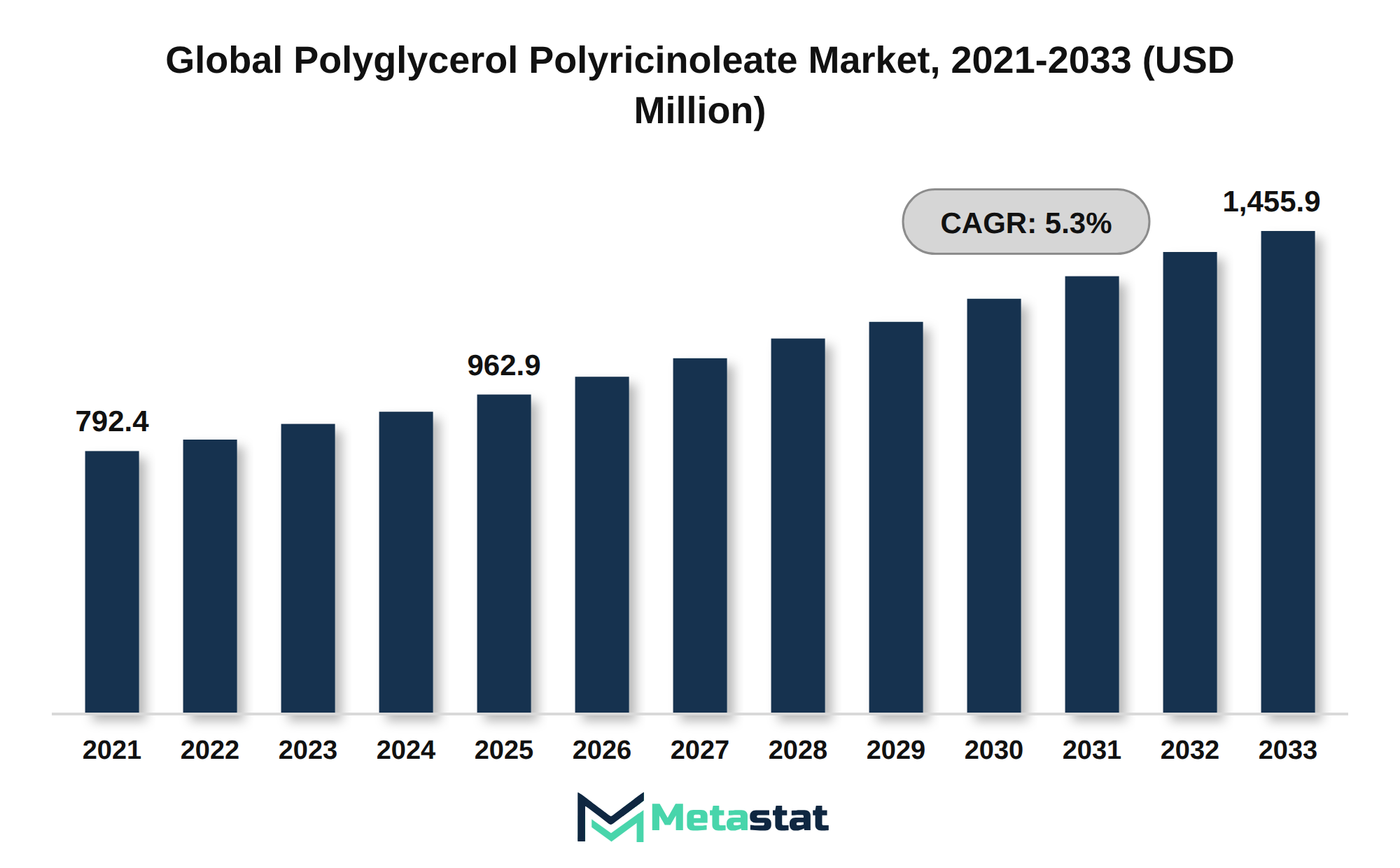
The global Polyglycerol Polyricinoleate market was valued at USD 962.9 million in 2025 and is projected to reach USD 1,455.9 million by 2033, growing at a CAGR of 5.3% over the forecast period.
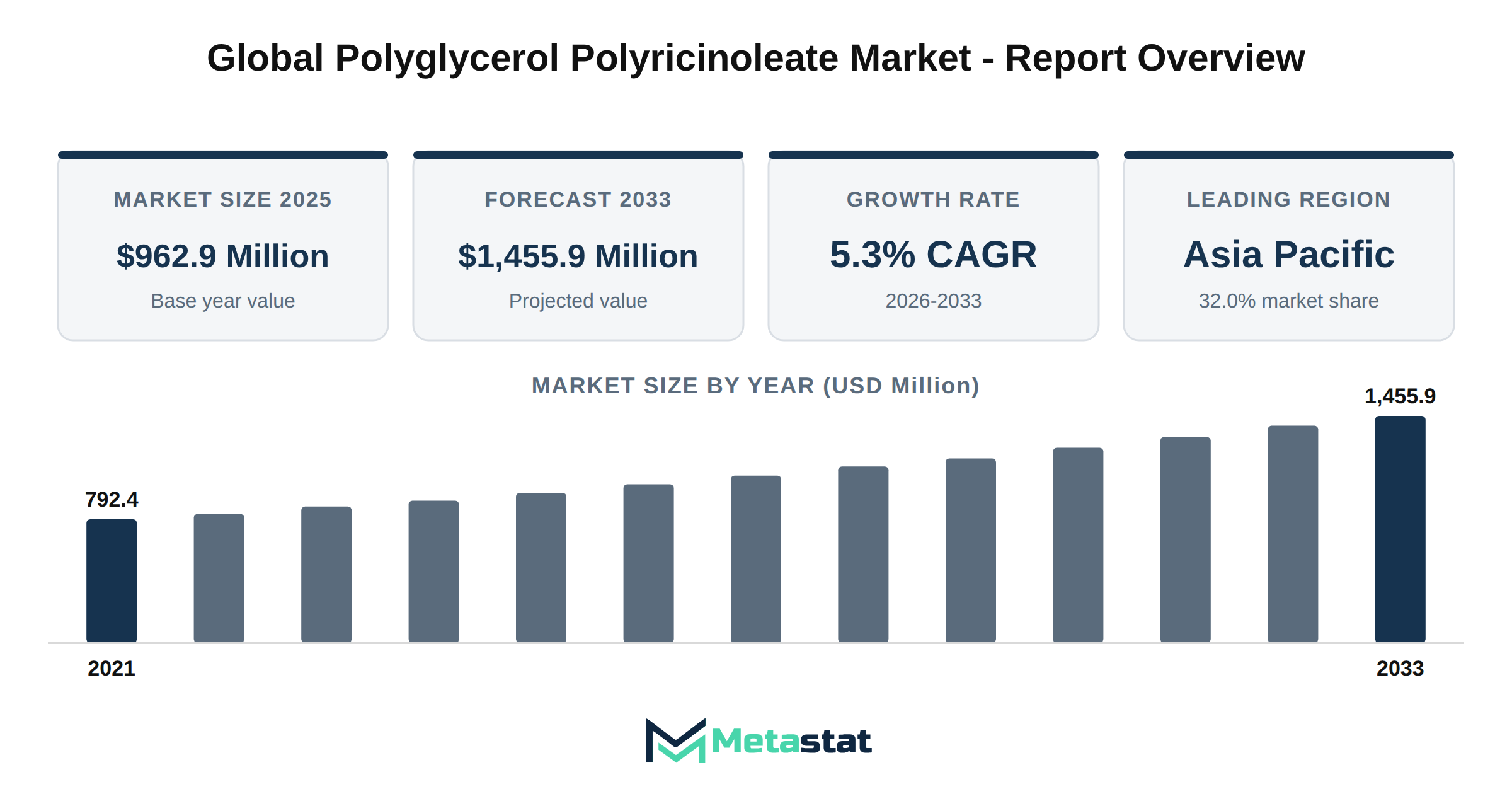
The Polyglycerol Polyricinoleate market reached a value of USD 962.9 million in 2025, reflecting a steady growth trajectory from USD 792.4 million in 2021. This upward trend is expected to continue, with an estimated market value of USD 1,016.8 million in 2026 and a projected value of USD 1,455.9 million by 2033, indicating a compound annual growth rate (CAGR) of 5.3% during the forecast period from 2026 to 2033.
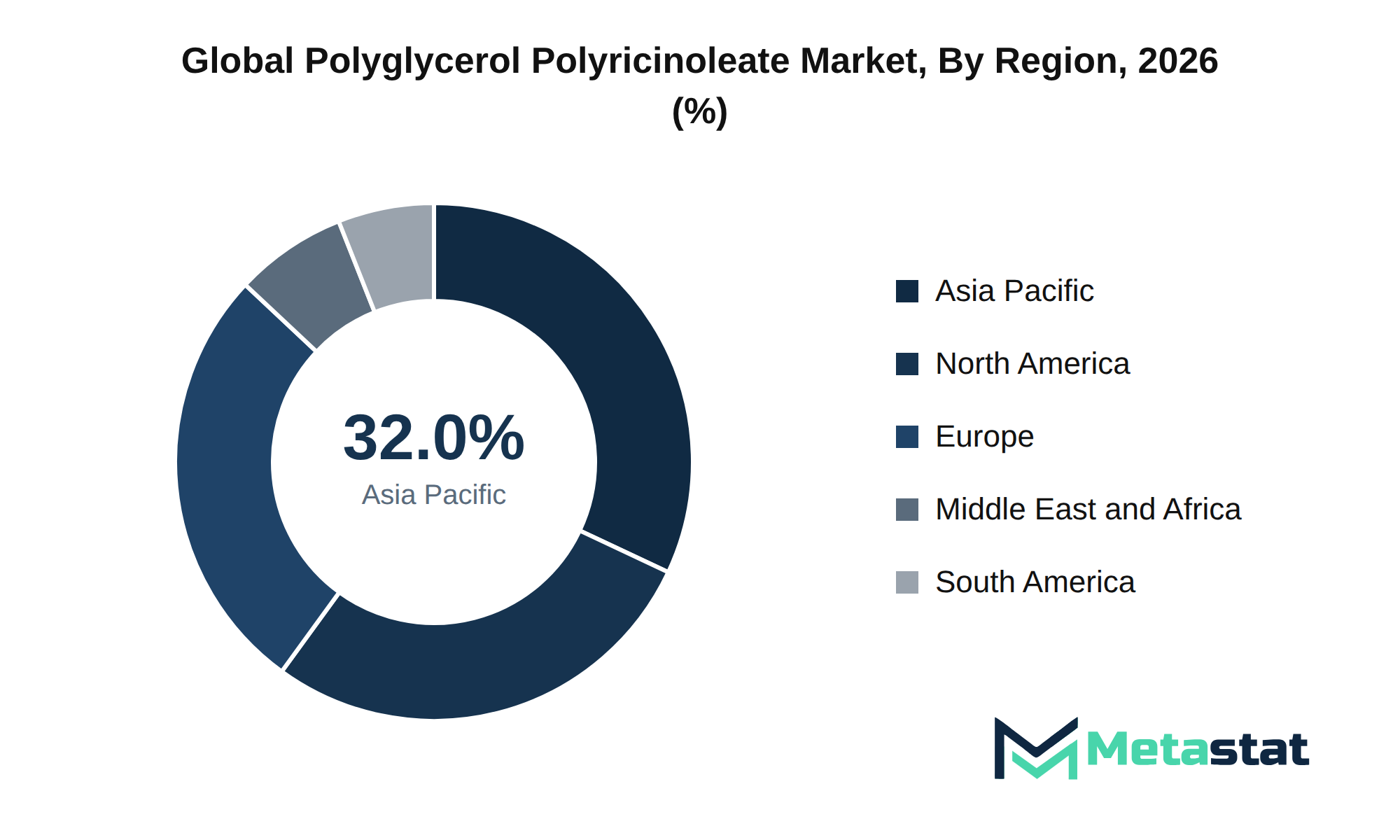
Regional analysis shows that the Asia Pacific region holds the largest market share at 32%, followed by North America at 28% and Europe at 27%. Market dynamics reflect varying conditions across regions, influenced by regulatory frameworks, consumer preferences, and industry demands.
Significant segments within the Polyglycerol Polyricinoleate market include food-grade and industrial-grade products. The food-grade PGPR segment is anticipated to grow from USD 829.6 million in 2026 to USD 1,166.2 million by 2033, with a CAGR of 5%. Conversely, the industrial-grade PGPR segment, while smaller, is expected to expand to USD 289.7 million by 2033, demonstrating a robust CAGR of 6.4%. Growth in these segments highlights the increasing application of polyglycerol polyricinoleate in various industries, including food, cosmetics, and personal care.
Rising demand for clean-label products and natural additives contributes significantly to market expansion. The market's growth trajectory is further supported by increasing adoption of emulsifiers in food formulations, enhancing product stability and texture.
The Polyglycerol Polyricinoleate market experiences a complex environment shaped by various factors influencing its trajectory. Regulatory compliance is essential, with stringent guidelines impacting production processes and formulations across different regions. This adherence ensures that products meet safety and quality standards, affecting manufacturers' operational frameworks and market entry strategies.
Disruption within the market arises from evolving consumer preferences and technological advancements. Research and development trajectories focus on enhancing product efficacy and exploring new applications, driving innovation in formulations. Next-generation innovations continue to emerge, offering opportunities for companies to differentiate their offerings and capture market share.
Sustainable transformation becomes increasingly significant, with a focus on decarbonization and circular economy dynamics. Companies actively seek to minimize their environmental footprint by adopting eco-friendly practices and materials in production. This shift appeals to environmentally conscious consumers and aligns with global sustainability goals.
The supply chain landscape faces challenges related to logistics architecture and sourcing. Companies navigate complexities in sourcing raw materials while ensuring timely delivery of products to meet customer demands. Market fragmentation results from a diverse array of players, each contributing to the competitive dynamics within the industry.
Future strategic outlooks emphasize corporate imperatives surrounding capital allocation and infrastructure investments. Firms assess their capital expenditures and operational expenditures to optimize efficiency and ensure sustainable growth. Macroeconomic headwinds, including inflationary pressures and currency volatility, introduce additional considerations, impacting pricing strategies and profitability across the market.
High-value recommendations for stakeholders involve leveraging innovative technologies and adopting a proactive approach to market trends. Understanding customer journey dynamics enhances engagement and builds loyalty, allowing companies to navigate the competitive environment effectively. By focusing on these elements, organizations position themselves for sustained growth and success in the evolving Polyglycerol Polyricinoleate market.
Digital transformation significantly impacts the Polyglycerol Polyricinoleate market by enhancing operational efficiency across various sectors. Adoption of advanced technologies, including automation and artificial intelligence, facilitates process optimization and boosts production capabilities. This shift results in streamlined workflows, reduced operational costs, and improved product quality, which are essential for meeting increasing consumer demands.
The food and beverage segment, a prominent user of polyglycerol polyricinoleate, benefits from these advancements through enhanced production processes and compliance with evolving consumer preferences. Companies investing in digital solutions achieve greater agility and responsiveness, thereby positioning themselves competitively within the market.
This trend of technological integration not only supports current market dynamics but lays the groundwork for future growth. Companies effectively leveraging digital transformation initiatives gain substantial advantages, leading to increased market penetration and revenue generation opportunities in the Polyglycerol Polyricinoleate market.
The Polyglycerol Polyricinoleate market benefits from ongoing infrastructure development, which enhances production capacity and operational capabilities. Investment in upgrading facilities and digital network systems supports meeting the increasing demand for polyglycerol polyricinoleate. Governments and private enterprises prioritize infrastructure improvements to enhance manufacturing efficiency and reduce lead times, ensuring that producers maintain a competitive advantage.
Increased capital investment in modernization supports the adoption of advanced technologies, including automation and data analytics, optimizing production processes. This trend enables stakeholders in the market to respond swiftly to evolving consumer preferences and regulatory requirements. Enhanced infrastructure enables integration of supply chains, mitigating disruptions and improving market access for manufacturers.
The combination of these developments contributes to higher production volumes and enhances overall market growth. While manufacturers optimize their operations and infrastructure, the market is projected to see significant advancements, facilitating revenue growth and increasing adoption among various industries.
The Polyglycerol Polyricinoleate market faces significant challenges stemming from an evolving regulatory landscape. Compliance with stringent food safety and quality standards creates barriers for manufacturers, requiring them to invest in extensive testing and certification processes. These requirements often lead to increased operational costs, impacting overall profitability.
Heightened scrutiny regarding ingredient safety and environmental impact leads to delays in product approvals, restricting market entry for new applications and innovations. Compliance hurdles deter potential investment in research and development efforts, limiting the introduction of advanced formulations that meet changing consumer preferences.
The implications of these regulatory challenges extend beyond compliance costs; they contribute to market fragmentation, resulting from companies navigating different requirements across regions. This fragmentation complicates distribution strategies and restricts supply chain efficiency, affecting product availability and pricing. The combined effect of these regulatory pressures and operational challenges poses a significant restraint on the growth trajectory of the Polyglycerol Polyricinoleate market.
The Polyglycerol Polyricinoleate market faces significant challenges arising from geopolitical tensions that create trade difficulties. Fragmentation in international relations leads to unpredictable tariff implementations, affecting cost structures for suppliers and manufacturers. Trade deficits further complicate supply chain dynamics, hindering the smooth movement of raw materials and finished products across borders.
The impact of these trade challenges extends to rising input costs, which place pressure on profit margins for companies operating within the market. Increased tariffs result in heightened operational expenses, compelling businesses to seek alternative sourcing solutions or absorb these costs, ultimately affecting overall competitiveness. The evolving landscape of international agreements introduces compliance overhead that influences operational strategies and financial planning.
The market's response to these geopolitical issues involves adapting to shifting regulatory environments and exploring new market opportunities. Companies that streamline sourcing and distribution networks mitigate the adverse effects caused by these tensions, positioning themselves for improved resilience in a fluctuating market.
The Polyglycerol Polyricinoleate market experiences significant opportunities driven by emerging regional demands. Regions including Asia Pacific and North America exhibit increasing appetites for food-grade and industrial-grade PGPR products, largely stemming from expanding food and beverage sectors. Growing consumer awareness surrounding health and wellness further enhances the market's potential, particularly in regions prioritizing clean-label and sustainable food ingredients.
Infrastructure modernization across various countries boosts production capacities and distribution capabilities. Advancements in technology facilitate the integration of innovative processes, leading to improved product quality and efficiency. This technological progress, alongside the emphasis on sustainability, aligns with the market's evolution towards eco-friendly practices and materials, creating robust demand for Polyglycerol Polyricinoleate.
Strategic consolidation and cross-industry mergers enhance competitive positioning, allowing companies to diversify product offerings and penetrate new markets. Evolving buying behaviors reflect a shift towards digital procurement methods, influencing purchasing decisions and distribution approaches within the market. These factors collectively support market growth and drive the adoption of Polyglycerol Polyricinoleate across various applications.
The Global Polyglycerol Polyricinoleate market is segmented based on Product, Function, Application, and Distribution Channel.
Valued at USD 829.6 million in 2026, the Food-Grade PGPR segment is projected to reach USD 1,166.2 million by 2033, at a CAGR of 5% during the forecast period. Demand within this segment stems from various food applications, including chocolate, confectionery, bakery products, and sauces. The growing emphasis on clean label products drives manufacturers to incorporate natural emulsifiers, positioning Food-Grade PGPR because a preferred ingredient. Consumer preferences for healthier food options contribute to rising adoption, influencing product formulations across multiple categories.
Technological advancements in emulsification processes enhance the performance and efficiency of Food-Grade PGPR, facilitating its integration into diverse formulations. Regulatory compliance standards, including food safety regulations, further endorse the use of Food-Grade PGPR, ensuring its acceptance in the food industry. The segment's growth is supported by the increasing availability of raw materials for production, creating a resilient supply chain. Competitive pricing and the ability to substitute traditional emulsifiers with Food-Grade PGPR drive market dynamics, attracting investments aimed at expanding production capacities. In the Polyglycerol Polyricinoleate market, these factors collectively contribute to substantial segment growth.
Growth in the Industrial-Grade PGPR segment reflects increasing demand across various industrial applications, including food processing and cosmetics. This upward trend is supported by the rising need for effective emulsifiers and stabilizers, which enhance product quality and consumer appeal. Market dynamics indicate a shift towards cleaner labels and natural ingredients, prompting manufacturers to explore innovative formulations that incorporate Industrial-Grade PGPR.
Regulatory compliance standards drive demand, driven by industries prioritizing adherence to safety and quality regulations. Certifications related to food safety and sustainability benefit suppliers who invest in high-quality Industrial-Grade PGPR production. The segment is projected to reach USD 289.7 million by 2033, at a CAGR of 6.4% during the forecast period.
Price volatility in raw materials influences market strategies, compelling producers to optimize supply chain resilience and sourcing methods. The growing awareness of health and environmental impacts creates strategic opportunity windows for companies to innovate and differentiate their offerings. Overall, the Industrial-Grade PGPR segment plays a critical role in the broader Polyglycerol Polyricinoleate market, enhancing competitiveness and driving growth through targeted investments and product evolution.
Growing demand for emulsifiers in various applications drives the expansion of the Polyglycerol Polyricinoleate market. The food industry remains a primary consumer, using emulsifiers to improve texture and stability in products including chocolate, bakery items, and dairy applications. Increasing consumer preference for clean-label and natural ingredients influences manufacturers to seek alternatives that align with these trends. Regulatory compliance regarding food additives shapes the market, encouraging the adoption of safe and effective emulsifiers.
Technological advancements improve the functionality of emulsifiers, enhancing performance in various formulations. Innovations in product development lead to the introduction of next-generation emulsifiers that offer better stability and cost-effectiveness. While the market evolves, new emulsifier formulations cater to the unique needs of specific applications, enabling increased market penetration. Consumer trends towards healthier and more sustainable food options drive demand for emulsifiers that fulfill these criteria.
Cost structures and pricing volatility present challenges for the emulsifier segment within the market. Fluctuations in raw material prices impact production costs, influencing the pricing strategies of manufacturers. Competitive pressures in the market compel suppliers to optimize operations while maintaining acceptable profit margins. Supply chain resilience becomes essential, particularly in the face of potential disruptions that could affect sourcing and distribution.
Strategic opportunity windows arise for companies focusing on the emulsifier market segment, especially those investing in research and development to enhance product offerings. Identifying white-space opportunities within the market allows for targeted innovations that address unmet consumer needs. Overall, the emulsifier function represents a dynamic area within the Polyglycerol Polyricinoleate market, characterized by continuous evolution and adaptation to consumer demands.
Adoption of viscosity and rheology modifiers in the Polyglycerol Polyricinoleate market reflects growing demand for products that enhance texture and stability in various applications. Increased consumer preference for high-quality food products drives manufacturers to incorporate these modifiers into formulations, ensuring consistent performance in end-use products. This trend aligns with ongoing advancements in food technology, enabling the development of innovative applications across diverse sectors.
Regulatory compliance and safety standards significantly influence demand dynamics for viscosity and rheology modifiers. Manufacturers focus on obtaining relevant certifications to ensure product safety and efficacy, thereby enhancing market competitiveness. The emphasis on clean-label products continues to shape formulation strategies, prompting suppliers to innovate while adhering to regulatory requirements.
Cost structures associated with viscosity and rheology modifiers remain an important factor affecting market dynamics. Fluctuations in raw material prices introduce pricing volatility, impacting overall profitability for producers. Strategic management of supply chain resilience is essential for mitigating these challenges, allowing manufacturers to maintain stable pricing and ensure consistent product availability in the market.
Investment in research and development activities fuels the evolution of viscosity and rheology modifiers, driving product differentiation and enhancing market potential. Industry players increasingly explore next-generation upgrades to improve performance attributes, which aligns with the growing emphasis on sustainable and functional ingredients. The focus on technological maturation enables suppliers to cater to emerging consumer preferences while meeting industry standards.
Downstream applications of viscosity and rheology modifiers span multiple sectors, including food, cosmetics, and industrial formulations. Each application demonstrates the versatility of these modifiers, enhancing overall functionality of products. The continual evolution of consumer tastes and preferences drives manufacturers to explore new opportunities within this segment, creating conditions for sustained growth in the Polyglycerol Polyricinoleate market.
Significant demand for stabilizers in the Polyglycerol Polyricinoleate market results from their essential role in enhancing the stability and consistency of various products. Industries including food, cosmetics, and personal care increasingly recognize the importance of high-quality stabilizers to achieve desired textures and prevent separation in emulsified systems. The movement towards cleaner labels and natural ingredients drives the adoption of plant-based stabilizers, aligning with consumer preferences for sustainable and health-conscious products.
Regulatory compliance standards and certifications shape market dynamics. Companies prioritize sourcing stabilizers that meet stringent food safety regulations and quality certifications, influencing their production processes and supplier relationships. This focus on compliance enhances market resilience by building trust in product integrity, which remains crucial for consumer acceptance.
Technological advancements contribute to product evolution within the stabilizer segment. Innovations in formulation technologies enable manufacturers to develop more efficient and effective stabilizers, enhancing performance while reducing costs. Consequently, brands leveraging these advancements improve their competitive edge, driving market growth.
Strategic opportunity windows arise from shifting consumption patterns and the growing demand for specialty food applications. The market benefits from increased interest in gourmet and artisanal products, where unique stabilizers significantly enhance the sensory experience. This trend encourages investment in research and development to explore novel applications and formulations targeting niche markets.
Increasing demand for chocolate and compound chocolate applications drives the need for effective emulsifiers like Polyglycerol Polyricinoleate. This segment benefits from the growing popularity of confectionery products, where texture and stability play crucial roles. Innovations and enhancements in product formulations lead manufacturers to seek emulsifiers that improve mouthfeel and prevent separation in finished products, strengthening long-term demand for Polyglycerol Polyricinoleate.
Shifts in consumer preferences toward high-quality chocolate products and sustainable ingredients influence the adoption of Polyglycerol Polyricinoleate in this market. The demand for clean-label products aligns with regulatory compliance standards, prompting producers to select ingredients that meet evolving consumer expectations. These dynamics create opportunities for growth within the chocolate and compound chocolate applications segment, expanding the addressable base for manufacturers.
Technological advancements in emulsifier formulations enhance product performance, allowing for better shelf stability and texture in chocolate products. Manufacturers focus on next-generation upgrades, incorporating natural and functional ingredients. This evolution supports the market by catering to the increasing consumer preference for healthier and more sustainable options, reinforcing the segment's position in the overall market.
Certain challenges involve cost structures and pricing volatility. Fluctuations in raw material prices impact overall production costs, prompting manufacturers to seek cost-effective solutions without compromising product quality. The Polyglycerol Polyricinoleate market faces a competitive landscape, pushing companies to optimize their supply chains and explore alternative sourcing strategies to mitigate risks associated with supply chain resilience and price fluctuations, limiting adoption among price-sensitive buyers.
Increasing consumer preference for high-quality confectionery products fuels demand within the Polyglycerol Polyricinoleate market. This segment benefits from a shift towards premium chocolate and confectionery coatings, which require effective emulsifying agents to achieve desirable texture and stability. Manufacturers focus on improving product formulations, enhancing sensory characteristics, and extending shelf life, all vital for meeting consumer expectations.
The growing incorporation of natural and clean-label ingredients aligns with evolving regulatory compliance standards, prompting manufacturers to seek alternatives that meet these criteria. This trend drives product development and encourages innovation in the market. Advancements in production techniques improve the efficiency of polyglycerol polyricinoleate applications, catering to various preferences and dietary requirements.
Heightened competition among manufacturers promotes continuous investment in research and development, resulting in next-generation product offerings. This focus on innovation not only enhances product quality but addresses cost structures by streamlining production processes. Enhanced distribution channels, including direct sales and partnerships with distributors, further support market expansion by increasing product accessibility.
Overall, the dynamics within the confectionery and chocolate coatings segment of the Polyglycerol Polyricinoleate market reflect a robust interaction of consumer trends, technological advancements, and strategic investments, driving growth and adaptation in a competitive environment.
Growing interest in healthy eating habits increases the demand for fats, oils, and spreads, particularly those that align with clean label trends and natural ingredients. The shift towards plant-based diets further drives the need for emulsifiers, stabilizers, and viscosity modifiers. This leads manufacturers to explore innovative formulations that enhance texture and shelf life. The increasing consumer preference for products that combine health benefits with functional attributes supports growth in the Polyglycerol Polyricinoleate market across various applications.
Technological advancements enable the development of next-generation polyglycerol polyricinoleate products tailored for specific applications in the fats, oils, and spreads sector. Enhanced processing techniques and ingredient sourcing contribute to improved product performance, addressing growing consumer expectations for quality and sustainability. These developments create strategic opportunities for investment and growth within the market.
Regulatory compliance standards and certifications play a critical role in shaping product offerings within the fats, oils, and spreads segment. Increased vigilance regarding ingredient sourcing and production practices influences manufacturers to adopt more transparent supply chains. This heightened scrutiny aligns with consumer preferences for ethically produced and safe food products, enhancing market competitiveness.
Fluctuations in raw material prices impact overall cost structures, creating challenges for manufacturers in the fats, oils, and spreads segment. Volatility in sourcing ingredients necessitates strategic planning and the exploration of alternative sourcing options. This impacts profit margins. Companies that effectively manage these pressures enhance their position within the Polyglycerol Polyricinoleate market.
Increasing interest in bakery products drives demand for Polyglycerol Polyricinoleate in bakery and pan-release applications. This segment benefits from the rising popularity of baked goods and convenience foods, encouraging manufacturers to seek effective solutions for product quality and performance. The focus on health and wellness trends influences product formulations, prompting the use of emulsifiers that enhance texture and extend shelf life.
Technological advancements in food processing contribute to the segment’s growth. Innovations in ingredient functionality improve the efficiency of baking processes, enhancing product consistency and quality. Regulatory compliance and certifications related to food safety standards support the adoption of Polyglycerol Polyricinoleate, ensuring products meet consumer expectations and maintain market reputation.
Manufacturers face challenges related to raw material sourcing and pricing volatility. Fluctuations in the cost of ingredients impact production budgets, requiring strategic management. The continuous evolution of consumer preferences and increased awareness of ingredient benefits positions the Polyglycerol Polyricinoleate market for sustained growth within bakery and pan-release applications.
Strategic opportunities arise from the demand for innovative, clean-label products. Consumers seek transparency in food ingredients, and the market adapts by focusing on natural and sustainably sourced components. This shift aligns with consumer values and enhances competitive positioning for manufacturers in the bakery sector.
Demand for sauces and emulsified dressings exhibits strong growth driven by increasing consumer interest in convenience foods and diverse flavor profiles. This segment benefits from higher consumption of ready-to-eat meals and gourmet sauces, pushing manufacturers to innovate and enhance product offerings. Consumer trends toward healthier options influence the formulation of sauces, focusing on clean-label ingredients and lower fat content. Regulatory compliance and food safety standards shape product development, ensuring that formulations meet health guidelines while delivering desired taste and texture. Pricing volatility in raw materials poses challenges for producers, impacting profit margins and necessitating strategic sourcing to maintain competitiveness.
Technological maturation within the food industry supports the development of advanced emulsification techniques, improving product stability and shelf life. Innovations in packaging solutions enable extended shelf life and enhance consumer convenience, appealing to busy lifestyles. Strategic opportunity windows emerge due to businesses exploring plant-based ingredients, aligning with the growing trend toward vegetarian and vegan diets. Consumption shifts toward artisanal and premium products present avenues for market players to differentiate their offerings and capture niche segments within the Polyglycerol Polyricinoleate market. Investment in capital and R&D remains essential for companies aiming to stay ahead in a competitive environment.
Demand for dairy products and edible ices continues to rise, driven by changing consumer preferences for indulgent and high-quality food products. The growing awareness of health benefits associated with dairy consumption strengthens this trend, supported by consumers increasingly seeking nutritious options that enhance their overall well-being. Innovations in formulation technology enhance the ability to create dairy products with improved textures and flavors, further stimulating market growth.
Technological advancements in food processing and production techniques play a crucial role in shaping the Polyglycerol Polyricinoleate market. Enhanced emulsification properties support the development of stable dairy formulations, while improvements in viscosity and rheology modifiers address the dynamic demands of food manufacturers. These advancements enable producers to meet specific consumer preferences while maintaining product quality.
Regulatory compliance standards surrounding food safety and quality assurance impact production practices within the dairy sector. Adhering to stringent regulations enhances product credibility and assures consumers about food safety. Consequently, brands that emphasize compliance with regulatory standards gain competitive advantages in the market, ultimately building trust and consumer loyalty.
Cost structures and pricing volatility affect profit margins for manufacturers in the dairy industry. The fluctuating prices of raw materials, including fats and emulsifiers, exert pressure on production costs. Strategic sourcing and supplier relationships become vital for mitigating risks associated with raw material availability and cost increases, ensuring a competitive position in the market.
Shifts in consumption patterns toward plant-based alternatives introduce new challenges for traditional dairy producers. While these alternatives gain traction, dairy products remain a staple in many diets. Understanding consumer preferences and adapting product offerings, including the incorporation of Polyglycerol Polyricinoleate for improved functionality, positions brands to navigate this evolving environment effectively. Maintaining a focus on quality and innovation will support sustained demand for dairy products.
Growing adoption of Polyglycerol Polyricinoleate in industrial formulations stems from its versatile properties, particularly in enhancing emulsification and stabilizing complex mixtures. Increased demand for efficient emulsifiers drives manufacturers to explore innovative applications across various industries. The development of advanced formulations with Polyglycerol Polyricinoleate enables producers to meet customer expectations for quality and performance.
Technological maturation within the market supports the advancement of production techniques, ensuring consistent product quality and improved performance attributes. Innovations in the formulations contribute to significant competitive advantages for manufacturers, enhancing their market positioning. The integration of next-generation upgrades remains essential for staying ahead in an increasingly competitive environment. Continuous innovation is vital for maintaining relevance in the market.
Shifts in consumption patterns toward sustainable and high-performance ingredients influence the demand dynamics within the Polyglycerol Polyricinoleate market. Regulatory compliance standards increasingly require transparency and sustainability in ingredient sourcing, prompting manufacturers to adopt more environmentally friendly practices. Meeting these standards presents strategic opportunities for companies aiming to enhance their product offerings.
Pricing volatility and margin pressures affect the competitive landscape, compelling manufacturers to optimize their supply chains and raw material sourcing strategies. Resilience in the supply chain enhances the ability to adapt to fluctuations in market conditions. The presence of disruptive alternatives poses challenges, pushing companies to innovate continuously and deliver high-quality products to retain market share. This ongoing need for innovation drives investment in research and development.
Strategic investment opportunities abound in the Polyglycerol Polyricinoleate market, driven by firms seeking to capitalize on emerging trends and expand their product lines. The focus on white-space analysis allows companies to identify unexplored market segments with growth potential. By aligning their strategies with evolving consumer preferences and regulatory requirements, manufacturers position themselves favorably for future advancements in industrial formulations. This alignment fosters growth and enhances competitive positioning.
Increasing demand for personal care and cosmetic products drives the adoption of Polyglycerol Polyricinoleate in this segment. Factors including enhanced consumer awareness regarding product ingredients and a shift toward natural formulations drive this interest. The trend toward using eco-friendly and sustainable products supports growth within the market.
Technological advancements have facilitated the development of innovative formulations that incorporate Polyglycerol Polyricinoleate. Brands leverage this versatility to create products that meet diverse consumer preferences, aiding in market expansion. Regulatory compliance concerning ingredient safety and environmental impact continues to influence product development in cosmetics and personal care applications.
Shifts in consumer preferences toward premium and organic cosmetics enhance demand for high-quality emulsifiers and stabilizers. The market benefits from these trends, reflecting brands' efforts to differentiate themselves through unique product offerings. The ongoing evolution of consumer expectations regarding functionality and sensory experience further influences product formulation strategies.
Increased investment in research and development activities contributes to product evolution within the Polyglycerol Polyricinoleate market. Companies prioritize enhancing performance characteristics, leading to the introduction of next-generation formulations that cater to specific end-use dynamics. This focus on innovation positions brands to capitalize on emerging opportunities in the market.
Adoption of cost-effective raw material sourcing strategies has become essential for maintaining competitive pricing. Organizations evaluate supply chain resilience to mitigate risks associated with sourcing and logistics vulnerabilities. Emphasizing sustainable sourcing practices aligns with regulatory standards while addressing consumer demand for transparency in product ingredient sourcing.
Growing interest in specialty food applications significantly influences the Polyglycerol Polyricinoleate market. Demand arises from the increasing focus on innovative food formulations and the need for functional ingredients that enhance product quality and stability. Consumer trends towards clean-label products and natural ingredients drive manufacturers to seek effective emulsifiers and stabilizers, which provide desirable textures and improve overall product performance.
The evolution of product formulations in specialty food applications creates a strategic opportunity for the adoption of Polyglycerol Polyricinoleate. The ability to enhance mouthfeel and improve emulsification properties aligns with the requirements of modern food science. This adaptation contributes to the development of new and improved food products that capture consumer interest and meet market demands.
Shifts in consumption patterns towards health-conscious choices impact the Polyglycerol Polyricinoleate market. Increased awareness regarding food additives influences manufacturers to explore alternative emulsifiers that align with consumer expectations for healthier options. This trend encourages investment in research and development to create innovative food products that incorporate Polyglycerol Polyricinoleate while adhering to regulatory compliance standards.
Strategic opportunity windows exist for organizations looking to expand their offerings in specialty food applications, driving growth in the market. Leveraging technological advancements and focusing on product evolution enhances competitive positioning. Proactive engagement ensures resilience in supply chains, maintaining a steady flow of raw materials and reducing disruptions in production processes.
Direct sales in the Polyglycerol Polyricinoleate market represent a critical distribution channel that caters to specific customer needs across various sectors. Increased focus on direct engagement with end-users enhances transparency and strengthens relationships between manufacturers and consumers. This shift towards direct sales aligns with evolving consumer preferences for personalized products and services.
Growing awareness of product quality and sourcing encourages buyers to seek out manufacturers who prioritize direct sales. The ability to educate customers on product benefits and applications strengthens the value proposition of direct sales strategies. This segment benefits from increased consumer advocacy for sustainable and ethically sourced ingredients.
The emergence of e-commerce platforms contributes significantly to the expansion of direct sales in the market. Online connectivity provides manufacturers with a streamlined avenue to reach consumers, enhancing market penetration and visibility. This trend towards digital engagement complements traditional sales approaches, allowing for a comprehensive understanding of consumer preferences and behaviors.
Direct sales ensure responsiveness to market trends and shifts in demand, enabling manufacturers to adapt their offerings promptly. This flexibility in product delivery supports overall market growth and enhances customer satisfaction. Embracing direct sales strategies illustrates the industry's commitment to meeting the dynamic needs of consumers while maintaining a competitive edge within the Polyglycerol Polyricinoleate market.
Distribution through distributors enhances product accessibility across various regions in the Polyglycerol Polyricinoleate market. These intermediaries facilitate connections between producers and end-users, thereby expanding market reach. Their expertise in handling multiple products from various suppliers allows them to offer tailored solutions that meet diverse customer needs.
Adoption of distributor channels is driven by the increasing complexity of supply chains, where manufacturers seek to optimize logistics and reduce costs. This trend creates a competitive landscape, leading to partnerships that enhance product offerings and customer service. Distributors, equipped with market insights, respond effectively to shifts in consumer preferences and regulatory requirements, ensuring compliance and maintaining product integrity.
The role of distributors extends beyond mere transactional functions; they provide essential services including technical support, product training, and marketing assistance. This added value builds strong relationships with end-users in sectors like food, cosmetics, and industrial applications, which rely on Polyglycerol Polyricinoleate for its emulsifying properties and functional benefits.
Distribution channels in the market experience evolving dynamics due to shifting consumer behaviors towards sustainable and health-conscious products. Distributors adapt their strategies to align with these trends, promoting products that meet emerging consumer demands. This responsiveness enhances their competitive advantage and opens avenues for increased market penetration.
Investment in technology and infrastructure by distributors enhances supply chain resilience, allowing for better inventory management and responsiveness to market fluctuations. While cost structures evolve, distributors will maintain pricing stability and manage margin pressures across the Polyglycerol Polyricinoleate market. Their strategic positioning within the supply chain enables them to effectively navigate these challenges and capitalize on growth opportunities.
Based on geography, the Global Polyglycerol Polyricinoleate market is divided into North America, Europe, Asia-Pacific, South America, Middle East, and Africa.
North America represents a significant opportunity within the Polyglycerol Polyricinoleate market, with a projected market size of USD 389.6 million by the end of 2033. This region accounts for 28% of the global market share in 2025. Strong growth in demand for food-grade applications, particularly in chocolate and confectionery, underpins the market's expansion. The competitive landscape features several domestic players, with a focus on innovation and product differentiation to capture consumer interest.
Infrastructure modernization, particularly in manufacturing capabilities, influences the regional market dynamics. Local compliance mandates and regulatory frameworks support the safe use of Polyglycerol Polyricinoleate in various applications, ensuring quality and safety for end consumers. The presence of established distribution channels facilitates market penetration, enhancing accessibility for both food and industrial-grade product segments.
Emerging market front-runners within the region leverage strategic entry barriers, including foreign direct investment flows, to enhance production capacities. Domestic market participants prioritize localized manufacturing densities, aligning production with regional demand trends. These developments contribute to a more resilient supply chain, positioning North America because a key market for Polyglycerol Polyricinoleate.
The Polyglycerol Polyricinoleate market in Europe exhibits significant dynamics driven by various factors influencing consumer preferences and industry needs. Countries including Germany, France, and the UK contribute prominently to market growth, supported by strong demand for food-grade applications, particularly in confectionery and bakery sectors. The regulatory environment in Europe emphasizes high-quality standards, promoting widespread adoption of Polyglycerol Polyricinoleate because an essential emulsifier and stabilizer in food products.
Germany remains a key player in the market, with local manufacturers prioritizing innovation and sustainability in food production. France and Italy demonstrate a growing inclination toward specialty food applications, further enhancing the demand for high-performance ingredients. The cultural nuances in these countries drive unique consumer preferences, creating localized opportunities for suppliers in the Polyglycerol Polyricinoleate market.
Russia's expanding food processing industry presents emerging market front-runners, with increased focus on modernization and meeting international food safety standards. The integration of localized manufacturing practices and nearshoring initiatives improves supply chain efficiencies, enhancing the competitive landscape. Investments in infrastructure, coupled with a shift toward domestic procurement dynamics, provide a conducive environment for growth in the market.
Spain's emphasis on cross-border trade corridors strengthens its role in the European market, facilitating the movement of goods and supporting collaborative ventures among regional suppliers. The competitive landscape reflects a mixture of established domestic players and new entrants, contributing to vendor consolidation trends. Overall, the Polyglycerol Polyricinoleate market in Europe is poised for advancement, driven by strategic investments and a focus on fulfilling evolving consumer demands.
Significant opportunities exist within the Asia-Pacific region, driven by strong demand for food-grade Polyglycerol Polyricinoleate across various applications. Countries including China, Japan, India, and South Korea contribute substantially to the market, reflecting a growing consumer base interested in high-quality food products. The region exhibits a robust supply chain, supported by localized manufacturing densities and investment in infrastructure modernization. Emerging market participants throughout Southeast Asia enhance production capabilities, creating an environment conducive to growth within the Polyglycerol Polyricinoleate market.
Diverse applications of Polyglycerol Polyricinoleate across confectionery, dairy, and bakery sectors attract significant investment. Local compliance mandates and an emphasis on quality control further enhance market dynamics, ensuring products meet consumer expectations. The region’s competitive landscape features both established players and new entrants, striving for market share through innovation and product differentiation.
Cross-border trade corridors facilitate access to regional markets, while geopolitical factors influence trade patterns. Domestic market participants in countries like Australia and India expand their reach, consolidating their position and defining the competitive framework. Growth within the Asia-Pacific region reinforces its importance in the global Polyglycerol Polyricinoleate market through 2033.
Factors contributing to the Polyglycerol Polyricinoleate market in South America include growing demand for various food applications, particularly in Brazil and Argentina. The region's market share is projected at 6.00% of the global total in 2025, indicating a steady presence in the industry. Key drivers involve increasing consumption of processed foods, which relies on emulsifiers and stabilizers for improved texture and shelf life. Local production capabilities and an expanding consumer base further enhance market growth.
Emerging market front-runners Brazil and Argentina present substantial opportunities for manufacturers focusing on food-grade applications. The demand for food-grade Polyglycerol Polyricinoleate aligns with trends toward healthier and more diverse food options in these markets. Increased urbanization and shifting consumer preferences toward convenience foods support this growth, emphasizing the need for effective ingredient solutions.
The competitive landscape within South America features a range of domestic players who capitalize on localized procurement dynamics and regional B2B buying behaviors. Companies specializing in food-grade emulsifiers are positioned to leverage cultural nuances influencing purchasing decisions. Continued investments in regional manufacturing and supply chain efficiencies will enhance availability and affordability for consumers.
In the Middle East and Africa, the Polyglycerol Polyricinoleate market presents potential for growth, supported by increasing demand for food and industrial applications. Countries including Saudi Arabia, UAE, and South Africa exhibit rising consumption patterns that drive this demand. The region's unique cultural preferences influence product formulations, particularly in food and cosmetics, creating specific opportunities for local and international suppliers.
Infrastructure development remains a critical factor, enhancing distribution channels and improving access to markets. Strategic investments in local manufacturing capabilities enable companies to respond efficiently to regional needs. This localized approach lowers operational costs and strengthens market positions against international competition.
Emerging local vendors, alongside established players, contribute to a dynamic competitive environment. Companies recognize the importance of aligning their strategies with regional consumer behaviors, which vary significantly across cultures. Such adaptations encourage tailored marketing approaches and product innovations that connect with the target audience.
The Polyglycerol Polyricinoleate market in this region reflects an evolving environment characterized by both challenges and opportunities. With a projected share of 7% of the global market by 2025, the region is expected to experience incremental growth driven by diverse applications and strategic market engagement.
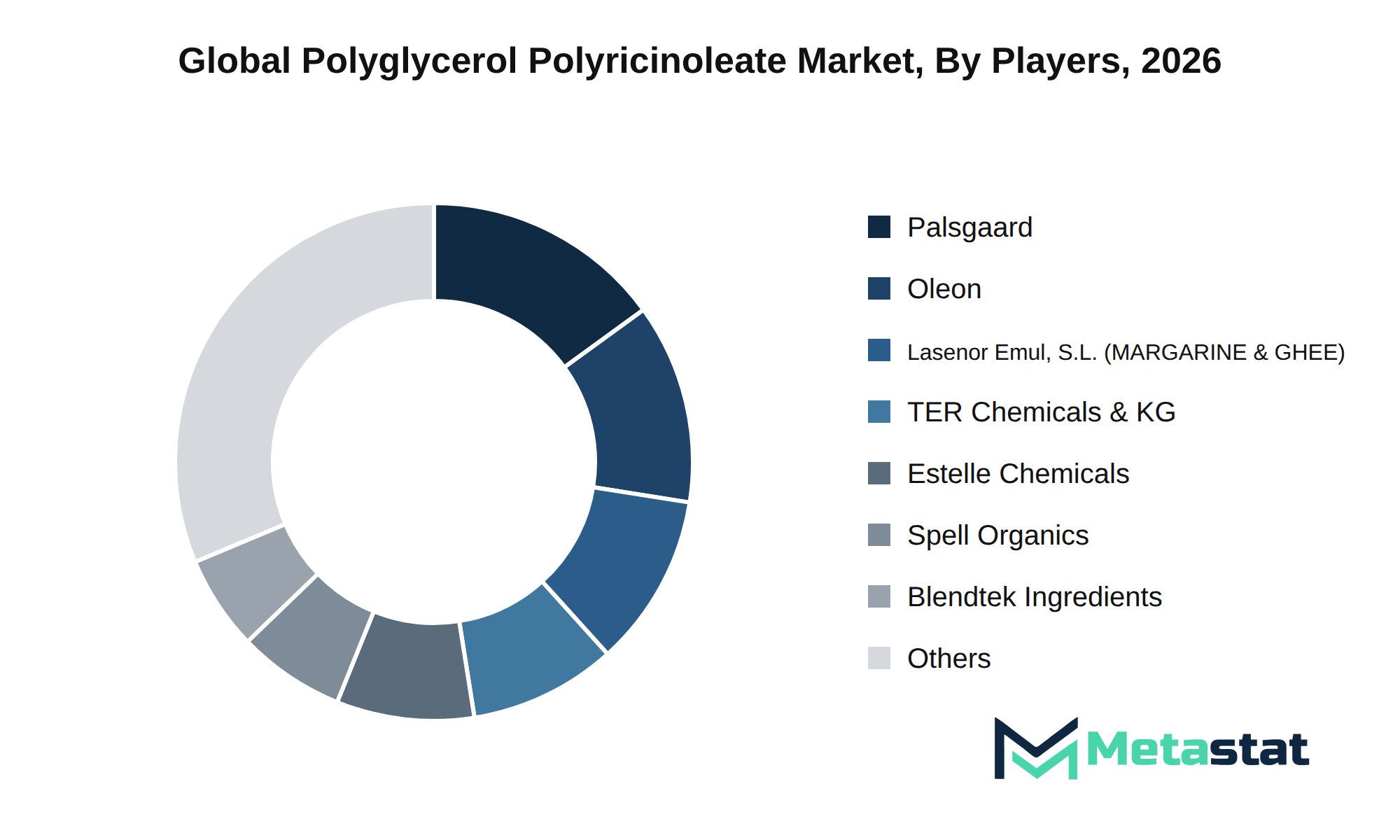
The polyglycerol polyricinoleate market features a diverse range of players engaging in strategic behaviors to enhance competitiveness and market presence. Key participants including Palsgaard, Oleon NV, and Lasenor Emul, S.L. (MARGARINE & GHEE) leverage product differentiation and proprietary technology to strengthen their market positions. Research and development pipelines remain crucial, with several companies focusing on innovative formulations and applications, enhancing their technical capabilities and supporting long-term growth.
Strategic alliances and partnerships between companies, including TER Chemicals GmbH & Co. KG and Estelle Chemicals Pvt. Ltd., support market penetration, allowing players to capitalize on regional strengths and customer bases. Pricing architectures vary, with several firms adopting competitive pricing strategies while others emphasize premium offerings to enhance brand equity. The industry faces barriers to entry, including established relationships between suppliers and customers, which influence procurement leverage and customer retention strategies.
The future competitive outlook highlights ongoing consolidation efforts and the potential threat of new entrants looking to disrupt the market. Companies including Gokul Group and Hefei TNJ Chemical Industry Co., Ltd. actively contribute to market dynamics through strategic growth vectors, emphasizing the importance of intellectual property and technological defensibility in maintaining a competitive edge within the polyglycerol polyricinoleate market.
Market size is forecast to rise from USD 962.9 million in 2025 to over USD 1,455.9 million by 2033. The base case reflects growth from USD 962.9 million in 2025 to USD 1,455.9 million by 2033 at a 5.3% CAGR. The bull case suggests a scenario where accelerated adoption of innovative applications, strategic partnerships among suppliers, and increased investment in research and development enhance market dynamics, resulting in higher growth rates than projected. Conversely, the bear case envisions impediments including regulatory hurdles, inflationary pressures, and supply chain disruptions, potentially limiting market expansion and yielding lower growth rates.
Several macroeconomic factors influence the Polyglycerol Polyricinoleate market. Economic cycles drive downstream demand changes with consumer preferences shifting toward healthier food products and sustainable solutions. Core industries, including food and beverage, cosmetics, and pharmaceuticals, continue to mature, necessitating adaptation to evolving consumer needs. Next-generation technology integration into production processes enhances efficiency, while R&D commercialization timelines dictate product availability in the market.
Regulatory evolution remains significant. Upcoming compliance milestones and policy enforcement horizons impact manufacturers' operational strategies. Geopolitical realignments and evolving trade corridors contribute to global supply chain shifts, prompting firms to reassess sourcing and distribution networks. Strategic capital allocation directives focus on infrastructure commitments and CapEx investment vectors, which support the overall market growth. Identifying emerging white-space opportunities is crucial, driven by unmet enterprise needs and high-growth pockets that present avenues for expansion. Executives prioritize strategic imperatives that ensure defensibility and guide future growth recommendations.
The report strategically identifies and profiles the key market players and analyses their core competencies in each sub-segment of the Polyglycerol Polyricinoleate market.
Report Attributes | Details |
Study Period | 2021-2033 |
Base Year | 2025 |
Estimated Year | 2026 |
Forecast Period | 2026-2033 |
Historical Period | 2021-2025 |
Growth Rate | CAGR 5.3% from 2026 to 2033 |
Revenue Unit | USD million |
Segmentation | By Product, Function, Application, Distribution Channel, and Region |
By Region | North America (By Product, Function, Application, Distribution Channel, and Country)
|
Europe (By Product, Function, Application, Distribution Channel, and Country)
| |
Asia Pacific (By Product, Function, Application, Distribution Channel, and Country)
| |
South America (By Product, Function, Application, Distribution Channel, and Country)
| |
Middle East and Africa (By Product, Function, Application, Distribution Channel, and Country)
|
Find answers to common questions about this report
The Polyglycerol Polyricinoleate market size was valued at USD 962.9 million in 2025, according to the Metastat Insights study.
The Polyglycerol Polyricinoleate market is projected to grow at a CAGR of 5.3% during the forecast period from 2026 to 2033.
The North America Polyglycerol Polyricinoleate market size is estimated to reach USD 389.6 million by 2033.
The Food-Grade PGPR segment leads the Polyglycerol Polyricinoleate market, with a projected value of USD 1,166.2 million by 2033. This segment's growth reflects a compound annual growth rate of 5.0% from 2026 to 2033.
Key drivers for the Polyglycerol Polyricinoleate market include digital transformation, which enhances operational efficiency and production capabilities, and ongoing infrastructure development that boosts production capacity. emerging regional demands, particularly in Asia Pacific and North America, contribute to market growth through increased consumer interest in health and sustainable food ingredients.
North America holds the dominant share of the Polyglycerol Polyricinoleate market, accounting for 28% of the total market. This region is projected to generate USD 389.6 million by 2033.
The Polyglycerol Polyricinoleate market faces significant challenges from an evolving regulatory landscape, which imposes stringent food safety and quality standards. Compliance with these regulations increases operational costs and complicates market entry for new applications. geopolitical tensions create trade difficulties, leading to unpredictable tariffs and rising input costs that pressure profit margins.
Emerging regional demands, particularly in Asia Pacific and North America, favor product adoption in the Polyglycerol Polyricinoleate market. Expanding food and beverage sectors, coupled with increasing consumer awareness of health and wellness, drive the need for food-grade and industrial-grade PGPR products. Infrastructure modernization and technological advancements further enhance production capabilities and product quality.
The Polyglycerol Polyricinoleate market is estimated to reach a valuation of USD 1,455.9 million by 2033.
Key players operating in the Polyglycerol Polyricinoleate market include Palsgaard, Oleon NV, Lasenor Emul, S.L. (MARGARINE & GHEE), TER Chemicals GmbH & Co. KG, Estelle Chemicals Pvt. Ltd., and Godrej Chemicals.
The analysts below cover Chemicals and Materials research at Metastat Insights.
LEAD ANALYST
Utkarsh Khirodkar is a Lead Market Research Analyst at MetaStat Insight, specializing in market intelligence, technology sector assessments, and competitive strategy.

INDUSTRY CONSULTANT - CHEMICALS & ADVANCED MATERIALS
Chemicals and Materials · Machinery & Equipment · Packaging
Amit Gadhekar Consultant for Chemicals and Materials at MetaStat Insight, directing sector-specific intelligence, research, and strategic consulting across global chemical and processing markets.
Scaling antibody-drug conjugate manufacturing hinges on contract manufacturing availability for high-potency active ingredients. The MetaStat Insight analysis looked closely at global cleanroom slot constraints, bioconjugation batch failure rates, and supply chain redundancies between the US, Europe, and India. The supplier capability matrix proved genuinely useful for our team when mapping secondary source options across our clinical pipeline.
Floating offshore wind feasibility relies heavily on specialized installation vessel availability and port crane limits, which most broad renewable energy forecasts ignore. The report delivered a thorough analysis of dry dock capacity, mooring chain supply constraints, and raw material pricing trends for deepwater anchor installations. It served as a solid independent sanity check for our offshore project capital expenditure assumptions.
Assessing commercial microgrid software adoption requires looking past top-level installation numbers and examining utility interconnection queues. The research provided verifiable data on average permitting timelines, tariff structures, and battery storage integration costs across regional utility territories. That grounded perspective was valuable for our team when building five-year demand projections for industrial microgrid controllers.
Explore related market intelligence reports worth reading alongside this one.