
Portugal Hydrogen Market
Portugal Hydrogen Market Size, Share, By Hydrogen Type (Green Hydrogen, Blue Hydrogen, Grey Hydrogen and Others), By Production Technology (PEM Electrolysis, Alkaline Electrolysis, Solid Oxide Electrolysis, Steam Methane Reforming, Autothermal Reforming and Others), By Application (Industrial Feedstock, Power Generation, Mobility, Gas Grid Injection, Synthetic Fuels and Chemicals), By Distribution Mode (On-Site Supply, Pipeline Distribution, Compressed Hydrogen Trailers, Liquid Hydrogen Distribution and Hydrogen Carrier Distribution), Industry Analysis, Growth, Trends, and Forecast, 2026-2033
MSI-5025
August 21, 2026
291 Pages
Historical
Base year
Forecast
Forecast period
Report Details
Comprehensive Market Analysis And Insights
Market Overview
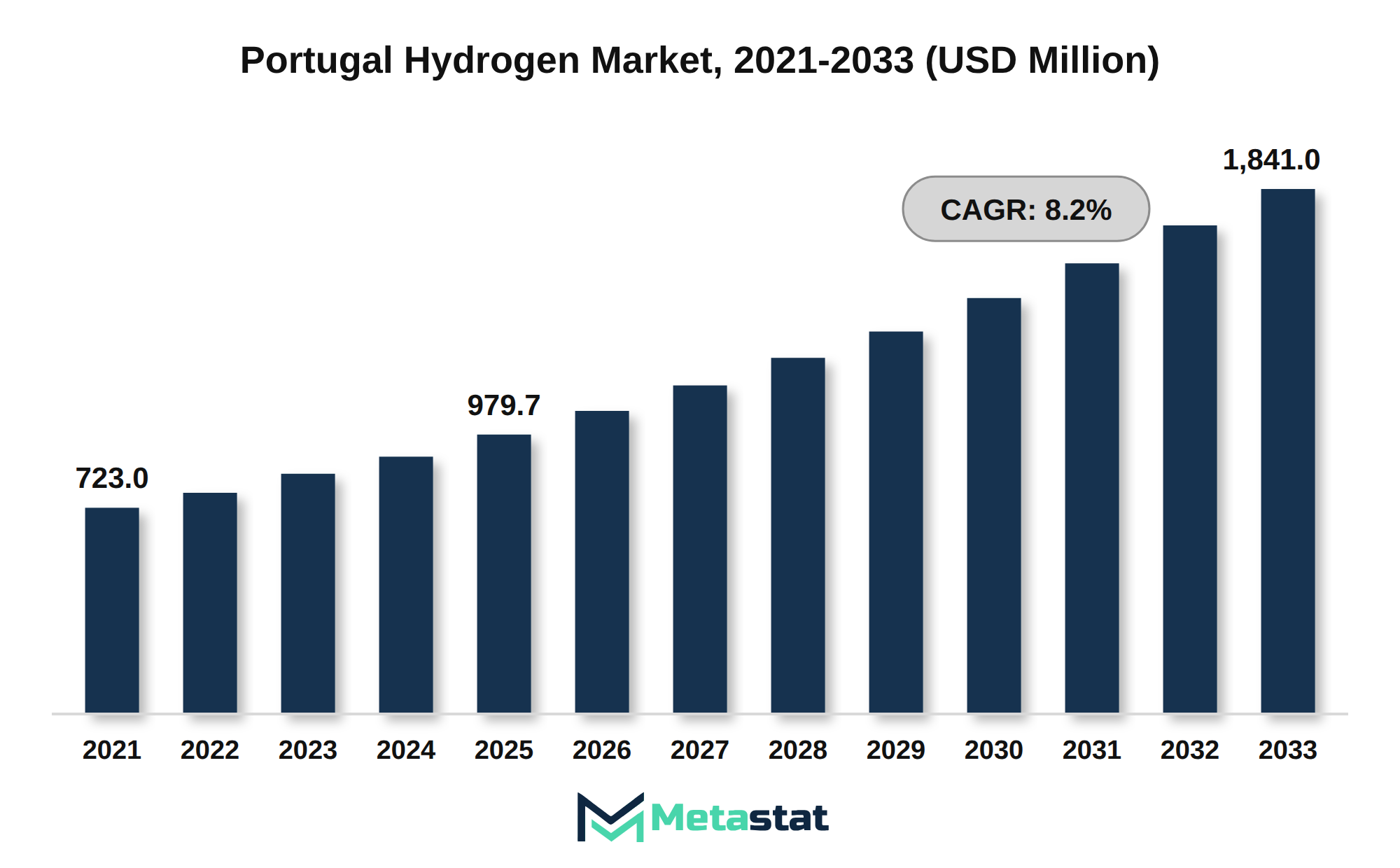
The Portugal Hydrogen market was valued at USD 979.7 million in 2025 and is projected to reach USD 1,841 million by 2033, growing at a CAGR of 8.2% over the forecast period.
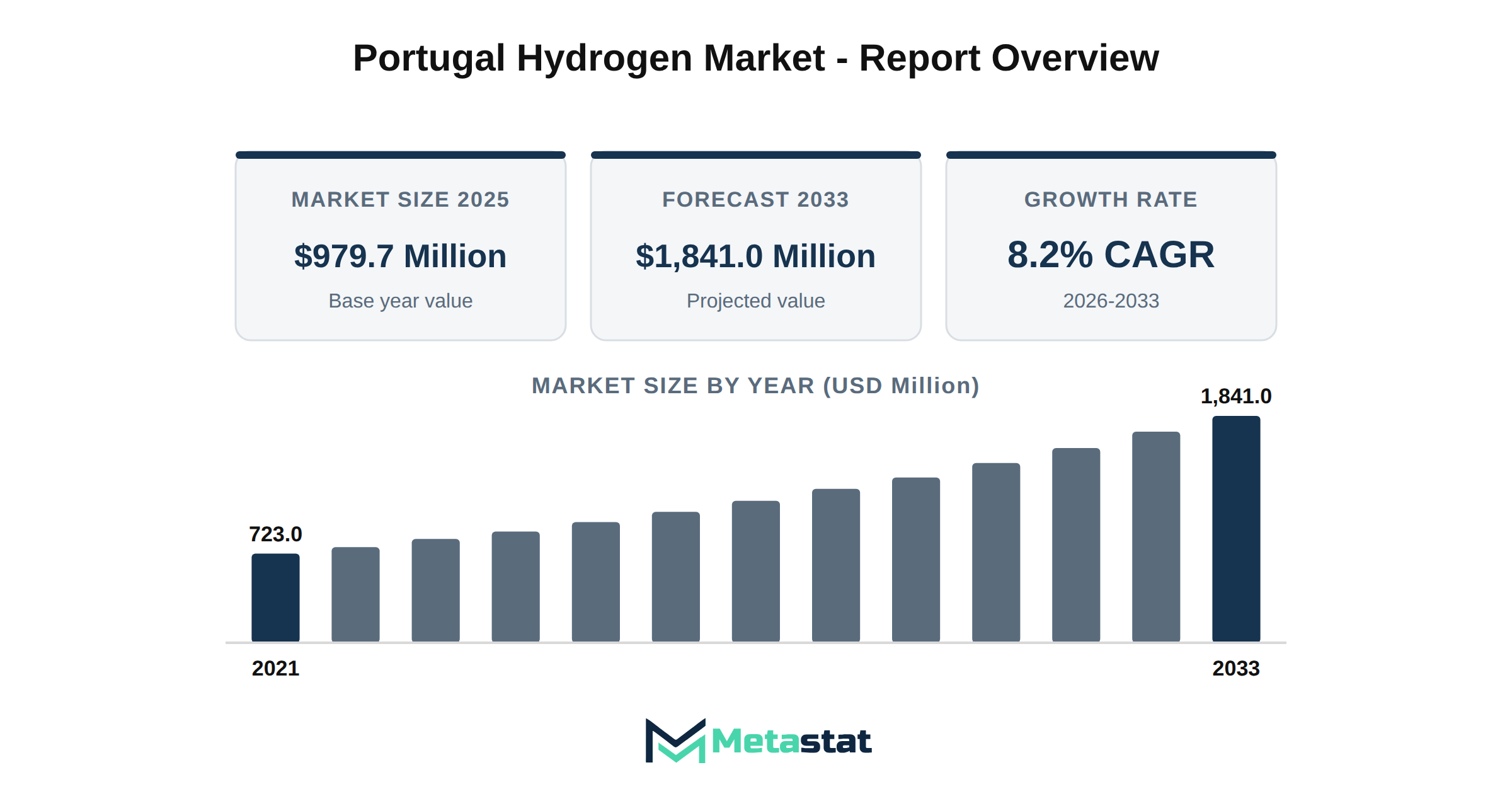
The Portugal Hydrogen market experiences significant growth from a base value of USD 979.7 million in 2025 to USD 1,841 million by 2033, reflecting a compound annual growth rate (CAGR) of 8.2%. Historical data indicates that the market began at USD 723 million in 2021 and steadily increased to USD 902.4 million in 2024. The projected figures for the coming years highlight a consistent upward trajectory, with values reaching USD 1,063 million in 2026 and USD 1,341 million in 2029.
Growth in the Portugal Hydrogen market is driven by several factors, including the increasing demand for clean energy solutions and the implementation of supportive regulatory frameworks. Key players in the market focus on developing various hydrogen types, including green hydrogen, which accounts for 40.7%. Blue hydrogen and grey hydrogen account for 12.1% and 44%, respectively, while other forms, including turquoise and yellow hydrogen, represent 3.2% of the market.
Production technologies in the hydrogen sector, including PEM electrolysis, contribute to market expansion, with a CAGR of 11.3% expected from 2026 to 2033. Alkaline electrolysis and steam methane reforming technologies are significant, with projected growth rates of 11.8% and 2.1%, respectively. The increasing focus on sustainable transformation and decarbonization drives investments in these technologies, enhancing their commercial viability.
Applications of hydrogen in the market include industrial feedstock, projected to grow from USD 488.2 million in 2026 to USD 692.6 million by 2033, reflecting a CAGR of 5.1%. Power generation and mobility applications gain traction, with anticipated values of USD 260 million and USD 294 million, respectively, by 2033. This diversification of applications supports a robust ecosystem for hydrogen adoption across various industries.
The Portugal Hydrogen market benefits from a dynamic regulatory environment aimed at promoting sustainable energy solutions. Compliance with evolving regulations ensures that suppliers align with national and EU policies focused on reducing carbon emissions and enhancing energy efficiency. This framework supports investments in hydrogen technologies, facilitating a transition toward cleaner energy sources.
Research and development trajectories indicate a commitment to innovation in hydrogen production and applications. Investment in next-generation technologies, including advanced electrolysis and carbon capture, positions the market for substantial growth. Companies are increasingly focusing on sustainable transformation initiatives, integrating hydrogen into broader decarbonization strategies, which enhances their competitive advantage.
The supply chain landscape for hydrogen in Portugal reflects increasing complexity. Stakeholders are focusing on optimizing logistics architecture to ensure effective sourcing and distribution of hydrogen products. This focus on efficiency not only reduces operational costs but enhances the market's overall resilience against potential disruptions.
Market fragmentation is evident, with several players operating across various segments of the hydrogen value chain. This diversity stimulates innovation while creating competitive dynamics that drive advancements in production technologies and applications. Mergers and acquisitions play a role in shaping market structure, allowing companies to consolidate resources and expand their capabilities.
Capital allocation trends indicate a strong interest in infrastructure investments to support hydrogen production and distribution. Companies are prioritizing capital expenditures on technologies that enhance efficiency and lower operational expenditures. This focus on strategic investments positions the market for sustainable growth, driven by increasing global demand for hydrogen.
Macroeconomic headwinds, including inflationary pressures and currency volatility, present challenges for market participants. These challenges influence pricing strategies and operational costs, necessitating agile responses from companies to maintain profitability. The future strategic outlook for the market remains optimistic, driven by increasing demand and a supportive regulatory environment.
Corporate imperatives emphasize the need for high-value recommendations that align with evolving market dynamics. Companies are urged to adopt flexible strategies that incorporate technological advancements and sustainability goals, ensuring long-term relevance in the competitive landscape of the Portugal Hydrogen market.
Market Dynamics
Emission limits drive closed-loop adoption
The Portugal Hydrogen market benefits from stringent emission limits that promote the transition towards cleaner energy sources. These regulations target various sectors, including transportation and industrial operations, compelling companies to adopt hydrogen solutions to meet compliance standards. The emphasis on reducing greenhouse gas emissions aligns with broader sustainability goals, encouraging investment in hydrogen technologies.
While industries strive to meet these emission targets, demand for green hydrogen increases significantly. This segment is projected to experience a compound annual growth rate (CAGR) of 12.2 percent from 2026 to 2033. The necessity for companies to integrate sustainable practices positions the market favorably for growth in the coming years. Investments in infrastructure and production technologies, including PEM electrolysis, reflect the urgency of this transition, enhancing operational productivity and capitalizing on new revenue streams.
Growing public awareness of climate change drives consumer behavior towards environmentally friendly products. This shift influences industries to prioritize hydrogen solutions, further expanding the market. By aligning business strategies with regulatory expectations, companies achieve not only compliance but competitive advantages in the evolving energy landscape.
Increased capital investment drives market growth
The Portugal Hydrogen market benefits from a favorable capital investment environment, characterized by rising interest rates, increased GDP growth, and significant venture funding. These macro-economic factors create a robust framework for investment in hydrogen technologies. Stakeholders in various sectors seek to capitalize on this momentum, resulting in accelerated adoption of hydrogen solutions across industries.
Investment in infrastructure development enhances production capacity and distribution networks, ultimately driving operational efficiency. Businesses receive incentives to upgrade their facilities and modernize existing processes, which aligns with cost-efficiency initiatives. These initiatives contribute to reducing overheads while improving the market's overall competitiveness.
The trend toward sustainability further reinforces the growth of the Portugal Hydrogen market. Companies prioritize reducing their carbon footprint and adhering to environmental, social, and governance (ESG) mandates. This focus on sustainability drives increased investment in green hydrogen technologies, particularly because industrial players seek to align their operations with evolving consumer preferences for environmentally friendly products.
Technological integration, including advancements in automation and software adoption, supports the market's expansion. The incorporation of innovative solutions streamlines operations and enhances productivity. Such technological advancements position the market favorably for continued growth and adaptation in the changing energy landscape.
Regulatory compliance challenges hinder market growth
Regulatory compliance presents significant challenges for the Portugal Hydrogen market. The evolving landscape of environmental regulations demands rigorous adherence, causing delays in project approvals and increasing operational complexities. These compliance hurdles impact suppliers, leading to higher administrative costs and extended timelines for market entry. Streamlining compliance processes restricts growth opportunities, particularly for new entrants seeking to capitalize on the emerging hydrogen economy.
Macroeconomic headwinds further complicate the market environment. Inflationary pressures contribute to rising costs across the supply chain, making it difficult for companies to maintain competitive pricing. Escalating operating costs, coupled with high capital investment requirements, hinder investment in new technologies and infrastructure necessary for production and distribution. Many players experience capital stagnation, which limits their ability to scale operations in response to growing demand.
Infrastructure gaps and connectivity deficits represent significant barriers to market expansion. Insufficient distribution networks and production facilities create deployment bottlenecks, constraining the growth potential of the market. Underdeveloped infrastructure inhibits efficient supply chain operations, complicating the movement of hydrogen to end users. Addressing these infrastructure challenges is critical for achieving growth in the Portugal Hydrogen market.
Talent gaps and skilled labor deficiencies contribute to operational inefficiencies. The market faces challenges in attracting and retaining qualified personnel with expertise in hydrogen technologies. A limited workforce results in increased overhead costs and reduced productivity, impacting project timelines and overall market competitiveness. Investment in workforce development is essential for overcoming this barrier and ensuring sustained growth in the sector.
Geopolitical fragmentation drives market instability
The Portugal Hydrogen market faces significant challenges due to geopolitical fragmentation, which creates uncertainties in supply chains and trade relations. This fragmentation leads to trade deficits and tariff friction that increase the cost of imported technologies and components essential for hydrogen production.
Technological disruptions complicate the integration of advanced production methods, including PEM and alkaline electrolysis, into existing infrastructure. These disruptions introduce interoperability friction, affecting the efficiency of operations and slowing the transition to cleaner hydrogen sources.
Volatility in feedstock and component availability creates operational hurdles for producers, affecting project timelines and overall market stability. Logistics disruptions and supply chain instability further exacerbate these issues, leading to higher operational costs and delayed project implementations.
The evolving landscape of regional regulatory standards necessitates ongoing compliance efforts, which impose additional overhead costs on market participants. These compliance burdens reduce profit margins and place financial pressure on businesses operating within the Portugal Hydrogen market.
Talent retention pressures compound the challenges faced by the market. Skill gaps in the workforce hinder the development of advanced hydrogen technologies. The need for specialized knowledge in production and distribution methods drives up labor costs, affecting overall market competitiveness.
Environmental lifecycle footprints and decarbonization mandates increase scrutiny on production processes, introducing complexities that market players navigate. Infrastructure gaps and the need for retrofitting existing facilities create implementation bottlenecks that limit the growth potential of hydrogen projects.
Deficits in intellectual property protection expose firms to risks associated with innovation, while cybersecurity threats introduce data vulnerabilities that could jeopardize operations. Changing downstream demands and market saturation pressure producers to adapt quickly, complicating their ability to thrive in the competitive environment of the Portugal Hydrogen market.
Emerging technological advancements drive market potential
The Portugal Hydrogen market experiences significant opportunities driven by emerging technological advancements. The introduction of innovative production technologies, including PEM electrolysis and alkaline electrolysis, enhances the efficiency and scalability of hydrogen production. These advancements influence the market by lowering production costs and increasing output potential, allowing various industries to adopt hydrogen solutions for diverse applications.
Infrastructure modernization is essential in expanding the market. Investment in hydrogen distribution networks, including pipeline distribution and on-site supply systems, facilitates the integration of hydrogen into existing energy infrastructures. Improved distribution mechanisms enhance accessibility for industries and consumers, driving demand for hydrogen because an energy source.
Geographical expansion presents additional prospects for the market. The growing interest in hydrogen applications in regions beyond traditional markets allows for diversification in supply and distribution channels. This expansion extends to niche applications, including mobility solutions and industrial feedstock, creating new revenue streams for market players.
Sustainability imperatives increasingly shape market dynamics. The shift towards eco-friendly practices and ESG-driven strategies across industries highlights the demand for cleaner energy solutions. The Portugal Hydrogen market aligns with these sustainability goals, attracting investments from companies seeking to enhance their environmental credentials.
Digital transformation and evolving buying behaviors influence market strategies. The rise of digital procurement shifts and commercial model transitions enable streamlined operations and enhanced customer engagement. Firms in the market adapt to these shifts by leveraging data-driven insights and technology to optimize their offerings and capture emerging demand.
Overall, the combination of technological disruptions, infrastructure enhancements, and sustainability considerations presents a strong growth trajectory for the Portugal Hydrogen market, signaling substantial opportunities for stakeholders across various sectors.
Market Segmentation Analysis
The Portugal Hydrogen market is segmented based on Hydrogen Type, Production Technology, Application, and Distribution Mode.
By Hydrogen Type, the market is further segmented into:
- Green Hydrogen
- Blue Hydrogen
- Grey Hydrogen
- Others (Turquoise Hydrogen, Yellow Hydrogen)
Green Hydrogen
Valued at USD 459.8 million in 2026, the Green Hydrogen segment is projected to reach USD 1,032.3 million by 2033, reflecting a CAGR of 12.2% during the forecast period. Strong growth in this segment arises from increasing demand for sustainable energy solutions across multiple industries, driven by regulatory frameworks promoting low-carbon technologies.
Technological advancements in electrolysis, particularly PEM and alkaline technologies, enhance production efficiency and lower costs, supporting wider adoption. Industries including transportation, power generation, and industrial feedstock significantly influence consumption shifts toward Green Hydrogen, creating a diverse application landscape.
Regulatory compliance and policy incentives play crucial roles in shaping market dynamics. Increased investment in green technologies aligns with global decarbonization efforts, ensuring that the Portugal Hydrogen market remains competitive in the evolving energy environment. Stakeholders benefit from these shifts, positioning themselves strategically for sustainable growth.
Blue Hydrogen
In the Portugal Hydrogen market, the Blue Hydrogen segment is projected to reach USD 238.2 million by 2033, at a CAGR of 9.1% during the forecast period. This growth reflects the increasing focus on reducing carbon emissions and transitioning towards cleaner energy sources. Industrial sectors, including refining and chemical production, drive demand for Blue Hydrogen in decarbonization efforts, benefiting from its lower carbon footprint compared to traditional fossil fuels.
Technological advancements in hydrogen production processes significantly enhance the efficiency and cost-effectiveness of Blue Hydrogen. Innovations in steam methane reforming and carbon capture utilization and storage (CCUS) technologies facilitate a more sustainable production method. These developments attract investment, contributing to market expansion and driving competitiveness within the Portugal Hydrogen market.
Regulatory frameworks emphasizing emission reductions and sustainability initiatives support the adoption of Blue Hydrogen. Incentives from local governments encourage industries to shift towards hydrogen solutions, aligning with broader climate action goals. Companies within the market increasingly incorporate Blue Hydrogen into their portfolios, enhancing their environmental credentials and appealing to eco-conscious consumers.
Blue Hydrogen represents a critical segment of the Portugal Hydrogen market, characterized by significant growth driven by industrial demand, technological advancements, and supportive regulatory environments. Achieving USD 238.2 million by 2033 highlights the segment's critical role in the transition to sustainable energy solutions.
Grey Hydrogen
Forecasts indicate that the Grey Hydrogen segment is projected to reach USD 476.3 million by 2033. This growth results from increasing industrial demand for hydrogen, attributed to its role because a vital feedstock in various applications, including chemical manufacturing and refining processes. The segment benefits from technology advancements in production methods that enhance efficiency, particularly through steam methane reforming, widely used for Grey Hydrogen production.
Adoption of Grey Hydrogen is largely influenced by the cost-effectiveness of production compared to greener alternatives, making it attractive for industries with tight margins. Regulatory frameworks aiming to reduce carbon emissions drive industries to seek cleaner alternatives, presenting challenges for Grey Hydrogen. Efforts to improve production efficiency and reduce associated emissions are critical for maintaining relevance in a shifting energy landscape.
The market experiences significant competition from Green and Blue Hydrogen, which pose substitution risks due to their reduced environmental impact. Strategic investments in carbon capture technologies to mitigate emissions from Grey Hydrogen production offer opportunities for firms to maintain a competitive edge. Overall, the dynamics within the Portugal Hydrogen market reflect a complex relationship of economic factors, environmental regulations, and technological advancements, shaping the future trajectory of the Grey Hydrogen segment.
Others (Turquoise Hydrogen, Yellow Hydrogen)
Strong growth is anticipated in the Others (Turquoise Hydrogen, Yellow Hydrogen) segment, projected to achieve a CAGR of 14.8% during the forecast period. Increasing demand for sustainable and low-carbon solutions drives this growth, with market players focusing on innovative technologies that enhance production efficiency and reduce costs. Regulatory support for cleaner energy sources supports adoption, while advances in production techniques contribute to the segment's expansion.
Portugal Hydrogen market participants recognize the potential of turquoise and yellow hydrogen, reflecting the need for alternatives to traditional fossil fuels, particularly in sectors aiming for carbon neutrality. This segment's evolution aligns with broader industry trends emphasizing sustainability, attracting investment from both private and public entities seeking to capitalize on emerging technologies. By leveraging advancements in production methods, including methane pyrolysis, the segment strengthens its market position through enhanced operational efficiencies and lower environmental impact.
While market dynamics shift, companies engage in strategic partnerships to improve supply chain resilience and enhance technology integration. This collaborative approach facilitates resource sharing and accelerates innovation within the Others segment, positioning it for sustained growth. The anticipated increase in market valuation highlights the significance of turquoise and yellow hydrogen in achieving energy transition goals, with investment flows expected to reflect this upward trend.
By Production Technology, the market is further segmented into:
- PEM Electrolysis
- Alkaline Electrolysis
- Solid Oxide Electrolysis
- Steam Methane Reforming
- Autothermal Reforming
- Others (Biomass Gasification, Methane Pyrolysis)
PEM Electrolysis
Valued at USD 266.4 million in 2026, the PEM Electrolysis segment is projected to reach USD 564.3 million by 2033, at a CAGR of 11.3% during the forecast period. This segment experiences significant growth driven by the increasing focus on sustainable energy solutions and the transition towards greener technologies. Demand for hydrogen because a clean energy carrier is rising, particularly in industries aiming to reduce carbon footprints.
Investment in advanced technologies fuels the expansion of PEM Electrolysis. Technological maturation has led to improvements in efficiency and cost reductions, making PEM systems more attractive for various applications. The industry's strategic direction is shifting towards decarbonization, aligning with global trends and governmental policies that emphasize clean energy adoption. This evolving environment creates opportunities for stakeholders to enhance competitive positioning within the Portugal Hydrogen market.
PEM Electrolysis shows promise in various downstream applications, including industrial feedstock and energy generation. While companies pursue cleaner production methods, the adoption of hydrogen in these sectors strengthens. The regulatory environment encourages compliance with emission reduction targets, further supporting the growth of this segment. Overall, the outlook for PEM Electrolysis highlights substantial potential for expansion within the hydrogen market in Portugal.
Alkaline Electrolysis
Growing demand for clean energy solutions drives the Alkaline Electrolysis segment within the Portugal Hydrogen market. This segment is projected to reach USD 494.1 million by 2033, at a CAGR of 11.8% during the forecast period. The increasing focus on reducing carbon emissions significantly influences the adoption of Alkaline Electrolysis technology, which provides efficient hydrogen production through water electrolysis. Industrial sectors including chemicals and refining benefit from this method, emphasizing its role in transitioning to more sustainable practices.
Technological advancements enhance the performance of Alkaline Electrolysis systems, leading to higher efficiency and lower operational costs. Next-generation upgrades focus on increasing production capacity while minimizing energy consumption. This aligns with the overall market trend toward innovation. The regulatory landscape in Portugal supports investments in green technologies, promoting the growth of this segment.
Regulatory compliance standards regarding emissions push industries to explore cleaner alternatives, increasing the urgency for hydrogen production technologies like Alkaline Electrolysis. The segment's growth relies on strategic investments in infrastructure and the development of robust supply chains, ensuring a steady supply of essential materials like alkaline electrolyte and electrodes. Consequently, this segment positions itself favorably within the broader context of the market, reflecting an evolving focus on sustainability and environmental responsibility.
Solid Oxide Electrolysis
Technological maturation drives the expansion of the Solid Oxide Electrolysis segment, facilitating increased efficiency in hydrogen production. The segment is projected to reach USD 131.1 million by 2033, reflecting the growing emphasis on sustainable energy solutions. Primary demand drivers stem from the acceleration of decarbonization efforts across various industries, influencing a shift towards cleaner production technologies. The focus on reducing carbon emissions enhances interest in solid oxide electrolysis, particularly among sectors prioritizing environmental compliance and sustainability.
Investment in research and development leads to continuous upgrades and innovations in solid oxide electrolysis technology. This evolution encourages broader adoption across diverse applications, including industrial feedstock and power generation. Downstream application dynamics highlight the importance of this technology in providing energy-efficient solutions, which align with regulatory compliance standards. Cost structures associated with solid oxide electrolysis indicate competitive pricing compared to traditional hydrogen production methods, providing a strategic advantage within the market.
Pricing volatility in raw material sourcing impacts the overall economics of solid oxide electrolysis. However, the technology's ability to process various feedstocks presents an opportunity for resilience against supply chain vulnerabilities. Growing interest in renewable energy sources positions solid oxide electrolysis favorably against disruptive alternatives, further reinforcing its role within the Portugal Hydrogen market.
Steam Methane Reforming
Adoption of Steam Methane Reforming (SMR) technology in the Portugal Hydrogen market targets the production of hydrogen through the reaction of natural gas with steam. This method remains recognized for its efficiency and established infrastructure, which drives its continued relevance in the hydrogen production landscape. The segment is projected to grow at a CAGR of 2.1% during the forecast period, reflecting consistent demand for this technology despite increasing regulatory pressures for greener alternatives.
Current trends in the market reflect a dual focus on cost and efficiency, placing SMR in a unique position. While alternative methods including electrolysis gain momentum, the existing supply chain and investment in SMR infrastructure support its sustained use. Industrial sectors reliant on hydrogen, including petrochemicals and refining, benefit from SMR's established processes, ensuring steady demand and operational continuity.
Efforts toward carbon capture and storage (CCS) integration enhance the profile of SMR, contributing to a lower carbon footprint and aligning with global sustainability goals. SMR supports evolving market dynamics that prioritize emissions reduction while maintaining production capabilities. In this context, the segment’s growth reflects strategic opportunities for investment and innovation within the Portugal Hydrogen market.
Autothermal Reforming
Increasing attention towards cleaner energy solutions drives interest in Autothermal Reforming within the Portugal Hydrogen market. This technology aligns with global trends focused on reducing carbon emissions and enhancing energy efficiency. Autothermal Reforming offers a pathway for hydrogen production that integrates both steam reforming and partial oxidation processes, optimizing resource use and improving energy conversion efficiency.
Investment in research and development fuels advances in this technology, enhancing its viability and attractiveness to industries focused on sustainability. The growing emphasis on hydrogen because a key element in energy transition strategies contributes to its adoption in diverse sectors, particularly in industrial applications. This trend emerges alongside evolving regulatory frameworks that support low-carbon technologies, positioning Autothermal Reforming favorably within the competitive landscape.
Challenges related to cost structures and potential pricing volatility influence market dynamics. Strategic investments in this technology enhance supply chain resilience, lowering overall production costs while meeting regulatory compliance standards. Integrating Autothermal Reforming in hydrogen production processes represents a significant opportunity for companies aiming to capitalize on shifting consumption patterns towards more sustainable energy solutions.
Others (Biomass Gasification, Methane Pyrolysis)
Investment in the Others (Biomass Gasification, Methane Pyrolysis) sub-segment reflects a growing interest in alternative methods to produce hydrogen, which contribute to the diversification of the production landscape within the Portugal Hydrogen market. These technologies offer pathways to reduce dependency on fossil fuels by using renewable feedstocks. The shift towards sustainable practices drives demand for innovative production methods, aligning with global decarbonization targets.
Technological advancements in biomass gasification and methane pyrolysis contribute to operational efficiency and reduction in greenhouse gas emissions. These processes enable the conversion of organic materials into hydrogen, enhancing the sustainability profile of hydrogen production. Adoption of such technologies supports the transition towards a more circular economy, wherein waste materials serve because resources for energy generation.
The market observes increased collaboration among stakeholders, including energy companies and research institutions. These partnerships focus on advancing technological maturation and driving the development of next-generation upgrades. Investments in research and development promote the evolution of these production techniques, enhancing their viability and competitiveness.
End-use dynamics highlight the potential of hydrogen produced through these methods in various applications, including industrial feedstock and power generation. This flexibility broadens the appeal of biomass gasification and methane pyrolysis, attracting interest from multiple sectors seeking cleaner energy solutions. Regulatory frameworks increasingly support these technologies, facilitating compliance with environmental standards and encouraging further investments.
Amid rising energy costs and fluctuating market conditions, the Others sub-segment presents strategic opportunity windows for investors. The focus on diversifying energy sources enhances supply chain resilience, positioning the market favorably to meet future hydrogen demands. Developing robust logistics and refining raw material sourcing strategies will further strengthen the competitive landscape for these innovative production methods.
By Application, the market is further segmented into:
- Industrial Feedstock
- Power Generation
- Mobility
- Gas Grid Injection
- Synthetic Fuels and Chemicals
- Others (Heating, Maritime and Aviation Fuel)
Industrial Feedstock
Valued at USD 488.2 million in 2026, the Industrial Feedstock segment is projected to reach USD 692.6 million by 2033, at a CAGR of 5.1% during the forecast period. Increasing industrial applications for hydrogen, particularly in sectors including chemicals and refining, drive significant growth in this segment. The shift towards low-carbon hydrogen solutions influences businesses to explore hydrogen because a primary feedstock, enhancing sustainability efforts. Regulatory pressures to reduce carbon emissions further increase demand for hydrogen in various industrial processes, leading to increased investments in hydrogen production technologies. These factors contribute to the expansion of the Industrial Feedstock segment within the Portugal Hydrogen market, positioning it because a critical component in the energy transition.
Power Generation
Transitioning towards renewable energy sources fuels the expansion of the Power Generation segment within the Portugal Hydrogen market. This segment is projected to reach USD 260 million by 2033, at a CAGR of 8.3% during the forecast period. Increased investment in hydrogen technologies aligns with the growing emphasis on reducing carbon emissions across various industries, particularly in energy production. The shift towards cleaner alternatives enables energy producers to meet regulatory standards while enhancing sustainability credentials.
Technological advancements in hydrogen production technologies contribute to wider adoption in power generation applications. Innovations in electrolysis methods and fuel cell technologies improve efficiency and reduce operational costs. Competitive pricing dynamics influence the market, creating opportunities for energy companies to integrate hydrogen solutions into existing infrastructures.
Strategic partnerships between hydrogen producers and power generation companies enhance the development of integrated hydrogen solutions. These collaborations accelerate the commercialization of hydrogen technologies, driving demand in the market. Regulatory incentives and government initiatives aimed at promoting clean energy further support the growth of the Power Generation segment.
Mobility
By 2033, the Mobility segment is expected to reach USD 294 million. Demand for hydrogen-powered vehicles continues to rise, driven by a global shift towards sustainable transportation solutions. This transition aligns with stricter regulatory frameworks aimed at reducing carbon emissions, compelling automotive manufacturers to explore hydrogen fuel cell technology.
Technological advancements enhance the viability of hydrogen because a fuel source. Progress in fuel cell efficiency and hydrogen storage solutions contributes to increased adoption across various transportation applications, including buses, trucks, and passenger vehicles. The market experiences a shift from traditional fossil fuels to cleaner alternatives, enhancing the attractiveness of hydrogen mobility.
Investments in infrastructure for hydrogen refueling stations expand access for consumers and businesses, further driving acceptance of hydrogen-powered vehicles. Strategic partnerships among automotive manufacturers, fuel suppliers, and infrastructure developers facilitate this growth. While the Mobility segment advances, it is projected to significantly contribute to the overall expansion of the Portugal Hydrogen market.
Gas Grid Injection
Projected growth in the Gas Grid Injection segment reflects the increasing demand for integrating hydrogen into existing natural gas infrastructure. This development arises from the reduce carbon emissions and enhance energy security within the Portugal Hydrogen market. Technological advancements in hydrogen blending processes facilitate efficient integration into gas grids, benefiting utilities and energy providers. Investment in infrastructure upgrades and regulatory support for hydrogen incorporation contribute to segment expansion, attracting capital from companies focusing on clean energy solutions.
Valued at USD 488.2 million in 2026, the segment is projected to grow at a CAGR of 10.4% during the forecast period. The pursuit of cleaner energy sources influences consumption patterns, leading to greater interest in hydrogen applications for grid injection. This trend presents strategic opportunities for stakeholders in the market, emphasizing the importance of aligning product offerings with evolving regulatory standards and consumer preferences.
Synthetic Fuels and Chemicals
The shift towards sustainable energy solutions generates significant interest in the Synthetic Fuels and Chemicals application within the Portugal Hydrogen market. This segment benefits from the increasing demand for hydrogen because a feedstock for producing synthetic fuels, which play a critical role in reducing greenhouse gas emissions across various sectors. Several industries, including transportation and manufacturing, seek cleaner alternatives to fossil fuels, driving adoption of hydrogen-based solutions.
Technological advancements contribute to the growth of this segment, with innovations in hydrogen production methods enhancing efficiency and reducing costs. The maturation of production technologies, including PEM and Alkaline electrolysis, creates a more reliable supply of hydrogen for synthetic applications. Regulatory compliance standards supporting low-carbon alternatives encourage investment in hydrogen projects, further supporting market expansion.
Growing awareness of climate change impacts influences consumption shifts, prompting industries to integrate hydrogen into their operations. This trend leads to strategic opportunity windows for companies involved in the production and distribution of synthetic fuels and chemicals. The evolving landscape presents substantial prospects for capital investment, because players in the Portugal Hydrogen market seek to enhance their offerings and capture market share.
Others (Heating, Maritime and Aviation Fuel)
Incorporating hydrogen into heating, maritime, and aviation fuel applications represents a critical advancement within the Portugal Hydrogen market. Increasing regulatory pressure for emissions reductions drives demand for alternative fuel sources in these sectors. This segment benefits from a transition towards sustainable energy solutions, illustrating the potential for hydrogen to replace traditional fossil fuels in various applications.
Technological maturation in hydrogen production and distribution enhances the viability of hydrogen because a fuel source for maritime and aviation sectors, which traditionally rely on heavy fuel oils. Innovations in fuel cell technology and hydrogen storage systems contribute to an evolving product landscape, facilitating greater adoption across these high-demand applications. Investment in infrastructure to support hydrogen distribution directly influences market dynamics, resulting in broader acceptance and utilization.
Regulatory compliance standards significantly impact the segment, because industries strive to align with environmental guidelines. The push for low-carbon solutions creates a strategic opportunity window for hydrogen applications, particularly in sectors facing stringent emissions targets. The market reflects a growing recognition of hydrogen's potential to mitigate carbon footprints, with aviation and maritime industries exploring hydrogen-powered options to meet future sustainability goals.
Consumption shifts towards cleaner energy sources contribute to the strategic importance of hydrogen in heating, maritime, and aviation fuel applications. This trend highlights the urgency for industries to adapt and innovate, positioning hydrogen because a key player in the transition to a more sustainable energy future. The potential for hydrogen to serve because a versatile energy carrier enhances its appeal across multiple sectors, further driving the market's expansion.
By Distribution Mode, the market is further segmented into:
- On-Site Supply
- Pipeline Distribution
- Compressed Hydrogen Trailers
- Liquid Hydrogen Distribution
- Hydrogen Carrier Distribution
On-Site Supply
Valued at USD 444.1 million in 2026, the On-Site Supply segment is projected to reach USD 658.2 million by 2033, at a CAGR of 5.8% during the forecast period. Primary demand drivers include increasing adoption of hydrogen because a clean energy source across various industries. This segment benefits from the growing emphasis on sustainability and reduction of carbon footprints, particularly within sectors focusing on industrial applications and energy generation.
Adoption opportunities arise from advancements in hydrogen production technologies and the gradual establishment of infrastructure for on-site supply. Strategic investment in this segment reflects the ongoing shift towards decentralized energy solutions and the need for reliable hydrogen access for end-users. These dynamics create competitive advantages for firms operating in the Portugal Hydrogen market.
Technological maturation contributes significantly to the segment's growth, enhancing the efficiency and reliability of on-site hydrogen production and distribution methods. This evolution supports the integration of hydrogen systems into existing industrial processes, reducing reliance on conventional fuels. End-use dynamics indicate robust demand for on-site hydrogen applications, particularly in sectors including manufacturing and energy.
Regulatory compliance and policy initiatives further support market growth, providing clear frameworks that encourage the development of hydrogen infrastructure. With the increasing focus on emissions reduction, substantial capital investment is anticipated, aiming for long-term sustainability and operational efficiency. These factors collectively create a positive outlook for the On-Site Supply segment within the broader Portugal Hydrogen market.
Pipeline Distribution
Pipeline distribution in the Portugal Hydrogen market is projected to reach USD 461.5 million by 2033, at a CAGR of 12.2% during the forecast period. This segment benefits from the growing demand for efficient hydrogen distribution systems, driven by increasing hydrogen production and consumption across various sectors. Investment in infrastructure to support hydrogen distribution presents strategic opportunities for market players, enhancing competitive positioning.
Regulatory frameworks emphasizing cleaner energy solutions promote the adoption of pipeline distribution. Compliance with safety and environmental standards influences operational processes, ensuring sustainability in hydrogen distribution practices. The evolution of pipeline technologies aids in optimizing distribution efficiency, contributing to cost-effective operations for suppliers.
While the market matures, advancements in pipeline distribution technology enable the integration of hydrogen into existing energy systems. The increasing focus on decarbonization drives adoption among industrial users, fueling demand for reliable and safe hydrogen transport methods. Consequently, pipeline distribution plays a critical role in shaping the Portugal Hydrogen market.
Compressed Hydrogen Trailers
Interest in Compressed Hydrogen Trailers continues to grow within the Portugal Hydrogen market, driven by the increasing demand for efficient and mobile hydrogen distribution solutions. This segment is projected to reach USD 385.9 million by 2033, reflecting strong adoption patterns across various industries. The shift towards more sustainable transportation and energy solutions increases this demand, particularly in sectors that require flexibility in hydrogen sourcing and utilization.
Several factors contribute to this expansion, including advancements in storage technology that enhance the feasibility of transporting hydrogen in compressed forms. These developments align with broader trends in the market, where technological maturation facilitates better integration of hydrogen solutions into existing supply chains. Companies investing in infrastructure improvements and strategic partnerships position themselves to capitalize on the growing need for efficient hydrogen delivery systems.
Regulatory compliance standards play a critical role in shaping the market dynamics, driven by government policies that encourage the use of hydrogen in various applications. This regulatory environment provides a framework that supports investment in Compressed Hydrogen Trailers, ensuring that safety and efficiency benchmarks are met. While the market evolves, businesses adopting these technologies will likely experience significant competitive advantages, reinforcing their market position.
The expansion of the Compressed Hydrogen Trailers segment underlines the broader trends within the Portugal Hydrogen market. The combination of rising demand, technological advancements, and supportive regulatory frameworks creates a robust environment for growth and innovation in hydrogen distribution.
Liquid Hydrogen Distribution
Investment in Liquid Hydrogen Distribution aligns with the growing demand for efficient and sustainable methods of hydrogen delivery within the Portugal Hydrogen market. An increasing focus on reducing carbon emissions fuels interest in this segment, particularly among industries seeking greener alternatives for energy transportation. The segment is projected to grow at a CAGR of 9.6% during the forecast period, indicating a robust trajectory driven by advancements in storage technologies and distribution infrastructure.
Regulatory compliance standards supporting hydrogen initiatives further support market expansion, encouraging stakeholders to invest in liquid hydrogen solutions. The evolving landscape of energy policies emphasizes the importance of green technologies, positioning Liquid Hydrogen Distribution because a strategic priority for energy providers in the market. End-use dynamics reflect a surge in applications for liquid hydrogen, particularly in sectors including mobility and power generation, which seek efficient and low-emission energy sources.
Pricing volatility and margin pressures within the hydrogen sector influence investment decisions, prompting companies to seek cost-effective solutions in liquid hydrogen logistics. Strategic opportunity windows arise due to technological innovations in cryogenic storage and transport systems that enhance the feasibility of liquid hydrogen distribution. While businesses adapt to market trends, the focus on capital investment in liquid hydrogen infrastructure will define competitive positioning in the Portugal Hydrogen market.
Hydrogen Carrier Distribution
Growing emphasis on sustainable distribution methods drives interest in Hydrogen Carrier Distribution. This sub-segment is essential for transporting hydrogen to various end-users effectively, addressing logistical challenges associated with hydrogen mobility. Adoption of hydrogen carriers enhances efficiency and safety compared to traditional methods, aligning with the broader objectives of the Portugal Hydrogen market.
Advancements in technology contribute to the evolution of carrier solutions, enabling the transport of hydrogen in a more economical and environmentally friendly manner. Innovations in material science and engineering lead to the development of new carriers that improve storage capacities and transportation efficiencies. The increasing number of applications for hydrogen, particularly in industrial processes and energy generation, fortifies demand within this sub-segment.
Regulatory compliance standards shape market dynamics. Governments actively promote hydrogen because a clean energy alternative, and policies incentivizing hydrogen utilization stimulate growth in the carrier distribution segment. The shift towards greener energy solutions reflects an ongoing commitment to reducing carbon emissions, further reinforcing the relevance of hydrogen carriers in the market.
Cost structures continue to influence investment decisions within the sub-segment. Fluctuations in raw material prices and technological advancements impact the overall expenses associated with hydrogen distribution. Strategic opportunities arise for players in the market to enhance margins through innovative solutions and optimized distribution networks. The resilience of supply chains remains essential, ensuring the movement of hydrogen from production facilities to end-users.
Competitive Landscape and Strategic Insights
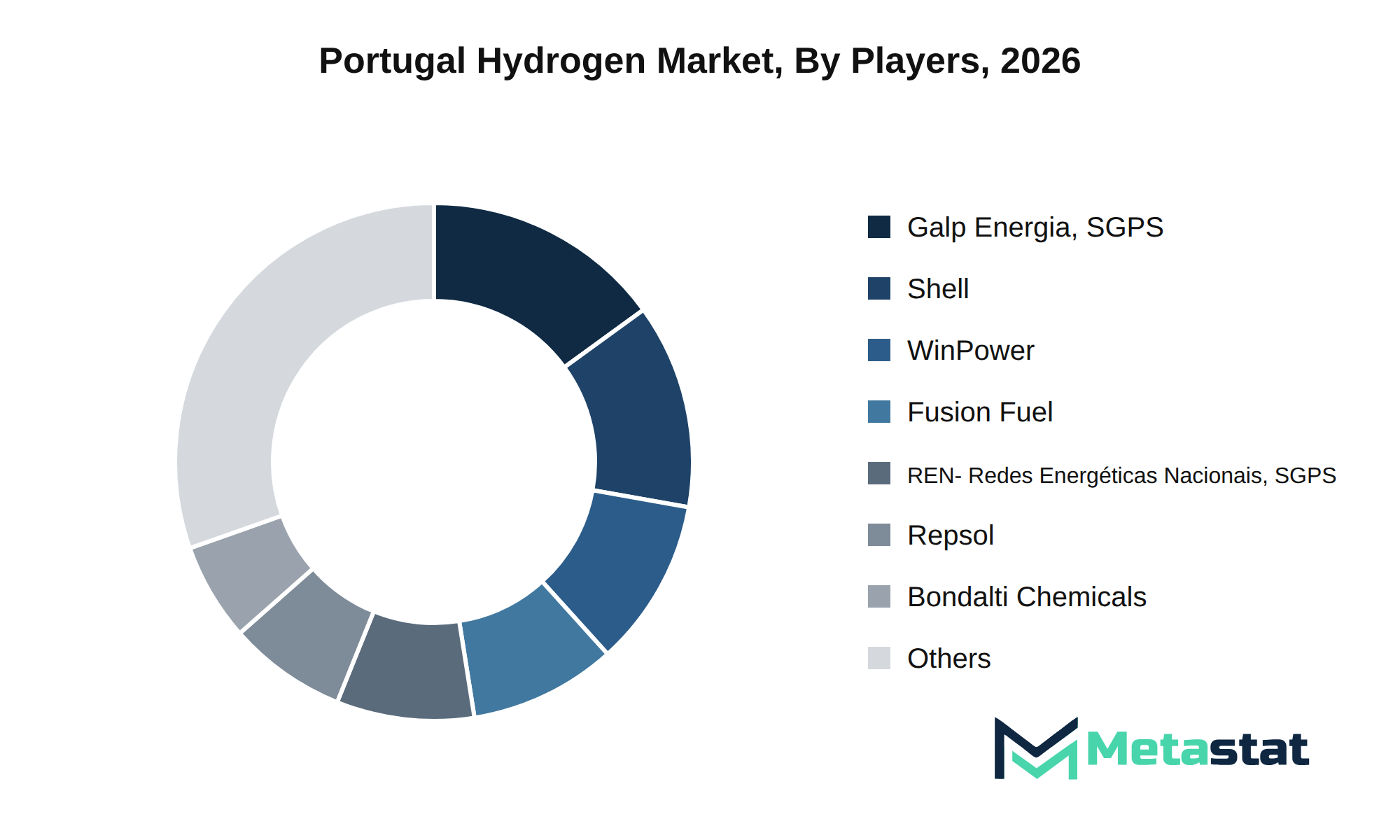
The Portugal Hydrogen market features a diverse set of players focusing on various strategic initiatives. Companies engage in mergers and acquisitions to enhance their market reach and capabilities. Strategic consolidation among firms including Galp Energia, SGPS, S.A. and Shell Plc underlines the competitive nature of the sector, enabling them to leverage integrated operations for greater efficiency and market penetration.
Product differentiation through proprietary technologies is essential in establishing competitive advantages. Firms like WinPower, S.A. and Air Liquide S.A. invest significantly in research and development pipelines to innovate and meet evolving customer demands. Alliances and joint ventures create cross-industry partnerships that enhance technological capabilities and expand market access.
The market faces barriers to entry due to high capital requirements and established brand equity among leading players. Customer retention strategies, including tailored solutions and reliable service, strengthen loyalty and mitigate switching costs. The future outlook indicates a shift towards more integrated value chains, where strategic growth vectors emphasize sustainability and efficiency.
Competitive dynamics in the Portugal Hydrogen market include a blend of established incumbents and emerging innovators. Ongoing investments in technology and strategic partnerships position these companies to respond effectively to market demands and regulatory changes.
Market size is forecast to rise from USD 979.7 million in 2025 to over USD 1,841 million by 2033. The expected growth at an 8.2% CAGR reflects increasing investment in hydrogen technologies and applications driven by regulatory frameworks and industry demand. Adoption of next-generation technologies, including PEM and alkaline electrolysis, alongside emerging applications in mobility and industrial feedstock, positions the market for substantial expansion.
Factors influencing the forecast include macroeconomic scenarios, shifts in downstream demand, and maturation of core hydrogen industries. Regulatory evolution, including compliance milestones and policy enforcement, supports investment and infrastructure commitments. Geopolitical realignments and evolving trade corridors reshape supply chain dynamics, enhancing market potential.
Strategic capital allocation directives emphasize the importance of innovative R&D and commercialization timelines, which address unmet enterprise needs. Integration of sustainable practices alongside economic cycles drives the market toward high-growth pockets, ensuring a robust environment for future development. The Portugal Hydrogen market is set to experience significant transformations, driven by executive-level strategic imperatives and defensibility roadmaps that enhance competitiveness and profitability.
Portugal Hydrogen Market Key Segments
By Hydrogen Type:
- Green Hydrogen
- Blue Hydrogen
- Grey Hydrogen
- Others (Turquoise Hydrogen, Yellow Hydrogen)
By Production Technology:
- PEM Electrolysis
- Alkaline Electrolysis
- Solid Oxide Electrolysis
- Steam Methane Reforming
- Autothermal Reforming
- Others (Biomass Gasification, Methane Pyrolysis)
By Application:
- Industrial Feedstock
- Power Generation
- Mobility
- Gas Grid Injection
- Synthetic Fuels and Chemicals
- Others (Heating, Maritime and Aviation Fuel)
By Distribution Mode:
- On-Site Supply
- Pipeline Distribution
- Compressed Hydrogen Trailers
- Liquid Hydrogen Distribution
- Hydrogen Carrier Distribution
Key Portugal Hydrogen Industry Players
- WinPower, S.A.
- Galp Energia, SGPS, S.A.
- Shell Plc
- REN- Redes Energéticas Nacionais, SGPS, S.A.
- Fusion Fuel
- Bondalti Chemicals, S.A.
- Madoqua Renewables
- Repsol, S.A.
- Floene Energias, S.A.
- PRF Gas Solutions
- Martifer SGPS, S.A.
- Plug Power Inc.
- Air Liquide S.A.
- Burckhardt Compression AG
Report Coverage
The report strategically identifies and profiles the key market players and analyses their core competencies in each sub-segment of the Hydrogen market.
Report Attributes | Details |
Study Period | 2021-2033 |
Base Year | 2025 |
Estimated Year | 2026 |
Forecast Period | 2026-2033 |
Historical Period | 2021-2025 |
Growth Rate | CAGR 8.2% from 2026 to 2033 |
Revenue Unit | USD million |
Segmentation | By Hydrogen Type, Production Technology, Application, Distribution Mode, and Region |
What Report Provides
- Key Company Market Share, Revenue and Ranking for the Portugal Hydrogen Market
- Key Market Leaders and Their Competitive Positioning
- Full In-Depth Analysis of the Hydrogen Industry Dynamics
- Industry Statistics Including Historical and Projected Data
- Segmentation Details of the Portugal Hydrogen Market
- Assessment of Niche Industry Developments and Innovations
- Key Strategies of Major Players in the Market
- Company Profiles of Leading Players in the Hydrogen Sector
Frequently Asked Questions
Find answers to common questions about this report
The Hydrogen market size in Portugal was valued at USD 979.7 million in 2025.
The Hydrogen market is projected to grow at a CAGR of 8.2% during the forecast period from 2026 to 2033.
Green Hydrogen leads the Portugal Hydrogen market with a projected value of USD 1,032.3 million by 2033, representing the highest growth potential among the hydrogen types.
Key drivers for the Portugal Hydrogen market include stringent emission limits that compel industries to adopt hydrogen solutions, significant investments in infrastructure and production technologies, and increasing public awareness of climate change. These factors collectively enhance operational productivity and align business strategies with sustainability goals, supporting market growth.
Regulatory compliance presents significant challenges for the Portugal Hydrogen market, causing delays in project approvals and increasing operational complexities. inflationary pressures contribute to rising costs across the supply chain, making it difficult for companies to maintain competitive pricing. Insufficient infrastructure and talent gaps further hinder market expansion and operational efficiency.
Stringent emission limits and the emphasis on reducing greenhouse gas emissions drive the adoption of hydrogen solutions for compliance. Increased public awareness of climate change and a favorable capital investment environment support the transition towards green hydrogen technologies, enhancing market growth opportunities.
The Hydrogen market is estimated to reach a valuation of USD 1,841 million by 2033.
Key players in the Portugal Hydrogen market include WinPower, S.A., Galp Energia, SGPS, S.A., Shell Plc, REN- Redes Energéticas Nacionais, SGPS, S.A., Fusion Fuel, Bondalti Chemicals, S.A., and Air Liquide S.A.
Green hydrogen is projected to experience a compound annual growth rate (CAGR) of 12.2 percent from 2026 to 2033.
The blue hydrogen market is expected to reach USD 238.2 million by 2033.
Choose Your License
Portugal Hydrogen Market
Related Reports
Explore related market intelligence reports worth reading alongside this one.
Czech Republic Commercial and Industrial Solar PV Market
Starting from
$2950