
LEAD ANALYST
Utkarsh Khirodkar is a Lead Market Research Analyst at MetaStat Insight, specializing in market intelligence, technology sector assessments, and competitive strategy.

Global Poultry Breeders Market Size, Share, By Poultry Category (Broiler Chickens, Layer Chickens, Turkeys, Ducks, Geese and Guinea Fowl), By Breeding Method (Natural Breeding and Artificial Insemination), By Production Type (Intensive, Extensive and Semi-Intensive), By End-Use (Meat Production, Egg Production and Specialty Poultry Production), Industry Analysis, Growth, Trends, and Forecast, 2026-2033
Report ID
MSI-5109
Published
August, 2026
Updated
Pages
283 Pages
Format
Historical
Base year
Forecast
Forecast period
Report Details
Choose Your License
Global Poultry Breeders Market
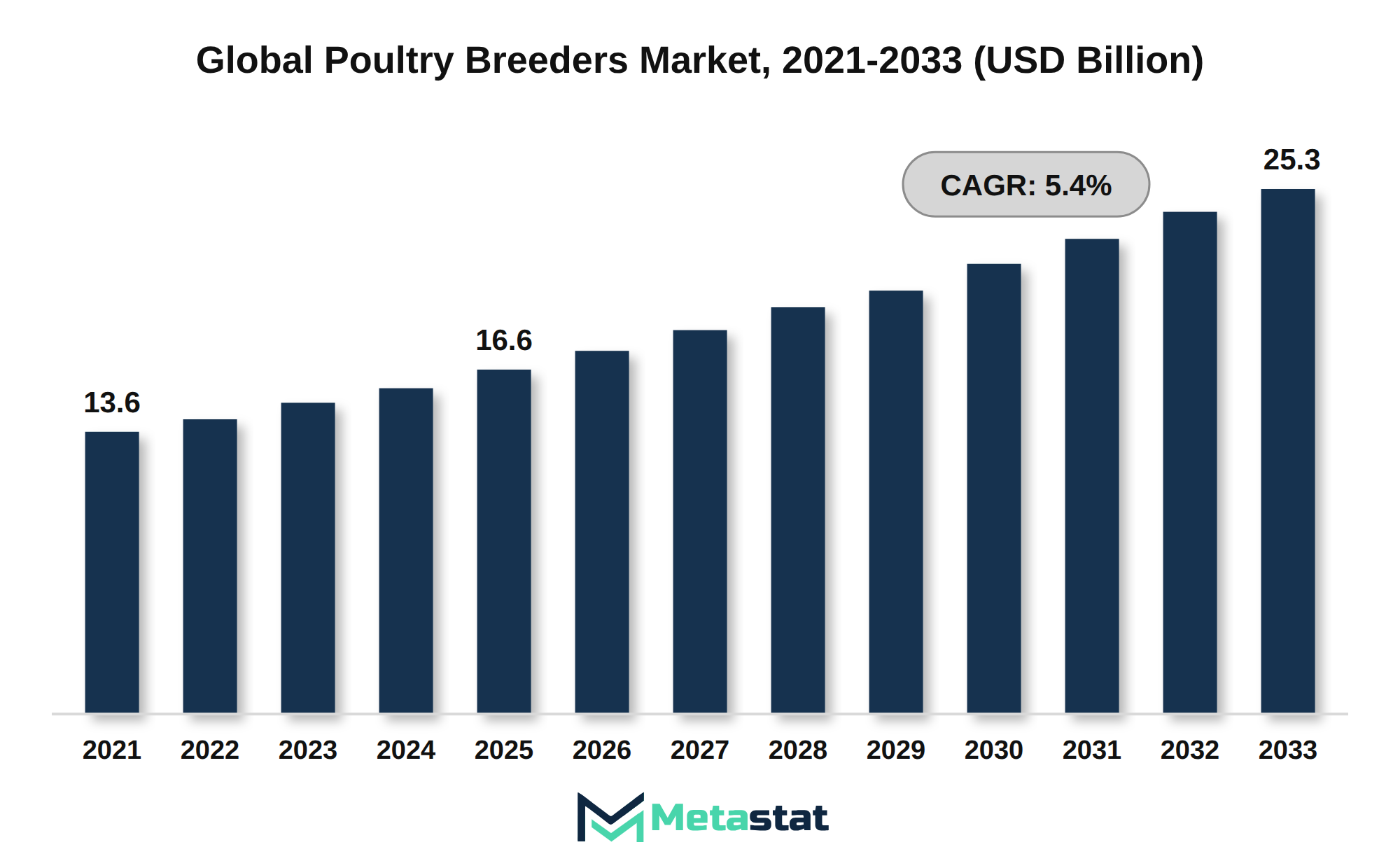
The global Poultry Breeders market was valued at USD 16.6 billion in 2025 and is projected to reach USD 25.3 billion by 2033, growing at a CAGR of 5.4% over the forecast period.
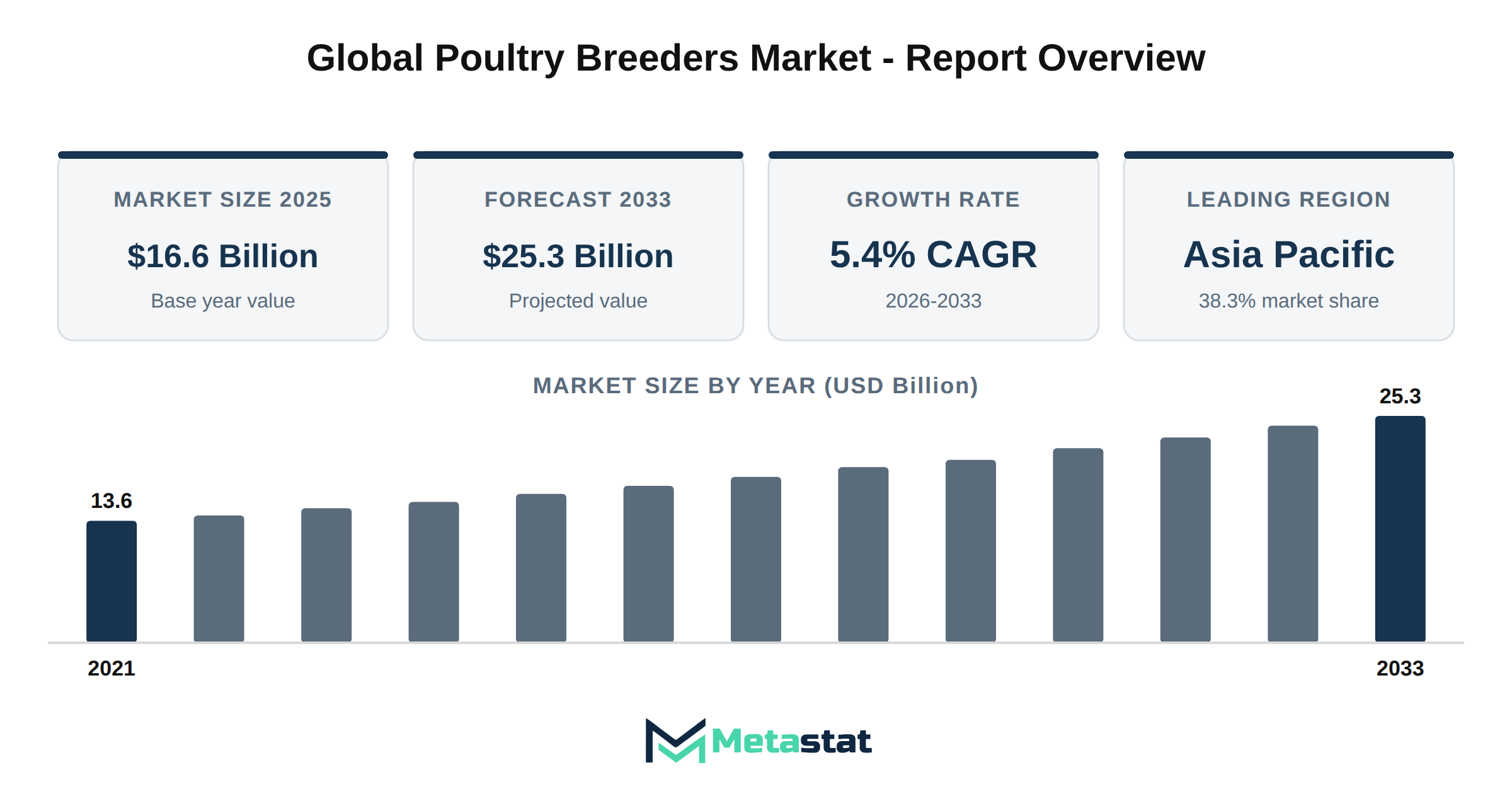
The Poultry Breeders market reached a value of USD 16.6 billion in 2025, following steady growth over previous years. The market is projected to grow at a compound annual growth rate (CAGR) of 5.4%, reaching USD 25.3 billion by 2033. Historical market values indicate an increase from USD 13.6 billion in 2021 to USD 15.7 billion in 2024, reflecting a consistent upward trend in demand and production capacities.
In 2026, the market is expected to reach USD 17.5 billion, with continued growth fueled by increasing consumer demand for poultry products. The market fragmentation presents significant opportunities for various segments, including Broiler Chickens, Layer Chickens, and Turkeys. Broiler Chickens represent a substantial share, with projected values increasing from USD 9.2 billion in 2026 to USD 13.6 billion by 2033, achieving a CAGR of 5.7%.
Natural Breeding and Artificial Insemination methods play critical roles in the poultry breeding process. The Natural Breeding segment is anticipated to grow from USD 14.3 billion in 2026 to USD 19.9 billion in 2033, while Artificial Insemination is set to reach USD 5.4 billion during the same period, reflecting a CAGR of 7.4%. These breeding methods are integral to enhancing productivity and meeting the rising demand for poultry products.
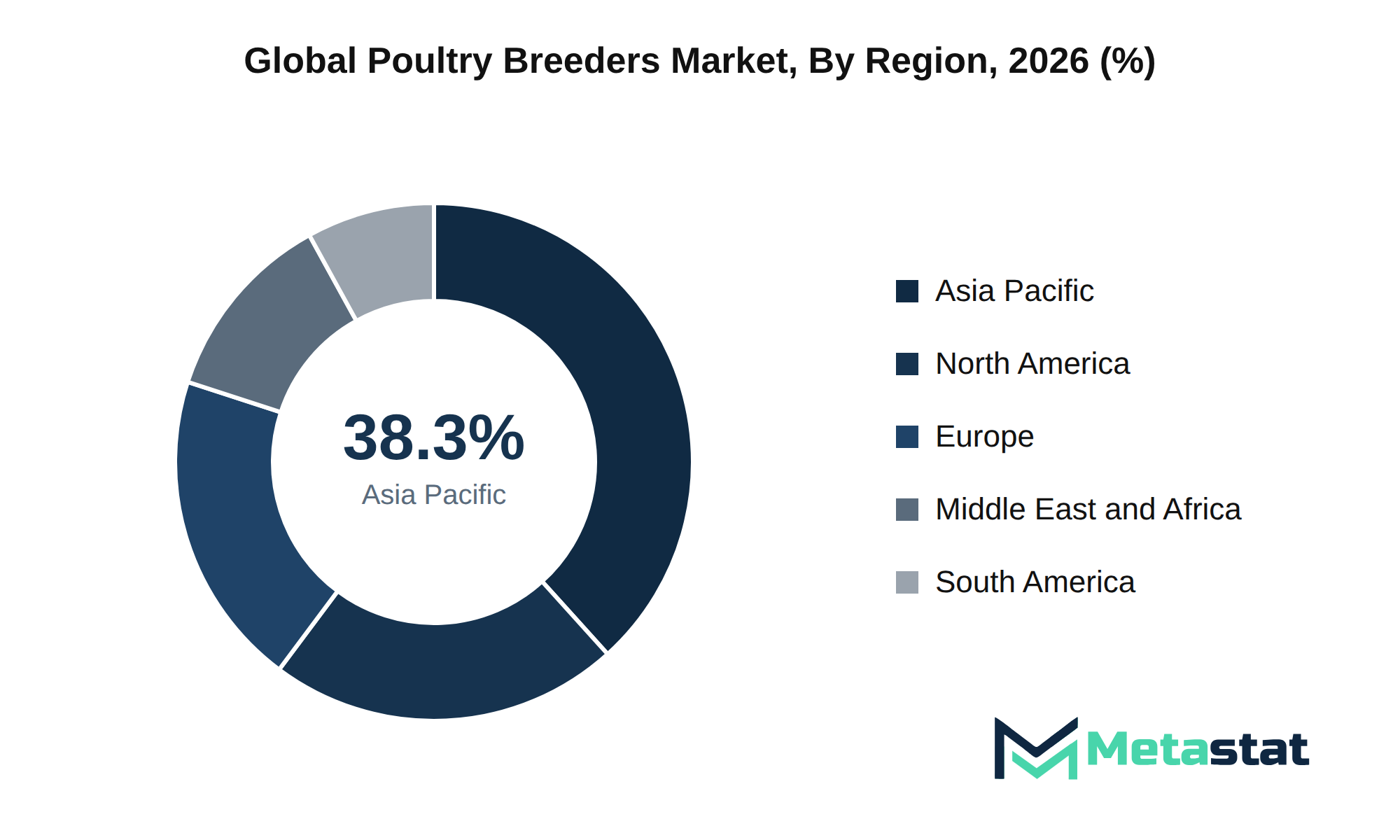
Regional analysis shows that Asia Pacific holds the largest market share at 38.3%, followed by North America at 21.9% and Europe at 19.8%. This regional distribution indicates varying levels of market maturity and consumer preferences. North America is expected to generate USD 5.2 billion by 2033, demonstrating a CAGR of 5.4%. Such regional dynamics require tailored strategies to address specific market conditions and consumer behaviors. Europe is projected to experience growth driven by shifting consumer preferences towards sustainable and ethically sourced poultry products.
The regulatory framework surrounding the Poultry Breeders market significantly influences operational strategies. Compliance with health and safety standards is essential for producers, ensuring product quality and consumer safety. This commitment to regulatory adherence enhances market credibility and builds trust among consumers and stakeholders.
Research and development trajectories play a critical role in driving innovation within the market. Investment in advanced breeding techniques, including genetic selection and artificial insemination, increases productivity and sustainability. These innovations contribute to higher yields and improved disease resistance, addressing the growing global demand for poultry products.
Sustainable transformation within the Poultry Breeders market aligns with global environmental goals. The emphasis on decarbonization and circular economy dynamics encourages producers to adopt eco-friendly practices. Initiatives promoting waste reduction and resource efficiency significantly enhance operational sustainability, meeting consumer expectations for environmentally responsible products.
The supply chain landscape exhibits complexities that impact the market. Efficient logistics architecture and effective sourcing strategies are vital for meeting demand fluctuations. Producers increasingly prioritize local sourcing to mitigate risks associated with global supply chain disruptions, ensuring a more resilient operational framework.
Market fragmentation presents both challenges and opportunities. A diverse range of players, from large corporations to small-scale farms, contributes to a competitive environment. This diversity drives innovation while necessitating strategic alliances and collaborations to optimize resources and expand market reach.
Future strategic outlooks for the Poultry Breeders market emphasize the importance of capital allocation in research and infrastructure investments. Companies prioritizing these areas position themselves for growth, enhancing their competitive edge and market share. High-value recommendations include investing in innovative breeding technologies and sustainable practices to align with evolving consumer preferences.
Growing global populations and changing dietary preferences contribute to rising demand for poultry protein sources. Urbanization and increasing disposable incomes influence consumer behavior, prompting a shift towards more protein-rich diets. This transition increases the importance of poultry because a staple protein source across various demographics.
Investment in poultry breeding technology and processes enhances production efficiency. Technological advancements in automation and digital integration improve operational productivity, enabling producers to meet escalating protein demands. The Poultry Breeders market benefits from these innovations, which enhance breeding practices and increase yield.
The trend toward sustainable and ethical food production drives further growth in the market. Consumers increasingly favor poultry products that align with environmental and ethical considerations, pushing producers to adopt more sustainable practices. This shift towards responsible production presents opportunities for market participants focused on sustainability and resource stewardship.
Macro-economic factors, demographic shifts, and evolving consumer behaviors present strong growth drivers for the Poultry Breeders market. These elements significantly contribute to the market's expansion, prompting stakeholders to invest in innovative technologies and sustainable practices that align with consumer preferences.
The Poultry Breeders market benefits from macro-economic factors that enhance production capabilities and boost consumer purchasing power. Increased GDP growth rates in numerous regions contribute to higher disposable incomes, allowing consumers to spend more on quality poultry products. Economic expansion stimulates investments in the poultry sector, driving demand for breeding technologies and operational efficiency improvements.
Capital investment environments, characterized by favorable interest rates and robust venture funding, support infrastructure development and asset modernization within the market. Investments in automation and advanced breeding technologies enhance operational productivity, leading to cost-efficiency initiatives that optimize labor usage and streamline processes. Such developments create a competitive landscape that encourages market participants to innovate, resulting in diversified product offerings.
The Poultry Breeders market experiences benefits from shifting demographic patterns that influence consumption trends. An aging population increasingly seeks healthy protein sources, further propelling the demand for poultry. Urbanization trends contribute to changing consumer behaviors, driven by urban dwellers' preference for convenient, high-quality food options, including poultry products. This dynamic environment creates growth opportunities across various segments, with producers adapting to evolving consumer preferences.
Technological integration, particularly through digital transformation, enhances market efficiency. The adoption of advanced software solutions for data management and process optimization enables producers to respond swiftly to market demands. Investments in artificial intelligence and automation facilitate improved breeding methodologies, increasing yield potential and meeting the rising expectations of consumers.
Regulatory tightening poses challenges for the Poultry Breeders market, particularly through compliance hurdles and legal mandates that demand stricter adherence to environmental and health standards. Such regulations often lead to increased operational costs for producers, impacting profitability and market entry for smaller entities. The financial burden associated with meeting these compliance requirements restricts investment in innovation and expansion, thereby limiting market growth potential.
Macroeconomic headwinds, including inflationary pressures, contribute significantly to operational challenges. Rising costs of feed, labor, and infrastructure directly affect profit margins, prompting producers to reassess pricing strategies. These inflationary trends deter new investments in poultry breeding, leading to capital stagnation and reduced competitiveness within the market.
Supply chain disruptions further compound these issues, affecting the availability of essential inputs and increasing lead times for production. Geopolitical instability has introduced uncertainty, particularly in regions dependent on imported breeding stock and feed materials. Such disruptions slow production rates, limiting the market's ability to meet growing demand.
Technological obsolescence presents additional risks, arising from older breeding technologies that struggle to compete against innovations offering better efficiency and higher yields. Producers face pressure to invest in new technologies that align with evolving market demands, and a failure to do so results in loss of market share. High capital investment requirements for upgrading technologies often extend return-on-investment periods, discouraging immediate financial commitments.
The Poultry Breeders market experiences significant restraint from regulatory requirements, inflationary pressures, supply chain challenges, and technological advancements. Each of these factors contributes to a complex environment that impacts growth and competitive dynamics within the industry.
Geopolitical fragmentation creates significant challenges for the Poultry Breeders market, inducing trade deficits that hinder market expansion. Uncertain trade agreements and shifting tariffs impact cost structures for producers, resulting in decreased competitiveness and increased prices for consumers. These developments complicate both domestic and international supply chains, complicating sourcing strategies and leading to heightened operational costs.
Technological disruptions within the sector contribute to market instability. Rapid advancements in breeding technologies increase the complexity of research and development integrations, often leading to interoperability friction among various systems. This complexity delays the adoption of new innovations, restricting potential growth avenues and increasing investment risks for stakeholders.
Logistics disruptions stemming from geopolitical tensions exacerbate supply chain instability, impacting the timely delivery of feedstock and components essential for poultry production. Disruptions in transportation networks create inefficiencies, resulting in higher expenses that directly affect profitability for producers. Volatility in feedstock prices further compounds these issues, leading to pricing compression and margin pressures across the market.
Workforce skill gaps present an additional challenge for the Poultry Breeders market. A shortage of skilled labor hampers productivity and inhibits the efficient implementation of advanced technologies. Talent retention pressures complicate workforce management, making it difficult for companies to maintain a competitive edge in the evolving landscape.
Environmental considerations increasingly shape the operational framework for the market. Stringent sustainability demands and decarbonization mandates drive organizations to adapt their practices, often requiring significant investments in infrastructure and retrofitting. These shifts create implementation bottlenecks that delay progress and increase costs, ultimately affecting market dynamics and growth potential.
Rapid urbanization and a growing middle class in emerging economies significantly boost the Poultry Breeders market. Increased consumption of poultry products, particularly in Asia Pacific, enhances demand from both consumers and food service industries. This region holds the largest market share at 38.3 percent, driven by populations seeking affordable protein sources and diverse culinary options. The transition from traditional to modern farming practices in these regions supports scalability and efficiency, leading to higher output and profitability.
Infrastructure modernization plays an essential role in meeting the evolving needs of the Poultry Breeders market. Investments in supply chains, processing facilities, and distribution networks improve product quality and availability. Enhanced logistics capabilities facilitate timely delivery of poultry products, addressing consumer expectations for freshness and traceability. This modernization drives greater competition among suppliers and encourages innovation in breeding techniques, further propelling market growth.
Technological disruptions and digital transformation significantly impact the Poultry Breeders market. Adoption of automated systems and data analytics enhances breeding efficiency and genetic improvement. Farmers leverage precision technologies to optimize feeding, health monitoring, and overall production, resulting in improved yields and reduced operational costs. These advancements streamline processes and attract investments from technology-driven firms seeking to capitalize on the evolving market.
Sustainability imperatives shape the strategies of market players. Environmental concerns gain traction among consumers. Poultry breeders increasingly adopt eco-friendly practices and sustainable sourcing to align with consumer expectations and regulatory requirements. Efforts to reduce carbon footprints and improve animal welfare enhance brand reputation and build customer loyalty, ultimately driving sales in the market.
The Poultry Breeders market experiences downstream diversification driven by companies exploring niche applications and product integrations. Specialization in organic, free-range, and heritage breeds caters to changing consumer preferences, allowing firms to differentiate themselves in a competitive environment. This diversification strategy enhances revenue streams and mitigates risks associated with market fluctuations.
The Global Poultry Breeders market is segmented based on Poultry Category, Breeding Method, Production Type, and End-Use.
Broiler Chickens segment is valued at USD 9.2 billion in 2026 and is projected to reach USD 13.6 billion by 2033, at a CAGR of 5.7% during the forecast period. Increasing demand for high-protein diets drives growth in this segment, reflecting a global shift towards poultry consumption for its nutritional benefits. The affordability and versatility of broiler chickens support their popularity among consumers, particularly in developing regions where meat consumption continues to rise.
Technological advancements in breeding techniques have improved the efficiency and productivity of broiler farming, enhancing overall yield. Integrating automation and data analytics within production processes reduces operational costs and improves supply chain management. This evolution directly influences the profitability of producers and enhances the overall performance of the market.
Regulatory compliance, including food safety standards and animal welfare considerations, influences production practices. Adhering to these regulations promotes consumer confidence, ensuring sustainable growth in the broiler chicken sector. The market adapts to increasing scrutiny by innovating practices that align with emerging standards while maintaining cost-effectiveness.
Investment in infrastructure and technology within the Poultry Breeders market positions producers to meet rising consumer demands efficiently. By enhancing production capabilities, companies capitalize on expanding market opportunities, ensuring a robust supply of broiler chickens to satisfy both domestic and international markets.
Demand for Layer Chickens in the Poultry Breeders market is driven by the escalating need for egg production globally. The segment is estimated to reach USD 6.8 billion by 2033, at a CAGR of 4.9% during the forecast period. Factors including changing consumer preferences for protein sources and increased health awareness support the demand for eggs and poultry products. The segment benefits from advancements in breeding technologies, allowing for improved genetic traits that enhance productivity and resilience in poultry farming.
Competitive pressures within the market fuel the adoption of innovative practices and technologies, including better feed conversion ratios and animal welfare standards. This continuous evolution attracts investment and creates a climate for growth. The increasing demand for organic and free-range eggs further influences consumer behavior, compelling producers to adapt their offerings to meet market expectations.
Regulatory compliance regarding food safety and animal welfare significantly impacts production methods in the Layer Chickens segment. Adherence to these standards ensures product integrity and consumer trust, affecting overall market dynamics. Cost structures remain a consideration, driven by fluctuating feed prices and operational costs that impact margins throughout the supply chain. Understanding these factors will be crucial for stakeholders looking to navigate the complexities of the Poultry Breeders market.
Significant growth characterizes the Turkeys segment of the Poultry Breeders market, projected to reach USD 1.9 billion by 2033. Consumer preferences for turkey meat, particularly during festive seasons, drive demand. These shifting consumption patterns influence breeding practices and production methods, emphasizing efficiency and quality in the market.
Technological advancements play a crucial role in enhancing breeding techniques, contributing to higher yields and healthier stock. Innovations in biosecurity measures and feed efficiency further support segment expansion. The integration of artificial insemination techniques improves genetic diversity and performance, positively impacting production output.
Market participants explore strategic opportunities, focusing on sustainability and environmental compliance. Regulatory standards for animal welfare and food safety shape operational protocols, ensuring that producers meet consumer expectations. Enhanced certifications related to organic and free-range practices appeal to health-conscious consumers, reinforcing loyalty and brand value.
Cost structures fluctuate due to varying feed prices and operational expenses. Effective management of these factors enhances profitability margins, allowing producers to remain competitive. The market's resilience to economic fluctuations hinges on ongoing investments in research and development, driving innovation and adaptation to market conditions.
Growth in the Ducks segment aligns with increasing consumer preferences for diverse poultry products. Rising health consciousness among consumers drives demand for duck meat, known for its rich flavor and nutritional benefits. This shift in consumption patterns presents an opportunity for producers to enhance their market presence through targeted marketing and product differentiation.
The Ducks segment grows at a CAGR of 5.6% during the forecast period. Innovations in breeding techniques and improvements in feed efficiency contribute to enhanced production capabilities. These advancements result in better-quality products, appealing to both domestic and international markets, ultimately leading to increased revenue streams for producers.
Investment in sustainable farming practices supports segment growth. While environmental concerns rise, consumers favor producers who implement eco-friendly methods. Compliance with evolving regulatory standards enhances market competitiveness, positioning the Ducks segment because a viable alternative in the poultry breeders market.
With ongoing technological maturation, producers focus on next-generation breeding practices that optimize yield and address animal welfare concerns. Strategic partnerships and collaborations within the industry promote knowledge sharing and resource optimization, driving overall market growth. The Ducks segment becomes a focal point for capital investments, reflecting its significance in the poultry breeders market.
Geese production within the Poultry Breeders market represents a niche segment, driven by specific culinary preferences and cultural practices. Consumer demand for geese often correlates with festive occasions and traditional recipes, which creates unique seasonal peaks in production. This segment benefits from a growing interest in gourmet and organic food products, enhancing its appeal among consumers who prioritize quality over quantity.
Technological maturation in breeding techniques improves the health and productivity of geese. Advancements in genetics and feeding strategies contribute to enhanced growth rates and better livability, which supports the segment's expansion. Adoption of these technologies is critical in meeting the specific demands associated with geese production, ensuring sustainability while maximizing output.
Next-generation upgrades, including automated systems for feeding and monitoring, improve efficiency in managing geese. Such systems reduce labor costs and enhance the overall productivity of breeding operations. Increased investments in these technologies reflect the growing importance of automation to maintain competitive advantages within the market.
Consumption shifts towards leaner meats and diverse culinary options influence the dynamics of the geese segment. Chefs and home cooks alike are exploring new recipes that incorporate geese, pushing for increased availability and variety in products. This trend encourages producers to expand their offerings and diversify their product lines.
Regulatory compliance standards ensure the safety and quality of geese products. Adherence to these standards builds consumer trust and encourages market growth, driven by producers striving to meet and exceed regulatory requirements. The evolving landscape of food safety regulations requires constant adaptation and strategic planning within the market.
Pricing volatility remains a concern for geese producers, driven by fluctuations in feed costs and market demand. Effective management of cost structures is essential for maintaining profitability, particularly in times of economic uncertainty. Producers focus on sourcing high-quality raw materials while navigating the complexities of fluctuating prices, ensuring consistent supply and product quality.
Strategic opportunity windows exist for producers looking to introduce innovative products and expand their market share. Capital investment in research and development leads to new product offerings, catering to emerging consumer preferences. Identifying and capitalizing on these windows is essential for maintaining a competitive edge within the Poultry Breeders market.
Increasing interest in alternative meat sources drives attention toward Guinea Fowl within the Poultry Breeders market. Consumers seek diverse protein sources owing to health and environmental considerations, leading to heightened demand for this segment. The unique flavor profile and lower fat content of Guinea Fowl appeal to health-conscious consumers and gourmet cooks alike.
Technological maturation in breeding techniques enables better growth rates and disease resistance, which enhances the attractiveness of Guinea Fowl production. Innovations in husbandry practices simplify the raising of these birds, making them more accessible to a broader range of farmers. This advancement supports segment expansion by lowering barriers to entry for new producers.
The end-use dynamics of Guinea Fowl reflect changing consumer preferences. The trend towards specialty poultry products strengthens the market, with restaurants and culinary institutions increasingly incorporating Guinea Fowl into their menus. This shift in consumption patterns increases interest in Guinea Fowl production due to chefs seeking unique offerings to differentiate their culinary experiences.
Pricing volatility presents a challenge within the market, influenced by factors including feed costs and market demand fluctuations. Producers face margin pressures, requiring strategic pricing and cost management to remain competitive. Regulatory compliance standards pertaining to animal welfare and food safety add another layer of complexity, impacting operational costs and production methodologies.
Opportunities exist in strategic investments focused on enhancing breeding programs and supply chain resilience. By adopting advanced breeding technologies and improving logistics, producers mitigate risks associated with supply chain vulnerabilities. This proactive approach creates stability in the market, positioning Guinea Fowl because a viable option alongside traditional poultry categories.
Consumer interest in specialty poultry, including quail, pigeons, and game birds, reflects shifting dietary trends and a growing preference for unique culinary experiences. This segment receives attention from both niche markets and gourmet culinary applications, creating opportunities for producers to cater to diverse consumer tastes. Increased demand for exotic poultry products contributes to market expansion, allowing suppliers to explore new breeding methods and production techniques.
Technological advancements in breeding techniques enhance the efficiency and productivity of specialty poultry production. Innovations in artificial insemination and genetic selection lead to improved yields and healthier birds. This evolution supports competitive positioning within the Poultry Breeders market, enabling producers to respond to rising demand with higher quality and more resilient stock.
Downstream applications in gourmet food services and specialty restaurants drive demand for quail, pigeons, and game birds, positioning this sub-segment favorably within the broader market. Evolving consumer preferences necessitate the ability to offer a range of specialty products that align with industry trends. Establishing strong supply chains and focusing on quality assurance enhances market presence and profitability for producers in this niche.
Regulations surrounding food safety and animal welfare impact production practices within this sub-segment. Compliance with standards ensures product quality and enhances consumer confidence. Meeting these standards positions suppliers advantageously in the competitive landscape, increasing their appeal to health-conscious and quality-driven consumers.
Valued at USD 14.3 billion in 2026, the Natural Breeding segment is projected to reach USD 19.9 billion by 2033, reflecting a CAGR of 4.9% during the forecast period. This growth results from increasing consumer demand for organic and naturally bred poultry products, driven by health consciousness and a preference for antibiotic-free meat. Producers focus on maintaining genetic diversity and sustainable practices, which enhances product appeal in the market.
The segment's expansion is supported by advancements in breeding techniques that improve yield and quality. Natural breeding emphasizes traditional methods, appealing to consumers seeking authenticity and transparency in food sourcing. This trend aligns with broader consumption shifts favoring sustainable and ethically sourced products, positioning the market for continued growth.
Regulatory compliance regarding animal welfare standards plays a critical role in shaping the Natural Breeding landscape. Producers adapt practices to meet evolving regulations, ensuring consumer trust and market access. Cost structures associated with natural breeding remain higher due to the need for more extensive management and husbandry practices. The premium pricing of natural products compensates for these increased costs, resulting in an attractive profit margin.
Investment in breeding technology and genetics enhances the operational efficiency of natural breeding. By focusing on improving breeding outcomes through research and development, stakeholders in the market secure a competitive advantage. Strategic opportunity windows within this segment encourage ongoing investment, driving innovation and quality improvements essential for capturing market share.
Technological advancements in breeding techniques drive growth in the Artificial Insemination segment of the Poultry Breeders market. Enhanced precision and efficiency in this breeding method increase productivity and genetic quality in poultry production, attracting producers focused on maximizing yield. Investment in research and development creates innovative solutions that improve success rates in artificial insemination, creating substantial opportunities for market participants.
Rising demand for high-quality meat and eggs directly influences the adoption of artificial insemination practices, enabling producers to meet consumer preferences effectively. This method allows farmers to apply superior genetics, resulting in healthier birds and higher output. The market is projected to reach USD 5.4 billion by 2033, at a CAGR of 7.4% during the forecast period.
Increased awareness of biosecurity and disease prevention strategies enhances the appeal of artificial insemination. Producers recognize that this method reduces the risk of pathogen transmission associated with natural breeding. Evolving consumer trends favor ethically produced poultry, further propelling adoption rates. While industry stakeholders adapt to these shifts, the market for artificial insemination is anticipated to experience continued expansion.
Valued at USD 12.3 billion in 2026, the Intensive segment is projected to reach USD 18.1 billion by 2033, reflecting a CAGR of 5.6% during the forecast period. Growing consumer demand for protein-rich diets and increased meat consumption drive demand within this segment. Producers favor intensive production methods due to their efficiency and higher yield potential. Enhanced breeding technologies and better feed conversion ratios contribute to improved productivity, making intensive methods economically viable for large-scale operations.
Technological maturation within the sector supports the adoption of next-generation breeding techniques. Innovations including genomic selection and precision breeding improve flock performance, leading to increased profitability for producers. In addition, shifts in consumption patterns towards convenience foods and ready-to-cook meat products influence the demand for poultry produced through intensive methods. Regulatory compliance around food safety and animal welfare shapes operational strategies, ensuring adherence to evolving standards while maximizing production capabilities.
Raw material sourcing remains critical for managing cost structures and pricing volatility. Fluctuations in feed prices directly impact profit margins for producers operating in the market. Strategic investments in supply chain resilience enhance the capability to mitigate risks associated with sourcing and logistics vulnerabilities. While competition intensifies, companies focusing on technological upgrades and product evolution gain a competitive edge, capturing market share in this expanding segment.
Growing consumer preference for sustainably sourced poultry products influences the Extensive segment of the Poultry Breeders market. This segment emphasizes natural breeding practices, appealing to environmentally conscious consumers seeking responsible sourcing and production methods. While these practices align with market trends, they support the segment's growth.
Increased interest in free-range and pasture-raised poultry promotes the demand for extensive breeding methods. These methods typically result in higher product prices, offering improved profit margins for producers. The segment is estimated to reach USD 4.1 billion by 2033, at a CAGR of 4.2% during the forecast period.
Technological advancements in farming practices contribute to operational efficiencies, enhancing the segment's appeal among poultry producers. Innovations in animal welfare and environmental sustainability standards drive the adoption of extensive methods, positioning the market for significant expansion. These trends reinforce the importance of extensive breeding practices, reflecting evolving consumer preferences and regulatory landscapes.
Investment in the Semi-Intensive segment drives its projected growth, reaching USD 3.1 billion by 2033. This segment benefits from a balance between intensive and extensive production methods, appealing to producers requiring flexibility and efficiency. Adoption of innovative breeding technologies enhances productivity and improves overall flock health, further attracting investment. The market sees a notable shift towards sustainable practices, where Semi-Intensive production meets rising consumer demand for ethically sourced poultry products.
End-use dynamics play a significant role in shaping the Semi-Intensive segment. Increased demand for both meat and egg production fuels growth, particularly in regions where consumers prioritize quality and sustainability. Heightened awareness regarding food origins influences consumer behavior, prompting companies in the Poultry Breeders market to adapt their practices to align with these preferences, driving segment expansion.
Pricing volatility remains a concern, influenced by fluctuations in feed costs and regulatory changes. Producers experience margin pressures amid rising operational costs, necessitating strategic decisions regarding pricing structures. Companies investing in cost-effective breeding methods and efficient production techniques gain competitive advantages, positioning themselves favorably in the evolving market landscape.
Valued at USD 11.3 billion in 2026, the Meat Production segment is projected to reach USD 16.4 billion by 2033, at a CAGR of 5.5% during the forecast period. The increase in demand for meat products, driven by population growth and rising disposable income, significantly influences this segment. Consumers prioritize animal welfare and sustainability, resulting in heightened interest in ethically sourced poultry meat. The Poultry Breeders market benefits from advancements in breeding technology that enhance production efficiency and flock health.
Investment in innovative breeding methods, including genetic selection and artificial insemination, enhances productivity in meat production. Regulatory compliance standards around food safety and quality shape market dynamics, prompting producers to adopt advanced practices. Price volatility in feed and operational costs remains a concern, impacting margins. Strategic opportunities arise from increasing global meat consumption, encouraging producers to optimize supply chains. The focus on meat production drives growth within the market, aligning with consumer trends and industry advancements.
Increasing consumer demand for eggs contributes significantly to the growth of the Egg Production segment within the Poultry Breeders market. This segment is expected to reach USD 7.5 billion by 2033, at a CAGR of 4.8% during the forecast period. Rising health consciousness among consumers drives a shift towards protein-rich diets, enhancing the appeal of egg consumption. Innovations in breeding and management practices boost production efficiency and egg quality, addressing evolving consumer preferences.
Regulatory compliance and certifications influence the segment, driven by producers adapting to standards that promote animal welfare and food safety. These factors enhance consumer trust and drive demand. Pricing volatility in feed and raw materials presents a challenge, impacting production costs and profit margins within the market. Strategic investments in technology and sustainable practices present opportunities for growth, ensuring the segment remains competitive in a dynamic marketplace.
Growing interest in specialty poultry significantly influences the market. This segment, which includes products including quail, pigeons, and game birds, caters to niche consumer preferences. With a projected value of USD 1.4 billion by 2033, specialty poultry production continues attracting attention from producers aiming to diversify offerings and capture premium pricing. Demand drivers encompass shifts in consumer behavior toward unique culinary experiences and higher quality products.
Technological maturation in breeding and production techniques enhances operational efficiencies and product quality. Producers investing in innovative practices capitalize on market trends while ensuring compliance with evolving regulatory standards. While the market expands, attention to sustainable sourcing practices and ethical production methods strengthens brand loyalty among consumers.
Strategic opportunities arise from growing health consciousness and the pursuit of alternative protein sources. This trend results in increased competition among producers within the poultry breeders market, further pushing the development of specialty products. Continued investment in this segment supports growth, with evolving consumer preferences propelling demand for specialty poultry products.
Based on geography, the Global Poultry Breeders market is divided into North America, Europe, Asia-Pacific, South America, Middle East, and Africa.
North America hosts several market participants in the global Poultry Breeders market. This region is set to expand at a CAGR of 5.4% within the forecast period, reaching a market size of USD 5.2 billion by the end of 2033. Key demand drivers include the increasing consumption of poultry products driven by population growth and changing dietary preferences favoring protein-rich foods.
The market benefits from strong infrastructure and localized manufacturing capabilities, particularly in the United States, Canada, and Mexico. These countries feature established supply chains and a preference for domestically sourced poultry, enhancing operational efficiencies. Regionalization trends and nearshoring initiatives support domestic production, which reduces dependency on international supply chains.
Investment in technology and breeding methods accelerates growth in segments like Broiler Chickens and Layer Chickens. The emphasis on modernization cultivates a competitive landscape where domestic players, including Ross Poultry Breeders and Cobb-Vantress, drive innovation and efficiency. Market dynamics favor high-value replacement cycles, particularly in intensive production types, which further supports growth.
Consumer demand for sustainably sourced products influences purchasing behavior across the region, prompting suppliers to enhance their offerings. The Poultry Breeders market in North America experiences incremental growth through emerging trends in specialty poultry production, aligning with regional consumer preferences. Continued focus on compliance with local regulatory frameworks ensures market participants maintain competitive advantages while adhering to safety and quality standards.
The Poultry Breeders market in Europe demonstrates a robust market presence, accounting for 19.8% of the global market share in 2025. Demand for poultry products is influenced by cultural preferences, which vary across countries including Germany, France, the UK, Italy, Spain, and Russia. Increasing consumer focus on sustainably sourced products drives market dynamics, with buyers seeking high-quality offerings.
Germany and France emerge because significant contributors to the market, supported by established poultry production systems. The UK exhibits a growing interest in diverse poultry segments, including specialty breeds, aligning with shifting consumer preferences. Italy and Spain focus on traditional poultry production methods, influencing regional market dynamics.
Regional supply chain factors, including localized manufacturing densities and procurement dynamics, enhance the market's resilience. The competitive landscape features several domestic leaders who adapt to evolving consumer demands and regulatory frameworks. Investment in innovative breeding technologies and infrastructure modernization strengthens market positioning for key players, enabling them to respond effectively to market changes.
Emerging trends in the market include heightened emphasis on biosecurity and animal welfare standards, which influence production practices. These factors work in tandem with foreign direct investment flows, facilitating geographic expansion opportunities for both existing and new market entrants. The Poultry Breeders market in Europe is poised for growth, driven by solid demand, regional dynamics, and strategic investments.
The Asia-Pacific region plays a crucial role in the Poultry Breeders market, contributing significantly to the overall market value. With a share of 38.3% of the global market in 2025, this region demonstrates strong demand driven by increasing population and rising protein consumption. Countries including China, Japan, and India exhibit considerable growth potential due to expanding urbanization and evolving dietary preferences.
Technological advancements in breeding methods, particularly artificial insemination, gain traction in these markets. This trend enables higher productivity and efficiency, directly impacting output levels. The Poultry Breeders market continues to expand with strong investments in intensive production systems, especially in countries like China and India, where large-scale operations become increasingly common.
Local compliance mandates and regulatory frameworks significantly shape operational dynamics across the region. Domestic players adapt to these regulations, creating competitive landscapes that encourage innovation and investment. An increasing focus on sustainability and local sourcing enhances procurement strategies, aligning with global environmental concerns.
The presence of established domestic market participants, alongside emerging players, creates a diverse competitive environment. Companies actively pursue partnerships and technological collaborations to enhance market penetration. Cross-border trade corridors facilitate access to broader markets, enabling regional suppliers to expand their reach.
Infrastructure modernization initiatives support the Poultry Breeders market, enhancing local capacity and operational efficiency. Enhanced energy grid resiliency and transportation networks enable quicker distribution and reduced costs. Such developments encourage further investment, driving incremental growth and market maturity in the Asia-Pacific region.
The Poultry Breeders market in South America represents a growing sector with significant potential. Predominantly driven by Brazil and Argentina, the region holds an 8.0% share of the global market in 2025. Rising demand for poultry products results from increasing population and urbanization rates, leading to heightened meat consumption. Investment in production facilities and breeding capabilities supports this upward trajectory.
Modernization of infrastructure enhances production efficiency. The expansion of localized manufacturing densities and supply chain regionalization enables better responsiveness to market demands. Domestic players, who have established strong positions, contribute to the competitive landscape. This dynamic encourages necessary vendor consolidation trends, aligning with evolving consumer preferences.
While the market develops, compliance with local regulations and trade policies becomes vital. Adapting to these frameworks ensures sustained growth and operational effectiveness. The Poultry Breeders market stands to benefit from ongoing foreign direct investment flows, reinforcing the region's capacity to meet both domestic and international poultry demands.
The Middle East and Africa region represents a significant aspect of the Poultry Breeders market, contributing 12.0% of the global share in 2025. Countries including Saudi Arabia, UAE, and South Africa exhibit strong market dynamics influenced by increasing urbanization and a growing population. Economic diversification efforts in these nations stimulate demand for poultry products, supporting the market expansion.
Investment in regional infrastructure modernization enhances production capabilities, resulting in improved supply chain efficiencies. This modernization attracts foreign direct investment, creating opportunities for local manufacturers to cater to domestic and regional demand more effectively.
Consumer preferences in the region show a shift towards high-quality poultry products, thereby increasing the focus on breeding practices that enhance meat quality and production yields. Rising interest in health-conscious food choices contributes to greater adoption of specialty poultry, including organic and free-range options.
The region's competitive landscape features both local and international players, each vying for market share. Domestic companies leverage local insights and compliance with regional regulations, positioning themselves favorably against global competitors in the Poultry Breeders market.
Geopolitical factors and trade policies impact cross-border trade dynamics, influencing sourcing and supply chain strategies. Local procurement practices reflect cultural nuances and consumer behaviors, shaping how poultry products are marketed and distributed across different countries.
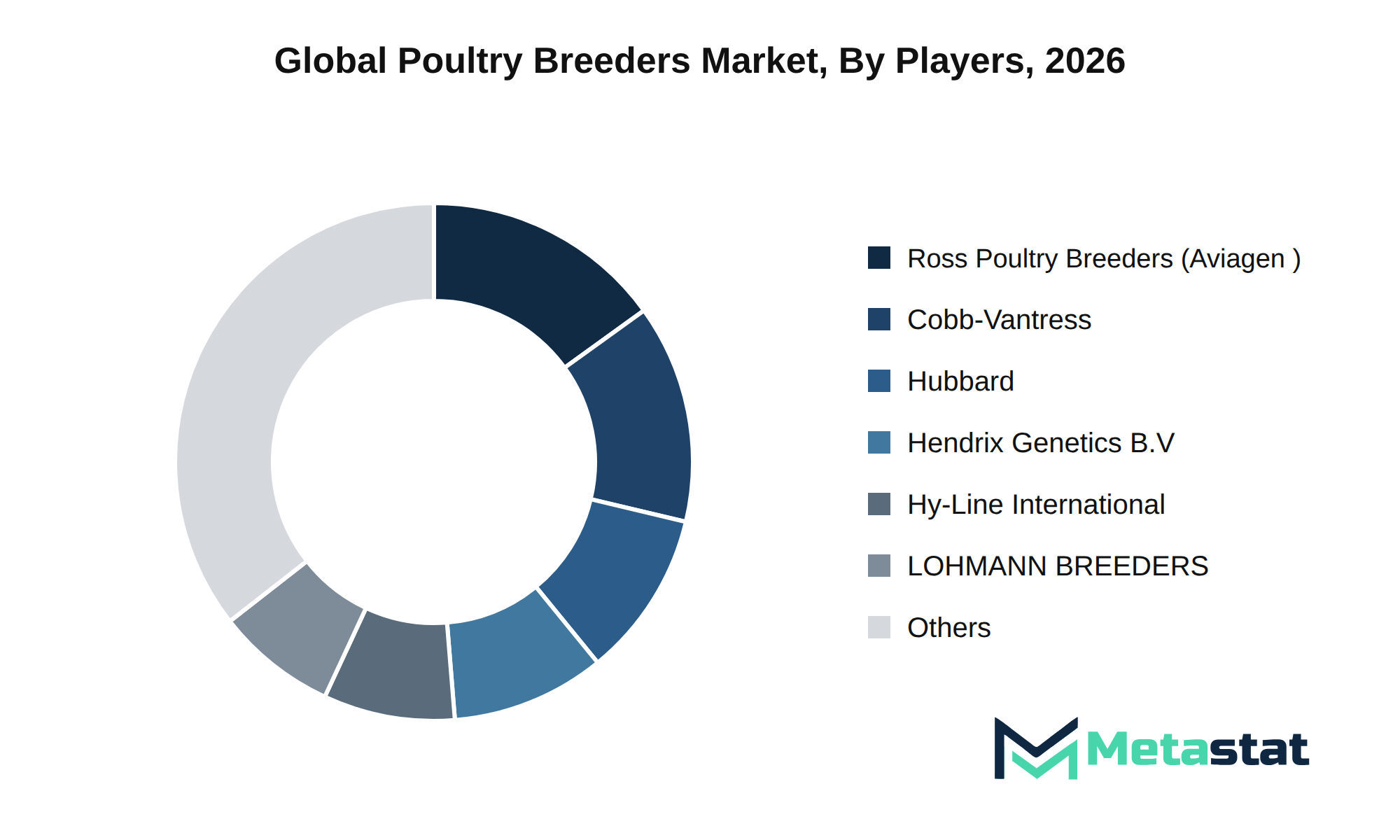
The Poultry Breeders market features significant activity in mergers and acquisitions, with companies pursuing strategic consolidation to enhance their market presence. Players including Ross Poultry Breeders (Aviagen Group) and Cobb-Vantress, LLC explore partnerships, enabling them to leverage capabilities and expand geographic reach.
Product differentiation remains a critical factor for success in the market. Companies like Hubbard and Hendrix Genetics B.V. invest in research and development to innovate breeding techniques and improve the quality of poultry breeds. This focus on proprietary technology creates competitive advantages, allowing firms to establish strong brand equity and enhance their market standing.
Customer retention strategies play a vital role in maintaining market share. Companies invest in value chain integration and supply chain dominance, enhancing procurement leverage and reducing overall costs. Established brands including Hy-Line International and LOHMANN BREEDERS GmbH strengthen customer loyalty, making it challenging for new entrants to disrupt the market.
Strategic alliances and joint ventures contribute to the dynamic growth of the Poultry Breeders market. Firms like Perdue Farms Inc. and JBS S.A. collaborate with smaller players to expand their product offerings and improve market penetration. This evolving competitive environment presents opportunities and challenges for participants aiming to secure a robust position in the market.
Market size is forecast to rise from USD 16.6 billion in 2025 to over USD 25.3 billion by 2033. The base case reflects a growth trajectory with a compound annual growth rate (CAGR) of 5.4%. In a bull case scenario, enhanced investment in advanced breeding technologies and increased consumer demand for poultry products could accelerate growth beyond expectations. Conversely, a bear case scenario emerges from economic downturns, leading to decreased demand and investment in the market.
The macroeconomic environment influences the poultry breeders market significantly. Economic shifts, including inflation and fluctuating consumer spending, impact downstream demand for poultry products. Core industry maturation introduces challenges, compelling market players to innovate continuously to maintain relevance. Structural consumption shifts, including an increase in health-conscious eating habits, drive demand for specific poultry products.
Integration of next-generation technology enhances productivity and efficiency in production processes. Research and development (R&D) commercialization timelines prompt companies to transition quickly from concept to market-ready products, influencing competitive dynamics. Regulatory evolution remains crucial, with imminent compliance milestones shaping operational strategies across the sector.
Geopolitical realignments and evolving trade corridors impact global supply chains, necessitating strategic capital allocation directives to mitigate risks. Infrastructure commitments and capital expenditure (CapEx) investments focus on upgrading facilities to improve output and meet consumer demand. Emerging white-space opportunities within the poultry breeders market point toward unmet enterprise needs, creating high-growth pockets for established and new entrants.
Executive-level strategic imperatives focus on building defensibility roadmaps to navigate competitive pressures. Future growth recommendations emphasize the importance of agility and responsiveness to market changes, ensuring resilience against potential disruptions while capitalizing on emerging trends.
The report strategically identifies and profiles the key market players and analyses their core competencies in each sub-segment of the Poultry Breeders market.
Report Attributes | Details |
Study Period | 2021-2033 |
Base Year | 2025 |
Estimated Year | 2026 |
Forecast Period | 2026-2033 |
Historical Period | 2021-2025 |
Growth Rate | CAGR 5.4% from 2026 to 2033 |
Revenue Unit | USD billion |
Segmentation | By Poultry Category, Breeding Method, Production Type, End-Use, and Region |
By Region | North America (By Poultry Category, Breeding Method, Production Type, End-Use, and Country)
|
Europe (By Poultry Category, Breeding Method, Production Type, End-Use, and Country)
| |
Asia Pacific (By Poultry Category, Breeding Method, Production Type, End-Use, and Country)
| |
South America (By Poultry Category, Breeding Method, Production Type, End-Use, and Country)
| |
Middle East and Africa (By Poultry Category, Breeding Method, Production Type, End-Use, and Country)
|
Find answers to common questions about this report
The Poultry Breeders market size was valued at USD 16.6 billion in 2025, according to the Metastat Insights study.
The Poultry Breeders market is projected to grow at a CAGR of 5.4% during the forecast period from 2026 to 2033.
The North America Poultry Breeders market size is estimated to reach USD 5.2 billion by 2033.
The Broiler Chickens segment leads the Poultry Breeders market, with a projected value of USD 13.6 billion by 2033. This segment demonstrates the highest growth potential compared to other poultry categories.
Growing global populations, changing dietary preferences, and increasing disposable incomes drive demand for poultry protein sources. Technological advancements and a shift towards sustainable practices further enhance production efficiency and align with consumer preferences, fostering growth in the Poultry Breeders market.
Asia Pacific holds the dominant share of the Poultry Breeders market, accounting for 38.3% in 2025. This region's significant share reflects its extensive poultry production capabilities and demand.
Regulatory requirements, inflationary pressures, and supply chain challenges significantly restrain growth in the Poultry Breeders market. Compliance with stricter environmental and health standards increases operational costs, while rising feed and labor expenses squeeze profit margins. Geopolitical instability further complicates sourcing strategies, leading to heightened operational costs and decreased competitiveness.
Growing global populations and changing dietary preferences drive demand for poultry protein sources. Urbanization and rising disposable incomes influence consumer behavior, leading to a shift towards protein-rich diets and increasing the importance of poultry because a staple protein source. Investments in breeding technologies and sustainable practices further enhance product adoption in the Poultry Breeders market.
The Poultry Breeders market is estimated to reach a valuation of USD 25.3 billion by 2033.
Key players in the Poultry Breeders market include Ross Poultry Breeders (Aviagen Group), Cobb-Vantress, LLC, Hubbard, Hendrix Genetics B.V., Hy-Line International, LOHMANN BREEDERS GmbH, and NOVOGEN.
The analysts below cover Agriculture research at Metastat Insights.
LEAD ANALYST
Utkarsh Khirodkar is a Lead Market Research Analyst at MetaStat Insight, specializing in market intelligence, technology sector assessments, and competitive strategy.
Last Updated: September, 2026
Assessing commercial microgrid software adoption requires looking past top-level installation numbers and examining utility interconnection queues. The research provided verifiable data on average permitting timelines, tariff structures, and battery storage integration costs across regional utility territories. That grounded perspective was valuable for our team when building five-year demand projections for industrial microgrid controllers.
Ambulatory surgical centers have very different purchasing cycles for robotic-assisted surgery platforms than major hospital networks. The MetaStat Insight study focused squarely on capital expenditure depreciation, procedural reimbursement pathways, and surgeon training overhead. That operational clarity made it much simpler to validate multi-year procedure growth forecasts against actual ambulatory center adoption patterns.
When planning edge sensor rollouts across refinery environments, generic IoT reports typically miss the harsh-environment certification bottlenecks. MetaStat Insight gave an objective evaluation of ATEX and Class 1 Division 2 hardware availability, along with realistic five-year maintenance cycle cost projections. The comparison of wireless mesh versus private cellular backhaul helped our team pressure-test network reliability models for remote processing facilities.
Explore related market intelligence reports worth reading alongside this one.
Starting from
$2950