
LEAD ANALYST
Utkarsh Khirodkar is a Lead Market Research Analyst at MetaStat Insight, specializing in market intelligence, technology sector assessments, and competitive strategy.

Global Shock Absorbing Casters Market Size, Share, By Mechanism (Metal-Spring Suspension, Polyurethane-Elastomer Suspension, Rubber-Elastomer Suspension and Others (Combined Spring-elastomer)), By Wheel Material (Polyurethane, Elastic/Solid Rubber, Thermoplastic Rubber (TPR), Polyamide/Nylon, Phenolic Resin, Polyolefin/Polypropylene, Cast Iron/Steel and Others (UHMW-PE and Specialty Engineered Polymers)), By Load Capacity (Up to 150 kg, 151-500 kg, 501-1,000 kg, 1,001-2,500 kg and Above 2,500 kg), By End-Use Industry (Automotive Manufacturing, Aerospace & Aviation Ground Support, General Industrial Manufacturing, Warehousing & Intralogistics, Healthcare & Medical Equipment, Electronics & Semiconductor Manufacturing, Laboratory & Pharmaceutical Equipment, Food Processing & Foodservice Equipment, Entertainment & Stage Equipment and Others (Glass Handling, Retail Fixtures, Institutional Equipment)), Industry Analysis, Growth, Trends, and Forecast, 2026-2033
Report ID
MSI-5344
Published
September, 2026
Pages
295 Pages
Format
Historical
Base year
Forecast
Forecast period
Report Details
Market Valuation: Valued at $782 Million in 2025, projected to reach $1,228.1 Million by 2033 at a 5.8% CAGR.
Dominant Segment: The Metal-Spring Suspension segment leads the market, driven by its ability to effectively dampen vibrations and enhance load stability, particularly in automotive manufacturing and general industrial applications.
Geographic Lead: The market is witnessing significant growth in North America, primarily due to increasing investments in infrastructure and modernization of equipment across various industries.
What's Inside: This report provides comprehensive coverage of the competitive landscape, detailed analyses of market dynamics, and forecasts from 2026 to 2033.
Emerging Trends: Technological advancements in materials and design are creating new opportunities, particularly in sectors such as aerospace and automotive, where high-performance solutions are increasingly in demand.
Choose Your License
Global Shock Absorbing Casters Market
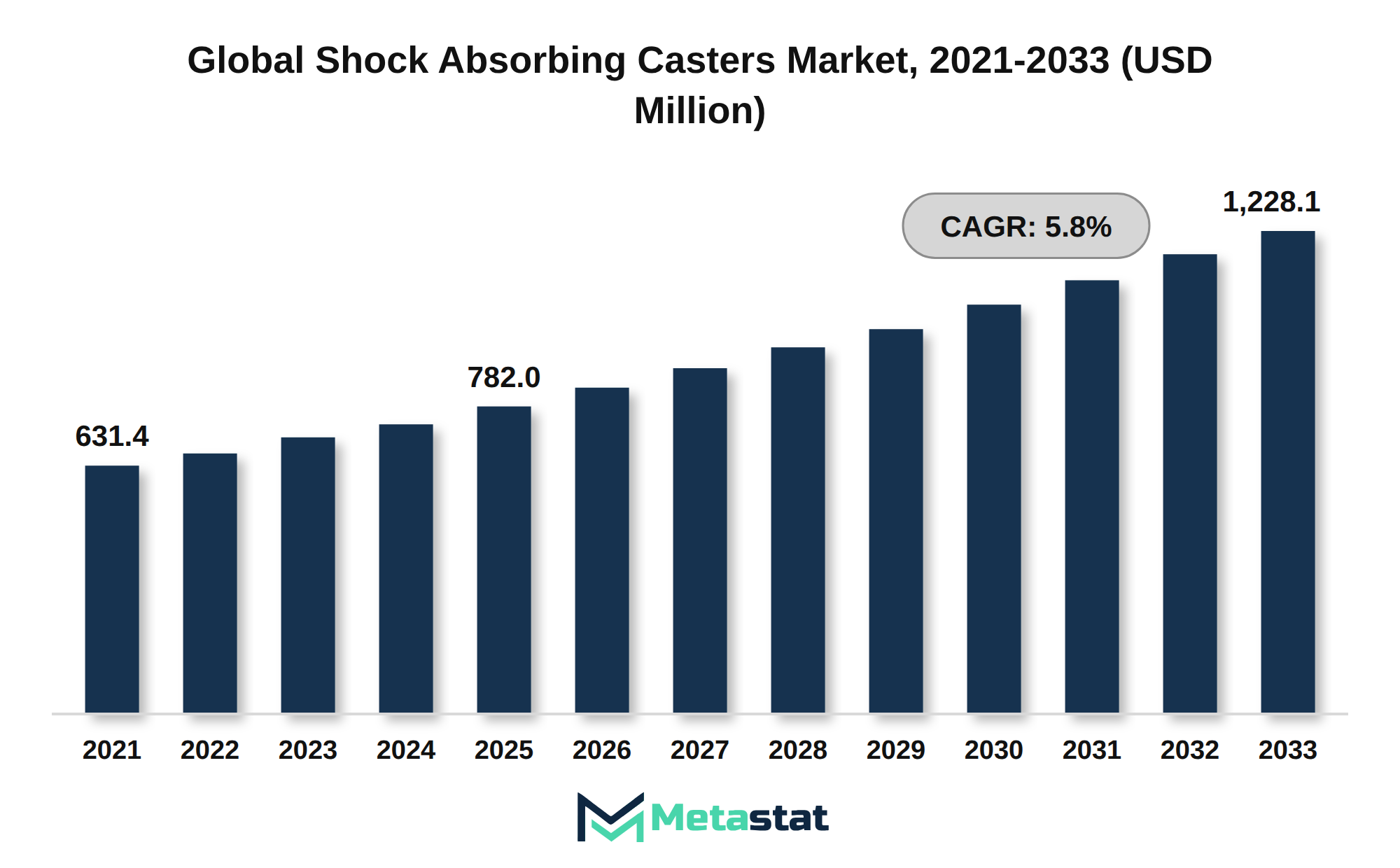
The global Shock Absorbing Casters market was valued at USD 782 million in 2025 and is projected to reach USD 1,228.1 million by 2033, growing at a CAGR of 5.8% over the forecast period.
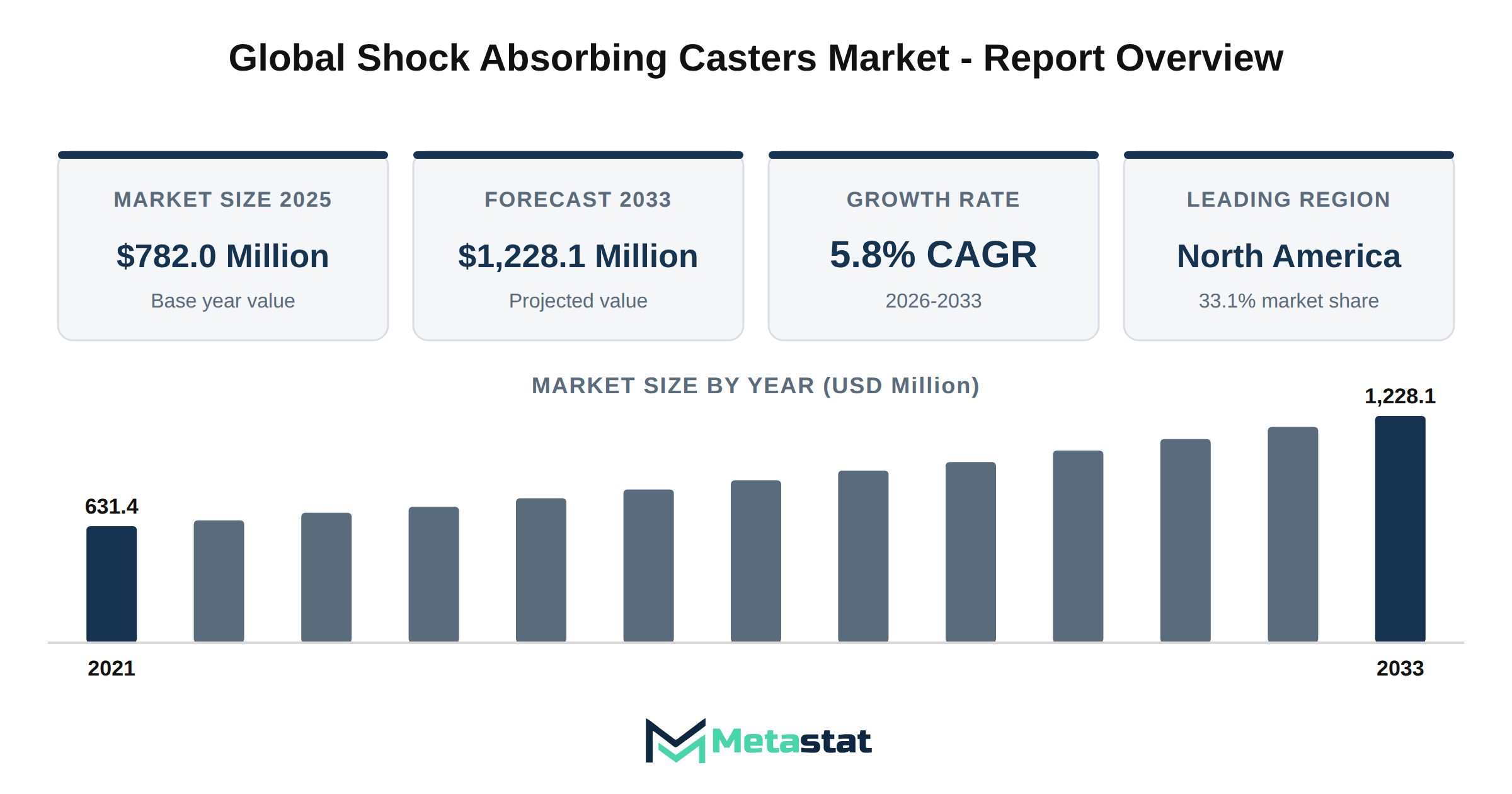
The Shock Absorbing Casters market is projected to reach USD 1,228.1 million by 2033, growing from a base value of USD 782 million in 2025. This growth results from an increasing focus on vibration-sensitive material handling across various industries, driving demand for advanced caster solutions.
Rising demand for spring-loaded casters in heavy-duty industrial applications significantly influences the market landscape. Industries including automotive manufacturing and assembly lines increasingly adopt shock absorbing casters to enhance operational efficiency and worker safety.
Growing use of vibration-damping casters in warehousing and intralogistics further supports market expansion. These casters facilitate smoother material handling, reducing equipment wear and enhancing load stability.
Innovations in polyurethane and elastomer suspension systems play a crucial role in the evolution of shock absorbing casters. These advancements improve performance and durability, positioning manufacturers to meet the rising expectations of various end-use industries.
Heavy-duty shock absorbing casters find extensive applications in aerospace and ground support equipment. The need for reliable mobility solutions in these sectors drives manufacturers to develop high-capacity products capable of handling substantial loads.
Increasing demand for high-capacity shock absorbing casters in industrial mobility is evident. These solutions deliver essential support for equipment protection and stability during operation, enhancing productivity across multiple sectors.
Technological advancements in shock absorbing caster designs contribute significantly to equipment protection and load stability. Continuous innovation addresses the evolving requirements of industries including semiconductor and electronics manufacturing.
Healthcare and medical equipment sectors show a marked preference for low-vibration caster systems. The emphasis on patient safety and equipment integrity highlights the importance of reliable caster solutions in these environments.
Vibration-sensitive material handling drives growth within the Shock Absorbing Casters market. Industries increasingly prioritize equipment protection and load stability, leading to higher adoption rates of advanced caster solutions.
The demand for spring-loaded casters within heavy-duty industrial applications continues to rise. These casters enhance operational efficiency, reducing wear on equipment and improving overall safety in demanding environments.
Adoption within automotive manufacturing and assembly lines reflects the industry's need for reliable mobility solutions. The integration of shock absorbing casters aids in minimizing vibrations, thereby enhancing production quality.
In warehousing and intralogistics, the use of vibration-damping casters is on the rise. These casters contribute to smoother operations and help maintain the integrity of sensitive goods during transport.
Innovations in polyurethane and elastomer suspension systems enhance the performance of shock absorbing casters. These advancements improve load capacity and extend the lifespan of caster systems across various applications.
Heavy-duty shock absorbing casters serve critical roles in aerospace and ground support equipment. Their design supports high-load applications while ensuring safety and reliability in demanding operational conditions.
Increasing demand for high-capacity shock absorbing casters in industrial mobility reflects the shift towards robust equipment solutions. These casters accommodate heavier loads, thereby enhancing overall operational capabilities.
Advancements in shock absorbing caster technology emphasize equipment protection and load stability. Manufacturers focus on developing casters that meet the evolving needs of various industries.
Growth in the semiconductor and electronics manufacturing sectors fuels demand for specialized shock absorbing casters. These casters address unique challenges in handling sensitive components, ensuring stability and precision during transport.
Healthcare and medical equipment sectors require low-vibration caster systems to protect sensitive devices. The need for reliable mobility solutions drives innovation within the market.
Trends in spring suspension design influence the development of shock absorbing caster wheels. Manufacturers explore new materials and designs to enhance performance while maintaining cost-effectiveness.
Polyurethane wheel adoption within shock absorbing caster applications demonstrates a shift towards durable and efficient solutions. This material choice enhances performance and longevity, appealing to various industries.
Industrial automation significantly influences demand for advanced shock absorbing casters. Automation trends necessitate reliable mobility solutions that support increased operational efficiency.
Shock absorbing casters find applications in laboratory and pharmaceutical equipment, where stability is crucial. The demand for precision handling solutions further drives market growth.
Material and component cost trends affect pricing strategies across the market. Fluctuations in raw material availability impact manufacturers' ability to maintain competitive pricing while ensuring quality.
Supply chain trends in industrial caster wheels, springs, and elastomer components shape market dynamics. Manufacturers adapt to changes in sourcing and production to meet evolving demand.
Competitive innovation among shock absorbing caster manufacturers enhances product offerings. Companies invest in research and development to differentiate their solutions and capture market share.
Customization trends in load capacity, wheel material, and suspension performance reflect the diverse needs of end-users. Tailored solutions support various industries, enhancing customer loyalty and satisfaction.
Ergonomic and noise reduction benefits support shock absorbing caster adoption across sectors. Enhancements in user experience contribute to increased demand for these solutions.
Durability and maintenance requirements significantly influence industrial caster purchasing decisions. Buyers prioritize long-lasting solutions that minimize operational disruptions and maintenance costs.
Demand trends for heavy-duty shock absorbing casters in North America illustrate the region's focus on industrial efficiency. Companies invest in robust solutions to enhance operational capabilities.
Europe presents growth opportunities in industrial and intralogistics caster applications. The region's focus on efficiency and innovation drives the adoption of advanced caster technologies.
Asia Pacific expansion within the Shock Absorbing Casters market reflects a growing manufacturing base and increased automation. This growth presents opportunities for manufacturers to establish a strong presence in emerging markets.
Emerging opportunities for high-load shock absorbing casters in material handling highlight the evolving requirements of various industries. Companies that adapt to these needs will likely capture increased market share.
The future growth outlook for shock absorbing casters through 2033 remains positive, driven by ongoing innovations and evolving industry demands. Stakeholders anticipate continued expansion resulting from the market adapting to changing needs.
The increasing demand for metal-spring suspension mechanisms within the Shock Absorbing Casters market stems from their ability to effectively dampen vibrations and provide enhanced load stability. Industries including automotive manufacturing and general industrial manufacturing particularly favor this mechanism due to its superior performance characteristics. The significant focus on operational productivity drives manufacturers to adopt solutions that optimize equipment functionality and reduce wear over time.
Investment in infrastructure development further fuels this trend, driven by organizations looking to modernize equipment and enhance operational efficiency. The anticipated growth in capital investment environments, alongside shifts in consumer behaviors towards higher quality and performance standards, supports the expansion of the metal-spring suspension segment. While manufacturers continue to innovate and improve their product offerings, the market is expected to experience significant growth in this area, reflecting a commitment to meet evolving industry needs.
Polyurethane-elastomer suspension mechanisms contribute significantly to the growth of the Shock Absorbing Casters market. This advancement arises from the increasing emphasis on durability and flexibility in various applications. Industries including automotive manufacturing and warehousing benefit from enhanced load handling and operational efficiency. The superior shock absorption capabilities offered by polyurethane-elastomer systems reduce wear on equipment, translating to lower maintenance costs and improved service longevity.
This mechanism supports the rising demand for safety and performance in material handling processes. With the ongoing emphasis on automation and technological integration, the adoption of polyurethane-elastomer suspension systems aligns well with the evolving needs of modern industries. Heightened interest from sectors focused on optimizing productivity and minimizing downtime through innovative solutions drives market engagement.
While industries prioritize operational efficiency and cost-effectiveness, the polyurethane-elastomer suspension mechanism is set to drive significant revenue growth within the market. This trend reflects a broader shift toward sustainable practices and resource stewardship, enabling manufacturers to meet increasing customer expectations for high-quality, reliable products.
The adoption of rubber-elastomer suspension mechanisms within the Shock Absorbing Casters market encounters significant obstacles. High capital investment requirements create barriers for manufacturers looking to enhance their product offerings with these mechanisms. The initial cost of production and the subsequent expenses associated with research and development place a strain on budget allocations, particularly for smaller manufacturers. This financial burden limits the ability to innovate and expand product lines.
Operational costs related to maintaining rubber-elastomer suspension systems contribute to market constraints. These mechanisms often require specialized materials and manufacturing processes, driving up expenses and complicating supply chain dynamics. Rising costs hinder overall market growth, resulting from companies seeking more cost-effective alternatives.
Competition from alternative offerings, including other suspension systems, presents further challenges. Buyers in various end-use industries opt for products perceived to deliver better performance or lower costs, impacting the demand for rubber-elastomer suspension solutions. This competitive pressure risks stagnating growth in the market, especially if alternative technologies gain traction due to innovation or pricing advantages.
The combined effect of these factors results in a cautious approach among manufacturers and buyers within the Shock Absorbing Casters market. A comprehensive understanding of these constraints is essential for stakeholders aiming to navigate the complexities inherent in the industry.
Rapid technological advancements pose significant challenges within the Shock Absorbing Casters market. The integration of innovative materials and automated processes requires manufacturers to continuously adapt to maintain competitiveness. This dynamic environment results in increased research and development costs, impacting smaller firms disproportionately compared to larger corporations with more robust financial resources. Interoperability friction arises when diverse technologies do not seamlessly integrate, complicating production processes and increasing timelines for new product launches.
Supply chain instability further exacerbates these challenges. Fluctuations in feedstock prices and component availability disrupt manufacturing schedules and create obstacles in meeting market demand. Such disruptions compel firms to maintain higher inventory levels, impacting cash flow and profit margins. Competition from alternative solutions and substitute products intensifies, requiring market participants to invest in differentiation strategies or risk obsolescence.
Emerging sustainability demands add another layer of complexity. The pressure to meet environmental standards drives firms to invest in greener technologies, resulting in increased operational costs. The need for ongoing compliance with evolving legal liabilities poses additional burdens, particularly for smaller companies with limited resources. Consequently, these technological disruptions collectively challenge the market's growth trajectory while creating opportunities for those navigating these complexities effectively.
Innovations in design and manufacturing processes significantly impact the Shock Absorbing Casters market, creating new opportunities for growth. Emerging regional demands emphasize the necessity for advanced caster solutions, particularly in industries including automotive and aerospace, which rely on high-performance materials and mechanisms. Infrastructure modernization across various sectors stimulates the adoption of specialized casters, driving investments in next-generation innovations that enhance operational efficiency.
Geographical expansion into developing markets presents further opportunities. Local industries upgrade their equipment to meet international standards. The shift towards sustainability and eco-friendly practices aligns with the growing consumer preference for environmentally responsible products, motivating manufacturers to integrate green transformations into their offerings. This transition towards sustainability influences product development, encouraging firms to create casters that reduce environmental footprints while ensuring high performance.
Strategic consolidation within the market has led to cross-industry mergers, allowing companies to broaden their product portfolios and enhance competitive positioning. Evolving buying behaviors, driven by digital procurement shifts, significantly influence how customers engage with suppliers, emphasizing the need for online platforms and direct sales models. Such changes facilitate greater access to the Shock Absorbing Casters market, enhancing visibility and customer engagement.
Investment in asset life-cycle extensions through maintenance upgradations and retrofitting dynamics enhances the durability and performance of existing caster solutions. Value-chain optimization and process automation initiatives further maximize operational yield, driving demand for high-quality shock absorbing solutions. These factors position the Shock Absorbing Casters market for sustained growth, capitalizing on technological advancements and evolving industry needs.
The Global Shock Absorbing Casters market is segmented based on Mechanism, Wheel Material, Load Capacity, and End-Use Industry.
Valued at USD 378.8 million in 2026, the Metal-Spring Suspension segment is projected to reach USD 527 million by 2033, reflecting a CAGR of 4.8% during the forecast period. This growth aligns with increasing demand for durable and reliable shock absorption solutions in various industries, particularly in automotive manufacturing and general industrial applications. These sectors prioritize enhanced performance and longevity in their equipment, driving interest in advanced shock absorbing technologies.
Technological maturation continues to influence developments in this segment, with manufacturers focusing on next-generation upgrades that improve efficiency and reduce wear over time. Innovations in metal-spring design enhance the operational capacity of shock absorbing casters, making them more effective for heavy-duty applications. Downstream application trends indicate a shift towards lighter and more agile machinery, favoring products that offer both flexibility and robustness.
Regulatory compliance standards impact the market, driven by industries demanding compliance with safety and environmental regulations. The need for certifications ensures that products meet stringent quality benchmarks, positioning metal-spring suspension mechanisms favorably for end-users concerned about operational safety and performance. This focus on certification further supports the segment's growth prospects, especially within sectors including aerospace and healthcare.
Cost structures and pricing volatility remain relevant factors influencing market dynamics. Fluctuations in raw material prices affect production costs, but strategic sourcing and supply chain resilience efforts among manufacturers mitigate these risks. Capital investment outlook suggests that players in the market will continue to prioritize R&D to enhance product evolution, ensuring offerings remain competitive in a rapidly changing environment.
Significant growth in the Polyurethane-Elastomer Suspension segment is tied to its increasing application across various industries, particularly in environments that require durability and shock absorption. This segment is estimated to reach USD 388.3 million by 2033, at a CAGR of 7.3% during the forecast period. Demand arises from automotive manufacturing, aerospace, and intralogistics sectors, where effective load management and vibration reduction play crucial roles in operational efficiency. Industries adopt advanced suspension systems, and the integration of innovative materials enhances performance, resulting in greater reliability and reduced maintenance costs.
Regulatory compliance and safety standards drive manufacturers to prioritize high-quality suspension systems, further propelling the growth of this segment within the Shock Absorbing Casters market. The emphasis on worker safety and equipment protection ensures that companies invest in robust solutions, leading to increased demand for polyurethane-elastomer mechanisms. Technological advancements contribute to product evolution, providing opportunities for next-generation upgrades that improve functionality and user experience. Continuous innovation and the expansion of application fields are expected to strengthen the position of this segment in the market.
Growth within the Rubber-Elastomer Suspension segment occurs due to increasing demands for flexible and durable material handling solutions in various industries. This segment is expected to reach USD 215.4 million by 2033, reflecting a strong inclination towards materials that absorb shocks effectively while maintaining structural integrity. The market benefits from technological maturation, where advancements in rubber-elastomer formulations enhance performance characteristics, reducing vibration transmission and improving operational efficiency.
Adoption of rubber-elastomer suspension solutions spans multiple end-use industries, including automotive manufacturing and general industrial applications. These sectors prioritize equipment that minimizes wear and tear on machinery, highlighting the importance of reliability in operational settings. Demand dynamics indicate a shift towards environmentally friendly materials, aligning with regulatory compliance standards that encourage sustainable practices. Manufacturers increasingly invest in research and development to create innovative alternatives that balance cost structures with performance needs in the market.
Pricing volatility remains a concern, particularly with fluctuations in raw material sourcing. The rubber market experiences periodic disruptions, which influence the overall pricing strategy for rubber-elastomer suspension products. Maintaining supply chain resilience becomes crucial in mitigating risks associated with these fluctuations while ensuring consistent product delivery. Strategic opportunity windows exist for manufacturers focused on capital investments that enhance production capacities and improve supply chain logistics. This focus supports the growth trajectory of the rubber-elastomer suspension segment and contributes to the overall expansion of the Shock Absorbing Casters market.
Significant interest in the Others (Combined Spring-elastomer) segment arises from its flexibility in addressing diverse applications across various industries. This sub-segment prioritizes adaptability, meeting specific vibration dampening requirements for different end-use applications. The ongoing evolution of manufacturing processes enhances the demand for these casters, particularly within sensitive operational settings where noise reduction and load stability are critical.
Technological advancements in materials and design contribute to the growth trajectory of this segment. Continuous development in elastomeric materials ensures optimal performance while extending the lifespan of the casters. This progress aligns with the increasing push for more sustainable and efficient product offerings within the market.
The Others (Combined Spring-elastomer) segment is projected to grow at a CAGR of 7% during the forecast period. This growth reflects a strong uptake in industries including automotive and general manufacturing, where the need for reliable and efficient mobility solutions remains significant. Manufacturers actively explore opportunities to innovate within this segment, leveraging advancements that enhance the overall functionality and performance of the casters.
Increased regulatory compliance standards pertaining to safety and operational efficiency influence purchasing decisions. Organizations recognize the importance of having reliable casters to support operational demands while adhering to these regulations, driving further investment in this segment. Overall, the market for shock absorbing casters shows promising dynamics, with the Others (Combined Spring-elastomer) segment poised for substantial contributions to the industry's growth.
Valued at USD 249.4 million in 2026, the Polyurethane segment is projected to reach USD 391.3 million by 2033, at a CAGR of 6.6% during the forecast period. This material's superior durability and resistance to abrasion make it suitable for a variety of applications, particularly in industries including automotive, aerospace, and general manufacturing. The shift towards lightweight and high-performance materials in these sectors drives significant demand within the Shock Absorbing Casters market.
Technological advancements, including enhanced manufacturing techniques and formulations, contribute to the evolution of Polyurethane casters. These developments lead to improved load-bearing capacities and performance flexibility, further attracting end-users seeking efficient and robust solutions. The growing emphasis on ergonomic and efficient equipment within industrial settings supports adoption across various applications, from warehousing to healthcare.
Regulatory compliance and standards regarding material safety and environmental impact influence the dynamics of the market. Polyurethane's favorable properties align with such standards, making it an appealing choice for manufacturers focused on sustainability and performance. This alignment positions the segment for growth, driven by increased investment in research and development to advance product offerings.
The ongoing demand for Polyurethane in the Shock Absorbing Casters market reflects broader industry trends toward enhanced performance materials. The segment's growth trajectory indicates a strategic opportunity window for manufacturers, particularly those focusing on innovation and sustainability in their product lines.
Growing demand for durable and versatile materials within the Shock Absorbing Casters market drives interest in the Elastic/Solid Rubber segment. This segment benefits from increasing applications across various industries, including automotive and aerospace, where performance and reliability are crucial. Enhanced elasticity and superior shock absorption characteristics of solid rubber materials cater to rigorous operational demands, leading to wider adoption in critical applications.
The Elastic/Solid Rubber segment is projected to reach USD 222.8 million by 2033, growing at a CAGR of 4.5% during the forecast period. The consistent performance of solid rubber under different working conditions supports its use in high-stress environments, contributing to the segment's growth. Manufacturers focus on optimizing formulations to enhance the mechanical properties of these materials, ensuring they meet stringent quality standards.
Technological advancements influence the Elastic/Solid Rubber segment, with innovations aimed at improving the quality and performance of rubber compounds. Enhanced processing techniques and sustainable sourcing of raw materials strengthen supply chain resilience, allowing manufacturers to meet growing market demand. Cost pressures from raw material fluctuations and regulatory compliance requirements challenge producers to maintain competitive pricing while ensuring high-quality standards.
Interest in thermoplastic rubber (TPR) because a wheel material stems from its unique properties, including elasticity and resistance to wear and tear, which support effective load management in various applications. This segment's performance aligns with the increasing demand for innovative materials in the Shock Absorbing Casters market, particularly for environments that require high durability and flexibility.
The TPR segment is expected to reach USD 188.1 million by 2033, driven by evolving end-user requirements across industries including healthcare, automotive, and electronics. These sectors prioritize efficient material handling solutions that enhance operational productivity while maintaining safety standards.
Adoption of TPR wheels facilitates advancements in manufacturing techniques, contributing to an expanding portfolio of caster options. This evolution supports market growth by catering to diverse applications and further strengthens TPR's role in the overall Shock Absorbing Casters market.
Continuous improvements in product formulations and processing technologies enhance TPR's attractiveness, providing strategic opportunities for manufacturers and suppliers in this competitive landscape. The combination of performance, cost-effectiveness, and versatility positions the TPR segment for sustained growth and innovation.
In the evolving landscape of the Shock Absorbing Casters market, the Polyamide/Nylon segment is projected to grow at a CAGR of 6.4% during the forecast period. This growth is driven by rising demand for lightweight yet robust materials across various industries, including aerospace, automotive, and general manufacturing. The increasing application of Polyamide/Nylon in environments requiring resistance to wear, chemicals, and temperature variations supports this trend. Enhanced performance characteristics, including improved load-bearing capacity and durability, drive adoption among manufacturers seeking efficiency and longevity in their products.
The market experiences significant consumption shifts due to heightened awareness about sustainability and environmental impact. Polyamide/Nylon's recyclability and reduced environmental footprint align with evolving preferences of consumers and regulatory compliance standards. Capital investments in production technologies that enhance the quality and consistency of Polyamide/Nylon casters contribute to the segment's expansion. Consequently, stakeholders in the Shock Absorbing Casters market prioritize this material for its performance and sustainability benefits.
Increasing emphasis on strength and durability in various applications drives interest in the Phenolic Resin segment of the Shock Absorbing Casters market. The material's resistance to wear and tear contributes to its adoption across industries requiring robust components, particularly in heavy-duty environments. Phenolic resin's low moisture absorption and excellent thermal, chemical, and electrical resistance enhance its value in demanding applications, promoting its relevance within the market.
Technological advancements influence the development of phenolic resin products, enabling manufacturers to produce more efficient and effective solutions tailored to specific end-use requirements. Expanding awareness of its benefits leads to a shift in consumption patterns, favoring materials that provide both performance and cost efficiency. Evolving regulatory compliance standards encourage manufacturers to invest in phenolic resin technology that meets stringent industry certifications.
Strategically, capital investment in phenolic resin technology positions companies to capture growth opportunities within the market. A focus on innovative applications and the development of next-generation products strengthens the competitive landscape, driving market expansion. While businesses prioritize supply chain resilience, securing reliable sources for raw materials remains essential, mitigating risks associated with fluctuations in availability and pricing.
In the Shock Absorbing Casters market, the Polyolefin/Polypropylene segment benefits from an increasing focus on cost-effective and lightweight materials. Adoption of these materials occurs across various industries due to their favorable performance characteristics, including resilience and flexibility. The segment expands due to technological maturation, where advancements in polymer processing techniques enhance product quality and consistency.
Next-generation upgrades in manufacturing processes contribute to improved material formulations, making polyolefin/polypropylene an attractive option for engineers and designers. The evolution of products within this segment aligns with evolving end-use dynamics, catering to diverse applications ranging from automotive to industrial sectors. Consumption shifts towards lightweight solutions continue to drive demand for these materials, particularly in industries where weight reduction contributes to performance improvements.
Regulatory compliance standards impact the segment, ensuring materials meet specific safety and environmental criteria, which further drives innovation and product development. Cost structures within the segment benefit from the relatively low price of polyolefin and polypropylene compared to alternative materials, allowing manufacturers to maintain competitive pricing. Supply chain resilience remains crucial, driven by fluctuations in raw material sourcing that impact availability and pricing stability. Overall, strategic opportunity windows in the Polyolefin/Polypropylene segment highlight its relevance and potential within the Shock Absorbing Casters market.
Demand for cast iron and steel wheels within the Shock Absorbing Casters market arises from their robust characteristics, making them ideal for heavy-duty applications. Industries including automotive manufacturing and general industrial manufacturing favor these materials due to durability and resistance to wear over time. The ability of cast iron and steel to withstand significant loads enhances their acceptance in various sectors, including warehousing and logistics.
Technological maturation in production processes results in improved manufacturing efficiency for cast iron and steel wheels. Innovations in casting and machining techniques lead to better quality control, reducing defects and enhancing performance. This evolution supports the expansion of the segment, providing manufacturers with opportunities for product differentiation and competitive advantage.
Regulatory compliance standards increasingly influence the adoption of cast iron and steel wheels. Companies focusing on sustainability and safety standards support the demand for these materials, which align with environmental regulations and industry best practices. Consequently, adherence to these standards enhances market credibility and attracts customers prioritizing responsible sourcing.
Pricing volatility in raw materials impacts the cost structure for manufacturers of cast iron and steel wheels. Fluctuations in the prices of steel and cast iron exert pressure on profit margins, influencing pricing strategies and product positioning. Strategic sourcing and long-term contracts with suppliers play vital roles in mitigating these risks, allowing companies to maintain stable pricing and reliability in supply.
Fluctuating demand in downstream applications leads to consumption shifts, where industries adjust their usage of cast iron and steel wheels in response to changing market conditions. The rising focus on automation and efficiency in manufacturing processes drives interest in advanced solutions that incorporate these materials. This trend creates strategic opportunities for companies developing innovative products tailored to specific industry needs.
Demand for lightweight yet durable materials drives interest in the Others (UHMW-PE and Specialty Engineered Polymers) segment within the Shock Absorbing Casters market. These materials offer strong performance characteristics, including resistance to abrasion, chemicals, and impact, which are crucial for various applications across multiple industries. The trend towards customization and high-performance solutions contributes to the growth of this sub-segment, driven by manufacturers seeking to meet specific requirements for different end-use applications.
Technological advancements in polymer engineering enhance the performance and durability of these materials, facilitating their adoption in sectors including aerospace, automotive, and general industrial manufacturing. While industries increasingly focus on improving operational efficiency and reducing maintenance costs, the demand for innovative materials within the Shock Absorbing Casters market continues to rise. This segment's future potential hinges on ongoing research and development efforts aimed at improving material properties and expanding applications.
Demand for casters with a load capacity of up to 150 kg reflects the increasing requirements of various industries seeking reliable and efficient solutions for material handling. The segment is valued at USD 143.2 million in 2026 and is projected to reach USD 194.3 million by 2033, at a CAGR of 4.4% during the forecast period. This growth results from expanding applications in sectors including automotive manufacturing, warehousing, and general industrial manufacturing, where lightweight and durable casters provide significant operational advantages.
Technological advancements drive the evolution of casters designed to support loads up to 150 kg, enhancing their performance characteristics through improved materials and designs. An increased focus on efficiency and safety in material handling processes contributes to the rising adoption of these casters. Regulatory compliance and industry standards shape market dynamics, compelling manufacturers to innovate and improve product offerings within this segment of the Shock Absorbing Casters market.
Growth in the 151-500 kg load capacity segment of the Shock Absorbing Casters market stems from rising demand across several industries, including automotive manufacturing and general industrial manufacturing. This segment is expected to reach USD 398.6 million by 2033, at a CAGR of 5.1% during the forecast period. Increasing emphasis on safety and operational efficiency in manufacturing processes drives adoption, particularly where heavy equipment handling occurs. Advancements in material technology improve the performance of casters within this weight range, enhancing durability and usability across various applications.
Technological maturation contributes significantly to segment expansion, with ongoing innovations leading to next-generation upgrades. Investments in product evolution focus on improved load distribution and shock absorption characteristics of casters. Regulatory compliance standards related to safety and performance influence the design and implementation of casters in this load capacity range, encouraging manufacturers to adopt upgraded solutions that meet stringent requirements. End-use dynamics reflect a notable shift towards more efficient and reliable equipment solutions, underpinning the growth trajectory within the market.
Demand within the 501-1,000 kg load capacity segment reflects a growing focus on reliability and strength, particularly in industrial applications. This segment is supported by increasing requirements in industries including automotive manufacturing and general industrial manufacturing, where handling heavier loads necessitates robust solutions. The market's evolution is driven by technological advancements that enhance caster durability and performance, providing users with effective options for various operational environments.
Investment in next-generation products that incorporate innovative materials and designs is evident. These advancements contribute to improved performance characteristics, including enhanced shock absorption and reduced maintenance needs, thus attracting end-users seeking to optimize efficiency. The segment is projected to reach USD 308.4 million by 2033, indicating a strong trajectory for growth within the Shock Absorbing Casters market.
Significant trends influencing this segment include the shift towards automation and advanced manufacturing techniques, which drive demand for high-capacity casters. Manufacturers prioritize compliance with regulatory standards to ensure product safety and effectiveness, influencing purchasing decisions. While demand continues to escalate, competitive dynamics within the market will likely intensify, prompting companies to innovate and refine their offerings to meet evolving customer expectations.
Growing interest in robust solutions drives demand within the 1,001-2,500 kg load capacity segment of the Shock Absorbing Casters market. This segment is projected to grow at a CAGR of 6.8% during the forecast period. Increasing adoption in heavy-duty applications, including industrial machinery and automotive manufacturing, establishes a significant foundation for market expansion.
Technological advancements enhance the performance of casters in this load category, with innovations focused on improving durability and reducing wear. Manufacturers invest in high-quality materials and advanced design techniques, enabling them to meet the evolving requirements of users across various industries. This focus on product evolution creates a competitive edge and drives growth.
Compliance with industry standards and certifications influences purchasing decisions, prompting manufacturers to prioritize quality and safety. Increasing regulatory pressure for performance standards in key sectors ensures that products meet necessary requirements. This trend reinforces trust among consumers and supports sustainable market growth within the Shock Absorbing Casters market.
Shifts in consumer preferences toward heavy-duty casters capable of handling substantial loads contribute to the segment's growth. Rising demand for customized solutions further increases market opportunities, enabling manufacturers to target specific needs across different industries. Such dynamics highlight the potential for continued expansion in the 1,001-2,500 kg load capacity segment.
Demand for casters with a load capacity exceeding 2,500 kg originates from industries requiring robust solutions for heavy-duty applications. The automotive and aerospace sectors, where equipment often faces extreme weight and usage conditions, drive this demand. Enhanced safety features, including shock absorption, are critical in these contexts, preventing damage to equipment and ensuring worker safety.
Technological maturation influences the evolution of this segment. Continuous advancements in materials science and engineering enable the development of casters capable of supporting heavier loads without compromising performance. These innovations lead to improved strength-to-weight ratios, enhancing overall operational efficiency in environments where weight is a critical factor.
Industry regulations regarding safety and load-bearing capacity influence product specifications in the Shock Absorbing Casters market. Compliance with these standards drives product development that prioritizes durability and reliability for users. Companies focusing on certifications that meet or exceed these regulatory benchmarks position their offerings favorably in the market.
Cost structures associated with producing heavy-duty casters impact pricing strategies. The intricate manufacturing processes involved in creating high-capacity casters lead to higher production costs. Suppliers balance these costs with competitive pricing to attract customers, particularly in price-sensitive markets. Strategic partnerships with raw material suppliers enhance supply chain resilience and mitigate pricing volatility.
Consumption shifts towards higher load capacity casters reflect broader trends in industrial automation and material handling practices. Businesses increasingly invest in equipment that handles larger loads efficiently, leading to increased demand for this sub-segment. Strategic opportunity windows exist for manufacturers who innovate and offer solutions tailored to the evolving needs of end-users across various industries.
Valued at USD 144.6 million in 2026, the automotive manufacturing segment is projected to reach USD 199.1 million by 2033, at a CAGR of 4.7% during the forecast period. This growth results from rising demand for shock absorbing casters in automotive production lines, where efficiency and precision are critical. Manufacturers increasingly adopt advanced technologies to enhance production capabilities, promoting the use of shock absorbing casters that contribute to smoother operations and reduced wear on machinery.
The automotive sector's ongoing shift towards electric vehicles and automation drives further investment in high-performance components like shock absorbing casters. These components support dynamic production environments, enabling efficient transitions between various manufacturing processes. Consequently, companies within the automotive manufacturing domain benefit from improved operational efficiencies and reduced downtime.
Regulatory compliance standards regarding safety and quality significantly influence the adoption of shock absorbing casters. Stringent regulations compel manufacturers to invest in high-quality components that meet safety requirements. This trend encourages innovation and product evolution in the market, with manufacturers focusing on developing casters that provide enhanced performance and durability.
Technological advancements contribute to the evolving landscape of the market. The introduction of next-generation designs and materials enhances the capabilities of shock absorbing casters, allowing manufacturers to meet the demands of modern automotive production. This environment creates strategic opportunities for suppliers and manufacturers focused on delivering innovative solutions.
Growth within the Aerospace & Aviation Ground Support segment reflects increasing investments in modernizing ground support equipment. Upgraded equipment and enhanced safety regulations drive demand for innovative solutions, including shock absorbing casters. These casters provide essential support in handling various aircraft maintenance tasks, ensuring smoother operations and reducing damage risk during ground handling processes. Valued at USD 127 million by 2033, the segment is projected to expand at a CAGR of 6.6% during the forecast period, underscoring its significance within the market.
Technological advancements play a crucial role in this segment's evolution. The adoption of new materials and designs enhances the performance and durability of shock absorbing casters, making them ideal for the rigorous demands of aviation ground support. Operators prioritize efficiency and safety, driving demand for high-quality casters with advanced features. Meeting regulatory compliance standards ensures that ground support equipment remains reliable and effective, reinforcing the growth trajectory of the Aerospace & Aviation Ground Support segment in the Shock Absorbing Casters market.
Growth within the General Industrial Manufacturing sector drives substantial demand for shock absorbing casters. This segment is expected to reach USD 242.3 million by 2033, reflecting a shift towards more efficient and resilient materials in industrial applications. Increasing production capabilities and the need for advanced equipment support the adoption of these casters in manufacturing processes. Integration of innovative technologies enhances product performance, leading to improved efficiency and safety in operations.
Technological maturation in materials and design contributes to segment expansion. Manufacturers prioritize the development of casters that combine durability with superior functionality, addressing the specific needs of the industrial sector. Regulatory compliance standards drive enhanced safety features, further influencing market dynamics. While companies strive to optimize supply chains, investments in high-quality shock absorbing casters become a strategic focus, enhancing operational efficiency and reducing long-term costs.
Growth in the warehousing and intralogistics sector drives significant demand for shock absorbing casters, with the segment projected to grow at a CAGR of 7% during the forecast period. This growth stems from an increase in automation and the need for efficient material handling systems. Advanced technologies, including robotics and automated guided vehicles (AGVs), increase the demand for high-performance casters that improve mobility and reduce operational downtime.
Investment in warehouse infrastructure supports the expansion of the market, driven by operators seeking to optimize space and streamline operations. Enhanced performance standards in material handling equipment necessitate the adoption of reliable shock absorbing casters that ensure stability and reduce wear on flooring. This requirement becomes vital in environments where heavy loads are frequently moved.
Increasing focus on safety and employee comfort further influences purchasing decisions within the warehousing and intralogistics segment. Manufacturers increasingly integrate ergonomic designs and noise-reduction features, aligning with evolving industry standards. The shift toward sustainable practices within the sector promotes the use of environmentally friendly materials in caster production.
The market benefits from a broadening range of applications, including distribution centers and retail environments. These facilities require versatile solutions that adapt to varying load capacities and operational demands. The emphasis on efficiency and product reliability positions shock absorbing casters because essential components in modern logistics operations.
Overall, the warehousing and intralogistics segment's growth reflects broader trends within the shock absorbing casters market, driven by technological advancements and changing consumer expectations. This trajectory highlights the ongoing evolution of material handling solutions tailored to meet contemporary operational challenges.
Growing adoption of advanced healthcare solutions drives significant demand in the Shock Absorbing Casters market. These casters play a crucial role in ensuring the smooth mobility of medical equipment, directly influencing patient care and operational efficiency within healthcare facilities. Increasing investments in healthcare infrastructure enhance the need for reliable and robust mobility solutions, aligning with the industry's emphasis on precision and safety.
Technological maturation in caster design drives innovation, resulting in lightweight yet durable options that support the evolving demands of healthcare applications. Upgrades in materials and engineering contribute to product evolution, improving performance in high-stakes environments including hospitals and laboratories. Enhanced features, including anti-static properties and noise reduction, cater to the specific needs of healthcare environments.
Regulatory compliance standards inform the selection of casters, emphasizing safety and reliability. Certifications including FDA compliance and ISO standards establish trust in these products, further supporting their adoption in critical medical applications. Pricing volatility influences purchasing decisions and strategic investment in caster solutions.
Downstream applications reflect a shift towards integrated mobility solutions that enhance operational workflows across healthcare settings. This trend signals strategic opportunity windows for manufacturers to innovate and expand their product offerings in the market. Healthcare facilities prioritize mobility solutions that enhance patient care and operational efficiency. Demand for high-performance shock absorbing casters is expected to grow.
In the context of the Electronics & Semiconductor Manufacturing sector, demand for precision and reliability drives interest in shock absorbing casters that enhance equipment mobility and stability. Innovations in semiconductor technologies necessitate advanced material specifications, emphasizing the need for casters that support sensitive components without compromising performance. The market experiences growth driven by the shift toward automation and smart manufacturing, where the integration of advanced robotics relies heavily on effective mobility solutions.
Technological maturation within the semiconductor industry influences product evolution. The adoption of next-generation equipment requires shock absorbing casters that accommodate higher weights while ensuring optimal functionality. End-use dynamics highlight the importance of these casters in environments with delicate machinery, where any vibration or instability could result in significant operational disruptions.
Regulatory compliance standards further impact market dynamics, driven by manufacturers seeking products that align with industry regulations. This focus on compliance drives demand for casters that not only meet quality benchmarks but provide added safety and reliability. Cost structures within the sector reflect pressures associated with sourcing high-quality materials and maintaining competitive pricing, which influences purchasing decisions.
The strategic opportunity windows generated by advancements in technology suggest significant potential for investment in this segment. Supply chain resilience highlights the importance of dependable sourcing routes and logistics strategies, particularly in a market facing ongoing shifts in demand and technological advancements. The focus on sustainability and eco-friendly materials within the manufacturing processes shapes purchasing behaviors, positioning the market for continued evolution and growth.
In the Laboratory & Pharmaceutical Equipment sector, the demand for shock absorbing casters arises from the necessity for stability and precision in sensitive environments. These environments require equipment that minimizes vibrations and provides smooth mobility, ensuring operational efficiency. Regulatory compliance in laboratory settings emphasizes the need for equipment that meets specific safety and performance standards, driving manufacturers to seek advanced solutions.
Technological advancements significantly shape product evolution. Innovations in materials and designs enhance the performance of shock absorbing casters, facilitating their integration into various laboratory setups. This segment benefits from a growing inclination toward automation and advanced laboratory equipment, which necessitates reliable mobility solutions. The trend toward next-generation upgrades focuses on improving caster durability and functionality, further expanding adoption opportunities.
Downstream applications reflect the increasing complexity of laboratory operations. While laboratories evolve, equipment requirements shift toward more versatile and adaptive solutions. This dynamic creates a competitive environment among suppliers, encouraging continuous development of high-performance shock absorbing casters tailored for laboratory and pharmaceutical applications. The market aligns with the goal of enhancing safety and efficiency in critical working conditions.
Investment in research and development remains strong within this sector, driven by the pursuit of innovative solutions. Manufacturers focus on creating products that comply with stringent regulatory standards, ensuring that shock absorbing casters cater to the specific needs of laboratory environments. Ongoing capital investments signify a commitment to meeting evolving market demands and securing a competitive edge in the Shock Absorbing Casters market.
Food Processing and Foodservice Equipment represents a crucial segment within the Shock Absorbing Casters market. This sector experiences robust demand driven by the increasing need for efficient transportation and operations within food processing facilities and service environments. The emphasis on hygiene and safety in food-related industries stimulates the adoption of specialized equipment, further increasing demand for advanced shock absorbing casters.
Technological maturation in caster design enhances performance characteristics, providing tailored solutions that meet industry-specific requirements. Innovations in materials and mechanisms, including rubber-elastomer and polyurethane-elastomer suspensions, contribute significantly to product evolution, ensuring durability and functionality under varying load conditions.
Disruptive alternatives, including traditional rigid wheels, face challenges from the growing emphasis on ergonomic designs and noise reduction in foodservice settings. Regulations and compliance standards governing sanitation in food processing necessitate equipment that minimizes contamination risks, reinforcing the preference for shock absorbing casters in this segment.
Strategic opportunity windows arise from a heightened focus on automation and efficiency, prompting capital investments in modernizing existing equipment. Resilience in the supply chain and raw material sourcing remains essential to mitigate potential risks and ensure consistent product availability, thereby supporting the steady growth trajectory of the market.
Demand for shock absorbing casters within the entertainment and stage equipment sector arises from the increasing complexity of event logistics and equipment handling. Demand drivers include the need for reliable, high-performance casters that facilitate smooth and efficient movement of heavy stage equipment, lighting fixtures, and audio-visual gear. Technological maturation leads to significant enhancements in design and materials, improving durability and performance to address the specific requirements of this dynamic industry.
Strategic opportunity windows exist for suppliers focusing on next-gen upgrades that enhance maneuverability and stability, directly impacting production efficiency and event execution. Increased investment in versatile solutions leads to product evolution, giving operators more options for custom configurations tailored to unique stage setups. Consumption shifts towards lightweight and adaptable equipment drive the need for advanced shock absorbing casters, reflecting changing end-use dynamics in the entertainment industry.
Regulatory compliance standards regarding safety and equipment handling procedures directly affect product development and adoption rates. Suppliers face pressures related to cost structures and pricing volatility, which impact margins. Innovations in raw material sourcing and supply chain resilience offer pathways to mitigate these challenges, allowing companies to maintain competitive pricing while ensuring high-quality standards. The strategic landscape for the shock absorbing casters market evolves owing to industry players adapting to these dynamics and pursuing growth opportunities.
Demand for shock absorbing casters within the Others segment, which includes glass handling, retail fixtures, and institutional equipment, reflects specific end-use dynamics that drive growth. A focus on efficiency and safety in various applications contributes to this trend. Adoption of innovative designs and improved materials enhances performance, catering to diverse industry requirements.
Technological maturation supports the evolution of products within this segment, leading to next-generation upgrades that improve durability and functionality. Regulatory compliance standards influence design considerations, ensuring that products meet safety and performance benchmarks applicable to various end uses.
Consumption shifts towards more specialized solutions create strategic opportunity windows for manufacturers within the market. Companies investing in research and development enhance their position in the competitive landscape of the shock absorbing casters market.
Supply chain resilience and raw material sourcing remain critical factors impacting pricing volatility and margin pressures. Efficient sourcing strategies and logistics management mitigate risks associated with material availability and costs, further supporting the growth potential of the market.
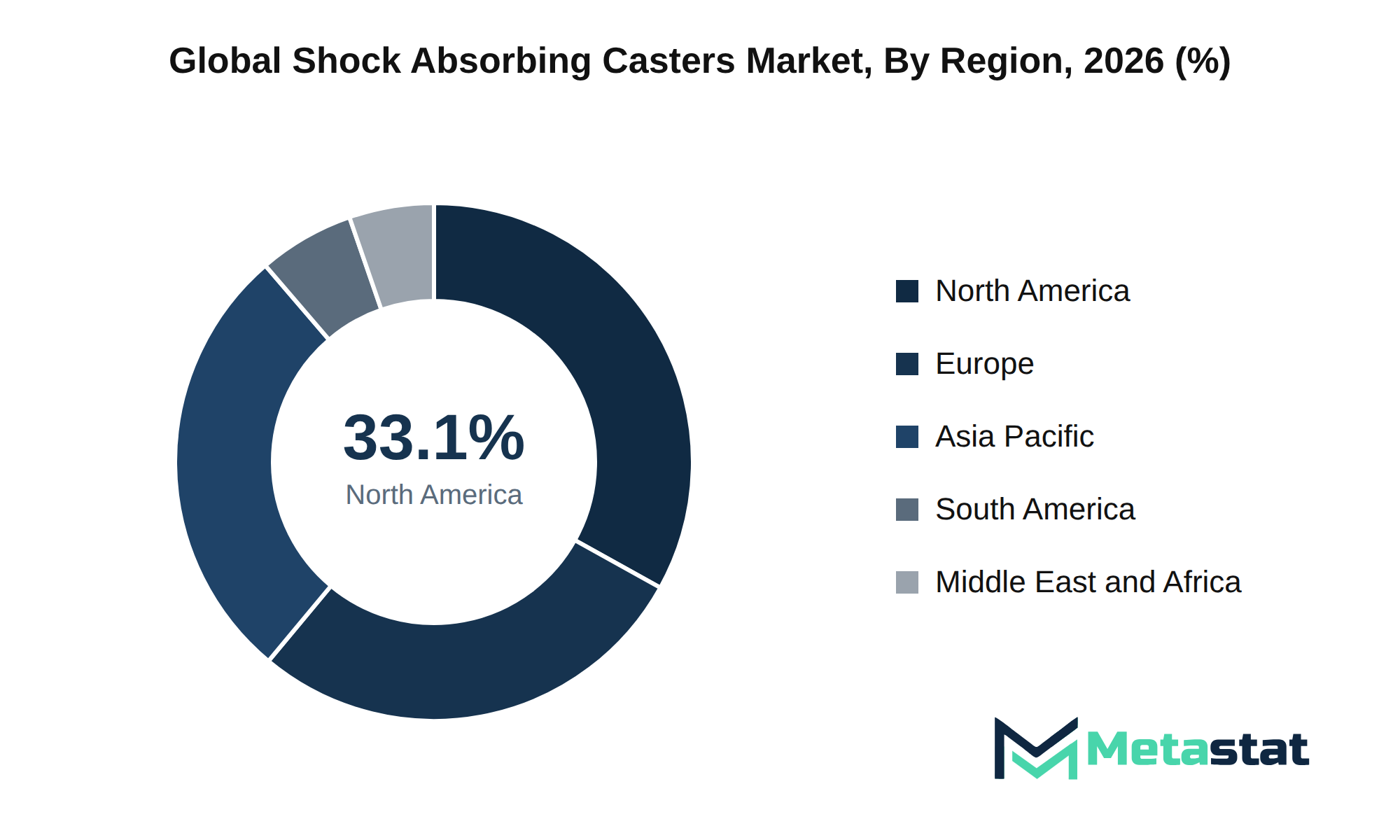
Based on geography, the Global Shock Absorbing Casters market is divided into North America, Europe, Asia-Pacific, South America, Middle East, and Africa.
The North America Shock Absorbing Casters market benefits from a robust industrial infrastructure and significant investments in manufacturing capabilities. The increasing focus on automation within industries including automotive production enhances demand for advanced caster solutions designed to improve efficiency and safety. The automotive manufacturing sector, projected to grow from USD 144.6 million in 2026 to USD 199.1 million by 2033, represents a critical source of demand for shock absorbing casters.
The market share in North America accounts for 33.1% of the global market in 2025, highlighting the region's dominant position. Regulatory frameworks in the United States, Canada, and Mexico promote the adoption of innovative technologies, driving investment in high-quality caster products. This environment creates a competitive landscape characterized by established domestic players and new entrants focused on localized manufacturing.
Infrastructure modernization initiatives across the region support the expansion of the Shock Absorbing Casters market. Investments in warehousing and intralogistics enhance distribution capabilities, positioning the market for continued growth. The anticipated CAGR of 5.8% from 2026 to 2033 reflects strong underlying demand and the ongoing shift towards integrated solutions that meet the evolving needs of various industries.
The European market for shock absorbing casters holds a significant position, with a projected share of 28.0% of the global market in 2025. Growth is driven by an increasing focus on automation and efficiency within various industries, particularly automotive and aerospace. Countries including Germany, France, and the UK lead in demand due to strong manufacturing bases and technological advancements. The presence of established players contributes to competitive dynamics, alongside emerging companies that enhance market diversity. Infrastructure modernization initiatives across Europe further support market expansion, particularly in sectors like warehousing and intralogistics. Investment in localized manufacturing and supply chain regionalization strengthens the availability of shock absorbing casters, meeting the demands of diverse industries. Challenges including geopolitical fragmentation and regulatory compliance add complexity to operations. However, these factors encourage innovation and adaptation among manufacturers. Adapting to local procurement dynamics and B2B buying behaviors remains crucial for success in the European market, creating growth opportunities for vendors. The rise of high-value replacement cycles in aging equipment presents incremental growth vectors, ensuring sustained market potential. While industries expand and modernize, the shock absorbing casters market in Europe is poised for continued relevance and demand through the forecast period.
In the Asia-Pacific region, the Shock Absorbing Casters market thrives owing to rapid industrialization and increasing investments in infrastructure projects. Countries including China and India experience significant growth driven by expanding manufacturing sectors and rising demand for efficient material handling solutions. The focus on modernization within these economies enhances the adoption of advanced caster technologies, particularly in automotive and general industrial manufacturing.
South Korea and Japan benefit from mature market dynamics, characterized by high-value replacement cycles for existing equipment. This trend encourages manufacturers to invest in innovative shock absorbing casters, improving operational efficiency across various applications. Australia and Southeast Asia present underpenetrated territories that offer substantial growth opportunities. Local manufacturers seek to enhance their supply chain capabilities and explore new markets.
Local compliance mandates and regulatory frameworks significantly influence procurement decisions in this region. Companies prioritize suppliers that meet these standards, which creates a competitive landscape where domestic players emerge, driven by key market leaders. Geopolitical factors, including regional supply chain shifts and trade policy changes, contribute to the ongoing evolution of the market, enhancing the viability of localized manufacturing densities.
Overall, the Asia-Pacific region is positioned for significant growth in the Shock Absorbing Casters market, driven by strategic entry barriers and foreign direct investment (FDI) flows. The combination of infrastructure readiness and regional resource availability positions this market segment for continued expansion through 2033.
South America represents a developing market for the Shock Absorbing Casters market, with a share of 6.0% in 2025. Brazil and Argentina emerge because key players, demonstrating potential for growth driven by rising industrial activity and infrastructure expansion. The ongoing modernization of manufacturing facilities enhances demand for advanced solutions, including shock absorbing casters.
Localized manufacturing densities contribute to competitive pricing and product availability, positioning the region favorably for suppliers. Regional procurement dynamics reflect a blend of traditional and innovative purchasing practices, influenced by cultural nuances and varying industrial needs. These factors shape the market environment, creating opportunities for growth across various segments of the shock absorbing casters market.
Investment in infrastructure development supports demand, particularly in the automotive and general industrial manufacturing sectors. Key stakeholders in South America focus on addressing underpenetrated territories through strategic entry barriers, leveraging foreign direct investment flows to enhance local capabilities. This approach improves market access and positions regional players to capitalize on emerging opportunities.
The Shock Absorbing Casters market in the Middle East and Africa benefits from various factors, including emerging market front-runners like Saudi Arabia and the UAE. Rapid infrastructure modernization efforts enhance the operational landscape, creating investment opportunities across multiple sectors. Increased focus on localized manufacturing densities supports the demand for casters, particularly in industrial applications.
Market growth is driven by high-value replacement cycles, particularly in established industries including automotive manufacturing and general industrial manufacturing. Rising adoption of advanced technologies and equipment across various sectors further stimulates market demand.
Domestic market participants, including local manufacturers and suppliers, create a competitive environment that drives steady growth. This competitiveness enhances procurement dynamics, allowing businesses to address specific regional needs effectively. The cultural nuances of buying behaviors in Saudi Arabia, the UAE, and South Africa influence market strategies, ensuring alignment with local preferences.
Geopolitical fragmentation within the region impacts cross-border trade corridors, affecting overall supply chain dynamics. Foreign direct investment flows into the region support the establishment of new manufacturing facilities, while geographic regulatory frameworks establish necessary compliance mandates. Energy grid resiliency and local infrastructure readiness play crucial roles in supporting operational efficiency and contribute to overall market growth.
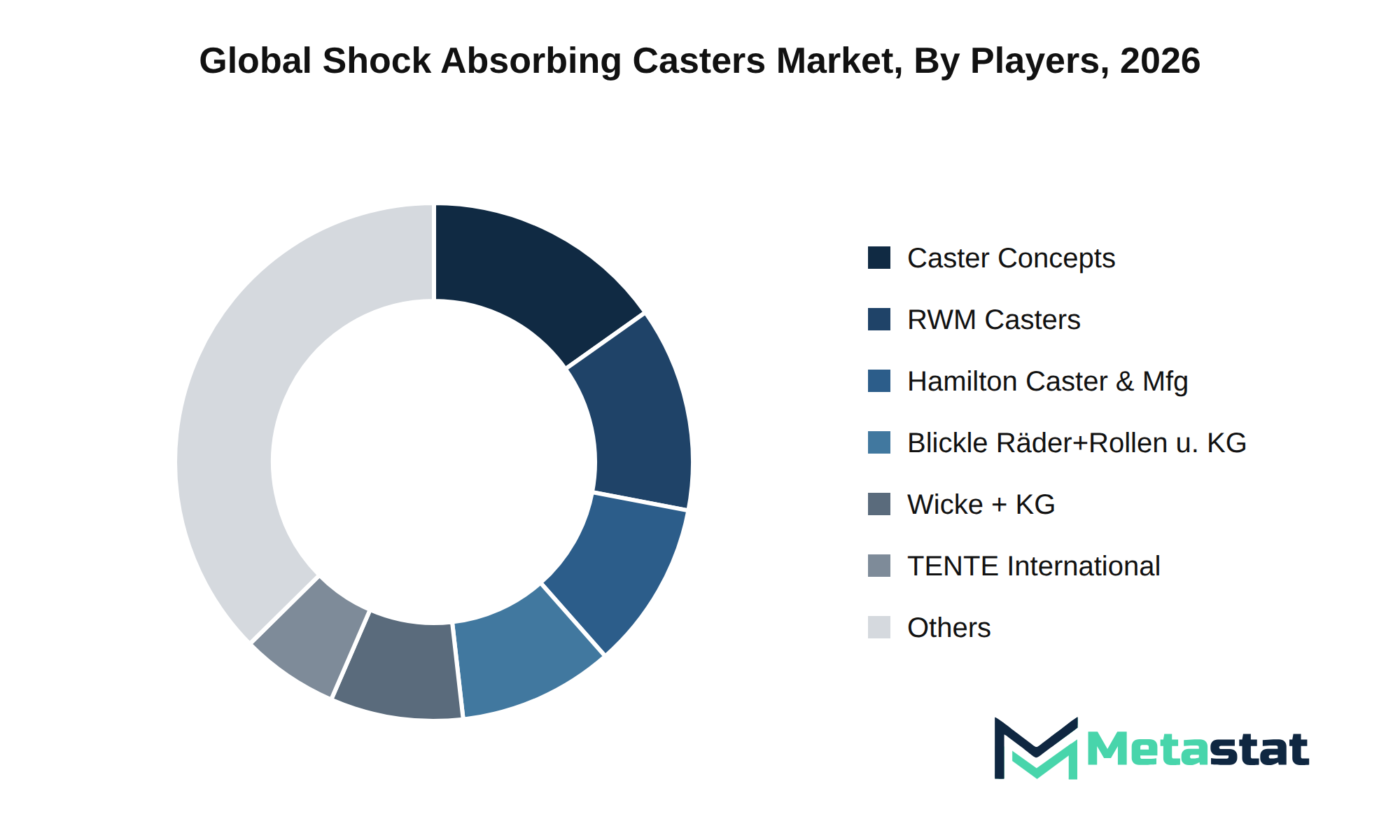
The competitive landscape for the Shock Absorbing Casters market comprises several key players employing various strategic approaches to enhance their market positions. Companies including Caster Concepts, Inc. and RWM Casters leverage product differentiation and strategic alliances to improve their offerings and expand their reach. The market features a mix of established players and innovative newcomers, each with unique capabilities and market strategies.
Strategic consolidation through mergers and acquisitions shapes market dynamics. Companies like Hamilton Caster & Mfg. Co. and Albion Casters actively explore these opportunities to enhance their technological capabilities and market presence. Firms including Blickle Räder+Rollen GmbH u. Co. KG and TENTE International GmbH focus on research and development to create proprietary technologies that provide competitive advantages.
The Shock Absorbing Casters market sees significant activity in joint ventures and cross-industry partnerships, allowing players to leverage complementary strengths. For instance, Tellure Rôta S.p.A. and Wicke GmbH + Co. KG engage in collaborative efforts to enhance product offerings while optimizing supply chain integration. These strategic moves contribute to barriers to entry for new entrants, limiting competition from startups.
Customer retention strategies and brand equity dynamics are critical in this market. Companies like Sugatsune Kogyo Co., Ltd. and SISIKU ADDKREIS CORPORATION invest in building strong relationships with customers to develop loyalty, which in turn influences switching costs. This focus on customer engagement strengthens market positions and creates a defensive moat against competitive threats.
In terms of future competitive outlook, firms including Gerhard Schwalb GmbH and Richmond Rolling Solutions continuously evaluate market trends and consumer preferences to drive strategic growth vectors. The evolving landscape of the Shock Absorbing Casters market requires companies to remain agile and responsive to industry changes, ensuring effective adaptation.
Market size is forecast to rise from USD 782 million in 2025 to over USD 1,228.1 million by 2033. The base case anticipates a compound annual growth rate of 5.8% during this period, illustrating a steady expansion trajectory for the Shock Absorbing Casters market. In a bullish scenario, robust demand driven by advancements in automation and technology integration is expected to accelerate growth. A bearish outlook stems from global supply chain disruptions or economic downturns impacting end-use industries.
Macroeconomic factors play a significant role in shaping demand and supply dynamics. An evolving economic cycle influences capital expenditure and investment patterns, impacting overall market growth. Structural consumption shifts driven by end-user preferences and technological advancements define the growth trajectory of the market. Next-generation technology integration and research and development commercialization timelines enhance product offerings and performance.
Regulatory evolution timelines and imminent compliance milestones influence manufacturers' operational strategies and product development timelines. Geopolitical realignments and evolving trade corridors impact sourcing and distribution channels, necessitating strategic capital allocation directives for industry participants. Infrastructure commitments and capital expenditure investment vectors represent critical factors for sustainable growth in the Shock Absorbing Casters market.
Emerging white-space opportunities and unmet enterprise needs present avenues for innovation and growth. Identifying high-growth pockets and executive-level strategic imperatives enhances competitive positioning and market penetration. Defensibility roadmaps outline the necessity for companies to adapt and respond to changing market conditions, ensuring long-term viability and success in the evolving Shock Absorbing Casters market.
The report strategically identifies and profiles the key market players and analyses their core competencies in each sub-segment of the Shock Absorbing Casters market.
Report Attributes | Details |
Study Period | 2021-2033 |
Base Year | 2025 |
Estimated Year | 2026 |
Forecast Period | 2026-2033 |
Historical Period | 2021-2025 |
Growth Rate | CAGR 5.8% from 2026 to 2033 |
Revenue Unit | USD million |
Segmentation | By Mechanism, Wheel Material, Load Capacity, End-Use Industry, and Region |
By Region | North America (By Mechanism, Wheel Material, Load Capacity, End-Use Industry, and Country)
|
Europe (By Mechanism, Wheel Material, Load Capacity, End-Use Industry, and Country)
| |
Asia Pacific (By Mechanism, Wheel Material, Load Capacity, End-Use Industry, and Country)
| |
South America (By Mechanism, Wheel Material, Load Capacity, End-Use Industry, and Country)
| |
Middle East and Africa (By Mechanism, Wheel Material, Load Capacity, End-Use Industry, and Country)
|
Find answers to common questions about this report
The Shock Absorbing Casters market size was valued at USD 782 million in 2025.
The Shock Absorbing Casters market is projected to grow at a CAGR of 5.8% during the forecast period from 2026 to 2033.
The North America Shock Absorbing Casters market size is estimated to reach USD 390.8 million by 2033.
The segment leading the Shock Absorbing Casters market is the Metal-Spring Suspension mechanism, with a projected value of USD 527 million by 2033. This segment demonstrates significant growth potential compared to other mechanisms.
Key drivers for the Shock Absorbing Casters market include the growing demand for metal-spring and polyurethane-elastomer suspension mechanisms, which enhance load stability and operational efficiency. the focus on reducing maintenance costs and improving safety in material handling processes supports market expansion across various industries, including automotive manufacturing and warehousing.
North America holds the dominant share of the Shock Absorbing Casters market, with a value of USD 390.8 million in 2033, representing 33.1 percent of the total market.
The increasing demand for metal-spring and polyurethane-elastomer suspension mechanisms drives product adoption in the Shock Absorbing Casters market. Their superior performance characteristics enhance load stability, reduce maintenance costs, and align with the industry's focus on operational efficiency and safety, particularly in automotive manufacturing and warehousing sectors.
The Shock Absorbing Casters market is estimated to reach a valuation of USD 1,228.1 million by 2033.
Key players in the Shock Absorbing Casters market include Caster Concepts, Inc., RWM Casters, Hamilton Caster & Mfg. Co., Albion Casters, Blickle Räder+Rollen GmbH u. Co. KG, and TENTE International GmbH.
Challenges include high capital investment requirements for rubber-elastomer suspension mechanisms and rising operational costs associated with specialized materials. Supply chain instability and competition from alternative solutions further complicate market dynamics.
The analysts below cover Machinery & Equipment research at Metastat Insights.
LEAD ANALYST
Utkarsh Khirodkar is a Lead Market Research Analyst at MetaStat Insight, specializing in market intelligence, technology sector assessments, and competitive strategy.

INDUSTRY CONSULTANT - CHEMICALS & ADVANCED MATERIALS
Chemicals and Materials · Machinery & Equipment · Packaging
Amit Gadhekar Consultant for Chemicals and Materials at MetaStat Insight, directing sector-specific intelligence, research, and strategic consulting across global chemical and processing markets.

PRINCIPAL CONSULTANT - QUALITY SYSTEMS & COMPLIANCE
Electronics and Semiconductor · Machinery & Equipment · Professional Services
Omkar Phadtare is an Industry Consultant at MetaStat Insight, specializing in quality systems, regulatory compliance, and standards benchmarking to drive data-driven market intelligence and strategic industry research.

ENERGY & INFRASTRUCTURE INDUSTRY CONSULTANT
Automotive and Transportation · Electronics and Semiconductor · Energy and Power · Machinery & Equipment
Saurabh Vasant Ganvir consults for Energy & Infrastructure Industry at MetaStat Insight, specializing in renewable energy, solar EPC, and electric vehicle (EV) infrastructure markets.

LEAD CONSULTANT - COMMUNICATION, TELECOM, AND IT
Electronics and Semiconductor · Information & Technology · Machinery & Equipment · Professional Services
Ravindra Sathe Consultants for Communication, Telecom, and IT at MetaStat Insight. He leads the firm's industry research initiatives across telecommunications infrastructure, digital connectivity, enterprise networking, and emerging information technology domains.
Floating offshore wind feasibility relies heavily on specialized installation vessel availability and port crane limits, which most broad renewable energy forecasts ignore. The report delivered a thorough analysis of dry dock capacity, mooring chain supply constraints, and raw material pricing trends for deepwater anchor installations. It served as a solid independent sanity check for our offshore project capital expenditure assumptions.
Assessing commercial microgrid software adoption requires looking past top-level installation numbers and examining utility interconnection queues. The research provided verifiable data on average permitting timelines, tariff structures, and battery storage integration costs across regional utility territories. That grounded perspective was valuable for our team when building five-year demand projections for industrial microgrid controllers.
Ambulatory surgical centers have very different purchasing cycles for robotic-assisted surgery platforms than major hospital networks. The MetaStat Insight study focused squarely on capital expenditure depreciation, procedural reimbursement pathways, and surgeon training overhead. That operational clarity made it much simpler to validate multi-year procedure growth forecasts against actual ambulatory center adoption patterns.
Explore related market intelligence reports worth reading alongside this one.
Starting from
$2950