
LEAD ANALYST
Utkarsh Khirodkar is a Lead Market Research Analyst at MetaStat Insight, specializing in market intelligence, technology sector assessments, and competitive strategy.

South Africa Rail Freight Transport Market Size, Share, By Service (Transportation and Services Allied to Transportation (Maintenance of Railcars and Rail Tracks, Switching of Cargo, and Storage)), By Cargo Type (Containerized, Non-containerized, and Liquid Bulk), By Destination (Domestic and International), Industry Analysis, Growth, Trends, and Forecast, 2026-2033
Report ID
MSI-5262
Published
September, 2026
Pages
265 Pages
Format
Historical
Base year
Forecast
Forecast period
Report Details
Market Valuation: Valued at $2,262.2 Million in 2025, projected to reach $4,107.1 Million by 2033 at a 6.7% CAGR.
Dominant Segment: The Transportation segment leads the South Africa Rail Freight Transport market, projected to grow from USD 2,338.9 million in 2026 to USD 3,535.4 million by 2033, driven by increasing demand for efficient transport solutions amid economic expansion.
Geographic Lead: The Domestic segment is expected to grow steadily, reaching USD 907.7 million by 2033, fueled by rising consumer spending and infrastructure improvements that enhance logistics capabilities.
What's Inside: This report provides a comprehensive analysis of the South Africa Rail Freight Transport market, including detailed segmentation by service, cargo type, and destination, along with competitive landscape insights and market dynamics.
Emerging Demands: The market is poised for growth due to emerging demands for sustainable transportation solutions and the modernization of infrastructure, which align with evolving consumer preferences and regulatory requirements.
Regulatory Compliance: Strict regulatory compliance poses challenges, impacting operational efficiency and investment attractiveness, as operators navigate complex legal mandates and capital stagnation.
Choose Your License
South Africa Rail Freight Transport Market
The South Africa Rail Freight Transport market was valued at USD 2,262.2 million in 2025 and is projected to reach USD 4,107.1 million by 2033, growing at a CAGR of 6.7% over the forecast period.
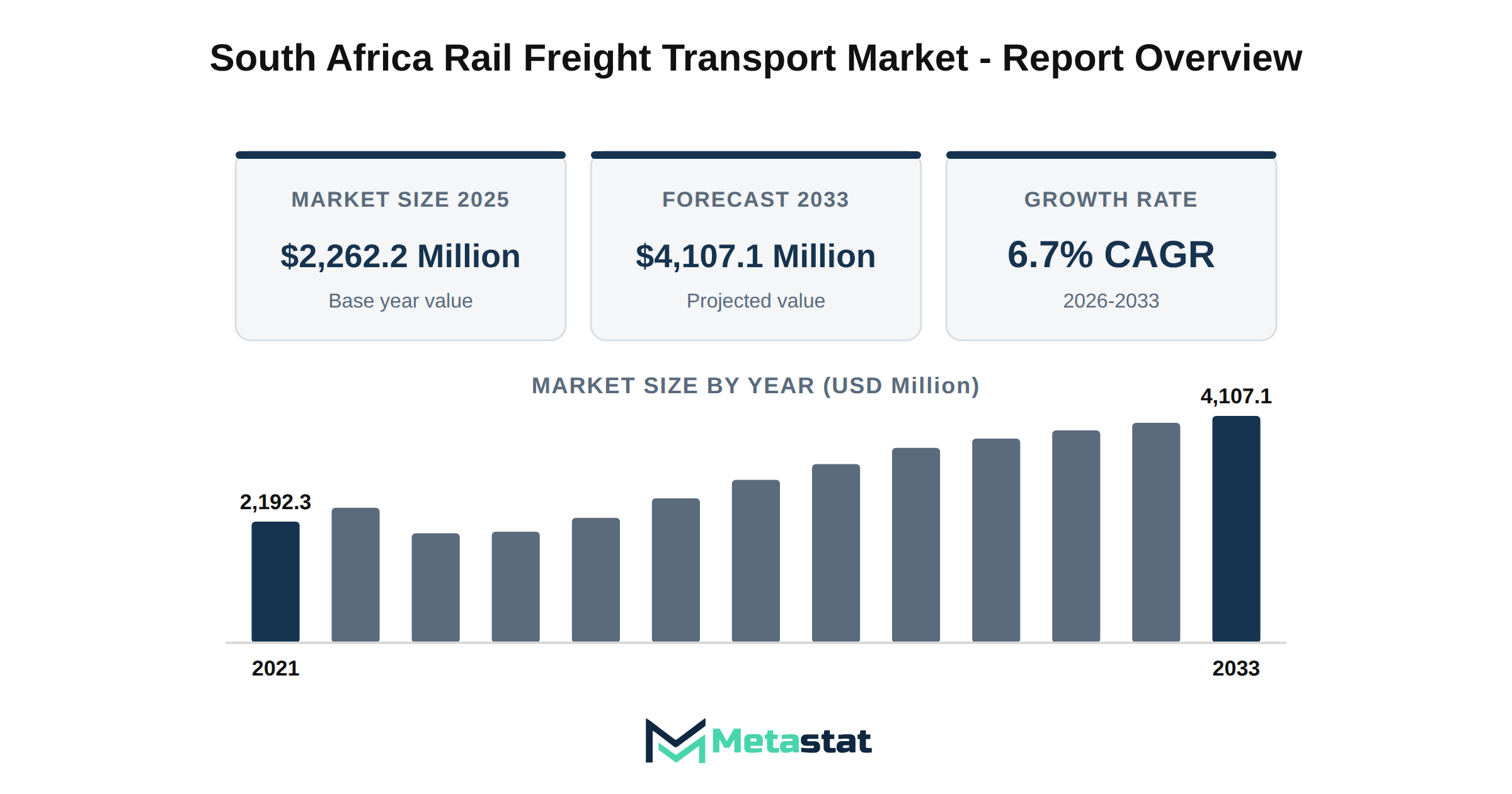
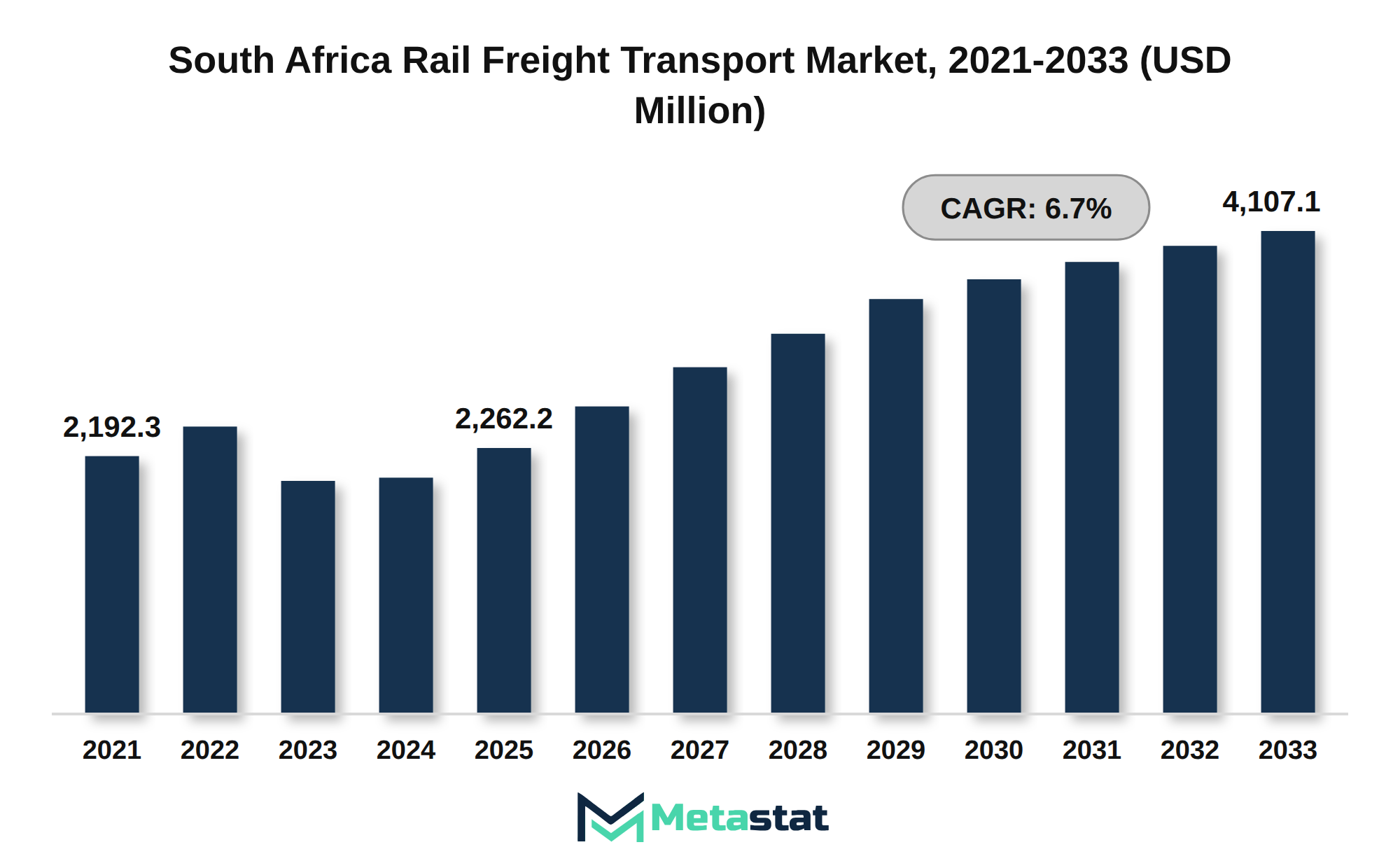
The South Africa Rail Freight Transport market reached a value of USD 2,262.2 million in 2025. This figure represents a notable increase from USD 2,192.3 million in 2021 and USD 2,444.4 million in 2022. In 2023, the market experienced a decline to USD 1,981.9 million, followed by a slight recovery to USD 2,009.6 million in 2024. The market is projected to grow significantly, reaching USD 4,107.1 million by 2033, reflecting a compound annual growth rate (CAGR) of 6.7% during the forecast period from 2026 to 2033.
The market's growth is driven by several factors, including the dynamics of Transnet Freight Rail's open access and private sector participation. This shift increases competition and improves service delivery within the rail sector. Commodity volume trends across core heavy haul and mineral corridors indicate robust demand for rail services, particularly in the transportation of bulk goods. Infrastructure rehabilitation priorities and rolling stock modernization initiatives further support market expansion, ensuring efficient and reliable freight transportation.
Regulatory frameworks and national rail policy implementation impact operational efficiencies and investment attractiveness. The relationship between freight rail networks and road transport corridors presents challenges and opportunities, influencing modal shifts in freight transportation. Public-private partnerships and international financing models are essential for rail expansion, allowing for the mobilization of necessary capital to enhance rail infrastructure.
Cross-border freight logistics and SADC regional integration opportunities enhance trade efficiency within the region. Technology integration and digitalization in South African rail operations streamline processes and improve service quality. Security measures against cable theft and infrastructure vandalism are essential, owing to these issues threatening operational integrity and reliability.
Transnet Freight Rail's open access and private sector participation dynamics enhance competition within the South Africa Rail Freight Transport market. The involvement of private players increases operational efficiency and service quality, driving investment in infrastructure and technology.
Commodity volume trends across core heavy haul and mineral corridors reflect a shift towards more efficient transport solutions. Growth in sectors including mining and agriculture fuels demand for rail services, encouraging operators to optimize capacity and routes. This trend positions rail freight because a key player in the logistics sector.
Infrastructure rehabilitation priorities and rolling stock modernization initiatives represent significant investment areas. Ongoing upgrades to rail infrastructure aim to improve reliability and safety, which increases the market's appeal to potential investors and service providers. These enhancements are critical for accommodating growing freight volumes and maintaining competitiveness against road transport corridors.
Regulatory frameworks and national rail policy implementation impact the operational landscape within the market. Compliance with new regulations ensures safety and efficiency in freight operations. The alignment of policies with industry standards supports the growth of rail transport and creates a stable investment climate.
Competitive dynamics between freight rail networks and road transport corridors highlight the importance of strategic planning. Rail's cost-effectiveness and environmental benefits position it favorably against road transport, prompting stakeholders to explore collaborative models that leverage the strengths of both modes.
Public-private partnerships and international financing models facilitate rail expansion projects. Collaboration between government entities and private operators brings additional resources and expertise, enabling the execution of large-scale infrastructure projects that contribute to market growth.
Cross-border freight logistics and SADC regional integration opportunities enhance trade efficiency. Improved rail links facilitate the movement of goods between South Africa and neighboring countries, expanding market access for local producers and increasing overall freight capacity.
Technology integration and digitalization in South African rail operations streamline processes and enhance service delivery. Advanced tracking systems, data analytics, and automation contribute to operational efficiency, reducing delays and improving customer satisfaction within the market.
Security measures against cable theft and infrastructure vandalism remain critical challenges. Implementing robust security protocols protects assets and ensures uninterrupted service delivery, safeguarding investments in the rail transport sector.
Regulatory compliance, standards, and geopolitical risk frameworks shape the operational environment. Continuous monitoring of these factors is essential for maintaining stability and building confidence among investors and operators within the market.
Disruption from inflationary pressures and currency volatility influences operational costs and pricing strategies. Stakeholders remain vigilant in adapting to these economic conditions to sustain profitability and growth.
Future strategic outlook considers corporate imperatives and high-value recommendations for stakeholders. Investment in sustainable transformation, decarbonization efforts, and circular economy dynamics will play a vital role in positioning the South Africa Rail Freight Transport market for long-term success.
Investment in infrastructure significantly influences the South Africa Rail Freight Transport market. Increased capital allocations enhance the capabilities of rail networks, facilitating improvements in service delivery and operational efficiency. Growth in GDP, stable interest rates, and supportive public-private partnerships create a favorable investment environment, encouraging stakeholders to allocate resources toward modernization and expansion efforts. This focus on infrastructure development impacts the transportation sector directly, allowing for greater capacity and more efficient movement of goods.
With the anticipated increase in demand for rail freight services, the market is projected to experience a shift toward advanced technological integration. Investment in automation and digitization of legacy processes improves operational productivity and positions the market to leverage emerging digital trends. Enhanced infrastructure supports the evolving needs of industries, allowing for increased engagement with domestic and international trade corridors. This dynamic creates a competitive environment, stimulating further investment and growth opportunities within the market.
Investment in infrastructure development significantly impacts the South Africa Rail Freight Transport market. The focus on modernizing rail networks and upgrading facilities enhances operational capacity, allowing for increased efficiency and reliability in freight transport. Enhanced infrastructure contributes to smoother logistics and improved supply chain resilience, benefiting industries reliant on rail transport.
Government initiatives to expand and modernize rail systems attract both public and private funds, stimulating capital investment. This influx of funding allows for the adoption of advanced technologies, including automation and digital tools, which streamline operations and improve service delivery. This technological integration boosts productivity and offers a competitive edge in meeting the evolving demands of consumers and businesses.
Regional trade protocols and infrastructure improvements facilitate better access to markets, resulting in a more robust freight transport network. Upgraded rail lines and facilities support various cargo types, including containerized and non-containerized shipments, thus expanding the market's capacity to meet diverse transportation needs. Overall, enhanced infrastructure development drives growth in the South Africa Rail Freight Transport market, positioning it for future advancements and opportunities.
Strict regulatory compliance requirements present significant challenges within the South Africa Rail Freight Transport market. Operators navigate complex legal mandates that increase operational burdens and delay project execution. Compliance hurdles involve extensive documentation and adherence to safety protocols, demanding substantial financial and human resources from freight operators.
Capital stagnation further complicates the landscape, limiting investments in essential infrastructure and technology. Investors exhibit hesitance to commit funds without guaranteed returns, resulting in a constrained growth trajectory for the market. High capital investment requirements restrict the ability of companies to enhance service offerings or expand operations, leading to stagnated development.
Inflationary pressures exacerbate the situation, driving up operating costs and impacting profitability. Rising costs for materials, labor, and utilities place additional strain on already tight budgets, compelling companies to reassess strategic priorities. This financial strain leads to reduced service levels and hinders the ability to compete effectively in the market.
Supply chain disruptions have emerged owing to a significant obstacle, impacting operational efficiency. Delays and inefficiencies within the supply chain hinder timely delivery and increase operational costs, reducing overall market competitiveness. Geopolitical instability contributes to uncertainties within the logistics framework, further exacerbating these supply chain challenges.
Skills shortages and talent gaps present additional constraints, limiting the available workforce capable of meeting the demands of this evolving market. Companies face difficulties attracting qualified personnel, which affects overall service quality and operational capability. Addressing these workforce challenges will be essential for sustaining growth and enhancing performance in the South Africa Rail Freight Transport market.
Geopolitical fragmentation poses significant challenges within the South Africa Rail Freight Transport market. Increased tensions among nations lead to trade deficits and heightened tariff friction, disrupting established supply chains. Stakeholders face pressure from rising input costs and logistics disruptions, which directly impact operational efficiency and profitability.
Technological disruptions further complicate industry dynamics. Integration of new technologies demands resources and time, while interoperability friction among varying systems creates inefficiencies in transport operations. Such challenges hinder the adoption of advanced solutions and limit the market's agility in responding to evolving demands.
Workforce skill gaps and talent retention pressures exacerbate operational constraints. Insufficient workforce capabilities impede the industry's ability to leverage automation and technological advancements, resulting in reliance on traditional processes. This reliance constrains growth potential and diminishes competitiveness.
Environmental sustainability demands create further complexity. Decarbonization mandates and heightened awareness of environmental lifecycle footprints challenge stakeholders to adapt quickly. Compliance overhead associated with these standards affects operational costs and resource allocation, placing additional strain on profitability within the market.
Infrastructure gaps and retrofitting barriers hinder the effective implementation of necessary upgrades. Aging rail infrastructure requires substantial investment, creating challenges in maintaining reliable service levels. These factors significantly influence strategic planning and investment decisions within the South Africa Rail Freight Transport market.
The South Africa Rail Freight Transport market experiences substantial opportunities driven by emerging regional demands and technological disruptions. The growing need for efficient and sustainable transportation solutions prompts stakeholders to invest in infrastructure modernization. This modernization enhances operational efficiency and reduces environmental impact, aligning with sustainability imperatives that influence client preferences across various industries.
Geographical expansion plays a critical role in creating opportunities. Increased demand for efficient rail freight solutions in previously underserved regions opens avenues for market players to enhance their service offerings. Strategic consolidation and cross-industry mergers strengthen competitive positioning, allowing companies to diversify their product portfolios and enter niche markets effectively.
The market responds to evolving buying behaviors and digital procurement shifts. Clients increasingly prioritize suppliers with robust digital capabilities, prompting logistics providers to embrace digital transformation. This transformation streamlines operations and enhances customer engagement, facilitating next-generation innovations that align with contemporary market demands.
Supply chain localization and asset life-cycle extensions present additional opportunities. Companies focusing on asset maintenance upgrades and retrofitting strategies maximize operational yields and extend the lifespan of existing assets. This focus reduces costs and supports the broader goal of enhancing the overall resilience of the market.
The combination of emerging regional demands, technological advancements, and strategic industry shifts creates a fertile environment for growth within the South Africa Rail Freight Transport market. Exploiting these opportunities will determine the competitive landscape and future market dynamics.
The South Africa Rail Freight Transport market is segmented based on Service, Cargo Type, and Destination.
Valued at USD 2,338.9 million in 2026, the Transportation segment is projected to reach USD 3,535.4 million by 2033, at a CAGR of 6.1% during the forecast period. This growth trajectory reflects increasing demand for efficient transport solutions driven by economic expansion and urbanization within South Africa. Enhanced infrastructure investments, focusing on rail logistics, serve because catalysts for segment growth, facilitating smoother and faster transportation of goods across regions.
Technological advancements, including the adoption of automation and digital technologies, contribute to operational efficiency in the Transportation segment. These innovations streamline processes and reduce costs, attracting stakeholders across various industries. Primary demand drivers include the rising need for reliable supply chains and a shift towards sustainable transport solutions, aligning with global trends towards reducing carbon footprints.
Downstream applications in sectors including mining, agriculture, and manufacturing significantly influence the Transportation segment. The need for effective logistics in these industries leads to increased rail freight activity, reinforcing the segment's role in the broader South Africa Rail Freight Transport market. Greater emphasis on regulatory compliance enhances operational standards, ensuring safety and reliability in freight transport.
Concerns surrounding pricing volatility and margin pressures necessitate strategic planning among players in the market. Effective cost structures, along with sound investment in technology and infrastructure, position firms to capitalize on strategic opportunity windows. Raw material sourcing and logistics vulnerabilities pose challenges, prompting stakeholders to remain agile to adapt to changing market dynamics, ensuring sustained growth and competitiveness in the Transportation segment.
Growth within the Services Allied to Transportation segment reflects increasing demand for maintenance and operational support in the South Africa Rail Freight Transport market. An expanding rail network drives the necessity for enhanced maintenance of railcars and rail tracks, along with efficient cargo switching and storage solutions. Investment in these services is critical for ensuring the reliability and safety of rail operations, attracting both domestic and international clients.
Market dynamics indicate a strong shift toward advanced technological solutions, including automated switching systems and predictive maintenance tools. These innovations enhance service efficiency, contributing to a segment value of USD 571.7 million by 2033, at a CAGR of 10.9% during the forecast period. This rapid growth in the Services Allied to Transportation segment demonstrates the increasing importance of operational reliability and effectiveness in the overall rail freight ecosystem.
Competitive factors include the ongoing need for compliance with regulatory standards aimed at ensuring safety and efficiency within rail operations. These standards drive investments in maintenance services, creating opportunities for service providers to expand their market presence. Rising awareness of environmental impacts encourages investments in sustainable practices, influencing the types of services offered and enhancing market growth prospects. The cumulative effect of these factors positions the Services Allied to Transportation segment because a key contributor to the evolving dynamics of the South Africa Rail Freight Transport market.
Valued at USD 179.5 million in 2026, the Containerized segment is projected to reach USD 368.4 million by 2033, at a CAGR of 10.8% during the forecast period. Increased demand for containerized freight services stems from various industries, particularly e-commerce, manufacturing, and retail, which rely on efficient logistics solutions to support their supply chains. These sectors drive adoption of containerized transport due to its flexibility, enabling effective movement of goods across domestic and international markets.
Investment in technological advancements enhances the capabilities of containerized transport, improving tracking and management of shipments. Innovations including real-time data analytics and automated systems contribute to higher efficiency and reliability, aligning with the evolving needs of customers. The adoption of these technologies supports competitive advantage within the South Africa Rail Freight Transport market.
Segment expansion aligns with the growing trend of sustainability in logistics, which prioritizes eco-friendly practices. Containerized transport offers lower carbon footprints compared to traditional freight methods, appealing to environmentally conscious companies. Regulatory compliance standards increasingly favor sustainable practices, enhancing the attractiveness of this segment.
Pricing volatility in raw materials influences margin pressures within the containerized segment, impacting operational costs. Fluctuations in fuel prices, labor costs, and equipment procurement affect profitability, necessitating strategic pricing models to maintain competitiveness. Despite these challenges, the segment's fundamental drivers and investment prospects indicate strong growth potential within the market.
Strategic opportunity windows arise from shifting consumer preferences towards online shopping and the need for rapid delivery services. Companies focusing on enhancing their containerized logistics capabilities position themselves favorably to capture increased demand. Overall, the Containerized segment presents significant prospects for growth and development in the South Africa Rail Freight Transport market.
The non-containerized segment is estimated to reach USD 3,635.6 million by 2033, at a CAGR of 6.2% during the forecast period. Demand for non-containerized cargo derives primarily from the increasing needs of industries including mining, agriculture, and manufacturing. The ongoing expansion of these sectors in South Africa drives significant growth in freight transport requirements. Investment in logistics infrastructure and advancements in operational efficiency further support segment expansion within the South Africa Rail Freight Transport market.
Technological maturation enhances the capabilities of non-containerized freight transport operations. Innovations in tracking systems, cargo handling equipment, and data analytics improve overall efficiency and service reliability. These advancements directly influence downstream applications, meeting the evolving needs of end users in various sectors.
Regulatory compliance standards related to safety and environmental impact create challenges and opportunities within the segment. Adherence to these standards ensures operational integrity and enhances the market's competitiveness. Pricing volatility in raw materials, including fuel, impacts cost structures and margin pressures for operators in the non-containerized segment.
Strategic opportunity windows arise from the increasing demand for non-containerized freight, particularly in international markets. The ability to adapt to shifting consumption patterns and customer preferences positions businesses to capitalize on emerging trends. Overall, the combination of robust demand drivers and strategic investments supports continued growth in the non-containerized segment of the South Africa Rail Freight Transport market.
Demand for the Liquid Bulk segment significantly influences the South Africa Rail Freight Transport market. Growth stems from increasing industrial activities and the rising need for transporting liquid commodities, including chemicals and petroleum products. Emerging industries, including energy and manufacturing, directly contribute to this growth, necessitating efficient transportation solutions to meet their supply chain requirements.
Regulatory compliance regarding the safe handling and transportation of hazardous materials drives demand for enhanced infrastructure and technology upgrades within the market. Investments in next-generation logistics capabilities ensure that carriers manage the complexities associated with transporting liquid bulk effectively. Rising environmental regulations compel companies to adopt greener technologies, promoting investment in modernized rail freight systems.
Pricing volatility in global commodity markets influences margin pressures within this segment. Suppliers face challenges in maintaining profitability due to fluctuating raw material costs while ensuring competitive pricing strategies. The Liquid Bulk segment is projected to reach USD 103.1 million by 2033, reflecting anticipated growth in demand and investment in logistics capabilities. Overall, strategic opportunities arise from regulatory shifts and technological advancements, creating a robust environment for market expansion.
Valued at USD 620.9 million in 2026, the Domestic segment is projected to reach USD 907.7 million by 2033, at a CAGR of 5.6% during the forecast period. Increased demand for domestic freight solutions drives growth, influenced by economic expansion and rising consumer spending within South Africa. Key sectors including retail and manufacturing significantly contribute to this demand, fueling the need for efficient transportation services.
Investment in infrastructure improvements supports the Domestic segment's expansion, with government initiatives focusing on enhancing rail networks and facilities. Enhanced logistics capabilities, including faster transit times and improved cargo handling, strengthen the market's competitive position. The implementation of advanced technologies, including real-time tracking systems, boosts operational efficiency and customer satisfaction.
Shifting consumption patterns reflect a growing preference for cost-effective and sustainable transportation solutions, encouraging firms to adopt rail freight over road transport. Regulatory compliance standards and environmental considerations shape market dynamics, driving investments towards eco-friendly practices and technologies. Overall, the Domestic segment within the South Africa Rail Freight Transport market shows a positive growth trajectory, supported by strategic investments and innovative approaches to service delivery.
Valued at USD 620.9 million in 2026, the International segment engages in cross-border trade that necessitates robust logistics frameworks and compliance with various international regulations. Rising demand for imported goods, coupled with increased global trade agreements, drives growth in this segment. Enhanced connectivity between South Africa and its trading partners facilitates smoother transportation routes, ensuring timely deliveries.
The International segment is projected to reach USD 3,199.5 million by 2033, at a CAGR of 7% during the forecast period. This growth reflects a strategic alignment with evolving consumer preferences for diverse product offerings and the need for reliable supply chains. Global demand for South African commodities, including minerals and agricultural products, significantly contributes to the expansion of the market.
Regulatory compliance standards for cross-border transport directly influence operational efficiency, compelling firms to invest in advanced tracking and monitoring technologies. Heightened competition among international players compels stakeholders to innovate continuously, leading to investment in next-generation upgrades. These developments shape the customer experience by ensuring improved reliability and transparency within the supply chain. Timely product availability is critical for industries relying on these factors.
Structural changes in global trade dynamics, spurred by geopolitical influences and economic shifts, present both opportunities and challenges for the market. Adapting to these changes requires strategic re-evaluations of logistics networks and partnerships. Increased capital investment in infrastructure development, especially in key transport corridors, positions the market for sustained growth through 2033.
Competitive Landscape and Strategic Insights
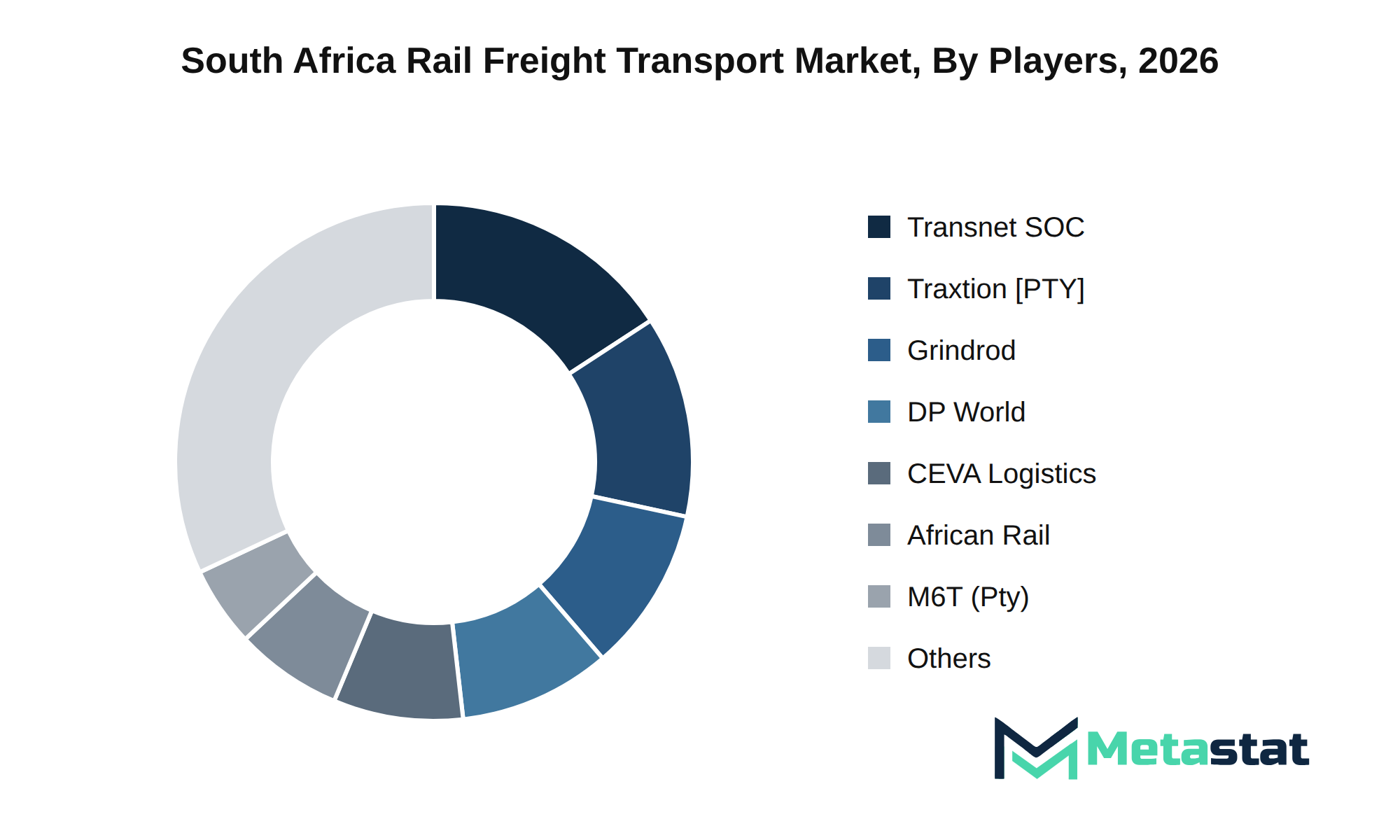
The South Africa Rail Freight Transport market features a diverse array of players, each adopting distinct strategic behaviors. Companies including Transnet SOC Ltd and Grindrod Limited focus on enhancing their service offerings through strategic consolidation and partnerships, seeking to capture greater market share. Meanwhile, Traxtion and CEVA Logistics emphasize innovation in service delivery, leveraging proprietary technology to differentiate their offerings.
In addition, DP World and the C. Steinweg Group actively pursue integrated value chain strategies that allow for improved procurement leverage and customer retention capabilities. These companies prioritize building brand equity and minimizing switching costs for customers, strengthening their position within the market. Competitive dynamics involve significant barriers to entry, with established players maintaining strong footholds through their logistical capabilities and established relationships across the supply chain.
Looking forward, the competitive outlook for the South Africa Rail Freight Transport market includes a focus on strategic alliances and joint ventures, which are expected to enhance operational efficiencies and broaden service portfolios. Companies like GEODIS and Madibana SA illustrate the importance of cross-industry partnerships, driving collaboration that meets evolving market demands.
Market size is forecast to rise from USD 2,262.2 million in 2025 to over USD 4,107.1 million by 2033. The base case presents a growth trajectory characterized by a 6.7% compound annual growth rate (CAGR), reflecting robust demand for freight transport services.
The bull case anticipates accelerated growth due to favorable macroeconomic conditions, potential technological advancements in rail infrastructure, and heightened governmental support for the transport sector. Increased investments in next-generation technologies and strategic capital allocation towards rail freight systems enhance efficiency, leading to higher market penetration.
The bear case highlights risks stemming from economic downturns, regulatory constraints, and geopolitical tensions that could disrupt supply chains. Such factors could result in subdued growth and reduced demand in certain sectors of the market. Challenges related to compliance with evolving policies and infrastructure constraints hinder operational capabilities and overall market performance.
Structural consumption shifts driven by changing industry dynamics and consumer preferences will shape demand across various segments. The market is likely to adapt to emerging white-space opportunities and high-growth pockets, influenced by significant investments in research and development to meet unmet enterprise needs.
Overall, the South Africa Rail Freight Transport market is characterized by both opportunities and challenges. Ongoing capital expenditures and commitments to infrastructure will remain vital in supporting long-term growth and competitiveness in the sector.
The report strategically identifies and profiles the key market players and analyses their core competencies in each sub-segment of the Rail Freight Transport market.
Report Attributes | Details |
Study Period | 2021-2033 |
Base Year | 2025 |
Estimated Year | 2026 |
Forecast Period | 2026-2033 |
Historical Period | 2021-2025 |
Growth Rate | CAGR 6.7% from 2026 to 2033 |
Revenue Unit | USD million |
Segmentation | By Service, Cargo Type, Destination, and Region |
Find answers to common questions about this report
The South Africa Rail Freight Transport market size was valued at USD 2,262.2 million in 2025.
The Rail Freight Transport market is projected to grow at a CAGR of 6.7% during the forecast period from 2026 to 2033.
Transportation leads the South Africa Rail Freight Transport market, with a projected value of USD 3,535.4 million by 2033. This segment significantly surpasses the Services Allied to Transportation segment, which is expected to reach USD 571.7 million in the same year.
Investment in infrastructure significantly drives the South Africa Rail Freight Transport market by enhancing rail network capabilities and operational efficiency. Government initiatives and public-private partnerships promote modernization, while the integration of advanced technologies, including automation and digitization, improves productivity and service delivery.
Strict regulatory compliance requirements, high capital investment demands, and supply chain disruptions significantly restrain growth in the South Africa Rail Freight Transport market. Operators face complex legal mandates that increase operational burdens, while rising costs and geopolitical instability further complicate logistics and profitability. workforce skill gaps hinder the industry's ability to adopt advanced technologies.
Investment in infrastructure significantly influences product adoption within the South Africa Rail Freight Transport market. Enhanced rail networks and facilities improve operational capacity, efficiency, and reliability, while government initiatives attract funding for advanced technologies, facilitating modernization and expansion efforts. This focus on infrastructure development positions the market to meet evolving demands and engage more effectively with trade corridors.
The Rail Freight Transport market is estimated to reach a valuation of USD 4,107.1 million by 2033.
Key players in the South Africa Rail Freight Transport market include Transnet SOC Ltd, Traxtion (PTY) Ltd, African Rail Company, Grindrod Limited, DP World, and CEVA Logistics.
The South Africa Rail Freight Transport market is projected to grow at a CAGR of 6.7% from 2026 to 2033.
The Containerized cargo type segment is expected to grow at a CAGR of 10.8% from 2026 to 2033.
The analysts below cover Automotive and Transportation research at Metastat Insights.
LEAD ANALYST
Utkarsh Khirodkar is a Lead Market Research Analyst at MetaStat Insight, specializing in market intelligence, technology sector assessments, and competitive strategy.

ENERGY & INFRASTRUCTURE INDUSTRY CONSULTANT
Automotive and Transportation · Electronics and Semiconductor · Energy and Power · Machinery & Equipment
Saurabh Vasant Ganvir consults for Energy & Infrastructure Industry at MetaStat Insight, specializing in renewable energy, solar EPC, and electric vehicle (EV) infrastructure markets.
When planning edge sensor rollouts across refinery environments, generic IoT reports typically miss the harsh-environment certification bottlenecks. MetaStat Insight gave an objective evaluation of ATEX and Class 1 Division 2 hardware availability, along with realistic five-year maintenance cycle cost projections. The comparison of wireless mesh versus private cellular backhaul helped our team pressure-test network reliability models for remote processing facilities.
In the biological seed treatment space, registration timelines vary drastically between the European Union, Brazil, and North America. The MetaStat Insight research handled these cross-border regulatory barriers with genuine nuance, mapping commercialization pathways alongside historical field adoption rates. The segmentation between microbial strains and biochemical active ingredients was particularly well structured.
Our team was tracking whether regional recycling infrastructure could realistically absorb the growing volume of lithium iron phosphate batteries over the next decade. The report did a solid job separating announced hydrometallurgical plant capacity from active, permitted operational throughput. That distinction made the feedstock availability projections and regional recovery rate models far more credible than standard commercial overviews.
Explore related market intelligence reports worth reading alongside this one.
Starting from
$2950