
Explore key trends in Molybdenum demand, including stainless steel alloying, aerospace applications, and the impact of sustainability regulations.
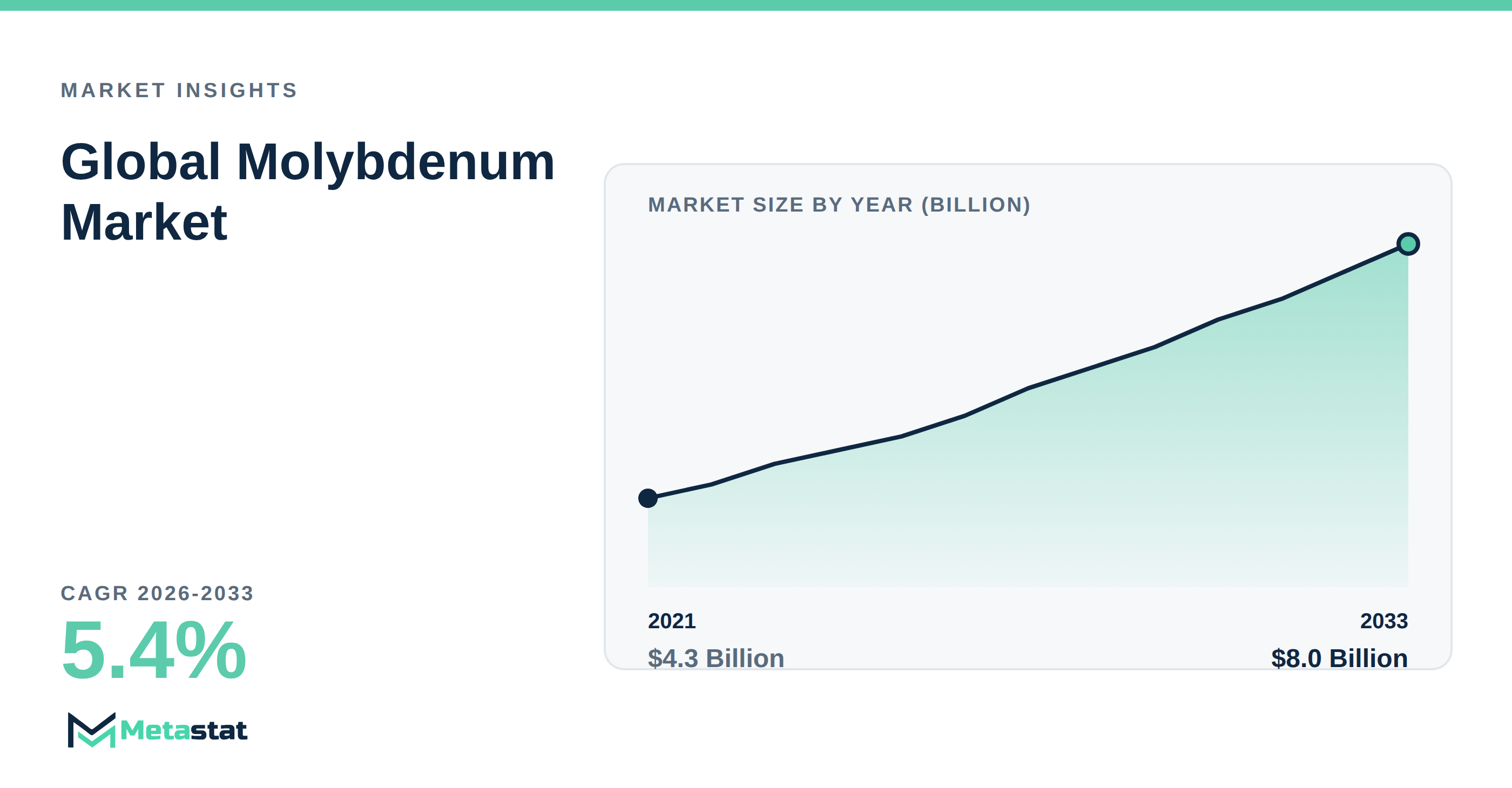
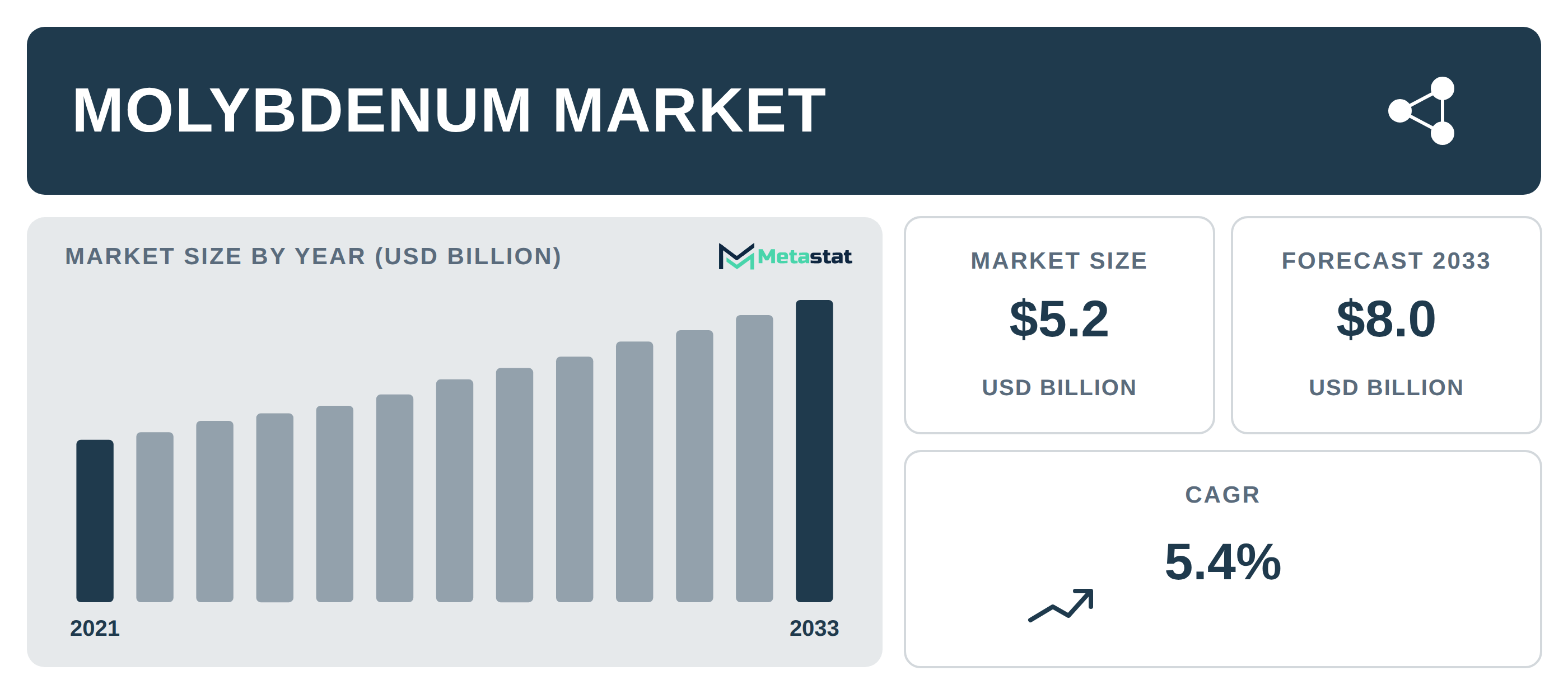
The factors driving demand for Molybdenum are diverse, shaped by evolving industry requirements and technological innovations. Understanding these Molybdenum trends is essential for buyers aiming to refine their procurement strategies and maintain their competitive edge. The full figures are in our Molybdenum market size and forecast report.
1. Rising Demand for Stainless Steel Alloying
Demand for Molybdenum is significantly influenced by its role in stainless steel alloying, primarily due to its exceptional corrosion resistance and mechanical strength. The construction, automotive, and infrastructure sectors are major consumers of stainless steel alloys, as they seek materials that withstand demanding conditions and provide longevity. As urbanization progresses, the need for robust and resilient structures increases, leading to heightened procurement of Molybdenum. Suppliers are compelled to ensure a consistent supply of high-quality materials to meet the growing needs of these industries.
2. Shift Toward High-Purity Applications in Semiconductors
In the semiconductor sector, there has been a notable shift towards high-purity Molybdenum targets used in thin-film deposition processes. This transition is primarily driven by the industry's requirements for improved material uniformity and purity, which enhance device functionality and reliability. Manufacturers are increasingly focusing on high-purity grades to meet these demands, leading to a realignment in their supply chain strategies. Consequently, suppliers are investing in enhanced refining processes and quality controls, which affects pricing and procurement cycles in this specialized market.
3. Increased Usage in Aerospace Applications
Molybdenum is gaining traction in the aerospace domain due to its high melting point and favorable strength-to-weight ratio. These characteristics are vital for components including turbine engines and structural elements, where exceptional performance is critical. The aerospace industry is actively seeking lightweight and durable materials to comply with stricter efficiency standards. Manufacturers within this sector are likely to prioritize procurement from suppliers who consistently deliver high-performance Molybdenum products tailored to their stringent specifications.
4. Adaptation of Supply Contracts Due to Price Volatility
The unpredictable nature of Molybdenum pricing has prompted buyers to seek more adaptable supply contracts. Long-term agreements are increasingly preferred, particularly among superalloy producers and infrastructure developers, who are looking for stability in quality and pricing. These arrangements help mitigate the repercussions of fluctuating input costs while ensuring a reliable supply chain, allowing producers to manage their production schedules more effectively.
5. Growing Pressure from Sustainability Regulations
Environmental sustainability regulations are playing a significant role in shaping the demand for Molybdenum, particularly in catalytic applications. Industries striving to meet stricter emissions standards are investing in Molybdenum-based catalysts. With global regulations tightening, the push towards cleaner fuel technologies is expected to expand Molybdenum’s relevance in catalyst applications, prompting suppliers to innovate their product offerings to meet these evolving compliance requirements.
Together, these trends highlight how Molybdenum is increasingly integrated into various industries. Buyers who remain informed about these shifts will be better equipped to navigate their purchasing strategies, ensuring that they meet performance and sustainability objectives efficiently.
Tags
About the Authors

LEAD ANALYST
Utkarsh Khirodkar is a Lead Market Research Analyst at MetaStat Insight, specializing in market intelligence, technology sector assessments, and competitive strategy.

INDUSTRY CONSULTANT - CHEMICALS & ADVANCED MATERIALS
Chemicals and Materials · Machinery & Equipment · Packaging
Amit Gadhekar Consultant for Chemicals and Materials at MetaStat Insight, directing sector-specific intelligence, research, and strategic consulting across global chemical and processing markets.