
LEAD ANALYST
Utkarsh Khirodkar is a Lead Market Research Analyst at MetaStat Insight, specializing in market intelligence, technology sector assessments, and competitive strategy.

Global Molybdenum Market Size, Share, By Product Type (Molybdenum Concentrates, Molybdenum Oxides, Ferromolybdenum, Molybdenum Metal, Molybdenum-Based Alloys, Molybdates, Molybdenum Disulfide and Others (Molybdenum Carbides, Molybdenum Halides, Organomolybdenum Compounds)), By Application (Stainless Steel Alloying, Engineering Steel Alloying, Tool and High-Speed Steel Alloying, Cast Iron Alloying, Superalloy Production, Catalyst Production, Lubricant and Coating Production, Thin-Film Deposition, Refractory Metal Component Fabrication and Others (Pigments, Fertilizer Micronutrients, Corrosion Inhibitors)), By End-Use Industry (Automotive and Transportation, Construction and Infrastructure, Industrial Machinery and Equipment, Oil and Gas, Chemical Processing, Electrical and Electronics, Aerospace and Defense, Power Generation, Healthcare and Medical Devices and Others (Agriculture, Consumer Goods)), Industry Analysis, Growth, Trends, and Forecast, 2026-2033
Report ID
MSI-5433
Published
October, 2026
Pages
269 Pages
Format
Historical
Base year
Forecast
Forecast period
Report Details
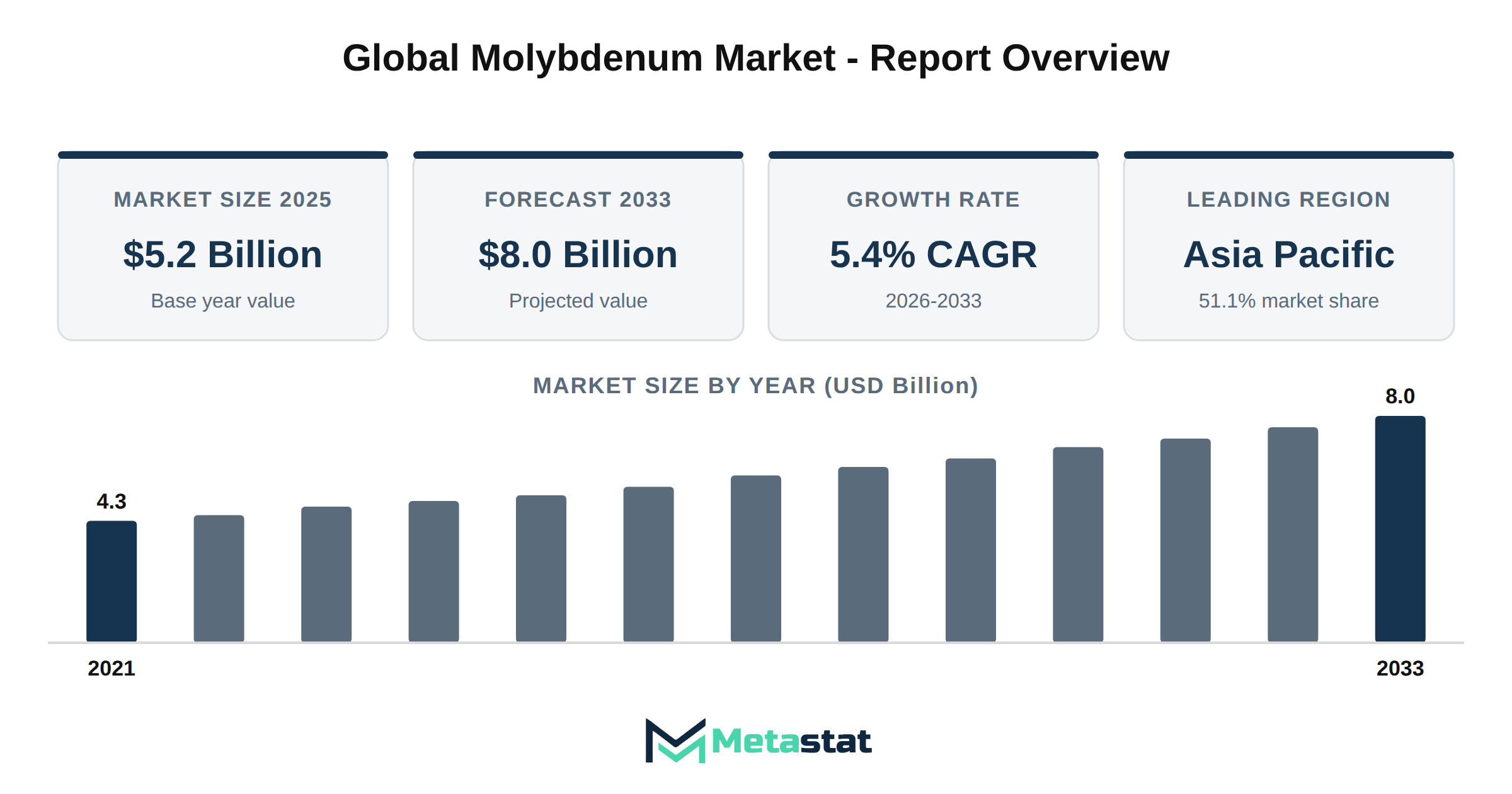
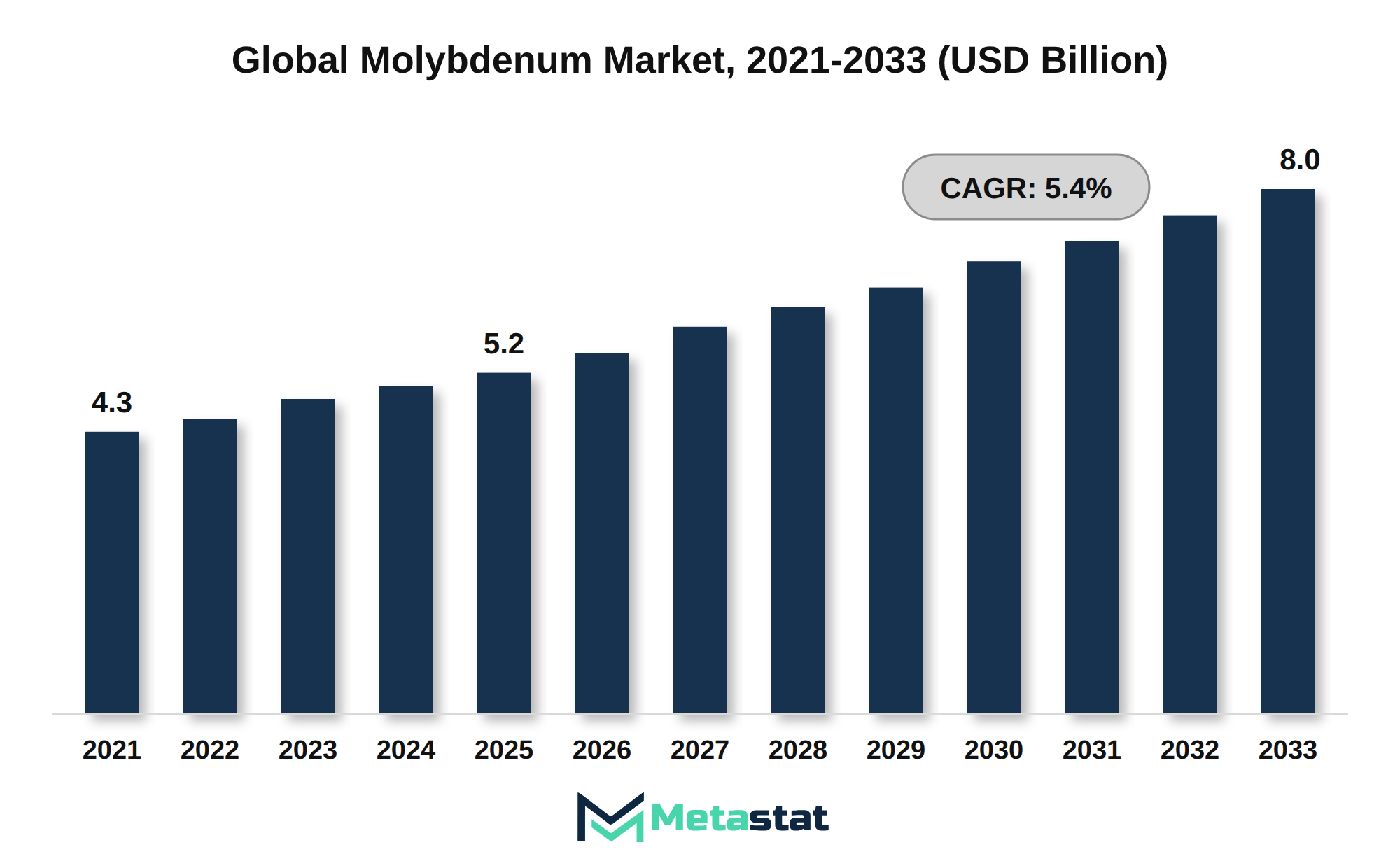
Market Valuation: Valued at $5.2 Billion in 2025, projected to reach $8 Billion by 2033 at a 5.4% CAGR.
Dominant Segment: Stainless steel alloying is the leading application segment by value, driven by its essential use in construction, automotive, and infrastructure projects that demand robust and high-performance materials.
Geographic Lead: Asia Pacific holds the largest market share at 51.1% in 2025, propelled by rapid industrialization, infrastructure development, and major steel production in China, India, and Southeast Asia.
Fastest-Growing Product: Molybdenum Metal is projected to grow at the fastest CAGR of 6.4% during the forecast period, supported by rising demand in electronics, medical devices, and high-temperature industrial applications.
What's Inside: The report provides detailed segmentation by product type, application, and end-use industry, with competitive analysis, regional market shares, and forecasts from 2026 to 2033.
Choose Your License
Global Molybdenum Market
The global Molybdenum market was valued at USD 5.2 billion in 2025 and is projected to reach USD 8 billion by 2033, growing at a CAGR of 5.4% over the forecast period.
The scope of the Molybdenum market includes concentrates, oxides, ferromolybdenum, metal forms, and advanced compounds, serving a range of industrial applications. Buyers invest in these products to enhance strength, durability, and corrosion resistance in critical applications, particularly within steel and alloy production. For specialty dry-film lubricants and wear-resistant thermal spray layers, applying molybdenum compounds relies on specialized industrial coating equipment engineered for precise film thickness. Stainless steel alloying is the largest application segment by value. Its essential role in construction, automotive, and infrastructure projects drives demand for robust and high-performance materials.
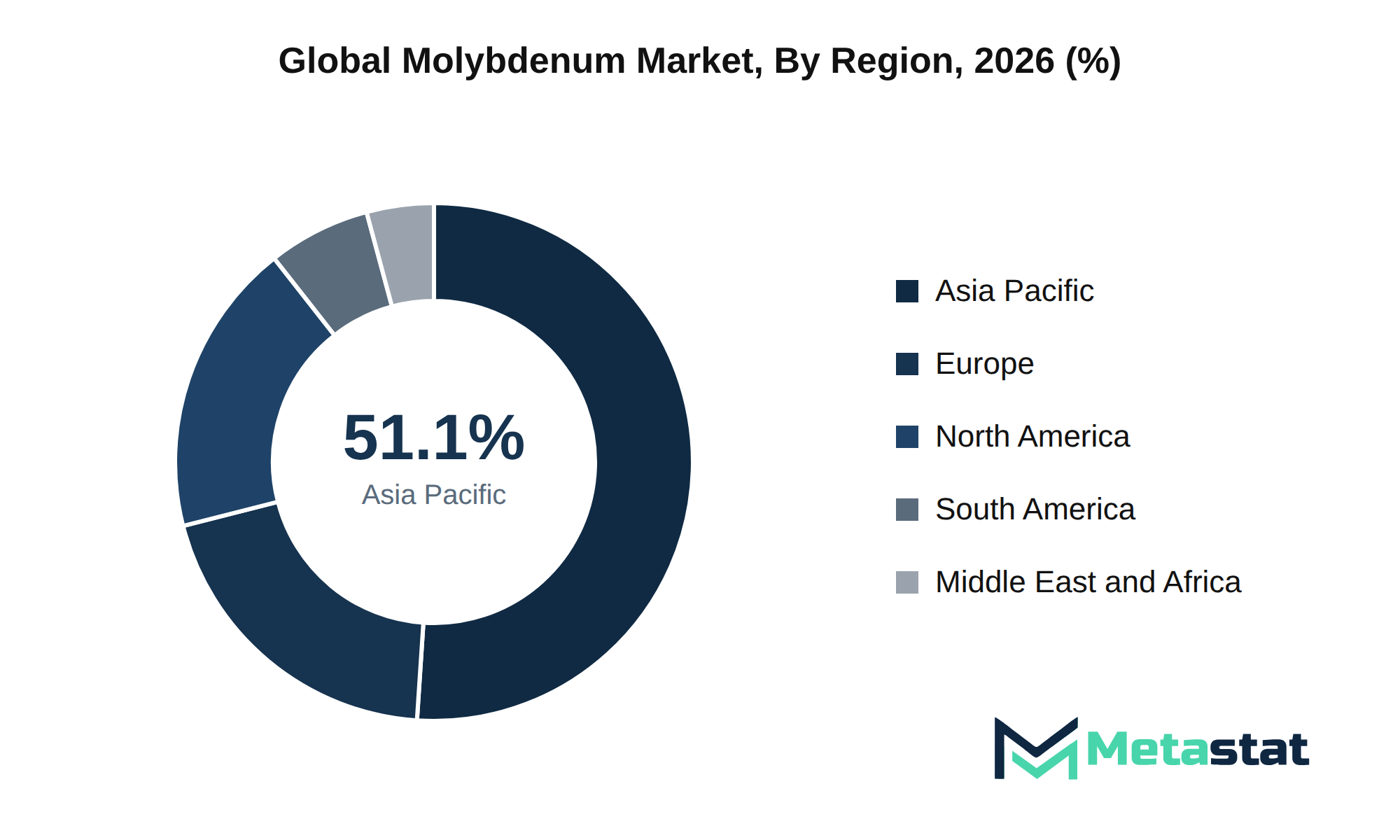
Asia Pacific accounts for the highest share, holding 51.1% of the market in 2025. Major steel producers and rapid industrialization in China, India, and Southeast Asia support sustained demand. North America holds 18.4% of the market in 2025. The US leads in 2026. This regional distribution highlights the importance of local manufacturing capabilities and region-specific drivers shaping procurement strategies among end users.
Rising alloy demand from construction and infrastructure sectors drives growth in the Molybdenum market. Urbanization and the expansion of large-scale building projects fuel the need for advanced steels and alloys. This trend translates into higher volumes for molybdenum suppliers. In commercial building exteriors, these metallic substrates frequently undergo continuous coil coating treatments to combine core alloy corrosion resistance with weatherproofing primers. The market’s trajectory reflects a blend of replacement demand in established economies and new project-driven uptake in emerging regions.
Demand for molybdenum is concentrated among industrial buyers who rely on its unique combination of strength, corrosion resistance, and high temperature performance. Stainless steel alloying stands out as the leading application segment by value, reflecting sustained procurement by manufacturers in sectors including construction, automotive, and the broader hydrocarbon processing sector where hydrodesulfurization catalysts and sour-service alloys are essential. The product improves material longevity and reduces lifecycle costs, which drives purchasing decisions, particularly in environments where performance and reliability are critical. Buyers invest in molybdenum to support the production of advanced alloys and components, addressing the increasing requirement for durable materials in infrastructure and heavy machinery.
North America holds 18.4% of the market in 2025, with the US leading in 2026. Asia Pacific accounts for the largest share at 51.1%, driven by its extensive manufacturing base and rising infrastructure investments. This regional concentration results from large-scale steel and alloy production in China, India, and Southeast Asia, where growing end-use industries raise demand for molybdenum-containing materials. Producers in these regions benefit from established supply networks and high consumption rates across steel ingots production, construction, transport, and industrial machinery.
Market growth is primarily supported by the expanded use of molybdenum in engineering and stainless steel applications, particularly where enhanced material properties deliver commercial or operational advantages. Construction and infrastructure projects are increasing in scale and complexity, intensifying demand across the steel fabrication sector for alloys that offer both strength and resistance to extreme conditions. Manufacturers and developers require material solutions that meet evolving performance standards and operational expectations.
High-purity molybdenum targets have gained traction within semiconductor thin-film deposition processes, driven by the sector’s escalating demands for material uniformity and purity. Manufacturers supplying advanced targets report a significant shift among semiconductor foundries toward high-purity grades to improve device performance and reliability across wide-bandgap architectures such as the GaN power device segment. This transition aligns with the growth in thin-film deposition applications, which falls under the “Thin-Film Deposition” segment in the application breakdown. Buyers in the semiconductor industry increasingly specify molybdenum targets with stringent purity standards to meet evolving device miniaturization and efficiency requirements. Several manufacturers now focus exclusively on high-purity variants. These metallization layers must interface seamlessly with downstream packaging components such as the semiconductor lead frame to dissipate heat away from delicate silicon dies.
Asia Pacific plays an outsized role in this shift. The region accounts for 51.1 percent of the global Molybdenum market by share. Regional suppliers and multinational firms boost output of high-purity molybdenum products to serve advanced electronics manufacturing. Technical specifications demanded by chipmakers have pushed suppliers to invest in refining processes and tighter quality controls. This impacts procurement cycles and pricing. The supply chain for molybdenum targets has become more specialized, supporting premium pricing for high-purity variants and encouraging further innovation in materials engineering.
This trend toward high-purity targets in thin-film applications supports stable, value-added demand from one of the sector’s most technology-intensive buyer groups. Suppliers able to meet these quality expectations strengthen their engagement with semiconductor and electronics manufacturers. This positions them for growth alongside next-generation device fabrication trends.
Purchasing models in the Molybdenum market are shifting, reflecting increased demand from superalloy producers and energy infrastructure developers. Buyers in applications including engineering steel alloying and stainless steel alloying are negotiating longer-term supply contracts to secure consistent quality and pricing stability. These strategies adapt to fluctuations in input costs and the cyclical nature of infrastructure investment. Contract pricing for molybdenum concentrates and oxides often ties to volume commitments, with buyers agreeing to indexed or formula-based adjustments that reflect changes in input costs or raw material indices.
In the application segment, stainless steel alloying is projected to reach USD 2 billion by 2033, indicating that procurement contracts for this segment increasingly prioritize fixed-term agreements with structured price escalators. Such arrangements improve budget certainty for both producers and high-volume buyers in sectors including construction and industrial equipment. For ferromolybdenum, a segment with a projected value of USD 2.6 billion by 2033, buyers in energy infrastructure projects are adopting flexible quantity contracts that align with project timelines and ramp-up periods, reducing inventory holding costs.
These evolving contract and payment models in the Molybdenum market enable suppliers to optimize production planning and support buyers’ risk management strategies. The commercial outcome is a more predictable revenue stream for producers and a more stable input cost base for buyers in superalloy and infrastructure sectors, which supports continued investment and technological upgrades across the supply chain.
A shift in concentrate supply and roasting capacity has driven significant volatility in molybdenum pricing for buyers in the stainless steel and engineering sectors. Purchasers in these industries increasingly face procurement risk when upstream bottlenecks restrict the availability of molybdenum concentrates, particularly in Asia Pacific, which accounts for 51.1 percent of global demand. Fluctuations in concentrate supply disrupt roasting operations, a key conversion step to produce molybdenum oxides and ferromolybdenum for alloying applications. When concentrate availability tightens or roasting throughput is restricted, buyers of stainless and engineering steel alloys encounter periodic price surges in spot markets and contract renegotiations that affect their cost models. For instance, molybdenum oxides are projected to reach USD 1.6 billion by 2033, reflecting the criticality of roasting capacity for downstream alloying applications.
OEMs in automotive and industrial sectors report that market imbalances between concentrate supply and processing capacity often lead to lead-time extensions and inventory adjustments, particularly during periods of rapid construction and infrastructure growth. Steelmakers with integrated supply chains or established relationships with concentrate suppliers hold a strategic advantage in securing feedstock when supply tightens. This dynamic has shifted purchasing behavior in the market, with buyers seeking long-term agreements and diversified sourcing strategies to offset exposure to pricing spikes driven by limited concentrate and roasting throughput. The commercial impact extends beyond price to production planning and customer delivery commitments, reinforcing the need for resilience in procurement and supply chain decisions within this market.
Molybdenum demand is shifting toward higher value applications in advanced steel, aerospace, and electronics, reflecting strategic changes in end-user industries. In the steel sector, stainless steel alloying remains the dominant application, with segment value projected to rise from USD 1.4 billion in 2026 to USD 2 billion by 2033, supported by a 5 percent compound annual growth rate. Rising requirements for corrosion resistance and mechanical strength in construction, transportation, and industrial components drive this acceleration. Engineering steel alloying is expected to follow, with a projected segment value of USD 2.4 billion in 2033, indicating durable demand for structural and specialty steel products.
Outside traditional steel, aerospace and electronics manufacturers are expanding their use of molybdenum-based alloys and metal forms. Aerospace suppliers rely on molybdenum for its high melting point and strength-to-weight ratio, essential in turbine engines and structural components. Electronics manufacturers incorporate molybdenum in thin-film deposition and use it in contact material in semiconductors, leveraging its thermal and electrical conductivity. These shifts show a move toward more specialized, high-performance molybdenum products in the value chain.
Greater demand from non-steel segments results in increasing pressure on suppliers to innovate and meet stricter quality requirements. Growing demand for technical grade products supports higher price realization and premiumization, encouraging investment in advanced refining and processing capabilities. The evolving application mix influences procurement decisions and reinforces the strategic importance of technical grade products for growth-oriented buyers.
Automotive and transportation manufacturers are intensifying their use of high-performance alloys to address evolving fuel efficiency targets and durability requirements. This shift is driving growth for the market, with automakers increasingly specifying molybdenum-containing steels in engine, drivetrain, and structural components. Demand from this segment is on a steady rise, with the Automotive and Transportation end-use industry projected to expand from USD 1 billion in 2026 to USD 1.5 billion by 2033, at a 5 percent CAGR. Adoption of molybdenum alloys supports lighter vehicle platforms while maintaining mechanical strength, enabling compliance with stringent emissions rules and lifecycle cost reduction. Advances in automotive engineering directly influence sourcing patterns, encouraging suppliers to invest in material innovation and expand processing capabilities. Automotive industry requirements shape both product specifications and purchasing volumes, resulting in operational uplift for suppliers and sustained demand for molybdenum products.
Frequent fluctuations in input prices disrupt purchasing strategies for steel manufacturers, especially those relying on long-term alloying contracts. In periods of sharp increases, several buyers in stainless steel and engineering steel segments adjust their procurement volumes downward or delay restocking, seeking to avoid exposure to unfavorable cost swings. This restraint in ordering patterns leads to smaller batch orders and a preference for flexible, short-term supply agreements. The unpredictable cost environment limits the ability of buyers to plan multi-year alloying programs with confidence, resulting in slower adoption of higher molybdenum-content formulations. The market experiences constrained growth in end-use industries where budget forecasting and material price stability are essential for investment decisions. Delays in adopting enhanced steel grades, particularly in cost-sensitive projects, reinforce the need for more stable pricing mechanisms across the market.
Upstream producers face sustained margin pressure when energy-intensive processing steps drive up operating costs. Achieving the required chemical purity levels or mechanical properties for molybdenum-based alloys demands advanced roasting and reduction techniques, which depend on stable electricity and reagent pricing. During periods of fluctuating energy rates or surging costs for specialized reagents, suppliers experience compressed margins, limiting their ability to fund process upgrades or expand capacity. The market reflects this challenge in regions where energy pricing volatility is acute, particularly for plants using legacy equipment. Equipment investments that streamline processing and optimize energy efficiency have become a core response, but capital outlays for modernization restrict participation to larger, vertically integrated players. Cost-driven consolidation is expected to reshape the supplier base across the market, with process innovation becoming a critical differentiator for profitability.
Asia Pacific holds a 51.1% revenue share, outpacing all other regions and reflecting the region’s aggressive expansion in steel production and alloy manufacturing. Regional concentration in stainless and engineering steel alloying segments delivers substantial application volumes. Producers supplying ferromolybdenum and molybdenum oxides address a demand surge driven by infrastructure development, rapid urbanization, and large-scale manufacturing investments throughout China, India, and Southeast Asia. Growth in these markets supports higher capacity utilization and sustained volume commitments from alloy makers. The market in Asia Pacific is projected to remain the most dynamic, providing suppliers with new opportunities to diversify portfolios and enhance long-term revenue streams by targeting large and stable industrial customers.
The global Molybdenum market is segmented based on Product Type, Application, and End-Use Industry.
Valued at USD 0.9 billion in 2026, Molybdenum Concentrates are projected to reach USD 1.1 billion by 2033 at a CAGR of 4.1%. This sub-segment consists of raw ore concentrates processed mainly for conversion into oxides and ferromolybdenum, supplying steel manufacturers, alloy producers, and industrial chemical processors. Demand growth is closely tied to primary steelmaking, where bulk buyers seek stable input costs and consistent supply for large-scale alloying operations. Compared with Molybdenum Metal, which posts a 6.4% CAGR, Molybdenum Concentrates expand at a slower pace, reflecting the segment’s higher exposure to input price volatility and limited value-added differentiation. Buyers in this segment prioritize volume sourcing, with prices more sensitive to shifts in mining output and processing capacity. While downstream applications diversify, the concentrates segment retains its focus on foundational materials for alloy production, supporting stable but moderate expansion. Concentrate suppliers encounter cost pressures not faced by finished product segments, affecting competitiveness and margins.
Estimated to reach USD 1.6 billion by 2033, Molybdenum Oxides posted a CAGR of 4.6% during the forecast period. This product type is a vital intermediate, primarily used in producing steel alloys for applications requiring enhanced corrosion resistance and strength. Buyers include alloy producers, catalyst manufacturers, and industries that leverage its chemical adaptability. Demand for catalyst production and specialized steel, particularly from chemical processing and energy sectors where operational reliability is critical, drives this segment. Compared with Molybdenum Concentrates, which grows at 4.1% CAGR, Molybdenum Oxides expands at a faster pace, reflecting its broader integration across advanced alloying and catalytic applications. Market adoption benefits from the material’s versatility in both metallurgical and chemical processes, distinguishing it from other product types in the Molybdenum market, including ferromolybdenum and molybdenum metal, which are more narrowly tied to specific downstream consumers.
Ferromolybdenum segment is expected to reach USD 2.6 billion by 2033. This alloy is primarily used in steel production, serving to introduce molybdenum into stainless steel and engineering steel grades where strength, corrosion resistance, and weldability are required. Steelmakers and engineering firms drive the bulk of ferromolybdenum demand, with usage closely tied to output levels in construction, machinery, and transportation infrastructure. In comparison with molybdenum concentrates and oxides, ferromolybdenum commands a higher average selling price due to its value-added conversion and its suitability for direct blending in metallurgical processes. Sector growth is propelled by substitution trends favoring higher-performance alloys in automotive and industrial machinery. While molybdenum metal shows a higher CAGR of 6.4%, ferromolybdenum reaches a broader industrial base, sustaining strong demand even when other product types experience cyclical slowdowns. This segment benefits from robust downstream investment in steel capacity and alloying technology upgrades, differentiating it from other product types in the market.
Projected to grow at a CAGR of 6.4% during the forecast period, Molybdenum Metal shows the fastest expansion rate among all product types tracked in the Molybdenum market. This segment is defined by its use in high-performance applications where material purity, thermal stability, and mechanical robustness are critical. Buyers include manufacturers of electrical contacts, furnace components, electronic devices, and medical equipment, who select molybdenum metal for its ability to maintain structural integrity under extreme temperatures and corrosive conditions. The adoption of this segment is propelled by ongoing miniaturization trends in electronics and increasing demand for reliable materials in medical device fabrication. Compared to Molybdenum Concentrates (CAGR 4.1%) and Molybdenum Oxides (CAGR 4.6%), Molybdenum Metal stands out for its specialized end uses and higher value-added nature, resulting in a distinct buyer profile that prioritizes material performance over bulk alloy production. This dynamic is expected to attract investment from advanced manufacturing sectors seeking to differentiate on the basis of product reliability and longevity.
Molybdenum-based alloys combine molybdenum with other metals to deliver superior performance in environments exposed to extreme heat, corrosive chemicals, or demanding mechanical loads. These alloys are critical for aerospace, power generation, and chemical processing equipment manufacturers who require structural materials that retain strength and resist degradation under stress. Advanced energy and defense sectors drive demand in this segment, seeking alloys with reliable mechanical properties for turbine blades, rocket nozzles, and high-temperature reactors. Compared to molybdenum metal or concentrates, these alloys often command a premium price due to specialized processing and the value added through alloying. The market benefits from continuous innovation in alloy compositions, with buyers favoring suppliers capable of meeting tight metallurgical specifications. Growth in this segment correlates strongly with capital investment in high-performance infrastructure, where buyers prioritize lifetime durability over material cost. Procurement teams evaluate suppliers not only on price but on their proven ability to deliver alloys that meet rigorous technical standards.
Molybdates are inorganic compounds containing molybdenum in oxidation state +6, widely used for corrosion inhibitors, catalysts, and pigments in chemical processing, water treatment, and specialty coatings. Chemical manufacturers and water utilities account for the bulk of demand, with purchasing often driven by regulatory requirements and the shift toward environmentally safer alternatives to chromates. Molybdates offer lower toxicity and improved performance in corrosion prevention applications for industrial water systems, which differentiates the segment from Molybdenum Oxides and Ferromolybdenum, primarily consumed by metallurgical buyers. Adoption in pigments and specialty chemicals introduces a more fragmented buyer base than the alloying segments of the market. Regulatory trends restricting hexavalent chromium in Europe and North America support substitution by molybdates, supporting stable demand even when steel industry cycles soften. In this segment, price sensitivity remains moderate compared to oxides and concentrates, since buyers in chemical and coatings industries prioritize technical performance and compliance over raw material cost volatility.
Molybdenum disulfide is a layered compound valued for its solid lubricating properties and high temperature stability, making it a staple in industrial lubricant formulations, coatings, and certain electronics applications. End users in sectors including chemical processing, automotive components, heavy machinery, and electronics rely on molybdenum disulfide for its low friction and resistance to extreme environments. Demand in this sub-segment is shaped by ongoing advancements in industrial automation and the growing requirement for maintenance-free, high-performance lubrication systems. Compared to commodity-focused segments, buyers for molybdenum disulfide often include specialty chemical producers and electronics manufacturers, who prioritize functional performance over volume price advantage. Barriers to adoption include competition from synthetic and ceramic lubricants, which challenge traditional use cases in new machinery design. Differentiation from other product types lies in its unique tribological function and specialty end-user base, rather than bulk alloying or metallurgical input.
Molybdenum carbides, halides, and organomolybdenum compounds serve specialized functions that distinguish them from more mainstream molybdenum product types. These compounds are adopted primarily in high-performance chemical synthesis, advanced lubricants, and catalysts in petrochemical and fine chemical processes. Buyers include chemical manufacturers, specialty lubricant producers, and research institutions, who select these materials for their unique reactivity, catalytic efficiency, or stability under extreme conditions. Demand for these compounds is driven by ongoing development of next-generation chemical catalysts that enable cleaner or more selective industrial processes. Compared to segments like ferromolybdenum or concentrates, buyers of molybdenum carbides and organomolybdenum compounds typically prioritize purity specifications and tailor-made properties over bulk pricing, making this segment distinct within the broader market. A limited number of global suppliers with deep process expertise control much of the supply, impacting availability and price stability for downstream users.
Valued at USD 1.4 billion in 2026 and projected to reach USD 2 billion by 2033 at a CAGR of 5%, stainless steel alloying stands out as a core application for molybdenum, driven by end users in construction, transportation, and industrial machinery who require alloys with superior corrosion resistance and strength. Demand in this segment rises with infrastructure projects adopting higher-grade stainless steel to meet performance and sustainability targets. Unlike engineering steel alloying, which posts a slower CAGR of 4.5%, stainless steel alloying has accelerated on the back of increased urbanization and public infrastructure upgrades. Stakeholders experience direct volume growth from extensive use of austenitic and duplex stainless steels, which rely on molybdenum to enhance durability. The segment’s strong outlook reflects technology upgrades in steelmaking processes and the shift toward alloys that reduce maintenance costs over asset lifecycles, creating higher-value opportunities for suppliers.
Engineering Steel Alloying segment is estimated to reach USD 2.4 billion by 2033, at a CAGR of 4.5% during the forecast period. This segment supplies critical alloying inputs for the manufacture of engineering steels used in power generation components, construction machinery, and specialized automotive parts. Buyers include steel producers targeting high-performance markets where strength, toughness, and resistance to wear are commercially decisive. In contrast to tool and high-speed steel alloying, which serves more niche applications, engineering steel alloying draws demand from a broader industrial base and responds to trends in industrial machinery and infrastructure investment. The market sees heightened activity in this segment during cycles of capital spending on energy infrastructure and heavy equipment. Comparing growth rates, the 4.5% CAGR for engineering steel alloying is slower than the 5% posted by stainless steel alloying, reflecting more mature demand dynamics and a less pronounced shift toward advanced steel compositions in this segment. Higher alloying costs and end-user specifications influence pricing in the market for this application.
Tool and High-Speed Steel Alloying segment is expected to reach USD 0.6 billion by 2033. Precision cutting tool manufacturers and specialty steel producers in automotive, aerospace, and industrial sectors drive requirements for alloys that retain hardness and structural stability under extreme mechanical and thermal loads. This segment depends on consistent quality and supply of molybdenum, enabling tools to maintain sharpness and resist deformation at high speeds and temperatures. Demand intensifies where high-speed machining and complex tooling geometry are critical, differentiating this segment from stainless steel and engineering steel alloying, which serve broader structural roles. The growth rate for tool and high-speed steel alloying trails stainless steel alloying, which posts a 5% CAGR to 2033, highlighting a more specialized but less rapidly expanding application. Supply chain price volatility for high-purity molybdenum inputs and competition from advanced carbide-based alternatives introduce procurement challenges unique to this segment.
Growing at a CAGR of 4% through the forecast period, cast iron alloying leverages molybdenum additions to improve strength, toughness, and resistance to wear in critical infrastructure and heavy machinery components. Foundries and manufacturers in sectors including construction equipment, automotive parts, and process industry machinery are primary buyers, targeting components that require prolonged durability under cyclic stress or corrosive environments. In this segment, demand for cast iron alloying is increasingly driven by applications where cost-efficient performance and longevity matter more than the premium properties associated with stainless or engineering steel alloying. Compared to stainless steel alloying - tracking at a 5% CAGR - this segment expands at a slower rate, reflecting its mature adoption in established cast iron applications. Cost sensitivity in procurement and the preference for easily castable alloys support molybdenum’s stable role in this segment, while substitution with alternative alloying elements remains limited for end-users demanding both high mechanical performance and cost control. The market thus supports a distinct supply channel to cast iron producers, separating this segment from higher-value steel alloying markets in both buyer profile and growth dynamics.
Superalloy production draws on molybdenum to achieve high strength and thermal stability in demanding environments, supporting the manufacture of turbine blades, jet engines, and critical components for aerospace and power generation. Buyers in this segment include manufacturers in the aerospace, defense, and energy industries that prioritize material performance over cost, differentiating them from commodity-focused steel or cast iron alloying buyers. Demand in this area is propelled by the requirement for alloys that withstand extreme temperatures and corrosive conditions, a need that intensifies with rising engine and reactor efficiency standards. Compared with other applications in the market, superalloy production faces both higher input costs and more stringent metallurgical requirements, restricting substitution by lower-cost alloys. The adoption of advanced casting and powder metallurgy processes has expanded design freedom, supporting tailored alloy compositions and strengthening supplier relationships in this segment.
Catalyst production applies molybdenum compounds to accelerate chemical reactions in industries including petroleum refining, petrochemicals, and environmental technologies. Buyers in this segment primarily include large-scale chemical processors and refineries seeking to improve yield and reduce environmental impact. Demand in catalyst production is propelled by the ongoing global transition toward cleaner fuels and stricter emissions standards, which drive investment in advanced catalyst systems containing molybdenum. Compared to segments including stainless steel or engineering steel alloying, where demand correlates closely with construction and infrastructure cycles, catalyst production shows distinct dynamics tied to regulatory shifts and innovation in chemical processing. High catalytic efficiency and durability requirements position molybdenum as an essential input, supporting stable premium pricing relative to its use in bulk alloys. Adoption barriers in this application segment include cost sensitivity among buyers and ongoing product qualification requirements driven by evolving environmental regulations. Specialty catalyst producers often seek tailored formulations, requiring close technical alignment between suppliers and end users.
Industrial lubricant and coating production relies on molybdenum compounds for high-temperature stability and low-friction performance in demanding environments. Manufacturers in sectors including heavy machinery, automotive components, and aerospace select these materials to extend equipment life and reduce maintenance intervals, particularly where conventional lubricants degrade under stress. Buyers in this segment prioritize product purity and particle size, which drives premium pricing compared to applications with less stringent technical requirements. The key demand driver comes from increased mechanization and automation in manufacturing, where advanced lubricants lower total cost of ownership by improving operational efficiency. Unlike steel alloying segments, lubricant and coating production faces complex substitution risk from emerging synthetic alternatives, influencing procurement decisions for large industrial buyers. Suppliers in this segment address these barriers by offering tailored formulations that meet specific friction, wear, and temperature requirements, supporting differentiation within the broader market.
Thin-film deposition processes employ molybdenum targets and sputtering materials in the fabrication of electronic components, photovoltaic cells, and advanced optical coatings. Buyers in this segment are semiconductor manufacturers, solar cell producers, and specialty optics firms seeking high-purity molybdenum for precise layer formation. The market in thin-film deposition is shaped by ongoing advances in microelectronics and display technologies, which require stringent quality control and material uniformity. Unlike bulk alloying applications, this segment emphasizes purity and consistency, placing upward pressure on input prices and narrowing the supplier pool to producers that meet demanding technical standards. Compared to catalyst or lubricant applications, thin-film deposition attracts buyers with higher per-unit value sensitivity and a preference for traceable sourcing. Adoption is influenced by the push for miniaturization in electronics and the expansion of solar manufacturing capacity, both of which intensify demand for reliable, contaminant-free molybdenum inputs.
Refractory metal component fabrication involves shaping and assembling parts from molybdenum and other high-melting-point metals for applications exposed to extreme temperatures, corrosive environments, or intense mechanical stress. Aerospace, power generation, and advanced manufacturing sectors rely on these components for turbine vanes, furnace parts, and semiconductors where strength and stability at elevated temperatures are essential. Two forces push this sub-segment: growing demand from manufacturers of high-performance electronics and energy systems, and the shift toward more severe operating environments that require robust material properties. Compared with alloying applications tracked in the Molybdenum market, refractory component buyers prioritize purity and formability over bulk alloy volume, resulting in a higher price per unit weight. Suppliers compete through advances in powder metallurgy and precision fabrication, with end users focused on reliability and extended component life. Rapid innovation in electronics and energy infrastructure continues to shape the requirements, distinguishing this segment from larger-volume alloy uses in the Molybdenum market.
Applications in pigments, fertilizer micronutrients, and corrosion inhibitors drive this segment’s relevance beyond metallic alloying. Manufacturers of paints, coatings, and plastics use molybdenum compounds to impart distinctive coloration and stability, while fertilizer producers incorporate molybdenum to address micronutrient deficiencies in crops, particularly in regions with molybdenum-deficient soils. Corrosion inhibitor formulations depend on molybdenum for its protective characteristics in industrial water treatment and closed-loop cooling systems. Demand in this segment is shaped by agriculture sector trends and regulatory standards for micronutrient content in fertilizers. Compared to stainless steel and engineering steel alloying, buyers in this segment include specialty chemical firms and agricultural input suppliers, rather than primary metal producers. Pricing structures differ significantly, reflecting lower volume but higher value-added applications. Tightening environmental regulations around fertilizer content and water treatment drive product reformulation and innovation in these uses, sustaining adoption even when base metal demand fluctuates.
Manufacturers in this segment rely on molybdenum to enhance strength, corrosion resistance, and thermal stability in critical components, including engine parts, chassis structures, and exhaust systems. Growth in this segment is driven by stricter emission regulations and the shift toward lightweight, durable materials in vehicle design, supporting increased molybdenum adoption for improved fuel efficiency and lower maintenance. Compared with Construction and Infrastructure (CAGR 4.8%), Automotive and Transportation is expanding at a slightly faster rate, reflecting higher demand elasticity and shorter innovation cycles in automotive manufacturing. Demand comes primarily from automakers and tier-one suppliers integrating advanced alloys to meet both regulatory and consumer performance expectations. The segment benefits from vehicle electrification trends and global investment in next-generation mobility, while price sensitivity and the competitive push for weight reduction distinguish it from other end-use categories.
Estimated to reach USD 1.8 billion by 2033 at a CAGR of 4.8%, this segment addresses the requirements of civil engineering, urban infrastructure, and large-scale construction projects. Primary buyers include contractors, infrastructure developers, and construction material suppliers who select molybdenum-containing steels and alloys to enhance corrosion resistance, structural integrity, and service life in bridges, tunnels, waterworks, and high-rise buildings. Expansion of public infrastructure investments and stricter regulations on material durability drive incremental demand, with urbanization in Asia Pacific creating steady volume growth. Compared to Automotive and Transportation, which grows at a CAGR of 5%, Construction and Infrastructure advances at a slightly slower pace, reflecting the longer project cycles and greater focus on lifetime cost rather than speed of adoption. The market benefits from the increasing use of advanced, high-performance steel in infrastructure replacement and new builds, reinforcing molybdenum’s value proposition for projects where resilience and compliance with evolving safety standards are critical. Consistent demand from this segment stabilizes the market against cyclical fluctuations in other industrial sectors.
Expected to reach USD 1.3 billion by 2033, equipment producers rely on this segment for components that demand high strength, wear resistance, and stability in continuous operation. Manufacturers of presses, pumps, cutting machinery, and mining equipment select molybdenum-enhanced steel and alloys to prevent failure in harsh and abrasive environments, particularly where sustained high temperatures and mechanical loads would degrade standard materials. Demand from this segment is driven by a global push to automate, modernize, and expand production infrastructure in sectors including metalworking, food processing, and energy. Unlike automotive or construction buyers, industrial machinery purchasers often prioritize long replacement cycles and minimal downtime, driving preferences for premium alloys even at higher upfront costs. Compared to oil and gas or healthcare equipment, this segment does not face the same regulatory hurdles, but remains sensitive to fluctuations in raw material pricing.
Projected to grow at a CAGR of 3.6% during the forecast period, the Oil and Gas segment draws demand from exploration, drilling, and refining operations where steel and alloyed components withstand aggressive and high-pressure environments. Oilfield equipment manufacturers and pipeline operators specify molybdenum-alloyed steels for their resistance to corrosion and sulfide stress cracking, which extends asset life and reduces maintenance frequency. Requirements from this sector differ from those in automotive or construction by focusing on operational reliability rather than volume or cost per unit. Slower growth compared to segments like Automotive and Transportation (5% CAGR) reflects maturity in energy infrastructure investments and cyclical capital spending in upstream projects. The segment remains sensitive to global energy prices and regulatory trends targeting emissions, which influence long-term capital allocation. Increasing adoption of sour gas processing and enhanced oil recovery techniques continues to support specialized alloy demand, sustaining the segment’s relevance.
Chemical processing relies on molybdenum for its catalytic and corrosion-resistant qualities in the synthesis of chemicals, acids, and polymers. Producers in this segment include manufacturers of petrochemicals, specialty chemicals, and mineral processing chemicals, who select molybdenum-based materials for plant equipment and catalyst beds exposed to aggressive media. Regulatory pressures for efficient, durable process technologies drive demand for high-performance molybdenum grades, especially in regions where environmental compliance requires advanced materials. Unlike the faster-growing automotive or construction segments, chemical processing buyers often prioritize technical performance over cost, leading to distinct adoption patterns. Substitution risk remains limited, given the unique combination of thermal and chemical stability molybdenum provides under harsh process conditions. Chemical processing delivers incremental revenue through specialized applications, while differentiated pricing and material qualification cycles set it apart from other end-use industries. This segment supports innovation in advanced manufacturing and sustainable chemical production.
Miniaturized and high-performance electronic components incorporate molybdenum in thin films, electrodes, and heat sinks due to its thermal conductivity and stability under electrical load. The electrical and electronics segment addresses the requirements of manufacturers producing semiconductors, interconnects, flat-panel displays, and advanced circuit boards, where reliability and precise form factors are critical. Growth in this segment is influenced by the adoption of molybdenum thin-film targets and sputtering materials, which facilitate denser circuit patterns and improved device efficiency. Unlike automotive or construction buyers, electronics manufacturers prioritize purity and uniform material properties over bulk volume, resulting in a distinct cost sensitivity and procurement cycle. Substitution risk from alternative metals including copper is present but limited for high-temperature or high-frequency applications where molybdenum’s properties are required. The segment is shaped by ongoing advances in microelectronics fabrication and the rise of new consumer electronics form factors, setting it apart from other industrial applications.
Aerospace and defense applications require molybdenum for critical components exposed to extreme temperatures, corrosive atmospheres, and high mechanical loads. Aircraft manufacturers and defense contractors rely on molybdenum-based alloys for jet engine parts, structural fasteners, thermal shields, and missile components, benefiting from the metal’s high strength-to-weight ratio and resilience. Demand in this segment is strongly influenced by ongoing investments in next-generation aircraft and defense systems, which prioritize lighter materials without sacrificing durability or safety. Compared to end-use segments including construction or automotive, buyers in aerospace and defense specify tighter quality standards and advanced metallurgical properties, resulting in a higher unit value and more specialized procurement. Demand in this segment is shaped by the pace of aerospace innovation and global defense spending, creating a differentiated demand profile from infrastructure or industrial equipment segments. Product qualification cycles are longer in aerospace and defense, and suppliers who meet stringent certification requirements secure longer-term contracts, supporting stable revenue streams.
Electric utilities and independent power producers use molybdenum to manufacture critical components for turbines, boilers, and heat exchangers in thermal, nuclear, and renewable power plants. High-temperature stability and corrosion resistance drive adoption in this segment, particularly where equipment longevity and operational safety are priorities. Compared to automotive, construction, or oil and gas segments, buyers in power generation face distinct requirements, focusing on extended equipment lifespans and reduced maintenance cycles. Demand in this segment intensifies when regulatory pressures push utilities to upgrade infrastructure for higher efficiency or stricter emissions controls, placing a premium on materials that withstand aggressive environments. While growth rates for end-use industries including automotive and construction are quantified in the underlying data, the power generation segment remains differentiated by its preference for robust alloys and specialized grades, which support higher price points and more stringent performance expectations. The market sees sustained interest from turbine and reactor manufacturers driven by long-term investment cycles in energy infrastructure across emerging and developed economies.
Medical imaging technologies, implantable devices, and radiation shielding materials rely on molybdenum for its strength, biocompatibility, and resistance to corrosion in clinical settings. Buyers in this segment include manufacturers of CT and MRI equipment, orthopedic implant producers, and suppliers of cancer treatment devices. Healthcare and medical devices demand molybdenum for its ability to withstand repeated sterilization and deliver stable, precise performance over extended product life cycles. Compared with segments including automotive and industrial machinery, where volume and price sensitivity dominate, healthcare buyers emphasize regulatory compliance, performance reliability, and purity, which increases the average material specification and cost. Technological advances in minimally invasive surgical instruments and imaging systems expand the scope for high-purity molybdenum consumption. Regulatory approvals and healthcare infrastructure investments shape this segment, dictating both adoption rates and material standards. Relative to oil and gas or construction, healthcare applications often require smaller quantities but at higher value per unit, reinforcing the specialized character of demand in this segment.
In agriculture and consumer goods, molybdenum serves functional and nutritional roles that set its demand pattern apart from heavy industry. Fertilizer manufacturers incorporate molybdenum compounds to support crop growth and correct micronutrient deficiencies, especially for legumes that rely on molybdenum for nitrogen fixation. In parallel, producers of consumer goods including glassware and ceramics draw on molybdenum’s ability to withstand thermal stress and improve product durability. Demand in this sub-segment is driven by the desire for higher crop yields in regions with micronutrient-poor soils and by the growing focus on specialty consumer products that require advanced material properties. Unlike segments including construction or industrial machinery, buyers in this sub-segment are less affected by infrastructure cycles and more by shifts in agricultural policy or consumer health trends. Regulatory requirements for nutrient content and food safety add further complexity to procurement decisions, influencing product formulation and quality benchmarks across both agriculture and consumer goods manufacturers. These patterns distinguish this segment’s reach from alloying-focused end-users elsewhere in the market.
Based on geography, the Global Molybdenum market is divided into North America, Europe, Asia-Pacific, South America, Middle East, and Africa.
Manufacturers in the United States, Canada, and Mexico are projected to drive regional sales to USD 1.4 billion by 2033, supported by advanced metallurgy and specialized alloy production. The region reflects a substantial presence in sectors where high-performance steel alloys are essential, including energy infrastructure upgrades and industrial machinery with high wear and corrosion resistance requirements. Buyers in these industries respond to rising technical demands linked to the longevity and efficiency of finished products, pushing the adoption of value-added molybdenum products. With an 18.4% share of global market value in 2025, the region’s position is strengthened by the established supply chain and emphasis on quality standards. Stringent regulatory frameworks around material quality and environmental impact further influence supplier strategies, reinforcing North America’s reputation for premium-grade molybdenum applications in critical components. The market gains resilience from this focus on quality and reliability, setting the region apart in long-term project procurement and heavy industry investments.
Europe generated 20% of global revenue in the Molybdenum market during 2025, driven by demand from advanced manufacturing sectors concentrated in Germany, France, and the UK. The region’s established base in specialty steel production supports steady consumption, particularly for alloying applications in engineering and tool steel segments. Buyers in Germany and Italy drive volume for precision machinery and equipment, reflecting a preference for high-performance materials with strong thermal and corrosion resistance. Regulatory focus on material recycling and circularity influences procurement and encourages the adoption of secondary molybdenum resources, especially in Western Europe. Market participants prioritize technological sophistication and compliance with evolving sustainability standards, while competitive pricing and stable supply chains remain critical for long-term engagement.
Industrial buyers across China, Japan, and India drive the region’s demand, drawing on advanced production capacity in stainless and engineering steel. Steelmakers and component fabricators in these countries anchor volume growth by specifying high-performance alloys that require significant molybdenum input. Price sensitivity remains high in this region, supporting the adoption of cost-efficient ferromolybdenum and oxides in large-batch manufacturing. The market in Asia Pacific benefits from integrated supply chains and deep expertise in metallurgy, which supports rapid uptake of new alloy grades for automotive, machinery, and construction applications. Regulatory frameworks favor local content and resource efficiency, reinforcing the position of domestic refiners and converters. Investors identify the region as a focal point for capacity expansion, reflecting both local consumption and strong export flows into global manufacturing hubs.
Brazil and Argentina form the primary demand centers in South America, reflecting the region’s role in supplying raw materials and semi-finished steel products. Regional alloy producers and large-scale infrastructure contractors drive consumption, particularly where stainless and engineering steels are specified in high-traffic rail, mining, and logistics projects. The region’s share of global revenue reflects steady investment in resource extraction and localized metal processing. Cost sensitivities influence procurement patterns, with buyers favoring suppliers who maintain consistent quality and price stability despite commodity price fluctuations. Adaptation to international quality standards shapes product flows, and investment in downstream metalworking capacity is expected to influence market participation throughout the forecast period. The market in South America responds to infrastructure and industrial development cycles, with significant opportunities where raw material availability and processing capacity align.
Saudi Arabia, UAE, and South Africa support a limited but stable share of global molybdenum consumption, with the region maintaining a consistent position among global consumers. Demand in this area is influenced by investments in industrial upgrades and a focus on higher-value manufacturing outputs, particularly within energy and petrochemical sectors. Buyers in these countries increasingly specify molybdenum-based products for fabrication and corrosion resistance under challenging conditions, reflecting a shift toward more durable infrastructure and process equipment. The market in Middle East and Africa experiences moderate growth, in part due to national investment policies that prioritize local value addition and downstream processing. National investment policies and downstream processing priorities drive steady procurement from key industrial customers and reinforce the region’s role in the supplier ecosystem.
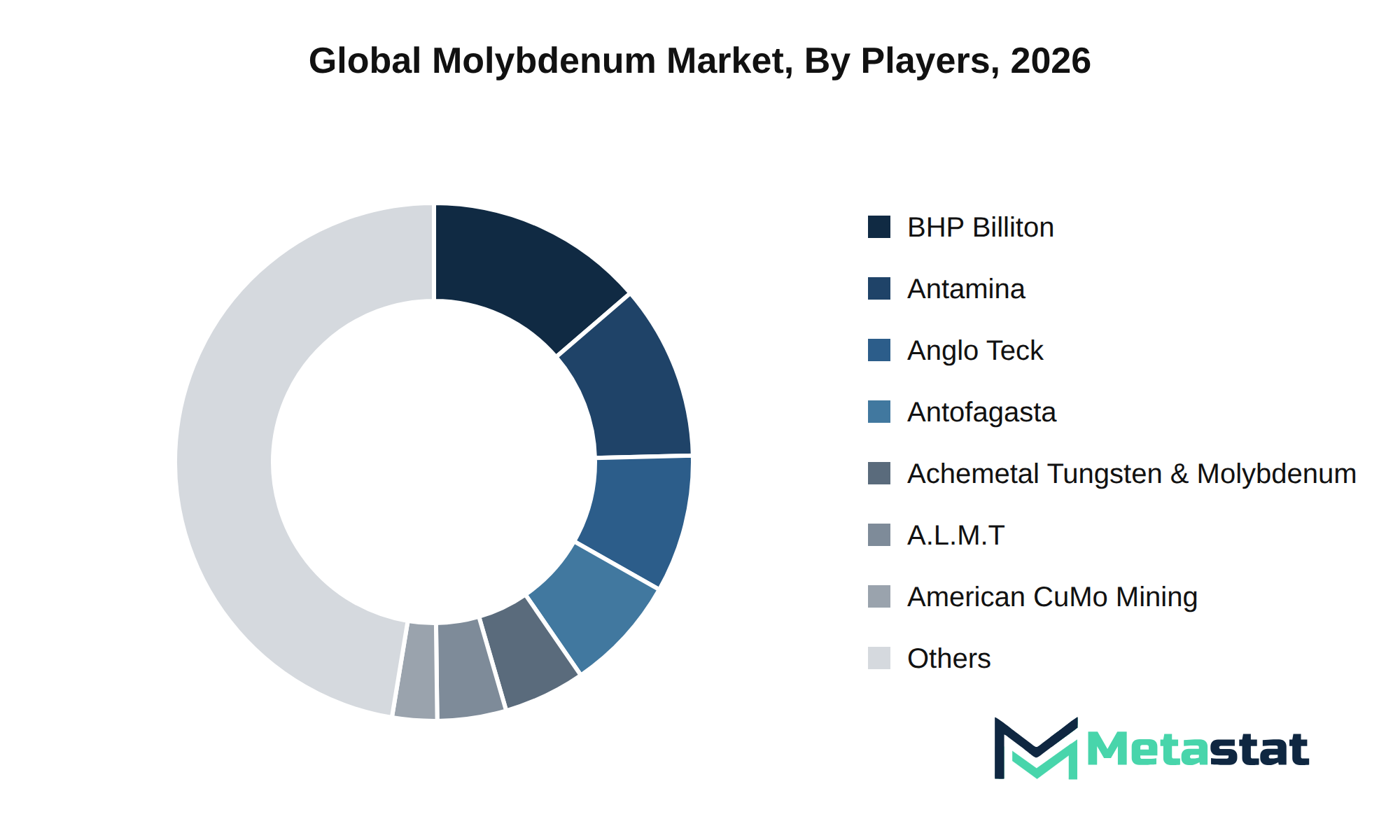
Competition in the Molybdenum market centers on integrated producers, diversified miners, and specialized material manufacturers. Companies differentiate through product quality, price competitiveness, and tailored alloy offerings to automotive, construction, and industrial buyers. Buyers prioritize consistent supply, material purity, and the ability to meet technical specifications for applications in alloys and high-strength steel.
Climax Molybdenum Company (Freeport-McMoRan Inc.) focuses on supplying high-purity molybdenum products to steel and chemical sectors, supporting demand for alloying and catalytic applications. China Molybdenum Co Ltd and Jinduicheng Molybdenum Co., Ltd. emphasize scale in mining operations to serve the volume requirements of Asia Pacific, which accounts for 51.1 percent of Molybdenum market revenue. Molibdenos y Metales S.A. (Molymet) specializes in advanced processing of molybdenum concentrates and oxides, supplying custom solutions to downstream manufacturers. Companies including A.L.M.T. Corp. and Achemetal Tungsten & Molybdenum Co., Ltd. address niche requirements in refractory metal components and engineered parts.
Several market participants compete by expanding processing capabilities, optimizing cost structures, and adapting to shifts in demand from automotive and construction end-users. The field remains shaped by the ability to deliver certified products in line with strict industry standards, enabling suppliers to secure long-term contracts and defend pricing in a market with cyclical demand.
This segment’s growth reflects rising use of molybdenum in strengthening corrosion-resistant steels for infrastructure and manufacturing, particularly in Asia Pacific. The second development supporting market expansion is the increased adoption of molybdenum in the automotive and transportation industry, where demand is projected to grow from USD 1 billion in 2026 to USD 1.5 billion by 2033. Regulatory trends promoting fuel efficiency and lightweight vehicles in both developed and emerging economies are supporting volume growth in this end-use sector.
Continued investment in Asia Pacific’s industrial base remains critical, with the region accounting for 51.1% of global share. Any prolonged economic slowdown or trade disruption in this region would limit the market’s ability to reach forecast values. The main risk to the outlook is volatility in raw material supply and pricing, particularly affecting ferromolybdenum and molybdenum concentrates, which could slow project adoption rates and delay procurement decisions across construction, industrial, and energy applications.
By Product Type: Molybdenum Concentrates, Molybdenum Oxides, Ferromolybdenum, Molybdenum Metal, Molybdenum-Based Alloys, Molybdates, Molybdenum Disulfide, Others (Molybdenum Carbides, Molybdenum Halides, Organomolybdenum Compounds)
By Application: Stainless Steel Alloying, Engineering Steel Alloying, Tool and High-Speed Steel Alloying, Cast Iron Alloying, Superalloy Production, Catalyst Production, Lubricant and Coating Production, Thin-Film Deposition, Refractory Metal Component Fabrication, Others (Pigments, Fertilizer Micronutrients, Corrosion Inhibitors)
By End-Use Industry: Automotive and Transportation, Construction and Infrastructure, Industrial Machinery and Equipment, Oil and Gas, Chemical Processing, Electrical and Electronics, Aerospace and Defense, Power Generation, Healthcare and Medical Devices, Others (Agriculture, Consumer Goods)
The report strategically identifies and profiles the key market players and analyses their core competencies in each sub-segment of the Molybdenum market.
|
Report Attributes |
Details |
|
Study Period |
2021-2033 |
|
Base Year |
2025 |
|
Estimated Year |
2026 |
|
Forecast Period |
2026-2033 |
|
Historical Period |
2021-2025 |
|
Growth Rate |
CAGR 5.4% from 2026 to 2033 |
|
Revenue Unit |
USD billion |
|
Segmentation |
By Product Type, Application, End-Use Industry, and Region |
|
By Region |
North America (By Product Type, Application, End-Use Industry, and Country)
|
|
|
|
Asia Pacific (By Product Type, Application, End-Use Industry, and Country)
|
|
|
|
|
Middle East and Africa (By Product Type, Application, End-Use Industry, and Country)
|
Find answers to common questions about this report
The Molybdenum market size was valued at USD 5.2 billion in 2025.
The projected CAGR is 5.4% for the forecast period from 2026 to 2033.
The North America Molybdenum market size is estimated to reach USD 1.4 billion by 2033.
Ferromolybdenum leads by product type, reaching USD 2.6 billion by 2033, the highest value among all segments in this category. This figure surpasses Molybdenum Oxides at USD 1.6 billion and Molybdenum Concentrates at USD 1.1 billion in 2033.
Automotive and transportation manufacturers are increasing their use of molybdenum-containing alloys to meet fuel efficiency and durability standards, driving demand growth. Expansion in steel production and alloy manufacturing, particularly in Asia Pacific, supports higher application volumes and sustained supplier revenues.
Asia Pacific holds the dominant share with 51.1 percent of the total, leading all other regions by a significant margin. Europe follows with 20 percent, while North America accounts for 18.4 percent.
Frequent fluctuations in input prices disrupt purchasing strategies for steel manufacturers, leading to smaller batch orders and delayed adoption of higher molybdenum-content alloys. Upstream producers face sustained margin pressure from energy-intensive processing costs, limiting their ability to invest in process upgrades or expand capacity.
Adoption in this industry is favored by advances in automotive engineering that require lighter yet stronger vehicle components, prompting increased use of molybdenum-containing alloys. Compliance with strict emissions regulations and the reduce lifecycle costs are driving automakers to specify these materials in engine, drivetrain, and structural applications.
The Molybdenum market is estimated to reach a valuation of USD 8 billion by 2033.
Key players in this industry include A.L.M.T. Corp., Achemetal Tungsten & Molybdenum Co., Ltd., American CuMo Mining Corporation, China Molybdenum Co Ltd, Climax Molybdenum Company (Freeport-McMoRan Inc.), Jinduicheng Molybdenum Co., Ltd., Molibdenos y Metales S.A. (Molymet), and Moltun International.
The analysts below cover Chemicals and Materials research at Metastat Insights.
LEAD ANALYST
Utkarsh Khirodkar is a Lead Market Research Analyst at MetaStat Insight, specializing in market intelligence, technology sector assessments, and competitive strategy.

INDUSTRY CONSULTANT - CHEMICALS & ADVANCED MATERIALS
Chemicals and Materials · Machinery & Equipment · Packaging
Amit Gadhekar Consultant for Chemicals and Materials at MetaStat Insight, directing sector-specific intelligence, research, and strategic consulting across global chemical and processing markets.
The technical breakdown of ISO 20022 migration readiness across correspondent banking corridors was remarkably thorough. Rather than treating cross-border corporate payments as a single block, the report drew a useful distinction between multilateral netting platforms and domestic instant payment rails across ASEAN economies. MetaStat Insight highlighted regulatory constraints on foreign exchange liquidity management that many publications gloss over. The research material offered practical clarity for our platform development roadmap.
Our group needed clearer visibility into out-of-autoclave processing timelines for high-temperature thermoplastic composites. MetaStat Insight delivered an objective assessment that contrasted automated fiber placement scrap rates with traditional thermoset prepreg layup cycles. The supplier landscape mapped out primary resin suppliers and tape slitting capacity across France, Germany, and Japan with solid technical accuracy. Their analyst handled our questions on precursor supply risks during an unscheduled inquiry call, providing clear, unembellished context.
Evaluating sensor fusion reliability across harsh operating environments can be tricky without field-validated data. The study on agricultural autonomous guidance systems clearly separated stereo vision setups from automotive-grade solid-state LiDAR. We appreciated the regional infrastructure analysis, specifically around RTK network density across North America and South America. During our follow-up consultation, the MetaStat Insight team walked through tier-two perception software partnerships, giving our engineering leads a practical basis for vendor shortlisting.
Explore related market intelligence reports worth reading alongside this one.
Starting from
$2950