
LEAD ANALYST
Utkarsh Khirodkar is a Lead Market Research Analyst at MetaStat Insight, specializing in market intelligence, technology sector assessments, and competitive strategy.

Global Copper Pipes and Tubes Market Size, Share, By Type (Straight-Length Pipes and Tubes, Level-Wound Coils (LWC), Finned Tubes, Capillary Tubes and Custom Shapes/Profiles), By Manufacturing Method (Seamless Tubes and Welded Tubes), By Application (Air Conditioning, Refrigeration, Space Heating and Heat Pumps, Plumbing and Water Distribution, Industrial Heat Exchange, Medical Gas and Vacuum Systems, Fuel Gas and Oil Distribution, Electrical and Electronic Components and Others (Instrumentation, Decorative Fabrication)), By End-user Industry (Residential, Commercial, Industrial and Manufacturing and Utility and Energy), Industry Analysis, Growth, Trends, and Forecast, 2026-2033
Report ID
MSI-5421
Published
October, 2026
Pages
254 Pages
Format
Historical
Base year
Forecast
Forecast period
Report Details
Market Valuation: Valued at $39 Billion in 2025, projected to reach $59 Billion by 2033 at a 5.3% CAGR.
Dominant Segment: Level-Wound Coils (LWC) lead the market by value, driven by their widespread use in large-scale air conditioning and refrigeration manufacturing, especially where automated production and high-volume output are prioritized.
Geographic Lead: Asia Pacific captures 75.6% of total market revenue, supported by the concentration of HVAC and appliance manufacturing in China, Japan, and India, as well as rapid urbanization and infrastructure investment.
Fastest-Growing Application: The utility and energy sector is projected to grow at a CAGR of 7.0% through 2033, propelled by grid upgrades, renewable installations, and investments in district energy networks that require robust, corrosion-resistant copper pipes and tubes.
What's Inside: The report provides detailed segmentation by type, manufacturing method, application, and end-user industry, along with competitive analysis, market dynamics, and forecasts from 2026 to 2033.
Choose Your License
Global Copper Pipes and Tubes Market
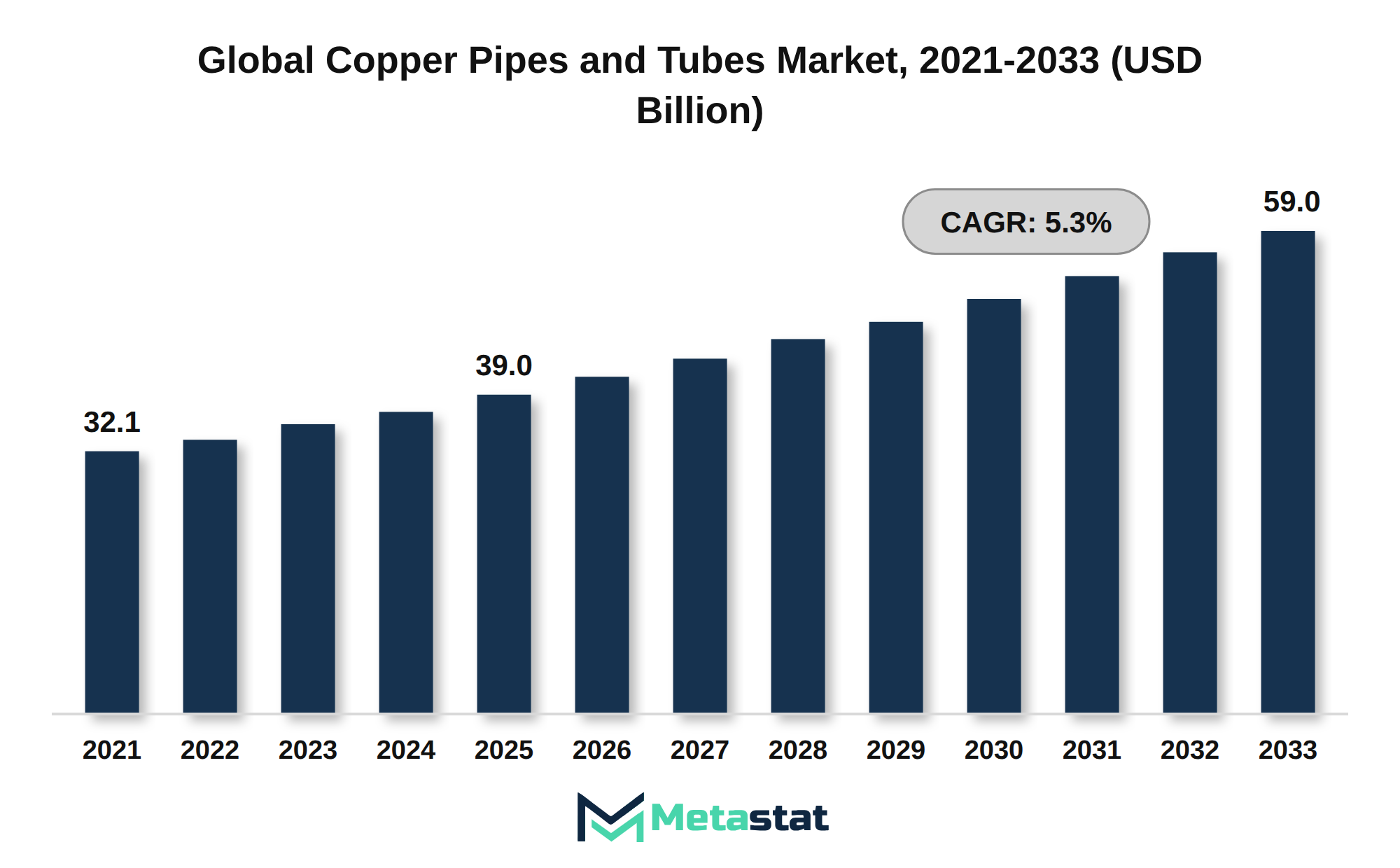
The global Copper Pipes and Tubes market was valued at USD 39 billion in 2025 and is projected to reach USD 59 billion by 2033, growing at a CAGR of 5.3% over the forecast period.
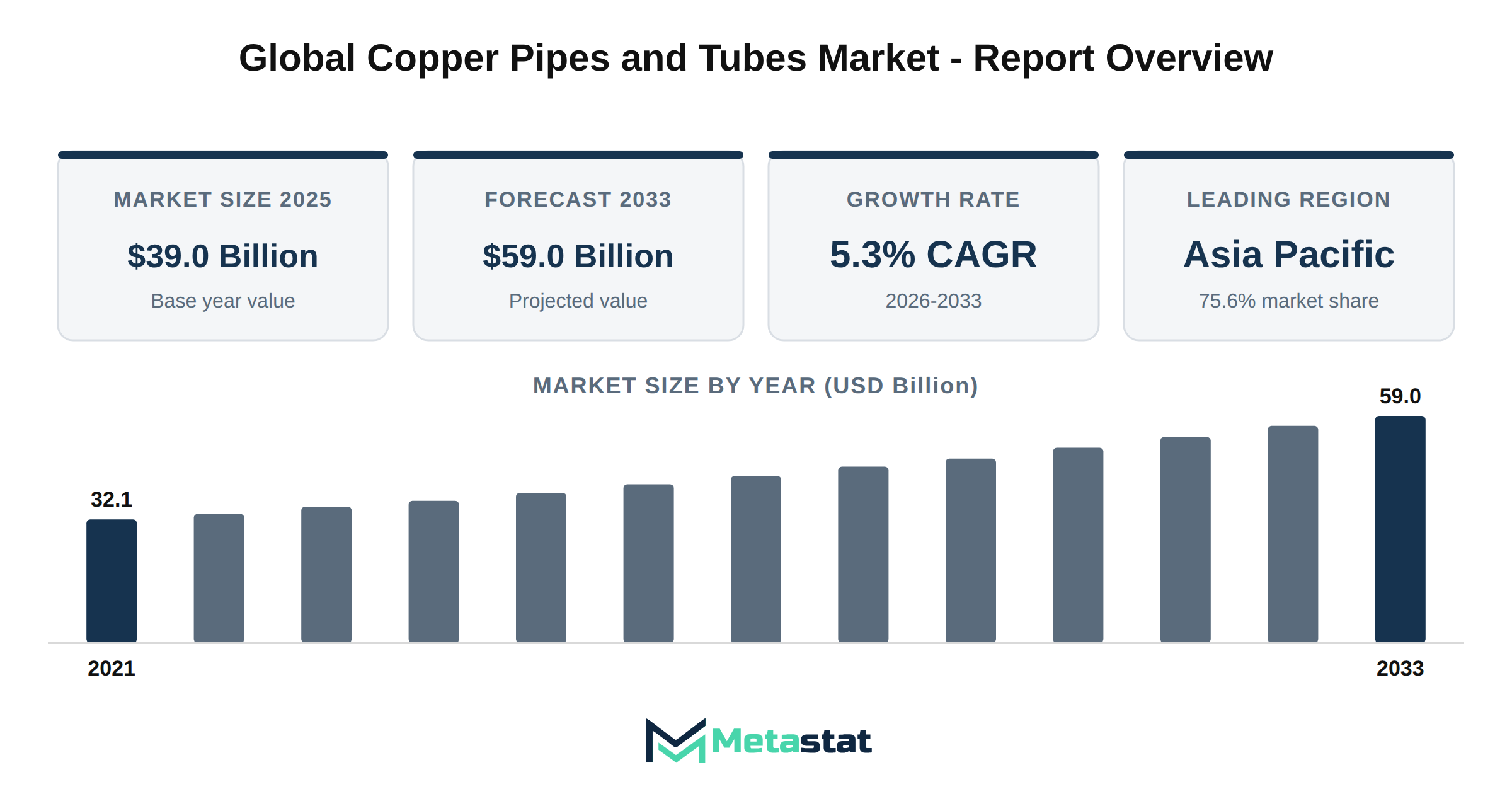
The Copper Pipes and Tubes market covers products used for fluid transport, thermal transfer, and mechanical applications across residential, commercial, and industrial settings. Buyers spend on these materials due to copper’s superior thermal conductivity, corrosion resistance, and long service life compared to alternatives like plastic or steel. Demand is driven by sectors that value durable piping for air conditioning, refrigeration, and plumbing systems, where reliability and efficiency directly affect operational costs and performance. In heavy industrial environments, these fluid networks frequently interface alongside large-scale ammonia chiller plants for comprehensive facility cooling.
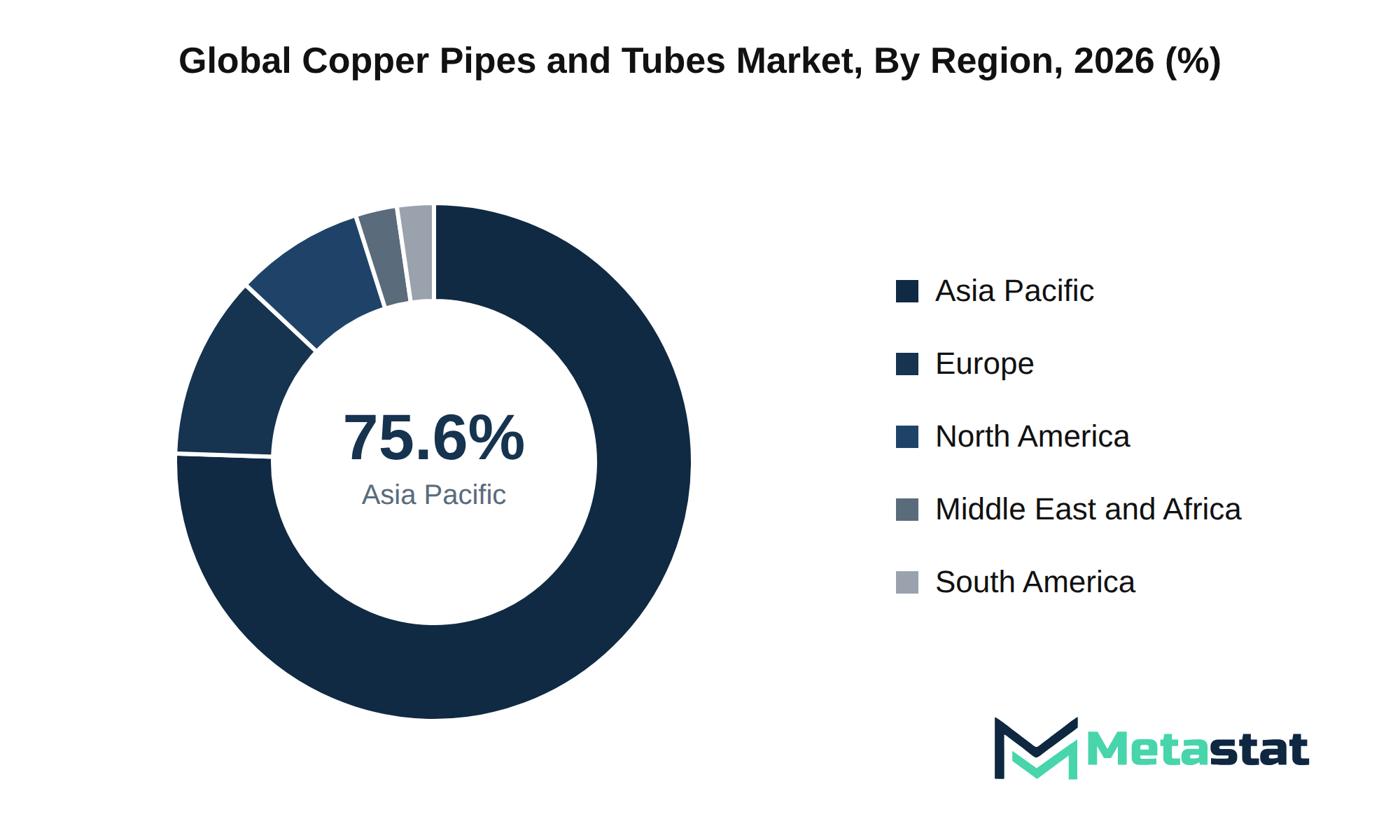
Among product types, Level-Wound Coils (LWC) hold the highest value share, reflecting their widespread adoption in large-scale air conditioning and refrigeration manufacturing. Tubes produced without welded joints dominate the market by manufacturing method, preferred for their strength and leak resistance in high-pressure environments. Asia Pacific stands out, capturing 75.6% of total revenue, primarily due to the concentration of HVAC and appliance manufacturing in China, Japan, and India. North America holds 8.1% of the market in 2025, with the US leading in 2026.
Growth in this market is driven primarily by the expansion of HVAC equipment infrastructure and rising construction activity, especially in rapidly urbanizing regions. Demand from new residential and commercial developments, together with the replacement of aging systems, supports sustained volume increases and price stability for suppliers. This dynamic continues to reinforce the importance of copper in critical building and industrial applications.
Products in the Copper Pipes and Tubes market address requirements for corrosion resistance, high thermal conductivity, and formability in demanding environments. Buyers include construction firms, HVAC installers, and manufacturers working to meet rising standards for reliable plumbing, energy-efficient cooling, and durable industrial equipment. Demand intensifies where regulations or codes specify copper for its performance and safety. This pushes volume and value upward across both new projects and retrofits.
Level-Wound Coils (LWC) account for the highest value among product types, reflecting sustained adoption in large-scale air conditioning and refrigeration systems. Tubes produced without welds dominate manufacturing methods, driven by their reliability in high-pressure and critical applications. In end-use, the residential segment remains the largest by value. Urbanization and housing investment drive plumbing, heating, and cooling installation. North America holds 8.1% of the market in 2025. The US leads in 2026. Asia Pacific stands out for its concentration of production and consumption, supported by its 75.6% share.
Urbanization and sustained investment in construction underpin the strongest demand growth in the Copper Pipes and Tubes market. Expanding residential and commercial infrastructure drives buyers to prioritize copper for its longevity and safety. This supports structural demand. The market’s scale draws an extensive supplier base, including Aurubis AG, Golden Dragon Precise Copper Tube Group Inc., Mueller Industries, Inc., KME Group S.p.A., Zhejiang Hailiang Co., Ltd., Metrod Holdings Berhad, Nippon Tube Industries, and Qingdao Hongtai Copper Tube Co., Ltd.
Rapid adoption of heat pump technology is accelerating demand for high-pressure copper tubes across multiple industries. With heat pumps emerging as the system of choice for residential and commercial space heating, manufacturers specify copper tubes that endure higher operating pressures and cyclic temperature stresses. In the market, this trend is driving specialized product development and segment growth, especially in regions with significant construction activity and energy transition policies.
Forecasts indicate that the space heating and heat pump application segment is projected to reach USD 7.2 billion by 2033. This highlights the commercial impact of heat pump installations on copper tube specifications and procurement cycles. The transition to advanced working fluids such as R134A along with higher system efficiencies is reinforcing the industry's reliance on high-integrity tubes, which are projected to grow at a 5.4% compound annual growth rate and reach USD 57.3 billion by 2033. These tubes deliver the mechanical integrity required for next-generation heat pumps, ensuring safety and durability under demanding conditions.
This technology shift is prompting suppliers in the market to invest in new alloy formulations and fabrication techniques tailored to high-pressure and high-temperature operations. Companies that adapt their product lines to meet the evolving requirements of heat pump manufacturers are positioned to capture a greater share of this expanding demand. This evolution is contributing to higher average selling prices, greater product differentiation, and longer-term supply agreements across the value chain.
Internally grooved copper tubes drive significant gains in heat transfer efficiency for HVAC system manufacturers and installers. The precise internal ridges found in these tubes increase turbulence and surface area, enabling more effective thermal exchange compared to smooth-bore alternatives. Enhanced thermal conductivity in these coils eases load requirements on the air conditioning compressor during prolonged operational cycles. This improvement is critical for air conditioning, which accounted for USD 12.3 billion in value in 2026 and is projected to reach USD 18.2 billion by 2033. Such advancements allow system designers to specify smaller diameter tubing without sacrificing performance, reducing both copper consumption and overall weight of the assembly.
Procurement practices in the market increasingly include technical specifications for enhanced thermal transfer in competitive tenders, particularly for large-scale commercial HVAC and residential projects. Buyers prioritize tubing with proven efficiency credentials, influencing both contract structure and pricing. OEMs and project developers frequently negotiate long-term contracts with suppliers that demonstrate consistent product quality and compliance with rigorous standards for internal grooving dimensions. This approach supports stable pricing while mitigating risk of supply disruptions.
Stricter HVAC system energy standards across major application markets create clear commercial consequences for suppliers in the market. Differentiation based on heat transfer efficiency enables premium pricing and strengthens customer retention. Suppliers focusing on advanced internally grooved tubing gain a competitive edge, particularly in the Asia Pacific region, which holds 75.6% of the global market share. This dynamic reshapes procurement decisions and drives investments in specialized manufacturing technology.
Copper price volatility has become a critical consideration for procurement teams in the Copper Pipes and Tubes market, directly impacting project planning and inventory strategies among HVAC and construction contractors. Large swings in copper’s spot price, often tied to shifts in global supply chains and increased demand from Asia Pacific - which accounted for 75.6% of global share in 2025 - create a challenging environment for buyers managing budgets and timelines. Contractors and OEMs frequently encounter cost escalations that erode margins or delay contract execution, prompting a shift toward shorter procurement cycles and flexible contract terms.
HVAC system manufacturers and plumbing contractors, in particular, experience fluctuating procurement costs when sourcing copper pipes and tubes for air conditioning and plumbing installations. The market’s base year value stands at USD 39 billion, projected to reach USD 59 billion by 2033, illustrating the scale at which these price movements influence both high-volume and specialized buyers. Procurement professionals are increasingly favoring suppliers offering transparent pricing structures or hedging options to limit exposure to price spikes. This shift in buyer behavior results in tighter supplier qualification standards and more frequent negotiation of price adjustment clauses in long-term agreements. For manufacturers that serve the Copper Pipes and Tubes market, the ability to stabilize input costs becomes a differentiator, driving a preference for vertically integrated supply chains and more robust supplier relationships.
Drawn copper tubes serve refrigeration applications more frequently than welded alternatives due to their superior pressure resistance, uniform wall thickness, and reduced risk of leakage at joints. In the Copper Pipes and Tubes market, suppliers focus on drawn production for refrigeration systems where purity, consistent internal diameter, and strength impact equipment reliability and maintenance intervals. These attributes reduce the risk of system failure, especially in high-pressure refrigerant circuits where even minor imperfections trigger leaks or operational inconsistencies. Seamless copper lines connect directly to precision refrigeration valves to regulate fluid flow and safeguard closed-loop cooling circuits.
Market data confirms this dominance: drawn tubes account for a projected USD 57.3 billion by 2033, while welded tubes are forecast at only USD 1.7 billion, highlighting a strong preference within refrigeration and related applications. Manufacturers serving the market, including KMCT Corporation and Golden Dragon Precise Copper Tube Group Inc., invest in drawn tube technology to meet the technical standards required by HVAC and refrigeration system integrators. This preference impacts purchasing decisions for OEMs and contractors, who specify drawn tubes to avoid complications linked to weld seam integrity and corrosion.
Commercial consequences for producers of drawn tubes include higher average selling prices and stronger client retention among industrial refrigeration system builders. By differentiating on quality and reliability, suppliers gain access to premium projects and long-term contracts in sectors that cannot risk product failure. This dynamic directs investment toward drawn production over welded alternatives, reinforcing the segment’s position in high-specification refrigeration markets.
Expanding urban populations and a sustained increase in residential construction activity are generating a significant uplift in demand. Rapid migration to cities is driving new housing starts, particularly in Asia Pacific where 75.6 percent of global market value concentrates, reflecting accelerated infrastructure investment and large-scale residential projects. Developers and contractors are specifying copper pipes and tubes for new builds, leveraging their proven longevity and reliability in water distribution and HVAC installations. This preference strengthens replacement cycles and supports higher volume orders, with multi-dwelling units and high-rise buildings favoring robust piping solutions. Residential end-user value is projected to increase from USD 16.8 billion in 2026 to USD 23 billion by 2033, reinforcing the sector's central role in driving growth across key urbanizing economies.
Widespread availability of plastic piping alternatives is restricting expansion for the Copper Pipes and Tubes market, particularly in commercial construction and plumbing applications. Decision-makers in non-residential projects increasingly select plastic options owing to their reduced upfront cost and lighter installation requirements. These substitutes result in smaller order volumes for copper products, especially in regions where building codes permit plastic piping in water distribution and HVAC systems. Plastic’s corrosion resistance further challenges copper’s share in environments subject to aggressive water conditions or exposure to chemicals. This shift leaves suppliers in the Copper Pipes and Tubes market contending with intensified competition and slower uptake among commercial buyers, limiting revenue growth in this segment.
Rising energy costs are placing sustained pressure on the profitability of suppliers throughout the Copper Pipes and Tubes market. Energy-intensive production steps, including smelting, casting, and extrusion, directly influence manufacturing margins through fluctuations in electricity and fuel expenses. Producers operating in regions with higher energy tariffs are exposed to sharper margin compression, especially during periods when copper prices remain stable or contract. In response, suppliers are investing in process optimization and equipment upgrades that reduce energy intensity per unit produced. Several manufacturers are exploring long-term power purchase agreements or shifting production schedules to off-peak hours to manage utility costs more effectively. These strategies aim to restore margin stability and maintain price competitiveness without compromising product quality or supply reliability.
The utility and energy sector presents the most dynamic growth opportunity, supported by a projected compound annual growth rate of 7.0% through 2033. Demand for copper pipes and tubes in this segment is driven by grid upgrades, renewable installations, and investment in district energy networks that require robust and corrosion-resistant materials. Utilities integrating distributed energy resources and retrofitting legacy power infrastructure are expanding the market for high-performance copper components. Suppliers using advanced production methods are positioned to capitalize on this sector’s requirements for reliability and high thermal conductivity. While other end-user industries deliver steady growth, utility and energy applications are expected to outpace the broader market, offering suppliers a route to higher-margin contracts and long-term volume commitments. Increased adoption within this segment supports both price stability and technology advancement across the supply chain.
The Global Copper Pipes and Tubes market is segmented based on Type, Manufacturing Method, Application, and End-user Industry.
Valued at USD 15.5 billion in 2026, straight-length pipes and tubes are projected to reach USD 20.9 billion by 2033, advancing at a CAGR of 4.4 percent. This segment serves residential, commercial, and industrial buyers where rigid installation, consistent wall thickness, and ease of onsite fabrication are priorities. Large residential and commercial construction projects select straight-length formats for plumbing and HVAC networks, favoring their predictable pressure ratings and compatibility with standard fittings. The demand for these products remains closely tied to building codes and safety standards that specify copper in high-reliability applications. Compared with Level-Wound Coils (LWC), which are forecast to higher aggregate value and growth rates in the market, straight-length products attract buyers focused on direct installation and lower on-site labor complexity. Pricing for straight-length pipes tends to reflect their processing requirements and the premium placed on dimensional integrity, influencing procurement choices in regions with strict compliance mandates. Regulatory standards and project engineering requirements drive sustained specification of these products in large-scale builds, supporting stable demand in both new construction and major retrofit cycles across developed and developing economies.
Level-Wound Coils (LWC) segment is estimated to reach USD 26.5 billion by 2033, at a CAGR of 5.9% during the forecast period. Level-Wound Coils (LWC) lead the market by value, driven by their widespread use in large-scale air conditioning and refrigeration manufacturing, especially where automated production and high-volume output are prioritized. Automated coil bending and brazing also supply specialized tubing into portable air conditioner assembly lines. LWC products support high-volume, continuous-feed manufacturing in the air conditioning, refrigeration, and heat exchanger industries, where precision winding and ease of integration are valued by OEMs and component manufacturers. Their higher adoption among industrial buyers reflects the segment’s compatibility with automated production environments and tight fabrication tolerances, especially across Asia Pacific where large-scale electronics and HVAC assembly drive volume. LWC’s projected growth rate outpaces straight-length pipes and tubes, reflecting strong demand from mass manufacturing buyers prioritizing operational efficiency over traditional installation methods. Compared to the other Type segments, LWC’s value proposition centers on reduced material wastage and lower labor input in automated plants. The segment's strong expansion is directly tied to rising investments in advanced HVAC systems and industrial cooling applications, making it a preferred choice for buyers seeking to streamline production. This demand aligns directly with the fabrication of evaporator coils where copper tubing ensures rapid heat transfer.
Finned Tubes segment is expected to reach USD 6.9 billion by 2033. These tubes are primarily used in heat exchanger applications across industrial and manufacturing settings, where maximizing heat transfer efficiency is critical for equipment performance and energy savings. Buyers tend to be manufacturers of air-cooled heat exchangers, process industry operators, and HVAC system integrators who require custom surface area enhancements to meet demanding thermal loads. Demand in the Finned Tubes segment is influenced by stricter energy efficiency requirements across industrial infrastructure and increasing investments in advanced process equipment. Unlike Level-Wound Coils (LWC), which address high-volume applications in air conditioning and refrigeration, Finned Tubes are differentiated by their performance-driven role in heat-intensive sectors, leading to higher unit prices and specification-based purchasing. Engineering requirements shape adoption rates, resulting in less sensitivity to volume-driven price competition than other types in the market. Product innovation in fin design and materials selection continues to influence value capture, with end-users seeking operational cost reductions and longer asset life in energy-intensive environments. Finned Tubes serve as a specialized solution for process efficiency and thermal management.
Capillary tubes segment is projected to grow at a CAGR of 4.1% during the forecast period. These tubes are characterized by their small diameter and precision manufacturing, leading to widespread usage in refrigeration, air conditioning, and medical gas delivery systems. OEMs in the appliance and equipment sectors drive adoption, since capillary tubes regulate refrigerant flow and support compact system design. Compared with straight-length pipes and Level-Wound Coils (LWC), capillary tubes address highly specialized end-uses that require tight control over internal fluid dynamics, favoring high-precision manufacturing standards. Increasing demand for energy-efficient cooling appliances directly supports volume growth for this segment. However, capillary tubes experience slower expansion than Level-Wound Coils (LWC), reflecting a more stable, replacement-driven demand profile rather than widespread system upgrades. Buyers in this segment typically value dimensional accuracy and reliability over bulk pricing, which differentiates procurement criteria from those in large-volume pipe applications.
Custom Shapes/Profiles refers to copper tubing and piping produced to non-standard geometries, tailored for specialized mechanical, architectural, and engineering requirements. Demand in this segment arises from manufacturers seeking solutions for applications where conventional round or rectangular forms do not provide the desired fit, performance, or aesthetic. Buyers span the automotive sector, industrial equipment manufacturers, and architectural design firms, where custom profiles facilitate weight reduction, space optimization, or unique visual effects. Product complexity and lower production volumes lead to a premium cost structure compared to standard pipes or tubes. Unlike straight-length or coil segments, Custom Shapes/Profiles attract customers prioritizing advanced fabrication, tighter tolerances, and bespoke performance. The market increasingly serves original equipment manufacturers with these customized profiles, leveraging copper’s malleability and corrosion resistance to address demanding or non-traditional installations. Growth for this segment relies on ongoing investment in value-added forming technology and more collaborative engineering between suppliers and end-users.
Valued at USD 39.8 billion in 2026, tubes produced without a welded seam are projected to reach USD 57.3 billion by 2033, advancing at a CAGR of 5.4%. Buyers in HVAC, refrigeration, and industrial manufacturing favor these tubes for applications requiring consistent wall thickness and reliable performance under pressure, especially in settings where leak prevention, corrosion resistance, and thermal stability are critical. Heightened adoption from manufacturers of air conditioning and refrigeration systems results from system integrity and long-term durability driving specification preferences. Tubes without a welded seam differ from welded alternatives through higher unit value and a broader application scope in demanding environments. The segment’s faster growth rate reflects technology improvements in extrusion and continuous casting, supporting tighter tolerances and lower defect rates. Regulatory scrutiny regarding system safety in HVAC and industrial installations further supports demand for tubes produced without a welded seam, reinforcing their position for buyers prioritizing life-cycle performance and reduced risk of operational failure. This segment is distinguished by its appeal to quality-focused industrial buyers and its faster growth compared to welded options.
Welded Tubes segment is estimated to reach USD 1.7 billion by 2033, at a CAGR of 2.5% during the forecast period. This segment is primarily used in low to moderate pressure applications, including plumbing, water distribution, and certain commercial HVAC installations, where the cost advantage of welded construction outweighs the additional durability and pressure tolerance offered by higher-grade alternatives. Builders and contractors in commercial real estate and institutional infrastructure select welded tubes for projects balancing material cost with volume requirements. The slower expansion of this segment, compared to the broader market, reflects ongoing substitution by higher-grade tubes in sectors with stricter technical requirements and by plastic piping in cost-sensitive or non-critical applications. In this segment, welded tubes appeal to cost-driven buyers, but greater sensitivity to joint integrity and corrosion risk limits their adoption in industrial or high-pressure scenarios. This distinction defines the segment’s growth profile and price positioning throughout the forecast period.
Valued at USD 12.3 billion in 2026 and projected to reach USD 18.2 billion by 2033, the air conditioning application segment advances at a compound annual growth rate of 5.7 percent over the forecast period. This segment is primarily driven by escalating demand for residential and commercial climate control solutions, particularly in rapidly urbanizing regions in Asia Pacific. Air conditioning systems require copper pipes and tubes for efficient refrigerant flow, heat exchange, and system reliability, making them essential for OEMs and installers in both new-build and retrofit projects. Buyers in the air conditioning segment prioritize thermal conductivity and corrosion resistance, attributes where copper outperforms alternative materials, resulting in a concentration of demand among HVAC manufacturers and contractors. Growth in this segment outpaces plumbing and water distribution applications, supported by regulations and building codes in key growth markets that specify copper for HVAC systems. Rising living standards and expanded construction activity reinforce the segment’s influence on overall volume and value.
Refrigeration segment is estimated to reach USD 8.1 billion by 2033, at a CAGR of 5.6% during the forecast period. This segment supplies copper pipes and tubes to manufacturers of commercial and industrial refrigeration systems, food preservation units, and cold chain logistics. Growth is heavily influenced by rising standards in food safety and pharmaceutical storage, which require robust, reliable refrigeration infrastructure. Buyers in this segment are primarily large-scale OEMs and facility operators, who prioritize material purity and precise dimensional tolerances to maximize system efficiency and minimize leakage risks. Compared to air conditioning, refrigeration applications often operate at lower temperatures and under stricter regulatory requirements, resulting in distinct technical specifications and certification needs. The market benefits from the segment’s higher barriers to entry, which support premium pricing relative to plumbing and water distribution, where price competition from plastics is more intense. Ongoing regulatory pressure for environmentally compliant refrigerants further shapes product choices and procurement patterns in this segment.
Projected to reach USD 7.2 billion by 2033, this segment centers on copper pipes and tubes used in space heating and heat pump systems for residential and commercial buildings. Heating, ventilation, and air conditioning (HVAC) manufacturers rely on copper’s thermal conductivity and corrosion resistance to ensure system reliability and performance in demanding seasonal climates. The market benefits from policy incentives supporting heat pump adoption, particularly in regions transitioning away from fossil-fueled heating. This segment is influenced by regulatory support for energy efficiency and emissions reduction, which drives adoption in both new construction and retrofit projects. Compared to air conditioning and refrigeration, space heating and heat pump applications exhibit a moderate revenue profile, with steady demand tied to infrastructure modernization and electrification policies. Users in this segment - building owners, utilities, and system integrators - prioritize lifecycle cost savings and compliance, distinguishing their purchase criteria within this segment.
Plumbing and Water Distribution segment is projected to grow at a CAGR of 3.1% during the forecast period. This segment is used in residential, commercial, and infrastructure projects for potable water systems, sanitary installations, and building renovations. Buyers include construction firms, plumbing contractors, and facility managers prioritizing durability and corrosion resistance, which copper provides more reliably than substitutes. Regulatory requirements for water safety and material compatibility drive selection in many regions, reflecting stricter codes in urban centers and developed markets. Unlike air conditioning or refrigeration, this segment advances at a slower pace, with growth tied closely to replacement cycles and incremental upgrades rather than rapid adoption in new builds. Price sensitivity is more pronounced, with clients weighing upfront costs against the long-term reliability offered by copper systems. The market in this application is influenced by building standards, water quality concerns, and shifts in material preferences, resulting in steady but moderate expansion compared with faster-growing areas including air conditioning and utility infrastructure.
Industrial heat exchange applications rely on copper pipes and tubes for their high thermal conductivity, corrosion resistance, and formability. Equipment manufacturers in sectors including power generation, chemical processing, food and beverage, and large-scale manufacturing specify copper components for condensers, evaporators, and process heat exchangers, where efficient heat transfer directly impacts operational efficiency. Demand in this segment is driven by rising investments in process automation and the increasing prevalence of closed-loop, high-efficiency heating and cooling systems throughout industrial plants. Compared to plumbing and water distribution, industrial heat exchange applications require strict tolerances and material purity, leading to higher average selling prices and greater adoption of tube manufacturing methods that produce uniform, defect-free products. Plastic and aluminum function as alternatives in less demanding environments, but copper remains the preferred choice for critical thermal management due to its durability and performance. The expanding focus on energy conservation measures further supports long-term demand growth while industrial facilities upgrade or retrofit heat exchanger assets. Cost sensitivity is lower than in residential or plumbing segments, reflecting the performance requirements unique to this end use.
Hospitals and clinics depend on copper pipes and tubes for medical gas and vacuum systems, which deliver life-critical gases and maintain negative pressure environments for patient care. Buyers in this segment are primarily healthcare facility managers and specialized medical infrastructure contractors. Stringent regulatory standards for purity and leak-proof installation drive adoption, with copper preferred due to its antimicrobial properties and reliability in sterile environments. Compared with other application segments including air conditioning or industrial systems, medical gas and vacuum systems require tighter tolerances and quality certifications, resulting in a higher average unit price. Manufacturers supplying to this sector face a higher barrier to entry, given the audit requirements and specialized product approvals. Demand in healthcare settings is influenced by hospital construction trends and the modernization of existing medical infrastructure, differentiating its growth path from segments driven by broad commercial or residential building cycles. Suppliers who achieve compliance with medical standards secure access to a high-value, specification-driven channel within this segment.
Supplying fuel gas and oil distribution networks demands copper pipes and tubes with strict reliability and pressure standards. Utilities, infrastructure developers, and energy companies specify these products for pipelines carrying natural gas and liquid fuels to residential, commercial, and industrial end-users. Regulatory policies in several regions require compliance with material codes for flammability and leak prevention, supporting copper’s adoption over lower-cost polymers in critical segments. Demand in this area is driven by replacement cycles in aging gas distribution systems across developed economies, and network expansion in urbanizing regions. Compared to air conditioning or plumbing, buyers in fuel gas and oil prioritize durability, corrosion resistance, and long service life, which leads to higher average selling prices and more stringent supplier qualification processes. Substitution by alternate metals or plastics remains limited where system safety and regulatory approval dictate copper usage, setting this segment apart from others that are more exposed to price-driven competition.
Electrical and electronic components use copper pipes and tubes for applications in power distribution assemblies, circuit cooling, and electromagnetic shielding. Manufacturers supplying this segment address the requirements of electronics producers and component assemblers who prioritize material purity and dimensional precision to maintain conductivity and meet miniaturization trends. Demand is influenced by the expansion of consumer electronics, electric vehicles, and advanced industrial automation, all of which drive the adoption of copper tubing in connectors, busbars, and cooling systems. Stringent quality standards in this segment distinguish it from other application groups, requiring tighter tolerances and greater purity than plumbing or HVAC uses. Substitution pressures from materials including aluminum affect price sensitivity, yet copper’s established role in high-reliability systems sustains its adoption. Innovation in this segment centers on ongoing refinement of manufacturing methods to deliver finer gauges, increased flexibility, and improved corrosion resistance.
Instrumentation and decorative fabrication applications include copper pipes and tubes used by precision engineering firms, manufacturers of scientific equipment, and designers producing ornamental or architectural features. Instrumentation buyers prioritize dimensional accuracy and material purity for fluid and gas measurement systems, while decorative fabrication customers require formable, high-luster pipe for visible installations in furniture, art, and building interiors. Activity in this segment responds to specialized or niche demand rather than volume-based infrastructure or utility procurement observed in larger application groups. Compared to segments including air conditioning or plumbing, price sensitivity plays a reduced role, with quality, finish, and customization outweighing cost in most purchase decisions. In regions with a strong design and manufacturing base, including parts of Europe and Asia Pacific, innovation in small-diameter tubing and new alloy finishes influences the adoption pace. Suppliers address these needs with tailored offerings, supporting premium pricing and limited but steady demand. Regulatory requirements are less prominent, and substitute materials including stainless steel and aluminum challenge copper in design-driven projects, though conductivity and surface finish maintain copper’s relevance. Instrumentation and decorative use cases highlight the importance of flexibility and supplier agility over commodity scale.
Residential segment is valued at USD 16.8 billion in 2026 and is projected to reach USD 23 billion by 2033, at a CAGR of 4.5% during the forecast period. Households and multifamily developments drive this segment, with copper pipes and tubes essential for delivering potable water, distributing hot and cold water, and supporting modern HVAC systems. Rapid urbanization and demand for new housing units in Asia Pacific drive demand, supported by government initiatives on residential infrastructure and a shift toward higher-quality plumbing and climate control solutions. This segment differs from commercial and industrial buyers, with higher price sensitivity and purchase cycles more closely tied to residential construction booms or renovation trends. Rising replacement of aging plumbing in mature markets and the adoption of efficient air conditioning units in new homes influence both volume and average selling price. Compared to other end-user industries, residential applications experience steadier growth but face stronger price competition from alternative piping materials.
Commercial developments are projected to reach USD 16.9 billion by 2033, advancing at a CAGR of 5.6% from 2026. Office complexes, retail centers, hospitality projects, and public infrastructure account for a rising share of new installations and retrofits, with demand led by system upgrades to accommodate evolving HVAC, fire safety, and sanitary requirements. Contractors and building managers select copper pipes and tubes for their durability, antimicrobial properties, and ease of maintenance when compared to alternative materials. Growth in the commercial segment outpaces the residential segment, reflecting higher construction investments and stricter building codes driving copper specification. This segment benefits from large-scale projects in Asia Pacific and the Middle East, where modern high rises and institutional buildings support substantial volume demand. Barriers remain, including project delays from regulatory approvals and exposure to fluctuations in copper prices, but the commercial sector displays more resilient purchasing behavior than industrial or utility end-users. Commercial buyers favor premium products that offer longevity and reduced lifecycle costs.
Expected to reach USD 14.6 billion by 2033, industrial and manufacturing buyers rely on copper pipes and tubes for fluid transport, cooling, and process applications in sectors ranging from metal fabrication to chemical processing. High thermal and electrical conductivity, mechanical strength, and corrosion resistance drive adoption for these demanding uses. This segment benefits from ongoing modernization of industrial infrastructure and the push for higher energy efficiency in process equipment, which increases requirements for robust and high-specification materials. Compared to the residential and commercial segments, industrial and manufacturing applications demand tighter tolerances, specialty alloys, and customized configurations, often resulting in higher unit prices and more technical procurement processes. A key distinction for this segment is the influence of industrial capital expenditure cycles, which directly impact the scale and timing of pipe and tube purchases. The segment remains sensitive to input cost volatility, particularly raw copper price fluctuations, which shape both project budgets and procurement timing across major manufacturing hubs.
Projected at a CAGR of 7% through 2033, utility and energy deployments reflect the fastest expansion among end-user industries tracked in the Copper Pipes and Tubes market. Power generation companies, grid operators, and district energy system developers integrate copper piping in cooling, steam, and fluid transfer networks due to its high conductivity and reliability under cyclical thermal stress. In this segment, demand accelerates while countries scale up renewable energy installations and upgrade transmission infrastructure, directly increasing need for robust, service-free piping with low maintenance overhead. Compared to residential, commercial, or generic industrial buyers, utility and energy installations command higher technical specifications, which support a pricing premium and favor suppliers with advanced metallurgical and testing capabilities. The rapid pace of energy transition combined with a global push for grid modernization is expected to drive heightened innovation and procurement volume in this segment, resulting in differentiation and increased investment beyond the rate seen among other end-use sectors.
Based on geography, the Global Copper Pipes and Tubes market is divided into North America, Europe, Asia-Pacific, South America, Middle East, and Africa.
Manufacturers and distributors in the United States, Canada, and Mexico are positioned to benefit from consistent investment in HVAC upgrades, retrofits, and infrastructure resilience initiatives across commercial and public facilities. Demand in this region is driven by building standards that prioritize energy efficiency, and by replacement cycles in aging residential and municipal infrastructure. North America holds an 8.1% share of the global Copper Pipes and Tubes market in 2025, with the region projected to reach USD 4.5 billion by the end of 2033. Adoption of copper for plumbing and cooling systems remains strong, supported by preferences for materials that deliver durability and antimicrobial properties. The market in North America is further influenced by the presence of established players and integrated distribution networks that streamline supply for contractors, property owners, and industrial buyers.
European demand for copper pipes and tubes is closely linked to the region’s focus on energy efficiency standards and the renovation of aging building stock throughout Germany, France, the UK, Italy, Spain, and Russia. Adoption of advanced manufacturing and sustainability requirements in these countries steers investment in high-performance piping for heating, cooling, and water distribution systems. Major infrastructure upgrades, particularly in Western Europe, rely on copper’s proven reliability and recyclability, supporting compliance with environmental regulations. Manufacturers serving this market in Europe address requirements for lower emissions and enhanced operational safety, which positions the product as a preferred choice in regulatory-driven applications. With an 11.5% share of global value in 2025, the region’s uptake is influenced by established construction industries and government-backed energy transition programs. Buyers in this region emphasize product traceability and lifecycle impact, shaping supplier strategies in this market.
Asia-Pacific holds 75.6% of global demand in 2025, reflecting the region’s sustained leadership in the Copper Pipes and Tubes market. Growth centers on China, Japan, India, South Korea, and Southeast Asia, where industrialization and urban expansion drive high-volume applications across construction, HVAC, and manufacturing. Regional manufacturers supply a wide range of product types, addressing both export demand and the needs of rapidly modernizing domestic sectors. In particular, China’s concentrated production capacity anchors regional supply chains and supports market stability. India and Southeast Asia experience rising installation rates for copper tube-based air conditioning and refrigeration in residential and commercial buildings, supporting volume gains. Higher infrastructure spending and continued upgrades in utilities reinforce the outlook across these countries. Australia and the Rest of Asia Pacific contribute steadily, driven by replacement cycles in building systems and a preference for corrosion-resistant piping solutions.
Brazil and Argentina anchor regional demand, with construction activity and infrastructure investments shaping consumption patterns in these countries. South America holds a modest share of global demand, supported by steady urbanization and ongoing commercial development in Brazil’s major cities. Adoption in Argentina follows changing building codes and an increasing emphasis on energy-efficient cooling systems, which influence procurement in urban projects. Rest of South America sees slower uptake, with price volatility and moderate project volumes affecting purchasing decisions. Local contractors and commercial developers in South America prefer products that balance cost with durability, selecting suppliers who provide consistent quality and technical support. This dynamic rewards established manufacturers who engage directly with downstream buyers to address cost pressures and technical requirements unique to the region.
Saudi Arabia, UAE, and South Africa shape the region’s distinct demand profile, with construction and infrastructure investment patterns reflecting national priorities in building standards and urbanization goals. Buyers in these countries prioritize copper pipes and tubes for large-scale public facilities, hospitality projects, and district cooling systems, seeking long-lasting performance in harsh climates and high salinity environments. Middle East and Africa maintain a specialized but consistent role in global supply chains, with demand concentrated in specification-driven projects. The region’s specification-driven procurement emphasizes robust corrosion resistance and reliability, particularly in water distribution and building services. Economic diversification initiatives in Gulf Cooperation Council states increase construction activity, supporting stable project-based consumption across commercial and civic sectors. This dynamic sustains relevance for suppliers seeking access to projects with complex engineering and durability requirements.
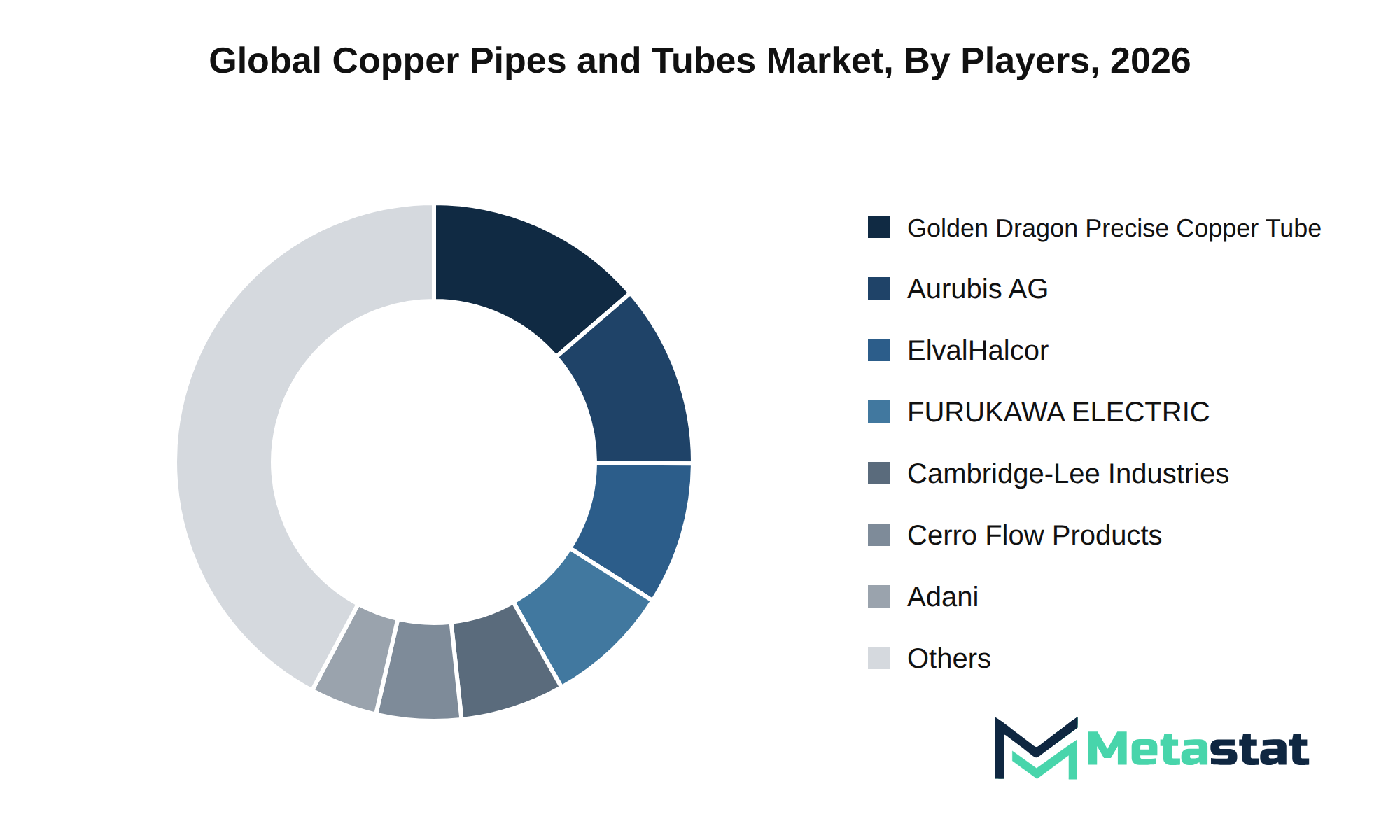
Competition in the Copper Pipes and Tubes market centers on product range, manufacturing expertise, and responsiveness to evolving application requirements. Suppliers differentiate through their mix of extruded and welded solutions, alignment to strict industrial standards, and the ability to address high-volume needs in air conditioning, refrigeration, and heat exchange applications. Buyers assess suppliers by price competitiveness, product certification, scope for customization, and reliability of delivery for scale projects. Technical support and post-sales service influence selection, particularly in the residential and commercial end-user segments where precision and regulatory compliance remain essential.
Several suppliers focus on distinct areas within the Copper Pipes and Tubes market. Golden Dragon Precise Copper Tube Group Inc. emphasizes large-scale manufacturing for HVAC and refrigeration, supporting major equipment brands with continuous coil and straight-length products. Wieland-Werke AG is recognized for its breadth of alloy grades and ability to serve diverse industrial and utility applications, reflecting a strong orientation toward technical customization. Aurubis AG invests in advanced copper processing technology, supporting quality assurance and material consistency valued by buyers in electronics and demanding heat exchange systems. MM Kembla and Ningbo Jintian Copper (Group) Co., Ltd. have expansive production capacity, positioning them to serve regional surges in demand and meet rigorous project timelines.
The market divides according to manufacturing methods, with extruded tubes capturing higher value through performance advantages in pressure and durability-sensitive settings, while welded tubes meet cost-sensitive volume requirements. Buyers in Asia Pacific, the region with the largest share at 75.6%, drive demand for both standard and bespoke offerings, shaped by the region’s focus on infrastructure and energy-efficient construction. Across all regions, the ability to supply certified, application-specific copper pipes and tubes at scale remains a defining factor in supplier selection and contract awards.
Attaining this forecast relies first on continued expansion in air conditioning and refrigeration applications, particularly in Asia Pacific, where rapid urbanization and increased construction activity drive volume growth and anchor overall momentum. Growth in the utility and energy end-user segment, which posts the highest forecasted CAGR among all segments, supports additional demand for specialized copper tubes in renewable energy infrastructure and grid upgrades, particularly in developing economies.
Manufacturers accelerating output of extruded and drawn tubes, a segment projected to expand at a 5.4% CAGR, further supports projected revenue, reflecting process investments that target higher reliability and corrosion resistance for industrial and commercial clients. The leading share held by Asia Pacific, accounting for over 75% of global revenue, depends on stable copper supplies and sustained capital spending by regional HVAC and construction sectors.
The most significant risk to this outlook is volatility in raw copper prices, which increases material costs for producers and could constrain margins or slow purchasing decisions in price-sensitive markets. Prolonged price instability would disproportionately affect regions with limited domestic copper mining, potentially resulting in project delays or substitution by alternative materials.
By Type: Straight-Length Pipes and Tubes, Level-Wound Coils (LWC), Finned Tubes, Capillary Tubes, Custom Shapes/Profiles
By Manufacturing Method: Seamless Tubes, Welded Tubes
By Application: Air Conditioning, Refrigeration, Space Heating and Heat Pumps, Plumbing and Water Distribution, Industrial Heat Exchange, Medical Gas and Vacuum Systems, Fuel Gas and Oil Distribution, Electrical and Electronic Components, Others (Instrumentation, Decorative Fabrication)
By End-user Industry: Residential, Commercial, Industrial and Manufacturing, Utility and Energy
The report strategically identifies and profiles the key market players and analyses their core competencies in each sub-segment of the Copper Pipes and Tubes market.
|
Report Attributes |
Details |
|
Study Period |
2021-2033 |
|
Base Year |
2025 |
|
Estimated Year |
2026 |
|
Forecast Period |
2026-2033 |
|
Historical Period |
2021-2025 |
|
Growth Rate |
CAGR 5.3% from 2026 to 2033 |
|
Revenue Unit |
USD billion |
|
Segmentation |
|
|
By Region |
North America (By Type, Manufacturing Method, Application, End-user Industry, and Country)
|
|
|
|
Asia Pacific (By Type, Manufacturing Method, Application, End-user Industry, and Country)
|
|
|
|
|
Middle East and Africa (By Type, Manufacturing Method, Application, End-user Industry, and Country)
|
Find answers to common questions about this report
The Copper Pipes and Tubes market size was valued at USD 39 billion in 2025.
The projected CAGR is 5.3% for the forecast period from 2026 to 2033.
The North America Copper Pipes and Tubes market size is estimated to reach USD 4.5 billion by 2033.
Level-Wound Coils (LWC) leads the type segment with a projected value of USD 26.5 billion in 2033, the highest among all type segments. This figure surpasses Straight-Length Pipes and Tubes, which are projected to reach USD 20.9 billion in 2033.
Expanding urban populations and sustained residential construction activity are generating significant demand, particularly in Asia Pacific. Rising investment in utility and energy infrastructure is driving accelerated adoption of copper pipes and tubes for grid upgrades and renewable installations.
Asia Pacific holds the dominant share with 75.6 percent of the total market, making it the leading region by a substantial margin. This share far exceeds that of Europe at 11.5 percent and North America at 8.1 percent.
Widespread adoption of plastic piping alternatives and rising energy costs are restraining growth for copper pipes and tubes, particularly in commercial construction and plumbing applications. These factors reduce order volumes and compress supplier margins, limiting revenue expansion.
Grid upgrades, renewable installations, and investment in district energy networks are strengthening demand in this industry, as utilities require robust and corrosion-resistant materials. Integration of distributed energy resources and retrofitting of legacy power infrastructure support higher adoption of copper pipes and tubes.
The Copper Pipes and Tubes market is estimated to reach a valuation of USD 59 billion by 2033.
Key players in this industry include Adani Group, Aurubis AG, Cambridge-Lee Industries LLC, Cerro Flow Products LLC, Cupori Oy, Golden Dragon Precise Copper Tube Group Inc., Mueller Industries, Inc., and Qingdao Hongtai Copper Tube Co., Ltd. These companies manufacture or supply copper pipes and tubes to various end-user industries.
The analysts below cover Chemicals and Materials research at Metastat Insights.
LEAD ANALYST
Utkarsh Khirodkar is a Lead Market Research Analyst at MetaStat Insight, specializing in market intelligence, technology sector assessments, and competitive strategy.

INDUSTRY CONSULTANT - CHEMICALS & ADVANCED MATERIALS
Chemicals and Materials · Machinery & Equipment · Packaging
Amit Gadhekar Consultant for Chemicals and Materials at MetaStat Insight, directing sector-specific intelligence, research, and strategic consulting across global chemical and processing markets.
When planning edge sensor rollouts across refinery environments, generic IoT reports typically miss the harsh-environment certification bottlenecks. MetaStat Insight gave an objective evaluation of ATEX and Class 1 Division 2 hardware availability, along with realistic five-year maintenance cycle cost projections. The comparison of wireless mesh versus private cellular backhaul helped our team pressure-test network reliability models for remote processing facilities.
In the biological seed treatment space, registration timelines vary drastically between the European Union, Brazil, and North America. The MetaStat Insight research handled these cross-border regulatory barriers with genuine nuance, mapping commercialization pathways alongside historical field adoption rates. The segmentation between microbial strains and biochemical active ingredients was particularly well structured.
Our team was tracking whether regional recycling infrastructure could realistically absorb the growing volume of lithium iron phosphate batteries over the next decade. The report did a solid job separating announced hydrometallurgical plant capacity from active, permitted operational throughput. That distinction made the feedstock availability projections and regional recovery rate models far more credible than standard commercial overviews.
Explore related market intelligence reports worth reading alongside this one.
Starting from
$2950