
Explore key questions buyers in the Vehicle Roadside Assistance market should ask suppliers to ensure quality service and compliance.
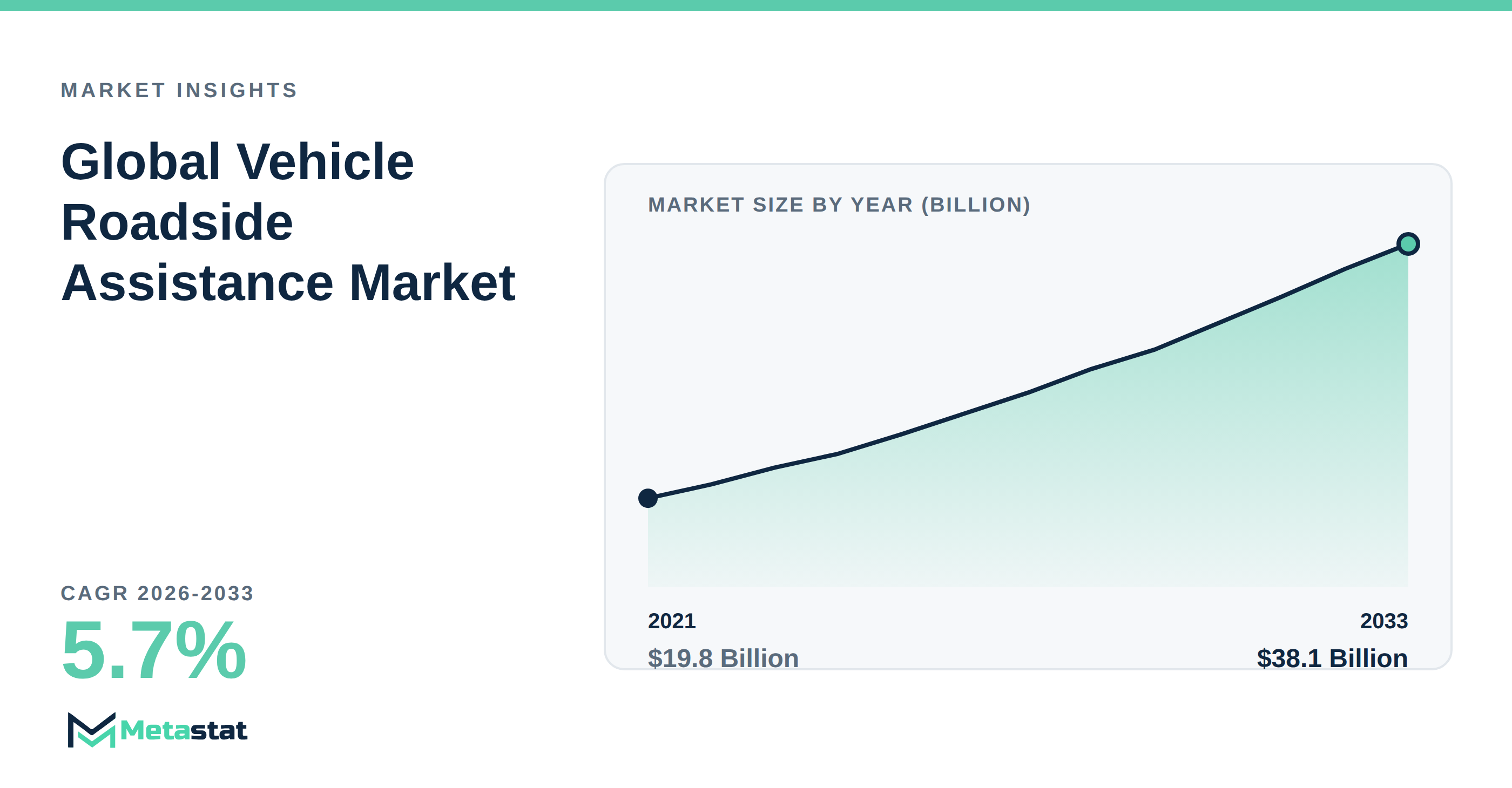
The Vehicle Roadside Assistance market is experiencing notable growth, with projections indicating a value of USD 38.1 billion by 2033, influenced by urbanization and advances in technology. For buyers within this sector, understanding supplier dynamics is crucial. Below are six critical questions to pose to your Vehicle Roadside Assistance supplier, ensuring alignment with market demands and enhancing service offerings.
1. How do you ensure compliance with regulatory standards?
Regulatory compliance represents a significant challenge in the Vehicle Roadside Assistance market. Service providers navigate stringent regulations regarding vehicle safety and emissions, which require considerable investments in technology and operational processes. Buyers should inquire about a supplier's strategy for meeting these regulatory standards, because compliance directly impacts service quality and operational costs. Suppliers prioritizing adherence to regulations enhance consumer safety and build trust, positioning themselves favorably within a competitive marketplace.
2. What technological advancements do you integrate into your services?
Given the swift technological evolution in the Vehicle Roadside Assistance market, integrating advanced technologies is essential for delivering effective services. Buyers should ask suppliers about the technologies applied, including real-time data analytics and artificial intelligence, to improve response times and customer satisfaction. Providers leveraging technology often achieve significant operational efficiencies, benefiting clients by enhancing service offerings and reducing costs associated with service delivery.
3. How do you adapt to changing consumer expectations?
Shifting consumer behavior significantly shapes the Vehicle Roadside Assistance market, reflecting an increasing demand for convenience and reliability. Suppliers should illustrate their ability to innovate and diversify service offerings to meet these evolving expectations. Buyers should seek detailed insights into how suppliers are improving service experiences, including through mobile applications that facilitate easy access to assistance. Providers who successfully align services with customer preferences typically experience better retention and satisfaction rates.
4. What measures do you have in place to handle economic pressures?
Economic factors, including inflationary pressures and supply chain disruptions, challenge the Vehicle Roadside Assistance market. Buyers evaluate how suppliers manage these pressures, particularly regarding service quality and pricing strategies. Understanding a supplier's approach to mitigating risks associated with economic fluctuations is vital for sustaining operations effectively, even during challenging market conditions that arise.
5. Can you outline your service offerings by vehicle type?
The Vehicle Roadside Assistance market encompasses diverse service offerings tailored to various vehicle types, including passenger cars, light commercial vehicles, and motorcycles. Buyers should ask suppliers to detail their capabilities across these segments. Awareness of a supplier's strengths and weaknesses in specific vehicle categories aids clients in making informed decisions that align with their operational needs and target customer base.
6. What is your approach to sustainability and environmental compliance?
Environmental concerns increasingly influence the Vehicle Roadside Assistance market, with a growing emphasis on sustainable practices. Suppliers should clearly communicate their strategies for integrating eco-friendly solutions into their services. Buyers often favor suppliers aligning with sustainability goals, because this fulfills corporate social responsibilities while appealing to environmentally conscious consumers, ultimately enhancing market reach and reputation.
Engaging suppliers with these six questions yields valuable insights into their operations and capabilities. The responses assist buyers in determining the best fit for their needs within the evolving Vehicle Roadside Assistance market, ensuring they remain competitive and responsive to consumer demands.
The full analysis is in Global Vehicle Roadside Assistance Market.
Tags
About the Authors

LEAD ANALYST
Utkarsh Khirodkar is a Lead Market Research Analyst at MetaStat Insight, specializing in market intelligence, technology sector assessments, and competitive strategy.

ENERGY & INFRASTRUCTURE INDUSTRY CONSULTANT
Automotive and Transportation · Electronics and Semiconductor · Energy and Power · Machinery & Equipment
Saurabh Vasant Ganvir consults for Energy & Infrastructure Industry at MetaStat Insight, specializing in renewable energy, solar EPC, and electric vehicle (EV) infrastructure markets.