
Explore essential questions for buyers in the Music Synthesizers market, focusing on innovation, supply chain, sustainability, consumer behavior, pricing strategies, and market opportunities.
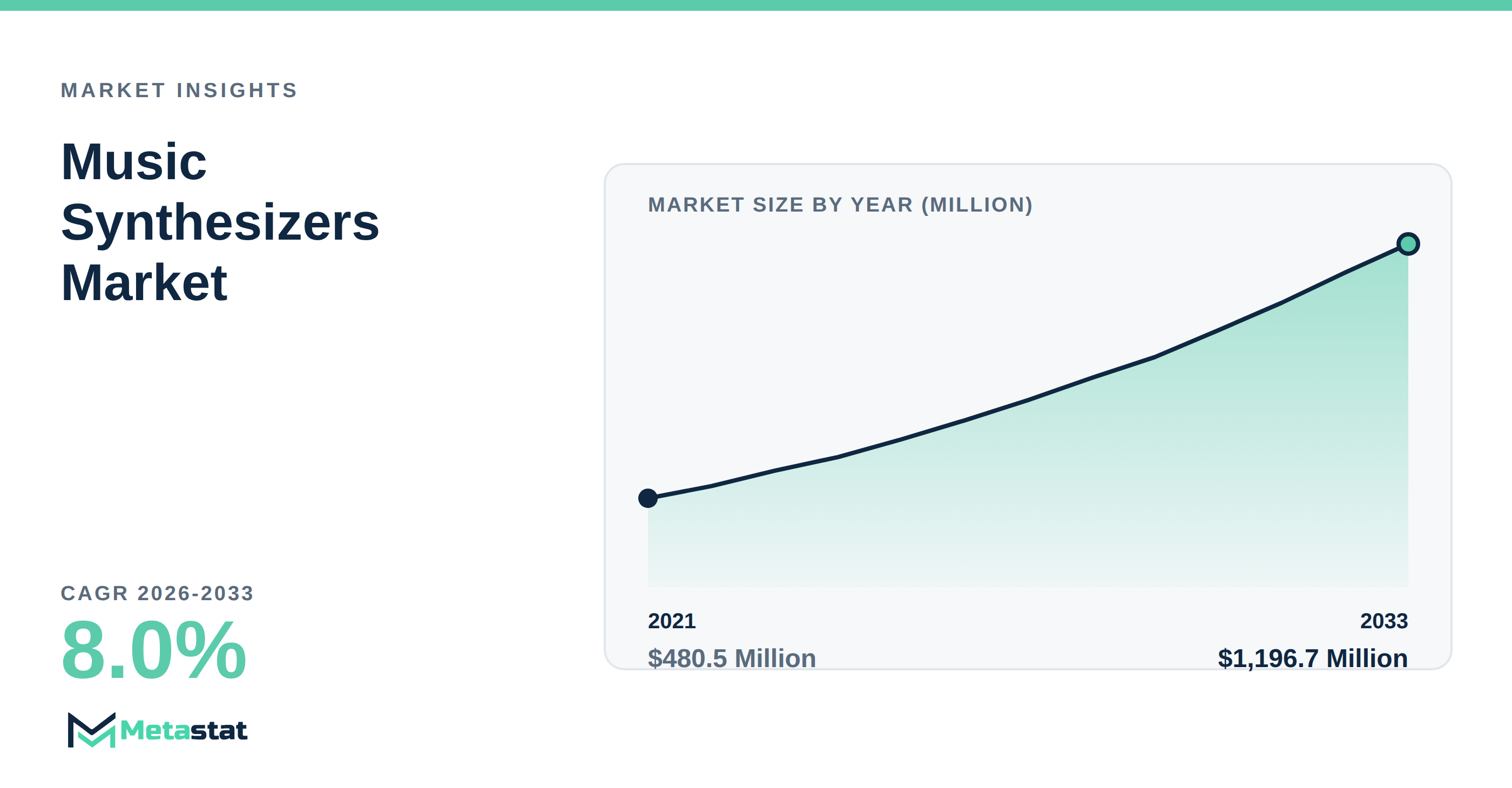
The Music Synthesizers market is expected to grow from USD 646.3 million in 2025 to USD 1,196.7 million by 2033, reflecting an annual growth rate of 8.0%. This trend generates various opportunities and challenges for buyers and suppliers. To effectively navigate this rapidly evolving market, buyers should engage suppliers with key questions that reveal insights into their strategies and capabilities.
1. What innovations are driving product differentiation in synthesizers?
In a competitive Music Synthesizers market, innovation is integral to how products stand apart. Buyers should investigate the advancements in analog, digital, and hybrid synthesizers that suppliers are adopting. These innovations often align with dynamic consumer preferences and increase creativity in music production. Continuous investment in research and development reflects a supplier's dedication to enhancing sound quality and user experience. Buyers should analyze how these technological advancements influence their purchasing decisions and the potential benefits for creative expression.
2. How does the supplier manage supply chain disruptions?
Supply chain disruptions significantly impact the Music Synthesizers market, affecting the timely availability of vital components. Suppliers clarify their strategies for addressing geopolitical risks and resource scarcity. Insight into a supplier's logistics and procurement strategies provides valuable information on their operational endurance, which directly influences product availability and pricing strategies for buyers. Understanding these factors help buyers gauge the reliability of their suppliers and make informed decisions.
3. What role does sustainability play in product development?
The growing focus on sustainability in the Music Synthesizers market prompts buyers to inquire about suppliers' commitments to environmentally friendly practices. Suppliers should articulate their strategies for incorporating sustainable materials and minimizing their environmental footprint throughout production processes. Companies that prioritize sustainability enhance their competitive edge and attract environmentally conscious consumers. This aspect becomes increasingly crucial for buyers seeking to make responsible purchasing decisions.
4. How are changing consumer behaviors influencing product offerings?
Shifting consumer interests are pivotal in shaping product demand. Trends including the rise of home studio setups and the popularity of digital music production tools indicate an increasing need for user-friendly synthesizers. Buyers should discuss with suppliers how they plan to respond to these evolving preferences and whether they are focusing on enhancing accessibility for novice users while still catering to experienced professionals. This understanding helps optimize purchasing strategies.
5. What challenges should be expected regarding pricing strategies?
Inflationary pressures and currency volatility are influencing the Music Synthesizers market, prompting buyers to ask suppliers about their pricing frameworks. It is essential for suppliers to outline their approach to managing rising operational costs while maintaining competitive pricing. Clarity on these strategies will empower buyers to make informed selections about long-term partnerships and cost management. This consideration is vital for securing favorable terms in an unpredictable market.
6. How does the supplier plan to capitalize on emerging market opportunities?
The Music Synthesizers market is set for substantial growth, particularly in North America and Asia Pacific, driven by independent artists and evolving music production trends. Buyers should engage suppliers on their strategies to capture these emerging opportunities, including geographic expansion and targeted product lines. Suppliers who adapt swiftly to market demands and invest in innovative technologies prove to be valuable partners for buyers aiming to enhance their competitive position.
These questions form a critical framework for buyers in the Music Synthesizers market to engage effectively with suppliers. By focusing on innovation, supply chain resilience, sustainability, consumer behavior, pricing, and emerging opportunities, buyers position themselves for success in navigating the complexities of this dynamic market. For further insights, refer to the Global Music Synthesizers Market report.
Tags
About the Authors

LEAD ANALYST
Utkarsh Khirodkar is a Lead Market Research Analyst at MetaStat Insight, specializing in market intelligence, technology sector assessments, and competitive strategy.

PRINCIPAL CONSULTANT - ENTERPRISE AI & EMERGING TECHNOLOGIES
Banking & Finance · Electronics and Semiconductor · Energy and Power · Healthcare IT · Information & Technology · Professional Services
Vijay Gunti is a Principal Consultant at MetaStat Insight, bringing over two decades of experience across enterprise digital transformation, technology strategy, and intelligent systems.

PRINCIPAL CONSULTANT - QUALITY SYSTEMS & COMPLIANCE
Electronics and Semiconductor · Machinery & Equipment · Professional Services
Omkar Phadtare is an Industry Consultant at MetaStat Insight, specializing in quality systems, regulatory compliance, and standards benchmarking to drive data-driven market intelligence and strategic industry research.

ENERGY & INFRASTRUCTURE INDUSTRY CONSULTANT
Automotive and Transportation · Electronics and Semiconductor · Energy and Power · Machinery & Equipment
Saurabh Vasant Ganvir consults for Energy & Infrastructure Industry at MetaStat Insight, specializing in renewable energy, solar EPC, and electric vehicle (EV) infrastructure markets.

LEAD CONSULTANT - COMMUNICATION, TELECOM, AND IT
Electronics and Semiconductor · Information & Technology · Machinery & Equipment · Professional Services
Ravindra Sathe Consultants for Communication, Telecom, and IT at MetaStat Insight. He leads the firm's industry research initiatives across telecommunications infrastructure, digital connectivity, enterprise networking, and emerging information technology domains.