
The Capacitive Touch Switches market is set for significant growth driven by consumer electronics, automotive innovations, and sustainability initiatives. Explore key forces shaping this evolving landscape.
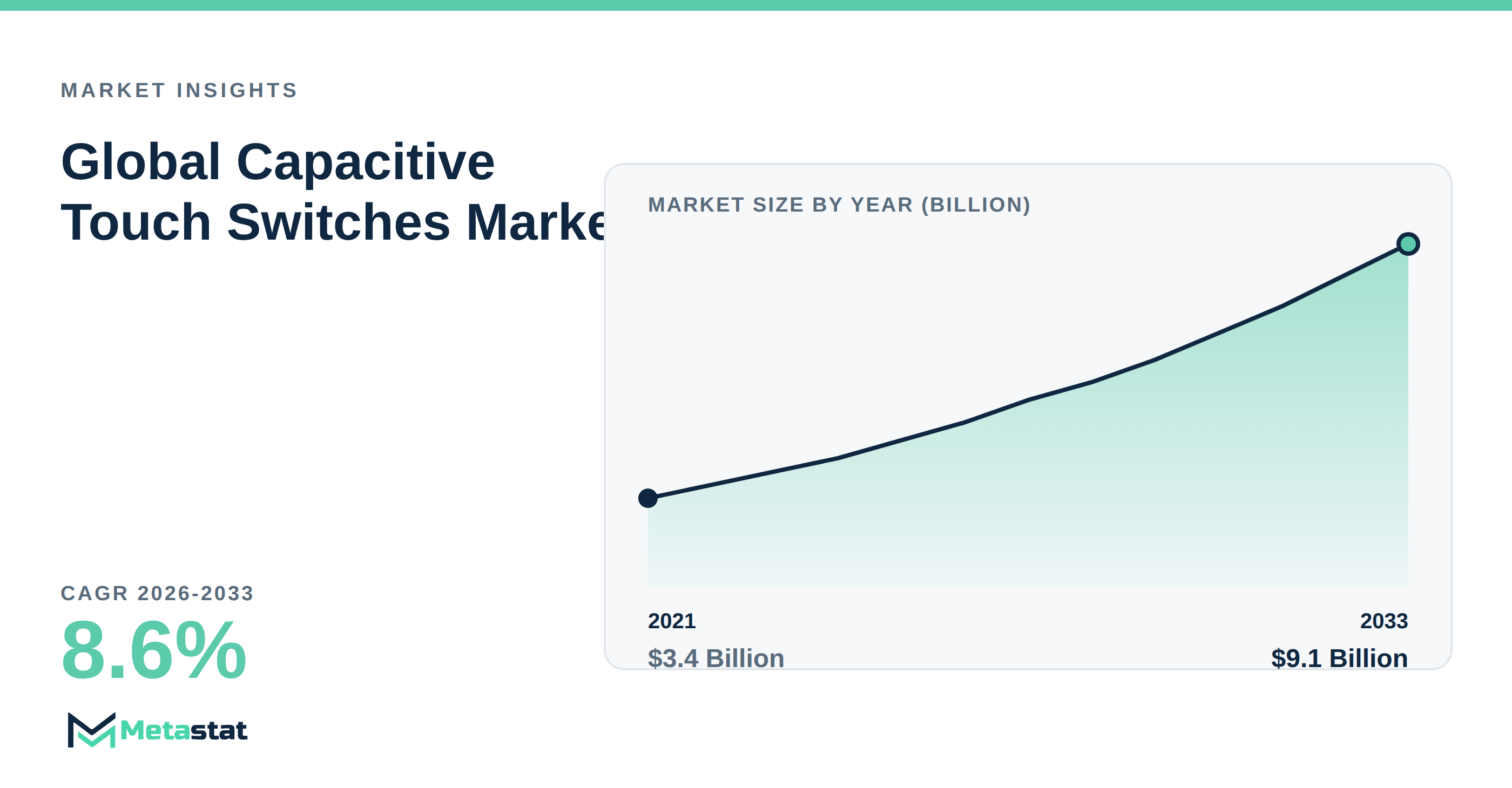
The Capacitive Touch Switches market is experiencing significant changes driven by various factors. Growth from a valuation of USD 4.7 billion in 2025 to a projected USD 9.1 billion by 2033 highlights the importance of understanding these dynamics for stakeholders.
1. Rising consumer electronics demand fuels growth
Increasing interest in consumer electronics is a primary influence on the Capacitive Touch Switches market. The surging adoption of devices including smartphones, tablets, and smart home technologies significantly boosts the integration of touch-sensitive interfaces, enhancing user experiences. This trend reflects a broader shift toward digitization across multiple sectors, with manufacturers keen on implementing capacitive touch switches for their energy efficiency and aesthetic appeal. Rising investments in innovative products ensure sustained demand for capacitive touch solutions in this expanding sector.
2. Automotive innovations emphasize intuitive interfaces
Recent advancements in automotive technology underscore the need for user-friendly controls and interfaces. The growing demand for electric vehicles and advanced driver-assistance systems increases the need for capacitive touch technologies. These switches provide more responsive and customizable experiences, aligning with shifting consumer preferences. This emphasis on user interaction boosts demand for capacitive touch switches while creating substantial investment opportunities for future innovations.
3. Regulatory compliance shapes market dynamics
Strict regulatory compliance significantly impacts the Capacitive Touch Switches market. Manufacturers face numerous challenges in meeting safety and performance standards, resulting in higher production costs and delays in product launches. Organizations that navigate regulatory frameworks effectively improve their competitive advantage. Continuous investment in research and development allows companies to align their products with evolving regulations, enhancing customer trust and expanding market presence. Regulatory compliance remains crucial for ensuring product reliability and safety, necessitating robust quality assurance processes.
4. Infrastructure investments create new opportunities
Investment in infrastructure development greatly influences the trajectory of the Capacitive Touch Switches market. Enhanced physical and digital capabilities improve operational efficiency across diverse sectors, including consumer electronics and automotive applications. Increased public and private sector financial commitments to modernizing facilities generate ample opportunities for capacitive touch switch suppliers. Urbanization trends drive the demand for smarter building systems, necessitating the integration of these switches into new infrastructure projects, which supports sustained market growth.
5. Sustainability initiatives drive product innovation
The ongoing shift towards sustainable practices significantly influences the Capacitive Touch Switches market. Manufacturers are increasingly prioritizing eco-friendly materials and sustainable production processes in response to regulatory pressures and consumer preferences. This focus enhances market appeal and aligns with the rising trend of environmentally conscious consumerism. Companies that successfully develop energy-efficient and recyclable products not only fulfill regulatory mandates but attract a broader customer base, reinforcing their market positions.
6. Supply chain resilience is key to operational efficiency
Supply chain dynamics play a crucial role in shaping the Capacitive Touch Switches market. Variability in the availability of raw materials and geopolitical tensions affect operational efficiency and production schedules. Companies that strategically manage their supply chains enhance resilience and adaptability, ensuring consistent product delivery amid global uncertainties. By optimizing logistics and fostering solid supplier relationships, these organizations navigate potential disruptions while positioning themselves for long-term growth.
The Capacitive Touch Switches market is shaped by rising consumer demand, automotive innovations, regulatory frameworks, infrastructure investments, sustainability efforts, and effective supply chain management. Understanding these forces equips stakeholders with the insights needed to navigate this evolving landscape effectively. For a comprehensive analysis, refer to the Global Capacitive Touch Switches Market.
Tags
About the Authors

LEAD ANALYST
Utkarsh Khirodkar is a Lead Market Research Analyst at MetaStat Insight, specializing in market intelligence, technology sector assessments, and competitive strategy.

PRINCIPAL CONSULTANT - ENTERPRISE AI & EMERGING TECHNOLOGIES
Banking & Finance · Electronics and Semiconductor · Energy and Power · Healthcare IT · Information & Technology · Professional Services
Vijay Gunti is a Principal Consultant at MetaStat Insight, bringing over two decades of experience across enterprise digital transformation, technology strategy, and intelligent systems.

PRINCIPAL CONSULTANT - QUALITY SYSTEMS & COMPLIANCE
Electronics and Semiconductor · Machinery & Equipment · Professional Services
Omkar Phadtare is an Industry Consultant at MetaStat Insight, specializing in quality systems, regulatory compliance, and standards benchmarking to drive data-driven market intelligence and strategic industry research.

ENERGY & INFRASTRUCTURE INDUSTRY CONSULTANT
Automotive and Transportation · Electronics and Semiconductor · Energy and Power · Machinery & Equipment
Saurabh Vasant Ganvir consults for Energy & Infrastructure Industry at MetaStat Insight, specializing in renewable energy, solar EPC, and electric vehicle (EV) infrastructure markets.

LEAD CONSULTANT - COMMUNICATION, TELECOM, AND IT
Electronics and Semiconductor · Information & Technology · Machinery & Equipment · Professional Services
Ravindra Sathe Consultants for Communication, Telecom, and IT at MetaStat Insight. He leads the firm's industry research initiatives across telecommunications infrastructure, digital connectivity, enterprise networking, and emerging information technology domains.