
Explore the driving forces reshaping the Polyglycerol Polyricinoleate market, from rising demand for clean-label products to technological advancements and regulatory challenges.
The Polyglycerol Polyricinoleate market is experiencing notable transformations, shaped by various driving forces and emerging trends. These dynamics influence market growth and highlight the need for manufacturers to adapt their strategies. Are six forces reshaping the Polyglycerol Polyricinoleate market.
1. Rising Demand for Clean-label Products
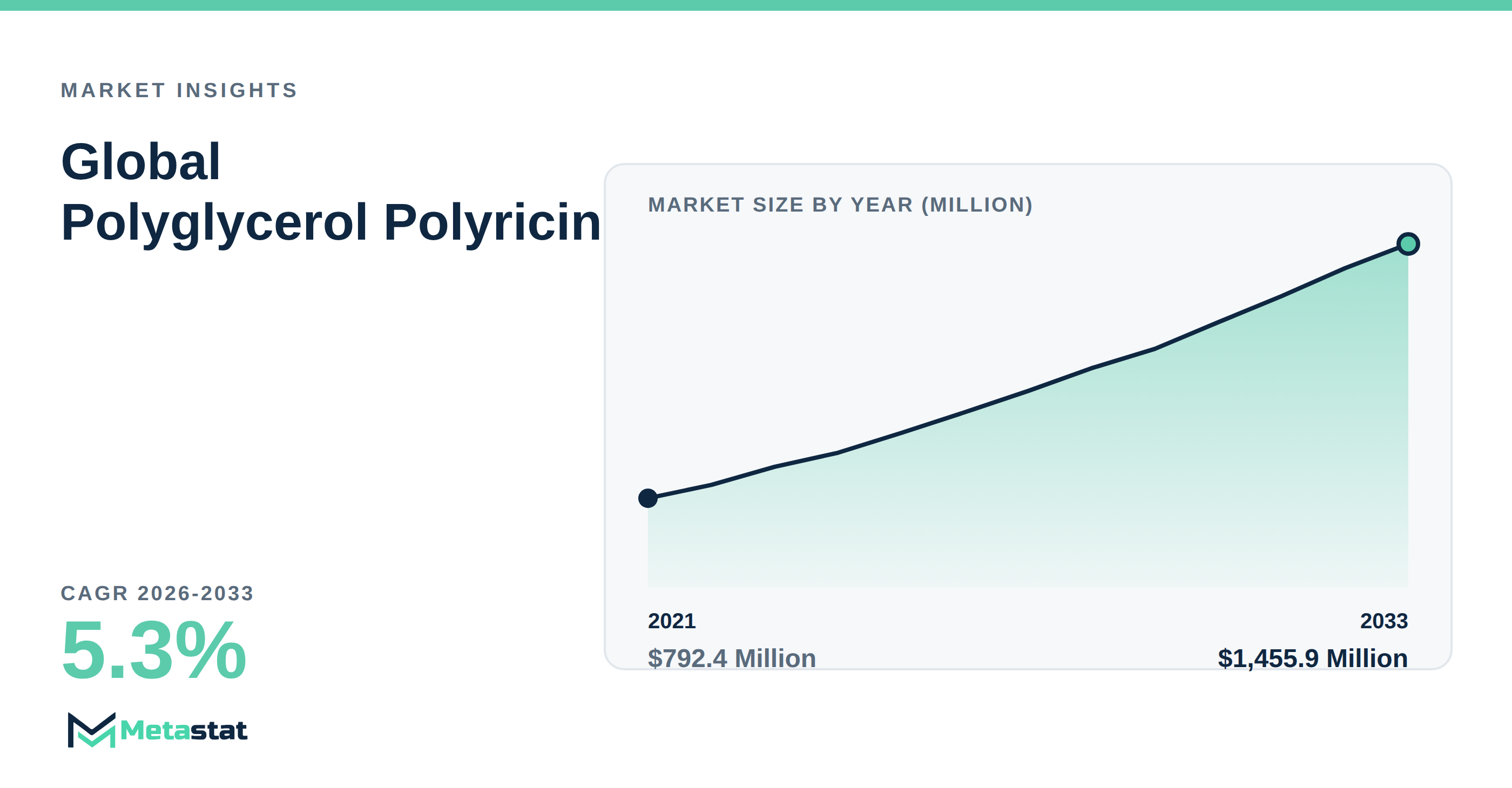
Consumer preferences significantly influence the Polyglycerol Polyricinoleate market, particularly the shift towards clean-label products. A growing number of consumers prioritize natural ingredients and transparency in food formulation. Consequently, manufacturers are increasingly incorporating Polyglycerol Polyricinoleate to align with these evolving preferences. This food-grade PGPR segment is anticipated to grow from an estimated USD 829.6 million in 2026 to approximately USD 1,166.2 million by 2033, equating to a compound annual growth rate (CAGR) of around 5%. This trend underscores the necessity for manufacturers to innovate and adapt to consumer preferences effectively.
2. Technological Advancements Driving Innovation
Technological advancements play a crucial role in enhancing the functionality of Polyglycerol Polyricinoleate. Manufacturers increasingly embrace innovative formulations and processes that improve product performance. For instance, next-generation emulsifiers offer better stability and efficiency, catering to the demands of food and personal care applications. This innovation not only boosts product quality but supports the growth of the Polyglycerol Polyricinoleate market, enabling companies to capture new opportunities and meet emerging consumer demands.
3. Regulatory Compliance Challenges
Significant hurdles related to regulatory compliance challenge the Polyglycerol Polyricinoleate market. Stringent food safety and quality regulations necessitate rigorous testing and certifications, escalating operational costs for manufacturers. Delays in product approvals hinder innovation and market entry. Consequently, manufacturers navigate these compliance challenges while maintaining profitability and ensuring product integrity, potentially affecting their competitive positioning.
4. Geopolitical Tensions Impacting Trade
Geopolitical tensions introduce complexities for the Polyglycerol Polyricinoleate market. These tensions lead to unpredictable tariffs and trade deficits, complicating supply chain dynamics. Increased operational costs emerge from heightened tariffs, impacting profit margins for manufacturers. Adapting to these shifting landscapes becomes essential for companies seeking to maintain competitiveness while ensuring a reliable supply of raw materials.
5. Growth Potential in Emerging Markets
Emerging regional demands present substantial opportunities within the Polyglycerol Polyricinoleate market. Regions including Asia Pacific and North America reflect growing needs for food-grade and industrial-grade PGPR products, driven largely by expanding food and beverage sectors. This growth results from heightened consumer awareness of health and wellness and a preference for naturally sourced ingredients. Strategic investments to enhance infrastructure are crucial for supporting production capacities, further fostering market growth in these areas.
6. Challenges in Sourcing and Supply Chain
The landscape of the Polyglycerol Polyricinoleate market is influenced by sourcing challenges and supply chain complexities. Manufacturers navigate fluctuations in raw material prices and logistical challenges while striving to meet customer demands. The need for resilient supply chains becomes critical, allowing companies to mitigate risks and optimize operational efficiencies. Those who streamline sourcing and distribution networks are positioned favorably to adapt to market fluctuations.
These six forces collectively shape the Polyglycerol Polyricinoleate market's dynamics, driving growth, innovation, and competition. Stakeholders should remain agile and responsive to these developments to seize opportunities and navigate challenges effectively.
For a comprehensive analysis, readers explore the Global Polyglycerol Polyricinoleate Market.
Tags
About the Authors

LEAD ANALYST
Utkarsh Khirodkar is a Lead Market Research Analyst at MetaStat Insight, specializing in market intelligence, technology sector assessments, and competitive strategy.

INDUSTRY CONSULTANT - CHEMICALS & ADVANCED MATERIALS
Chemicals and Materials · Machinery & Equipment · Packaging
Amit Gadhekar Consultant for Chemicals and Materials at MetaStat Insight, directing sector-specific intelligence, research, and strategic consulting across global chemical and processing markets.