
Explore critical elements affecting costs and pricing in the Multi-Phase Production Pump market. Understand how these factors influence operational efficiency and purchasing decisions.
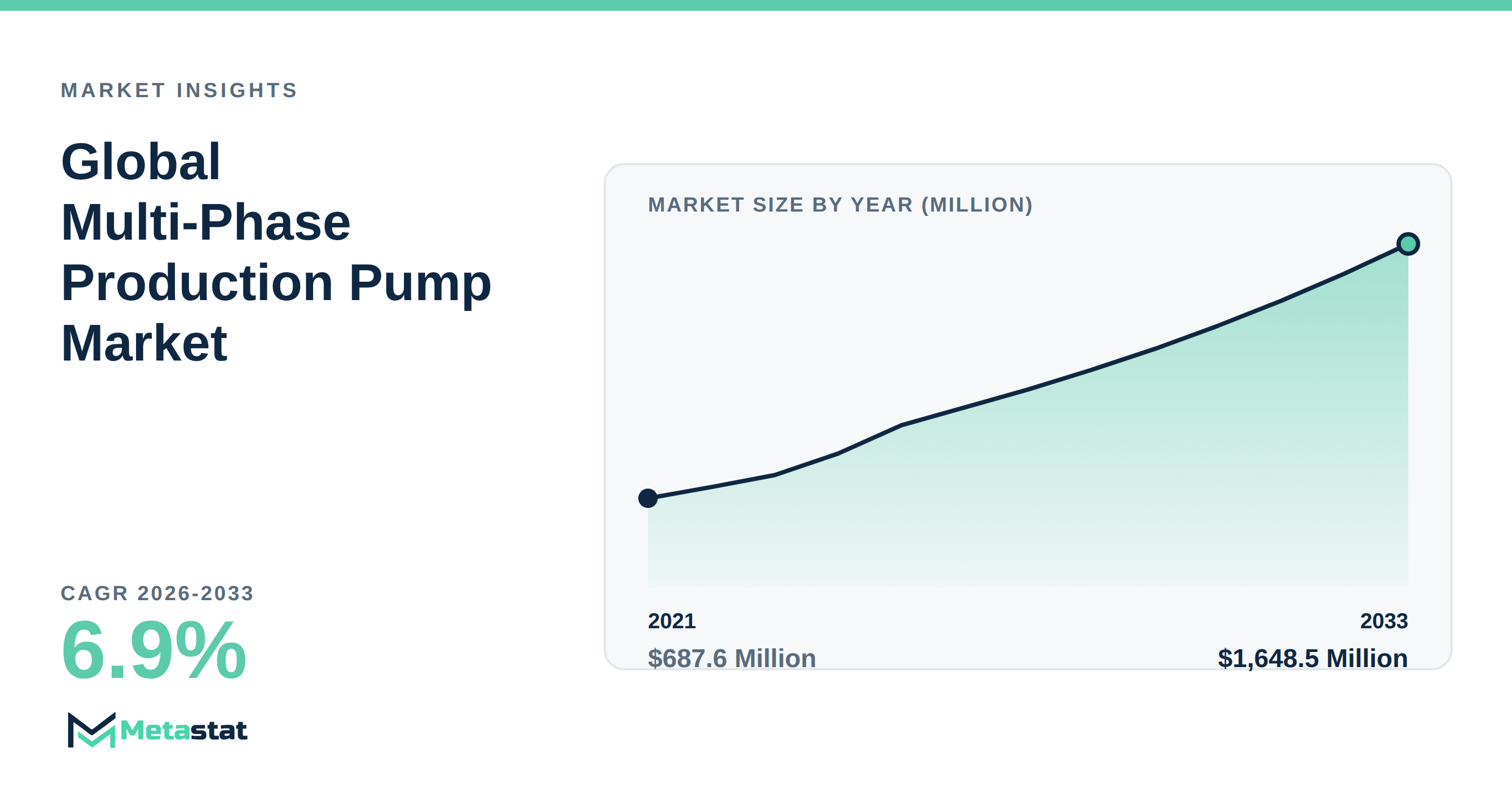
The Multi-Phase Production Pump market is evolving, driven by technological advancements and changing operational requirements. Understanding the factors influencing costs and pricing within this market helps buyers to make informed decisions. Six key elements affect pricing dynamics.
1. Technological advancements enhance operational efficiency
Innovations in pump designs, including twin-screw and helico-axial multiphase pumps, significantly impact operational efficiency and reliability. These advancements enable operators to manage complex fluid dynamics and varying pressure conditions more effectively, which reduces overall operational costs. Increased reliability contributes to lower maintenance expenses and downtime, positively influencing the total cost of ownership. Upstream oil and gas operators increasingly invest in advanced technologies that streamline fluid handling processes, leading to improved performance and reduced costs.
2. Regulatory compliance shapes investment choices
Strict regulatory frameworks governing emissions and environmental practices exert significant pressure on operators within the Multi-Phase Production Pump market. Compliance with these regulations often necessitates investments in modern pumping technologies that align with sustainability goals. Consequently, operators allocate budgetary resources for compliance-related upgrades, contributing to overall costs. Companies adept at navigating these standards leverage them to their advantage, gaining market share through innovative approaches that integrate environmental considerations into their operations.
3. Supply chain dynamics affect equipment fabrication
Variability in raw material costs and supply chain vulnerabilities significantly influence the production costs of multi-phase pumps. Manufacturers face challenges in sourcing essential components, resulting in fluctuations in pricing and availability. These supply chain dynamics create obstacles for operators who rely on timely procurement to maintain efficiency. By establishing strategic partnerships and diversifying sourcing channels, companies mitigate some of these risks, ensuring competitive pricing and stable supply chains while enhancing their market position.
4. Infrastructure modernization drives capital investments
Investment in infrastructure modernization presents opportunities for enhancing operational capacity within the Multi-Phase Production Pump market. Upgrading aging facilities enables operators to integrate advanced technologies and streamline operations, improving fluid handling efficiency. This modernization process typically requires substantial capital investments, which significantly affect pricing structures. However, the long-term operational efficiencies gained from these investments often yield lower operational costs, ultimately benefiting buyers seeking reliable and cost-effective solutions.
5. Demand for efficiency in oilfield operations influences pricing
The growing emphasis on efficiency in oil and gas extraction drives demand for advanced pumping technologies. Companies in the upstream sector prioritize solutions that minimize downtime and maximize productivity. The competition to adopt effective fluid handling systems influences pricing, because suppliers aim to meet the expectations of cost-conscious operators. Firms excelling in providing innovative, reliable solutions at competitive prices are likely to capture greater market share, enabling buyers to enhance their operational capabilities.
6. Regional variances create market opportunities
Geographical differences in oil and gas production activities contribute to pricing disparities within the Multi-Phase Production Pump market. Regions like North America and Asia Pacific exhibit robust energy sectors, each shaped by distinct regulatory environments and operational demands. Manufacturers and suppliers adapt their pricing strategies to align with local market conditions. Understanding these regional variances allows operators to identify cost-effective solutions tailored to their specific needs, fostering better operational efficiency and profitability.
The factors outlined above highlight key considerations for stakeholders in the Multi-Phase Production Pump market. Recognizing how these elements influence costs and pricing enables buyers to make strategic decisions that enhance operational efficiency and profitability. For more detailed insights on this evolving market, refer to the Global Multi-Phase Production Pump Market.
Tags
About the Authors

LEAD ANALYST
Utkarsh Khirodkar is a Lead Market Research Analyst at MetaStat Insight, specializing in market intelligence, technology sector assessments, and competitive strategy.

INDUSTRY CONSULTANT - CHEMICALS & ADVANCED MATERIALS
Chemicals and Materials · Machinery & Equipment · Packaging
Amit Gadhekar Consultant for Chemicals and Materials at MetaStat Insight, directing sector-specific intelligence, research, and strategic consulting across global chemical and processing markets.

PRINCIPAL CONSULTANT - QUALITY SYSTEMS & COMPLIANCE
Electronics and Semiconductor · Machinery & Equipment · Professional Services
Omkar Phadtare is an Industry Consultant at MetaStat Insight, specializing in quality systems, regulatory compliance, and standards benchmarking to drive data-driven market intelligence and strategic industry research.

ENERGY & INFRASTRUCTURE INDUSTRY CONSULTANT
Automotive and Transportation · Electronics and Semiconductor · Energy and Power · Machinery & Equipment
Saurabh Vasant Ganvir consults for Energy & Infrastructure Industry at MetaStat Insight, specializing in renewable energy, solar EPC, and electric vehicle (EV) infrastructure markets.

LEAD CONSULTANT - COMMUNICATION, TELECOM, AND IT
Electronics and Semiconductor · Information & Technology · Machinery & Equipment · Professional Services
Ravindra Sathe Consultants for Communication, Telecom, and IT at MetaStat Insight. He leads the firm's industry research initiatives across telecommunications infrastructure, digital connectivity, enterprise networking, and emerging information technology domains.