
Explore six crucial insights influencing the Mining Automation market, highlighting investment trends, regulatory challenges, and the demand for sustainability.
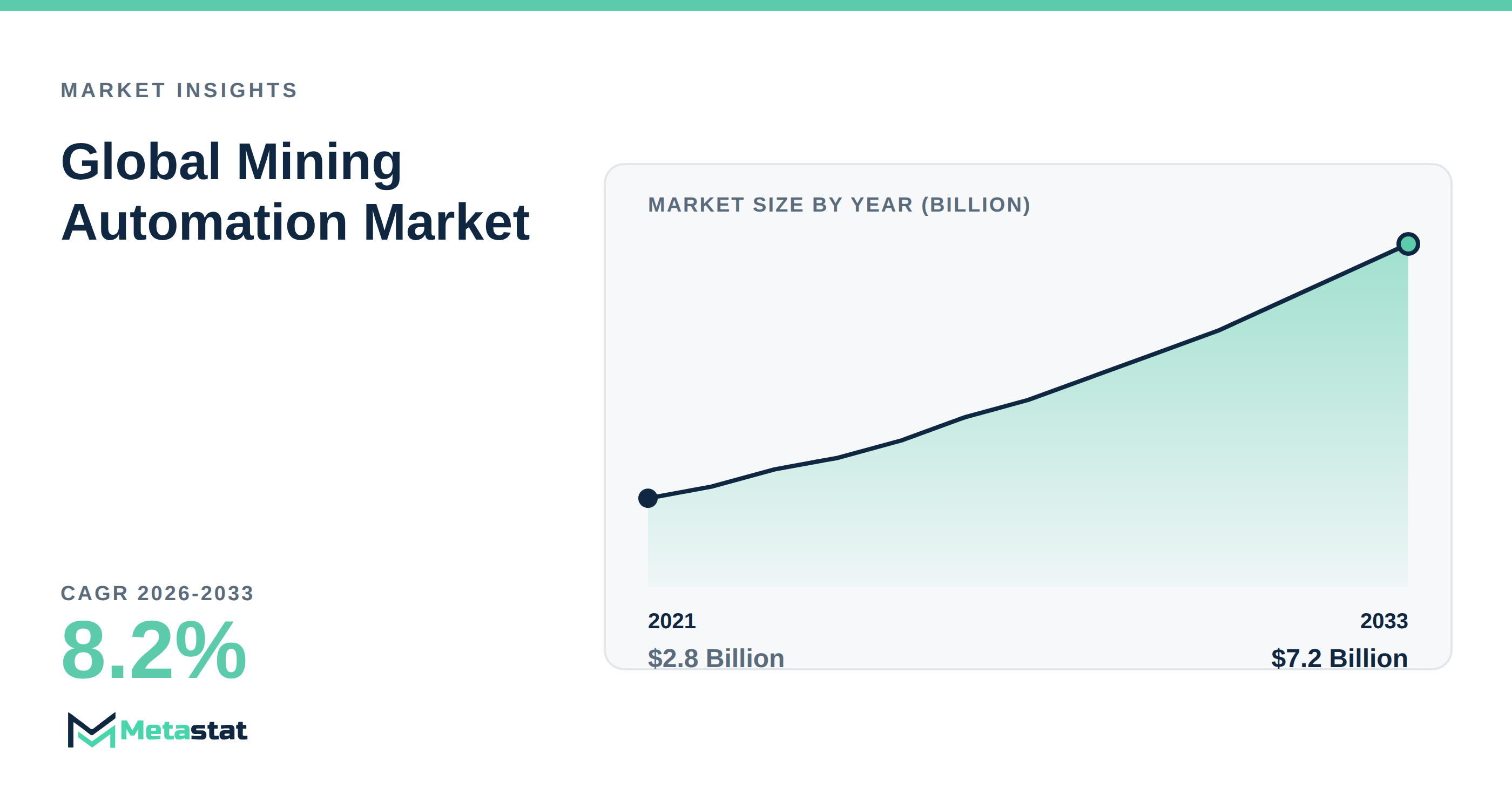
The Mining Automation market is undergoing significant changes driven by various evolving trends. Understanding these trends is essential for buyers and operators navigating a complex environment increasingly focused on efficiency, safety, and regulatory compliance.
1. Increased Investments in Digital Transformation
Investment in digital transformation accelerates growth within the Mining Automation market, driven by efforts to improve operational efficiency. Companies prioritize technology integration, particularly automation and artificial intelligence, to enhance processes and lower costs. This shift fosters not only competitive positioning but better labor utilization, leading to improved profit margins. Buyers expect to see a more digital approach to mining operations, resulting in streamlined workflows and optimized resource management.
2. Demand for Autonomous Solutions
The Autonomous Haulage segment is anticipated to expand notably, reflecting the rising need for automation in mining operations. Companies adopt these solutions to enhance safety and cut labor costs in hazardous environments. This segment’s anticipated growth illustrates a broader trend toward reliance on technology for operational optimization. Buyers seeking increased efficiency should consider investing in autonomous systems, which offer potential reductions in operating expenses while ensuring compliance with safety regulations.
3. Regulatory Compliance and Environmental Standards
Stricter regulatory compliance concerning environmental protection and worker safety drives investment in automation technologies. Mining firms are motivated to adopt automated solutions to mitigate risks and ensure adherence to evolving regulations. While regulatory frameworks grow increasingly complex, companies face additional costs that divert resources away from innovation. Therefore, buyers prioritize suppliers emphasizing compliance solutions, ensuring operational efficiency while aligning with sustainability goals.
4. Challenges from Geopolitical Fragmentation
Geopolitical fragmentation disrupts trade relationships and raises tariff friction, complicating supply chains. This uncertain environment affects the procurement of crucial components for mining automation technologies, resulting in pricing pressures and potential delays. Buyers evaluate the geopolitical stability of the regions in which they operate, opting for suppliers with robust contingency plans to address the risks associated with supply chain vulnerabilities.
5. Growing Focus on Sustainability
Sustainability increasingly influences the Mining Automation market, with companies embracing decarbonization mandates and eco-friendly practices. Mining operations integrate technologies that minimize environmental footprints while enhancing operational efficiency. Buyers should prioritize suppliers offering sustainable solutions, because these technologies align with corporate social responsibility objectives and lead to long-term cost savings through improved resource utilization.
6. Skill Gaps in the Workforce
While mining automation technologies advance, the necessity for a skilled workforce proficient in these systems becomes crucial. Current skill gaps hinder effective implementation, posing challenges for companies aiming to leverage automation solutions. Buyers should consider investing in training programs or collaborating with technology providers to bridge these gaps, ensuring employees effectively navigate and operate automated systems.
These dynamics reshaping the Mining Automation market offer critical insights for buyers and operators within the industry. By recognizing these trends, organizations align their strategies and investments to enhance operational efficiency and maintain competitiveness in a rapidly changing market. For detailed insights, refer to the Global Mining Automation Market.
Tags
About the Authors

LEAD ANALYST
Utkarsh Khirodkar is a Lead Market Research Analyst at MetaStat Insight, specializing in market intelligence, technology sector assessments, and competitive strategy.

INDUSTRY CONSULTANT - CHEMICALS & ADVANCED MATERIALS
Chemicals and Materials · Machinery & Equipment · Packaging
Amit Gadhekar Consultant for Chemicals and Materials at MetaStat Insight, directing sector-specific intelligence, research, and strategic consulting across global chemical and processing markets.

PRINCIPAL CONSULTANT - QUALITY SYSTEMS & COMPLIANCE
Electronics and Semiconductor · Machinery & Equipment · Professional Services
Omkar Phadtare is an Industry Consultant at MetaStat Insight, specializing in quality systems, regulatory compliance, and standards benchmarking to drive data-driven market intelligence and strategic industry research.

ENERGY & INFRASTRUCTURE INDUSTRY CONSULTANT
Automotive and Transportation · Electronics and Semiconductor · Energy and Power · Machinery & Equipment
Saurabh Vasant Ganvir consults for Energy & Infrastructure Industry at MetaStat Insight, specializing in renewable energy, solar EPC, and electric vehicle (EV) infrastructure markets.

LEAD CONSULTANT - COMMUNICATION, TELECOM, AND IT
Electronics and Semiconductor · Information & Technology · Machinery & Equipment · Professional Services
Ravindra Sathe Consultants for Communication, Telecom, and IT at MetaStat Insight. He leads the firm's industry research initiatives across telecommunications infrastructure, digital connectivity, enterprise networking, and emerging information technology domains.