
Explore key trends shaping the Supply Chain Strategy and Operations Consulting landscape and their implications for businesses in various sectors.
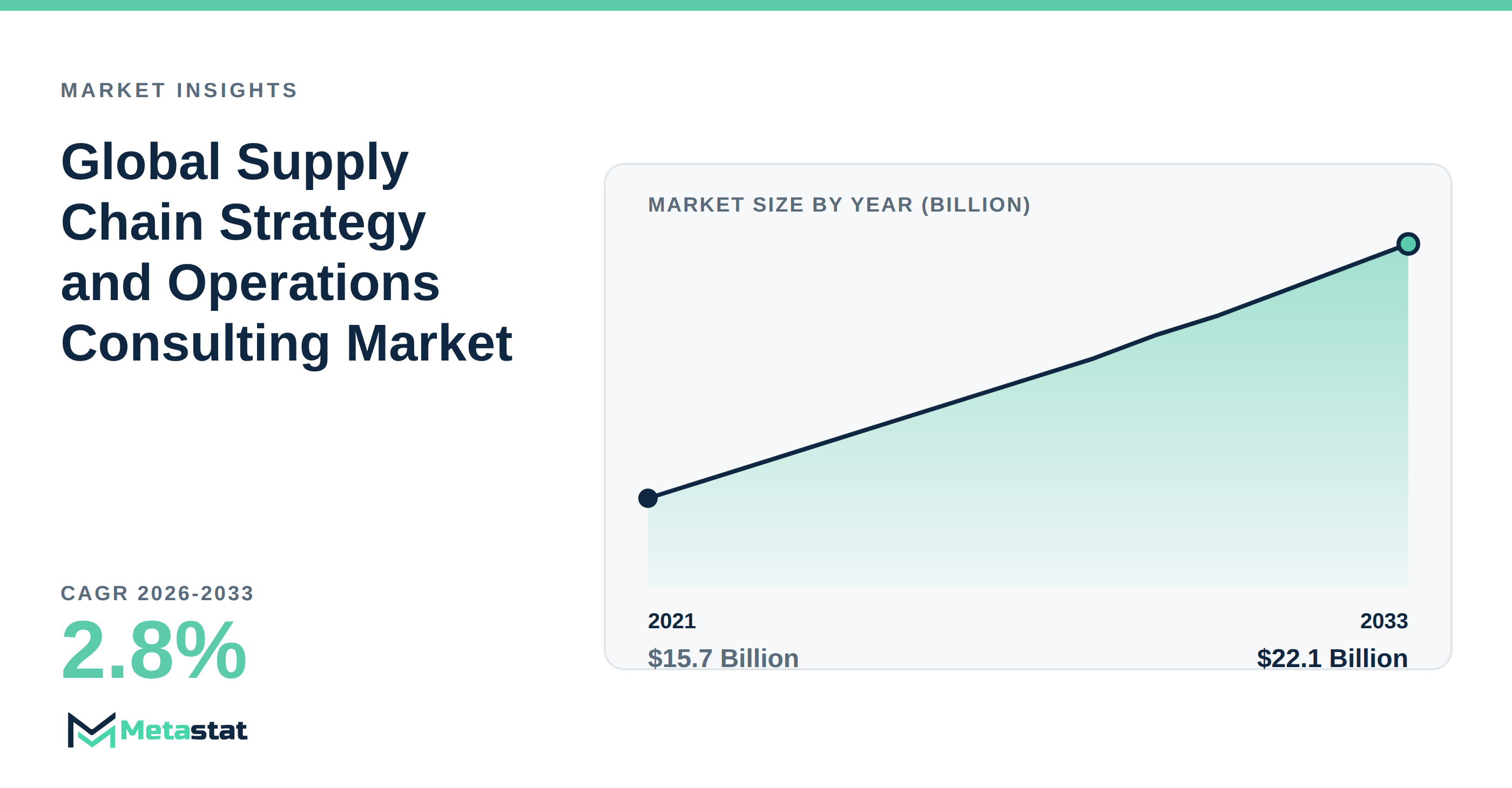
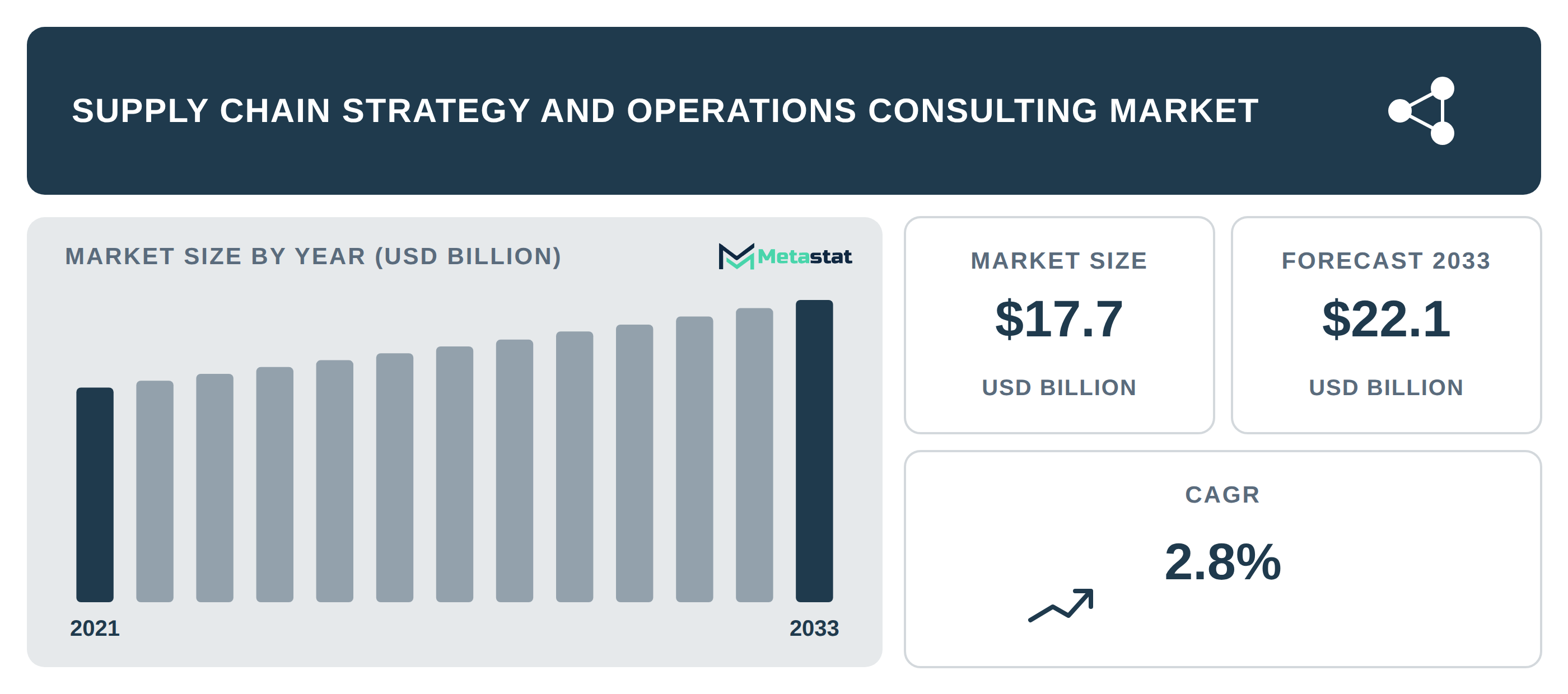
The market for Supply Chain Strategy and Operations Consulting is undergoing significant transformations driven by various trends that reshape how organizations approach their supply chain operations. Companies are increasingly leveraging consulting services to enhance efficiency, align strategies, and respond to evolving consumer demands. Understanding these trends is crucial for businesses aiming to stay competitive and optimize their supply chains. Supply Chain Strategy and Operations Consulting market size and forecast report provides further insights into these developments.
1. Digital Transformation is Essential
Organizations are prioritizing digital transformation within their supply chains to improve visibility and drive operational efficiency. The integration of advanced technologies, including cloud computing and analytics, enables real-time data analysis and enhances decision-making capabilities. As businesses implement these solutions, they experience improved responsiveness to market dynamics. This trend highlights the necessity for consulting services that facilitate these technological integrations and help firms adapt swiftly to disruptions and changing consumer preferences.
2. Demand for AI-Enabled Solutions
The increasing reliance on artificial intelligence in supply chain planning is transforming operational strategies. Companies seek predictive analytics to optimize inventory management and accurately forecast demand. The Technology Enablement / SCM Platform Consulting segment is projected to show significant growth, as organizations invest in AI-enabled solutions to increase agility and reduce operational costs. Consulting firms that provide implementation alongside strategic advice are likely to strengthen their competitive position in this evolving landscape.
3. Focus on Sustainability is Growing
Heightened environmental awareness prompts organizations to embrace sustainable practices across their supply chains. Companies prioritize eco-friendly sourcing and operations, creating a surge in demand for consulting services that address these objectives. This movement indicates a deeper commitment to corporate responsibility and influences purchasing decisions in various sectors. Consulting firms that align their offerings with sustainability initiatives are well-positioned to capture this expanding segment of the consulting landscape.
4. Shift Toward Collaborative Engagements
Businesses increasingly seek long-term partnerships in supply chain consulting, leading to a trend toward collaborative pricing and flexible contract models. This evolution enables firms to invest in building relationships rather than depending on one-off consultative engagements. Such models emphasize shared success, ensuring that client expectations align with consultant deliverables. This collaborative approach not only enhances service offerings but provides consulting firms with a more stable revenue stream.
5. Emphasis on Inventory Optimization
Effective inventory optimization remains critical, particularly for the retail and consumer goods sectors. Companies in these industries manage inventory efficiently while meeting service levels and customer demands. The growing emphasis in this area underscores the importance of implementing strong inventory management frameworks and cost-to-serve analytics. Organizations that adopt these strategies minimize excess stock, reduce carrying costs, and improve their profitability, highlighting the value of consulting services in this critical domain.
6. Increased Focus on Risk Management
Organizations are increasingly investing in risk management strategies to strengthen their supply chain resilience. Factors including regulatory pressures and market volatility drive this focus, compelling firms to develop comprehensive frameworks that mitigate supply chain disruptions. Consulting services that specialize in risk assessment and sustainability provide essential support to businesses navigating these complexities. By prioritizing risk management within their supply chain strategies, companies enhance operational stability and respond effectively to unforeseen challenges.
Understanding these key trends in the market for Supply Chain Strategy and Operations Consulting equips organizations with the knowledge needed to navigate the complexities of supply chain management. By adapting to these developments, companies gain a competitive edge and enhance their operational effectiveness.
Tags
About the Authors

LEAD ANALYST
Utkarsh Khirodkar is a Lead Market Research Analyst at MetaStat Insight, specializing in market intelligence, technology sector assessments, and competitive strategy.

PRINCIPAL CONSULTANT - ENTERPRISE AI & EMERGING TECHNOLOGIES
Banking & Finance · Electronics and Semiconductor · Energy and Power · Healthcare IT · Information & Technology · Professional Services
Vijay Gunti is a Principal Consultant at MetaStat Insight, bringing over two decades of experience across enterprise digital transformation, technology strategy, and intelligent systems.

PRINCIPAL CONSULTANT - QUALITY SYSTEMS & COMPLIANCE
Electronics and Semiconductor · Machinery & Equipment · Professional Services
Omkar Phadtare is an Industry Consultant at MetaStat Insight, specializing in quality systems, regulatory compliance, and standards benchmarking to drive data-driven market intelligence and strategic industry research.

LEAD CONSULTANT - COMMUNICATION, TELECOM, AND IT
Electronics and Semiconductor · Information & Technology · Machinery & Equipment · Professional Services
Ravindra Sathe Consultants for Communication, Telecom, and IT at MetaStat Insight. He leads the firm's industry research initiatives across telecommunications infrastructure, digital connectivity, enterprise networking, and emerging information technology domains.