
Explore the evolving dynamics of the Indonesia Fintech P2P Lending (LPBBTI) market, driven by digital transformation, MSME demand, and regulatory changes.
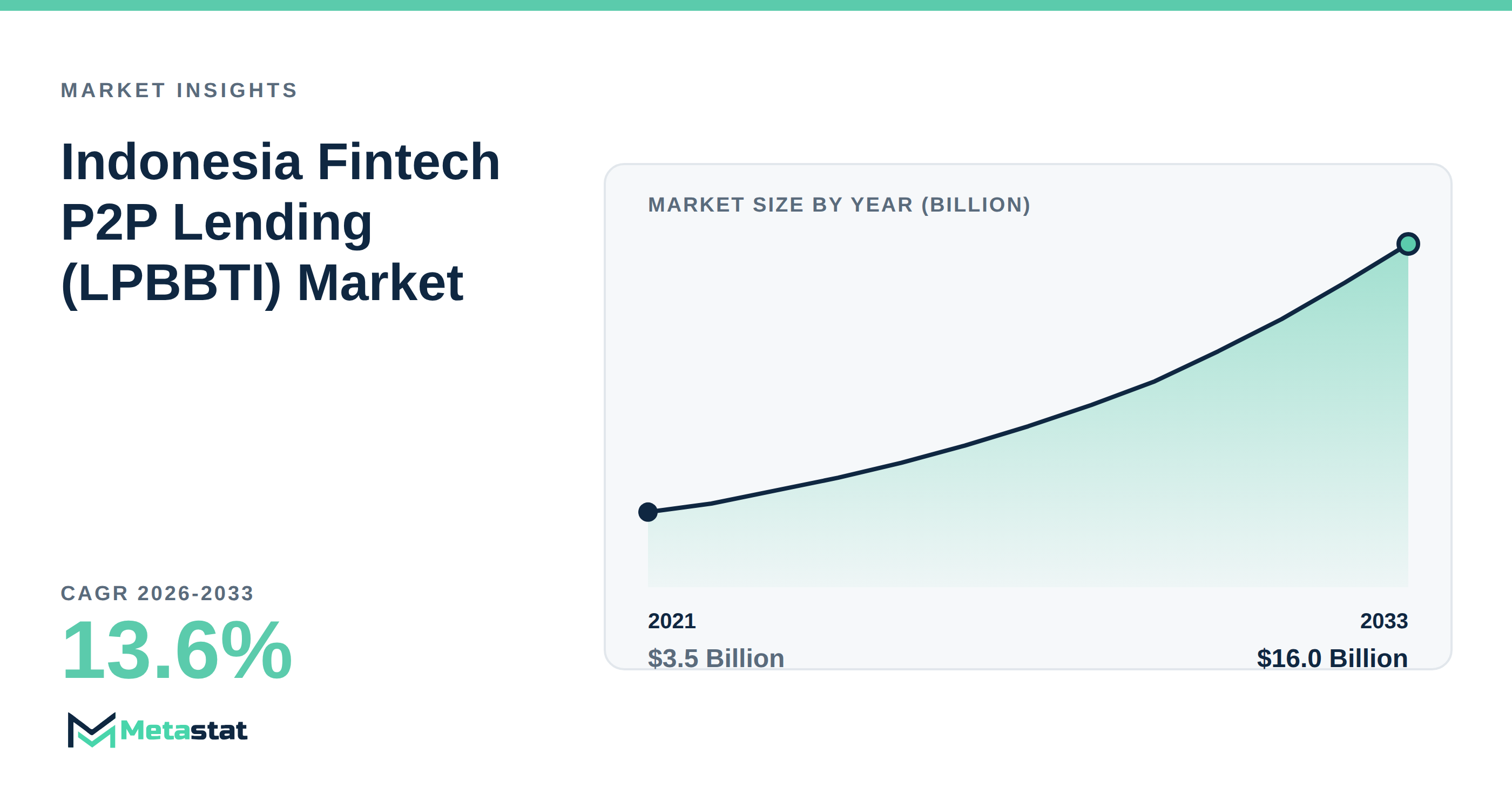
The Indonesia Fintech P2P Lending (LPBBTI) market is experiencing rapid shifts, influenced by a range of factors that are redefining how borrowers and lenders interact. While this market matures, stakeholders stay informed about the trends shaping its landscape to capitalize on new opportunities while navigating potential challenges.
1. Digital transformation enhances lending accessibility
The ongoing digital transformation significantly enhances the accessibility of financial services within the Indonesia Fintech P2P Lending (LPBBTI) market. An increase in mobile device usage, alongside improved internet access, allows a broader demographic to engage with digital lending platforms. This shift results in streamlined operations and reduced loan processing times, creating a more efficient lending ecosystem. The ability of fintech companies to adopt advanced technological solutions positions them favorably in this competitive environment, thereby supporting sustained market growth through 2033.
2. Demand surge from micro, small, and medium enterprises (MSMEs)
Micro, small, and medium enterprises (MSMEs) constitute a crucial segment in the Indonesia Fintech P2P Lending market. These businesses, which represent 25.8% of the market share, increasingly depend on P2P platforms for working capital financing. This trend highlights a shift towards alternative financing solutions, enabling MSMEs to access vital funds that support their operations. By catering to the financing needs of MSMEs, lenders tap into a growing customer base and drive entrepreneurial activity, thereby fostering economic development.
3. Consumer cash loans dominate the lending landscape
Consumer cash loans account for a significant 54.7% of the total lending in the Indonesia Fintech P2P Lending market. This dominance illustrates a strong consumer preference for quick and easily accessible financing solutions, particularly among individual and retail borrowers. The rise of mobile applications and web platforms because primary channels for obtaining loans correlates with changing consumer behavior, wherein technology increasingly facilitates financial decision-making. This trend presents an opportunity for lenders to craft customized products tailored to meet the urgent financial needs of these borrowers.
4. Regulatory compliance shapes operational frameworks
The regulatory environment is actively influencing the dynamics of the Indonesia Fintech P2P Lending market. Stricter compliance requirements impose challenges for fintech companies, often necessitating significant investments in compliance infrastructure. This diversion of resources impact innovation and operational efficiency, complicating the ability to scale within the market. Nonetheless, adherence to regulatory standards enhances consumer trust and establishes a stable framework for growth, because companies navigate these complexities to maintain competitive advantages.
5. Technological advancements transform credit assessment
Innovations in technology are revolutionizing how lenders assess creditworthiness within the Indonesia Fintech P2P Lending market. The integration of AI-driven credit scoring and alternative data underwriting methods allows financial institutions to evaluate borrowers beyond conventional credit metrics. This capability increases access to financing for underserved populations, promoting financial inclusion and a more diverse borrower base. By embracing these technologies, lenders enhance their risk management strategies and align their offerings with evolving market demands, fostering a more inclusive lending environment.
6. Embedded finance partnerships reshape customer engagement
Embedded finance partnerships are emerging because a significant trend within the Indonesia Fintech P2P Lending market, integrating lending solutions into existing platforms. This trend enhances customer engagement and streamlines borrowing processes by allowing consumers to access financial products directly within their preferred digital ecosystems. By leveraging these partnerships, lenders expand their reach and customer acquisition efforts, driving overall market growth. The efficacy of these integrated solutions emphasizes the importance of collaboration across sectors to meet consumer expectations and improve service delivery.
These trends underscore the ongoing transformation of the Indonesia Fintech P2P Lending (LPBBTI) market. Stakeholders who stay attuned to these developments will be better positioned to seize opportunities and navigate challenges in this rapidly changing landscape. The potential for continued growth remains robust because innovations and market dynamics unfold.
For a detailed assessment of these trends and future projections, refer to the full report, Indonesia Fintech P2P Lending (LPBBTI) Market.
Tags
About the Authors

LEAD ANALYST
Utkarsh Khirodkar is a Lead Market Research Analyst at MetaStat Insight, specializing in market intelligence, technology sector assessments, and competitive strategy.

PRINCIPAL CONSULTANT - ENTERPRISE AI & EMERGING TECHNOLOGIES
Banking & Finance · Electronics and Semiconductor · Energy and Power · Healthcare IT · Information & Technology · Professional Services
Vijay Gunti is a Principal Consultant at MetaStat Insight, bringing over two decades of experience across enterprise digital transformation, technology strategy, and intelligent systems.