
Explore the trends transforming the Real Estate Investment Management market and discover how they impact investment strategies and opportunities.
The Real Estate Investment Management market is undergoing significant transformation, influenced by various macroeconomic and industry-specific factors. Understanding these dynamics is essential for investors and stakeholders looking to capitalize on opportunities and navigate challenges effectively.
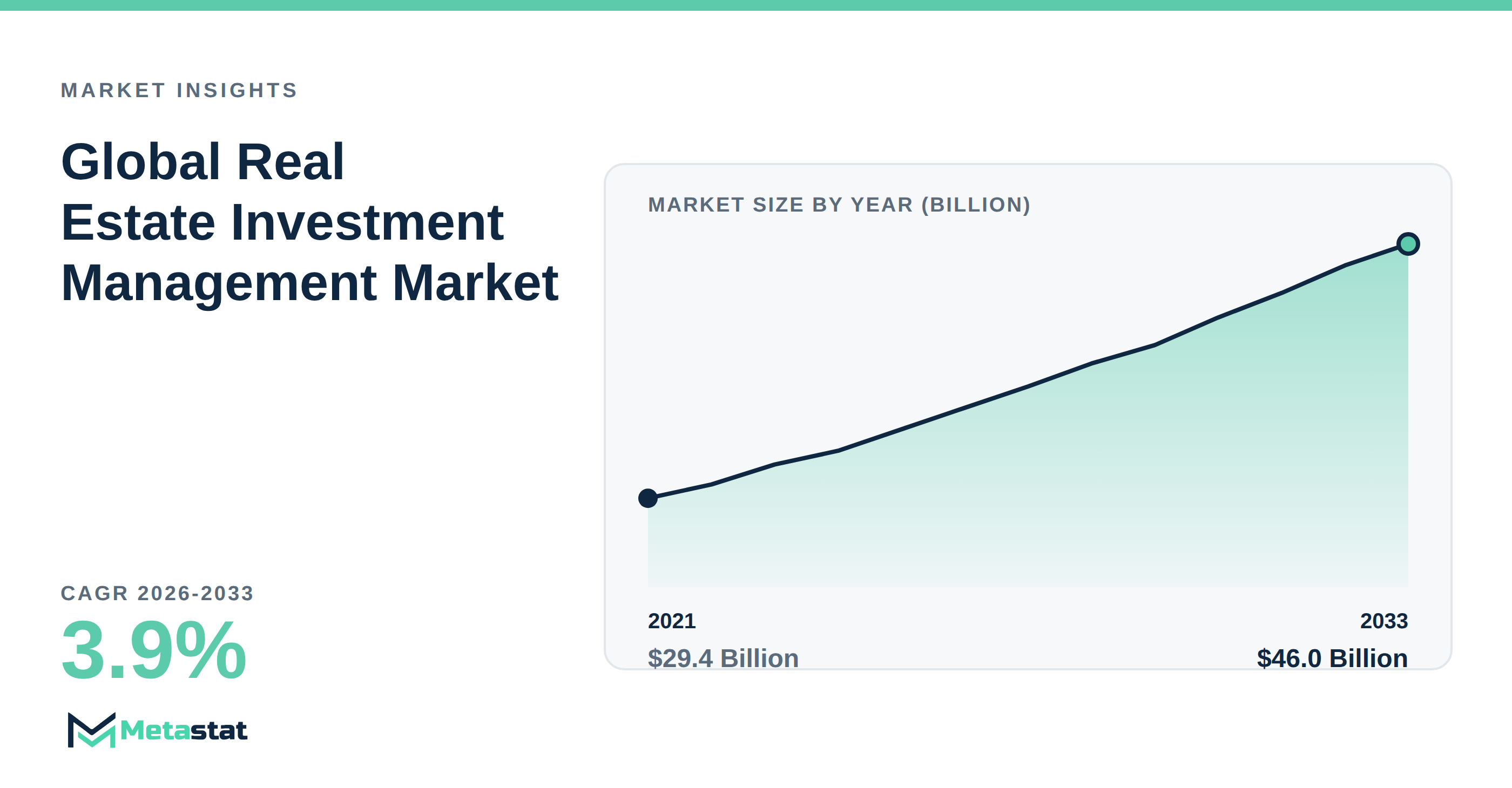
1. Institutional investments are on the rise
Increasing allocations by institutional investors indicate a robust interest in real estate, primarily driven by the asset class's resilience and potential for long-term returns. This trend has led to strategic rebalancing efforts, allowing investors to refine their portfolios to adapt to market fluctuations. Enhanced capital inflow across various property types contributes to market stability and depth. Ultimately, this shift describes a more competitive environment because firms prioritize demonstrating value to attract ongoing investment.
2. Shifts in cross-border capital flows
Significant shifts in cross-border capital flows highlight a growing appetite among foreign investors for North American and European markets. This trend emphasizes the need for diversified portfolios and stable returns amid geopolitical uncertainties. Competition among regions to attract foreign capital intensifies, prompting local markets to innovate and refine their investment strategies to appeal to international investors. Regional players increasingly underscore their stability and growth potential to maintain attractiveness.
3. Robust capital for new investments
Fundraising activities within the Real Estate Investment Management market are thriving, leading to substantial dry powder available for deployment. This capital accumulation enables firms to pursue appealing investments, especially in emerging sectors, enhancing overall competition within the market. With access to abundant capital, companies strategically launch new funds and execute acquisitions, thus bolstering growth prospects across the market.
4. Evolving capital allocation strategies
The current market landscape exhibits clear shifts in capital allocation preferences between equity and debt financing. Investors increasingly favor adaptable financing structures that align with their specific risk profiles and return expectations. This evolution modifies transaction dynamics and influences how investment firms approach potential deals. The market thus becomes characterized by a deeper understanding of risk and return, facilitating tailored investment strategies that better meet diverse investor objectives.
5. Competitive pressures in asset management
Competition in Asset Under Management (AUM) is intensifying, prompting firms to innovate and enhance operational efficiencies. A focus on performance metrics enables firms to attract new capital while solidifying their market presence. This competitive landscape emphasizes the necessity of benchmarking against peers, urging firms to elevate their service offerings and streamline operations. Ultimately, this growth in competition drives increased investor confidence in the capabilities of these firms.
6. Manager consolidation shapes the market
Trends in manager consolidation are markedly shaping the Real Estate Investment Management market. Firms increasingly merge or acquire others to augment their capabilities, leveraging economies of scale and improving service delivery. This consolidation leads not only to increased market share but fosters innovation, because larger firms pool resources to address evolving investor demands. The impact on the market includes an enhanced competitive environment, offering investors a wider range of options and potentially elevating performance.
Overall, the dynamics reshaping the Real Estate Investment Management market present significant opportunities and challenges for stakeholders. Understanding these trends helps investors align their strategies with market growth potential. For further insights and detailed analysis, refer to the Global Real Estate Investment Management Market.
Tags
About the Authors

LEAD ANALYST
Utkarsh Khirodkar is a Lead Market Research Analyst at MetaStat Insight, specializing in market intelligence, technology sector assessments, and competitive strategy.

PRINCIPAL CONSULTANT - ENTERPRISE AI & EMERGING TECHNOLOGIES
Banking & Finance · Electronics and Semiconductor · Energy and Power · Healthcare IT · Information & Technology · Professional Services
Vijay Gunti is a Principal Consultant at MetaStat Insight, bringing over two decades of experience across enterprise digital transformation, technology strategy, and intelligent systems.