
The Treasury Management System (TMS) market is growing rapidly, with several factors influencing cost structures. Explore critical elements that impact pricing strategies.
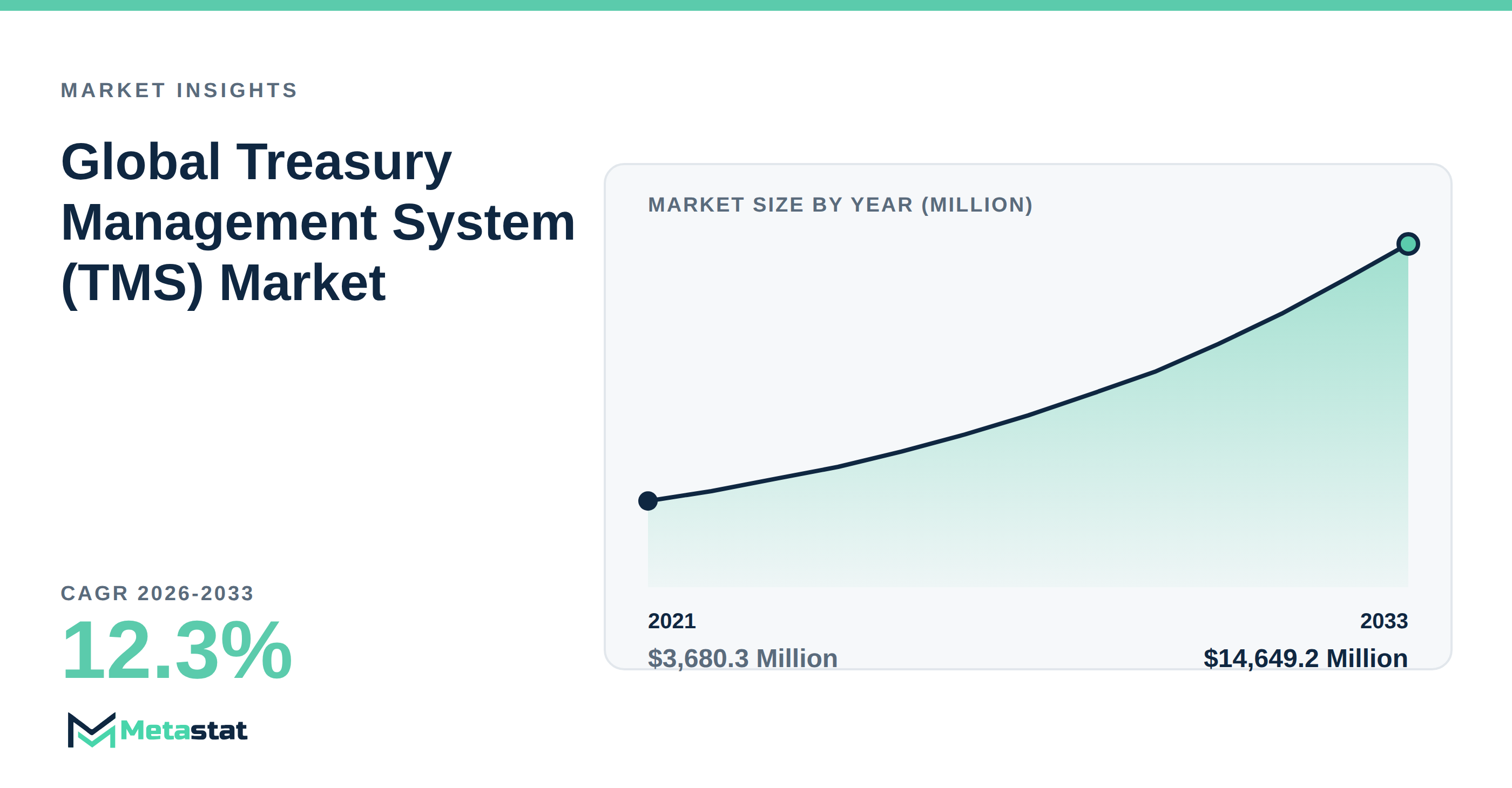
The Treasury Management System (TMS) market is evolving rapidly, with its value projected to increase from USD 5,789.5 million in 2025 to USD 14,649.2 million by 2033. Numerous factors influence the costs associated with TMS solutions, shaping how organizations manage their treasury operations.
1. Technological integration drives costs
Technological integration plays a significant role in determining TMS costs. Organizations are adopting advanced tools, including artificial intelligence and machine learning, to automate processes and enhance decision-making. While these technologies improve efficiency, they come with initial investments and ongoing maintenance that increase total costs. Companies assess the balance between these upfront investments in modern solutions and the long-term savings resulting from improved operational performance.
2. Evolving regulatory compliance requirements
Regulatory compliance presents a notable challenge within the TMS market. While financial regulations evolve, companies face mounting pressure to invest in systems that ensure compliance. These expenditures divert resources from other strategic initiatives, ultimately impacting overall treasury costs. Organizations factor in compliance-related expenses when budgeting for TMS solutions, driven by the necessity of meeting regulatory standards for operational integrity.
3. Vendor competition and pricing strategies
The competitive environment in the Treasury Management System (TMS) market significantly influences pricing strategies. Organizations encounter various vendors, each providing different functionalities. Increased competition encourages innovation, leading vendors to enhance their offerings, though this dynamic results in pricing pressure. Organizations carefully evaluate their options and negotiate favorable terms based on their unique requirements.
4. Cloud-based solutions and cost efficiency
The shift towards cloud-based TMS solutions has made cost efficiency a central consideration. SaaS offerings reduce infrastructure costs while providing scalability, appealing to businesses of all sizes. Transitioning to cloud solutions not only lowers capital expenditures but allows organizations to adopt a flexible pay-as-you-go model that improves cash flow management. Companies utilizing cloud-based models weigh these cost benefits against potential long-term commitments.
5. Complexity in implementation and migration
Implementing and migrating to new TMS solutions introduces challenges that add to overall costs. Organizations often face complexities requiring careful planning and execution. These complexities lead to unexpected expenses during the transition phase, affecting the financial outlook of TMS integration. Businesses prioritize adequate preparation for these challenges, because smooth implementation is essential for realizing the benefits of new treasury systems.
6. Demand for AI-driven solutions
Growing demand for AI-driven treasury management solutions presents both opportunities and cost implications. Organizations are increasingly focusing on capabilities that enhance cash management efficiency and predictive cash forecasting. Although these advanced solutions lead to improved operational performance, their implementation often involves higher costs related to technology integration and employee training. Companies evaluate the potential return on investment when considering enhancements in their TMS through AI-driven features.
7. Impact of financial risk management
Organizations dealing with financial risks increasingly rely on sophisticated treasury management solutions. The need for effective hedging strategies in volatile markets drives demand for tailored financial risk management tools within the TMS market. Investments in these specialized tools add to overall costs, but they empower organizations to safeguard against market fluctuations. Companies carefully consider the costs of implementing these risk management solutions against the potential benefits they offer.
The costs associated with the Treasury Management System (TMS) market are shaped by various factors, including technological integration, regulatory requirements, vendor dynamics, implementation complexities, and financial risk management. Understanding these elements enables organizations to make informed decisions and optimize their treasury operations for improved efficiency and effectiveness. For further details, explore the Global Treasury Management System (TMS) Market.
Tags
About the Authors

LEAD ANALYST
Utkarsh Khirodkar is a Lead Market Research Analyst at MetaStat Insight, specializing in market intelligence, technology sector assessments, and competitive strategy.

PRINCIPAL CONSULTANT - ENTERPRISE AI & EMERGING TECHNOLOGIES
Banking & Finance · Electronics and Semiconductor · Energy and Power · Healthcare IT · Information & Technology · Professional Services
Vijay Gunti is a Principal Consultant at MetaStat Insight, bringing over two decades of experience across enterprise digital transformation, technology strategy, and intelligent systems.