
LEAD ANALYST
Utkarsh Khirodkar is a Lead Market Research Analyst at MetaStat Insight, specializing in market intelligence, technology sector assessments, and competitive strategy.

Global Treasury Management System (TMS) Market Size, Share, By Solution (Cash & Liquidity Management, Cash Flow Forecasting & Liquidity Planning, Payments Management, Banking Management & Connectivity, Debt & Investment Management, Financial Risk & Hedging Management, In-House Banking & Intercompany Management, Treasury Accounting & Reconciliation, and Others), By Deployment Model (SaaS / Multi-Tenant Cloud, Hosted / Single-Tenant Cloud, and On-Premises), By Organization Size (Small Enterprises, Medium-Sized Enterprises, and Large Enterprises), By End-Use Industry (Manufacturing, Retail & Consumer Goods, Technology & Telecommunications, Healthcare & Life Sciences, Energy & Utilities, Transportation & Logistics, Real Estate & Construction, Financial Services & Investment Management, Professional & Business Services, and Others), Industry Analysis, Growth, Trends, and Forecast, 2026-2033
Report ID
MSI-5368
Published
September, 2026
Pages
304 Pages
Format
Historical
Base year
Forecast
Forecast period
Report Details
Market Valuation: Valued at $5,789.5 Million in 2025, projected to reach $14,649.2 Million by 2033 at a 12.3% CAGR.
Dominant Segment: The Cash & Liquidity Management segment leads the market, driven by the increasing need for organizations to optimize cash flow and manage liquidity effectively.
Geographic Lead: North America is the leading region in TMS adoption, supported by strong trends in treasury technology and a favorable investment climate.
What's Inside: The report provides a comprehensive analysis of the competitive landscape, market segmentation, and growth forecasts from 2026 to 2033, detailing key drivers and challenges.
Emerging Trends: Technological innovations, particularly in AI and machine learning, are enhancing cash management efficiency and driving market growth.
Regulatory Challenges: Evolving financial regulations present significant obstacles, requiring substantial investments in compliance systems and processes.
Choose Your License
Global Treasury Management System (TMS) Market
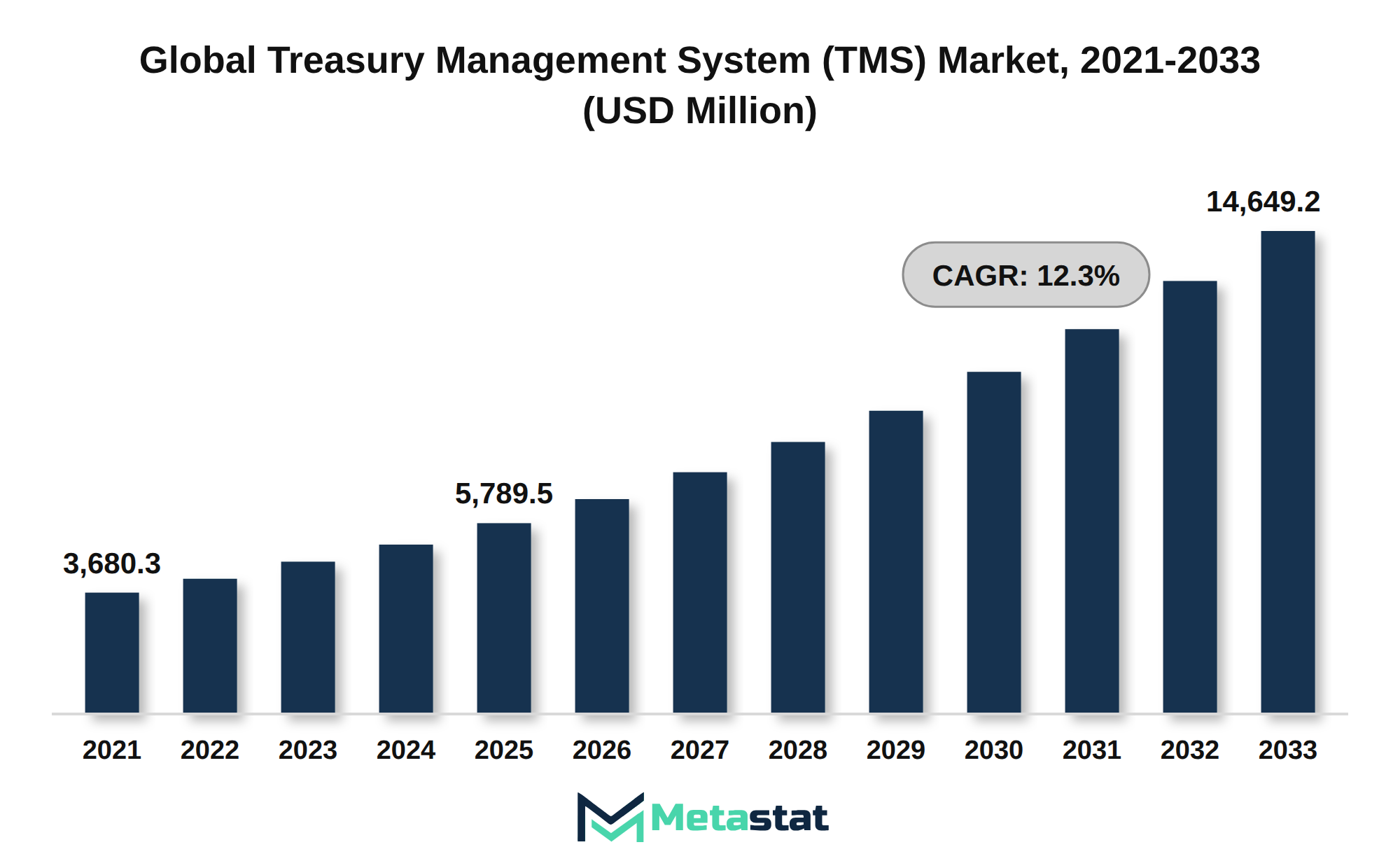
The global Treasury Management System (TMS) market was valued at USD 5,789.5 million in 2025 and is projected to reach USD 14,649.2 million by 2033, growing at a CAGR of 12.3% over the forecast period.
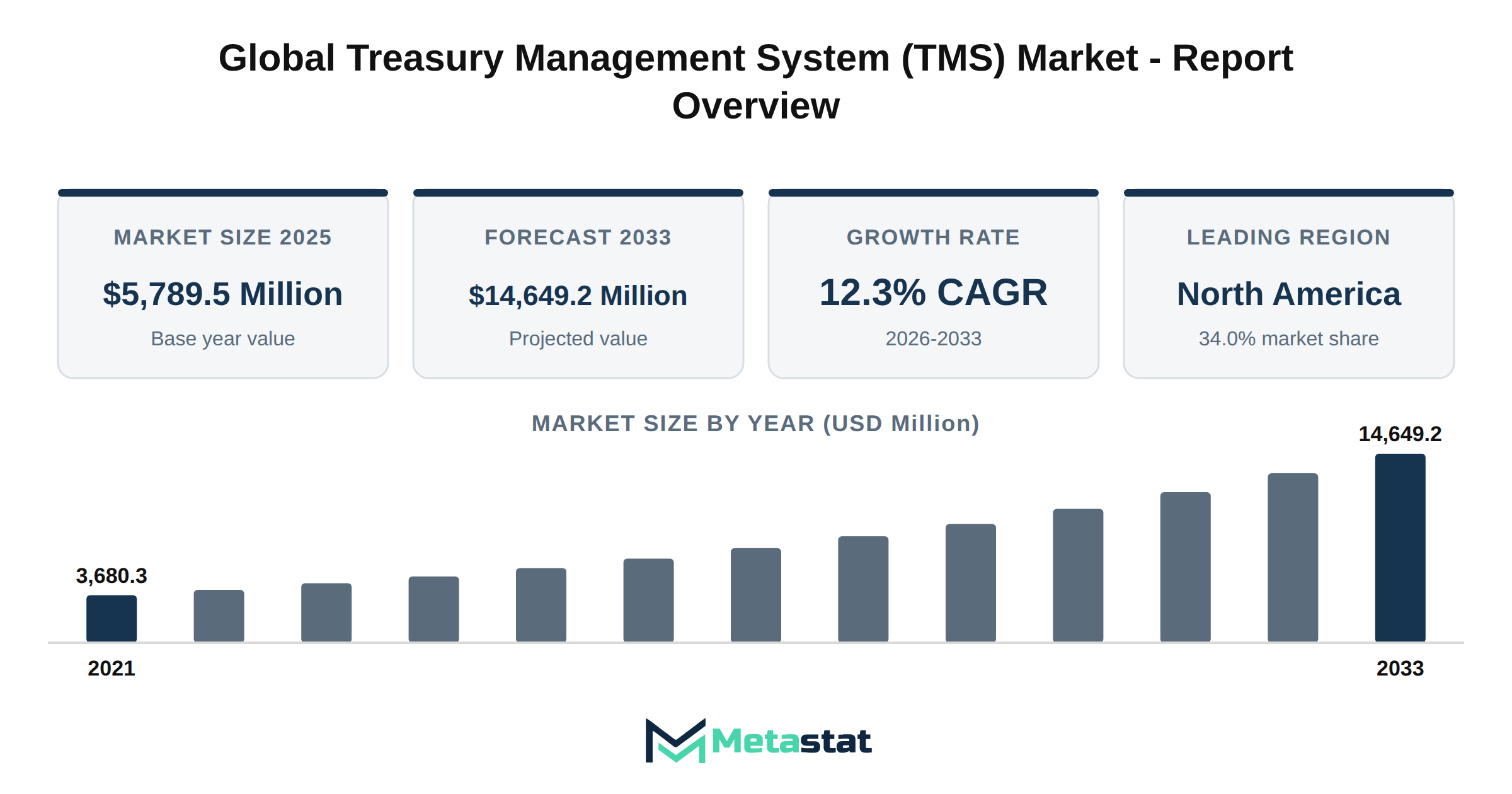
The Treasury Management System (TMS) market generated a value of USD 5,789.5 million in 2025, with projections indicating growth to USD 14,649.2 million by 2033. This represents a compound annual growth rate (CAGR) of 12.3% during the forecast period from 2026 to 2033. Historical data shows the market starting at USD 3,680.3 million in 2021 and reaching USD 5,138.5 million by 2024.
Several factors drive the expansion of the market. Increasing demand for AI-driven treasury management and predictive cash forecasting enhances operational efficiency and decision-making. Organizations prioritize cloud-based TMS adoption, leading to a transformation in SaaS treasury solutions. This shift enables real-time cash visibility and liquidity optimization, allowing businesses to manage their finances more effectively.
API-driven bank connectivity enhances treasury integration, streamlining processes and improving communication between financial institutions and corporate treasuries. Automation in treasury operations, including straight-through processing and digital payments, significantly improves transaction speed and accuracy. Companies focus on financial risk management and hedging automation to mitigate potential losses and secure their financial positions.
Cybersecurity remains a priority, with strict payment fraud prevention measures implemented across the market. The adoption of ISO 20022 enhances treasury payment modernization efforts, improving communication and transaction processing. In-house banking and centralized liquidity management strategies drive efficiency and control over cash flow.
Integration with ERP systems creates connected treasury technology ecosystems that improve data sharing and analysis. The modernization of TMS platforms replaces legacy systems, further supporting organizational growth and agility. Corporate demand for cash flow forecasting and liquidity planning remains strong, emphasizing the need for robust treasury solutions.
Competitive dynamics in the TMS vendor landscape intensify, with increased platform consolidation among key players. Mid-market adoption of treasury management systems expands, driven by businesses of all sizes recognizing the value of these solutions in enhancing financial operations. Treasury analytics and data-driven financial decision-making tools become essential for effective management.
Cross-border treasury management and multi-currency operations present significant growth opportunities, particularly in regions like North America and Europe. These areas exhibit strong trends in treasury technology adoption, enabling companies to navigate complex financial landscapes. The Asia Pacific region is poised for growth in TMS adoption, driven by evolving financial markets and increasing demand for advanced treasury solutions.
The future of agentic AI in corporate treasury operations indicates a shift towards more intelligent systems capable of autonomous decision-making. AI-driven and agentic treasury automation enhances efficiency and reduces manual intervention. TMS pricing strategies evolve alongside total cost of ownership considerations, impacting procurement decisions.
Implementation and migration complexities challenge organizations when adopting new treasury management systems. Robust cybersecurity protocols and payment fraud controls are essential in ensuring secure financial transactions. Competitive vendor capability benchmarking becomes vital for organizations seeking the best solutions to meet their treasury management needs.
AI-driven treasury management and predictive cash forecasting are increasingly becoming crucial for organizations seeking to enhance cash management efficiency. This trend results from advancements in artificial intelligence that facilitate real-time data analysis and forecasting accuracy, allowing businesses to optimize their liquidity management strategies.
Cloud-based TMS adoption is transforming the treasury landscape, with a significant shift towards Software because a Service (SaaS) models. This transition enables organizations to leverage flexible deployment options, reduce infrastructure costs, and enhance scalability. The market benefits from this trend, because enterprises prioritize agility and responsiveness in their treasury operations.
Real-time cash visibility and liquidity optimization represent vital components of modern treasury operations. Companies increasingly implement solutions that provide instant access to cash positions across various accounts and currencies, allowing treasury teams to make informed financial decisions rapidly.
API-driven bank connectivity enhances treasury integration, facilitating communication between treasury systems and financial institutions. This integration streamlines processes, reduces manual interventions, and supports real-time data exchanges, ultimately driving operational efficiency in the market.
Treasury automation and straight-through processing represent significant advancements in reducing operational complexities. By automating routine tasks, organizations achieve faster transaction processing times and minimize errors, contributing to enhanced cash management capabilities.
Digital payments and real-time treasury operations are gaining momentum because businesses increasingly adopt innovative payment technologies. These developments enable enhanced transaction visibility and faster settlement times, which positively impact overall liquidity management.
Financial risk management and hedging automation play a critical role in safeguarding organizations against market volatility. Advanced treasury solutions facilitate automated risk assessments and hedging strategies, allowing businesses to mitigate potential financial impacts and stabilize cash flows.
Treasury cybersecurity and payment fraud prevention are top priorities for organizations aiming to protect sensitive financial data. The market emphasizes adopting robust security measures, including multi-factor authentication and encryption technologies, to safeguard against cyber threats.
ISO 20022 adoption signifies a shift towards modernized treasury payment systems. This standard enhances transaction processing efficiency, enabling organizations to streamline their financial messaging and improve cross-border payment capabilities.
In-house banking and centralized liquidity management strategies enable organizations to optimize cash utilization across their subsidiaries. By consolidating cash resources, companies enhance their financial flexibility and reduce external borrowing costs.
ERP integration and connected treasury technology ecosystems enhance operational efficiency by aligning treasury functions with broader enterprise processes. This integration allows for improved data sharing and reporting capabilities, leading to more informed financial decision-making.
Treasury management system modernization is critical because organizations increasingly replace legacy platforms with advanced solutions. This shift enables businesses to leverage the latest technologies and functionalities, enhancing overall treasury performance.
Corporate demand for cash flow forecasting and liquidity planning drives innovation within the treasury sector. Organizations seek accurate forecasting tools to anticipate cash needs, enabling proactive liquidity management and strategic financial planning.
TMS vendor competition and platform consolidation are shaping the market, with key players striving to differentiate their offerings. This competitive landscape encourages innovation, leading to improved functionalities and enhanced customer experiences.
Mid-market adoption of treasury management systems continues to expand, because smaller enterprises recognize the benefits of streamlined treasury operations. Increased accessibility to affordable solutions contributes to this growth, allowing mid-sized organizations to enhance their cash management capabilities.
Treasury analytics and data-driven financial decision-making are becoming essential for effective treasury management. Organizations increasingly leverage analytics tools to gain insights into cash flows, enabling data-informed strategic initiatives.
Cross-border treasury management and multi-currency operations are critical for organizations operating globally. The market focuses on solutions that facilitate efficient currency management, helping businesses navigate foreign exchange risks and optimize global cash positions.
Northern American and European treasury technology adoption trends reflect a strong inclination towards advanced treasury solutions. Organizations in these regions prioritize investments in technology to enhance operational efficiency and ensure compliance with evolving regulatory requirements.
Asia Pacific presents significant growth opportunities for treasury management systems, driven by the region's expanding economy and increasing financial sophistication. Organizations in this region are actively seeking advanced treasury solutions to support their evolving cash management needs.
The future of agentic AI in corporate treasury operations indicates a shift towards more autonomous treasury functions. This evolution promises to enhance decision-making capabilities and operational efficiency, supporting organizations in navigating complex financial landscapes.
AI-driven and agentic treasury automation will transform traditional treasury functions, allowing organizations to leverage intelligent systems for operational efficiency and strategic financial management.
TMS pricing and total cost of ownership considerations influence purchasing decisions in the market. Organizations assess not only initial investment but long-term operational costs to determine the most cost-effective solutions.
Implementation and migration complexity remain challenges for organizations transitioning to new treasury management systems. Businesses require careful planning and execution to ensure smooth transitions and minimize disruptions to existing operations.
Treasury cybersecurity and payment fraud controls are critical, with organizations prioritizing investments in advanced security technologies to safeguard financial operations. This focus ensures resilience against evolving cyber threats.
Competitive vendor capability benchmarking provides organizations with insights into the strengths and weaknesses of various TMS providers. This analysis enables informed decision-making when selecting treasury solutions that align with organizational goals.
The Treasury Management System (TMS) market experiences substantial growth driven by favorable capital investment environments. Low interest rates and GDP growth stimulate business investments, leading to increased demand for comprehensive treasury management solutions. Organizations seek to optimize cash flow, manage liquidity effectively, and enhance financial forecasting accuracy. These components are critical for a robust TMS.
This growing focus on capital efficiency results from organizations striving to enhance operational productivity and streamline financial processes. Enhanced cash and liquidity management solutions provide businesses with the tools required to navigate complex financial landscapes. Companies increasingly leverage treasury management systems to reduce operational costs and improve decision-making through advanced analytics and forecasting capabilities.
Investment in digital transformation further fuels this trend, owing to organizations recognizing the need for integrating innovative technologies into their treasury operations. The TMS market benefits from the growing adoption of automation, artificial intelligence, and software advancements, which enhance the capabilities of treasury functions. Consequently, stakeholders view treasury management systems because essential investments that contribute to financial stability and growth.
Technological integration serves because a significant growth driver for the Treasury Management System (TMS) market. The increasing need for automation and digitization of legacy processes enhances operational efficiency, enabling organizations to streamline cash management and enhance forecasting capabilities. Businesses adopt advanced technologies including artificial intelligence and machine learning to facilitate data analysis and improve decision-making. These innovations enable organizations to optimize resource allocation and respond proactively to market changes.
Investment in technological solutions aligns with the growing demand for cost-efficiency initiatives. Companies prioritize digital transformation to reduce overhead costs, influencing their purchasing decisions regarding treasury management systems. The TMS market benefits from this trend, because enterprises seek solutions that offer integrated platforms to manage cash flows and financial risks effectively. The overall impact of technological integration strengthens competitive positioning and drives growth within the market.
In the Treasury Management System (TMS) market, regulatory challenges present significant obstacles that hinder market growth. Increasing compliance hurdles, driven by evolving financial regulations and legal mandates, impose additional burdens on organizations. These requirements necessitate substantial investments in systems and processes, diverting resources from strategic initiatives. Macroeconomic headwinds, including inflationary pressures, create an environment of uncertainty affecting capital expenditure decisions across industries.
Supply chain disruptions, stemming from geopolitical instability and resource scarcity, further limit the operational capabilities of organizations implementing TMS solutions. The lack of reliable infrastructure and connectivity deficits in certain regions restrict the ability of firms to implement advanced treasury solutions efficiently. Deployment bottlenecks and difficulties in integrating skilled labor into treasury functions constrain the effective use of technology, leading to potential gaps in performance.
The evolving landscape of data security vulnerabilities and privacy concerns presents challenges for the market. Concerns regarding intellectual property theft and the handling of sensitive financial data deter organizations from adopting enhanced treasury solutions. Cultural barriers and regional adoption resistors complicate the implementation of TMS, hindering the ability of businesses to fully realize the benefits of these systems.
Market fragmentation, characterized by a variety of solutions, contributes to confusion among potential buyers, limiting informed decision-making. Slowing downstream demand and industry cycle maturation create an environment where growth opportunities become increasingly scarce. These factors combine to form a complex ecosystem that imposes constraints on the Treasury Management System (TMS) market, ultimately affecting its trajectory and potential for expansion.
Geopolitical fragmentation significantly impacts the Treasury Management System (TMS) market by creating uncertainties in trade dynamics and economic policies. This fragmentation leads to evolving trade deficits and tariff friction, affecting cross-border transactions and procurement strategies. Organizations face increased compliance overheads driven by inconsistent regulatory environments across regions, complicating financial operations and risk management.
Technological disruptions introduce complex integration challenges within organizations adapting to diverse systems and processes. The lack of interoperability between various treasury solutions creates friction, hindering efficiency. Logistical disruptions and supply chain instability, stemming from geopolitical tensions, result in unpredictable input costs and component availability, further stressing operational budgets.
The market experiences margin pressures due to rising input costs and pricing compression. Heightened competition intensifies the need for organizations to streamline operations, thereby exerting additional pressure on profit margins. Organizations in the Treasury Management System (TMS) market confront workforce skill gaps, complicating the incorporation of advanced technologies. Talent retention pressures add to the challenge, driven by skilled professionals increasingly seeking opportunities in emerging sectors.
Environmental lifecycle footprints and decarbonization mandates impose further demands on organizations, necessitating investments in sustainable practices. These sustainability demands contribute to rising operational costs, complicating financial planning and cash flow management. Infrastructure gaps and retrofitting barriers hinder the adoption of new technologies, creating implementation bottlenecks that slow market growth.
Cybersecurity risks and data vulnerabilities pose significant threats to organizations operating in the TMS market. The increasing incidence of cyberattacks on financial systems highlights the urgent need for robust security measures, raising operational costs and complicating compliance efforts. Changing downstream demands, alongside market saturation and substitution pressures, challenge organizations to innovate while managing existing operations effectively.
The Treasury Management System (TMS) market experiences significant opportunities propelled by emerging technological innovations. Advances in artificial intelligence, machine learning, and data analytics enhance the ability of organizations to manage cash flow, liquidity, and financial risks more effectively. These technologies provide real-time insights, allowing businesses to make informed decisions that optimize their financial strategies.
Digital transformation initiatives contribute to market growth by streamlining processes and improving operational efficiency. Companies increasingly adopt cloud-based solutions, enabling easy access to financial data and enhancing collaboration across departments. This shift supports the transition to more agile treasury functions, meeting the demands of a dynamic business environment.
Geographical expansion of financial services further creates opportunities for the TMS market. Emerging markets, particularly in Asia Pacific and South America, exhibit rising demand for efficient treasury solutions driven by organizations pursuing scalable financial management systems. This growth reflects a broader trend of businesses seeking integrated treasury operations to support international trade and investment activities.
In addition, strategic consolidation within the industry facilitates market penetration and strengthens competitive positioning. Mergers and acquisitions among technology providers allow for the development of comprehensive offerings that meet diverse client needs. This trend encourages innovation and enhances the capabilities of existing solutions, driving further adoption of treasury management systems.
The convergence of technological advancements, geographical expansion, and strategic industry consolidation presents substantial growth opportunities within the Treasury Management System (TMS) market. These factors collectively highlight the importance of efficient treasury management, supporting organizations in navigating the complexities of today's financial landscape.
The Global Treasury Management System (TMS) market is segmented based on Solution, Deployment Model, Organization Size, and End-Use Industry.
Valued at USD 1,463.5 million in 2026, the Cash & Liquidity Management segment is projected to reach USD 3,146.6 million by 2033, at a CAGR of 11.6% during the forecast period. Primary demand drivers stem from the increasing need for organizations to optimize cash flow and manage liquidity effectively. Companies across various sectors are investing in advanced technologies to enhance their treasury capabilities, leading to growing adoption. Segment expansion catalysts include rising operational complexities and the shift towards digital financial solutions, which enable real-time cash management and forecasting.
Technological maturation enhances the functionality of legacy systems and drives the development of next-gen upgrades. The evolution of products within this segment aligns with changing end-use dynamics, driven by the requirement for businesses to adopt more agile and intuitive tools for cash management. Consumption shifts towards integrated solutions highlight the demand for effective connectivity between banking systems and treasury operations, allowing for improved decision-making.
Regulatory compliance standards influence the market, resulting from organizations seeking solutions that streamline adherence to evolving financial regulations. Consequently, cost structures and pricing volatility are under scrutiny, with firms focusing on maintaining margins while investing in technology upgrades. Strategic opportunity windows exist for providers who offer innovative solutions that address these challenges, further supporting market growth.
Significant growth in the Cash Flow Forecasting & Liquidity Planning segment reflects an increasing requirement for accurate financial forecasting among various industries. The growing complexities of cash management and liquidity planning drive organizations to adopt more sophisticated TMS solutions. This growing demand stems from the need for real-time data analytics, enabling businesses to optimize cash flow and enhance liquidity management strategies.
Investment in advanced technologies, including artificial intelligence and machine learning, acts because a catalyst for segment expansion. These technologies allow organizations to improve forecasting accuracy and automate liquidity planning processes. The focus on adopting next-generation upgrades ensures that companies remain competitive and efficient, fulfilling the need for strategic financial management. Demand in sectors including manufacturing and retail fuels the adoption of these technologies, driving further growth.
Regulatory compliance standards significantly influence the segment, because organizations seek to align cash management practices with evolving regulations. Compliance necessitates robust systems capable of providing detailed reporting and transparency. Consequently, financial institutions and enterprises prioritize TMS solutions that offer comprehensive compliance features, impacting their purchasing decisions.
The Cash Flow Forecasting & Liquidity Planning segment is estimated to reach USD 2,250.1 million by 2033, at a CAGR of 14.1% during the forecast period. Strategic opportunity windows emerge because businesses enhance their capabilities, ensuring they respond effectively to market fluctuations. Organizations that invest in these solutions position themselves to streamline operations and improve overall financial performance.
With a projected value of USD 1,861.9 million by 2033, the Payments Management segment within the Treasury Management System (TMS) market experiences an upward trajectory driven by several primary demand factors. Increased transaction volumes alongside the growing complexity of payment processes increase the necessity for effective payment solutions that improve efficiency and security. Organizations actively seek to optimize cash flow and minimize risks associated with payment processing, propelling the demand for advanced payments management systems.
Technological maturation significantly influences the segment's evolution. Innovations in payment technologies, including real-time payment processing and automation, impact industry adoption. Organizations benefit from adopting these next-generation upgrades, which streamline payment workflows, reduce processing times, and enhance cash visibility. Consequently, the Payments Management segment experiences continuous expansion, aligning with broader trends in digital transformation across various industries.
End-use dynamics further contribute to the segment's growth, particularly among industries including manufacturing and retail. These sectors require efficient payment solutions to manage complex supply chains and customer transactions. The demand for integrated systems that provide real-time insights and facilitate effective reconciliation processes drives organizations to invest in sophisticated payments management capabilities. This trend reflects a broader consumption shift toward solutions that provide enhanced transparency and control over financial operations.
Regulatory compliance standards and evolving policy frameworks impose additional pressures on organizations to adopt modern payment systems. Compliance with financial regulations necessitates advanced reporting and monitoring features, which many legacy systems cannot adequately provide. The market's response includes the development of solutions that meet regulatory requirements while mitigating risks associated with financial transactions.
Overall, the Payments Management segment is positioned for significant growth within the Treasury Management System (TMS) market. Continued investments in technology, coupled with the ongoing demand for streamlined financial processes, underline the segment's strategic importance. Organizations that prioritize payments management capabilities achieve operational improvements and maintain a competitive edge in an increasingly dynamic financial environment.
The demand for effective Banking Management & Connectivity solutions drives growth within the Treasury Management System (TMS) market. Financial institutions increasingly prioritize integration with banking services, enhancing operational efficiency and responsiveness to market changes. The projected growth rate of 13.5% CAGR during the forecast period highlights the significance of this segment. Organizations strive for improved connectivity to streamline transactions, manage liquidity, and optimize cash flows.
The evolution of digital banking technologies significantly influences segment expansion. Innovations including APIs and cloud-based solutions provide the necessary infrastructure for enhanced connectivity between banking systems and treasury functions. This technological maturation supports the increasing adoption of Banking Management & Connectivity, enabling businesses to adapt to evolving regulatory requirements and consumer preferences.
Enterprises across various sectors recognize the importance of effective banking management in achieving strategic financial objectives. The segment's growth aligns with heightened demand for real-time data analytics and reporting capabilities, allowing organizations to make informed decisions. While the market evolves, the integration of advanced technologies facilitates a shift towards more proactive treasury management practices.
Investment in Banking Management & Connectivity solutions signifies a commitment to improving operational resilience. Organizations focusing on this segment benefit from cost efficiencies, reduced risks, and streamlined compliance processes. These advantages contribute to the overall growth of the Treasury Management System (TMS) market, positioning companies to capitalize on emerging opportunities in an increasingly competitive financial environment.
Recent developments in the Debt & Investment Management segment of the Treasury Management System (TMS) market highlight a growing focus on risk management and investment optimization. Companies prioritize the integration of advanced analytics and artificial intelligence to enhance decision-making capabilities regarding financial assets. Adoption of these technologies results from the pressing need for improved efficiency and transparency in managing investments.
Market participants experience notable shifts in end-use dynamics, particularly from sectors including manufacturing and retail, which demand tailored solutions to align with their investment strategies. Regulatory compliance standards continue to influence product offerings, compelling organizations to adopt systems that adhere to evolving requirements while maintaining operational flexibility.
Pricing volatility emerges because a significant challenge, driven by fluctuations in interest rates and market conditions. This aspect places pressure on margins, necessitating continuous innovation and adaptation of services within the segment. Strategic opportunity windows arise from the increasing complexity of investment landscapes, prompting organizations to seek comprehensive solutions that provide deeper insights into their portfolios.
Supply chain resilience acts because a vital consideration, with firms assessing their capabilities to manage disruptions effectively. This factor influences overall demand for investment management solutions, leading to an emphasis on integrating robust risk assessment frameworks. Technological obsolescence presents another challenge, because outdated systems hinder organizations from realizing the full potential of their investment strategies.
Investment in next-generation upgrades remains essential for firms aiming to enhance their competitive position. The focus on product evolution drives the development of more sophisticated tools that facilitate better decision-making processes. This upward trend indicates a trajectory of growth within the Debt & Investment Management segment, with organizations increasingly recognizing the importance of advanced treasury management solutions.
Growing concerns over financial risks and the need for effective hedging strategies drive interest in Financial Risk & Hedging Management within the Treasury Management System (TMS) market. Organizations face increasing volatility in global markets, prompting a shift towards advanced risk management solutions that mitigate potential losses. In this context, businesses adopt sophisticated tools that provide insights into exposure levels and facilitate proactive decision-making.
Industries including manufacturing and technology increasingly seek to enhance their financial risk management frameworks. This trend reflects a broader recognition of the importance of securing financial assets against market fluctuations. Financial Risk & Hedging Management solutions evolve to incorporate innovative technologies, including artificial intelligence and machine learning, enabling organizations to analyze data more effectively and make informed decisions.
Regulatory compliance plays a critical role in shaping the Financial Risk & Hedging Management segment. Organizations navigate complex regulations, prompting investments in compliant solutions that streamline reporting and risk assessment processes. These requirements create a demand for systems that not only manage risk but ensure adherence to evolving standards, enhancing overall operational efficiency.
The emphasis on cost control and margin preservation influences the segment's dynamics. Businesses explore options that optimize risk management expenses while maximizing the effectiveness of hedging strategies. Consequently, investments in Financial Risk & Hedging Management solutions are viewed because essential for maintaining competitive advantage in an increasingly uncertain economic landscape.
Overall, the segment experiences steady growth because organizations prioritize financial resilience. The drive for effective risk management strengthens the demand for tailored solutions that address specific organizational needs. While organizations continue to adapt to market changes, the Financial Risk & Hedging Management segment within the Treasury Management System (TMS) market holds substantial potential for further development and investment.
Integration of in-house banking and intercompany management solutions drives efficiency and financial control within organizations. This segment of the Treasury Management System (TMS) market addresses the complexities of managing internal cash flows and optimizing capital allocation across business units. Companies invest in these solutions to streamline operations and enhance visibility into liquidity positions across their global networks.
The rise of digital banking technologies significantly influences adoption rates, driven by organizations seeking to leverage advanced analytics and automation to improve decision-making and reduce operational risks. Increased focus on regulatory compliance increases demand for solutions that offer robust reporting capabilities and meet stringent industry standards. While organizations evolve, upgrading to next-generation platforms enhances functionality, enabling more sophisticated cash management strategies.
Implementation of in-house banking solutions transforms intercompany transactions, allowing businesses to centralize their financial operations. This transformation improves cash management and reduces transaction costs while mitigating the risks associated with foreign exchange fluctuations. Organizations recognize the strategic opportunity to optimize their treasury functions, facilitating better resource allocation and financial performance.
The segment experiences growth owing to enterprises expanding their operational scope and integrating new technologies. Demand for real-time data and advanced forecasting tools drives continued investment, ensuring that businesses remain competitive in an increasingly complex financial environment. This focus on enhancing treasury capabilities positions organizations to adapt to market changes effectively, reinforcing their financial resilience.
Growing emphasis on accurate financial reporting drives demand for Treasury Accounting & Reconciliation solutions within the Treasury Management System (TMS) market. This segment ensures compliance with regulatory mandates and standards, significantly affecting financial transparency and accountability. Organizations recognize the necessity of maintaining precise records, leading to increased adoption of sophisticated accounting solutions.
Advancements in technology enhance the capabilities of Treasury Accounting & Reconciliation systems. These innovations facilitate real-time data access, streamline workflows, and improve data accuracy, creating a more efficient financial management process. The integration of automation within these systems optimizes reconciliation processes, reducing the risk of errors and freeing up resources for strategic activities.
While organizations face evolving regulatory requirements, the need for compliance-driven solutions becomes critical. Adopting robust Treasury Accounting & Reconciliation systems prepares companies to navigate complex regulations while managing financial risks effectively. Growth in this segment aligns with the broader trend of organizations seeking to improve financial governance and operational resilience.
Investment in next-generation upgrades positions companies to gain a competitive edge in managing financial resources. Enhanced functionalities, improved user interfaces, and integration with other financial systems attract organizations looking for comprehensive solutions. The Treasury Management System (TMS) market continues to expand owing to businesses prioritizing effective treasury functions in an increasingly complex financial landscape.
Demand for the sub-segment encompassing Trade Finance, Guarantee Management, Treasury Reporting, and Analytics experiences notable growth driven by the increasing complexity of global trade operations and the need for enhanced reporting capabilities. Companies seek solutions that ensure financial transparency and risk management, supporting operational objectives. Integration of advanced analytics into treasury functions enables organizations to make data-driven decisions, optimizing cash flow and liquidity management.
Regulatory compliance standards play a crucial role in shaping the landscape of this sub-segment. Organizations face mounting pressure to adhere to evolving regulations, necessitating sophisticated tools that ensure compliance and mitigate potential risks. The market responds with solutions designed to address these requirements, enhancing the agility and responsiveness of financial operations.
Strategic opportunities within the sub-segment arise from ongoing technological maturation, enabling next-generation upgrades in treasury management capabilities. Adoption of cloud-based solutions offers scalability and flexibility, catering to the diverse needs of end-users across various industries. These advancements create pathways for product evolution, enhancing functionality and user experience.
End-use dynamics reflect a shift toward greater automation and integration of treasury functions within broader organizational processes. Businesses increasingly prioritize connectivity between treasury operations and other financial systems, driving demand for comprehensive solutions that facilitate real-time data exchange and analysis. This transition highlights the essential role of analytics in optimizing treasury performance.
Investments in this sub-segment align with the growing emphasis on supply chain resilience and risk mitigation strategies. Organizations recognize the importance of safeguarding financial stability in a complex global environment, driving demand for innovative solutions that address emerging challenges. Integration of Treasury Management System (TMS) capabilities becomes vital for businesses aiming to navigate these complexities effectively.
Valued at USD 3,761.4 million in 2026, the SaaS / Multi-Tenant Cloud segment is projected to reach USD 9,791.5 million by 2033, at a CAGR of 14.6% during the forecast period. The increasing adoption of cloud solutions among enterprises drives demand for SaaS offerings, which provide scalable and cost-effective treasury management solutions. Organizations across various industries prioritize enhancing liquidity management, improving cash flow forecasting, and ensuring compliance with regulatory standards, further fueling adoption within the market.
Cloud-based systems enable organizations to access real-time financial data, enhancing decision-making capabilities and operational efficiency. The ongoing technological maturation of SaaS platforms facilitates integration with existing financial systems, providing companies with more robust functionalities. While businesses increasingly seek comprehensive treasury solutions that adapt to changing market dynamics, the SaaS segment emerges because a strategic avenue for growth.
Next-generation upgrades in security, data analytics, and automation significantly influence adoption rates. Companies recognize the importance of advanced cybersecurity measures and automated reporting tools, which enhance operational resilience and reduce the burden on finance teams. These developments create a favorable environment for SaaS providers to capture a larger share of the Treasury Management System (TMS) market.
Regulatory compliance remains a critical factor for organizations implementing treasury solutions. Adhering to evolving financial regulations and standards drives investments in SaaS offerings equipped with compliance features. Companies prioritize partnerships with vendors that deliver comprehensive solutions aligned with regulatory requirements, further supporting market expansion.
The SaaS / Multi-Tenant Cloud segment of the Treasury Management System (TMS) market demonstrates significant growth potential, driven by the increasing demand for agile, efficient, and compliant treasury management solutions. Enhanced functionalities, combined with the strategic focus on addressing regulatory challenges, position this segment for substantial revenue growth through 2033.
Growth in the Hosted / Single-Tenant Cloud segment stems from increasing demand for flexible and scalable solutions within the Treasury Management System (TMS) market. This segment enables organizations to deploy treasury management systems that ensure data security and compliance while minimizing infrastructural overheads. Adoption accelerates due to the technological maturation of cloud services, where enterprises utilize next-generation upgrades that enhance operational efficiency and reduce costs.
Investment in this segment is driven by organizations prioritizing integration with existing financial systems and the ability to manage cash flow more effectively. The expected growth of USD 3,436.7 million by 2033 at a CAGR of 10.4% reflects the segment’s adaptability to evolving consumer needs and regulatory compliance standards. Organizations increasingly recognize the benefits of single-tenant architectures in maintaining data isolation and enhancing control over their treasury functions.
Cost structures related to Hosted / Single-Tenant Cloud solutions present advantages in pricing volatility management. Organizations experience reduced upfront capital expenditures alongside predictable subscription models, contributing to improved budget forecasts. This dynamic enhances competition within the market, compelling providers to innovate continuously and deliver cost-effective solutions that address margin pressures specific to financial operations.
While the market shifts toward digital transformation, the adoption of Hosted / Single-Tenant Cloud solutions is expected to continue rising, transforming how organizations approach treasury management. This evolution supports strategic opportunity windows that enable firms to optimize their treasury functions, mitigate risks, and adapt to changing economic environments, ultimately driving growth and stability in the market.
Adoption of on-premises Treasury Management Systems (TMS) reflects a preference for organizations prioritizing control over their financial data and infrastructure. The segment is expected to reach USD 1,421 million by 2033. Factors driving demand include regulatory compliance, data security, and the desire for customization to accommodate specific business processes.
Technological maturation influences this segment, with advancements in software development enhancing the functionality and usability of on-premises solutions. Organizations increasingly recognize the importance of integrating these systems with existing enterprise resource planning (ERP) tools, promoting efficient data flow and reducing operational inefficiencies.
Cost structures play a crucial role in the decision-making process for adopting on-premises solutions. Initial investment and ongoing maintenance costs necessitate careful consideration, particularly for small and medium-sized enterprises. Long-term cost savings and enhanced security often justify the upfront expenditure, contributing to steady demand within the segment.
Regulatory compliance standards continue to evolve, impacting how organizations approach financial management. On-premises systems allow firms to tailor compliance measures according to specific industry requirements, ensuring adherence to local regulations. This flexibility supports sustained investment in on-premises solutions across various sectors.
The emergence of disruptive alternatives, including cloud-based systems, presents challenges for the on-premises segment. However, the unique benefits of enhanced security and data sovereignty enable on-premises systems to maintain relevance in an increasingly competitive market. Strategic opportunity windows exist for vendors that innovate and address customer concerns regarding the scalability and adaptability of their offerings.
Valued at USD 1,269.9 million in 2026, the Small Enterprises segment is projected to reach USD 3,345.9 million by 2033, at a CAGR of 14.8% during the forecast period. Primary demand drivers include the increasing need for efficient cash management and liquidity optimization among smaller organizations. Small enterprises face distinct financial challenges, necessitating tailored Treasury Management System (TMS) solutions that enhance operational efficiency and streamline processes.
Technological maturation plays a critical role in segment adoption. Advancements in cloud-based solutions facilitate access to sophisticated financial tools that align with the operational requirements of small enterprises. The growing trend towards digital transformation encourages these organizations to implement next-generation upgrades, resulting in improved financial visibility and management capabilities.
End-use dynamics significantly influence the market. Small enterprises in manufacturing and retail sectors experience heightened demand for TMS solutions that assist in cash flow forecasting and liquidity planning. Regulatory compliance standards impact operational practices, motivating smaller organizations to adopt Treasury Management Systems to ensure adherence to evolving financial regulations.
Pricing structures present both opportunities and challenges within the segment. Competitive pricing strategies attract small businesses, while cost pressures arise from investments in technology and compliance. The strategic opportunity window for vendors lies in offering scalable solutions that cater to the unique financial conditions of small enterprises, thereby enhancing market penetration and revenue growth.
Overall, the Small Enterprises segment within the Treasury Management System (TMS) market demonstrates growth potential driven by evolving financial needs and technological advancements.
Medium-Sized Enterprises segment is estimated to reach USD 5008.6 million by 2033, at a CAGR of 13.3% during the forecast period. This segment experiences significant growth driven by a combination of increased financial complexity and the demand for effective treasury management solutions. Businesses in this category face unique challenges, including cash flow forecasting and liquidity planning, which require advanced technological solutions to enhance operational efficiency.
The trend toward digital transformation contributes to the adoption of Treasury Management System (TMS) solutions among medium-sized enterprises. Companies prioritize integration with existing financial systems, aiming to improve cash visibility and streamline processes. Investments in cloud-based solutions facilitate scalability and reduce upfront capital expenditure, positioning businesses to respond effectively to changes in the economic landscape.
Regulatory compliance influences the purchasing decisions of medium-sized enterprises, necessitating robust reporting capabilities within TMS offerings. While the market continues to evolve, these enterprises seek solutions that enhance their risk management frameworks and provide real-time data analytics. Ongoing advancements in technology and rising operational demands support sustained growth in this segment, aligning with broader trends seen across the Treasury Management System (TMS) market.
Growth in the Large Enterprises segment of the Treasury Management System (TMS) market is driven by the increasing complexity of financial operations and the need for comprehensive liquidity management solutions. These enterprises face heightened pressure to optimize cash flow, manage risks, and ensure regulatory compliance, which necessitates advanced treasury management capabilities. With a focus on scalability, large organizations adopt solutions that integrate with existing financial systems and provide real-time data insights.
Technological advancements play a significant role in segment expansion. Innovations including artificial intelligence and machine learning enhance forecasting accuracy and improve decision-making processes. The transition to cloud-based solutions increases operational efficiency and reduces the total cost of ownership for large enterprises. This transition aligns with the global trend toward digital transformation, driving demand for modern treasury management tools.
End-use dynamics show a strong inclination among large enterprises in sectors including manufacturing and financial services to adopt TMS solutions for improved cash flow forecasting and risk management. These industries benefit from tailored solutions designed to address specific financial challenges, further driving market growth. Increasing regulatory compliance requirements heighten the need for robust treasury systems that streamline reporting and ensure adherence to standards.
The Large Enterprises segment is expected to reach USD 6,294.8 million by 2033. Capital investment outlook remains positive, with organizations committing resources to upgrade their treasury systems, thus capturing strategic opportunities for enhanced financial performance. This trend indicates a strong future for the TMS market, particularly among large enterprises seeking to maintain a competitive edge in an evolving financial landscape.
In the manufacturing sector, the adoption of advanced Treasury Management Systems (TMS) continues to rise significantly. Manufacturing organizations face pressure to manage complex cash flows and liquidity, which contributes to the increasing demand for sophisticated treasury solutions. Valued at USD 1,186.8 million in 2026, the manufacturing segment is projected to reach USD 2,487.4 million by 2033, reflecting a CAGR of 11.2% during the forecast period.
Technological maturation in treasury solutions enhances the ability of manufacturing firms to forecast cash flows accurately and manage liquidity effectively. Next-generation upgrades enable real-time data analysis and reporting, driving operational efficiency. This evolution in treasury technology improves financial resilience and agility within the sector.
Regulatory compliance standards impose additional challenges, compelling manufacturers to adopt robust treasury management practices. Adherence to these standards necessitates investment in advanced systems that ensure accurate reporting and risk management, thereby strengthening the overall financial health of these organizations.
Shifts in consumption patterns, particularly towards e-commerce and digital transactions, create opportunities for the market to expand. Manufacturers increasingly require treasury solutions capable of integrating with various payment systems and platforms, facilitating smoother cash flow management. Strategic investments in treasury technologies create new capabilities, allowing firms to navigate market complexities more effectively.
Growth in the Retail & Consumer Goods segment reflects the urgency for effective cash and liquidity management solutions. Rising consumer expectations combined with increased digital transactions drive significant demand for comprehensive treasury management solutions. This segment experiences expanding adoption of innovative technologies, which enhance forecasting and planning capabilities essential for maintaining competitive advantage. Regulatory compliance and evolving market standards contribute to a heightened focus on effective financial risk management in the Retail & Consumer Goods sector.
The Retail & Consumer Goods segment is projected to reach USD 1,778.4 million by 2033, at a CAGR of 11.6% during the forecast period. Technological advancements in payments management and banking connectivity drive efficiency across operations. The need for improved supply chain resilience among retailers influences investment in treasury management systems, ensuring smooth operations amid market fluctuations. The ongoing evolution of consumer behavior and purchasing patterns necessitates real-time insights and adaptability, propelling the adoption of treasury management solutions in this segment.
Investment in next-generation upgrades and product evolution remains critical for stakeholders in the Retail & Consumer Goods segment. Strategic opportunity windows emerge due to organizations seeking to optimize their financial operations, enhancing margins while mitigating cost pressures. The importance of data analytics and real-time reporting capabilities increasingly influences decisions within this market, ensuring alignment with dynamic consumer demands. Overall, the Retail & Consumer Goods segment positions itself for substantial growth within the broader Treasury Management System (TMS) market.
In the Technology & Telecommunications sector, the increasing demand for advanced financial management solutions drives the growth of treasury management systems. Organizations within this segment prioritize real-time data analytics and cash flow forecasting, which enhance decision-making capabilities and operational efficiency. The rapid technological maturation within the industry, fueled by digital transformation initiatives, supports the adoption of sophisticated treasury management solutions that integrate seamlessly with existing financial systems.
Investment in next-gen upgrades becomes essential for businesses aiming to remain competitive. The evolution of products to include features including automated liquidity planning and enhanced risk management tools attracts organizations seeking to optimize their financial operations. End-use dynamics exhibit a shift toward cloud-based solutions, allowing for scalability and flexibility. The forecasted market value for the Technology & Telecommunications segment is expected to reach USD 1,971.8 million by 2033.
Cost structures reflect the growing need for compliance with regulatory standards, which emphasizes the importance of robust treasury management solutions. Pricing volatility influences purchasing decisions, driven by organizations navigating budget constraints while seeking enhanced functionalities. With increasing focus on financial resilience, strategic opportunity windows emerge for vendors offering innovative solutions tailored to the specific demands of the Technology & Telecommunications sector.
Increased focus on operational efficiency within the Healthcare & Life Sciences sector drives demand for advanced Treasury Management System (TMS) solutions. Regulatory compliance standards play a significant role, with organizations striving to meet stringent requirements while optimizing financial performance. The segment is projected to grow at a CAGR of 13.5% during the forecast period, reflecting the rising need for effective cash flow management and liquidity planning. Technological maturation in finance-related software solutions enables more accurate forecasting and improved decision-making capabilities for healthcare organizations.
Investment in next-generation upgrades and product evolution emphasizes enhanced features including real-time reporting and automated reconciliation processes. The shift towards comprehensive financial risk management solutions underlines the importance of proactive treasury strategies in mitigating potential financial exposure. Demand within the Healthcare & Life Sciences segment influences broader trends in the Treasury Management System (TMS) market, establishing a foundation for sustained growth.
Organizations within this segment face unique cost structures and margin pressures, leading to the pursuit of solutions that streamline operations and reduce unnecessary expenditures. The focus on cash flow forecasting and liquidity planning illustrates a strategic move towards enhancing financial agility in a dynamic regulatory landscape. Continued investment in technology drives further innovation and adaptation within the market, positioning healthcare enterprises to navigate evolving financial challenges effectively.
Technological advancements within the Energy & Utilities sector drive the need for sophisticated financial management solutions. Adoption of Treasury Management Systems (TMS) supports organizations in optimizing cash flow and enhancing liquidity management, which is critical in a sector characterized by fluctuating prices and regulatory pressures. Regulatory compliance standards specific to energy markets necessitate robust financial oversight, increasing demand for advanced TMS capabilities.
The complexities of energy trading, including risk management and regulatory compliance, accelerate the evolution of Treasury Management Systems. Enhanced capabilities in automation and data analytics contribute to segment expansion, enabling organizations to respond swiftly to market changes. Strategic opportunity windows arise from the growing focus on sustainability and renewable energy investments, prompting a shift toward more integrated financial solutions.
Investment in new technologies, including AI and blockchain, drives the evolution of treasury solutions, ensuring organizations remain competitive. Cost structures within the sector reflect the need for efficient financial management, compelling firms to seek solutions that enhance accuracy and reduce operational costs. Pricing volatility, driven by market dynamics, highlights the critical role of TMS in maintaining financial stability across the sector.
Resilience in supply chains, particularly in energy and utilities, influences demand for integrated financial solutions. The necessity for effective raw material sourcing and logistics management further emphasizes the importance of treasury systems that facilitate efficient financial transactions. While organizations increasingly focus on strategic investments, Treasury Management Systems (TMS) serve because essential tools for navigating challenges and leveraging market opportunities.
In the Treasury Management System (TMS) market, demand within the Transportation & Logistics segment arises from the need for streamlined cash flow management and enhanced liquidity planning. Industry players focus on improving cost structures through the adoption of advanced analytics and technology-driven solutions. Regulatory compliance mandates influence the segment, compelling organizations to invest in robust treasury systems that align with financial reporting standards.
Increasing complexities in supply chain operations create a strategic opportunity for treasury management solutions tailored to the Transportation & Logistics sector. Companies prioritize supply chain resilience, seeking technology that addresses logistics vulnerabilities and enhances overall operational efficiency. Investment in next-generation upgrades remains crucial to maintain competitiveness in a landscape characterized by evolving consumer expectations and dynamic market conditions.
Organizations in this segment experience significant pressure from pricing volatility and margin constraints, necessitating the integration of sophisticated financial risk management tools. The pursuit of innovative treasury solutions reflects broader consumption shifts, where businesses aim to leverage technology to optimize their cash positions and ensure financial agility. The convergence of these dynamics drives growth and adoption within the Transportation & Logistics sector of the overall market.
In the Real Estate & Construction sector, the increasing complexity of financial processes necessitates advanced Treasury Management Systems (TMS). The demand for effective cash management, liquidity planning, and forecasting capabilities drives organizations to adopt tailored solutions that enhance financial visibility and control.
Strategic investments in technology enhance operational efficiency and streamline financial workflows. The trend toward digital transformation within the sector pushes stakeholders to seek innovative technology that integrates seamlessly with existing systems, improving decision-making capabilities and reducing operational risks. This technological maturation enables firms to achieve greater compliance with evolving regulatory standards, ensuring strong financial practices.
Environmental regulations and sustainability initiatives influence financial practices in real estate and construction. Organizations invest in solutions that support compliance with these regulations, which often require transparent reporting and detailed documentation of financial transactions related to sustainable practices. This shift emphasizes the importance of integrating financial management tools that align with environmental goals.
Cost pressures driven by fluctuating material prices and labor costs highlight the need for precise financial forecasting and budgeting. Firms within the sector recognize that adopting advanced TMS solutions enhances their ability to manage financial risks and respond to market fluctuations effectively. This proactive approach to financial management positions organizations to navigate uncertainties in the market.
The pursuit of operational efficiency and risk mitigation within real estate and construction highlights the strategic importance of Treasury Management Systems. Embracing these systems supports financial agility and drives growth by enabling companies to capitalize on emerging opportunities in a competitive environment.
Growing interest in innovation and efficiency drives demand for Treasury Management Systems (TMS) within the Financial Services & Investment Management sector. Regulatory compliance and evolving standards fuel the need for advanced solutions that enhance risk management, reporting capabilities, and operational agility. Financial institutions increasingly seek to streamline cash and liquidity management processes, emphasizing the importance of real-time data analytics for informed decision-making.
Investment in technology remains critical, driven by firms pursuing next-generation upgrades to existing systems. The integration of artificial intelligence and machine learning into TMS offers enhanced forecasting and liquidity planning capabilities. These advancements improve operational resilience, enabling organizations to navigate market volatility and capitalize on strategic opportunities.
In light of shifting consumer behaviors and heightened competition, Financial Services & Investment Management companies prioritize agility and responsiveness. The need for effective integration with other enterprise systems supports a trend towards SaaS and multi-tenant cloud deployment models, which provide scalability and flexibility. Organizations adapt to changing market dynamics while optimizing resource allocation.
The impact of pricing volatility and margin pressures influences investment decisions in technology adoption. Organizations increasingly assess total cost of ownership and return on investment when evaluating TMS solutions. Strategic partnerships and collaborations within the industry enhance capabilities and drive market growth, allowing firms to leverage complementary strengths in delivering comprehensive financial management solutions.
Overall, the Financial Services & Investment Management sector stands poised for significant transformation through the adoption of innovative Treasury Management Systems (TMS). Focus on regulatory compliance, technological evolution, and strategic investments will shape the future landscape, ensuring organizations maintain a competitive edge in an increasingly complex market.
Growth in the Professional & Business Services sector derives from heightened demand for financial efficiency and enhanced liquidity management. Organizations within this field increasingly prioritize real-time data and analytics, facilitating informed decision-making and strategic planning. The emphasis on compliance and regulatory standards ensures businesses seek advanced Treasury Management Systems (TMS) that align with evolving financial regulations.
Technological maturation drives the adoption of integrated solutions, enabling connectivity and streamlined banking processes. Upgrades to existing systems enhance operational capabilities, allowing firms to respond swiftly to market changes. Evolving product offerings cater to specific industry needs, driving demand for tailored solutions in the Treasury Management System (TMS) market.
Consumption shifts towards flexible deployment models reflect the desire for scalability and adaptability in service delivery. End-use dynamics indicate a growing importance placed on risk management and financial forecasting, highlighting the necessity for robust TMS solutions. Organizations continue investing in technology to mitigate margin pressures and optimize cost structures.
Strategic opportunities emerge because businesses navigate through disruptive alternatives and technological obsolescence. The focus on supply chain resilience emphasizes the importance of financial stability, prompting firms to explore comprehensive financial solutions. Continued investment in TMS technologies supports growth and expansion within the Professional & Business Services segment.
Demand within the Others segment, encompassing Public Sector, Education, and Media & Entertainment, thrives on the necessity for robust financial management and cash flow optimization. The increasing complexity of financial regulations in the public sector necessitates enhanced Treasury Management System (TMS) solutions that provide compliance adherence and operational transparency. Educational institutions adopt innovative financial strategies to streamline funding and expenditure, enhancing their fiscal responsibilities. In the media and entertainment sector, rapid shifts in consumer behavior drive the need for agile financial operations, enabling real-time decision-making and resource allocation.
Technological maturation plays a significant role in shaping demand within this segment. Advancements in cloud computing and data analytics enable organizations to leverage TMS solutions for improved financial insights and forecasting capabilities. Next-generation upgrades deliver enhanced functionalities that align with the evolving requirements of diverse industries, promoting segment expansion. Regulatory compliance standards increasingly impact financial operations, driving organizations to adopt TMS solutions that ensure adherence to fiscal mandates and reporting requirements.
Cost structure considerations remain critical in this segment. Organizations face pressures related to pricing volatility and margin fluctuations in a competitive landscape, necessitating the implementation of cost-effective Treasury Management solutions. Strategic opportunity windows arise from the demand for automation and integration within financial processes, driving investment in TMS technologies. The necessity for supply chain resilience further drives organizations to invest in robust TMS solutions, ensuring continuity and adaptability in financial operations.
Overall, the Others segment within the Treasury Management System (TMS) market reflects a dynamic relationship of demand drivers and technological advancements, supporting growth and innovation across the public sector, education, and media and entertainment industries.
Based on geography, the Global Treasury Management System (TMS) market is divided into North America, Europe, Asia-Pacific, South America, Middle East, and Africa.
North America accounts for 34.00% of the Treasury Management System (TMS) market in 2025. The market is set to expand at a CAGR of 12.3% within the forecast period, reaching a market size (TAM) of USD 4,662.8 million by the end of 2033. Key drivers of growth include robust technological adoption across various sectors and increasing demand for enhanced liquidity management solutions among enterprises in the United States, Canada, and Mexico.
The infrastructure modernization initiatives across North America further support the expansion of the market. Local compliance mandates and regulatory frameworks necessitate the adoption of Treasury Management Systems, ensuring organizations meet stringent financial requirements. Regional procurement dynamics emphasize the need for effective cash management solutions, driving significant investments in Treasury Management Systems.
Several domestic market participants actively contribute to the competitive landscape, enhancing the availability and accessibility of Treasury Management Solutions. The presence of localized manufacturing densities in the region supports the growth of industries including manufacturing and retail, which increasingly rely on advanced Treasury Management Systems to streamline financial operations. Emerging market participants continuously seek innovative solutions, stimulating competitive dynamics and encouraging vendor consolidation trends.
The North American market exhibits strong growth potential, driven by infrastructure investments, technological advancements, and the ongoing evolution of organizational financial management practices. The Treasury Management System (TMS) market in this region is poised for substantial expansion, influenced by the strategic entry of vendors and the increasing focus on local compliance and regulatory adherence.
The Treasury Management System (TMS) market in Europe demonstrates significant growth potential, driven by a strong focus on digital transformation and financial optimization among organizations. Countries including Germany, France, the UK, Italy, Spain, and Russia display a robust demand for advanced treasury solutions that enhance cash and liquidity management, risk mitigation, and reporting capabilities.
Regulatory compliance and local mandates significantly influence market dynamics, compelling organizations to adopt comprehensive treasury management systems. The growing complexity of financial operations in Europe encourages firms to invest in solutions that streamline processes, improve visibility, and enable efficient cash flow management.
Several European countries exhibit a high concentration of financial services, which creates a competitive environment among vendors. Domestic players offer tailored solutions that address regional needs, further enhancing the adoption of treasury management systems. The emphasis on localized procurement dynamics and cultural nuances contributes to the differentiation of offerings within the market.
Strong economic conditions and continued investments in infrastructure modernization underpin the increasing penetration of treasury management systems across various sectors. The rising demand for efficient treasury operations accelerates market expansion, leading to heightened competition among vendors in the region. Overall, the European market represents a critical area for growth, with potential for significant advancements attributed to organizations seeking to enhance their financial management capabilities.
The Asia-Pacific region accounts for 25.9% of the global Treasury Management System (TMS) market in 2025. Factors including rapid economic growth, increasing liquidity management requirements, and evolving financial regulations drive demand across various sectors, including technology, manufacturing, and retail. Countries like China, Japan, India, South Korea, and Australia lead this growth, supported by a rising middle class and expanding corporate sectors.
Infrastructure modernization efforts enhance the region's appeal for TMS adoption. Enhanced digital capabilities and increased investments in financial technologies facilitate effective cash management and forecasting. Emerging markets within Southeast Asia present further opportunities, driven by increasing foreign direct investment (FDI) and a growing entrepreneurial landscape. These markets demonstrate underpenetrated territories for treasury solutions, emphasizing the potential for further expansion.
Regional competitive landscapes show a mix of established players and new entrants, contributing to a dynamic market environment. Domestic market participants focus on localization strategies to align with specific regulatory frameworks and compliance mandates. This approach addresses regional nuances and B2B buying behaviors, strengthening client relationships and tailored offerings.
Supply chain regionalization and nearshoring initiatives support TMS growth by enhancing operational efficiency and reducing risks associated with cross-border trade. Geopolitical factors continue to influence market dynamics, prompting companies to reassess their treasury functions and align them with localized requirements. The strategic entry barriers for foreign companies encourage collaboration with local vendors, enriching the competitive ecosystem and driving market development.
With energy grid resiliency and improved local infrastructure readiness, the Asia-Pacific region stands poised for significant advancements in treasury management solutions. Incremental growth vectors, including high-value replacement cycles, ensure ongoing investment in innovative treasury technologies and services. This dynamic environment positions the Treasury Management System (TMS) market for substantial growth throughout the forecast period.
The Treasury Management System (TMS) market in South America demonstrates growth opportunities driven by various factors. The region's focus on enhancing financial operations aligns with a broader trend of modernization across industries. Brazil and Argentina represent key players in this market, with investments in technology to streamline treasury processes.
Infrastructure modernization remains critical in driving demand for advanced treasury solutions. Enhanced digital capabilities and integrated systems improve cash management and liquidity planning, addressing the unique challenges faced by organizations in the region. The market's growth is supported by emerging companies looking to innovate within local financial ecosystems.
Localized manufacturing densities and increased nearshoring initiatives contribute to the market's expansion. These factors lead to shifts in procurement strategies, with businesses favoring regional suppliers for treasury management solutions. Cultural nuances and specific regulatory requirements in South America emphasize the need for tailored solutions to effectively meet local demands.
The market currently holds a share of 5.7% of the global total in 2025. This positioning highlights the potential for substantial growth attributed to South American companies enhancing their treasury capabilities. While the market evolves, domestic players will continue to play a significant role in shaping the competitive landscape.
The Treasury Management System (TMS) market in the Middle East and Africa experiences growth driven by increasing economic diversification and modernization efforts within key countries including Saudi Arabia and the UAE. These nations actively pursue initiatives to enhance financial systems, leading to a rise in demand for advanced treasury solutions that support real-time decision-making and compliance.
Investment in infrastructure modernization remains critical, supporting the adoption of treasury management solutions across various sectors. South Africa, along with emerging markets in the region, demonstrates a growing appetite for technology-driven financial management, optimizing cash flow and liquidity management to enhance operational efficiency.
Localized procurement dynamics and cultural nuances influence B2B buying behaviors, shaping the market landscape. Companies in the region prioritize solutions that align with local regulatory frameworks, ensuring compliance and streamlining operations. This trend presents a unique opportunity for vendors to tailor offerings that meet specific regional requirements, enhancing their competitive positioning.
The market's continued expansion correlates with increased foreign direct investment (FDI) flows into the region. Strategic entry barriers remain, but opportunities exist for vendors willing to establish local partnerships and adapt to market needs. Ongoing geopolitical developments prompt market participants to enhance competitiveness while navigating a complex trade environment, influencing investment strategies.
Overall, the Middle East and Africa's Treasury Management System (TMS) market reflects a blend of emerging opportunities and unique challenges, driven by economic development strategies and localized market dynamics that shape demand for treasury solutions.
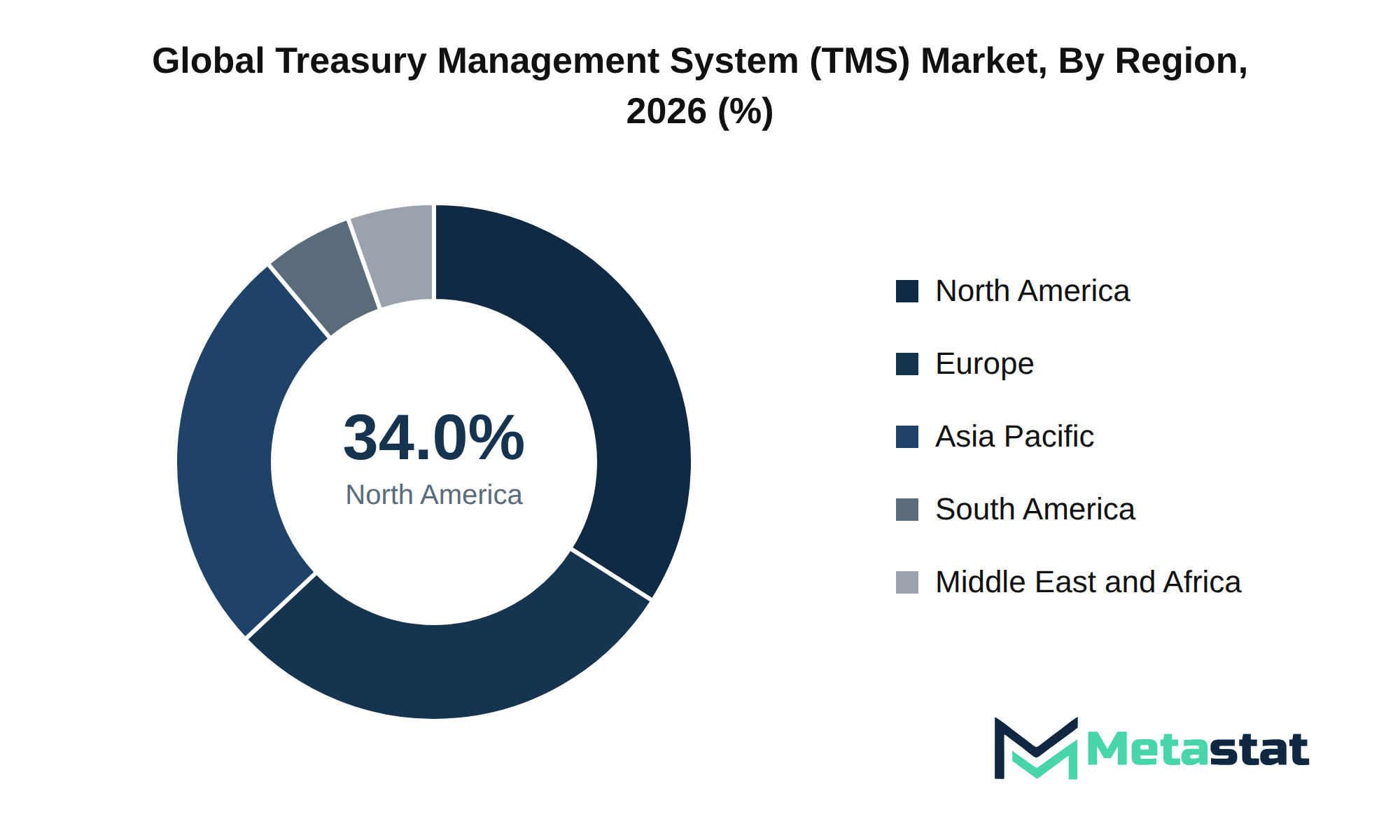
The competitive landscape within the Treasury Management System (TMS) market displays a dynamic mix of strategic behavior and innovation among key players. Mergers and acquisitions have become increasingly common, with companies seeking to enhance their product offerings and consolidate market share. Strategic alliances and partnerships across various sectors create collaborative ecosystems that strengthen competitive positioning. Companies including Bellin (Coupa Treasury), Kyriba, and Finastra apply these strategies to expand their reach and diversify their solutions, aiding in customer retention and enhancing brand equity.
Players in the market focus on product differentiation through advanced technological solutions and proprietary technologies. Innovations in software solutions, including those from FIS Global and HighRadius, reflect a commitment to R&D and addressing specific customer requirements. The development of integrated platforms enables companies to leverage supply chain dynamics and procurement strategies, enhancing overall value propositions. This emphasis on technological defensibility and customer-centric solutions positions these firms favorably against potential new entrants.
Future competitive outlook indicates a landscape defined by heightened competition and the potential for startup disruption. Established players like Oracle Financials and SAP Treasury leverage their extensive intellectual property portfolios and technological moats to maintain market presence. The evolving needs of enterprises drive the sector towards greater integration and collaboration, suggesting a continually shifting market environment.
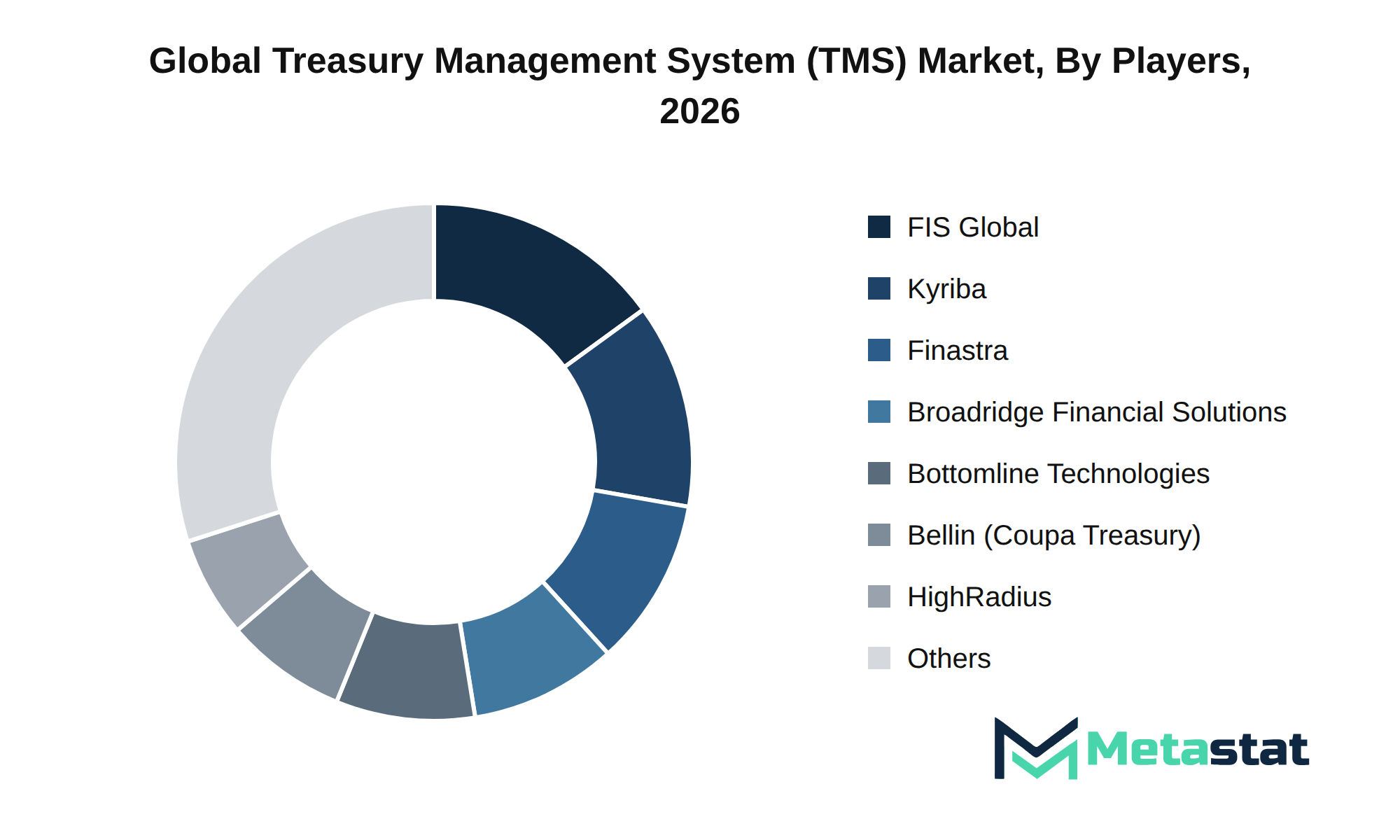
Market size is forecast to rise from USD 5,789.5 million in 2025 to over USD 14,649.2 million by 2033. This growth reflects a base case scenario of a 12.3% CAGR, driven by various macroeconomic factors and shifts within the industry.
In a bull case scenario, favorable economic conditions, including increased investment in next-generation technologies and successful regulatory adaptations, enhance growth rates beyond initial projections. Strategic capital allocation by enterprises towards advanced Treasury Management System (TMS) solutions strengthens the market's expansion. The focus on automation and efficiency, particularly in cash and liquidity management, positions organizations to capitalize on emerging opportunities in an evolving economic environment.
In a bear case scenario, economic downturns or geopolitical tensions restrict growth. Fluctuations in trade corridors and supply chain disruptions lead to decreased demand for TMS, resulting in a slower adoption rate. Organizations prioritize cost-cutting measures over investment in new technologies, hindering market potential.
Overall, the Treasury Management System (TMS) market demonstrates resilience with strong growth prospects amid various external pressures. Continuous advancements in technology, alongside a focus on compliance and risk management, are expected to drive market dynamics. Organizations investing in TMS are better equipped to navigate future challenges and seize high-growth opportunities.
The report strategically identifies and profiles the key market players and analyses their core competencies in each sub-segment of the Treasury Management System (TMS) market.
Report Attributes | Details |
Study Period | 2021-2033 |
Base Year | 2025 |
Estimated Year | 2026 |
Forecast Period | 2026-2033 |
Historical Period | 2021-2025 |
Growth Rate | CAGR 12.3% from 2026 to 2033 |
Revenue Unit | USD million |
Segmentation | By Solution, Deployment Model, Organization Size, End-Use Industry, and Region |
By Region | North America (By Solution, Deployment Model, Organization Size, End-Use Industry, and Country)
|
Europe (By Solution, Deployment Model, Organization Size, End-Use Industry, and Country)
| |
Asia Pacific (By Solution, Deployment Model, Organization Size, End-Use Industry, and Country)
| |
South America (By Solution, Deployment Model, Organization Size, End-Use Industry, and Country)
| |
Middle East and Africa (By Solution, Deployment Model, Organization Size, End-Use Industry, and Country)
|
Find answers to common questions about this report
The Treasury Management System (TMS) market size was valued at USD 5,789.5 million in 2025, according to the Metastat Insights study.
The Treasury Management System (TMS) market is projected to grow at a CAGR of 12.3% during the forecast period from 2026 to 2033.
The North America Treasury Management System (TMS) market size is estimated to reach USD 4,662.8 million by 2033.
The segment leading the Treasury Management System (TMS) market is Cash & Liquidity Management, with a projected value of USD 3,146.6 million by 2033. This segment demonstrates significant growth potential compared to other segments in the market.
Key drivers for the Treasury Management System (TMS) market include favorable capital investment environments, low interest rates, and GDP growth, which stimulate business investments. Organizations prioritize optimizing cash flow, managing liquidity, and enhancing financial forecasting accuracy, leading to increased demand for comprehensive treasury management solutions.
North America holds the dominant share of the Treasury Management System (TMS) market, with a value of USD 4,662.8 million projected for 2033, representing 34 percent of the total market.
Increasing compliance hurdles from evolving financial regulations impose additional burdens on organizations, diverting resources from strategic initiatives. Macroeconomic headwinds, including inflationary pressures and supply chain disruptions, further limit operational capabilities and create uncertainties in capital expenditure decisions. These factors collectively restrain the growth of the Treasury Management System (TMS) market.
Favorable capital investment environments, characterized by low interest rates and GDP growth, drive demand for treasury management systems. Organizations prioritize optimizing cash flow and enhancing financial forecasting accuracy, leveraging advanced technologies to improve decision-making and operational efficiency. This focus on digital transformation and automation further supports product adoption in the TMS market.
The Treasury Management System (TMS) market is estimated to reach a valuation of USD 14,649.2 million by 2033.
Key players in the Treasury Management System (TMS) market include Bellin (Coupa Treasury), Bottomline Technologies, Broadridge Financial Solutions, Finastra, FIS Global, Kyriba, Oracle Financials, and SAP Treasury.
The analysts below cover Banking & Finance research at Metastat Insights.
LEAD ANALYST
Utkarsh Khirodkar is a Lead Market Research Analyst at MetaStat Insight, specializing in market intelligence, technology sector assessments, and competitive strategy.

PRINCIPAL CONSULTANT - ENTERPRISE AI & EMERGING TECHNOLOGIES
Banking & Finance · Electronics and Semiconductor · Energy and Power · Healthcare IT · Information & Technology · Professional Services
Vijay Gunti is a Principal Consultant at MetaStat Insight, bringing over two decades of experience across enterprise digital transformation, technology strategy, and intelligent systems.
When planning edge sensor rollouts across refinery environments, generic IoT reports typically miss the harsh-environment certification bottlenecks. MetaStat Insight gave an objective evaluation of ATEX and Class 1 Division 2 hardware availability, along with realistic five-year maintenance cycle cost projections. The comparison of wireless mesh versus private cellular backhaul helped our team pressure-test network reliability models for remote processing facilities.
In the biological seed treatment space, registration timelines vary drastically between the European Union, Brazil, and North America. The MetaStat Insight research handled these cross-border regulatory barriers with genuine nuance, mapping commercialization pathways alongside historical field adoption rates. The segmentation between microbial strains and biochemical active ingredients was particularly well structured.
Our team was tracking whether regional recycling infrastructure could realistically absorb the growing volume of lithium iron phosphate batteries over the next decade. The report did a solid job separating announced hydrometallurgical plant capacity from active, permitted operational throughput. That distinction made the feedstock availability projections and regional recovery rate models far more credible than standard commercial overviews.
Explore related market intelligence reports worth reading alongside this one.