
Discover essential inquiries for buyers in the Metals and Minerals Testing, Inspection and Certification (TIC) market. Ensure your suppliers meet industry standards and regulatory requirements.
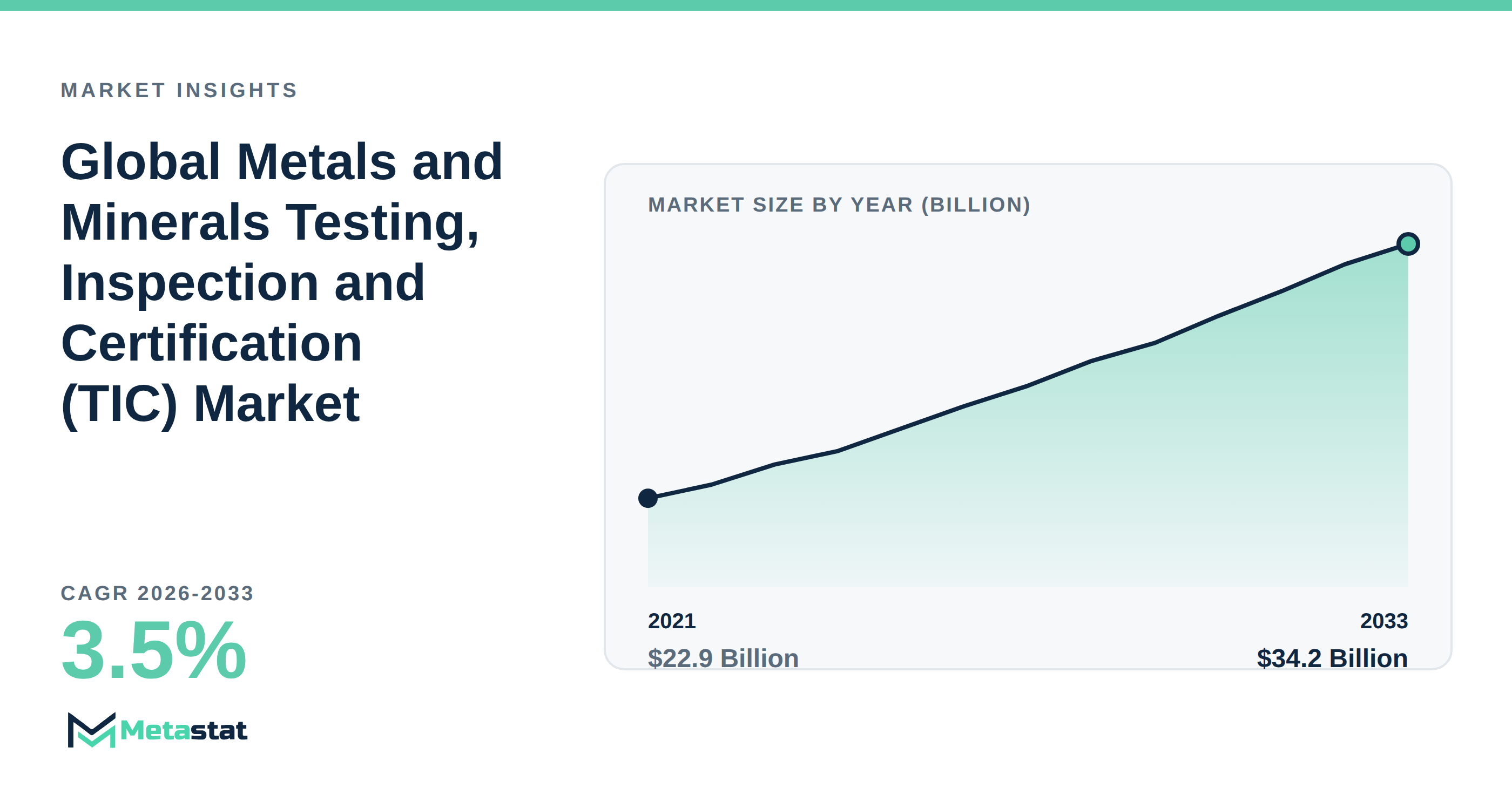
The Metals and Minerals Testing, Inspection and Certification (TIC) market is expected to reach USD 34.2 billion by 2033, with buyers needing to ask the right questions to ensure suppliers adhere to industry standards and regulations. Below are essential inquiries that should guide sourcing decisions.
1. How do you ensure compliance with evolving regulations?
Regulatory compliance impacts operational costs and competitiveness. Buyers should inquire about how suppliers stay updated with changing standards and integrate these into their operations. Suppliers should provide evidence of their dedication to compliance, including certifications, audits, and a robust quality management system. This emphasis on adherence enhances credibility within the Metals and Minerals Testing, Inspection and Certification market.
2. What technologies do you implement for testing and inspection?
Technological integration is vital for improving the efficiency and accuracy of TIC services. Suppliers should explain their use of advanced technologies, including automation and data analytics, to optimize testing and inspection processes. Employing these technologies not only cuts costs but improves service delivery. A supplier's readiness to adopt new innovations indicates their commitment to high-quality services in the Metals and Minerals Testing, Inspection and Certification sector.
3. What is your approach to sustainable practices and ESG verification?
While stakeholders increasingly focus on sustainability, buyers should ask suppliers about their responsible sourcing practices and environmental, social, and governance (ESG) verification. Suppliers that communicate about their sustainable initiatives position themselves advantageously in the market. This focus aligns with consumer demand for ethical practices and enhances brand reputation, delivering a competitive advantage.
4. Can you provide case studies or references from similar industries?
Buyers should request references or case studies from clients in comparable sectors to evaluate a supplier's capabilities. This inquiry assists buyers in assessing how suppliers handle sector-specific challenges and their overall effectiveness in delivering TIC services. Suppliers that demonstrate a successful track record gain buyer confidence in their ability to meet expectations and maintain quality standards.
5. What is your pricing structure and how do you manage fluctuations in raw material costs?
An understanding of a supplier's pricing structure in relation to raw material costs is crucial for establishing long-term partnerships. Buyers should inquire about how suppliers address pricing volatility and their strategies for keeping rates competitive without sacrificing service quality. Suppliers with adaptable pricing models tend to enhance buyer satisfaction and strengthen partnerships, contributing to a more stable revenue stream.
6. How do you prioritize turnaround times and operational efficiency?
Speed and efficiency are critical in the TIC market, particularly with rising demand for prompt results. Buyers should query suppliers about their strategies for optimizing turnaround times. Suppliers utilizing laboratory automation and digital inspection technologies bolster operational efficiency, delivering quicker and more precise results. This focus on efficiency is particularly valuable in industries with tight timelines, including mining and construction.
7. What are your plans for future investments and capacity expansion?
Finally, buyers should inquire about suppliers' future investment strategies regarding technology, capacity growth, and service enhancement. Suppliers actively pursuing growth opportunities demonstrate a willingness to adapt to market fluctuations and meet evolving client demands. Understanding a supplier's long-term vision offers insight into their future viability and relevance within the Metals and Minerals Testing, Inspection and Certification market.
The inquiries mentioned above are vital for buyers seeking dependable partners in the Metals and Minerals Testing, Inspection and Certification market. Engaging with these questions promotes informed decision-making, ultimately elevating service quality and compliance throughout the supply chain.
The full analysis is in Global Metals and Minerals Testing, Inspection and Certification (TIC) Market.
Tags
About the Authors

LEAD ANALYST
Utkarsh Khirodkar is a Lead Market Research Analyst at MetaStat Insight, specializing in market intelligence, technology sector assessments, and competitive strategy.

INDUSTRY CONSULTANT - CHEMICALS & ADVANCED MATERIALS
Chemicals and Materials · Machinery & Equipment · Packaging
Amit Gadhekar Consultant for Chemicals and Materials at MetaStat Insight, directing sector-specific intelligence, research, and strategic consulting across global chemical and processing markets.