
The Football Schools market is set for expansion, driven by increased participation, economic growth, and innovative training methods. This article investigates key trends shaping the market's future.
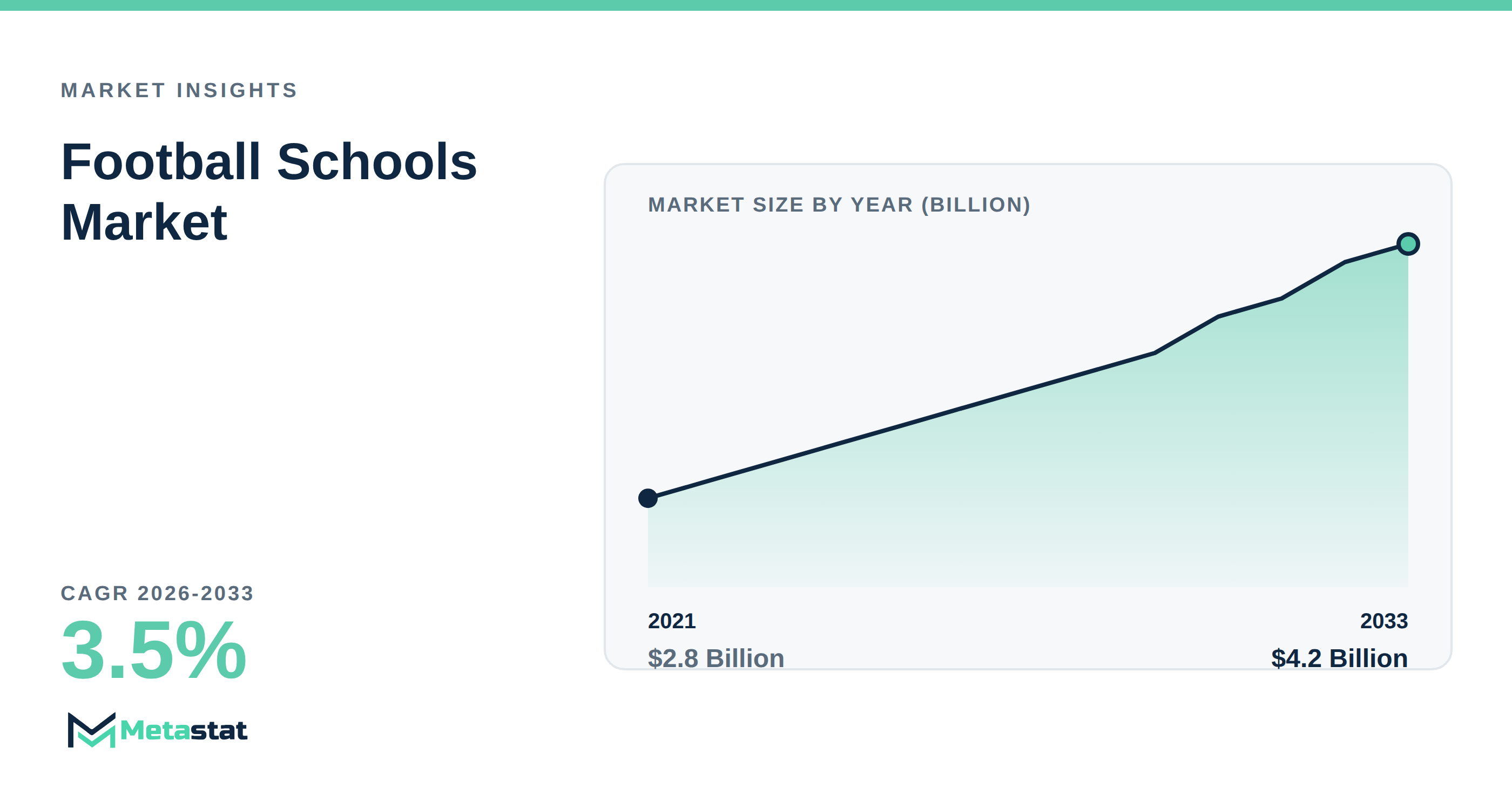
The Football Schools market is experiencing significant expansion driven by rising global interest in football education. Initially valued at USD 3.2 billion in 2025, this market is anticipated to elevate to USD 4.2 billion by 2033, indicating a compound annual growth rate (CAGR) of 3.5%. This growth reflects various factors, including the growing enthusiasm for football among youth and enhancements in coaching professionalism.
What is driving growth in the Football Schools market?
Several factors fuel growth within the Football Schools market. Economic conditions play a crucial role, where increased disposable income among families promotes higher enrollment in football programs. Parents increasingly perceive sports participation because vital for their children's physical health and skill development, which fosters a cultural shift towards supporting extracurricular sports activities.
Another significant driver influencing the market is the digital transformation within sports education. The integration of technology into training practices streamlines operations and enhances accessibility, making football training more appealing to potential participants. Investment in modern training facilities aims to elevate the overall educational experience, thereby attracting more students eager to develop their skills.
Which regions show the highest growth potential?
In terms of geographic spread, Europe commands the largest share of the Football Schools market, holding 29.7%. Following closely are North America at 23.9% and Asia Pacific at 20.4%. The growth within these regions largely stems from a profound cultural affinity for football, substantial investments in youth development initiatives, and an increase in participation rates.
Moreover, South America and the Middle East and Africa contribute notably, with respective shares of 16% and 10.1%. Local talent development initiatives and strategic international partnerships have enhanced interest and investment in football training across these regions. Especially in Asia Pacific, emerging markets show substantial growth potential because interest in football surges, coupled with investments directed at improving training programs.
What trends are shaping the operational models?
Diverse operational models characterize the Football Schools market, with Club-Affiliated Football Schools and Private Football Academies serving because critical segments. The Club-Affiliated Football Schools segment is projected to increase from USD 1.3 billion in 2026 to USD 1.5 billion by 2033, exhibiting a CAGR of 2.2%. Such schools benefit from the credibility and resources associated with established professional football clubs, which attract aspiring players eager for quality training.
On the other hand, Federation/Association-Run Programs are forecasted to demonstrate a stronger CAGR of 4.3%, reaching USD 0.4 billion by 2033. Supported by governing bodies, these programs provide structured pathways for young athletes, ensuring a steady influx of trained players into the football community. The growing recognition of the importance of these initiatives highlights their significance in youth development, thereby enhancing enrollment and attracting critical investments.
How are age group segments influencing market dynamics?
The age group segmentation within the Football Schools market offers valuable insights, particularly for the Under-18 Programs, which are projected to reach USD 1.5 billion by 2033. This growth reflects increasing recognition of the importance of lifelong learning in sports, stimulating demand for programs catering to various age demographics. Rising participation rates in youth leagues correlate strongly with heightened enrollment in football schools, thereby driving market expansion.
Concurrently, segments focusing on younger athletes, including Under-10 and Under-15 Programs, are witnessing a positive trajectory. Adult training segments are thriving, with a notable CAGR of 4.5% attributed to the growing emphasis on fitness and health among adult participants. Such trends contribute to the overall positive atmosphere surrounding the Football Schools market.
What challenges are impacting the Football Schools market?
Despite robust growth prospects, the Football Schools market faces several challenges that hinder its expansion. Regulatory compliance requirements present significant barriers, with increasing legal mandates that position operational frameworks at risk. This challenge is particularly acute for smaller institutions, which struggle to meet these demands, thereby limiting competitiveness.
Macroeconomic pressures, including inflation and rising operational costs, demand prudent financial management, because budgets for staffing, materials, and facilities tighten. These economic challenges compel schools to reassess pricing structures, which could inadvertently reduce enrollment and impact revenue generation.
Supply chain disruptions further complicate market dynamics, hindering the timely delivery of essential training equipment and materials. Skilled labor shortages pose significant obstacles for football schools looking to attract and retain qualified coaches, which is crucial for maintaining high-quality education. Strategic management of these challenges is essential for football schools aiming to sustain competitiveness in this evolving market.
Investment in infrastructure, adherence to regulatory standards, and proactive community engagement will be crucial for providers to enhance their positioning in the Football Schools market. For a comprehensive analysis and more detailed insights into market dynamics, refer to the Global Football Schools Market.
Tags
About the Author

LEAD ANALYST
Utkarsh Khirodkar is a Lead Market Research Analyst at MetaStat Insight, specializing in market intelligence, technology sector assessments, and competitive strategy.