
The Rare Biological Sample Collection market is rapidly expanding, driven by advancements in technology and increased healthcare funding. Discover the key factors influencing this growth.
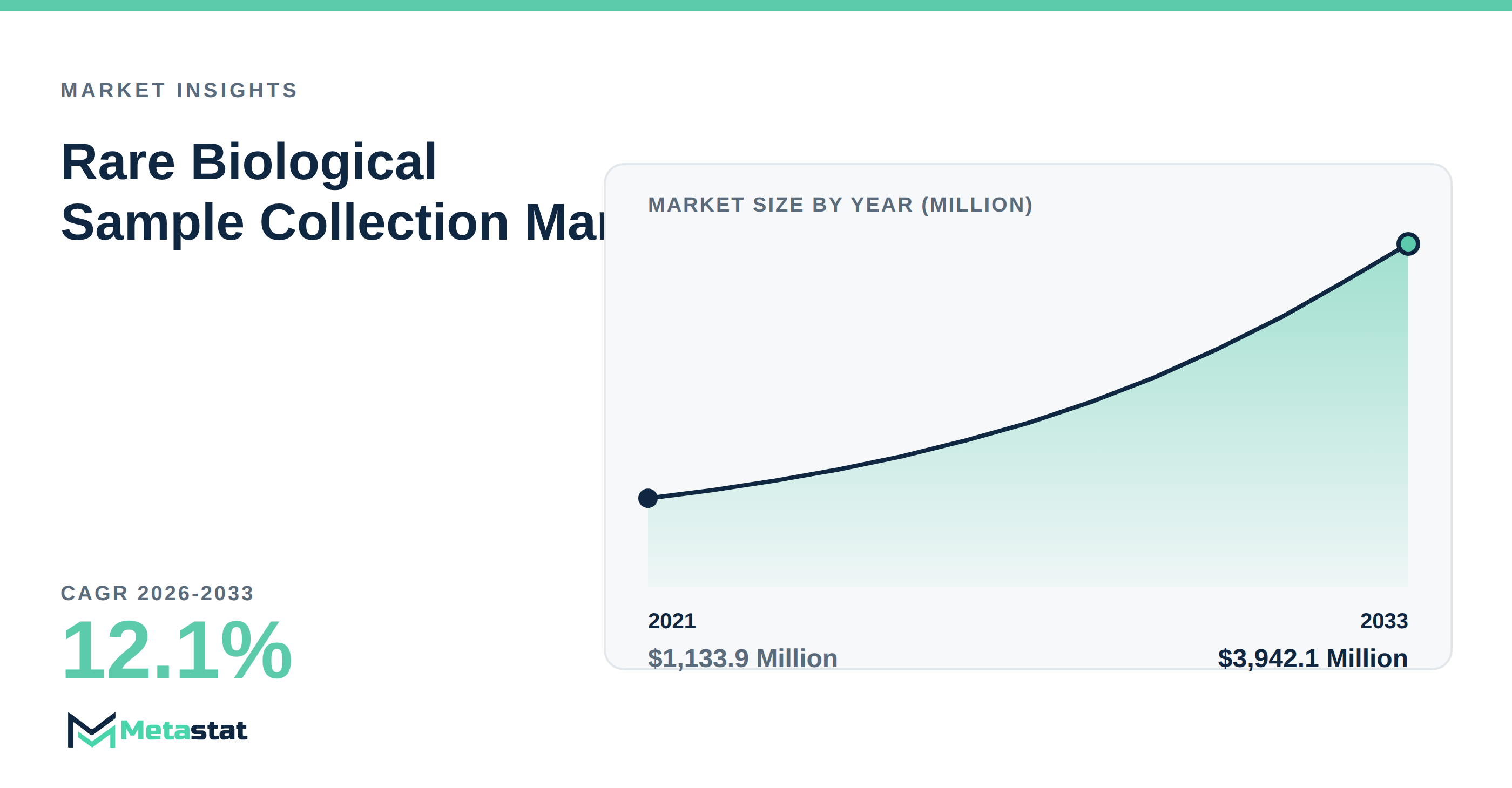
The Rare Biological Sample Collection market has been valued at USD 1,596.4 million at 2025, with expectations for it to reach USD 3,942.1 million by 2033. This significant growth trajectory is driven by technological advancements and a notable rise in healthcare funding, which enhances the demand for diverse biological samples across various applications.
What drives demand in the Rare Biological Sample Collection market?
Increasing healthcare expenditure remains a fundamental factor driving the Rare Biological Sample Collection market. Both government and private sector funding boost the demand for biological samples, which are essential for advancements in diagnostics and research. This financial support improves infrastructure and promotes technology adoption across pharmaceuticals, biotechnology, and clinical research organizations.
The strong emphasis on personalized medicine amplifies the need for high-quality biological samples. Applications including oncology and pharmacogenomics highlight the crucial role of accurate sample collection in tailoring treatments to individual patient profiles. The ongoing attention to these areas indicates a bullish market outlook for Rare Biological Sample Collection.
How does technological advancement impact the market?
Technological advancements greatly enhance operational efficiency within the Rare Biological Sample Collection market. The increasing adoption of automation, artificial intelligence, and software solutions optimizes processes and reduces costs while maximizing productivity. This integration of digital technologies leads to improved data management, allowing organizations to enhance sample handling, analysis capabilities, and compliance with industry standards.
Innovations in isolation kits and reagents are projected to drive substantial growth within this segment, with a forecasted increase from USD 1,042.8 million in 2026 to USD 2,332.7 million by 2033. Such advancements not only improve the efficiency of sample collection processes but help in maintaining the integrity and quality of samples.
What challenges exist in the Rare Biological Sample Collection market?
Despite a favorable growth outlook, the Rare Biological Sample Collection market encounters several challenges. Regulatory compliance poses significant hurdles, with evolving legal mandates imposing stringent guidelines on the handling and collection of biological samples. Organizations face increased costs related to adhering to these regulations, impacting smaller firms disproportionately.
Supply chain disruptions and geopolitical instability add layers of complexity, affecting the availability of critical materials. Companies navigate these challenges with heightened operational costs, ultimately impacting their competitive positioning and innovation capabilities.
Which regional markets are emerging in Rare Biological Sample Collection?
Examining the global landscape of the Rare Biological Sample Collection market reveals notable regional dynamics, with North America leading the way at a market share of 36%. This region is expected to achieve a market value of USD 1,408.4 million by 2033, driven by an advanced healthcare infrastructure and significant investments in research and development initiatives.
Following closely are Europe and the Asia Pacific region, capturing 29.3% and 24.8% of the market, respectively. The increasing accessibility of healthcare solutions in Asia Pacific is particularly noteworthy, reflecting a growing market fueled by investments in research, thereby enhancing capabilities in biomedical research and development.
How do companies leverage growth opportunities?
Organizations operating within the Rare Biological Sample Collection market have various strategic opportunities to pursue. By investing in innovative collection and storage technologies, companies enhance their product offerings, thereby maintaining competitive advantages. A focus on sustainability and integrating decarbonization initiatives into operational frameworks enhances brand reputation while aligning with broader market trends.
Strategic consolidation efforts, including mergers and acquisitions, can foster product integration and diversification, enabling companies to meet niche applications across diverse industries. Adjusting supply chains to minimize import dependency strengthens resilience and responsiveness to regional demands, positioning firms for sustainable growth.
In summary, the Rare Biological Sample Collection market is on track for impressive growth, influenced by rising healthcare expenditures and innovative technology. Companies adept at navigating regulatory challenges while capitalizing on strategic opportunities are positioned to thrive in this evolving landscape. For more insights, refer to the Global Rare Biological Sample Collection Market.
Tags
About the Authors

LEAD ANALYST
Utkarsh Khirodkar is a Lead Market Research Analyst at MetaStat Insight, specializing in market intelligence, technology sector assessments, and competitive strategy.

SENIOR RESEARCH ANALYST
Biotechnology · Food and Beverages · Medical Devices · Packaging
Snehal Pasalkar is a Research Analyst at MetaStat Insight, operating at the intersection of life sciences research, competitive strategy, and market intelligence.