
Explore the key drivers, challenges, and future projections for the High Voltage (HV) Battery Management System (BMS) market as it evolves towards sustainability.
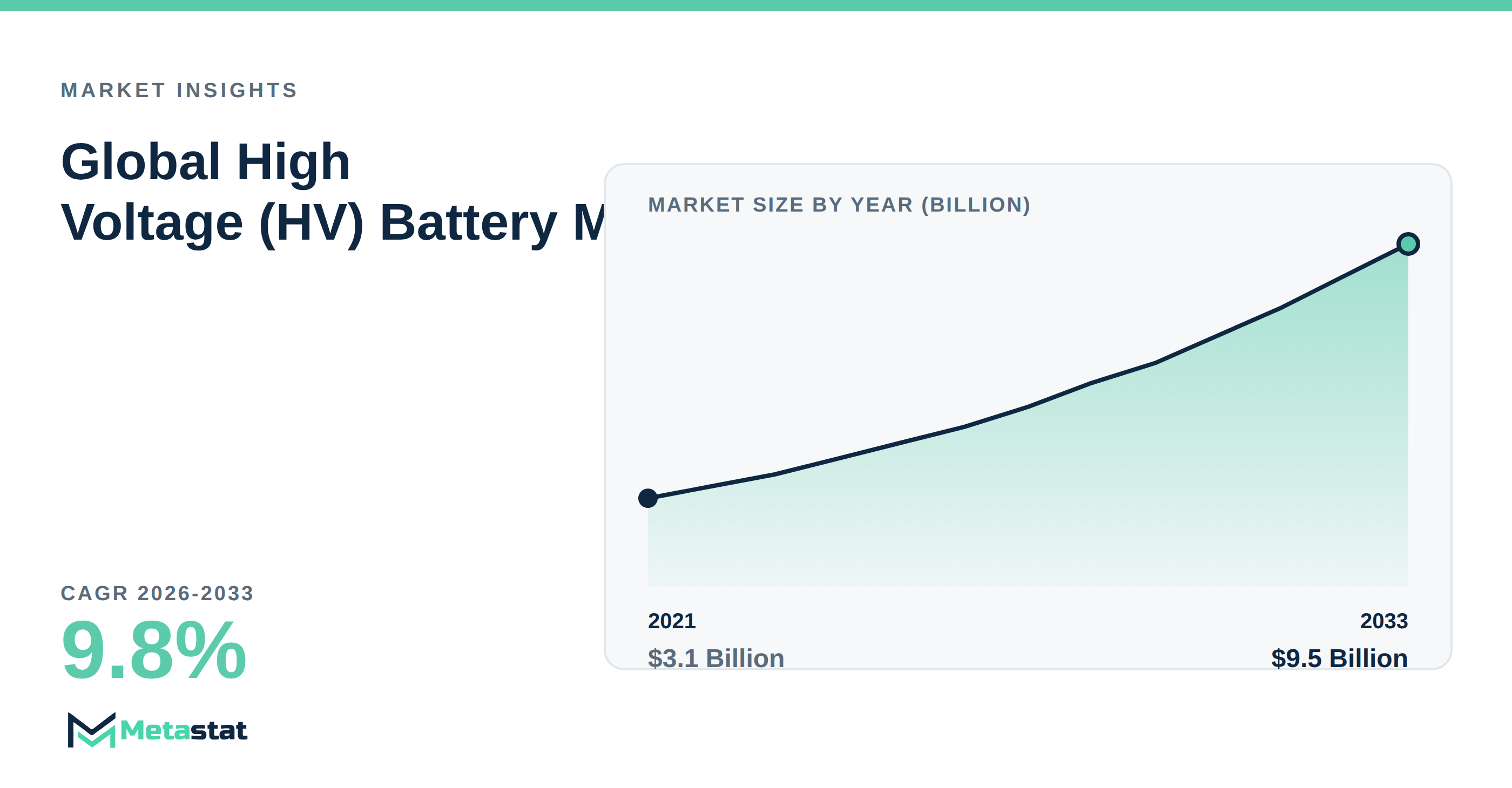
The High Voltage (HV) Battery Management System (BMS) market is poised for significant expansion, with forecasts indicating a rise from USD 4.5 billion in 2025 to USD 9.5 billion by 2033. The underlying factors propelling this growth are diverse and multifaceted, impacting stakeholders across the industry.
What factors are driving the growth of the HV BMS market?
The increasing demand for electric vehicles (EVs) is a primary factor driving the High Voltage (HV) Battery Management System (BMS) market. Stricter emissions regulations implemented by governments worldwide are compelling manufacturers to innovate continuously. These regulations create a necessity for advanced battery management systems that enhance energy efficiency, optimize performance, and extend battery lifespans. The robust push for electric mobility underscores the importance of effective battery management solutions because the industry adapts to new market dynamics.
Leading the charge, the Asia Pacific region claims a substantial 44.6% share of the market, highlighted by strong investments in electric vehicle production. North America and Europe follow, contributing 28.3% and 21.2% of the market, respectively. The collective ambition toward sustainable transportation across these regions cultivates an environment conducive to the growth of HV BMS solutions.
How do technological advancements shape the HV BMS landscape?
Technological advancements in battery chemistry and management systems play a significant role in the progression of the High Voltage (HV) Battery Management System (BMS) market. For example, Lithium Iron Phosphate (LFP) technology is projected to escalate from USD 2.2 billion in 2026 to USD 4.7 billion by 2033, with an anticipated CAGR of 11.5%. This growth corresponds with rising demand for efficient, cost-effective, and safe battery solutions, particularly for electric vehicles.
The market trajectory demonstrates a clear shift towards higher voltage systems, particularly those exceeding 600V. Projections indicate this segment could reach USD 4.3 billion by 2033, growing at a CAGR of 12.5%. This upward trend highlights the industry's focus on maximizing performance and efficiency, driven by the advancements in electric vehicle technologies.
What challenges do companies encounter in the HV BMS market?
Despite the positive outlook, numerous challenges lurk in the High Voltage (HV) Battery Management System (BMS) market landscape. Regulatory compliance represents a significant hurdle for manufacturers. The evolving nature of regulations designed to enhance safety and efficiency increases operational costs, constraining innovation and slowing investments. Navigating these complexities is essential for companies to maintain competitiveness and avoid penalties.
Geopolitical tensions, coupled with inflationary pressures, complicate sourcing strategies, leading manufacturers to seek local suppliers and alternative materials. These disruptions not only affect logistics but increase costs, creating a fragmented market landscape. The existence of numerous small to medium enterprises (SMEs) alongside established firms adds another layer of complexity to market consolidation efforts.
What future implications arise for the HV BMS market?
The future of the High Voltage (HV) Battery Management System (BMS) market looks promising, with substantial growth anticipated across various segments. The 75 kWh-150 kWh category is projected to surge from USD 2.3 billion in 2026 to USD 4.2 billion by 2033. This growth reflects the escalating need for high-capacity battery systems in electric vehicles and energy storage applications.
Investment in research and development remains critical for companies seeking to innovate and satisfy evolving consumer expectations and meet regulatory standards. By enhancing regulatory compliance measures and exploring sustainable practices, stakeholders solidify their positions in this competitive landscape.
The current trajectory of the High Voltage (HV) Battery Management System (BMS) market reflects a commitment to both technological advancements and sustainability principles. Companies that prioritize innovation and adaptability are well-positioned to capitalize on emerging opportunities while navigating the challenges that characterize this dynamic environment. For those seeking comprehensive insights into the trends driving the market, the Global High Voltage (HV) Battery Management System (BMS) Market report offers a detailed exploration.
Tags
About the Authors

LEAD ANALYST
Utkarsh Khirodkar is a Lead Market Research Analyst at MetaStat Insight, specializing in market intelligence, technology sector assessments, and competitive strategy.

ENERGY & INFRASTRUCTURE INDUSTRY CONSULTANT
Automotive and Transportation · Electronics and Semiconductor · Energy and Power · Machinery & Equipment
Saurabh Vasant Ganvir consults for Energy & Infrastructure Industry at MetaStat Insight, specializing in renewable energy, solar EPC, and electric vehicle (EV) infrastructure markets.