
Explore how leading companies are influencing the Electric Bus (eBus) Charging Systems market, focusing on their unique strategies and competitive advantages.
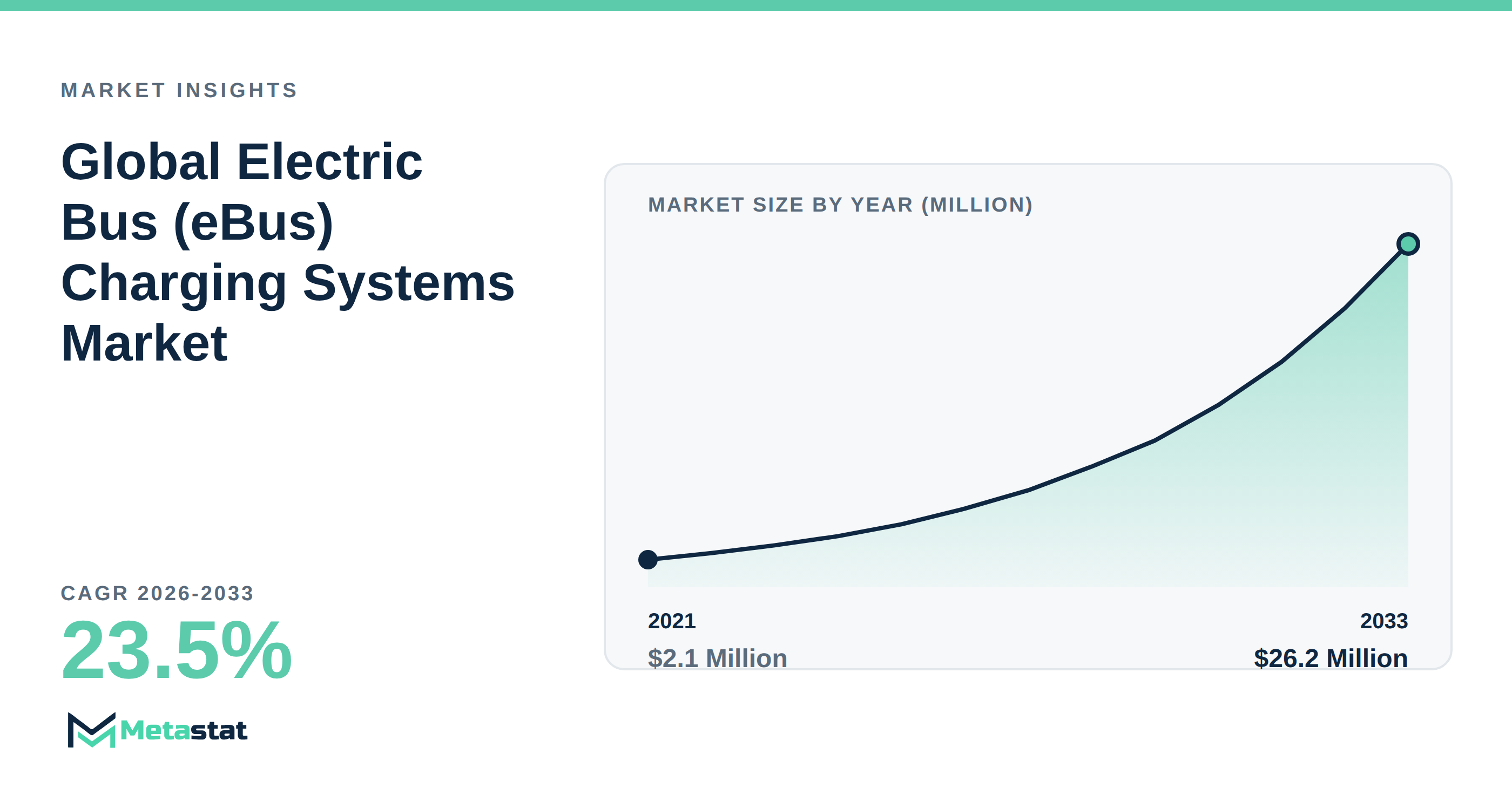
The Electric Bus (eBus) Charging Systems market is experiencing notable growth due to the global push towards electrification and the increasing need for sustainable urban transportation solutions. Understanding the competitive positions of key players in this market reveals how they adapt their strategies to changing industry demands and technological advancements.
1. Alstom SA focuses on integrated transport solutions
Alstom SA leverages its extensive experience in public transport to develop integrated solutions that enhance operational efficiency. The company is dedicated to creating robust charging infrastructure tailored for urban transit networks. This approach ensures effective integration between electric buses and their charging systems, reinforcing Alstom's position in the Electric Bus (eBus) Charging Systems market. Their commitment to improving public transport options addresses growing consumer demand for efficient and sustainable modalities.
2. ABB E-mobility drives innovation in fast-charging technology
ABB E-mobility prioritizes technological advancements, particularly in developing fast-charging solutions. Their ongoing investment in research and development has led to innovative technologies, including high-power pantograph systems. This strategic emphasis on efficiency and quick charging options meets the needs of transit authorities aiming to minimize downtime for electric buses. ABB's forward-thinking approach strengthens their competitive position within the Electric Bus (eBus) Charging Systems market.
3. Siemens AG integrates sustainability into its strategies
Siemens AG incorporates sustainability into its product line, aligning with global environmental goals. The company promotes smart grid technologies and energy management systems that facilitate the integration of renewable energy sources at charging stations. This focus not only enhances the attractiveness of Siemens’ solutions but appeals to transit authorities that emphasize eco-friendly initiatives. Consequently, Siemens reinforces its market presence while contributing to sustainable urban transit.
4. Hitachi Energy Ltd. specializes in power electronics
Hitachi Energy Ltd. excels in power electronics, essential for optimizing electric bus charging systems. Their expertise in high-efficiency energy solutions positions them advantageously to meet demands for increasing charging capacities and advanced technologies. By focusing on improving charging speed and reliability, Hitachi Energy assists transit operators in achieving higher operational efficiency, thus enhancing their role in the Electric Bus (eBus) Charging Systems market.
5. Kempower Oyj leads in rapid charging solutions
Kempower Oyj has established itself because a prominent player in the rapid charging segment of the Electric Bus (eBus) Charging Systems market. Their cutting-edge charging solutions enable electric buses to recharge swiftly, minimizing downtime while maximizing service availability. By strategically investing in scalable charging infrastructure, Kempower positions itself because a key partner for transit networks aiming to enhance public transport efficiency.
6. ChargePoint, Inc. champions interoperability in charging systems
ChargePoint, Inc. emphasizes the importance of charging interoperability to improve operational efficiency across different electric bus models. Their dedication to standardizing charging protocols ease operations for transit agencies and manufacturers alike. By prioritizing compatibility and user-centric experiences, ChargePoint helps eliminate barriers to adoption, solidifying its position in the rapidly evolving Electric Bus (eBus) Charging Systems market.
7. Emerging players and market dynamics
New entrants including Electreon Wireless Ltd. and Shenzhen Sinexcel Electric Co., Ltd. are emerging in the Electric Bus (eBus) Charging Systems market, bringing innovative solutions and technologies that disrupt traditional models. These companies focus on wireless and dynamic charging technologies, enhancing flexibility and efficiency for transit agencies. With their fresh perspectives, they contribute to a competitive environment that encourages continuous improvement and adaptation among established players.
This overview of competitive positions in the Electric Bus (eBus) Charging Systems market illustrates how various companies are responding to evolving industry demands. Their distinct focuses on technology, sustainability, and operational efficiency collectively contribute to the overall growth of this vital sector.
The full analysis is in Global Electric Bus (eBus) Charging Systems Market.
Tags
About the Authors

LEAD ANALYST
Utkarsh Khirodkar is a Lead Market Research Analyst at MetaStat Insight, specializing in market intelligence, technology sector assessments, and competitive strategy.

ENERGY & INFRASTRUCTURE INDUSTRY CONSULTANT
Automotive and Transportation · Electronics and Semiconductor · Energy and Power · Machinery & Equipment
Saurabh Vasant Ganvir consults for Energy & Infrastructure Industry at MetaStat Insight, specializing in renewable energy, solar EPC, and electric vehicle (EV) infrastructure markets.