
Explore the intricacies of the Connected TV (CTV) Advertising market, including growth drivers, challenges, and strategic insights for advertisers.
Many industry stakeholders observe the Connected TV (CTV) Advertising market because a swiftly expanding segment of digital advertising, yet they often misinterpret the underlying dynamics that drive its growth. While headlines highlight significant revenue projections and budget shifts, the true nature of this market encompasses far more intricate trends and challenges. Understanding these details is crucial for advertisers and companies aiming to navigate this evolving landscape successfully.
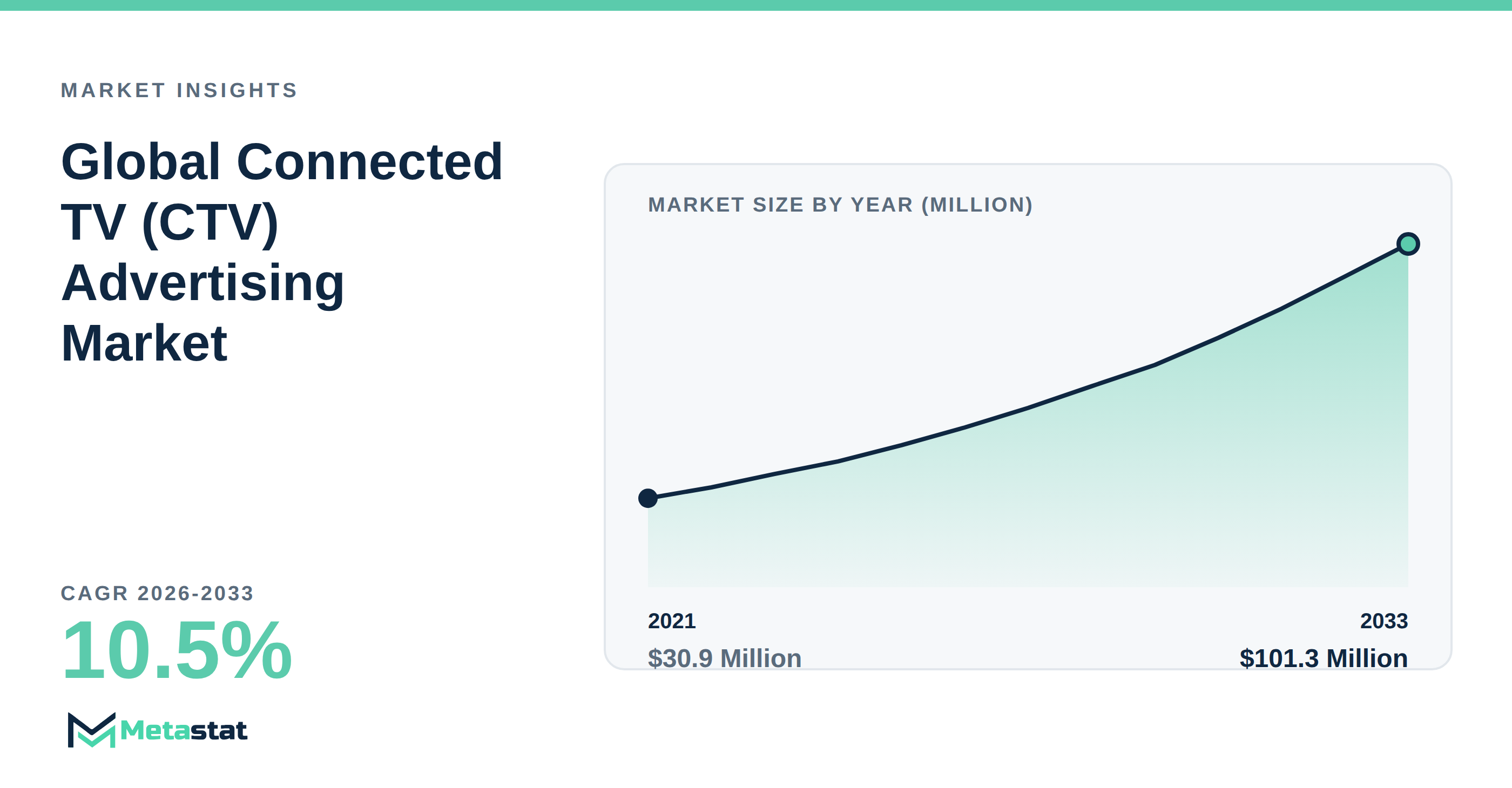
What are the key growth drivers in the Connected TV (CTV) Advertising market?
A primary factor propelling the CTV Advertising market's growth is the ongoing digital transformation across various industries. Businesses increasingly adopt advanced technologies including artificial intelligence and automation to refine marketing strategies. This integration enables detailed viewer data analysis and more personalized ad placements, making advertising efforts more effective. With consumer behavior shifting toward streaming platforms and on-demand content, advertisers innovate their strategies to capture viewer attention. These significant changes in viewing habits generate both challenges and opportunities because advertisers seek to engage audiences more effectively.
What challenges impact the Connected TV (CTV) Advertising market?
Regulatory challenges considerably influence market dynamics. Stringent privacy laws and data protection mandates create operational complexities, raising costs for advertisers and technology providers. Smaller companies particularly experience these impacts, because such barriers limit their entry into the market and reduce competitive diversity. Macroeconomic factors, including inflationary pressures and increasing media buying costs, restrict overall advertising budgets. These constraints often compel companies to reallocate resources, affecting their ability to invest in CTV advertising.
How does market segmentation influence growth?
The CTV Advertising market comprises various segments based on monetization models, including Direct-Sold / Insertion Order, Programmatic Guaranteed, Preferred Deals, Private Marketplace (PMP), and Open Auction / Real-Time Bidding. Each segment displays distinct growth trajectories driven by varying consumer preferences and advertising strategies. For instance, Direct-Sold advertising is projected to grow from USD 18.6 million in 2026 to USD 32.3 million by 2033, supported by increasing demand for targeted advertising. This growth reflects a broader trend toward personalization in advertising, crucial for attracting viewer engagement.
What role do emerging technologies play in CTV Advertising?
Emerging technologies significantly transform the CTV Advertising landscape. Innovations in artificial intelligence, machine learning, and streaming technologies provide advertisers with enhanced targeting capabilities and improved viewer engagement. While these tools evolve, advertisers are increasingly inclined to invest in CTV platforms, appreciating the potential for increased return on investment relative to traditional media. The emergence of ad-supported video on demand (AVOD) and free ad-supported streaming television (FAST) exemplifies this shift, creating new opportunities for advertisers to connect with diverse audiences while adapting to changing consumption habits.
What strategic actions should stakeholders consider?
In light of these dynamics, stakeholders in the Connected TV (CTV) Advertising market develop strategies that prioritize data-driven insights and technological innovation. Companies should enhance their understanding of viewer behavior and preferences to optimize advertising strategies and maximize return on investment. Implementing effective revenue-sharing models promotes collaboration among publishers and advertisers, creating a healthier ecosystem that benefits all parties involved.
By focusing on the unique challenges and opportunities within the CTV Advertising market, participants position themselves effectively for long-term growth. While the market evolves, maintaining agility and adaptability remains essential for capitalizing on emerging opportunities while managing potential headwinds. For a comprehensive analysis of the market, stakeholders refer to the Global Connected TV (CTV) Advertising Market.
Tags
About the Authors

LEAD ANALYST
Utkarsh Khirodkar is a Lead Market Research Analyst at MetaStat Insight, specializing in market intelligence, technology sector assessments, and competitive strategy.

PRINCIPAL CONSULTANT - ENTERPRISE AI & EMERGING TECHNOLOGIES
Banking & Finance · Electronics and Semiconductor · Energy and Power · Healthcare IT · Information & Technology · Professional Services
Vijay Gunti is a Principal Consultant at MetaStat Insight, bringing over two decades of experience across enterprise digital transformation, technology strategy, and intelligent systems.

LEAD CONSULTANT - COMMUNICATION, TELECOM, AND IT
Electronics and Semiconductor · Information & Technology · Machinery & Equipment · Professional Services
Ravindra Sathe Consultants for Communication, Telecom, and IT at MetaStat Insight. He leads the firm's industry research initiatives across telecommunications infrastructure, digital connectivity, enterprise networking, and emerging information technology domains.