
Explore the factors leading to the divergence in the Diesel Exhaust Fluid (DEF) market between North America and Asia, focusing on regulatory frameworks, infrastructure development, and economic conditions.
The Diesel Exhaust Fluid (DEF) market displays notable regional divergence, particularly between North America and Asia Pacific. Each region exhibits distinct growth dynamics shaped by regulatory frameworks and the adoption of emission control technologies.
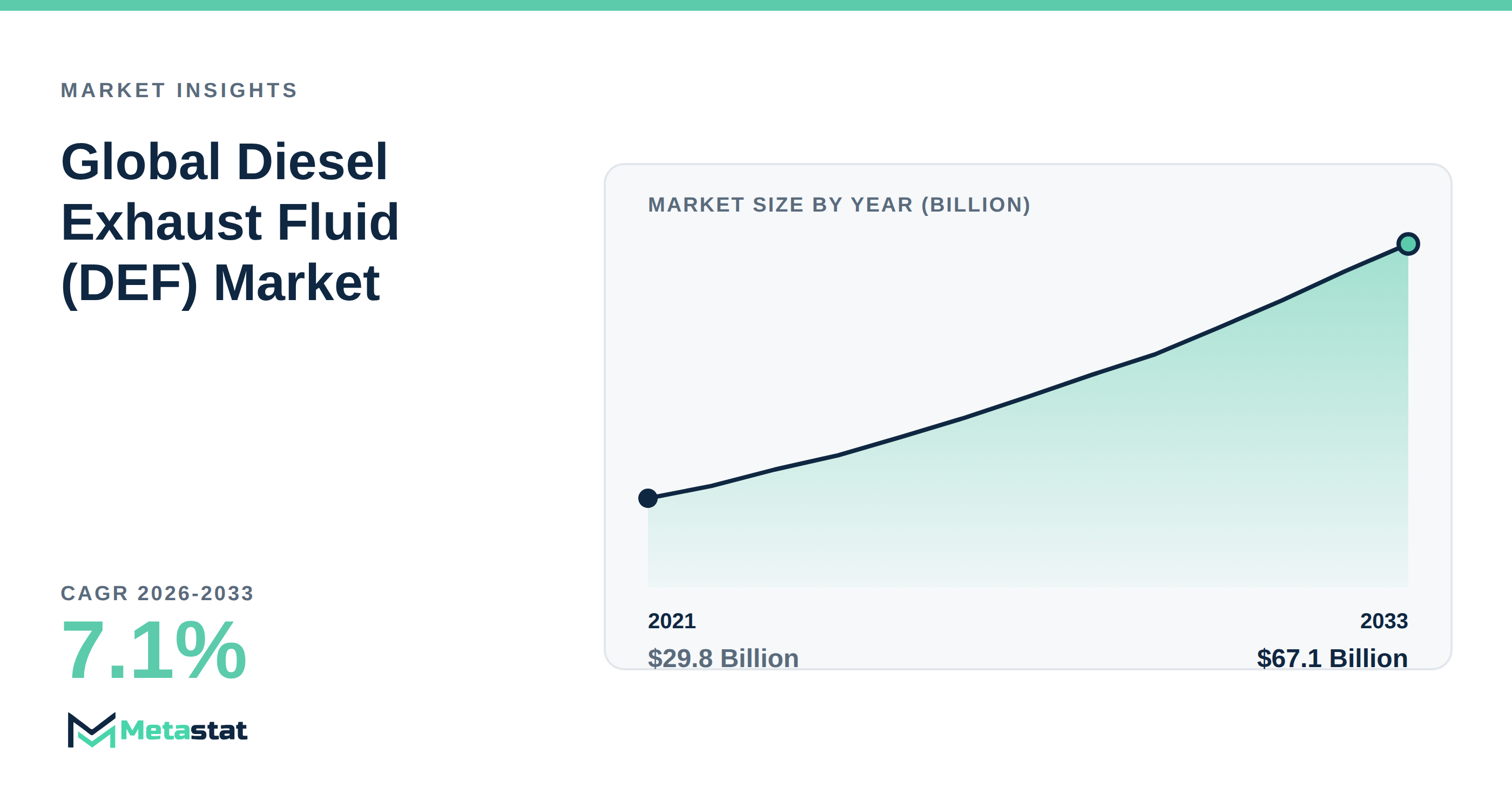
What accounts for North America's market lead in Diesel Exhaust Fluid (DEF)?
North America stands because the leader in the DEF market, primarily due to stringent regulatory mandates surrounding emissions. Regulations enforced by the Environmental Protection Agency (EPA) necessitate the adoption of Selective Catalytic Reduction (SCR) systems in heavy-duty vehicles, creating a substantial demand for DEF. This regulatory environment ensures that manufacturers actively integrate SCR technologies, resulting in a consistent need for Diesel Exhaust Fluid.
The established infrastructure supporting DEF distribution enhances North America’s position. The region benefits from a robust logistics network that enables effective delivery while controlling costs. Companies like Yara International ASA and CF Industries Holdings, Inc. leverage these infrastructure advantages, providing comprehensive solutions to original equipment manufacturers (OEMs) and aftermarket users.
Why is Asia facing slower growth in the Diesel Exhaust Fluid (DEF) market?
In contrast, the Asia Pacific region encounters challenges that impede its rapid expansion within the DEF market. Although regulatory pressures are rising, the uptake of SCR systems varies significantly across different countries. Nations with stringent emission standards, including Japan and South Korea, are experiencing quicker adoption rates of DEF, while others lag due to less vigorous enforcement and limited infrastructure.
Investment disparities in emission control technologies further contribute to this divergence. Countries prioritizing transportation infrastructure development advance more rapidly in DEF adoption. However, regions lacking similar commitments to emissions reduction struggle, thus affecting overall market growth.
How do infrastructure and logistics play a role in the DEF market's divergence?
Infrastructure development significantly influences the dynamics of the Diesel Exhaust Fluid (DEF) market. In North America, investments in transportation networks enhance DEF distribution efficiency. This solid logistics architecture allows suppliers to meet rising DEF demand while minimizing costs and adhering to strict regulations.
Conversely, infrastructure challenges in various Asian countries present notable obstacles. Limited transportation networks and insufficient storage facilities result in inefficiencies in DEF distribution. Companies face difficulties ensuring steady supplies, which restricts the operational capabilities of businesses dependent on DEF for emissions compliance. Consequently, these logistical hurdles hinder the growth trajectory of the DEF market in Asia.
What impact do economic factors have on the Diesel Exhaust Fluid (DEF) market in different regions?
Macroeconomic conditions significantly affect the divergence in the Diesel Exhaust Fluid (DEF) market. North America enjoys relatively stable economic conditions that facilitate investment in compliance technologies and infrastructure. The focus on sustainability encourages businesses to integrate DEF into their operational strategies, providing financial incentives through potential penalties avoided and an improved public image.
Asia faces economic pressures including inflation and currency volatility. These factors disrupt supply chains and result in rising operational costs for producers and suppliers. Price fluctuations of raw materials, particularly urea, directly impact overall DEF pricing, complicating procurement strategies for businesses in the region. The escalating costs hinder necessary investments in technologies, delaying progress towards compliance with emission standards.
What are the implications of regulatory dynamics for the DEF market?
The evolving regulatory frameworks in both regions play a crucial role in influencing the Diesel Exhaust Fluid (DEF) market. North America’s stringent regulations compel manufacturers to emphasize sustainable practices and invest in advanced technologies that enhance compliance. This creates a strong market environment, driving growth and innovation within the DEF sector.
In comparison, Asia's slower regulatory advancements contribute to market fragmentation, with several countries adopting strict measures while others fall behind. This divergence creates opportunities for companies operating in regions with stringent regulations to capitalize on compliance-driven demand. In contrast, those in less regulated areas face challenges in achieving similar growth. Strategic partnerships and investments in research and development are essential for companies to adapt to these evolving market dynamics.
The disparities in market dynamics between North America and Asia Pacific highlight the complexities surrounding the Diesel Exhaust Fluid (DEF) market. Understanding these regional differences empowers stakeholders to make informed decisions regarding investments and market positioning. While the global emphasis on sustainability intensifies, the DEF market is poised for further evolution, aligned with regulatory pressures and technological advancements that will shape its future.
For an in-depth look at specific regional trends and growth potential in the Diesel Exhaust Fluid (DEF) market, refer to the Global Diesel Exhaust Fluid (DEF) Market.
Tags
About the Authors

LEAD ANALYST
Utkarsh Khirodkar is a Lead Market Research Analyst at MetaStat Insight, specializing in market intelligence, technology sector assessments, and competitive strategy.

ENERGY & INFRASTRUCTURE INDUSTRY CONSULTANT
Automotive and Transportation · Electronics and Semiconductor · Energy and Power · Machinery & Equipment
Saurabh Vasant Ganvir consults for Energy & Infrastructure Industry at MetaStat Insight, specializing in renewable energy, solar EPC, and electric vehicle (EV) infrastructure markets.