
Explore the critical elements influencing costs and pricing in the White Label Supplement Manufacturing market, guiding stakeholders to make informed decisions.
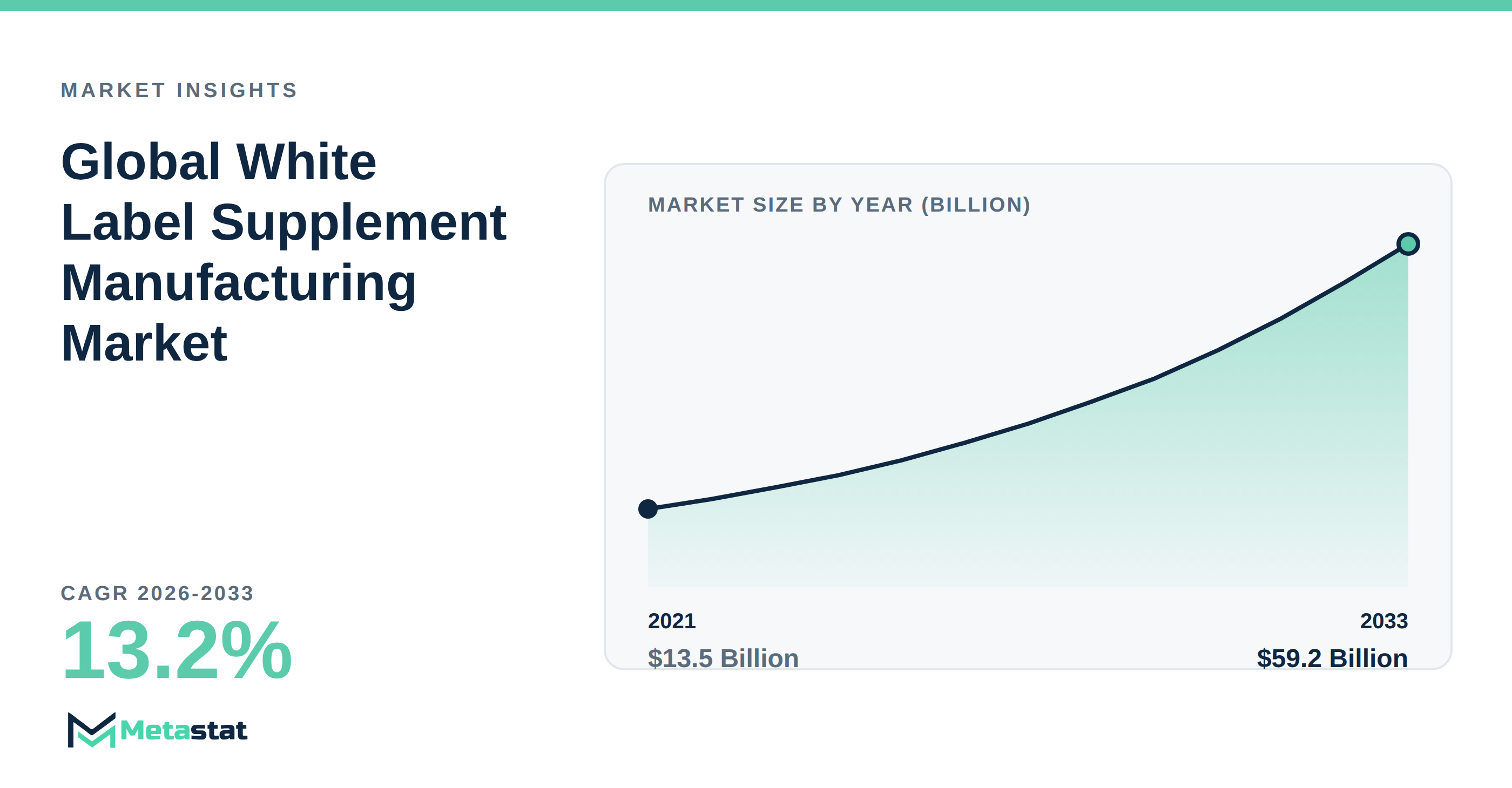
The White Label Supplement Manufacturing market, with a value of USD 21.9 billion in 2025, is anticipated to grow significantly, reaching USD 59.2 billion by 2033, with an impressive compound annual growth rate (CAGR) of 13.2%. Understanding the elements that affect pricing and costs in this sector allows buyers and operators to make strategic decisions. Below are key factors influencing costs in this market.
1. Regulatory compliance impacts production costs
Compliance with stringent regulations imposed by organizations including the FDA and cGMP directly influences production costs. Manufacturers invest in processes to uphold safety and quality standards, which lead to extended production timelines. Smaller manufacturers, in particular, may find these added expenses limit their competitive capabilities. Effectively managing compliance within this regulatory framework is crucial for maintaining a robust market position.
2. Supply chain resilience is vital for operational efficiency
Challenges in the supply chain, including raw material sourcing and API price fluctuations, restrict production efficiency and increase costs. Manufacturers face uncertainties in securing necessary ingredients, often resulting in production delays and higher operational expenses. Building a resilient supply chain that adapts to changes in material availability and pricing is essential for sustaining profitability in the White Label Supplement Manufacturing market.
3. Strategic sourcing influences ingredient costs
The choice of suppliers and sourcing practices directly impact the availability and pricing of raw materials. Manufacturers that diversify their supplier networks reduce risks associated with ingredient shortages. Establishing strong relationships with local suppliers help lower transportation costs. Implementing robust sourcing strategies plays a critical role in managing overall expenses while enabling competitive pricing in the marketplace.
4. Diverse delivery formats spark innovation
A growing consumer preference for various supplement formats, including gummies, powders, and softgels, compels manufacturers to continuously innovate. This trend promotes competition among producers to create unique formulations that satisfy consumer expectations. While such innovation drives market growth, it raises costs linked to research and development. Remaining proactive in product format development allows companies to capture consumer attention and maintain competitive pricing.
5. Technological advancements enhance production outcomes
Advancements in manufacturing technology allow companies to streamline operations and improve product quality. Automation leads to reduced labor costs and greater production efficiency. Investing in innovative technologies enables quick adaptation to market changes, supporting effective cost management without sacrificing quality. Firms that embrace technological solutions enhance their competitiveness within the White Label Supplement Manufacturing market.
6. Marketing and distribution strategies shape cost structures
Efficient marketing and distribution tactics significantly influence the costs associated with selling white label products. Investments in advertising and promotional campaigns raise overall expenses but lead to increased sales and market share. Companies leveraging e-commerce channels to connect directly with consumers often benefit from lower distribution costs. Striking a balance between marketing expenditures and anticipated revenues is essential for sustaining profitability.
7. Clean-label trends affect ingredient sourcing
The rising demand for clean-label and organic ingredients impacts sourcing strategies and production costs. Manufacturers that prioritize transparency in ingredient sourcing typically invest more in higher-quality raw materials, which increase costs. However, appealing to health-conscious consumers through commitments to clean-label practices enhance sales and promote brand loyalty. Balancing ingredient quality with cost considerations is crucial for long-term success in the market.
Understanding these cost-driving factors allows stakeholders in the White Label Supplement Manufacturing market to make informed decisions. By strategically addressing compliance, supply chain resilience, sourcing practices, innovation, technology, marketing, and ingredient trends, companies improve their operational efficiency and competitive positioning. For a more comprehensive analysis, refer to the Global White Label Supplement Manufacturing Market.
Tags
About the Author

LEAD ANALYST
Utkarsh Khirodkar is a Lead Market Research Analyst at MetaStat Insight, specializing in market intelligence, technology sector assessments, and competitive strategy.