Explore the contrasting dynamics of the Shadow Banking market in North America and Asia Pacific, focusing on regional growth drivers, challenges, and opportunities for financial players.
The Shadow Banking market is witnessing significant divergence across different regions, particularly between North America and Asia Pacific. This disparity in growth and development stems from various economic, regulatory, and technological factors that create distinct competitive environments in each area.
What accounts for North America's leadership in the Shadow Banking market?
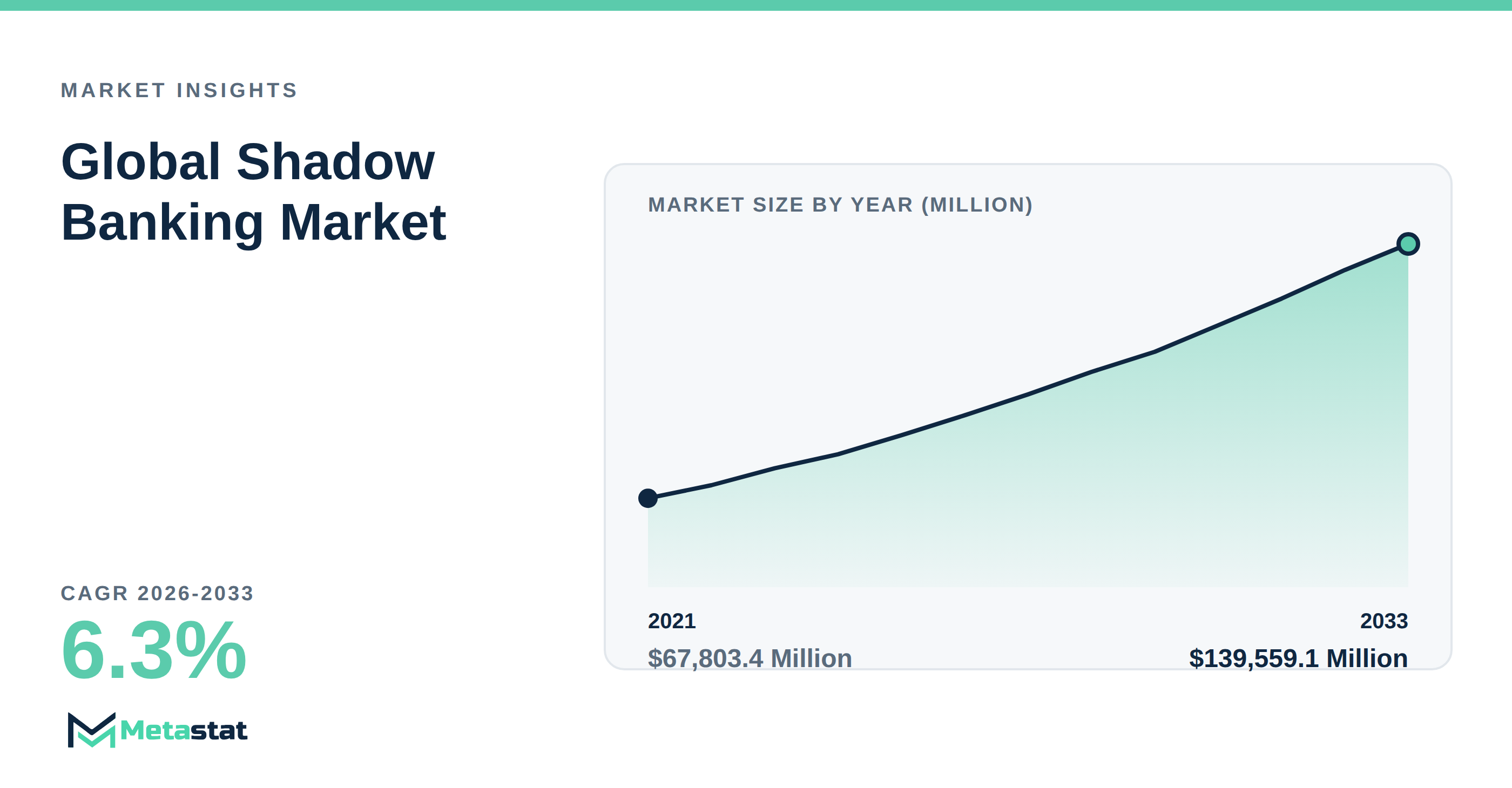
North America maintains a leading position in the Shadow Banking market, characterized by a sophisticated financial ecosystem and a well-established regulatory framework. The market achieved a valuation of USD 85,576.4 million in 2025, with projections indicating substantial growth driven by the increasing interest of institutional investors in private debt and alternative credit solutions.
Investment funds and money market funds are pivotal in this region, enhancing liquidity and offering a wide array of investment opportunities. This supportive environment stimulates competition among various financial intermediaries, including finance companies and broker-dealers, which helps promote innovation and improves service delivery. The adoption of advanced technologies including artificial intelligence enhances lending processes and boosts operational efficiency, further reinforcing North America's standing in the Shadow Banking market.
What challenges does Asia Pacific face in the Shadow Banking market?
Conversely, the Asia Pacific region grapples with unique challenges that impede its growth in the Shadow Banking market. Among these are regulatory inconsistencies and varying levels of financial infrastructure development across different nations. Rapid economic expansion in emerging markets leads to increased demand for alternative financing solutions; however, the lack of a robust regulatory environment often results in investor hesitation.
Concerns regarding data privacy and security complicate the landscape further, stifling innovation and reducing market participation. Geopolitical tensions introduce uncertainties that negatively impact cross-border investments and capital flows, constraining local players’ ability to compete effectively in the global marketplace.
How is technology influencing Shadow Banking growth in different regions?
Digital transformation plays a critical role in shaping the competitive dynamics between North America and Asia Pacific. Financial institutions in North America have widely embraced technology to enhance service delivery, streamline operations, and improve customer experiences. This trend successfully attracts a diverse clientele, including individuals and small to medium enterprises (SMEs), who are seeking adaptable financing options.
In contrast, Asia Pacific is in the early phases of digital adoption within the Shadow Banking market. While potential for rapid technological advancement exists, pre-existing infrastructure and regulatory obstacles impede the speed of adoption. However, with the emergence of financial technology firms and their increasing traction, a shift toward digital solutions is likely to accelerate, enabling the region to meet unmet funding demands more effectively.
What opportunities exist for non-bank financial institutions in both regions?
Opportunities for non-bank financial institutions (NBFIs) emerge from the evolving financial landscape in both regions. In North America, the ongoing expansion of private credit and mortgage REITs provides crucial capital for real estate investments and overall economic growth. This trend bolsters the resilience of the financial ecosystem, because institutions increasingly allocate resources to innovative structures and investment vehicles.
In Asia Pacific, NBFIs hold the potential to bridge the gaps left by traditional banks, particularly in extending financing to underserved segments like SMEs. This growing demand for alternative financing highlights the necessity for tailored solutions that cater to local market conditions and borrower preferences. While these institutions adapt to new opportunities, they effectively leverage technological enhancements to improve service delivery and strengthen their competitive positioning.
What does the future hold for the Shadow Banking market?
Looking ahead, the Shadow Banking market is anticipated to evolve significantly across both regions. North America's established position continues to encourage innovation and attract investment, while Asia Pacific presents promising growth potential if regulatory and infrastructural challenges are effectively addressed. The demand for alternative financing solutions across both regions opens avenues for NBFIs to broaden their reach and enrich their offerings.
By navigating the unique dynamics of each market, key players position themselves to capitalize on emerging trends, ensuring sustained growth and competitiveness in the Shadow Banking sector. The ongoing evolution of this industry will likely reshape financial services, creating diverse avenues for investment and promoting economic development.
For further insights into the regional dynamics and growth opportunities, readers explore the Global Shadow Banking Market.
Tags
About the Authors

LEAD ANALYST
Utkarsh Khirodkar is a Lead Market Research Analyst at MetaStat Insight, specializing in market intelligence, technology sector assessments, and competitive strategy.

PRINCIPAL CONSULTANT - ENTERPRISE AI & EMERGING TECHNOLOGIES
Banking & Finance · Electronics and Semiconductor · Energy and Power · Healthcare IT · Information & Technology · Professional Services
Vijay Gunti is a Principal Consultant at MetaStat Insight, bringing over two decades of experience across enterprise digital transformation, technology strategy, and intelligent systems.