
Explore the trajectory of the UK Sustainable Aviation Fuel market, focusing on regulatory changes, technological advancements, and unique feedstock opportunities.
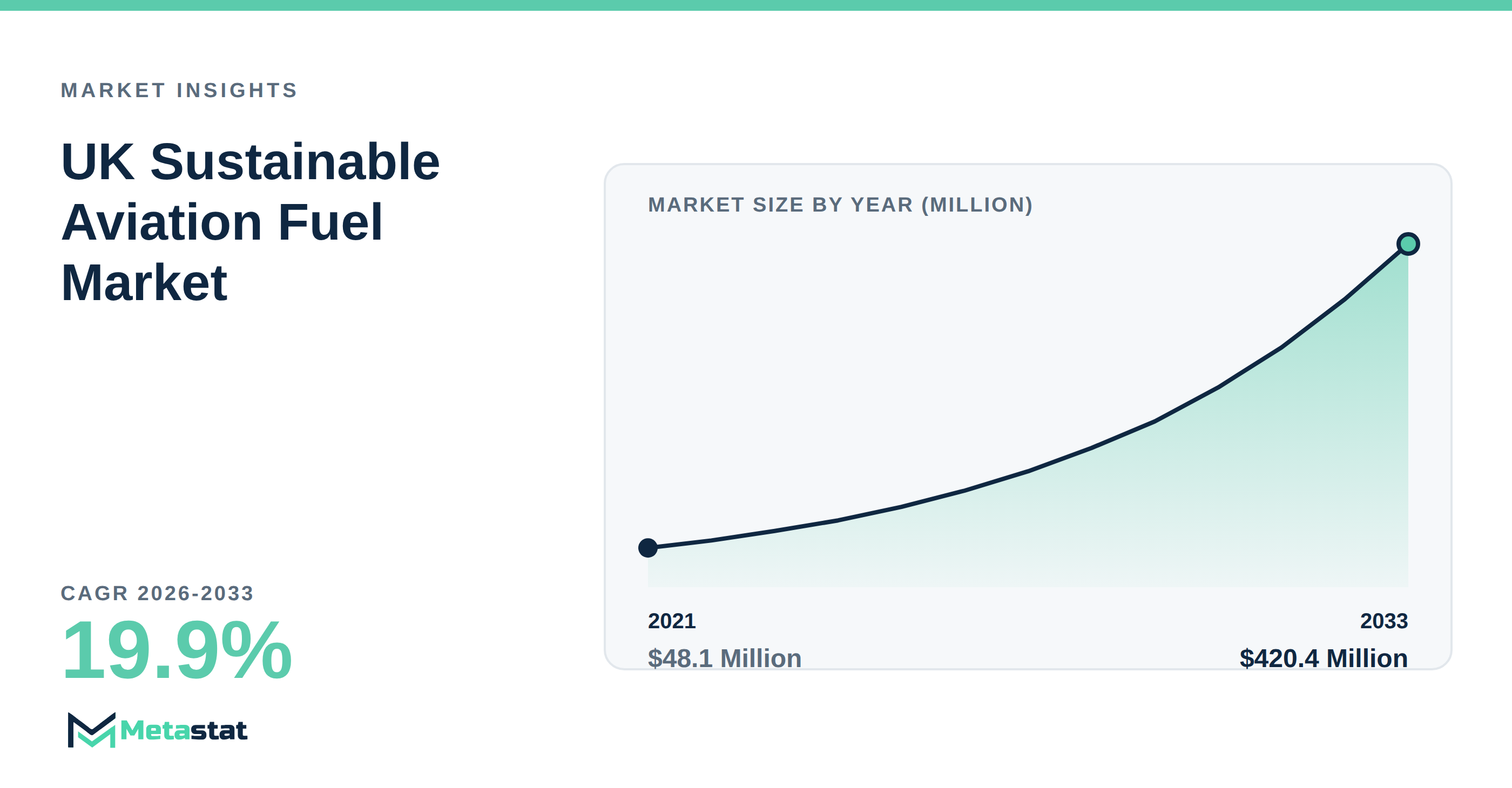
The projections for the UK Sustainable Aviation Fuel market indicate substantial growth, moving from a valuation of USD 98.4 million in 2025 to an impressive USD 420.4 million by 2033. This trajectory, reflecting a compound annual growth rate (CAGR) of 19.9%, signals a significant period for the aviation fuel sector because it adapts to meet rigorous sustainability mandates and changing consumer preferences.
What regulatory changes will influence the market?
The evolving regulatory framework in the UK is a primary driver of growth in the Sustainable Aviation Fuel market. Government initiatives focus on reducing carbon emissions from aviation, compelling airlines to prioritize cleaner fuels. Regulations emphasize the adoption of sustainable aviation fuels, creating an environment that incentivizes investment in production technologies and infrastructure. With regulatory pressures intensifying, companies that align their strategies with compliance requirements are poised to gain a competitive edge, enabling them to capture a share of the expanding market.
How will technological advancements impact production?
Technological innovations play a critical role in enhancing production capabilities within the UK Sustainable Aviation Fuel market. Advancements in various production pathways, including Hydroprocessed Esters and Fatty Acids (HEFA) and Waste/Biomass Gasification-to-Fischer-Tropsch, drive efficiency and cost-effectiveness. These technologies enable the conversion of renewable feedstocks into aviation fuel with improved yield, aligning with sustainability goals. While companies continue to invest in research and development, the maturation of these technologies will facilitate broader adoption and enhance market dynamics over the forecast period.
What challenges do market participants face?
High capital investment requirements present significant challenges for companies seeking to enter the UK Sustainable Aviation Fuel market. The considerable initial costs associated with establishing production facilities and adopting advanced technologies create barriers for smaller players and new entrants. Supply chain disruptions stemming from geopolitical fragmentation delay production timelines and impact material procurement. Organizations that effectively navigate these financial and logistical hurdles will be better positioned to capitalize on emerging opportunities within the market.
Which feedstock sources are gaining traction?
The UK Sustainable Aviation Fuel market features diverse feedstock options, each offering unique opportunities for growth. Used Cooking Oil stands out because a prominent renewable feedstock, with its segment projected to reach USD 150.5 million by 2033. The adoption of Agricultural Residues and Waste Animal Fats and Greases is increasing, driven by regulatory support and a focus on sustainability. Producers that prioritize these feedstocks while optimizing processing techniques will enhance their competitive positioning within the market, supported by growing demand from airlines aiming to fulfill their sustainability targets.
What should stakeholders watch for?
Stakeholders in the UK Sustainable Aviation Fuel market should remain vigilant regarding regulatory developments, technological advancements, and shifting market dynamics. Monitoring regulatory changes will be essential for companies to ensure compliance and leverage opportunities for growth. Investing in innovative production methods and fostering strategic partnerships enhance supply chain resilience and can lead to cost reductions. While the market evolves, businesses that prioritize sustainability and adapt to changing consumer expectations will strengthen their market positions and drive future success. For further insights, refer to the UK Sustainable Aviation Fuel Market.
Tags
About the Author

LEAD ANALYST
Utkarsh Khirodkar is a Lead Market Research Analyst at MetaStat Insight, specializing in market intelligence, technology sector assessments, and competitive strategy.