
Explore the top 20 Luxury Goods companies shaping the market, projected to grow from USD 392.7 Billion in 2025 to USD 684 Billion by 2033.
The Global Luxury Goods Market is valued at USD 392.7 Billion in 2025 and is projected to reach USD 684 Billion by 2033, growing at a CAGR of 7.1%. This market encompasses a wide variety of products including luxury apparel, accessories, and fragrances, driven by an increasing global demand for premium quality and exclusive brands. Factors contributing to market growth include a rising affluent population, increasing disposable income, and changing consumer preferences towards luxury goods.
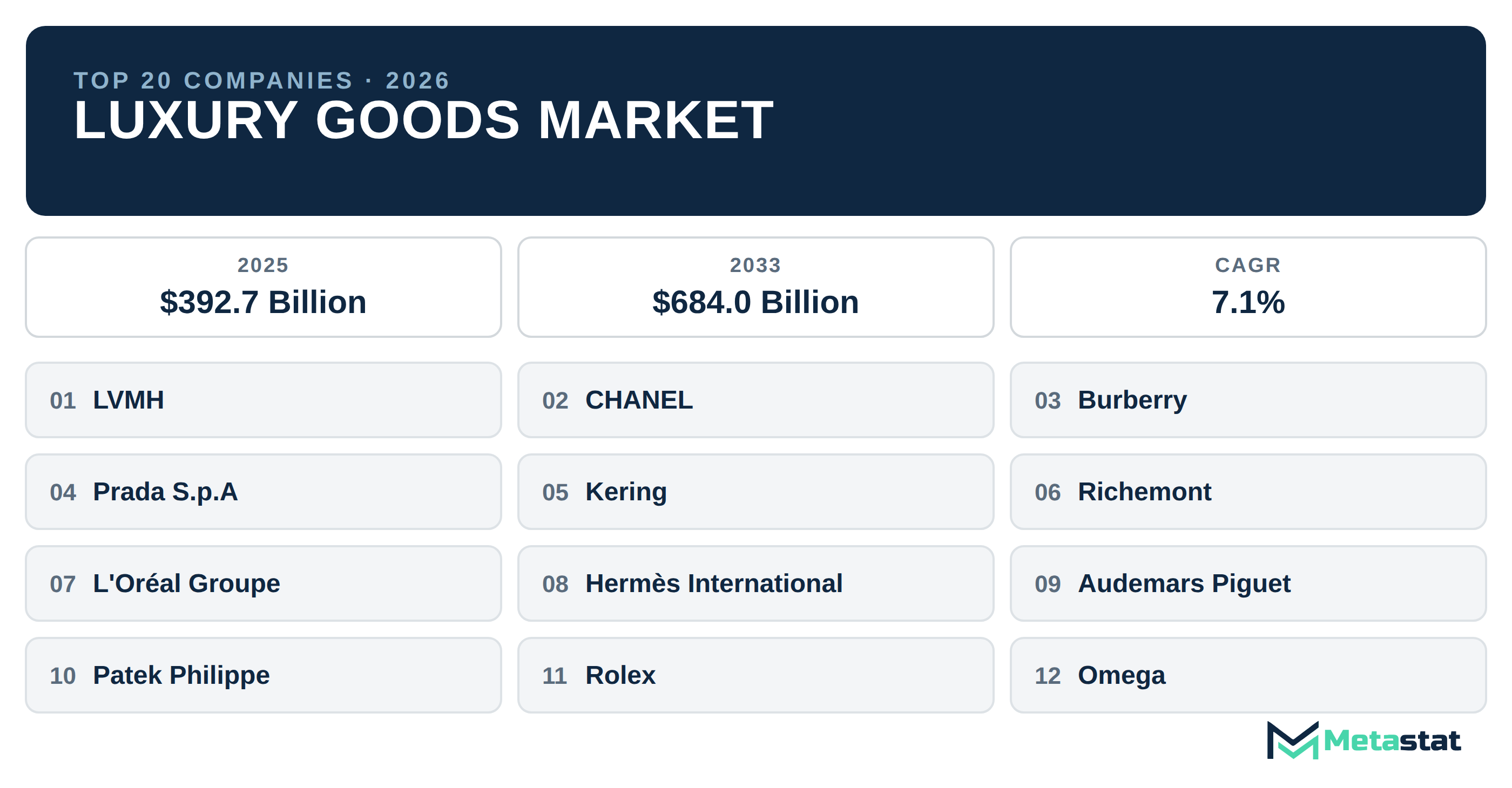
Global Luxury Goods Market Size, Data, & Statistics
The base year for the Global Luxury Goods Market is 2023, with a value of USD 344.1 Billion. This figure illustrates the strong consumer interest in luxury products and indicates a solid foundation for future growth. By 2025, the market size is expected to reach USD 392.7 Billion, reflecting substantial expansion in various luxury segments.
By 2033, the Global Luxury Goods Market is projected to reach USD 684 Billion, indicating significant growth in demand for luxury products. The compound annual growth rate (CAGR) from 2025 to 2033 is estimated at 7.1%, reinforcing the market's potential for sustained upward momentum.
Yearly market sizes show a consistent increase from USD 301 Billion in 2021 to USD 365.1 Billion in 2024, highlighting the growing allure of luxury items. The forecast through 2033 suggests continuing growth, with values reaching USD 557.6 Billion in 2030 and USD 642.7 Billion in 2032.
Regional shares indicate that Asia Pacific leads the market with 40.8%, followed by Europe at 29.6% and North America at 21.7%. South America contributes 3%, while the Middle East and Africa account for 5%. This distribution highlights the varying market dynamics across different regions.
Top 10 Trends in the Global Luxury Goods Market
Increased focus on sustainability
Luxury brands increasingly prioritize sustainable practices, responding to consumer demand for environmentally friendly products. This trend influences sourcing, production, and packaging, as consumers seek to align their purchases with ethical values.
Digital transformation in retail
The luxury retail sector embraces digital transformation, enhancing online shopping experiences through virtual try-ons and personalized marketing. This shift increases engagement with younger consumers who favor online purchasing.
Experiential luxury on the rise
Consumers seek experiences over products, driving luxury brands to offer unique events and immersive experiences. This trend emphasizes emotional connections with brands, enhancing customer loyalty and brand value.
Personalization of luxury goods
Customization options are expanding in the luxury market, allowing consumers to express individuality through personalized products. This trend creates deeper connections between brands and their customers.
Influencer collaborations reshape marketing
Partnerships with influencers redefine luxury marketing strategies, leveraging social media reach to connect with target audiences. These collaborations enhance brand visibility among younger consumers.
Health and wellness integration
Luxury brands integrate health and wellness into their offerings, responding to a growing consumer focus on well-being. This trend influences product development, from skincare to activewear.
Luxury second-hand market growth
The second-hand luxury market is experiencing significant growth as consumers seek sustainable options. This trend creates new revenue streams for brands and enhances brand value through resale platforms.
Expansion into emerging markets
Luxury brands expand into emerging markets, tapping into the growing affluent population in regions such as Asia and the Middle East. This trend signifies a shift in luxury consumption dynamics.
Integration of technology in products
Luxury goods increasingly incorporate technology, enhancing functionality while maintaining aesthetics. This trend appeals to tech-savvy consumers, blending luxury with innovation.
Revival of traditional craftsmanship
There is a renewed emphasis on traditional craftsmanship and artisanal techniques in luxury goods. This trend highlights the value of heritage and quality, attracting consumers who appreciate authentic products.
Top 20 Companies in the Global Luxury Goods Market
1. LVMH
Founded: 1987
LVMH is a prominent luxury goods conglomerate known for its extensive portfolio that includes fashion, cosmetics, and wines. The company operates various renowned brands, offering high-quality products characterized by elegance and sophistication. LVMH emphasizes innovation while preserving traditional craftsmanship, ensuring a unique identity for each of its brands.
2. CHANEL
Founded: 1910
CHANEL is an iconic luxury fashion brand recognized for its timeless designs and classic elegance. The company specializes in haute couture, ready-to-wear apparel, and luxury accessories, including its famed handbags and fragrances. CHANEL's commitment to quality and craftsmanship ensures its products remain synonymous with luxury and refinement.
3. Burberry Group plc
Founded: 1856
Burberry is a British luxury brand known for its distinctive tartan pattern and trench coats. It offers a range of products including apparel, accessories, and fragrances. The brand's heritage and commitment to quality craftsmanship set it apart in the luxury goods market, appealing to a global audience.
4. Prada S.p.A.
Founded: 1913
Prada is a leading fashion house renowned for its innovative designs and luxury leather goods. The company focuses on contemporary fashion, offering high-quality items that blend tradition with modern aesthetics. Prada's commitment to craftsmanship and unique style solidifies its position in the luxury market.
5. Kering
Founded: 1963
Kering is a global luxury group that manages a portfolio of prestigious brands including Gucci and Saint Laurent. The company emphasizes sustainability and responsible fashion, integrating these principles into its business model. Kering's diverse brand offering caters to varying consumer preferences, enhancing its market presence.
6. Richemont
Founded: 1988
Richemont is a luxury goods holding company known for its portfolio of prestigious brands in jewelry and watches, such as Cartier and Montblanc. The company focuses on quality and craftsmanship, assuring its products embody luxury and style. Richemont's strategic vision promotes growth in the luxury sector.
7. L'Oréal Groupe
Founded: 1909
L'Oréal Groupe is a leading global cosmetics and beauty company, known for its extensive range of beauty products. The company emphasizes innovation and quality, catering to diverse consumer needs with luxury cosmetics. L'Oréal's strong brand portfolio captures significant market share in the luxury beauty segment.
8. Hermès International S.A.
Founded: 1837
Hermès is a prestigious luxury brand recognized for its high-quality leather goods, fashion accessories, and fragrances. The company prides itself on traditional craftsmanship, ensuring each product reflects its heritage and exclusivity. Hermès' commitment to quality and design distinguishes it in the luxury market.
9. Audemars Piguet Holding SA
Founded: 1875
Audemars Piguet is a renowned watchmaker celebrated for its luxury timepieces. The company combines innovation with craftsmanship, producing distinctive watches that reflect artistry and precision. Audemars Piguet's dedication to quality and exclusivity positions it as a leader in the luxury watch sector.
10. Patek Philippe SA
Founded: 1839
Patek Philippe is a highly esteemed luxury watch manufacturer known for its heritage and craftsmanship. The brand focuses on creating exquisite timepieces, emphasizing mechanical innovation and elegance. Patek Philippe's commitment to quality ensures its watches remain symbols of prestige and luxury.
11. Rolex
Founded: 1905
Rolex is a prestigious Swiss watch manufacturer recognized for its luxury timepieces. The brand symbolizes success and sophistication, offering watches characterized by precision and durability. Rolex's commitment to innovation and quality establishes its strong presence in the luxury watch market.
12. Omega
Founded: 1848
Omega is a luxury watch brand known for its precision and innovation. The company has a rich history in watchmaking, producing timepieces that blend technology with elegance. Omega's dedication to quality and performance reinforces its reputation in the luxury watch industry.
13. Swarovski
Founded: 1895
Swarovski is a renowned producer of crystal jewelry and decorative items. The company emphasizes craftsmanship and creativity, offering products that enhance elegance and style. Swarovski's unique designs and quality crystal work distinguish it in the luxury goods market.
14. Pandora
Founded: 1982
Pandora is a global jewelry brand recognized for its customizable charm bracelets. The company focuses on affordable luxury, offering a range of stylish jewelry items. Pandora's commitment to quality and personalization appeals to diverse consumer preferences in the luxury segment.
15. Hugo Boss
Founded: 1924
Hugo Boss is a luxury fashion brand known for its sophisticated clothing and accessories for men and women. The company combines modern design with quality materials, catering to style-conscious consumers. Hugo Boss's strong identity in the luxury fashion market emphasizes elegance and professionalism.
16. Chow Tai Fook
Founded: 1929
Chow Tai Fook is a leading jewelry retailer in Asia, known for its high-quality gold and diamond products. The company emphasizes craftsmanship and tradition, appealing to a loyal customer base. Chow Tai Fook's extensive network of stores enhances its presence in the luxury goods market.
17. Tiffany
Founded: 1837
Tiffany is an iconic American luxury jewelry brand known for its exquisite engagement rings and silverware. The company's commitment to quality and craftsmanship ensures its products symbolize luxury and elegance. Tiffany's distinctive branding enhances its appeal in the luxury jewelry market.
18. Cartier
Founded: 1847
Cartier is a prestigious jewelry and watch brand celebrated for its luxury craftsmanship and design. The company offers a range of high-end products that embody elegance and sophistication. Cartier's heritage and commitment to quality solidify its status in the luxury goods sector.
19. Versace
Founded: 1978
Versace is a luxury fashion brand known for its bold designs and vibrant aesthetics. The company specializes in high-fashion clothing, accessories, and fragrances, appealing to a glamorous clientele. Versace's unique style and creativity differentiate it in the competitive luxury market.
20. Armani Group
Founded: 1975
Armani Group is a prominent luxury fashion house recognized for its sophisticated designs and high-quality apparel. The company offers a diverse range of products, including clothing and accessories, emphasizing elegance and style. Armani's commitment to quality craftsmanship secures its position in the luxury goods market.
Conclusion
The Global Luxury Goods Market is set for substantial growth, with a projected value of USD 684 Billion by 2033. The landscape is shaped by iconic Luxury Goods companies that reflect evolving consumer preferences and values. As brands embrace sustainability, digital transformation, and personalized experiences, they enhance their connections with consumers.
For stakeholders in the luxury sector, understanding the dynamics of these top Luxury Goods companies provides insights into market trends and opportunities. Engaging with these brands can lead to innovative approaches and new strategies for success in a competitive landscape.
Tags
About the Author

LEAD ANALYST
Utkarsh Khirodkar is a Lead Market Research Analyst at MetaStat Insight, specializing in market intelligence, technology sector assessments, and competitive strategy.