
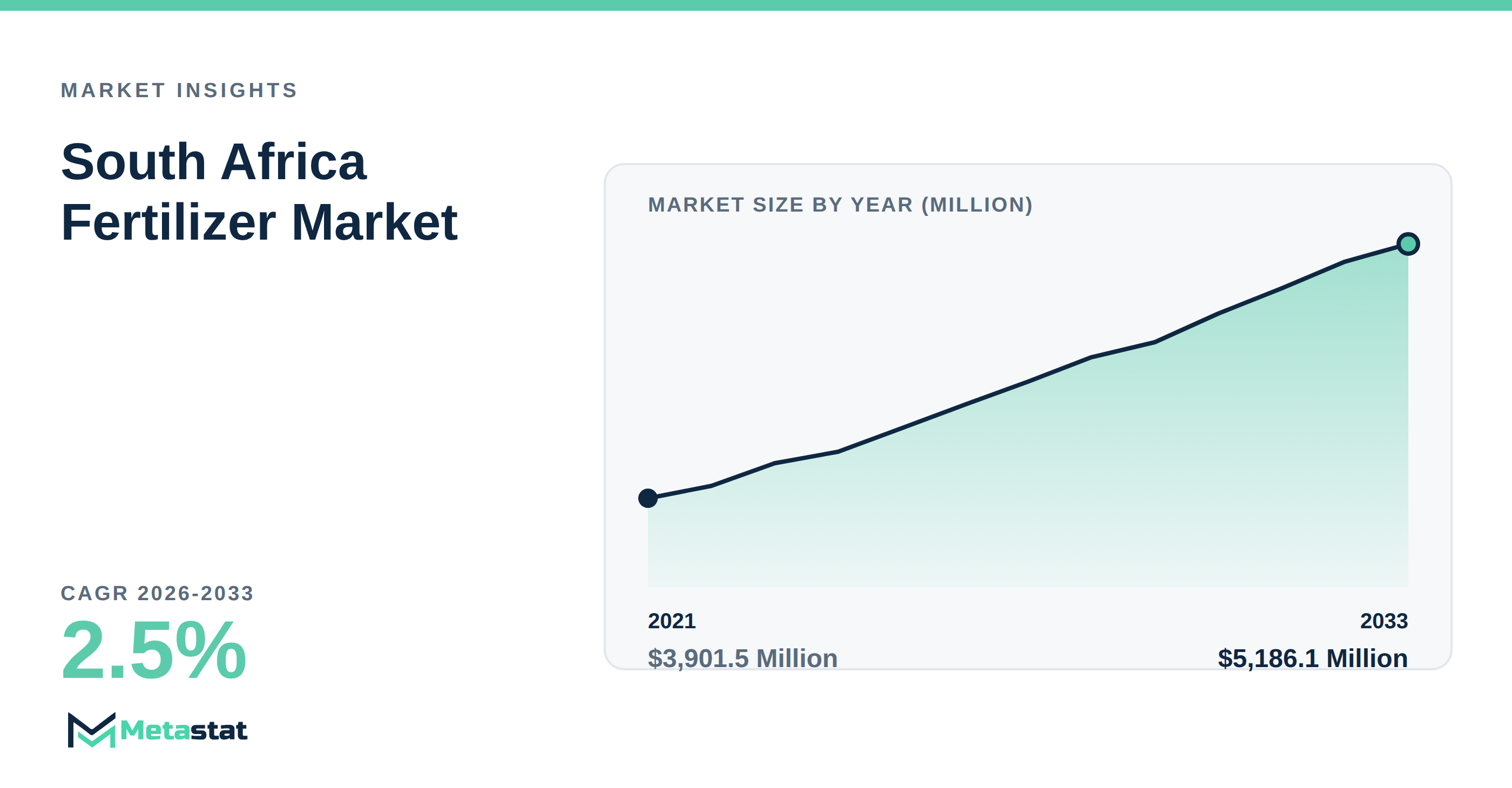
Explore key players and their strategic positions in the South Africa Fertilizer market, which is projected to reach USD 5,186.1 million by 2033.
The South Africa Fertilizer market is a dynamic space where agricultural innovation meets sustainability. With an anticipated market value reaching USD 5,186.1 million by 2033, understanding the competitive landscape becomes vital for stakeholders in this sector.
1. Mineral and inorganic fertilizers dominate market share
In the South Africa Fertilizer market, mineral and inorganic fertilizers constitute a significant portion, accounting for 85.4% of the total market share. This leadership is largely attributed to the increasing demand for improved agricultural productivity and higher crop yields. Farmers emphasize these fertilizers to meet the needs of a growing population, leading to robust adoption rates. Major companies including Omnia Holdings Limited and Kynoch Fertilizer reflect competitive strength in this sector. Their focus on supply chain resilience and technological enhancements in manufacturing processes further affirms their positions.
2. Rising popularity of organic fertilizers
The organic fertilizers segment is forecasted to reach USD 414.9 million by 2033, showcasing a compound annual growth rate (CAGR) of 5.8%. This growth derives from a rising consumer focus on sustainable agricultural practices and environmental health. Companies like Yara South Africa and Talborne Organics actively position themselves to meet this demand through investments in research and development aimed at enhancing organic product formulations. Their commitment to certifications and adherence to regulatory standards strengthens their market presence while appealing to eco-conscious consumers.
3. Technological advancements drive precision agriculture
Technological integration significantly influences the South Africa Fertilizer market, especially with precision agriculture gaining ground. Companies including ICL Growing Solutions South Africa utilize automation and data analytics to refine fertilizer application techniques. This transition enhances operational efficiency while reducing environmental impact. By effectively employing technology, producers better address the increasing consumer demand for sustainable solutions, which optimizes resource usage across various crop types, driving greater market expansion.
4. Regulatory compliance shapes operational strategies
Strict regulatory standards create challenges for market participants, particularly small and mid-sized enterprises. Companies like Foskor (Pty) Ltd and Sasol Limited face high capital investment requirements to meet compliance, which limits their operational capabilities. Ongoing fluctuations in raw material prices complicate pricing strategies and profit margins within the South Africa Fertilizer market. Firms are prioritizing the development of innovative solutions that align with regulatory demands, allowing them to navigate these complexities while retaining competitiveness.
5. Regional variations influence market dynamics
Regional disparities play a significant role in shaping the South Africa Fertilizer market. Gauteng, KwaZulu-Natal, and the Western Cape are key growth areas, with projected market values of USD 446 million, USD 928.3 million, and USD 829.8 million respectively by 2033. Companies that effectively understand local agricultural practices and adapt their product offerings accordingly, including AECI Limited and Afrifert, can successfully cater to regional needs. This tailored approach enhances their competitive positioning and builds customer loyalty across these provinces.
6. Growth in biofertilizers highlights sustainability trends
The biofertilizers segment is anticipated to grow at an impressive CAGR of 11.1%, reflecting increased demand for sustainable agricultural practices. Firms like Microbial Biological Fertilizers International (MBFi) are pioneering this movement, focusing on R&D of biofertilizer products that improve soil health and boost crop yields. This segment's expansion aligns with global trends favoring organic farming methodologies, presenting an opportunity for market players to innovate and broaden their product portfolios in line with consumer preferences.
Overall, the competitive landscape of the South Africa Fertilizer market underscores the necessity for innovation, compliance with regulatory frameworks, and responsiveness to regional needs. Organizations that strategically position themselves within these dynamics are likely to achieve favorable outcomes because the market heads toward its projected value by 2033.
The full analysis is in South Africa Fertilizer Market.
Tags
About the Author

LEAD ANALYST
Utkarsh Khirodkar is a Lead Market Research Analyst at MetaStat Insight, specializing in market intelligence, technology sector assessments, and competitive strategy.