
LEAD ANALYST
Utkarsh Khirodkar is a Lead Market Research Analyst at MetaStat Insight, specializing in market intelligence, technology sector assessments, and competitive strategy.

South Africa Fertilizer Market Size, Share, By Type (Mineral/Inorganic Fertilizers, Organic Fertilizers, Organo-Mineral Fertilizers, Biofertilizers), By Form (Granular and Prilled Fertilizers, Powder and Crystalline Fertilizers, Liquid Solution Fertilizers, Suspension and Flowable Fertilizers), By Crop Type (Cereals and Grains, Oilseeds and Pulses, Sugarcane, Fruits and Tree Crops, Grapes and Vineyards, Vegetables and Potatoes, Pasture and Forage, Turf, Ornamentals and Nursery), By Province (Gauteng, KwaZulu-Natal, Western Cape, Mpumalanga, Eastern Cape), Industry Analysis, Growth, Trends, and Forecast, 2026-2033
Report ID
MSI-5071
Published
August, 2026
Pages
251 Pages
Format
Historical
Base year
Forecast
Forecast period
Report Details
Choose Your License
South Africa Fertilizer Market
The South Africa Fertilizer market was valued at USD 4,255.1 million in 2025 and is projected to reach USD 5,186.1 million by 2033, growing at a CAGR of 2.5% over the forecast period.
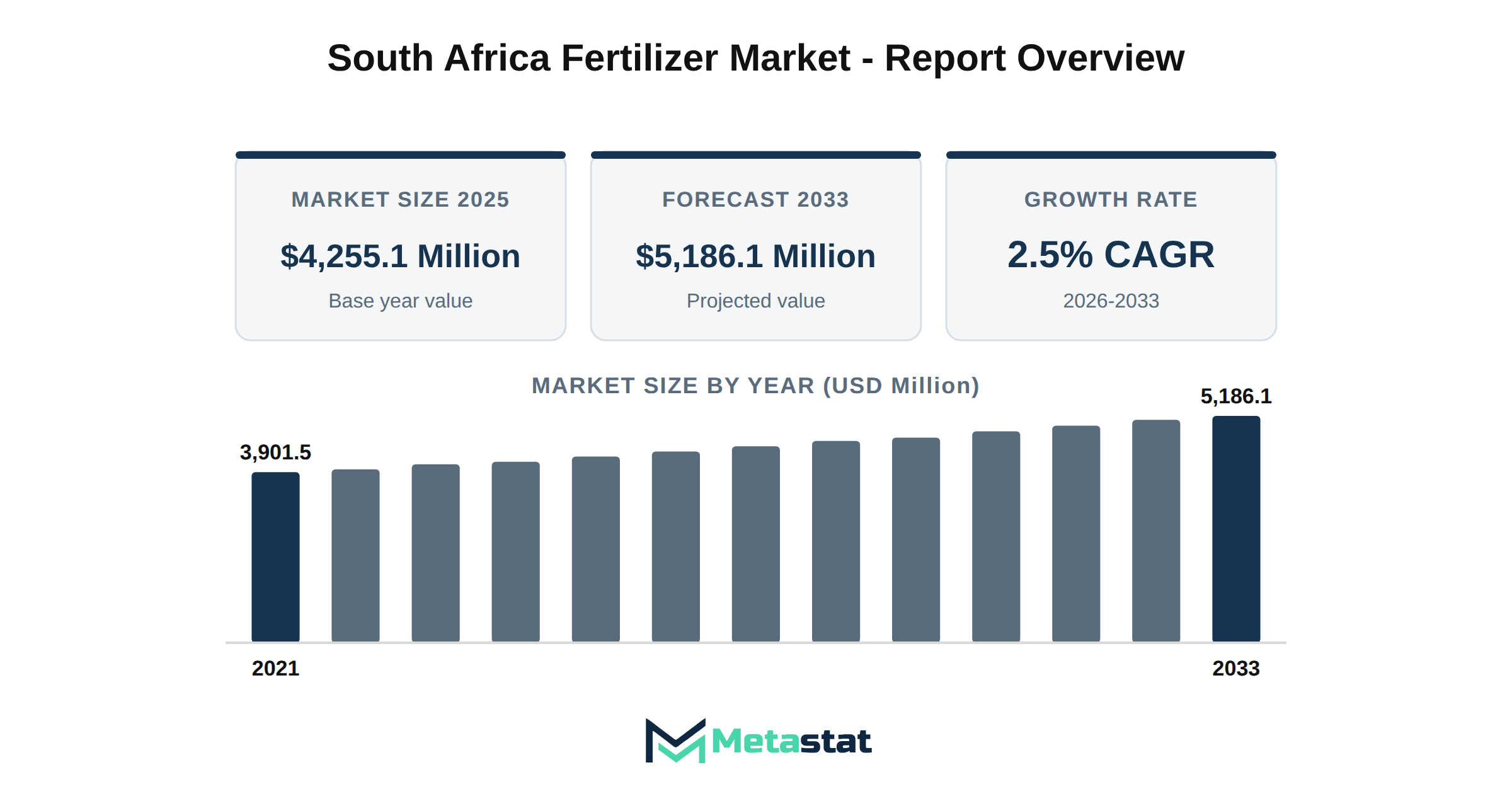
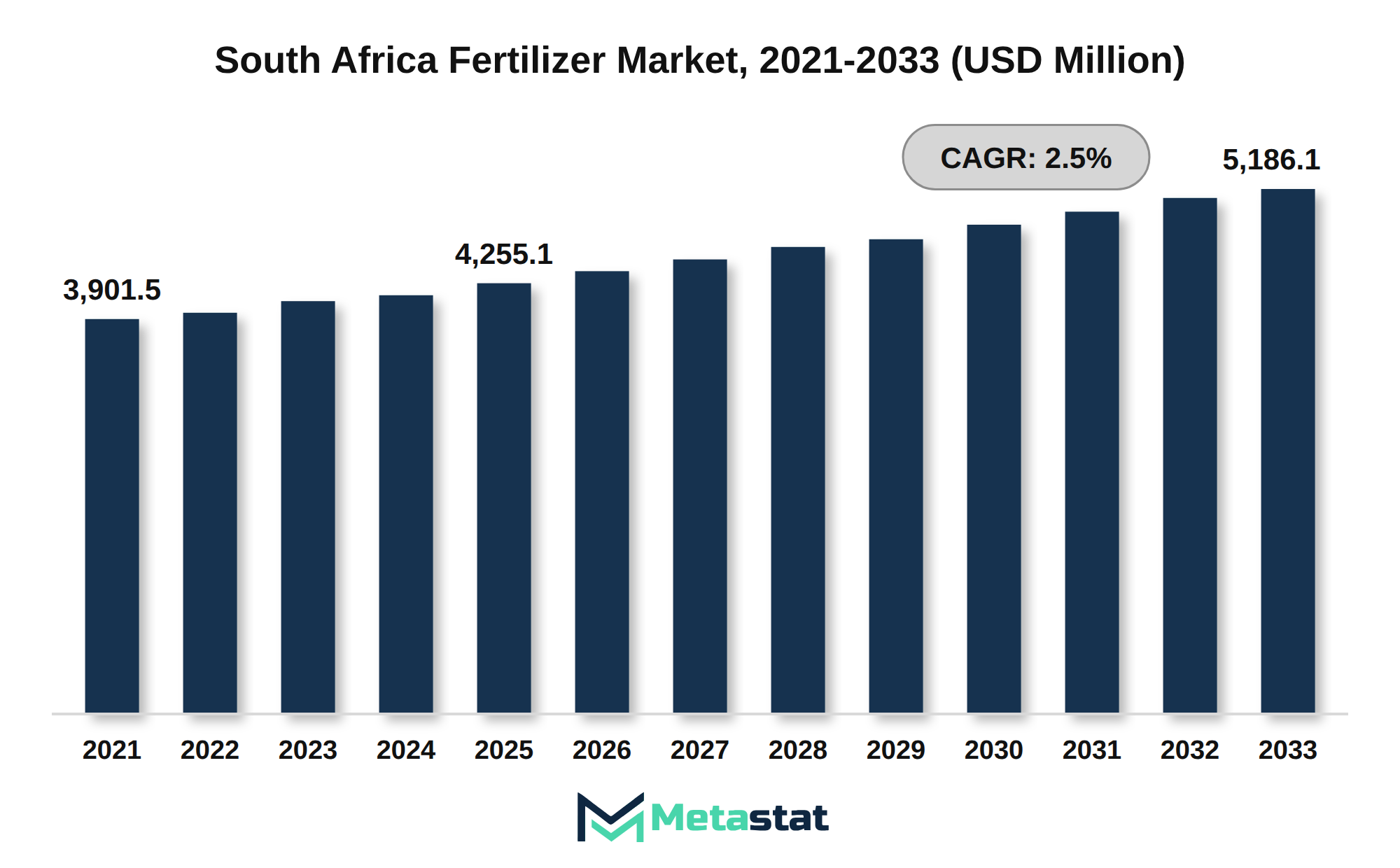
The South Africa Fertilizer market demonstrates significant growth potential, with a base value of USD 4,255.1 million in 2025 and an expected value of USD 5,186.1 million by 2033, reflecting a compound annual growth rate (CAGR) of 2.5%. Historical data indicates a steady increase, with the market growing from USD 3,901.5 million in 2021 to USD 4,136.4 million in 2024.
Demand for mineral and inorganic fertilizers remains dominant, accounting for 85.4% of the market share. Organic fertilizers follow, representing 6.2%, while organo-mineral fertilizers and biofertilizers hold shares of 4.2% each. The market's robust structure supports various segments, including granular and prilled fertilizers, which are expected to grow from USD 2,885.4 million in 2026 to USD 3,215.4 million by 2033.
Market dynamics reflect a diverse array of crop types, with cereals and grains leading demand. This segment is projected to grow from USD 1,469.9 million in 2026 to USD 1,664.7 million by 2033, driven by increasing agricultural productivity and technological advancements. Other significant segments include oilseeds and pulses, benefiting from a CAGR of 3.3%, alongside fruits and tree crops with a projected increase of 3.5%.
Regional distribution highlights Gauteng's significant contribution, with growth from USD 390.5 million in 2026 to USD 446 million by 2033. KwaZulu-Natal and the Western Cape exhibit strong performance, with projected values of USD 928.3 million and USD 829.8 million respectively by 2033. This geographical demand distribution reflects local agricultural preferences and economic conditions influencing fertilizer consumption.
The South Africa Fertilizer market faces various challenges that influence its dynamics. Regulatory compliance plays a critical role, because adherence to environmental standards impacts production processes and costs for manufacturers. Companies investing in sustainable practices demonstrate a commitment to reducing their ecological footprint, appealing to environmentally conscious consumers.
Supply chain disruptions have emerged because a significant concern, affecting the availability of raw materials and the timely delivery of products. Inflationary pressures contribute to rising costs, impacting profitability and pricing strategies across the market. Currency volatility further complicates this landscape, with fluctuations affecting import costs and overall market stability.
Research and development trajectories focus on next-generation innovations, including the development of biofertilizers and organic alternatives. These innovations align with the growing emphasis on sustainable transformation within the agricultural sector. The market experiences a shift toward decarbonization, with stakeholders prioritizing eco-friendly solutions that contribute to a circular economy.
Market fragmentation characterizes the competitive environment, with numerous players operating across various segments. Mergers and acquisitions present opportunities for consolidation, enabling companies to enhance their market share and expand their product offerings. Strategic capital allocation remains essential for companies aiming to invest in infrastructure and technological advancements.
The customer journey dynamics evolve in response to changing consumer preferences, with increasing demand for organic and sustainable products. Companies that effectively address these preferences position themselves favorably within the South Africa Fertilizer market. Future strategic outlooks suggest a focus on innovation and sustainability, driving long-term growth and competitiveness.
Infrastructure development in South Africa enhances the growth of the fertilizer market. Investment in transportation, storage facilities, and production plants improves efficiency and reduces operational costs. Improved infrastructure enables better access to agricultural areas, facilitating timely delivery of fertilizers, which aligns with the agricultural sector's demand for timely inputs.
While infrastructure upgrades occur, production capacity expands, leading to increased market supply and lower prices for consumers. Enhanced logistics systems support the distribution of fertilizers across various provinces, including Gauteng and KwaZulu-Natal. These developments benefit producers and create opportunities for farmers by providing a more reliable supply chain.
Continuous investment in infrastructure supports growth in fertilizer consumption within the South Africa Fertilizer market. The interconnectivity of urban and rural areas contributes to streamlined operations, ultimately enhancing agricultural productivity that fuels demand for fertilizers. This trend positions the market favorably for sustained growth during the forecast period.
Technological integration significantly impacts the South Africa Fertilizer market, enhancing operational efficiency and productivity. Automation and software adoption improve production processes, enabling manufacturers to optimize resource utilization and reduce operational costs. These advancements create a competitive environment, allowing firms to adapt to evolving market demands and consumer preferences while streamlining supply chains.
The increasing focus on digital transformation supports data-driven decision-making, leading to improved forecasting and inventory management. Companies leveraging advanced technologies gain insights into market trends and consumer behavior, facilitating better alignment of product offerings with market needs. This technological shift is expected to drive growth in the sector, reinforcing the importance of continuous innovation in the South Africa Fertilizer market.
The move towards automation and AI integration creates a more agile production landscape and enhances the ability of companies to respond to challenges associated with labor optimization and process efficiency. Investments in these technologies are anticipated to create new revenue streams and contribute to the long-term sustainability of the market, positioning it favorably against global competitors.
The South Africa Fertilizer market encounters significant hurdles owing to stringent regulatory compliance requirements. These regulations impose high capital investment requirements, compelling producers to allocate substantial resources to meet standards. Small and mid-sized enterprises, in particular, face challenges in adapting to these mandates, which restrict their operational capabilities and limit market participation.
Macroeconomic conditions further complicate the landscape. Inflationary pressures increase operational costs, influencing pricing strategies and profit margins. The market experiences heightened competition driven by companies striving to maintain profitability while complying with regulations and managing costs. This scenario discourages new entrants, leading to a stagnant market environment.
Supply chain disruptions contribute additional strain, particularly with the procurement of raw materials necessary for fertilizer production. Geopolitical instability exacerbates these disruptions, leading to uncertainty in availability and pricing. Producers struggle to ensure reliable supply chains, impacting their ability to meet customer demands and fulfill contracts, thus affecting overall market growth.
Technological obsolescence presents another critical challenge within the South Africa Fertilizer market. Organizations investing in outdated technologies face increased operational inefficiencies and difficulties in competing with firms employing more advanced solutions. This technological gap hinders the adoption of emerging practices that improve productivity and sustainability.
Market fragmentation poses a barrier to collaboration and innovation. Numerous small players operate alongside larger firms, complicating collective efforts to influence policy or enhance industry standards. This fragmentation dilutes the market's ability to present a united front in addressing regulatory challenges and pursuing growth opportunities.
The South Africa Fertilizer market experiences substantial challenges stemming from geopolitical fragmentation, leading to trade deficits and tariff friction. Variability in international relationships significantly impacts the flow of raw materials and finished products, creating unpredictability for suppliers and buyers. Tariffs and trade restrictions increase costs for agricultural inputs, straining profit margins for local producers.
Technological disruptions further complicate the operating environment within the market. Rapid advancements in agricultural technology often require complex research and development integrations, which strain resources and operational capacity. This complexity results in interoperability challenges, preventing effective adoption of new solutions across diverse agricultural practices.
Supply chain instability rooted in geopolitical fragmentation causes delays in delivery and increases in logistics costs. Regional regulatory standards evolve continuously, adding compliance overhead for market participants. These factors collectively tighten margins and pressure pricing strategies, hindering profitability and market competitiveness.
Environmental and sustainability demands complicate the operational landscape. Stakeholders face rising input costs associated with meeting decarbonization mandates and addressing environmental lifecycle footprints. The emphasis on sustainable practices drives innovation; however, the transition adds layers of complexity, impacting investment decisions within the South Africa Fertilizer market.
In addition to these challenges, workforce skill gaps and talent retention pressures hinder operational efficiency. The market requires skilled labor to implement advanced agricultural technologies and operational processes effectively. Companies adapt to evolving market and regulatory conditions, making talent development critical to maintaining a competitive advantage.
Recent trends in the South Africa Fertilizer market show a growing demand for niche applications, driven by the increasing focus on sustainability and environmental stewardship. This shift results in heightened interest among producers to diversify their product offerings, particularly in organic and biofertilizers, which align with eco-friendly practices. The market’s adoption of biofertilizers, projected to grow at a compound annual growth rate of 11.1%, highlights significant opportunities in this segment.
Technological disruptions play a crucial role in the expansion of precision agriculture, enabling farmers to optimize input usage and improve crop yields. Advanced applications including soil health monitoring and data analytics facilitate targeted fertilizer use, reducing waste and environmental impact. This transformation attracts investments in R&D and innovative solutions that cater to varied crop types, including cereals, fruits, and vegetables.
In response to shifting buyer behaviors, digital procurement channels are gaining traction among distributors and retailers in the market. Stakeholders becoming more accustomed to online platforms promotes greater efficiency in supply chain management and product accessibility. Enhanced digital engagement allows producers to reach a broader audience, driving sales growth in emerging regional markets.
Strategic consolidation among key players further shapes the market. Collaborations and partnerships enable firms to pool resources, share expertise, and expand their product portfolios in response to evolving consumer preferences. This consolidation supports the introduction of next-generation innovations and reinforces competitive positioning in the South Africa Fertilizer market.
Overall, the convergence of sustainability imperatives, technological advancements, and evolving market dynamics presents substantial growth opportunities. Companies that effectively utilize these trends enhance their market presence and contribute to the sector's long-term viability.
The South Africa Fertilizer market is segmented based on Type, Form, Crop Type, and Province.
Valued at USD 3,702.1 million in 2026, the Mineral/Inorganic Fertilizers segment is projected to reach USD 4,040 million by 2033, achieving a CAGR of 1.3% during the forecast period. Demand for mineral and inorganic fertilizers stems from their crucial role in enhancing agricultural productivity, driven by the need for higher crop yields to support the growing population in South Africa. Adoption of these fertilizers aligns with global trends toward increased food security, pushing farmers to employ effective nutrient management strategies.
Regulatory compliance shapes the market dynamics, driven by various standards that govern fertilizer use to mitigate environmental impacts. Farmers face pressures related to cost structures, while pricing volatility remains a prominent concern. Fluctuations in raw material prices directly influence the profitability of mineral and inorganic fertilizers, compelling producers to adopt strategies that enhance supply chain resilience.
Technological advancements contribute to product evolution within the segment. Innovations in formulation and application methods enhance the efficiency of mineral/inorganic fertilizers, leading to improved crop responses and reduced environmental footprints. These developments drive market expansion, particularly because end-users increasingly seek sustainable farming solutions. The South Africa Fertilizer market anticipates growth in this sub-segment, driven by evolving agricultural practices and a persistent focus on sustainability.
Organic Fertilizers exhibit a promising trajectory within the South Africa Fertilizer market, estimated to reach USD 414.9 million by 2033, at a CAGR of 5.8% during the forecast period. Growing consumer awareness regarding sustainable agriculture and environmental health drives demand for organic options. This shift aligns with a global trend towards eco-friendly practices, influencing producers to adopt organic fertilizers to meet regulatory standards and consumer preferences.
Investment in research and development enhances innovation in organic fertilizer products, improving their effectiveness and applicability across various crops. The segment's expansion is supported by technological advancements that improve the efficiency of organic formulations, making them competitive with traditional fertilizers. Increased adoption of organic farming practices strengthens the market, driven by farmers seeking to optimize yield while adhering to sustainable practices.
End-use dynamics shift towards more diverse crops, with a notable uptick in demand for organic fertilizers among horticultural and specialty crop growers. These changes influence consumption patterns, requiring suppliers to adapt their offerings to meet specific crop needs. Organic fertilizers present a strategic opportunity for growth, appealing to environmentally conscious consumers and aligning with global sustainability goals.
Regulatory compliance and certifications play an essential role in the market's evolution. Growing government initiatives supporting organic farming enhance market confidence, encouraging investments and partnerships. The emphasis on organic practices contributes to a favorable cost structure, promoting long-term viability and profitability for producers within the segment.
Growth in the Organo-Mineral Fertilizers segment reflects increasing awareness among agricultural producers regarding sustainable practices. The demand for organic farming techniques drives this shift, with consumers seeking products that align with environmentally friendly standards. Regulatory compliance and certification requirements further support growth, encouraging producers to adopt organo-mineral solutions that enhance soil fertility while minimizing environmental impact. The market is projected to reach USD 311.2 million by 2033.
Technological advancements contribute significantly to product evolution within the segment. Innovations in formulations and application methods enhance the effectiveness of organo-mineral fertilizers. Market participants invest in research and development to optimize product performance, aligning with the evolving needs of farmers seeking efficient nutrient delivery systems. Rising adoption of these fertilizers results in consumption shifts across various crop types, with cereals and grains experiencing notable increases in usage.
Strategic opportunities arise from the increasing adoption of precision agriculture techniques. These methodologies allow for targeted application of organo-mineral fertilizers, improving efficiency and reducing waste. The relationship between technology and agricultural practices positions the segment for sustained growth, making it a vital component of the South Africa Fertilizer market.
Anticipated growth within the Biofertilizers segment reflects increasing demand for sustainable agricultural practices in the South Africa Fertilizer market. This segment is projected to grow at a CAGR of 11.1% during the forecast period, driven by rising awareness among farmers regarding the environmental benefits of biofertilizers. Enhanced crop yields and soil health influence adoption rates, alongside the push for organic farming methodologies. Regulatory compliance standards promoting sustainable practices support market expansion, attributed to government encouragement of lower chemical input in agriculture.
Technological advancements in biofertilizer production processes contribute to the segment's growth, facilitating the development of next-gen biofertilizer products. These innovations improve efficacy and usability, appealing to a broader range of end-users. Increased research and development investments in this area enhance product evolution while enabling new applications across various crop types, including cereals, fruits, and tree crops.
Consumption shifts toward organic and eco-friendly agricultural products drive significant demand for biofertilizers within the market. Farmers recognize the economic benefits associated with reduced chemical fertilizer reliance, which translates into cost savings over time. The combination of rising consumer preference for organic produce and stringent regulatory frameworks supports the segment's robust outlook. Awareness of the economic and ecological benefits of biofertilizers grows, positioning the market for continued expansion.
Valued at USD 2,885.4 million in 2026, the Granular & Prilled Fertilizers segment is projected to reach USD 3,215.4 million by 2033, at a CAGR of 1.6% during the forecast period. Demand for Granular & Prilled Fertilizers is driven by the growing agricultural sector in South Africa, which emphasizes crop yields and soil health. Farmers seek fertilizers that provide long-lasting nutrient release, enhancing soil fertility and ensuring optimal plant growth. The segment benefits from a trend toward precision agriculture, where granular fertilizers allow for more controlled application rates, reducing the risk of nutrient runoff. Adoption of advanced formulation techniques contributes to segment expansion, with innovations leading to products with improved solubility and effectiveness. Manufacturers invest in research and development to create next-generation granular fertilizers that incorporate slow-release technology, catering to diverse crop requirements. Regulatory compliance with environmental standards influences product development, leading to increased investments in sustainable practices across the market. Cost structures in the segment reflect fluctuations in raw material prices, impacting profitability for suppliers. Recent price volatility has prompted manufacturers to optimize production processes and enhance supply chain resilience. The shift toward environmentally friendly products creates strategic opportunity windows for businesses that offer certified organic or bio-based granular fertilizers. Consumer awareness of sustainable agriculture drives demand for these innovative solutions, positioning the Granular & Prilled Fertilizers segment because a key player in the South Africa Fertilizer market.
Growth in the Powder & Crystalline Fertilizers segment reflects increasing demand for specialized products that enhance agricultural productivity. The segment is projected to reach USD 881.6 million by 2033, at a CAGR of 3.2% during the forecast period. Increasing adoption of efficient farming practices drives demand for these fertilizers, particularly in the cereals and grains crop type, where performance optimization is crucial for yield enhancement.
Technological maturation in fertilizer formulations enables the introduction of next-generation products that cater to specific crop needs. These advancements facilitate better nutrient availability and uptake, aligning with contemporary agricultural practices aimed at sustainability and productivity. The market benefits from shifts in consumption patterns toward more precise and effective fertilization methods, contributing to segment expansion. This shift supports growth in the segment.
Regulatory compliance standards regarding environmental impact and product efficacy influence market dynamics. Fertilizer producers focus on obtaining necessary certifications to meet these standards, ensuring products align with sustainable practices while maintaining competitive pricing. Margin pressures resulting from fluctuating raw material costs affect pricing strategies, prompting manufacturers to innovate and optimize their product offerings. These pressures challenge market stability.
Investment in research and development remains crucial for capturing strategic opportunity windows in the market. Firms seek to enhance product portfolios with solutions that address emerging challenges in agriculture, positioning themselves favorably in a competitive landscape. Continued capital investment in the Powder & Crystalline Fertilizers segment positions it because a vital component of the South Africa Fertilizer market.
Growth in the Liquid Solution Fertilizers segment reflects increased demand for efficient and easily applicable nutrient solutions among agricultural producers. Agricultural trends prioritize solutions that enhance crop productivity with minimal environmental impact, driving adoption within the sector. Liquid fertilizers provide flexibility in application and integration into various farming practices, appealing to an expanding base of users.
Valued at USD 829.8 million by 2033, this segment experiences growth correlating with rising awareness of sustainable agricultural practices and the need for optimized nutrient delivery systems. Farmers increasingly recognize the benefits of liquid fertilizers in maintaining soil health and improving yield quality, propelling demand further.
Regulatory compliance significantly shapes the dynamics of the market. Stricter environmental regulations encourage the shift towards more sustainable options, prompting producers to innovate within the segment. Investment in research and development drives product evolution, leading to the introduction of next-generation liquid fertilizers that offer advanced features including enhanced nutrient uptake and reduced leaching.
Competitive pressures necessitate strategic opportunity windows for suppliers. Companies invest in marketing and distribution networks to capitalize on the growth in this segment. Improved supply chain resilience ensures a steady flow of raw materials, maintaining competitive pricing while addressing margin pressures stemming from fluctuating production costs. Advancements in the Liquid Solution Fertilizers segment highlight its importance within the South Africa Fertilizer market.
In the South Africa Fertilizer market, the Suspension & Flowable Fertilizers segment is projected to grow at a CAGR of 5% during the forecast period. This growth results from increasing demand for versatile fertilizer solutions that enhance nutrient uptake efficiency in crops. Agricultural practices increasingly adopt these fertilizers owing to their ability to facilitate better application rates and reduce waste, leading to cost savings for farmers.
Product innovation contributes significantly to this segment's expansion. Manufacturers focus on developing advanced formulations that integrate micronutrients, improving overall crop health and yield. This evolution aligns with broader trends in sustainable agricultural practices, where effective resource management is crucial.
The market benefits from a shift toward environmentally friendly farming solutions, prompting a rise in demand for Suspension & Flowable Fertilizers. Regulatory compliance around chemical inputs in agriculture enhances the attractiveness of these fertilizers, driving adoption across various crop types. The growing emphasis on organic farming practices further supports this trend, driven by these fertilizers appealing to producers seeking sustainable options.
Pricing dynamics within the segment reflect fluctuations in raw material costs, impacting margins for producers. The value proposition offered by Suspension & Flowable Fertilizers, combined with their effectiveness in maximizing yields, positions them because a strategic choice within the broader fertilizer market. Investment in research and development will likely lead to improved formulations, supporting long-term growth and adoption in the South Africa Fertilizer market.
Cereals & Grains exhibit a significant position within the South Africa Fertilizer market, valued at USD 1,469.9 million in 2026 and projected to reach USD 1,664.7 million by 2033, at a CAGR of 1.8% during the forecast period. Demand drivers for this segment include the rising population and increasing food security requirements, prompting farmers to enhance yield through optimized fertilization practices. Adoption of advanced fertilization strategies, including precision agriculture techniques, supports segment growth, enabling precise nutrient application and improved crop productivity.
Regulatory compliance standards regarding environmental sustainability push manufacturers to develop eco-friendly fertilizers. These shifts in consumption patterns emphasize the increasing preference for fertilizers that promote soil health and sustainability. Pricing volatility in raw materials presents challenges for producers; however, strategic sourcing and supply chain resilience strengthen market stability. The evolving conditions of the South Africa Fertilizer market highlight the importance of innovation and product evolution to meet the changing needs of cereal farmers.
End-use dynamics reflect a growing reliance on fertilizers that enhance soil fertility and crop quality, ensuring that Cereals & Grains maintain a competitive edge. While farmers adapt to climate challenges and strive for higher yields, the demand for effective fertilizer solutions continues to rise. Overall, the projected growth for the Cereals & Grains segment illustrates its vital role in the broader context of agricultural productivity and food supply within the South Africa Fertilizer market.
Growth in the Oilseeds & Pulses segment reflects increasing adoption driven by rising consumer demand for plant-based proteins and sustainable agricultural practices. This segment is estimated to reach USD 777.9 million by 2033, at a CAGR of 3.3% during the forecast period. Expanding applications in various food production processes drive investments in advanced fertilizers tailored for oilseeds and pulses, enhancing yield and quality. Regulatory compliance standards increasingly influence the selection of fertilizers, prompting suppliers to innovate in product formulations that align with sustainable practices. The market's focus on eco-friendly solutions contributes to the growing integration of organic and bio-based fertilizers within oilseed and pulse cultivation. Strategic opportunities exist for suppliers to introduce next-generation fertilizers that enhance agronomic performance while addressing evolving consumer preferences in the South Africa Fertilizer market.
In the South Africa Fertilizer market, the Sugarcane segment experiences notable potential, driven by increasing demand for sugarcane production. The growing preference for biofuels and renewable energy sources increases demand for sugarcane, which influences fertilizer application. This segment's anticipated value of USD 492.7 million by 2033 underlines its significance and prospective growth in the market.
Technological advancements in fertilizer formulations enhance nutrient efficiency, making them more appealing for sugarcane growers. This evolution supports higher yields and better crop quality, crucial for meeting growing market demands. Regulatory compliance regarding fertilizer use in agricultural practices ensures that producers adopt environmentally sustainable options, further supporting the segment's growth trajectory.
Price volatility in raw materials impacts production costs, creating margin pressures for suppliers. However, strategic opportunities for capital investment in innovation and technology continue to attract stakeholders in the sector. The Sugarcane segment, with its specific dynamics, contributes to broader trends shaping the South Africa Fertilizer market, reflecting ongoing shifts in consumption and application strategies.
Increasing recognition of sustainable agricultural practices drives demand for fertilizers tailored for fruits and tree crops. Farmers prioritize product efficacy and soil health, promoting organic and biofertilizer use that aligns with eco-friendly initiatives. This segment is projected to grow at a CAGR of 3.5% during the forecast period, reflecting shifts towards environmentally responsible farming. The evolving conditions of the South Africa Fertilizer market support this trend, enabling producers to innovate and enhance their offerings.
Investment in advanced technologies and research drives product evolution, ensuring fertilizers meet the specific nutritional needs of fruits and tree crops. Enhanced formulations improve yield and quality, providing a competitive edge in the market. Regulatory compliance, particularly concerning environmental standards, influences product development and adoption rates. Tightening regulations increase the importance of adherence to these standards for market participants aiming to maintain their presence within the sector.
Pricing volatility in raw materials impacts profit margins, compelling suppliers to optimize sourcing strategies. Increased competition among manufacturers leads to pricing pressures, necessitating efficiency improvements in production processes. Strategic opportunities arise for businesses that capitalize on niche markets, including organic fertilizers, which cater to the growing consumer preference for sustainably produced food. Insights into market dynamics and consumer behavior shape future investments, guiding participants in the South Africa Fertilizer market towards strategic growth.
Growing interest in sustainable agricultural practices influences demand for fertilizers tailored to the unique requirements of grapes and vineyards. Cultivation methods increasingly emphasize organic and environmentally friendly inputs, driving adoption among producers aiming to enhance grape quality and yield. The rising popularity of premium wines and organic grape products boosts the need for high-performance fertilizers, enabling producers to meet consumer expectations for quality and sustainability.
Technological advancements contribute to the evolution of fertilizer products for grapes and vineyards, leading to enhanced formulations that improve nutrient uptake efficiency. Innovations in application techniques optimize fertilizer use, promoting better absorption and reducing environmental impact. These developments align with the trend toward precision agriculture, allowing producers to achieve targeted results while managing costs effectively.
Regulatory compliance shapes the segment, with stricter standards for agricultural inputs encouraging the transition toward certified organic fertilizers. Increased focus on certifications ensures that fertilizers used in grape production meet quality and safety benchmarks, reassuring consumers about the integrity of their wine and grape products. This compliance supports market growth and aligns with global trends toward sustainable agriculture.
Price volatility in raw materials impacts the cost structures of fertilizers tailored for this segment. Fluctuations in the prices of key ingredients pressure margins, leading producers to seek alternative sources or innovative formulations that balance cost and performance. Such challenges create a resilient supply chain, encouraging collaboration between suppliers and producers to navigate market changes effectively.
Downstream application dynamics highlight the importance of aligning fertilizer solutions with the specific needs of grape cultivation. Producers prioritize customized approaches that address the diverse nutrient requirements across different grape varieties. This targeted strategy maximizes yield potential and quality, reinforcing the segment's importance within the South Africa Fertilizer market.
Increasing interest in sustainable farming practices drives demand for fertilizers tailored to Vegetables & Potatoes within the South Africa Fertilizer market. This sub-segment benefits from a growing consumer preference for fresh produce, emphasizing the need for enhanced crop yields and quality. Producers increasingly adopt innovative agricultural techniques, leading to a higher demand for specific nutrient formulations. Enhanced formulations improve soil health and crop output, attracting investments in research and development for advanced fertilizer products.
Regulatory compliance with environmental standards influences market dynamics. Farmers focus on organic and eco-friendly fertilizer options to meet these standards, contributing to market growth. The evolving agricultural landscape requires the segment to adapt through product evolution and technological maturation, aligning with shifting consumer preferences. Strategic opportunity windows arise from advancements in fertilizer science, indicating potential for new applications and improved product efficiency.
Increasing interest in sustainable agricultural practices drives demand for fertilizers in the Pasture & Forage segment. This segment benefits from rising awareness among farmers regarding the importance of soil health and the nutritional needs of livestock. The adoption of advanced farming techniques supports the use of specialized fertilizers tailored for forage crops, optimizing yield and quality, which strengthens long-term demand.
Technological maturation influences the evolution of fertilizer products, enabling the development of formulations that enhance nutrient uptake efficiency. Regulatory compliance standards regarding environmental impact fuel innovations in product formulations, leading to more eco-friendly options that minimize runoff and promote soil health, which is expected to enhance market competitiveness.
Cost structures influence pricing strategies in the South Africa Fertilizer market. Fluctuations in raw material costs and supply chain resilience affect fertilizer availability and pricing, resulting in increased compliance costs for participants. Strategic opportunity windows arise from the need for innovative solutions that meet the demands of modern agriculture, encouraging investment in research and development.
End-use dynamics shift towards high-quality forage production, reflecting consumer preferences for premium livestock products. This shift underlines the importance of nutrient-rich inputs for pasture growth, catering to a market that values quality over quantity and reinforcing the segment's position.
Growing interest in landscaping and ornamental horticulture contributes to demand for fertilizers specific to Turf, Ornamentals & Nursery. Consumers increasingly prioritize aesthetics and sustainability in their gardening practices, prompting producers to adopt innovative fertilization methods that enhance plant health and growth. The trend towards organic practices supports expansion in this segment, reflecting greater consumer awareness of the benefits of environmentally friendly products. End-users including landscaping companies, garden centers, and nurseries seek high-quality fertilizers that promote healthy plants and sustainable practices.
Technological advancements in fertilizer formulations and application techniques enhance the effectiveness of products tailored for this segment. Innovations in controlled-release fertilizers and bio-based products align with rising demand for sustainable solutions. These advancements facilitate improved nutrient uptake, leading to healthier plants and reduced environmental impact.
Regulatory compliance surrounding fertilizer use influences market dynamics. Manufacturers navigate complex regulations concerning nutrient content and environmental safety, impacting production costs and market entry strategies. Strategic investments in research and development ensure alignment with these regulations while addressing evolving consumer needs in the South Africa Fertilizer market.
In the context of the South Africa Fertilizer market, the segment focusing on Cotton, Tobacco, and Minor Crops represents a unique area of demand driven by specific agricultural practices and crop requirements. Increased consumer preferences for organic and specialty crops lead to heightened interest in tailored fertilizer solutions that enhance productivity and crop quality. Transitioning to sustainable agricultural methods becomes a critical consideration, influencing fertilizer formulations that cater specifically to these crops.
Changing consumption patterns reflect a growing inclination towards specialty crop cultivation, which necessitates the adoption of innovative fertilization techniques. Regulatory compliance standards increasingly emphasize sustainable practices, encouraging producers to explore fertilizers that align with eco-friendly guidelines. This trend positions the segment favorably for adoption, driven by growers seeking products that improve yield while supporting environmental stewardship.
Investment in research and development within the sector drives technological advancements aimed at enhancing fertilizer effectiveness for Cotton, Tobacco, and Minor Crops. These products often require unique nutrient profiles, prompting manufacturers to innovate and evolve their offerings. This focus on product evolution enhances competitive positioning, allowing suppliers to differentiate their offerings in a crowded market.
Growing awareness of the importance of soil health and nutrient management for Cotton, Tobacco, and Minor Crops presents strategic opportunity windows for suppliers. The intersection of consumer demand for sustainability and agricultural efficiency creates a dynamic environment for growth. Ongoing evolution in market dynamics will continue to influence the strategies of stakeholders involved in the South Africa Fertilizer market.
Valued at USD 390.5 million in 2026, the Gauteng segment is projected to reach USD 446 million by 2033, at a CAGR of 1.9% during the forecast period. Demand for fertilizers in Gauteng reflects the region's strong agricultural base, marked by its diverse crop production, including cereals, grains, and oilseeds. Increasing adoption of innovative agricultural practices contributes to segment growth, promoting efficient fertilizer use and enhancing crop yields. Regulatory compliance standards further influence market dynamics, because farmers seek products that align with sustainable practices. End-use dynamics shift toward organic and bio-based options, driven by consumer preferences for healthier food sources. Capital investment in infrastructure and technology continues to support growth in the market, because companies focus on expanding their product offerings and improving supply chain resilience. This trend positions Gauteng because a critical player within the broader South Africa Fertilizer market.
Demand for fertilizers in KwaZulu-Natal reflects the region's agricultural diversity and the emphasis on improving crop yields. This segment is projected to reach USD 928.3 million by 2033, at a CAGR of 2.4% during the forecast period. Strong growth in organic fertilizers and biofertilizers supports market expansion, driven by consumer preferences for sustainable farming practices. Enhanced awareness of environmental impacts and the benefits of organic matter in soil health influence farmers' adoption of these fertilizers.
Increased crop productivity in KwaZulu-Natal roots itself in the strategic focus on cereals and grains, which dominate fertilizer consumption. The region's agricultural policies and government initiatives promoting sustainable practices play a crucial role in shaping market dynamics. The South Africa Fertilizer market evolves with a focus on regulatory compliance and certifications that align with global sustainability trends.
Price volatility of raw materials presents challenges for producers in KwaZulu-Natal, impacting profitability. Strategic opportunities arise through technological advancements in fertilizer formulation and application methods, enhancing efficiency and effectiveness. This segment contributes significantly to the broader South Africa Fertilizer market, reflecting ongoing changes in agricultural practices and consumer preferences.
Fertilizer consumption within the Western Cape province reflects specific regional dynamics and agricultural patterns. The segment is expected to reach USD 829.8 million by 2033, driven by increasing demand for various fertilizer types among local farmers and agricultural producers. Factors including the growing emphasis on crop yield, soil health, and sustainable farming practices influence demand patterns. Adoption of organic and biofertilizers gains momentum, reflecting a shift towards environmentally friendly practices.
Market players in the Western Cape actively explore innovative product formulations and next-generation upgrades, aligning with evolving agricultural needs. The focus on compliance with regulatory standards and certifications enhances product credibility and market acceptance. Farmers seek reliable and effective solutions, while the competitive environment strengthens, driving investments in research and development.
Price volatility poses challenges in the market, impacting operational margins for suppliers. Strategic opportunity windows emerge for companies that adapt quickly to changing consumer preferences and technological advancements. Continued investment in supply chain resilience and raw material sourcing plays a critical role in ensuring stable supply and competitive pricing.
The Western Cape segment of the South Africa Fertilizer market presents opportunities for growth, shaped by technological maturation and the need for innovative solutions to meet agricultural demands.
Mpumalanga's segment is projected to grow at a CAGR of 3.1% during the forecast period. Strong agricultural activity underpins the demand for fertilizers in this region, reflecting the need for enhanced crop yields and improved soil health. Strategic initiatives aimed at boosting local agricultural output drive investment in fertilizers, especially among farmers seeking to optimize crop production. Increased focus on sustainable farming practices encourages the adoption of organic fertilizers, gaining traction among environmentally conscious producers.
Technological advancements contribute to the evolution of product offerings, with new formulations and applications enhancing efficiency. This development aligns with regulatory compliance standards that promote sustainable agricultural practices. The market response includes a shift towards biofertilizers, appealing to a growing segment of organic farmers. While regulatory frameworks evolve, compliance becomes integral to maintaining market access and fulfilling consumer demand.
Cost structures and pricing volatility persist owing to significant factors that impact the segment's growth. Raw material sourcing and production costs influence pricing strategies, compelling suppliers to innovate and streamline operations. Market players face challenges related to logistics vulnerabilities, affecting supply chain resilience. Strategies that mitigate substitution risks while enhancing product differentiation remain critical for maintaining competitive advantage.
With a focus on capital investment, market players emphasize developing next-generation upgrades that align with consumer preferences and regulatory expectations. The segmentation of products tailored to specific crop types, including fruits and tree crops, enhances market responsiveness. Through targeted marketing and strategic partnerships, stakeholders position themselves to capitalize on the evolving South Africa Fertilizer market.
Demand for fertilizers in the Eastern Cape province aligns with specific agricultural practices prevalent in the region. A focus on crop types, including cereals, grains, and oilseeds, drives market growth. Continuous efforts to improve crop yields and implement sustainable farming methods support this demand. Regulatory compliance standards concerning environmental sustainability influence product adoption and innovation within the market. The region's varied climate conditions necessitate tailored fertilizer solutions to enhance soil fertility and crop productivity. Investment in research and development facilitates technological advancements in fertilizer formulations, enabling producers to meet evolving consumer preferences and regulatory requirements. Strategic opportunity windows arise from the increasing emphasis on organic fertilizers, reflecting a broader trend towards sustainable agriculture. This pivot enhances competition among suppliers, encouraging innovation and expanding the range of products available in the South Africa Fertilizer market.
Discussions around the Others segment within the South Africa Fertilizer market indicate a focus on unconventional crops and specialty fertilizers. This sub-segment caters to unique agricultural requirements, particularly for niche crops like organic vegetables, ornamental plants, and specialty herbs. The demand for tailored fertilizer solutions stems from evolving agricultural practices and increasing consumer awareness regarding organic produce.
Factors driving adoption include a shift towards sustainable farming practices and the desire for environmentally friendly products. The segment benefits from technological advancements that allow for the development of innovative fertilizer products tailored to specific crop needs. Enhanced formulations and eco-friendly options contribute to the attractiveness of these products.
Downstream applications expand through collaborations between fertilizer manufacturers and agricultural stakeholders, including local farmers and horticulturists. This engagement creates a better understanding of the specific needs of diverse crop types, ensuring optimal product utilization. Continuous efforts in education and outreach further influence purchasing decisions, promoting the benefits of tailored fertilizers.
Regulatory compliance standards play a significant role in shaping product offerings within this segment. Stricter regulations surrounding pesticide use and fertilizer composition push manufacturers to innovate, ensuring that products meet safety and environmental standards. This focus on compliance aligns with the growing emphasis on sustainable agricultural practices.
Cost structures remain a critical consideration. Fluctuations in raw material prices impact the pricing of specialized fertilizers, influencing margins in the market. Strategic sourcing of raw materials is essential for maintaining competitive pricing while ensuring product quality. The segment's adaptability to changes in raw material availability serves because a resilience factor against market volatility.
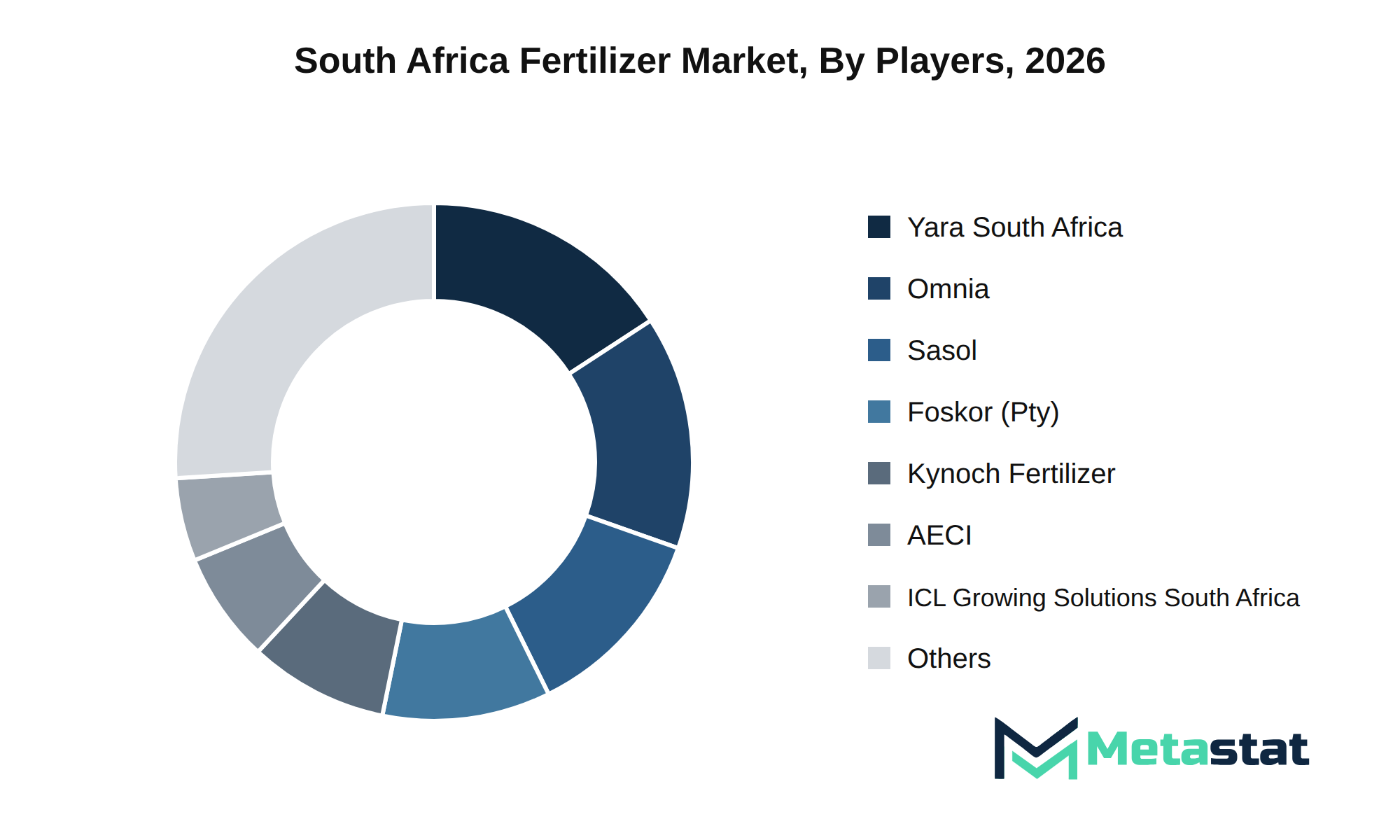
The South Africa Fertilizer market features a diverse array of players competing across various segments. Companies including Omnia Holdings Limited, Yara South Africa, and Sasol Limited have established significant market presence through product differentiation and strategic alliances. These firms focus on developing proprietary technologies and enhancing their R&D pipelines to maintain competitive advantages.
Market participants engage in strategic consolidation initiatives, optimizing supply chain dominance and procurement leverage, which enhance customer retention strategies. Barriers to entry, including technological defensibility and intellectual property portfolios, shape the competitive dynamics in the market. New entrants face challenges in disrupting established players due to these entrenched advantages.
The future competitive outlook emphasizes the importance of value chain integration and strategic growth vectors. Companies including ICL Growing Solutions South Africa and Haifa South Africa leverage partnerships to expand their offerings and deepen market penetration. The emphasis on pricing architectures and commercial models further defines competitive strategies in the evolving South Africa Fertilizer market.
Market size is forecast to rise from USD 4,255.1 million in 2025 to over USD 5,186.1 million by 2033. The base case projects growth at a Compound Annual Growth Rate (CAGR) of 2.5%. This growth stems from a combination of macroeconomic factors, evolving agricultural practices, and advancements in fertilizer technology. The market responds to increasing demand for higher agricultural yields driven by population growth and food security concerns.
In a bullish scenario, accelerated adoption of next-generation technologies, including precision agriculture and enhanced fertilizer formulations, is expected to drive growth beyond the base case projections. Enhanced efficiency and effectiveness in crop production will attract investment and support innovation across the value chain. In contrast, a bearish outlook suggests potential economic downturns, which could restrict spending in the agricultural sector and hinder investments in fertilizer applications.
Shifts in regulatory frameworks and compliance requirements play a significant role in shaping market dynamics. While regulatory environments evolve, adherence to sustainability standards will become critical, impacting the types of fertilizers produced and consumed. Strategic capital allocation directives will influence infrastructure commitments, enhancing supply chain efficiencies and supporting growth within the South Africa Fertilizer market.
Emerging opportunities in the market arise from unmet enterprise needs and high-growth pockets, particularly in organic and biofertilizer segments. These segments exhibit significant potential due to rising consumer awareness regarding sustainable agricultural practices. The integration of research and development commercialization timelines will further impact market growth trajectories, ensuring that innovative products align with market demands.
The report strategically identifies and profiles the key market players and analyses their core competencies in each sub-segment of the Fertilizer market.
Report Attributes | Details |
Study Period | 2021-2033 |
Base Year | 2025 |
Estimated Year | 2026 |
Forecast Period | 2026-2033 |
Historical Period | 2021-2025 |
Growth Rate | CAGR 2.5% from 2026 to 2033 |
Revenue Unit | USD million |
Segmentation | By Type, Form, Crop Type, Province, and Region |
Find answers to common questions about this report
The Fertilizer market size in South Africa was valued at USD 4,255.1 million in 2025.
The Fertilizer market is projected to grow at a CAGR of 2.5% during the forecast period from 2026 to 2033.
The Mineral/Inorganic Fertilizers segment leads the South Africa Fertilizer market, with a value of USD 3,702.1 million in 2026. This segment represents 85.4 percent of the market share.
Infrastructure development and technological integration drive the South Africa Fertilizer market. Investments in transportation and production enhance efficiency, while automation and digital transformation improve operational processes, enabling firms to meet evolving market demands and reduce costs. These factors position the market for sustained growth during the forecast period.
Significant hurdles restraining growth in the South Africa Fertilizer market include stringent regulatory compliance requirements that impose high capital investments, operational inefficiencies due to technological obsolescence, and supply chain disruptions exacerbated by geopolitical instability. These factors limit market participation, increase operational costs, and hinder profitability for producers.
Investment in infrastructure development enhances efficiency and reduces operational costs, facilitating timely delivery of fertilizers. Technological integration, including automation and software adoption, improves production processes and resource utilization, creating a competitive environment that aligns product offerings with market needs. These factors support growth in fertilizer consumption within the South Africa Fertilizer market.
The Fertilizer market is estimated to reach a valuation of USD 5,186.1 million by 2033.
Key players in the South Africa Fertilizer Market include Omnia Holdings Limited, Kynoch Fertilizer, Yara South Africa, Foskor (Pty) Ltd, Sasol Limited, and ICL Growing Solutions South Africa.
The organic fertilizers segment is projected to grow at a compound annual growth rate of 5.8% through 2033.
Mineral/inorganic fertilizers will reach a market value of USD 4,040 million by 2033.
The analysts below cover Agriculture research at Metastat Insights.
LEAD ANALYST
Utkarsh Khirodkar is a Lead Market Research Analyst at MetaStat Insight, specializing in market intelligence, technology sector assessments, and competitive strategy.
Decarbonizing industrial thermal processes hinges on refrigerant regulations and compressor efficiency limits. Metastat Insights delivered a thorough market analysis that evaluated natural refrigerants like CO2 and hydrocarbons against synthetic low-GWP alternatives. The breakdown of utility incentives and grid capacity constraints across key European manufacturing hubs offered valuable perspective. The follow-up conversation with their sector analysts addressed our specific questions on mechanical vapor recompression systems efficiently.
Assessing 200mm wafer transition schedules and substrate supply bottlenecks requires precise technical intelligence. MetaStat Insight supplied an actionable breakdown comparing planar and trench MOSFET architectures across automotive and industrial drive markets. The regional capacity estimates for Asia-Pacific foundries helped clarify lead-time uncertainties during our strategic planning session. When we needed additional clarification on high-purity raw material sourcing, their analyst team responded with helpful context within twenty-four hours.
Tracking maintenance cycle demand for secondary flight display units and terrain collision avoidance systems across regional jet fleets involves complex aftermarket dynamics. MetaStat Insight provided practical analysis separating airline retrofit programs from OEM forward-fit production schedules in North America and Southeast Asia. The supplier matrix highlighted component obsolescence timelines without resorting to vague generalizations. The dataset served as a dependable reference during our annual program review meetings.
Explore related market intelligence reports worth reading alongside this one.