
LEAD ANALYST
Utkarsh Khirodkar is a Lead Market Research Analyst at MetaStat Insight, specializing in market intelligence, technology sector assessments, and competitive strategy.

South Africa DIY Home Improvement Retailing Market Size, Share, By Product Type (Tools & Hardware, Building Materials & Supplies, Paints & Coatings, Plumbing & Electrical Supplies, Gardening & Outdoor Living, Home Décor & Furnishings, and Others), By Consumer Type (Homeowners, Renters, Professionals, and DIY Enthusiasts), By Application (Home Renovation, Home Repair & Maintenance, Outdoor & L&scaping Projects, and Home Décor & Interior Design), Industry Analysis, Growth, Trends, & Forecast, 2026-2033
Report ID
MSI-2929
Published
December, 2025
Updated
Pages
267 Pages
Format
Report Details
Choose Your License
South Africa DIY Home Improvement Retailing Market
South Africa DIY Home Improvement Retailing market size is valued at USD 596.3 million in 2025 and projected to grow at a CAGR of 2.8% during the forecast period, reaching USD 787.6 million by 2033.
The changing landscapes in emerging trends and evolving consumer behaviours will shape the future of the DIY Home Improvement Retailing market and its industry in South Africa over the next couple of years. The sector will further continue its development and will probably reflect significant shifts due to changes in lifestyles, technological advances, and consumer involvement in home improvements.
Very soon, the digital channels of South Africa's DIY Home Improvement Retailing will have full scope for various ways of enhancing customer experience. Online retailing would be more integrated with digital platforms hosting a long portfolio of products with recommendations from the platform itself based on consumer preference. E-commerce would afford not just broader access to diversified product categories, but convenience and flexibility for the consumers. This digital engagement will also be complemented by the trend of emerging mobile technologies wherein customers smoothly browse, compare, and buy the product on their smartphones and tabs.
Furthermore, there will be a greater diffusion of smart home technologies that would unfold the demand for integrated home-improvement products in digital systems. This will raise demand for energy-efficient appliances, smart lighting, and home automation systems as consumers try to provide extra comfort to their living areas, build on their securities, and make life sustainable. Sentiment towards smart home solutions will continue to influence product portfolios of retailers in the South Africa DIY Home Improvement Retailing market, where inventories are required to change by retailers in order to satisfy these demands.
It is also going to further face an increased drive towards greener and more sustainable businesses. Customers, too, are going to be more sensitive towards the environment. This means demands for products that have sustainable material in them will go up, along with energy-efficient products. For retailers, this means having a product lineup in line with all such environmental concerns, offering solutions which make lives greener and reduce waste. This too drives one of the big drivers in innovative product categories and product development.
Aside from that, the DIY Home Improvement Retailing market in South Africa will also be characterized by increasing interest in customized and bespoke solutions. As customers become more participatory in processes of home improvement, they are going to seek out unique and personalized products that say something about themselves. Consequently, the retailers too have to provide a suite of options that can be personalized or tailor-made services that would cater to these changing tastes. Due to such increasing personalization, the demand will spur further development of more market niches and specialized product lines within the industry.
This would ensure that fierce competition, both at the entry level and the expansion of product offering from existing retailers, occurs. Firms would be at each other's throat regarding matters to do with quality, innovation, and customer service in ensuring they gain and retain market share. Such competition would ensure that continuous improvement and innovation take place within the South Africa DIY Home Improvement Retailing market, therefore assuring consumers access to high-quality and diverse product selections.
The trends of technological advancement, changed consumer preference, and a knack for greener solutions will shape the South Africa market of DIY Home Improvement Retailing. It's about time retailers outpaced such trends through innovative strategies besides reworking their offerings to appeal to the changing needs of consumers. New opportunities and challenges are opening up, making the retail and customer landscapes dynamic and ever-changing.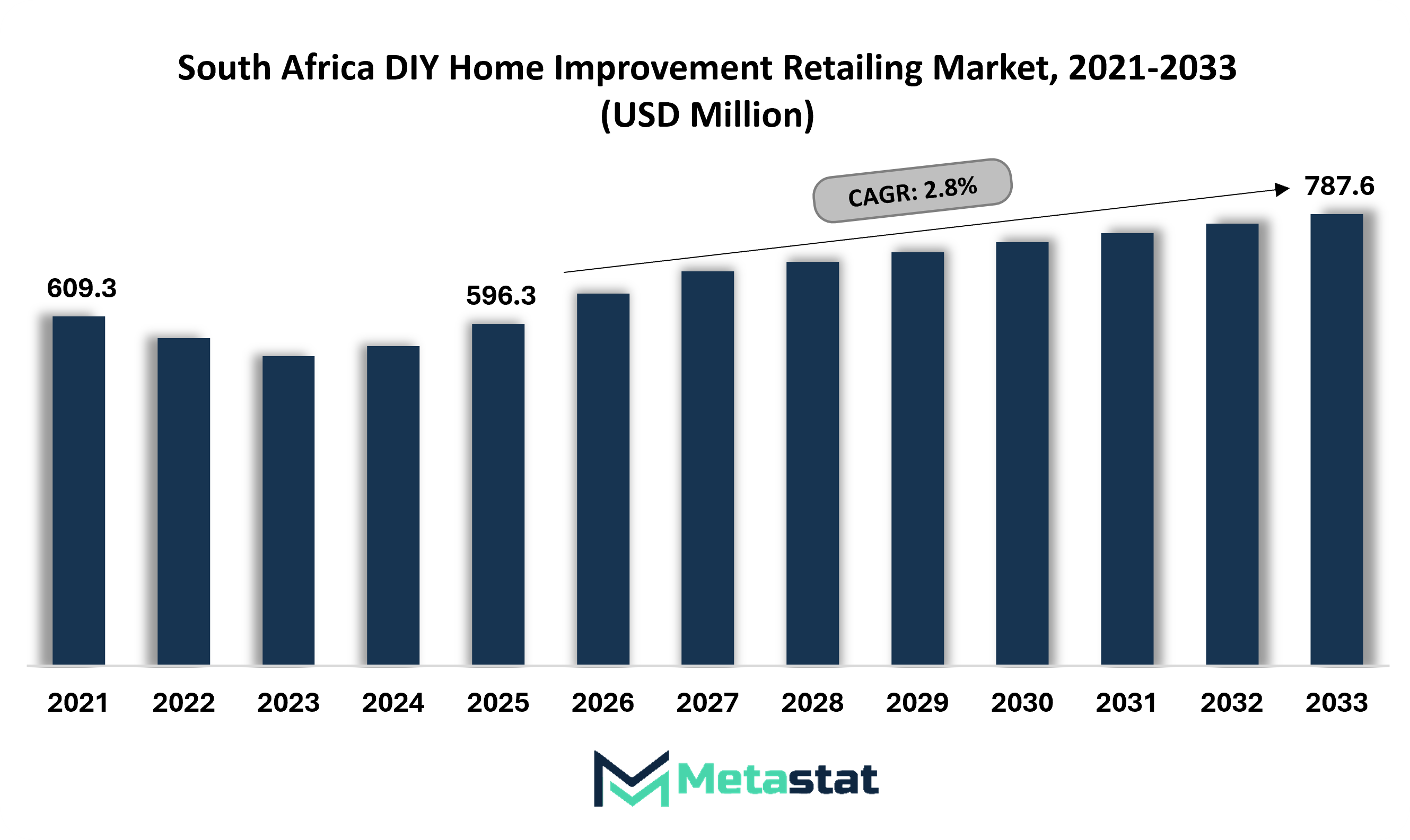
South Africa DIY home improvement retailing operates within a strict legal framework governed by the National Building Regulations (NBR) and the Building Standards Act. Administered largely through the SANS 10400 standards, these codes dictate exact technical baselines for structural stability, fire protection, electrical installations, and energy usage. Retailers cannot treat domestic home improvement inventory as purely casual merchandise. Hardware and materials stocked on retail shelves must directly align with these national standards, shaping shelf assortment and procurement strategies.
Part XA of SANS 10400, which regulates energy efficiency in buildings, influences home renovation choices significantly. Homeowners undertaking structural alterations or room additions must comply with performance standards for thermal insulation, solar water heating, and fenestration glazing. Retailers such as Builders Warehouse and Chamberlains Holdings allocate substantial shelf space to compliant insulation materials, certified double-glazed units, and energy-rated lighting. Electrical and plumbing lines face rigorous regulatory oversight. The South African Bureau of Standards (SABS) sets safety standards that hardware retailers must enforce across their inventory. Uncertified electrical cables, non-compliant circuit breakers, or sub-standard switchgear carry legal liabilities and cannot be legally installed in domestic properties. Furthermore, insurance underwriting practices in South Africa require a Certificate of Compliance (CoC) for any major electrical installation or grid-tied energy system. Because homeowners cannot secure a CoC with non-compliant materials, consumer demand gravitates strictly toward verified, SABS-approved hardware.
Local planning bylaws enforce additional restrictions on consumer DIY activities, especially within metropolitan hubs across Gauteng, the Western Cape, and KwaZulu-Natal. Structural modifications, boundary wall alterations, and permanent outdoor extensions demand approved municipal building plans before construction begins. These administrative barriers limit true amateur DIY engagement in structural categories, steering casual consumers toward non-structural home updates such as cosmetic painting, decorative tiling, and garden landscaping. Regulatory mandates also govern water efficiency. Municipalities facing prolonged water stress enforce strict plumbing bylaws that require low-flow plumbing fixtures and sanitary ware. Retailers respond by replacing legacy, high-volume fixtures with aerated tap fittings, dual-flush cisterns, and water-saving fixtures. Through this curated stocking strategy, DIY retailers ensure homeowners remain compliant with regional water restrictions while completing home maintenance projects.
The South African retail landscape for DIY and building supplies shows a sharp split between centralized, large-format chains and localized independent operators. Mass-market retail groups maintain massive warehouse footprints in urban hubs, while cooperative buying groups and independent outlets dominate semi-urban, rural, and neighborhood locations.
Corporate chains dominate metropolitan areas by offering extensive product variety under one roof. Retailers like Builders Warehouse, Leroy Merlin South Africa, and Makro operate large warehouse footprints ranging from 5,000 to over 15,000 square meters. These stores combine trade-oriented raw building materials with lifestyle-oriented home decor, modular cabinetry, high-end power tools, and outdoor living products. Their scale unlocks high purchasing power, enabling them to negotiate volume rebates with domestic manufacturers and foreign distributors. They maintain advanced inventory management systems, expansive outdoor lumber yards, and drive-through collection bays that cater to both residential DIYers and professional contractors. Their expansive retail floor space enables immersive visual merchandising, where fully assembled kitchens and finished bathrooms guide consumer purchasing decisions.
Independent hardware merchants and regional chains such as Cashbuild, BUCO, and members of buying cooperatives like Mica and Essential Hardware operate with a different retail model. Cashbuild prioritizes rural communities, township perimeters, and smaller towns across Southern Africa. Rather than prioritizing high-end home decor, these stores focus on core structural supplies: cement, structural timber, galvanized corrugated roofing sheets, brickforce, and basic plumbing fittings. Independent stores compete successfully on local accessibility, flexible credit lines for local builders, and personalized service. While a big-box store might require a 20-minute drive into a regional commercial node, the local hardware store sits within immediate walking or driving distance of residential neighborhoods. Their staff often possess deep institutional knowledge of local building conditions, offering tailored advice that corporate retail environments cannot match.
Consumer purchasing behavior in the South African home improvement market shows a unique balance between self-executed tasks and outsourced labor. The domestic labor dynamic sets South Africa apart from Western European or North American markets. Readily available, cost-effective semi-skilled and skilled artisans make hiring third-party labor an affordable choice for middle- and upper-income households.
Rather than executing complex physical labor themselves, millions of South African consumers practice a hybrid approach known as "Buy It Yourself" (BIY) or "Do-It-For-Me" (DIFM). The homeowner acts as the project manager and procurement officer, visiting retail stores like Builders Warehouse or Leroy Merlin South Africa to purchase paint, ceramic tiles, sanitary fixtures, and light fittings. Once the materials are delivered to the property, the homeowner contracts an independent tiler, painter, or builder to execute the physical installation. This behavior grants the homeowner full control over design choices, finish quality, and material budgets while avoiding the time and tool investment required for complex home tasks. DIY retailers optimize their operations for this trend by offering detailed material calculation tools, transport services, and direct contractor referral programs.
A distinct shift toward genuine, hands-on DIY activity is emerging among younger demographics, particularly urban millennials and Generation Z. Influenced by digital video tutorials, rising service labor charges, and interest in self-sufficiency, these consumers take on tasks traditionally given to outside contractors. Pure DIY engagement remains focused on specific categories: * Decorative wall painting, wallpapering, and wood restoration * Drywall repairs, crack filling, and waterproofing maintenance * Upcycling furniture, assembling flat-pack cabinetry, and shelving installations * Smart home automation, surface-mounted lighting, and minor sanitary fixture swaps * Raised garden bed construction, irrigation setup, and patio styling Conversely, high-liability tasks remain firmly in professional hands. Electrical reticulation, inverter wiring, structural masonry, roof trusses, and sub-surface plumbing are almost exclusively completed by registered trade professionals due to compliance regulations and physical safety risks.
Over the past couple of years, the South Africa DIY Home Improvement Retailing market hasrought with it a lot of potential for growth on the basis of several key factors that drive it. Of many other factors that act as a catalyst in bringing growth to this industry, the greatest push factor has been the continuous incline in the demand from consumers to have personal and inexpensive home improvements. Due to more and more people in South Africa coming into the picture to develop their homes, the demand for DIY products and solutions has radically increased. This trend will be highly influenced by the increasing awareness related to home maintenance and personalization, encouraging home owners to go for self-made projects rather than fully depending on professional services.
Other factors that contributed to the growth of the market include increased disposable incomes of households in South Africa. As the disposable incomes of people increase, they are very likely to invest in renovating homes. Financial flexibility will provide the consumer with the ability to try more types of DIY products and tools, boosting the market. Besides, the development of technologies, the growth of online shopping availability, and increasing accessibility to DIY products and resources fuel further market development.
However, there are still certain factors that could impede the development of the South Africa DIY Home Improvement Retailing market. In this regard, changing economic conditions could curtail spending ability due to such fluctuations, thereby reducing the amount that could be budgeted for home improvement. Economic contraction or instability may result in reduced spending on non-essential items, which might include DIY supplies. Thirdly, a disruption to the supply chain or an increase in the raw material cost could have the effect on the market, impacts that may be translated into the availability of the product and the price at which it is available.
Despite all these odds, there are also some positive prospects that could take place with regard to the South Africa DIY Home Improvement Retailing market. The process of urbanization is increasing, and this is very likely to have an effect on the demand for home improvement products since these people will either be moving into new homes being built or renovating existing ones. Besides, the increasing interest in greener lifestyles and products opens a window of opportunity for creative retailer offerings targeted at environmentally sensitive consumers. These emerging trends have a good chance of unfolding new growth and investment opportunities as the market evolves.
Although there are some factors that might hinder the South Africa DIY Home Improvement Retailing market, it is supposed to look pretty good. Increased interest by consumers, rising disposable incomes, and continuous improvement in technologies create a sound basis for future growth. If the right strategies will be followed, coupled with adaptability, then the market will be able to exploit all the new opportunities and further expand in the ensuing years.
Tools and Hardware segment is valued at USD 59.8 million in 2026 and is projected to reach USD 68 million by 2033, at a CAGR of 1.8% during the forecast period.
As consumer tastes and economic conditions are changing, the competition among the key players in South Africa DIY Home Improvement Retailing market is anticipated to be more intense as the sector progresses. Builders, Leroy Merlin SA, Cashbuild Limited, Mica Hardware, Timbercity, Makro SA, Chamberlains Hardware, Brights Hardware, BUCO Hardware, and Mercury Build It are some leading names moving this market forward.
Builders present a diverse portfolio of products and services that address nearly all home improvement needs and are also well-settled players with full presence across South Africa. A huge network of stores, coupled with supply chain management, forms the backbone of competitive advantage for the company. Another key player in the market is Leroy Merlin SA, part of the global chain of Leroy Merlin, which is well-known for its various product offerings and innovative store layouts. With the international experience that this brand carries, it brings fresh eyes into the South African market.
Paints and Coatings segment is valued at USD 40.9 million in 2026 and is projected to reach USD 47.4 million by 2033, at a CAGR of 2.1% during the forecast period.
Cashbuild Limited retains its appeal due to the broad reach and concentration on affordable solutions. Mica Hardware boasts personalized service with an extensive product offering to please a wide range of customers, from the DIY enthusiast to the professional contractor. Timbercity has specialized in timber and related products, thereby meeting the needs of the niche market.
Makro SA is an established retailing giant with a wide assortment of home improvement goods under its roof. The large-scale operation with bulk purchasing power ensures economic advantages. Chamberlains Hardware and Brights Hardware also play their critical roles by providing specialized products and offering products at competitive prices, with strong regional presence to serve the local market demands effectively.
What makes BUCO Hardware and Mercury Build It stand out is attention to the quality of materials availed to customers and customer-oriented services. The players are gearing up for the future by introducing a wider variety of products and offering better customer experiences. Considering that the South African market of Do-It-Yourself Home Improvement Retailing will keep on expanding for the foreseeable future, key players are likely to refine strategies in an attempt to meet the emerging trends and challenges. They will have to become more tuned in to the consumer preference, technology, and economic variables to stay well ahead of the market. It is only because of the ability of these companies to innovate and meet the changing needs of the consumers in South Africa that their future and competitive positions would be shaped in the next couple of years.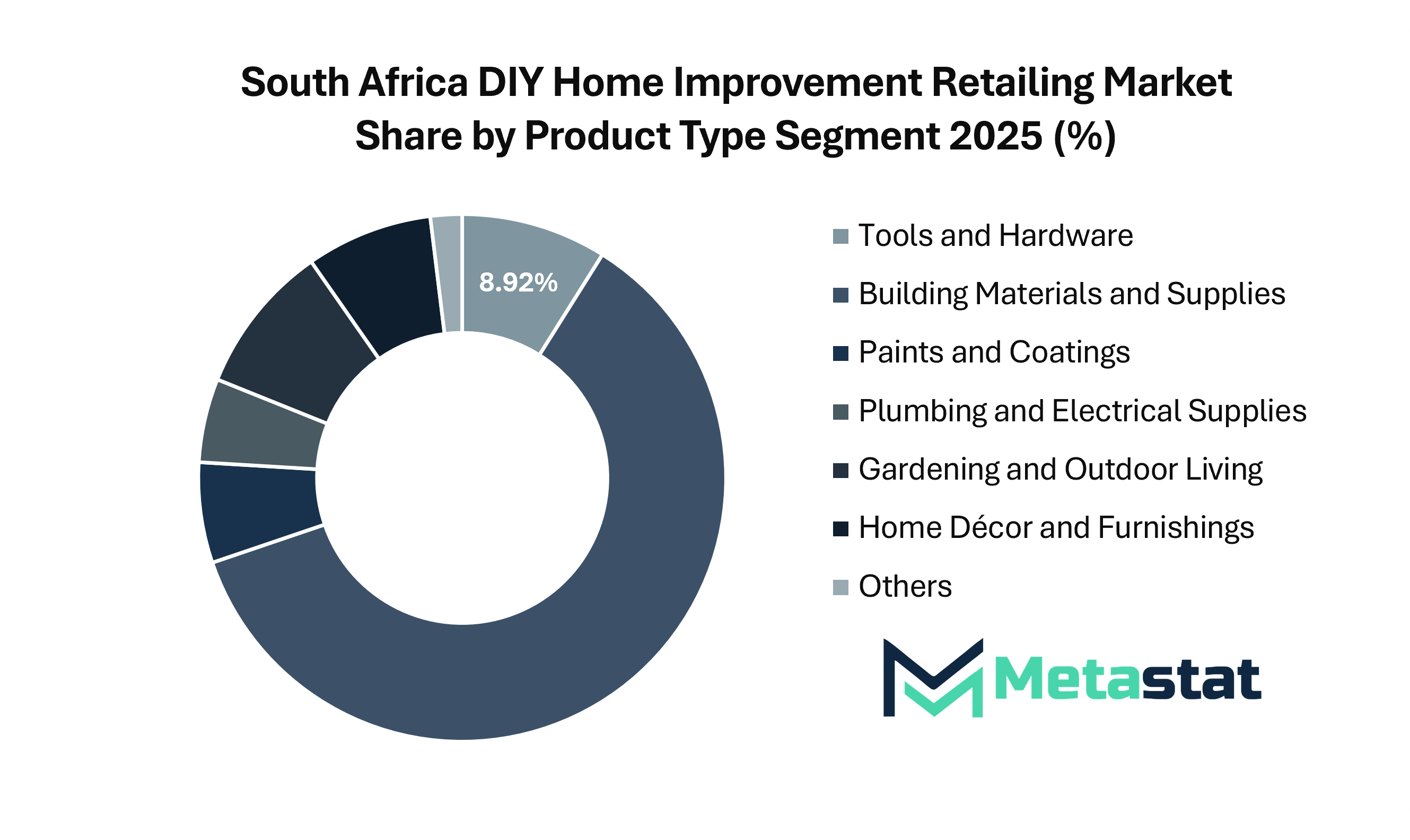
Professionals segment is projected to reach USD 74.4 million by 2033, at a CAGR of 2.8% during the forecast period.
The DIY Home Improvement Retailing market of South Africa remains one of the dynamic sectors, with a number of distinctive categories of consumers likely to shape up its future course. The market, in its current growth phase, requires an understanding of the various consumer types and how these would influence retail trends.
The main category is that of homeowners in the context of the DIY home improvement market. They invest in their houses to serve more purposes or to look more beautiful for unique reasons. Home owners tend to spend more on mega projects or those that take time to complete, for they are set on improving their homes. The demand from home buyers will increase with the growth of the real estate market in South Africa, appreciating quality and durability in purchases.
Renters, however, tend to take a different approach when it comes to DIY projects. Their investments would probably be more temporary or removable improvements that can be done easily and taken back upon moving out. The nature of this group calls for practical and adaptable products that allow the renters to upgrade their living space without permanent changes. As more rental markets grow in South Africa, demand for flexible and easy-to-install solutions for home improvement is likely to increase.
The other big chunk involves professionals, such as contractors and builders. They usually buy these products in bulk and ensure that whatever they get is of high quality and meets the set standards in the industry. Their purchasing habits will, therefore, be influenced by their desire to complete projects efficiently and ensure high standards. Due to the fact that the construction industry in South Africa is on the rise, activity from this group is also bound to increase. Again, their demand for the product would revolve around dependability in providing them with what they need professionally.
DIYers are committed to home improvement and view projects as a means to express their hands-on approach. This group is driven by the creativity of working independently from challenges in home improvement. Therefore, they are usually in search of innovative kinds of tools and materials that can help them give special results. Increased digital platforms with instructional content will continue to empower this segment further with their resources and inspiration toward successful DIY projects.
Driving the trends for the South Africa DIY Home Improvement Retailing market will be diverse for various types of consumers-homeowners focusing on long-term improvements, renters requesting adaptable solutions, professionals demanding qualitative materials, and amateur DIY enthusiasts driving demand in offering innovative tooling. Since these trends are in continuous evolution, the market is responding through permanent adaptation, offering customized solutions to meet the diverse needs of its consumers.
Home Renovation segment is projected to reach USD 325.8 million by 2033.
The South Africa DIY Home Improvement Retailing market is entering a period of rapid evolution, reflecting wider trends in consumer behavior and economic conditions. As more and more South Africans have become eager to make their homes even more attractive, the market for DIY home improvement products has concurrently grown. This market is steadily growing, impelled as it is by an increasing interest in personalization of home environments along with the necessary desire to keep costs as low as possible.
Among the various market sectors, home renovation may be included as one of the most influential determinant factors that increase demand. Most homeowners seeking an upgrade invest in various materials and tools to renovate their homes. This is influenced by either a modern look one would intend to achieve or increased functionality. As the economic conditions continue to improve and disposable incomes continue to rise, many more people are likely to undergo renovation projects, further propelling the growth of the market.
The home repair and maintenance segment also significantly contributes to the growth of the do-it-yourself market, since regular maintenance ensures that the value of property does not deteriorate, and encourages South Africans to be more hands-on and thus manage minor repairs. This is supported by the availability of a wide range of products designed for easy use by non-professionals. With the focus on home maintenance, the demand for 'do-it-yourself' products would continue to prevail as the homeowners would like to rectify the defects themselves instead of relying wholly on professional services.
Outdoor and landscaping projects also make a great deal of difference in DIY home improvement. As people continue to spend more time in their homes, investing in outdoor areas has become one of the most pleasurable ways to develop space that is both enjoyable to relax in and entertain others. This includes everything from garden design to patio enhancements. Such a focus on the outdoors points to wider lifestyle changes and an increasing interest in tailor-made, functional outdoor areas.
Both home décor and interior design hold equal importance in shaping the market of DIY. Unique décor items that can be made by consumers as per their preference are what most people get attracted to, and they are even willing to invest in products that help them show their personal style. It ranges from furniture and lighting to paint and accessories. This demand is expected to increase with constantly changing trends and preferences of designs.
However, the growth of the South Africa DIY Home Improvement Retailing market looks very promising for the future. The combination of economic improvement, growing consumer confidence, and increasing demand for personalized home environments is expected to boost the market. With every sector contributing significantly-renovation, repair, and maintenance, outdoor and landscaping projects, and home décor and interior design-the outlook seems appealing and vibrant.
South Africa presents distinct regional variations in DIY product demand. Differences in climate, economic stability, infrastructure reliability, and municipal governance create localized retail dynamics across Gauteng, the Western Cape, and KwaZulu-Natal.
As the industrial core and most populous province, Gauteng represents the largest volume market for DIY home improvement retail. The retail landscape here is marked by extensive competition between large-format stores, such as Chamberlain Holdings, Builders Warehouse, and Leroy Merlin South Africa. Residential renovation across Johannesburg and Pretoria focuses on modernizing older suburban houses, security hardening, and residential infrastructure autonomy. Product demand in Gauteng skews heavily toward security hardware, including automated gate motors, electric fencing supplies, CCTV installations, and reinforced perimeter fixtures. Unreliable municipal water and electrical distribution networks drive high demand for secondary borehole pumping hardware, automated backup water tanks, and commercial-grade inverter systems designed to sustain larger residential footprints.
The Western Cape province exhibits the highest consumer confidence and strongest property market resilience in South Africa. The ongoing influx of professionals and families moving from other provinces has stimulated sustained residential renovation, property extensions, and new residential developments. Homeowners here invest heavily in aesthetic improvements, architectural finishing, and premium outdoor entertaining areas. Environmental conditions heavily shape product performance requirements along the Cape coast: * High maritime humidity and salt air require specialized anti-corrosion exterior coatings, marine-grade stainless steel fasteners, and treated exterior timber. * Strong winter rains demand specialized waterproofing membranes, liquid rubber coatings, and advanced roof sealant formulations. * Persistent summer drought conditions ensure that water-saving fixtures, rainwater harvesting tanks, and low-water landscaping products remain constant retail sellers.
KwaZulu-Natal presents a dual market structure. The coastal urban corridor, stretching from Durban to Ballito and Umhlanga, features substantial investments in luxury gated estates and beachfront properties. The subtropical climate drives demand for mold-resistant interior coatings, UV-resistant wood varnishes, composite decking, and corrosion-proof hardware. The inland and rural nodes of KwaZulu-Natal follow a completely different demand pattern. Retailers like Cashbuild and independent hardware merchants cater to self-build family homesteads, informal home upgrades, and small-scale agricultural building projects. The product mix in these areas centers on primary building materials: cement sacks, structural block-making machinery, corrugated iron sheeting, wire fencing, and gravity-fed water tanks.
The marketplace for South Africa DIY Home Improvement Retailing is one of dynamism, with an assortment of key players that determine the future of the industry. Companies like Builders, Leroy Merlin SA, Cashbuild Limited, Mica Hardware, Timbercity, Makro SA, Chamberlains Hardware, Brights Hardware, BUCO Hardware, and Mercury Build It are some of the significant retailers within this sector. Market leaders in this category not only compete at the retail level but also at the pace-setting level in innovations and the struggle to meet ever-changing consumer needs.
Builders hold a prominent position in the DIY market of South Africa because of its comprehensive home improvement products and services. Builders is also one of the largest retail chains in South Africa and changes according to the changing consumer preference and market demand. Since it can offer a wide array of items from materials used in building to home dcor items, it remains in front.
Besides this, the international touch was brought into the South African marketplace by another major player known as Leroy Merlin SA. This company, based in France, has introduced international trends and standards in the country that no doubt influenced local practices and consumers' expectations. The company adds to the diversity in the South African market through its unique products and services, meeting both the taste for traditional and contemporary excellence.
Cashbuild Limited is one that clearly stands out by being affordable and accessible. Cashbuild Limited allows the realization of affordable solutions for home improvement to meet the needs of the budget-conscious consumer in such a way that the wide range of customers can gain access to quality products for their projects without having to overspend.
Mica Hardware serves with personalized service and a touch of local expertise. An independently owned store network allows for a tailored approach to customers' needs, thus cementing its place in the DIY market. The local touch supplements the broad product offering, connecting well into the community.
Timber city specializes in selling timbers and products allied to it, finding a niche in the DIY segment. Its focus is on quality timbers and building materials for professionals and do-it-yourselfers who want to reinforce its market position.
Business Model: Makro SA operates on a large format retailing business model offering products to individual and business clients, further and broadly exposing and offering its range to support the company's positioning among leaders in the DIY home improvement segment.
Chamberlains Hardware and Brights Hardware have specialized services and products available in the market to meet specific needs; their quality and customer service allow them to stay competitive.
Other key players, like BUCO Hardware and Mercury Build, also make valuable contributions to the industry. Since they are equally committed to high-quality products and services, they help the market demands move along in stride with its growth.
The market for DIY home improvement retailing in South Africa consists of a number of different players, each of whom contributes in a very varied way to the development of the industry. Their continuous innovation and adaptation will contribute to the future trend and consumptive preference in the DIY sector.
Digital commerce in the South African DIY sector historically lagged behind general retail categories like apparel and consumer electronics. The physical nature of the products—high weight, bulk volume, fragile ceramics, and hazmat classifications for solvents—created significant logistical hurdles. E-commerce penetration is now expanding rapidly as logistics improve and omnichannel models mature.
Leading retail groups have integrated their digital platforms directly with their brick-and-mortar store networks. Pure digital pure-play models struggle with the logistics of delivering forty bags of cement or fragile ceramic basins. In response, operators like Builders Warehouse and Leroy Merlin South Africa utilize a click-and-collect fulfillment strategy. Under this model, consumers complete their product selection, review technical specifications, and pay online. The local store packs the order from existing retail stock, staging it for collection at a dedicated drive-through yard. This removes expensive courier shipping costs for high-mass goods while saving consumers from navigating large warehouse aisles for routine hardware. Retailers are also partnering with on-demand logistics networks. Independent stores and major banners increasingly list fast-moving DIY items—such as drill bit sets, paint cans, adhesives, and replacement plumbing valves—on instant courier delivery platforms, completing deliveries within 60 minutes for homeowners facing emergency repair situations.
Home improvement buying decisions are heavily research-driven. Consumers consult digital catalogs to check local store stock availability, verify product dimensions, and evaluate user reviews before traveling to a physical retail store. Retail websites serve as educational hubs, hosting step-by-step instructional guides, material consumption calculators, and video demonstrations for tasks like wall preparation, tiling layout, and waterproofing application. Augmented reality (AR) tools are gaining traction within modern retail apps. Shoppers can preview how paint swatches, vinyl plank flooring, or bathroom vanity units will look inside their homes before ordering. This reduces return rates and gives consumers greater confidence to purchase premium finishing materials online.
South Africa exhibits deep socioeconomic disparity, creating a bifurcated home improvement retail market. Household spending power shows sharp contrasts, requiring hardware retailers to execute distinct pricing strategies across their product catalogs.
The budget-tier consumer group comprises lower-to-middle income households, entry-level suburban homeowners, and independent township builders. For this demographic, home improvement is largely driven by urgent repairs, basic security additions, or incremental room extensions built over several years as funds permit. Price elasticity is exceptionally high. In this tier, private-label retail brands and value-tier imports see heavy demand: * Value-engineered emulsion paints, contract-grade undercoats, and utility gloss coatings * Carbon steel hand tools and basic consumer-grade power tools with brush motors * Ceramic floor tiles with plain glazes, economy ceramic sanitary ware, and chrome-plated zinc tapware * Unbranded or localized basic fasteners, mild steel hinges, and generic security padlocks * Fiber-cement corrugated roofing and entry-level cold-water plastic piping systems Retailers like Cashbuild cater directly to this market dynamic by sourcing cost-effective alternatives that provide basic functionality without premium price tags, using high volume to offset narrower gross margins.
The premium segment is driven by upper-middle-class property owners, high-end suburban renovators, and gated estate developments. These consumers prioritize brand reputation, architectural aesthetics, energy efficiency, and extended product warranties. Economic pressure impacts this tier less, allowing for sustained spending on discretionary luxury upgrades. Demand in the premium bracket includes: * Premium architectural coatings featuring zero-VOC formulations, scrub resistance, and specialized color pigments * Professional-grade brushless cordless power tools utilizing high-capacity lithium-ion platforms * Large-format rectified porcelain tiles, natural stone claddings, and engineered hardwood flooring * Solid brass architectural ironmongery, digital smart locks with biometric authentication, and designer bathroom tapware with PVD coatings * Comprehensive solar power equipment, including smart hybrid inverters and high-voltage lithium storage racks Retailers capture this segment by creating boutique in-store display concepts, providing personal design consultants, and securing exclusive national distribution rights for recognized European and American hardware brands.
The resilience and profitability of South African DIY retailing depend on navigating a complex supply chain. The industry relies heavily on a split model, balancing local basic material production against an almost complete dependence on foreign imports for finished technical goods.
South Africa maintains a strong domestic industrial manufacturing base for high-mass, low-complexity building products. Local factories produce the majority of heavy building materials sold in domestic hardware yards: * Portland cement and dry-mortar premixes formulated from domestic limestone deposits * Structural steel lintels, welded reinforcing mesh, galvanized roof sheeting, and steel doorframes * Kiln-dried structural pine timber sourced from forestry plantations in Mpumalanga and the Eastern Cape * Architectural interior and exterior decorative paints, mineral plasters, and chemical waterproofing resins * Concrete roof tiles, clay face bricks, and basic PVC drainage pipes Sourcing these heavy products locally is vital. Long-distance sea shipping costs for dense, bulky commodities quickly exceed the intrinsic value of the cargo, making local sourcing the only commercially viable option for retail operations.
Technical hardware categories remain heavily exposed to international supply chains. Domestic manufacturing for complex consumer goods is minimal, forcing retailers to import large volumes of inventory from China, Southeast Asia, India, and Europe. Power tools, brushless motors, lithium-ion battery cells, solar inverters, high-end architectural door furniture, and precision hand tools are imported almost entirely. This dynamic exposes retailers to substantial operational vulnerabilities: * Extended maritime shipping schedules and port congestion, particularly at the Durban and Cape Town container terminals, lead to stockouts during peak renovation periods. * Exchange rate fluctuations directly influence retail landing costs; a weakening South African Rand inflates procurement expenses across all imported categories. * Global shipping container freight rates alter landed product margins, forcing retailers to carry higher levels of safety inventory. To reduce these vulnerabilities, major retail operators use forward exchange contracts, consolidate procurement channels, and partner with regional contract manufacturers capable of light assembly within South Africa.
Consumer purchasing cycles in South Africa DIY home improvement retailing follow clear climatic and cultural rhythms throughout the year. Retailers adjust promotional calendars, warehouse inventory buffers, and floor staffing in direct response to these seasonal shifts.
The retail market experiences its strongest demand surge during the fourth quarter, spanning from September through early December. As the southern hemisphere enters spring and early summer, warmer weather encourages domestic activity. Homeowners begin outdoor painting, wood preservation, roof cleaning, swimming pool maintenance, and garden landscaping projects. This period leads directly into the annual year-end holiday season. Many formal-sector workers receive annual performance bonuses and leave pay in November and December. Simultaneously, the manufacturing and heavy construction sectors shut down completely for the annual builders' holiday between mid-December and early January. Residential consumers take advantage of this time away from work to complete deferred home updates, structural painting, and interior modernizations. Hardware retailers run extensive holiday promotional campaigns during this peak shopping window.
The winter months from May to August introduce a different set of product demands, divided sharply by geographic weather patterns: * The Western Cape experiences its wet, cold winter, causing retail demand to pivot toward emergency leak repair, roof waterproofing paints, moisture barriers, and indoor mold-prevention products. * In the interior regions, including Gauteng and the Free State, dry and frost-prone winter weather makes structural exterior painting and brickwork ideal. * Across all regions, indoor space-heating products, including electric convection units, gas room heaters, fireplace restoration kits, and thermal ceiling insulation, dominate retail sales floors. Early autumn serves as a transition period. As severe convective summer storms decrease across the northern provinces, homeowners focus on clearing roof drainage gutters, cutting back trees near boundary lines, and completing seasonal concrete and masonry sealing before winter sets in.
The South African DIY home improvement retail market is entering a transformative multi-year phase. Macroeconomic shifts, evolving municipal performance, and changing residential needs will provide both structural headwinds and commercial opportunities for retail operators.
The primary growth catalyst for the sector remains the consumer shift toward household utility independence. Even when national grid stability temporarily improves, structural water delivery shortages and climbing municipal electricity tariffs push consumers toward off-grid alternatives. Hardware retailers are evolving beyond traditional building merchants into decentralized resource hubs. The retail floor space allocated to residential solar power equipment, high-capacity hybrid inverter systems, rainwater harvesting assemblies, and water-saving fixtures will continue to expand. Retailers who offer certified installation networks alongside product sales will capture a greater share of high-margin domestic energy and water spending.
Urban densification across metropolitan centers is changing residential property profiles. As high-density sectional title complexes, townhouses, and apartment towers proliferate, traditional large-yard gardening and heavy structural maintenance are declining in urban cores. Instead, consumers are investing in interior modernization, soundproofing, high-efficiency vertical storage systems, and compact outdoor living solutions. Simultaneously, the informal and secondary housing market presents massive commercial upside: * Ongoing housing formalization in peri-urban townships requires high volumes of basic building blocks, cement, timber, and roofing materials. * Micro-developers building rental backrooms and accessory dwelling units drive steady, volume-based retail demand for cost-effective finishing hardware, prepaid electrical sub-meters, and modular plumbing units. * Forward-thinking retail chains are expanding their store footprints closer to transport hubs and peri-urban residential nodes to service this underserved customer base directly. Retailers who build resilient supply chains, balance premium lifestyle offerings with durable basic hardware, and navigate South Africa's distinct economic landscape are well positioned to capture sustainable market growth.Load
|
Report Attributes |
Details |
|
Study Period |
2021-2033 |
|
Base Year |
2025 |
|
Estimated Year |
2026 |
|
Forecast Period |
2026-2033 |
|
Historical Period |
2021-2025 |
|
Growth Rate |
CAGR 2.8% from 2026 to 2033 |
|
Revenue Unit |
USD million |
|
Segmentation |
By Product Type, Consumer Type, Application, and Region |
Find answers to common questions about this report
The Metastat Insights study reveals that the South Africa DIY Home Improvement Retailing market size was valued at USD 596.3 million in 2025.
The South Africa DIY Home Improvement Retailing market is projected to grow at a CAGR of 2.8% during the forecast period from 2026 to 2033.
The South Africa DIY Home Improvement Retailing market is estimated to reach a valuation of USD 787.6 million by 2033.
Top players operating in the DIY Home Improvement Retailing industry includes Builders, Leroy Merlin SA, Cashbuild Limited, Mica Hardware, Timbercity, and Others.
Government infrastructure initiatives provide indirect momentum to retail demand. Large public tenders often channel business through local subcontractors who purchase supplementary supplies, basic tools, and emergency building materials from nearby retail hardware branches. Public infrastructure backlogs also push communities and private estates to invest in self-funded infrastructure repairs.
South African Rand (ZAR) depreciation rapidly inflates wholesale landing costs for imported inventory, including power tools, mechanical components, and solar electronics. Retailers must either absorb these price hikes, sacrificing margins, or pass them on to consumers, which dampens discretionary retail demand and leads to intermittent product stockouts.
Middle-to-upper-income homeowners aged 30 to 55 in urban nodes generate the highest discretionary DIY spending on premium renovations, home automation, and decor. Lower-to-middle-income consumers and rural property owners spend more on essential maintenance materials, structural additions, perimeter fencing, and durable basic building supplies.
Electrical and backup power products show the strongest growth rates due to grid instability, followed by plumbing hardware focused on water conservation and storage. Decorative paint and surface coatings maintain consistent baseline volumes, while structural building hardware fluctuates alongside broader national economic cycles and property renovation trends.
South African retailers adapt by offering click-and-collect drive-through pickup bays at local stores, reducing costly courier fees on heavy building supplies. They also offer on-demand delivery for urgent repair hardware, curated online catalogs with live branch inventory data, and technical consultation counters that foreign online competitors cannot duplicate.
Gauteng retailers sell higher volumes of residential perimeter security hardware, borehole backup systems, and heavy-duty inverter power systems. The Western Cape product mix focuses more on maritime-grade corrosion-resistant hardware, exterior anti-weathering coatings, waterproofing membranes, outdoor patio living goods, and water-saving fixtures due to regional coastal climate conditions.
Trade and professional contractors account for an estimated 50% to 65% of total sales volume across major South African hardware retailers. While residential DIY consumers generate significant foot traffic and higher-margin retail sales, professional artisans and local building contractors drive high-volume, repeat purchases of raw building materials.
The analysts below cover Consumer Goods research at Metastat Insights.
LEAD ANALYST
Utkarsh Khirodkar is a Lead Market Research Analyst at MetaStat Insight, specializing in market intelligence, technology sector assessments, and competitive strategy.
Last Updated: September, 2026
Ambulatory surgical centers have very different purchasing cycles for robotic-assisted surgery platforms than major hospital networks. The MetaStat Insight study focused squarely on capital expenditure depreciation, procedural reimbursement pathways, and surgeon training overhead. That operational clarity made it much simpler to validate multi-year procedure growth forecasts against actual ambulatory center adoption patterns.
When planning edge sensor rollouts across refinery environments, generic IoT reports typically miss the harsh-environment certification bottlenecks. MetaStat Insight gave an objective evaluation of ATEX and Class 1 Division 2 hardware availability, along with realistic five-year maintenance cycle cost projections. The comparison of wireless mesh versus private cellular backhaul helped our team pressure-test network reliability models for remote processing facilities.
In the biological seed treatment space, registration timelines vary drastically between the European Union, Brazil, and North America. The MetaStat Insight research handled these cross-border regulatory barriers with genuine nuance, mapping commercialization pathways alongside historical field adoption rates. The segmentation between microbial strains and biochemical active ingredients was particularly well structured.
Explore related market intelligence reports worth reading alongside this one.