
LEAD ANALYST
Utkarsh Khirodkar is a Lead Market Research Analyst at MetaStat Insight, specializing in market intelligence, technology sector assessments, and competitive strategy.

Global Vape Market Size, Share, By Product Type (Disposable Vape Devices, Reusable Vape Devices, Bottled E-Liquids, Prefilled Replacement Pods and Cartridges, Unfilled Replacement Pods, Tanks and Coils, Others), By Category (Open Vaping Systems, Closed Vaping Systems), By Nicotine Formulation (Nicotine Salt E-Liquids, Freebase Nicotine E-Liquids, Hybrid Nicotine E-Liquids, Nicotine-Free E-Liquids), By Distribution Channel (Specialist Vape Stores, Convenience Stores and Fuel Stations, Tobacconists, Supermarkets and Hypermarkets, Online Retail, Others), Industry Analysis, Growth, Trends, and Forecast, 2026-2033
Report ID
MSI-5510
Published
October, 2026
Pages
279 Pages
Format
Historical
Base year
Forecast
Forecast period
Report Details
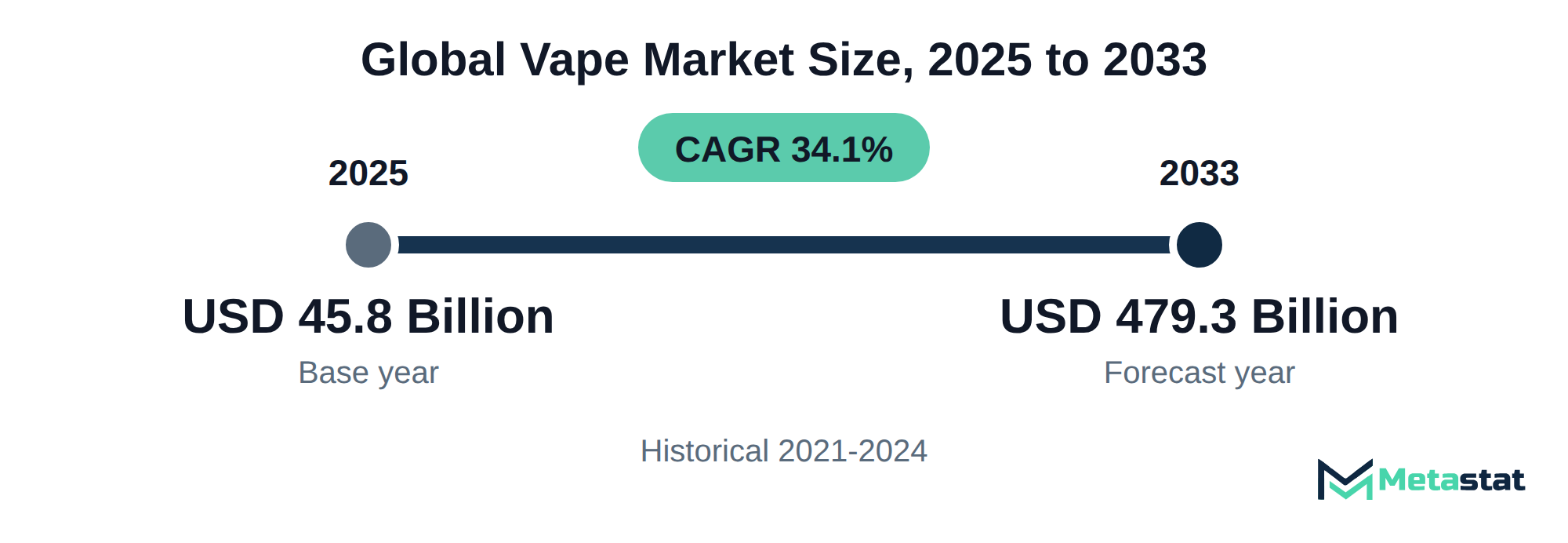
Market Valuation: Valued at $45.8 Billion in 2025, projected to reach $479.3 Billion by 2033 at a 34.1% CAGR.
Dominant Segment: Disposable vape devices lead the market, driven by their convenience and appeal to younger consumers seeking easy-to-use options. This segment is projected to reach USD 116.8 billion by 2033.
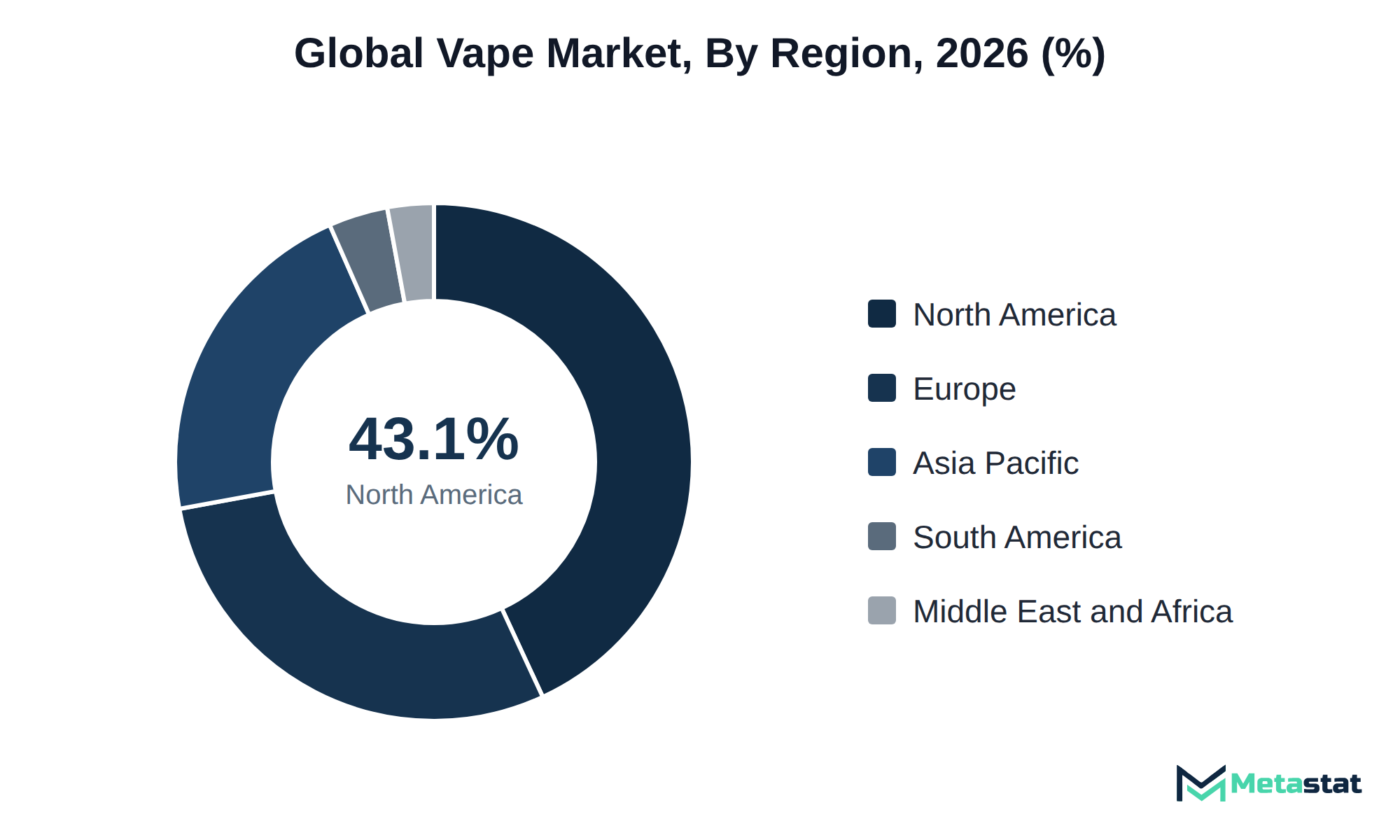
Geographic Lead: North America is the leading region, holding 43.1% of the market in 2025, primarily due to regulatory support and a wide variety of product options available to consumers.
What's Inside: The report provides a comprehensive analysis of market dynamics, competitive landscape, and detailed forecasts from 2026 to 2033, covering various product types and distribution channels.
Emerging Opportunities: The growth of reusable vape devices presents significant opportunities, appealing to environmentally conscious consumers and those seeking long-term cost savings.
Market Dynamics: Regulatory compliance challenges and rising input costs are impacting growth, influencing both consumer choices and retailer strategies in the evolving market.
Choose Your License
Global Vape Market
The global Vape market was valued at USD 45.8 billion in 2025 and is projected to reach USD 479.3 billion by 2033, growing at a CAGR of 34.1% over the forecast period.
The Vape market covers devices, e-liquids, and accessories for consumers seeking alternatives to traditional tobacco products. Buyers invest in this market due to the increasing popularity of vaping, a perceived less harmful option, combined with the desire for customizable experiences. The growing trend of smoking cessation further drives consumer spending, with various nicotine formulations and flavors attracting diverse demographics. Nicotine pouches are a separate smokeless alternative to combustible tobacco.
Significant growth in the market stems from the rise in disposable vape devices, which offer convenience and ease of use. North America holds 43.1% of the market in 2025, with the US leading in 2026. The region's strong demand is attributed to a combination of regulatory support and the availability of numerous product options, fueling widespread adoption. Europe follows closely, while Asia Pacific reflects a growing interest in vaping products.
The Vape market is projected to continue expanding rapidly, driven by innovation and product diversification. The increasing consumer preference for reusable vape devices highlights the shift toward sustainability and long-term cost savings. This segment and the strong demand for nicotine salt e-liquids point to a shift in consumer preferences and room for new entrants.
The Vape market includes various product types including disposable and reusable devices, bottled e-liquids, and prefilled replacement pods. Buyers invest in this market seeking alternatives to traditional tobacco products, driven by health considerations and changing lifestyle preferences. The convenience of usage and the variety of flavors offered contribute to consumer spending in the market.
Growth in the market is propelled by the increasing adoption of reusable vape devices, which reflect significant value within the product segments. Comparatively, Europe and Asia Pacific hold 29% and 21.3% respectively, demonstrating a diverse regional interest in vaping products.
One primary growth driver stems from the rising demand for nicotine salt e-liquids, appealing to a wide range of consumers. This formulation offers a smoother experience, enhancing user satisfaction and encouraging loyalty. The market's expansion is further supported by innovative product offerings and evolving consumer preferences.
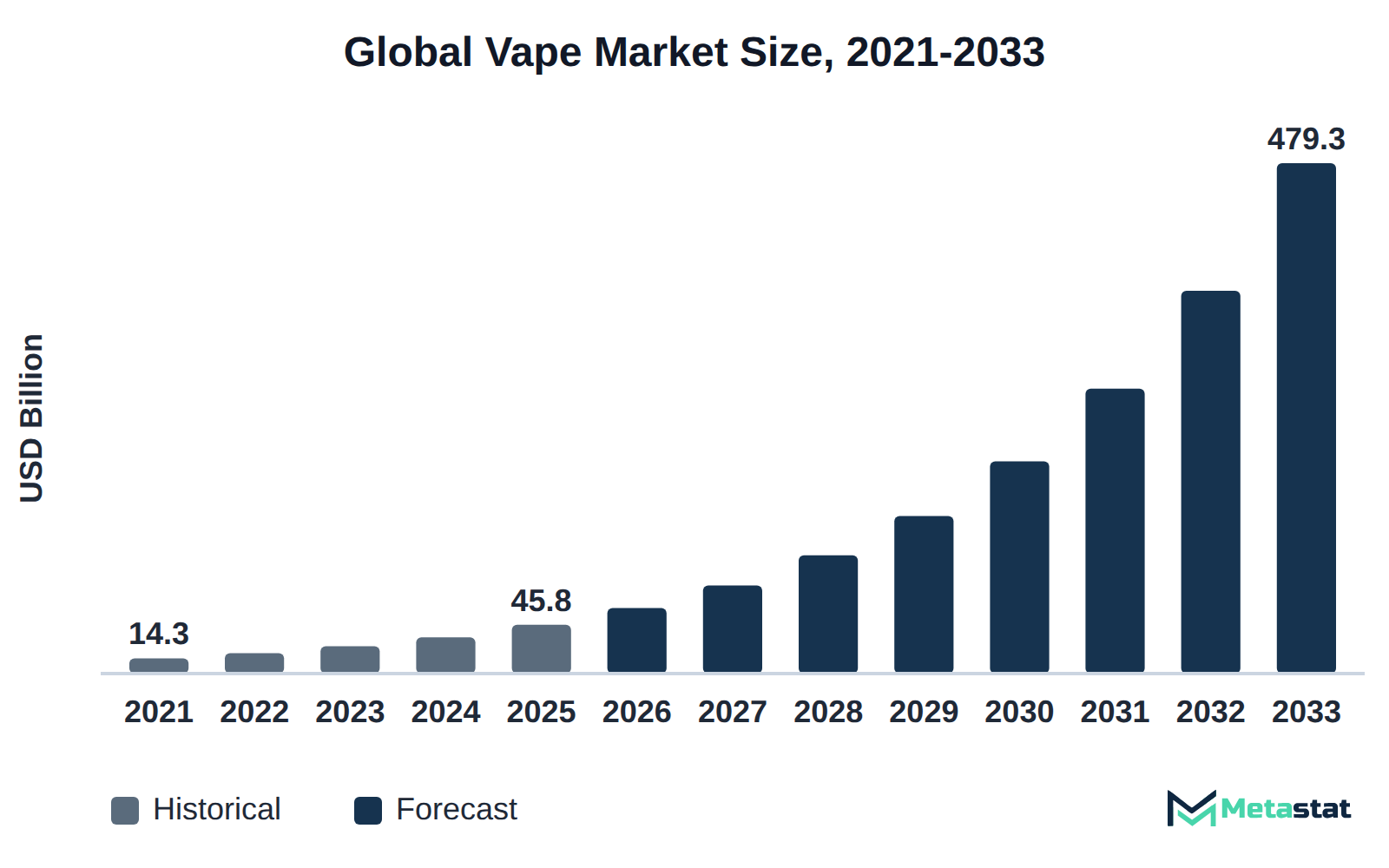
Refillable vape systems have emerged as a prominent trend in the Vape market, driven by their ability to enhance user experience and reduce long-term costs. Users increasingly prefer these systems due to their versatility and sustainable approach, allowing for customization of flavors and nicotine levels. The market for prefilled replacement pods and cartridges is expected to experience significant growth, with a compound annual growth rate (CAGR) of 36.2%. This shift reflects a growing consumer preference for refillable systems over disposable options.
The rise of refillable systems gives manufacturers and retailers an opportunity to generate recurring revenue from replacement pods. Consumers invest in these systems, anticipating the need for ongoing purchases of pods, which builds brand loyalty and consistent revenue streams. With ongoing innovations in e-liquid formulations and pod designs, companies capitalize on this trend by offering a diverse range of options tailored to consumer preferences. While more users transition to refillable systems, profitability within the market is expected to increase, driven by enhanced customer retention and engagement.
The growing preference for nicotine salt e-liquids fuels demand for low-power pod devices within the Vape market. This particular formulation of e-liquids enhances the vaping experience by providing a smoother throat hit and faster nicotine delivery compared to traditional freebase nicotine formulations. Product adoption accelerates among various user demographics, including those transitioning from combustible tobacco products.
In the market, nicotine salt e-liquids are projected to reach USD 0.298 billion by 2033, highlighting their increasing prominence. The growth in the segment reflects changing consumer preferences, which favor convenience and discretion in vaping. Low-power pod devices, designed to accommodate nicotine salt formulations, provide a compact and user-friendly alternative for both novice and experienced vapers.
The economic implications of this trend are significant. Retailers benefit from higher margins on nicotine salt e-liquids and accompanying low-power devices due to their premium pricing structure. Consumers increasingly seek affordable options, prompting retailers to explore flexible pricing strategies and promotional models. Such strategies enhance accessibility, enabling retailers to capture a larger share of the market while catering to evolving consumer demands.
Regulatory changes increasingly impact disposable vape products, shaping retailer strategies and consumer choices. The market has seen a significant shift towards sustainable alternatives, driven by environmental concerns and stricter regulations on single-use plastics. In response, retailers are expanding their offerings of reusable vape devices, which are projected to reach USD 146.5 billion by 2033, reflecting a compound annual growth rate of 35.5%. This move aligns with consumer preferences for products that reduce waste and environmental impact.
Retailers investing in their portfolios to include more sustainable options position themselves favorably in the evolving market. The growth of disposable vape restrictions across various regions influences the demand for alternatives, prompting retailers to adapt their product lines to better meet consumer needs. By focusing on reusable devices and high-quality e-liquids, retailers enhance their competitiveness and increase profit margins in the rapidly expanding vape market.
Open and closed vape systems exhibit significant differences in lifetime costs, influencing buyer decisions within the Vape market. Open systems, characterized by refillable e-liquids and interchangeable components, offer a lower initial investment compared to closed systems, which feature pre-filled cartridges. The lifetime cost of open systems reflects substantial savings due to the lower per-use expense associated with bottled e-liquids. Specifically, the value of bottled e-liquids is expected to reach USD 88.3 billion by 2033, illustrating increasing adoption of this option among users seeking cost-effective solutions.
In contrast, closed systems, while convenient, incur higher long-term costs due to the repeated purchase of pre-filled pods. These systems remain attractive to users prioritizing ease of use over expense. The anticipated value of closed vaping systems will reach USD 247.5 billion by 2033, highlighting their continued market presence despite higher associated costs. Ultimately, buyers weigh the initial investment against long-term expenses to find the most financially viable option.
The shift towards disposable vape devices significantly influences buyer behavior, primarily among younger consumers seeking convenience and variety. This demographic increasingly favors products that offer ease of use and portability, prompting retailers to stock a wider range of disposable options. The adoption of these products has resulted in heightened sales volumes, leading to an anticipated market value reaching USD 116.8 billion by 2033. This trend reflects a broader consumer preference for instant gratification and lower commitment compared to traditional smoking or reusable devices. Growth in the market is driven by the appeal of disposable options, reshaping purchasing patterns and expanding overall market dynamics.
Demand for reusable vape devices continues to escalate, with sales projected to reach USD 146.5 billion by 2033. This segment attracts environmentally conscious users and those seeking long-term savings through refillable systems.
The introduction of advanced nicotine formulations significantly shapes buyer preferences and influences the Vape market's growth trajectory. Nicotine salt e-liquids, which provide smoother inhalation and quicker nicotine absorption, appeal particularly to transitioning smokers seeking satisfying alternatives to traditional tobacco products. This formulation aligns with consumer desires for convenience and efficacy, prompting an increasing shift towards products that feature these innovative mixtures.
Freebase nicotine e-liquids continue to hold a significant share of the market, attracting users who favor traditional vaping experiences. However, the demand for nicotine salt options outpaces this, reflecting evolving consumer preferences driven by social and health considerations. Ongoing product innovation and the development of hybrid nicotine formulations further enhance market dynamics, catering to diverse consumer needs.
The Vape market is expected to keep growing as advanced nicotine formulations gain adoption, differentiate products, and attract new user segments. Companies focusing on these innovations are likely to capture increased market share, resulting in heightened competition and a more diverse product landscape.
Regulatory compliance presents a significant challenge in the Vape market, impacting demand among consumers and retailers. Stricter regulations and varied enforcement across regions create uncertainty for buyers, particularly within specialty markets where product differentiation plays a critical role. Retailers face difficulties in maintaining inventory levels, resulting in delayed product launches and smaller order sizes. This situation hampers the overall growth trajectory, especially in North America and Europe, where compliance with diverse local laws complicates the supply chain. Increased operational costs associated with compliance deter new entrants, further restricting competition and innovation in the market. Ultimately, potential buyers remain cautious due to regulatory complexities, leading to slower market adoption and limiting revenue opportunities for manufacturers and distributors.
Rising input costs pose a significant challenge for suppliers in the Vape market. Increased prices for raw materials, including components for devices and e-liquids, negatively affect profit margins. Many suppliers respond by optimizing their supply chains and seeking alternative materials that reduce costs without compromising product quality. Several companies invest in more efficient manufacturing processes to enhance production efficiency, which helps mitigate the impact of rising costs. This approach supports competitive positioning in a market characterized by rapid growth and evolving consumer preferences. Suppliers increasingly explore partnerships with local manufacturers to minimize logistics expenses and improve responsiveness to market demands. These strategies contribute to maintaining profitability within a competitive environment where price sensitivity among consumers remains high.
Growth in the reusable vape device segment presents a significant opportunity for the market, driven by increasing consumer preference for sustainability and long-term cost savings. Buyers prioritize these devices due to reduced environmental impact compared to disposable alternatives, appealing particularly to eco-conscious consumers. The shift toward refillable systems aligns with the broader trend of sustainability within the vaping community, positioning suppliers to capitalize on this growing demand. This segment offers profitability for manufacturers while enhancing customer loyalty through quality and performance. The market's adaptability to consumer preferences in this area highlights its potential for expansion in the coming years. Focus on delivering innovative reusable solutions is expected to drive further penetration within the market, increasing competition among key players.
The Global Vape market is segmented based on Product Type, Category, Nicotine Formulation, and Distribution Channel.
Disposable Vape Devices segment is valued at USD 18.5 billion in 2026 and is projected to reach USD 116.8 billion by 2033, at a CAGR of 30.2% during the forecast period. These devices provide convenient, single-use alternatives for consumers seeking a straightforward vaping experience. Many users include those new to vaping and those looking for portability and ease of use. The rapid growth of this segment is primarily driven by rising demand among younger consumers who value convenience and variety. This segment's growth outpaces that of reusable devices, which is projected at a CAGR of 35.5%. Disposable Vape Devices typically feature lower price points compared to reusable options, attracting budget-conscious buyers and expanding market reach. The segment's appeal lies in its accessibility and immediate availability, contributing to its significant growth trajectory in the market.
These devices provide consumers with a sustainable alternative to traditional smoking by allowing for the reuse of hardware and the purchase of separate e-liquids. This segment appeals particularly to environmentally conscious consumers who prioritize long-term cost savings and customization options. The segment experiences growth due to increasing preferences for sustainability and higher-quality vaping experiences. In comparison to Disposable Vape Devices, which grow at a CAGR of 30.2%, Reusable Vape Devices exhibit a faster growth trajectory, driven by durability and opportunities for personalization. The market continues to evolve, reflecting changing consumer behaviors and the influence of technological advancements.
This segment caters to consumers looking for customizable and flavorful vaping experiences. Used predominantly by vapers who prefer to mix their flavors or those seeking high-quality e-liquids, the bottled e-liquids offer versatility that appeals to dedicated users. Growth in this segment is driven by the increasing preference for diverse flavor profiles and customizable nicotine levels. Bottled e-liquids grow at a compound annual growth rate (CAGR) of 30.2%, slower than Reusable Vape Devices, which show a CAGR of 35.5%. While consumers gravitate toward unique experiences, the demand for bottled e-liquids continues to rise, distinguishing it from other product types in the market.
Prefilled Replacement Pods and Cartridges segment is projected to grow at a CAGR of 36.2% during the forecast period. This segment offers a convenient solution for consumers who prefer a ready-to-use option in their vaping experience. Typically used by users seeking an efficient method to change flavors or nicotine strengths without the hassle of refilling, this segment attracts a diverse customer base, including both novice and experienced vapers. Increasing awareness of the advantages of prefilled options, including reduced maintenance and enhanced portability, drives its growth. Compared to other product types, including Disposable and Reusable Vape Devices, Prefilled Replacement Pods and Cartridges present a higher price point and a more specialized offering. The segment’s rapid expansion highlights shifting consumer preferences towards user-friendly solutions, positioning it as a significant contributor to the overall market.
Unfilled replacement pods, tanks, and coils are essential components of vaping devices that let users customize their vaping experience. These products appeal to a diverse group of consumers, including hobbyist vapers and individuals seeking tailored nicotine delivery. The segment's growth reflects a trend toward personalization and the desire for enhanced performance in vaping devices. Demand for unfilled components is influenced by the increasing popularity of DIY e-liquid mixing, which allows users to create unique flavors and nicotine strengths. Compared to other product types, this segment experiences slower growth due to the niche market it serves. The potential for customization and innovation positions it uniquely within the market, catering to consumers who prioritize quality and personal preference over convenience.
Others includes products like drip tips and replacement glass, essential components for enhancing the user experience in vaping. Drip tips, used in conjunction with various devices, provide consumers with customizable options for airflow and comfort during use. Replacement glass offers durability and allows users to maintain the aesthetic appeal of their devices. The segment appeals to both casual and dedicated vapers who prioritize device longevity and functionality. Growth in this segment is driven by increased consumer awareness regarding the importance of device upkeep and customization options. It stands apart from other product segments due to its lower price point and niche buyer focus, primarily serving enthusiasts seeking specific enhancements rather than broad-based product offerings. This focus on customization and functionality supports the segment's relevance in the evolving Vape market.
Open Vaping Systems segment is valued at USD 27.1 billion in 2026 and is projected to reach USD 231.8 billion by 2033, at a CAGR of 35.9% during the forecast period. This segment serves a diverse consumer base, including users seeking customizable vaping experiences and enthusiasts who prefer refillable solutions. Increased demand for personalization and versatility drives growth in this segment, distinguishing it from Closed Vaping Systems, which offer limited options. Enhanced user control over nicotine levels and flavor options supports Open Vaping Systems' attractiveness among adult users. Evolving product innovation within this segment maintains a competitive edge, contributing to its faster growth compared to alternatives. The growth trajectory reflects broader trends within the Vape market, emphasizing the importance of adaptability and user preferences in shaping purchasing decisions.
Closed Vaping Systems segment is estimated to reach USD 247.5 billion by 2033, at a CAGR of 32.5% during the forecast period. These systems provide a convenient and user-friendly option for consumers seeking an easy-to-use vaping experience. They find favor among casual users and those transitioning from traditional tobacco products due to their simplicity and effectiveness. Demand for closed systems is driven by technological advancements in e-liquid formulation and device design, enhancing flavor consistency and user satisfaction. Compared to open systems, closed vaping systems typically present a lower price point and a more streamlined experience, appealing to a broader audience. This segment's growth trajectory outpaces other segments, highlighting a significant shift among consumers toward ready-to-use products that minimize the complexity of vaping devices. The market reflects a growing preference for products that combine ease of use with fulfilling nicotine delivery.
Nicotine Salt E-Liquids segment is valued at USD 36.6 billion in 2026 and is projected to reach USD 298 billion by 2033, at a CAGR of 34.9% during the forecast period. This formulation appeals to users seeking a smoother throat hit, making it popular among individuals transitioning from traditional cigarettes to vaping. The increasing demand for higher nicotine concentrations drives this segment, particularly among adult smokers and younger consumers exploring vaping options. Compared to Freebase Nicotine E-Liquids, which grow at a CAGR of 30.2%, Nicotine Salt E-Liquids exhibit faster growth due to enhanced satisfaction and convenience. The market benefits from innovations that enhance flavors and usability, further attracting a diverse range of buyers who prioritize both flavor and nicotine delivery in their vaping experience.
Freebase Nicotine E-Liquids segment is estimated to reach USD 108.2 billion by 2033, at a CAGR of 30.2% during the forecast period. This formulation appeals primarily to adult users seeking a more traditional smoking experience without the use of tobacco. Increasing awareness of the health risks associated with smoking drives demand for alternatives, with consumers shifting towards vaping options. Unlike other segments, including Nicotine Salt E-Liquids, this category tends to attract users who prefer a stronger throat hit and a more potent nicotine delivery. The market's growth is further fueled by the rising popularity of online retail channels, enabling consumers to access a wider variety of products. With the anticipated growth trajectory, Freebase Nicotine E-Liquids reinforce their position as a significant contributor to the market, reflecting changing consumer preferences and broader acceptance of vaping products.
Hybrid Nicotine E-Liquids segment is expected to reach USD 30.7 billion by 2033. This segment attracts a diverse consumer base seeking an alternative to traditional nicotine products, benefiting from the appealing combination of both freebase and nicotine salt formulations. Growth is driven by increasing consumer preferences for versatile nicotine experiences, with this segment demonstrating a growth trajectory significantly higher than that of Freebase Nicotine E-Liquids, which has a CAGR of 30.2%. Hybrid formulations provide a smoother throat hit and rapid nicotine absorption, appealing particularly to former smokers transitioning to vaping. The market's expansion in this segment reflects a broader trend where users pursue more satisfying and customizable vaping experiences, distinct from other nicotine formulations. Demand for hybrid nicotine products is fueled by innovative product development, ensuring relevance amid evolving consumer preferences in the Vape market.
Nicotine-Free E-Liquids is projected to grow at a CAGR of 36.9% during the forecast period. This sub-segment caters to users seeking a vaping experience without the addictive properties of nicotine. Typically, consumers opting for nicotine-free options include those transitioning from traditional tobacco products or individuals exploring vaping as a recreational alternative. Increasing health consciousness among consumers drives demand for nicotine-free formulations. The higher growth rate of this segment compared to others, including Freebase Nicotine E-Liquids, which is projected to grow at 30.2%, highlights its appeal. The market's focus on diverse formulations and customization options further differentiates Nicotine-Free E-Liquids from other offerings, attracting a broader consumer base seeking a flavorful vaping experience without nicotine addiction.
Specialist Vape Stores segment is valued at USD 23.5 billion in 2026 and is projected to reach USD 173.9 billion by 2033, at a CAGR of 33.1% during the forecast period. This channel primarily serves consumers seeking a diverse range of vaping products, including devices, e-liquids, and accessories. Increasing consumer awareness regarding product quality and variety drives demand for purchases through specialist retailers. These stores differentiate themselves from other distribution channels by offering specialized products and knowledgeable staff, catering to enthusiasts and newcomers alike. Consumer preferences for personalized shopping experiences in vape offerings are reflected in the projected growth of this segment, which outpaces traditional retail outlets. The market's shift toward specialist stores highlights an evolving retail environment in the Vape market, where dedicated establishments facilitate deeper engagement with customers, resulting in enhanced sales opportunities.
Convenience Stores and Fuel Stations segment is estimated to reach USD 112.2 billion by 2033, at a CAGR of 32.7% during the forecast period. This segment provides essential access to vaping products for consumers seeking convenience in their purchasing experience. Predominantly, younger demographics and on-the-go adults access these outlets for quick access to vaping options. The segment's growth is driven by the increasing popularity of disposable devices, which align with consumer preferences for immediate satisfaction. Unlike other channels, including specialist vape shops, the Convenience Stores and Fuel Stations segment has a wider reach, catering to casual users. This accessibility differentiates it further, resulting in higher sales volume compared to more niche markets. Competitive pricing and product availability attract buyers and support the strong expansion anticipated in the market.
The Tobacconists segment is expected to reach USD 45.9 billion by 2033. This segment serves customers seeking tobacco and vaping products, including premium offerings and unique flavors. The growth of this segment reflects a trend among traditional smokers transitioning to vaping. Demand for personalized customer service and product knowledge enhances the shopping experience in tobacconists. Regulatory pressures on traditional tobacco products have driven these establishments to diversify their product offerings, including a range of vaping devices and accessories. Compared to other distribution channels, tobacconists exhibit slower growth due to the competitive nature of convenience stores and specialist vape shops, which provide extensive selections and lower prices. The CAGR for tobacconists is expected to align with the broader market trend, supporting market expansion.
The Supermarkets and Hypermarkets segment is projected to grow at a CAGR of 35.7% during the forecast period. This segment serves consumers seeking convenience and accessibility, facilitating the purchase of vaping products alongside everyday items. Growth is driven by the increasing inclination of consumers toward one-stop shopping experiences. Compared to other segments, including Specialist Vape Stores, this channel offers a broader audience with lower average prices, appealing to a diverse demographic. The segment distinguishes itself with rapid growth dynamics, positioning it favorably in the competitive landscape of the Vape market. This accessibility enhances overall market penetration, catering to both new users and seasoned vapers seeking convenience in their shopping habits.
Online Retail is a key distribution channel for vaping products, enabling consumers to purchase their desired items conveniently through various online platforms. This segment attracts a diverse buyer base, including both novice users seeking accessible entry points and seasoned vapers searching for specific or niche products not available in physical stores. Growth in this area is driven by the increasing preference for online shopping, particularly among younger demographics who favor the convenience and variety offered by e-commerce. Compared to traditional retail channels, Online Retail exhibits slower growth rates due to competition from established physical stores, which provide immediate product access and personalized customer service. However, the continuous expansion of digital payment options and improved delivery services contributes positively to this segment's growth, ensuring its relevance in the evolving Vape market.
The segment includes channels including pharmacies and duty-free stores, which serve convenient locations for consumers seeking vaping products. These outlets attract buyers who prioritize accessibility and immediate availability, often appealing to travelers or individuals in need of quick purchases. Demand in this segment is influenced by the growing trend of vaping among younger demographics and adult smokers transitioning from traditional cigarettes to vaping options. Compared to other distribution channels, this segment operates with potentially lower sales volumes, reflecting the niche nature of its offerings. The market experiences competition from more dominant channels like specialist vape stores and convenience stores, which offer a wider selection and more targeted marketing strategies.
Based on geography, the Global Vape market is divided into North America, Europe, Asia-Pacific, South America, Middle East, and Africa.
In North America, strong consumer demand is a major driver of the Vape market. A diverse range of buyers, including young adults seeking alternatives to traditional tobacco products, influences this rising trend. The market benefits from a well-established retail infrastructure, enhancing product accessibility across various channels. Legislative frameworks in the United States, Canada, and Mexico support the promotion of vaping products as safer alternatives. North America is projected to reach USD 187.8 billion by the end of 2033. The region accounted for 43.1% of the global market share in 2025, reflecting its critical role in overall market dynamics. Ongoing innovations in product development and marketing strategies contribute to sustained growth in the market within this region.
Europe accounts for 29.0% of the Vape market in 2025. Demand in this region is influenced by a diverse range of buyer groups, including adult smokers seeking alternatives and health-conscious consumers looking for less harmful options. Countries like Germany, France, and the UK are particularly active, driven by an increasing acceptance of vaping as a smoking cessation method. Regulatory conditions, including stricter advertising laws and product safety standards, shape the market landscape and create challenges for manufacturers. The presence of well-established distribution channels, including specialist vape stores and convenience outlets, facilitates consumer access to a variety of products. While the market progresses, innovation in nicotine formulations and device technology will lead to further growth opportunities.
Asia-Pacific accounted for 21.3% of the global Vape market in 2025. The region's demand is driven primarily by younger demographics, particularly in countries like China, Japan, and India, where urbanization and changing smoking habits contribute to increased adoption of vaping products. Regulatory frameworks in these nations have evolved, with several governments implementing stricter guidelines on tobacco products, which in turn boosts the appeal of vaping as an alternative. Infrastructure improvements and the rise of e-commerce platforms support market accessibility, facilitating consumer purchases. The diversity of distribution channels in Asia-Pacific, including specialist vape stores and supermarkets, enhances product availability, further stimulating growth in the market.
Demand in the South American Vape market centers on younger consumers in Brazil and Argentina, who increasingly prefer vaping products as health consciousness rises and they look for alternatives to traditional tobacco. Regulatory environments in these countries remain in flux, influencing market dynamics and consumer choices. The availability of vaping products through various distribution channels, including specialist stores and supermarkets, enhances accessibility for consumers. With a market share of 3.7% in 2025, South America is projected to experience notable growth, characterized by an expanding variety of product offerings and increased consumer awareness. Investments in marketing campaigns tailored to local preferences support the market's development, reflecting an evolving landscape that caters to the specific needs of South American consumers.
In the Middle East and Africa, the Vape market experiences growth driven by rising interest in alternative smoking products among younger consumers. Increasing urbanization in countries like Saudi Arabia and the UAE supports stronger demand for vaping products. Regulatory frameworks around vaping products remain varied, impacting consumer access and product availability. South Africa stands out with established distribution channels, including specialist vape stores and convenience outlets, facilitating easier access for consumers. The region demonstrates emerging potential within the global market. Innovations in product offerings continue to attract attention, prompting investment from local and international companies looking to capitalize on this evolving market.
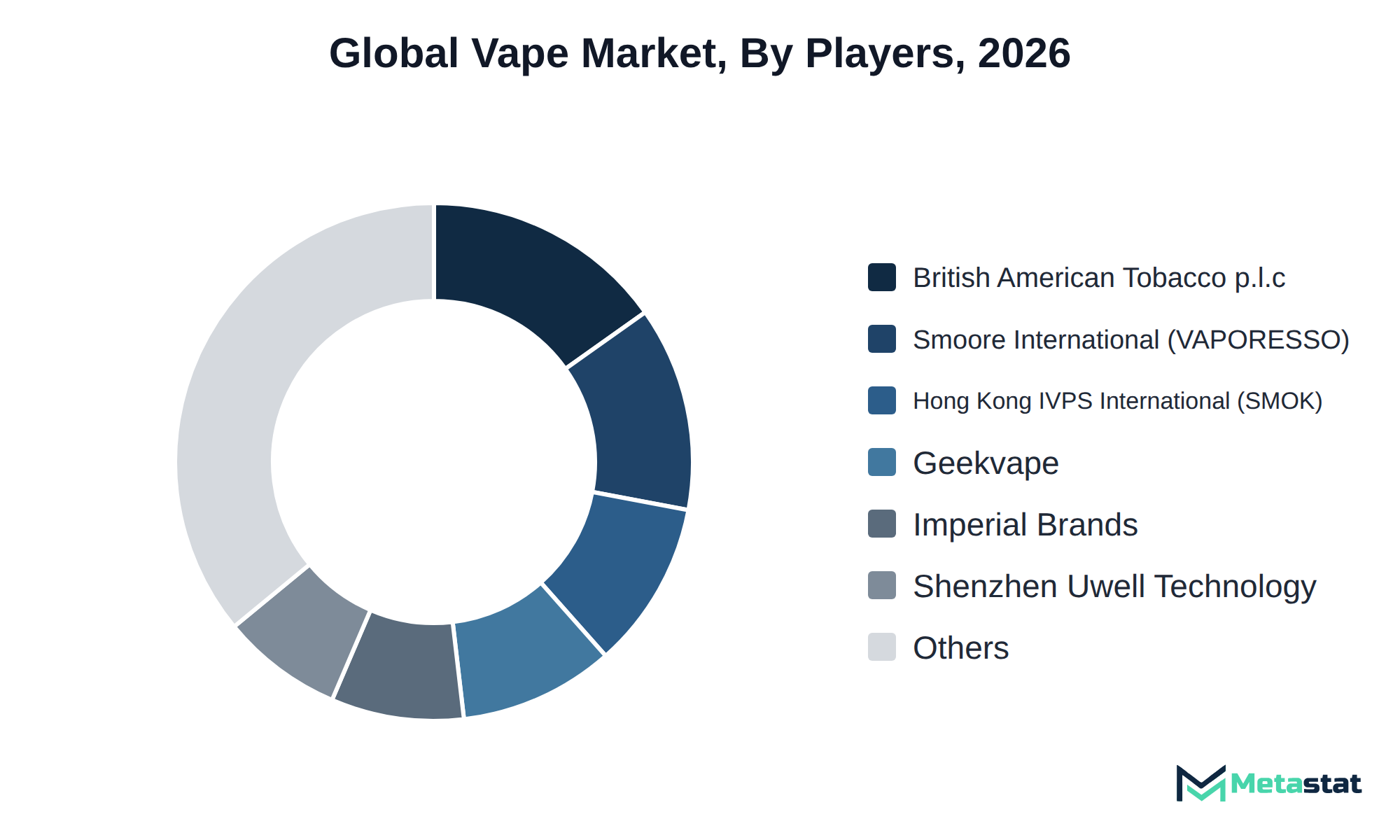
The Vape market features a diverse competitive field divided into product types, including disposable vape devices, reusable vape devices, bottled e-liquids, and prefilled replacement pods and cartridges. Buyers prioritize factors including price, customization options, certification, and the overall ecosystem when making purchasing decisions.
Smoore International Holdings Limited (VAPORESSO) emphasizes innovation in product design and technology, focusing on reusable vape devices and customized e-liquid solutions. Brands like JUUL Labs, Inc. concentrate on sleek, user-friendly devices aimed at convenience and ease of use. Meanwhile, British American Tobacco p.l.c. uses its existing distribution networks to extend market reach and build on brand recognition.
Vape market growth relies on several key developments. First, the increasing adoption of reusable vape devices is crucial, projected to reach USD 146.5 billion by 2033, driven by consumer demand for sustainable options. Second, the expansion of open vaping systems, anticipated to grow to USD 231.8 billion, reflects a trend toward customization and enhanced user experience. These segments will advance the market, particularly in North America, where significant investment in vaping infrastructure supports this transition. Conversely, regulatory challenges present a major risk to market growth. Stricter regulations could hinder the development and availability of certain products, impacting overall market dynamics. This scenario poses risks primarily in the European region, where regulatory frameworks are evolving rapidly. Stakeholders in the vape market need to monitor regulatory changes continuously and adapt as rules evolve.
By Product Type: Disposable Vape Devices, Reusable Vape Devices, Bottled E-Liquids, Prefilled Replacement Pods and Cartridges, Unfilled Replacement Pods, Tanks and Coils, Others (Drip Tips, Replacement Glass)
By Category: Open Vaping Systems, Closed Vaping Systems
By Nicotine Formulation: Nicotine Salt E-Liquids, Freebase Nicotine E-Liquids, Hybrid Nicotine E-Liquids, Nicotine-Free E-Liquids
By Distribution Channel: Specialist Vape Stores, Convenience Stores and Fuel Stations, Tobacconists, Supermarkets and Hypermarkets, Online Retail, Others (Pharmacies, Duty-Free Stores)
The report strategically identifies and profiles the key market players and analyses their core competencies in each sub-segment of the Vape market.
Report Attributes | Details |
Study Period | 2021-2033 |
Base Year | 2025 |
Estimated Year | 2026 |
Forecast Period | 2026-2033 |
Historical Period | 2021-2025 |
Growth Rate | CAGR 34.1% from 2026 to 2033 |
Revenue Unit | USD billion |
Segmentation | By Product Type, Category, Nicotine Formulation, Distribution Channel, and Region |
By Region | North America (By Product Type, Category, Nicotine Formulation, Distribution Channel, and Country)
|
Europe (By Product Type, Category, Nicotine Formulation, Distribution Channel, and Country)
| |
Asia Pacific (By Product Type, Category, Nicotine Formulation, Distribution Channel, and Country)
| |
South America (By Product Type, Category, Nicotine Formulation, Distribution Channel, and Country)
| |
Middle East and Africa (By Product Type, Category, Nicotine Formulation, Distribution Channel, and Country)
|
Find answers to common questions about this report
The Vape market size was valued at USD 45.8 billion in 2025.
The market is projected to grow at a CAGR of 34.1% during the forecast period from 2026 to 2033.
The North America Vape market size is estimated to reach USD 187.8 billion by 2033.
The leading segment in the Vape market is Reusable Vape Devices, projected to reach USD 146.5 billion by 2033. This segment outpaces others in growth potential, driven by increasing consumer preference for sustainable options.
The shift towards disposable vape devices drives market growth, particularly among younger consumers seeking convenience and variety. the increasing demand for reusable vape devices reflects a growing consumer preference for sustainability and long-term cost savings.
North America holds the dominant share of the Vape market, with a projected value of USD 187.8 billion by 2033, representing 43.1 percent of the total market. This region's significant share reflects its strong consumer base and established distribution channels.
Regulatory compliance significantly restrains Vape market growth, impacting demand among consumers and retailers due to stricter regulations and varied enforcement across regions. Rising input costs negatively affect profit margins, prompting suppliers to optimize supply chains and seek alternative materials to maintain profitability.
Factors favoring adoption in the Vape industry include the increasing consumer preference for sustainability, long-term cost savings, and the appeal of innovative reusable devices. These elements enhance customer loyalty and drive demand for refillable systems, positioning suppliers to benefit from this growing trend.
The Vape market is estimated to reach a valuation of USD 479.3 billion by 2033.
Key players operating in the Vape industry include Smoore International Holdings Limited (VAPORESSO), British American Tobacco p.l.c., Imperial Brands PLC, ICCPP Group, Geekvape, Hong Kong IVPS International Limited (SMOK), Shenzhen Uwell Technology Co., Ltd., and JUUL Labs, Inc.
The analysts below cover Consumer Goods research at Metastat Insights.
LEAD ANALYST
Utkarsh Khirodkar is a Lead Market Research Analyst at MetaStat Insight, specializing in market intelligence, technology sector assessments, and competitive strategy.
Evaluating calorific value requirements and air permit compliance across municipal waste facilities requires localized data. Metastat Insight structured their analysis around operational throughput capacity and feedstock composition variations in Latin America and Eastern Europe. Their competitive mapping of sorting equipment vendors helped clarify technology differences between optical separators and heavy media systems. The study provided an objective baseline during our capital expenditure reviews.
Decarbonizing industrial thermal processes hinges on refrigerant regulations and compressor efficiency limits. Metastat Insights delivered a thorough market analysis that evaluated natural refrigerants like CO2 and hydrocarbons against synthetic low-GWP alternatives. The breakdown of utility incentives and grid capacity constraints across key European manufacturing hubs offered valuable perspective. The follow-up conversation with their sector analysts addressed our specific questions on mechanical vapor recompression systems efficiently.
Assessing 200mm wafer transition schedules and substrate supply bottlenecks requires precise technical intelligence. MetaStat Insight supplied an actionable breakdown comparing planar and trench MOSFET architectures across automotive and industrial drive markets. The regional capacity estimates for Asia-Pacific foundries helped clarify lead-time uncertainties during our strategic planning session. When we needed additional clarification on high-purity raw material sourcing, their analyst team responded with helpful context within twenty-four hours.
Explore related market intelligence reports worth reading alongside this one.